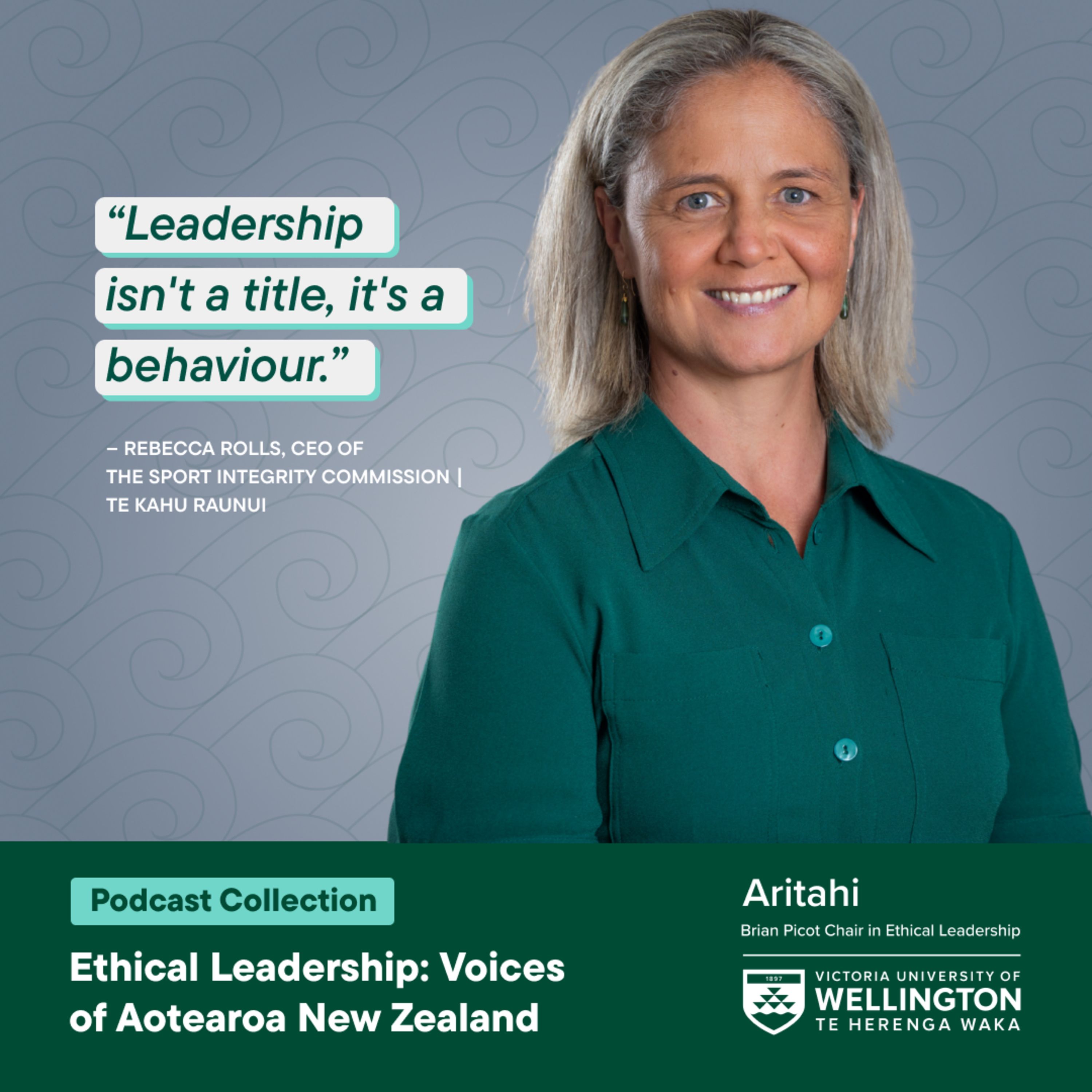
Rebecca Rolls on self-awareness and lifelong learning
from What ELS?
41m 15s
Rebecca Rolls, the inaugural CEO of New Zealand’s Sport Integrity Commission, defines integrity as safe, fair, and trustworthy environments in sport and recreation where participants—especially vulnerable individuals—feel protected and valued. Rather than relying solely on strict regulation, the Commission blends enforceable standards with a values-based, culturally grounded approach rooted in Māori principles like care, truth, and dignity. Central to this is the "cloak metaphor," where all interactions are designed to foster trust, support, and emotional safety. The Commission’s new Code of Integrity establishes clear, voluntary minimum standards for organizations to adopt, promoting consistency and shared accountability while allowing flexibility and growth. Through extensive co-creation with Māori, Pacific, youth, and disability communities, the code reflects diverse cultural contexts and ensures sector-wide ownership. Rebecca emphasizes that true integrity is not just about compliance, but about behavior change, driven by leaders who model ethical values, listen to others, and foster trust. Her leadership style—built on humility, high trust, and active listening—draws from her experiences as a former elite athlete and public sector professional. The Commission aims to evolve from a regulatory body into a support system that helps organizations build sustainable integrity cultures, with long-term goals of shifting from reactive enforcement to proactive prevention. Ultimately, integrity is a living, evolving value that is felt through how people interact and are treated—something that cannot be fully defined but can be observed and nurtured through consistent, compassionate leadership.
Hello and welcome to Ethical Leadership Voices from Outera New Zealand, a podcast series
commissioned by the brand picker chair in Ethical Leadership, Adi Tahi at Victoria University
of Wellington and produced by advisory firm PocketKnife.
This podcast series aims to demystify ethics and make Ethical Leadership a concept we
all become more fluent in, and a skill we all become more nimble with.
My name is Ellen Melondon, Director of PocketKnife and it is my pleasure to be your host for
this 50th load of our podcast series.
Today I'm excited to be joined by Rebecca Rolls.
Rebecca Rolls is the inaugural Chief Executive Officer of Sport Integrity Commission.
Takea Hu Ranui, that was established as an independent CRAN Entity on 1 July 2024.
Rebecca spearheaded the creation of the Commission as the Director of the Integrity Transition
Program, guiding foundational legislation and overseeing the folding of drug-free sport
New Zealand into this broader integrity and mandate.
Prior to this, Rebecca accumulated extensive public sector leadership experience with New
Zealand Police, the Sierra's Frode Office, Department of Corrections, and as Diversity and Inclusion
Manager at Sport New Zealand.
A former elite athlete, Ricka, represented out at a New Zealand as a dual international
in both football, with the football ferns and cricket with the white ferns.
Rebecca is of Maori descent and affiliates to the Natipura EU.
So it's my pleasure to welcome Rebecca on the podcast today.
Rebecca, a warm welcome to you.
Thank you so much, Ellen.
Rebecca, tell me, since you took on the role of inaugural CEO of the Sport Integrity Commission
about a year ago, you have been very vocal in a positive way about integrity threats
that sport and recreation participants face in Aotearoa, including our understand issues
that are specific to Aotearoa's control context as well.
It'd be really helpful to start this interview with a plain English definition of what integrity
looks like when it comes to sport and recreation.
So in your own words, if the commission was to deliver on its mission and let's say work
itself out of a job, what would it really look like then?
Sure.
I mean, it's probably just to talk a bit more about what integrity doesn't look like.
And through our policy work, we found out very quickly that it's almost impossible to
define integrity from one person's perspective and in our context, participants and code,
not just those people playing and experiencing a sport and recreation, but also supports
to our financials and administrators.
So obviously, it's very, very broad, and our role was really simply to ensure that sport
and recreation in New Zealand environments are safe and fierce.
So it's a very simple answer to your question, that is what we would be looking for in a
utopian kind of world in the future, is that environments are safe and fair and people
aren't harmed further by them, and we seek to do that by preventing an address in what
we call threats to integrity.
And that's when I talk about what things can put their integrity in voting, participant
trust and confidence and integrity within our sector.
That's interesting.
So the language, safe of fear, safe of threats, it's really interesting because it's grounded
into what you don't want the experience to be like.
It's grounded into the fear, it's grounded into the threats and we want to move away from
this.
So you have mentioned a couple of more positive words here in terms of confidence.
And do you want to tell me about this?
Because obviously you were at the very roots of the creation of the commission.
Why do we have to start from a place of fear and threat?
So I guess to make an environment safe and fair, we have to make sure we're really clear
about what is not acceptable, and that our work became much clearer for people to explain.
And so that includes things like open and sport, feeding activity or manipulation of sport,
racism, discrimination, that's an awful, as per the human rights act, bullying, violence,
abuse, misconduct, corruption and other fraud.
And so those behaviours are very much when we're despite a threat to integrity.
That's what those include.
And also, we are responsible for ensuring that organisations responsible for preventing
most threats are meeting derogatory actions.
So while it doesn't feel very strength based to say these are the prohibited behaviours
effectively, when we looked at defining what it would look like, do a lot more depth and
much harder to sort of articulate, and then it's open to interpretation a lot more.
So in order to achieve our purpose, that's why we defined it.
This is really interesting.
And this is bringing to me that a thought around what you've already shared with me around
the values, that led approach of the commission as well.
And I think, as I'm hearing you talking, I'm thinking about that balance made it between
the work that the commission does on the regulation, the regulatory framework, as well mixed
with a woven with the values approach, which is probably a much more strength based,
as you say, and take on your activities and behaviours of the commission.
So with the risk of simplifying here, it feels like the
commission offers needs dedicated to an approach that weaves regulation with values.
So improving the regulatory framework, in a way that is grounded and informed and shared
values on the softer side, maybe the more human side.
Could you tell us a bit more about this approach and this balance?
Absolutely.
So very simply put, what we call our Matariki or our vision is literally doing what's
right together.
So Matariki, Matariki, and Nataroha, which is with truth and dignity and honesty and compassion.
So that is our session of organisation and obviously we seek to work that through into the sector.
And because regulation, which is quite a harsh word, it is about compliance at the end of
the day and preventing harm.
So that has to look like, you know, a good old breathway triangle with a wet medication
at the bottom, but for us it needs to form a significant part of that.
Over time and our theory of change is very much recognising the fact that this is a behaviour
of change we're seeking in the sector and it's a long-term, probably, you know, how I've
got a number on it, but many years change in order to achieve that the awareness raising
is very, very important and then into the education space as well.
We saw that very early and our organisational strategy is informed by a carcahu metaphor,
a cloak metaphor.
And we often talk about whatever interactions we have with the participant, they should
feel cared for when they wear a carcahu, whether they are seeking help, whether they have
made a mistake or whether they simply just, you know, want some advice, whether they want
to learn something about how to do their job better.
So those values and that values based approach are hugely important for us and we know that
that's how the sector works and the sector responds and we know that from a lot of the work
we've done.
So maybe if we pick up on this because it's really interesting and I love the metaphor
of the cloak.
In any of the areas, I'd love to hear a real example, Rebecca, like in any of the areas
the commission works in, you've mentioned a few already, a production of children, anti-doping,
match fixing.
Could you share with us maybe a real life example of how the team at the commission may have
worked with the partner organisation around one of these issues, demonstrating these values,
demonstrating how, or helping someone put the cloak on and how this, you know, happens,
how this is very adventuated in this particular instance.
Absolutely.
And I'll start by saying anyone who we deal with or who are involved in something we're
looking at, we provide support and counselling to and we've partnered with a specific counselling
provider who has much more diagnostic ability and can mature on so that can be someone who
makes an allegation or can be someone who is the subject of an allegation.
So that's important that people understand that is wrapped around no matter what.
And a couple of examples would be, I'll talk broadly because of the nature of it, but
in anti-doping, Moffa people test positive for banned substances and it's either a mistake
and they've taken it inadvertently down, but they can still be liable for that or it's
because they were trying to get better and just didn't understand.
So what we often do is make sure that to the extent possible they've been educated,
so there's every, there's every option for them to understand ahead of time.
And if they haven't been educated for whatever reason, then that can be a mitigation.
So we recognise the importance of that.
And also in anti-doping, we make sure that we offer them legal support as well, but also
as, as we work through depending on what the circumstances are, for example, if someone
is tested positive for something that they may need for a therapeutic purpose, they can't
get an exemption beforehand, but sometimes that doesn't happen, so we make sure we facilitate
basically every possible mitigate that they can possibly access and work through it that
way.
State sounds almost like there's a maybe not personalised approach, but I mean, from the
example you're giving me here, there's obviously time energy that's invested into understanding
a particular situation and therefore providing with an appropriate answer, I'll assume the commission
works with path organisations in order to facilitate this process, you're not hands on in all
of these situations, are you?
How does the commission ensure the integrity of the process that may be a path organisation,
if I'm correct, facilitate on the ground?
Do you need your path organisations to put on the cloak themselves, as opposed to what
is coming to mind.
Aigarada, porra. Absolut. So we work with sport and recreation organisations. If there is an issue,
we have an early discussion to understand and agree who manages that. If the organisation keeps
it well still support, from a distance we'll provide that counselling I mentioned. We might support
from a resource perspective, but also programming some chickens to make sure things are going okay.
So yeah, we wrap the poke around them and the organisation to ensure that the best outcomes
are achieved. And really, we've got to remember in this situation, we're trying to get people
through a process so they can continue to work together. Often with regulation, like for example,
in banking or something like that or another dispute, the parties will never work together again.
There's a dispute in and they part and they don't see each other again. So that resolution
is quite clean, where this very much has to be built around the possibility that there's two
parties who have an issue with each other that still need to be in the same team or in the same
club or work to get this. So we have to take that personalised approach and we've got good
resolution and early facilitation, stills and experiences with our people too. The
most of that goal is usually to make sure something is resolved that's earlier since it's
close to inception as possible. So at the earliest point. Now picking up on your point around,
you know, like there are some, or maybe I mentioned that before, there are some control specific
issues in support and recreation you know that are in New Zealand and you've just mentioned
specific control and partner as well. Could you give me an example of what that may look like?
Do you work with counterparts in other places in the world and are able to see the cultural
difference there? Maybe. Yeah, thanks. We do. And I, from the start of building a commission,
we're very, very deliberate to make it, you know, New Zealand centric and appropriate for New
Zealanders and that means a very important part of that is ensuring that it's our Māori
and it's our Māori basis. So we, there's something with deliberately baked and right through and
that is every day given us so much richness whether we're designing on a process or we're engaging
with people. So that is something we've talked a lot to, particularly our Australian counterparts
about and that they're doing some great work over there around reconciliation and some of their
First Nations people. So we have a very close relationship with them and where they sometimes
help us with some of the technical operational things, we actually help them from a cultural
perspective because where they view us as a country that has worked hard and been successful,
although it would never, would never say that completely to fold it in. And then, you know, when
we look through the field of other Asian counterparts, for example, Japanese, their culture is
very specific and they're respectful and that's built into a lot of their practices as well. So
we do get to see other examples from around the world, but I think what is important is that
the participants in each of those countries can see themselves in a process and that's certainly
what we've tried to achieve. Yeah, excellent. I may bring us back to the regulations out of
things for a minute because you in the commission recently introduced the new code of integrity
for sport and recreation, anti-coding short. I understand the code is here to help organizations
and strengthen their integrity game by creating safer and fairer sport and recreation environments
and through applying consistent standards. So consistent standards that assume we're not there.
And I think you referred to the code in the media as another start line to further strengthen
the culture of integrity in the sector. Can you tell us a bit more about how the code came to be?
And what hopes you have for in-symplementation and impact?
Okay, so the code is what we call secondary legislation. So not unlike the traffic calls,
sick much cooler. So what it does is it tries to set out in plain language what the minimum
standards are for the sector as you described. So what we want to do with the sector, I talked about
behavior change before, is build that culture of integrity to give us. So the code is absolutely
another start line and whether you're host to it or a long way from it, it's clear and it's really
demonstrates what those minimum standards are. Certainly achievable and things that we would think
most organizations are doing to some extent already. So that's things like prohibiting behaviors
that are a threat to integrity like I talked about before. It's practically safeguarding children
and young people and adults at risk. So calling out those more vulnerable people in our sector,
it's ensuring there's an effective and fair resolution process in relation to integrity so
that organizations have those. And so that if we are helping them through that, then it's really
clear what there are. And then also making sure that when they adopt the code, they cooperate
with the commission and work with us so that we can get us to do these things. And then lastly,
providing information to their members about what that looks like and what that means. So hopefully
covering all the areas and important to know that it's a voluntary code as well. So that's
a deliberate step that may not always be the case, but at the moment of this and that's a keen
about that. Probably a partnership approach sector and support and recreation are used to.
What it also means is they can see what's expected and decide themselves as an organization
in their communities when it's best to adopt the code. So that helps us hopefully achieve our
purpose of addressing those threats to integrity by setting the minimum standards requiring
those organizations to have the policies in place and then prescribing our role and how we support
them through that. I should say also that the minimum standards are exactly that there's no
no there's no sky. The organizations can shoot above those as well and often in a couple of
occasions there are organizations who have specific needs that that mean they can't quite follow
the code to the letter, but we can work with them to make sure that they're still providing a safe
and fair environment. So hopefully over time I guess everyone will adopt the code,
that language of minimum standards and that cultural integrity building will be really
normalized and people will be able to sort of rather than us pointing out what's right and wrong
self-regulate and peer-regulate in the sector. And you've just done collaboration to
create the code. Can you talk to us a bit more about this process and how you facilitated a
process of co-creation or collaboration or what did it look like? Sure we um so I've touched on
a work with Te Armari and Te Kau Armari, but we formalise that with an advisory and advisory group
called Te Ope Tamidl, which has a has a link in translation to the Kakahu. It's about the
the crew, if you like, all the the group that that rolls the how the kaki is who we use the Kakahu,
so um which they came up with themselves. So we've been working with them the whole time as
well and then we've through the code, we worked with them, we are consulted with pacificum,
we've since initiated a Pacific engagement group, we had consultation sessions with sports and
you know I said the sector itself, but also the youth and um iflet councils, we work through some
forum with disability organisations, the Rainbow communities, so um legislation calls out the
the priority populations we must seek views from, and so we were very very deliberate to do
that so that we could actually say we've consulted with the sector, and I have to say the code
looks very different than when we're our first draft, that what we thought it might look like, but
it is something we can really hold high and be confident that the sector has had a big part in
this, so that when we come to look at it again, they'll be able to tell us what's worked and what
hasn't and what else needs to be in there. Amazing, so do you think this process and the
the code now offers maybe a useful springboard for further engagements within the sector in
between organisations and months organisations, do you think it's a shift in terms of how organisations
or may engage and bring forward, maybe thanks to the experience of putting together the code?
Yeah, like I do because it has an awareness raising effect as well, but also because it brings
a consistency and a clarity to it, it naturally forms the basis of those conversations going forward,
and we will hopefully continue to and it's still very early days, but build those relationships
that can be enduring, and I talked about our Mārīvōpu, who are probably the most mature of those,
so now we're working with them to help us design culturally appropriate resolution services,
you know, and so all those things are built into the code as well, and even outside the code,
where the antidoping is in a different code, we're working with them to help us understand how we
might collect antidoping samples in a culturally appropriate way, and things like that, so absolutely,
as soon as you start talking and people you want to hear from them what they need and how they
see themselves in it, it opens up the door for so many more rich conversations about other
other ways that can happen, so I am confident and hopeful, but optimistic that those conversations
can continue. And what role will or ease the commission playing and fostering further conversations
within the sector? I mean, sectors all face the same issue in terms of capacity right, and
people always have a city to dedicate time to rich changing and to transfer off knowledge
and collaboration, is it something that the commission is thinking of or has a plan for?
Where does it look like? Yeah, no, we absolutely, we are, and I think it made a couple of really
important points there about, you know, not just a one touch engagement, that's really important,
and we know that, you know, one of the key principles of engagement is closing the loop and
and making sure people can see where their input has been, or that has been listened to
and where it's showing up, so we are the team that we've got some sort of relationship managers,
if you like, who will work with sports around the code and around what that means, but also
in a participants in engagement or community engagement manager and a team that will specifically look at how we continue to engage those popular populations and how they change over time and who else we need to be talking to and how we best get information from them and look that depends very much on age and stage and culture and language barriers and other accessibility things went through.
So how are we responding to that or dealing with that if you like as by making sure we have some dedicated resource to it so that that person and that team have the mandate to kind of explore those areas.
Yeah, okay. And I'm curious because you've mentioned a few things that you know brings my mind back to your point on theory of change or your impact model remember which language you used.
Obviously everything we've talked about so far is a node somewhere in this theory of change from the standards, the regulation to the to the culture you've explained is being fostered and supported to the capability building and strengthening the culture of the sector.
Do you have out of interest a theory of change or I mean it will be it would be a moving piece I'm sure but is there something there that you're working on out of interest.
What we're working on is a framework or a regulatory model that, that encapsulates that theory of change and we know its behavioural and we know that there's a big component of meeting people where they are to make sure that behavioural change that the shift is recognised that people know how, how they need to.
To explain how they can support that and why is very important so we are still working with the sector on that and as the code adoption picks up and we're expecting sort of have the first organisations adopted that in the next sort of few months and we're through with them.
Make sure that we keep our theory and our approach adjustable and fixable because we don't want to get caught going down a path that only works for some people so very much around make sure people understand they can access the information they need.
Meeting them where they are and having them understand what the future could look like and it sort of comes back to like this why we exist and that's because we want people to take, take, take part in safe environments where they can fully enjoy the benefits that that support recreation provides.
I don't think everyone hand on heart can say that and that they foster that, they trust each other, they trust organisations and enough to support this and they have some confidence that harm and unfair treatment is taken seriously and people help to account.
So that is that's the end point if you like and know that's probably the first beam after the start line, but that's how we can make that I guess a future reality in theory and that regulatory approach flexible enough to make sure that happens.
And is it important to you that leaders in partner organisations understand behaviour change?
I'm curious even in terms of the language right is it already embedded into the sector you think or is there work to be done there for people to understand a bit more what we mean by behaviour change, what it looks like and the tools to get there.
There's a lot of work, a lot of work because so far in the spot location sector integrity has been a kind of a bad word and it means a lot of work and it means trouble and risk and potential bad press and reputation on damage.
So, so to try and flip that to these the steps we can all take ultimately to prevent that but actually because it's the right thing to do and that's where the tell mighty values coming around my mark you coming in from knowing that they know and all of those things where if you get those right and that's how you want to behave and have a good culture.
And a lot of that horrible stuff will take care of itself so the leadership is hugely important and I say that in the context of not just the leaders who are people but sector leadership and organisations who are leading regional and community organisations and my leaders in my organisation we need to get that language really clear and repetitive.
So what's in it for me with them so get people get that urgency for change and then also the FOMO so if you're missing out so if they see people hang on they've got a really cool policy or they're getting that sort of support or they're getting great results for what's happening what you know people looking over the fence so sort of create that environment as well because it's inherently competitive.
The leadership is very important because leaders need to model that behaves and they need they need to make decisions about where the priorities are within vismanners you know I guarantee.
Integrity is a pillar in everybody's strategy I think if there was a critical work done around how it's showing up it might not be as open in the sky start up top like everything so we've told this is great because we've talked now a lot about how the commission as a whole fosters integrity within the sector inspiring ethical behaviour within within partner organisations I'd like to shift to you if you don't mind as a leader yourself as the CEO you play a crucial role in for some.
A crucial role in fostering the type of culture within the commission and beyond of course but within the commission that will enable a positive ripple effect on the rest of the sector can we talk a little bit about you as a leader your leadership style and what has shaped it through the walls and the your career as an as an athlete as a public sector leader what where do you come from what is your leadership style and what's your ambition for for for the role.
I think I've been hugely fortunate to grow up in El Taro on New Zealand people you moved to New Zealand because it's so amazing I was lucky enough to be born here and that is I've already struck the golden struck the lottery I know I know that puts me in a very fortunate position and I grew up in Hawks Bay in New Zealand which is another beautiful part of the country specifically like Frotal Wine
and yeah that was a culture there you know that's what you did in the weekends everything's five minutes away very easy so I grew up with it you know passion for sport and was lucky enough to represent my country and cricket and football and had a beautiful family who supported me the whole way so understanding the corollary of all of that is that not everyone gets those opportunities and most choices so I'm very clear about how fortunate I am and I guess some of that though means I've probably
at times reflected on instances in my life where I don't think I was a good teammate or I don't think I was a good role model so that's something I'm always you know I guess reflecting on for myself and then as I bring that into leadership in terms of a style not sure I have one other than it's very high trust like I think it's so important that you trust people to deliver what you hide them to do and either support them but to the extent possible get out of their way because they're always coming better than me
and you got them power them so like I know a lot of leaders would say that but I'm in a position where I'm very aware of what I don't know and I think that's hugely important everyone talks about learning and making sure that you're always up-skilling and I'm about finding things I don't know about so and how do I make sure that you know we make the most of those I like to think that I'm someone who supports and isn't big on hierarchy and and that sort of thing so
a very sort of supportive environment and want to be approachable so that if something goes wrong people are prepared to tell me we can work on how to fix it together so very much around process and organisation has to be right that's where things are one and last it's never a human error I mean I'm not saying human error doesn't exist but
if someone has made a mistake it's because the process is so something we do we take very seriously in the commission with our four values are called three which is about demonstrating care and respect for each other and in our my he
pay he which is leading with integrity and purpose so back to what I comment before is that we've got to model what we want the sector to pick up and so that's taking responsibility
toe toe Fetty which is guidance and support so people feel that safety and value and they feel cared and that's again about wrapping around people from that carcahu and our last one is Tuku Toku which is about valuing relationships and working collaboratively to create that culture so
sometimes you say when we work through those they're essentially with people about what is important to them so again it gives me some confidence that we've got that right yeah kind of leader of my I was just probably never think I've got anything right in terms of
sort of finishing we always want to keep keep moving on but I guess I want to be a leader that people want to work for in that they understand that I have their backs and I support them so that's enough about me
it's wonderful and I can't I can't help to notice the parallel between you know the values and your leadership style the way you described it with what it must like because I have to say I have no personal experience but as an athlete in particular in a team sport
right I mean you've talked about eating to trust you've talked about needing to not to assume but to observe and appreciate other people's strengths and the fact that they can do well is not better better than you and continues learning and improvement I mean to what extent as this come from you know your journey and your career as an athlete and and from team sport
and I mentioned before about reflection at times when I thought I haven't been a good teammate and that's exactly what I haven't paid attention to as I thought I can do everything
I've had unrealistic expectations of people I've probably made them feel small or not valued and that's when the team doesn't succeed so to get to a place and you know it took me some time
where you know that even if you don't have a close personal relationship with a teammate that you trust them 100% to do their role and you choose them over anyone else in the world to stand next to you in those situations
so I think that's one thing I've definitely learned is that that is so important and that you are going to foster that if you need to rely on someone you're not going to foster that
by making them feel like they can't so it's hugely important for them and I think also it's very important
Earlier parts of my career there's very much a law enforcement angle through police and other law enforcement agencies and the power of good communication there was something under and probably in the hard way
a few times, people are always driven by what they're afraid of and that means that's what drives people to act or not act.
I think understanding that as soon as you can was someone you're dealing with or a teammate or a friend or a colleague that helps you work together.
In terms of how you ended up where you are now, I'd love to hear this story, I'd love to hear the details.
You obviously had one of the key reasons why the commission came to be.
Did you work towards this? Did you see this coming as you advocated for what you advocated and championed for what you championed?
And did you think you would find yourself in the CEO's role in that in the consumer?
What was this experience like?
It was very iterative. No, I didn't think I'd be in the CEO's role. Is it a dream job?
My most part of my career didn't exist because we're only year old.
So it's not something I could, you know, when I left school just kind of aim for because it simply did not exist.
Again, having that balance of high performance sport experience in two codes and meaning I'd come through two different high performance systems and my experience in the justice sector was a good combination to lead.
So I was able to be included in working groups and the working group that set this up, which was led by our chair, Dom McKinnon, who's now working with us stills.
It was part of a good, passionate group of New Zealanders who work in this space, some of whom still work and, you know, we don't always agree, but everyone wants the same results.
So I was lucky to be swept along by that wave to an extent.
And then again, fortunate to be given the, to be trusted to set the commission up as a in the two year transition phase because that was where the legislation was born and the consultation.
So that afforded me a lot of lessons, a lot of gaps I've identified and, and that sort of thing.
So probably put me in a good position to apply for the CEO, but again, I never take it for granted.
There are lots of amazing people who could do this and there will be after me. That's for sure.
So there's probably how it all came together, but very much an unknown and a happenstance, which I felt showing privilege to be here and love going to work every day.
So part of that is the work and part of that is the people and, you know, be able to work with people who share the values.
They're all very much effects and values based and that's what's important to them.
That makes it not feel like work and sometimes can't believe I get paid for it.
Wonderful. Sorry. I know you said enough about you, but.
And do you think back to my first question, do you think it is possible that the commission could work itself out of a job.
I mean, is it should we hope for this or do you think now 12 months and it's such an important pillar for the sector that it will be enduring don't or don't we know.
To be honest, I hope so. However, I think realistically could happen and what we should strive for over over a longer period of time is that triangle I talked about, you know, the tippy top of it and the formal enforcement and kind of, you know, that is the smallest portion and that awareness raising doesn't have to be too big, but the education and that kind of willing, willing compliance, if you like, is what actually keeps it alive.
So we're always learning as a sector and there will always be different threats or different ways that those threats manifest and things change that hopefully in time, the commission can be much, much more about walking alongside people to help them before it gets to a point where they either make a mistake or are harmed.
So extending on to this, like maybe from a more of a business question here, thinking within public sector, but also private sector, what are you views on the need for organization to invest into integrity.
Is it important that organizations actively intentionally invest in integrity and ethics, thinking is called behavior within organizations is the called decision making processes and culture and can be linked, you think is called behaviors to performance, whatever path means for a given organization.
Absolutely. I mean, I'm biased because of what you've just heard for 40 minutes.
I don't see how you get successful performance or outcomes without that.
And if you do, there's a lot of carnage along the way, which I don't think anyone would be very proud of.
That that based in and I from our experience, I can speak about the values and how he forms that like I don't have to encourage people to well, I may have to sometimes, but it's easy to know that people know what that is and it's tangible.
So important that is baked in from the start, it's in the strategy, it's not sort of something that you, you know, in an interview situation for recording that you have an integrity question and they like or you make question.
And I know that that's a, that is a common practice and it probably is helpful, but my personal view is, I think, organizations will thrive a lot.
I'm more like it is, rather than the other people they have. Yeah. And as to put my full up question and that links to the theory of change again, can we put a financial value on this investment, right?
I mean, like we're talking when it monetary financial investment here, can we should we do some more work? It's a difficult skill, but obviously there are experts out there working on it.
Can we put a new on ethics and should we all work towards having this financial value integrated into a field of change?
Absolutely, because, you know, a lot of people talk about prevention and and it's harsh as form tied at hardening about, you know, trying to stop harm, but that that's when it's already happening.
It's already happening. It's already out. Yes. If you've had to get much much further upstream and you're investing right at the start and whether that means you pay more to hire someone or you give them more resources around education.
And personally, that's what I think is understanding what your people needs to learn and how you can impart that to them. That is a huge.
I guess it sure arises when people go to a pure return on investment model, because how do you how do you quantify that? How do you say, well, some outspent on effects and integrity and values?
What's it given us? Well, I think you could have been a bit more mature than that and really look at your workforce and how they behave and the feedback they're getting and to that extent, you can put that down to your ethics and your integrity.
I suspect it's a huge part.
And I think it's a good segment, another question of mine for years.
What is your advice to the future leaders in terms of yet their approach to integrity and ethics?
You know, like what would you say to them in terms of becoming the leaders they want to be?
I think, I'm trying to think of myself at 30 years old, which in it was that long. I think being really true to their values and understanding what those are early on.
And young people today are much better at than my generation, for example, about calculating that and not being ashamed of it, not being ashamed of saying, I really value this thing, because that will draw you to other people with the same values.
So I think that is probably something I'm saying. And then just understanding that everyone is a leader, no matter what their role card is, it's a cheesy saying, but a leadership is an title, it's a behaviour, it's so true.
You know, we've all worked with leaders with big titles that behave badly. It's maybe the youngest person in the office shows the most leadership in the times that matters.
I think that should be encouraged. There's a leader being able to say to people who aren't here, who you are, what your job is, you can lead. And that's about making sure. But the behaviour is your exhibit, you're proud of and you would do whether someone's there or not.
And lastly, I think probably my biggest lesson is you'll never know everything. If you're the smartest person in the room, you need to find another room because you're probably not.
And you don't know as much as you think you do. But for me, it's much more comfortable. I feel like I'm growing much more if I'm learning new about things I don't know.
So, and then you can start to evaluate how important they are and how much they can do values.
Ethics or integrity or values and morals, it's a set of behaviours and beliefs. We're trying to build something, whether it be an organisation or a code or a persona or a reputation that is sustainable and that people are going to want to be around and be a part of them that's the blueprint, no matter what you call it.
So, we've covered all of that anyway, but I think we're just bringing it back to the core things, you know, that's kind of what you are.
Yeah, I love this because it's almost impossible. Should we try to define what integrity ethics look like when it's behaviouralist and maybe, yeah, I like the idea of, you know, the regulation, the code, the definitions, everyone can agree on maybe the blueprint.
But then there's this, like the most important part is what happens around it. And this one was we can't define. This is human behaviour, like you said, this is learning, this is working progress.
Should we try and capture it? Because maybe we can't.
Right, and so much more is about how other people feel.
Not really set above my head on how it is. That's how I made someone feel.
My Angelo has been saying that for years. And so it's almost impossible to define, really, and that's what we end up saying, these are the things that can make people feel bad or feel harmed, no matter who they are and where they are.
And they're right, you know, discrimination, you know, bullying, nobody likes that.
And that will change over time, even within that, you know, things that were acceptable 10, 15 years ago, just something that are not anymore from people.
Yeah, I thankfully had much more in tune with these feelings and what makes them feel bad or feel.
Yeah, they can be about it.
So we've got a responsibility, particularly to highlight.
a Tahir Samariki to make sure that we give them a best chance to thrive.
Maybe ethical leadership is not something you are or you do is something that you feel
in your sense and you make other people feel in sense.
I think so, yeah.
It's hard.
You could go around asking people, how are you feeling today?
You get a sense.
Particularly if you're responsible for people.
You get a sense of how they're showing up and how they're either retreating into themselves
or something like that.
I think it's a really good way to describe it.
Maybe you can't capture it, but you can know yourself that you're doing the same things that are important to you.
And also, I mean, it requires being handled and brave to ask other people how you make them feel.
And maybe this self is a good behavior, is a good behavior to learn, to get better at asking others how you make them feel.
And if I tell you, even better.
Thank you so much for your time.
Thank you for listening.
This was an episode of Ethical Leadership, Voices of Outerra and New Zealand.
A podcast collection commissioned by the Brian Piccad chair in Ethical Leadership, Aritae at Victoria University of Wellington.
I hope you enjoy the episodes as much as I'm enjoying the fabulous conversations with our guest speakers.
Stay tuned for more.
Podcast Summary
Key Points:
Integrity in sport and recreation is defined as safe, fair, and trustworthy environments where participants are not harmed, with a focus on preventing threats like abuse, discrimination, and corruption.
The Sport Integrity Commission uses a balanced approach that combines regulation with values-based practices, rooted in Māori principles such as care, truth, dignity, and compassion.
The Commission’s work is guided by a "cloak metaphor," ensuring all participants—especially vulnerable ones—feel supported, heard, and valued during interactions and processes.
The new Code of Integrity sets clear, voluntary minimum standards for organizations to adopt, promoting consistency, awareness, and a shared culture of accountability while allowing flexibility and growth.
The Commission emphasizes co-creation with diverse groups—including Māori, Pacific, youth, and disability communities—to ensure cultural relevance and sector-wide ownership of integrity practices.
A key leadership philosophy is high trust, active listening, and humility, drawing from personal experiences as an athlete and public sector leader to foster inclusive, ethical, and adaptive cultures.
The Commission believes integrity is not just about compliance but about behavior change, where leadership must model ethical values and create environments where trust and mutual respect thrive.
Investment in integrity is seen as essential for sustainable performance, with long-term benefits in trust, culture, and organizational resilience—though quantifying its financial value remains a challenge.
Summary:
Rebecca Rolls, the inaugural CEO of New Zealand’s Sport Integrity Commission, defines integrity as safe, fair, and trustworthy environments in sport and recreation where participants—especially vulnerable individuals—feel protected and valued. Rather than relying solely on strict regulation, the Commission blends enforceable standards with a values-based, culturally grounded approach rooted in Māori principles like care, truth, and dignity. Central to this is the "cloak metaphor," where all interactions are designed to foster trust, support, and emotional safety.
The Commission’s new Code of Integrity establishes clear, voluntary minimum standards for organizations to adopt, promoting consistency and shared accountability while allowing flexibility and growth. Through extensive co-creation with Māori, Pacific, youth, and disability communities, the code reflects diverse cultural contexts and ensures sector-wide ownership. Rebecca emphasizes that true integrity is not just about compliance, but about behavior change, driven by leaders who model ethical values, listen to others, and foster trust.
Her leadership style—built on humility, high trust, and active listening—draws from her experiences as a former elite athlete and public sector professional. The Commission aims to evolve from a regulatory body into a support system that helps organizations build sustainable integrity cultures, with long-term goals of shifting from reactive enforcement to proactive prevention. Ultimately, integrity is a living, evolving value that is felt through how people interact and are treated—something that cannot be fully defined but can be observed and nurtured through consistent, compassionate leadership.
FAQs
Integrity in sport and recreation means creating safe, fair, and trustworthy environments where participants aren't harmed. It involves preventing threats like bullying, discrimination, abuse, and corruption, ensuring people feel respected and supported.
The Commission combines strict regulation with a values-based approach rooted in Māori principles like care, respect, and compassion. This ensures that rules are enforced while fostering trust and human-centered behavior change.
The Code sets clear, minimum standards for organizations to create safer, fairer environments. It promotes consistency, transparency, and accountability while being voluntary, allowing organizations to adopt it based on their needs and values.
The Commission provides counseling support and facilitates resolution processes, ensuring participants—whether making an allegation or being subject to one—are treated with care and dignity, helping them through the process without blame or damage.
The Code was co-created through extensive consultations with Te Ope Tamidl, Pacific communities, youth groups, disability organizations, and Rainbow communities, ensuring it reflects diverse perspectives and is culturally appropriate.
Leaders set the tone for culture—by modeling ethical behavior, showing trust, and prioritizing well-being. When leaders embrace integrity, it becomes a shared value that drives positive change across teams and sectors.
Chat with AI
Loading...
Pro features
Go deeper with this episode
Unlock creator-grade tools that turn any transcript into show notes and subtitle files.
 PodcastTranscript AI