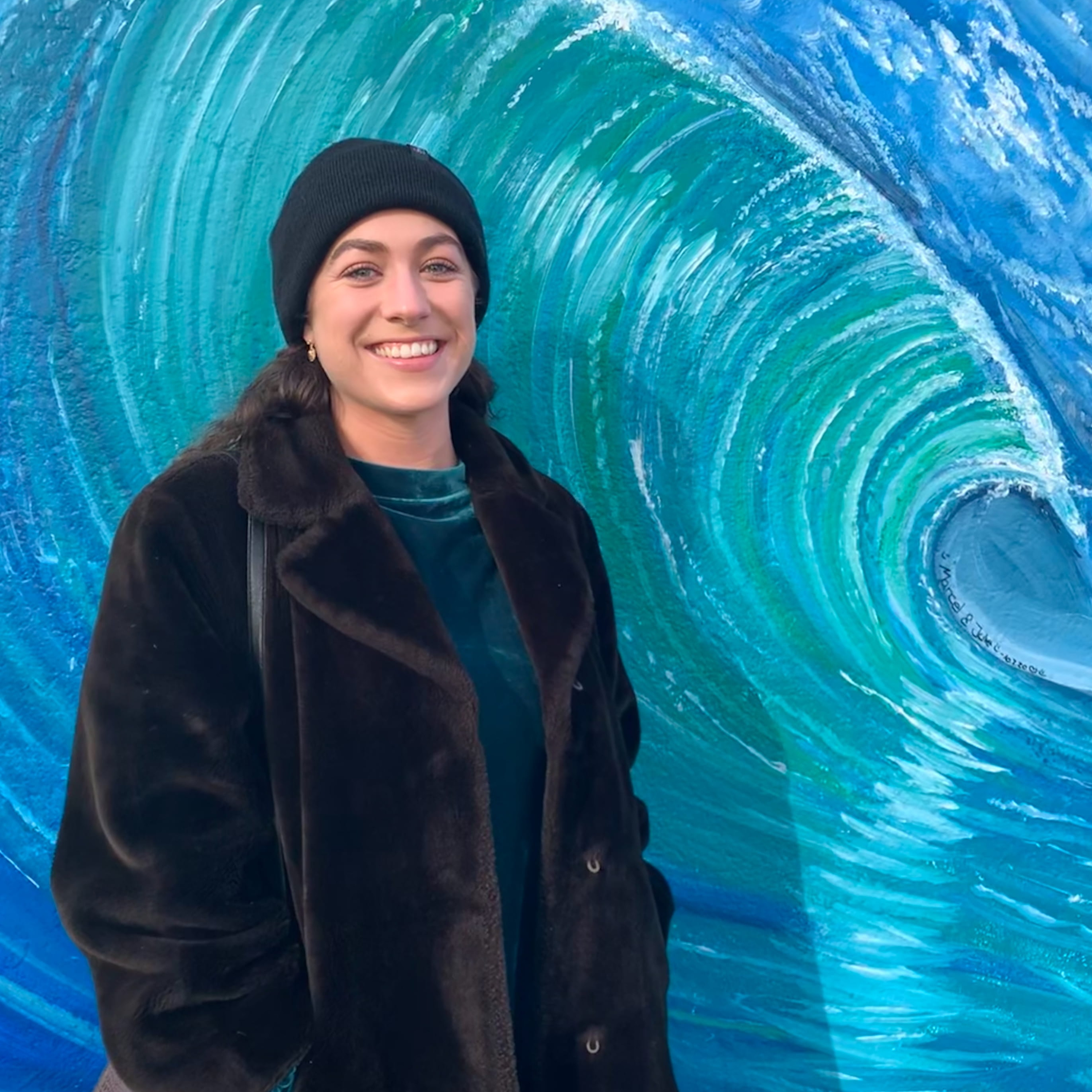
Rebecca Daniel of The Marine Diaries: Navigating Ocean Advocacy | S3E7
46m 23s
Rebecca Daniel, founder of Marine Diaries, shares her journey into ocean conservation and science communication, driven by early fascination with nature and diving. The project emerged from a realization that scientific knowledge about ocean issues like plastic pollution was not reaching the public, especially due to complex, paywalled research and lack of accessible storytelling. Marine Diaries addresses this gap by using creative, emotionally engaging content—combining visuals, humor, and storytelling—to simplify complex topics and inspire action. Their work includes educational campaigns, films on climate change and disability in ocean spaces, and an upcoming e-learning course targeting students and environmentally conscious learners. A core philosophy is to balance awareness with hope, avoiding doom-and-gloom messaging and instead highlighting solutions and positive progress. They emphasize the importance of community engagement, using tools like newsletters and calls to action to transition audiences from awareness to action. Despite challenges like low public awareness and underfunding of ocean science—currently receiving less than 5% of natural science government funding—Marine Diaries builds trust through consistent, relatable content and diverse formats. The organization encourages aspiring communicators to explore different media, find their unique voice, and engage authentically with audiences, ultimately promoting ocean literacy as essential for informed, proactive environmental action.
[MUSIC]
>> Hi, and welcome to the ReFroundup podcast where we dive into marine conservation stories from around the world.
We're your hosts.
>> I'm Graham.
>> And I'm Tamara, and we can't wait to dive into this episode.
>> Join us and meet some of the many amazing people who are doing exciting work to save the ocean for future generations,
with a focus on restoration, ecology, and environment.
>> We hope today's show is a wake-up call, but also brings you both hope and inspiration.
As you learn about the amazing work that's being done, and how you too can be an ocean champion.
>> Let's get started.
[MUSIC]
>> Before we get into this episode, we wanted to take a minute to express our gratitude to the Marker Boy dive club.
The Marker Boy dive club is located in Seattle, and we actually hadn't heard of them until just this past week
when we received a very generous donation.
Actually, it's the largest donation we've ever received as Reef Scuba.
We're a nonprofit who has founded in 2020, and so yeah, four years in, we got our largest donation.
It totally made our week, our month, and we're excited for all the different things it's going to allow us to do.
>> Once again, thank you so much for your support of Reef Scuba.
>> Yeah, and for anyone who might be considered making the donation of their own, you can look at our website.
And find a donation link there.
We are a 501(c)(3) registered nonprofit, so you do receive a tax benefit if you decide to make a donation.
And yeah, thank you again to the dive club, and we hope to be diving with you in person and meeting you very soon.
[MUSIC]
>> Hello, and welcome back to another episode of Reef Roundup.
Today we're very excited to be talking with Rebecca Daniel, who is the founder and director of the Marine Diaries.
With a deep rooted passion for the ocean, she has channels or expertise into creating platforms that connect the public.
You, me, and everyone with the marine environments that we all care about and love through really cool storytelling and
innovative science communication.
I think whenever I see her content, I kind of know that it's the marine diaries because it jumps out.
It really like holds you in and you want to learn more.
Her work has empowered individuals and communities to advocate for the planet's precious marine ecosystems.
The marine diaries was selected as a regional finalist for the Commonwealth Youth Awards in 2023,
for their outstanding contribution to the SDG-14 goal, a life below water.
And they were also finalist at the Ocean Awards Young Ocean Initiative.
>> Thank you so much for Becca for joining us today.
It's an honor to have you on the show.
>> Thanks so much for having me.
I am blushing from that intro.
>> So Rebecca is not only an amazing ocean champion, but also a great friend of Graham and I.
So we're really happy to have you here today.
And maybe to get started, can you tell us a little bit about yourself and your background
and how you first became interested in ocean literacy and marine science communication?
>> Yeah, for sure.
And then, yeah, thanks again for having me.
And yeah, really, it's like, how was conversation?
>> So, yeah, I've always been pretty fascinated with the environment
from a really young age, I think.
You know, it was kind of spending a lot of time outdoors as a kid.
Both my parents are quite outdoorsy.
My dad was into kind of hiking.
So we did a lot of hiking holidays in the UK.
My mum was a really, really keen technical scuba diver.
So we would go on holidays and obviously kind of go snorkeling while she went diving.
And then I actually learned to skip it over when I was about 10, 10, 11.
I think I haven't actually done that much diving since then.
>> Obviously, as you guys know, pretty fun.
>> But yeah, just kind of, I guess, caught the bug quite early on.
And then, always really loved science at school and just learning about
our planet and how it works and particularly biology.
So, you know, like, the living side of our planet.
And yeah, was kind of obsessed with the ocean.
I had a dolphin themed bedroom.
Everything was dolphin.
So that was for a few years.
And to be honest, though, I wasn't really aware, I think,
that you could have a job in ocean, like conservation or anything like that.
Initially, I really wanted to be a vet.
And then, obviously, as I got old, I kind of realized that you could actually make a career
out of ocean conservation and being a marine biologist.
I think, like a lot of people, I imagine the classic marine biology role of being in the ocean
every day and, you know, living in a tropical location didn't really realize there were such
a range of roles in the sector and how large it is really.
But, kind of, yeah, I went on to study biological sciences and marine biology at uni.
And then, actually, kind of discovered by, I guess, my, like, passion and skills
within marine conservation, within marine science limitations.
So, what I guess I initially envisaged as my kind of career trajectory turned up to be
something quite different, but also still within, you know, the ocean conservation sector.
So, yeah, that kind of parallel I arrived here.
Amazing. And if you have any photos of your dolphin themed childhood bedroom,
we would love to include those in this show now.
I'm not sure what I do. I have, I have my days of me learning to dive and I'm like,
so small, so beautiful. They had to hold the tank.
They had to hold the tank behind me because I was so small I couldn't, like, physically stand up
without someone lifting the weight. I was 10 when I first went diving in Mexico.
And I remember it was a short dive. And I just could not make it to the water.
And they had to carry the tool for me.
Yeah, it's a struggle. Choco. No.
Yeah, like, it's, it's, you know, like, there's so many things that work.
I did to talk with you about today. And I think, you know, like, just kind of diving into the marine
diaries. Can you tell our audience a little bit more about that for anyone who doesn't know about
it? And then also, I'm really interested. And I've never heard this part of the story, which is like,
how did this idea to do that first get started? Like what's the genesis of that idea?
Yeah, there's something a cigarette point actually we should probably put more information out there.
I'm like, what the, the kind of initial initial, like, thousand-point words. But yeah, so basically
during what I was doing my masters in 2017 and to the kind of winter of 2017, three of us on the
course kind of came together and essentially started a blog on an Instagram profile. And that was
really the beginning of it. And what we kind of discussed and kind of, you know, realized was
having studied and been in the kind of scientific community, we're just seeing this like huge disconnect
between that community and the general public and the awareness of all of these ocean issues.
So, for example, particularly with, I think, plastic, we were learning in our lectures that,
you know, scientists have been aware of ocean plastics for the last like 50 years.
But no one had really done anything about it on a global scale.
And then obviously, around that time, Blue Planet 2 came out, David Ashtonborough says a few
sentences about plastic. And that changed the whole game for awareness about around plastic
pollution. Obviously, there's loads of other efforts that kind of went into that from global
awareness. And there's been studies on it as well about the Blue Planet 2 effect. Just having
something that was super visual, very storytelling based, that really made an impact for a lot of
people. And so we kind of just, yeah, realizing that the science wasn't really like getting through
or it wasn't really being communicated, I think traditionally in the scientific community,
a lot of the communications via like a scientific paper, which a lot of those are paywalls,
you have to access them, they're really confusing as a lot of data, as a lot of terminology. Even other
scientists might not be able to understand them, they're not specialized. So yeah, we just kind of
saw, I guess, this opportunity to communicate ocean science in like a different way and be a bit
creative with a really incorporate storytelling, which has been shown to be a lot more effective
in communicating science, and also have this kind of interdisciplinary approach. So how do we
bring in like art and photography and written communications, visual communications audio and
like bring all of those things together? And from that starting point, it kind of grew organically,
yeah, which I can talk about if you like. That's so funny. I've never actually heard of the
the term the blue planet effect or something like that. No, but an experience.
I remember like watching the trailer on YouTube on repeat during my senior year of high school right in the middle of when I was like trying to decide where to go for uni and what to study and that was the strongest factor in my decision.
So it's interesting that it actually has a name.
Yeah, you should look it up. There's a few papers on it about what what it did. So yeah, it's pretty interesting. Yeah.
So yes, if you could tell us a bit more about what the marine diaries is currently doing and in the projects that you're involved in, that would be awesome.
Yeah, of course. So yeah, I guess in terms of the projects that we're currently doing the last few years we've been doing a lot of like educational content. So we've done kind of like a plastic campaign. We've done editorial series.
We've created kind of like educational content for NGOs and educators and everything's like that. Through our marine ecosystem diaries project.
And now we're really focusing on kind of film led storytelling and then looking more also towards kind of events and experiences.
So at the moment, we have an e-learning course that's just about to come out, which is all based around the marine ecosystem diaries, which was like a nine month project on different marine ecosystems and that brought in.
Kind of films illustrated pastures articles online events are like a whole session media campaign around that. And that's been developed by our ones that the planet partners mint. They're like e-learning experts. So that is kind of.
I guess giving people a different way to learn rather than you know, maybe through our just reading articles and it's very interactive. It's kind of got lots of questions.
We are producing two films at the moment. So one of them is around kind of seabirds climate change and ethical tourism like wildlife interactions.
And the other one which is quite close to my heart is around disabilities within ocean spaces. And yeah, we got a grant from ocean culture life for that. So currently kind of fundraising for the rest of that film production.
And then the other thing that we're kind of going at the moment is ecotourism expedition. So we are running a trip to South Africa for September. And that is running on a yearly basis.
So yeah, those are the kind of I guess three main things that we're focusing on at the moment. I'm also planning to launch some events in London. So that will be on the card soon as well.
Rebecca, do you have like clones or like how are you managing all of this?
Yeah, it's not all just me like we do have a team of volunteers and yeah, super grateful for them. Obviously we've had I think we've had like 60 or 70 over the years and obviously it being a volunteer position like people kind of join and then get really busy and have to move on.
Yeah, I definitely haven't done all of this by myself. I do a lot of it, but you know, we have teams in place that kind of help with with different aspects and yeah, people come in and help with like some projects and then kind of move on.
And we have other people that have kind of been helping for, you know, years and years for various aspects of what we do.
It's amazing, amazing. It's, you know, like cheers to you for all of that. I'm looking forward to experiencing the whole range of things that you have available.
Yeah, yeah, that is definitely on our website so you can like look through the brochure and yeah, see some of the photos from all previous expeditions.
And yeah, finally inferred. I wish I could come. I wish you could come.
You know, these trips are obviously for people who can already scuba dive, but eventually you want to expand the trips out into kind of fully funded places for people that need to like want to upskill in, you know,
new skills like scuba diving or whether that's field work or and yeah, have loads of ideas for how we can kind of help people that don't necessarily already have that, you know, the opportunity to build scuba dive.
Because that's something that's quite important. I think like giving people access to the ocean.
Definitely, definitely speaking of that, I guess we could move into talking about storytelling for ocean conservation in general.
You're already touched on this a little bit in the start of the marine diaries, but why why do you think that ocean literacy is important for the wider public?
Yeah, I mean, I think it's super super important. Like obviously those nodes of things affecting the ocean from climate change, plastic pollution, biodiversity loss.
But I think what people don't realize is the ocean is so critical to supporting life on the whole of this planet.
It's actually the biggest kind of buffer against climate change as well.
You know, it absorbs I think a quarter of all of our carbon dioxide emissions and 90% of the excess heat that those emissions create.
So without the ocean like the world of the a lot hotter, but I think generally people are quite disconnected to nature in, you know, even terrestrial nature.
And a lot of people live really far from the ocean or even if they do live by the ocean, they might not be able to access it.
You know, a lot of people can't swim, a lot of people might kind of go to the beach, but not actually go in the ocean and kind of look below the waves.
And I think there's just this whole kind of outside out of mind kind of mentality around the ocean and also other kind of nature based issues as well. And I think without actually having knowledge, you can't act on anything.
And really like having this understanding of the importance of the ocean and how we influence that is really, really critical to bouncing, to being able to make like informed decisions and choices. So we believe at the radar is that like education is the first step really.
And there has also been research to show that connection with nature increases the prevalence of pro environmental behaviors. So the more people feel that they have a connection with the ocean, the more people will actually kind of act upon it to give an example as well.
Obviously, I mentioned that beginning that I had that dolphin themed bedroom and that was 100% from going to a dolphin show and aquarium. And obviously at that time, like I had no idea that that was bad.
And now I do know that from kind of studying marine biology, I can actually actively avoid aquariums that keep you know cat to dolphins and whales or make animals perform. But without that knowledge, I can't make that choice.
I know that that is a choice that I should be making as well. So I think it all comes down to yeah awareness and needing to really know about all of the reasons why the ocean is so important.
One thing that I really appreciate and I think that you know we've learned from in our in our communication a bit is just the fact that like I think like when I engage with a lot of the content of the marine diaries.
Like I feel excited to learn more and I feel like kind of like hopeful and I feel like these like positive emotions, whereas like I think in a lot of content and of course like given the dire state of you know many aspects of the environment.
It's it's obvious that we need a bit of both right like education about what not to do and how bad things are but like also like some positive messaging and some excitement to learn more and like I'm really interested like how do you I know walk that line and like because the content that you produce is so like consistent in that I assume there's a philosophy of the marine diaries and like how did that come about and kind of what how would you define it.
As far as like what you focus on yeah I think that's a that's a really good observation because that is definitely what we try and align with and I'm glad that that comes across.
So yeah I mean there's definitely put for us we we don't want to make people feel you know super negative like there's loads of issues because actually happens is if you kind of share a lot of negative news.
That you're kind of do mongering people actually like switch off and they don't engage because it makes people feel kind of like helpless that they can't do anything the issue is too big it's too complicated and we don't want to do that we want to you know inspired people get their attention in a way that is kind of you know that they then follow along and then maybe they'll learn more through that journey and you know just as you said we want our kind of content to be.
You know positive uplifting and very solution that as well so it is difficult like getting the balance right you know on every piece of communication every social media post every article but what we try and do is.
I think we're talking about a topic or an issue, we will either
like a series of social media posts for example like introduce the issue and then introduce like
solutions or try and do that within like each kind of content piece. So you know if we were talking
about you know climate change in the ocean then we could talk about renewable energy and things
like that. So it's kind of introducing it in a way that's very solution there and we also have
our kind of like ocean optimists and series which provides a lot of great work that's being done
or positive news stories because yeah there is a lot of negative news and there is a lot of negative
things happening in the world not just to the ocean but like loads of other things as well but
I think by communicating these kind of positive acts it just gives people I think motivation to kind
of keep going so yeah it's definitely a conscious choice I don't know if I really answered your
question there. No no no you did you did and I appreciate that and I guess like I guess one
just kind of like small add on question is just like is that something you kind of knew from the
beginning of this journey back when you started like you and the other two people you you mentioned
is that like was that a core philosophy from the beginning or is it something you kind of learned
along the way? I would say it's actually something we've learned along the way you know obviously
at the beginning none of us were communications experts I probably wouldn't call myself a
communications expert anyway but you know we were like testing the waters testing things out seeing
what worked and I think over the years like just I guess learning a bit more about affected
communication and I watch full-time like in my kind of career also in communications
so I picked up a lot along the way around like what worked and what doesn't work and obviously like
there are times when you do need to have almost like shocking news because otherwise people get
a bit apathetic like oh everything's fine you know it's all positive everything's working and you
do need to kind of bring that in every now and then but yeah it's definitely something that
I would say kind of we recognised over the last couple of years and I think a lot of people
have as well you know you see more positive news of the week there's even I think a magazine
called positive news and people just really switching off I think to negative news in particular
and amongst young people you know people are getting their their news and their information on
social media they're not reading the traditional news because it is so negative um so yeah it's
kind of been a journey I guess I guess speaking of lessons that you've learned along the way along
this journey and what would you say that you is barrier or challenge is right now in marine science
communication oh good question I I think there's a few but I think honestly it's just that's so many
people even connected to nature and to the ocean at all yeah there's just so many people that
are unaware I guess that it's quite a large challenge I guess to be able to engage all of
those people and I think particularly I mean it probably happens in any industry but there is this
huge or small bubble of environmentally aware ocean aware people and I think oftentimes when we
go to the conferences or we speak to people and our friends are also like this we kind of forget
that most people in the world like don't don't really care about the environment or they're not
aware of the issues because you know the people we speak to you on a day-to-day basis or the people
that we engage with online like are also aware so you get this kind of false sense of you know
everyone knows that climate change is a big problem or everyone knows about plastic and that's
not actually true there are so many people who you know quite rightly maybe care about supporting
their family or raising their children or even living like day-to-day to support themselves
and just other people who obviously care about different things because there are a lot of other
issues that need to be tackled but yeah I think there's just a lot of people to kind of communicate
to to convince and to kind of bring along on that journey and to really I think another thing
is really getting across to people the gravity of the situation like how you know how climate
change how the ocean is actually critical and if we don't act now there there are going to be
you know kind of disastrous or already are kind of disastrous consequences and I think that's
quite difficult to communicate to people in a way that actually makes them care and not switch off
like we were just talking about because yes so many people don't don't see it they don't hear
about it they don't see it in their day-to-day lives so yeah it's a large challenge but I think
it's also an opportunity and I think there's some really interesting work being done to connect
people that are outside of that bubble you know kind of working with different industries business
collaborations bringing in like new technologies like the RAR there's so much stuff that's being
done to kind of actually meet people where they are and rather than trying to attract people
into the into space I can really relate to that answer I actually had an experience just a few days
ago I went to a water park and and I saw that they had an aquarium that was like part of it it's
like mostly all slides and rides and stuff but then there was like a small aquarium you know say
what you will about aquariums but at least I think like it's kind of like a cool educational
piece and I thought oh that's neat that they decided to have this year and so like we spend
most of the day waiting in these long lines to go on the different slides and then by the end I'm
like hey let's go to the aquarium and we went and there was maybe like five people in the whole
aquarium no lines to get in like it was yeah it was one of those moments where it just makes you
realize that you know like not everyone is you you know and not everyone has the same focus and
yeah sometimes you need to like adapt the way that you're thinking about the world and also like
the way that you're doing outreach in the world to make a difference with the people who aren't
as passionate about this thing naturally so it was just making me think of yeah how to draw people
into something that we see is super important and that we know if more people knew and cared about
we would have more you know that's more chance of finding solutions and like implementing solutions
you know it's one of the reasons why I really love the content of the brain diaries which is like
you don't feel like someone's pounding you over the head with something something I think that we
wrestle with a little bit and maybe this is the point that I'll finally get to with this long story
when you brought in the audience who are you talking to basically right like who is your audience
like defining your audience I guess and like I think tomorrow and I sometimes will have someone
on the show and they're like we're just on the edge of our seats and we're like oh my gosh this
is so crazy fascinating but it might be really really dense you know and that might be pretty
targeted to a small sector of people who already have quite a large knowledge base and so like
how do you and how does the brain diaries kind of navigate that yeah I mean definitely also something
that we have that challenge as well and I think anyone really in any industry will have that
challenge because there there is more in-depth more technical more niche topics within the broader
kind of ocean space and people are interested in that but yeah that might be a small subsection
of that community I think it's just a case of you know not really chasing the stats you know
and not worrying too much if an article or a podcast episode or a social media post like
doesn't get as much engagement because the people you are engaging are you know still learning
and still you know interested in that type of content for that topic and then obviously there
are stuff that there are those topics that are just always going to be more engaging to a wider
audience that are things that are more kind of general or things that people are more aware of
anyway so I think it's a balance between you know catering to the wider audience but also
having your own like editorial voice and focusing on the things that you know you think
it really important to to communicate and to the world it's again they are finding that balance
and you know like you you mentioned earlier about the e-learning course and not really like
perked up my ears because I think that's such a beautiful way that you would kind of like
welcome in a broader audience through like social media channels and then obviously in an e-learning
course if you're gonna sign up for that you've kind of gotten to the point I guess of
more proactive engagement so like that seems like a really cool stretch
to like kind of welcome people deeper in, you know, like welcome into my ocean layer.
I love that.
Yeah, I think, I think, yeah, we're really excited to launch this, you know, in course.
And yeah, exactly like you say, it's for people that really do want to learn a bit more.
But it's still, it's got a lot of detail in there, but I would say it's still in kind of line
the rest of our communications.
Like it's not super technical or anything like that.
And really, but that is quite focused our audience, I guess, for us that you learning course
is really good towards, you know, students, secondary school students, university students,
or kind of recent graduates that maybe you want to refresh their knowledge on ocean,
or different ocean ecosystems, or people that have maybe like studied science or biology or kind of geography
at school, but actually want to learn more about like ocean life.
So yeah, that kind of like younger, slightly educated around like science and things like that.
But also, you know, obviously it's open to the public, so anyone can kind of engage with that.
We're targeting that audience with that project.
And I think that's also quite a good way to approach these things.
So would you say that you like employ specific tools or approaches, or how do you make your story
telling accessible to these diverse audiences that we're talking about?
Maybe some people who have never seen the ocean or are just not interested or have other priorities
to focus on in their life, how do you try to reach those audiences?
Yeah, really good question.
I think what we try and do, I was particularly on social media, is just try and make our content really engaging.
So, you know, using really strong visuals is always a big part of that.
You know, high quality photos, high quality videos, and kind of seeing, you know, what works across different profiles,
like which videos or types of videos actually go viral or have a lot of views and kind of replicating that on our channel.
Because, yeah, people have a very limited amount of time and attention, particularly on social.
But I think generally everyone is kind of busier and busier these days as well.
And so that is definitely a big part of it.
And I think also just in terms of like making it more accessible, we're obviously trying to avoid using any technical terminology.
If we're introducing anything, we're always explaining what it actually means.
We're not just, you know, taking information from somewhere else and kind of copying and basing it.
We're really, you know, using our kind of science backgrounds, but also just trying to adapt it for that right audience,
and that non-scientific audience and explaining things in a concise way.
But with enough depth that there is kind of substance behind what we're saying.
A couple of other things that we have found really, really work well is using kind of like humor, puns, cultural references.
Anything that's a bit silly often works really well.
So, yeah, I think we've had like, you know, videos of kind of penguins looking very comical and cute.
And then, you know, introducing a topic that's kind of high to that works really well.
And I think it's just a case of kind of experimenting and seeing what works and then kind of doing more of that.
And just having a diversity of kind of formats.
Obviously, we do a lot on social, but also having kind of articles on our blog, having the kind of short films and using art and trying to bring that in as well.
We had a volunteer who did these amazing sketches for us of different scientific papers and they are audience like love that.
So, yeah, just trying to kind of, I guess, bring in different aspects of storytelling and through different formats helps to just reach different people because obviously people learn in different ways.
People engage with different types of content and kind of diversifying, I guess.
Yeah, awesome.
I personally would be interested and I'm sure a lot of our other listeners would be interested as well to hear any advice you have for people who want to go into.
Similar lines of work like storytelling, social media advocacy and science communication.
Yeah, definitely have a lot of advice or anyone can obviously reach out to me.
I'm happy to kind of speak to people, but I think, you know, a big part of storytelling and science communication is really just figuring out what you like, like which form of communication you like.
Doing and building up your experience across like various formats.
So, you know, writing a blog for an organization or a publication kind of getting the contact and asking if you can write a guest blog, starting to post on social media about things that interest you, testing out what works, what doesn't work, asking to be a guest on a podcast like this.
Obviously, is it is a good way to kind of test your or like build up your like verbal communication skills.
And, you know, something that I love doing is public speaking.
And I think there are lots of opportunities to do that, whether that's, you know, at school at university for a local NGO.
I know there's someone in the UK where you can kind of volunteer to be a local speaker. So you would go and you know, speak to a community, maybe in a village hall or something like that about the charity itself.
And obviously there are events that you can apply to submit an abstract or, you know, a presentation so you can kind of build up the experience that way. But people have different, different avenues that, you know, you either really excel or you really love.
And you don't have to be excellent at writing and speaking and, you know, all of these things, and you can be, you can be, or you can be solely focused on writing or setting focus on speaking.
And I think another thing I would say is to kind of think about how you can be different or do something different.
There's a lot of ocean creators on social. There's a lot of science communicators. And I think it's always nice to think about telling stories or communicating in a slightly different way that is unique to you or to your organization.
And thinking about what you can tell stories about or who you can speak to because I think a lot of the time often we kind of talk about the same things, which is obviously good as well.
There's benefits to that, but yeah, kind of breaking out. I guess what everyone else is doing and kind of really thinking about experimenting with your own like style, your own skills, whether that's, you know, if you are an artist, maybe you can share that on social media or share that online.
So yeah, kind of breaking out of the status quo, I guess, a little bit.
Kind of building on that, you know, like as we were researching for this episode, one statistic that we came across is that globally ocean science still accounts for less than 5% of government funding for the natural sciences.
And this investment is just a tiny fraction of the money spent, for instance, on space exploration. This was a fact that we found in the economist article actually. And I'm just wondering. So like after you've got people's attention right through your outreach after they've become engaged, they want to learn more.
How does an ocean communicator then help transition their audience to more active forms of engagement that are going to have, you know, repercussions and say like, why don't we increase government funding from 5% to something like that actually reflects the importance of the ocean, different things like that.
How does one go about making that step? I think, you know, there are multiple ways you can do this, obviously by building community, whether that is, you know, listeners or followers or subscribers or whatever it might be.
Once you have that community, they, they're following you, they're listening and they're engaging. So they're kind of from like a marketing point of view, they're like warm leads in a sense and, you know, they trust you, they trust what you're saying, they, you know, respect the things that you're suggesting.
So you can then use that community and ask them to do things that, you know, align with whatever your mission is. So, you know, whether that is finding a petition to call on the government to take action or whether it, you know, sharing information about how they can get involved in plastic cleanup or beach cleanup.
And I think you can do that, you know, on a regular basis or you can kind of build, build the community and then have like kind of, I guess, spotlight moments where you really ask them to kind of engage in something, something that we have is a newsletter weekly news.
So, you know, people who follow on social, some of them just just want to follow on social and that's obviously great people who subscribe to our newsletter we have a section in their on a weekly basis that they can take action and that includes things like
questions, things like writing to an e and things like that. So, you know, newsletters also a really great way to get people to take that next step because it's more direct. It's kind of, you know, it's landing in your email inbox and as long as you set it up correctly, you can email them about anything.
So, yeah, I think it's these kind of smaller things that you can ask kind of on a regular basis and then, you know, depending on what you're focused on, like if there's then an activation that you're planning,
you're going to invite people to kind of take part in that as well, or come to an event or listen to a webinar, you know, kind of take larger steps, I guess. So, yeah, bringing people along on that journey and kind of building up the actions over time.
And yeah, I think people will kind of take action if they're already part of your community.
That's awesome. Okay. We'll have to remember that tomorrow because I think that's one part where we do a communication through our Instagram and through this podcast, of course. And but kind of like getting to that point of being like, okay, audience, like this is not just something to know about, but this is something to do.
It is like a point that we don't often breach. But I like that you wouldn't do it every day, I guess, because that would be kind of exhausting. But I like that you would kind of plan those moments where you do utilize that.
Yeah. I mean, I think it depends, you know, you could have at the end of each episode, if it's on a particular, you know, issue that you're talking about, you could have, you know, five things that you could do to tackle this issue and you get your guests.
To recommend those things. And then it's kind of small, actionable information that you can take away from the episode. So what are your five actions.
Yeah, you just dug your own grave Rebecca.
Take has to take action on issue, which they I would say post post about topics that interest you online.
But that's your own social media or collaborating with other organizations to kind of share that speaking to your friends and family.
I think people forget that we actually have a lot of influence in our kind of circles of friends and close friends and family.
Sometimes difficult conversations, but a lot of the time, you know, people actually listen and take note of issues when it's someone they're familiar with talking about them.
I would say not necessarily about ocean side communication, but you know, take part in a local that's a clean up like actually physically take action.
And I think that does a lot in terms of your mindset and your awareness and really does make a difference.
Research the things that you're buying and that you're spending your money on figure out like where they come from and made all whether they can be recycled or repaired or
tundered something else and finally all of the marine night. Well, there you go. Those are the five action points from this episode.
For Rebecca, it has been an absolute pleasure to have you on the show. And I hope you'll be in a regular guest here.
We'll definitely put on contact information in the show notes for like website social media, but can you just kind of like tell people the best ways to take a step to get involved with the marine diaries
and to learn more and make sure they're on any like list that they can hear about any of these upcoming whether it's films or e-learning or trips.
Yeah, for sure. And well, thank you so much for having me. It's been really fun. And with, yeah, love to see you guys again about different topics.
So yeah, if anyone is interested in learning more about what we do or following along, you know, you can find most of kind of content on our website at the marine diaries.com.
We're at the marine diaries on all social media, something kind of follow along. We also have a weekly newsletter, the weekly slash that you can subscribe to.
And that will be in our social media kind of linking bios if you want to sign up. And that is also where we'll kind of announce, yeah, any new projects, our trips and and films and things like that.
And like I said, we're going to be launching some events initially in London. That's just because we're based, but we will be expanding that and hopefully in the future.
So if you subscribe, then you know, we'll drop you an email about that in the future. So yeah, I would say follow website.
Well, thank you again and have a wonderful day. And just like all the best with all of these really neat efforts. Again, I look forward to seeing the films, taking part in the e-learning and just continuing to see all the beautiful and inspiring content that you and the marine diaries puts out.
So appreciate all of your ocean work. And thanks again for being on the show. Thank you so much. And likewise, love what you guys are doing. So yeah, thank you.
Thank you for joining us for another edition of the ReFroundup Podcast. We hope you enjoyed this episode.
Please take a moment and subscribe to the podcast on Spotify, Apple Podcasts or wherever you listen to your favorite shows.
And don't forget to add us on Instagram @reefroundup for news about the ocean, inspiring stories and more.
You can also find more about us as well as our guests @reefroundup.com.
We release a new episode every two weeks. See you soon.
Podcast Summary
Key Points:
Rebecca Daniel founded Marine Diaries to bridge the gap between scientific ocean knowledge and public awareness through engaging, accessible storytelling.
The initiative began in 2017 when three students recognized a disconnect between marine science and public understanding, especially on issues like plastic pollution.
Marine Diaries emphasizes positive, solution-focused messaging to inspire action, avoiding despair and fostering hope and engagement.
The organization produces educational content, films, e-learning courses, and eco-tourism expeditions to reach diverse audiences, including students and non-divers.
A major challenge is reaching people unaware of ocean issues, requiring creative, inclusive outreach that adapts to different audiences and learning styles.
Outreach strategies include strong visuals, humor, simple language, and diverse formats like videos, articles, and art to make science accessible.
The team relies on a volunteer network and has learned that community engagement—through petitions, cleanups, and newsletters—is key to driving real-world action.
Rebecca advises aspiring communicators to experiment with different formats, find their unique voice, and build trust through consistent, relatable content.
Summary:
Rebecca Daniel, founder of Marine Diaries, shares her journey into ocean conservation and science communication, driven by early fascination with nature and diving. The project emerged from a realization that scientific knowledge about ocean issues like plastic pollution was not reaching the public, especially due to complex, paywalled research and lack of accessible storytelling. Marine Diaries addresses this gap by using creative, emotionally engaging content—combining visuals, humor, and storytelling—to simplify complex topics and inspire action.
Their work includes educational campaigns, films on climate change and disability in ocean spaces, and an upcoming e-learning course targeting students and environmentally conscious learners. A core philosophy is to balance awareness with hope, avoiding doom-and-gloom messaging and instead highlighting solutions and positive progress. They emphasize the importance of community engagement, using tools like newsletters and calls to action to transition audiences from awareness to action.
Despite challenges like low public awareness and underfunding of ocean science—currently receiving less than 5% of natural science government funding—Marine Diaries builds trust through consistent, relatable content and diverse formats. The organization encourages aspiring communicators to explore different media, find their unique voice, and engage authentically with audiences, ultimately promoting ocean literacy as essential for informed, proactive environmental action.
FAQs
Marine Diaries is a marine science communication platform founded by Rebecca Daniel that connects the public with ocean issues through storytelling, innovative science communication, and educational content. Its mission is to increase ocean literacy and inspire action by making marine science accessible, engaging, and hopeful.
Marine Diaries began in 2017 when three students on a marine biology master’s course started a blog and Instagram profile to address the gap between scientific research and public awareness. They realized that complex ocean issues like plastic pollution were not being communicated effectively to the general public.
Marine Diaries is currently producing two films—on seabirds, climate change, and ethical tourism, and on disabilities in ocean spaces. They also run an annual ecotourism expedition to South Africa and are launching an e-learning course focused on marine ecosystems.
Ocean literacy is crucial because the ocean plays a vital role in regulating climate, absorbing carbon dioxide, and supporting life on Earth. Without awareness, people cannot make informed decisions or take meaningful action to protect marine ecosystems.
Marine Diaries avoids overwhelming audiences with negative news by focusing on solutions and positive stories. They use storytelling that inspires hope, highlights ocean conservation successes, and emphasizes actionable steps to build public engagement without causing despair.
They use simple language, avoid technical jargon, incorporate humor, visuals, and cultural references, and offer diverse formats like videos, articles, and art. This approach ensures content is engaging and understandable for people with varying levels of scientific knowledge or ocean experience.
Chat with AI
Loading...
Pro features
Go deeper with this episode
Unlock creator-grade tools that turn any transcript into show notes and subtitle files.
 PodcastTranscript AI