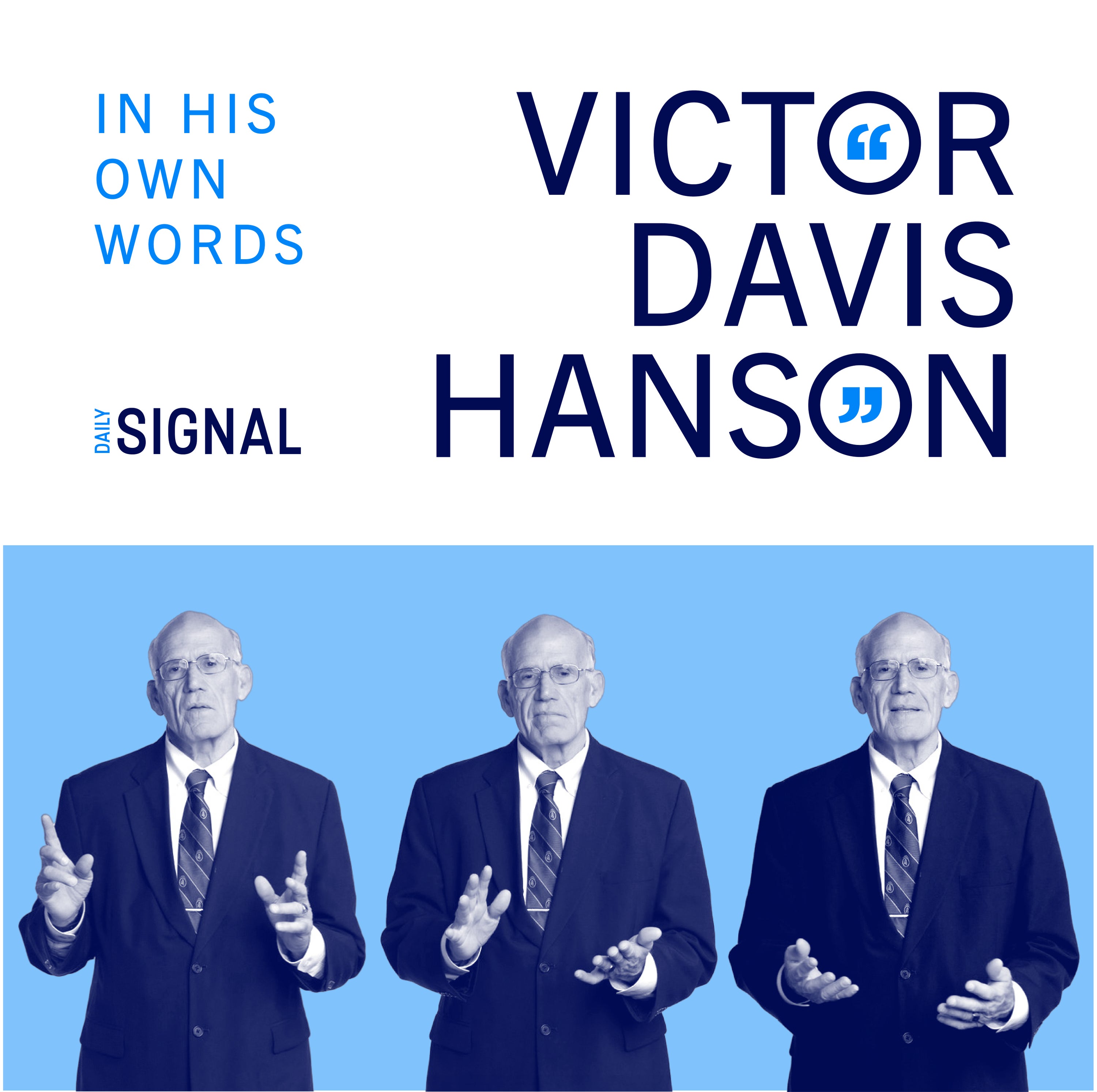
Reagan Beat the Soviets. What Can Trump Learn From His Playbook? | VDH & Roger Zakheim
58m 37s
Ronald Reagan’s military buildup, central to his foreign policy, was not merely a reaction to Cold War threats but a deliberate, long-term strategy known as “peace through strength.” Rooted in the belief that national strength ensures both security and prosperity, the initiative reversed the decline in military readiness under Carter, who was widely seen as anti-defense. Reagan’s administration, led by key figures like Secretary of Defense Caspar Weinberger, prioritized military modernization, including advanced weapons systems, aircraft carriers, and strategic missile defense—such as the Strategic Defense Initiative (SDI)—designed to intimidate the Soviet Union. Despite fierce opposition from budget hawks and public skepticism, Reagan maintained a consistent message, emphasizing that a strong military was essential for both national security and economic growth. The build-up was not only a military transformation but also a cultural shift, restoring pride in the armed forces and overcoming post-Vietnam skepticism. This policy directly contributed to the collapse of Soviet power, culminating in Gorbachev’s 1988 announcement to withdraw from Eastern Europe, a decisive moment in ending the Cold War. Reagan’s leadership was marked by a rare bipartisan appeal, uniting Democrats and Republicans who supported strong defense, and by strong alliances with NATO and Israel. Though politically controversial, the strategy proved instrumental in reshaping American power and global dynamics, with lasting impacts seen in today’s military platforms and defense posture. The legacy of Reagan’s strength-based foreign policy remains a model for how national resolve can drive geopolitical change.
The Reagan said, "Listen, there's two things I will never give away. I'll never give up your freedom and I'll never go up your future." For President Reagan, the Strategic Defense Initiative was about unleashing the American entrepreneurial spirit in the Cold War competition. That's what Gorbachev feared. By God, this president was going to unleash all of that know-how and technology and that freedom on our competition will never be able to keep up. Hello. This is Victor Davis Hansen for the Victor Davis Hansen in his own word show. Sammy's not with us and Jack's not with us because we're doing one of our bi-weekly interviews and we're very happy today to have Roger Zachem, is that the way the proper way? Zachem. Yeah. Zachem, yes. He's got a great new book out, "Peace through strength," how Reagan's military build up one the Cold War. Here it is. It's out. What's the public, Roger? November 17. November 17. So everybody can order it in advance right now, right? Absolutely. Oh, good, good. I'll start right in if that's okay. What do you think, as I was really precipitated, maybe our audience is curious, the Reagan military build up, was it the Carter inordinate, we don't have any more inordinate fear of the Russians or the Iranian hostage or the decline in our military readiness or all of that? I think it was a combination of all those factors and it really began even before Carter was elected. I mean, as you know, then governor Reagan challenged Ford in 1976 for the Republican nomination and part of what was driving that was, he was a big, that his Reagan was a big skeptic of Daytona. He thought Daytona was weakening America, was advancing the Soviet Union. So he pushed the Republican Party in '76, didn't succeed in winning the nomination, but many believe that he won the heart of minds of conservatives through that. And then Carter comes into your point and whatever problems and trends that concerned Reagan in 1976 really accelerated those problems. Why do you think that in '76, the Republican establishment was so successfully able to point, or to paint Reagan as an extremist or a warmonger or a rink'sman, but things had changed. Was it just that the military had declined that much? We were down to, I don't know what it was at 300 ships or major 250 or something. Was it that both sides had agreed that the decline had continued in Carter was just out of his element and that had changed the mood? I think that's right. I think whatever problems there were, Carter just exacerbated them in my book and peace through strength. I have a chapter on Jimmy Carter, the anti-defense president. I mean, he truly, even though he's the only president to graduate from the Naval Academy, this is somebody who was a deep skeptic of military strength. I mean, the concept of peace through strength is this notion that we will be safer. We will realize prosperity if we invest in our strength. And Jimmy Carter represented a point of view where he thought too much strength actually was provocative. And I think we see a lot of that today, certainly on the left and even some on the right. Yes. On the right, we're seeing a re-quadence, re-quadessence of neo-isolationism. Who do you think were the prime, I mean, he had this kitchen cabinet of Casper Weinberger and George Schultz, Richard Allen, but who do you see as the brains behind the idea? Where to put the resources? And we had Lehman and the Navy. Who were the prime drivers of this that really, he listened to the most? Because I know, in your book, you really bring out quite effectively this tension or this rather that it's paradox, and I work at the Hoover institutions, I have to be careful. But that George Schultz, as Secretary of State, was it more of an interventionist hawk than Casper Weinberger was, who had built up this, was almost as if Schultz was saying, you built this huge military, but now it's so precious you don't want to use it. And Weinberger was saying, keep your hands off. I don't want to waste this asset. Well, you're right. This is something that was particularly cute in 1983 dealing with Lebanon, following the peacekeeping mission there and the tragic Marine barracks bombing, which of course was carried out by an Iranian proxy, Hisbalah. We know of that now. We were just learning about what that proxy was then. But I think the first part to answer your question there is, it was President Reagan. That's what's been remarkable about this story. When you go back to 1962 on, you know, sort of, Palisade Stationery, he didn't have an all, you know, it wasn't an office of time, and he has this idea that an all-out race, he writes it explicitly, in an all-out race, our system will win. We run my lose. It was a precursor to when they lose, you believed it, and it's, you know, Dick Allen was one who had that conversation with Reagan when he said it in 1978, when they lose in their conversation. But Reagan was thinking of writing about it as early as 1962, quite remarkable. But to your point, Reagan had a team around him, the most important player on his team, as relates to military buildup, you're correct, was Cap Weinberger, who was known as Cap the Knife. He was a former OMB director. Yeah. People, the conservative, was one after him. They thought he would be a complete failure. Jesse Helms famously goes in the Senate and attacks Weinberger, but Weinberger was a lawyer. And he knew how to advocate for his client, and he understood better than anybody else in that administration, that President Reagan was prioritizing his buildup, not only to be strong vis-a-vis the Soviet Union in the kind of security, the military contest, but President Reagan wanted peace and strength to realize economic prosperity, too. Schultz to your point. I'm a great admirer of George Schultz, too, just to hit on that note real quick. He believed that the military should be a tool of diplomacy. And I'm very sympathetic to that point of view, I think, you know, we're for negotiating with an adversary, you got to squeeze him with strength, Weinberger, of course, developed the Weinberger doctrine, which we hear a lot about. There's six points, I think, you point you up on the book. Yeah. I was reading them very carefully when you had that discussion of them because maybe four of them were pretty applicable to around, you know what I mean? We didn't really explicitly say exactly what the mission was and how we were going to perform it. Yeah. I share that point of view. I mean, Weinberger said, if we're going to go ahead and engage in the use of force, then we ought to apply that force decisively. And we did full expression of the Weinberger doctrine, truly, where we've seen it was in my prologue, right? It does. It does. It does. It does. It does. And we're just going to overwhelm them. Now, of course, not every conflict lends itself to that. It was applicable to desert storm others, like Lebanon was quite messy, a lot of different elements to it. I think President Reagan, though, probably sided closer with Weinberger than then closer with Schultz and Weinberger on that. I think he did want to use his military to advance freedom. And he says as much. One of my favorite quotes of the many Reagan speeches on his buildup, more than people recall, understand is that he viewed his military as a sheltering arm of freedom in a dangerous world. I mean, the more I read your book, and you reviewed the Grenada and Libya and things like that, it seems that Trump is not, he's not an isolationist as the right, as the people accuse him of. And he's not a Neocon interventionist. He's a kind of a Jacksonian, if you look at Soleimani, Baghdaddi, Operation ISIS, the Wagner Group, Maduro, until he ran war, it was kind of like Reagan's one-off things, a hit Libya, hit Grenada, and then get out, hit Lebanon. And I think Reagan was sort of a Jacksonian in that sense, that he didn't have a, he wanted a free world, but he wasn't going to try to implant or force democracy or nation-building areas that were antipedical to it. Certainly not with boots on the ground and extended conflict, but of course, he was very open to using covert operations to push back, and you know, that again is also analogous to what we have to do, what I think we ought to do in Iran. So I think you're agree with that point, but of course Reagan's focus, Victor, was the Soviet Union, and realizing a rollback and applying pressure and contesting. And all the domains of warfare, whether it was layman's Navy Ford strategy, which he fully supported, whether it was deploying, right? The Pershing Two, you know, nuclear missiles into Europe to counter the Soviet SS-20s. These were quite provocative actions.
that people would have thought was perhaps a little more than Jacksonian. I see it, when you talk about President Trump and President Reagan, I think they're both primacists. I think they want America to be leading and winning economically and every since the word culture. Yeah. I agree with that. I had a question. It came out in your book. I think now we forget the level of hostility because where this was, this buildup was going on. I was farming at the time and I remember I got a production credit loan. Paul Volcker was clamping down as you remember and I thought I came out of the production I was 24 and I said to my father, I got a great loan. It's only 13.5 percent and it's a lot better than my card on at 19.9 percent and there were signs around here that a lot of raising growers are going broke and they had Reagan vineyard and that's what they put. When you add the nuclear freeze, that mass, kind of like no kings movement in some ways and then you had the Persian missiles and the economy hadn't taken off in '81 and '82, we had that necessary destroy inflation recession, I suppose. And the prior budgets, as you point out, Reagan got up to, I guess, a $200 billion deficit when Carter and they had about 40 to 60 billion. Were there people in the administration that were thinking of going wobbly at that point with all because his re-election was coming up as polls were bad in inflation, they're fighting the tight money. It was very unpopular and then you had the left coin berserk and said he was a maniac. You lay it out perfectly. I mean, this is so hard to do. Think about what a Democrat or public like ours, what's easy and what's difficult. American people, if the government's going to take your money and they're going to spend your money, they want to enhance their life, you know, make it easier to buy a car, a home, better education, what have you. And here you have, you know, inflation and the cost, you know, up to 20 percent, you know. And Reagan's coming in and saying, no, we have to invest in strength. And his own budget director, for your call, David Stopman, who takes his brilliant guy, he wanted to slow it down. He was pushing back and he just did not buy in that this was the core element of the Reagan revolution. And one of the things I argue in the book, peace through strength, is the number one priority for President Reagan was to restore strength because he believed through it all Americans would prosper. And Stopman didn't understand it, didn't buy into it. He let's show down in the Oval Office with him against Weinberger, sort of epic, you know, two big minds going after it, and of course Reagan was going to side with Weinberger, Weinberger knew it. And then by 1984, we have Morning in America, you know, and then of course, by 1988, Gorbachev is announcing you know, laterally that he's rolling back the Red Army. So Reagan had it right, but at the time people really doubted him. I mean, there's, there's, there's, there's sort of parallels with the midterm election. I've got, you know, I go on about 1986, it's very similar to today. Yeah, he, what, what was your final analysis? I mean, you talk was space, Star Wars was it psychological or given the limits of technology at the time? Was it implementable at a functional level or price or was it more do you feel in retrospect? Sort of a scare that that's in a signal to Gorbachev that we had superior technology and some time in the distant future we could do it or was there elements of it that were implemented pretty quickly? Yeah. I think it's a combination, it's probably favors, you know, I had a conversation with Bud McFarland who was a national security advisor for President Reagan. It was in that White House. It was Deputy National Security Advisor, a big advocate for the Strategic Defense Initiative with Ted Kennedy called Star Wars and it was, it was meant to be ad hominem, but the end became, you know, most popularized it because the movie, of course, was, was so popular at the time. And he explained to me that for President Reagan, the Strategic Defense Initiative was about unleashing the American entrepreneurial spirit in the Cold War competition. And that, in my research and seeing how Gorbachev responded, how he dealt with Reykjavik, that's what, that's what Gorbachev feared. My God, this President was going to unleash all of that know-how and technology and that freedom on our competition will never be able to keep up. And so he really gone his head. Missile defenses, of course, have become so essential to worth fighting. I would argue, as we think about Iran, it's almost made us too risk averse because we think we could just, you know, fire a couple of shots and hide under the shelter and that's not, that's not great to realize some outcomes. But Reagan, as you know, was a nuclear abolitionist, you know, and, and so that's why he was never willing to give up SDI and, and at Reykjavik, after Gorbachev said, we'll go ahead and get rid of all our nuclear weapons. If you do the same on condition, Reagan, you don't go ahead and pursue the Strategic Defense Initiative. Reagan said no. And Schultz and Ray thought he was crazy and he went and told the American people when he was just getting killed a month before midterm election in 1986, Reagan said, listen, there's two things I will never give away. I'll never give up your freedom and I'll never go up your future. And he thought that SDI was a key to American freedom and American future. I can't remember. Was there rumors at the time that people at Reagan had suggested privately he would share the technology or not? Absolutely. Absolutely. It was, he said it to Gorbachev and, and people couldn't wrap their head around it, but, but Reagan was quite genuine in this regard. I've spoken to John Point Dexter, who was involved in that and other people, Paul Leto, who had a very important book on this. Reagan was ready to go up and come out on it now. His Secretary of Defense, Weinberg, who was quite the hawk, was thought that was something that was not prudent at the time. And of course, get Gorbachev didn't know what to do with it. You know, the KGB was telling us just a trick. But I think Reagan, present Reagan was quite genuine about it. We're talking to Roger Zachime, and he's got a new book, "Peace Through Strength." It's a fascinating account. And what I like about this book is everything is documented. It's not a Bob Woodward by any sense of, you know, people's what they think in their mind, put into quotations. It's all documented, all the main players are, and although it's very scholarly, it reads like a novel. I think you'd really like to read it, because in a very strange way, it kind of explains some, not all, but some elements of Donald Trump. I think Trump was more influenced by Reagan than maybe we appreciate sometimes. I think that's entirely true. Yeah. President Trump's a first president since Ronald Reagan to run on a platform of peace through strength. Yes. He is. A couple of other things that were fascinating as well. What was the great disappointment with John Lehman, and he didn't get his 600, his 600 chip Navy? And so he resigns later, but what was the, why was the obsession with 600 chips? Well, it's a great story, John. There's so many colorful figures and impressive figures in John Lehman as a whole chapter about what he did to build the Navy. And he actually resigned, unless because he didn't get to the 600th ship, he was pretty much for them there. His 597. But what happened was he got outmaneuvered in the bureaucracy, where he was, he had his choice to become the next Chief Naval Operations Officer, the CNO, that he felt was essential for him to, to pick as a Secretary of Navy. And it was, they went against his recommendation to pick somebody else based on, on Don Point Dexter's pick inside the White House. And so his, his point of view was, if I can pick my Chief Operating Officer effectively of the Navy, then I, I can't stay here anymore. But it was also so deep into the second term that he had pretty much accomplished all that he had set out to do. And that's the important point about how ideas don't just emerge from when you enter the White House in the first administration. These are things that you have to work on and craft years prior and the 600th ship Navy is just one of them. Lehman was working for Ford in the National Security Council where they did a study and they came up with a 600th ship Navy construct, not for the sake of a number, but Victor was basically because the anti-navelist felt that the Navy's only duty was to do sea control, a squirt, you know, goods and forces into a combat theater and, you know, a lot about this stuff. That was kind of the legacy of Vietnam and Korea, I think. Yeah. And they brought back the Iowa New Jersey, that was. Oh my God. Right. And so Lehman was like, no, we need to have a Ford strategy. We need to keep the Soviets on their heels and Reagan loved this. They went up into the, you know, UK, Greenland, Iceland, UK gap there and pushed in and the Soviets for the first time were saying, wow, some of our assumptions about how we might prevail on a conflict in the US have to be revisited to the same thing in Asia. And it really unsettled the Soviets. We had our eyes on.
under seaworth air capability and then you're to your point about the battleships. This is great. It's actually the cover of the book has the Iowa on there, these huge guns because it's a great one because layman said, listen, we have this capability. I don't need to go ahead and go GWIS technology. Let me go ahead and just upgrade it and it could have an impact on the battlefield and he was right. It did. It played a role in the back of Valley Shelling, didn't it? Absolutely. Yeah. In Lebanon, it protected our Marines. Wineburg is this great quote, talking about the size of these guns and the bullets come on the size of a Volkswagen. I mean, yes. I remember Volkswagen. They were, you know, the Volkswagen did one character. I was curious and you touch on him and here's George H. W. Bush is the vice president. Reagan was not a combat veteran. He had poor eyesight and he was a little older and he did. He was in the military but not in a, but George H. W. Bush had been shot down and rescued. What was his role here? Was he on board or was he, is he, is he, he was worried more about the budget or what, what was, what do you, what do you see his role if any and all of this? So as you know, H. W. Bush competed was a real tough primer against Reagan. He beat Reagan in Iowa in 1980. Voodoo economics and, and his team did not like him. I mean, they had this language inside the Reagan campaign when Reagan was thinking about who was running H. W. there was the ABB, anybody but Bush because they were so upset about Voodoo economics. Of course, the brainchild of Jim Baker, Reagan's future TV staff, a lot of personalities here. But here's the thing as it relates to the military buildup. Bush knew it was good politics and Bush himself knew it was needed. I mean, this is a person who was a CIA director, you know, or in the 1970s. So he knew that America was behind the curve, but Bush himself, you know, just, it was a different kind of figure. He couldn't reach the American people to make the case like Reagan did. I mean, Reagan spoke to the American people every three days he was in office about the importance of being strong, the importance of the buildup, the importance of understanding and taking on the Soviet Union and the threat posed by communism. But George H. W. Bush was a loyal vice president, advanced to cause, and Reagan relied on him. Yeah. The kinder general, kinder gentler nation and a thousand points of light. That was all later, wasn't it? That there was no hint of that, that we're going to moderate that Trump, that Reagan had been outside the sidelines at times and you were, and this president was going to play within normality and traditional, I guess, Marcus of Queensbury rules, republicanism. And Reagan, I think that's why Reagan's appeal was that he was capable in the positive sense of saying anything, anywhere, to do, he was completely unfettered by traditional. I don't know what the word Washington, aristocracy, republican politics, you know, it, it, I think that's what, you get the impression of reading your book that people abroad, beyond predictability of Reagan or the, not that he was wild or indiscriminate, but they, at first, they didn't really know what he, what he was like and the people were really jumpy in Europe. It seems that, you know, who is this guy? Well, he was building the MX missile. He was looking to deploy, you know, nuclear weapons into Europe and the Carter team for years leading up into that 1980 election has called him the warmonger. I mean, it's remarkable. You think about the presidential debate in October of 1980 just before the election, days before the election. It was all about nuclear, you know, brinksmanship and the discussion of what peace looked like. It was absolutely so unusual about foreign policy. We think about that debate and how Reagan got the winning punch to knock out punch with that we better off today than we were four years ago, which was there. But the whole debate, the words you heard most, he was over 25 times each, were the words of talking about peace, the word peace, and the word nuclear. I mean, they, it was, each candidate thought they had the better hand. Reagan's saying that Carter was weak, responsible for malaise and Carter telling the American people, this guy's going to bring us a nuclear war and the American people chose Reagan. And Reagan said, there you go again so many times. And then I think Carter didn't, if I recall, he brought in his daughter, Amy, didn't he, we referenced Amy Carter that is worried. It was kind of like a replay of the girl picking the pedals off in the 64 goldwater commercial that LBJ ran one time that, and then that you hear that bomb did all, but getting back to that, when we, Hollywood went, we're doing the Persian missiles and the talk about peace who's trying, Hollywood was making this movie the day after about a nuclear's, holocaust in the Midwest, average Americans were going to be wiped out. And I guess Carl Sagan was touring the country talking about a nuclear winner. And that had, the more I read, that had almost zero effect on Reagan, but you do say he was bothered by things that, of this mischaracterization, that what was Nancy's view of, was she a moderating trying to say, now calm down, Ronnie, you're, you're just over the top, or was she on board with his, you know, she doesn't figure so much in this book for me, but, but I think it's quite clear from reading others' treatment is that she was eager for present Reagan to get to Summetry, you know, to get into negotiations to do sort of the grand state craft things that, you know, we come to think of. And one of the reasons why I wrote the book is because everybody knows how Reagan, you know, signed this treaty with Gorbachev, you know, and, and shook his hand and brought the Cold War to end. And that's good and true. But the scholarly community, the public intellectuals absolutely ignore this build up. They deemphasize its importance in how it came to drive the end of the Cold War, how it allowed us to win the Cold War, and they don't, they don't talk about how hard it was for Reagan to get it. And it was 1980, Carter thought he would beat Reagan on this issue. As you were talking about before, people in his administration and Congress, not just Tiponiel Democrats, but Republicans and Congress, told him he had to stop the build up because he had to focus on the deficit, you know, and then, and then people like you were talking about said that, well, if you can't continue to build up, because it's going to lead to nuclear conflict with, you know, with the Soviets and, you know, go ahead and negotiate. Don't keep on building. And Reagan stuck with it throughout because you knew that's what would force the Soviets to give in. He got up to break, did he get up to near, and I'm just doing reading this by memory from your book this week. But didn't you get near 6% GDP of defense spending? He did. He did remarkable accomplishment. And we never really matched that again. How are we? I don't know. Absolutely not. I mean, where we are right now, we're below 3% GDP. And Reagan would talk about it. He'd get all upset when when Stockman would say, well, you're, you're, you're, you're, you know, you've got 5% GDP. And Reagan's, you know, his point of reference was it's kind of fascinating because we tend to put, you know, just don't remember it this way. He would always talked about, about Jack Kennedy, how JFK, he did a build up, not, not the same size, but it was, it was 10% of GDP. He's like, why could Jack Kennedy do 10% of you be here? And you're pushing back on me when, when I'm trying to drive this build up, you know, and in some respects, you know, it'd be great to have a Democrat like JFK today, you know, 10% to fence GDP towards a fence and he got to access. You know, one of the fascinating things in your book is you have a chapter on the Nimitz B-1, one, two punch, and these new, I guess I forgotten until I read your book that they call them the super carriers. There was something that no one had ever seen anything about size, but we always think that these buildups, Reagan, this buildup occurred, you know, it's almost been a half century so that the, it's been filtered out and absorbed. But actually, what we used in Iran, we have B-1's we've used and the Nimitz's now are the boat. Reagan's buildup still is with us in some parts, it's carried, carried us through a half century through the Obama and Clinton cuts and people forget that. So a lot of the platforms that he ordered were pretty far seen, I mean, they still have utility. No, I'm glad you raised that. It's, I wouldn't say it's not just some, it's much of our military today is running on the Reagan military buildup by, you know, if this was sort of cars, we would call them antiques. It's remarkable, the B-1 grandfather's flu, B-1's compared to policy day, F-15's, F-16's, F-18's, Bradley fighting vehicles, Abram tanks, Patriot middles, attack them, so you can go on and on, on, on, on the sub end and you're right to talk about the carrier. You know, there are some people today who say, "How we shouldn't have aircraft carriers," right? They're sitting targets for Chinese, you know, missiles, you know, the same argument was being made in the 1970s and Reagan, of course, in his radio dresses before he was president said, "No, we need these aircraft carriers." And you know what? If we didn't have aircraft carriers, how would we have launched our, our strikes on Iran? It's not like those bases were there for us. See, there's a deal very well that they care
have done excursion. They've been attacked by 150 drones and missiles at once, and they've been able to protect the carriers. And it's been remarkable. When he was in this process of building up, what were the reactions of the other cabinet members? I mean, did they think that the 6% plus was squeezing them out? And some people had, you've already mentioned were budget hawks. They wanted a balanced budget, and Reagan had been pretty as governor. He'd been, you know, although he was much more flexible than everybody thinks. He did, he was the first person I had with holding its income tax, and he did sign a very liberal abortion bill today's parliament. So he was flexible, but was the whole Reagan team on that, or was there tension within about this big build up and these tough stance toward the Russian? So the great thing, yeah, yeah. Go ahead. Sorry. They say the great thing about Reagan, he had a considered set of priorities and views before coming into office. So everybody knew that Reagan wanted to do this. Now, the debates circle around how and how much, and that's where really there was division. Weinberg was never enough. I mean, he was that great advocate. He's the hero in this story. So it's his credit. Also always stood with Weinberg on these guys had a serious robbery. We talked about Lebanon, it was manifest in other ways. When it came to defense build up, state department shows us always there. Jim Baker, he just, I don't think he ever understood it. He did, he just, you know, was with Stockman. He couldn't quite understand and get around that this was Reagan's number one priority. And then, and then Don Reagan, the same thing Don Reagan was trying to make deals. And every time Reagan just never landed on the side of compromising in the build up. Now, political realities were such that by the, you know, second term, he present Reagan wasn't going to be able to get the growth he wanted. And there was all concerns about, you know, the $1,500 hammer and waste, fraud and abuse. The toilet seat, the toilet seat and all that, you know, and, and, and so Reagan was very pragmatic in terms of adjusting it. Given the realities in Congress going up against democratic majorities, 1986, there were 55 Democrats in the Senate and 255 Democrats in the house. I mean, and he still pushed and pushed. He was relentless determined to do it because in democracy and one of the messages in this book, Victor, is that if you want to do a peacetime military build up, you, the president of the States needs to back it and push it. It will not happen. It will not happen without a president pushing it every step of the way. It's where our constitution sort of set this thing up. And Reagan did it in peacetime, which is a remarkable thing to do. We're talking with Roger Zachheim. And he's got a wonderful new book, "Peace Through Strength." It's about Ronald Reagan's military build up. And what's fascinating about the book and why I think all of you listening would like it and should buy it is he talks about the status of the eroding military before Reagan came. And we had this idea. It was always popular, but the economy was in rough inherited from Carter. There was a lot of opposition, but it's really a story of Ronald Reagan's willpower and courage, intellectual and moral courage to get this through. And then he talks about the, in very good detail, Roger does about the actual details, how multifaceted this was across the board, and what the legacy has been. And we're going to come right back because I have some more questions for you, Roger. And we're right back with Roger Zachheim. I had it. What was the, you mentioned Admiral Crow. What was the add? Because I think Americans sometimes have a misunderstanding of the military. It seems to me the older I get, that from private to around major, it's very conservative. And then the higher you get, the more people get acculturated with Washington. And the left looks at them and says, well, you know, he was at a dinner party at her night, and he says we can get, you know, DI through much quicker than the Congress just by the chain of command. And they become more left. But were all of the military joint chiefs and everybody in the various services on board, were they ecstatic about this or were they kind of worried? Or what was, what do you think? Because you don't, do discuss the military. I think pretty well. Thank you. Yeah. It's a very important facet of the build up. And it's, it's, it was quite interesting. So on the Reagan revered the military, that's number one. And part of the build up, part of the objective that present Reagan had was to get over Vietnam syndrome, where the American people came to really doubt and dishonor their military. And so the build up was a way for Reagan to restore honor and respect for the military. And so his chiefs understood this and respect him for it. I mean, they, you had enlisted people, Jack Kemp was one of his advisors who was pointed out to Reagan during the campaign. That were on food stamps. That we weren't paying them enough. Our military personnel was fascinating when you pointed out, he increased wages by 20%. Yeah, it was you over a year. It was, it was massive 20% of the first year. Then on top of it again, they needed it. And it was, to a variety of reasons, one, it was the right thing to do. Two, Reagan was building up the military in a, when we had the all volunteer force. Now, you know, now we only think about our military as a volunteer force. But in 1980, you know, it wasn't a few, it wasn't long ago where we had the draft. And so there were people who doubted they didn't believe that you could build up a military. You could have a strong military when we had an all volunteer force. And so there were some in the military ranks, some general flag officers that said, well, if President Reagan is going to do this, we're going to have to return to the draft. And Reagan was adamantly opposed to the draft. You know, it happened under Nixon, but Milton Friedman others, you know, we're, we're big supporters of Reagan because they had alignment that the free people should choose to enlist in the military in a free country. And so the, the cheese really came to respect him. Now there was, on the MX missile, he got into some trouble. He hadn't, they, they didn't back him entirely. And so he sort of cleaned up his processes where before he made any major decision on a weapons platform, military platform, all he went around the room and asked East Chief, are you with me? Are you with me? Are you with me? But he's the first president, for example, Victor, that saluted the military, you know, coming off of Marine one. I remember that. The left went crazy because they said that he did a idiosyncratic salute or he wasn't really a com. Remember that I correct. We think that Trump is unique, but they really went out. It wasn't just Nixon and Trump. They really went after Reagan in a very unfair way. But for Reagan, he just revered. He wanted the American people, the environment and I have a chapter in the book talking about this in a variety, you know, how it so manifest in a variety of different ways. Two, I'll point out. One is he wanted to change the script on Vietnam and he wanted to honor those in the military who sacrificed so much and did good. And he gave, he's the first president to read the citation of the middle of honor, Sarah Lonnie, from Sergeant Abinavitas. One thing that comes across in all of your chapters, chapter's Roger is that, and I'm just putting words in your mouth, so correct me if I'm wrong, that one of the motivations for your book is that the enormity or the magnitude of the achievement in the years hasn't been fully appreciated. And it's time to go back. And I'd like to ask you, so he did all of this through great criticism. Then he leaves office and he had a little rocky end, the midterms of '86 weren't great. And then he had the Iran contra hearings. And he had been weakened by the assassination of shooting attempt. Was there any, I don't know what the word whistfulness or was there any irony that you think that people around him felt that here they had done all the heavy lifting. He goes out of office, maybe not appreciated immediately as he would in time. And then George Bush comes on and the Berlin wall falls. And he's in a 91 war and he's got this wonderful military he inherits. And nobody at that time was saying, well, it was Reagan that made the wall go down. It wasn't Bush. And it was Reagan that freed the Warsaw Pact. And it was Reagan who collapsed the Soviet Union. And it was Reagan who really won the 91 Gulf War. But you never really got that at the time. Yeah, part of the motivation here is to make sure the record is clear. I do think people know that Reagan was the one who just made the huge shift from day-taunt, where we thought that the Soviet Union and Communism would be a permanent fixture in the world. And we just have to deal with it to say no, we're going to roll them back. That's what Reagan contributed. That's what peace to strength sought to do. You know, and after the Gulf War 1, you referenced that one. It was then Secretary of Defense Cheney. This is the prologue in the book. First thing he does is he calls a president Reagan and he said, hey, I'm calling to say thank you,
Mr. President, President Reagan's like, what do you mean he goes, well, we could not have won this war without your military buildup. And that's true because it's of all the systems and platforms and the way of fighting that Reagan supported in his buildup. And I think, you know, we tend to focus rightfully on the fall of the Berlin Wall as that moment where the Cold War came to an end. But I argue at the end of the book that actually there's a far more or equally consequential moment. And I referenced it before, it was December 7th, that date, you know, quite quite significant in American history, terms of Pearl Harbor, December 7th, 1988, Mikhail Gorbachev comes to the UN General Assembly and announces to the world that he's going to roll back his forces in Eastern Europe, the captive nations that were what were subject, their slaves to the Soviet Red Army, he announced they're rolling back. That was within President Reagan's administration. He comes in in 1981, we're in this malaise, we have the inflation, we have, we're dealing with Carter, the Afghanistan, right? And then by 1988, the Soviet Premier, unilaterally, announces the roll back of his forces. I want to, we're talking with Roger Zachheim and he's got, as I keep saying, this wonderful book piece through strength, it's going to be out within two weeks and you'll be able to get it online or in any bookstore. It's a fascinating story about how Ronald Reagan really saved the United States in a sense by recalredding and boosting our military and we'll be right back from our sponsors. And we're back, I'd like to go back just to the beginning because I kind of didn't, because you have a rich introduction and also you get, you give a good mood that Reagan had been kind of a voice in the wilderness and said that we don't build up. And then all of a sudden, when he was running, and I didn't realize this though in the Gallup poll, three weeks before, or maybe it was four weeks, I think it was a wrong poll, but Reagan was dead even or behind Carter. And I didn't realize it. And that had shocked everybody and people said, well, he's too warlike. But there were, we forget now, and you point them out, there were a lot of events that shocked the nation. It was the Soviet invasion of Afghanistan. It was the hostage-taking and the enemy response from the Carter administration. It was all these stories about the erosion of NATO military resident readiness. And then that, which was used to devastating effect in the campaign, Carter said we were over our inordinate fear, it was almost like a perfect storm and he was, he was the right person at the right time and the right place. And he knew he was. And that's, that's very rare. Yeah. And that was, and it's exactly right. I mean, I wonder if we do the counterfactual of President Reagan, whatever been elected, had Jimmy Carter not won because he just made all this, all of the things that Reagan had warned about that if we're not strong, our enemies will exploit that they, that the Soviet Union was expanding and exporting communism around the world and America was weak, you know, people sort of shrugged that off. Maybe he, Reagan had convinced conservatives in 1976, but he hadn't convinced the country yet. It was playing out before their eyes throughout the Carter administration so much so that Carter's own Secretary of Defense, Howard Brown started, you know, trying, changing his tune and trying to warn the president that his Carter about it and Carter who was so anti-defense looks at him in one national security council meeting or meeting with him and his national advisor. Carter says, they're not the problem. You're the problem. Don't talk to me about, you know, that, that we have to get stronger. And Carter's worldview, it's, this is also surprised me till I got into the research. He believed the Cold War was over. Reagan had to remind people that this regime was threatening to us and, and Carter's mind said it, it, it was fixed, you know, we can live in that world and, you know, okay, so we'll, we'll have to sort of accept the world as it is and America's reached, you know, we'll just have, be limited by this force, but at least, you know, it was, it was in Reagan's mind, it was a false piece. It was a piece. And I thought it was, you mentioned in passing, Henry Kissinger and I, I, I get the impression your, and, and correct me if I'm wrong, but the, the, the portrait, it's not a large part of the book, but he does, he's kind of in the shadows and you say that Kissinger may be privately understood what Reagan did and that he should have been able, if he had those tools or he would advocate, but there was something, whether he was operating within the channels with Nixon Ford or he really did believe that his diplomatic skills were of such a, such so well that he could talk and make deals, but he, he'd kind of miss the boat, whether it was his fault or not. Is that, is that a fair description of what? Yeah. I think Kissinger's fascinating in part one of the book, which is all before the presidency, he keeps on appearing because it's, you know, I didn't quite understand until I got into the research that the country, Republicans, conservatives couldn't imagine having a Republican foreign policy without Henry Kissinger in the middle of it. It was just sort of like in the, in the muscles of, of, of other Republican party because he was so omnipresent during the Nixon in 40 years, of course, other than Marco Rubio, nobody else has held the position of Secretary's Date and National Street Advisor, but here's the thing about how thought through Ronald Reagan was. He fundamentally disagreed with Kissinger. He funding to believe that Dayton kept us weak. He funding to believe that Dayton invited the Soviet Union to get stronger and he could never adopt that as Reagan, the Kissinger outlook. And I think Dayton had run its course and started having diminishing effects for the United States after the Vietnam War once we pulled out. And so Reagan would accommodate discussions with, with, with Kissinger, would call him off, consult, mostly in my judgment because he wanted to avoid the bad headline that says Reagan rejects Kissinger. They didn't want to give him, you know, the press that fuel, but he had no intent of bringing Kissinger into his administration to place out in the 1980 nominating contest where Reagan needs to find a running mate and he's thinking about bringing forward a long, right? And sort of odd dual presidency concept and Reagan's like, it was just, it became too much for Reagan to accept, in part because the expectation is that he was going to bring Kissinger on board, he was never going to do it. Al Hegg doesn't really figure much in this does he? Was he, was he considered by Reagan as he got to norm too erratic or what was the problem there? You know, Al Hegg was supported Reagan during the campaign, of course, he was his first Secretary of State and was quite accomplished, Nixon writes Reagan the letter, handwritten letter to him, all the things he should do, including bring Al Hegg on board and the like. But once he's in the administration, he had a big ego and he thought everything had to run through Al Hegg and Reagan was not somebody. I think one of his weaknesses is gaps was management and firing people and looking at his team and seeing where the problems were. And you read Reagan's diary, which is such an essential book, Reagan's diary is remarkable. And you could see his building frustration with Al Hegg and even Reagan didn't like to fire folks knew he had to go. Same thing with Don Reagan too, yeah, well, and that was when I don't think, Dal Hegg ran a foul with the first lady, Don Reagan did. In all of this, it seems like one of the voices of 110 support, 110% for Reagan, that transcended his role as attorney, it was Ed Mise. He seemed like he was a very sober guy and that Reagan really trusted this judgment. He was on board on all these key, is that a right appraisal of Mise's role? A hundred percent. Mise is one of the original Californians, the kitchen cabinet, a person who truly understood Reagan. If you understood Reagan, you recognized that piece through strength. Rebuilding the military was in the DNA and Ed Mise was all bought in, his portfolio didn't quite touch it, but he was quite close with Cap Weinberger from their California days. And so, I mean, SDI is a fascinating story. We had it a little bit earlier, but it was an initiative that came out of the White House. Don't forget this. It wasn't something that is Secretary of Defense or his Pentagon came up with. And Weinberger gets a wind of this plan because he was back channeling with Mise. He was trying to make sure that President Reagan would be able to announce it in the fashion he wanted, at the same time, wouldn't do it without making sure his Secretary of Defense was aware. I have a fight at our times in. I've got to let you go because I'm sure you've got a lot of interviews coming up. But one final question. And you mentioned these people that popped in. The Democratic Party, even though Carter was erratic, and there were members of the Democratic Party like Henry Jackson or Talmage.
That actually went along with Reagan in some, in a way that we don't have now in the Democratic party. I just can't see a Republican president without the House and Senate getting things through on military defense and working with this current generation, or at least the generation that snouled the force or the real nexus of the Democratic party. In a way that Reagan did, I mean, it wasn't just people in the House, the speaker and people that he could get along with, but there were people in that that Democratic party that were, I guess you could use the word "hawks." No, absolutely. Yeah, no question you're right. There were Reagan Democrats. That was like a real thing. And there were Democrats, like Sam Nunn and Henry Jackson, who were critical of Carter, because they thought his anti-defense posture was really weakening the United States of America. These were centrist deeds. Neo-conservators come to mean, who knows what that means now, but back then, you had many Neo-conservators, people who were Democrats, who were. Jinko, Patrick. Yeah, in Reagan's cabinet. Norman Pohoret serving Crystal. Absolutely. That really helped. I mean, that really, and I think I had forgotten that, but Norman Pohoret serving Crystal, Bill Bennett, Oh, Don Kagan. He was a well known guy. And I guess you could say, "Midgetector, all of those people kind of flipped." Reagan recruited them, Dick Allen helped recruit him. And Dick Allen was with Hoover. I mean, this was something that was part of his campaign. He wanted to bring these voices in. And she was very instrumental, Jinko, Patrick, wasn't she? Oh, yeah. And he really adored her, didn't he? Absolutely. You know, think about, you know, the sort of liberal commentary at Pregist Against Reagan, wanting you to believe that this was sort of the Hollywood actor without depth. Reagan was reading commentary magazine. He was reading human events. You know, and he read, and he had his advice. We're sending the articles to read. He wrote a personal letter to Jinko Patrick to come over and discuss her commentary article about. You know, autocrats and freedom and democracy and sort of how you have to engage them. And they had a meaningful kinship. Well, I had one, and this will be the final question. But what would, it seems that we remember when George H. W. Bush came in, and we had the Gulf War, and there were all these tensions with Israel. I think Jim Baker either unfairly or accurately was quoted blank the Jews, because he was. Reagan never, for someone, Reagan always had, he wasn't obviously a zealot, but he was had a very admirable role with Israel. He appreciated that role that it served in the Middle East. And you don't see people, I mean, this is very controversial now, but it's amazing that. Reagan was able to instill a sense and his administration that Israel really was an ally. And it was kind of an outpost of the West and a very dangerous territory that we kind of missed today. Yeah, well, some people are missing it. You're not. And I think the majority of the American people are not. So I think there's a good reason why the majority of the American people view Israel as an Allen as a friend. And Reagan, present Reagan is a law creditor for that, because he absolutely advanced that relationship. And recognized, as you said, outpost of the rest, a democracy, an ally that would support us and work with us. And there were tensions, too. Mr. Markable relationship between Reagan and Reagan. Lebanon was complicated for the U.S. what was going on at that time. You had the A.W.A. sale when Reagan sold the U.S. approved the sale of a major intelligence aircraft for the Saudis, the Israelis were very much opposed. But the way Reagan got through it is because, of course, a president always acts within the National Interest of the United States. And he felt it was in the National Interest of the United States to be a supporter of Israel, to be a friend of Israel. And, you know, he was definitely the strongest supporter of Israel we've had as a president. Probably until Donald Trump. Yeah, I think he was. It seems that the Europeans, the more they change, the more they remain the same, when he had the Libyan bombing. I mean, they wouldn't let us use their airspace. And that was, what was Reagan's attitude toward the Europeans? Was he, and Nixon always said it's going to be the year of Europe, and then he would get disappointed. But I can remember during Nixon's administration, I was living in Greece as a student. And we went down to Crete because American phantom jets were not allowed to fly over Europe to supply Israel. So they were going through the Mediterranean landing on American carriers. And then they couldn't use the NATO base there in Hanyan. And we were watching them as kids. And then I remember the Greek newspapers that was, you know, they were pro-American dictatorships at that time. But the people were very anti-American. And they were, they were printing stories that the Soviet Union was using Greek airspace and European. And we weren't allowed to do it. And I had forgotten just that they had been this way as we saw in the Iran War for a house. Well, you're right to point out the Gulf of Sidra and the French. And there were some reasons why the French were pretty upset with us. There was the whole story there. But fundamentally, Reagan believed that our allies, our part, you know, the Western European partners were essential to winning the Cold War. That it was our comparative advantage. And he had a great relationship with Maggie Thatcher. He had a great relationship with Helma Cole. He worked with Mineron, you know, Trudeau. And these names don't go away, right? Trudeau was the one that was a bit of a liability. And he was so pleased when he had a Mulroney to work with the governor. But he made NATO stronger. He knew the United States was stronger with the strong NATO. And NATO forces actually were built up during his time. But it was American led. And Reagan always wanted to American led. That was the lesson he tried to convey at a speech at point to Duhaugh on the 40th anniversary of D-Day. That was a speech against isolationism, a speech for democracies working together. Yeah. And the Falcons, the more I read about the Falcons, it was at the beginning of the build up. But the British, if they did not have American fuel and backup support intelligence, I don't think they would have been able to take back the Falcons in the way they did. Absolutely. And Weinberger was big support of that. My dad, it was a Reagan official in the Reagan Pentagon. Please, you raise that, Victor, I'm going to tell him because he was the defense official that Weinberger assigned to give the Brits of support to prevail in the Vocalans. And he must have blocked horns with Al Hegg. I remember he was more saying that we can. He was fully opposed. Yeah, Maggie was pretty upset about it. Yeah. He said, we can't endanger our Hispanic boat and our South American friends, even though they were dictated. And the Zachime family lore, this is this is big Weinberger, you know, assigned my dad the role and he sort of worked around Al Hegg to give the Brits of support. Well, we're out of time. And I really want to thank Roger Zachime for spending some time with us. The book is peace through strength. It's Regnery history. It's it's just chock full of advice and just you can see that Roger has all these facts at his fingertips. And it's a it's a it's a wonderful read. I think I started it and I couldn't put it down. It was so exciting. And I hope you all go on by it. And Roger, thank you so much for coming on our view of you. Thank you so much. Okay, thank you.
Podcast Summary
Key Points:
Reagan’s military build-up, known as "peace through strength," was a deliberate strategy to counter Soviet power by investing in military strength, technology, and American entrepreneurial spirit, which he believed would lead to both security and economic prosperity.
The buildup was driven by a combination of Cold War anxieties, including the Soviet invasion of Afghanistan, the Iranian hostage crisis, and declining military readiness, which intensified public and political fears during Carter’s presidency.
Key figures like Caspar Weinberger championed a robust military posture, advocating for decisive use of force and a "Weinberger Doctrine," while George Schultz emphasized diplomacy and restraint, creating a tension within the administration between hawkish and interventionist approaches.
Reagan’s Strategic Defense Initiative (SDI), or "Star Wars," was not just a technological project but a psychological and strategic tool designed to intimidate the Soviet Union by signaling superior American technological capability and resolve, which deeply unsettled Gorbachev.
The military buildup faced fierce opposition from budget hawks and political critics, including in Congress, but Reagan persisted, ultimately achieving defense spending near 6% of GDP—far above previous levels—and laying the foundation for future U.S. military power.
The Reagan administration successfully reinvigorated public trust in the military, overcoming "Vietnam syndrome" through better pay, respect for service members, and visible military strength, such as the deployment of aircraft carriers and advanced weapons like the B-1 and Nimitz-class supercarriers.
The build-up contributed directly to the collapse of the Soviet Union, with a pivotal moment being Gorbachev’s 1988 announcement to roll back Soviet forces in Eastern Europe—long before the Berlin Wall fell—demonstrating the effectiveness of Reagan’s strategic pressure.
Reagan’s legacy includes a rare bipartisan coalition of Democratic "hawks" like Henry Jackson and Sam Nunn, who supported strong defense, and a deep alliance with allies like the UK and Israel, reinforcing NATO and democratic values as central to U.S. foreign policy.
Summary:
” Rooted in the belief that national strength ensures both security and prosperity, the initiative reversed the decline in military readiness under Carter, who was widely seen as anti-defense. Reagan’s administration, led by key figures like Secretary of Defense Caspar Weinberger, prioritized military modernization, including advanced weapons systems, aircraft carriers, and strategic missile defense—such as the Strategic Defense Initiative (SDI)—designed to intimidate the Soviet Union. Despite fierce opposition from budget hawks and public skepticism, Reagan maintained a consistent message, emphasizing that a strong military was essential for both national security and economic growth.
The build-up was not only a military transformation but also a cultural shift, restoring pride in the armed forces and overcoming post-Vietnam skepticism. This policy directly contributed to the collapse of Soviet power, culminating in Gorbachev’s 1988 announcement to withdraw from Eastern Europe, a decisive moment in ending the Cold War. Reagan’s leadership was marked by a rare bipartisan appeal, uniting Democrats and Republicans who supported strong defense, and by strong alliances with NATO and Israel.
Though politically controversial, the strategy proved instrumental in reshaping American power and global dynamics, with lasting impacts seen in today’s military platforms and defense posture. The legacy of Reagan’s strength-based foreign policy remains a model for how national resolve can drive geopolitical change.
FAQs
Reagan viewed SDI as a way to unleash American entrepreneurial spirit and technological advancement in the Cold War competition. He believed it would demonstrate American superiority and pressure the Soviet Union, which he thought would be unable to keep up.
The buildup created significant pressure on the Soviet Union, leading to Gorbachev's decision to roll back military forces in Eastern Europe. This shift, announced in 1988, marked a turning point in the Cold War and signaled the beginning of its end.
Casper Weinberger, known as 'Cap the Knife,' was the primary advocate for military strength and pushed for decisive use of force. George Schultz emphasized diplomacy and viewed the military as a tool of diplomacy, creating a contrast with Weinberger's more aggressive stance.
Yes, there was significant opposition from budget hawks and some in Congress who feared inflation and the risks of nuclear conflict. Reagan remained steadfast, arguing that military strength was essential for national security and economic prosperity.
The buildup helped overcome 'Vietnam syndrome' by restoring honor and respect for the military. Reagan increased military wages and emphasized a strong, all-volunteer force, which earned respect from military leaders and helped rebuild public confidence.
Reagan strongly supported Israel as a vital democratic ally and worked to strengthen NATO, believing that close alliances with democratic nations were essential to winning the Cold War and maintaining global stability.
Chat with AI
Loading...
Pro features
Go deeper with this episode
Unlock creator-grade tools that turn any transcript into show notes and subtitle files.
 PodcastTranscript AI