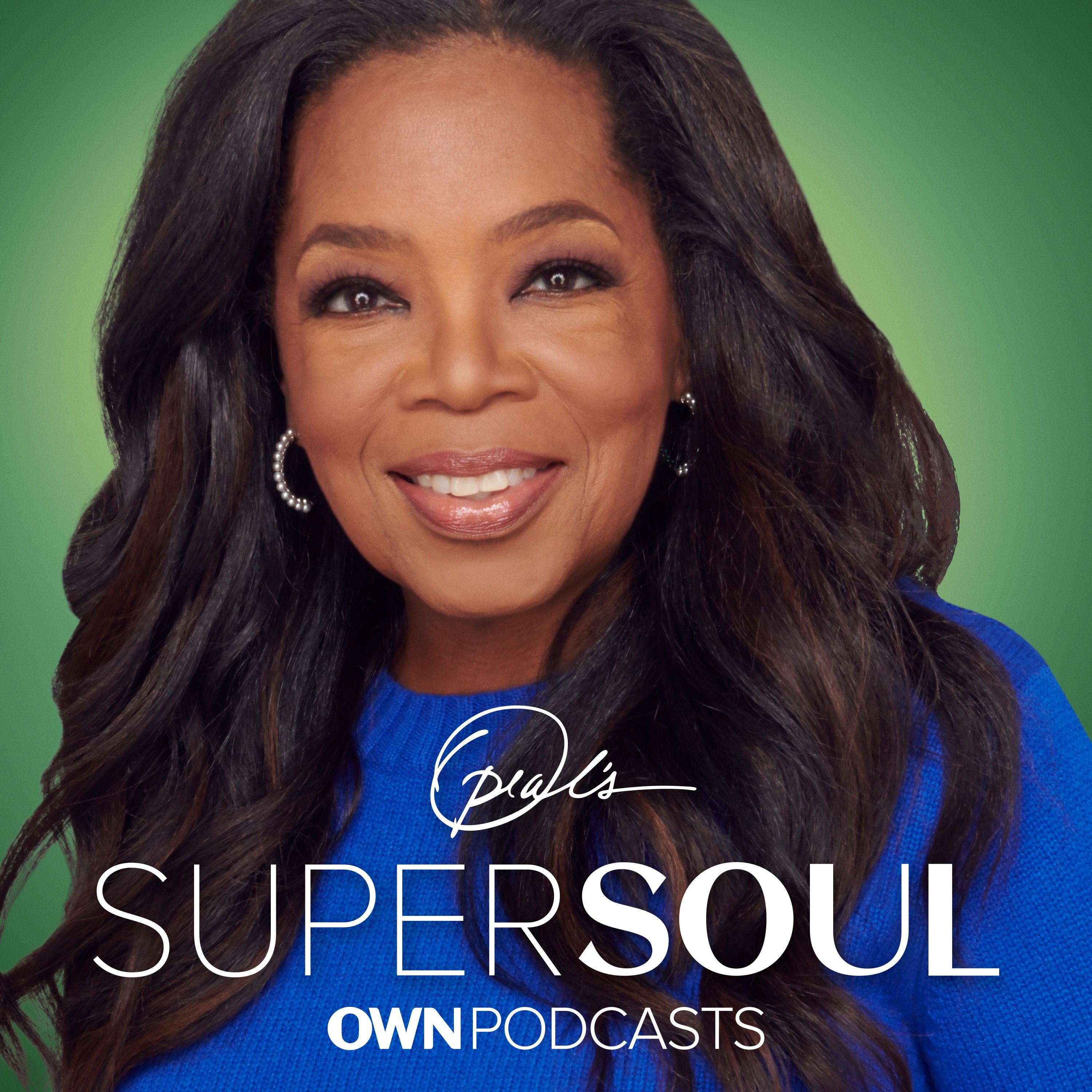
Ralph Lauren, Part 2: Celebrating 50 Years of Design
from Oprah's Super Soul
27m 45s
Oprah Winfrey reflects on her 50-year journey in fashion and design, emphasizing authenticity over trends. She believes true success comes from staying grounded in one’s identity, values, and purpose rather than chasing popularity or external validation. Her work, from founding Ralph Lauren to launching the Ralph Lauren Center for Cancer Care, reflects a commitment to quality, diversity, and social good. She credits her longevity and impact to intuition, self-awareness, and surrounding herself with trusted, talented people. Despite acknowledging societal challenges like racism and civility breakdowns, she maintains a hopeful outlook, seeing growth and transformation as inevitable. Oprah views legacy not as a tangible achievement, but as the ripple effect of lives influenced—especially through her advocacy for women, inclusion, and compassion. She shares a personal sense of fulfillment found in simple joys, like her old towels or childhood memories, and stresses the importance of staying present and grounded. Ultimately, her story embodies the American dream through resilience, integrity, and a deep belief in human potential. Her philosophy—rooted in humility, empathy, and quiet strength—offers a powerful model for personal and professional success in an ever-changing world.
I'm Oprah Winfrey. Welcome to Super Soul Conversations, the podcast. I believe that one of
the most valuable gifts you can give yourself is time, taking time to be more fully present.
Your journey to become more inspired and connected to the deeper world around us starts right
now. Welcome to part two of our conversation.
We all know technology is changing the world of the speed of light. What do you think fashion
is going to look like the industry is going to be like in the next 50 years?
Probably would be something I could never tell you because I don't know. Fashion changes
and it doesn't change. It moves. The industry is changing with the internet and all the things
that are going on and how to sell and how retailers and solar businesses are changing.
I believe that if you -- 50 years of long time in an industry that has changes overnight
and has in and out and the key is how did I make it for 50 years? I think it was paying
attention to change and also having a sense of what I was doing and who I was and what
did I have that made you want? Because I didn't have the schooling at the same time.
I went and did all these things and I'm aware of change and I'm aware of the sense of knowing
who you are and not going with the fashion trend at the moment and saying this is who
we are. And I think that's what I would say to young people all the time about people
in fashion is don't pay attention to what the right is right. Just pay attention to what
you believe in. And you were solidly clear about that?
Very clear. Very clear. I've been clear today. Have you ever been tempted to stray to
follow a trend to be like the others? I am. I have my moments. I have young kids and
some of the neighborhoods, the lowboys and guys in Japan and they collect my clothes and
they're 20 years old. So, you know, I know there is a quality that it's timeless.
It's timeless for me and it's timeless for other people. It's timeless for women. That's
who I am. And it's not about am I conservative or my classic. It's about knowing how to change,
knowing how to move, knowing how to update yourself and knowing what to hold on and not lose
your sense of who you are.
You told Forrest Magazine that I'm not a fashion person. I'm anti fashion. I've never
been influenced by it. So, help us understand how a fashion designer is anti fashion.
That's a title. That's a title. My inspiration is I want to be the guy on the horse in cowboy.
I want to be, I want to be the guy on the movie. It's got the tweed jacket. You know,
there are symbols of things that make you, that excite you. You know, if I look at an old movie,
1930s movie, black and white, and I say, "Wow, I love that movie." You know, that still exists,
1670 years later, that still exists. So, change is important, but knowing who you are is very important.
So, you're the official designer for the U.S. Olympic team and Paralympic teams. The U.S.
opened for tennis and the U.S. opened for golf. And you told me once that you designed for America,
what is that idea of America mean to you? Well, I was born in this country. It'd been very good to me.
When I started, stores came up to me and wanted to buy my clothes. They were very enamored by
Europe and not America. The old thing had only happened over there. That's when I really felt
my patriotism as whatever you want to call it, is when I felt there was so much in this country
that was exciting and so much that was interesting in a white cloudboard house in a log cabin and
things that I just, they had a whole pile of romance for me and I saw life living and also the
clothes that you'd wear in that world. So, it was the pioneer spirit. It was the natural spirit.
It was old leather saddles. It was all the kind of things that have a timelessness and America
has a lot of that and we're known in America for mass production. And I think America,
and what my goal was to show you how America, that someone from America make beautiful quality.
Because if you go to the store and you start to look at the American products, you say,
"Well, at least this is not the same as I'm good and Italy. This is not the same in Paris."
Right, right. And as America, I don't know, I had an effect on me. I had an effect because I felt like
I could make great stuff and I want that great stuff. I want that handmade jacket. I want that
and I felt there were other people like me and that's how I worked.
You know, there's a collective feeling that we're in the midst of a breakdown and civility
in America. No one taking the time to listen to each other. Do you feel the shift in how we're
treating each other? And how do you describe these times we're living in? Does that affect the way you
design? Well, it affects the way I live and who I am. I have an optimism about design. So my
world is optimistic. I think we're going to go through it just like we go through other things.
We're going to go through whatever bad times we're having now. And actually sometimes things
have to take a little longer to go and find its route. And I think that that's where we are.
I think, you know, I don't like how we appear right now. I think people when they interview me
say, "What do you think of America now?" And it used to be that I would come to Europe and they
would say, "I love America." You know, they were very enthusiastic. We're hammering it down a
little bit and it's a little tough time. It's a tough time in this country. But I think we're going
to be okay. In 2015, you stepped down, C-S-E-O, of the Corporation, Ralph Long Corporation.
But you remain chairman and it's chief creative officer. Did you know in your bones that that
was the right decision? Did you? Well, it was the wrong decision at that moment. And I changed it
and went the other way. And very happy this way. But I have a great CEO. I've always had
partners working with me, people that are financially toned to know what's going on.
I don't think you can do it all to yourself. I need one of the things that can do it all to yourself.
Especially as fast as it is. And so it's a very big company and it has to be turning the right
way and it needs to be able to communicate within itself because now I'm all around the world.
So I'm in China, I'm in Japan, I'm in Russia. I don't think you're ever going to retire, will you?
I think people tomorrow night are waiting to make the sale retire. I would hope that I know when
I should retire. And then I'm watching baseball player or watching a boxer through my years and
saying, hey, shit a quit. Don't get killed then. I think I'm tuned into where qualities that are
good and where I'm weak and where I'm not weak. Where are you weak? Well, I can't do everything.
I think weak in terms of when you have a company that is large, you have to make financial
decisions. You have to make a lot of different decisions. It was difficult to close those stores.
I think it was 2016, you closed 50 stores. It was difficult because emotionally, you build
something, you think it's going to be forever. And learn your process. We all go up and down.
I have had a very consistent point of view. I built a very good company. Companies go through
ups and downs. People go through ups and downs. And you've got to accept it. And I think what
happens when you get older as you become more experienced. You realize that you don't know
everything and you've got to get the professionals with you. But you're going to get the right
professionals. And that's the most important thing. That takes time finding the right leadership.
Well, that's important for them to communicate with you so you're both in sync with each other
as to where you want to go and who you want to be and what you see. Well, it was 1994.
You became the first designer to hire an African-American Mayo model as a face of your brand.
Tyson Beckford, I remember that. It was such a big moment. How can fashion better represent
the diversity of the country? Very much. I think fashion can. We're learning. The world is
changing. What I learned in the '50s or '60s is not the same as today. And I work with all kinds
of models. And Tyson is a handsome guy that I said I want this guy to be on cover. I think it's
exciting. Unfortunately, that was considered a bold move back there. Well, I think America is
getting an education. We're getting an education about racism and where the world is on. What's
right or wrong? How to treat each other? Women's rights in all the areas. But if you look at some of
the designers today, you have people that have talents that are all over the world. And I think
the world is changing. It may take a little longer, but fashion in the fashion industry, that's the
industry, I think, that has no sense of negative sensibility about models or actors or the sensitivity
[BLANK_AUDIO]
to do the right thing. So your story as you know is the definition of the
American dream and for 50 years you define what that looks like to the world. Do
you think that this American dream can still exist? We could there be another
obviously not another Ralph Lauren but your story is that story still possible
for people the way we're the world is set up. I have to think it has to be
possible because we go forward and as much as you think well look at people would
say look at all the designs what's going to happen when they're not here. Well
the world doubled and quadrupled and there's more designers now than ever has
been and so I think there's a I think there's a world that's changing and
growing and designers are growing it's a lot of designers some of them should
make it and some won't make it but there is going to be a change and is there
another Ralph Lauren? I'm sure there is. So women's wear daily often call the
Bible a fashion. We recently published this book as we talked about it earlier
chronicling your dazzling 50 years in the business and you said looking
through the pages is like looking through the most beautiful album but not only
your work but also your life. One of my favorite poems is by Derek Walcott it's
called Love After Love and he says the time will come when with elation you will
look at yourself in your own mirror and he goes on to say you will be able to
sit and feast on your life. Are you able to look through the pages and sit and
feast on your life? I think I do. I think I enjoy what I see and it reminds me of
what I've done because we do forget every once in a while it is important to you
know when I in my office I have more kinds of pictures and all kinds of trophies
and things. I forget them but every once in a while I walk through my office
quietly and I look at the things and I look at the pictures some of the people I
know and some of the toys I've been given and it makes me smile it makes me
happy. I'm very happy in my office. It's a world that I sort of built around
myself of things that I love whether it's old cars or whether it be little
antique shoes or whatever it is how they came about and how they integrated in
itself I don't know but my happiness is really a very I love what I do and I
wouldn't want to trade it I wouldn't want to trade it with anybody I'm very happy
with what I achieved I'm happy. What do you want your legacy or hope your
legacy to be? I had this wonderful conversation with Maya Angelou before she died
and I was cheering with her how excited I was about opening my school and I said
oh my I wish you'd been there because the school's going to be my greatest
legacy and she said you have no idea what your legacy will be because your
legacy is every life that you've touched and when I think about you know in the
personal and impersonal ways you your brand has touched my life I remember
growing up thinking what real wealth was was being able to have good towels so
as soon as I made any money I went I've shared this before I went to the Ralph Lauren
store and I bought all the Ralph Lauren towels that could fit into my linen
closet and had them folded the same way you all folded them in the store so that
when I opened the cabinet it would look like a Ralph Lauren store and that was an
aspirational moment for me I felt like now I've made it and when Barbara Walters
came to do her first interview that's what I wanted I showed her my towels she
said what have you done as a worthy person I go would you like to see my
Ralph Lauren towels yes so your legacy I think I feel this I don't know what my
legacy is I don't know if I want to take a legacy I want to just continue doing
what I'm doing and we're doing whatever I can to make things better what do you
whole secret the question I don't know if I can answer that question because
I never thought of that I think of myself and my how I am as a person I've
made mistakes I'm not I'm not an angel I'm not God but I do see goodness in the
world I do have one I don't want to give you all these books smoke at you I really
feel good about being good I feel good about doing the right things I'm very
busy with a lot of worlds and a lot of things so at some levels you miss each
other you know I've been married for 54 years that's a long time and you miss
each other you can have a conversation you're living together and you have an
occupancy why we have that argument and I don't want to hurt that person and so
you go through things and you you forget so what I do like is as I'm looking for
peace and comfort I'm I you know I have what I need I I don't want to not work
because I love working I think I I want it to give when I open this place in
Harlem the Ralph Loan Center for cancer care I was very thrilled I did that I
was thrilled because I had nothing to gain out of that there wasn't a public
relations you're just doing it to create awareness with the public relations plan
I would have hated it yeah so what I don't want is that I I'm really still a
very simple person I don't feel like I'm sorry 15 years now because in 2003 you
did that the cancer center yes yes yeah so things don't always work as well as
you want them to work but you know I think you got to stop and smell the roses
occasionally I just wanted to say though that the pink pony campaign is like
the worldwide initiative helping to ensure access to quality treatment at an
earlier more curable stage for for women that's what you've done so that will
be a part of your legacy well I don't know how you add up legacies yes it's
every life you touch I love that one so when you sit on the perch of your life
and you're feasting on your life that beautiful point at what point did you
say oh gee I'm successful and how do you define that I never said it never said
I am aware of it I'm aware of success I'm aware of being recognized I'm aware
of getting the best seed that want to go into a restaurant and I like it but I
don't want to need it I don't want to need it I think I think I see too many
people needed and I want I'm free of that and I'm not totally free yeah you know
yeah I would say that too I would have to agree with you because when you've
had it for so long you don't know what it's like not to have it you know so it
just feels like I know because I have I have some nice things and and I'm aware
all the time I'm totally always aware of remembering what it was like when
and have it really yeah don't you think that's the best though I actually think
that having grown up not having things yes makes me so much more appreciative of
the things that I have yes and having grown up not with this whole sense of
beauty around me I didn't even have what you have being able to I didn't even
know it existed there's me a greater sense well I had the same thing you're
aware of what who you are but when you grow up and you don't have I remember
going to a friend's house and this guy and he opened the closet to his father's
father's closet and he had shoot trees this is almost like your towel story he
had shoot trees in all of the shoes and I said wow that looks great and I went
home to take a look at my shoes with thrown into my closet all over the place
and because I had two brothers I have two brothers and a sister and we used to
share the closet so you could imagine yeah it sounds like it's romantic
wasn't so romantic I lived I lived on a cot in a in a three-room apartment in
Lebronx with my with my family and the cat didn't look too good when I took
pictures of it I couldn't wait for my brother one of my brothers to get married
so that I could have his drawer in the closet did you choose shoot trees I have
shoot trees now and I love it was there a choice that you had to make that
allowed you to fulfill your destiny of being who you are sitting where you
are now that was difficult you never did I have a choice I did I really didn't
stop and say this is what I'm gonna do or this is the I'm gonna make a right
turn here I left turn here I did it every day every every day at work so you
just operating on instinct that you just going by you know I operate on instinct
but also operate with talent around me I don't think you live it alone yeah you
have talent you have people that you that know you and know how you think and
you can bounce ideas off and estimulating I was gonna open the store right
opposite my mansion on 72nd Street and my right arm at that time Peter
Strom he said I said you don't kind of get that so as soon as I was walking into
my mansion that was monumental on 72nd in Madison I said let's get that
that store across the street.
Now, what does that sound like for a guy who's trying to say
he's humble and I was excited like change and growth?
- An expansion, yeah.
- And he said Ralph, you can do whatever you want.
He said, if you take that building, you'll be out of business.
So you take the choice.
And I went with him.
He was right.
- You listened.
I listened and I think he got to know when to listen
and when to not listen.
You can't have someone tell you what to do every time
or they may not have the same thing in your mind.
You have a gut inside you that says, I can do this.
I'm gonna make it, you know?
And then when it doesn't happen, you feel like,
why didn't I make this?
- So what you're saying is also,
which I have found this to be true.
The key to actually continuing to move forward,
expansion, no matter what it is,
you got to surround yourself with the right people.
- Every time I hire a good person, I'm a lady.
I said, oh wow, she was great.
I'm glad she's here.
That is one of my joys, believe it or not,
in building a company and enjoying the sense
that it stands alone.
It's a public company now.
I have to do a job.
It's not a private little kid walking around with shoes.
- Yes.
- I have to do something.
I have to make this be an important,
people invest their money in the company.
People are spending harder and money to buy my stock.
And I have to do as best I can to correct them.
And I gotta take chances.
And I gotta do what I believe in.
And if you don't believe in it,
and step back and just get nervous,
then you're gonna trouble.
So it's always important to have the right person
with you, to have the right talents.
- I'm opening a store today, actually, downtown.
And it's beautiful.
But it was a bad store before,
but business was bad.
People talking about retail being not successful.
The store is gonna be a winner.
- What makes you stores winners?
I mean, I love the store in Chicago.
Someone said you should just go
when I just wanted to refresh myself
whether I was gonna buy something or not.
Because it's like stepping into a store.
- Yes.
- Yeah, it's like stepping into a store.
- That's what I did.
- Yeah.
- It's like a movie set.
- I'm in the movies.
I don't mean the movies today.
I understand it.
I feel it.
I feel what it is to go somewhere and be inspired.
You need that.
You need inspiration.
And I think the stores I have are not about hanging.
- Clothes.
- No.
- It's like, oh, I love that.
Can I have that, can I have that whole,
I want the chair and the blanket, I love that.
- Oh, okay.
You all are doing that on purpose.
'Cause I want the whole thing.
I want the thing that's on the mannequin
and I want the thing behind it.
And I want the chair and then I want that, yes.
I want the pillow next to that.
I want all of it.
- I'm still the same way.
I'm that way too, that is, you love the dream.
You have values.
That's why I think when we spoke,
I saw a connection to you that was really nice
and was a matter of, I missed that.
- And this is what happens.
Your values come through and your clothes.
- That's what you're saying about what we're talking
earlier about our priority.
- Yes.
- So we're going to big celebration tomorrow night
and there will be all of us there
wearing our vintage Ralph and our new Ralph
and people will be giving you standing elevations
and accolades and you won't even know where to turn
in that room with all of the love coming forth.
And when you leave, what will you be most grateful for?
- Good, I made it through the night.
(laughing)
To be honest with you, I'm looking forward to it
and I'm also, I've lived through so many different things
but it's a little painful going through this.
- Is it?
- 'Cause I am not a party person
and I like my own privacy and I feel like
when I invite somebody, I'm sort of saying,
why would they go to my party, you know?
- Yeah.
- 'Cause I don't like to go to places but it's very exciting
that you're coming and it's very exciting.
People that are just wanted to come and I'm like,
oh my God, I feel like when we're gonna do now,
you know, I feel like, I feel like--
- Sit there and receive it.
- I feel like I'm going to disappoint everyone.
You know, I'm sure of myself but I'm not sure of myself
like anybody.
I don't want a disappointed and I don't want anyone
to say, oh, it's a del party, yours.
- That's not gonna happen, you know that.
- Well, it's not, you know, I know it and I don't know it.
I honestly, honestly, am very thrilled
that people are coming and people that I admire,
people I respect, it's a wonderful thing.
- We're celebrating the 50 years.
It's obviously, it's a landmark.
But for you, it's just, it's like 50 and now
the next year will be 51.
- Well, I'm already designed into 1951 and 1952.
- Yeah.
- So it's not a matter of that.
I don't take anything for granted.
I don't know how to think about this day.
I can't find the uplifting of life.
I don't have a big philosophy about this day.
I don't want to be disappointing.
You know, when you watch the Academy Awards
and someone gets up and speaks and you want them
to say something that means something to you
in two minutes, you want them to, you know.
And some of these wonderful actors and actresses,
they can't say it in two minutes.
- That's right.
- And they can't blow you away in two minutes.
And I've made some speeches where I was,
I'm great, God, I've made a great look at it.
Now, I never write my speeches.
I don't, I would say it from all.
- But we're not commenting on speech, Ralph.
You have to know, nobody's coming tomorrow night.
Certainly I'm not.
People are coming because of you and what this represents.
It's because it's like a gathering celebration
of shared aspiration and values.
That's what it is.
It's like, as we celebrate you,
we also get to celebrate that part of us
that wants to aspire to be the best of ourselves.
That's what it is.
So you don't even have to worry about the speech.
- I do it.
- Yeah.
- I do it and it comes.
- Yeah, it's gonna come.
- And it'll come if it's natural and I can handle it.
- Yeah.
- I'm cute.
But until it happens, I'm busy working on everything
I have to do with you and I feel it's gonna be interesting
and I hope it comes out as we see it.
And but you are really, I haven't spoken to you in a while
and I remember why I like you so much
and the way you get into it and you really dig into
the soul of everything.
But for yourself too.
- Yes, for myself too.
- Yeah, I see it.
- Well, I want to thank you for being who you've been
all these years.
Thank you for the integrity.
We needed more than ever in this world.
All right, looking forward to tomorrow.
We're listening.
Podcast Summary
Key Points:
Oprah emphasizes the importance of staying true to one’s core identity rather than following fashion trends.
She believes fashion and design should reflect authenticity, timelessness, and cultural values, especially in representing diversity and American ideals.
Her success stems from intuition, deep self-awareness, and a commitment to making meaningful, quality products rooted in the American pioneer spirit.
Oprah highlights that true legacy lies not in personal wealth or fame, but in the lives touched and the positive impact on communities, such as her cancer care initiative.
She values humility, listening to others, and surrounding herself with talented, trustworthy professionals to guide growth and decision-making.
Despite global challenges and societal divisions, she maintains optimism about human progress and the potential for change in fashion and society.
Her design philosophy is inspired by timeless movies and cultural symbols, showing how heritage and memory shape personal and collective identity.
Success is not measured by external validation but by inner peace, appreciation for one’s journey, and a deep sense of purpose in daily life.
Summary:
Oprah Winfrey reflects on her 50-year journey in fashion and design, emphasizing authenticity over trends. She believes true success comes from staying grounded in one’s identity, values, and purpose rather than chasing popularity or external validation. Her work, from founding Ralph Lauren to launching the Ralph Lauren Center for Cancer Care, reflects a commitment to quality, diversity, and social good.
She credits her longevity and impact to intuition, self-awareness, and surrounding herself with trusted, talented people. Despite acknowledging societal challenges like racism and civility breakdowns, she maintains a hopeful outlook, seeing growth and transformation as inevitable. Oprah views legacy not as a tangible achievement, but as the ripple effect of lives influenced—especially through her advocacy for women, inclusion, and compassion.
She shares a personal sense of fulfillment found in simple joys, like her old towels or childhood memories, and stresses the importance of staying present and grounded. Ultimately, her story embodies the American dream through resilience, integrity, and a deep belief in human potential. Her philosophy—rooted in humility, empathy, and quiet strength—offers a powerful model for personal and professional success in an ever-changing world.
FAQs
Oprah defines herself as 'anti-fashion' because she doesn't follow trends. Instead, she draws inspiration from timeless symbols and authentic experiences, like old movies, to create a personal and enduring style rooted in who she is.
Oprah believes the fashion industry will continue evolving rapidly due to technology and internet changes, but the key will be staying true to one's core identity and values, not chasing trends.
Oprah emphasizes that staying grounded in your identity—knowing your values and roots—helps you create timeless, authentic designs that resonate with people, regardless of fashion trends.
She designed for America by celebrating the pioneer spirit and natural, handmade aesthetics—like old leather saddles and log cabins—showcasing American craftsmanship and quality in contrast to European fashion dominance.
She points to her early decision to feature Tyson Beckford, an African-American model, as a bold step toward diversity. She believes fashion has a responsibility to reflect the full spectrum of the world and its people.
Oprah believes her legacy is not in material success but in the lives she has touched—especially through initiatives like the Ralph Lauren Center for Cancer Care and the pink pony campaign for women's health.
Chat with AI
Loading...
Pro features
Go deeper with this episode
Unlock creator-grade tools that turn any transcript into show notes and subtitle files.
 PodcastTranscript AI