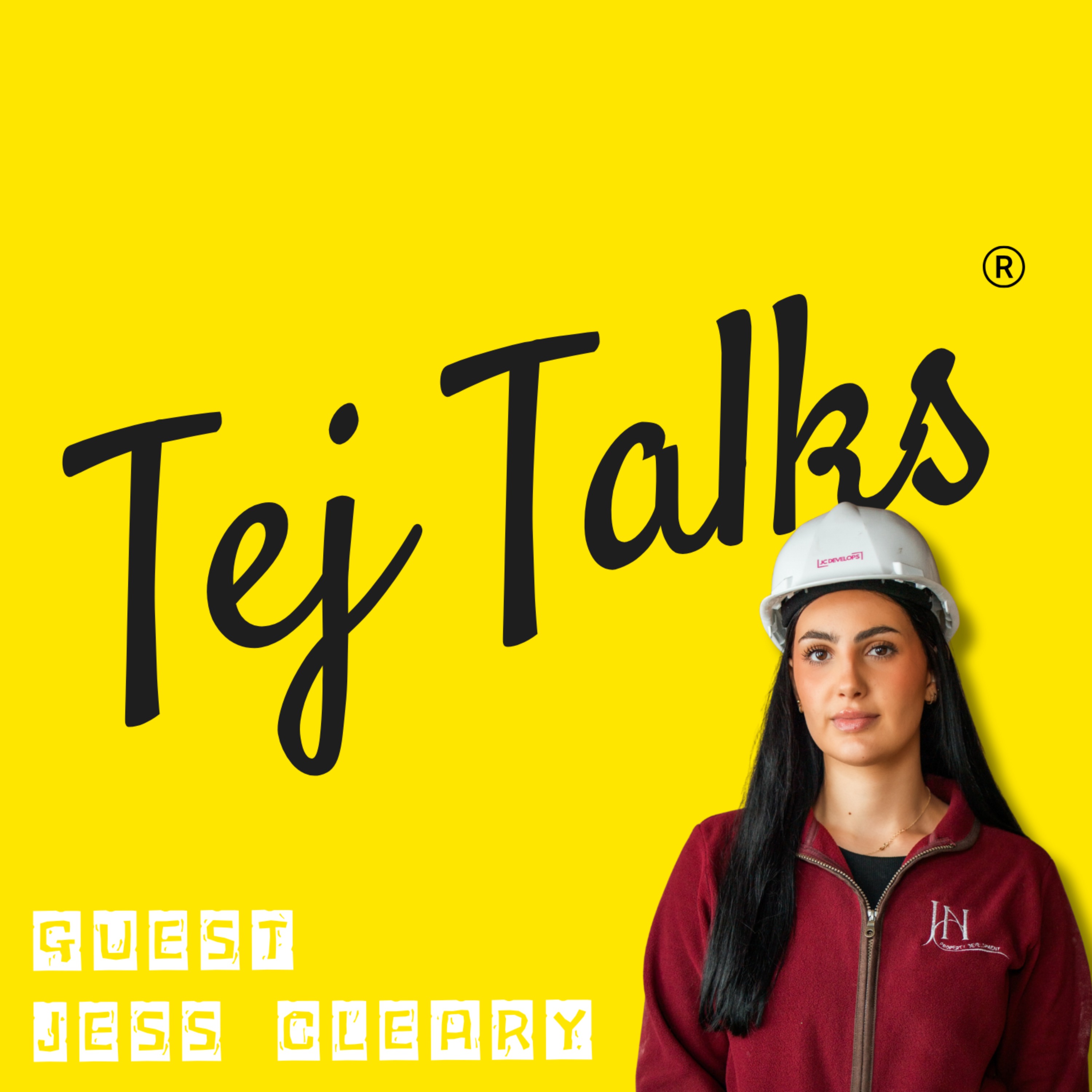
Raising £500,000, Sourcing Property & Losing 6-Figures To An Educator - Jess Cleary
62m 51s
In this podcast interview, Jess Terry shares her entrepreneurial journey from age 18 to 23. During the COVID-19 lockdown, she used her furlough savings to explore opportunities, initially through social media management and freelance work. After dropping out of university, she founded a marketing agency targeting property clients, enduring a slow start with only one client for six months before gaining traction through cold calling and free services. Jess later entered property sourcing and investment, driven by a desire for assets and the dynamic nature of the industry. She maintains her agency for creative fulfillment and cash flow, outsourcing tasks to run it semi-independently. Throughout, she addresses challenges as a young woman in a male-dominated field, reframing stereotypes as tests that push her to innovate and prove her capabilities. The conversation highlights the realities of entrepreneurship, including setbacks, persistence, and balancing multiple ventures.
Hello everyone, welcome back to the Ted Talks podcast. I haven't had guests on my show for about a year and my guest today I only actually recently started following on Instagram because before that her content was dog shit so I said no I'm kidding, because of all that I had no reason to and I didn't realize you know she's a cool cat so here we are Jess, Terry, welcome to the Ted Talks podcast. Thank you very much for having me and I am so honored that you now follow me on Instagram. I know you're one of my favourite influences in Nottingham so. Oh okay, you just didn't know to give me a yes? Just didn't know, I've followed so many in the area so it's good you're one of like none but that's good you're number one, that's what matters right? Like when you have a favourite pet and you only have one pet so today we're going to talk about a bunch of different things because every time I speak to you every time I see you at an event because that's how we communicate just events a couple times a year that's the vibe. You just are doing something new or you've hit like a milestone or you're just killing it and then you're like you remind me that you're like 18 or something and you're just really so young doing so much and I love it because you kind of break the 19. You break the mindset that 99% of people have which is I can't do it, it's not for me, people aren't taking seriously I'm young, I don't know what to do, how to do it, you just break that and I love it. So before we get into kind of the details of what you've done including what we could both agree is a mistake, a costly mistake, a mistake that you could have put a deposit and monthly payments on a GT3RS for a very long time with that is now somewhere in the distance but in the end it will return. Let's go from the age of 18 right because it wasn't very long ago. What happened from there to where you are now to being this entrepreneur in two industries? Yes, two industries, yeah. 18 year old me was completely different to 23 year old me in the best possible way. 18 year old me was in lockdown so that's kind of when everything started. Lockdown was a pivotal moment I think for everyone in the UK but for me in terms of entrepreneurship because I was a waitress before COVID hit and then suddenly I was on a hundred and third pound week furlough doing nothing at home and don't get me wrong the first couple of weeks months I spent all that money on clothes and so much stuff my parents were getting annoyed at me that was having parcels delivered every month they were like disposable income, this ridiculous but then it started to die down the novices started to die down and that's when I kind of realised like okay I can do something with this money so initially I just started saving it and then it was more looking into where I could put it to make me more money. I've always been entrepreneurial I had a nail business when I was 16 I used to sell loom bans for like 50p that's my story you know like the selling funders selling the Freddos by them 10p sell them 20p but my mom's loom bans and I had a marketing agency from the age of I'd say 15 it wasn't an agency it was me doing the most awful social media marketing you could ever imagine and getting paid like 30 pound a month for it but still it was one of the many stops on the journey in which is my life but 18 year old me is kind of where it all started and lockdown was the point where I was like okay there are there is more opportunity than I think I started buying loads of books you know the usual rich tab poor dad things like that the psychology of money was my second book that I read kind of in like the entrepreneurial space and that changed everything and that's when I stopped ordering the parcels and I started putting the money into something so I sat up and I said I just started putting all the money into there and then when I turned well from 18 to 19 I kind of then started to like really really start to grow a business or an entrepreneurial foundation and that was when I went traveling and I did I kind of sustained that traveling through like Upwork and Fiverr and the social media management and design stuff did definitely improve during that time but still I would be ashamed of that to look at it now it was ridiculous but that was kind of where it started and traveling while I was earning money because I was earning probably like 600 pound a month and obviously traveling when you had savings already that was amazing and I was like okay this is cool like I can earn money from my laptop I can travel around and where do I go from here so that was pretty much 18 to 19 year old me where it all started and what you know because you didn't mention once that you know your parents or you had a thought of like oh you know get a 9 to 5 get a qualification get nothing about that sort of had any sort of traditional roots or direction about it kind of sounded like the way you're saying was just something you were doing it kind of sounded like you're always going to be an entrepreneur but like how because most people are I'm going to do 9 to 5 and then being an entrepreneur is a dream it's something I might do it's something I could do maybe 5 years later like how do you just kind of be like no I'm going to be an entrepreneur like now um I think I've always been a bit different maybe a bit eccentric and I think that's probably where it comes from is I'm not afraid to kind of break the mold so like as a kid I was always very outspoken bossy I did like stage school for 12 years almost and I was always the lead like it was it was kind of like ingrained in me that it was be the best or don't do it at all and yeah which thing was just something that I did when I was in sit form so I was after COVID sort of kind of had its moment and A levels were done I was pushed to go to university by my dad so my dad's really smart very very good qualifications degrees everything um my mom didn't go to uni but my dad really wanted me to be a lawyer or a doctor you know pushing me into the traditional route I was like absolutely not um I'm going to take a gap year that's when I went traveling but I will go to university after my gap year I'll never told them this but the week for university I was deciding I was I'm in an hour and whether I tell them that I'm just not going at all um so my mom will definitely watch this and she'll be like what so I really didn't want to go but I was kind of forcing myself to see what was there and see the opportunity and leave my small little town um and it was kind of yeah 50 50 please my parents but also see what there is hated every moment of the degree side of things not the university side of things trust me that was a very very good experience um but four months in I was like this isn't for me I was studying graphic design and it just wasn't what I thought it was also there was like loads of articles being released at the time like AI is going to take over and obviously we've already seen that starts happened now um and it just got to a point like a couple of things happened in my life with like family and stuff and I was like there's more to life than sitting in a university room feeling how I'm feeling knowing what you actually can't do if I put my mind to it and I was still trying to maintain like the social media management side of things at the same time I was doing a lot of like user generated content which is like for brands and stuff and it was it was really good because obviously I was on like 80 quid a week as a student and I was making like two three hundred pound for a video at the time which was amazing it was like a month worth of money um my friends are like what are you doing like you've just got this parcel and you're making I was like yeah it works but I had that in the back of my mind because I had that experience when I was travelling I was like there is more out there so I just dropped out a uni and I was like that's it I'm done um and that's kind of where everything started because it was single swim because my parents are like right so what are you going to do and I was like well am I going to do um and then I was like I'm going to use all the skills that I have and start marketing agency and that's where it all started and you know I'm marketing agency is quite a common place to start depending on what your algorithm shows you you've got like imangudzi saying you know you can start a seven figure agency like that you've got all these people with these YouTube it's from like hours long showing you how to start it and you know I think some of them are definitely glamorizing it and making it seem easier than it is you'll see what after a great start with the uh user generated content with your although it was making like six quid a month old so you could a month or whatever when you were a lot younger you were still doing it so is setting up a social media or a marketing agency like a great way to start a business does it have low setup cost as they make good money is it as either the internet makes it seem it's not as easy as into it makes it seem but it is very easy to start so I was I've always kind of had that mindset whereas like you need to be relentless so obviously when it was sink or swim drop out of uni know the choice it was right let's find a client and I actually signed my first client in a week of starting the
agency, which was really really good if I think about it and it was like a thousand pound plus retain a client. So it was good. But then for six months I didn't sign another client. So I only had that client for six months and it was rough because when that was ended that was ended just, um, I'm actually like they just wanted to go in a different direction and hire someone in house. It was okay. What am I doing? So I then put my head down for like a month and just every single day like 20 cold calls reaching out to people on Instagram, doing profile audits for free, doing videos for free, just everything I could do to show people that I was willing to do it. And I signed four clients and everything was going smoothly. But all of them were in property. And I don't know what it was. It was like, I've, I just had that knack for signing people in property. And I always used to be that kid that would stay at home and watch homes under the hammer. And I founded memory on my camera all the other day that when I was actually 19 planning, um, going traveling, I was watching property tours and I was watching Kazee and it's really strange. Yeah, it's really strange because now it's like full circle and I interviewed him like a couple of months ago. And I was like, this is really weird because when I was 19 I was watching you and I had no idea I was going to be in property, but here we are. Um, so yeah, it was kind of just full, I fell into it and I was like, how can I get started? And I paid for Samuel Leeds education. Um, and then sourcing obviously came about and that's where the property journey started. Mm, sourcing, yuck. Anyways, we'll get to that. Uh, so it's, you know what, you said something there that I know most people are going to totally just ignore. They're going to say, Oh, wow, four clients. You want to quickly, they're going to ignore the you said you didn't have a single client. Apart from this one, the only paying a thousand pound a month, six months, it's a six month and one like, that is not what the YouTube videos say. And that's not what the Instagram real say about this industry. Now, hey, look, could other people have different results? Sure. But I hope it gives some people real insight into the time frames that unfortunately can, you know, can be like that. However, you picked up what you were doing in terms of the numbers in terms of code calling in terms of your type of outreach during lots of freebies. And I'll look, you signed a bunch of clients. So it does show you that obviously certain activity levels will equal more results. And yeah, it's great to, um, the algorithm put Kazzie there, not me because I've been doing property tours for longer than he has. But anyways, yeah, big up, Kazzie. Um, he also didn't mention the test talks guy to investing is one of the books you read. But anyways, we'll get to that. We'll get to that with the present. So the social media market here to see whether I've gotten lots of property clients, it makes sense because property investors a lot of them are here or used to be shit at social media at marketing. So, and there's a lot of old boys in this big old boys club. I get it. They can't, you know, some solicitors still use fax machines. Because the whole industry is just like back in the day. Yeah. Um, do you, do you enjoy doing marketing in the property industry? And does your agency once they'll exist and does it still do property or does it do a bit of everything? Yeah. So it's only focused on property. Um, so what we're property entrepreneurs is still running. Um, it pretty much runs by itself. I do have input in it. Um, but it is minimal compared to what it used to be. So a lot of like outsourcing and freelancers that I work with. Um, and essentially, yeah, it offers end to end social media for property entrepreneurs. So all the content posted social media management because the one thing that obviously we don't have is property entrepreneurs is time and that just takes it off their hands. So one day a month and they never have to think about social media again. And why for you, do you not have to put much input in it? How is it structured that you can kind of be hands off? So at the moment, if they're located within 30 miles of where I'm based, I go and do the filming. So that's six hours of filming and then that's sent to an editor. That's really edited. And then it sent the team that manage it and do all the extra parts and replying to messages and things like that. Um, anything outside of an hour's drive, so 30 miles is outsourced videographers and obviously then there's a premium on that. Okay. And you know, is that set up to be a million pound MPOS? Is that up to be a slight hustle? What's the vibe with that? The reason why I still have it is one for creative outlet. So my job can get very boring and very repetitive. And I obviously am a creative. That's what I love doing. So I have it to be creative. And also that's where my cash flow is in property. Cash flow is difficult, especially when you're buying as well, because you're paying people interest, which is what I do. And yeah, it's there to run. And I enjoy it. I do enjoy it. And I think life's too short to be completely stressed and bogged down with things that you don't necessarily enjoy. And trust me, obviously, money is the main focus. But I don't want to make money and be completely unhappy at the same time. So that's where. Yeah, I guess. I think, you know, whether you're buying vitalists or HMOs or whatever it is, you know, they still have a lead time. It's still going to be, you know, months in convincing, months to find, oh, I just remember, right, these days. And then you've got to refurb it. And then you're going to find tenants. And then you're going to take your first month. And then I remember thinking, yeah, cash flow. And then it was like nine months later, I was like, oh, cash flow. That's good. And then it was like formed. I could property. And I was like, huh? I did. Yeah. And so it totally makes sense. And it's something for people to understand is they're going to be doing like vanilla vitalettes, for example. Some cash flow. If you've got something to back you like in the meantime. And you mentioned sourcing. I love sources for the record. I like on your podcast. You're the most talented people in the market, right? Highly skilled, highly valued. No. Yeah, cool. Your face says it all. You can't see a face. People then, you know, why? Why? Why did? Because look, when you found these property clients, you could have then said, you know what? I'm going to do social minimum marketing. That's my thing. It's going to be an empire. And we're going to do it in property. And I'm not really going to dabble in property. Why did you then say, actually, let's make property the main thing. And yeah, why is why is property the main thing? Property is the main thing because of assets. It's the main fundamentals. You've got assets and my abilities. I'm not going to start quoting the books. But I've always known that I want to own properties that I want land. I've got big, big goals. And the marketing agency, as much as it is good for cash flow, it's not going to get me there. Property, I also love it. Like the fast-paced nature of it, the excitement, the building portfolios interacting with people being on site, I learned the best being there and doing things. So yeah, it just kind of came naturally. I fell into it. And then it was the case where I was like, there's an opportunity here that I could buy a shits on properties and make loads of money. And that's what happened. Property is, as I mentioned, it can be a bit of an old boys club. I think at least for what I see on social media, I've definitely changed in the five, six years ago since I started. It's definitely more diversity in every direction. Do you think people underestimate you overestimate you or kind of unsure of what to judge you as when they meet you? Because obviously you're very young. You're a woman in a field that is unfortunately a pull of men. How do you think people judge you? So I think there's two things. Being young and then being a woman are two massive sort of barriers that I've faced. It kind of means that I have to work twice as hard to be taken seriously. So I will walk into a room, for example, and people will assume that I'm inexperienced, I'm emotional, or I'm just trying something out. And I've also had countless experiences where I've been at networking events, stood next to a man, whether that's a friend or I'm networking with and someone assumes that we're business partners or he's the boss and I'm the assistant sort of thing. It's happened more than once. And I don't think I feel held back because I'm a woman, but I feel tested, definitely. But also I think of it as a positive because I'm not stuck in the outdated ways of doing things. So I'm able to bring new ideas, fresh perspectives and obviously that's been a massive advantage. And I think that's, I like how you kind of reframed as it's not holding me back, even though people will cry too, but you're seeing it as actually it's testing me. It's another layer of, you know, of something I have to get through and a lot of the other end of it. Yeah, that's standard. I've seen it, I've heard it, I've heard, you know, maybe worse stories and things in the industry. Do you find though that when do you think it affects when people are investing in you? Because when it comes to
investors, I know that even the type of coding, there's some people look at me in a hoodie and say, get in a suit, bro. I'm like, what? Some people who would be like, yeah, I totally invest in you wearing a hoodie, but I wouldn't invest in a suit. And so everyone judges everyone for everything. Have you found that, and I asked this specifically about age, because I suppose there's a, maybe a stereotype of, you know, younger people, younger generations that don't work as hard, they spend silly money, you know, the older generation, they've been through it, they've got savings, they've got this, you know, do you find the people kind of approach you on that at all? I think to touch on what you said earlier in regards to like how you dress and stuff, I think obviously the way that you show up and the way you represent yourself is a reflection of your business and your brand. And I think I've definitely been judged before, I've even spoken before, people have kind of dismissed me, whether that's in a room or I'm speaking at an event or something like that. But I think as soon as I speak about what I do, and I'm obviously passionate about what I do, I think it definitely changes their impression of me. And I think the one thing that definitely annoys me more than it should is I think that young people have for that older generation, I think there's a stereotype over young entrepreneurs that they are inexperienced and they're irresponsible with money because you see like 25 year olds buy an apportion. And I think there is obviously some truth to look at with internet money and people being able to make a hundred grand in a month from business they set up last year. I think that there are some people in the industry that do actually know what they're talking about and sometimes I feel like I'm not given the chance to even talk about what I know. I'm kind of dismissed straight away by some people, some investors. Yeah, and I can yeah, and I've sort of seen that third part, you know, against you, but I've seen, you know, whether it's people I know, like mentees who were quite young and the way people view them, but it's one of those things that's because it's always going to be there. We're always going to have some level of discrimination and kind of being isolated in some shape of them. Obviously, some people get it worse than others. And if we move away from that and we look at, you know, going back to sources again, because I just can't stop talking about my favourite people on the planet. Why why did you start with sourcing? Because you have a choice sourcing, rent, rent, getting investors buying to you can technically you can do anything you want. Yeah, why don't you think sourcing? So the reason I didn't go for rent to rent is I looked at the curve. I looked at all the people that were two, three years ahead of me, what they did. And it was rent to rent, BRR, by to let HMOs bigger projects. So I was like, right, let's just jump over the whole rent to rent thing and get to where they are quicker, learn from other people's mistakes essentially. So obviously, I needed cash flow at that point I had, I think I had the one client when I started sourcing or started looking at sourcing. And it was like, okay, it is a lot of cash quickly. You've got it depending on your fee structure, you can get it straight away, you can get it on completion or half and half, which is what I do now. And I've made a lot of mistakes in sourcing and there has been a lot of deals that looking at them now, they wouldn't, I wouldn't sell them, I wouldn't touch, but you learn a lot. And I think yes, the industry has a lot of negativity around sources and you don't like them. And I know you're not the only one. But I think that sourcing, the industry is naturally filtering itself. A lot of people are falling off and there are far fewer sources now than when I started. And I don't know if that's because I kind of keep myself to myself and my head down, I don't really listen to the noise. And even though I own a social media marketing agency and I do tend to post on social media quite a lot, I don't really watch anything else. Sourcing isn't dying, but I think it's becoming very obvious who's good and who isn't. And I get why people don't trust sources because I've seen some shocking behaviour first hand, rush deals, fluff numbers and people sold dreams instead of facts. But property sourcing is meant to be slow, it's meant to be detailed and like I touched on earlier, it's often boring. But that's exactly why most people quit after six months or a year. And I do think there are some incredible sources out there. And hopefully my clients would agree that I'm one of them and I've worked with a handful of them. But for me sourcing is about transparency, educating investors and walking them through the numbers. And then again, walking away from deals that don't work, even when there's pressure. Because to be a good saucer, it's not about the quick cash, it's not about the money, it's about ensuring that your client gets the best deal possible. And not every deal is meant to be sold. So I think the one thing that I benefit from as a saucer is that I invest myself. So obviously I see deals first and yes, sometimes I do keep the best ones. But clients also know that I've been through the full process end to end by my own, understand the numbers, understand the risk. [BLANK_AUDIO] The best thing about being a saucer I think. [BLANK_AUDIO] Literally that whole thing is gone. Okay, let me just, what did I say? I think one of the biggest benefits for me is that I invest myself, is that what I said? Yes. Okay, so yeah, so I see deals first and obviously I get to keep the best ones. But clients also know that I've been through the full process. I understand the numbers, the risks and what can crop up on projects in a way that someone who's only ever sourced, can't. I think they're actually a layer of lived experience, builds trust. And that's what separates good sources from the rest. Yeah, I agree. And you know, as much as I don't like saucers, sourcing is, I think, the best way to learn the whole process, like you said, yeah, you know, often with someone else's money, for a lot of people, but it's a great stepping stone that allows you to build potential investors like later on, whether it's in first only JV's, whatever. It allows you to build a relationship with agents. You're basically buying for yourself a bottom of your not, but you're doing everything. And sometimes people can assist with the conveyancing, with tenant find, with managing the reef or whatever. You know, you get that whole process without actually, you know, kind of doing it yourself. But and as you mentioned a few times, you know, your eyes are on the prize, which is actually owning yourself. So, you're right now, okay, how did you, so you're sourcing, but then you also have bought your own deal, how did you afford to buy your own deals, especially when you're starting to be fresh? So, you're going to love this story. So, my first raised capital was from an investor that I went up to in the pub on New Year's, on Christmas Eve last year, not 2025 last year, but 2024 last year. I went up to him and he's, he's like, friendly with my auntie and uncle. So, kind of knew who I was through my mum and dad and I lived, I lived in a small town. So, everyone really kind of knew each other. And I went up to him and I basically said that your own businesses, so he buys businesses, I know how to do property, let's work together. And that was it. And I was a bit, I was a bit tipsy, so I'm not going to lie, the liquid courage really helped. Didn't hear from him for like two months. So, I was like, okay, that's gone. March time, 2025, he contacted me, he was like, look, I'm interested. Let's sit down. We went through it. And then we set up a company and now we are investing together as a joint venture in multiple projects and raised almost half a mill from him and a lot more to come. So, that's really good. And also, I get to benefit from his experience in, like merges and acquisitions, which is something that I'm also interested in. I know you are as well. So, yeah, I get the best of both words. He doesn't know anything about property. So, I'm teaching him as well. And that was my first one that I bought. And then the others since then have been raising money from other people and offering them fixed returns. Obviously, we'll touch on it more in detail. I've done that before and it went wrong. I loaned someone money and it went wrong. And now, because I have that lived experience, I feel like I'm best equipped to protect other people's money because I know what it feels like when it goes wrong. So, I would never put someone in that position. And how are you finding, I love that story, like, what a what a pitch. And yeah, he was a semi-warm lead, but
I give you hot, I, I'm not giving people that, you know, he's friendly with my auntie and I'll go half a meal. So there's something obviously you did and something about you which got that over the line. People can't ignore that. It's not just, oh, you know, you knew them. I love that, like, mad. But what's the point of view of my life? He's known my auntie and uncle since my cousin was literally like three and now he's 20. I've never met him in my life. He's met my parents before. And I was like, I literally have nothing to lose. Like, I don't live in this town anymore. He's, I'm never going to see him again. I just won't go to the pub on Christmas Eve next year. Like, and then it just obviously turned out to work and yeah, it's going really well. So it just shows you, you never know who in your network has money, right? Or how much money is in your network. But also it just shows you like, just do the fucking thing. Like, go up to the person post the thing like you've got half a million pounds of money to spend on deals. He knows nothing about property. He's going to educate you on what you want to know. You're going to educate him. It's just it's everyone's ideal scenario. And it happened. You walked up to him and said a couple of lines. And like, people need to understand. Like, of course, opportunity create like, you know, volume and putting in work creates opportunity. Yeah, you know, you went out to one person, one investment. That's very rare. But it just shows you like it could be your first conversation. It could be your hundred. 100% I think it's like so important to tell people what you do because I just sat there and essentially told him what I do. And at that point, I hadn't project managed any HMOs. I'd only source like three deals. And I was like, you know what, let's just propose this opportunity. And it simply was. I know about property. I know you've got money because I've seen the cars you drive and cars is implural. I know you obviously are very successful in business. I think there's opportunity. And even if it was that conversation, just simply the conversation of. There potentially could be or I don't think there is at least I said it. And then obviously for a couple of months, I thought nothing's going to come of it. I haven't heard from him and then now we're at the point where it's obviously growing. The business is growing and there's big, big goals, financial goals. And having someone who's experienced more experience in business than myself is really beneficial because it also means that there's things that I don't know that he can teach us about running the business as well. And how then after that, you then got investors, you said kind of just people who are best at me for a fixed return. Is that through social media? Is that through networking? How did you find them all through social media? So obviously push, I pushed my pass around quite significantly. I've got just shy of 10,000 followers across platforms linked in my main one. But it's more the case that I gave a lot of value and then I just kind of sell intermittently. So I'll put like I'm doing a project and then someone might message and say, or I'm interested in learning about the project you've got. And then potential clients that want a source deal that actually I think that genuinely they would benefit more from learning about a project before they buy a deal, especially if it's their first one. People that my, I was having this conversation earlier with a marketing client is my target avatar is not the time poor cash rich person. My ideal avatar is people that want to invest in property, but they don't know how to. And they want to learn and they have a bit of money. So like the 50 grand, the 100 grand, they don't know what to do with that money. They're not quite ready to jump into a project and they could do end to end. Or maybe it's better if they learn, then they do end to end because then they know when we're doing end to end for them that it's actually going well and they can see a project first. And I think it's interesting because I think a lot of people think I need to have 100 K followers. I need to do this and someone will invest in me and you're talking about OK, look, 10,000 is still a good amount. It still takes time to get the sort of text. You know, it's it's no small feed, but I think it's definitely closer than what people think you need. You can have a thousand followers and they could be 10 20 investors in there. You never know say that all the time, like you could get 200 views on a video and 50 of them are your target avatar. You could get 200,000 views and one of them is a target avatar views mean absolutely nothing because I have to obviously say this to clients when a video doesn't perform well, but they actually might get 10 messages of it. Like what is going on and I'm like because that video reached exactly who you needed it to reach just because it didn't reach the message doesn't mean it didn't reach the right people. And I think that's a really, really key thing is that like you said 10,000 followers compared to some people is not a lot, but my LinkedIn, the way that I built it is that I have exactly the right target avatar on that. And I'm reaching the people that I need to reach to do what I need to do. And another way that you can find investors, which I think is a lot harder and takes a lot more time and you have to get dressed and leave the house and all that, you know, shit is networking. Now obviously that's where we just link up. We never know we're going to be there. We just see each other. Oh, okay, cool. Long time didn't think the chat before but now we're here, you know vibes. Do I go to networking for, you know, food, freebies, shaz is my sugar daddy. He always has tickets. And I'm always, you know, I mean, I'm up there. I'm on the table drinking from other people's bottles. I'm that, you know, I mean, that's me in the club. Why do you go? So I used to go, but what I now view as the wrong reason. So I think like a lot of people when you start out networking is a way to find people that might have or want what you offer. And I could go on about networking for days. I think it's so powerful and a lot of not a lot of clients are come from networking, but a lot of value has come from networking. I've been to more events than I could count, but the truth is most people go in wanting something. So I stopped networking like that a long time ago. I go to mainly like learn and observe and build the relationships. And actually like, for example, I never went to a networking event with the intention of meeting Ted talks. I went to a networking event and we had a conversation. I mean, yeah, you thought if I could meet Kazzie, yeah, I remember where we met. I remember. But now, yeah, now I go, just to learn really, I don't go to many anymore. But some of my best clients have come from connections that maybe took months, even years. For example, like one of my most recent clients, she met me right at the start, my property journey at an event, my first event I have spoke at. I came to my business card at the time and she sent me a picture of it a couple of days ago and honestly it was so weird because the last two years, I felt like an absolute blood. They've gone really, really fast, but also really, really painstakingly slow. But seeing that reminded me of how long relationships actually can take to compound because networking isn't just instant wins. And I think people think it is they think they're going to walk into a room, meet one person and raise 100 grant and like it can happen. But it's very, very rare. I think what matters is being remembered for the right reasons, not because you. Hard sold to someone the first time you met them, but because you were genuine and you were human and you could help them. I love to ask is when I meet someone, it's like, how could I help you? And I know people think that's really cliche, but genuinely they could have a question about each and I could save them. 10,000 pounds because I've told them that they need into things smoke alarms or an intermissing strip or FD 30 five doors. Do you know what I mean? Like small things like that. And then that might return to me in a few years time when that person wants to build their portfolio hands off because they've done it themselves and now they want to move to Dubai. You know what I mean? It's just you give it out and see the universe and it comes back to you 10 fold. And I think the long term game is important because you never know when you like that first investor two months get back to you never know when someone is going to require your services or they have a change in if they sell a family house or they come into some money and they want to invest it and you don't know. So you know what I mean is different timelines and lanes and you just don't know when you're going to cross over and I think that's where content is so important as you know because the more you post, the more you're in their minds you're not at the back of the mind you're kind of here. They're not thinking of you, but they know. Oh yeah, just does this just does that. And it and it's annoying because we have to keep posting all the time. And it doesn't have the noise, but it does make a massive difference now just to show people what is realistically achievable. Can you share some numbers of I don't know deal source deals purchase things you're working on just to give people the cold hard numbers of you know what can be done in in a year or two since you know yeah. So I've done 30 deals sourced since I started I bought well I'm in the process of buying about have bought six so six in total.
by much time properties. And I bought my first property in September this year. So pretty much one a month since then. But it's the compound effect. I didn't buy anything for a year and a half and then it's now like the goal of buying one a month for the next year. So it does get to a point where it's like, okay, it's go time. Raised 1.3 million so far. May have just signed a really big. Facility, but I can't talk about that right now. Maybe we'll have to do another episode of that after that. And just looking at different things, I think opportunities come when you put in the work and I don't believe in luck is built. And in the last couple of weeks, although they've been the most stressful of my life, 2026 has not been kind to me so far. They have been the most eye opening and also the most opportunities have come out of the woodwork in the last two weeks than ever before. So I think it's just carrying on and things come when they're ready, when you're ready. Interesting. So you've had the hardest few weeks, but actually the most opportunities come out from it. And I think it's easier to see that afterwards. Like when you're in it, you're just like, what is happening? Why is it happening? Why is it all at once? And actually sometimes when you look back at those hard periods, even if you've learnt things from it, often there is a positive or positive that come from the hard times. Like there just is, it's kind of how it works. And I think as an entrepreneur, the more time, the more years you put in, you experience that over and over again. And it makes it easier to deal with the hard times because you're like, oh, been there. I know what happens next. Like we just got to like keep doing our thing. No. Earlier in the podcast. Actually, I remember how we met. You weren't introduced as a property person. It was just a straight social media. I had no idea about anything. Yes. Yes. And I remember you didn't even have a proper camera. Like an iPhone. Those were the-- I had a camera. I had a camera. I'm a joke, man. I don't even see any footage from that either. Yeah. Yeah. We weren't talking about that. Moving on, seriously. I gave you this podcast. And you also mentioned when we're talking about investing money that you invested a significant amount of money with a significantly-- well, with a well-known figure in property. Someone who used to be, I think, a lot more well-known, nowadays is less well-known. Everyone kind of ebbs and flows with stuff, but definitely produces a lot less content. But it's still out there and it's still known, if I may say so. I mean, you know, you-- And I said this to you, you're trying me as somebody who doesn't need to invest that money, because you could just spend it-- like you could invest it. Like you could use it, you know, you now, you know, what you're doing, you know. When did you invest it? And why did you invest it instead of using it for yourself? So I invested, I'd say, a year and a half ago. And the reason was because of trust-- I trusted people I shouldn't have. And I was at the point in my journey where I didn't know enough to be comfortable investing that money. And kind of how I touched on with the way that I work with my investors is, I think it's always better to learn hands-on real life experience before investing myself. And I was essentially kind of sold a dream. The investment into this person wasn't the only thing that was promised. It was obviously bigger roles, bigger part of something. And obviously, I've paid for that emotionally and financially. I think it is difficult. I knew this one was going to come up. Obviously, there's a lot on my social media at the moment about learning money and being-- let's call it what it was-- completely screwed over. I obviously loaned the money with good intentions and learned the hard way that intentions don't protect you. I trusted conversations, relationships, and trusted people that I shouldn't have. And I think it's one of those moments you realize that business isn't personal, even when it feels deeply personal, especially when it involves people who mentored you, supported you, educated you. And we're there for you at vulnerable points in your journey. And I think because I was new and I was young, and I was in an industry that scared me, that trust felt natural. And obviously, losing it was massive. And I think that experience generally changed me. Because obviously, I stayed in best, and I still raised capital, but everything's different now. My entire approach to money, structure, and risk has changed exponentially. And now, obviously, have different things in play. And everything has to be crystal clear. Because no matter how well you think you know someone, people's money and my money wasn't as protected as I was assured. And did you have a contract with the person? Yeah, yeah, I did. Now, in most people's minds, well, great, you do the right thing. You've got a contract. You're protected. We're good to go. Obviously, people don't understand there is levels of security, levels of protection. There's limited companies, there's personal liability. There's a bit more than just having a contract. So why has that contract not protected you, as far as you can say? So the company in which the contract was with was dissolved, which means obviously it doesn't exist anymore. So essentially, the contract is void, which means that my layer of protection is gone. Also, personal guarantees that-- well, when someone doesn't own anything, how can you give a personal guarantee? So yeah, there's a lot going on. Obviously, there's a lot that legally, I can't say. But read contracts and get them read by a solicitor, even if it costs you more money. And don't enter into something just based on promises and people that you think have a good intentions because people can change. And I know people who-- and they message me on Instagram, and I've told you this. I have zero sympathy sometimes. I have the use, because you know, you're my friend. But they message me, oh, I've lost this money. I said, oh, did you get assisted to read the contract? So you lent 50 grand, but you didn't spend 500 pound in getting assisted to read it. I was like, did you put it in chat GPT? Because the purpose is, chat GPT can do a pretty fucking good job of a contract and say, does this protect me? Give it to me harsh. And I'm sorry, solicitors. It basically does your job for you. And why haven't people done that? And I think when I spoke to you, it kind of-- you helped me understand a bit more that it is that trust, the emotion that you could call a manipulation from the borrower. Oh, definitely. Definitely. That is the way it shows. Yeah, especially because if they know what they're intentioned, and they may or may not, I can't speak for anyone. But if they know their intention, then it is one of 100% manipulation. I find it hard to understand, because I'm someone who-- no matter who it is, what it is, there's a contract. I'm doing someone's website editing. Yeah, I do a bunch of my own shit for them. And it's like 300, 400 could. Part payment. I'm like, yo, I'm sending you a personal guarantee, brother. It's a bit of a sign, actually. Like, no matter what amount it is, someone's paid me 10 grand before for mentoring. They paid me another four. I said, yo, it's on a contract, brother. I'm so cold. It is a contract. But do you understand that? As well. And I can't speak for everyone who invested in anything. I obviously have a different contract. So I had that sort of level. So I do understand, yeah, there is trust. And then obviously not being naive. I am not naive. But yeah, I think now everything, no matter who the person is, I have the same. I have contracts. I have legally binding documents. I get solicitors to all. Doesn't matter if I've known them for 10 years. Doesn't matter if I met them yesterday. It's the same principle, because money is money at the end of the day. And people move mad when money is involved. People move mad. And actually, I've spoken to a lot of people. I've lost a lot of money to a lot of people. But I was surprised when we spoke about it that it happened to use. You were shocked. I remember. It was my birthday as well. We were at the awards. It was my birthday. I was like, I was obviously celebrating my birthday as well as being nominated for the award. And I was like, yeah, that's just how it's had. Yes. We're just good there. Like, what is going on? Yeah. I was-- I was dumbfounded. Like, I think there's a picture. I mean, I'm eating it every single picture, which is such a line. I'm very sorry. I'm very sorry. But I definitely remember, like, my joy,
being like, let me just pick this back up because yeah, I just saw you as and don't take this in the wrong way because it's still happened. I saw you as so confident, so capable, I thought, nah, she would have used it herself, she would have, you know, but that's the thing, it doesn't matter how good we are or how, you know, whatever the word is competent, diligent we think we are. When it comes to human to human interaction, like the sales, sales works, no matter what, nah, I'm not buying it and you walk out with a sofa, you're like, oh, uh, because it's just the human to human interaction is so difficult to, especially when someone's very good at controlling that element of it, it's so difficult to escape kind of what humans can do to each other, even just in a conversation. But yeah, I just remember being like, okay, like your case, it particularly affected me and I was like, okay, I get it a little bit more. And, you know, I think from my perspective, and I did a podcast with Shazam who spoke about this is, you know, when someone's signing a personal guarantee, just like a mortgage lender does, I had to fill in the form the other day, like what do you own? Like what's your mortgage on your house? What cars? What, what, I don't know, chains? What watches? I mean, you can kind of what you're like, but, you know, like I had to put them down. So if I'm, you know, if you're coming to me and I'm saying, oh, just can I have 100 grand, you should be saying to me, okay, I'm getting a PG, but like how much equities in your house? Okay. And how many, and more, how many PGs have you signed, Ted? Because I could say, yeah, I've got like 20 and they're probably for a total of 10 mil, but you'll never get more than two mil out of me. And you're going to be like, I mean, what's, you know, I mean, so like there's so many layers of complexity that a solicitor and chat GPT can tell people to protect people from these contracts. Now, I get pissed off when like I'm suing a client around ex-client and cleaning business, they only like foreground. I can live with that. They don't, they owe it to me as a termination fee, not as lost work, right? So I'm like, I don't go and get, they've got a CCJ, when the head office find out about it, they'll be in trouble. It's fine. It's all fun and games. Yeah. And I'm, I'm like a little bit annoyed. I can't imagine, I'm sorry to bring this up, I can't imagine the feeling of having that money that's yours, but it's not, not bank account, it's not in there, and it's kind of here somehow, um, mentally. How'd you deal with that? It's rough at times. Don't get me wrong, but I don't dwell on it as much as people probably think, because it's more the cases, how can I go out and make that money back? Because I'm going to see 10 times what that money was at a certain point. And in 10 years, is that money actually going to be significant? Probably, yes, but we'll let it hold me back. And I think there's, there was a point where I was like, this will break me, but it's the same, it's the same principle of you level up, the stress that I'm under at the moment, I would have not been able to deal with this me last year. Absolutely not. Even me three months ago, no way, but you just learn to deal with it, and you're adaptable, and you're just relentless every single time. And I think it is really easy to dwell on it, but I'm not going to let that situation and that person take any more of my headspace and take any more of my time away from me and stop me from making any more money that I know I can make and doing what I need to do. Yeah, and I think that's kind of the only thing you can do. I think the other options are easy. That's an on option, unfortunately. Yeah, you know, sitting in the bath, you know, I screamed, listening to the service, sounds like a break up, but you know, like this is the best thing that you can do, but like I can imagine, you know, there's people, and I'm sure both aware of people who have learned to various people who have lost what was going to be, I don't know, their kids' university fund, they've lost what was going to be their, you know, their car, their house, they've lost things that I'm not saying you all does it, but they've lost things that really have meaning to them, and would have actually been used for something quite important or quite serious. Yeah, and I just never understand all the cases I hear about people borrowing money, not paying it back whether it was impended or not, I've always just like, ow, you know, how can you, especially if they're using it for stupid things? It's a project went wrong and different, but if they're really using it on, you know, Dubai and lifestyle, you know, whatever. Yeah, it's a totally different thing. Will you ever loan money to anyone else again? That's hard to say. I think right now because it still is fresh, no, but it depends. I think the thing that I've learned from this is the narrative is not always the narrative, and I think the person in which obviously I loan the money to is amazing at writing the narrative and is amazing at controlling it, and I think a lot of people buy into the obviously a flashy cars, the flashy watches, the lifestyle, but the most genuine people I have met and have done business with are not online. So probably, yes, probably, however, I have learned a lot from this experience to the point where I will hire the best solicitor possible if I ever do that. So I would never say never. I think also it teaches you, I remember my first ever money claim or my first ever, you know, needing to chase someone legally, it teaches you the kind of steps, the blueprints, the legal language, it just teaches you so much about doing that moving forward. So now when I need to take legal action, I know who to call, I know how to do it, I know what's going on, and so you've learned that lesson for life, which will be invaluable because, you know, text on me talk, you'll be your pseudo builder, you would have sued it. It's kind of unfortunately just the nature, it's not creative, it's kind of the nature of it. Moving on to happier topics and to kind of round off, I wanted to speak about content with you because of course you make your own content for yourself, you do it for your clients in property. So many people year after year after year, I want to start building a brand, I want to start posting, I need to raise money but like, oh, I can't be bothered to do social media, I'm like, well, bother doing fucking raising money then. Yeah, I'm watching this content and, you know, is there a way that people can make content easier? How can we make it more approachable and I'm easier to get into for people? I think content is important if it gets you to your goal. For me, content was so important because people don't know who I am and what I do without showing up online. Like for example, my first client was through Instagram and then my second client was through Instagram and then my third client was through Instagram and then so on and so forth. I think having that presence online is not only a credibility builder but it builds trust as well. Like people can search you up online and they go, okay, you actively show up online, you actively do this and the other. I think people concentrate way too much on it being polished and professional and showing up but really sickly, the best piece of content is what is said, not what is shown and the value is the main thing. So I signed my first client through a video that I put out talking about making an HMO more focused on the tenant experience rather than what it looks like. Like it can be all flashy and it can look like a hotel room and blah blah blah but who wants to live in a hotel room for years on end? No one. So you make it designed for a client for a tenant, sorry, that actually will live there for the long term, not two dangling lights and chandeliers and this that and the other. It's nice for the pictures and it sells the rooms and it gets them let out quickly but it's not sustainable and your maintenance cost is going to be through the roof. So value driven content is the best. You can literally, it's not complicated and I think everyone over complicates that you need microphones, you need a camera, you need this there and the other but you literally can stand your phone up on a mug, get your lamp and sit and talk about stuff you know and someone will resonate with it and someone will take value from it if it's that if you're talking about relevant topics and it's more important to show up and then refine the quality then be so so focused on posting like really high quality breals and cinematic videos that you don't ever do it and you just procrastinate and you overthink it and I think that's a massive thing. Like I don't post on Instagram as regularly as I used to. We have a majority of my. business and portfolio building services built off of LinkedIn funnels and people that I can get with on there. But again, people can search me up on Instagram and they can see my daily life. And like, I'm more myself on my Instagram compared to LinkedIn. Like, I post my dad, weeding me on a, um, what's it called? Like a moving trolley and just take, take the mic because that's my personality and people like that. And I get called, favorite influencer from that and that just makes my day. So people love to lie on socials, don't they? Yeah, they do. Clearly. Um, but I think just being yourself, like, for example, I'm the same on my Instagram and on my LinkedIn as I am in person and you can't meet someone on LinkedIn and message someone on LinkedIn and then meet up with them if they're a potential client and just be completely different because how are they going to trust you? That trust is instantly gone. So yeah, just showing up just do it and don't ever think it like you don't need this that and the other just sit down and film. I agree. I agree, Jess. It's, is accessible. Most people spend a thousand pounds plus on their phone, have really good cameras. There's AI editors. There's some people who do no editing, like Sam Sue, like that. Jim and I started off, I think he still does it. Just pure vlogs like, and he's huge in real life. Um, so people can definitely get started with way less work than they think. And it can take way less time. I know people are maybe not as confident in the cameras we are, or they're not as good as speaking, but at the end of the day, you know, we couldn't walk at one point. We were eating pure food at one point. We couldn't spell our own name and now look at us with flippin, you know, so people just need to stop making excuses and just do it. That's how I see it. Jess, if people want to get a hold of you, they want to talk sourcing, they want to talk, you know, all the good things you do social media marketing, they want someone to film their shit for them because like, they can't do it themselves. Or they want to do that cats, because you're now a cat mom, cat mom. I am. What's the cat called? Bean. Bean. Like a kind of lonely bean. Yeah. Bean. Yeah. It's kind of lonely because you're a bit Italian, isn't it? So. Yeah. If anyone wants sourcing, portfolio building service, HMOs, BRRs, biolets, have a Lettings Agency, Project Management, Development Agency, Build Teams, etc. All in the Midlands. Marketing Agency, WantContent, you can find me on Instagram at Jess Develops, or LinkedIn Jessica Cleary. Love it. Jess develops and she does. Yes, I do.
Podcast Summary
Key Points:
The guest, Jess Terry, began her entrepreneurial journey during the COVID-19 lockdown, transitioning from a waitress to saving and investing her furlough money.
She started a marketing agency focused on property clients after dropping out of university, facing initial challenges like a six-month client drought before scaling through persistent outreach and free work.
Jess expanded into property sourcing and investment, valuing it for asset-building and cash flow, while keeping her agency for creativity and steady income.
She discusses facing stereotypes as a young woman in a male-dominated industry, using them as motivation to work harder and bring fresh perspectives.
Summary:
In this podcast interview, Jess Terry shares her entrepreneurial journey from age 18 to 23. During the COVID-19 lockdown, she used her furlough savings to explore opportunities, initially through social media management and freelance work. After dropping out of university, she founded a marketing agency targeting property clients, enduring a slow start with only one client for six months before gaining traction through cold calling and free services.
Jess later entered property sourcing and investment, driven by a desire for assets and the dynamic nature of the industry. She maintains her agency for creative fulfillment and cash flow, outsourcing tasks to run it semi-independently. Throughout, she addresses challenges as a young woman in a male-dominated field, reframing stereotypes as tests that push her to innovate and prove her capabilities.
The conversation highlights the realities of entrepreneurship, including setbacks, persistence, and balancing multiple ventures.
FAQs
She began during the COVID-19 lockdown at age 18, using furlough money to save and invest after initial spending, and explored opportunities through books and online platforms like Upwork and Fiverr.
She found her graphic design degree unfulfilling and saw more potential in entrepreneurship, especially after earning income from user-generated content and social media management while studying.
After signing one client quickly, she faced six months without another, then intensified efforts with cold calls, free audits, and outreach on Instagram to eventually sign four clients in the property industry.
She shifted to property for asset-building and long-term goals, finding it more aligned with her ambitions than the marketing agency, which she now runs primarily for cash flow and creative outlet.
She outsources tasks like filming, editing, and social media management to freelancers, handling local filming herself and charging a premium for remote services to keep operations efficient.
She encounters stereotypes of inexperience and has been mistaken for an assistant, but views these as tests that push her to work harder and bring fresh perspectives to the field.
Chat with AI
Loading...
Pro features
Go deeper with this episode
Unlock creator-grade tools that turn any transcript into show notes and subtitle files.
 PodcastTranscript AI