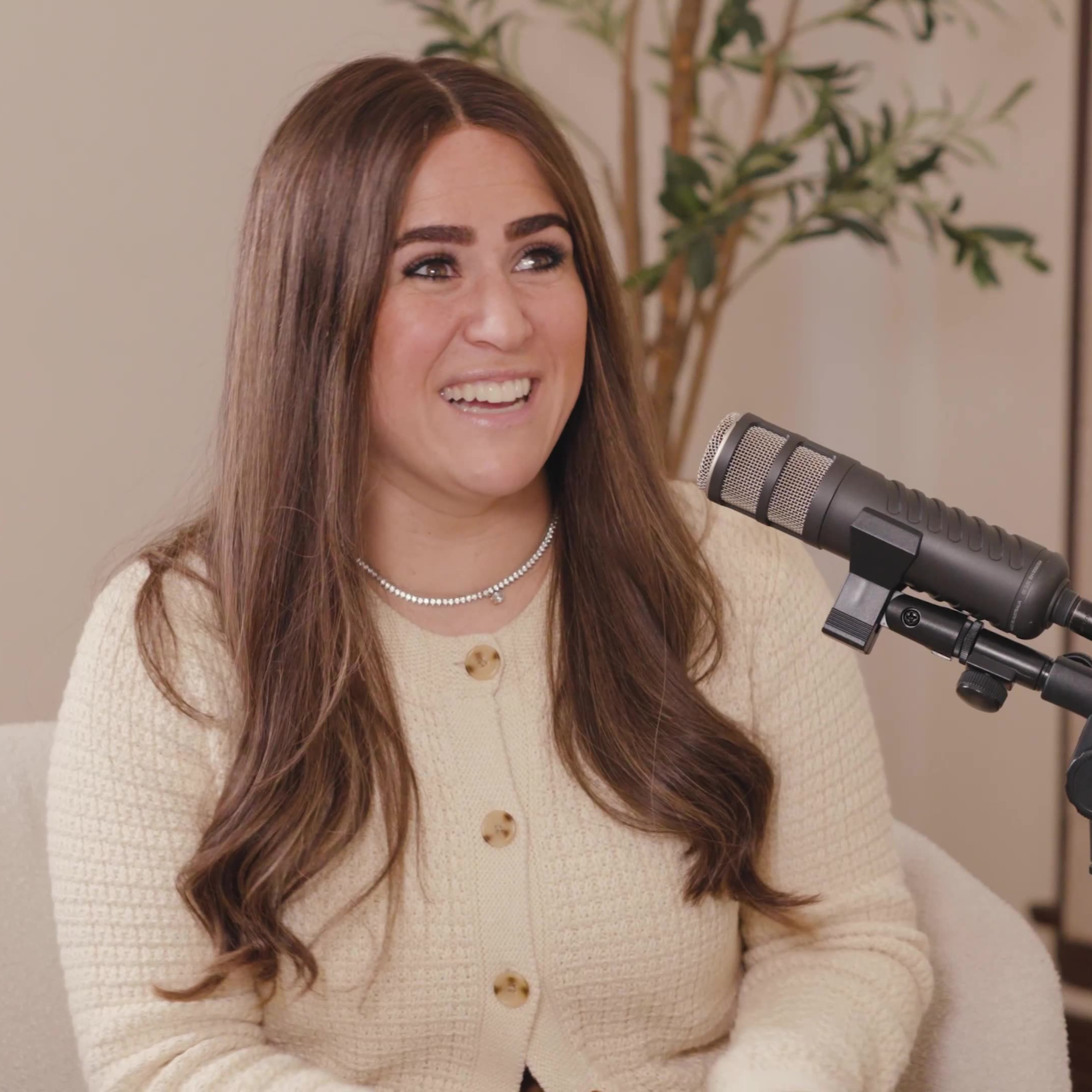
Raising Children When You're Still Figuring It Out | Elisheva Segelman
from Human & Holy
81m 56s
The conversation with Elishev Asiglman explores how to infuse homes with joy and love for Judaism by meeting each child where they are and discerning their needs. Key themes include the importance of transparency, as children see through parents and absorb their attitudes. Parents must verbalize their passion for Jewish practices, like Shabbos or Pesach, to create lasting positive memories. When parents struggle with certain values (e.g., benching or music choices), they can honestly say they are still working on it, while setting different standards for children to protect their development. Hypocrisy is avoidable by being upfront about one’s imperfections. Age-appropriateness is crucial, as children experience content differently than adults—a movie like Finding Nemo can be traumatic for young kids despite its positive message. The ultimate goal is to resource parents so they can bring Jewish values to life authentically, fostering confidence and a personal relationship with Hashem. This approach helps children navigate their own life choices while feeling championed and believed in.
Sometimes I have a hard time listening to the Khunach podcasts and the people who sometimes feel like, "Oh, I have the answers." And I'm just like, "Well, have you met my kid?" Hello there, I'm Tania Khazanov, and you're listening to Human and Holy. Today's episode is a conversation about how to infuse our homes with joy and love of Midsvost and God and Judaism, how to meet each child where they're at, how to discern what every child needs. We ask some really real questions about parenting, like, "Are you a hypocrite if you enforce a value in your home that you do not keep fully in private? What do you do when your child doesn't fit into the regular Jewish school system? Should you expose your child to values that are different from yours?" And what does it look like to really champion and believe in your child wholeheartedly as they navigate the ups and downs of becoming a person and coming into their own in their own relationship with Hashem and with their Judaism? This is a conversation with Elishev Asiglman, who is an incredibly dynamic, revotant, callateacher, educator, and also just a very real person mothering her own children and navigating what it looks like to and to the environment of joy and confidence in your child's abilities and how to resource yourself so that you can truly bring Jewish values to life in your child's life in a way that can sustain them as they make their own life choices. Before we get started with Days Up, so to want to ask you a quick favor if you love human and holy and appreciate the work that we do, make sure that you are subscribed, hit the follow button and if you've already followed, leave us a rating or a review, it's a small if from you. It really supports human and holy and continuing to bring you the best content possible. Let's get to Days Up episode. Elishev, a welcome demon and holy. - Hello, David. - Hello, David. So excited to have you here. - Today. - So honored. My gosh, first of all, you have the best personality. You're so much fun to be with and you're full of wisdom and always so real. So I'm very excited for that. I appreciate you saying all of that. I don't believe everything, but I appreciate you saying it. I really do. Introduce yourself. Tell us a little bit about who you are. So my name is Elishev Asiglman. I, Bar Hashem, I'm married to my husband, Elon Siegelman, Rabbi Elon Siegelman, who is the ruv of Yavin Gisrael of Hinkak Park and he is the rabbinical advisor for Pooa in America. So those are two roles that make me the rebezin of Yavin Gisrael of Hinkak Park and Mary Tupua. So that's one aspect of my life. Bar Hashem, I personally work in Yavna, yeah, I work in Yavna as the director of programs K through Eighth. That is my love of life and Makhaneh Khas for Middle School Girls. I am a college teacher and I run a day camp in the summer in New York. 700 kids, 250 staff. Love it. I love programs. I love bringing Simhaha life. Love all of that to children. Yeah, those are my jobs. That's what I do in a nutshell. That's what you call a teacher obsessed with educating children. Yeah, no, no, I love any way that I can infuse positivity into children. I'm all there. I'm there and I'm for it and I think a lot of my jobs and my choices, thank God, thank God my choices and my jobs, have very much stayed true to my beliefs, my core beliefs, and a lot of my own personal history of what I had gone through as a little kid in the school system to realize where there are pockets where we can really infuse children with confidence and positivity. So thank God, I was a teacher for 12 years in New York. We only moved to LA five years ago. So here we are. Here we are. Here we are. Here we are. Your baby Californian. Yes. I feel like I'm still new. I'm still new. I am. Well, also like once you live in LA longer than you lived in New York, then that's right. This is going to be like home home. Right. I hear that. So we're going to like, we're very far away from that. We're very far away. There will be movies in LA. But thank God. I think people told me it's going to take five years and I definitely felt like once we entered year four, I was like, oh, this is home. Yeah. I don't need to go back to New York as often. Right. And I do feel very lucky that I do go back in the summers to see in-laws, parents, grandparents, like cousins. It's an infused time. And you run a camp there. So today we're going to be talking about your great love, which is parenting, educating children with joy and passion for their Judaism. And this is something that I think every parent asks themselves, every educator asks themselves, how do you infuse children with a love and passion and personal connection to their Judaism? It's not so clear cut how it's done. There are, there is a lot of Torah on it. But being able to translate that Torah into the granular details of daily life, like it's 3 p.m. on a Tuesday and you're with your children. And how do you respond or what does it look like to formulate my Shabbos experience or how my children go to bed in order to have that long view of really infusing them with Judaism? Totally. It's not always so easy to parse out on your own. So we're going to do that. We're going to dive in today. Okay. So the first thing I want to bring up is the piece that you're going to read says this in his book on education, where he writes that a parent has to we have to look at children and recognize that we are looking at future adults. Like we're not just looking at children. We think about parenting young children and I know for myself, like I look at my toddlers and it feels like they'll be toddlers forever. But then I talk to friends with older kids and they're like, in a minute, you have adults before you. So what does it look like to parent young children? Anyone who's in that season, a parenting young children or educating young children teaching preschool or elementary school. And you see an 11 year old before you. But how do you look at that 11 year old? Communicate Yiddish guy and Judaism and Jewish values in a way that like really sees them as the future adult and do that they're going to be. Okay. So I want to answer that on two fold. Okay. Number one, I felt like it was very eye opening during COVID when everyone was on lockdown and it like sparked something inside of me to be like, wait, we're making history. Our children are going to look back to this scuba right now and say, oh, I had a phenomenal time in lockdown. My parents were in good moods. This was, thank God, no one was sick or, you know, depending on each each scenario. But there was something that like sparked inside of me to say, whoa, we're making history right now. And then, thank God, after the lockdown, it was like, wait, I'm still making history with them because they're still going to look back at their childhood and say, oh, this was something that never happened. This is something that always happened. And it really set up the framework to your children, see you transparent. They see you right through us. So it's important that number one, you're true to who you are and you can't fake it. Like you can't fake it in front of them because they will pick up on that in a second. So I find that some of the times, infusing, infusing that Judaism and that love for Yiddish Kite, that's something that you have to do ultimately by yourself. And it becomes something that your children can pick up on. When you're, I can say this from as a, as a Rebetson or as somebody who likes to talk to a lot of people. For some reason, Pesach has the worst rep. Like for women, it's though, it's the hardest, it's the most work. And I'm sitting there and I'm thinking, hmm, Pesach's my favorite Yantif, favorite said no one, almost. Like actually, I love it too. I love it. It's, I'm not even kidding you when I say, and it could be that it's because I'm married to a ruv. And if I go through the other Yamim Tovim, a lot of them are out of my control and they're shul-based. So, Rashan Yom Kipper, it's a shul-yantif. Like you feel that connection when you're standing in shul. So, guess it's your Suka. It has been sleeps in the Suka, not my favorite thing. You know, I feel like there are, there are elements to it that I love. Pesach is all about how you set your table and who you put at your table. And you see, you see it in front of you and it's palpable and your children get to see it and your children get to feel it. So, when you live your life of like, oh no, but I really love this and I'm going to be verbal about it and I'm going to talk about it and I want them to hear it. And it's not just because I want them to hear it, it's because they believe in it. Opening your home to Chasad, opening up your home to Haqnasa's Archem or even them overhearing some of the conversations that you're involved with, it's important to always let them in because you are literally creating their memories and their history of how they're going to look back and say, oh yeah, as a kid, we always did this or my house was always like this. And that I think is one of the most fundamental things is just realizing that you are building these little humans into big humans. That's our transparency. That children see right through us and then if you want to engender your child to the love of Judaism, you have to have a love of Judaism is beautiful and a high call and my instinct is, what if someone thinks like, well, in that pace, I'll example, I hate pace, or these, there are experiences that are stressful for me. So I want to give my children a love, but like, I'm not a perfect Jew. Like there are areas that I don't feel excited or passionate about. What then? You just need to find what you do love. And that's part of every person can put on those negative glasses and say, everything's bad. Everything's bad. But then don't be surprised when your kid comes home and some people, I know this was like a fad, tell, you know, two,
two good things and then you can say two negatives. Tell me one good thing and when your kids having a hard time saying anything positive about their day, hi, look in the mirror. Like are you being an example of that? Are you exuding that positivity? They'll pick up on it. I'll give you like clear, this is the funniest. I think one of the funny stories that I've, when I teach my collas I always say, and children really are transparent. So I have flea chifobia. I also have benchifobia, which my own personal things. I don't want to wash. And I don't want to eat meat. But I've gotten better on the flea chifobia, the benchifobia. I think there's like, we can like dissect it. The fact that my meal is going to be over and then like I have to stop eating. I don't want it to be over. Like a photo from still hungry. I don't want to hurt stop. Yeah, I don't want to know that my meal is over. So my, my oldest when she was eight years old and she says to me, out of nowhere, out of nowhere. Mommy, whenever I'm with you, I forget to bench. But whenever I'm with Tati, I remember to bench. And I just like shit. Like actually, and I was like, yeah, because mommy doesn't wash outside of Shabbos. Like, and I was trying to like explain to her that like, yeah, because I just don't like bench. And then I'm like, no, this is not a thing. If I want her to see that, oh yes, I wash, I bench, this is something, it's by example. It's by example. And I wasn't going to explain to an eight-year-old what bench Fobia was. Like, I'm not doing that. So I'm like, you know, like, bread three times a day. I just make sure to be more open about those things, which it wasn't something that was necessarily easy. And I know I'm saying this in like a very like, yeah. But it really, I feel like you have to find those things that you can focus on the good and then make sure that you share it. And it's not, it's not just you. It's not just you. You are fingerprinting the world with the next generation of humans. And it's how you want your children to grow up and remember and do. That note of verbalizing the passion or verbalizing the joy. For example, you never verbalize that you're against benching, but you just never saw you benching. And I think that that element is really significant. Like, so many people love Shobbis. But to say out loud to your children when you light Shobbis candles, I love Shobbis. This is my favorite day of the week. Just that's a fingerprint that wouldn't have been there just because they're not necessarily-- they aren't too adept at your calm and your joy. But to actually verbalize it, I agree that that has a stronger impact on-- 100% how you communicate. I also think that there's a fad or-- I don't know what I'm saying. Maybe it's not the right word. There's a movement of people putting on a certain act when they talk on the phone, when they're with their friends. They're the life of the party. They're so fun, everything's great. And then when they get home, their children get the stress or the unwinding of, I don't have any more patients. If you only knew my day, that's not fair. That's not fair. And the kids will pick up on it. Like, their sponges, children are sponges. They probably know with their parents better than their parents know themselves. So that's scary. That's scary, and depending on the age of the child, is also like two-year-olds pick up on things. OK, so a question for you on this. A lot of parents have these areas where they see a value in something, but they feel like, I'm not there yet. So one example that I hear from people a lot is that they'll listen to non-Jews music, but they don't want their children listening to non-Jews music. So when they're in private or working out, they're listening to their headphones, but they would never play it for their children in the car, and they wouldn't allow their children to. Or some people might have-- they might eat outside of the home in a vegan restaurant, but they would never let their child do that, because they want-- because they recognize this value, but they want to communicate to their child, even if they personally are not in that place yet. And my question to you is, can we do that? Is that hypocrisy? Do our children see through that? Is there a way to educate? When we see a really clear value, but we're still struggling with ourselves, we don't want to take the well, so to speak. What is-- I think that everyone has to be honest with themselves. And number one, I don't think there's anyone who has mastered everything. And when you say to your child, mommy's still working on that. Or that's something that, you know what? I don't really want that for you, because I'm creating a household of X, Y, and Z for you, but mommy's not there yet. Or-- and this is something-- I do have some teenagers in my house. And there are some things that-- I don't know that I would want them to mimic everything that I do, or I'm setting them up in a different way. And sometimes I'll say, you know what? When you're married, and when you're older and developed fully, you can make those choices for yourself. But right now, you're under my watch. And there are certain things that I don't want you to be exposed to. And I also think that on-- it's funny. The music thing is one of the biggest-- I'll get so many phone calls from girls, which are just like, but I just love country. Or I love this. And it speaks to my Nishama. And I always-- and I have this conversation with my husband a lot. And I've had it with his Revy also, of just like, sometimes when you listen to a song and it inspires you to be closer to Akash Barahu and inspires you to do better as a Yid, I don't know-- I'm not on the thing we should really get into so much of, OK, is English music so bad or whatever it is, you have to know the effect that it has on you. And when you're playing it for little children, and it's a different effect that it has on them, they're not matured and developed and understand what the music is actually doing to them. And thank God-- I mean, Bar Hashem for these 24/6 devices now that I feel like are making it so easy for children to just have all of the music at their fingertips. And there's no wiggle room for looking for something that isn't the right thing. And a lot of today's music doesn't always sound so Jewish. Like, it really has gotten its uptits game. I want to say, but it really-- It's really similar. Yeah, it's really-- there's some really beaty rock and music out there. But I think that there's room to say, mommy's not perfect, and this is not something that I necessarily want to expose you to right now. And I think that at the right time, if you choose to do this, call a code. I don't know that we can paint that path and say, oh, you're never going to do this. So basically, you think that it's appropriate sometimes if a parent is struggling with something that-- you didn't change it in yourself, but you can still give your child a different value while being honest of like, yeah, in our house, we don't watch these types of movies, because you're a child and you're developing. And maybe when you're older, you're going to make a decision like me to watch, but now in our home, we don't watch. All right, you're not at the right age yet. I think that there's nothing wrong with saying, you know, when you-- I don't know, maybe-- I grew up that I was allowed to watch movies when I was younger. My parents were very trusting, very trusting. And we lived in a different world. It was really a different world. And some of those movies subconsciously have an effect on you as an adult that you didn't even realize what I watched. Like, give you an example. I was so excited when my kids were young. It was the first road trip that we were taking as a family. We were going on a four-hour car ride. And I was like, OK, I'm going to download my favorite movies that I really want my kids to know. So I was like, hey, finding Nemo, ultimate favorite. Like, ultimate favorite. I'm like the purest thing ever. Purest thing ever, OK? Put it on the iPad. Put it in a very high-mish way, hang it up from the minivan. Like, I was all excited that I got it in, OK? Connected the music to-- connected the sound to the car. So my husband and I didn't see it. We can only hear it. The first 10 minutes of finding Nemo, the mother dies. Kids eat it by a shark. My kids were crying. No, no, no, no, no, no. Like scary music, the first 10 minutes. And I didn't even see it. I was listening to it in my husband's like, what did you put on for that? And I'm like, rated R? Like, he's like, this is a murder scene. Like, the mother got murdered. And I was like, oh my gosh. Like, oh my gosh. What have I done? Totally didn't-- and to this day, my kids cannot watch finding Nemo. It's not-- it's just not in there. I remember crying during finding Nemo. So to me, it's like some of these things that we were exposed to as a little kid. I don't even know that we even realized how sad or not age-appropriate. Age-appropriate. Right. Or I just-- no, I skipped over that and I just moved on. It's almost like a-- maybe a resilience-- I'm not sure. I'm really not sure. But it's interesting how, then when you play it for your kids, and you're like, no, this is a good thing that I want them to see. I thought it was funny. It was, you know, happy ending. Like, no, no, just keep swimming. Just keep swimming. Like, I quote it, like, as a life. Like, no, you're going to get through this. We're going to do this. Like, just keep swimming. We got this. And yet, I wasn't able to show it to me. I think what you're highlighting is very deep, which is that the imprint that certain experiences have on children is different than on adults. So that's not necessarily hypocrisy when it's something that would have a very strong imprint on a child. Even in the example that I gave of eating out at a vegan restaurant, a parent maybe could dip in and out of that. Like, right now, this is what I'm doing, but maybe later I'll change it. But if you give that to a child as a starting point, it's very hard for them to-- it's just there's so much more impressionable at that time. 100%-- so what you expose them to is going to have a much larger impression. 100%. But I also-- I very much believe you have so much power in creating that home and creating your home. Whatever you want to fill your home with, that is in your control. That is the people who use surround yourself with the people who you invite in. How are they talking? How do they treat their children? How do they treat their spouse? All of these things-- it matters. you're really bringing in what you're doing.
you want in your home for your children to see. Now I know I feel like I'm touching on it even bigger. Like, yeah, sometimes your kids will be exposed to couples or will be exposed to families and you're like, oh my gosh. I've had one of my children after we had, it wasn't here in L.I. it was in Queens. And one of my children came to me and said, the mommy doesn't talk nicely to the tati. And I said, yeah, I hear you, I hear you. It's really sad. And they were upset by it. But I was so happy that they came to me. And I'm so happy that we were able to have a conversation about it and say, okay, what did you see? What did you feel? What do you wish was different? And you can say that, well, everyone has different relationships. It was like a learning experience of, okay, so then when you get older and we're at such a time, you're gonna find somebody who speaks nicely to you. And it was just like, yeah, you're gonna be exposed to a lot of different things. But I think it's keeping the communication open with your children and really allowing them to have that space. To learn. - My question to you, wouldn't you say that that is more memorable, impactful, educational than never witnessing anyone that's outside of your values? Meaning if you are exposed to things outside of your values, but you can have an open dialogue with your parents. For example, I grew up in a Shlokha setting, which means my parents have a robot house and most of the people that I was surrounded with did not have a religious background. And so there were questions about Hashem and observance and everyone was driving to Shlokha and like, all of these things. And so I was exposed to all of that. But instead of that, that allowed me at a very engaged to have these conversations with my parents about our values. And so it quickly crystallized into like this is who I am because of the, not adversity, but because of being exposed to otherness and having open communication with parents. So like in a way, you have more education as opposed to less. Sometimes when you're in a homogenous group, you never get exposed to anything else and you don't even realize, it doesn't crystallize the values in the same way. - Correct. - But it's a slippery slope, okay? Meaning you have to be very careful because today I think I feel today's generation of children, when things just look easier or better or I guess the words easier. When things look easier, it's more enticing. So if somebody says, "Oh, but I can ride an electric scooter on Chavez and that's gonna get me there faster and it's easier." Sometimes it's scary to expose little children who don't have that mature understanding of, no, but that's, holochically not allowed to do. - An experience that I had was going to high school in a from environment, going away for high school when I was 14, took run heights and being surrounded by, for example, I went to a school growing up. I went to a day school. It was an experience of like exposure, but I'm outside of this because I'm the schlucher. I'm like, I'm here as the, as the right, as like an emissary of like from Yiddish guy. And I remember going to high school and there were a lot of girls who grew up in the from environment who were like, you're so lucky, you had boys in your class that's so cool and I was like, guys, that's not that cool. Because did you ever feel though that that pressure to always be great and perfect because you came from that family? - Oh, a hug, not perfect, but I always felt, and I think that this is something that really serves me. I always felt, my life is beyond my own. Like I am representing Yiddish guy to people. I'm representing what it means to be a from Jew, what it means to be a khabaat chasid. And that has, that is a thread that has carried me throughout my life, really seeing that like, yeah, it's not just my own life. It's not just how I want to present myself in this moment. It's yeah, I have a responsibility. - Right, right. So I think each family individually can instill that excitement and worry that of like, oh, we're seagullins, like this is what we do. This is how we roll. This is something that like, oh, so ha, like, you're the luckiest, you're the luckiest to be a seagullman because we, Bar Khashem fill our lives with Khasid and fill our lives with positivity. So I think every parent has that ability to infuse and literally just say to your children, wow, we're so lucky, we see all this, we're so lucky. And even from, I started doing this, I think I started doing this when I had younger. I think my oldest was not even in second grade when my husband started becoming busier with Pua and it was taking up a lot of time on the phone, family time, like it was, it's a hard balance. - You're married to Pua? - Yeah, we're all married. (laughs) - We're all married to Bar Khashem. And I started that anytime somebody Arab Shabbos would drop off flowers, candy, a bottle of wine, which wasn't so kid friendly, but I would always bring it to the kids and say, guys, you know what Tati was on the phone because we got a lot, somebody wanted to thank us. Somebody wanted to thank us for sharing our Tati and helping him and then they felt like, wow, we're a part of this, we got this. - Beautiful. - This is our squs also because we shared, because we did. And I think that love for helping Klausaral, hopefully, hopefully, who knows? I feel like we can only try our best and say, you know what, if there was a rule book on how to be a mechanic our kids outside of the Torah, but if there was a real do this, do this, do this, and you will have perfection, we would all follow it. - Yeah, but there's a few. - If you go back in history, a lot of us are looking at our own childhood and saying, X, Y, and Z happened to me, I want it to be a little bit different, so I'm gonna try this. And guess what? Sometimes I say to my kids and you know what, when your parents, you might do the exact opposite of what I'm doing and I'm so excited to meet my grandchildren. Like, that's what I say to them. Like, I'm all for that. I don't think anyone has that exact recipe of perfection, of this is going to be perfect. And even as for my own personal life, sometimes I have a hard time listening to the Khinnah podcasts and the people who sometimes feel like, oh, I have the answers. And I'm just like, well, have you met my kids? - Right. - Like, sometimes I just feel like it's not so easy and everyone has to really try their best and know who can be their support and who is their cheerleaders in their corner of, oh, something happened and you don't love your reaction, you can still circle back, you can still go back to it and say, you know what guys I was thinking about it and I love the way I react it on that. And they're not expecting perfection. They just want honesty. They want real. I think that what you said of like, we are seagull men, this is what seagull men do and having that sense of family pride is such a big part of educating, like instilling this identity. Like, this is where you come from, this is what you represent that responsibility. And also as a parent, we obviously think about cultivating the personal identity and the personal individual path. This line from Shemais that I think like represents it so beautifully, Zakali Van Vehu, Alekai Aviva Ramamehu. Like, this is my god of my forefathers and also my own. So it's both inherited and discovered. And the LeBavjaba talks about that with Khinnah that like to give your child both an inherited Yiddish guy and a discovered Yiddish guy. And so we're talking about like giving them that sense of responsibility. This is who I am. This is where I come from. We're a family that loves Khassad. But then every child is also an individual and we know that we want to educate every child according to their path. So we spoke a little bit to how to give them that inherited Yiddish guy. Like, this is where you come from. This is who you are. But how do you give them that discovered Yiddish guy to allow them to see how they can cultivate their own individual connection to their Yiddish guy? - So I think trial and error, that number one is, I don't know that there is a perfect answer because again, we would all do it then. Like, you know what I mean? And each child is so different, but you have to put on your positive glasses and hone in on, wow. My kid is a real leader. My kid loves babies. My kid is so artistic. My kid is full of words of affirmation. They can build up a wall and make them feel great. Like when you are able to view each child with their strengths and then put them, hopefully, in the right setting to highlight their strengths, that's a full time job in itself. And especially when you have more than one kid. And as they grow up and as their interests change, but you need to be aware of where your children can thrive and really feel like, wow, I rock that. Or like, they feel so good about themselves. Because honestly, I say this all the time for a parent to say, oh, I'm picking this school and I'm gonna drop off my child. And yes, they spend more time on a school year of 10 months. You spend, the school spends more time with my child than I do. But it means, which is a scary thought. Yes, it's a very scary thought. But you're partnering up with your child's school to be mechanic your child. So when your child comes home, you have just as an important role to be able to give them that confidence to handle real life. If we look at a person's life and say,
say, wow, 12 years in a classroom, 12 years they have to sit through and do a certain, you know, follow the rhythm. There's not a lot of wiggle room for spirited, I don't say, labidic children with a lot of personality and so much co-hosts. When you hear there's so many podcasts out there who talk about who are the next billionaires and millionaires most successful humans out there. Guess what? It's all the kids with ADHD, ADD and the ones who have an excitement for life and can't wait to conquer the world. But what we need to do as parents is make sure that we keep those kids, keep those children confident and not let anybody tarnish their awesomeness. So personally, do we open up rapport cards in my house? Nope. Nope. We don't. We don't because why? Why? I don't need my child to see a letter and then that define them. That's not going to be the end result. It's just not. It's not. If, and if there's a problem with one of them, the teacher will call me. I'll be in touch with them way before the report card comes out. So what does a report card do? I know I'm like new school, but I think that my parents, I am one of five and my siblings, all of them, a plus, plus, plus, plus, a plus, plus students. I don't think they ever got an A. I think it was all a plus. And then I came around and I was just different, different in an amazing way, but just different. And school wasn't for me, wasn't for me. And I will never forget the teachers who saw past. Okay, so I couldn't read. Okay, so I wasn't, I wasn't remembering what I was supposed to remember, but they were able to either build me up as an individual or they just highlighted an amazing quality of mine. So I'll give you two stories that literally live with me to this day. One was when I was in, I think it was fifth, fourth or fifth grade. I had a Hebrew teacher. Her name was more shooter. And everybody, like in any school, you read a puzzle. You read a puzzle. You're turned to read a puzzle. And then you decipher it and we learn about it. And there was always like a pit in my stomach, like she's going to call on me. She's going to call on me. I can't read Hebrew. And one day she came over to me and said, "Ali Shaba, I'm going to call on you in 10 minutes to read this puzzle. So practice." Game changer in my life. In my life, she gave me that confidence that when she called on me, I was able to read to this day. Mosha named his children Kegeri, E.C. Barrett's Nakria, I know it by heart because those 10 minutes, 10 minutes. Game changer. And I felt like, wow, I was able to read it to the class with confidence and I felt so good. I felt so good. But nothing really changed. I still couldn't read. I was able to practice. But what she did for me in that moment, that's what I want to give back to children. Running a day camp. I remember as a kid, camp was the two months of the year that I felt like a million bucks because I thrived. I was good at all the things they asked me to do. Sports, arts and crafts, rah rah rah cheer on the table like color warp, sign me up. And it had to last that confidence, had to last 10 months of the school year because I wasn't a grade student. It wasn't for me. It wasn't. And again, in 10th grade, I had a teacher, more massage Nick, I give her so much credit. She gave me an F. I deserved it. I deserved the F. And I remember she would always greet me with a smile in the hallway. I like, have a year amazing, love you. And then when I was outside of her classroom, I was in 11th grade. She comes over to me and says, "Lashava, can you please come on this lay loan?" It was like for the 9th graders. And I said, "More massage Nick, you failed me." You give me an F in your class. I don't think you really want me to come on lay loan from the 9th graders. What kind of example? She's like, "Whoa, whoa, whoa, whoa." She's like, "Just because you failed a class doesn't mean you're a failure as a human." She's like, "You're an awesome, positive." And she started going on and I was just like, "Oh, okay, yeah. We'd love to come and hang out with the 9th graders and be a robot." But she gave me that platform that, "Okay, so I failed McGillah. Okay. I found my thing. Okay." But it was such a small thing to just, maybe it's not such a small thing. It was such a big deal to me at the time where it was like, "Wow, there are Makhonchem out there who can see past the grades, who can see past if I can read or not." Okay, those are stunning stories. As you saw the first one really brought me to tears because like the sensitivity and the presence and the care of the teacher to give you that sense of like, "I'm on your side. I want you to win. I see you. I see what your struggle is and I'm here to support you." And to create the scaffolding that makes that possible for you is so beautiful. And what comes to mind is Kaleer Renachvadracha is a book by the previous robot Reba about Renach and education. And he talks about how if you have the incorrect expectations of a person, you might look at someone who thrives in one area and you think, "Okay, but to make them all round, they also need to thrive in this area." And you try to cultivate them specifically in the areas that they're not as good at. You think, "Okay, maybe it'll succeed, maybe it won't, but in fact, it'll actually push them away from their Yiddish guy and from their sense of self." A child has inherent traits. And you have to see their inherent traits and not try to make them something that they're not. We see this throughout tire. We see this idea that like you ask of a person what they are capable of and every person is judged and assessed differently based on what their natural starting point is, what their natural gifts are, and as an educator to really see clearly what is this person's gift and how can I highlight and hone in on their gifts versus trying to create this perfect package that I perceive as the perfect Jew and then trying to stuff someone in a box saying like, "Oh, yeah, you got an F in your class, so therefore you are kind of a failure." Like only seeing one element of a person, which is obviously so damaging. Right. 100%. And it's not, I don't blame the school system. I'm not here to say, "Oh, please do this, this, this, this, this." Again, if I had an excellent rule book, I would give it to everybody. I think that it is very hard to have a class of 24. And I, as a teacher myself, and I was in the classroom for 12 years, and every beginning of the year I would like, try to pick two or three kids that remind me of myself inside. Listen, I don't really care how they do academically over this year. But if there's one thing that I'm going to make sure of is that they're going to feel so freaking awesome, like really so phenomenal that when they leave my classroom, they know their teacher loves them, they know that I believe in them, and they got this. Okay, so I want to ask you about choosing your child's school. Because I think that part of this, Samson or Fulhersh says, "Yakob and Asa have went to the same Yashiva. They had the same upbringing. Why did one turn out at Saadak and one turn out at Resha?" And he says, "It's because they went to the same Yashiva." Because Asa, and a lot of common taters critiquiits like a little bit in his raising of his children, that Asa had so much potential to be a great man, but he was pushed into the same system as his brother Yakob, who was gentle and sincere, and someone who was naturally oriented towards Tyra. And Asa was a man of the field, and he didn't belong in the same Yashiva as a Yakhob personality. And with our children, I feel that this is a really tricky thing for us as parents, figuring out actually what school should I put my child in. And is my child a person of the field like maybe my child doesn't belong in the regular Yashiva system and belongs in a different area where they're not going to feel like a failure because they're not able to understand the Gamer in the same way. How do we choose the right schools for our child? Like how do we determine like, "Oh, if I send this child to the same Yashiva as everyone else, it's going to spell the end of their Judaism." And if I send them, if I really see them for who they are and send them to the right place for them, they'll be built up there because we are in partnership with our children's schools and has a big impact on them. Correct. Correct. But I also think that you have to give yourself more credit. Okay. So yes, you can have two children that are in the exact same school. And I do think that I have to be careful when I say this because I know that some schools have a policy where whether for better or for worse, they want all of your children and you can't necessarily pick and choose. You can't send to different schools. Not necessarily. There are some schools who have that policy. Okay. So I don't, I think I can speak from New York. I can talk about the New York schools where I felt like it was a little bit harder in New York because there were so many schools to choose from that I felt like, whoa, like the sky is the limit. Like, do I want to send on the path that where I came from? Do I want to do a little bit different? And again, a lot of that comes from what you went through as a child. And you're perfect. Exactly. So I think that when somebody says, but we do second, I married somebody who is my perfect match. And I am not my parents. We're different. We're different. And to that, I also think it's when I teach my collos and I always ask them if this is like headed in a different, but it's important to mention. When I ask my collos, do you think your parents were happily married when you were growing up?
And over the course, I think by the time I hit teaching a hundred collas, I had 12 girls who said yes. Only 12 girls who said yes, my parents are happily married. And it made me stop and rethink life. Rethink life. How could it be that so many girls are growing up in families that their parents aren't happily married? And then I decided, okay, stop. Once they were married for a few years, I circled back. And they were married for five years and I would be like, okay, so remember coll classes I asked you this question. Now I'm asking you now that you're actually in it. And she's like, oh yeah, I was totally, I was harsh on my parents. They probably really did. They're amazing. They're amazing. Exactly. Or they realized that like, oh, it wasn't actually as I perceived it because I was in this bubble of engagement and everything's going to be perfect. And I wanted to be XY and Z. And actually when you're put in the reality of it, it's really not as bad. Or yes, part of marriage is those ups and downs and that communication element. So so too, when you put yourself and say, oh, I would never send my kid to that school because I grew up in that school and I remember feeling stifled or I remember, you know, not having the right information or the teacher, whatever it might be. But then sometimes you have to stay to yourself, wait a second. My child is a combination of me and my husband. So yeah, could I take dibs on which kids are more me and which ones are my, you know, which ones are more my husband? Yes. But I still think that they have different parents. And I'm, I'm raising them in a different home than I was raised in. So when you say, yes, you have to pick a school and that's the trajectory. I don't, I don't know that it's as powerful as people make it out to be because I find that people also feel like, wow, I'm making such a permanent decision. Nothing's permanent. Really? You can switch schools. And if you see that it's not working out for your child, you're going to make a change. I appreciate what you said, which is we underestimate the impact of the home. And I want to ask you about that soon, like what the partnership is between the school and the home. Let's go deeper into the question. I think the deeper point is not actually about schools. It's about seeing every child as being distinct and recognizing that each child should and does have a different path and not having one image of each child. So even if they technically go through the same school system and they technically go through the same schools, knowing like, oh, this child is someone who is more intellectual or more sensitive. And this child is someone who works well with their hands or this child is someone who's outgoing and builds people up and needs to be running youth programs. And this child, like, how can a parent really hone in on what their child's natural self is because and built them up in that way. 100%. So I have to give so much credit to my parents because a line that was said over and over and over again in my house was different kind of different things. Every child got what was good for them. Now I definitely was the one who started that trend because I needed different things than my siblings. And I definitely pulled, I definitely caused some gray hair along the way from my parents. I just, I wasn't, I wasn't a rule follower. I just wasn't, no, I just wasn't. I don't know. You said, jump and I did jumping jacks. Like it was like one of those. Like I just always like went a little bit more or I felt like, I don't know, school really wasn't where I thrived. So I had to find other places that I felt great. Like sometimes my father to this day says, I paid a lot of money for your social life. Oh my god. I don't know how much you actually learned, but I paid a lot of money for your social life. And I was just like, think so. Well, like I have such good friends. And I, and I loved the people that I was hanging out with and my parents were okay with it. And yes, they paid a lot for tutors. And I went to a lot of different programs to try to help the reading and, you know, the different things. But I always like looking back at it now when my parents see me and they're like, oh, bar Hashem, like, give us the most nachas. And all my siblings are like, she gives you the most nachas because you were so nervous about how she was going to turn down. Because she's, no, bar Hashem, they're all very happy. I just want to say like highlighting, like you are such a smart person. Like it's clear that you are very sharp and intelligent. Nobody, that's really important to highlight. And yet you were getting tutors and struggling intellectually in school, but it's not a reflection on your intelligence. And imagine your parents have been like, oh, like what do we have? From when I was very, very young, always she said, you are always my smartest kid. Always my smartest kid. And though school is not highlighting it, but you always were my smartest kid. Like if we had a babysitter that I didn't like, my mother was like, there's for sure something up. There's for sure something up. If I show up, I can get along with everyone. Now the shop is like fun and like ready to party always. And if there was like it was, it was a different skill set. Yeah. But different form of intelligence. I can't blame the school system. You can't blame them for not being able to cater to every single child. And that's where the parents job really matters to build the child up and to give them so much positivity, so much love, so much awasomeness that it's like, it's palpable. It's palpable where a child comes home and it's good vibes. Like if that means that a parent has to be home 10 minutes before their child to just, I don't know, use the bathroom, put on a pump up music for yourself and then be like, I got this. And then you open that door and be like, how is your day? We're going to have a great day. Who's ready for a great? Like you need, and I don't know that everybody has that level of energy that I necessarily have. I just feel like, I think that it's important. Dance parties are super important for children. And I also think that sometimes to cry with them when something's hard, yes, super important, super important. I will never forget. I will, again, this is so much of my childhood that has built me into the person that I am today. But when I, my parents allowed us, I was raised in a more open community. And my parents allowed us to pick any high school that we wanted. And whatever high school you picked, you had to follow the rules. And I picked a high school that had very little rules. And I got rejected. And I cried and cried and cried. Looking back at it, Akash Baruchu totally had a plan. And it was so obvious that I did not belong in that school, but I was devastated. Like, how am I going to make this through? And I have a sister, Baruch Hashem, my other half. And I will never forget it when she came to my room, when I got the rejection letter and she said, "Alaishawa, if I could redo these next four years for you, I wish I could. I don't want you to have to go through high school." Because you're so awesome and feeling rejected, that's so hard. I want to do high school for you. And I just sat there and I was like, "It's the nicest thing ever." Like, and it gave me that feeling of, "Right, these next four years might be really hard for me. They might be really, really hard for me, but I have to see past that. I have to see that that's not going to define me as a human outside of those 12 schooling years." I know. I know. So wise. So, so, so, so wise. And by the way, as parents, also to see that when our children are struggling in the school system, to see that it's a chapter of their story, I also really did not thrive in school. And I really, it wasn't the best chapter of my life. And a lot of kids are like that. And I think more and more in today's day and age, as like the world is changing so much, you see how, yeah, life is nothing like school. And if your child is really struggling in school or you're worried about them because of how they just can't fall in line or they're not like adapting to the way the teachers want them to be. And you're always getting complaints. And the report cards are not great. Or whatever it is that your child is struggling with in school to recognize like these four years of your life or four years of your life, it's a chapter in your child's story. It's a, it's massive. And if anyone's listening who's in high school and feels that for sure. Of course. So, when we look at our children to add to that, like really what you're saying, two, two points. Number one. Well, nice. I've said this so many times, so many times. I think I soon it will just be a part of me, but I very much believe that every child is holding one puzzle piece, one puzzle piece to a grand, gorgeous puzzle, a gorgeous puzzle of your life. And when you go through something hard, it really might be an ugly, black piece. But know that that piece could be the tiniest little piece of a gorgeous black gown that you're wearing. But only a kushbahoo has that full vision. So I have something that's sitting in my kitchen to this day. To this, it sits in my kitchen. And it says, if you trust the puzzle piece, that every single piece was put in the box where it belongs. So too, how could you not trust Hashem? That every piece is there for a reason. And I live by it. I live by it because there have been so many times. I've done puzzles with my kids. I think it's, puzzles are not the easiest thing to do because you're missing one piece. You're done. It's garbage. It's garbage. And when I move to L.I., I threw out all my puzzles because I was like, there's no way that I have complete sets. And when I open up a box and do a puzzle for the first time with my children, and if we're missing a piece, I'm not blaming Hasbro. I'm. Everyone's stand up. Somebody ate it. Who's somebody has that piece? And I am determined to find it. But we don't have that same outlook when it comes to.
Okay, we're going through this struggle. It's just a piece. It's a piece and it's an ugly piece, but in Mert Hashem, it will pass. It will get placed in the puzzle and I will be dealt with the next piece. In Mert Hashem, it will be brighter. It will be better. That it's a it's a skill of looking at life as, no, I trust Takosh Barhru. I trust Takosh Barhru that every piece of my puzzle belongs. Another thing to mention, just on what you said of these four years for your children, I think that every family going back to, yeah, we're Siegelmins, I also think that an important, you sowed or knuckuda is that each family should have their core values. Each family should say, oh, these are our non-negotiables. So when I talk to my children and you can ask them, you can ask them, what is my main thought you care most about? Sem Khasa Khayim, good midos, Yerashemayim. That's it. Joy. Joy, Sem Khasa Khayim is being happy, really putting on that smile and trying to be as positive as possible. Sem Khasa Khayim, good midos, being kind, being thoughtful, being respectful, good midos, just being nice. And Yerashemayim, the fear of that, okay, Hashem's above me, I need to listen to the rules that Hakosh Barhru has put on us as Jews. And there is that I'm going to follow the rules. I'm going to follow these rules. But those and it's interesting because when my kids were younger, it was only Sem Khasa Khayim and good midos. Those were the two. And only as I started having teenagers, I realized that, no, no, Yerashemayim is a really important one to add in. Because there needs to be an above them, somebody who's above them that, no, you respect and there's that love and fear. Beautiful. So I'd like that to really crystallize for yourself what your core values are so you could communicate that to your children. Because then you have just clarity of focus on what you want to try to present. And I think that every family has their own set of core values and it's something that will be ingrained in them, whether they like it or not. And then how they set up their home, their future home, Yerashem, you can only hope that some of this will stick. Right. That's our hope. I think everyone's doing the best that they can with the skills that they have. Yeah. What do you think the balance is between depending on the school for education versus really taking like full responsibility for your children's education? It's a solid question. I definitely think that there are some children who I will give more control over to the school versus some of my other children, which I think definitely need my involvement. But I think that it's important to have a conversation with the teacher at the beginning of the year and say, hi, I am so excited to partner up with you. You are the luckiest to have my kid and we are the luckiest to have you. And I'm so excited to see what this year is going to bring. And me as a parent, I know what my strengths and weaknesses are. So I say that to the teacher and I say, homework, that's where we fail as a, as a, as a mommy. That's where I fail as a mommy. Because if work is hard for one of my children to now bring it into my home. You're not doing that. It's not happening. Tell us why. It's why should I create that negative feeling that they already had for eight hours in the classroom and now bring it home into my house. I have to be able to control what I can control. And that's that child feeling good about the things they can do. That's discernment. That's a mother's discernment. But I also think that not every teacher loves when I say that. But I also think that and I'm happy to say, listen, a higher tutor. And then that tutor, that child knows that, oh, that tutor is going to help me with this area. And it's that struggle happens for that amount of time every night. And this is what it is. And I think that every parent has to also know their strengths. And there's a very smart rub. I don't, I'm not going to say that. They're very smart rub who is a master mechanic. And he always says parents also have to know what's your childhood triggers. So sometimes reading with a child is my own child to trigger where I feel like, no, no, I don't want to do this. I don't want to tell you to read it again because it's not right. Like I don't care. I don't care. Like this is not healthy for me as a mother to be sitting here because I didn't like when somebody did that to me. So now I'm going to do that to you. No, thank you. And it's so much easier. Listen, not not everyone has the means. But I think that even sometimes when we don't have the means, I value it. So I'll put it at the top of our priority list for tutors. And there's a lot of them. There's a lot of them. Well, you're describing also of protecting the bubble of family life for a child. That they go to school and they experience something. Then they come home and home is a space of confidence. Joy, ease, pleasantness as opposed to at home, they're also struggling with the same things at home. Also, the academics are a big deal at home. Whatever they're struggling with in school comes home with them. I think that that is really a really valuable tool. Like to maintain the bubble and ease of home. Because again, that same idea that during COVID, when everyone was like, oh my gosh, we're stuck at home. And then it really dawned on me from that moment. It was just like, wait, I'm creating history. My kids are going to look back at this school fence and say, what did we do? And I made sure that after everyone was done with Zoom, we had 315 special activity. And I also taught I was on Zoom teaching and my husband's job only got more complicated over COVID. Like it wasn't an easy tzukufa, but I was determined, determined to make it that my kids remembered the fun. And also, thank God, that is my skill set. I like doing activities. I am a camp person. I am a rar, rar, rar. I understand that not everybody has that. But then you also can tap into almost all communities have outside extracurricular fun activities to do at the end of school. So whether that means signing off for gymnastics or art or sports or all of those things, it doesn't necessarily have to be on you. It's just giving them those outlets to be able to say like, wow, my kid had a great day. They played so well in soccer today. And the kid comes home and be like, oh my gosh, I scored a goal. And they're not thinking about how they struggled really hard in the morning over Korea. So it's interesting. We're really highlighting. If a child is struggling academically, give them other outlets for success. And I think also, I would say, if a child is really struggling socially, make the academic debt and they're really private. Academically, make that an area of confidence boosting. And if a child is struggling 100%. And to really speak for a second on the social struggles, because I think that nobody gets out scot-free. I don't think that that's a world that we live in. But again, giving your child the confidence that they need, that number one, you have their back. You're their cheerleader. You can come talk to them about anything, because this is an area where nobody's reinventing the wheel. Those mean girls existed when I was a kid. And guess what? They still exist now. And we're not changing that. But we can change how a child reacts to it. And the confidence they feel that, no, no, I got this. I can handle this. This is okay. I'm not going to let them turn my day upside down. Be stared completely by something that happens. And I also think it's important for every child to know. It's at scuffa. It's a par-shah. It's a chapter in their life. Again, it's a puzzle piece. It's not forever. It's not a forever. This is the right now. And how are you going to handle the right now? You got this. Yeah. Like I say to one of my children all the time, you are just the luckiest person to have me as a mommy. Like, and I say that all the time, you are just so lucky. I am so happy for you. And like, even though I don't think that they're at the place to really say that to me, but I'm going to say it for them. Like I'm going to say it for them. Because that is the language that I want them to have. And eventually, and I think we're coming around, but we're coming around to it. But like, whether or not I am their mother, and this is me. So, love me or there's nothing, there's no option. Like, this is what it is. But I just think that you can also create that language. You're not getting compliments from your children. It's just, it's very hard. It's very hard. But I do think that every person in where it's Hashem will have those moments of pure joy where it's like, wow, my hard work and efforts really pulled through. And sometimes it's a second. And sometimes it's a five minute window. And sometimes it's, and Riteshem, the end result. But not always is it so easy to see. Our hard work is going to go towards something confidently for sure is going to end up a certain way. I do think, and this is another topic in itself. If we can try as adults to put down the technology, just for X amount of time each day. And I, as being, as having a role as a camp director, and I give the same speech every single staff meeting, I don't allow cell phones in the building. It is a cell phone free zone. And I say to them, I say to these adults, I see.
say for two months during these hours, these children are going to get full eye contact. Do you know what that means? To have eye contact? I said, "It could be that some of you don't have your parents eye contact anymore." But these parents are paying for a camp that our counselors are going to give eye contact. And it's something that I feel, "Oh my gosh, it is not easy." And I am not saying that I've mastered it. And sometimes I allow my children to know what's going on on my phone just so that they understand it's time sensitive. I'm trying to help somebody with this area. I'm trying to do this. I'm not on a social media platform, just scrolling or shopping. I'm pretty good about using my phone for the things that are time pressing and the roles that my husband and I are in that, yes, we need to be on the phone. But I do think that if we can create a space where you know that your children come home from four and then they go to sleep, what, eight, for those four hours. Oh, seven o'clock, six o'clock. Some kids really go to sleep early. So for that time, try, try so hard to limit your phone use because that is something that I can say I grew up. My, we didn't have cell phones. Cell phones came out when I was in eighth grade. Like it was an, I had a childhood of playing games with my parents during the week. We played monopoly. We played risk. My father, oh my gosh, risk all day long. Like that was like, but that was the, that was the world that we came from. That was a world that we came from that now it's like, okay, you get 10 minutes on the phone and you get to play Tetris. Like, it's, there's a value in putting away the technology and giving your children eye contact. Yeah. Make eye contact. Oh, so good. We all need that reminder. No, no. All of the time, every single day, I want to go back to what you said around. We don't know what the end result is going to be, right? We're like doing our best to transmit Yiddishkite with joy. I really liked how you spoke about adding fun into your home, joy, laughter, dancing, really thinking about what your own relationship is to a Yem Tif, Shabbos, Judaism and verbalizing the joy to them. There was, there was so many like golden nuggets and tidbits in here. I'm like, should I stop by now? Should I stop by now? Because I want to. That's sweet. But that's not helpful because we all just heard it. I mean, we got always here again. But my question is, is what does it look like to be open to the end result with our children? You mentioned how when a child is going through hard time seeing it as just being like a chapter in our story. We don't know what the end results are going to be. How do we communicate, give over, impart, guide and lead without controlling, like having a vision of how our child should end up, leaving space for them to become, to mess up, to figure it out, to grow up. Like, yes. It takes a long time. A very long time. And I can say this, I could say this even though it's a personal story. I remember when I was newly married and barged down my two kids and I said to my husband, we were walking on a Shabbos afternoon and I said, okay, let's say one of our kids, "Has-Fishalm, go soft to the dark." Like, what are you going to do? Like, and we were maybe 22, 23. I don't even know how old. We were young, okay, we were babies, having babies. And I was one of them. Exactly. And he just looked at me and he's like, "Hmm, it's not going to happen. It's not going to happen. Like it's not going to happen." And I remember every few years revisiting the conversation and Barachashem getting to a point where "Has-Fishalm, nobody wants that." But knowing that, "Oh, I'm going to love my kid through it. I'm going to love my kid through it because that is the only thing I can do. I am going to continue to love them and build them up. And wherever they land, amazing, amazing. I can't say that I'm giving them the tools to and guidance to live a certain life. And I'murachem, when you live by it yourself, it seeps into these children. It does. I believe it to be true. So will one of my children be the next God's All-Dar? I have no idea. I have no idea. But guess what? If he becomes a really successful businessman, awesome. Awesome. But you have to be confident in yourself that both of those options will make you just as happy. It's not, you can't decide. You can't push that agenda on a child. You have to let them grow to their potential wherever that potential might be. And even if it doesn't, you showed two signs of really strong outward success, right? Being like a God-dard, Ursula, but what about everything in between? Everything in between. Because to me, if you're a happy human, you're successful. That's it. Happy humans. Because happy humans, and you can think off the top of your head and have asked this to many people, said, okay, think of two of the happiest people you know. And people will spit out two people. It's not a hard thing to do. And then look at you just smiled. Look at you just smiled. Look at that. It's contagious. Because then you're like, oh my gosh, I totally want to hang out with that person because they're happy. Yeah. That's success. Happiness. I want to go super practical with you. I'm ready. You're ready. I have an answer. Okay. Hopefully. Super practical and kind of like rapid fire-esque. Ready. We're going to ask you like fast questions about parenting. I'm just feeling it. Okay. I just feel like you're going to have something good for us. I hope so. It's going to put the right word in there. Yeah. Three practical things that a parent can do to infuse their home with more joy. Wow. So for me, I can say this personally. For me, great music, filling your house with music. There's a reason during Sphera. It's a different vibe. It's a reason during three weeks. And there's so many easy ways. It doesn't have to be your phone. It could be the device like something just having good music in your home already sets a tone. Also, really important, how you speak your language, your language and how you interact with your babysitter, the language that you use to interact with your spouse, anyone who walks in the door. Sometimes my sister is on the phone with me when I'm in Western kosher and she's like, "I have to hang up." You say, "Thank you, Wade." So I'm like, "Pneet, it's the nicest thing ever." I say, "Thank you." Well, all the time, she's like, "No, it's annoying." It's annoying. Like, she's like, "No, I feel like, no, I want to be somebody who's appreciating everything." So yes, my babysitter/help in my house who cleans the dishes and does the laundry. Like, the amount of times I say, "Thank you" to her. And I think that that appreciation, again, children pick up on it because they see, wow, mommy is so appreciative to the lady who doesn't even speak English, but she's folding her laundry and it's such a big deal. So I make it a big deal. So I said that standard. So music, the way you speak. Third one, woof. I don't know. It's a tough one. I feel like the way, I guess, I guess, leaving room for also knowing that there's a safe space to not always be in a good mood. And I think that sometimes if I have to go into my room and I need, you know, a moment to like recalibrate, like, I think that's okay. And sometimes we call it a conference. Like, mommy and Tati need a conference. And it's like, some times I just need to close the door and just speak to my husband for like 10 minutes because I just need to like get it off my chest or like just say something that happens. And like, I don't want little ears all around. So my kids now, hey, I'm in a conference so annoying. But I also think that that infuses for the children to show that like, yeah, mommy and Tati, they like each other. They like each other. And I think that's important for children to see. So a parent wants to infuse their home with more of a sense of Jewish values. What is one thing you would tell them to do that they could do today? I think leading by example, I think that you have to just, you have to remember that your children will pick up like Rabbi Frant has an excellent shear on more to the two meadows that parents can't teach children. It's just learned by example. And that's snios and good meadows. So the way you dress and how you present yourself and snios is a big word. And there's lots of different avenues we can go down. And in the basic understanding of this is how I dress and present myself as a mother and a, as a role model to my children, that is something that they pick up on. It's not something that is easy to say, yeah, have to do this, have to do this, there's all a lot to talk about there. But Rabbi Frant, it's amazing and fascinating how it, you lead by example, you don't have to teach it. Good meadows, parents have good meadows. The children repeat what they hear. So when my kids comes over to me and says, "Mommy, can I tell you something?" And I'm like, "Oh my gosh, I say that." I say that all the time. Can I tell you something? I'm like, "I said that." And I'm like, "Oh my gosh, so much a little minimies, so much a little minimies that say that." And it's just like, "Whoa, what else do I say that they say?" And you start. So I think that you have the ability to infuse that love for Yiddish kite as we said again, like just using the language and really showing by example, living by example. You mentioned how a loving relationship between two parents really impacts a child's development. What is one thing that we can do to improve that relationship in our home? Like your college teacher, you work on this so much, but like in a rapid fire wave with something that we did. So I have one of my children. Any time they hear my husband and I in a conversation that's just more heated, they'll be like, "Shallon bias, shallon bias." And they start, and I'm like, "Oh my gosh, this is so annoying." Like it really checks me to be like, "No, and sometimes I'll say to that child, "No, no, this is a healthy conversation just because I'm not all roses and dandies right now, like a laughing and like, I see.
but this is also part of Shalom Bias. And I think it's important for children to see that if God forbid, there was an argument that they did over here or they were exposed to. Which all the most important thing is that you resolved it in front of them also. And you don't wait for your bedroom later that night when all the kids are asleep. You might not be able to resolve it until the next day, but it's important that you circle back to that child and say, "You know what? "I know you saw mommy and Tati fight about this one thing, "and you know what? "We came to an agreement. "So I just wanted to let you know "because I know that you saw that. "And maybe next time, I wish you didn't see it. "But I think it's important that you know "that we came to a great place, and I still love Tati, "and I still love Daddy, and I still love Abba." Like, I think it's important that children understand that it's not supposed to be perfect. It's supposed to be real. She's like, "Did I just say that?" - You're not sure. - Yeah. - That was not a dramatic thing to say. - Yeah, but I know what I just think that some things are easier said than done. And I'm not here to say everything's perfect. I'm not. I'm not. I can't even explain to you some of my own personal struggles that brought me to where I am today. I am not a finished product. I am continuing to everything that I'm saying right now. It's because I need to hear it. Like, I live by these things, and that's the only things that I choose to talk about are the things that I feel like, wow, this is something that I am constantly working on and hopefully improving, and hopefully improving, because real life is real, and it's not always perfect. I think you have the ability to write the ending. Might not be exactly how you wanted it to be, but I think that you have the ability to change. Yeah. - Yeah. I think the repair piece is really big around everything with our children. Like, you mentioned that a couple times. Like, if we were told in the wrong school, you think you could switch their school. They witness a fight between you and your spouse. You can apologize in front of them. You can make mistakes and repair and change course and read their raps, and I think they want to come to our Yiddish guy and the way that we communicate our Jewish values to our children, to know that even if your home hasn't been so infused with Jewish values up until now, you can start incorporating a little bit more. And that's really, I think, a redemptive thought that it's not too late, and we're always still continuing that relationship. - 100%. I do think that one thing that I would want to add is just not always do you have the right support system, or you feel that your husband needs to be that confidence booster and the one who's always building you up, where that's not really so fair of an expectation unless that is your relationship already, but you can find the right friends and the right support and the right cheerleaders in your life to be able to lean on those people that it doesn't fall on your husband and it doesn't fall all on your best friends. Or I think that people have to look in word and say, "Okay, when I hang out with this person, how do I feel?" When I hang out with that person, how do I feel? When this person, like everybody has, everybody is multifaceted in their personality, in their moods, and you have to really look at, "Wow, when I'm around these people, how do I feel? How do they make me feel?" I leave a shop, a smell with different types of people. How do that make me feel? Do I like the side that came out of me, or was I just trying to show off and trying to just be perfect? Like everybody has to do a real inward reflection and say, "Okay, who can I put in my corner? Who can be the people that build me up?" And whenever I speak to them, I feel even better when I hang up. I think having that support system is crucial. - You're saying if you're as a parent. - As a parent, as a parent, and sometimes, it can't always be your husband. It can't, most of the time it is, and I'm rich, I'm, that's great, but I think it's also having somebody who's just a safe space to just listen to the unhinged and no judgment. - Esther Brawl talks about that, how it's a really modern thing for us to expect our spouse to be our best friend and our lover and our co-parent and our community and our therapist and our parent and to give us everything in one person. And it's only to our detriment. Like a marriage is only enriched. If we have other support people who, other people in our lives who we love and can talk to and be supported by. Yeah, yeah, that doesn't undermine the marriage. It only strengthens it. Final question, I ask this of all my guests. If you were sitting across, sit, if you were sitting across from one woman, what you are, like one woman listening to this. And you could say one message from your heart to theirs. What would you say? - You're amazing. You're amazing. And don't forget that. Don't forget that. How Kajbar Hul created you, you have a goal, a mission, whether you see it so clearly or not, you are awesome. - Yeah. - Pepp talked by Alicia. - Yeah, exactly. - It's interesting. I say you're amazing to a lot of people. Telling people that they're awesome, it's such a little thing that I feel like, "No, I want people to feel good after they left speaking to me." So it's like, "No, you are amazing." I might not know all of you, but like the little bits that I know phenomenal. Also, everybody has the ability to spread positivity. You just have to choose it. You have to choose it. And I think that, again, think of two positive people in your head. It makes you happy. It really, it just, it makes you happy. Call them. Call them. - Verbalizing it is massive. I think we underestimate how much people don't actually know what we feel about them. And when someone takes the time to verbalize, explicitly, like, I think you're amazing. - I will tell you, your text, I screen-chanted it, after our panel, and I was like, wait a second, she didn't have to say that. And then I even went to my husband and said, did you tell her to send me a text? And he's like, "No, what are you talking about?" Like, what are you talking about? And I was like, "No." And I even have a folder in my phone of texts throughout my life where I just felt like, wow, that's a feel good. That's a feel good. And I can honestly say, I think, Hashem, Bar Hashem, I have a chat, two friends, two of my closest friends, and I call it the feel good friends, that it's always feel good. That's the name of the chat. And it's so true that that is who they are, that you surround yourself around people who are just feel good vibes, it's feel good vibes. But being remembering that those hugs from Hashem, like I mommage, I was so nervous before I spoke on that panel, like, I don't even know, I'm always like, don't pick me. - You were amazing. - No, but like, don't pick me. Don't pick me. I can give you five other people to pick. Don't pick me. And then I did it. And Bar Hashem. - And then they always pick you. - No, but I feel like, I'm not the right person for this. But then I just feel like, okay, I don't know, I'm just gonna do it. I feel like, okay, like, how Kashbakhlu is gonna give me the confidence that I need to be able to do this, even though I don't necessarily agree, or I just feel nervous that, okay, these words are out there, but how Kashbakhlu put the words in my mouth. And I'm rich Hashem, everyone should be able to receive what I'm saying in the right way, and in the right, and grow from it, and not feel yucky from it, only feel good from it. But I do think that everybody has the ability to capitalize on those positive moments in their life. So even creating a little folder in your pictures, I love that. - I love that. Just like, you screenshot it, and it just goes in that folder. So then when you're feeling yucky, and you need those 10 minutes in your room to recalibrate, open up those folder. - To reminder. - Yeah, just, no, you are awesome. You got this. - Yeah. - You're amazing. - So important. Dude, can you do that on your field of good friends chat? Can you say, like, I need a little-- - Oh, I need a little lifting up. - We video chat. If somebody presses the video button, we all pick up no matter what, no matter where we are. And it's just like, oh my gosh, you look stunning today. And it's like, how are you? Oh my gosh, how's your day going? Can't wait to see you. One of my seniors, you're next. - Just like, yeah. - Love, love, love, love, love. - And it's also cheerleaders of, guys, I really had a sad day. Like, this is what happened, and it's so yuck. And even if they just, like, oh, that's so annoying, I wish I'm so sad for you. And I'm like, okay, I feel better. - Yeah, I feel like 1,000%. - I just needed somebody to say that. And I don't really need to explain all the details to you. But I just needed somebody who was gonna just make me feel like, okay, you got this, you can do it. - I love that. - So if anyone needs a cheerleader, my number is that. - My number? - Yeah, that's the time for cheerleading. - Yeah, but that's the thing that they won't believe it if they know that you're the cheerleader. I find that fascinating. You were like, you asked your husband, like, did you tell her to send that? - Right. - I mean, we get in our heads where we're like, they were trying to make me feel good, or they wanted something for me as opposed to like, no, I did something good. Someone noticed it and they told it to me. So to be able to like have those faces, we'll really notice that. To notice that like, there's pure appreciation and having a person. - I always say before a Simhra, go through your phone. You have the power, the power to just spread positivity on a regular Tuesday, but also specifically before a Simhra, and go through who are the people that are not gonna make it? Send them a text and say, hey, I know you're not able to come to the brist, I know you're not able to come to the bar, I'm not able to come to the bar, I'm not, what the wedding, whatever it is, but you'll be missed. I'll be thinking about you, I'll be dominating for you. What did you do? You just spread your joy. - How's itivity in the world? And I tell my collas all the time. Before your wedding, you have like this beautiful time now to really spread joy just through a text. Just, I'm thinking of you, I can't wait to dance with you. Like, and then it's like this feeling that you've created about your Simhra. Everyone's excited to be there. Everyone's excited. So I think we have that power. I know, oh my gosh.
I personally feel that you are full of so much life with them. And I just want to say that that point about when you are experiencing a simra is so genius because you're already overflowing with joy and it's like, how can I share some of that? Even if it's just through a message, but it's like a lovely way of thinking about it. You're celebrating a simra, you're full of joy. Just hand it out to others. 1000%. I definitely took it to an extreme when I told my husband we made our first parmits of Abar Hashem, Paroshis Noah, this past year was huge. Really, really huge. I wish it upon everybody that they should feel that joy and excitement and all of good to Zahlan, just good stuff. I told my husband, I think I'm going to speak at every single meal. He's like, what? I was like, yeah, I think I'm going to speak at every meal. He's like, what are you going to say? I was like, I want to go through every single person who's here because a simra is made up of the people who you fill your room with. So I did, I went through every single person that we, it was small. It wasn't huge, but the people who flew in and my family and my closest people. And I went through every meal. Why this person is so important and the history that has brought us to now. And I wanted everybody to feel like, wow, you made this simra. You didn't just show up, you made it. I made it. Yeah, thank God. Thank God. But yeah, I think people have more power than they know. Beautiful. They really do. They do. Thank you so much. At least that's it. Thank you so much. Thank you so much. Thank you for having me. Thanks for having me. Thank you for listening to today's episode. I hope you loved it. And if you did, don't forget to leave us a five star rating or a view. It's small, if from you, but really supports you and Holy in growing the show. New episodes come out every Sunday morning. We'd love hearing from you. So email us at infoatheumonenholy.com. Visit humaninholy.com/sponsor to give it any amount or sponsor specific episode. You can find us on Instagram @humaninholy. Thank you so much for listening. Thank you for being a part of this community, wishing you a wonderful day. Bye.
Podcast Summary
Key Points:
Parenting and education should focus on raising future adults by being transparent and genuine, as children absorb their parents' attitudes and behaviors.
Verbalizing joy and passion for Jewish practices (e.g., Shabbos, Pesach) creates lasting positive memories and influences children's connection to Judaism.
Parents can set different standards for children than for themselves, as long as they are honest about their own struggles (e.g., "Mommy is still working on that").
Children are highly perceptive; hypocrisy or faked positivity is easily detected and can undermine trust.
Age-appropriateness matters—experiences like movies or music that affect adults differently can have a strong negative imprint on children.
The goal is to create a home environment of joy, confidence, and Jewish values that sustains children as they make their own life choices.
Summary:
The conversation with Elishev Asiglman explores how to infuse homes with joy and love for Judaism by meeting each child where they are and discerning their needs. Key themes include the importance of transparency, as children see through parents and absorb their attitudes. Parents must verbalize their passion for Jewish practices, like Shabbos or Pesach, to create lasting positive memories.
, benching or music choices), they can honestly say they are still working on it, while setting different standards for children to protect their development. Hypocrisy is avoidable by being upfront about one’s imperfections. Age-appropriateness is crucial, as children experience content differently than adults—a movie like Finding Nemo can be traumatic for young kids despite its positive message.
The ultimate goal is to resource parents so they can bring Jewish values to life authentically, fostering confidence and a personal relationship with Hashem. This approach helps children navigate their own life choices while feeling championed and believed in.
FAQs
Parents should be transparent and genuine, as children see through them. Verbalize your joy for Jewish practices, like saying 'I love Shabbos' when lighting candles, and focus on what you truly love to model positivity.
Parents can be honest about their struggles, saying 'Mommy's still working on that,' while modeling the desired behavior. Children learn by example, so it's important to show effort over time.
It's not necessarily hypocrisy if you're honest about it. You can say, 'Mommy's not there yet, but I want this for you right now,' or explain that certain choices are for when they're older and more developed.
Consider age-appropriateness and the imprint on a child's developing mind. It's okay to set boundaries, like not allowing certain music or movies, while being transparent about your own choices as an adult.
Children may not pick up on subtle cues, so saying 'I love this' about a mitzvah or holiday creates a lasting positive memory and helps them associate Judaism with joy.
Be open about your journey, like saying 'I'm working on it,' and focus on creating a consistent environment for your child. Your honesty builds trust and models growth.
Chat with AI
Loading...
Pro features
Go deeper with this episode
Unlock creator-grade tools that turn any transcript into show notes and subtitle files.
 PodcastTranscript AI