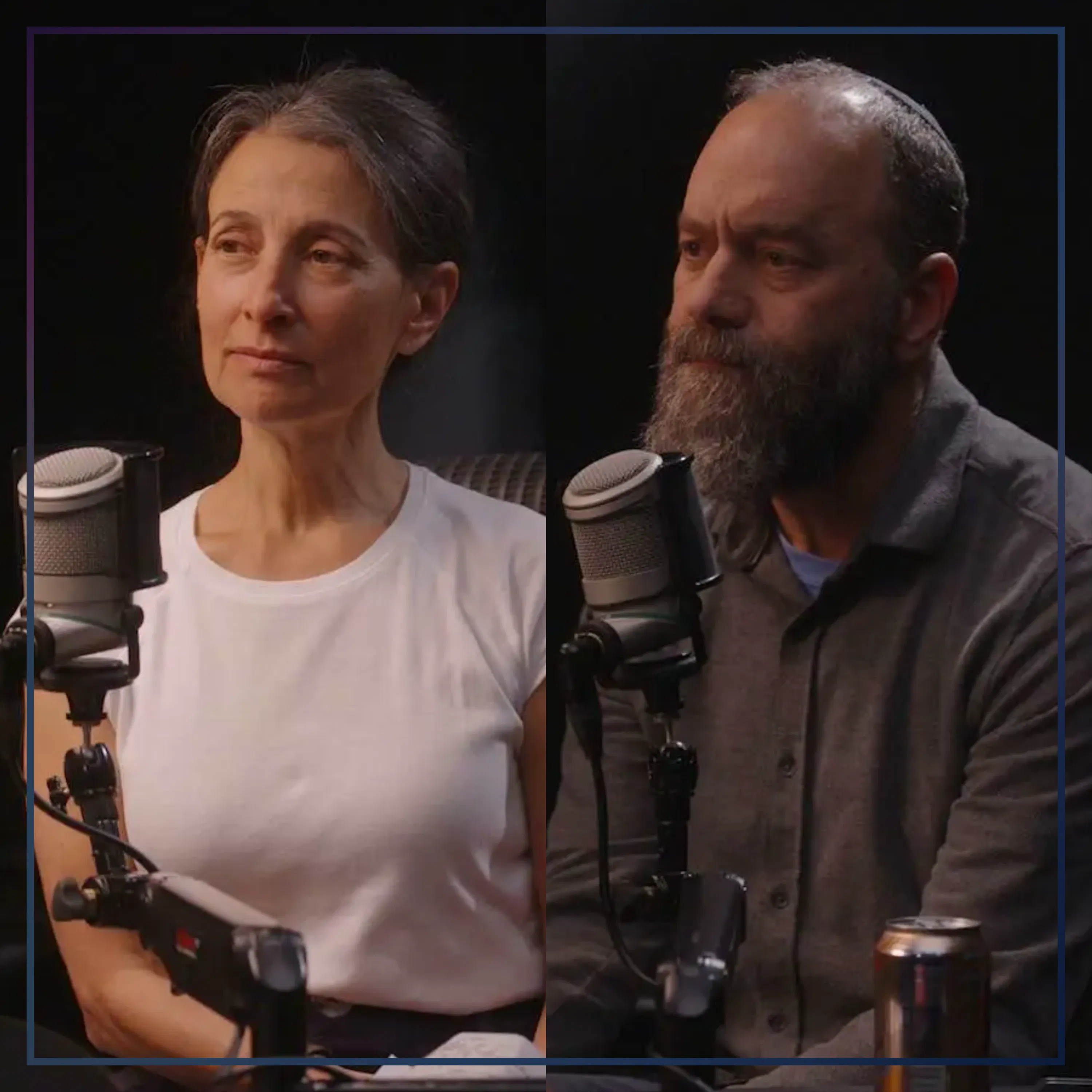
Speaker 1Welcome to All There Is. Years ago, I read a book called Man's Search for Meaning by Viktor Frankl, and it's become a really important book for me. It's about his experience in Nazi concentration camps. It's really a book about survival. Frankl wrote, Most men in a concentration camp believe that the real opportunities of life had passed, yet in reality there was an opportunity and a challenge. One can make a victory of those experiences, turning life into an inner triumph, or one could ignore the challenge and simply vegetate. Frankl said that any attempt to restore a man's inner strength in the camp had first to succeed in showing him some future goal. He quoted Friedrich Nietzsche's words, He who has a why to live for can bear with almost any how. Whenever there was an opportunity for it, Frankl wrote, one had to give them a why, an aim for their lives, in order to strengthen them to bear the terrible how of their existence. We had to learn, he says, ourselves, and furthermore we had to teach the despairing men that it did not really matter what we expected from life, but rather what life expected from us. That book, written in 1946, has helped me and millions of people. It also helped a 23-year-old man named Hirsch Goldberg-Pollen when he was maimed and taken hostage by Hamas on October 7th. Hirsch was executed 328 days later, but his mom, Rachel, now carries that book, Man's Search for Meaning, wherever she goes. She's written a book now about her grief and pain, which is out. It's called When We See You Again. I sat down with Rachel and her husband, Hirsch's dad, John, several days ago. You divide your life between what you call the before and the after. You're in the after now.
Speaker 2Yes. From the second that Hirsch was stolen, we plummeted down this rabbit hole odyssey and we were able to see that we were not alone. We were able to see that we were not alone. of curvy torment first for 330 days and then once Hirsch was murdered and we found out about that we entered even another layer of otherness within this different world that we've been in
Speaker 3and that's where we live now. There's not one moment in my life now that Hirsch is not on my mind. It's constant and I suspect it will always be that. What is that feeling? It's the whole gamut. It's deep longing to smiling as I remember something as simple as sitting on the couch and
Speaker 2talking to him but it's always there. I really start my day the first words out of my mouth are to him while I'm still in bed before I start my morning prayer. And there's a lot of dialogue throughout the day and he's very present and his presence is really a comfort and it's a reminder of this delicious blessing of having had him. I don't associate him with the sadness but then there's this longing like I am hungry for him like I am thirsty for him craving that I think intensifies. It doesn't lessen. There are people who say, well, if you're still grieving after X amount of time, then you have a disorder. Yes, I do. And I'm really proud of it. And I thought that etymology of disorder, dis from the Latin means opposite, dis-ease or disagree or what have you. And so disorder, I am out of order. And my life in many ways was out of order because I buried my son. That's out of order. It's not unique. There are millions of people who have buried their children. I'm not saying I'm different. I'm just saying I have a disorder and I actually embrace it. I'm proud that I'm feeling out of order because of the love.
Speaker 1That's why it's so painful. It's a sign to you of the amount of love you have for him.
Speaker 2Yes. The reason that I'm in this constant state of yearning is because of the love. The grief is a badge of love because it is the love that is continuing to grow in the absence of the person that we adore. And that's a price I'm
Speaker 3willing to pay. I spend zero time trying to work on not grieving. What I work on is embracing the pain of grieving, but also at the same time being able to smile, find joy, celebrate, etc. Not in place of, in addition to. And it's Hersh who helps me. I have him in my head and on my shoulder and in my ear. And I think he's saying, live, find joy, celebrate, dance, be happy. And I'm trying to listen to him. I don't know what the afterlife is and what it looks like, but I convince myself that he's okay. He's okay. We need to work on us, but he's okay. And that helps
Speaker 2me. Do you feel him? I do feel Hersh very much. I had this incredible experience a few weeks ago. We met with this young woman named Oriah, who was talking about how we integrate loss. And she was talking about this idea that I had never heard, toxic positivity, which is when people are constantly saying to you, you're going to be okay. It's okay. You're getting better. And to the point where I think it's actually emotionally barbaric and gaslighting to say that to people. There are people who are broken. Own your brokenness. I'm broken. And I'm going to go through life broken. It doesn't mean I'm not going to be happy or laugh or have amazing relationships and celebrate my two vivacious, dynamic, talented daughters. You can be both. Yes. So I Google, what is the opposite of toxic positivity? And it said, tragic optimism. And I was like, oh my gosh, I love that. That is me. I am a tragic optimist. So then I said, who coined that phrase? Viktor Frankl. No. And I was like, thank you, Hersh. I mean, come on. I thought Hersh just sprinkled that right onto me. There's something. Something beautiful about the ability to still be optimistic, but you've been wounded. There is a real texture once you've had the perspective of intense suffering, which we've had,
Speaker 1and everyone will have. One of the things you have said to me repeatedly is that there's nothing special about you or your loss. There are so many people who, as a result of October, October 7th, on both sides of the border, have suffered tremendous losses of children.
Speaker 2Exactly. And all over the world right now. And it's not a team sport. You don't have to choose a side, even though I think sometimes that construct serves a tiny percent of people. We have so much more in common in this human endeavor of life. It unites us.
Speaker 1It connects everybody. It unites everybody on the planet, which is so.
Speaker 2No one wants to see that. But that adversarial construct is what keeps us cheering for two different teams when really this is humanity. And how do we, as humans, acknowledge and recognize the pain and suffering and loss and grief and mourning that all of us
Speaker 1have or will have? You talk in the book about the moment the before was done and the moment the after started. And for you, that was the morning of October 7th, when you read the two text messages from Hirsch that you got. What did those messages say?
Speaker 2The first one said, I love you. And the second one said, I'm sorry. And I just knew there's no 23-year-old in the world who at 8, 11 in the morning is writing those to his parents out of nowhere because everything's okay. It's because everything's not okay. And we now know that was already after his forearm was blown off.
Speaker 1He typed those in a bomb shelter.
Speaker 2With his non-dominant hand.
Speaker 1Even calling it a bomb shelter, by the way, is kind of grandiose. It's a five-by-eight concrete bunker, essentially, with an open doorway. Yes. In that room were more than 25 young people crammed together. Yes. Hamas had already come, had already thrown in multiple grenades. Hirsch's best friend, Anir Shapira, had already thrown. Thrown out, at least according to eyewitnesses, 10 of those grenades. He was killed. Others threw grenades as well. And Hirsch, was his hand blown off throwing a grenade?
Speaker 2Yes. Because Anir had said to everyone, your natural response will be to close your eyes if something's thrown at you. You have to keep your eyes open and try to throw out anything they're throwing in. And if anything happens to me, you keep doing it. And he ended up getting killed. And so the other kids who were inside were trying to do what Anir had told them to do. And Hirsch was holding a grenade that exploded while. He was trying to throw it out, and that's how his forearm below the elbow was blown off.
Speaker 1You said in the book, in the new world, our story is a story about pain, pain that is agonizing, throat-choking, debilitating, soul-shattering. No one wants to hear that. People want hope, resilience, recovery, strength, survival, healing. They want thriving and rising from the ashes like the phoenix from the days of yore. But the pain is chronic, ever-present, constant, gnawing, circular, not linear. Bound in our straitjacket of suffering, John and I are still stranded in this tunnel, even though Hirsch is no longer there.
Speaker 2I think about that a lot. I had a really meaningful conversation with this ultra-Orthodox rabbi after Hirsch was killed, and he said, Hirsch was thrown into this very deep, dark place, and because you are his parents, you were there for him. You were there with him, and you will always be there. It felt like a validating affirmation. And I had another friend who said, part of you is already in the world to come. And that's why you feel so confused here, because there's a percentage of you that you put in the ground.
Speaker 1You felt that at Hirsch's funeral, looking into the hole that he was going to be put into. You felt you were in there. Yeah. Irene Weiss, who is a Holocaust survivor, virtually her whole family was killed.
Speaker 2I heard her on your podcast.
Speaker 1Yeah. I just want to play something that she said on the podcast.
Speaker 4The heart keeps working, but the soul never forgets. It's imprinted on the soul that keeps the memory, the pain, the grief, it's just always there. The 13-year-old girl that you were, do you still feel that little girl at times? Or did you bury her early on in Hirsch's? No, that's a good question. That's really a very good question. I am stuck there. I am really stuck there. That's where all the grief is. It's not the depression that you could read about in books. It's a pain, and it's a melancholy. I'm different. I'm holding on. And, yes, I'm 13 years old most of the time. Very difficult. I can see I'm strange among other women or friends. I think I probably misunderstood, too, that I'm reserved or not friendly or something like that. Very hard to -- I see another side all the time.
Speaker 3Not fair. She talked about at the end where she's with her friends, and she's not all there. I, on the one hand, feel like I'm now much more comfortable being open and emotional with my buddies. At the same time, I find myself frequently saying, "Act like you're in the conversation. Throw out a comment here and there. Pretend like you're there, even if you're not." It's just constant brain working. There's no stopping and relaxing. And detaching. It's always something running. But the bigger thing as I listen to Irene talk is -- and we've said this for a long time -- we weren't in the bomb shelter. We weren't taken hostage. We weren't in tunnels. And I feel in some ways like it's an insult to her in some ways to compare our experiences.
Speaker 1I actually talked to her daughter. A couple days ago, I mentioned that she was going to be talking to you, and she actually made a little video for you. Oh, my gosh.
Speaker 4I watched you both advocating for your son and was deeply disturbed by his death. When I was 13, I lost most of my family in Auschwitz. But losing a son, a child, is a special kind of pain. At age 95, my own grief goes in stages. Sometimes it is hard to bear. Other times the feelings are more quiet. And then again, I am full of rage at the world that creates such murderers. I wish you strength in dealing with your grief. Do you feel that rage at all?
Speaker 5I don't feel the rage. I love what she said, because I love that she's held on to the pain for 80 years. It's so permissive. It's really beautiful. Because I don't plan on getting rid of this pain. I really don't.
Speaker 1You don't want to.
Speaker 2I don't think that it's attainable. I think that it's so integral to who we are. And I think that it's just part of us now. And I'm comfortable with it. And pain also promotes healing. We don't have to be terrified of pain. And I love that she very much acknowledged in the previous video, there's something about when your crisis happens to you, when your trauma happens, you do get stuck in that place. John and I were both 53 years old. We had had a really good run. But I do think of people like Irene, or you, or other friends who as children had their big loss. And you get stuck in that place. And I don't think there should be shame involved with that. But I think for many years, a lot of people felt that because of the toxic positivity of being told, "Okay, it's been three years, two years, five years, 10 years. Come on, integrate it and let's go." And I think that's done a lot of damage to a lot of people. And so I love that her message is, "I'm 90 years old. This happened when I was 13, and it has been on my back and I'm carrying it."
Speaker 1I like that she says, "Some days it's more quiet. But it's still there."
Speaker 2It's always there.
Speaker 1For sure. You said, "Then there are days when suddenly there's a whisper of sun, not out there in the sky, in me, in us. It's coming from within the four of us. We who used to be five. We were figuring out how to float with one of us not present." You also said, "I hope I can teach myself how to miss someone forever and love someone forever in a way that doesn't run me over each day anew." Have you gotten any closer to that?
Speaker 2Not sure. I don't know if it's closer to that, but it's different. And it's just getting more familiar with this sensation that's always right here. I always feel like he's right here, that longing is right here, but you can get comfortable with wanting. I don't like it, but I can get familiar with it. There's a scene in Gone with the Wind, in the burning of Atlanta, and it's Rhett Butler is trying to lead the horse that's carrying the wagon with Scarlett and everybody. And the horse is getting spooked by all of the flames and destruction around it. Rhett Butler puts a fabric over the horse's head. And then the horse, and he's talking gently to the horse, and the horse is okay. But every few minutes, the horse freaks out. And I kind of feel like the horse. I'll be freaking out, and then I'll talk myself down, and I'll soothe myself. But then I'll realize, holy cow, I cannot believe this is our reality. And I'll get spooked.
Speaker 1You must have had that repeatedly in the 330 days before you learned he had been executed.
Speaker 2Yes. It's not grief. Those 330, that was torture. That was an exquisite, perfected torture. Knowing that your child is being tortured, and you know it, and being starved, and you know it, and has no arm, and you know it, is absolute excruciating torture. And how do you just keep breathing? And that's when I had a lot of. I had a lot of really confusing self-care problems. It was extremely hard for me to shower, because I knew he wasn't showering. It was extremely hard for me to eat, because I knew he wasn't eating. It was extremely hard for me to drink water, because we knew they weren't drinking. They would maybe get half a cup of salt water from the sea, or dirty water. It was excruciating. And a lot of my problem now, I know that Hirsch is not starving anymore. I know he's not dirty anymore. And yet, every single time I shower, I'm uncomfortable showering. And when I drink water now, it's uncomfortable, which is really damaged. And yet, I earned that damage.
Speaker 1It's real. I should point out that I first met you when I interviewed you on CNN on October 16th. Some eyewitnesses had told you that Hirsch had been wounded, and you knew that part of his left arm had been blown off. You didn't have any video of him at that point. And while I was interviewing you, I saw a picture of Hirsch that we put up that you had given us, which was Hirsch in the bomb shelter. I realized that I had actually seen a video of Hirsch being kidnapped. I'd been shown it several days before by some Israeli soldiers at the Nova Music Festival site on one of their phones. I actually explained. I had been disclaimed when I saw it. Jesus. His hand has been blown off. But I had no idea when I was talking to you that that's who that was until I saw the photo. And I was trying to figure out how do I handle this, what do I do. And I realized I'm not going to say anything now. And as soon as the interview was done, I said I was going to call you, and then I informed you of that and sent you the video. I said this to you in the 60 Minutes interview. I felt terrible that that is the way you saw what happened to your son.
Speaker 2I actually think that was actually a perfect way. And I'm not saying this because we're here and we really were so struck by your humanity that evening because you handled it in such a perfect way. You were as gentle and human and kind and benevolent as possible given this terrible thing that you had to give over to us. So we're actually thankful that it was you and that you did it in the way you did it.
Speaker 1I want to read something that you wrote about grief. You said, "What if instead of hating, tolerating, or just putting up with grief, what if I'm all wrong? Maybe I actually owe grief an apology. For so long, I've been confused, desperate, and in such profound pain, I haven't been thinking straight. I've been looking at grief through mud-colored glasses. I've decried grief as a trespasser. I've tried to bar the door. I've screened its calls. I've written libelous, disparaging remarks about grief. But perhaps grief is merely the messenger, and by trying to prevent it from entering the room, I'm trying to save it. In the room of my soul, I've exhausted myself. Now I see how that very effort depleted my mangled body and spirit even further. I think that much of the festering, blistering pain that we broken feel comes from trying to deny the love that continues to grow after a person dies. With a bolt of revelation, I see that grief is a badge of the love that continues to grow after its recipient is no longer here. Why in the world wouldn't we want to wear that precious badge proudly?" Do you feel like you have a relationship with grief? Do you feel that you have a relationship with Hirsch still and that it grows?
Speaker 2That I definitely feel. The way that I love Hirsch today is different than how I loved him yesterday or last week or last month or last year or on October 6th. It really is like bamboo and continues to grow and develop and change shapes and textures. And what I have learned that's most revelatory for me is that. Love is stronger than time and love is stronger than death. And I don't think that about hate. I actually think hatred is this very powerful emotion. But I think with time, it can peter out and I think love keeps growing. That's what's so glorious. Because that gives me comfort. Knowing that this love is going to keep changing and shifting and curving around and.
Speaker 1It's not going to disappear.
Speaker 2No, there's no chance in the world. Even what Irene was saying, that gives me hope. Eighty years from now, you're still going to love this kid.
Speaker 1But you're still going to feel pain.
Speaker 2Yeah, but that's all right. It's okay. I'll take it. It's the price.
Speaker 1Because you get the love too.
Speaker 2Yeah. It's a package deal. It's a package deal.
Speaker 1We'll be right back with more of my conversation with Rachel and John. You both went through this experience for 330 days, knowing, believing Hirsch was alive. And when they came to tell you they'd found Hirsch and he'd been executed, you discovered something. What was it you discovered?
Speaker 2That that had been the good part. There was the hope. That we were getting him home. And now we knew he'd never come home. And he didn't. A lot of people say like, oh, you finally got him home. Or we finally got all the hostages home. Hirsch never came home. Hirsch never came back to my home. I got him back in a bag and we put him in the ground six miles from our house. That's not coming to my home. And so it was a whole new. It was a whole new. Universe of now where are we? How do we do this? But we're doing it.
Speaker 1Funerals in Israel are so different than here. There's no casket. There's a body in a shroud. It's put in the ground. It's very elemental. It's very real.
Speaker 2Yeah. We traditionally cut your shirt right above where your heart is when it's one of the seven closest relatives, mother, father, brother, sister, daughter, son, spouse. And you tear your shirt upon hearing the news. And then you wear that shirt throughout the shiva, throughout the seven-day mourning period. So we happen to have been wearing whatever T-shirts we were wearing Sunday morning when they came to tell us. And no one's wearing a suit. No one's dressing up. No one's showered. It was one of the hottest days of the year in August in Jerusalem. There were thousands of people there. There's no shade. It was just miserable because it should be miserable. And that I really like. It's very real.
Speaker 1I just want to play part of that.
Speaker 6Finally, my sweet boy. Finally, finally, finally, finally you're free. I will love you and I will miss you every single day for the rest of my life. But you're right here. I know you're right here. I just have to teach myself how to feel you in a different way.
Speaker 2I remember at some point during the eulogy that I gave hearing this rolling cascade of screaming. People were screaming. His friends were on the ground screaming, screaming. It was very helpful.
Speaker 3One of the many. Lasting images in my head of that day is we walked out of our apartment and we got in the car for a slow procession and the entire route. And the most common thing that we saw was people holding a sign with one word on it, Slicha, which means I'm sorry. There was this communal national sense of. We failed you. And we're sorry.
Speaker 1During when you were speaking at the funeral, you looked up and you said, I'm sorry. You screamed out, I'm sorry.
Speaker 2Yeah. As we were burying him.
Speaker 1And those were Hershey's last words in text to you as well. I'm sorry. In that bomb shelter.
Speaker 2Yeah. I think he was sorry because he thought he was dying and he knew it would be horrific for us. And I also was feeling terribly sorry that I had failed to save him.
Speaker 1On the 328th day, you went with other families to the border and the idea was to have families on loudspeakers talking to their loved ones and being held hostage. And you screamed out for Hersh.
Speaker 7It's mama. It's day three. It's day three. It's day three. On the 328th, we are all here. All the families of the remaining 107 hostages. Hersh, we are working day and night and we will never stop.
Speaker 1Did you believe he maybe could hear you?
Speaker 2We had been told that they were close enough that there was a chance that they could hear us. And it ended up being the most primal scream I've ever given over in my life. And I remember there was a cameraman in front of me who he jerked and burst into tears. And I have no idea if Hersh heard me in that moment, but I think he heard me in other ways at other times for sure.
Speaker 1And that day. That was the day he was executed.
Speaker 2They think that they were executed later that afternoon. So I also am very thankful that I did go. I think that that was a very important thing for the universe to chronicle parents screaming to their child before he was taken from the universe.
Speaker 1You had very little information about what Hersh's life had been like for those 328 days. And it wasn't until Orlevy gets released that you actually get to learn about the days that Orlevy spent with your son.
Speaker 2Right. And that was unbelievable and will always be something for the rest of my life that I treasure. That. Yeah. Those couple of hours that we spent in the hospital with Or, whose name in Hebrew, the name Or means light, and we had been living in complete darkness. First, originally when Hersh was stolen and then certainly after Hersh was killed, we were in the darkest, most black, drenched place. And suddenly on the evening of 496, we meet Light. We meet Or.
Speaker 1Or told you that Hersh was not broken.
Speaker 2And that he was laughing. That there was laughter. He said, well, he kept saying this mantra that he was saying to himself constantly, which was a quote from Viktor Frankl's Man's Search for Meaning. When you have a why, you can bear almost any how. And we were just floored. We were floored that that's what Hersh was doing. And he said, oh, he said to me, your why is your son. You have to get out of here. You're going to bear this. You're going to deal with this because you have a son at home. And Eli Shirabi wrote about it in his book that Hersh said the same thing to him. And he said it to Eliakho. He was saying this to everyone and to himself. And that became so illuminating for John and me. And I had never read the book.
Speaker 1It's a 1946 memoir by Viktor Frankl about his time in concentration camp.
Speaker 2It's in my bag. I travel with it because it's Hersh. It's a piece of Hersh. And I didn't know. And so all of the sudden we find out he's making people feel OK. He was still himself. Yes, he was missing an arm. Yes, he was hungry. Yes, he was scared. They were all miserable. But he wasn't broken. And he could have been broken. It's not that I don't. I mean, I'm broken. I mean, heck, like that's my identity. It's not that I'm anti that. What Orr was telling us is that, yes, it was horrible and he was OK.
Speaker 1Do you know what your why is?
Speaker 2Part of our why is figuring out our why. And part of our why is picking up Hersh's why. And I'm really fascinated by this idea. The Baal Shem Tov, who was sort of the father of mystical Judaism three hundred years ago said was once asked, what's the purpose of this life? Like, why are we all here? Why do we all get here? What's the point? And he said, every soul is sent to this world so that one day their soul can do one kindness. For one person. Just once. It doesn't mean you're not supposed to do thousands of acts of kindness and betterment and improvement and trying to fix this place. But you're here and I'm here and John's here and all of us are here because there's one specific thing that we're supposed to do once. That did Hersh do his one kindness when he was three and we were living in Berkeley? Did he do it when he was 13? When he was in eighth grade and he was nice to somebody who no one was nice to? Or was it saying something empowering to someone in a dark tunnel under Rafa when he was 23? I don't know, but I know that he did it and that's why he was able to go. And I do wonder to myself, have I already done my one kindness, but I'm still here because someone else has to do their kindness to me. And I think figuring out our why. Is clearly having something to do with this colossal Herculean challenge we've been handed in the losing of Hersh.
Speaker 1You found a notebook that Hersh had kept back in 2015.
Speaker 2He had just turned 15. He was a freshman in high school.
Speaker 1It's just a sort of.
Speaker 2Musings of a ninth grade boy with very bad handwriting.
Speaker 1I want to read part of. What you found that he wrote. It's all about a tunnel. This was on October 26, 2015. Every so often you arrive at a tunnel and you enter the unknown and you don't know when you'll get out. To walk in the dark in the beginning you're upset and you're not ready and you feel that you arrived at the edge. But it is not the exit or the end. It is just a change in the situation. How much time it will take to get to the end of the tunnel depends on the person. If it is with despair, it will take a longer time. Or if you enter with all of your might. It will pass quicker. My tunnel was when I was the new one. But like everything in life, I passed through the tunnel. Who knows how many more tunnels I will encounter. But I'm not afraid to slow down or even to make a U-turn. What is sure is that I am walking to the end of the tunnel. He writes about tunnels 12 times in this passage.
Speaker 2Eight years before he was held in a tunnel.
Speaker 1What do you make of it?
Speaker 2It's a very strange passage. And I don't really know what to make of it. But I also want to take it as. A message to us. That we all have these metaphorical tunnels that we run into. We don't know if they're going to be long or short or deep or shallow. Or when are we getting out. And hopefully we'll endure until it's our turn to get out.
Speaker 3Even after he was killed. It gave me strength that. He was ready for the challenge. And he took on the challenge. And I think he really believed that we're all coming to get him. Just a question of when.
Speaker 1Is there something you've learned in your grief that would be helpful for others?
Speaker 2There's a precept in the Jewish tradition. And in other religions as well. That every person is a whole universe. I think that that's a really beautiful way of looking at people. And I think a lot of the people who we were talking to when Hirsch was alive. We realized that they were looking at Hirsch as one boy in the whole wide world. And we were looking at Hirsch as one world in the whole boy. And that that's really beautiful. And that's why there's such suffering when we lose someone. Because we're losing a whole world. And that's a gift. That we miss our people so much. It is the most human thing we can ever experience.
Speaker 1This loss. Does it help you to know that you are on a road that has been walked down. By everybody who's ever lived?
Speaker 2For me for sure. It helps me. Yeah it's not unique. It's not unique. It's just it's challenging. Okay. I'll do it.
Speaker 3Don't fight the grief. Don't try to diminish the grief. Just figure out how to carry it in a way that I can walk through the world still. While the grief is always on me.
Speaker 2Yeah. And that's why it's two containers of confusion. That we deal with or try to deal with. Because there's the death and all of the grief and loss and mourning and pain. And then there's this compartment. I think of it as like those storage lockers. That's the 330 days. It's like that I really put in a storage locker. And I just feel.
Speaker 1Because you had to get through it. Yeah. You had a job to do.
Speaker 2And so I was compartmentalizing it. I was saying like yes you're terrified. Yes you're traumatized. Yes you're being tortured. That's later. Go. So I kept putting all of this.
Speaker 1What was it you would say every morning when you woke up?
Speaker 2I would say hope is mandatory.
Speaker 1Go. Hope is mandatory.
Speaker 2Hope is mandatory. Not a suggestion and not advice. It's a command.
Speaker 1Hope is mandatory. Go you would say.
Speaker 2And then I'd fling the blanket off and go. Even though I wanted to crawl up in a fetal position on the floor next to my bed. And be weeping. Out of complete terror.
Speaker 1So for to function you had to push it all down. Yes. And which I'm very familiar with. And propel yourself forward.
Speaker 2Yes. Pushing, pushing, pushing. And then putting all that stuff into the storage locker. And I don't know now what to do with that. Meaning I'm so busy dealing with the grief and anguish. And missing and yearning. And every day longer is I miss him more. I don't miss him less. But I have a storage locker of horrific things. Do I have to go? go through that? Do I have to unlock it? I don't know what to do with that. I don't know how it works. I do because weird things happen, right? When I'm showering. Well, that's from the storage locker. That's not from him being dead because a lot of people lose people and they don't have a problem showering or eating or drinking. Or John said recently, maybe one day you'll wear your hair down again. I put my hair up on October 7th and I've never taken it down. I used to wear makeup. I've never worn makeup again. I used to wear jewelry. I've never worn
Speaker 1jewelry again. Like that's the 330 days. So that you have not even begun to unpack or turn to?
Speaker 2Mm-mm. And I don't know. Is that possible? I mean, Irene would probably know. Like, am I 53 now forever standing next to this storage locker? I don't know. I hope. There's a way that I can be normal whether I open it or I don't.
Speaker 1Do you want to open it?
Speaker 2No. And is that allowed? Can I just keep all of that horror locked up? Is that an option? Or is it like when you ignore that, oh, something's off in the fridge and you just keep the door closed? Like, oh. And then one day you open the fridge and you're super overwhelmed. Like, is that going to happen? But what if I promise I'll never open the fridge?
Speaker 1Not that my little fridge is comparable at all. But I mean, that was my strategy my entire life. How'd it go? 40 years. I lasted 40 years. And then I found myself weeping uncontrollably while going through boxes of my dead family's things and not knowing why am I weeping.
Speaker 2Right. But 40 years for me will take me to 96.
Speaker 1You can maybe make it.
Speaker 2I can make it. Right? And then if I lose it, so then put me in the ground next to her.
Speaker 1Yeah. Yeah. But I lived half a life in those 40 years. Right. Right. Which I don't think you want to do.
Speaker 2Right. So I guess I, I don't know.
Speaker 1I don't know. When you need to know, you'll know. communicate with others in the comments or watching at the same time. If you missed the live stream, it'll be posted the following day for a week on cnn.com slash all there is. It's a really special show and all the older episodes of it are available on demand for CNN subscribers. Also, if there's something you've learned in your grief that you think would be helpful for others, feel free to leave us a voicemail at 404-827-1805. We may use your message on an upcoming episode of the podcast. Thanks for listening. Wherever you are in the world and in your grief, you're not alone.
 PodcastTranscript AI