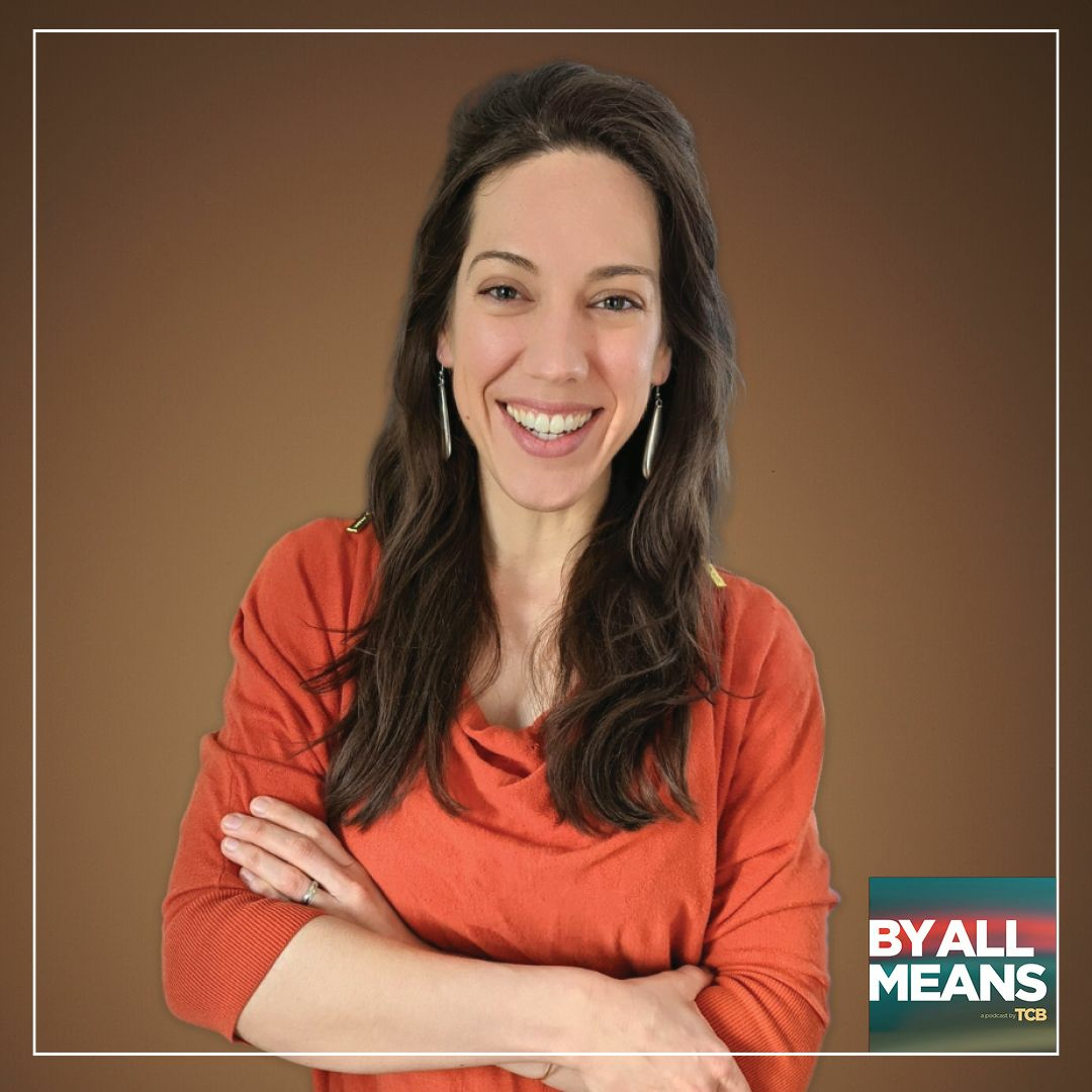
Belén Rodriguez, an Argentinian immigrant in Minnesota, founded CabraCha in 2018, initially selling empanadas at local farmers markets as a way to cope with homesickness and share her food traditions. What began as a side hustle grew through pop-ups and catering, but the COVID-19 pandemic in 2020 forced a critical pivot when all events were canceled. With her husband Rob's encouragement, Rodriguez shifted the business to producing frozen empanadas for retail, transforming CabraCha into a consumer packaged goods company. This required navigating complex USDA and state licensing, aided by mentors and local resources. Despite starting with handmade production and facing significant hurdles, the company successfully scaled, now approaching distribution in 200 stores with ambitious expansion goals. Rodriguez's journey highlights innovation, adaptability, and the importance of community support in entrepreneurship.
Today's episode is made possible with support from Bremer Bank. Work with a banker who understands your business goals and how a strong banking relationship will help you achieve them. Work with Bremer Bank. Put Bremer to work for you today at Bremer.com. I think after three weekends, we realized we've got to do something because my knuckles and hands were on fire. From Twin Cities Business, this is by all means a show about innovation, drive, and purpose, and the leaders who make business work in Minnesota. I'm Allison Kaplan, your host and editor-in-chief of Twin Cities Business Magazine. Coming to you from the studios of our presenting sponsor, the University of St. Thomas, Schultz School of Entrepreneurship, cultivating the next generation of problem solvers and innovators. The school offers undergraduate and graduate programs in entrepreneurship and corporate innovation, as well as community resources to support new ventures, family businesses, and corporate entrepreneurs. And now, by all means. Feeling homesick drove Bell and Rodriguez into entrepreneurship. It's true. Love brought this Argentinian native to Minnesota where she had a successful career as a Spanish interpreter. She stepped up her home cooking to stay connected to family traditions. And pretty soon, she was selling empanadas at farmers markets in Minneapolis. She launched Cabracho in 2018, and it was a side hustle that was on the verge of growing into something bigger when the pandemic nearly killed the business. Instead, it prompted a pivot that has set Cabracho up to become a major player in the frozen food aisle. Now approaching 200 stores, Bell and has goals of expanding to 3,000 stores by 2025. We're catching her as she's adding staff, raising money, and preparing for the next big launch. Cabracho is a tree native to South America. It's good for smoking meats. It has a high burning point and a low smoking point. Bell and could practically smell it as she was thinking about translating her food memories into a business. We always had these, you know, Sunday get-togethers with the family, right? And our house was kind of like, we have this phrase in Spanish, "La casa del pueblo." It's like, you know, the house of the people. And people just showed up, you know. It's like, come and go, come and go. You know, starting at 10 in the morning, people would start coming. And my dad would go out there and start, you know, lighten up the fire for grilling. And I would be very close to him all the time because I was, you know, always interested in that kind of stuff, you know, more and more hands-on manual stuff. God, what did your parents do? So my dad is in the beef industry. Ah. Initially, he went to school for mechanical engineering. And then he dropped out when, you know, married my mom. And then he got into my mom's dad's business. So they kind of, you know, had a meat processing plant. And then, you know, branching off generation after generation. So he's kind of like a small farmer broker. And he connects small farmers and provides them with the services that they need in order for them to sell their, you know, meat in the city. Interesting. And what about your mom? My mom's a dentist. Okay. Yeah. Cool. And did either of those career paths appeal to you? Did you see yourself following in their footsteps? No, you know, it was really funny. So when I was a kid, I wanted to be a vet. And that meant at the time moving out of my city. And I didn't want to do that. What's the city where you grew up? So I grew up in Rosario. Okay. Is that a small town? No, you know, there's like, you know, I would say it's kind of like the same size of the twin cities. Okay. But it's very dense. I think there's like a million and a half people in the space of the twin cities. Mm-hmm. So it's one of the three largest cities in Argentina. We're about two hours and a half north of Buenos Aires. You know, most folks are familiar with Buenos Aires. Mm-hmm. And it's a beautiful city. We're just right on the shore of the Parina River. So, you know, it has a lot of culture and history, yeah. So even as you were thinking about being a vet, you already had in your head that you might have to leave. And you were telling me that leaving home is not a thing that everybody does where you come from. I know exactly. You know, we do have a lot of people coming into town, you know, from smaller places, you know, coming to go to college and whatnot. But that was not the case for me. You know, I grew up, you know, you know, I'm a person that loves, you know, connecting with people. And so I have my own people, right? So very tight connections with my family. Like I was saying, we had these Sunday gatherings and my close group of friends. And gosh, I mean, we're still friends. Yesterday was National Friends Day in Argentina. Oh. You know, and I'm still, my, all my friends, you know, we have a group of about 15 people and we all still hang out together. So, that's so nice. So you ended up coming to the US to practice your English. Yeah, that's kind of how it started, yeah. And at that time, you were like college age. I was. So when I came for the first time in 2006, I was 20 years old. Okay. And were you still thinking you might want to go to vet school at that point? No. So at that point, I was almost graduating college. So I decided against vet. And I said, you know, what am I really, what am I good at? And I said, well, English, I've been raised by Langually, you know, started taking classes at age six. And I said, okay, well, let's give this a try. So my friend, Oh, Hany, and I, we said, you know, let's just go to the US and we found a work and travel program and we landed in Colorado. Landed in Colorado, beautiful place to land. Uh-huh. And you got a little more than you bargained for. You met someone kind of special. I sure did. And yeah, so Rob was, you know, he's from Silver Bay up in the North Shore and he was working, you know, as a snow cat operator just grooming the trails at night. And then in the summer, he was, you know, grounds maintenance for the golf course. And we all lived in the same employee housing complex. So, you know, we would frequent each other very often. So, uh, Minnesotans, or maybe even beyond today, might know Rob as the, um, the head, uh, head brewer or what do we, what do we call that? Yeah, so he's one of the main brewers that imbound, uh, imbound, Bruco in the North Loop. Okay. You know, folks and recognize him for being a great supporter of Cabracho. And he's been involved since day one, either, you know, making the dough for the empanadas, who are attending pop-ups and demos. So, I know the two of you live for a time in Argentina and then actually decided to come to, to Minnesota. And it was then that you really found your love of cooking? Kind of. Yeah. And it was a non-linear start and growth, I would say. So, when I first moved, when we first moved to, to the US, I got a job as a Spanish interpreter at Hanupin Healthcare, at the time, HCMC. So, I worked there for nine years, actually. Doing interpreting for patients. And did you enjoy that work? I did. It was highly rewarding because the type of work that I had in Argentina was not with the community. So, the type of work that's available down there, given that, you know, it's mainly a monolingual society, or country, it was more translation of books. And, you know, I'm specialized in medicine. And then, I had a strong focus on clinical trials. And so, that was, you know, very different from making empanadas. Sure. Yeah. But I worked by myself at home. And I was a freelance interpreter for different agencies. And so, when I came here and I had this opportunity, it was a breath of fresh air. And, you know, being able to connect with the community and be able to experience what they go through. Yeah, it was a completely different thing than what I was doing before. So, you were enjoying the job, but maybe starting to feel a little homesick? Very homesick. I would say, you know, and I said before, we're a very close family. And so, I was really missing that whole part. And of course, Rob's family is here, but we didn't get to see them that often, given that they're so far away. They're up in the North Shore. And so, it really started out of homesickness and as a hobby. I would say, it was making foods that I grew up eating and keeping them at home. So, we would meal prep, right? And we would just like stuff our freezer with different meals, including the empanadas. And what, at what point did you start thinking, I should maybe be selling these empanadas, which thank you, by the way, for doing that, because I love them. Well, it didn't even start with the idea of owning my own food business. I said, I might want to get into food, but I don't know what this means yet. So, I got a job at a bakery in St. Louis Park. People might be familiar with honey and right baked house. So, I worked there for about six months and I think that was around 2014-15. You're still doing the interpreting as well. I was. Okay. So, it was kind of like, you know, dipping my toes in the water, working weekends, and then that just kind of like, oh, you know, a wake and something new. And I said, okay, well, I think I want to get a job at a restaurant now and see what this is about. So, I dropped my hours at the hospital, got a job at a restaurant in Edom Prairie, Camp Yellow. And then I got a job at the bachelor farmer. So, I worked there, I think, for about two to two and a half years. And what did you do at the bachelor farmer? I did a little bit of everything, you know, so I started working the line and then I moved on to prep. And I loved prep because I got to work with Aaron, their, you know, their kitchen manager. And so I learned how to make the cheese and the yogurt and the shark cutery. And I was butchering, you know, I would come in every Wednesday to break down their hogs. Wow. And I was just like, I guess you kind of
Yeah, and I guess you sort of had some exposure to that a little bit growing up. Yeah, exactly And so you know funny how things come full circle Totally totally, you know, and so yeah, so I did catering to And then I said, you know, I think I'm ready to start something of my own So when you said you think you're ready you head it in your head all along that you wanted to do something But you needed the the training first. I think it was at the bachelor farmer that I realized that I wanted to Start something and then I said okay. I think maybe the restaurant world is not for me As much as I enjoy it coming home at two in the morning, you know, and rob and I have an opposite schedule The passion was there. I just needed all that time to understand What fits with me in my life in our life, I would say Um, so now that I knew that I wanted something I said well, I'm still not ready, you know, pragmatic the lens, you know, I always feel like I you know All these steps to complete and so I took a step back from the bachelor farmer Came back to the hospital and started taking business classes. Wow So I really very focused very very practical. Yeah, so I took some um Business workshops with score and then I connected with who up until now is one of my great mentors and your friend Anne fix from neon Minneapolis, mm-hmm. So that's a nonprofit in North Minneapolis And I started taking classes with them one-on-one coaching. Mm-hmm. So I got all my business essentials Smart then I said okay Now we're ready to put together this business plan and see how we want to open so you knew you should have You know, you hear a lot of people who start with a passion or you know, they've got this desire and maybe they forget those steps and don't do the business plan or come back and do it after But you you knew you needed that first. Yeah, and you know like Each each journey has so different right and there's not a single way on how to grow a business I feel that's what's what clicked with me that's what connected with me, mm-hmm, you know You wanted to know that I mean what was it for you? Did you just want to know that you you had a plan that there was enough money that there was a That you knew where this was headed. I think so, you know fear Being strong motivator. Yeah, exactly, you know being here on my own and On the way that my mom and dad raised us we I don't know I feel that everything the way that it happened in my life just gonna prepare me to take steps in in a certain way Yeah, even in high school my particular high school Had a focus of business. So in high school, I remember we were doing accounting books and balance sheets in their own way For teenagers. Sure. Yeah, but it kind of oh this this is familiar I feel I should be preparing a budget. I feel I should be thinking about this and then it would reach out to the community And see like hey, do you know where I can do this or that and yeah, you know Why don't you connect with score or maybe connect with neon Minneapolis and that's kind of how we start it find in my way That's great. Um, what was the original business plan for Cabracho? Yeah, so interesting not in panadas alone And panadas were part of the menu But if you go back to our early days of social media You're gonna find a lot of savory pies a lot of charcuterie. So I would say Cabracho 1.0 It was Cabracho charcuterie and pies and it was a would you say a catering business or just uh Like grab and go for yeah I think long term rob and I had the idea of having something together and that's when he started his own journey with beer Mm-hmm, and we we saw ourselves as having something similar to Sirtex I would say you know like a meat and cheese type place or France 44 or Lowry Hill meats Who by the way so sad that they announced their closure, but Erick's a great guy by the way and even welcomed us to start doing pop-ups there for the first time nice So that's kind of what we saw, but were you doing were you gonna do a brick and mortar a storefront from the start? I think long term. Yeah, that was the plan. Yeah, but to start how did you how did people find out about you? How did you how did you stand up the business? So it started with back here pop-ups in our house and long fellow and so we recruited friends family and friends of friends and whatnot And we started doing a few pop-ups You know we had these like blind surveys asking people for their advice on our recipes and whatnot So we got all that down Then we moved on to paid pop-ups and then we finally launched in the holiday of 2018 as a Farmers market booth in the Linden Hills holiday market and how did that go? It went great. Yeah. Yeah It went great. We couldn't keep up so we moved from like you know in empanadas where the main thing So we moved on from bringing three dozen to five dozen to ten dozen to fifteen dozen and I was doing them all by hand at home Or did you have a kitchen? We had a kitchen So our very first kitchen was breaking bread right there on north Minneapolis on brought what? Sorry, Broadway Avenue So how quickly did you start realizing wow? We're gonna we're gonna need help where this is this is bigger than a farmer's market I think after three weekends We realized we got to do something because my knuckles and hands were on fire Because I was really I was rolling the dough with a rolling pin I didn't have a kitchen a pasta roller. I didn't have anything. Yeah, so so what did you do? So we just started reinvesting the tiny profits that we had and then you know I got a membership at Costco and you know when I'm bought my kitchen aid and then I want to bought the pasta attachment And then you know we order our very first press Manual from Argentina. So then I moved from making them by hand to hand pressing them. Ah, so I had this you know semi-mechanical way of making the empanadas And but you're still selling at farmers markets or or pop-ups Were you thinking at that point about this store of your dreams? We still did yeah And I would say after that first holiday season in 2019 We really like kicked off the plan to grow the company as a catering company So we started doing private events as well. Okay, so we moved to Doing pop-ups at breweries and you know having like set schedules and then we started adding private events And we still did the farmer's markets So still testing the product on the model But in a bit more of a Adventurous way I would say got it. So all of this is scaling up and then 2020 happens. Oh my gosh. Yeah, I think it was I think I still remember it was Monday, March 15th or 13th And I just got a slurry of like 25 emails or something people cancelling All the events that we had booked for the entire year breweries private events weddings and I just cried I can imagine yeah, I mean what what were you thinking? What were you gonna do? We had no idea. I mean the hospital had put me on furlough Because I had moved my hours to part-time to work on the business and so I didn't have that um, you know and you know, Rob Sincum office and I was like the only thing We said okay, you know and he's also in a food service business that was vulnerable. Yeah exactly the same So we were very scared very scared and we knew me being self-employed I wasn't going to qualify for any kind of assistance and that came much later So we said okay, we need to come up with an action plan and I really wasn't ready to give up with the business And then Rob said you know Why don't we start selling them frozen? I mean a lot of people have been asking you out farmers markets to begin with um We were toying with the idea a long term of sternic grocery store brand And then we said that's we become essential workers We can continue in business. Let's just go ahead and accelerate the plans. Wow. So that's a whole other business It was a massive effort. Did you realize what you were getting into? Not at all. Okay So what were the what were the key steps? How did you begin? So once again researching back to square one Uh, I can't remember I think I reached out to Ann and I said okay I understand this is gonna be a new business plan. I don't know the consumer package goods world And who oh, and I'm sorry my mentor from neon. Okay. All right. So yeah, so I reached out to her I think we started working on on something. Yeah This is a pretty good town for finding people who know how to do consumer package goods. Yes, right? It is. I mean we have General mills right in our backyard and all these wonderful people that are they're willing to help yeah And then I Parallel or someone take simultaneously I started okay. What about the licensing? Because one thing is Doing this you know, and I had the connections, you know, Eric Lauer Hills was allowing me you know He said like of course we're gonna give you room to put you're in a shirt. Yeah And I had a couple other you know outlets, you know, and we had an online store and whatever God it so you knew you could sell them but but when you start packaging something up and it leaves the farmers market suddenly you need approvals and right and Exactly and and meeting
all those sorts of specifications. How difficult is that, especially in a pandemic? Very hard. So we had the outlet of the farmers markets who were not quite they themselves sure how they were going to be able to operate. So that was in the works. And then I reach out to my the inspectors that I knew from the city and the state and they're like, oh no, wholesaling, you're going to have to go through USDA. Yeah. That's at least a two year process. Okay. Well, okay. Well, what do we do? So let's start with the vegetarian one. So one thing after the next. So we start working with a URI, a state agency, like a state funded organization, and they help you do nutrition labels and the packaging and everything. So kicked off that portion. I continue working with USDA. And then we ended up being able to pass a license through the city of Minneapolis. So it's called the micro wholesaler license. And it allows you to wholesale your products in 10 to 20 locations in Minneapolis without a USDA license while you're working in a USDA program. Okay. So it's sort of like a patent pending situation. Kind of. So I call my council members and then I'm like, okay, can we do something? So how did Cabracho survive the shutdown? We'll find out after a word from our sponsor. When you're looking for business advice, everyone's got an opinion and angle, a sure fire five step plan. But if you want to know whether any of it actually makes sense for your business, who do you turn to? Work with Bremer Bank because understanding is everything. The pandemic brought Cabracho's operations to a halt, but Bellen wasn't ready to give up. Take a listen. There was already an effort to pass this law. So I initiated the inquiry with my council members. Okay. They elevated it into city council. I say, I see. So you went to your representative and said, hey, you know, I'm just a small business. I got to be able to sell some goods while I'm going through this long red tape process. Yes. And they, wow. And you actually got it passed. We got it passed. How quickly? Well, I think I take it. It took quite a few months, but yeah, it was a prove unanim unanimously. And we were already working with USDA. So I was like all over the place. Oh my goodness. I have to make this work. And how much of your time are you spending on all of that at a desk versus in the kitchen making food? Yeah. It's, I can't remember. I mean, I must have been working more than 100 hours a week. Wow. Yeah. It was a tremendous effort. Sounds like you connected with all the right people. And you got all of the, you know, all of the, the legalities of this going, you also have to have the money to package things. Because now you need packaging and branding and labeling and freezer space and all of that. Were you bootstrapping this? We are still bootstrapped and 100% non-dilutive. So we haven't given any equity in the business. It's very tied to our, you know, fundraising strategy and really something that I always like to point out, point out, manage growth throughout making sure that you're growing in concentric circles. There's so many challenges in each tiny step that bypassing a tiny portion can be make it or break it in a startup journey. So yeah, we were being very cautious, very intentional and how we decided to approach growth. As you started to realize, I feel like the deeper you get into a project like this, the harder you realize it's going to be, it's a pandemic. There's, you know, there's so many stresses and factors. Was there ever a moment when you were like, "Oh, this is just too much trouble. I'm going to just go back to." Quite a few. Translating. Yeah, quite a few. What kept you going? Well, you know, the support of people, I would say, and then it's the way that the startup journey goes. You know, you have all these highs and you know, the highs can be very high and the lows can be very low. And when you reach that low, low is when you start questioning, "Do I need to be looking for a job?" Yeah. Like, how much more can I take of this? Like, do we see the light at the end of the tunnel? And, you know, the moral important to grow slowly. And, you know, it's easy to go after the shiny and the bright stuff, but I think if anything, I was always forcing myself to really not try to get distracted and just make sure that we're sticking to the plan because it's easy to say like, "Oh, this is not working." Okay, what can I try that is new? Like, we've had people like, "Why don't you open a food truck?" I'm like, "No, I can't tie all this capital to a food truck and then be tied to this new schedule and then have to maintain this other schedule." You know, it's like, "Always go back to the plan." Right. And the plan is to be a national grocery store brand. That's what it is today. Okay. Yes. So, to that end, in 2020, you've got some friends who say, "Hey, we'd be glad to sell your empanadas." You get them packaged. You start getting them into stores. Was it a hit? It was, yeah, it was a total hit. I would say 2020, I think, the first product that we put on the shelves was our vegetarian empanada at Suor Co-op. We were, you know, they did a write-up of us on the Star Tribune and they called us like, "How do you feel about wholesaling?" So, I'm like, "Okay, we've been working for this." You know, so we're like, "Okay, we can put the vegetarian one and I don't think we're going to be able to put the other two until June of next year." So, you know, we kind of transitioned the space like one store, two stores, three stores, you know, then June of 2021 came in and we're like 15 stores, 40 stores, 50 stores, 100 stores. And at that point, I mean, did you have any like big partnerships with bigger chains or was it all co-ops and smaller stores? So, our very first partnership that was a big leap was Kowalski's. Okay. Yep. So, we launched with them in September of 2021. It was a fantastic launch. Do you have to go pitch it to them or did they discover you? Yeah, no, I reached out to them. I think I knocked on their door, like four times. And I get it now. I was not ready to launch with them. Interesting. Did they tell you that? They did. And then we're like, "Come, give us another update in six months." You know, and I was, "Hey, remember me?" No, no, no, no, we're not ready. What do you think was the moment? What was it that they saw that let them know that it was time? I sent them a picture of our new packaging and I told them we have our license in place. We have some, we can create a merchandising plan for you. So, I had, it wasn't only about putting the product on the shelf. It was about keeping the product on the shelf for them. You know, and ultimately, me moving as an entrepreneur to that new step in understanding, you know, what it is that I need to be doing for them and their consumers. Sure. What makes it a success in the store? Yes. Interesting. And did you do all that work yourself? Did you work with marketing or branding experts? So, I had a lot of support from my mentors. And I'll tell you in another minute, we met a fantastic person and a new organization in that journey as well. But I was the wearer of every single hat. I was doing all my taxes. I was doing all my bookkeeping. I was doing all my marketing. I was doing all the cooking with hope, our fantastic only employee at the time. But yeah, how many employees do you have now? So, we're a team of nine internally and we have, we have about five production employees, five people in leadership. So we're 10 actually. And then we have some seven organizations on the outside supporting the work we do in terms of, you know, bookkeeping, legal, et cetera, et cetera. And then we have an advisory board of about nine people. What was the most exciting thing to get off your plate? Oh, that's a good question. Just like breathe a sigh of yes, I don't have to do this anymore. You know, interestingly, this is the thing about me. I'm this kind of wearinstatial learner. And I love doing everything I do. So I don't think there was at any point anything in the journey of the company that I never enjoyed doing. Even the taxes? Okay. So can I tell you something? Yes, please. When I moved to the country, I bought, what is it, taxes for dummies? And I read the entire volume. Wow. I don't think anyone's ever read that straight through. My husband's gonna be laughing so hard about this. Maybe that's what I need to do. That's me. So, you know, of course, it comes with a lot of mistakes, you know, and like, you know, I actually enjoy all the aspects of it.
Just like learning, like learning how things work, and then I'm a problem solver at heart. I just enjoy every single part. And the satisfaction of like, wow, I just learned this cool thing about how starches work and why if I was adding them 10 minutes into the recipe, it really gave us a completely different result if we added them half an hour after starting the recipe. Whatever it is. Yeah, yeah. One of the things that we hear and we've talked to other creators of food brands on the show, there's that tricky balance of your growing and then you get this break, but you're not really big enough to meet the need. You land a kowalski's, but then do you have the team and the money to make that happen? So how have you balanced it as you continue to grow? Yeah, that was a very challenging time for us. And I think for us it came last year in Q4. Okay, so the end of 2022. And at that point you were in how many stores? About 150. Okay. So I was still pretty much the worth of hats. You know, we had production employees. We had had, we had brought a production manager, but I was still not educated enough myself to be a CEO and clearly things started falling through the cracks because I think there was a convergence of a lot of things. We were reaching the end of our honeymoon period as a brand. So you start seeing some deceleration in sales. I was the one doing all the demos, but I didn't have the time. So I had to pull out of that, which affected sales also. And then we started seeing all the challenges that are inherent or natural in the space. You know, it's like there might be IT issues between your distributors and the stores and product is not getting shipped. You know, it's no one's fault, but it's what happens. You know, there's complexities in every single layer. Yeah, a lot of logistics. It all came together at the same time. And then we were at a time where, you know, there was inflation here, consumers, we were all kind of moving to like stretching our dollars, right? Naturally. And so there were a lot of things that happened that prompted me to say, "Oh, okay. Now we're in a different space. Now if we're going to continue climbing, we need to rebuild this foundation." And that's when, once again, I reached out to all my mentors, "Okay, how do we do? I reached out to my bankers. Like, what are the tools in your toolkit? This is what's happening." Hmm. You know that this is happening? I just don't know what it is. It's like, "Oh, okay. So, you know, the cap of inventory, pain for the inventory, and then when the receivables are coming in, you know, so we really had to dig deep and really do a lot of work. So that's when we were able to access more funding. We brought ahead of sales, a sales associate. We have an external operations firm. Now we're onboarding a marketing firm. So we have put together a plan for the next five years. Wow. And you're using outside experts. You didn't hire your own managers. Right. Why did you decide to go that route? So we're fractional with a lot of these folks, if not actually everybody. And it's just the right, you know, the way that I'm choosing to grow this company is what works for our company at this particular point in time. Yeah. Onboarding someone internally comes with a lot of other complexities. Sure. You know, you have to look at your payroll. You need to make sure that you have an HR process. Yes, of course. Benefits. So it's a great option for starting out the fractional. Exactly. You mentioned funding. What does that mean? Have you started? Did you go out to raise money for the first time? We are fundraising, but we're not doing anything deludive. So we're not giving out equity yet. But again, our effort and, you know, our fundraising strategy, just like any other part of the company, we're growing that portion concentrically. So, you know, we had personal savings, gives off money from friends and family. Then we did grants, small business loans, then bigger loans. And now we're, you know, searching other options in that realm, I would say, then we're moving to angel and then we're moving to VC. Okay. So we're kind of ready for that. I wouldn't say quite yet. We're still kind of tinkering this in the space of loans, you know, grants and what not and seeing, you know, SBA loans are an option that we're looking at. And is that what was recommended to you or is that about you not wanting to give up any equity or have the pressure of investors? I wouldn't say the pressure of investors. I would say it's a combination of things. Certainly I've, you know, become more educated about pros, cons, what to look for. My time is also right now dedicated and still building the foundation. And so I really need to be focused on bringing the right team that can support me for me to step out and be what I need to be, do what I need to be doing, which is be my own brand ambassador and, you know, really bringing the brand far out there. And so for that, we need to have processes in place that we don't have quite yet. We need to build each company department. And so if I go and move to an investor in VC capital, that means that we need to move to a faster lane that we're ready to be in at this time. So that's one thing. And then the other thing, just making sure that we're exhausting all possibilities and that we really give out equity at a point where our particular valuation is, we don't have a company valuation right now in this stage. So we need to make sure that we're adding those pieces to maximize each of those pieces at that particular time. Very pragmatic and smart and thoughtful for the long term. It's interesting because I mean, I think we're seeing a slowdown right now as some of the money dries up. But if we had talked last year, I bet there are a lot of people who just told you to go get the money. Yeah. And a lot of people do that. Yes. Yeah. And do you think that some of your fellow founders in the circles that you've found yourself in thought that you were crazy to not go grab the money? Or do they appreciate your thoughtful approach? I don't think so. No, and again, I'll go back to saying like each journey is very different. And I think it's tied very much to how each person, the background of that person and how they feel themselves about running a company. So that's one of the great things that I learned being a cohort member at Luna Startups. I realize like, wow, there's a lot of ways of growing a company. And there's so many factors, external and internal. And no one is there to say like how to grow your company. I mean, you could have a fantastic product that has great traction. Go out there, fundraise. And then you know, you have an acquisition, a super quick acquisition if that's your end goal. Yeah. You know, you're like, your goal. Do you imagine selling this company? I don't know if we're going to sell it, but I do see, you know, I just want to make my grandma's empanadas the go to, you know, handheld food in the entire US, you know, I think, you know, it's still very close to home in my heart. It's like the satisfaction that I see when friends and people come and tell me like, oh, my gosh, I had a friend the other day text me and she was like, you know, Henrik just asked me to make him one of your cabracho empanadas. You know, and she was like, I think you have a new fan here. Yeah, for sure. Oh, they're so good. Yeah. What would you say is, and there are other empanadas you can find on the market and there are big companies trying to do what you do without the background and love and personal experience that you have. What's special about cabracho? Well, I think, well, first of all, I think there's, there's no bad empanada. But I would say, you know, I'm, what I'm very excited to see so many people doing stuff out there, you know, it's got to be a supportive environment and ecosystem. And, you know, I'm great friends with all the other folks here in town, making it do in their own thing. I would say for us, it's, I can speak to myself. It's like there's such an emotional component to our brand and in our founder story, we bring this authenticity. I mean, certainly when you compare us to in our competitive landscape, right, you were sitting in that frozen space at the grocery store, we bring the authenticity, we bring the innovation, you know, the frozen space has been undergoing a major shift in the last few years. And it started during the pandemic and it sustained through time. What's the change? What are you seeing? Well, I think a lot of people during the pandemic were working from home. Kids were homeschooling. You know, we needed to rely, even me and Rob, we needed to rely on the time saving option.
Rob and I are big frozen food shoppers because we had our jobs. We had the business. We needed the practicality of frozen But then you go to the we would go to the frozen aisle and you don't at the time You couldn't really find a lot of better for you options, you know, so you had all these options You know like the hot pockets of the world You know, and that's not something that we wanted to eat every single night. Yeah, and so it started out of homesick But then we're like we're bringing the innovation we're bringing the better for you ingredients Great amounts of protein. So we know that it's a perfect meal It has the versatility that you can eat it as a you know late morning snack meal on the goal thing Kids come home from school you pop it in the oven and or an air fryer and you have it ready in 15 minutes Yeah, what's your best seller the chicken for sure? What else isn't it? What makes that one really special? Well, I think it's just the bright notes has you know rosemary and the thyme and the red pepper, you know a little bit of bright lemon at the end I'm a big team beef person, but you know my background Yeah, yeah, and I think apart from the practicality and looking for the better for you ingredients a lot of us were looking at Supporting small businesses and you know understanding who's the person behind that brand, you know We certainly saw that spike in sales in 2020 Because people knew that you know, it's Belén and Ra you know like growing this thing and you know, that's kind of like sure anything they have And I think that translated to the grocery stores and Retailers realized like Yeah, there's this thing brewing and happening You know, we're gonna pay attention to it and we're gonna open our doors To all these small brands doing fantastic things they let you in but then of course You have to make sure that that the customer walking down that frozen food is aisle You know, I I know you and I might go seek out your product, but not everybody who's looking at that frozen food case Is going to have that background so how do you tell your story in a freezer case? Yeah, very good question the frozen space is by far the hardest space in the grocery store to merchandise in Because you know you're in that you know behind the door behind the door, yeah, right? And so for me the way that I found at first was doing demos so bring you know Initially being me, you know, I'm the person behind the brand these are my grandma's recipes come try them, you know and it was wildly successful But you know, I say I was saying a reference him before There's so many hours in the day You can't be at 100 the lens right you can't be at 150 stores So I came to this realization when we after we launched it lunch on buyer lease and I kid you not I drove to all 29 stores Wow including St. Cloud to do a demo I'm like I don't if I'm gonna grow this company. I can't be doing this And that's the realization that I came to when I said that we were reaching the end of that honeymoon period and we You know had to rebuild our entire merchandise and strategy So now we've shifted to put in those marketing dollars and You know deep you know putting more traits spend deeper discounts and restructuring the entire marketing Merchandise and strategy to lower that trioperier at the store level I see And and are you seeing traction for that we so far. Yeah, that's great. That's great So you're in Lonson, bioreles you're in all these co-ops the next frontier is cub foods. Yes, it is Congratulations. Thank you. Was that a tough one to get? You know very much I think they were looking at for you know these innovative local brands that could add value to their frozen case and I met Someone from their their organization at an event and within two days they reached out to me to say we want to bring your brand in Amazing. Can you can you come for a meeting? Yeah, so when what what will that take you to number wise? How many stores? So we're gonna be launching at 50 of their 82 stores And the we're gonna be at a total total of 200 stores We've been you know in conversations with coal manufacturers for the last nine months And panadas are a little bit tricky. They're not quite universal yet, you know and it it demands specialized Equipment which makes them a little bit tricky and as you can probably imagine Most of these coal manufacturers are in the Florida area or California But that is difficult why because you know we need to be thinking about logistical distribution routes And so if we're thinking about concentric growth that can have an impact in our cash flow and access to funding We are in conversations with people in the Chicago area and locally as well. It does that feel like the biggest challenge or hurdle right now? Yeah, I would say so. I mean certainly conversations are pretty encouraging if everything goes well We should be able to make the transition by the end of the year So that would be certainly an exciting increase in capacity and being able to service a lot more new accounts But I would say yeah, that's definitely one of the bottlenecks, but you know What else what else keeps you up? I would say as a startup You know, that's what you're like my head of sales set the same thing the other day You should send me an email. It's just like put everything that keeps you awake at night and then let's start breaking it down as a team You know, which is the beauty of like being a being a larger team now, but certainly it's one the access Access to funding access to capacity Access to revenue because you know, but That's not as much of the tricky part the tricky part in a startup is to be able to grow them all at the same time Yes, because not either one of them can grow Exponentially higher or faster than the other two yeah, and and it's funny because as you were talking about all this I'm thinking how do you even divide your time because there are like 50 things you could be doing you yourself at any one time So how do you make progress on all fronts simultaneously? It takes a lot of work a lot of work you have to be highly disciplined um And and you know it and also just really really focused right so you know, I the way that I work You know, yeah, what's a day? What's a typical day, you know like I gotta say I do I wake up at four in the morning or in the morning I do you know, that's tied to our USDA production times Being available to support the team if they need me even though you know everybody's fully independent So that's wonderful. Mm-hmm. But what are you actually doing it for a? Are you at your computer or no? No, no, you know, it's like I take my time I'm an early riser, but I you know I I like to wake up slow start, you know, okay, you know watch the sunrise. Yeah, maybe have an empanada Maybe I know we might have an empanada breakfast empanada coming sometime in the future. I don't know Uh, but anyway, yeah, so you know Mondays we have all of our team meetings Sales, you know, how did last week go, you know, we try to have L10 traction meetings, you know very very intentional meetings breaking down the goals making sure that we have you know quarterly rocks are long-term vision, you know, we're approaching everything Accordingly then we jump to meetings with production, you know, how are we tying sales to production inventory management, you know how are we doing and then we also got to triangulate that with our cash flow So then we have our meeting with the CFO Breaking everything down and then of course my tasks have shifted to Doing things like being sitting here with you talking about the brand uh secure meetings with retailers You know Branding and whatnot. Yeah, not a lot of time in the kitchen. I'm not at the kitchen anymore. Do you miss that? I do I do in some ways I think the difficulties are When you try to do too much Then you're not doing anything right. Mm-hmm. And so I miss the cooking, but I understand that Cragor production manager is doing a terrific job of leading that and carrying out the vision for the future and so And if there it when the time comes to develop a new product or new recipe will that bring you back I mean you still want to be involved in that part of it. Yeah, certainly So, you know, there's still a lot of family recipes out there that you know, we're Bumzing and yeah, exactly Uh, so I would be involved in some capacity, but then of course we would be bringing in somebody else Product development happens in a much more different way sure. I had all your packaging right exactly And so it's it's a very detailed process nowadays From start to finish it can be a nine-month process or more I had all the luxury that I could you know start with my grandma's recipes in my own kitchen and do all this testing with friends and family We don't have that anymore. Yeah. Yeah. No, now you need real approvals and all of that Have you seen
surprised yourself in any of this. Did you know you had this in you? Did you know you could run a company that's growing and scaling? Did you know you knew how to do all of this? No, no. It's fine in many ways. You know, there's a lot of moments where, oh my gosh, what did I do? I was like, I don't get those moments thankfully anymore, but I certainly did. Because you're learning, I'm building everything from scratch to your point when you were saying before, you know, companies like General Mills can do this. The folks that have come to our company, many of them have worked at General Mills, embossed in scientific and conagra. They're like the grit that the startup founder has to have to make things happen. It's, you know, these folks had everything solved for them. They have an IT problem. They call it, they do remote connection to their computer and they have the problem fixed. That doesn't happen in my world. I've got to go and say, why is, you know, Windows doing this and that? Right. Yeah. So it eats up into your time. Now we have an IT company. So do you find that you like being a little bigger? I mean, it's kind of exciting to be scrappy, but now that you have some of those things built in, do you see yourself? Like, I could run this food company for the next X number of years. Certainly. I mean, we have a 10-year plan. And, you know, it's we're getting on to the fun part. And, you know, certainly for me, Ravana, you're recovering our weekends. We're re-instarting ourselves in our social life and nurturing all the wonderful relationships that we had to put on pause. And that was that was my challenge. I would say, interesting that I, you know, making personal sacrifices. Yes. Yeah. You know, not being available for friends and family as much. Yeah. Because that's me, you know, I'm very sociable and I like being around people. Right. I was going to say at least, it sounds like there's no time to feel homesick, which is where all of this cooking started. Exactly. You solve that problem. You're doing this for family and friends, but you're not actually with friends with family, you know, but we are now, which is nice. We have more time to travel up north and see family. You know, and I started reaching out to all of my friends, childhood friends in Argentina again, you know, the other day I called to to see how they were doing. They're just excited. And they're, you know, it's like, oh my gosh, we just can't believe it. It's like you moved from doing things in your backyard to being in 200 stores and you're already envisioning being in 3,000 stores by the end of 2025. That's incredible. It's really quite a journey and it's really cool to get to talk to you while you're in the midst of it. Yeah. We'll have to check back with you in 2025. Exactly. See how it's going then. Well, Berlin, thank you so much for sharing your story and congratulations on all the success. Oh, thank you, Ellie. It's a pleasure to be here. Thanks for having me. Okay, I'm really hungry now. Let's go get some of my products. Well, great story, great product coming to more grocery stores near you very soon as you heard. You know, the word pivot gets overused a lot these days, I think, since the pandemic. And yet there's a reason why it comes up again and again because it was such a dramatic global event that I think it caused a lot of businesses such a huge disruption. They had to make a big decision. Cabracho certainly fell into that camp and it really is because of that moment in time that they're on the path they are today. For more perspective on how you make a big decision like that, how you choose a path when you're at a crossroads, let's go back to the classroom with the University of St. Thomas Schultz School of Entrepreneurship, where Jay Eben is a professor. Thanks for joining us, Professor Eben. Absolutely. So Cabracho was a new story to you and yet I think some familiar themes when you think about entrepreneurship. Yeah, I think you mentioned the pivot idea and I think one of the common paths that entrepreneurs take is early on not quite knowing their audience, not quite knowing their product and having to get to that at some point. And an instance like this where she's showing up at farmers markets and other places, often the one product or one service that resonates with customers becomes obvious and the next question is, okay, how do we take this and scale it so we can provide it to more people? And I think that's a very common path and that's essentially what we mean when we talk about pivoting is finding that and holding in on that one product or one thing that that really resonates with customers. Right, it's a long way from the farmers market to the grocery store and I think you could use that analogy in other industries as well. I've seen a lot of anyway, student businesses that it starts with this sort of more of a service and personal and then what they discover is yeah, you can only be at so many farmers markets, right? Or you can only be so many places and so to actually grow this as a business, you need to think different about it and how do you produce something that can then be sold to a bunch of people rather than kind of dependent on me being in a particular place to do it. The thing that really impresses me about bailin is she's so intentional and thoughtful and does her research before she makes a move. Are there just a couple of general tips that you give entrepreneurs when they're thinking, hey, maybe it's not the thing we originally thought maybe it's this other thing that's taking off or maybe we go a different direction. Yeah, and that's a great question. I think it's harder sometimes than you'd think because we often get so in love with the idea that we have that it's difficult to listen. The biggest thing is to just listen to customers. I agree with you that she's just a very measured approach and the way that she uses mentors, the way that she leans on people to to help her through this process. It's another thing that I would say the people who experience more success are prone to do. The one thing to keep in mind, it's more difficult than you might think. And I think this is a great example where it's one thing to sell at farmers markets where you can be in front of the product and sell your passion and your energy and your story. That's very different than putting out a shelf in a grocery store where somebody has to then find it and buy it and you don't have the opportunity to be there selling it. Right, exactly. It's got to speak for itself, the marketing, the packaging, it all becomes much more important, critical to the success. Well, Jayabin, thank you so much for the perspective. Lots to think about. Really appreciate your expertise and thank you to our presenting partner, the University of St. Thomas Sholtz School of Entrepreneurship. If you want to know more about the show, go to tcbmag.com/byallmeans. You'll find all of our episodes there or on your favorite podcast platform. Thanks so much for listening to Byall Means. It takes teamwork to make Byall Means and we've got some all-stars. Thanks to our audio engineer, Tom Frelitti. Digital support is Ricky Hanigan and Dan Nipo. Thanks to the University of St. Thomas Opus College of Business and Sholtz School of Entrepreneurship, especially Dean Laura Dunham for all their support. Our theme music is by Song Finch. Thank you for listening to Byall Means. [Music]
Podcast Summary
Key Points:
Belén Rodriguez, an Argentinian native, started CabraCha as a side business selling empanadas at farmers markets in Minneapolis, driven by homesickness and a desire to share her culinary heritage.
The COVID-19 pandemic forced a major pivot when all catering events were canceled; the business shifted to selling frozen empanadas for retail, accelerating plans to enter the consumer packaged goods market.
Through mentorship, business classes, and perseverance, CabraCha navigated licensing and production challenges, growing to nearly 200 stores with a goal of expanding to 3,000 by 2025.
Summary:
Belén Rodriguez, an Argentinian immigrant in Minnesota, founded CabraCha in 2018, initially selling empanadas at local farmers markets as a way to cope with homesickness and share her food traditions. What began as a side hustle grew through pop-ups and catering, but the COVID-19 pandemic in 2020 forced a critical pivot when all events were canceled. With her husband Rob's encouragement, Rodriguez shifted the business to producing frozen empanadas for retail, transforming CabraCha into a consumer packaged goods company.
This required navigating complex USDA and state licensing, aided by mentors and local resources. Despite starting with handmade production and facing significant hurdles, the company successfully scaled, now approaching distribution in 200 stores with ambitious expansion goals. Rodriguez's journey highlights innovation, adaptability, and the importance of community support in entrepreneurship.
FAQs
Cabracho is a food business founded by Bell in 2018, originally selling empanadas at farmers markets in Minneapolis. It began as a side hustle driven by homesickness, with Bell cooking traditional Argentinian foods to stay connected to her family and culture.
The pandemic led to the cancellation of all events in 2020, prompting Cabracho to pivot from catering and pop-ups to selling frozen empanadas. This shift accelerated their plans to enter the consumer packaged goods market and helped them continue operating as essential workers.
Bell gained practical experience by working in bakeries and restaurants, took business classes through organizations like SCORE and NEON Minneapolis, and developed a detailed business plan. This preparation helped her build a solid foundation for launching Cabracho.
After just three weekends at farmers markets, Bell's hands were in pain from manually rolling dough. She reinvested early profits into equipment like a KitchenAid and a pasta attachment, and later imported a manual press from Argentina to increase production efficiency.
Facing event cancellations during the pandemic, Cabracho accelerated plans to sell frozen empanadas. Bell sought guidance from mentors, navigated licensing with city and state agencies, and worked with organizations to develop nutrition labels and packaging for retail.
Bell's family traditions, like Sunday gatherings and her father's work in the beef industry, inspired her passion for food. Her upbringing in a close-knit community in Argentina fueled her desire to share cultural dishes through Cabracho.
Chat with AI
Loading...
Pro features
Go deeper with this episode
Unlock creator-grade tools that turn any transcript into show notes and subtitle files.
 PodcastTranscript AI