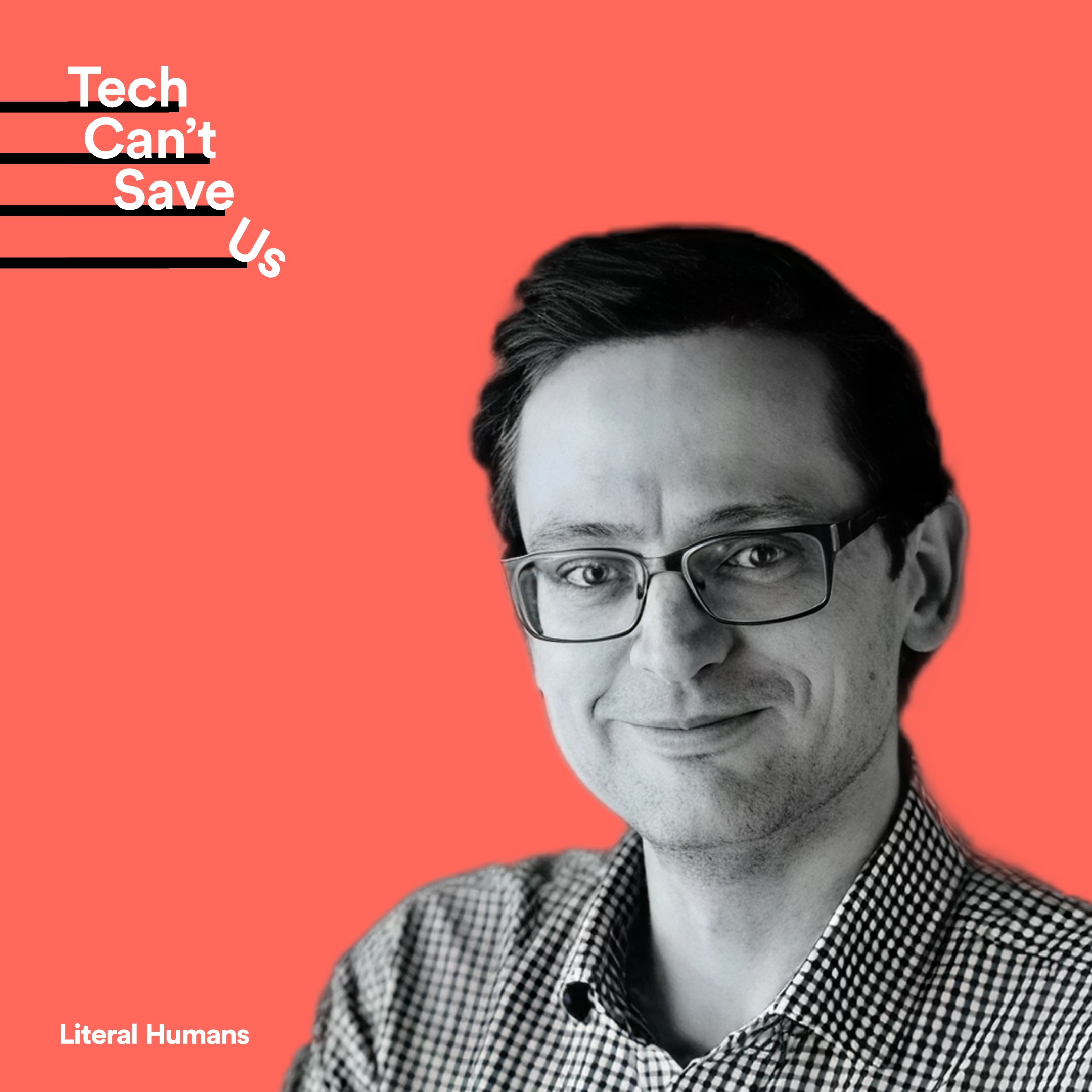
Quantum security and the fight against counterfeiting with Rob Young, Co-Founder & CSO of Quantum Base
33m 5s
In this podcast episode, Rob Young, the co-founder and CSO of Quantum Base, discusses quantum security and the fight against counterfeiting. Quantum Base, a quantum-based authentication technology company, tackles the $2.8 trillion counterfeiting issue globally, focusing on areas like counterfeit drugs that cause over a million deaths annually. Rob's transition from academia to building Quantum Base, now a publicly listed company on London's AIM market, highlights the company's success. The Quantum Identification (QID) tags developed by Quantum Base utilize atomic-level uniqueness for anti-counterfeiting measures, making them practically impossible to copy. These tags can be easily integrated into standard printing processes and verified by anyone with a smartphone, offering provable security in an accessible and cost-effective manner. Quantum technologies, with their unique functionalities driven by advancements in manufacturing and quantum materials, are revolutionizing the security landscape and providing solutions to real-world problems.
Transcription
6425 Words, 36057 Characters
(upbeat music) - Hello, everyone. Welcome to an episode of Tech Kent Savers Podcast, brought to you by Literal Humans. As always, I am your host, Paul David, founder and CEO of Literal Humans. And I'm joined today by Rob Young, co-founder and CSO of Quantum Base. Today we're gonna talk to Rob about quantum security and the fight against counter-fitting. Welcome to the pod, Rob. - Oh, thank you so much for having me. It's a pleasure to be here. - Yeah, thanks for jumping on. So by way of introduction, Quantum Base is a pioneering quantum-based authentication technology to tackle the massive global counter-fitting problem. We're talking about a $2.8 trillion issue that causes over 1 million deaths annually from counterfeit drugs alone. Let that sit with you. That's a harrowing statistic. Rob is a professor of quantum technologies at Lancaster University, with over 20 years of research experience across Cambridge, Tindal National Institute. Did I say that right? - I'm always, I'm always gumming up the words here. It's just a typical young and Lancaster itself. What makes Rob's story particularly exciting is that just this year, Quantum Base went public on London's AIM market, raising 4.8 million and achieving a market value of 14.8 million pounds. Congratulations, Rob. That's a big deal. Well done. - Yeah, absolutely, very exciting. - Yeah. And we're here to talk today about where y'all are going from there. Quantum Base has already produced over half a billion of their quantum secure QID tags, and we're gonna get into what that is, and you're gonna explain it to the audience. Rob's journey from an academic researcher to building a publicly listed quantum technology company is quite a big one. I mean, he's helping solve a problem that affects everything from luxury goods we buy to the medicines that keep us safe. Once again, welcome to Tech Can Save us, Rob. - Well, thank you so much. It's real pleasure to be here. - Yeah, thank you. - Well, let's jump in, and for many of our listeners, I know that quantum security may sound almost like science fiction. What is this quantum thing? Should we run into that a lot? If you could just take a step back and paint a picture of how quantum technologies are being applied to solve real world security problems today, obviously you're focused on a counterfeit drug market, and help us understand the true scale of the counterfeiting problem. How did quantum physics become a potential solution to this very practical real world problem? - Yeah, both great questions. Firstly, I really annoys me when people hide behind complicated words, and so quantum physics doesn't have to be a difficult concept to understand. It's just a different set of rules. So, you have classical physics that describes the everyday world around us, and you have quantum physics, which essentially describes the behavior of small things. And when you have a different set of rules, you can create technologies that have new functionalities, and that's all that we mean when we say quantum technologies. We're just talking about a new set of inventions which have functionalities, which essentially weren't possible before. And I find that incredibly exciting as a huge geek. And when it comes to the security space, I think the main focus for quantum security is on provability. The one thing that we lack in digital security in our everyday lives is a fundamental, provable metric that says this thing is definitely secure, not just probabilistic, probabilistically secure. And that's really the message that we're championing is that these devices can be provably secure. And that's a game changer, and that's what we're really, really excited about a quantum base. Yeah, I mean, that's incredible. So let's dig in, where does quantum base fit in this landscape and what makes quantum base security fundamentally different from everything has come before all the other types of traditional security, if you will? Yeah, so a long history of working in this field of quantum technologies and quantum security. So 20 years plus. And I think the one thing that we're doing differently to everybody else is, instead of saying, well, what could we do in the future if we create these amazing technologies? It's saying, what can we do with the technology that's readily available to us today? And that's something that really excites me and puts a really big smile on my face. The idea that the technologies we're making, we can bring to market today. And obviously, we already have. You mentioned the half a billion QID devices we have in the real world. And so it's really understanding the capabilities of modern day essentially nanotechnologies and quantum materials and how we can put those to use. And that's where QID was born from, this concept of almost impatience on my part. And it came out of essentially a frustration in the technology that I was working on as part of my PhD. So back in Cambridge, 20 years ago, I was working on a new type of device which essentially emits pairs of entangle photos. So entanglement is one of these kind of spooky properties of quantum mechanics, which links particles together, even though they're kind of spatially separated far apart from each other. And it turned out that to make this device work, and it was really successful. It was groundbreaking. It was published in Nature Journal. To make this device work, we had to pick one quantum dot from an ensemble of billions of quantum dots. And so there was only one device that worked in the whole of my PhD. And that gave me a fantastic, fantastic successful story. But the reason for this is that quantum systems are really sensitive to imperfections. And it was this kind of realization that we could use this sensitivity for anti-counterfeiting, for authentication that really led this journey to where we are today with this technology. That's amazing. And we'd love to, again, take a step back and help the audience understand how the field has evolved. And even since you started your research, I get the sense that things are moving quite a quick pace. It's probably an understatement. And what role academic research has played in driving commercial applications like yours? Yeah. So when I first started in this field, people were spending a huge amount of money to build boxes which essentially communicated with single photons. So basically, because there's a different set of rules in quantum mechanics to classical mechanics, quantum mechanics says you can't do certain things. They're in negative rules. And so basically, if you force an eavesdropper or an aferious party to try to violate one of these rules, then you can detect their presence. And so quantum key distribution systems, the boxes that we're working on at the time, they allow provable security by the detection of an aferious party. But the problem with them is that they're incredibly expensive. And so we were developing boxes which cost tens of thousands, hundreds of thousands of pounds. We were only going to sell maybe thousands of these things in a wildest dreams worldwide. So that was kind of the frustration. And then since then, obviously we've had huge advances in our ability to manufacture things at the nanoscale. And we've had really big advances in the field of quantum materials. So things like the success story is graphene and the development of graphene and around these materials which have interesting properties at the nanoscale. So it's kind of the coming together of realization of new applications, of quantum physics, but then also the advancements that we've had in manufacturing and materials develop. - Yeah, let's get in. Let's talk about your product and this concept of QID. I imagine many of our listeners aren't familiar, but they're about to be. And so QID stands for quantum identification. And it's essentially a tiny printed tag that contains what you call atomic level uniqueness. We're going to need you to explain that. And if you could just kind of give us a sense of how these tags work and what makes them literally impossible to copy. - Absolutely. So if we go back to the story I was telling about single quantum dots. So it turns out that changing a quantum dot by a few atoms makes a huge difference to its properties. It means that in the case of my PhD work, it wouldn't generate entangle photons instead of could generate entangle photons, for example. But it can change some things really macroscopically. So if you change a quantum dot by a few atoms, it can change the color of light it meets from red to green, for example. And so we realized that small imperfections in these atomic systems lead to really large variations in their macroscopic properties. And so basically QID embraces this. It turns this problem on its head. And it says, well, actually if these systems are really sensitive to imperfections, if we label products with them. So we essentially put these materials in a standard ink. We print them in a standard print process and label products. Then we can actually detect these atomic level variations in changes in the properties of light that they emit, which can be detected with a standard smartphone. So QID is, is fantastically simple. Essentially all we're doing is we're adding a quantum material to a standard print process. We print patches on products. And then the patch itself isn't small. It contains somewhere in the region of 1,000 billion billion atoms. So a really, really large number of imperfections. But it's those natural imperfections that we fingerprint using a camera on the production line that goes into a database. And then we've developed very clever software essentially on a mobile phone, which turns that mobile phone into a quantum material detector. So it doesn't just read the fingerprint, but it also detects that a quantum system generated that fingerprint. And that's really important. That makes the act of producing a clone of a QID incredibly difficult. You'd have to re-engineer that 1,000 million million atoms to be in the same place as the genuine tag. And that would take longer than the age of the universe within the atomic force microscope. The best technology we have to do that today. So it's a really compelling, very simple technology. It's very cheap, very easy to print, and could be read by anybody with a smartphone in the pocket. Yeah, I wanted to dig into that piece. So kind of the production side and the consumption side. So on the consumption side, it sounds like anyone with a smartphone can verify that a product is authentic. So yeah, how does that work? How have you built it into this thing we walk around with every day in our lives? Yeah, and that's been a huge engineering challenge. So we first invented QID maybe seven or eight years ago, something like this, and showed it off of the Royal Society. And at the time, you needed a special filter and a special light source with a phone. And we probably needed a very high-end phone to be able to measure QID. And now it's really important that we've developed the solution. So it's ubiquitous. It just works with any phone. In fact, a $50 Android phone can read QID, as long as it's essentially security patched and up to date. And the way this works is we essentially don't just take a photograph of the tag. We excite the tag with the flash from the mobile phone. So our app fires the flash. The flash excites the tag. Then the tag emits light. So the quantum material in our QID tag emits light. And the properties of that tag. So we get a fingerprint from the imperfections. But then how that fingerprint changes as the flash is firing, we extract a signature that's essentially telling us that a quantum material is present at the same time. So we're doing a four-dimensional measurement of a two-dimensional system, which sounds really complicated. But it's really just taking a series of photographs and having some very clever algorithms to essentially extract that information. And to the user, it's no different from taking a photograph with your phone. It's a really simple scanning experience. - Nice. And then on the production side. So I understand that QIDs can be integrated with standard printing materials. So companies don't need special equipment to add them to their products. How do you make quantum tech this practical and accessible? - And it's really about embracing what's possible and embracing those imperfections. So all we're doing is essentially it's bucket chemistry. We're taking a standard ink and we add a certain proportion of quantum material. So it can be quantum dots. It can be two-dimensional materials or small fluorescent molecules. There are lots of different materials, which are possible. And these are materials that can just buy off the shelf in ton quantities. So they're relatively low cost. And then you just print just like you would any other ink. It's real to real printing, incredibly fast. You can print millions of tags a day. Essentially then each tag has a unique identity that's associated with the imperfections that are created during the print process. And you just have to capture those. So we use a machine vision system on the line and some clever software, which her tag extracts the identity and stores it for database. - Amazing. And we'll love to talk about sort of advantages that QID offer over existing anti-counter-fitting solutions. And talking to me like I'm a brand, why should they choose quantum over more traditional security features? - Is a great question. And I think there's a purist in me that says security. Security, security, security. If you want to stop counter-fitting, your solution has to be secure. And there's nothing more secure. Nothing more unique than at the atomic scale. You can't go below that scale. You'll never do any better than our technology. But I actually, commercially, I don't think that's the right answer. The right answer is it's simple, it's cheap. It's actually easier and better in every single metric. You take a hologram, for example, people like seeing holograms, but nobody can tell the difference between a real and fake hologram. And the holograms are compared to QID, a relatively expensive. You take something like a QR code and there's absolutely no security in it at all. You can take a photo copy of it and you know, we've seen so many stories of manipulated QR codes ripping people off in recent years. So I think for a technology to be really compelling and to become the new standard, and I have to warn you on a little bit of a megalomaniac, this is the plan, it has to be better everywhere. And so when we talk to brands, when we talk to governments, to anybody who might use QID, the message is really simple. It's better in every way. It's not just about security, it's not just about quantum, it's about being the best solution to the problem. And they're fundamentally not being a better solution ever and we can prove that. - And you know, wanna jump over to, you know, your recent success and obviously we be remiss as a growth strategy agency to not ask you about your growth strategy. So we're gonna dive into that bit here. You've recently gone public on the London Stock Exchange and raised 4.8 million. Congratulations, it's not easy to raise in this environment. You've got over half a billion QIDs already produced and partnerships with some major security printers. And wondering how you're planning to scale from where you are now. How are you planning to expand your reach into new markets? - So I did warn you I'm a little bit of a megalomaniac. In my head, I don't think that there is essentially anything that couldn't be labeled with a QID. And so the strategy has to be what's the best way of penetrating markets. And there's always a temptation, pretty much whenever I sit down with anybody and talk about QID, you know, the conversation goes off and we could apply QIDs here, here, here, here, here. And there's so many good ideas. But I think one thing that's really, really important is that we essentially land an expand. It's important that we stick to the technologies and the solutions that we've developed and we seal them through. So at the moment, QIDs printed on paper, printed on plastics, and with real to real printing. And we have well over half a billion tags produced. But that's a really tiny number for that market. At the moment, we're mostly in government printing and government contracts. Brands are a really big target for us. But we're also really excited about moving into pharmaceuticals because fake pharmaceutical problem, sorry, fake pharmaceutical products really kill people. You know, people die and there was a BBC News story late last year where people buying medicines that they thought were genuine via online pharmacies in the UK and they have toxic ingredients. And they unfortunately take these medications and they die from them. So there's some really acute problems. And we have to essentially develop the technology so that it works with lots of different print technologies, lots of different substrates, lots of different measurement conditions and things like this so that we can really apply QID to everything from banknotes, government IDs, tax stamps, to consumer goods, F&CG, pharmaceuticals, car parts, playing parts. I mean, they found fake parts on Air Force one. So, you know, if the US president has a problem with fake parts on his play, and everybody has something to worry about, don't they? So really, the world is our oyster. Or in fact, you know, it's a really big opportunity to do some good. And that's what really excites me. - Yeah, well, first of all, you mentioned being a megalomaniac. I think every tech founder is a little bit and kind of has to be. And so really appreciate that as a fellow founder. I feel like that's sometimes like, how let's do this is insane ideas. But you kind of bring it back down to Earth and you work with a great team and you make it happen. Obviously you're making the world a bit safer for a lot of people. So that's megalomaniac put to good use. So, good use for that. Would love to dig a little bit more into this. So, you know, thinking back, it was there like a particular moment when you realize, oh man, this technology has legs and can solve some real world problems. Or was it more of like a gradual evolution? Talk us through your journey there. - Yeah, so I don't know if there was a really a moment. So there was definitely a little bit of a Eureka moment when there was a realization that this problem in the kind of nanotechnology quantum world could be used for as a boon in the security industry. So there was a little bit of an inflection point there. But I think part of the problem I have as an inventor and I think it's a fairly universal problem is you think, well, I've had this really clever idea. And all I need to do is paint into it and tell the right people and then somebody else will develop this solution and bring it to market and the world will be a better place. And it turns out that you have to, you know, not only develop the solution yourself, you have to engineer out every single tiny bug. You have to, you know, lead a company and take every, it seems every step yourself or, you know, kind of micromanaged the development. And so it's been a long journey. It's been incredibly rewarding journey. And, you know, I think one of the key challenges I have is I'm continually inventing things. And I really need to stick to, to, you know, seeing solutions through and actually delivering on the things that I've promised, particularly to investors, but also to the world. Because it's really important that we, you know, actually get this solution out there and as many people's lives as possible. - You're going to have a great phone with the lightning round questions later on. We ask you about the next star if you want to deliver. So, I'm going to ask you a very selfish question here, which is balancing your role as a professor or with being a co-founder. And was CSO, who was CSO stand for in this case? - The Chief Scientist. - Chief Scientist. - Chief Scientist, so yeah. So your chief Scientist officer of a publicly listed company. How are you bridging academia and industry and what does that mean to you personally? Because I'm asking because I'm, I'm, I'm, I'd love to get a teaching job and also continue writing my agency. - Yeah, it's a great question. And it's a funny one because I, I don't think I've ever managed those two things very well at all. So, going back to my undergraduate degree at Oxford, I started a company with some friends and you know, I've always been a huge geek and at that time we were tinkering with computers, modifying computers, reviewing computer hardware. So we made that into a business alongside my undergraduate degree. And then when I got to Cambridge and did my PhD, that was a case-funded PhD with Toshiba. So I was working alongside this Toshiba Research Europe. So a European portion of a Japanese company at the same time. And Lancaster, while I've been developing quantum based, I've always had a foot in both camps because I think the two go hand in hand and it's really important for me that one feeds the other. Innovation comes from really outstanding science and outstanding science happens in universities and the best universities in the world. But then to make a difference, you have to drive these things home commercially. And so the combination of the two, even though it causes me to pull my hair out and work a little bit too hard, has really worked in my favour. And I've never really had a transition from one to the other, I've always tried to do both at the same time, which may have been a mistake, I'm not sure. - Oh, good. And have to give you credit. I just realized I skipped around and you handled it beautifully. So thank you for being fluid with my jumping around the questions here. But I'm going to jump back to a couple of the growth strategy questions and just knock those out. And then we can sort of wrap up with that number four question there if that's okay with you. And so I asked about expanding new markets. Talk just about emerging technologies and new partnerships that kind of help you put QID in front of different customer segments and industries. How are you brokering these partnerships and what is that partnership development process look like? - It's a great question, but it's almost one that I try and dodge. So I think it's always been important to me to kind of stick to the things that I know that I'm good at or at least the things that I can do efficiently. So I've always had business partners or people in my team that have been very good and sharp on the commercial side of things. At the moment, that's our CEO Tom Taylor. He has an amazing background in sales and delivering products. And so I kind of defer to him. But the real big strategy is partnering with big companies that work with lots and lots of other companies to deliver products. You know, if we want to take over the world, we want to be a megalomaniac. We're not going to do that one contract at a time. We're going to do it through important partnerships with really, really big companies that security printers to start with who themselves have hundreds of customers. And then that allows us to penetrate really, really deep and really fast. Yeah, I mean, I think that that scale, you know, in terms of like doing good while doing well, like, you know, you kind of have to reach that scale to, you know, make the kind of level of change that you're looking to make. And I think sometimes people are kind of down on working with like somebody's big partners just like, oh, they're the big bad, you know, corporations like, well, if you want to reach people, you kind of have to, you know, do business and not be a pureist. So appreciate, you know, what you're bringing there. If you can talk to us about what your biggest sort of growth or marketing challenge has been so far, and what do you think will be the sort of most important growth levers or maybe even growth problems to solve in the coming months? I think it's a difficult one. I think the biggest marketing challenge is probably not being distracted. It's so easy, you know, we're in the public. We make a lot of noise. Our technology is really exciting. And people come to us and say, well, could you do this? Or could we, could we implement it here? And it's really easy to say, yes, it's really easy to say, you know, that's just a six month development project. And of course, you could do that. But the problem is that you chain those six month development projects together, and you've already, you know, halted the existing development you have. So there's really targeting the markets that we can target today and delivering what we can do today and doing good and making sure that we develop and expand our technologies at the right time, rather than just saying yes to you often. So I think that's probably the biggest challenge. And I'm so glad you said that, too, because we do a lot of, kind of strategy development execution for startups. And that not being distracted piece is so critical. Like so much of strategy is just saying no to a whole litany of things. I think people lose sight of that. Like there's a negative side of strategy. It's like, we're not going to do that. And we're going to just do this. So good to hear that you're executing on that. Absolutely. We'd love to understand, like, how do you resource your growth function just digging in here? Like, you know, like you've got this big raise behind you. Obviously, some of that goes towards like larger growth, you know, in-house team. Do you work with agencies? Well, you know, you have sort of fractional, you know, marketers, like, what does it look like? What's the constellation look like for you all? Yeah. So it's obviously, we're a scientific development company, right? We want to take over the world by being an amazing, thin left science. We don't want to be producing QIDs. We don't want to be producing inks. We want to develop the solutions to allow the security printers and the implementers to do their job. So quantum bases mostly a scientific development. We have an amazing lab here and you're more than welcome to come and visit. I'd love to show you around and then a big software team. So it's how do we take quantum physics and cram it into a phone? So there isn't an awful lot other than that. And it's also really important that we can kind of contain and exploit our own IP. So we can't do too much external development because it's really important that we own that. And we-- well, I guess we own it in all senses of all that. It's who we are. But I guess other than that, of course, when it comes to things like marketing and accounts and all the boring bits, they're the bits of, again, of the company that I try my best to avoid as much as possible. But yeah, I guess we use more than business practices. So yeah, some of these things are outsourced than a foractional. And that's just part of, I guess, any modern company these days. Absolutely. Yeah, we'll appreciate you showing that. And I will definitely take you up on that invite to come visit a hop on the chain and I would love to see and understand and feel there's just no substitute and what y'all are up to. So I appreciate that. Absolutely. Just to kind of round this out here, we'd love to hear a little bit more about your journey. And you've spent 20 years in quantum research from your PhD at Cambridge to building one of the UK's leading quantum research centers at Lancaster. What drove you to make this leap from kind of pure academic research into tech entrepreneurship? Yeah, so really, really awkward and difficult question. I don't know if I ever did make a leap. So if you were to go back, and was just aging me now, if you would go back 35 years and you talk to 10-year-old Rob, I would have said, I wanted to be an inventor. I wanted to have a shared and to basically play and invent technologies. And at the time, I was breaking everything. I was taking electronics apart and breaking up to everything that I touched. And I feel like it's essentially the technology that's attracted to me. I'm a polymath. I'm excited by almost everything that I touch. And it's really just a case of taking cutting edge technology, putting the pieces together, and discovering and inventing. And I love the fact that I get to be an inventor as my day job. That's my number one core passion. And it's why I have so many patents. And so many, while such a geeky household, my wife is often not very happy with me. I'll promise you. Yeah, I feel that having run the agency for five years, I have those late nights, and I'm just chugging away. And it does not make my partner very happy at all. So, yeah, shout out to Moni. Thank you, dear, for putting up with me. And every-- all the founder partners out there were grateful for you. Behind every great founder, there's a very, very patient partner. So we thank you for that. Jumping over to the quick fire round here. Five questions. The first thing that comes to your mind, you've seen the questions already. So the first thing that comes to your mind and also a sentence or two on why. I feel like you have a great answer for this already. If you could found another tech startup, what would it be and why? Yeah, so firstly, most of my current inventions are around quantum security. So quantum base has plans outside of QID. We want to put a sweet shop of secure components to get. So QID is just the first. So outside of that space, it would probably be like AI meets 3D printing. They're my two big passions of things that I do outside of quantum physics. And so, yeah, it'd probably be a 3D printed that takes over the world somehow. Watch this space. Very cool. We'll watch this space. Similarly, what tech invention right now makes you the most excited? Yeah, probably AI agents. I spend an awful lot of time playing with the latest models, seeing what I can do. My house has like a central AI hub. And yeah, my doorbell camera, for example, is quite offensive at the moment. It describes everybody who presses the doorbell. And it's, yeah, so it's probably something around AI. What's been the most offensive description that it's come up with for a guest? It describes my wife as from people. That may well be my prompt fault. Wow. OK, yeah. We might need to edit that out. So you aren't sleeping on the couch, ladies, no? So flip side of that, it's a question. What tech invention makes you the most concerned right now? Actually, I don't think I'm ever worried about inventions. Almost every invention can be used for good or evil. And you look at the good that computers have done. You look at the evil that computers have done. And nobody-- well, I would never say we shouldn't have invented anything. Honestly, I don't think that's true. What really bothers me more than anything else is misinterpretation and politicians with agendas that are not born out of intelligence or the correct academic solution. But because they want to win voters and have ulterior motives. So it's really politics that bothers me more than anything else I'm afraid. Yeah, I can relate to that, Robo. I went to policy school. And once you learn what's actually behind it, and we should be doing this because the data is saying this. But actually, we're going to do that instead. It's incredibly frustrating. So if you want to be frustrated all the time, go to policy school. Yeah. Would love to hear from you. Who's a literal human, small-al, small age, who's been integral to your career journey? And I have feeling you might need to say a certain someone, but go ahead. Well, well, no, there have been too many. And far too many people, too-- but the first person that comes to mind is a chap called the Logic Falcon. He is the director of the National Graph in Institute. And he's just an exemplar of a fiercely intelligent person who goes out of his way to help people. And it's amazing how many very, very intelligent people are humble and very, very happy to help people. And he certainly changed my career. That's great. It's funny you mentioned that. I was on a call with a colleague today who is very much that person. And I was just really grateful to him. He gave us some amazing feedback and offered more of his time. And I was like, you're so smart. And you're just so generous as well. And it shouldn't be as rare as it is. But we're grateful when we see it, obviously. So what's an inspirational quote that's stuck with you throughout your career journey? Can you share with us? This might be too much information. But I have A Fantasia. And I'm awful at remembering quotes. Well, the one that sticks in my mind-- and I'll have to paraphrase because I-- it's not the way my brain looks. I can't remember it word for word-- is Steve Jobs as a quote around to be successful at something. You have to enjoy it. You have to be passionate about it. And if you're not passionate about it, go away and do something else. And life isn't that simple. You can't just always go away and do something else. You need to learn a living. But you can kind of at least try and walk in the right direction and try to find roles that align better with your passion. And I think following your passion is an amazing advice and something I've always tried to do. Absolutely. And you're the second founder that I've met that has a Fantasia. And it's incredible to see-- I come from a learning background. And so I love learning variation and mental variation. And it's cool to see how different minds work and what that's led you to. And you're both incredibly successful founders. Let me put it that way. So Kudos to you. Thank you for sharing that with us and being vulnerable. And yeah, it's just beautiful to see all these different learning variations and what they create as a result of it. So thanks for sharing that. Absolutely. Cool. Well, this has been another great episode of Tech and Save us podcast brought to you by Leroy Humans. We've been joined today by Rob Young, co-founder and CSO of Quantum Base. Today we talked about quantum security and the fight against counter-fitting. And I really enjoy this episode because it shows just how much of an impact on high-tech solutions, deep tech solutions like yours can have on making the world safer, specifically around this issue of counterfeit drugs. So yeah, for preventing counterfeit medicines to protection luxury brands and government documents, Rob and his team are using some of the most advanced science on Earth to solve very human problems. And that's what we're all about on Tech and Save us. Despite our cheeky name, we actually think folks like Rob are getting the job done and saving us from these core issues. So Rob, thanks again for jumping on the pod. Where can listeners learn more about the great work you're doing at Quantum Base and about QIDs? The easiest thing is just go to QuantumBase.com. We have links spreading out from there. But hopefully in everything you buy in the near future, that's the plan. Nice. And we really appreciate your time. You're a busy man running a public list of companies, so get back to it. For our audience, please leave a review. Give us a five star rating if you enjoyed the episode. I hope you did. I think you did. It helps us get great guests like Rob back on the show. So hopefully you'll join us again, Rob. We'll get some new guests. We love a guest recommendation, so have a think. And let's get that tourbook done, so I'd love to come visit. It's been a real pleasure. Thanks for having so much for you, Tom. Thanks, Rob. And thanks everybody for listening. As always, this has been another episode of Tech and Save us podcast, brought to you by our humans. Paul Dave, it's signing off. Thank you, and have a great rest of your day. [MUSIC PLAYING]
Podcast Summary
Key Points:
Quantum Base is a pioneering quantum-based authentication technology addressing global counterfeiting issues.
Rob Young, co-founder of Quantum Base, transitioned from academic research to building a publicly listed quantum technology company.
QID tags are practical, accessible, and easily verified by anyone with a smartphone.
Quantum technologies offer provable security and advancements in manufacturing and quantum materials have driven commercial applications.
Summary:
In this podcast episode, Rob Young, the co-founder and CSO of Quantum Base, discusses quantum security and the fight against counterfeiting. 8 trillion counterfeiting issue globally, focusing on areas like counterfeit drugs that cause over a million deaths annually. Rob's transition from academia to building Quantum Base, now a publicly listed company on London's AIM market, highlights the company's success.
The Quantum Identification (QID) tags developed by Quantum Base utilize atomic-level uniqueness for anti-counterfeiting measures, making them practically impossible to copy. These tags can be easily integrated into standard printing processes and verified by anyone with a smartphone, offering provable security in an accessible and cost-effective manner. Quantum technologies, with their unique functionalities driven by advancements in manufacturing and quantum materials, are revolutionizing the security landscape and providing solutions to real-world problems.
FAQs
Quantum Base is a pioneering quantum-based authentication technology company addressing the global counterfeiting issue. They focus on providing secure solutions to combat counterfeiting problems like counterfeit drugs.
QID stands for quantum identification, a printed tag with atomic-level uniqueness. The technology leverages imperfections in quantum systems to create unique fingerprints, making it nearly impossible to copy.
Consumers can use a smartphone to read QID tags. By exciting the tag with the phone's flash, the unique properties of the quantum material in the tag can be detected, ensuring authenticity.
Quantum Base's solution offers unparalleled security at the atomic scale, making it impossible to replicate. Additionally, it is practical, cost-effective, and superior to traditional security features like holograms or QR codes.
Quantum Base aims to expand its reach into new markets by focusing on sealing through existing technologies like QID. They plan to penetrate various industries, such as pharmaceuticals, government IDs, consumer goods, and more.
While there was an inflection point recognizing the potential of quantum technology in the security industry, the journey has been a gradual evolution. The challenge lies in continuously innovating and seeing solutions through to deliver real-world impact.
Chat with AI
Loading...
Pro features
Go deeper with this episode
Unlock creator-grade tools that turn any transcript into show notes and subtitle files.
 PodcastTranscript AI