"Discution keeps the world turning." "This is Round Table." "You're tuned in to Round Table. I'm Steve Hathorley today with Xing Yue and Yushan. Coming up, how did Chinese migrants send money and messages home before phones or banks? Well they did not click send. They handed cash and letters to couriers who crossed the sea on faith alone and it wasn't fast but it somehow worked. Today we'll talk about Xiao P, a forgotten system that connected families when nothing else could. After that, here's a question. Would you trade your weekends, your friends, and even your peace of mind for a paycheck that triples your current salary? A debate on lonely, high-paying jobs has exploded across Chinese social media. Thousands are sharing real stories, isolation, emotional burnout, crazy hours. It's a fat bank account, worth an empty life. Our podcast listeners can find us at Round Table China on Apple Podcasts. Don't forget we love to hear from you so send your voice notes our way. Roundtable
[email protected] one more time. Roundtable
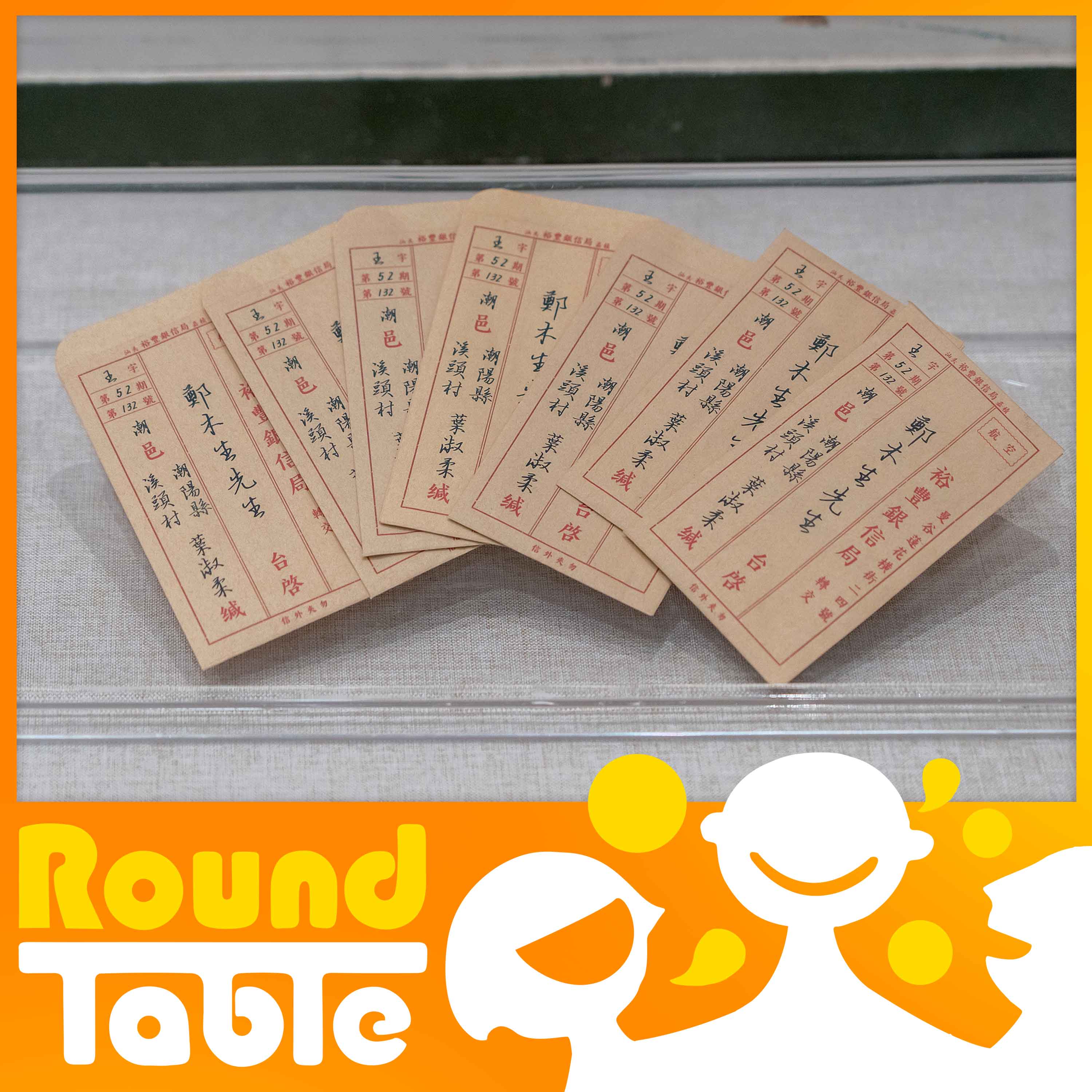
[email protected]. And now, long before instant messaging, online banking, or scene messages, there was another system called Xiao P, connecting families across oceans. One built on trust, memory, homesickness, and sometimes pure luck. Imagine carrying cash, secrets, heartbreak, family news, and an entire emotional breakdown in a single envelope. Then imagine handing that to a guy getting on a boat and just hoping for the best. This is a story of culture. It's a story about migration, survival, and the strange, deeply human ways people stayed connected when the world pulled them apart. It's about people who crossed oceans chasing opportunities, families who waited for years with uncertainty and letters that somehow became lifelines. This topic recently came into the limelight because of a hugely popular film and the concept was new to a lot of people, not just for people from that region, but for audiences across China. Some people knew about Xiao P and some people didn't, which is why I really wanted to talk about it on the show. The film itself earned widespread praise and it left countless viewers and tears apparently, and she knew you've seen this movie. Yeah, including me. I cried a lot. You are not alone. Everybody is crying their eyes out when they watch this movie. So there's a lot of questions here. Why are these old envelopes still making people cry today and what can a century old Remittance letter teach us about migration and family and belonging in the modern world? But let's start with the movie itself. It's called "Dear You." And I think it's still in theaters now. Yes. And also the film has announced the extension of its theatrical rise. Oh really? And of June. It's that popular. Until the end of June. Yeah. Next month. That's a long time for me. Go watch it, please. Yeah. It's so good. So I cried through a whole pack of tissues. It's so genuinely touching because of the emotions, the kindness, the compassion, and also the righteousness of people. As well as the term of Chao P that's gone super popular these days, these carry this emotional journey that spends more than half a century. So Chao P in short, they are a form of correspondence and remittance. They are letters that combine a short note or family letter and some of the money transfer. And they are sent by overseas Chinese through these private channels, mostly in Southeast Asia. You know, the Chinese people they migrated to Southeast Asia to make some money and to seek opportunity. Well, back then, that kind of letter called Chao P, they were popular from mid 19th century until the 1970s. So during back those in those days, overseas Chinese would send those letters back to their families. So I brought up this story because I found it on from a Chinese media outlet. And during our meeting, I said the word Chao P and everybody just looked at me with a blank face and I thought, oh, I just pronounced it wrong. So I'll try it again. Chao P and I got the same blank faces. You Sean, you told me that you had never heard of this before. You Sean told me that he had never heard of this before. Xing Yu, this was a new term for you too. Yes. I thought this is really fascinating that this is a part of Chinese culture that existed in certain parts of the country, but did not exist in other parts of the country. And that's why some people don't even know about this at all. That's mainly because of the participation is covered in the areas that Xing Yu mentioned in southern China in Guangdong and Fujian provinces where people have the awareness, the knowledge and also the capability and resources to San An Young, like going to the south eastern countries in Thailand, in Philippines, in Singapore, Malaysia. Malaysia. But that's also the reason why there are so many Chinese-speaking communities locally in these countries nowadays. That's because back then, a lot of Chinese people from southern China actually traveled over for better job opportunities and higher income salaries so that they can return what they earn back home through the means of Chao P, which is also known as Fun P or Yinsun. I think that's a more direct way of explaining what it is Yinsun as in money and Xing is leather. Why was this such a sad story? Not sad in particular, but touching, I would say. Because it centers around Chao P, but it also talked about the story of the everyday life of the Chao Shan District. Chao Shan means Guangdong Province. The Cantonese. Yes, the Chinese, some of the Chinese went to Southeast Asia to make living there. And somehow, they threw these letters. They are still connected to the family in the hometown, as well as also they have this another character, female character of overseas Chinese in Thailand. She, even though after the passing of the husband, you know, Nan Zhi as the husband's like friend, she kept writing letters to his wife as the identity of the family. You could cry right now. Yes, that makes the whole story very touching. And also the director said, most of the story is based on real life stories. Wow. That's what does it, is that it comes from real life. So these letters were written by, these letters were written either from within China and sent overseas, I suppose, or written overseas and sent back. Yes. To China, and this is how people stayed in touch with each other. The examples in the film would be very, very touching. Are there examples? And I think this is one of the things that made people cry too, is that the letters still exist somehow. Yes. Because I think there are now more than like 160,000 Chao Pee letters. They are still exist. And they were inscribed into UNESCO's memory of the world register and they become a living archive of migration history. And if you look at these letters, because back then many of these overseas Chinese and Chinese they are illiterate, they could not read or write. So they have to depend on letter writers to, you know, say some things to the letter writer that you want to say to your family and then he will write those words down. And then some of the, if you look at the letters, they are really, really well written. So the words Chinese words, they are short, but they have like a very deep meaning and how they miss the family and how they love the family, the emotions are carried through these letters. So the letter writers culture also exist in other parts of China. Like in Eastern parts and the northern parts, we also have a lot of local villages who, when people want to send letters out loud outside of the village, then they're the only teacher in the school, so-called like schools back then, a hundred years ago, would be the letter writer. And in many cases it really leaves some mark back to the Chow P topic we're having right now. So one case, when I read it, I feel like, wow, this is such a story that's so vividly presenting just how these stories, these letters are written and mailed out and how much of a deep bond is making for people back then. So it's from the files of Jiang Ming-Dian, who is a long time letter writer himself, who is now 77 years old and one of the last of the letter letters of his time. So for decades, this guy, Zhang, he's been writing letters for a man named Tsai Tian Zhu. And this Mr. Tsai, he's been writing to his mother, who is in Singapore, and Tsai had
been sending back to China as a child to preserve the bloodline back then when he was young. To preserve the bloodline. Like a family lineage thing. Yeah, that's something deeply believed in Southern China till you gotta have a child of the family. Stay in China, stay with the family as a way of heritage of the family bloodline. So his mother, however, remained in Singapore. So this telpie, these letters happen under this context, but his feeling is so mixed with both deep love and bitterness. One writes, "I miss you very much, mom, but I hate you. Why did you send me back to China?" You know, like, then after 40 years of correspondence with telpie, they reunited for only one week before she passed away by accident. Oh my goodness, really? It's such a story that you wouldn't hear thanks to the preservation of telpie, which in this case, access an archive of stories like this. And these stories are numerous. And now we're getting a clearer picture of why everybody was crying their eyes out during this film. Beyond the cinema itself, are there any other ways that this legacy is being passed down? Because from what I read, and I only read one article, I'll admit, but from what I did read, this is totally changing now because obviously we have smartphones, we have instant messaging, we have video messaging, we have bank wire transfers that can happen within a couple of days. So the concept of the telpie is disappearing. That's what I read. So how can this be preserved otherwise? Because it seems like it's something that is very important culturally speaking to that particular part of the country. Yeah, I have to say that not only because of the popularity of the movie recently, there are already an increasing number of people they are getting to learn about telpie, as well as there are exhibitions as well across in southern China to present those authentic real telpie letters. And if we look at places like Chuan Zhou in Fujian province, there is a telpie museum. There's a museum there to serve as a place to preserve these letters. And also there is an opera form called Guozai Xi. It's an award-winning play titled "Chiao Pi." So that's another form of art form to preserve this type of heritage. There's also architecture so that I learned which is the silent art form that preserves this particular memory. So it's called Fanzai Loh, this particular building, which are considered a physical and artistic legacy of the Chiao Pi system. They represent a unique architectural fusion blending western styles with traditional Chinese red brick houses. And also it bears cultural symbols too because grand structures like the Tsai's ancient residence and the Au Garden in Zimian were war-built using Chiao Pi remittance. And it also proves to the point that the money sent back by these overseas Chinese is actually functioning as an economic supply for their local hometown by building up these Fanzai Loh, these buildings serving as a lasting momentum to the success and artistic case of overseas Chinese. So that's a really cool story isn't it's a really really cool story and my hope was that for our audience members Chinese or non-Chinese this would be an opportunity to learn about a little bit of culture from that part of the country that maybe we didn't know about before. You're listening to Round Table. I'm Steve today with Yushan and Xinyu and coming up next would you take a lot more money for a lot more loneliness? How about Fiery Debate? Want to hear about current events in China from different perspectives? Then tune in to Round Table where East meets West and understand it is the goal. Would you move to a place with barely nonexistent commutes or minus 40 degree winters and give up your social life if the paycheck was right? Because right now thousands of people online are saying absolutely yes. That's the response to a viral job posting from Inner Mongolia where it could offer around 16,000 yuan a month that's about $2,400 a month. They were looking for a husband and wife team that would be responsible for herding 3,000 sheep across a vast grassland. So many people applied for that position. If you're searching now on your keyboards, I think the position has already been filled by a certain couple as a matter of fact. But many applicants came from big cities in China and a large number said that they were willing to accept this loneliness and physical hardship in exchange for escaping intense urban competition and earning a bigger paycheck. The response to that job posting it sparked a bigger discussion online. People are asking about if the job is high paying but it's really, really lonely, is it worth taking or is it not? A lot of people share their opinions online. When that job in Inner Mongolia of her herding sheep and living in a very much isolated place was first mentioned in our meeting, I believe Eushan was the first one who raised his hand saying, "I can do it." Immediately he said, "I'll go." I looked at him and I said, "No, not you." And essentially I checked the details. It's a year round, no days off job and you heard like, "Graze sheep in summer and feed sheep during winter seasons." And the salary isn't that high. I feel like it's like 16,000 yuan per month. That's a lot of money for just herding sheep. Oh, I wouldn't say just herding sheep. No, I bet that's a really demanding position. I think it would take a lot of time, up super early in the morning. It would take a lot of physical labor as well. In the winter time, the temperatures are no joke and those feed bags are really, really heavy. You have to transport those as well. You sound like you've done it. No, I've done physical labor jobs before though and they're always very, very challenging. It's just what you're sacrificing in order to receive that kind of serene and calmness, just living without the urban pressure that we're having right now. Because moving up there, just seeing maybe just a very few colleagues, if not none, and then living in a quite isolated surrounding, whether it's in the artistics, I believe there are job opportunities like that or in the grassland or in completely different areas. Probably different surrounding where you are so lonely. I don't know if I'm among those who is able to give up all this. Those are the extreme examples, right? But online, the discussion turned to more realistic examples. One of the big categories discussed was overseas assignments and international project work because those positions, they often come with attractive annual salaries and career advancement opportunities, especially for workers involved in maybe large scale international projects. But the trade-off is distance from family and friends. And according to a lot of people who made comments on this particular topic who joined that online discussion, some workers will spend major holidays alone overseas and remain separated from their social circles and their family members for years at a time. How do you think you would handle a position like that? I think we have some of those opportunities as well for us to go to overseas, to be media professionals and stay there for like three years. But that's not like completely off the hook and just be somewhere all alone. That's just picking you out to live and thrive in a new environment. I think it's more or less more adaptable. More adaptable than the Herding sheep example or the working at an Arctic research station example. Yeah, you're right. But those aren't the opportunities that people live with on a daily basis. Being sent overseas for a business project for a year or two or a three year project is kind of a reality for a lot of people. So that's one of the things that people were discussing online is whether they could handle that or not. What was the general reaction to the idea of lonely jobs or high paying salaries online? What were they saying? Yes or no? Well, it's kind of devised both. Some netizens say they actually prefer jobs with minimal human interaction. So for these people, avoiding workplace politics and unnecessary social pressure. That's human. That's the. Yeah. I mean, there are people who hates people. Tired of communicating this totally understandable. But yeah, of course, living and working under such circumstances is something else, but yeah, there are supporters.
Somehow reminds me of the film, you know, the shining. It's a Jack Nicholson movie where the serial killer wants to. The family went to like a distant hotel and during that winter season, the hotel was closed. So the family's job is to take care of the hotel. But somehow the man went mad at the end of the movie, you know. - Oh, because he was staying there by himself. - I don't remember the details. Or somehow because he is writing. But in the process of writing, he isn't thinking, you know, he isn't producing anything. And he was just sitting there the whole day and for a few couple of months and just he went mad. - Yeah. - She wouldn't impress me as someone who would worry about watching. - Yeah, that's why, you know, some netizens, they are afraid that somehow these, this kind of loneliness will be really difficult for most people. Okay, I'm gonna give you rather than going over this psychological disadvantages of working on your own and blah, blah, blah, that kind of stuff. I'm gonna give you a job example and you tell me whether you would take it or not. Okay. Job number one, a crew member of Concordia Station in the Antarctic. They are currently recruiting, by the way, I think. They live and work in a place called White Mars. It's one of the most isolated places on Earth. The European Space Agency uses it as a model for living on another planet. That is how isolated it is. It's 3,200 meters above sea level. That means you get a third less oxygen. In the winter time, it's minus 85. There's four months of complete darkness. - Nope. - Four months of complete darkness. - Oh my God. - You are 600 kilometers from the nearest human, which is more remote than the International Space Station, by the way. There's no access in or out from February to November. All the food you eat is canned or dried. There's no fresh delivery whatsoever. You live with 11 or 12 or 13 other people. It's a 12 to 14 person crew. And the salary is 45,000 to 50,000 yuan a month, which is about 400, sorry, 545,000 yuan to 662,000 yuan per year. Would you take that job or not? - I'll rather hurt a sheep. (laughing) - I would stay in the office. - Why do you say no? - I would rather choose a happier life than a rich, but solitary life. - And that was the question online that people were answering. What if it were a 12 month contract? - Nope. - Still no, huh? - No, no, no, no. - 12 month contract, that might be kind of cool to have the experience of living in the Antarctic. - Who has the opportunity to live out there with the penguins? Not too many humans on Earth, I would say. - That sounds almost too excited. - Where's my application? All right, that'll do it for today's round table. Thank you very much for sharing your time with us. Today I'm Steve for Shining and Yushan. Enjoy your time and please do come back and join us again. [MUSIC]
 PodcastTranscript AI