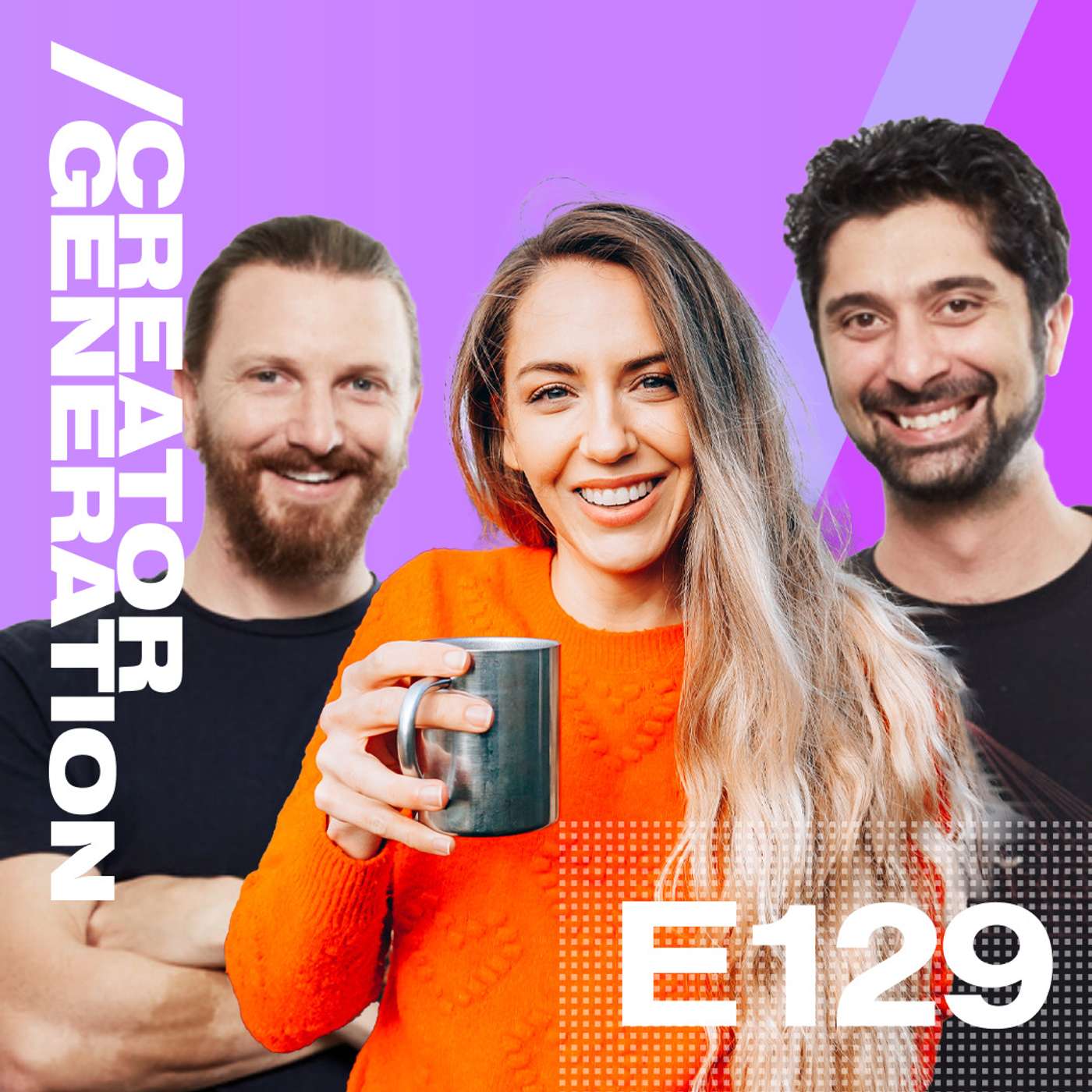
Q&A Roulette – Are YouTube Tags Important? Dealing With Dislikes, And More!
20m 14s
In this Q&A session, Ant hosts Fred and Phoebe to discuss creator-focused topics. They emphasize that YouTube tags are now relics of the past, with minimal impact on video performance compared to titles and thumbnails. Keywords in titles, however, are still vital for search optimization and viewer alignment. Regarding dislikes, the panel advises creators not to overreact, as dislikes often reflect personal tastes rather than content flaws, though analyzing patterns can offer insights. For memberships, YouTube's built-in option reduces user friction, while Patreon offers greater flexibility off-platform. Finally, on social media, they recommend focusing on a primary platform and repurposing content across others to avoid burnout, stressing the importance of balancing content creation with real-life experiences. The discussion blends practical advice with lighthearted tangents, such as Phoebe's aversion to squash and her fantasy football triumph as "Cuddle Muffins."
Alright gang, we are back with another Q&A real-let. Fred, our resident YouTube, that's not so say guru, you're gonna be good about that but YouTube person who knows stuff about YouTube and Phoebe, our resident professional YouTube creator, extraordinary. Welcome team. Thanks for having us again. Oh look, it is my show, so welcome. We are creator generation here. My name's Ant. There you go. We're gonna spin up the Q&A real-let wheel. If you don't know what that means, we've got a bunch of questions from YouTube creators and creators from all over the world who we get to hang out with and I've got them on there. I spin it and I'll make Phoebe and Fred answer them and sometimes I pipe in, so I spin it up. Alright, first question, who wants it? Are tags important anymore? Fred really wants to answer this one. Oh yeah, that's getting eddy. No, well not really. No, I'd say people put up, I guess it's one of those things that's pretty visual so people think it's probably more important than it is. But I can even YouTube admit tags are sort of a bit more of a relic of an older YouTube where the system needed more information to understand what your videos were about. So it looked at that data more and now it doesn't look at it as much as not as important. I think Todd, at the head of the algorithm, team said when it comes to optimization, spend like 99% of your time on thumbnails and titles, half a percent of the description and half a percent of everything else and that's sort of highlight time, important things like the tags are. That said, keywords in titles are still important. I still have that there. One caveat to that is that the tag system is like YouTube is a very big, big system and there are a lot of bits that feed into it. So for example, tags might still be useful for the ad system. So if the ad system is looking at different YouTube videos and trying to figure out what ads, what I put in front of them, maybe it's looking for elements like tags that to help understand what video would suit an ad. So that could be useful for your ad and monetization strategy around that too. So I'd still have them there as best practice, but I wouldn't depend on them to change the popularity of your video really. Do you think about them Phoebe? Never. No, I do think about them. I do think about them, but I spend a lot more time thinking about keywords in titles and what I'm going to put wordwise on the front of the thumbnail and the first few words I'm going to say in the opening of the video. That's really where the energy goes for me and then the tags just, yeah, just do them and put it up and see what happens. I'm going to go off script on the wheel here. Are keywords important for titles? Let's talk keywords. Extremely important. That's definitely something that I'm thinking about before I go on any trip. I am cyber stalking YouTube. I'm looking at what videos are performing well, not just what's showing up in the search, but which videos are getting the most views in the search and why. What is in that title? What is on their thumbnail? What did they do right? And I want to make sure that my videos showing up in the search, my videos performing that well. So yeah, I focus a lot on keywords, making sure those titles are tight. Fred, why are they why keywords? Yeah, I mean, they're still important, I guess, algorithmically. They're still looking for certain connectors with the videos. But in a human sense, like if people are searching for something and they see a keyword that they're after in a title, they'll expect that to represent part of what's the part of what the video's about. So it's still hugely important. Super. All right, take note. Keywords are important. Don't worry about tags. As much. That's spin the wheel. I like to simplify these things. All right. Oh, okay. How do you deal with dislikes? I just don't care. Everyone dislikes everything. I just like squash. Squash doesn't care if I dislike it. Who cares? If someone dislikes a video, it really doesn't mean anything. Wait, you don't need to be like to pull the game. Well, yeah, the sport. In any of its forms. So do you just walk around with a thumbs down sticker and just sit on that. Yeah, you're in the supermarket. You're like, oh, that squash there. I'm going to go back to the athletes in it. Nope, nope, don't like squash. No squash there. I heckle it in real life. Like people heckle us on the internet. I'm like, you suck squash. Go home. Yeah, let it know. Yeah, who cares? Just two cares. Is that, did you use that as an example? Do you actually have like a deep seated like dislike for a squash? And I actually don't know which one you're talking about now. Yeah, okay. Let's dig into it. Squash the vegetable. Hate it. Really don't like it. And it's deep seated. It is my grandmother when I was a kid. She used to force me to eat squash and it was boiled to within an inch of its love. And she would slap it on the plate. And one of those people that would be like, you're not leaving until you eat everything on your plate. So I was forced fed squash for years. And now I see it. And I just, oh, I just can't. So yeah, I dislike squash. That's fair. I think that's very fair. Yeah. Was there a question we were answering? I kind of open. Yeah. Phoebe just went, I hate squash. But that's kind of, I guess that it's a good answer for like that tower important. Yeah, I get an important dislike so that we can the answer it by talking about squash instead. Like that's how much attention you should pay to it. Dislikes it, I mean, like they've stopped, you know, showing them, I guess, publicly, but they still show the creator what the dislike so. And I think there is some importance in that because one is you can, you can still determine a dislike ratio, which is somewhat useful. But, you know, dislikes can be a good parameter of like certain elements. The problem is trying to forget why someone disliked a video. For example, if I was doing a news channel, right? And just suppose I had a segment on squash, people may have hit dislike, they don't like squash, right? So they hit dislike, it's not like they didn't like all my content. This particularly didn't like a story, a story I had. Yeah. Whereas, you know, I just like could be because I didn't like the whole video. So this, the idea is trying to determine if you do have dislikes, what are they specifically dislikes? That's why I like looking for patterns. Have I done a video like that in the past? Yeah. As I come up before, has that generated more dislikes than as well? Then you can start to understand what's actually going on. Yeah. You know, and often, yeah, it's about trying to determine what the audience actually dislikes about the video. I like to look at the comments as well and see if that's sort of backed up there. Often they'll say, you know, if it's irritating people, what they dislike about a video. That can be very useful to figure out, well, okay, yeah, people didn't like this for a particular reason. But, you know, I actually think that that's from a Chris point of view. But from a, a viewers point of view, when you actually dislike something, it's kind of useful, but you're telling YouTube, I don't particularly, I don't like this very much. And it's got to figure out for itself why I didn't like it. And then it will decide whether they want to feed you more videos like that or not. But, you know, often people don't, not, it's weird to think about, but not that many people will actually like and dislike for a lot of the videos they watch. They'll just watch them and move on. So that marker is sometimes not there for YouTube to figure it out. So if you really like something, hit the like button. If you really dislike it, hit the dislike button. So the YouTube does better understand what you dislike and like. I can't remember the last time I hit like on a YouTube video that I watched. I really liked. I watched a creator generation video and I thought it was really good to hit the like button. Yeah, right. Yeah. I think it's like, and I think YouTube knows this right? So they're like more, more looking at like if someone watches a video the whole way through, if they share it, things like that. Yeah. There's more value there because if you think of a human behavior, like if you really like something, you watch the whole thing, you might watch the game. If you really like something, you're going to share it or if it's like you think you can like you know, share your opinion or you know, with it, you'll share it. So yeah, I mean, I like Phoebe's response to this thing. So it does squash. It's a squash button. The squash button. I like it. All right, let's spin up another one. All right. Rock and roll. Here it comes. What's the difference between YouTube membership and Patreon? Well, one is on YouTube and it's a YouTube function and one is external to YouTube. Basically, yeah, what I mean, they're both effectively membership-ish, like functions that let people pay a little bit of money or do something that lets you be a little bit close to the creator and get some benefit as a result, whether that's you know, gated content or early content or some other benefit that creators offering you. You pay them a little bit of money and on a regular basis and you get access to that. In terms of which one is better, that's a different question. Right? So what's the difference? I didn't know. Better. You can get better if you want. Well, the difference, like I said, one is external ones, internal with any external element to YouTube. So, you know, YouTube has a bunch of internal monetization elements. You know, the ad system membership, you know, superchase, that kind of thing. It's always easier for someone to transact using them because they're on the system that I believe it's all in builds. It's very easy for the viewer. When you have to make them go externally, it's an element of what we call friction. When you have friction, it just means people will drop off naturally because people are, you know, lazy. They don't want to go off and do things. So. getting them to go somewhere else is some net problem medic and that's what patreon is an external membership system. They have to go somewhere else in order to do to seek that benefit and you know you might have some drop off. That said, I think platforms like patreon because they're external and not part of that YouTube network. They do offer a lot of flexibility because they they're designed just to do that job, right? They're designed to offer all those laws and benefits and make a really great really good experience for the viewer on their platform. So they've got a ton of benefits and we had a really good chat with Dylan Harari from patreon on the podcast. Wait back and he talked about this as well. Yeah, that was good. So that can be really positive because you can use the experience so much better, but they do have to leave the platform YouTube in order to get to patreon. Whereas with membership is built in but has less features. Phoebe, have you got a membership or patreon that you got for your channel? No, I don't. It is something I'm thinking about though. After that chat with Dylan, I didn't think patreon was for me. I was like, I don't know, I got a lot of my play this it is, but and I also didn't understand how my content could translate to it. But having Dylan, he really sold me on it. I don't know. He just that was really good episode. He really kind of opened my eyes to how it could work for me and how much of a benefit it could be to people who love my platform. So yeah, it's definitely something I'm thinking about. Yeah. Well, definitely have to link that episode. Because it's so good and it's it's one of the best. So it's definitely worth the other. What about either of you guys members or patrons of any creators? Disney plus. Netflix. No, I don't think I am anymore. No. But you were. I'm not. I think I wasn't of a creator, but then I started helping them out with some stuff and they just gave me the stuff anyway. So I'm not. I'll see you were in it just for the the benefits. Well, I was in a book. I would like to create a but now I was happy to help them out. And then they're like, don't worry about it. Well, you're giving me so much value. You're using that stuff anyway. So I didn't have to be a patron, patron. Yeah. But no, I don't think I am anymore. Either am I creators convinced me why should we be members of patrons of you? I'm curious. I want the I want the I want the pitch. Like what value are you bringing to your audience? I'm super curious. I can super chat. I've donated a favorite that way. I don't know, patron, but I have donated creator. Okay, let's talk super chats. I'm going off script on the on the wheel. What's the motivation on that? Are you is it to support your favorite creator is to get your comment highlighted so it can be answered in a. Yeah. So there's a couple of cool ones. I use case for one is yeah, I just like to create a night, you know, you throw them a few dollars because they're awesome. And that was that was fun. But also like, you know, I've been playing a bit of fantasy football lately. And there is some experts who do commentary on it. And they have like they do these massive like three, four hour live sessions. And it's such a good strategy because basically for four hours, they do all these draft fantasy league stuff. And they let's go through and they'll talk about who's doing well. And then people will ask questions. And when they put it as a super chat and put some money behind the person will answer that question. So if you have a question for that week, like, oh, who should I get rid of my team? Who should I, you know, pick up off the wave of wave of wire? And you're not sure you can basically ask that and pay the guy like five or 10 bucks. And he'll say, here's my tip based on all my knowledge. And you're like, great, and you apply it to your league. So it's really cool. So you pay them for that. It's a nice way to get a head in your league and you're not spent too much of money. Yeah, and some pretty smart models around it. Interesting. Okay, I've no idea what's going on with the whole fantasy league stuff, but I understood the. Can I the context around? Something to please this is just something I'm really proud of. So I'm going to put it on a podcast forever. So Matt is really or was really into fantasy football. He realized it was an addiction and he had to get away from it. But so he was like at the start of the NRL one, one year him and all his mates and they were starting the league and now my place where I worked the time guys from there got involved in it. And I was like, I'd like to have a go. And Matt was like, well, there's one spot left. I mean, you can have it, but you're not going to beat me. No one beats me. And I would like that's all I need. That's the motivation I need. So I committed an entire year of my life to fantasy football. Not only did I beat every single man in the league including Matt and claim victory, the cuddle muffins one. I also got the highest score in the country in Australia one round and one five hundred dollars cash. That's right. The boy is not to mess with me. Yeah, for the food viewers, listen to that, she's talking about NRL, which is Australian. That's interesting. Yeah. I was in the NFL, which is the American one, which is also interesting. Very well. That's incredible. What I got out of this is that's incredible. It's a big feat, right? It's great. Being the biggest that's that's something and there are like tens of thousands of players playing. It's a big deal. I won the cash. And then obviously, as you know, if you're into an RL Supercursion Fantasy football, there's all blogs about it podcast, whatever they were talking about the cuddle muffins. My team is going, who is the cuddle muffins? Why did the cuddle muffins win? One guy was winging on the blogs going, I got beaten by the couple. I'm so impressed by that team name. I'm going to change my team name. Oh my god. Yeah, cuddle muffins, they're back. That's a good name. Be careful, Phoebe. I'd want to find out how Fred's going in his fantasy league before you hand over the cuddle muffins championship name. Are they up to the task? Not the best in the world, but no, I'm not doing badly. Yeah. Yeah. Let me know if you need some pointers. We also know how to motivate Phoebe. Just tell us you can't do it. And she's not going to be good enough. And look out. I realized it was just stock trading. And once they realized it wasn't actually about the sport, it was about stock trading. I was like, this I can do this. This is easy. Fascinating. Phoebe, I love how we go on tangents. And I love, I love that I didn't take that take us down this tangent. I don't think anyway, I'll pull us back on track. What a rarity. Let's spin this wheel. All right, I think this is this is the last one. But how many social media platforms is too many? And I'm thinking that's for a creator rather than a that's such a good question. That's something I've been thinking a lot about at the moment. I went on this trip not too long ago. And it was a media trip. So everybody on there was like me, content creators, you know, we're paid to be there, we're doing the thing whatever. And I realized that at pretty much every moment, we were all on our phones and not me as much as the others, but everybody was on their phones all the time, capturing content, whatever. And we were in this amazing place, having this amazing experience. I was like, none of us are even present for it. You know, it's not just about content when you're a content creator, it is your life day to day. And to balance, I think that it's gotten out of wax. So I've tried to kind of scale back a little bit and focus on quality over quantity, because otherwise you show up somewhere and you've got, you know, you're vlogging camera out and you're filming that, then you've got your phone out and you're taking all different kinds of videos for all different platforms. And then you've got to have a whole photo shoot. And then it's time to leave. And you didn't even enjoy it. And all you did was smash the conny. So my advice to people and something I'm trying to do is just focus on ways that you can create content that you can use on multiple platforms, you know, so short form videos and making those. I edit them in in short. And then I have one video can use on three different platforms. Super easy. I did the work once. And yeah, just scale it back, team. It is your life, just a content shoot. That's my soap box at the moment. Oh, it's good. Yeah. So it's a tough question, right? Like, yeah, there's so many opportunities for creators these days. So Fred, you got thought on this one, like how many platforms are too many? Or how many of the right? I wasn't really listening because I was changing my team to the cuddle muffins. Yes. Yes. Winnie the Blue is my mascot. So there you go. Watch people quake and fear at the cuddle muffins. Yeah, the cuddle muffins. Yeah, you go. Um, honey, platforms is too many. Well, it really comes out to how many can manage in a, you know, in a efficient way, right? So obviously you want to have your main platform. That would be where you dedicate the most time and effort and any other one sort of support that, right? And you only do as much as you can actually manage that actually adds value to what you're doing in the first place. If you're building an audience, if you're growing, if you're connecting with more people, fantastic, and if you can manage all that, and you're not running so too things that great. I would always have a primary platform and then some supporting platformers around that, but only to the extent in which you can do them in a manageable way. That's my quick text. And manageable in terms of your life as well. Please don't forget you have a life. Don't spend the whole thing just shooting content. Live it. Live it. Live it. Love it. Or as my four year old says, live your best life. Keep telling me that. Live your best life. That's amazing. That's a great place to leave it off. Live life squash. That's what I always say. Discuss so many good things. Cuttlemuffin squash. Living your best life. Live your best life. What's happening here today? Some other random tangents about fantasy, something. I legitimately can't remember any of the questions we've been we've actually answered probably today. So anyway, I'm sure hope we've given some value there. Something. Oh, hopefully everyone has been a little bit more presently sending than Fred has. Yeah. Black and off. I'm just like enough. I'm just changing my name to the cuttlemuffin. That's allowed. Yeah. Alright, cuttlemuffins. It's been fun hanging out on this podcast. I'll catch you next time.
I'm gonna go find some squash recipes for you Phoebe. Change your life. I'm not gonna play any fantasy football I'm gonna go outside and live my best life. See you team. Bye!
Podcast Summary
Key Points:
Tags on YouTube are largely outdated and less important for video discovery; focus should be on titles and thumbnails.
Keywords in titles remain crucial for search visibility and aligning with viewer expectations.
Dislikes should not be overvalued; they are often not indicative of content quality and can stem from personal preferences.
YouTube Memberships and Patreon serve similar functions, with Memberships offering platform integration and Patreon providing more features but requiring external navigation.
Creators should limit their social media platforms to a manageable number, prioritizing a primary platform and repurposing content efficiently to maintain work-life balance.
Summary:
In this Q&A session, Ant hosts Fred and Phoebe to discuss creator-focused topics. They emphasize that YouTube tags are now relics of the past, with minimal impact on video performance compared to titles and thumbnails. Keywords in titles, however, are still vital for search optimization and viewer alignment.
Regarding dislikes, the panel advises creators not to overreact, as dislikes often reflect personal tastes rather than content flaws, though analyzing patterns can offer insights. For memberships, YouTube's built-in option reduces user friction, while Patreon offers greater flexibility off-platform. Finally, on social media, they recommend focusing on a primary platform and repurposing content across others to avoid burnout, stressing the importance of balancing content creation with real-life experiences.
FAQs
Tags are not as important as they used to be; YouTube's algorithm now relies more on titles and thumbnails. However, they may still be useful for ad targeting, so include them as a best practice without expecting them to boost video popularity.
Keywords in titles are extremely important for search visibility and algorithmic relevance. They help viewers find content that matches their search intent, making them a key focus for optimization.
Dislikes should not be taken personally; they often reflect specific content rather than overall channel quality. Analyze patterns and comments to understand viewer feedback, but prioritize engagement metrics like watch time and shares.
YouTube Membership is built into YouTube, reducing friction for viewers, while Patreon is an external platform offering more features but requiring users to leave YouTube. The choice depends on your need for flexibility versus ease of use.
Super Chats allow viewers to support creators financially and highlight their comments during live streams. They can also be used to pay for personalized advice or answers from experts in niche topics.
Focus on a primary platform and add supporting ones only if manageable without sacrificing quality or personal well-being. Repurpose content across platforms to maximize efficiency and maintain a healthy work-life balance.
Chat with AI
Loading...
Pro features
Go deeper with this episode
Unlock creator-grade tools that turn any transcript into show notes and subtitle files.
 PodcastTranscript AI