Dr. Giuseppe Tartaglione, a family doctor, emphasizes the importance of discussing food due to its wide-ranging impact on health, environment, ethics, and politics. Food serves as a vital connection between human health, environmental sustainability, and social justice, playing a central role in circular health. The text highlights the significance of diet on well-being, discussing the role of food as a preventive measure. Concerns about disability and the impact of wrong diets on health are addressed, with data from the World Health Organization supporting the need for investment in preventing major chronic diseases through physical activity and proper nutrition. Overall, the text underscores the critical role of food in shaping individual health and global well-being.
Transcription
1166 Words, 6807 Characters
Hello patients, I'm Dr. Giuseppe Tartaglione, a family doctor who will accompany you on this trip
entitled "The food will save us" to discover everything that counts in the world of food,
from the field to the table, between theory and practice, with complex retroscenes and false myths.
The question of today is why it is important to talk about food? Well, talking about food
is important for infinite reasons, but I would like to focus on two special days. First,
the food is health, environment, ethics, politics, and much more that we will discover together in the
next episodes, but not considering these spatulas means being like a ant trying to
understand how a elephant is crawling on its back, because, as we will see,
food constitutes the primary connection between human health, environmental sustainability
and social justice. It is precisely because of this that the food has a central role in the field of
so-called circular health, a concept that recognizes the planet Earth as a closed ecosystem and
admits that the health of all forms of life that inhabit it is strongly interconnected. In
this context, it appears evident the responsibility that humanity has in the confrontations of the planet
Earth, in quality of predominant species, and the efforts that it must put in the field to
protect this unimaginable well. The real problem concerns, without further ado, the confusions of the
lagoon around this issue, which is often undervalued, given to countless people and delegated to others.
It is therefore that the journalist Michael Pollan asserts that the most natural of human activities,
choosing things to eat, has become, in some way, an enterprise that requires a remarkable
help from the experts. And then, here with my podcast, to give you the tools and
finally make you autonomous. Second, food is a real weapon. In particular, it is a
weapon of mass prevention, because the impact of food and, in general, of the diet on health and
well-being is really huge. A small incision. The word "diet" comes from Greek and means
lifestyle, not restrictive food regimes to keep for a short period of time at the end of
overcoming the usual test, which then, when it comes to diet, immediately comes to mind
a patient of mine who told me to follow the spiritual diet and, seeing me with an interrogative face,
explained "Doctor, does it mean to eat every grain of God or to hope for the miracle? " Exactly he said.
Speaking of spirituality, however, let's start with an issue. Food is not a faith,
it does not have to be believed. It is a fact that eating in a rather than in another way
has repercussions on health. Certainly it is not the panacea of all evil, but, together with
physical activity, it constitutes the basis of the pyramid of health, not that the essential point
of departure on the road towards well-being. A correct lifestyle, in fact, is useful not only
to reduce the risk of getting sick, but also to live longer and to reach a state of complete
well-being and physical psyche. As I see it, health does not have to be a
turning point, but a precious resource, without which it is almost impossible to express
its own personal potential. So, health as a means to reach the end of expression
of our potential. We need to take care of health until we are in possession,
without taking it for granted, which then the Western society is very focused on the fear
of death, even if at the same time they are running away from thought. And this toy makes
lose sight of a more subtle enemy, the disability. At the end of the nine hundred, in fact, it was
characterized by two phenomena of remarkable negative impact on the quality of life, because
linked to the increase in the incidence, also in the youth, of many diseases chronic
degenerative and of the disease has been correlated. The first is the epidemiological transition,
whether the lowering of mortality is corresponding to an increase in morbidity. Translated, despite
the length of the average life, there has not been any damage in terms of years of life
in health. The second is called the extension of morbidity, that is, the more precociously
a chronic disease attacks an individual, the more likely it will be years of life that
will lose him or will have to live sick. Certainly, death is inevitable and one of the goals
of medicine remains the prevention of precocious deaths. But if precocious deaths take
years to our life, it is otherwise true that the disability takes life to our years.
So, let's stop for a moment and think about it. Every human being eats three times a
day for the entire arc of life, and the food is a source of about 25,000 substances that
possess a biological activity, among which almost all structural and functional molecules
that serve the human body, the other is the oxygen that we introduce through breathing.
It is therefore obvious that, if consumed in a non-rational way, the food can represent
without further ado the favorite stimulus of the disease in the predisposed individual.
And this is particularly true not on acute pathologies, but on the health of the organism
in the long run, whose impact is so deep that it is possible to state that at each
step we take all the effects of medical decisions. Think that the wrong diet is responsible
for more deaths than any other risk factor. It is said that 11 million deaths per year
for the wrong diet, against the 7 million deaths caused by smoke, which has been considered
until a few years ago the single most important risk factor. To convince ourselves further
about the importance of food are the data of the WHO, the World Health Organization,
which focuses on the economic aspects and on the prevention of major chronic diseases
of the generations. For example, but we will then have a way to deepen, such diseases
are infarcts, ictus, obesity, methamphetamine, metabolic syndrome, many types of tumor,
etc. According to the WHO, an annual investment
less than a dollar per capita would allow to reduce cardiovascular diseases in the
world with huge economic savings for collectivity in Western countries. In addition, the WHO
estimates that 80% of the premature deaths related to the main diseases of the generations
are preventable by only acting on physical activity and on food. This last one
in particular would lead to the decrease of about 50% of the mortality for cardiovascular and
cerebrovascular diseases and about 30% for oncological ones, with a much greater percentage
if you associate yourself with smoking cessation. It is said that extremely high numbers, the
thing starts to get very intriguing. I managed to study your curiosity, you can find
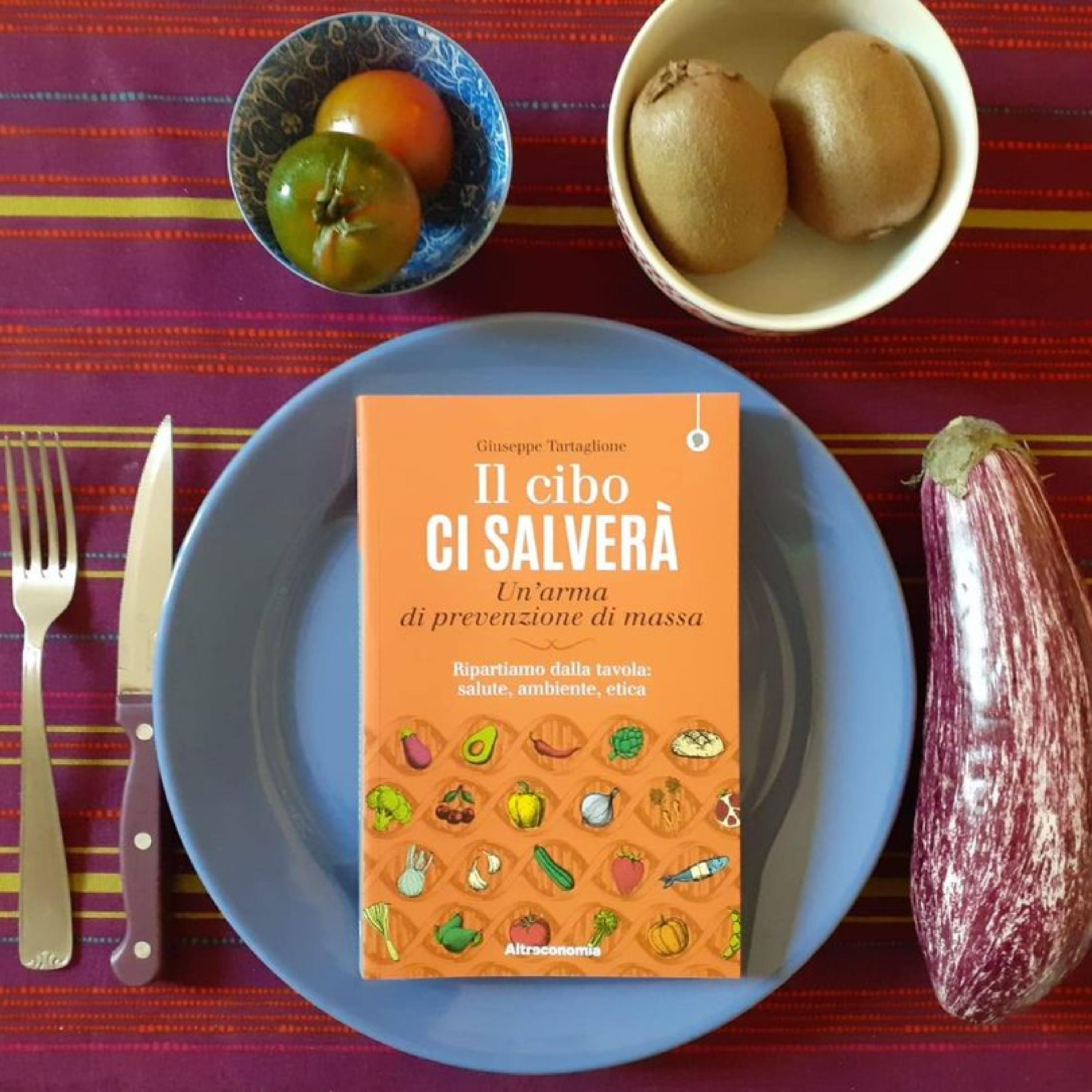
other depths in my book "The food will save us" edited by Alteconomia.
Podcast Summary
Key Points:
Importance of discussing food due to its impact on health, environment, ethics, and politics.
Food as a central connection between human health, environmental sustainability, and social justice.
Role of food in circular health and responsibility of humanity towards the planet.
Significance of diet on health and well-being, emphasizing the impact of food as a preventive measure.
Health as a resource to express personal potential and concerns about disability.
Effects of wrong diet on health, leading to more deaths than other risk factors.
Data from the World Health Organization highlighting the economic aspects and prevention of major chronic diseases.
Summary:
Dr. Giuseppe Tartaglione, a family doctor, emphasizes the importance of discussing food due to its wide-ranging impact on health, environment, ethics, and politics. Food serves as a vital connection between human health, environmental sustainability, and social justice, playing a central role in circular health.
The text highlights the significance of diet on well-being, discussing the role of food as a preventive measure. Concerns about disability and the impact of wrong diets on health are addressed, with data from the World Health Organization supporting the need for investment in preventing major chronic diseases through physical activity and proper nutrition. Overall, the text underscores the critical role of food in shaping individual health and global well-being.
FAQs
Talking about food is essential as it impacts health, environment, ethics, and more, forming a crucial connection between human health, environmental sustainability, and social justice.
Circular health recognizes Earth as a closed ecosystem, emphasizing the interconnected health of all life forms and highlighting humanity's responsibility in protecting the planet.
Food greatly influences health and well-being, with dietary choices playing a significant role in preventing diseases and promoting overall wellness.
An irrational diet can lead to various diseases and is a major risk factor for premature deaths, surpassing even smoking-related deaths.
Investing in physical activity and proper nutrition can prevent around 80% of premature deaths related to major diseases, with significant reductions in cardiovascular, cerebrovascular, and oncological mortality rates.
Chat with AI
Loading...
Pro features
Go deeper with this episode
Unlock creator-grade tools that turn any transcript into show notes and subtitle files.
 PodcastTranscript AI