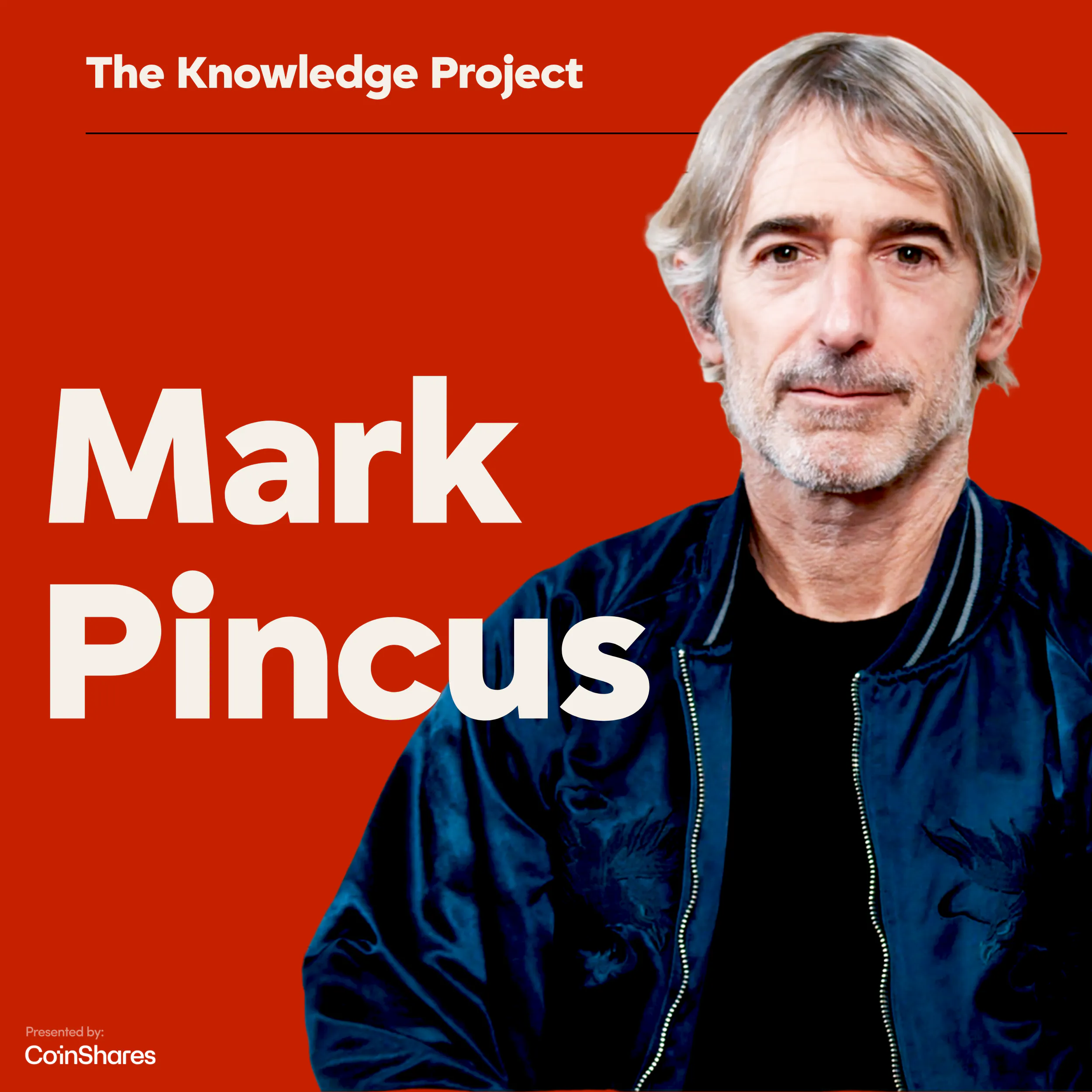
Proven, Better, New: Mark Pincus on the Rules of Product Innovation
from The Knowledge Project
70m 28s
The speaker emphasizes the importance of an offensive mindset—focusing on "what if everything goes right" rather than playing defense with fear of failure. Great consumer products, he argues, tap into deep, unexpressed human instincts, creating a magical experience that earns a spot on users' home screens. He describes "heat" as an unmistakable, visceral signal that an idea is working, akin to knowing you've found your life partner. This heat is true signal, requiring no stats to validate.
Reflecting on his career, he recounts early failures due to his brutal honesty, such as challenging a core strategy at Bain and questioning deals at TCI, which made him unemployable. A turning point came at age 28 when, feeling washed up, he quit smoking to regain control, starting a lifelong practice of strategic self-accountability through his "book of life." This discipline helped him pivot from failed ideas like Tribe.net, where he had strong instincts but a flawed concept (trust-based networks). Despite seeing Zach's successful trust model, his ego prevented him from adapting until it was too late. He concludes that founders should trust their instincts, not their initial ideas, and be willing to copy successful insights—like Steve Jobs' mantra that great artists steal—rather than double down on losing strategies.
We've got to be in a mental state where we're playing offense and not defense. You've got to be in this place that you're thinking, what if everything goes right? If we're starting with what if everything goes wrong, you're playing defense. You've lost before you're even out of the gates. What are the first principles of great products? I think great products in the consumer world speak to us on some deep level. They speak to some human instinct or need that we've been feeling and it's been unexpressed or unmet. When we first experience that, there's something magical to it that it could be an unlock. And lots of times it's where we're most cynical that we're ready for the most magic. But I've found that if a product speaks to you, or at least this is my experience, this product speaks to me and it makes it on the front of my iPhone, I think it has a billion dollar stick value. Or maybe I should update that. That's what I thought 15 years ago. Now maybe it's. Trillion. Two, at least two billion. But if it's enough to be on the front of my iPhone, to me, that's saying a lot. Like that I'm going to use it more than once. A new app, the SoSoldam. The front of my iPhone is I could go get and show it to you, but it's half empty. So I still think that there's so few, at least, digital consumer products that give us that magical experience that we feel compelled to use every day. You have a system for sort of proving ideas before you know that they're going to work really. Talk to me about that. How do you do that? I'm looking for real heat around an idea. What does heat mean? Heat is something that you know it when you see it. It's kind of like being really in love with somebody. When you found your person, I believe you know it. And then every other one that was not quite your person, you're not sure. Right. And heat is the same thing. And it's like, you want to see heat. So you're looking for signs of heat. And you're like, look at this click-through rate or look at this, but it's not heat. When you have the heat around the product, everything says heat. And you just know it. It's part of what I call true signal. Right. It's, it's when you have true signal, we all know it. You don't need anyone to tell you. And when you don't have true signal, you need lots and lots of stats and other things because you're like, is this the signal? Isn't it? It's not. When you see heat in another product or even better when you see heat in your own, it's like Christmas morning, like everything lights up. Were you always playful? Yeah, I grew up in a family that was very competitive around these kind of you know, family social games like shrades and scrabble and trivial pursuit. Competitive like tipping the board over if you lose. Almost like my dad was very playful and into games and so much so that he first did this. And then we all did. We'd start to change the rules if we thought the games weren't made right. The best one was in scrabble. It kind of sucks that there's this luck of the draw on your letters. And my dad made this rule that you could take a letter from your little tray. Yeah. And change it out with letter on the board as long as it still made a word. Right. So you could put an O for an A and then you had to reuse that letter in the same turn. And so my dad sometimes would take a half an hour for a turn and all these intricate things. But it made it more, it had more demand. I like to talk about what's the dimensionality, you know, two games and it added a whole dimension. You had a falling out with your dad and that seemed to be one of the pivotal early moments in your life. What happened? My dad, we all kind of played a role in his movie and he loved being in a fraternity in college and was like defining for him and he wanted me to do that. I wasn't into fraternity and they weren't into me either. It was like mutual. And I initially went to this big 10 school, University of Michigan and I was just not in the right place in any way. And I just was not on lots of fronts becoming the kind of man that my dad wanted me to be. He wanted me to be just like him. It just got more and more tense and our family was on a sailboat in the Caribbean, in the Virgin Islands and we bear voting. So it was just us crewing and we grown up sailing and my dad was the worst sailboat captain ever. I mean, just famously, like, epically bad captain. Like, we would get stuck on a sand bar because he didn't read the tides, right? You know, we were in this harbor in this island, Virgin Gorda and the keel got stuck and we always had something go wrong. And the boat was going circles and headed eventually for this like rock barrier. And I got in the dinghy and I turned on the engine and grabbed the rope and I pulled the boat into the slip and saved the day. And my dad was furious and he said, you could have killed us all and calling me one captain. And, you know, I think he was also a little humiliated and that escalated to this bigger fight. And he said, I was going to wait until after this trip, but I've decided to take you out of college to finish raising you. And I said, fuck you by and I left right there. I went and rented a sea plane and flew away. And I also had transferred, been accepted to transfer to Wharton University of Pennsylvania from Michigan. And so then I just packed up my car and left and drove to Penn. So after school, you had some formative experiences. It sort of bain and you worked with John Malone. I'd love to spend a few beats on those. Sure. I had all these great experiences in my 20s. Really amazing, but they were all kind of despite myself because I had these kind of fatal flaws as an employee. One is I'm terrible at interviewing because of this like over indexing desire to be honest more than to please the interviewer. Even though I wanted to get these, you know, high paying jobs. So getting out of college, I was the only kid in my section to graduate without a job. And then I got lucky enough to get a 15 minute interview with TCI John Malone's company, the biggest cable company in the country. And I interviewed with Brendan Clucin. It was the president and he said, why do we need a second MBA here? There's 20,000 employees and they had one other MBA that had 10 years earlier. And I said, because I read this book by this guy George Gilder called Microkosm and I think that your company is positioned for this coming, you know, information super highway. There's no internet yet. And I said, there must be all these deals. Other things you could do besides cable. And I can go do that. And he said, well, it's funny. You say that. We're having dinner with George Gilder tonight. It was like a direct hit. And then they called down to their head of corporate development and he had a cardboard box called non cable. And they gave me the box. So that was my job. But then I had a few career limiting meetings with Malone where I was so proud. At one point TCI was going to buy a third of prodigy. It was the biggest online provider at the time. And it was terrible. Wasn't the AOL around this? Yes. And AOL just gone public and was worth 110 million prodigy. This deal was pay 400 million for a third of prodigy, which seers an IBM owned. And I came back and I said, why don't we just buy this company AOL? They're public. They're way better. It was 110 million. And nobody like that. And then they had another deal. This other public company they were going to put a bunch of money in. And I said, not only should we not invest or take take equity in this company, we should short their stock because they're just going to go straight down. They have no capital. And Malone said, I don't need some wet behind the ears. MBA telling me what's a good deal. You know, and my boss is that a corporate development was just like shrinking in the corner. So then yeah, at Bane, I got this great deal for a summer job at Bane when I was at HBS that they'll pay for your whole next semester is $25,000. It's like, I'm in. And they said, we want to bring an entrepreneurial banking people. I said, great, that's me. And it was like the movie Stripes because my boss left after like the first couple of weeks. And they said, we think you can do this project on your own. And it, the long story, but they had this graph in the company that Mitt Romney had first made that said, they probably still have it. This says, if your relative market share is high enough, your return on sales, your margin will be high, which is basically saying you can have like more monopolistic pricing or all agonistic. I proved that in the snack industry, it breaks. So I presented, no one had checked my work and I presented near the end of the summer to like the partners and all the summer associates and I'm so proud. I thought they'd make me a partner. This is
like, you know, 1991, I figured out like the PowerPoint animation and I showed their graph with a flashing X in it. I said, "Thuck the graph is wrong. This doesn't work." It's like going to church and being like, "I don't believe in God." Yeah, look, Jesus never existed. Look, I can prove it. I should be head of this religion. So most people had walked out by the time I was done with my presentation and then they just stopped talking to me for the rest of the summer. And I was really proud of one of two summer associates in the history of the firm that they asked not to come back, you know, but partway through the summer. So a lot of evidence was building up that I was not employable. At 28, you realized you're not getting the results you want. Things aren't working out. You find yourself in a synagogue again. Walk me through what was going on, paint a picture for me. I just felt like I'd made a lot of bad career decisions and I was washed up early. There was nothing, there was no next thing this was headed towards. And I don't know why, but I just, maybe I wanted a place to think and I just sat there in this temple. I didn't know anybody. I didn't understand anything. It was just a good place to sit and think and I just started writing a notebook about why my life sucked so badly. And I just ended on like this one thing that I smoked cigarettes. I didn't even smoke smoke. I smoked like one or two a day, a pack of night if I was at a bar on weekends, but I hated it. And I closed smelled like it and it just and I didn't want to do it, but I kept doing it. So it was the sense of like my life with a lot of control. And I just was like, if I could do one thing to like know that I'm making some positive change in my life, I'm going to quit smoking. To on October 19th, 1994, I did a lifetime quit on cigarettes. And then every day for that year, after that that I didn't smoke, it was, I could, something I could feel good about. Well at this point, you had like huge ambitions that weren't being realized and you're evaluating your life effectively with honesty. And it wasn't coming up good. And so you reflect, you have that one year, you don't smoke, you stop smoking, you prove to yourself every day that you're sort of in control of your circumstances and a lot of ways. And then you do it again, you call this your book of life. Yeah. And you've done it every year since. Yeah. I think that I practice like the book of life. What it's done for me and I think it could do for a lot of people is just be strategic about your life. Like be thoughtful about like, I like to say, what would your future self thank you for doing this year? We can be strategic, hold ourselves accountable and force ourselves to make some tougher decisions now because you know you'll thank yourself later and right around the time that was brainstorming on the side with this guy, Sunil Paul. Sunil was the only internet product manager, the only internet employed AOL. To turn out the one good thing about being in DC is there was this company AOL there and they had one guy who was focused on the internet and had the same kind of crazy bug I did. And so we started talking and we came up with this kind of, you know, peanut butter and jelly idea that like he wanted to build hardware. I wanted to build software, but we both want to make the internet easier for people. And so we were like, okay, can we start with software and then eventually get to hardware and he said, okay, Sunil and I got the company going. We each put in 60,000. This is free loader, right? 30,000. Yeah, 30,000 60,000. Yeah, it was called free loader. And you guys sold that company for 38 million was it? Yeah. And then everything, possibly everything that could have gone right went right. Do you feel like you were lucky? Yes, I definitely think I'm so aware of the fine line between success and failure, especially on your first company. And it's so, it pains me how much founders and especially I see it in men, not all men, I have four sisters and a bunch of daughters. But I would say I see it in a lot of men and in friends, college friends, people I've grown up with that if they had an initial failure, if they had failures, they get attached to it and they start feeling defined by it. And it would have been me too, but it wasn't. Do you have any advice for people in that position where they're sort of maybe attached to it? And I don't know how you're going to get yourself there, but you've got to be in this place that you're thinking, you're also thinking, what if everything goes right? What does right look like? How am I ready for everything going right? And for starting with what if everything goes wrong, you're playing defense and you've lost before you're even out of the gates. The sponsor of this show is CoinChairs. While most of the industry was still arguing about whether digital assets were legitimate, CoinChairs was quietly building the infrastructure to invest in them properly. They now manage over 6 billion in assets and have stayed profitable through every market cycle, fully regulated with the kind of transparency and governance that serious investors actually expect. Whether it's crypto ETFs, active strategies or Bitcoin mining ETF exposure, you can access all of it through your existing brokerage account. CoinChairs. The adults have arrived. Learn more at coinchairs.com. This is not investment advice. You're in meetings all day. You're trying to stay present, but you're also worried you'll forget the decision, the action item, the important next step. That's where granola comes in. Granola is an AI-powered new pad for meetings. You jot down rough notes like you always do, and in the background granola transcribes and turns them into clear, useful notes when the meeting ends. There are no bots joining your calls, no distractions, just a clean note pad that helps you focus. During your after the call, you can chat with your notes. You can ask granola to pull out action items, help you negotiate, make a decision, write a follow-up email, and so much more. I even use it when I'm listening to podcasts. Once you try it on a first meeting, it's hard to go without. I do granola.ai/shane and get three months free with the code Shane. That's granola.ai/shane. Skip a few beats after a free loader for a second and come to tribe.net. You have the right instinct for a social network, and then you meet Zach. He's got the right idea for a social network. Talk to me about that tension, and you didn't change course after meeting that. You realized that. I think we all know, we've all seen founders like this that are just, they're so attached to this idea that they're going to go down with the ship. We've also seen people in bad relationships like this, right? It is like a bad relationship, and you have a friend, and they're coming to you for the umph-teamth time with this, another version of the same thing, and you're just like, "Ah, this is not going to end well." That's so many of us with our start-up. You can't see it because you're in it in a way, but you saw it. You almost do know it. Yeah, I like to say that with tribe, I had three winning instincts and one losing idea. We learn over time, hopefully, as founders, that our instincts are almost always right, and our ideas are usually wrong. That is a really powerful philosophy and tool if we can hang on to that and really use that. So, I had this instinct I call a cocktail party, and it started with Napster, and Sean Parker worked for me at Freelotor when he was 16, amazingly, and sent me an email when he started Napster with Sean Fanning, and I was the first check into Napster because he said, "We have like two servers in their full, and we need money for more servers." You always just send money when someone says that in consumer. That's rare. Napster was this cocktail party where we could connect with each other with nobody in between. And to me, that was the beginning of this social web of "Worth the Nodes." We're connecting this peer-to-peer web. And then Read Hoffman and I were during this nuclear winter for consumer internet after the dot-com crash. There were like six of us who were still excited about consumer internet, and we would get together and read CoinTheTerm web 2.0. And it was this idea that like anything on the internet that can be free will be free starting with data. And we got to set the data free. But so, we both came to Friendster at the same time, and we just thought it was the perfect science experiment. We didn't think it was a real business, and we both put in the first money because we thought it was such an important experiment. Friendster in a month started to really work. And at the same time, we were working on our own social networking ideas and Read was close to launching LinkedIn. But Friendster was the first thing I saw work.
didn't copy it, didn't fast follow it. And Jonathan Abrams was very paranoid about any of us as investors doing anything close. In fact, he doesn't speak to me to this day. He feels like tribe, he feels like we all kind of usurped and stole his idea for social networking by doing what we're doing. And it's not like I learned anything in particular from the friendster that everyone didn't see within months that it was working, it was really successful. And so I thought, tribe, it's Craigslist. Craigslist meets Friendster. I got trust completely wrong. I mean, like so wrong, it's unbelievable. But for some people, it wasn't. For extroverts, for Burning Man people, they loved it. But for most of mainstream people, it was wrong. Zach came through my office with Sean Parker about a year after I started try, but I was already, I think, struggling 'cause I had amazing virality and I had amazing user growth and I had terrible retention. And should have told me something, but it didn't. It was like a sinking speedboat, which a lot of viral apps became, you know, that we kept putting new users in at amazing rates and we'd lose them at amazing rates. And the real answer to sinking speedboat is to fix the hole in the bottom, you know, not go faster, more people. So, Zach and Sean Parker came through and I saw they got it right. And I think it was my ego and the kind of morality at the time it's still there, not as much around the culture of startups and internet that you don't copy people. And so, I wasn't going to go do the exact thing that they had done. I wasn't even gonna take the insight that was so clear to me that I got in trust wrong, which at this point, Friendster, LinkedIn, Facebook, all were proving the trust thing. And I just wasn't gonna do it. And so, I just stuck with the same losing. - Double down on the losing strategy. - Double click on copying and sort of, how do you think about that? - Copying sounds bad. You don't wanna copy someone's homework, you don't wanna copy someone's work. It's like stealing sounds bad. But then we juxtaposed that with like Steve Jobs, he has famous quote, like, you know, great artist copy and the master's steal, right? Like the best artist steal. And so, in the context of Steve Jobs, or the best designers who say I was inspired by, were okay with it. But then we can see other people copy something and there's something icky about it, right? And I think it comes down to, there's a certain aesthetic that we feel of, is it just copying and blatant copying or did you add something to the conversation? Have you innovated on some important front? Have you moved the world ahead on some front? From this concept and the failure of tribe, I ended up getting to this framework at Zingha that I called Proven Better New. And it's based on my philosophy that you have winning instincts and losing ideas. And the problem is that I see with so many products and founders is that they're losing for the wrong reason. So they're losing because they didn't just stick to their one, isolate their one area of innovation, they tried to reinvent every single part of their product. And you don't have enough time to make every single part of your product better. And what it's better even means. So the concept of Proven Better New was, it was much easier to implement in games where you have lots of features and functions and mechanics and components, but it's true in any product, consumer enterprise business to business. I mean, Slack is a great example of Proven Better New. It's the ideas take something proven for this audience and this function and this platform. So before Slack, there was a product we used at Zingha and other enterprises called HipChat, which was an enterprise chat product with channels and stuff like that. And so Proven means these things are proven and what's proven you should legally copy. Like you should don't mess with anything that's proven. You may not even understand why that works. Better is, is there something about that product that 10 out of 10 users would say you could do better? Okay, so for Zingha poker, our proven was poker games. We didn't mess with the rules of poker. We didn't, we copied what the best, you know, real money gambling and other poker games looked like the table, the deal or the cards, the sounds, just copied it and you can move much faster. Legally copied it. You don't take someone's art or, but better for Zingha poker was no download, okay? Why do we have no download? Because we had no security issue. We had no security issue because there was no real money. Real money gambling needed you to download something for security. So how do I know 10 out of 10 users want no download? They vote with their clicks. You lose at least half your users every click. Every time you say click here, half people don't click. And you lose 80% when you say download this, at least, that's probably 90 or more, 90% or more in the app store. And so I knew that was better, like statistically proven better. People, the better is usually half price or free or no download. It's something very mundane and basic usually. - What was Zingha poker? Probably the better was you put images on to around the table. - That was new. - Oh, that was new, sorry, yeah, okay. - So what you, I like to say to people, what you think is better is actually new. The new in Zingha poker was pictures of real people often your friends. And my philosophy, which may sound anti-anivation, but it's actually in service of innovation is all new fails until it finally doesn't. And at Zingha today, the mantra inside the company is still all new fails. If you assume all new fails, you probably won't be let down, okay? It doesn't mean you don't do new, of course not. It means you take a different approach to new, which is you can't try one new idea because it's going to fail. You can't try one new version of your new idea. You have to try many, many variants of each new idea and many new ideas and look in much smaller atomic units of innovation for new. And the best, the masters of consumer products know this like with their eyes closed. - So, probably, Prum better new then is being able to deconstruct what's proven and what works 'cause it's not always obvious. - Yes. - What's the process for deconstructing something? - Before you have the right to do better new, you need to be a PhD in what's already proven. So I remember at Zingha having a roadmap meeting with the poker team and a newly minted product manager proudly showed me the new poker profile that he was going to launch. And I said, okay, show me your PhD in profiles. Show me what are the best game profiles on mobile ever done and tell me why. He's like, I don't know. And I'm like, well, you haven't earned the right to change the profile. If you're not an expert, you can't, you need to be the world's leading expert in profiles. Poker profiles, mobile profiles, game profiles. I want to see a war room full of profiles. You need to care at the pixel level before you have the right. And that's what I mean by proven and deconstructing. And it's deconstructing is an art form and a science and we should all get better and better at it. If you want to be a great product maker, you need to commit to a career of deconstructing. And just anytime a new product comes out, like be a student of yourself in that experience. And like, what is it that feels great or doesn't? And we have a responsibility to our users. Like it's sacred. And the more we take that really, like hold that up as our most important purpose in this, the more we're going to treat this with the level of respecting care that it deserves. And the more they're going to feel that care and intention in our product. I want to talk about the abyss a little bit. So after tribe and before Zingha, you went into this whole. Can you describe how you felt what was going on? Yeah. At some point I started calling this place the abyss. The way I think of the abyss is, it's this place that we go to as founders and entrepreneurs after our thing, after it dies or it's. bought or it's over for whatever reason. It's this amorphous place that we are in our life that has no structure. It's where we've been on this hamster wheel of our career. Plus it's your identity, right? You're a founder, you're running this company, or you have. Yeah. My dad used to call this in-between successes. He's like, "You're not unemployed, you're in-between successes." And, but for us as founders, it's so hard. This abyss is this usually dark place because at first it feels great, maybe freedom. Oh my God, I've been working so hard, and now I can just sleep in, and I can do all the things I've wanted to do, and couldn't. And about a week or two later, maybe a month later, it starts to dawn on you that I may never find gainful employment again. I mean, gainful meaning, something I want to do. I'm not gonna ever go work for anyone else, so I'm not employable anyway. So I don't know if I'll ever come out of this abyss. I've been in this abyss sometimes for multiple years, and it doesn't mean you're not working on projects and things, but you haven't found your thing. You haven't found the thing, and it's maybe not the level of, you're not working something with as much passion and conviction as the thing that you built that worked, or went public, or didn't work, but you loved it. And you don't know if you'll ever find that again. - Do you think these periods like this abyss is necessary for what comes next in life? - I'd like to think it's not, because they're long and painful, and I'd love to just have a short break and then dive into the next thing and have it work. But I don't know, I personally don't know how to avoid it. I think that the future state of all this is that we all get to live in some way like Elon. The ultimate vibe coding is life of the speed of play, and it's that you get to have an idea and bring it to life in some way for almost no capital and get to instantiate your idea. Maybe not with billions of capital. And so I do think that there are going to be more and more outs from this abyss, and it's going to be easier in a lot of ways. But I think the abyss is for sure there for me, and I think it will be for most founders. And so all we can do is embrace it and have more process. That's where my book of life is helpful. I find finding lots of small things to work on that are maybe going to unlock the passion thing. I got to Zingha, I was in the abyss, and I had just side projects that one of which was a poker game. I was dabbling. I was doing them all wrong. I was not intense. I have a terrible work ethic until I don't. - You're either all in or kind of like dabbling. - Yes, I just dabbled, and I'm terrible. I just, I'm like, I know I should be putting time in this, but I'm not drawn to it. - What does it look like when you're all in? - It's fierce. I think that my all in has always been underestimated. So we'll get to like, when I, life when I started Zingha, but the VCs didn't believe, like I'd already been successful and made all this money and they just were like, this is a lifestyle thing. I don't buy that you're gonna really work hard, like a 25 year old or a 30 year old. - 'Cause you were 40 when you started Zingha. - 41, yeah. - Yeah, you were one. When I was all in with Zingha, I was a maniac. I mean, I just, I didn't want to stop. I didn't want to sleep. It's all I wanted to do all the time. And it was the ultimate high because there was always something more I could do. - So you are in the abyss and you come out of it and you have, I mean, but all objective standards, all this money and success, and you wanna go do it again. Why did you do that with Zingha? - Part of what I deeply realized in that abyss, as founders, we may or may not be faced with having to answer our why. So my why I got to is like, what I can offer the world is building products that move people. And I'm going to be the most happy doing that. And I don't know if I'll ever get to do it again, but I'm going to try to get there. And I was looking for this way to get back to building again, even though tribe was an abject failure. And I got there with this little poker game and it was really fun and it started to take off in ways right away. And it was one of these like lightning and a bottle things that it just worked and everything about it worked. But also I think, I think I've gone through this like success beat down, success beat down. And I think I had to be so beat down with tribe to be so audacious to start Zinga. - What was the big idea with the Zinga? - Well, I love these markets and they're all around us where we think they're mature and over and they haven't even started yet. And that was searched before Google. You know, Google was the 56th search engine. It was a mature slow growth business. Google made us reimagine what search could be in our lives. And obviously turned it into a trillion dollar company value. And games was the same thing in 2007. The whole video game industry worldwide was like 23 billion dollars. It was mature, not interesting. And yet there was, I believe this latent demand because people like me, I would have played games if they were made accessible for me. And I didn't have to go beyond someone's couch or whatever it required. And so I thought games had this opportunity to be one of the most important activities on the web. I started saying play could be this one of the core things that we do in our digital life stack or every day. And I think that what we got right was social gaming was make it for the mass market, not for gamers. And give you enough value in it that an adult would give themselves permission to play. And the value came from asking very little of you. So we're gonna ask very little time from you and then giving you something of value in your life, not just entertainment. So not just being dead empty calories, but actually you're here for this cocktail party to do social networking. What if in our game, we give you a new dimension to your social networking that can improve a relationship in your life? We're not gonna hit that every day, every session. But what if we get there once a week or once a month or once ever? And that became how we thought of our innovation. And then the second thing that came into play for social gaming with us was virtual goods, user pay. And I remember actually when I got to pitch our poker game to Steve Jobs when they were just opening up the app store. And I showed him the demo of our poker game and he yelled at his number two guy, Scott Forreston, and said, I told you I don't wanna see fake demo where Scott looked at me and he's like, you're not supposed to show anything fake or this is supposed to be live. I was like, Steve, these are real users from MySpace, from Facebook. Types them in the chat if you dare. But I have no fucking idea what they're gonna say to you. And then he was like, oh, that's cool. And then I thought, okay, maybe I could like pitch him on user pay. They didn't have user pay when they launched the app store. There was no in-app purchase. There was a paid app store, a free app store, and you'd have to buy a version of our poker with chips. And so I tried to pitch him on in-app purchase. We were one of the first companies in the Western world to do this in-app purchase thing, this virtual goods thing. And so that was the other part of the rocket ship that we got to mass market. We made this something useful for adults. And we had this user pay model that could monetize your engagement instead of trying to show you an ad and getting you to leave the game to go somewhere else. It actually, the more engaged you were, the more likely you were to spend money. We were a cash flow positive right away. I've never had that before. I put up 350K to start the company. And at that point, to be 41 and starting a consumer app company and doing it on Facebook, it's like there was no dignity in it. I think people were embarrassed for me. It was like, "Mark, really? "So much you could do in the world." Go be an adventure capitalist. All my friends had done, or you've already been successful. You don't have anything. You don't have to prove anything. Why are you doing this? - But you have a chip on your shoulder. - Yeah, yes. I'd say that I did and have. And I had a chip on my shoulder that, I knew I could make these world class apps. I knew I could make what I call an internet treasure. What John Doerr called an internet treasure. And that was my why. Soon after I started Zingha, John Doerr and Bing said to me, the greatest thing you could do is build an internet treasure. Okay, and that's what they called Google and eventually like the iPhone. And what I attached, the tagline I attached was, it's a service you can't remember life before, or imagine.
life without and I loved that vision. I said, "Yes, yes, yes, that's what I want to do." But I said, "Okay, this time I had a chip on my shoulder. I had the multiple bad experiences with VCs. I made this way harder for myself." It should have been easy at this point to raise money for Zingua. It was cashflow positive. I was a multi-time, I was a two for three founder, like one sold, one public, one failed, right? I made it so much harder on myself, but for a reason, because I said, "I'm going to make sure everyone's aligned on this trip, this road trip." I think that's one mistake we make as founders. Another quote I like to say is, "Know your goal or suffer a death by a thousand compromises." Because what I had done my whole career and most of us do is compromise to get that next engineer, CTO investor. You put a jerk on your board because you impressed with their firm name and the valuation and all your friends are going to be impressed. It's going to be so much easier. We make all these compromises and contort ourselves and eventually we wake up and it's company we don't want to work at. You're like, "Well, I guess I did what was right for the company, but now it's not the right place for me." And you leave and I'm like, "No, you're the most valuable player. If it's not the right place for you, you failed." The first round I raised was impossibly hard. And I got caught in between a fight in a fight in between Peter Teal and Sequoia. And he had just started founders fun and Sequoia didn't like that and they were mad at each other. And Peter had said, "I'm going to fund, I want five million." He's like, "I'll fund it." And I said, "Great." And then I went and I had this meeting with Sequoia and it was really funny meeting because I was asking for 20 million pre and we were doing 200,000 a month in free cash flow. And they said, "How do you justify that valuation?" Which at that time was a lot. And I said, "If you care about this valuation, this isn't the right deal for you because this is either going to be a multi-billion dollar company or nothing." And it just won't matter. And now that everyone thinks that way, call options, but I was like, "If you're worried about whether it's 15 pre or 20 pre, don't play because you're looking for an outcome that you're never going to see, that we're never selling this company for 200 million. It's either like zero or multi-billion." And they liked that. But then there was this fight between them and Peter and then they both ended up not investing. And then we were damaged goods. And then it was like out of a scene from Silicon Valley, the show. And I started meeting with all these second tier VCs and eventually Fred Wilson, fun to me, with terrible terms, like 15 million pre. But I love Fred and he didn't go straight to the hard deal because he could. But the funniest thing is I never used the dollar I raised the whole time with Zinga. Was Franch Hill the first product that really just instantly took off like crazy? Well, there was like rocket boosters. Okay. And each one went into a bigger, you know, outer orbit. So it started with Zinga poker. And then yeah, Mafia Wars poker. They were big, but nothing like what we saw at Farmville. And Farmville was the first time that we hit this like mass market consumer tipping point where lots of people knew about Mafia Wars. But with Farmville, we hit this density on the social network and the feed with Facebook that something I think like 20% of Facebook users were playing the game. And so it felt like 100% were. And that then made it like what everybody, it was in the zeitgeist. And that's when social gaming and Zinga kind of left left orbit. I wanted to see if an AI version of me could actually hold it so I built one with Hey, John. Let's see if it was paying attention. Hi, Shane, digital you every book, every episode, every newsletter. I've read it all. Try me. Pick a book. I recommend constantly. Tell me one idea from it that I actually use. Annie Duke thinking in bets, resulting. A good decision can have a bad outcome. A bad decision can get lucky. Judge the process, not the result. You taught me that one. I just remember it better. Okay, that landed. That's Hey, Jen, record yourself for 15 seconds and get an AI avatar that delivers professional video on demand. No camera, no crew, and over 175 languages already used by 30 million people, including 85% of the Fortune 100. Your first three videos are free at hahn.com. That's h-e-y-g-e-n.com. Ever hit 3 p.m. and feel like your brain just quit? For a lot of people, that's not caffeine or sleep. It's electrolytes and water alone won't fix it. That's why I drink element every day after lunch. Zero sugar, no dodgy ingredients, just a real dose of sodium, potassium, and magnesium. I know you're all thinking electrolytes are for athletes, but you don't have to be an athlete to benefit from it. And it tastes great. Stay sharp in the afternoon and grab a free eight-count sample pack with any purchase at drinkelement.com/tkp. That's drinklmt.com/tkp. You had a near death experience with Facebook and Zingga. Can you walk me through what happened there and how you navigate it then? The entire Facebook experience for Zingga was a near death experience. Not just us, for everyone, their api ecosystem. It was the least stable api ecosystem ever imagined or invented. Many companies did die in it. Most. There's only two companies that ever actually survived out of it and was Spotify and Zingga. And I'd say my experience in building Zingga and the reason I kept raising money even though we were profitable was I felt like I was on a five-story high unicycle and I kept adding another story. And it was like, whoa, it's been really far if we fall now. And we didn't have any stable, there was not a stable platform. We didn't have a stable agreement between the companies. They could and would change their platform all the time. And some low-level product manager who wants to promote events would deprecate the whole left rail of their home page where all the apps were like they'd been behind a more button. And you're like, oh my god, nobody can find us anymore. Or it would just always be moving. They had to move fast and break things. Most of what they broke was all of their api ecosystem. I would walk their hallways every week trying to convince them that games and apps were this great business for them. And they didn't believe it. They didn't think that was what their platform was for. And then eventually they did. And it wasn't even the 30% of revenues that was the problem. They walked in and handed us terms that we wouldn't have been a captive company if we had accepted these terms that they threatened to. Yeah. They said, you have told, they gave it on Friday and they said, you have told Monday to sign this agreement. Or we're going to take down your apps, which was their right. And that could have happened the whole way through. And who knows what would happen because at this point, we were huge on their platform. And at the point that they went public a year later, they had to put in their risk factors like the Zingah dependency because we were like 20% of their page views and 10% of their revenues. And a huge portion of the time spent on the app. Yes. Yes. Huge. Yeah. And I don't know if they'd shut us down and people had to navigate to Zingah.com. We didn't want to find out. It was really terrifying. And they probably didn't want to find out if you left. Right. Right. It was like you had this sort of weird situation. Yeah. You said the fastest way to get to a winning idea is to sort of build a failure machine. So how do you determine whether your ideas are winning or not and course correct? Because you might have the right instinct. But like how do we touch reality and get feedback from the world? I got to failure machines through a lot of failure. Painful slow failure. I'd say when I when I came back to Zingah's CEO for the second time and I had to move fast to make this turnaround happen, I was going to start my fight with our core franchises. And the CEO before me had been on all these new games and this whole slated games looked like it was going to fail. And our franchises had been neglected. And I said, I'm going to go back to words with friends. People love that. I want them to fall in love with that game again. The game when I came back was projected to do to drop from 120 million revenues to 79 million revenues in the next 12 months. And everyone's saying, let's pull resources off. Let's send the game to our team in India to shutter it. And I said, no, we're going to this is the beginning of the turnaround. We're going to turn around this game and then the whole company. So I started meeting with that team every week. We started going through their app reviews and ratings.
It's amazing how dumb this shit is, but the ratings have fallen to like the mid-3s from the high-4s, so we would read the ratings. I started and ended every meeting with what were players thank us for, and the team thought out that was like an unfair question. Eventually, we put a neon sign in the lobby that said what were players thank us for. And that might sound like a weird place to get to say how did I get to a failure machine, but it's the right place to start is that what's the intuition, what's the instinct, what I know anecdotally is broken, then how do I get to my ideas and rank them? I don't just do anything. The team had been working on this fast play. Now, the problem was that this team was a bunch of mostly 20-something dudes making a game for middle-aged women. That's the first problem, right? So they wanted fast play. They said this game is too slow. We want more adrenaline. That's not why middle-aged women were playing words of friends or candy crush soggy. They actually wanted a Zen moment, a me moment. They wanted a escape. They'd spent six months on this, hundreds of engineering days, and they never really tested the top of the funnel. And I said, well, what percent of our players clicked on this? And I used to say we need like 25% minimum. And they said, well, we think we think we can get to 5%. I'm like, so the best you can get to is 5%. What did you get in your click test? They said, well, we're currently at about 1%. So 99% of words of friends' players say no fucking way when you show them this game and you're building this game. I'm like, that's a crime. That's a crime to our players. So I said, we need to start at the top of the funnel. We need to go to like, what will they click on? What do they want? What do they want to do? They want to do that. And what they want to do is they want to do that. And they want to do that. And it's going to be a life test for. And it's probably much smaller things. They don't want a different game. They came here for this game. And the team to their credit and V, who ran the team, who ran on to become a terrific product maker, any ran product for Reddit, he shifted gears, and they did start test, click testing, every day hundreds of ideas, starting with what Laura core audience think us for. And they got to one idea, which was a weekly achievements. And they realized that these people playing want to feel like they're getting better every week. And the huge percentage of players clicked on it, engaged with it. And because of V in the team and committing to this failure machine, this testing machine, first game did 180 million in revenues, did 100 million in contribution. So it did more dollars in contribution than they were projecting with doing revenues. And that was the beginning of the whole turn around. So I believe in failure machines. And I would say, how does that play out today? I see too many founders get stuck in what I call the MVP trap. And I love Eric Reese. And he gave us this whole body of work around the lean startup. And he and I have talked about this and I know by MVP that he meant, he meant we have to move fast. And it was a mantra to move fast. But unfortunately too many teams waste time getting to a minimum viable product that they can put out in the market. And we don't have time anymore for that. We need a failure machine at the top of the funnel. We need to get to a minimum idea state that gets vibe coded. So over the fuck you get to something that gets the idea across so that people say, "Mah." So the worst thing people can say is, "Mah." No is better. "Mah" is like, "Eh." It's a seven. Yeah, it's a five to seven exactly. And so we've got to, we got to get to a new standard. And I think we are with AI where we can get to the gist of this. And I say, "Build it wrong." But we don't have time to build it right. Don't fucking build it right. Build it fucking wrong and build it fast and don't make it viable. Vival is the bad word. Let's take viable off the table because we got to, because it's probably wrong. So we don't have time to build viable. Let's build wrong and see if it proves right. Then let's build right. What does founder mode mean to you? founder mode is why we became founders in the first place. We were all expert witnesses. We were all in one way or another in these jobs where we were closest to the answer and furthest from the decision. We were all suffering under the adults and now we get to be the founder. And hopefully you've positioned yourself to be a complete founder and have total agency and not be now under a new boss, your VCs, your board, your employees that you're now like working for in some false democracy. And I like to say to founders, you've gone through so much to be here. You owe it to yourself to bet on your instinct. You owe it to yourself to lose because of yourself. It's your right to be wrong. You as a founder owe it to yourself to control your own destiny and take half the valuation if it's all of the control. And it means you have the right to do it your way. It doesn't mean you have the right to be a jerk. And if you are, people will leave. You've earned this right to have your own style and not have a CEO coach that's going to like chop your balls off or homogenize you to be like what you're supposed to be. So you have your own corkiness and style and you have your own bet the company moments. And the more you have that rope, probably the more you're going to want to learn because you're going to like a holy shit. I could fuck this up and no one's going to stop me. And that's awesome. In retrospect, you know, going through my own founder mode the whole way and I thought I was clear from the beginning was in. And then I gave it up. I there was a moment where I gave up my voting control. Even though even before that, there was a moment in the fall of 2012, after we were public and we were like a $2 stock. We were being sued. We had made this one acquisition of the company that made draw something, which was the hottest game in the App Store until it wasn't that was like the $200 million acquisition. Okay. Pop or whatever. OMG pop. Yeah. And it failed right at the time. Supercell came out and they had heyday. It was like a top game, not making a lot of money yet. And they had clash of plans that was like number 25 or 18. But it was amazing. And I had a handshake with Ilka, the founder and CEO to buy the company for $400 million in cash. And I went back to we easily had the money. And I went back to my board and they said until you show us that you can manage what you've got, you can't buy anything else. So it was very patronizing the board had gone from like you walk on water to allow like question everything you do. And I had voting control and I went to the lawyer who was actually I learned later, not my lawyer. He was the lawyer to the company. And I said, can't I just override them? I have voting control. And he said, technically yes, really no. He said, you could fire all the board members and put in place who you want and they might vote for your deal. And then you'll for sure be sued personally for, I don't know why, but he said I'd be sued personally for that. You'd be personally liable. And I was like, okay, okay, I won't do it. You know, in Supercell made 500 million in profit the next year. And that was like our Instagram moment, like when faced with buy Instagram and it would have just been a different trajectory. And if I had had the conviction, Elon would have just said, fine, sue me. I didn't have Elon's balls. There was moments along the way that I didn't really, really stick to my founder mode. But I love the concept and it's my own coaching myself to have even more believe in myself. What does false democracy mean? It's false to believe that a company is a democracy. The way I ran the company was what I called a democratic dictatorship. And I said, I want everyone's voice to be heard and then I'll be the single vote. And I think that's where a company should be run. I think there's one CEO, there's one chef. I mean, a good CEO is going to seek out the intellectual honesty, the truths from everywhere and hear from everybody. And then they're going to make the decision and they're not going to make the decision because it's most popular in the company. What would you say when I talk to people who work in organizations, a lot of them hate their bosses? Do you think that comes from unclear objectives or where do you think that comes from? Hmm, so many places. I don't really believe in management, but I believe in these that we can have some principles or hacks or things we do that are kind of in place of having to manage. I don't like, as every day I manage the day of work and I think no one should really have to manage or feel managed, but two things I'll say.
Early on when I was building my second company support.com, I didn't know how to scale past. We were 35 people. I put a sticky note on the wall. I wrote everyone's names and I said, "By the end of the week, write down what your CEO of and it should be something everyone else understands and believes important." I said, "Everyone's going to be a CEO. Everyone here needs to own something that matters and that way we all know what you're doing and we can all get more done." It really worked and people liked it. I learned this idea. I'm like, "Oh, if I give people way more responsibility than they think they deserve, they're going to be a little scared and they're going to feel some adrenaline and they're going to probably really like their job and not like it because of the title or the money or the accolades but actually be challenged." I learned that people like that. That was one lesson that I carried on and at Zingha, we had this value on the wall of BSEO on outcomes. The other thing I learned early on about the way engineers hate their jobs and hate their bosses is what I call the moral contract. When I first started working with engineers, these guys scotting Kadeer, I saw how much the engineers get screwed in these companies. They're the ones who maybe it'll change but I don't think so. The other ones have to work the most hours and they constantly get screwed because they build this whole product and then the salesperson doesn't sell it. The CEO says, "You know what? I know I asked you for that but that was wrong. Now we need something else." They just took this hill. They think they killed themselves to do this. You owe it to them. The same way we owe our responsibility to our users, we have a responsibility to our engineers or our builders, people who are in the factory building. And I said, "There's a moral contract. If you're going to take that hill, I'm going to show you that I am going to work just as hard to unlock value out of the work you did." That stuck with me and I said, "If I can show you that I'm in the trenches with you and I'm really valuing your work and doing something, I think you're going to feel better and you're going to do more work the next time." How do you separate people who were along for the ride? Because you know, out of the first 100 people, a company hires, they're going to have some mishires. So how do you separate people who were along for the ride and then take credit for it versus people who actually contributed it and made it happen? I think that you owe it to, in that moral contract, your good employees to fire the weak people. And they're not bad people. They are not effective in your organization. They are not taking hills. I don't care if they're working more or less hours, harder or less, but there's backbone people that are making this thing work. And the more that you act like socialism, communism, false democracies, the more you're crushing the culture of meritocracy. I don't believe in paying your dues. And the more that you see people in the organization who are getting promotions and title and pay that it's not obvious to everybody else, they deserve the more. I think you're eroding, you know, the real culture. Do you think one of the byproducts of that is the politics start to take over internally too? So many things, yeah, that lead to politics. And one lesson I learned that really I hate management. So I don't do one-on-ones. My friend Bing told me that Jeff Bezos wouldn't ever do one-on-ones because he created politics and it was a huge waste of his time. I was like, I love that. No one-on-ones. And the whole point in style and politics in a company is as long as you're consistent, everyone shapes around it and they don't care. They're like, oh, Mark doesn't do one-on-ones. Don't take it personally. So I was like, I'm never doing one-on-ones. And if anyone did finally get my ear and complain about someone else, you stop, you call the other person and you say, hey, Shane's complaining about you, I think you should come up and talk to him and you walk away. And then everyone knows there's no politics. They stopped complaining too. Yeah, they stopped doing it to me. I do with my kids too. Double click on how you learned about that there. Like, because that sounds counter-intuitive. And a lot of people are doing it now. Johnson's doing it. Jeff did it. What did you learn about it? How did it start? I was lucky enough to meet Bing Gordon who was at EA. They were like our arch enemy in the beginning. He was part of the founding team there. And he became an advisor, board member, coach, godfather of my kids. And he was on the board of Amazon. For like 20 years, right? Yeah. And he gave me all this brilliant wisdom indirectly from Jeff Bezos. So he was like, let me tell you what Jeff does. And I was like, oh, I love that. I'd be taking notes. So it was like, what did you learn? Well, one of the best things I got was, and eventually I got to sit down with Jeff. And he took like, he generously spent two hours explaining to me his concept of tech assistance, which originally Andy Grove was the first one of a tech assistant and then Bill Gates and then Jeff Bezos. And I learned about it. I loved it. And it's this non-scalable way to scale your organization. And it's through like passing your vampire blood. That's what inside Zingah, they called it, pinkus's vampire blood. What he did that I started to do is you pick someone from the organization who's promising. I usually pick the people who didn't fit in the smart misfits and they become your tech assistant, which is not your chief of staff, not your executive assistant. They're like working, they're your shadow. They go to every meeting you go to and they are working on just, this way I interpret it, they're working on just product stuff for you. So if there's things that you want to double click on, side projects, things you want to research more, they work on that. And they mainly just go to every meeting with you and they absorb. You're doing these meetings anyway. It becomes this really efficient way to train up a mini me. And in fact, I believe every C staff member in Amazon was at one point Jeff Bezos' tech assistant and Andy Jassy was. And the CEO. So it over time was actually an efficient way to train up big leaders, you know, product leaders. And so I started doing that and all my tech assistants were great and went on to be very successful as entrepreneurs and this kid Ian Cinnamon who was like, I thought I personally fought with Meta to hire him. He was like the star recruit from MIT. And I said, I'm going to personally manage your career at Zingha. Any joined. I put him in poker. And within a year, poker was trying to fire him from the company. And I met with him and it was Oregon rejection because he was too entrepreneurial. It was like me at Bane. And I said, fine, plucking out, you're going to just work for me. And he worked for me. And then I left eventually and did an incubator. He worked for me at that. Then he went off on his own and now he has, I wish I had invested in it. He has a really successful like multi-billion dollar satellite launch company. What do you think we're going to look back on and say is obvious today that we've don't quite see in real time or something that you think differently a bit? Anything that can be free on the internet will be free. Anything that can be less clicks, less friction will be less friction. I think voice is one of those places. And I know Reed Hoffman had a great post-bubbing voice-pilled about, I don't know, beginning of last year and voice became a meme really hot being your last year and then it died down. And I think a lot of these new devices that people are working on are all based on a voice interface. But I do think that voice will be the biggest thing that'll feel obvious. That we wasted so much time typing and texting and reading. And I think we're going to turn on our ears and our voices a lot more. We always end these interviews with the same question, which is what is success for you? Success for me is, I don't think it's a point in time or an achievement. I would like to be spending my time building products that I'm addicted to, I find meaning in and that millions of other people find meaning in and surrounded by great talented people who are bringing their best.
Podcast Summary
Key Points:
Success requires an offensive, not defensive, mindset—focus on "what if everything goes right" rather than "what if everything goes wrong."
Great consumer products tap into deep, unexpressed human instincts or needs, creating a magical, daily-use experience.
"Heat" is a visceral, unmistakable signal that an idea is working, similar to knowing you've found "your person."
Founders should trust their instincts over their initial ideas; instincts are often right, while ideas are often wrong.
Personal accountability, like quitting smoking, can build self-control and strategic life planning (e.g., "book of life").
Early career failures (e.g., at Bain and TCI) taught lessons about honesty, humility, and the fine line between success and failure.
In startups, avoid doubling down on losing strategies; be willing to pivot or copy successful insights (e.g., trust in social networks) despite ego.
Summary:
The speaker emphasizes the importance of an offensive mindset—focusing on "what if everything goes right" rather than playing defense with fear of failure. Great consumer products, he argues, tap into deep, unexpressed human instincts, creating a magical experience that earns a spot on users' home screens. He describes "heat" as an unmistakable, visceral signal that an idea is working, akin to knowing you've found your life partner. This heat is true signal, requiring no stats to validate.
Reflecting on his career, he recounts early failures due to his brutal honesty, such as challenging a core strategy at Bain and questioning deals at TCI, which made him unemployable. A turning point came at age 28 when, feeling washed up, he quit smoking to regain control, starting a lifelong practice of strategic self-accountability through his "book of life." This discipline helped him pivot from failed ideas like Tribe.net, where he had strong instincts but a flawed concept (trust-based networks). Despite seeing Zach's successful trust model, his ego prevented him from adapting until it was too late. He concludes that founders should trust their instincts, not their initial ideas, and be willing to copy successful insights—like Steve Jobs' mantra that great artists steal—rather than double down on losing strategies.
FAQs
Playing offense means asking 'what if everything goes right?' and being mentally ready for success. Starting with 'what if everything goes wrong' puts you on defense, and you lose before you begin.
A great consumer product speaks to a deep human instinct or unmet need, creating a magical experience. If it earns a spot on the front of your iPhone, it likely has at least a two billion dollar stick value.
Heat is like being in love—you know it when you see it. It's true signal, where everything about the product indicates success, and you don't need stats to confirm it.
The father was humiliated because the speaker took charge and pulled the boat to safety after the father's poor captaining caused it to get stuck. This led to a fight where the father threatened to pull him out of college.
He presented a graph with a flashing X to prove that a core company principle was wrong, which offended the partners. Most walked out, and he was asked not to return—a rare outcome.
He quit smoking on October 19, 1994, as a first step to regain control. Each day without smoking became a positive change, leading to a yearly 'book of life' practice where he sets strategic goals his future self would thank him for.
Chat with AI
Loading...
Pro features
Go deeper with this episode
Unlock creator-grade tools that turn any transcript into show notes and subtitle files.
 PodcastTranscript AI