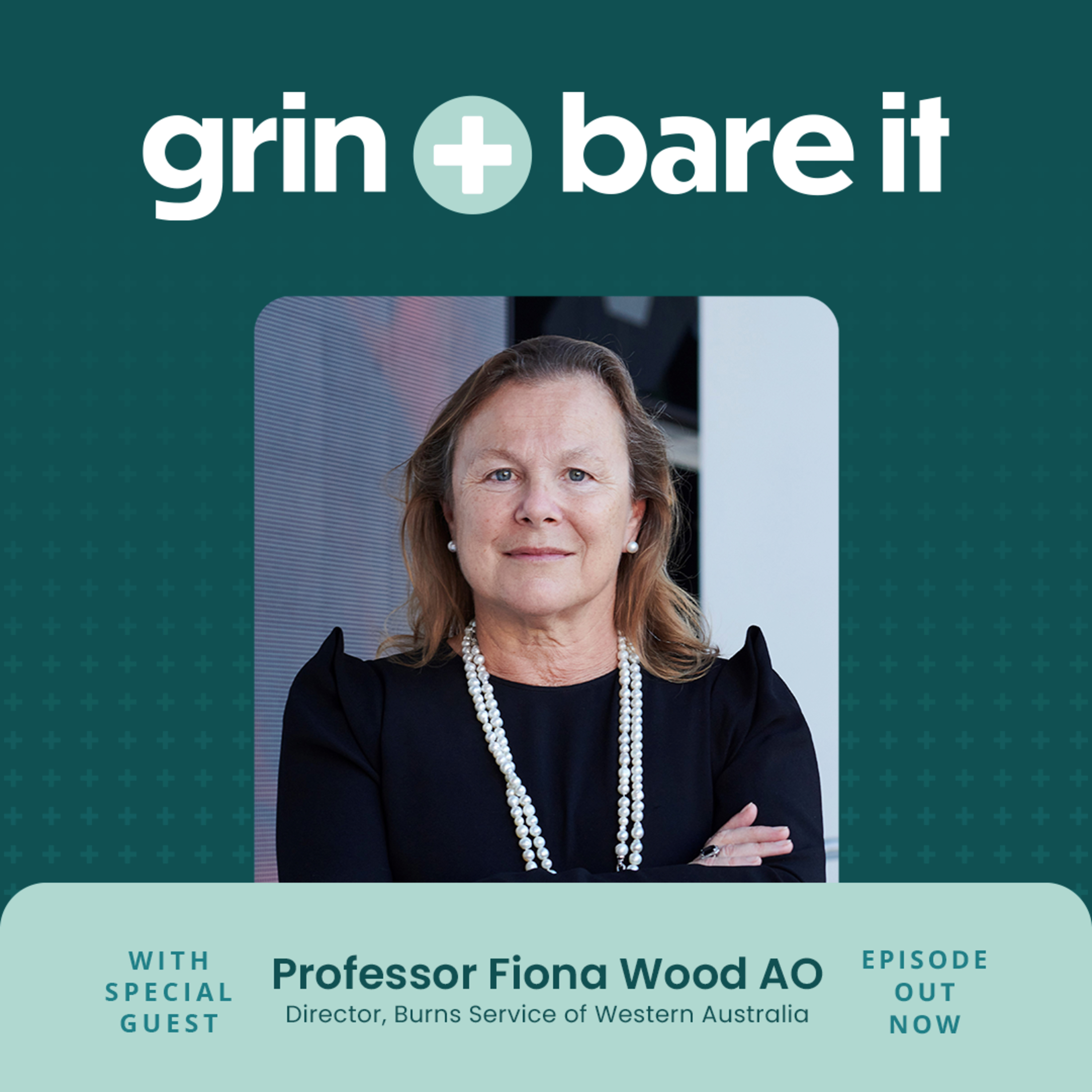
Professor Fiona Wood AO on Medical Innovation in Australia
40m 11s
Fiona Wood, a world-renowned burn surgeon and researcher, has transformed burn care through her groundbreaking spray-on skin technique, now a global standard. Her work extends beyond treatment to include holistic recovery, emphasizing early rehabilitation, mental health, and family well-being. She is currently exploring advanced research areas such as neuroplasticity, real-time skin chemistry analysis, and long-term health risks like cancer and cardiovascular disease linked to burns. Her approach is deeply rooted in data-driven innovation and interdisciplinary collaboration, with a focus on personalized, patient-centered care. Fiona highlights the far-reaching social and emotional impacts of burn injuries, stressing the need for systemic support beyond the individual. A central theme in her career is the power of optimism and resilience, which she attributes to her ability to stay engaged, adapt, and inspire others. She advises aspiring healthcare professionals to embrace action and personal discovery, and to critically assess whether challenges are worth their time. Her overarching legacy is not just medical advancement, but fostering a culture of innovation, empathy, and collective problem-solving that transforms lives—physically, emotionally, and socially.
Welcome to Grin Embarrot, a show that uncovers the remarkable stories from one of the most
demanding industries in the world, healthcare.
From inventors and trailblazers to frontline workers and scientific experts, we explore
the biggest challenges faced in healthcare and how these brilliant people have solved
them.
I'm your host, Cale Donovan, an award-winning entrepreneur and co-founder of Bear, one
of Australia's largest end-of-life providers.
In this episode, our guest is the legendary Fiona Wood, a trailblazing burn surgeon and
researcher whose work has changed the lives of literally millions of burns patients worldwide.
Fiona's dedicated her life to improving the treatment of burns injuries and her pioneering
work, the spray on skinned technique, which she developed with Marie Stoda, is now a global
standard in burns treatment.
Fiona was thrust into the spotlight during the 2002 Bali bombings, where she led the team
at Royal Perth Hospital to treat many of the survivors.
Her illustrious career has been recognised with numerous awards, including the Australian
of the Year, and most recently, the officer of the Order of Australia.
Through her work with the Fiona Wood Foundation, she continues to push the boundaries on improving
the quality of life for burns patients.
In this episode, we're going to explore what's the best thing about being Fiona Wood?
The holistic impact of burns injuries and what we need to effectively treat them, and
the one medical advancement that may set Fiona's retirement back another 10 years.
Now it's not often you get to speak with a literal national living treasure.
Beyond her countless achievements, Fiona's energy and zest for life are really infectious
and what's today I want to spoke to her.
Get ready to be inspired by the groundbreaking life and work of Fiona Wood.
Let's dive in.
So Fiona, thank you so much for joining and welcome to the show.
Thank you very much for being interested.
Your optimism is actually infectious.
When we spoke pre this show, I got off sort of bounding out of my chair.
Do you think that's novel in sort of what you do in healthcare more broadly?
This sense of unbridled optimism, and it's really set you apart from others in the field?
I know I'm a little bit over the top, I get that sometimes, but I don't know what motivation
is, but I know it's contagious here.
And if you're passionate about something and you're really interested and you want to make
it better and understand why, then coming to the table with that sort of off last half
full means, oh, we can't do that.
Well, let's not think what way.
Let's work at how?
And I've found that it's contagious, and so rather than set me apart, I think it helps
bring people into that sort of groundswell that means we've all got the energy we bounce
off each other and we keep pushing forward.
It's interesting because there is a definition in and around charisma, which is essentially
what you're describing.
It's this laser focus on a particular topic, which becomes like almost like a gravitational
pull for other people to who you speak and do.
And so it sounds like you've almost created that level of charisma, just by your being
so passionate about particular topics.
We're going to talk a lot about the current research that you're up to.
There are many people listening who will know your story.
For those that haven't, I would love to get the whistle stop tour from Hubble beginnings
in the UK through to Spray on skin and ultimately being listed as one of Australia's national
living treasures, which is quite the honour.
Can you give us a brief overview of that journey, albeit as ten years as it is?
Right.
Well, kick in.
Number three of four to my mum and dad, obviously, is in the Yorkshire Blindly Village where they'd
left school early at 1314 and they were absolutely focused on education and sport to be perfect.
You're honest, there's a giving us an opportunity to move out of that environment and education
giving the opportunity to get up in the morning and enjoy what you do was a mantra.
And I was able to do that with the support of my parents.
I ended up going from the state school system to a private school run by the society friends,
the Quakers when I was 13 and my mother got a job at the school that changed my life completely.
I was able to then go into the university entrance, I went to medical school and that
of me fascinated me the whole way your body flows and inside and out.
And I thought, if surges put this back together, that's what I'm going to be.
So my whole life from there was focusing on surgery and what kind of surgery I did general
surgery as one did in those days.
And I was very much in the minority being a female in that space.
And I knew I had to have a CV that was different from the boys or better if not, you know, than.
And so research became a big part of what I did in my fair time because I'm a why kind
of person and I've gone from a why kind of kid to a why kind of jail person now.
But research really gave me the opportunities as I went forward.
And then I met and married a West Australian, I'd known him three weeks, it seemed a reasonable
thing to do.
And then I arrived here by then a couple of years later we had our first two children.
And in 1987 I landed in WI and had four more children and she made through the system
here to become the director of the Burns service in 1991 as a plastic and reconstructive surgeon.
And I'd already started the research was very much part of my DNA and understanding that
learning from today to do tomorrow better of course is a coping strategy as well as a drive
to investigate and understand things so that you can pull them apart to put them back together
in a better way.
And that's when the spray on skin cells story started for me in 1985, but in earnest the
first patient we sent skin to Melbourne in 1990 and then by 1993 with a telephone grant
we had our lab when I with Marie Stone of the scientist that I was working with for the
first part of my career.
And so we've gone from growing skin cells sheets in the lab to actually devising a kit that
is really the lab at the bedside.
And that was part of the whole spray on skin and we did that in the 1990s and we're still
working on that and that's part of what we do is that that kit has been commercialised
and has gone around the world but how to do better because that's as I say is part of
the DNA.
So that brings us to what we do right now I guess.
By the way people who haven't read your book go and read it it's amazing the link to
the book will be in the show notes.
The thing that I took away that following up is envisaging you showing that shimmy your
way through there's a fantastic term of getting yourself into a particular position.
That's great.
I love that.
Is there something you can share that people don't know about you?
Because a lot of those things are just part of the public story of Shana Wood.
Is there something behind that that you maybe haven't shared before?
I think that's a really interesting question because there's the public story of me what
I've been very happy to share over the years because for a long time we were beavering
away and it wasn't until really the early 2000s when people became aware of what we're
doing around the Bali bombing when there was so much tension in this space but during
that period I think I reflect but when I look back and I added we do there yeah how
to keep that going and you know and the kids and everything I remember sometimes coming
home over in the afternoon is so tired I hurt and standing at the front door just taking
a deep breath and hearing the noise coming from the inside and the what here we go and
taking a deep breath hi guys because I remember thinking consciously it's not their problem
that I'm this tired and you know changes as it goes the rest and just going into that
whole different environment where I just like a different mode and I think in retrospect
as I look back and and they don't get the kids to have fun and play and then they don't
get a burn and sleep and then I start doing the research work at when they're asleep
and that sort of capability to get that level of energy to keep going I just think oh my
gosh is that really me yeah so it isn't it's interesting and people ask what was it like
it's hard to remember you know so much going on I was so so busy and so driven that it is hard
to remember and those when you just asked that I had a vision of me standing by the front door
thinking oh god I could sleep for a week I could sleep forever move over sleeping beauty I'm in
you know I just think you know shake your head you're on yeah this is different this is different
and just change get a change tack change focus it's actually a really good segue into a question
they had about just you being so prolific and ideally trying to get some insight into how is
that the case and I think by what you're saying there is one really important thing is trying to
consistently change your mindset of this is an opportunity this is a change this is something
that I can sort of go again at rather than getting bogged down are there other things that spring to
mind beyond just put your head down and go that that really helped you like achieve you know
objectively a huge amount over a relatively short period of time well I think it's interesting
because I've always thought well whatever I do have done whatever was in front of me I have a
capacity to work as so whatever I would have done that's what I bring to the table yeah but I think
actually there's more to it than that the choice of the area I work is it's very complex
burn injury is really complex. It has an impact.
on all body systems. It's trying to get things all together. I've often felt like I'm a Chinese
plate juggler and it's a really complex and lots of multiple systems and how do I keep my
bronchers off and bring together all the science and technology that's emerging and around
in the past so I can bring it to the table. So I think there's something about my personality
initially yeah I've got capacity to work but I chose something that would stretch me because so
and this does it's challenging on a daily basis it stretches you and so you put that together
and then I've worked in a space where for a long time yeah the jigsaw puzzle is really complex
and I can see the whole of the jigsaw puzzle but I work with different groups I've only see part
of that jigsaw puzzle and in the early days I was criticised because you all over the place you're
working on unscaring while you're working on physical therapy or you're working on cell biology
or you're working on nutrition or you're working on pain management and you're working on first
aid and so on all these different things but yes because they all matter and as the years have
gone by and we've been dogged and I've connected with people of gut capacity to work and we've driven
this we've started to build the the jigsaw puzzle to the point where people go oh it's connected
because we've made it possible for others to see these connections that are not immediately
obvious that's tested my resilience I guess so so it's it's that personality and it's the the
energy and the drive but also the connectivity with people to give you that boost in energy when
the days are difficult because we're working in the lab but also in the bedside and at the
operating table and in the clinic afterwards and with it gosh, I've done better you know let's
learn from this let's how or figure out how so I think the complexity of it is something that I
need it intrinsically because if it's too easy maybe I would never have been able to work that
hard it's incredibly interesting I find because there's two parts where you describe which is
something that will stretch you and so by default you kind of have to go out of your comfort zone
and then second to that is this idea of if you're leading teams or trying to achieve something
is including more people in that and showing them ideally as much of the picture or as much as
the jigsaw puzzle as you have available to and it sort of creates this larger problem solving
than getting stuck in particular ruts which kind of by nature limit not just your output but also
sort of your areas of focus yeah it's a really really interesting way of thinking about a Fiona
before we dig into Burns I also have one question as well which was pressing for me you mentioned
previously that your evolution into this public figure this really wasn't expected I would love
to hear how your journey has been if you found that challenging have you found that rewarding
exciting all of the above but if you just was the most awkward part of it that would have been it
because I remember having a conversation with a group of Australians of the year
and we're all standing drinking in Canberra and there was a group of people that actually went
to the table to be famous whether it be in music or in sport and like that's different again
because you get a lot out of place but you also get a lot of achieved sport in excellence you
have to be a public person and out there and all and then there's a group of us like you know if
you're Stanley and Ian with his vaccination and Guards to those stuff who we go like oh
kind of it was left field for us it wasn't something that was on the table it wasn't something
to strive for or anything and so I think it is that sort of incidental attention if you like
has been challenging for me because I always say it's not me it's the team and it's lots of
yeah support around this and every time something happens I always respect the fact that people
have put me in the position and that I never have to work harder to justify it okay you're all right
people have put faith in me I have to I have to make sure I respect that and honor that and do
better and so it's quite I think a different lens to put on being well known then a lens
well I am a great musician and I deserve this what really hard and people noticed and so I must work
harder because they've supported us sort of ties back to the prolific question actually which is
maybe another thing is to put yourself on increasingly larger platforms and so the expectation
if you want that the expectation sort of has to rise with that I don't think it's actually a healthy
approach but it's one approach for sure so let's dig into burns I would love to hear how burn
care and treatment has evolved in the past 30 years almost bring us to present day that would be
fantastic if you could do that for the listeners I think certainly the capacity of us to treat
people and get a better outcome is one of these things that just is incremental over time and because
we have an opportunity I say every intervention from the point of injury will influence the
scarf worn for life then our education and research into burns first aid clean cool running water
for 20 minutes in the first three hours of injury has an impact and so there's opportunities
along that continuum for improvement and in West Australia we've spent a lot of time for example
in prevention of course and then teaching our community first aid and now we trying to lift that
and take out more information to our community so that they can actually influence the scar they were
for life and so as we go through this then when I first started I was very aware that the criteria
of survival was underpinned what we did but that has to be more than that and another one of our
mantras became the quality of the outcome must be worth the pain of survival so we've explored
the dressing systems have evolved with infection control this silver based dressing systems they
called advanced wound care yeah they they've evolved over the years and are much more sophisticated
now that he is on different systems of wound care nutrition pain relief surgery the surgery we do
now how we remove the burning and we've got different instrumentations to do that and how we
repair the wound with the the introducing the cell therapies into the traditional therapies as well
and then rehabilitation early rehabilitation has been a hallmark for us here in West Australia
early was considered six weeks post injury when I first started I thought that that's kind of
light and so working with Daylega the physio for over 20 years now that we thought two days were
smarter and so we're known internationally for a very aggressive rehabilitation approach which
has born fruit and then the the scar was obviously a focus and we've changed that with cell therapies
eight percent of our children have no visible scar but yeah the but there's a psychological scar
the stress and the pain and the suffering and the changes that we see there and we work a lot in
supporting the trauma informed care and then more recently we've started to explore the physiological
scar how you change internally that you're blood and your systemic changes so lots of change
absolutely but that's just the platform for tomorrow and we've got lots of work to do to change
tomorrow let's talk about tomorrow one of your research areas is looking to this concept is
obviously neuroplasticity so the underlying thesis being that a burn injury drives or may drive
changes in the brain can you tell us more about that specific area of research and what you're trying
to achieve there yeah we look at the the physical the psychological the physiological scarring
and we've got five areas that we investigate obviously the cell therapies we progress now into 3D
printing but one of the areas that's always been core to what I've tried to do is the neurological
response to injury and this is something that has been a passion of mind forever and I've just
been fascinated by the concept of can we use the power of the mind and of the brain to actually
improve outcome and there's been observations I've made along the years as you can imagine
but with our research categorically if you are burnt on the back of your right hand the nerve
density in the skin of your left hand will change not burnt and you will have the cell bodies
around your spinal cord will change and the pattering on your brain will change so first of all
some years ago we started investigating these changes and started looking and try to understand
what was going on and then from the base where we saw these changes then we say well why
and how can we use them and so a few years ago when our students did a project where he looked at
using trans cranial magnetic stimulation in order to map the the neural plasticity how plastic is
your brain how capable are your brain changing and this was a group of people that were older
and we found that there was those people who were more plastic had a tendency to get better quicker
how interesting and so now we are in the middle of a randomized patrol trial with trans cranial
magnetic stimulation is sham with our colleagues at Murdoch and Marie Valens against a body of
students where we're stimulating the brain with magnets to stimulate neural plasticity post
burn injury without hypothesis is that that will mean people get better quicker with a better
quality of outcome from a functional and pain and perspective. And so we're writing the thickness
at the moment, and it's been fascinating. I'll have to come back and talk to you about a year
where we've done all the analysis, but so far, so good as they say. Oh, it's incredible. I would
love to have that conversation. The other areas, you mentioned those sort of 5K areas, but are there
any cutting edge sort of areas of treatment that you're particularly excited about also? Oh,
cutting edge, that has to be the eye knife. Excuse the pun. Well, the eye knife is something that
we've started work on relatively recently. I've been stalking this technology around the world
for a while, and Waters is the company that produced these, the capacity for real-time analysis
of chemistry. So basically, I've got a, the hot needle, which I can use to cut through skin,
and that generates a bit of smoke, and the smoke is analysed real-time, and it gives me a fingerprint
of the chemistry of what I'm cutting through. So I am really excited about this, and it's put my
retirement back 10 years, because I want to know what normal skin chemistry is. So we're at the
moment in a situation where we're building the library of skin chemistry, body site age, sex,
what medications people are on, with skin that's maybe, where they're discarded in surgery,
and then we compare with normal skin, with bird skin. So we can use this to potentially in the
future, so we can just see how accurate we can remove the burnt issue without moving anything
that can be salvaged. Because if we salvage, we can get better outcome. It's been trialled for
breast cancer and colon cancer in different parts of the world. Can we use it for skin cancers?
Absolutely, but we need the skin library first, and we're building the skin library. And yeah,
it's exciting. I can go look up, and I can see 3,000 molecules in a raid on the computer screen
in front of me. I'm a complete nerd, really. The pattern is different when I'm looking at
cutting through a scars through a skin. So this is an exciting area. I think chemistry of the skin
is exciting as well, in that we've started doing some work on the surface of the skin,
and trying to understand what we can measure on the surface of skin, and gives us an indication
of how the cells are performing within the skin. And we take blood tests, because we take blood tests,
and it's become well-established. What information can we get from a much less invasive approach?
And certainly, can we predict outcome by understanding the surface chemistry related to the
underlying cell function? That's a fascinating area. Well, now I'm fascinated. I'm going to join the
team just to help out. Do you get to the stage where the samples that you're taking or what you're
looking in become hyper-personalized, or it's always you see it as this is scarred or healthy tissue,
or this is, you know, appropriate for a 60-year-old woman, as opposed to something else. Is it
get to the point where it becomes very specific to the individual? Or is that not helpful?
To answer honestly, I'd have to step back from and so it goes right back to the roots.
As you ask me that question, there are people I can see in my mind's eye right here right now.
Who have those outcomes, both ends of the spectrum, good and bad, have nudged my head in different
directions, made me think differently, made me engage, tried to solve the problems differently.
So there are people whose lives are intertwined in my brain, and they'll be there forever,
but from a perspective of my survival, I guess, living and working and breathing all of this,
I learnt very, very, very early on that since sometimes seeing suffering on such an extreme level,
I had to understand how to cope with that, and my coping strategy has been that aggressive
engagement in the research in the tomorrow. So then that is not personalized, that is my trying
to build an understanding that we could put out there in the literature so everyone can
look at it differently and see different things and progress. It doesn't matter whether we make
progress here, what matters is we make progress. And so that's been very much my coping strategy.
So then my coping strategy as a capacity to depersonise, if you like, as well, there are many,
many people that I know have been instrumental in the journey I've taken and will be in the future.
I'm sure that I will never forget. One of the questions that we'd like to pose on the show to
anyone coming on when we're looking at really challenging parts of medicine is the impact.
And so I would love to understand maybe the impact of a really successful
birds treatment and it's obvious, right? Like it's actually very visible in many cases,
but where I was going with it was maybe the impact that recovery and treatment can have
on a person psychologically on maybe the family unit or their extension relationships economically.
What's the real impact of your work that you say? It can be many, many different things and
everybody's unique and yeah, everybody has got a network around them and some unfortunately
less so and that has sadness in of itself. I always say it's like you drop the pebble in the
water and there's the ripples and the ripples do affect those people around in the emotional and
financial and physical ways as well. I think it's a really interesting question because
it reminds me we always have to be aware, maintain an awareness and an open mind. For example,
in our children, kids who heal quickly, there's been a little bit of a stressful time,
they've been painful dressings, there's a lot of emotion around the episode and psychological
disturbance of course and guilt and things and at six weeks there's no scar and our routine for
a long time was six weeks, no scar catch lighter, job done, everybody's happy. Until we started to
realise that in some cases the carers around that child were not back to normal at six weeks,
there was still a level of suffering from the stress of the event and so there we got, whoa,
we were so focused on the child, we forgot that everyone and so adapt accordingly and it's part
of that learning and we've developed different systems and learning management system for example
where people can go and can understand and demystify it and understand why they're feeling this way
and understand the impact of the injury and all those and so providing opportunities for learning
and help and support. That's just one example of how this whole system we've got to be aware of
as many things as we can all the time and that presents challenges in and of itself in a health
system that's been increasingly complicated and trying to navigate our patients through that
system and help them out and the other side and not forget those people around them that are
taking that journey with them. Yeah, it's so true, I think the ripple analogy is a really good one
for the initial trauma, whatever that is or the initial sort of injury should I say,
it's different for different people but it is easy to often forget, it can be really impactful
and potentially more profound than the actual original injury per se. What we like to do on the
pod also is get advice and application for folks that are listening and so I've got a couple of
types of people who would be listening in and love a very brief singular piece of advice for
these folks. The first one is people who are trying to balance a hectic professional life
ideally in medicine with family life. Any tips there? I plan things after confess.
Many over the years I look back and it's hard to remember because there's so much going on
but I did things like cook with the kids on the weekend, put loads of stuff in the freezer, plan
ahead as they got old enough, teach one of them to do dinner each day, rotations, share the workload
in that context and I plan for us as a family, my kids did sport before and after school every day
and they went on to represent a WI and a couple of representatives, Australia and I say because
we made you do it all, I'm sure they were talented as well, I promise. Anyway, so it's actually
planning, you know, make a list, that sounds really trite, doesn't it? Well, I make a list every day,
still. So I can work out how I can fit everything in or not and then I've got better at saying actually,
I can't do that, I used to just shimmy around as you can see, shimmy around in my sequence to get
everything done but I'm a list maker because I want to plan and I want to be, I know that I can get
to the end of the day having achieved and I found early in the piece that it's easy to be skipped
from one thing to the other, now you've got to drive things home for completion in matters and
you've got to give you some time and space to do that and so therefore each day was a military exercise,
two of my kids ended up in Dundrune thinking like you may have drilled them a bit much but they're
not in the army now. They went there just to feel like home basically. So the second group of people,
you know, there's a lot of really talented younger people that are either starting out or
considering starting out in medicine and that may be as a practitioner, as a technologist,
as a researcher or an academic, definitely advice for people considering sort of medicine as
an area they should be over into versus all of the other opportunities that they would have in our days.
It's really interesting these days, all the other opportunities because in my day, you're at the top
of the class, you did Laura Medicine, you know, as a simple take done, yeah, and I think so many
opportunities, I've been involved in discussions around the paralysis of analysis in young people,
absolutely understand the need to weigh the options and do investigation but at some point you've
got to take the jump, yeah, and the jumps exciting. And so it's not something to be afraid of,
it's something to learn from, you know, you can land in all sorts of ways, good, bad luckly,
but at least you'll learn. Where's
if you step back from the edge, you'll capacity to learn is very limited. So I would always say,
take the jump. If you've got an opportunity, take the jump. And then when you do that, you start
to learn about yourself and what really you're passionate about. I don't know. People ask me,
"Why don't do this?" I don't know, but I know I really am passionate about it, yeah? Because I've
gone and I've found what I'm interested in. And there's nothing like getting up in the morning
and enjoying what you do. A lot of folks out there have got this huge education and capacity
to do all sorts of things, but they'll be happiest and most productive if they find what it is
that clicks with them. And you won't find that sitting down. It will not land in your lap
unless you're like a lot of winter, which is like ridiculously rare. You'll find it by taking
the jumps. You'll find it by engaging, by, you know, just hold your breath. Will you look stupid
down again? Yeah. But so what? Do people remember that? You do. You think they do, but they don't.
Yeah, I see. You may as well just take the jump. That's amazing. Amazing advice that I always
is a concept of taking the jump. It means like not learning it either because as you described,
you can almost learn everything about a topic or everything about a thing you may be interested
in. And until you actually do it, you won't actually know. You won't have jumped across to realize
if it's a thing you want to do. So super interesting advice there. Switching gives a little bit.
I did notice one of the studies that you're undertaking is around surfing as a vehicle to
improve well-being in kids who've got chronic illness or health conditions. And you've already
alluded to it a touch on this idea of better mental health, better well-being leads to possibly
faster recovery and sort of medicinal benefits. Is there anything interesting that you're seeing in
that space? So can you talk a little bit more about that? Are they conceptually or specific to
the study? Right at the first outset, firstly I say is I exercise every day. There's a lot of
evidence that you're better function, better if you fitter. You have wellness and fitness
that are handy in hand. So you don't have to be an elite athlete to get health benefits from
exercise. Modest exercise, you will perform better. And there's odlers, noodles of evidence out there.
But this story for me, if you don't mind me telling a bit of a shaggy dog story,
we'd always been very aggressive in our rehabilitation. We have a gym embedded in the burns unit
and we built that a long, long time ago. That was part of what we do. Enforcing this idea that
you can actually recover and actually improve. But in 2003, I met a young boy with an 80% body
surface area burn. Everything we possibly could survive beautifully and thought we'd done a really
grand job. And that was one of those days when people have discharged and they've done really
well. You think, good, good. Unfortunately, he died as an elderly role with a rare cancer.
And I was told that was bad luck or a coincidence. And I could not reconcile with that. And we're
presented his case. A few of the old guys like me remember the odd case here and there. But
Western Australia is very good at data linkage. And so I nagged those guys in data linkage until
we eventually got together and put it ground together and got the money from the NHNMRC.
A long story short, we got a database of 34,000 patients who have had hospitalisation for
burn injury since 1988 and to 2012, I think. And then we had 120,000 people with not burns.
We compared them with respect to their age, their sex, their where they lived and their socio-economic
parameters. And we found that if you've had a burn injury, you've got in some people an increased
risk of cancer. But why? And who? And so one of our research streams, which we are very heavily
driving, is we have a biobank at the children's and the adult hospital, collective specimens,
we're working the the phenome centre here. And we can see that there are changes in the immune
system in the inflammatory response many, many years after the burns. We've linked in with our
cardiac, cardiology colleagues because they have an increase in heart disease. Wherever we looked,
mental health, neurological, respiratory. So we're right in the weeds, trying to find out
how we can predict who and therefore change their trajectory and actually mitigate against this
outcome. And so that, as I say, we're right in the weeds that we publishes things, we're learning
all the time. But we haven't got the answer yet. So what can we do whilst we haven't got the answer?
And exercise is something that we can do right here right now because, as I said, we know the
health benefits of exercise. In the adult hospital, we've got xbin programs, gym programs,
for people that have been burnt previously and we're trying to understand the impact of the exercise
on the physiological health as well as the physical function and the psychological health
and the psychological well-being. And in the kids, I got them in the end. And my colleagues in
the psychology put together a program around surfing as some of our patients have been through
the surfing program. We've just finished recruiting to a trampoline program where the kids learned
to trampoline on Olympic sized trampolines because one of my kids did was very high level trampolining.
And so I did start to trampoline in club at one point because it was easier than
driving to Wangara as one does. Anyway, and then there's a big program at the
children's hospital called Move to Improve that's supported by the parent foundation and the
PCF foundation where kids with diabetes, cystic fibresis, cerebral palsy, on cancer diagnosis,
as well as burns are actually, as we're just starting this program, looking at integrating kids
into community sport in an effort to improve their wellness from the psychological
physical and physiological space whilst we're looking very, very hard to figure in out who may go
down one trajectory or the other. So yes, it is interesting, it's exciting and physical activity
funnily enough is good for you. Who would have thought after all that? Who would have thought
that? You've already referenced this to a degree. This idea of I've got my next 10 years set out
for me based on some of the cutting edge things that are coming through in your world. I did want to
ask you what gets you up in the morning? I mean, I get up in the morning, I mean, I exercise
every morning and then I jump in the ocean and that wakes me up. What really keeps me at this table
is the amazing science and technology that surround us ready to be harmless to make a difference
to an individual. And for whatever reason, I could join dots. Some of the dots should never be joined,
get that. And I'm very proud of meeting and I learned pretty quick. When joining those dots and
taking that knowledge to change the life of somebody on the front line, that's what gets me up
and every day. Incredible. A little off-beat question for you. Let's project many, many years
forward. You're writing your own eulogy. What are you writing? Not a lot because I've been too busy.
Some other research grant, you'll be documenting at the same time. Maybe put another way is like,
how do you want to be remembered when it's all sit and done? I would like to be remembered as
somebody who was able to help others think differently because I know I can think differently.
For good, better or worse, ugly, but I'd like to be able to first collectively to think differently
to solve problems. So maybe we'd remember this as a problem, Solva. I think that is safe,
that is for sure going to be one of your many, many memories that you create. The final piece,
the name of the podcast, it's called Green and Barrett and the reason it's called, that is because
it's often the piece of advice given to people when they're faced with challenges. So it's kind of
get on with it. I would love for you to provide a single takeaway for a person listening who's
experiencing a really challenging time or a seemingly insurmountable challenge. What's your
piece of advice to them? The first thing that comes into my mind is Green and Barrett is like,
you know, keep at it. But then I would temper that as I've gotten older. You've got to understand
is it worth it? So the first thing is whatever you face, you have got your time and energy
that are unique to you. Is it worth spending your time and energy on what you face? And if it is,
think Green and Barrett. If not, stiffen you back and walk away. I say that because there have been
many times where criticism has come my way and I've refused to engage. Criticism without
engagement in problem solving, it just sucks your energy, leaves you nothing, leaves you empty,
and you've wasted that time and that energy and not been productive. Criticism in engagement
problem solving, sweet, life's blur. So you have to be, is this that I face worth me spending my time
and energy? And if it is, smart mind is on getting somebody to help you as well. Not being too proud
to ask for help. And if it's not, there'll be too proud to walk away. Words to live by,
theatre, all of your work has been incredible. I actually think the biggest thing I've taken away
is just your infectious optimism around thinking differently, around aiming to make people's
lives better generally. And on behalf of everyone listening, I just want to say thanks for joining.
I've really, really loved the time I spent with you. Well, thank you very much. It's been great to chat.
Thank you.
Thank you so much for listening to this week's episode. Hope you enjoyed it.
As always, I would love your feedback, questions, or any suggestions that you have
for someone that I should be speaking to next, as our guest. You can find me on LinkedIn,
or you can find the Grin and Barrett podcast on TikTok and Instagram.
Now, the best way to support this show, if you did like it, is leave your feedback,
subscribe, or wherever you get your podcasts,
or still,
simply share it with your friends and colleagues.
Thank you so much again.
See you next time on Green Embarrot.
Podcast Summary
Key Points:
Fiona Wood’s pioneering spray-on skin technique, developed with Marie Stone, has become a global standard in burn treatment and is now widely commercialized.
Her work extends beyond medical innovation to include holistic patient care, emphasizing early rehabilitation, mental well-being, and trauma-informed practices.
Fiona is currently researching neuroplasticity after burn injuries, investigating how brain changes affect recovery and exploring transcranial magnetic stimulation to improve outcomes.
She is advancing cutting-edge technologies like real-time skin chemistry analysis using the "eye knife" to guide precise, minimally invasive treatments and reduce scarring.
Fiona emphasizes the profound ripple effects of burn injuries—on patients, families, and communities—highlighting the importance of psychological and systemic support.
She advocates for proactive, personalized care through data-driven research, including large-scale biobanks and longitudinal studies linking burns to long-term health risks.
A key personal philosophy is the importance of taking action—“taking the jump”—to discover one’s true passion, especially for those entering medicine or healthcare.
Her advice to listeners facing challenges is to evaluate whether the challenge is worth their time and energy, and to seek help or walk away with integrity and self-respect.
Summary:
Fiona Wood, a world-renowned burn surgeon and researcher, has transformed burn care through her groundbreaking spray-on skin technique, now a global standard. Her work extends beyond treatment to include holistic recovery, emphasizing early rehabilitation, mental health, and family well-being. She is currently exploring advanced research areas such as neuroplasticity, real-time skin chemistry analysis, and long-term health risks like cancer and cardiovascular disease linked to burns.
Her approach is deeply rooted in data-driven innovation and interdisciplinary collaboration, with a focus on personalized, patient-centered care. Fiona highlights the far-reaching social and emotional impacts of burn injuries, stressing the need for systemic support beyond the individual. A central theme in her career is the power of optimism and resilience, which she attributes to her ability to stay engaged, adapt, and inspire others.
She advises aspiring healthcare professionals to embrace action and personal discovery, and to critically assess whether challenges are worth their time. Her overarching legacy is not just medical advancement, but fostering a culture of innovation, empathy, and collective problem-solving that transforms lives—physically, emotionally, and socially.
FAQs
Fiona Wood developed the spray-on skin technique with Marie Stoda, which has become a global standard in burn treatment. It allows for effective wound coverage using lab-grown skin cells, significantly improving patient outcomes and reducing scarring.
Burn care has advanced through better first aid practices, improved wound dressings, advanced wound care systems, nutrition, pain management, and early rehabilitation. A major shift has been towards aggressive rehabilitation and addressing both physical and psychological scarring.
Fiona is researching neuroplasticity—how burn injuries affect the brain—and using technologies like transcranial magnetic stimulation to improve recovery. She is also exploring real-time skin chemistry analysis via the 'eye knife' technology to guide precise surgical decisions.
Burn injuries trigger lasting changes in the immune system, mental health, cardiovascular health, and neurological function. Fiona’s research shows increased risks of cancer and chronic conditions years after injury, highlighting the need for long-term monitoring and care.
Fiona emphasizes connecting diverse areas of medicine—like cell therapy, pain management, and nutrition—to create a holistic treatment plan. By involving multidisciplinary teams, she fosters innovation and ensures no aspect of recovery is overlooked.
Fiona advises young people to take the leap into medicine, even if it feels risky. She believes hands-on experience is essential to discovering one’s true passion and that learning happens through action, not just study.
Chat with AI
Loading...
Pro features
Go deeper with this episode
Unlock creator-grade tools that turn any transcript into show notes and subtitle files.
 PodcastTranscript AI