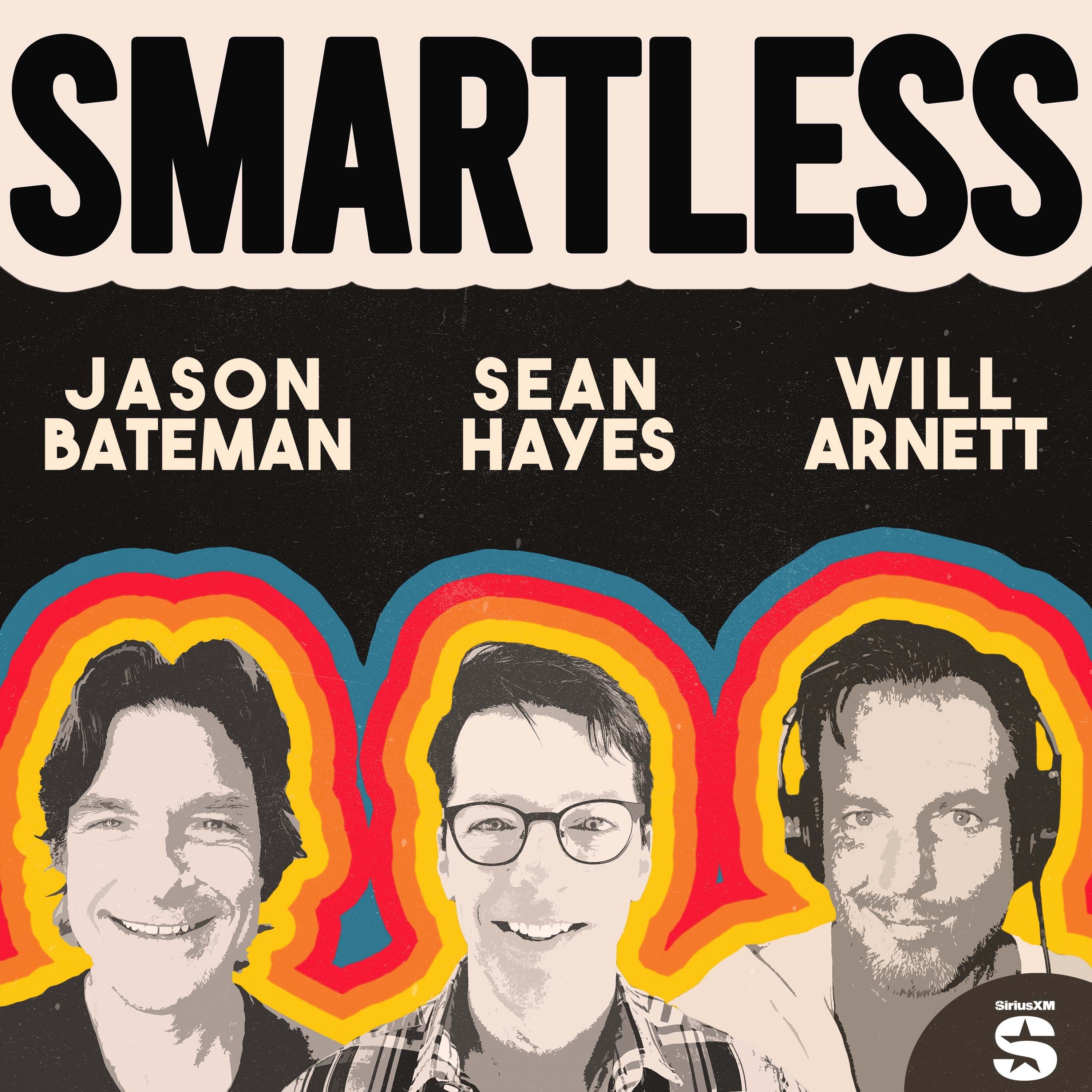
The podcast, titled "Less Smarts," begins with a lighthearted, self-aware tone as hosts discuss their personal lives, including a wedding in Iowa and family connections, while poking fun at their own lack of intelligence. The central guest is physicist Brian Cox, who brings expertise in particle physics and cosmology. The conversation delves into profound scientific questions: the origin of the universe, the nature of time, and whether life beyond Earth is likely. Key topics include the Fermi Paradox—the absence of detectable alien life despite billions of stars—and the idea that advanced civilizations might exist in forms invisible to us, such as through microscopic, undetectable technologies. The hosts also explore the philosophical implications of existence, such as the rarity of consciousness emerging from simple particles and the emotional difficulty of knowing that some cosmic truths may remain forever beyond human understanding. They touch on related ideas like AI consciousness, the limits of human travel, and the possibility of life originating from Mars via meteorites. Throughout, the tone remains engaging and reflective, blending personal anecdotes with deep scientific inquiry, emphasizing both wonder and uncertainty in the face of the universe’s vastness. The discussion ends with a contemplative reflection on the emotional impact of knowing that some of the universe’s deepest mysteries may remain unsolved.
(upbeat music) - Hi, hey, hey, hey, I don't mean to bother you guys or anything, but I'd like to start a podcast. I'd love a little help. I don't know, you guys are busy, but-- - No, I guess I could jump in. What's the podcast called? - Well, we just sit and talk and visit, you know. - What's a call? - I'd love to visit. - Well, I'm not bright, right? So kind of on, I'm thinking about unsmart. - No, that's good. - But it doesn't really roll off the sum. I'm without smarts, so I'm-- - You don't have more smarts. - No, I'm less than smart, so what are you? Maybe. - Maybe, damn it. - Less smart, less smarts. - Let's come out with less smarts. - Let's, let's see who the show will come out with later. - Yeah, great. - Okay, great. - Welcome to another new smart list. (upbeat music) (upbeat music) - Smarts, less. (upbeat music) - Hey, Willie, did you just barely make it? - All done, we have-- - It's not out of breath. - We're a lot of you. - Do we have a lot of you? - A lot of you. - A lot of you? I made it, I made it, I just ran out of the car. I made it, you guys, I made it, I was on the-- (sighs) - You were on the freeway? - I was on the LAE, guys. I was on the LAE, just keeping it real, you're lying. - Did you ever see that movie, by the way? LAE with Brian Cox plays like a child molester? - Incredible movie. - What? - I know, I didn't see it then. - I didn't want to start with that, but-- - Wait, what are you talking about? - What are you talking about? - I did some horrible story, let's talk about it. - When did that, when did that come out? - Oh, 20 years ago, I'll bet. - Okay. - Shawnee, I just narrowly missed seeing JB this morning. I'm so sad. - Oh, are you guys okay? - And last night, 'cause he was working last night. - And he's working splits now. - I don't trust you what a split is, Shawnee. - We take a banana. - Jason, I'm in. - Jason, a split is like when you start at noon and then you end at midnight. So you can shoot some day scenes and some night scenes all in the same 12 hours of work. - And it's kind of fun 'cause you can avoid, you can avoid a full night shoot, which is everybody dislikes. - Yeah, it's not, it's not, it's not, it's not. - And at our age, doing a night shoot. - Also, it's summer because so the light is, it takes a long time to get dark. - Oh, yeah, and you have a short, you don't have a lot of night hours, so it's not a meal. - Shawnee. - Yeah, Shawnee. - Hi. - How's everybody doing? It's so good to see you. - We haven't seen each other. - And I know, I am. - Face times you a few days ago, but it's been a minute. - A minute. - And Jay's working his balls off. - Jay's working, he works right. I heard he worked them clear off. - Yeah. - I gelled at myself yesterday. - Oh, no, wait, are you? - I was the first week, Jamie. - Really, really good. I'm very, very happy. It was hard. It was a lot of work. God damn. - Yeah, it is. I mean, how long are the days, like 12 hours? - Like the 12 hour days, but like, you know, you'd like, you raise your hand for the, you know, the position of like, supposedly having the answers to everything. It means you gotta like, try to think about everything. - That's right. - And everybody looks at you. Everybody looks at you like, what's next? - Yeah, you can't just sit in your trailer and wait for them to say, okay, we're done. We're ready for you. Come on, come speed. - Right. - Right, isn't that nice? I know. Actors have it nice. - Yeah. - I went to my niece's wedding, Laura, in Iowa. I've never been to Iowa. - No, wait a second. - I've never been to Iowa. - I know, by the way, there's no direct flight from Los Angeles to Iowa. So you have to go to Los Angeles to Chicago or Dallas to Iowa. Anyway, on the way back, everything was canceled. It took 12 hours to get home. - Why? 'Cause you had just this weather. - Was it weather? - It was weather, then everybody changes their seats and then we got, then we're gonna go to Cleveland and then that was delayed and then we Cleveland. - We got a driver to drive us 'cause there was no cars to rent when we landed to get there and it was four hour drive and-- - Wait, wait a second. - Yeah, but it was worth it. - It was worth it. - It was worth it. - Yeah, who is this? Who is this? - It's my niece, Laura. - And our new husband, Christian. - Oh, but when's the last time you saw this niece? - Uh, last year, I think. - So once she came out to visit, right? She came out to visit LA. - No, this is a different one. I have a lot of them. - Oh, Laura's never been invited. (laughing) - No, she's never, she's never gotten the nod, okay. - So you, anyway, that's what happened. - I know, but this whole sort of, how, how, and then it was outside and which you would have hated. I didn't mind it. - Really warm? - It was bugs, humid hot and all that under 10. But it was nice. - And you're wearing a suit, I was wearing a suit. Yeah, by the way, which I brought. Do you guys ever do this? Do you ever borrow suits from the suit? You're doing whatever job you're on? - Sure. - Yeah, so I'm doing the morning show and I'm just like, can I have this suit to wear to, they're like, sure, just bring it down. - Thank you, people are gonna watch the show and go, hey, there's that Iowa suit. - I was at a wedding in Iowa, and I think I-- - But what about, I'm so fascinated with everyone's family, feeling like family obligations, 'cause it's, you know, usually the family that you-- - I know, here we go. - Well, yeah, it's just like the-- - It's like the best days of the year, right? Like holidays and things like that. You kind of, you have to spend with the people you never see. - And like, what do you mean? - I just-- - Jamie, not only that, Jamie, I'll take it a step further. I just said within the last week, I think that weddings on summer weekends should be outlawed. - Yeah, but you're with your family. - Because you get to find out about a summer weekends. - Why are we gonna-- - Let's do more to everybody's bummed out and got nothing to do. - But we're older. We don't have school to go to in the fall. What are you talking about? - I'm not saying, well, just for in general, no, but the kids are off school, and it's a time, you know, like-- - Yeah, well, when you're talking about finite number of weekends, talk about a rarity, what about Christmas? Or, you know-- - What do you get married? - Thanksgiving, or no, no, no, I'm just saying like, you have these singular days, or Thanksgiving, it's like a four day weekend. You don't want to spend those incredible moments with the people that you have spent the 300 and, you know, 50 some days prior to that four day weekend. You don't want to, like, I mean, listen, love my family and all that stuff. But-- - And all that stuff. - I just don't want to see my Christmas. - No, I just like, well, I never get to see my family, 'cause I live in Los Angeles, everybody else is there, so it was great to be there. It was awesome. - Right, but why not pick some times that are kind of off, off those moments of each other? - That's what I'm saying. - Let's start feeling January weekend's up with weddings. - Yeah. - You know what I mean? - Okay. - By the way, you know what the food was served at the wedding, Portillo's. - Oh, really? - Wow. - Yeah. - I mean, Shawn. - It was amazing. - Did you leave anybody for anybody else? (laughing) - Did you do some dancing, Shawn? - I do, I don't think I've ever seen you dance. Do you dance? - I'll dance for you, how much you got? - No, seriously, do you, are you a dancer at parties? - Not really, I mean, I was when I was young, I was just, I didn't care. I didn't, I danced like, no one was watching. - Yeah, but that was like on a pedestal, like inside a cage, like when you walk down in the club. - Yeah, that's with the gag ball and me. - And Nippel Tesson. - Shawn and I. - That was me dancing on a box. - Shawn and I, once, had a dance off. - Yes, on the wedding grace program, yeah. - Willie, I don't think I've ever seen you dance at a party either. - Yeah, I did, I was just talking about it on the way out here on the LA. I will dance, and I do a lot of, mine's very suggest, yeah, mine's really suggestive. - What does that look like? - Mine's really suggestive, and it's a lot of like, a lot of hands come, come here, you know, you know what I mean? - And you kind of turn your back to your partner and just kind of arch and offer? - Yeah, I just, (laughing) - Arch and offer. - That's the name of your bag of paper. - That's a good name for like a bookstore. - Yeah. - Like a cafe. (laughing) - Hey, you guys, I'm just gonna get a coffee from arch and offer. You can send me one. You guys want anything? And it turns out it's my son, Archie, and my attorney, Robert, offer. (laughing) - Hey, you got an offer. - Oh gosh. Speaking of, I don't know how to get in there. - Get in there. - I can't wait to see if there's any relevance that I know. - So, Arch and offer and your guest. - There's zero transition. Other than, I've been waiting for this, and so excited. And Jason kind of already tipped it, maybe. - Today, today already? - Yeah, he already tipped who this might be. Or who this is. - Okay, so I'm gonna guess this real fast. - Okay, my guest today grew up in Oldham, England, the son of two bank employees. In high school, he got a D in math, but then in college went on to graduate with honors in physics, earned a PhD, and worked on the largest science experiment ever built. Before all that, he played keyboards in a band that hit number one with a song that became the soundtrack to a British Prime Minister's election victory. He's broken the Guinness World Record for a biggest selling science show. Four times in a row. It's the wonderful brilliant physicist and professor, Jay, Brian Cox. - No, yes. - Brian Cox. (laughing) - No way. - The other one. - Hello. - Isn't that crazy? - It's the other one. - Hello. - We, we, Brian Cox. - Yeah. - Oh, Brian, I've watched so many of your videos and you've confused me so much. And also, I just can't wait to ask you everything. - I literally wrote, I have over 60 questions. - Wow, really? - Yeah. - No way. - But we'll get to like four. - Very good. - First of all, Brian, I'm sorry that we've lowered the bar here for you that you have to come and join us today. So let me just say that, let me get going. - What is your, what is your area of expertise in science? - So it's a particle physics and cosmology. - Hardical, physics and so on. - Any question about the universe?
a hole. Yeah, any question about the universe. So should I should I give him the mirror question and see if he can give me an answer? No, yeah, no, hold it. Hold it. Hold it. Hey, Jason was once we once had had another episode where Jason confused about like the podcast. Yeah. And I know his time travel. It was time travel. Anyway, we can do that. Anyway, yeah, thanks for doing this. I know you're very busy. And like Will said, thanks for for dumbing you. Wow. No, it's a huge pleasure. I'm a huge fan. Oh, thank you. Oh, that's such very sweet. I am starstruck. Brent, I honestly don't know where to start. I'm so like excited to start with a pond there with starstruck. I did. I did. So wait, before I start on everything, because then I'm because this this will launch us into what I want to talk about. So first of all, did you really get a D in math and what and if that's true, what made you continue to explore interest in the thing that you were doing? Well, I did get a D in math. And the reason was that, so as you said, grew up in Manchester and a new order. We're doing a gig. Wait, that's one of my favorite bands of all time. Yeah. So they were at the Hacienda the night before my math a level. And I thought, well, it's more important to go and see new order at the Hacienda, because I thought I was going to be a musician as you said. I thought, I'm going to be in a band. I'm going to be a rock star. This stuff doesn't matter. So I went to see new order instead and go at the end. I love that. I've never been in Manchester, but so many of my favorite bands are from there. And even I know about Hacienda as just this, yeah, this mythical place to go and see all these all those great bands back in the Oasis, as you said, new order, the Smiths, everybody, right? Like that's just stone roses. Yeah. Yeah. Wow. Yeah. And then and and actually the so Peter Savill, who's the great designer, designed the Hacienda and he designed a joy division and then pledges album cover, new order album covers. So he designed the t-shirts for my tour. You mentioned that I do these live shows. He designed the t-shirts. You guys, there's stadium shows. I mean, I can't wait to go to one. Yeah. We're in L.A. actually next year. Really? I'll be theater, I think. I can't. I'm going. But yeah. So Peter, he's famous for not putting the name or the whatever on the album cover, you know, very famously the Blue Monday 12 inch. So it cost more to produce than it can't, then it sold for you and lost the money. So he did the t-shirt. So he just wrote existence. What does it matter? So that's the t-shirt. So if you'd like me to answer that, yeah. Brian, what happens at your stadium shows? What do you do? They're basically big LED screens as much as we can get in. So, you know, a hundred foot across kind of LED. And the current show, I just got back yesterday, actually, from Australia, New Zealand or Singapore, where we've done some shows. And I basically start with the beginning of science. I talk about life in the universe, the origin of the universe, the evolution of the universe, and the future of the universe and discuss the Fermi paradox, the great silence, pretty much everything, actually, and the meaning of existence. Yeah. I want it all. I know. That's why it's here. Yeah. Okay. So can I, let me just ask you for another thing, but why? Why is there a universe? Oh, why do the show? Yeah. Well, we could start there. We could start there. Simply why? It's a good question. So we don't even know if the universe had a beginning. So what about the big bang theory and people right? So we know there was a big bang, which is that we know that the universe was hot and dense 13.8 billion years ago. Yeah. But whether that was an origin in time or whether that was something that happened in a pre-existing universe that could be eternal, we don't know, we don't even know what time is, actually. Right. So it's very difficult to speak about a beginning. So the answer, the question, why, well, it's a question to you, really, does that? If the universe is infinite and has always existed, is it possible to ask the question why? Yeah. Yeah. Yeah. We got to take a brain brain brain. Sorry. I just got to go empty my brain. But also the concept of like, what is the universe in? You know, there, you just can keep going back, back, back, and back. What is right at some point you need to find something that contains all of it? And what is that boundary? There isn't anything. Jason, I would suspect JB though that that's something that we think that it needs to contain, that we can't possibly conceive of the idea of it not being contained. Because we want to form, our brains want to make a form out. They're boundaries to everything. Yeah. Yeah. Because according to Einstein, space, time, so space and time, they don't exist in anything. You know, there isn't like a container that contains, well, it's like saying space, right? So like the room that you're in, you don't imagine there must be a container that contains space. Yeah. Maybe think about it. But time, but time definitely exists because we can all agree that this interview started in the past and the end of the interview is going to exist in the future. And so sort of by definition, that that contains time there, right? It's good. It's one of the deep questions actually. So that there are ideas now from the study of black holes that suggest that space and time emerge from something deeper. So even starting to talk about building blocks of space and time. Would it emerge by it means while talking about the arrow of time? Hey, what does that mean the building by? What is that coming from? Well, if you think of emerge, so think an example of something that emerges is consciousness, right? So so we say, well, consciousness, it emerges from all these atoms in a particular pattern that's your head or your brain. And in the same way, people are beginning to speculate that space and time and time emerge from something, some kind of building blocks. And we don't really know what they, well, we don't know what they are. But until we know that, it's difficult to talk about a beginning because you're right, Jason, that the, when you say time, then you, you're right, that container is a good picture, isn't it? If you have a beginning and an end, it's that contains everything or brackets it, right? But we don't know that. But we also like, we know that stuff happened, right? Like I could go upstairs and I shut this door and I know that that happened a couple of minutes ago that I shut this door because I shut, right? I have. But at the same time, I remember saying to somebody, you know, sort of trying to understand the conception of just now that we actually potentially only have this moment that we're in. And I still say, you know, try to go and buy a lot of ticket, winning a lot of ticket from yesterday. You can't, right? It's already, it's already happened. And therefore in, a lot of sense, it does not exist. It doesn't exist anywhere yesterday, right? Do you know? So Einstein's picture, so relativity, in fact, from 1905 and 1915, there's this idea called the block universe, which means that every moment is still there. It's like a map. So you could imagine drawing a map of the world now. So I could leave London and come and fly to Los Angeles. You wouldn't say that London is gone. You'd say somewhere. So in this case, in the Einstein's picture, all those moments, all your memories, all your past and your future exist somewhere in space time. And you just travel over the map. That's an idea called the block universe. But it's, that sort of reminds me of my run gummy. That makes me think of that, you know, the concept that I still can't sort of get my head around is, you know, since we've, we've all seen these, these pictures of these new power telescopes, where we have images of what that, what that first separation was of the big bang, right? That there, there are, so that is, we are looking into the past there because, because presumably the big bang is what started, all those rocks came out of there. And one of those rocks is the planet earth, right? So everything that we know is on that one rock. So everything that has happened since that rock was born is, so if we can already look back to when that rock happened, we've already looked way, way, way, way back. So we figure if we, if we have a less powerful telescope, we can see less back in the, in the past. And we could see like eventually, if we had a really weak telescope, you could see yesterday, like we already have a telescope that can see the beginning of time, right? As far as Earth goes. So all of that time, that, that's what I was trying to get out with that, the scientist that we were talking about, I was like, we're going to already see back to the beginning of when the Earth started. Then we should be able to see like four or five years ago, right? So the way to think about it, what's happening is, so light travels one foot per nanosecond, or 186,000 miles per second, 186. So it's one foot per nanosecond. So if you're now one foot away from your computer screen, let's say, then you're seeing it one nanosecond in the past. Right. Exactly. So it's in that sense that if you look at a galaxy, the most distanced one we've seen at the moment is called mom's ed 14, actually M O M Z 14. And the light travel time from that is 13 and a half billion years.
So you're seeing it as it was 13 and a half billion years ago, but that's just in the same sense. Yeah, it would be easier to see. Yeah, well, like the heat we're feeling from the sun left the sun seven minutes ago. That's how long eight minutes, yeah. So it's been traveling at 186,000 miles per second for eight minutes, and now it's finally hitting your cheek and you're feeling it. Yeah, so you're seeing the sun as it was eight minutes past. So shouldn't we be able to see if we really like dialed in our Microsoft or our telescopes just right? We should be able to see what we were doing last week if you had that mirror up there. JBS, I tell you something Brian, JBS has been hung up on this for five years. And you are going to answer him to his satisfaction. No, you're right. If you put a mirror where the sun is, then you could see that. I guess you're right. You'd see a reflection of the earth as it was 16 minutes ago. Well, thanks for joining us today. That's the end of the interview. He didn't, he didn't. Brian, thank you for being on tour with Brian. I think the flaw in my, the flaw on my math though is that it takes, it takes seven minutes if we're doing the sun. It takes seven minutes to come down to our eye and seven minutes to go back up to the mirror. So we really could never catch up to seeing the past perfectly, I guess. I don't know. Well, you'd see, it's just in that sense that it's in exactly the same way that you're seeing your computer screen in the past. Yeah. But it's only nanosecond. Okay. Right. We're going to move on from time. All right. Boy, I wish you'd go back in time and gather all that back. JBS is going to, you were going to tell the day you died. It's going to be on your cartoons stone. So if you had mirrors. I'm just going to take with me Jason, you're right. He is right. I'm going to take from this. He is right. He is right. He is right. So can I talk about, go away from the cosmos for a second, talk about science for just a bit? And you may not know these things, but I wrote them down because I wanted to ask you. So at preparing for you coming on, first of all, I'm so excited because I've wanted to meet for a long time. So this is a thought I had. This is bizarre and it's going to take a minute to get to my question. I'm sure, I'm saying it right, but we started with symbols, drawings, hieroglyphics. And then language and writing probably because it was faster than drawing everything. And then phones and texting. And then we got tired of typing full words and went back to shorthand and emojis. Are we kind of like weirdly heading back towards symbols just as at a much faster speed? Does that mean the endpoint of all of this is like tell up, tell up with the AI or some device where what we mean before we have to say it or type it, people will understand. What is your opinion on that vibe and all that stuff that is a legitimate form of communication? I feel like animals have that. They can start like, you know, you just hear like those dogs, they're like their nose to nose. And they don't say anything like fuck you, fuck you. And then they start snapping into it. It's just like a vibe and then it's like they're communicating before him. I feel like they know how to talk without speaking. That's what I'm saying. Thoughts on vibe. Thoughts on vibe. I have absolutely no idea what that question is. Okay, fine. That's fine. Well, like what about like a flock of birds, a flock of birds? All these birds, they turn it exactly the same time. They're all born in. There's no like signal. I ready. One, two, three. Everybody go left. No, that's like I feel like they know how to talk without speaking. Right. But that might be out of your thing, Brian. I just didn't know if you knew about like medical stuff and like and like AI stuff. What about show them your rash, Sean? We'll be right back. And now back to the show. Let's talk about simulation theory. Okay, because of that. That's fast. Explain that to me. Well, is it meaning like are we living in a simulation? Is any of this real? Because if tomorrow we discover the universe was a simulation, what would be the first clue and would anything look fake? But I've always heard talk about that and I've never really understood what it means. Like there's somebody like watching up a mission control that this is all just sort of like a gag. Let's see what Brian says. Yeah, we did it. We did a radio show on this, so a few years ago now. And some, and the, there's a guy called Nick Bostrom who thinks about this quite a lot in Cambridge. And he managed to convince everybody that we probably were living in a simulation. The basic, the basic idea is just if you think about how computers are at the moment and how powerful they are and virtual reality and all those things. The question ultimately is, in principle, if you can imagine the most powerful computer, or even a bit of a computer that we could only build in a hundred years or a thousand years time, is it possible in principle for the simulation to be so good that you would not notice? Right. That's the basic idea. And although it sounds completely mad, it turns out it's quite difficult to try to form an argument that says that we're not in simulation. I don't think we are, but that I was convinced after the end of the radio show that I would, that was just me saying, I don't think that we are without any. Any privilege. Any explanation. Any explanation. I mean, yeah. How did that theory come about then? What evidence was presented? I mean, that's the thing. There isn't any evidence. It's just the idea that if you can you imagine. Even simulating your experience, your conscious experience, you mentioned AI. So, AI is getting very powerful now. That then does debate about whether those things are actually conscious or whether they could be conscious or whether they could be considered living things. The idea is that if a computer can run a simulation of reality. Right. It's so perfect that it even has, you know, sort of, well, things that operate like human brains or AI is in it. I'm thinking of an AI, for example, actually. I'm thinking of an AI. It's running on a load of computers somewhere. But if it becomes conscious and intelligent, and we don't know whether they can, but if it did, then it's in a computer. Right. So, the question really is, are we that, I guess, basically, are we one of those? Well, it kind of goes to the issue of like, you know, is there a formula to a thought? Like, is there a mathematical equation to an idea? In other words, in your brain, you know, it's not like a series. It's not like a combination. Like in a computer, it's a combination of zeros and ones, right? You're, like, that's literally like numbers and the combination of those and all the codes. Please save it. But please save it. And in your brain, there obviously aren't numbers in there, but it's like a series of electronic impulses and a combination of all that and some blood and all that. Give you an idea to, you know, for me to ask this question. I like, got the idea, and then I, then I spoke it. I don't think they figured out what that mathematical formula is for that idea to ask a question or that idea to walk outside or that they're all different equations that give you different ideas. And as soon as they figure out what that equation is, then perhaps that, like in other words, how do they give AI consciousness? You know, how does it become, you know, thinking on its own instead of just dealing with prompts? Have you heard of Alan Churring? Yes, of course. So Alan Churring had an idea called a churring machine, a universal churring machine. And that was basically the idea that all computers that have some kind of basic sort of functionality are equivalent to each other. So that they can all do the same thing. So even this thing that he imagined with a little paper tape going through sort of this 1930s kind of picture of what a computer might be, could it, given enough time, do everything that the computer on our desktops can do now, or everything that all the computers that are running all the AI's and chat GBC and everything in the world, they're all equivalent to each other. And so the question just becomes, is our brain a universal churring machine? And many people think it is, and a few people think it isn't, I would say most people think it is. So all you're saying really is that a sufficiently powerful computer could do precisely what you are doing now. In fact, that's the idea. But we are informed by, and JB, this kind of goes through it too, part of what you, you know, inspired you to ask a question, for instance, and as the example, was informed by years of your living on this planet, years of trauma, exhilaration, sadness, joy, all those things, emotions. A lot of trauma and a lot of sadness. And so, right. And so like, and then that becomes the question, like how those are the things that, that's the information on an emotional level that potentially maybe AI could have, but can a computer ever understand those, you know, the compounding, not just those emotions, but the compounding of them in various ways. The piling on, the stripping off, all of that stuff forms the basis of who you are, and why you woke up the way you did today. Yes, but if you think about your brain, what is it? Then it's just a collection of atoms, which is a remarkable thing to say actually. And going back to what we saw from earlier, the origin of the universe, 13 billion years ago, there's just hydrogen and helium and the generations of stars, and they build carbon and oxygen. And those atoms have come together in a pattern, temporary pattern, which is you and me. So, but if. your brain is just that. And I would say it is, right? So it's just the collection of atoms. A very complex collection. Then the idea is that it, it, it, it, I can't conceive of anything, it could be other than a computer. It's got a lot of data in it. You're talking about your memories, they're in there. And it's processing them. So I don't see, if you want to, if anyone wants to say, well, there's a, there's a real fundamental difference. You have to say what it is. And I don't see the, anything it could be, it's, it's a load of atoms in a remarkable pattern. Yeah. What are you, what are you most excited for, uh, for AI to possibly accomplish? Is there one thing you really have your fingers crossed on? I mean, it's, it's, it's, there are enormous questions in science that we talked about one, the origins of the universe. Uh, there's what happens inside a black hole. We don't know about that. There are, uh, all the questions that you mentioned about biology, uh, the way the human brain works, uh, to me, if AI can be powerful enough to answer those questions. Right. If it can be, like not only a single Einstein or Stephen Hawking, but it can be a thousand Einstein's, which is not, yeah, it's not beyond the realm of possibility. We could get answers to it. But it's, it's limited to all of the questions we've already answered, right? You upload all of those answers and then it's ability to kind of merge and combine, um, all of those answers to maybe formulate a new answer to a question we haven't even asked yet. That, that's, that's a, that's a possibility, right? I, I read the other day, I kind of remember who was, he said it, but, um, he said, imagine that you could restrict it. So it only knew stuff to, like, say, 1904. Right. So it only knew the whole date of it, the only day trick it could have is to 1904. Would it invent Einstein's theory of relativity? Interesting. Just in 1905. That is an experiment you could actually do. Would it, would it be able to predict all of this since 1904? Right. Even in a bigger sense. Right. That's the question about free will, isn't it? Another day. Yeah, exactly. Brian, Brian, what was the, what, as you started, as you began your, your sort of study, um, and got into your field, was there, when you were a younger man, was there one big question or idea that really captured your imagination that took you in this direction? Was there one thought you remember having a moment like that? Yeah, one of them, and I still have it, the question is, is there life beyond earth in the soul system? Yeah. Is there life beyond earth in the Milky Way galaxy? Uh-huh. And I hesitate to say the universe, because there are two trillion galaxies in the observable universe, each with hundreds of billions of stars, and so observable is the key there. Sorry. I was careful with my language, because we don't know whether it's infinite. And a lot of people don't, a lot of people don't know when you say galaxies, right? So the Milky Way is a galaxy. And in the galaxy is our solar system, and how many solar system in each galaxy? Yeah. So the Milky Way, 400 billion stars, so 400,000. So there's 400 billion suns just in our one galaxy. I mean, it's my name. Yeah, in our island. Right. So when we look up in the sky, those little white dots up there, each one of those is a sun, right? Those are stars. That's a sun, right? Yeah. They're not planets. Well, they could be planets, yeah. Well, we actually think that virtually all of them will have planets. Which is a beautiful thing in itself, actually. The other answer to your question was that he was astronomy that really captured my imagination. And when you think about it, when I was growing up in the 70s, we hadn't discovered any planets beyond the solar system, beyond our solar system. In the starting in the 1990s, we're discovering them. So what that means is you go outside tonight, when you've listened to this, and you look at the night sky, and if you see the stars, all of them will have planets around them. So solar systems, every one of those points are light. And that's one of the things that I think he's so the most beautiful thing of astronomy is that your imagination can wander. You can look at any of those points of light and say, what do those worlds look like? Are they ocean? Right. But sometimes they say when you look up in the sky, one of the white dots is like Jupiter, or Mars, sometimes it's like other, but they look exactly like all the other little white dots, which are suns as well, right? Like our sun is a star. The earth is not a star, correct? The earth is a planet, but I wonder, so then why do we call them stars? Yeah, but why do they look white as well? Because they're not emitting light. I think that also influencers will also diminish stars too, because there used to be real stars, and now it's just. Right, legitimate stars. The planets in our solar system, you're right. So you can see Jupiter, Venus is often very bright in the morning or even in sky. You'll see Mars Saturn. So those are just reflecting the light of the sun. That's why you see them. They don't emit their own light. But they often look like other suns/stars. Yeah, although you get a really small telescope, and you look at them, then you'll see even with a small telescope, you'll see the clouds of Jupiter, you'll see the rings of Saturn with a small telescope. So they're nearby and they're just reflecting the sun's light. We are every other thing that isn't a planet. Every other point of light. So they're overwhelmed in majority of them stars. By the way, I had. Maybe I talked about this once. I had somebody saying to me once, trying to understand the infinite or the vastness of the universe, and the potential infinite nature of it. He said, "Imagine a library." And in that library was a book on every imaginable subject. Even a book about me describing this on this podcast, a book about you're thinking about me asking this question on this podcast, every possible subject. About my relationship to the door that I talked about closing and books. And then imagine libraries that, like that, stacked in every direction going up forever. And I was like, "Fuck, man, that blue membrane out." Well, what was that? I can't even imagine. As Sean said, at single galaxy, the Milky Way. I mean, 400,000 million stars. It takes light 100,000 years to cross the Milky Way. It's not possible to imagine. It takes light 100,000 years to cross light years to cross the Milky Way. 100,000 years. Yeah. Traveling at that speed. At the speed of light. And that's just one galaxy. Yeah. So I have. Guys, I'm out. Well, if there's this, you know, we talk about the supermassive black hole at the center of our galaxy, right? And that's swallowing up everything, right? Everything is going in it. No, it's just going around it. Oh, around it. It's not sucking it in. Don't black holes suck it all in. No. If you turn the sun into a black hole, yeah. Now, by the way, it would be only about two miles in radius if you did that. So it'd be really small. But everything just carries on going around. So the earth had just carried on going around the planet. Oh, I thought I thought black holes suck all everything like the light and everything around it. Okay. So I'm going to do like. I'm going to do what is it called? Rapid fire, right? Right. Will we ever figure out how to travel faster than light? Or is that just no? No. Okay. I'm going to confidently say no. Really? Will we ever be able to travel at the speed of light? No. So as far as we know, this is Einstein. It's been known for 100 years. You can't travel. If you've got any mass at all, so unless you're light, which has no mass, you can get really as close as you want to the speed of light, but you can't travel at it all faster than it. And that's as far as we know. But we can travel faster than the speed of sound. Yeah. We've done that. So I wonder then, is what is the limit of the speed that the body can travel at? I mean, it like we'll we'll our matter start to break up like because all of our atoms somehow stay together. I wonder if he travel it to too many Gs or whatever. Does the skin start to fall apart? Yeah. It's a great question. So there's two things. There's acceleration. You said Gs, you know, that's right. You know, anyone who's if anyone's been I'd be lucky enough to be in a fight of plane or something like that and going to stuff seven G or eight G, you know, it hurts. Yeah. So that's acceleration. But speed, you can travel at any speed that you want. And a good example, this is what so the example is if you're on a plane, right? If you're on an aircraft, it feels like you're not moving. Right. So it might be going at 500 miles an hour or whatever it is, but you can't tell. And we're all traveling at about a thousand miles an hour anyway because the planet is spinning at about a thousand miles an hour, right? It's 24 hours to make a full rotation. And it's a it's about a 25,000 mile around Earth. What would happen if there
Earth stopped spinning right now. - We'd hit the wall. - Yeah, 'cause you'd accelerate. - It would be the end of everything, right? - Well, if it just stopped, if it slowed down gradually, then you'd be stuck in night or day or whatever it is. - Oh, right. - But if it just suddenly stopped, then we'd accelerate and you'd get thrown against the wall. - So if we're spinning, let's say we're spinning from left to right 1,000 miles an hour, and if you get on a plane, and the plane only goes 500 miles an hour, and you're also going left to right on the plane, in theory, you'd never reach your destination. In fact, the Earth would be spinning twice the speed that you're traveling, so your destination would actually come up behind you, and then you just sort of settle back down again and you'd finally get there. But the reason that we're all sort of traveling at the, you feel the 500 miles an hour, you get progress in the traveling attraction is because everything within three miles, right? Isn't that that the atmospheric sort of bubble around the Earth, as long as you stay only three miles off the planet, no higher than that, you're traveling in relatively the same speed. And that's what enables our spacecraft to whatever speed they're traveling when they leave that atmosphere, they can shut off their engines and maintain that speed because there's no gravity up there. Is that right? - No, there's gravity, there's no air. So there's no friction, so they just carry on going, at whatever speed they're going at. - And they don't run out of fuel. - There's loads of gravity. - Right, and Superman used to go, again, he'd go the opposite way, memory he'd go over. - Right, me, the Earth, the other way. - Where he'd go back in time, that's how we went back. - Yeah, they got that wrong. - Yeah, this is it. - Wait, they got it wrong in the comic book? - It's not a comic book. - Not a documentary. - Wait a second. - Oh wow. - Wait a second. - Okay, so what, okay wait, I guys, so wait, are we talking about the universe expanding? This blew my mind, I read this like, if the universe is expanding at this incredible speed, very, very, very far in the future, will it be, probably, it'll probably be a real fact that the who's ever living on a planet like Earth, we won't be able to see anything else, we won't even know anything else exists, we'll just see darkness. - Yeah, that's right. So all the galaxies beyond-- - We'll be so far apart that we won't even be able to see them. - Wait, because of why? - Because the universe is still expanding. - It's expanding and expanding faster and faster. - Right. - Why won our stars stay with us when we're as we're expanding? - Because they're moving away from us. - But why isn't the stars expanding, aren't they in the same expansion as the planet? - That's a really, that's a great question. That's four. - You weren't doing that. - She did it for her. - It's the distant galaxies that go away. So they disappear beyond what's called the horizon. - It's amazing. - But the gravity in our galaxy keeps our galaxy together. So we don't think the universe is going to expand in such a way that rips everything apart. It could do, that there are ideas where it could do in the real distant future. But we don't think that's what's happening. - Okay, so aliens, you first said that they may, you used to be a believer and now you're not so much. Is that fair to say? - No, I-- - I can't believe it took you this long to get to aliens. - I can't believe it. - If I'm being honest. - I have 12 questions on aliens. - It depends what you mean, right? 'Cause we're looking for and getting, we haven't got absolute evidence yet, but we're getting more and more sort of, I discern your evidence that there might be life on Mars. Right, microbes, though. - Yeah, but what about, I thought you were going to say all the photo and video evidence that's come from. - Oh no, no, no, no, no, I'll get to that. But so microbes, I would not be surprised if there are Mars, if there aren't jupes as moving your upper, places where there are oceans in the solar system, which, and there's several moons where we think there are oceans below the surface. So that'd be microbes, complex life. So I'll give you one idea that, if you look at the history of life on Earth, then we know that life began around 3.8 to 4 billion years ago. So it's pretty much as soon as the Earth had formed, then you see microbes on it. Let's say, 4 billion years ago. But you see nothing more complex than a single cell back beyond about a billion years ago. So 3 billion years of the 4 billion years of life on Earth with single cells just slime, basically. And so in the last sort of little-- - 4 for the first 3 billion years. - That's how long it took for us to get where we are. - So it took 4 billion years to go from the origin of life to us on this planet, which is 1/3 of the age of the entire universe. So many people, and I would put myself in this camp, it'd be it said, "Guess how many civilizations are there in a galaxy like the Milky Way?" I'd say on average less than one, which is a guess. But it's a guess based on the only observation that we have, we've got two observations, right? One is we haven't seen anything. So an astronomer's called at the Great Silence. And we could talk about that. He's kind of a surprise. I'll talk about that in a second, but that's one observation. And the other one is he took 4 billion years for us to evolve. - Right. - Now many stars don't live for 4 billion years. So what we're saying is this little planet, Earth, remained safe and stable enough to support an unbroken chain of life for 1/3 of the age of the universe. Which is what it took to produce us. And when you feel like that, even though there are hundreds of billions of planets in the Milky Way galaxy, but I often say that people say, "Well, surely there must be loads of civilizations, but a very big number multiplied by a very small number." Which is the chances that things are not necessarily a big number, right? A really big number multiplied by a really small number can actually be a really small number. So that's the first thing. The other thing I would say is that the other bit of evidence that I'm really persuaded by is something called the Fermi Paradox. - Yeah, what is that? - Which is that imagine. So we've seen that. Today as we're speaking, right, SpaceX, have just done their thing on the stop market and all those things. And then so we're building rockets. We have two spacecraft that are an interstellar space that we're still in touch with. The voyage is spacecraft. After 50 years in space. Are we still getting information from that? - We are, yeah. So they're an interstellar space. So in about, most people would say modern science has been around for about 400 years, right? Give us eight from Galileo and people like that. So in 400 years, we've gone from basically inventing modern science to building interstellar spacecraft. So imagine what we would look like in the Milky Way galaxy if you let us have another thousand years. I'll actually let us have another million years at this rate of progress. We haven't been around our species for that long but give us another million years. Imagine what we would look like. Surely we would have gone out to the stars and anyone else in the Milky Way galaxy would see us. We'd have written the evidence of our existence across the sky. But we've seen no evidence that any civilization has done that in the 13 billion year history of the Milky Way galaxy. So that's the Fermi paradox. But what if those folks out there don't look like us and in fact have figured out a way to separate themselves into such small matter and are able to travel in that small matter such that we can't see it. In the same way that all the information on your phone is traveling in and around us, we can't see it. Like that incoming phone call that's coming to your phone right now. >> Yeah, no, just like if you called me right now, whatever those little particles are that lights up my phone and makes it go ring, ring, ring, I don't see that traveling and I don't see it going into my phone. And so like maybe they figured out how to just like be really tiny and come back together and form a body with those almond eyes when they want to. But at other times, they're just, they're zapping around as quick and as, yeah. >> JB, JB, did we talk to that guy with that idea? >> Yeah, yeah, them living what we were concerned with. >> That was his suggestion. His suggestions that they do exist, they are here. They just exist in a space that we can't see much like your radio frequencies. >> But even, it's a very good point and it could be just like, it's really simple. Imagine if you can count it as five. >> Imagine that their little spaceships sort of think as a phone like you said, it could be that they've got little spaces. All of the places, figures of phone, they're all been around the earth, we wouldn't see them. That is a possibility, right? >> Right. >> There are ways out of the Fermi paradox. All we can say is that we've kind of looked, we have this thing called SETI, the search for extraterrestrial intelligence and we use radio telescopes and we have a look. We haven't seen anything. >> Sean, are you masturbating? >> [LAUGH] >> Well, as soon as he said, SETI, I thought you'd got real close. >> Oh, my God, yeah. >> He started when he said hot, and then he started when he said hot and dense at the start of the show. Because it reminded him of his first boyfriend. >> SETI almost finished you off, yeah. >> We don't just black holes as well. >> Yeah, black holes. >> Blame, I don't. >> I got the blood flowing. >> [LAUGH] >> And we will be right back. >> But I will say this, Brian. I saw this not to bring up. I saw this, you know, this, I don't know of you guys have ever listened to the epithelian.
types of wonderful podcasts that talks about people, these nonverbal people who are able to seemingly, seemingly communicate with each other hundreds and if not a thousand miles away from each other in ways that are very sort of provable. And I've since seen a cut of this documentary that is absolutely stunning, that actually shows that and that they are able to communicate in a way that we can't understand, not even like that we can't comprehend, meaning that with all of our reason, we can't seem to accept that they're able to do this. And so people say, "No, it's bullshit," and yet they are communicating. And that's what I meant about this other dimension, Brian, that potentially exists that we don't appreciate. There is an argument against that, if I do about 30 seconds, is that the particles out which we are made. So each of us, we're only made out of three things actually. Two things that are not quarks in electrons. So three particles. And we understand in massive detail how they interact with each other, how the forces of nature that stick them together, we look for other forces of nature. We have, I would say, the Large Adron Collider at CERN in Geneva is a 27. Well, it's 16 miles circumference thing. I want to talk about that. We're looking for anything that's a different, a new force, a nature, new particles, and we haven't seen anything. So what most scientists would say in response is that we understand perfectly how particles interact, how the particles that make our bodies in the conditions that we find ourselves, which are these conditions here on Earth. So I think you're used to the word "seemingly" was excellent. Right. I like that. That was the correct hedge. And so you don't think it's possible that humans are aliens from another world, that whole theory. That's called pens, Fermi. Is that another one that you have here? Yeah, yeah, yeah, yeah. It's a good thing to say you have this as well. There is Fermi. So there is an idea that, you know, we know that there are marching meteorites on Earth, for example, to a bit of Mars that fall on Earth, bits of Earth will fall on Mars. So there are people who thought, well, could it be that life began on Mars and then got transferred to Earth on a meteorite, isn't it? We don't think that, we've got no evidence for that, but it's not absolutely impossible. So yeah, so it's possible that we marches. It's unlikely. And did you see the movie, you saw the movie "Contact", right? I love it. I love it. Carl Sagan is one of my, that's another answer to Will's question about why I got into science. One of them is Carl Sagan's cosmos. So if you remember Jody Foster. So in the movie, they're, they're interviewing scientists about what's the one question they are going to ask these alien beings when they get there? And what would be the question you would ask? Does planet Earth think we look fat? What would you want to know? The first thing is I've been relieved that there were any aliens. I'd really say thank God for that, because I'm very, I'm worried that imagine if you go back to what we said earlier, if we're the only intelligent life for thousands or millions of light years in every direction, let's say in the Milky Way galaxy. If we are, imagine the responsibilities that we have. So I would be pretty relieved if somebody else also had that responsibility to carry the torch for intelligence and therefore meaning in the galaxy. So I'd say I'm relieved about this. You take a vacation, you're immediately going on holidays. Yeah, but you say, yeah, we can just relax. But I'd like to know how they got through these problems that we have. You know, we, you know, we talk about AI and we talk about the threat and they've still got nuclear weapons and those things. So we've got all these problems to navigate before we make it to the stars. So I'd, I actually would say how did you not blow yourselves up? How did you not mess it up before you became an interstellar civilization? That's a good question, yeah. It is amazing that if we are made of just what those three elements and it's so it's all sort of science and various combinations and recipes of all these little elements in the atmosphere that made this intelligent, you know, life form, it's amazing that nowhere else in the entire universe has a combination of various elements come together to create another sort of living, breathing, thinking thing that might not look like us. But because it seems somewhat arbitrary that just, you know, based on like just sort of cooking and a recipe that those little three elements came together and out of the slime, out of the algae over the years of evolution, we became like that that didn't come together in some other form somewhere else too. Oh, I agree with you. I'm sure even in the universe, we can say with those two trillion galaxies in it, I'm sure it's happened, you know, out there. The question really is how far do we have to go to see another world where it happened? And you're right, what you said actually, you could turn it around because you're right, it's these three particles and over 13 and a half billion years over that somehow these particles are got together in a pattern that can have a conversation. That's quite a big ask. You put it like that. So that's the way the other way to look at it. You talked about, I only have a few minutes left of your time and God bless you for, you know, hanging in there with us. What I love it, I could chat to you. I love it too. I seriously could talk to you for hours. What let me see, what's a scientific fact you know is true, but still find impossible to emotionally process? There's almost all of it, you know, and we've talked about a lot of it. I mean, just that idea, as we said earlier, the billions of stars. But also, you know, I've got a friend who's a physicist who I work with a lot of the university, a mentor. And he said to me, the most incredible thing of all is that anything exists. Right. So ultimately it's the fact that I mean, it's it's obviously an angel philosophical question. Right. But it astonishes me that anything exists. It really astonished me what Jason said a few minutes ago that these little particles have managed to get together into patterns that can have conversations and bring meaning to the universe in a very real sense. Right. That amazing. It is. How do you keep from getting like if I was in your line of work, which is basically probing for answers to questions, I personally would have sort of this this this this looming sort of angst and and and potential depression that I know I'm in a field that I'm never ever going to know the answers to all of it. And it's just like somebody who like specializes in the afterlife. Well, you're never going to really know what happens until after you die. And then it's too late to come back and let us all know. That is my next question. It's really good. It's the key that that is the key to science this. So you know, the at the end of my life show, actually, I say that what's the key? What's it to progress? So first of all, progress, you have to admit you have to admit that you don't know things in order by definition, right? You can't make progress if you think you know everything. So people who think they know everything and are going to be a barrier to progress right first. But secondly, I say, you know, we have to stand on the edge of the known and look out into the unknown, not with fear, but with delight and excitement. Because it's the delight and excitement of not knowing that's the key to science. So you turn it around and you you're excited about looking out into the darkness because of the things that you might find the treasure that's buried somewhere in the darkness. And you get comfortable with the fact that you'll never reach the end of that line of questions. Yeah, because then it would be, it would be in some ways because it's so wonderful and delightful to not know things and that's half things to find out. It would be that the greatest fear might be that we end up knowing everything because it would be utterly pointless. Yeah, you need a reason to get out of bed. So tell me what in your story. Remember when Jody Foster. Remember that. I love that film. It's one of my favorite films of all. No way, no way, Sean. Really? You see it? It is. It's so good. It brings, right? What? So in your scientific opinion, what happens when we die? Which is kind of what Jason just touched on. Oh boy. I mean, my view is that we die. So we, it's the light. And that's it. Yeah. It goes back to what we said earlier about if the brain is just this somehow. I don't mean just right. It's a remarkable computer that's evolved over four billion years.
but it's a computer. Maybe turn the computer off. You don't ask what's happening inside the computer. We know what's happening inside the computer. It's nothing. So it goes back to all the questions we were discussing. So otherwise, I suppose you have to imagine there's something else other than the particles out of which we're made. Does it call it a soul or whatever you want to call it? But there's something else that we've not detected any evidence for. There's something else. That's what you have to-- It's like a chasing going back. It's kind of like a bea at the end of the summer. Like the party's done, but the vibe continues on. Like the vibe keeps going. You know what I mean? But then what's the most thing that I don't find it frightening, though, I find it wonderful. I mean, in a sense, it means that we have this finite time in which to enjoy ourselves and explore the universe and live. Right. I think that's enough. I find that uplifting. Do you live for tomorrow? Do you live for today? Knowing that. That's a good question. Well, I'm surely good for you. I'm surely good on the board. Surely both. Don't we, we-- it goes back to that question. I think it's about this. You know, actually, imagine you know everything. That's what we were just talking about. If you know everything, it means you know what's going to happen. So what kind of a life is that? If you knew what was going to happen tomorrow, I think it might-- our existence might be pointless. In fact, that's what I think. The key to our enjoyment of the universe is our enjoyment of life is not knowing what's coming. If you knew, what would you do? How would you live if you knew? That's why I like to believe that whatever our eternal battery is, like whatever keeps our-- we don't have gasoline or battery power inside our body, but somehow our heart keeps beating. Even when we're sleeping. It just doesn't-- so whatever is fueling us-- and I like to think that it's sort of a friend of or part of our consciousness. Our consciousness is like this-- this thing that I-- it's sort of it's in the ether. And that when the-- when our vehicle runs out of fuel and dies, right, our body dies, runs out of time. That consciousness, that-- those thoughts, those feelings-- that it can travel and maybe either occupy another body or a dog or a tree or whatever. That it keeps, there's this perpetual sort of loop that this consciousness does, and it advances each time it goes through a body or a being or an object or something. Well, I like to think that it kind of dissipates into the-- you know, that we're all connected to the minds. Yeah. And then at a certain point, it becomes sort of our turn. And then it sort of-- Yeah, it finds that there's the rest of the universe. Yeah, I feel connected to the universe. I really do. I feel like I'm removing the magic if I say that-- Sean answered the question. He said, what's fueling goes? I just thought, doughnuts. Yeah. So that is actually technically-- Sean, what did you have breakfast for breakfast today? You haven't eaten yet. What? I know. I haven't eaten yet. But what do you think it will be? Probably going to have eggs and toast today. And also maybe like a yogurt drink. That's it though. That's what's fueling us. And then-- And at the end, this is a question about what happens. It's obviously-- it's a wonderful question. But the thing is, it's like saying what happens to Zoom when we turn the computer off. We keep zooming. I don't think we do, though. I think we can turn the computer off. Zoom stops. Will's going to love this and then we're going to let you go. You are a seasoned ticket at Oldham Athletic, soccer team, right? Yeah. Well, I was. Oh, I thought you still were. No, I used to be. It's my local club, my local football club, in the-- Oh, how about that? Who do you support now? Oldham. Oldham. Yeah. With famous, Oldham Athletic are famous for being the only club in history to have been in the Premier League. So we're in the Premier League with Man United, Liverpool, and then we got relegated out of the entire football league. All the way down. All the way down. And then last year, and I was at the game, we got promoted back into the football league again. So now we're in the lowest division of the football league, which is what, four divisions? Eight? Eight, wow. We went all the way down into what we call non-league. So that's kind of our claim to fame. But we're on our way back. JB, that's your nickname, isn't it, Oldham? [LAUGHTER] Right. Thank you so much for being here. You know, it's spelled Oldham. Oldham? Oh, yeah. I know you just got back from Australia. You've probably got to be exhausted. Thank you for being here. Thank you so much. And the next tour, it's called Emergence. Right now, you're here. Yeah. And I really-- is that the one that's going to come to Los Angeles? Yeah, yeah, I'll be in LA across America towards the end of this year and three days. I can't wait. I can't wait. I can't wait. You're very kind to speak to us today. Yeah, thank you for putting in with our questions. Yeah. No, I just want a wonderful question. Yeah. I hope we go anywhere at that. Yeah. No, we never do. We never do. We never get anywhere. We're smart more. We're smart more today. Yeah. Thanks, Brian. Thanks so much. It was such a pleasure to meet you. Thank you very much. Thank you, Brian. Thank you, Brian. See you later. Thanks, Brian. Wow. He's like the guy now. Like, he's the guy everybody talks to. Like, he's always in my feed. And I'm like, stop. And I listen to what he says, in my Instagram feed. I'm really interested to see what the format of his show is. He says there's a big screen there, which I guess is, you know, supports some of the answers that he's talking about. Like all the great things and things like that. Yeah. Wouldn't it be cool to go? Yeah, let's do it. Let's get all gummyed up and get there. Yeah. [LAUGHTER] I guess I'm driving. I would love it. I also wanted to ask him about CERN, which I didn't get to, you know, that-- Are we allowed now to bring on academics now? Because I've got some ideas for, like, you know-- Of course. Of course. Some smarty smarties like that again. I felt like it was kind of like, went away from that. And it was like-- I would love that. Celebs only. But like, yeah, let's bring in some, like, some brain food. Yeah, I love that. Which is not to say our celebrities are not smart people. No, no, no, no. I'm not suggesting that. Yeah. But I like this. I'll bring in some artists and some-- I love it. Yeah, I love-- I couldn't talk to that guy. I don't do that. Did you guys know-- His nightmare is you talking to him all day long, by the way. That's interesting. I'm sure he looks kind of strong, that just somehow just a brain. So we never got to tattooing, is it real? Yeah, I know. We should have him back. And once we all get a chance to see this closure day, you know. Yeah, I'm seeing it right after this. I'm picking up with you guys. I'm seeing it, yeah. Oh my god. A matinee. I love it. Just you can't be-- just so no one bothers you, right? That's exactly right. You be alone in the theater. Yeah, I love it. What are you going to eat at the theater? I'm probably going to have some popcorn. I'm going to eat good. I have to start eating better. Why? Are you giving my blood as a vaccine coming up? No, I feel like my blood is crème brulee. I texted that to you. No. And I think it is. Yeah. It's all fat and sugar and salt. What is your go-to at a movie theater? Are you a popcorn? And then do you buy some candy and you like the sprinkler on top? If I could, I'd get pretzel bites with cheese. I put them in the-- I get the pretzel bites and the cheese. Yeah. That's the bad. So that answer was so quick. Yeah. Do you put-- do you-- one of those guys that likes a few pumps buttersauce on your popcorn? You put the pumps. Buttersauce, I think, was your handle in high school, right? A few pumps. Buttersauce. Hey, guys, look who's coming down the hogs buttersauce. Here comes a butt sauce. Hey, do you-- what is it? What's your go-to when you like fucking stomach up to the old counter there? Hey, hi. What do you say? Hey, guys, it's butt sauce. Can I get-- You know what I get? I went to the movies by myself for the first time in a long time a few weeks ago. Oh, bless. I went to the project-- Oh, yeah. I don't know, Mary. Why don't you talk about that with Brian Goss? Well, because we were talking about other stuff, I love what's real about it. It wasn't good. Yeah, so good. And Old-- Brian Gossling did a great job. I'm Brian. And he's so good. I like that guy. He's amazing, yes. And then it's our buddy's Phil Lord and Chris Miller, who made a movie. Shout out to those guys. We love those guys. But I went to the theater by myself to see it. And I got a large popcorn with peanut m&m's. And I put them in the popcorn. The thing, yeah. That's what I get that. I get that. And then so did you kill that large popcorn? I sure did. And can I-- Can I-- Yeah, go ahead. Can I ask you if the-- If you're morning routine, the next day was the same? It was. Were you OK? Yeah, I was OK. I felt it when I woke up. I felt it when I got out. I felt-- What do you mean? Just the sugar and the crash of all that garbage in large soda. And I just felt crummy. And I went home and I went to bed. And then I woke up. And then I-- Jay, did you usually just bring a bowl of nuts with you to the theater? I do. It's a trail mix. It's a Ziploc bag with some trail mix. It's a trail mix. Is that Amanda? Or can I-- I enjoy the popcorn. I just can't have a lot of it. Because then it wrecks my routine in the morning if you know what I mean. I can't really just elaborate. Yeah. Well, it's a binder is what it is. Oh, OK. Got it. It's a binder. But oh, boy, I like that guess. Thank you, Sean for-- Yeah, I love it, too. And speaking of what is popcorn, do you? What is it? It's a real-- It bites!
"Smartless is 100% organic and artisanally handcrafted by Bennett Barbaco, Michael Grant Terry and Rob Arngerf." "Smartless."
Podcast Summary
Key Points:
The podcast is named "Less Smarts," a playful concept born from the hosts' self-deprecating humor about being less intelligent.
Hosts discuss their personal experiences, including a wedding in Iowa, family obligations, and the challenges of summer weekends.
A key topic is the Fermi Paradox—the absence of evidence for extraterrestrial life despite the vast number of stars—and the possibility that advanced civilizations exist in forms we cannot detect.
Brian Cox, a physicist and professor, is the guest, known for his work in particle physics, cosmology, and science communication.
The conversation explores deep scientific questions such as the origin of the universe, the nature of time, and whether the universe has a beginning.
A recurring theme is the idea that consciousness and intelligence may emerge from complex patterns of matter, raising questions about AI consciousness and whether life could arise elsewhere.
Hosts debate whether humanity will ever travel faster than light or achieve interstellar exploration, with current physics suggesting such travel remains impossible.
The hosts express awe at the scale of the universe and the idea that life, consciousness, and meaning may be rare or even arbitrary events in cosmic history.
Summary:
The podcast, titled "Less Smarts," begins with a lighthearted, self-aware tone as hosts discuss their personal lives, including a wedding in Iowa and family connections, while poking fun at their own lack of intelligence. The central guest is physicist Brian Cox, who brings expertise in particle physics and cosmology. The conversation delves into profound scientific questions: the origin of the universe, the nature of time, and whether life beyond Earth is likely.
Key topics include the Fermi Paradox—the absence of detectable alien life despite billions of stars—and the idea that advanced civilizations might exist in forms invisible to us, such as through microscopic, undetectable technologies. The hosts also explore the philosophical implications of existence, such as the rarity of consciousness emerging from simple particles and the emotional difficulty of knowing that some cosmic truths may remain forever beyond human understanding. They touch on related ideas like AI consciousness, the limits of human travel, and the possibility of life originating from Mars via meteorites.
Throughout, the tone remains engaging and reflective, blending personal anecdotes with deep scientific inquiry, emphasizing both wonder and uncertainty in the face of the universe’s vastness. The discussion ends with a contemplative reflection on the emotional impact of knowing that some of the universe’s deepest mysteries may remain unsolved.
FAQs
Brian Cox's primary areas of expertise are particle physics and cosmology.
He got a D in math because he chose to go see the band New Order at the Hacienda instead of studying, believing that becoming a musician was more important than academic performance.
The Fermi Paradox questions why, given the vast number of stars and planets in the universe, we have not detected any evidence of extraterrestrial life, despite the likelihood that intelligent life should exist.
Yes, because light takes time to travel, when we look at distant galaxies, we see them as they were millions or billions of years ago—such as the light from the early universe arriving now after traveling for 13.8 billion years.
Some scientists, like Nick Bostrom, suggest it's possible we are living in a simulation, but there's no definitive evidence. The idea hinges on whether a sufficiently powerful computer could create a realistic universe indistinguishable from reality.
He believes that if AI can simulate human-like behavior and process information as complexly as the human brain, it might one day achieve consciousness, though he emphasizes that the nature of human emotion and experience remains difficult to replicate.
Chat with AI
Loading...
Pro features
Go deeper with this episode
Unlock creator-grade tools that turn any transcript into show notes and subtitle files.
 PodcastTranscript AI