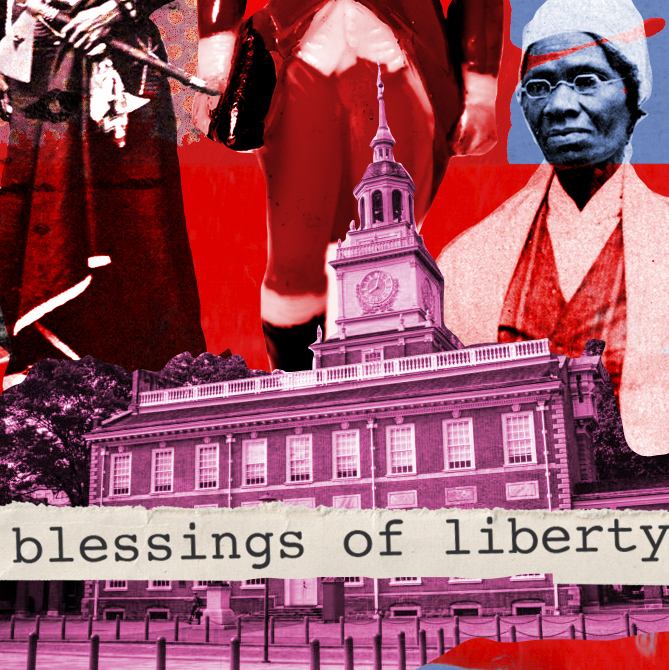
The Harvard Law Review published an article called "The Right to Privacy in 1890." The intensity and complexity of life, the essay said, "have rendered necessary some retreat from the world." It went on, "solitude and privacy have become more essential to the individual. Modern enterprise and invention have, through invasions upon his privacy, subjected him to mental pain and distress, far greater than could be inflicted by mere bodily injury." The words in this article were written shortly after the Kodak camera was released in 1888, and in the piece the authors made the case for a reinterpretation or a reimagining of privacy law as society modernized and these new technologies emerged. With the invention of the Kodak camera, which was the first really portable camera, people's images and their actions and their whereabouts could suddenly be captured with more accuracy and more intrusion than ever before. At the same time, yellow journalism was reaching its peak. Newspapers ran gossip columns and scandal stories and circulated any sensational intimate details they could find on people. Businesses meanwhile were merging into big monopolies and even the government was growing in size and strength. In this era of information overload, the forces pressing on a person at the turn of the 20th century felt bigger and stronger while the person felt smaller and more vulnerable. The article in the Harvard Law Review insisted that citizens had a fundamental constitutional right in America, "to be left alone." There were two authors of the piece which came to be considered one of the most pivotal works on privacy in America. One of the authors was Samuel Warren. He committed suicide 20 years later. His family hid that from the papers. They said he died of a stroke in order to preserve his privacy and his reputation. The other author on the paper was his close friend, Louis Brandeis. Brandeis would go on to be a Supreme Court justice and the most important constitutional philosopher about privacy in the 20th century. I'm Lillian Cunningham with the Washington Post and this is Constitutional. We need the people of the United States in order to form a more perfect union, establish justice, ensure domestic tranquility, provide for the common defense, promote the general welfare, and secure the blessings of the liberty to ourselves, our prosperity, do ordain and establish this Constitution for the United States of America. The final goal the framers etched into the Constitution's preamble was to secure the blessings of liberty to ourselves and our posterity. And one such blessing they had in mind was privacy, the idea that each citizen was free to lead an independent life. But over time, privacy has become harder and harder to preserve as new technologies emerge that document our actions and track our interests and have far greater powers of surveillance than anything the framers could have imagined in the 17 or 1800s. So if we wanted to hold close to the heart of the constitutional framers intent, if we wanted to really secure a liberty like privacy for ourselves and our posterity, what would that entail? This is a question before the Supreme Court today. The justice is our currently reviewing a case called Carpenter versus United States about the federal government's use of cell phone data to track the movements of citizens. But it was also a question that captivated a justice appointed to the Supreme Court a hundred years ago, Louis Brandeis. Brandeis was born in 1856 and he died in 1941. So he lived during a time that bridged the America the framers knew, a world of handwritten letters and travel by horse-strong carriages with the more modern America of cars, cameras, phones, television. And Brandeis spent much of his life contemplating the concept of privacy and the question of how American constitutional law could protect that liberty for a new era. According to Jeffrey Brosen, the head of the National Constitution Center who appeared on a few of our earlier episodes, Louis Brandeis was the most visionary constitutional philosopher in America since the founding fathers. He was a sort of 20th century version of Thomas Jefferson. So to look at the evolution of the right to privacy in the United States, we're going to zoom in on Brandeis, the man who cemented the phrase the right to privacy into the American lexicon. The man who helped move the Supreme Court and the nation toward a new constitutional philosophy that attempted to preserve the spirit of the original framers in an America unlike their own. The word privacy doesn't appear in the Constitution, but it was a battle over privacy that sparked the American revolution. This is Jeffrey Brosen. It was controversies like the search of John Wilkes's diaries. Wilkes was a critic of the king who was accused of sedition for saying mean things about the king and the effort to identify him as the author of anonymous pamphlets criticizing the king led to a famous case where Wilkes was awarded a verdict of a thousand pounds a ruin as a mountain its day. And that came to stand for the principle that searches of homes and private papers without very good reasons were tyrannical and unconstitutional. In the lead up to the revolution, these searches were increasingly frequent and invasive. British officers would easily get warrants called "rits of assistance" that basically allowed them to search any colonists' home for any reason. There were instruments of tyranny that allowed King George to search through the houses of his critics or of people who didn't pay the hated Boston tea taxes to try to identify them. There was no fundamental protection of privacy. And the colonists had this injustice still freshen their minds when several years later they were drafting their own constitution and bill of rights for the new United States. For the framers, privacy both was a protection for the privacy of physical spaces like the home. But more broadly, it was a protection for intellectual privacy or cognitive liberty. It's a more abstract way of stating the principle, but the reason that the framers wanted to protect John Wilkes' anonymous pamphlets from scrutiny was because of a desire to protect the privacy of the mind, a space where political dissent in particular but all sorts of intellectual freedom could flourish. In other words, liberty was inextricably tied to privacy. Some of thought and expression relied on privacy. So the framers enshrined a protection for privacy in the bill of rights, particularly in the fourth amendment to the Constitution. The fourth amendment says, "The right of the people to be secure in their persons, houses, papers and effects against unreasonable searches and seizures shall not be violated." And when the framers wrote those words, it was John Wilkes' house and John Wilkes' papers that they had in mind. And the second part of the fourth amendment says that no warrants shall issue but upon probable cause, particularly describing the place to be searched or the person or things to be seized. And that means that if you are going to have a warrant offer.
a search, it has to be particularized, it can't be a general instruction, go find out the King's critics, it has to say, go search this house or these papers with precision. So those two parts of the Fourth Amendment really are the cornerstone of privacy protections for the privacy of our homes and private papers and our effects in American history. But today the question is, how far do those Fourth Amendment protections extend? Much of the great drama of privacy ever since then has been how to translate the Fourth Amendment's protection into a world of new technologies where the government can invade our homes or read our private thoughts or diaries without physically trespassing into private spaces. But by using new instruments of electronic surveillance from wiretapping in the 1920s to cell phone surveillance today to achieve the kind of surveillance that the framers believe to be unconstitutional. Louis Brandeis was born in Louisville, Kentucky in 1856. So a couple generations after the framers wrote the Constitution and shortly before the Civil War. His parents were Jewish and they had emigrated from Bohemia, which is now part of the Czech Republic. His father was one of the pilgrims of 1848 who'd fled the failed liberal revolutions of Europe in search of American liberty. And the father settled eventually in Louisville in the hope of creating a grain business and throughout his life Brandeis believed that only on small scale communities, agrarian communities, could people avoid what he called the hated curse of bigness in business and government. Brandeis grew up in a home of books, music, political ideas. He was tall and lanky with dark hair and a soft smile. His future wife would describe him as looking a little like Abe Lincoln. He had a slight southern accent but with this soft spoken voice and these piercing, intense gray blue eyes, Brandeis was a brilliant student. He went to Harvard Law School and won the highest grades in the history of the school at that time and he started practice in Boston at least fighting for the rights of small business honors against corporations. Brandeis, for example, won a case against JP Morgan who was trying to pull off a big merger between railroad companies. He won a famous case to limit the work hours for women in Oregon. Brandeis also became one of the first pro bono lawyers in the United States. He would take on cases for free for causes that he believed in. Like in 1894 when he held close to 60 public hearings in Boston about the horrible conditions in the city's poor houses. As a result of his efforts, Boston ended up overhauling its food and its housing programs for the city's jobless citizens. Brandeis had two great influences on his constitutional and political thinking. In the fifth century Athens and Thomas Jefferson, he was an accolade of Jefferson whom he read with increasing intensity in his later years. And like Jefferson, he believed that democracy could not survive ignorant and free. He was very keen on the centrality of education to the survival of democracy. And like Jefferson, he was an apostle of smallness against bigness. So it's really important to put Brandeis in the context of this Jeffersonian tradition that mistrusts corporate power and mistrusts government power and wants to curb both of them in order to protect liberty. These Jeffersonian ideas about liberty that he developed as a student and as a young lawyer soon led Brandeis to a particular fascination with privacy. In the late 1800s, there was a mounting sense that as government and business and media grew bigger in the industrial age, they were more and more capable of intruding on the private life of an individual. So it's 1890 and America is being transformed by new technologies. 1890 was the year when photographs were first circulated in the tabloid press. And the availability of mass distribution photographs combined with new technologies of photography like the Kodak camera allowed for mass entertainment and also allowed for what Brandeis considered the proliferation of gossip on a scale that had not been seen before. And it was those technologies that Brandeis began to grapple with when he first turned his attention centrally to the problem of privacy. Brandeis had graduated first in his class at Harvard Law and the second best student was a young man named Samuel Warren. The two of them became close friends in school and afterward they founded a law firm in Boston. So Brandeis got into the subject of privacy because his law partner Samuel Warren was concerned about some gossip items in the Boston tabloids. It's disputed exactly what upset Warren so much but it appears that they were items about Warren's wife's friendship with President Cleveland's wife. And Warren as a Boston aristocrat and a Brahman considered this an indignity to have his private life gossiped about in the tabloid press and he and Brandeis set out to write what became the pivotal article on privacy of the late 19th century. It was called the right to privacy. It's in the Harvard Law Review that influenced privacy law more than any other piece. And in this piece they begin by describing the new technologies of invasion. They say the details of sexual relations are being spread broadcast over the columns of the daily papers. Column upon column is filled with idle gossip which can only be procured by intrusion on the domestic circle. So that was the problem they're setting out to describe. But then they scoured American law and found to their surprise and distress that our law, American law, unlike Roman law or European law, contains no remedy for offenses against honor. They called it offenses against honor but it was also offenses against dignity that they had in mind because it was after all an indignity that they were experiencing by the proliferation of this truthful but embarrassing gossip. And it's really important to emphasize that they weren't talking about libel, they weren't talking about falsed, they weren't talking about fake news, they were talking about truthful but embarrassing gossip about celebrities. American law, as we talked about, is focused on physical trespass. You can't break into someone's house and read their private diaries. But if you're going to publish truthful but embarrassing gossip in the newspapers, American law focused on private property, contain no remedy. Roman law and European law are different. And today in Germany, you can sue if someone gives you the finger on the highway. Imagine how that would fare in California. More broadly in Europe today, you can sue for violations against dignity on the internet. And the European Court of Justice has created a sweeping new right to be forgotten on the internet that allows people to demand a removal of any truthful but embarrassing data about them unless it's necessary for the public interest. So it just shows how dramatically European law and American law diverge. So Brandeis and Warren decided that this was a failing in American law and they proposed a series of new causes of action that are called torts and they sound like delicious desserts but torts have to do with injuries between private people. It's not the government invading your privacy. It's someone like a journalist insulting you or embarrassing you by writing about you. And the Brandeis torts, proposed in this article, include intrusion on seclusion that is using technologies to spy on people in private places, false light using someone's image to advertise something that they don't really endorse. And most important of all, intentional inflection of emotional distress. If you're going to write something with the purpose of really hurting someone's feelings and it's outrageous and unreasonable according to a jury, then that might be actionable as a violation of privacy. The most recent example of a Brandeis tort that had some really serious implications was the Hulk Hogan case where the celebrity wrestler objected to extremely embarrassing information published about him and that ended up bankrupting the Gawker gossip site. As Jeff says, these torts resulting from Brandeis and Warren's law article still come into some use today in lawsuits between private parties. But Brandeis' thinking actually began to transform significantly after publication of the right to privacy. He started questioning and revising some of his own conclusions. The problem with the Brandeis torts became obvious to Brandeis himself soon after he wrote the piece. Brandeis became increasingly interested in transparency rather than privacy. If journalists aren't free to say outrageous and unflattering things about public figures, then public discourse will suffer dramatically. Brandeis would later write in a book that quote, "Sunlight is said to be the best of dissuading
in fact, in his own way. "Electric light, the most efficient policeman." And that, of course, was a declaration of the power of transparency and free speech. So Brandeis, soon after he wrote the piece, became increasingly concerned about how to balance free speech and privacy, and with the remarkable attention to facts that characterized his life, Brandeis thought hard and reconceived the proper balance between privacy and free speech so that privacy reinforced notions of intellectual liberty rather than threatening them. In the other words, Brandeis came to think, "The point of privacy is not to protect the person being criticized. It's to protect the critic. It's there to protect free speech and free thought among citizens. And by doing so, to protect dissent and democracy itself." This led him to see the fourth amendment privacy protections as crucially tied to the first amendment protections for freedom of expression. So then, the question before him became, "How do you protect that in the modern era?" It's Brandeis who's more centrally and more relevantly and more pressually than anyone else grappling with this balance between dignity and free speech and autonomy and also between protecting privacy in the face of new technologies. American law had been entirely rooted in its tradition of protecting privacy through the law of property and had been exclusively and single-mindedly focused on protecting the privacy of the home and of private places against physical invasions by government. With that noble principle became less powerful at protection for privacy as new technologies developed that made it possible to invade privacy without physically intruding into the home. So Brandeis developed a legal philosophy of living constitutionalism or living originalism. He tried to translate the framers' meaning in light of present-day realities. Brandeis didn't think that the original understanding of the Constitution was irrelevant. He began with the general warrants that sparked the American Revolution, but he insisted on protecting the principle of privacy not being limited to the means of invasion that the framers were focused on. By 1916, Brandeis had established a public reputation in America as one of the most progressive lawyers and constitutional scholars. So much so that President Woodrow Wilson nominated him to be the next justice of the Supreme Court. It was a controversial appointment, mostly because Brandeis' ideas about curbing the size of government and business and limiting their ability to intrude in the private sphere were hot-button issues at the time. The corporate community in Boston and the United States feared Brandeis as a radical because he was such an effective and crusading critic of JP Morgan and other oligarchs who, as Brandeis unforgettable, put it, took reckless risks with other people's money. But his appointment also sparked some controversy because of a personal detail, an attribute that was part of his private life. Louis Brandeis would be the first Jewish justice to serve on the Supreme Court of the United States. In his 23 years on the Supreme Court, Brandeis wrote several of the most important decisions about privacy and free speech in the 20th century. And possibly, the most important of those was a dissent he wrote in Olnsted versus United States. Olnsted was a case about wiretapping, decided by the Supreme Court in 1928. The government suspected a guy of being a bootleger, its prohibition, the suspect was one of the most successful bootleggers of his time, importing millions of dollars of illegal liquor from Canada. And in order to prove the case against him, the government wiretapped his phones and they put wiretaps under the public sidewalks on the wires leading up into his office. And they listened in on his conversations and concluded he was absolutely a bootleger of the highest and most successful kind and they indicted and convicted him. He objected that the wiretape was unconstitutional because there was no valid warrant supporting it. The government just put the wiretaps without getting a warrant. But the Supreme Court disagreed. The decision was five to four, with Chief Justice William Howard Taft, the former president, rating the majority opinion. He said, "What do the framers think of this question? They thought that searches were only unconstitutional if they involved physical trespass and here there was no physical trespass because there was a public sidewalk, anyone's free to do whatever they want on the public sidewalk. So because there's no physical trespass, Chief Justice Taft and four other justices held, the search was perfectly permissible without a warrant." Brandeis disagreed and it's the most prophetic and visionary dissenting opinion about privacy of the 20th century and Brandeis is short, poetic, inspiring, galvanizing dissent. Brandeis is asking himself, "What is the role of new technologies that are transforming privacy?" He has a clipping in his desk drawer as he's writing Olmsted about a new technology television. It's 1928. But he misunderstands television. He thinks it's a two-way technology where people can see each others through both ends of the screen. Basically, he anticipates Skype and webcams and his law clerk Henry Friendly says, "You can't just look out of the television and see someone on the other side of the screen. Now of course you can." But in this decision, he alludes to television and he also alludes to cloud computing technology where people can store our private papers not in physical destuars but in the digital cloud. And in this amazing passage, Brandeis looks forward to the age of cyberspace, seeming to anticipate not only cloud computing but also technologies that can read the mind and can see into one's private thoughts. So here is Brandeis's incredible passage. He says, "Ways may someday be developed by which the government, without removing papers from secret drawers, can reproduce them in court and by which it will be enabled to expose to a jury the most intimate occurrences of the home." It's a staggering passage. He's seeming to anticipate that the time when the government can issue subpoenas for our Google Docs or our geolocation old data and introduce those papers in court without physically intruding on the drawers themselves. And then Brandeis asks, "Can it be that the Constitution would not forbid these invasions, which after all are even more invasive than the general warrants that spark the American Revolution?" Brandeis alludes to the Wilkes case and says, "Wiretapping is even more intrusive than searching through someone's desk drawers because you can hear the conversations of people on both ends of the wire. We need to translate the Constitution," said Brandeis. So it protects the same amount of privacy in the age of the wires as it did in the age of the horse and buggy. And Brandeis insists that we can't focus on the means of intrusion, that is physical trespass, but instead on the value that is being protected. The idea is that we should all be able to have a freedom in our thoughts, sensations, and emotions that is protected against government surveillance. Brandeis wrote in his dissent, "The makers of our Constitution undertook to secure conditions favorable to the pursuit of happiness. They recognized the significance of man's spiritual nature, of his feelings and of his intellect. They knew that only a part of the pain, pleasure, and satisfaction of life are to be found in material things. They sought to protect Americans in their beliefs, their thoughts, their emotions, and their sensations. They conferred as against the government, the right to be let alone. The most comprehensive of rights and the right most valued by civilized men. To protect that right, every unjustifiable intrusion by the government upon the privacy of the individual, whatever the means employed, must be deemed a violation of the Fourth Amendment." And he concludes his dissent with these words, which illustrate precisely why he thinks the idea of government wiretapping in the name of "solving crimes" is not only unconstitutional, but ultimately dangerous to the fabric of American society. Here's what he writes, "Our government is the potent, the omnipresent teacher. For good or for ill, it teaches the whole people by its example. Crime is contagious. If the government becomes a law-breaker, it breeds contempt for law. It invites every man to become a law unto himself. It invites anarchy." To declare that in the administration of the criminal law,
the end justifies the means to declare that the government may commit crimes in order to secure the conviction of a private criminal, that would bring terrible retribution. Although Brandeis was in the minority back in 1928, his words have since been summoned by later generations of justices, who used Brandeis' reasoning to guide their decisions. In 1967, in the case, Cats v. United States, the Supreme Court finally overturned the decision in Olmsted. It concluded that Brandeis had been right, wiretapping should be unconstitutional. More recently, in cases like Riley v. California in 2014, the Supreme Court again called on Brandeis. It declared that warrantless seizures of cell phones were unconstitutional. Chief Justice John Roberts was the one who wrote the majority opinion. And Roberts said in a very Brandeisian opinion, because our cell phones contain so much intimate information about us, we do have an expectation of privacy in our cell phones, and the government can't lightly seize them on a rest without a very good reason. We'll hear an argument this morning in case 16402 Carpenter v. United States. And now, in 2018, the Court faces its next test on privacy in the digital era, the case of Carpenter v. United States. Thank you, Mr. Chief Justice, and may it please the Court. An issue in this case is the government's warrantless collection of 127 days petitioners cell site location information. The case concerns whether the government needs a warrant to search cell phone data that third parties already have. So that's information that your phone automatically emits to carriers like Verizon or AT&T and that they then store on their servers. In this particular case that's before the Court right now, the government looked at 127 days worth of geolocation data of a man named Timothy Carpenter. They did this without a warrant to try to figure out if Carpenter was involved in robberies. The justices already heard oral arguments in the case, and so now they're preparing their decision. Thank you. Thank you, Council. The case is submitted. Justices on both sides of the aisle seemed to understand the importance of protecting digital privacy, but they did so for very different reasons that Brandeis would have been attuned to. The more conservative justices led in this case by Justice Neil Gorsuch focused on physical trespass. Just as Chief Justice Taft did in the Olsdead case, Justice Gorsuch said that any search that violates property interests, presumptively requires a warrant. And here, Gorsuch and some of the other more conservative justices seemed to be willing to say that there was a property interest in this geolocation data that couldn't be violated without a warrant. But some of the other justices led in this case by Justice Sonia Sotomayor focused not on the physical trespass, but on the amount of privacy that could be invaded by geolocation surveillance. Justice Sotomayor noted that many of us carry our cell phones with us everywhere, and if you're going to really use someone's geolocation records, you can figure out where they are at every moment of the day in the most intimate places that we visit. How is it possible, Justice Sotomayor, given the fact that the court has said that intrusion into the home is impossible, that you could have the same amount of invasion and even more by reconstructing all of someone's movements in public? She said, "In an age in which all of our most intimate records are stored not in locked estuars, but in the digital cloud, we need to translate privacy and light of new technologies. Brandeis would have been proud of that statement that was exactly what he insisted in the homestead case." The challenge that the court faces is that in a series of cases starting in the 1970s, the Justice has said, "Any time we turn over information to third parties, we lose all expectation of privacy in it." That's called the third party doctrine. As Justice Sotomayor recognized in an age when all of our most intimate information is stored with third parties, including our private diaries, that would mean we have no privacy today. The Justice's face a real challenge about how to reconsive privacy now that so much of our data is stored in third parties, but it's encouraging to see all nine justices taking up Brandeis' challenge to translate the constitution into the digital age. In his time on the bench, Justice Louis Brandeis of course wrote decisions on a wide range of issues, but across so many of them you see his same commitment to finding new ways to protect the original liberties. In some cases, the focus was on protecting individuals from big business. Brandeis would have been centrally interested and concerned about our current age, where companies like Google and Facebook have more power over who can speak and who can be heard and over privacy and liberty than any king or president or Supreme Court justice. So Brandeis is centrally concerned about the intersection of liberty and corporate power. He also, like Thomas Jefferson, saw the value of keeping as much power as possible in the states, rather than the centralized federal government. In a dissent that Brandeis wrote in 1932, in the new state ice company case, he coined the phrase that states are "the laboratories of democracy." That's just one of the many Brandeis quotes that has taken up popular use even today. In the free speech case, Whitney versus California, in 1927, Brandeis wrote one of his most influential opinions. And that one was about how freedom of expression sits at the very core of the American experiment. He famously wrote that "unpopular, radical, even hateful forms of expression" "must be met with more speech, not enforced silence." This is Brandeis and Whitney. Those who won our revolution believe that the final end of the state was to make men free to develop their faculties, and that in its government, the deliberative forces should prevail over the auditory. The valued liberty both as an end and as a means. They believe liberty to be the secret of happiness and courage to be the secret of liberty. That's a quotation from Barakley's funeral prayer. They believe the freedom to think as you will and to speak as you think are means indispensable to the discovery and spread of political truth. That without free speech and assembly, discussion, or refutal, that with them, discussion affords or narrowly adequate protection against the dissemination of noxious doctrine. That the greatest threat to freedom is in inert people, that public discussion is a political duty, and that this should be a fundamental principle of the American government. So you see in that amazing passage, Brandeis' overwhelming faith and reason, we understand why he reconceived the balance between privacy and free speech. He came to think that government had no business deciding what kind of truthful but embarrassing gossip was appropriate for citizens to read or consume because citizens exercise in their own faculties of reason had to decide what sort of discourse was relevant in democracy. To him and to generations of Supreme Court justices who followed, privacy protections in the Fourth Amendment are the ultimate safeguards for freedom of thought and self-expression. For Brandeis, life, liberty, and the pursuit of happiness, democracy itself flourished most when individuals were left alone enough to express their humanity and their individuality. His views didn't fall along party lines, they fell along philosophical lines. The Brandeisians of today include not only Senator Elizabeth Warren, but also those on the libertarian right like Senator Rand Paul. Brandeis held a philosophy that put the individual as a moral, political, emotional, rational being at the very center. Only with enough privacy and protection could we exercise our intellect and our capacity for self-growth. And only if America had such engaged free-thinking citizens in dialogue with each other could its democracy thrive. Brandeis summed this up neatly in a line he once said, which goes, quote, "The most important office and the one which all of us can and should fill is that of private citizen." That quote goes straight to the heart of explaining why privacy was so philosophically and fundamentally important to his understanding of the Constitution.
piercing gray blue eyes. And like the prophet Isaiah, one of his favorite, injunctions was come let us reason together. He had a tendency to prophesy, as people would call it. There's a memorable scene where he invited Franklin Roosevelt's advisors to his apartment, his austere apartment on California Street in Washington, D.C. to warn them that the Supreme Court was about to strike down the new deal, which Brandeis viewed as an instrument of centralization. And he began to pace up and down the living room, which was decorated with prints of classical ruins. And he, in these prophetic modes, would say things like truth is morality and morality is truth. And it's been passed down in an unbroken chain ever since the days of the ancient prophets. And in addition to this prophetic mode, he also had an ability to prophesy in the sense of prophetically anticipating the effects of new technology on free speech and privacy. During his last years on the Supreme Court, the views that Brandeis expressed in dissents began to be embraced by his colleagues. And in cases ranging from the First Amendment to economic liberty, the prophet is gaining honor in his own home and across America. But he begins to slow down around 1937. And he has a mild heart attack in 1939. And without warning, he retires from the court. On February 13, 1939, he'd recently turned 83. [MUSIC PLAYING] World War II was on the verge of breaking out. And Brandeis, who grew more and more religious as he eaged and had become a leader in the Zionist movement in America, he spent his last two years of life deeply engaged with the fate of Jews forced to flee from persecution. He watched as the lights flickered out across the Atlantic on the value of freedom of religion and freedom of expression and flickered out on the sanctity of private life, the sanctity of life itself. At the very end of his life, he is watching the horrors in Europe as they approached. And he dies on October 5, 1941. His ashes are placed at the entrance of the University of Louisville Law School, because like Thomas Jefferson, he thought that state universities, in Jefferson's case, UVA were most important for avoiding the curse of bigness and preparing citizens for citizenship. And Mosaic near the entrance to law school today includes one of his axioms, which is also an epitaph. The epitaph says, "Knowledge is essential to understanding, and understanding should proceed judging." [MUSIC PLAYING] [MUSIC PLAYING] Very many thanks to this week's guest, Jeffrey Rosen. He is the head of the National Constitution Center, the host of the Center's We the People podcast, and the author of Louis D. Brandeis, American Profit. Jeff also has a new biography coming out in March on William Howard Taft, that you should definitely keep an eye out for. Our theme music, as you know by now, and some of the additional compositions are by Ryan and Tays Holiday. The original artwork for our podcast is by Michelle Thompson. Finally, a very big thank you to Ted Muldoon, my producer here at The Washington Post. If you haven't yet used your listener discount to get $100 off on a one year, all access digital subscription to The Washington Post, you can visit wapow.st/podcastoffer to redeem it. That's wapow.st/podcastoffer. Now, since we have reached the last part of the preamble, the blessings of Liberty section, that means we only have one episode left of constitutional before the finale. If you have thoughts on this series or on future series, we should do feel free to reach out to me on Twitter at Lilly_Cunningham, or you can email me directly at
[email protected]. Thank you all so much for listening to this series. I hope you've enjoyed it all the way. And we'll be back soon with our penultimate episode, which will be on the twin Liberty to privacy. That's freedom of expression. Bye for now, and thanks for listening. Spring is here, and it's the perfect time to clear the clutter and keep the facts. Right now, you can get The Washington Post for just 50 cents a week for the first six months. Yep, that's right. 50 cents a week for six months of our award-winning journalism. After the intro offer, your subscription renews at $14 every four weeks. Don't miss this opportunity to spring clean your newsfeed. Learn more at washingtonpost.com/subscribe.
 PodcastTranscript AI