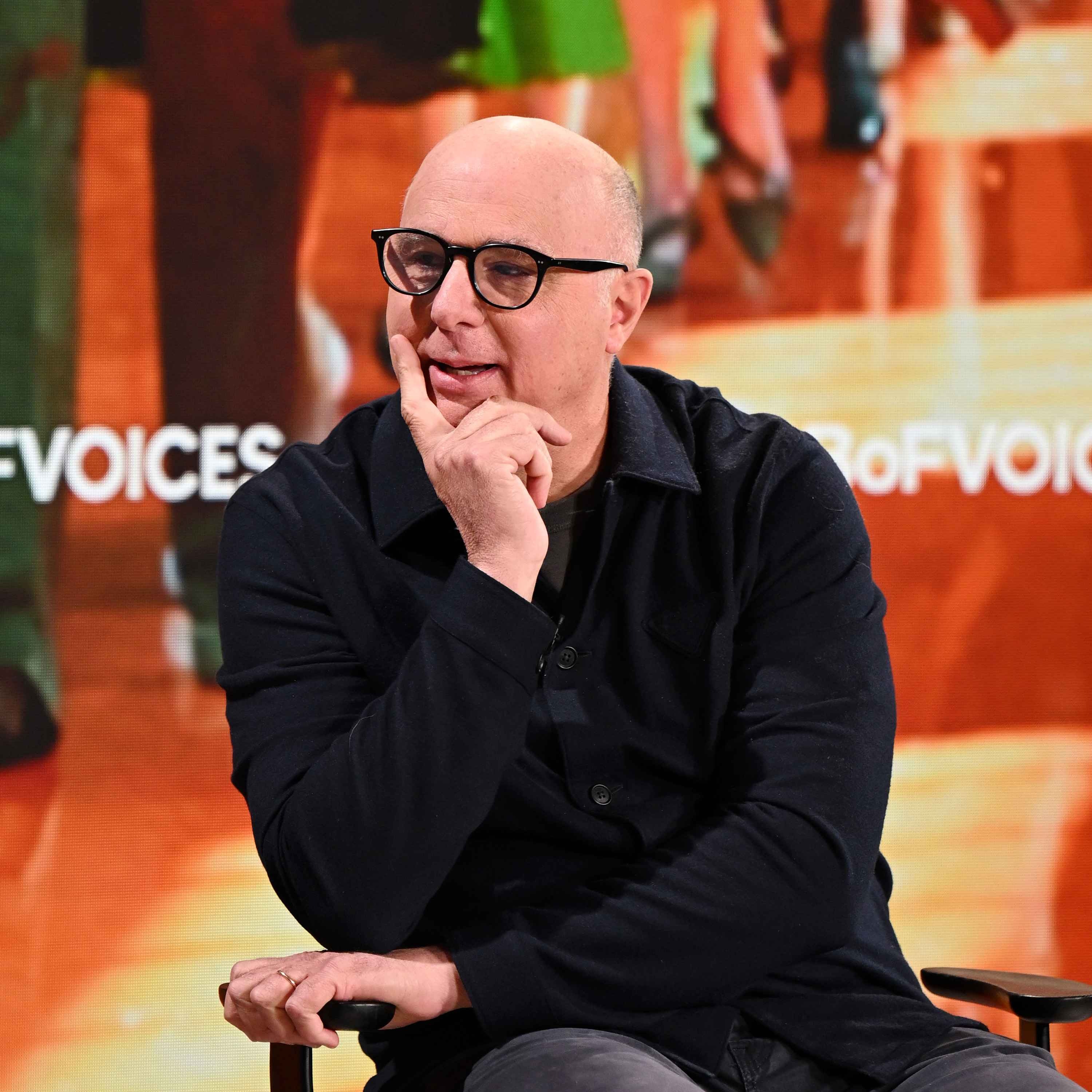
Prada Group CEO Andrea Guerra on Fixing the Luxury Business Model
25m 44s
In the podcast, Prada Group's CEO, Andrea Guerra, shares insights on sustaining growth by focusing on brand DNA, discipline, and connections to contemporary culture. Guerra stresses the need for patience and brand focus in the luxury sector, advocating for simplicity and a return to core values. The acquisition of Versace by Prada Group is viewed as a strategic move due to the brand's authenticity and complementarity within the group. Guerra highlights the significance of tension and creative discussions within the family for the success of the Prada brand, emphasizing brand authenticity and cultural relevance as key factors. The podcast provides valuable perspectives on navigating challenges in the luxury industry and the importance of maintaining brand integrity amidst changing market dynamics.
Transcription
3552 Words, 19253 Characters
[MUSIC] Hi, this is Imran Ahmed, founder and CEO of the Business of Fashion. Welcome to the B.O.F. podcast. It's Friday, November 21st. Our team has just returned from B.O.F. voices 2025, our 10th annual gathering for big thinkers. In the coming weeks, we will be sharing some of the most inspirational and insightful conversations here on the B.O.F. podcast. First up is Prada Group's CEO, Andrea Guerra. Over the last two years, demand for luxury fashion has softened as aspirational shoppers have pulled back and consumer fatigue has crept in. Yet Prada Group has continued to grow by prioritizing brand DNA, employing discipline, curation and creating strong connections to contemporary culture. What you have to consider about the Prada brand is that it's real. When I'm talking about culture, we are doing culture ourselves. I mean, through the art foundation, the exhibitions you have there, it's not we are taking a painter in the foundations. No, there is an idea. When you think about cinema, when you think about architecture, when you think about sports, we're not sponsoring sports, we are doing the America's Cup. The team is ours. So this is the way this brand lives. This week on the B.O.F. podcast, I quiz Mr. Guerra on the luxury business model from developing pricing strategies to the importance of creative tension and cultural relevance. Here's a conversation with Andrea Guerra recorded live at B.O.F. voices on the B.O.F. podcast. Ciao Andrea. Buongiorno. Welcome. I remember our very first conversation. You and I had an incredible chat. I left that chat thinking I wish every executive was as straight a shooter as honest with their opinions as you are. So my humble request to you today is that you continue your straight shooting and you're honesty because I really think our industry can benefit from someone who calls it like he sees it. I'll do my best. So my first question is the luxury business model broken. I think that this question is absolutely valid, but we can put it in a very different manner as well. I mean, we're asking this today, but on the other side, we have not asked us too many questions for two decades of constant growth. I mean, we were all happy. We were all thinking that we were the best. We were creating a new world, but each industry has its own rules at the end. So we need to be happy of what we have been living for the past two decades. And on the other side, we need to go through this. And what we are seeing is that certain rules are there. And if we have tried to overrule some of those, we probably need to go back. You mean we've broken certain rules? I think it's not a question of broken, but maybe we have gone. I mean, there are certain things about luxury and fashion that we constantly say. One is patience. Maybe we have not been so patient. And we have to go back to some textbooks. We have to go back to some rules. We have to rediscover certain things that 10 years ago were obvious. And then we forgot. And maybe we have been a little bit spoiled. So if that's the case, how do you, as a leader, navigate this moment? When you're having conversations with your teams, when you're interacting with Mrs. Prada and Mr. Bertelli and Lorenzo Bertelli, when you're trying to manage all of the constituents. We are debating. Okay. Oh yes. So talk to us about the debate. What are the debates you're having with them? So first of all, I think that and having gone through some different sectors, we are leaving this world since some time. It's not the last year or the last couple of years. I mean, since the first globalization wave and interaction wave has gone through, anything can happen every day. So this is my mantra. Anything can happen every day. Positive or negative. So at the end, there are certain rules. The first is we need to focus on few things. And these few things are the obvious ones, but we need to do it better every day. And it's your brand, it's long-term, it's desirability of your products, and your ability to excite dreams. You need to focus on these things, which means you need to simplify. You need to simplify what you're doing. I mean, brands have gone all over in the past 10 years. And I think that today it's a time that you simplify and you do your own things. I mean, you have a DNA, your brand is a DNA, and that DNA cannot be killed or overrun in the long term. It can be for some years. You can stretch it somewhere for some years, but that's your brand. That's your area. This is where people are recognizing you. This is where you're authentic. So you need to go back there. And there are certain things we need to do better again, but better again means to go back some years. We had some quite honest conversations about brands overstretching, particularly when it came to pricing. And I asked you, Andrea, when we were having dinner one day, I think in London, I said, well, when you're seeing the pricing strategies across the industry, I mean, for me, this is like the thing I just can't get, it doesn't make sense to me. How do you make sense of the fact that prices in some cases have gone up 100% in five years for certain core items, including, by the way, the Galleria bag at the product, which is like an icon, the price has gone up quite a bit. How do you justify that to customers? Because everyone has said to me, oh, our material cost have gone up and this cost have gone up and it was COVID. But I just, what people can't seem to understand is, is the pricing. So if we are here discussing prices, we have an issue. We are here for something else. We are here for creating exclusivity. We're here to creating a dream. We're here to creating emotions. We are here to creating value behind a product, an idea, an brand. And for some, this has gone upside down. I think that what we have been able to do is always being able to understand that society is always more stretched, let's put it this way. So you have certain prices that maybe can even be higher if you are able to behave and to deliver that dream. And there are certain prices where you need to be careful. And I think there is not one way. It's a range. And in that range, you need to be comfortable and your clients and consumers must be comfortable. That is how I see it. Then it's obvious that in many different parts of the world, but in so many industries, you had a kind of inflationary moment after COVID. But that's over. Yeah, it's over, but the prices are the same. And I guess I wonder, if I feel like some of the brands have painted themselves into a corner, which is like, you know, I've increased the price by this much. What do you do now? When the customer is saying, you know, I don't accept this price. If you look to the brands, everyone is reacting. So obviously, if you had that certain bag of those certain brands, that certain prices, those are there. But if you look how ranges are moving, they're moving in a very different manner today. Okay, so talk to us about how you're managing and thinking about those ranges in the product group. Again, I want to discuss about this ability, creativity, innovation, our ability to tell people about emotions. I want to discuss about this. I don't want to discuss about price ranges. I mean, what is it about? Well, I think the customer is quite interested in talking about price ranges, but okay, I will stop harping on that point because I do go ahead. But the point is, if we are discussing, again, I will repeat it, we are in a different industry. Where, if I'm not able to sell you an emotion, then we discuss about pricing. If we discuss about pricing, I failed on the first part. So you're saying that we failed on creativity, emotion, desirability, so prices become front of mind. I think some brands have been spoiled by certain trends in the industry. I want to be clear with this. What trends? We discussed about inflation. I mean, at a certain stage for some brands, it was easy just to increase prices. So that's what they're calling it, great inflation? I don't know because in any case, those have been very, I mean, we cannot forget that we have gone through very peculiar three or four years of our life. So things have happened, and we're back to normal. Okay. Now let's talk about creativity, desirability. MuMu has been a phenomenon. You know, it has been something of the breakout story of the industry. I mean, we've had like very steady growth, you know, some of the people earlier were talking about from like stalwart brands like Airmass, but the explosive growth and desire around the MuMu brand. Now that you have a bit of hindsight, what do you attribute that to? So first of all, MuMu has turned 30 and has always grown except a teenager growth issue for two or three years. That can happen. And I think that that was the moment in which there has been a debate, a discussion. And what we are seeing today is the fruit of those conversations and that discussion. I mean, MuMu has a very specific DNA. I mean, MuMu is a rebellious brand since its birth. It's a genuine creativity by Mrs. Prada is a real brand. I mean, it's something you want to wear every day. It's not a specific thing for a specific moment of life, but it's something that you want to wear every day. And it's an inclusive brand. What do I mean by inclusive? There is no distance between the brand and the consumers and the clients. The way we have been building and it's very, very reflected in our newly remade now, it's six months, newborn street store in London, where you go on floor one and it's a salotto. What is that? It's a place. It's a club. A club. It's a place where to stay. I mean, you want to stay there the whole day. Please do wear hospitality, wear community, wear people are just talking between themselves. You can try things on. There is no stiffness. There is no rigidity. Even in our very high price events, very exclusive events, you will never find stiff. Is there a big security guard outside? I don't think so. Okay. Because for me, that is the sign of how seriously luxury brands have started to take themselves. But I mean, it can be because in any case, it's valuable things yourself. Do they make people wait in a line even if there's nobody in the store? Not us. I mean, because I really appreciate this point about approachability, because when you do go into a immune system, I haven't been to the newborn street store in some time. Please do. The store that opens on one side and one side and one side on? No, no, it's via the speaker via Santander. Okay, via Santander, exactly. There's a kind of relaxed feeling in the store. This is what I want to say. You know, it's not stiff. It is not stiff and it feels approachable. The prices are not all easy. They're quite stiff and recently, you know, a few influencers were posting stuff on the internet saying that they had paid thousands of euros or dollars for Mimi products that didn't meet their expectations. How do you respond to feedback like that? So my friend, I love influencers. They're doing their job. Not, I mean, each one of us can make mistakes or having a bad experience. I mean, I'm full of doubts and I'm full of mistakes, but I can tell you that the call, I mean, we are a very special group. We are a group where brand and creativity has its own pillars. And on the other side, we have been from day number one, a huge industrial group. I can tell you that everything is scrutinized and I can invite you whenever you want to examine our net promoter scores and the quality index on after service and being totally relaxed about that. I am sorry that a person can have a bad experience and I will try my best to cure it. I'm going to send you an email, connect you to wisdom key. Please do, because he, please do. I'm happy. Please do. So looking to next year, I asked this question, I'm unhappy of many different things in life. Wisdom's lovely. He's not going to be like mean, but so can meme you continue to grow like this? I mean, it's a question I've been asked for the last past 24 months. We are normalizing our growth. I think we got still huge opportunity. We have entered the period of 24 months of nose. I mean, you know when you have been success, everyone is offering you something. And that's the moment where you have to resist. That's the moment where you need patience. That's the moment where you don't need to expand your space like hell. And we are trying to do all of this. Yes, it's like, avoid getting greedy. Avoid making mistakes. Avoid making too many mistakes. I'm sure we made some. Yeah. Okay. So, you know, clearly one topic that everybody is interested to hear from you about is Versace. And you and I met in January at the Fondatio and the Prada for our like seasonal post show Chit Chat. And there were these rumors in the market that Versace was on the block and the Prada might be looking at it. And at the time, you weren't particularly sure or confident that this was a transaction that would actually happen. Now we're literally days away from the transaction closing. You know, it's been approved by the regulators. What in the end was the rationale for the Prada group acquire Versace at a time when the industry is entering, you know, a very uncertain phase. And with the history where historically Prada had owned Joe Sander and other brands that didn't work out, why bribe Versace now? So, when opportunities arise, you look at them. You study them. And you catch them if they are great valuable opportunities. Versace is a fantastic Italian, authentic, unique, credible brand, which has a huge complimentary role inside our group. I mean, it's hitting different aesthetics, different consumer bases. But on the other side has some very similar things to us. It's a brand that was born in culture. It's a brand that was born in classic, historic, Greek, Mediterranean, ancient roots. So there is a complement there. And on the other side, let's not forget that Versace has created what we're seeing every day. This glam, this pop, music, models, supermodels. I mean, it has been a huge innovative brand, has been. So what I'm happy when we started looking at it is that there is not broken things, but there are things which have been managed for quite some time in a certain way. And I think that we have an opportunity. And the opportunity is long term. I mean, I'm not expecting any kind of result, any tangible numeric result tomorrow morning. We have fixed certain milestones, which are very important, but it will take time. And we have the patience. We have seen it with Mimiu. We have the patience to do it. So let's go for it. What will you keep from what is happening at Versace now? And what will you need to work on changing? And in particular, I think about, you know, we had the debut of a designer. I sent you my feedback email because you asked me for it on what I thought of that show. Dario Vitali's debut show, which for me was just, I mean, if you feel a fashion moment and you're at a show, like, I just felt this fashion moment. How are you thinking about the creative side and the business side of the leadership of that brand? So first of all, it's, I cannot really speak about it. I mean, it's not our brand today. Not yet. But in like two days or three days or something. I think it's a little bit longer. Not all authorizations have come in. I'm not worried about anything of it. So I think that especially at the beginning, stability is a very important word. And this is what we are going to do. We're going to care about everyone working in Versace. And we're going to care about everything that is happening in Versace. The only thing I don't want to happen is to kill the patients while you cure it. So we have to do something which is brilliant, which is intelligent and has a huge patient effect inside. Okay. One of the reasons that you were brought into the product group was always as kind of a bridge succession planning, thinking about the future. And you're in this like very unique role, because you work with three very influential family members who are kind of the past, present, and future of the product group. How do you see a role evolving now? Like, and what can we expect in terms of leadership and succession planning in the group? Is it something imminent? So first of all, I would like to to underline one thing. To imagine that a first generation shareholder and founder has created such a journey. I mean, this is a progressive thinking and decision. So I love it. I love the fact that there is a journey. It's clear. It's obvious. And there is no calendar. Absolutely, there's no calendar. I think Lorenzo would love to have a more executive role in the Versace journey. Is that mean he could be the CEO? No, no, no. I'm talking about more an executive chairman or something. Okay. Let's see. But for sure, he will be much more involved in the Versace journey. So what are we talking about? We're talking about a family that from a intelligence point of view, from a thinking point of view is imagine in the future. In this future, there are so many different decisions that have been taken, which are far away from any Italian first generation company. So here we are. I'm happy. It's a generous job from my side. And this is what I'm trying to do. I'm trying to lead a company. I'm trying to keep the pieces together. I am in the middle of this wonderful Prada group confrontations debates and discussions that at the end to be a fly on the wall of those discussions. But you know, you know, that is part of the Prada philosophy. Prada's culture, culture is discussion, culture is opinions, culture is being able to, I mean, the more you're discussed, the more you're able to be influenced by other people opinions. I think this is unbelievable fruitful. This is not a vertical thing that one says, this is it. No, it's a total constant confrontation and change of opinions. This is how things are born in the Prada brand. And I love it. That tension, that friction that you have between the different members of the family, between the creative side and the business side. I mean, that fundamentally and the conversation, by the way, that the Prada brands have within culture and with culture. Is that the magic? I mean, the magic and you can see it in each brand which is being successful in such times. And you see that behind it, there is a history of relationship and tension between a DNA of a brand and a creativity impulse. And this tension in the long term must be a positive equation. If one of the two ways you can be too conservative or you can go out of your road. So I think that this is it. And the Prada needs this kind of thing because it's such a polyadric brand and it's such a real brand. I mean, what you have to consider about the Prada brand is that it's real. When you think about cinema, when you think about architecture, when you think about sports, we're not sponsoring sports, we're doing the America's Cup. The team is ours. When you are buying a Prada product, you're buying an opinion. And I am happy that you're buying an opinion. Thank you, Mr. Quara. It's a pleasure. Thank you. The B.O.F. podcast is edited and produced by Olivia Davies and Eric Brea.
Podcast Summary
Key Points:
Prada Group CEO, Andrea Guerra, emphasizes the importance of brand DNA, discipline, curation, and strong connections to contemporary culture for continued growth.
Guerra discusses the luxury business model, highlighting the need for patience, brand focus, and simplification amidst industry challenges.
The acquisition of Versace by Prada Group is seen as a valuable opportunity due to the brand's authenticity, complementary role, and historic significance.
The Prada brand's success is attributed to the tension and creative discussions within the family, emphasizing the importance of brand authenticity and cultural connections.
Summary:
In the podcast, Prada Group's CEO, Andrea Guerra, shares insights on sustaining growth by focusing on brand DNA, discipline, and connections to contemporary culture. Guerra stresses the need for patience and brand focus in the luxury sector, advocating for simplicity and a return to core values. The acquisition of Versace by Prada Group is viewed as a strategic move due to the brand's authenticity and complementarity within the group.
Guerra highlights the significance of tension and creative discussions within the family for the success of the Prada brand, emphasizing brand authenticity and cultural relevance as key factors. The podcast provides valuable perspectives on navigating challenges in the luxury industry and the importance of maintaining brand integrity amidst changing market dynamics.
FAQs
Prada Group focuses on brand DNA, discipline, curation, and creating strong connections to contemporary culture for sustained growth.
Prada Group emphasizes the importance of revisiting foundational principles of luxury, such as patience, brand DNA, and long-term desirability.
Prada Group emphasizes creating exclusivity, dreams, emotions, and value behind products rather than solely focusing on pricing.
MuMu's success is attributed to its rebellious DNA, genuine creativity, inclusivity, and the experiential approach in its retail spaces.
The acquisition of Versace was driven by its authenticity, unique aesthetic, complementary role in the group, and the opportunity for long-term growth.
Prada Group acknowledges the evolving roles of family members, such as Lorenzo Bertelli, in key executive positions while maintaining a progressive and future-oriented approach to leadership.
Chat with AI
Loading...
Pro features
Go deeper with this episode
Unlock creator-grade tools that turn any transcript into show notes and subtitle files.
 PodcastTranscript AI