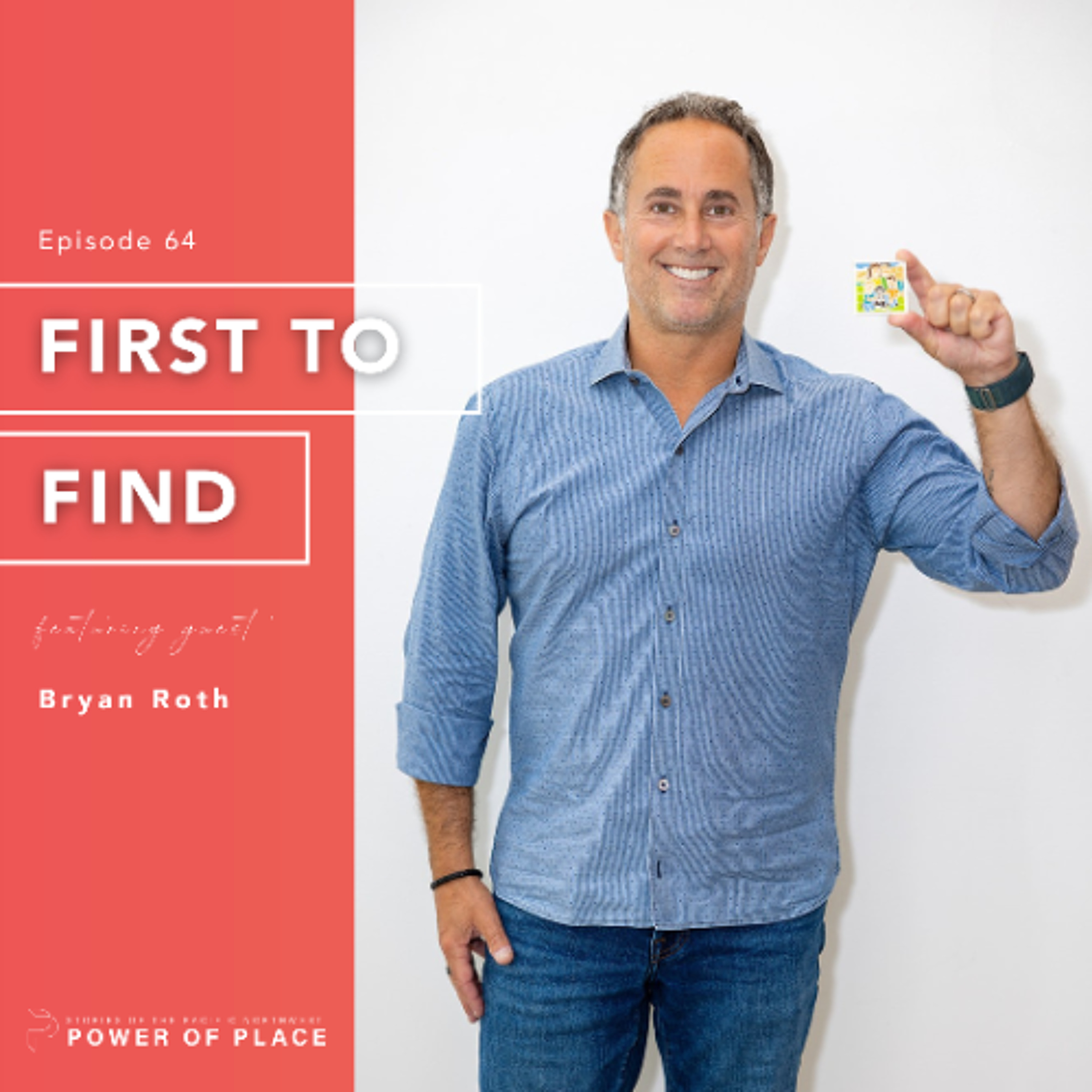
🎧 Power of Place Episode #64 | First to Find – Bryan Roth
67m 38s
The United States has discontinued the intentional degradation of GPS signals, allowing for more precise GPS use for civilians. Geocaching, a hide and seek game using GPS coordinates, originated in the Pacific Northwest in 2000 and has since evolved into a global treasure hunt with elaborate caches. The founding of Geocaching.com by passionate individuals marked the beginning of a company supporting the geocaching community. Geocaching has not only provided unique and adventurous experiences but has also brought to light issues of race and inclusion, as shared through stories from geocachers, highlighting encounters with Confederate memorials and discriminatory remarks during their geocaching adventures.
Transcription
9954 Words, 54230 Characters
Today, the United States can safely stop its intentional degradation of the GPS signals available to the public. The United States is turning off a feature known as selective availability. In plain English, we are unscrambleing the GPS signal as of midnight tonight. This bucket is my new invention. Software, video cassette, some money, cassette recorder, a boot, a can of food. All this stuff is going to become the first GPS station. This is going to bury this in location and publish the coordinates on unit. So anybody can go and take stuff out of here and put stuff in it, either note in the logbook. And we're going to see if we can do thousands of these all over the country so people can go find these stations just by the coordinates. Geocaching has taken the world by storm and thanks to the sport, more people than ever are learning to use those digital devices. Geocaching is a high tech game of hide and seek. It began in May of 2000 when the US turned off selective availability on satellites allowing people to pinpoint exact locations with global positioning systems. Within days of deactivation, people began hiding trinkets and logbooks and containers. There are more than 260,000 caches hidden in 221 countries. A busy afternoon in a small market town in Yorkshire and the Army Bomb disposal unit are here. Called after a suspicious package was found, they deploy a robot to carry out a controlled explosion. A plastic box which is part of an internet-based treasure hunt called Geocaching. People are looking for a sense of belonging. Geocaching and the Geocaching community provide that opportunity in a really welcoming way. Welcome to Power of Place, Stories of the Pacific Northwest. I'm your host Edward Krigsman. In our last episode, we traveled to Salmon Beach near Tacoma's point defiance in enclave hidden in plain sight where cabins rise on pilings and where generations have grown up between trail and tide. Life there has been precarious, sometimes storm-tossed, but always anchored in community. And if you haven't heard it, I encourage you to listen. It's a portrait of people dwelling where sea and earth are never still. Well, today we'll follow another hidden trail. This one doesn't appear on any map, yet it circles the globe. It's traced in satellite signals and GPS coordinates. GPS, the global positioning system, is a constellation of satellites that tells us exactly where we are. And in May 2000, the US government flipped a switch making GPS signals accurate for civilian use. Over night, a new kind of exploration began. What started as a small experiment in the Oregon Woods became a worldwide game of hide and seek where millions of players explore forests, deserts and cities, discovering both place and one another. Since that unlikely start, Geocaching has grown into the world's largest treasure hunt, logged over a billion times. And behind it all, is a small team of Pacific Northwest dreamers who built a platform to match the spirit of the game. And so in this episode, we'll uncover how a simple stash in Oregon sparked a global movement of seekers and storytellers. We'll consider what it takes to balance freedom with responsibility in a worldwide game of discovery. And finally, we'll ask why a community built on curiosity and trust continues to thrive across decades and continents. And stick around toward the end of today's episode, you'll hear about a Texas cemetery that wasn't what it seemed, about a treasure hunt that made it into outer space, and the moment this global game first found its way home. In the studio with me is Brian Roth, president and co-founder of GroundSpeak, the company behind Geocaching.com, currently based in Seattle's Fremont neighborhood. And with us from Austin, Texas is Marcellus Cad, a respected voice within the Geocaching community, who shares how this global pastime connects people across geography and identity. From the very beginning here in the Pacific Northwest, the earliest geocaches were sparks of imagination, puzzles in everyday life, and invitations to see the world differently. What emerged was more than a pastime. It became a practice of exploration, curiosity, and community. And as Brian reflects, that spirit lives in every cache, each one a small doorway into discovery. Geocaching is exploration, it is discovery, it is adventure, and its community. Every cache in a certain respect embodies the spirit of the game. It went from a box referenced by coordinates to complex mystery caches where you have to solve a puzzle in order to get the coordinates to find the cache. Or a repurposed ATM that is now a geocache, where you type a certain code or solve a problem and you get access to the logbook. Or a telephone booth that you pick up the phone and it says, "Hello, this is actually a geocache." And if you dial the numbers in this order, you can access the geocache. What is it about the unique location of the Pacific Northwest and geocaching that caused magic to happen? For a company like Geocaching, involved in outdoor recreation and technology, Seattle was a perfect place. The access to outdoor recreation, the natural environment, beauty, water, mountains, trails, plus you had this growing technology industry. I think the chemistry was right. That dot-com spirit and that excitement, I think it was the right place at the right time for a company like ours to get started. Pacific Northwest, worst place in the planet. I hate it if I fall in the ocean. No, I'm kidding. It's absolutely lovely. I was up there a few years ago, and a friend of mine and I took the opportunity to go to every county in Washington. There is a very specific cache in King County called an ape cache. Basically in 2001, the movie Planet of the Apes did an advertising thing with this brand new thing called geocaching. Where they along with geocaching HQ, hid caches around the world that had props and they had scripts and they had all sorts of stuff attached to the movie. And one of the ones that they did is in Washington, it's called Tunnel of Light, and it famously in the geocaching world involves a two mile hike through a disused train tunnel. It was quite a thing. For the first 15 years, no joke, we didn't advertise. It was all word of mouth. I started in 2018 and the reason I started was because someone broke my heart and I felt really terrible and someone had mentioned geocaching to me. And I had first heard of geocaching in late 2000, early 2001 as this brand new thing that people were doing with GPS units. And I thought to myself, why would anybody want to do that? You're buying this crazy expensive piece of equipment to drive out to the middle of nowhere to find boxes that doesn't make any sense. Well, fast forward of more than 15 years. And urban caching had become a lot more of a thing. I could go a few blocks away. I could easily download the app and give it a try. And then I went ahead and did it and I enjoyed it. It was like, okay, this is interesting. And then I went and found another one. I was like, okay, I kind of like this. And the next day I found another one. And then the next day I found one and I have logged a cache every day since. A Spice container containing some paper in a small metal trinket known as a geocache forced police to close the north half of Memorial Park this afternoon. The bomb squad even rolled in its robot because whoever disguised the bottle made it look like a pipe bomb. Happened to be looking at some trees and we found this item sitting right in the middle of all the branches. We think it could be something, you know, bomb or whatever. There's an item from a geocache game, which is a GPS game like a scavenger hunt. Some caches even brush against high art in London, a series of mystery caches reimagined William Hogarth's Erakes Progress, a sequence of paintings from the 1730s, the told a cautionary tale of Folly and Roon. I suspect that the work was embraced by geocaches because of Hogarth himself, who in this work filled each frame with hidden symbols, slide jokes, and background figures that revealed themselves only to those who looked closely. It was Hogarth's way of geocaching, an exuberant reminder that this game, too, can carry us into worlds of imagination and art. I asked Brian to elaborate about, well, elaborate geocaches. There was somebody in Germany who was a train conductor and he decided that he was going to create an elaborate geocache where, based on the train schedules, you would have to get on certain trains at certain times and go to pay phones and answer the phone, get clues to this mystery that you had to solve, but he created this elaborate adventure where, if you missed a phone call, you would get another phone call saying, "Sorry, try again later." And there was a waiting list of months to go do this because it was supported by, like, almost like a real-world actor who was the person who created that cache. There's another one in the woods outside of Frankfurt, Germany called Operation Crocodile with the K, and they created this backstory where you were a government agent and two nuclear missiles had been stolen and you needed to recover them. And so you're in the woods outside of Frankfurt, it took about four and a half to five hours. It was at night, and so you would use a light to shine and there were fire attacks hidden that would give you a path and they would take you to this location where there was a tree stump in the middle of this clearing and you're at the tree stump, and you look at it and there was a hinge on the tree stump. So you open the tree stump and inside was a video camera. And on the video camera, in German, it said, "Push record, pay attention to what you hear and not what you see." So I said, "Oh, this is interesting. So we had the video camera and we pushed the button and weren't really sure if we heard anything, we pushed it again." And there was like a bird chirping off in the woods and we're like, "I push it again. Is that really. " Okay, that's the chirping. We got to go there, so you go over and there's a bird house. And on the front of the bird house was a light-sensitive array. And so you shine a light on it, and then in the hole where a bird would go, it scrolled a radio frequency. And in German, it says it's a report from headquarters. One of the missiles has been located, the other one is still, you know, around, you know, there's a helicopter inbound at this heading and this distance, end of message. And we're like, "Okay, helicopter inbound, this bearing, this distance, let's walk in that bearing." And so we go and we're looking around, up in a tree, is a helicopter, hanging, I can't even tell you how they got it up there. And when you shine the light on it, a little laser from the front of the helicopter shines out into the woods, that happened to lead to an old World War II bunker. And we had found in another part of a cashing like a flower pot, we found a key. The key unlocked the bunker. It took two people to slide this massive door for tanks and stuff into an empty World War II bunker. And in the bunker, on the walls, if you had black light, it had code to basically find another bunker, long story short, we found the final bunker. And there's a briefcase in the bunker with the geocaching logo and you open it up, there's a video screen and it says something, there's a newspaper next to it. And it's original newspaper from the 1950s. And the video in the briefcase tells you something that you have to do with the newspaper. And then there is a fabricated three-foot-long missile with dip switches. The newspaper tells you, switch this one up, this one down, whatever. And you disarm the bomb, the missile, and you have solved it, and you complete the adventure. But if you think about, here I am, this kid from Long Island, help to start this game and support the game. Here I am in the woods of Frankfurt, pretending on this secret agent, solving, and somebody took the time to build this, to share it with other people. This is one of so many caches that are like that and I feel so honored to even get to do an experience like that, that story telling, that not just story telling, but experiencing the story. I'm not reading it, I'm not listening to it, I'm doing it, I'm walking around and at one point I'm like, are there bears in the woods of germ, there's no bears here, that's in the United States. I feel a little bit safer, but, you know, here was this incredible adventure that is now just a really fun story to tell. After Operation Crocodile, it's hard to imagine a cache more elaborate or more absurd, but that same spirit of invention isn't limited to the forest of Germany. Bringing it all home to Austin, Texas, Marcellus Cad describes a geocache, so ambitious, it turns an entire city into a puzzle, one that begins in a real cemetery and ends in a fake one. There's a perfect example right here in my own city of Austin. It's called the Necropolis at Britannia Manor. It's a giant puzzle, and it starts in downtown Austin. It starts at a cemetery where you have to find a certain person's gravestone, and you put in some information from that and it takes you downtown. And then you have to go to several other buildings that have information on them. They lead you to other locations, and little by little step by step, the locations take you out to far west Austin. You take a path on a hillside, and it leads to a real life fake cemetery. And in the fake cemetery, there is a tower with a combination on the door, and you have to take information you've picked up from the stops along the way and hidden in the cemetery to get the lock to the door. To finally get to the log of the cache. I have seen very few caches that even come close. From Hogarth's London to the force of Germany, the game has sparked creations as theatrical as any stage. Yet these far flunk stories are all tributaries, flowing back to the Pacific Northwest, the region where it all started, and where innovation turned satellites and signal into play. It all began in the year 2000 with Dave Olmer. In May of 2000, when selective availability was turned off, the first official stash was placed, and it was called at the time by the small community that was playing it was called the Great American GPS stash hunt. Dave Olmer is the man out of Oregon that placed the first cache, and Mike Teague found the first cache. What happened next wasn't planned in boardrooms or written into business plans. It was more accidental. Three friends stumbling into the heart of discovery together. Jeremy Irish built the first website, Elias Alvord joined to extend its reach, and soon they turned to Brian. Each brought a different gift, technology, vision, and community. What held them together was camaraderie, curiosity, and a shared belief that this game mattered. A buddy of ours brought in a GPS unit that he had received as a gift for his birthday. His name was Michael Schmidt, and he brought in a little Garmin yellow e-trex. We all looked at it, wow, GPS, it connects to the satellites, this is really cool. Jeremy went outside, and as you're walking around, there's a little animated character that mimics a walking person, and it leaves like a breadcrumb trail of where you were. And he was fascinated by it, we all were. And he came back into the office and he went online, and he said, "I wonder what else you can do with this technology." And it was then that he stumbled on the satellite technology news group that Dave Olmer had posted the coordinates to his first stash to. And Jeremy said, "Oh, this people playing this game, this is interesting." He went out, bought a GPS, and he went that weekend. He had to drive about three hours away, because there was nothing really around, there were very few caches. And he ended up in this clear cut wooded area, he had a puppy dog with him, he ran out of water, he got attacked by bugs, but he said when he found the card box with the logbook in it, he said, "Oh, how amazing. Somebody left this for everybody to find." So on the drive back to Seattle, he thought about as a web developer, "How can I build a website to make this game more accessible for people?" And also make it such that they were better prepared to go out, because he wasn't prepared, he didn't know what to expect. And so he said about building the first version of what would become geocaching.com. At the time, Mike Teague, who was the first finder, was basically saying to the community, "If you hide one of these stashes, send me the coordinates and the name and a description, and I'll add it to my list." And it was basically an HTML webpage that you could scroll from top to bottom, and look to see where the stashes were hidden. In September of 2000, Mike Teague and Jeremy had been talking, and Jeremy was adding features and functionality, talking with me and Elias and talking with other people, and Mike Teague's website went down. And he said, "Listen, I'm going to tell everybody to go to your website." And he did. And so as this was starting to take form, Jeremy approached Elias and said, "Hey, I could use some help. What do you think about starting a company? And what do you say we go get Brian?" And I remember where I was sitting at the desk when they both approached me and they said, "Hey, geocaching is a hobby. It's outdoor recreation and technology. Something we're all passionate about. There's no money in it, but what do you think about starting a company to support the community?" And I said, "Well, great. Here's an opportunity to do something different. Things were changing in the market, and it was sort of like this side project we were going to do in nights and weekends. And November 4th of 2000, we officially became a corporation." Who feels welcome? Who feels excluded? And how do culture and race shape the experience of searching for something hidden in public? My name is Marcellus Cadd. I cash under the name of Trades, and I am the author of Geocaching Wild Black, which as far as I'm aware is the only blog that is written by a black cashier. Can you share a geocaching story, maybe something you blogged about that was particularly intense, memorable, or stressful, that arose because of your race? I was in Paris, Texas. There's a Confederate memorial at just about every courthouse. But it was unlike any other I had seen. Not only was it tall, but it had busts of various Confederate leaders on each side. And I'm thinking, "Wow, this is like extra. So extra." And while I'm looking at this, I hear this voice from the side, and I look over, and there is this white dude with a white dog and a white truck. And I tell him, "I'm looking at the monument." And he tells me, "Don't you go messing with my statue, boy." And then he drives off. And I can only speak for myself. I can't imagine that many cashers have found themselves called "boy" before. Just because they happened to be in a public place, I was just standing there looking at a monument. Or you get stuff like the time where I was in Grimes County. I go to the county courthouse. Once I've done my photography and everything, I decide I'm going to find a cash. I'm thinking to myself, "That is a perfect place to find one." I walk down, I get to ground zero where the cash is, and it is a Confederate memorial park. It is a little pocket park specifically dedicated to the memory of the Confederacy. And I end up finding the cash hidden under a flagpole that's flying one of the Confederate national flags. I'm like, a lot of cashers wouldn't think twice about that. In fact, a lot of cashers had noted when they found it that they were glad that such a place like this was here before everyone was trying to eradicate history. I realized that if that had been my third or fourth cash or my tenth cash, I'm not 100% sure I would have kept caching. Luckily, it was somewhere in my thousands of finds of caches. Marcel, is any thoughts about what can be done to make geocaching more attractive to people of color? I think a lot of people who cash, no matter what race they are, they have that fire that pushes them to do it on their own. The thing that I would recommend to other cashers who would like to help is just to be friendly and be open. For us, we try and elevate that voice, we try and share his blog and make sure people are aware of it and so that they understand his perspective. So as a cash owner, when you hide it, think about who's going to access, think about who it is accessible to. And if you are a person of color and you are interested in getting involved, here's a perspective that you can look at to say, hey, this can be done, this can be enjoyed, you know, you are invited to join this community. So let's play a little geocaching, speak Translator, authorize a few terms and then like to play a game with you, you can tell me what they mean. You ready? Yep. FTF. First to find. That is when a new cash is placed, when they get published, there is often a race to see who is the first to find. I have one first to find, where I was the first to find the cash. It's not something that I take all that seriously, but a lot of people in the community really do. GC. Ground zero. You'll see that in logs often like, I arrived at Ground zero, looked around and found it quickly. Ground zero is when the GPS tells you effectively you're there. DNF. DNF did not find. It's a log type. When you don't find the cash, we encourage people to write a DNF because it alerts the cash owner that it might be missing. If you are a brand new casher and you DNF the cash, it probably doesn't carry that much weight because they will assume that maybe you don't know what you're looking for. But if you find a casher, DNFing a casher, and they've got 50,000 cash fines, which is a lot, then it's okay. We need to take a look at this and make sure it's still present. Lacky. Lacky. So, I am a lackey. All of the staff at Geocaching Headquarters, we are known affectionately as the Geocaching HQ lackeys. In the early days, the community came up with it and they started calling us the lackeys because we were the team doing all the work in support of the community. And we embraced it. And we said, yes, this is a spirit of service. We are serving the community. We have to earn the right to be the global headquarters for this game through generous and effective service to this global community. And is there any lingo that's gone extinct, but that still makes you smile. I mean, Muggle, in a way, comes from Harry Potter Muggles, the non-magical people. And Muggle was a term that was used for many years. And we're actually trying to move away from it. And we're trying to move away from it because it's a barrier. It's an us versus them. And we don't want to refer to somebody as a Muggle. We want to invite you in. We want to invite you to join the community. So, while we used to use the term Muggle frequently in marketing communications and stuff like that, we're really moving away from using Muggle. But the connection to Harry Potter was always farming. What advice would you give to someone placing their very first cash? Go find 25 caches before you place your first cash. Learn what makes a good experience. Learn what resonates, the kind of things that you enjoy, time and time again will likely be the kind of things that other people will enjoy. And if you're placing a cash in a location just for purposes of placing a cash, that's not necessarily the best reason to do it. Place a cash in a location that other people should see. Whether it's the cash itself or whether it's the location itself. Do it for the experience and not just to say that you did. For Brian, the game wasn't only about technology, community or adventure, it even shaped his own family story. He met his wife, the geocaching. So I asked him to share how that happened. In November of 2001, Jeremy called me up and he said, "Hey, there's a geocaching event taking place in Marymore Park. It is a local gathering of the community. It's hosted by an active player. And I've got a geocaching banner and I could use some help setting it up. Like, what do you think about coming out to the event with me?" And I said, "Okay, sure." And I had, you know, my ex had moved out just a few weeks before that and I was looking for fun stuff to do and I got to the event. And there were, I don't know, 25 people or so that were there and you're talking to everybody and figuring out about geocaching. And there was a player there who her username was camera time and she said, "Have a friend over there." And she pointed to Heidi and said, "You know, any chance you're single." And I was, you know, matter of fact, I am single. And she said, "Well, you know, we're looking for a nice guy for Heidi and I said, "Well, I'd love to meet her." And she came over and we took a photo and started talking, exchanged numbers. You know, Dylan came over and I got to meet Dylan who was kind of a shy kid. He was eight years old and I said, "Oh, you know, nice to meet you and all that and we should go on a date." And so our first date, go figure, we went geocaching and we went up by Snoqualmie Pass and, you know, found our first geocaching. We did a lot more geocaching with camera time and her kids and with Dylan and basically just figured out that we like each other and, you know, eventually they moved in and we got married. Now, every five years, we host an anniversary event. So at the same coordinates, come on out whoever comes and it's become a bigger event, but every five years we produce a new, trackable game piece which is part of the game of geocaching that is about our family, an anniversary coin is what we call it and we give them to everybody who shows up. And then I'll hand them out to Geocashers at events that I travel to throughout the years in between each five years and then we make a new coin. And so in November of 2021, we had our 20th anniversary event of the day we met. And November of 2026, we'll have a 25th anniversary event. Stories like Brian's are just one example. Around the world, geocaching has built relationships, friendships, family and communities bound by curiosity and play. What begins as a search for a hidden container often becomes a reason to gather, to celebrate and to form connections that last long after the logbook is signed. So we asked Brian to reflect on that side of the game. In the early days, we saw this as a game of hide and seek, people are hiding things and we're going to go out and find them. And what we've learned is that one of the most remarkable things about geocaching is the relationships and the communities that it puts together that it builds. And this is domestic. This is international. And so if you're a geocacher, you have something in common with millions of people around the world. And so when you go to a geocaching event, you're welcome. You know, people want to talk to you. They want to learn about geocaching in your area. They want to learn about how you found out about the game, what facets of the game you enjoy. And, you know, here, for me, not only did I find my livelihood, my calling in a way, but I found my family too. And I'm not alone. I know many, many people who have met their spouse through geocaching, whether on the trail through happenstance or at some event or through an introduction from another geocacher. And so in a way, it's almost like a family reunion, but you are welcome to show up and become family on day one. And so for Jeremy Elias and I, to know that this seed that was planted by Dave Olmer and others that we have helped to nurture, not alone, but with support from millions of people around the world who contribute to this thing that creates so much value and joy for people in the world. To be part of something like that, it's remarkable and it's an honor really for all of us. Beyond the caches themselves, the game soon sprouted new traditions. One of the most enduring is the trackable coin, a kind of game piece that carries a unique code and a journey of its own. Pass from cashier to cashier across miles in even years. Trackable coins and trackables in general are geocaching game pieces. And the basic concept is it's like a dog tag with a little ball chain, you can attach it to an item and each dog tag has a unique alpha numeric code on it. And you go to the website, you log in with your username and you log in, you say, I own trackable, you know, ASD123. And the site will say, okay, this is now your trackable, you have an activation code that shows that you really have it. And you set a goal for it. I want my trackable to visit every F1 race track in the world. Please take pictures. And I will go and I'll put it in a geocache. And when somebody finds it, they use the number and they say, oh, this is Brian's, it's supposed to go to an F1 race track. Well, I'm going to be in Austin, Texas next week. And, you know, Austin has a F1 race track. So I'm going to go there, I'm going to take a picture, attach it to the page for the trackable. And then I'm going to put it back in a geocache and I'm going to log it. And so, me as the owner, every time it's moved, every time somebody logs that they have it or they've done something with it, I get an email saying, hey, your trackable was picked up by Team Super Genius. And they dropped it off at this cash in Austin. And, oh, look, they uploaded a photo. And over time, my hope is that it'll make it to all the race tracks. Some of them get detoured. I sent a trackable to my grandmother in Florida and it ended up in Fiji, traveling around for three, four months. And, you know, it's still traveling. There were classes of school children. They would send them out into the world through geocaching. And once a month, the teacher would gather the students and say, let's find out where your trackables are. And they would write to the people who found them and say, tell me about where you live. Tell me about your place. What kind of food do you eat? Tell me about, you know, what kind of things do you do for fun? And so, trackables as game pieces became a way for all of us to live vicariously through these objects as they travel the world. When I first asked Brian which geocoin was the most valuable, I had in mind rarity or dollars. But Brian pushed back. And for many in this community, the worth of a coin isn't measured in money, but in story. Its value lives in the hands it's passed through, the places that it's traveled, and the memories that it carries. So, in geocaching, even a small coin can become priceless when it carries the weight of connection. I've received geocorns from community members who have passed on. And those mean a lot to me. You know, it's an embodiment. It's something to remind me of that individual, their contribution, the way that they would smile at events, the joy that they were taking from it. And so, you know, to even think about relative value, you almost have to look to the stories. And what's the background of that geocoin? And one of the cool aspects of geocorns and trackable items is when you find one in a cache and you look up the number, you can see the history of everybody that's touched it. There's a map of all the different locations that it's been over time. And so, one of my favorite stories of a trackable, somebody attached a Darth Vader action figure to a travel bug dog tag. And they put it out. I want to say it was in Arkansas or Texas. And it moved around for a bit. It went to Ireland. It was picked up by an Air Force pilot. And they took it with them on combat missions over Afghanistan. And so, they uploaded photos of holding up this little Darth Vader with the travel bug dog tag. And outside the window of the jet that they're in is an F14 Tomcat sitting alongside. And there's pictures from the Air Force base. And so, for the person that placed this travel bug in their first cache, all of a sudden they're getting pictures of an F14 on a combat mission. And like, so this object took on such an amazing life. And so, it's just remarkable not just what the game pieces do because the game pieces without community are nothing. But it's an opportunity for story building and storytelling that makes it so special. So, there was a geocoin that made it into outer space. Indeed, Richard Garriott bought a ticket on a Russian Soyuz rocket to go to the International Space Station. And he had been playing geocaching for years. And so, he put one up there. And he put the travel bug dog tag up in the cache. And he came back to Earth. And a number of years later, another astronaut Rick Mastratio was going up to the space station. And he was aware of geocaching. And he brought the trackable back. And you can see it on display at headquarters. And incidentally, Richard Garriott, a few years ago, went with another explorer. And they took a submersible to challenge your deep, which is the deepest location of the Mariana's trench. And they put an artifact down there that is essentially an Earth cache because it's a place of geological significance. It has not yet been found. It's an extraordinary journey to get there. On this show, we often ask our guests to bring an object, something with a story behind it, a token that holds meaning. So, I brought one of my family geocorns. It depicts me, my wife and kids, and our dog, who passed away about a year and a half ago. It has a paw print for our previous dog, who was geocaching with us in earlier years. And it speaks to the first event where I met essentially my family through geocaching. And so, for me, it's extremely important. It tells my personal story with this game. It has the GC code for the first event where we met, which is GC26-D6. And it also has the GC code for the 20th anniversary event for which we produce those coins. Like between these crevices? Yeah, I don't look. Found it. How do physical objects factor into geocaching and exchanging them? So, one of the core tenets of geocaching is when you find the geocache, you sign your name in the logbook. And then if there are trinkets and toys in the geocache, they're called trade items. You can take something out as long as you put something in for the next person to find. And there's some really good lessons in there. I know families with kids use it as an opportunity to show their children that, hey, if you take something out that's really nice, you have to put something in that's really nice, because the next child to find this wants an experience like you've just had. So, trade fairly, trade up or trade fair. So, objects have always been part of this game, because those are the trade items, and people will create their own trade items. They'll make bracelets that they leave in a cache, or they'll leave little hand puzzles in a cache, or matchbox cars in a cache. And those are trade items that people can take. And then we also have trackables, which people will make their own personal trackables, just like I've made my coins, other people in the community make coins and tags. And they will trade them at events, or in person, with other people that they meet along the way. Not every cache is a box in the woods. As the game grew, players started asking, what if the discovery could be about stories, and not containers? What if the treasure was the place itself? Out of this came AdventureLab, a way to explore through narrative, questions, and sequences, where each answer leads you further into the world. AdventureLab is a toolset for creating sharing and playing interactive multimedia, multi-stage experiences that can be private. They are non-physical, so they're not boxes. And it's basically for self-guided tours and experiences, and so you can build a tour of your hometown, all your favorite places to eat, for example. You can build a lesson, you can tell a story, they can be linear or non-linear, and as of yesterday, we have this 98,000 of them worldwide. And so, as with the proliferation of geocaching, there's this proliferation of AdventureLabs, that is a different kind of experience that is accessible to people. And so, you know, with geocaching, not everybody is comfortable sort of looking around in the woods, or some of the urban ones, maybe you look a little too conspicuous, and you gotta be a little careful. Well, with AdventureLabs, having them all virtual, you go to a location when you're within a geofancit, unlocks a question, if you answer it, you get credit. And people are building remarkable things with AdventureLab. There's a battlefield tour, the Antietam battlefield, where you're a spy, and you're, you know, engaged in the Civil War, and you have to go to different locations. And there's videos of people who have dressed up in periodic costume to tell this story that you get to engage in. There's trivia adventures. If you're at Charles de Gaulle Airport, and you're waiting in the security line for two hours, you could go in and you could learn about the airport, you can answer some questions about France and get credit for that. And so, some of them are really outside, engaging, interactive, and some of them are much more easy and accessible. And they're all user-created. Everything's user-created. That's remarkable. We are a platform company, we are a tool company, so we build the tools, put them in the hands of creative people around the world, and then sit back in amazement with what they create. As geocaching spread, the stakes grew too. A game about curiosity and play can also carry risks and responsibilities. Safety is the most obvious. This is outdoor recreation, and the outdoors can be dangerous. But there are deeper questions too. These are the harder edges of a global game, and they've been impossible to ignore. From a safety perspective, geocaching is outdoor recreation. Leaving your home can be dangerous. We know this. Being out in nature, being in the woods, rock climbing, scuba diving, going to the International Space Station, there's inherent danger involved. And so, people have been hurt, geocaching, people have been killed, geocaching. And so, as a community, to lose people is really difficult. It's part of the game. You know, with Formula One racing, you lose drivers every now and then. People get hurt, driving is dangerous. Riding a bike in the city, it is dangerous. And so, we can't make it a game that is completely safe. So, knowing that this game, this community, that that is an aspect of it, it's hard. But you have to look at, you know, the value that is created, the trade-offs that are created. Learning more tonight about what led to a Spokane Valley man falling to his death in the Dishman Hills yesterday. Once geocaching became global, the meaning of place shifted depending on where you are. What counts as public or private land isn't the same everywhere. What's encouraged in one country might be restricted in another. In some places, they came pushes into daring terrain, while in others it's been carefully contained. In Germany, for example, the forest belonged to the people. And they have the ability to place caches without having to ask for permission to place it. They also can do things like they do what's called T5 caching, which is terrain five, where they put caches up in trees, like 50 feet, 150 feet. Having up about maybe 10 to 15 meters, it's not something you can necessarily do in the United States because there's personal injury law. And there's maybe more of a parental, you know, you can't do this unless we tell you we can, whereas in other areas of the world like Germany, it's, you can do this unless we tell you you can't. And it's just different places in the world look at location differently, and we try and adapt the game accordingly. It's one of the benefits of having community volunteers all over the world who are familiar with their local customs and rules. Before he wrapped up, I wanted to bring the conversation back home to the Pacific Northwest. I asked Brian to tell us about a place that holds special meaning, about a landscaper setting that has shaped his relationship to land, with that he finds himself returning to in spirit. There's a place in Eastern Washington, and it's called Blue Lake, and it's near Salt Lake. It's a part of the Sun Lakes. And when I met my wife, her and her family had been going there for many, many years. And we started going out there. And in the early days, there was no cell phone reception, and there was no internet. And so you would go there, and you would be completely disconnected, and you could take a paddleboard, or a jet ski, or a pontoon boat, and you could go explore the lake, and there's a place on the lake that is affectionately referred to as the Cove. And the Cove is the site of where the Blue Lake Rhino, a cast of it currently sits at the Burke Museum. It was discovered 300 feet above the water level. And it is quiet. There's cliffs on both sides. It's a place for reflection and solitude, or friends to gather. If you get a group of friends on a boat, you can swim. The water is lovely. It's quiet. For me, it feels like a place to reconnect with nature without distraction. And it is like Superman had a fortress of solitude for me to go and spend time at this place with friends and family. That place has a spiritual connection for me personally. At one point in our conversation, I thought about my own four-year-old son, who so easily finds joy in the world around him. As adults, we often lose sight of that sense of play. So I wondered out loud with Brian if geocaching is really just an excuse to keep playing. 100% really 100% and I have seen it time and again over 24 plus years. It is a way for adults to play. Kids absolutely, we're going on a treasure hunt, but to see the passion that adults bring to this game, to the discovery, to the exploration, it is a way to reconnect with that spirit of play 100%. Have you seen an adult light up when they discovered a cache or maybe the first cache and can you share a story? Almost every time, it is a eureka moment and that moment I think is a lot of what gets people hooked on geocaching. I took my grandmother when I went to visit her in Florida and she passed away last year at two days shy of 102 years old. One of the visits I went out, she was 96 years old and I said, "Grandma, we're going geocaching." She said, "All right, I want to understand this." I wheeled her around and this is in Cape Carl, Florida and got to the location. I said, "Okay, where do you think this is going to be?" She said, "What are we looking for?" I said, "I don't really know. It's somewhat small, but it should be a box." I said, "Well, is it in that the hole by the tree?" I said, "Well, let's check." I said, "Look, you were right and to see her light up." She said, "So these are all over the world." I said, "Yeah, there's millions of these boxes placed by people, but to see the moment for her that we found something where she lives, not where I lived." I hadn't found it before, she hadn't found it before, but instantly she understood that somebody else had placed this for us to find, for us to have an adventure that is now meaningful to me because I got to do this with my grandmother before she passed. Stories like Brian to remind us how geocaching is about discovery and play, but beneath the play lies a more elemental skill, finding our way. Long before GPS, people relied on maps and compasses and careful bearings, and even now in a world wired by satellites. I asked them whether these older ways of navigating still matter. Absolutely. And some people still use analog navigation to geocache. You know, as a badge of honor, they say, "Oh, I don't use GPS. I'm using the latitude and longitude and maps and a compass, and it's altogether possible that satellite systems could be interfered with." Even for basic navigation in our vehicles, we use it all the time. I used it to get here today. If I had to get to this location without my GPS, I'm glad I could read a map. I'm glad I could, you know, I'm glad that I grew up at a time when we didn't have GPS, but it's almost the lost art. And so, I think it's absolutely worthy of preservation, and it's something that students should learn in geography and technology. In this day and age, it feels guaranteed, and that's really comforting and nice. But we would be foolish to think that it's always guaranteed, and that it is without risk. Like the game itself, geocaching headquarters or HQ has had many homes. In the early days, the team squeezed into borrowed desks above an art studio, then moved through a series of downtown office spaces before finally settling in Seattle's Freemont community in 2011. Freemont is no ordinary neighborhood. Known by locals as the center of the universe, it's home to firms like Adobe, Tableau, and Google, places where creativity collides with technology. It's also filled with landmarks that feel like metaphors for the game. A colorful signpost bristling with arrows to places both real and imagined. The colossal Freemont troll crouched under a bridge, and the Burke Gilman Trail, stretching for miles, just outside HQ's doors. When I visited HQ with my wife in our 12-year-old, we met other pilgrims out front, including two friends from Lancaster County, often called the Heart of Amish Country. They had driven all the way to Seattle with their teenagers, stopping at historic caches in many states along the way. That mix of local quirk and global community felt exactly right for Freemont. Inside, we joined a lackey for a walkthrough of HQ, that place where visitors from around the world had come to log the special HQ cache, trade trackables, and see the game's history on display. You can see the Pacific Northwest as well represented as this Germany, which is our second biggest caching country. You can see we do have all of the contents and do a representation on you. For many of this headquarters has become a kind of pilgrimage site, so I asked Brian what visitors find when they arrive. So when we first moved to Freemont, we created a visitor center in the office, and it was staffed and people could come by. And there was a fake tree, and it was made to look like you were kind of outdoors, and at one point we bought a smell machine. So we could create an evergreen smell in the visitor center until our guest experience coordinators, what we call the people at the front desk, said, "I can't take the smell anymore." It's given us a headache, and so we had to get rid of the smell machine. But in the visitor center, we have a very special geo cache that people can log, and when you log it, you get a special digital souvenir for your profile. We have game pieces like travel bugs and trackable geo-coins. We have display cases filled with different geo-coins. We have a photo booth where you can take photos. We have a couple of digital screens in the visitor center. My favorite of them all is one that shows every 45 seconds. It shows the most recent cache log, essentially the words written digitally by people who find a cache, and it will use Google Maps to go to the location of the cache. In the mornings, it's a lot of Eastern European finds, and every 45 seconds it pulls the latest log, and it goes to that place in the world, and you could read what the people said about their experience. And we get two to three logs per second. And so if we were bouncing around showing every log in real time, it wouldn't be enjoyable for anybody. So we set it at 45 seconds, and you could see the latest log that was posted to the website. And it's just a fun representation to see the active activity taking place worldwide for the game. And sometimes when people are in our visitor center, they'll try and log the HQ geo cache at the 45 second mark in hopes that every now and then there's will show up and then you have about 45 seconds to take a photo. [Music] Geocaching may look like a game of GPS and containers, but its success points to something deeper and older. Exploration has always been part of the human condition, and discovery is one of our oldest stories. Across cultures, quests follow a similar pattern, the leaving, the journey, and the return. Poets of this region from Ursula Laguin to David Wagner have a written of maps, trails, and the forest that sometimes finds us more than we find it. Geocaching carries echoes of that same pattern. What begins as a hunt for a box often becomes a path toward belonging and even a spiritual journey. And when I ask Brian about that deeper pull, here's what he had to say. I think exploration is part of the human condition and discovery as well, and I think that that is a draw for people. The opportunity to go out and see new places and have new experiences can be a spiritual journey for people. I think also people are looking for a sense of belonging, and so they're looking for community. So it becomes a fulfillment for people of a lot of the things that really make life worth living. We heard earlier from Dave Ulmer when he was describing hiding the very first ash. Well two decades later, Ulmer returned to the same spot to mark it as a landmark, and he reflected on what it felt like to start something that would ripple across the world. Like there was a can of beans. There you go. There was a remnant of the original. There it is. The infamous can of beans, an artifact from the old days. The first geocache, what do you call that? Swag. You know, pretty soon I'll call this a National Historic Site. From Ulmer's can of beans to Brian's vision of community, this threat of legacy is unmistakable. What began with one man's buried box has become a way for millions to belong, to connect, and to keep on discovering. I wanted to know what kind of legacy Brian hopes geocaching will leave behind. Perhaps a sense of nostalgia and connection to the past. Perhaps they feel like they've stumbled upon an artifact that is still connected with modern day society in a way that embodies adventure exploration and community. And what kind of legacy do you hope that geocaching leaves behind, not just in the world but in the lives of the people who play it? I'd like to see geocaching's legacy be that the efforts of a global community to come together in the spirit of sharing in the spirit of exploration and discovery changed people's lives in a positive way and had a positive impact on the world and the environment. As geocaching has evolved, its heart has become clear. It's about community. What began as a simple search using coordinates has become a shared way of seeing the world and one another. When I went to my first caching event, I was intimidated because there were all these people who obviously had known each other for years. And it felt really insular, a little clickish, but another caching kind of took me under her wing and started introducing me to people. And those same people who I thought were insular and clickish, I see them all the time. Heck, one of them was the friend I traveled around Washington with. I think the most important thing that I have learned throughout this journey, and this comes through the gift that I've had in being able to travel to different places around the world and engage with this community. Play Geocaching attend events is we're the same. We share this game in common, but we all share so much in common. And the world is full of so many good people that really want to coexist and play together. And there's a lot more room for all of us to do that. For us as humans, we become tied to places that are special to us. And as part of being humans, we want to share joy. And if I find something personal to me that is meaningful, I want to show other people, I want to share it with other people because spreading joy is really rewarding. And if I can take joy from something and then see that joy reflected in another person and know that they're going to subsequently share that that's contributing positive energy to the universe, it's contributing positivity to the world. And that all comes from place. If this conversation has sparked your curiosity, you can try Geocaching yourself. Download the free app, set up a username and see what's hidden in your own neighborhood. My own caching name is Power of Place, of course. And yes, I've hidden a few out there myself. You can also make a pilgrimage to Geocaching HQ in Seattle's Fremont neighborhood. It's a place where lackeys will welcome you for a tour, give you a chance to log the HQ cache and allow you to pick up some swag. Join us next time as we trade GPS coordinates for orchards and follow the scent of ripening apples east of the Cascades. We'll meet Dr. Amanda Van Lannen, historian and author of The Washington Apple, who reveals how fruit and folklore together shaped the state's identity. From dusty irrigation ditches to long lost corporate cookbooks, we'll uncover the sweet and surprising story of how Washington's apple became a symbol of myth, ingenuity and imagination. It's a tale of flavor and invention that just might make you hungry, so don't miss it. Thank you for joining us today. This episode was produced by Orion Brown, audio engineering and sound design by Daniel Gunther, with photography by Travis Lawton and administrative support from Mary Monsour. The music written by Toma Nakayama and performed by Grant Hallway with additional music by Fox Hunt, Arks Duo and Andrew Weathers. And the musical spotlight for this episode features the travel bugs and bugsy travels in the ammo boxes. Archival recordings include the voices of Dave Ulmer, creator of the first Geo Stash, and my son, Jack Krigsman. We record on Coast Salish land at the Jack Straw Cultural Center in Seattle's University District. I'm your host, Edward Krigsman, and you've been listening to Power of Place, Stories of the Pacific Northwest. If you've enjoyed today's episode, please leave us a review or subscribe. And if you know of a place in the Pacific Northwest that matters to you, please tell us about it. We'd love to share your stories.
Podcast Summary
Key Points:
Selective availability of GPS signals in the United States has been turned off, allowing for more accurate GPS positioning for civilian use.
Geocaching, a high-tech game of hide and seek, involves hiding and finding caches using GPS coordinates.
Geocaching originated in the Pacific Northwest in 2000 and has grown into a global treasure hunt with elaborate and creative caches.
The founding of Geocaching.com involved individuals passionate about outdoor recreation and technology, leading to the birth of the company to support the geocaching community.
Geocaching has provided unique experiences but also raises issues of race and inclusion, as highlighted by stories shared by geocachers.
Summary:
The United States has discontinued the intentional degradation of GPS signals, allowing for more precise GPS use for civilians. Geocaching, a hide and seek game using GPS coordinates, originated in the Pacific Northwest in 2000 and has since evolved into a global treasure hunt with elaborate caches. com by passionate individuals marked the beginning of a company supporting the geocaching community.
Geocaching has not only provided unique and adventurous experiences but has also brought to light issues of race and inclusion, as shared through stories from geocachers, highlighting encounters with Confederate memorials and discriminatory remarks during their geocaching adventures.
FAQs
Geocaching is a high-tech game of hide and seek that uses GPS coordinates to locate hidden containers called geocaches.
Geocaching began in May 2000 when the US turned off selective availability on satellites, allowing people to hide trinkets and logbooks for others to find using GPS.
Geocaching gained popularity as a worldwide treasure hunt game where players explore forests, deserts, and cities to discover hidden caches and connect with each other.
Elaborate geocaches include puzzles, mysteries, and interactive adventures like train journeys, hidden bunkers, and city-wide puzzles that engage players in unique experiences.
The Pacific Northwest was where geocaching started, with the region's mix of outdoor beauty, technology industry, and pioneering spirit contributing to the game's origin and growth.
Some geocachers have encountered racial tensions and exclusion while searching for geocaches in public places, highlighting how culture and race can influence the geocaching experience.
Chat with AI
Loading...
Pro features
Go deeper with this episode
Unlock creator-grade tools that turn any transcript into show notes and subtitle files.
 PodcastTranscript AI