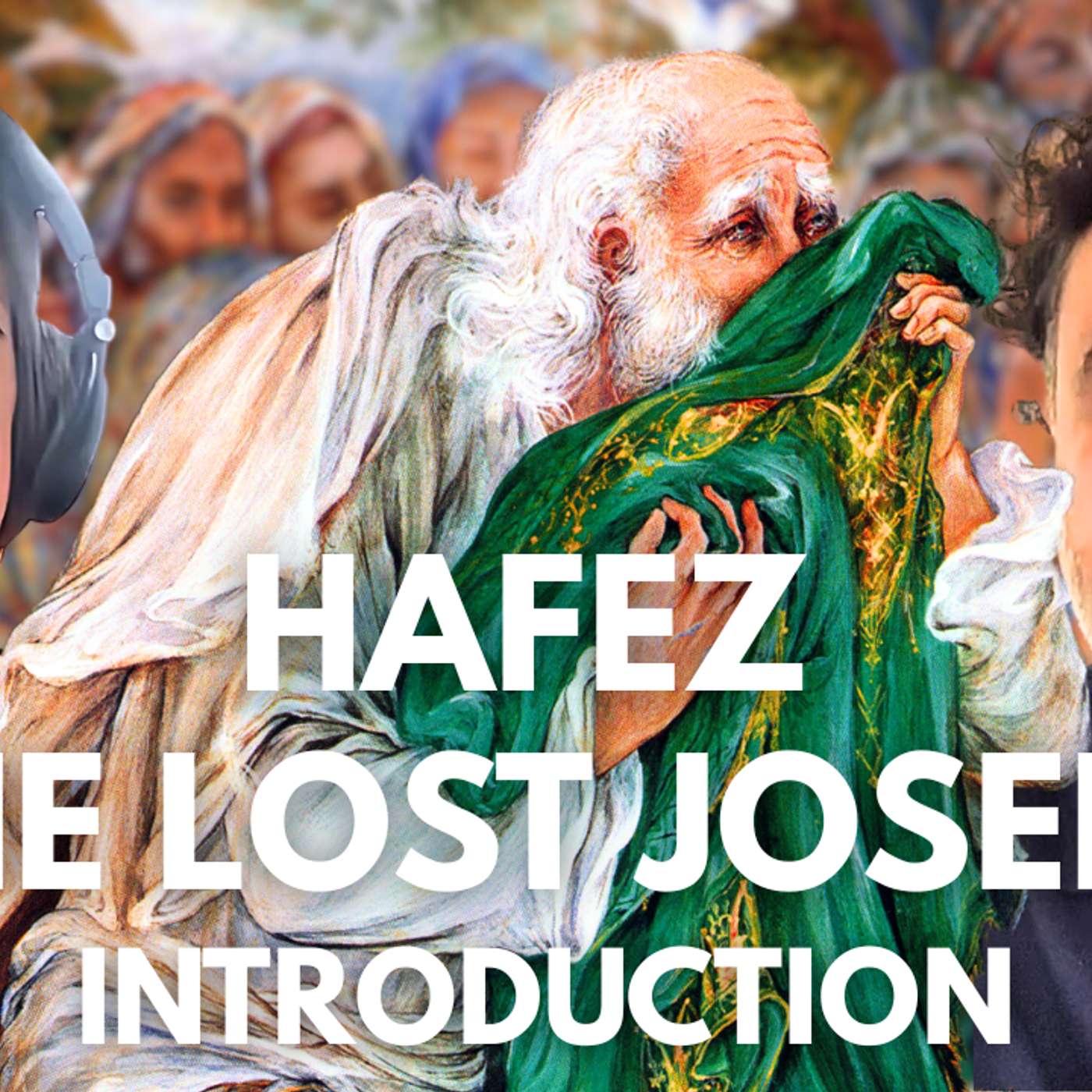
Poetry | Hafez's yoosofé gom gashté, Introduction with Sahba Shayani
53m 54s
The conversation revolves around studying a poem by Hafiz, particularly Gazal number 255, discussing its religious references and themes. Hafiz, a 14th-century Persian poet known for his Gazals, is compared to Rumi in terms of mystical elements in their poetry. The importance of accurate translations of Hafiz's work is highlighted, emphasizing the need to preserve the original essence. The overall discussion delves into the beauty and depth of Hafiz's poetry, aiming to make it accessible to a wider audience and emphasizing the significance of exploring diverse literary traditions to broaden one's understanding of the world.
Transcription
8025 Words, 42676 Characters
Learn Persian with Cheyenne conversation. Introduction with Dr. Sahba Shoyani. (upbeat music) (upbeat music) Thank you for joining me for another poem together. Thank you for having me. Yes, wonderful. And today we are going to be studying a poem by Hafiz, which is actually Gazal number 255. And so this is the entire poem. It's only 10 lines, so we're going to study the whole thing. So before we begin, I want to ask you kind of the background of this poem and why we chose it, let's start there. Okay. We chose this poem because, well, it is one of Hafiz's most renowned poems. And the message behind it is just absolutely beautiful. And the imagery that he uses is all imagery rooted, or much of it is imagery rooted in the traditions the Old Testament and then adopted in the horror on. So it's a very sort of unifying and beautiful poem with lots of unifying and beautiful imagery in it. So that's why I thought it would be appropriate. And I think the message that it really bears is something that I think everyone can benefit from and really enjoy. So it's a good one to memorize, even if you have a few lines of it memorized, something to have as a mantra almost that you can recite to yourself sometimes. - Interesting. So then I'm not familiar with this poem, so I've only just glanced over it. I'll be learning along with the students as we go over it. But I do notice a lot of very direct religious references, which is interesting because all the Hafiz poems that we've covered so far, they're ambiguous. You could read them in a religious manner, but everything's coded. In this poem, it seems like he's very explicit and he even mentions the horror on. He mentions different people in religious figures. So can you talk a little bit about that? Is this a very explicitly Islamic poem? - I wouldn't say it's explicitly Islamic to be honest. I mean, other than the mention of the Kabin, the horror on and even that case, the Kabiz, the house of God and the horror on is the holy book. But I mean, it is, but obviously the story that it references, the story of Joseph is a story that we get from the Torah and the Old Testament. So it's one that really brings these traditions together and in the Islamic tradition that they build upon one another dubious and then Christianity and then Islam, it does have an Islamic element to it naturally, but it has a, I would say like an Abrahamic element to it, but definitely a very clear religious element to it that draws on all the traditions and brings them together. And it is in the true, half as sense, it still uses that similar energy of like just religious or like spirituality to bring it all together in a way, rather than just explicitly I think one religion. - So do you need to be religious in order to understand it or to enjoy it or to get anything out of the poem? - I don't think so, no, I think the idea is the idea behind the poem itself is beyond religious in the sense, but it is spiritual. That definitely, there is an element there that we connect to a higher source. - Okay, interesting. I'm excited to go over it. But now to back up a little bit, can you tell me kind of who, if anyone is listening and they don't know who half as is or if we need a little bit of a refresher, who is half as in general and what is the Qazal? - Okay, half as is Shirazi is a 14th century poet. Arguably the poet excellence of Persian poetry definitely from the Iranian perspective and from the canonized modern perspective that we have. Half as is seen as one of our greatest, if not our greatest poet and the master of the Qazal. Qazal poetry is love lyric poetry. They're usually shorter poems that focus on the topic of love and this love can be physical or it can be divine and often there's an interplay between the two where you can't really tell which is which. In this case, very clearly there's a divine element to it. Like you said, with the references to the horror on and to the stories from the Old Testament. And yeah, he is a poet that every Iranian practically has a line here they're memorized by him at least at the very least if not poems fully. You can't escape half as any Iranian, I think. His Devon, his compilation of poetry is what we put on the half seen often. It's what we put on our Shabbat Yalda spreads. It's what we use for Bibliomancy, which is the tradition of trying to tell fortune through like opening up a certain part and like making it and setting an intention and opening a certain part of the book and reading to see what half has response to you with. He's known as Lisson O'lapeyb, which means the tongue of the invisible. So there is this concept, this notion that he had, this or still has in a way in his essence, this connection to the beyond, to that which lies beyond what we can see in this world. And so therefore, Iranians often turn to him for answers. So let's say you're stuck with something, you set an intention, you take the book and you just open up whatever page you're sort of drawn to opening with your eyes closed and then you go back and read the poem that ends, you read that poem from the beginning. You read from the beginning of the poem and he's believed to respond to your intention, to your question, to your knee at. - I'd never heard that word "bibliomancy," that's what that means. - Yes, "bibliomancy," yes, yeah. Like with a follow with a book, yeah. - Interesting, okay. And then that Lisson O'lapeyb is that the same that is in Dune, is that right? Am I remembering that correctly? - Yes, yes, yes, yes, yes, yes, yes. - Okay, so it's referring to his office, the only person that is called that in history, are they referencing office? - Office is, yeah, yeah, to my knowledge, he's the only poet who we refer to as Lisson O'lapeyb, yeah. - Amazing, so what gives him that, like who was he writing these poems for, and what was his kind of like religious background? - So I mean, obviously he was Muslim himself. He most likely he was Sunni, as were many of our traditional poets from the Persian canon, at least prior to the Safavid period. He's called office because he had the court on memorized. So a person who would have the court on memorized would be called a office, someone who protects or remembers. And to be honest, I think maybe the reason he is called Lisson O'lapeyb is because of the fact that he has the court on memorized and he's seen sort of as this protector of the holy text. But his poetry is fantastic in the sense that, I mean, like you said, like you mentioned yourself earlier, it's at this intersection and interplay between religious and like explicitly religious and then implicitly sort of religious or spiritual. And actually in his poetry, he often reprimands the religious figures, the shape, you know, the shape and these individuals who are seen as staunchly religious figures who go by the book aren't necessarily seen as positive characters. And the positive character is the character whose heart is pure and who walks on the path of God for the sake of the love of God, not for the sake of following every single code and so on and so forth. So he uses a lot of wine imagery in his poetry. The tavern is often seen as his place of worship. So there's a lot of breaking of the traditional religious concepts and images. - And then for you personally, what has been your relationship with Hafez? Like where did he enter your life and where did you start to become interested in his poetry? - Okay, so I mean, oh God, that's a difficult one. I don't, I feel like Hafez has always been there sort of. I personally, this is gonna be a hot takeer. (laughs) - Okay. - Oh, good. - Hafez is not my necessarily favorite poet all the way at the whole time. My, I'm much more drawn to the gazelles of Rumi. (speaks in foreign language) Those gazelles are the ones that really speak to me. But out of Hafez's gazelles, this is one of the ones that I'm definitely drawn to and is one of my favorites. But Hafez, there's no denying that Hafez is the master gazelle composer. His gazelles are the most beautiful, the most intricate. And they're really in one of his gazelles, he says that he, it's like he strings pearls to one to another and creates this beautiful necklace. And it's very true because a lot of times, the lines in the gazelle are related but they're not explicitly related and you have to try to find the notes between them. But they sort of do become like these pearls of wisdom each line that you string together to create this beautiful necklace, this beautiful concept. - And can you kind of place us where he was in relation to Rumi? - Yeah, so he's in there. - And just what type of writer he was. - So he's writing in the 14th century. He's similar to Rumi in that there is a heavy mystical undertone in his poetry. Rumi I think traditionally is seen to some extent to be more by the book, whereas Hafez is seen to be sort of more implicitly religious or spiritual and sort of trying to break away from the tradition of what is written. But they're both in the tradition of the mystical writers from Hafez, what we really focus on are his azaleat, his love lyrics, mollana, the depth of poetry and the vastness of it, I would argue is more and it's really like his azaleat are very renowned but what's much more famous from Rumi's poetry is his masnavi, masnavi and matnavi, which is a long poem and it's a story essentially. That is a story within a story, within a story and it's called the Persian gaur on the masnavi and matnavi. So it's seen as this almost holy like text. So it's different, his writings are different, quite different from that of Rumi, but they both their focal point is mystical in essence. - And how do you feel about like reading the Hafez kind of has been famously, infamously translated by, for example, Coleman Barks, these kind of interpretive translations of it, how do you feel about first of all, those translations or just in general reading translations of Hafez's work versus reading them in the original? - I'm very against translations that take a lot of liberties. I think you can't really call something the poetry of, and this is done with Rumi actually more than anyone, but you can't call something the poetry of Rumi or the poetry of Hafez when you just write something that you're inspired, quote unquote, by the poet and then call it their poetry, you know, it's not right. You have to, there's elements that should be, that should be kept in. And you know, there's a lot of talk about this actually about how the poetry of Rumi and the poetry of Hafez, but particularly Rumi is stripped of its origin, of its muslim sort of identity. And again, I would argue that a lot of these, there's a Muslim identity, but they link to all of these religious traditions through them, because Islam is related to Christianity and Judaism. So it's one that builds on all of these traditions. So it's not like it's just muslim or just for muslims, but it is, the roots of it are in the Islamic and the Abrahamic traditions. So when you, when you strip it of that and you just turn it into something, you know, completely different, it's not right, but particularly my problem with it is in translation. When you translate the poetry of someone, you should try to keep it as close as possible to the original essence of the poem itself, not create something yourself and say it was inspired by it. Now, the other side of it is that, well, a lot of times direct translations may not be as attractive or appealing to the eyes, especially of those who are not familiar with the tradition. And so then you get into this gray area of like, okay, well, what's the right balance? What's the best way of doing it? And that's a, you know, it's a difficult question to answer. It's not nothing's black and white essentially. My, and you'll see with my translation, I try to not take liberties as much as possible when I can, when I can stick to the original, I try my best to do that because I want the reader to really get as if to, for it to be to them as if they're reading their original Persian, you know, to get the imagery, the, even the word order that half, that half is or more or whoever the poet is, is using. - But as skilled a translator as you are, I'm sure that nothing compares ever, ever, ever. - Yeah, exactly, yeah. I don't, nobody's translation can compare ever. Yeah, exactly. It's just an idea of like how close can you get it, you know? And yeah, exactly, exactly. And my translations are flawed in their own ways, I'm sure. So, but there's a lot of people, you know, a lot of people have written on half as, and I think it's important to turn to scholars, individuals who have actually spent their lives and their time working on the poetry of these individuals. And for Half-Ez, someone who I can always recommend to listeners is the work of Dominic Padry's Brookshaw, a professor of Persian literature at the University of Oxford, his specialty has been Half-Ez. And so, if you want, if you're interested in a book, check out his writings. - Absolutely. And yeah, I commend everybody for listening to these because, again, this might, when you first encounter Half-Ez, even, you know, as someone who is in the diaspora and isn't, you know, in Iran, when you first encounter the works of Half-Ez, it sounds very foreign, it sounds very challenging. But we have to remember that, like you said, it's ubiquitous in Iran from the time you're a baby, you're hearing these verses, you're hearing these words. And it just becomes a part of your everyday language. And so I commend everyone for listening to this. You know, what we're trying to do with his program is to make it accessible for everybody because there are some key elements. It's just like Shakespeare, you know, when you first hear it even if you're a native English speaker, some things might seem unfamiliar to you, but once you unlock those key elements, it becomes more and more familiar. So that's why, you know, this lesson is accessible even to complete beginners of the Persian language because you might even be a little two-year-old in Iran hearing these poems and you become familiar with them. It becomes a part of your everyday vocabulary. - I think, you know, a big part of our ability to become more worldly and to learn more about the world around us is by exposing ourselves to things that are to, you know, concepts and elements and poetry and writings that aren't, you know, as familiar to us. And I think, you know, you see this in Europe a lot. People are much more keen to reading, you know, books by a Japanese author or like, you know, Nigerian author or, you know, someone that is something different. And I think that's something that in the States, I hope we do more and more too because even if it doesn't resonate with you initially, the more you get used to it, the more you realize the beauty in it, the more you learn, you know, and the more worldly you become. - Absolutely. Well, cool. Well, I'm excited to get into this poem. And as we do every time this time, Sapa, and I will be going through the poem generally. So this is the first time you'll be hearing it. So don't be afraid if you don't understand any of the words, but he'll be reading the Persian. And I'll be following with his translation in the English. And then after this lesson, I will have a series of individual lessons, there will be five more lessons where in each lesson I'll go over two of the lines and we'll go over each and every word and phrase in the poem and learn how to use it in conversational Persian so that you can use these words in your everyday speech. And we will have a selection of this poem for you to memorize and make a video for us in a beautiful location reciting these words. And you know, it's so wonderful. This poem, you know, speaks to Sapa in a way and by memorizing it, hopefully it will speak to you personally and you can relate it to yourself, whether you are religious, not religious, or anything that you are, I think that we'll all be able to learn a lot. But you don't have to be religious in any way. It's a poem that really draws, you know, on that for everyone. Perfect. And after we read it, I want to talk about this bibliomancy and what we can kind of, what this could tell us about our lives if this was the poem that we would have chosen. Randomly out of the office book. So this is Ghazal number 255, are we ready to dive in? Or any other last thoughts that people should be, should have before we dive in? No, I think we covered quite a bit. All right. All right, here we go. Ghazal number 255. The last Joseph will again return to Kenon, grieve not. The House of Saros will someday become a Rose Garden, grieve not. Oh, afflicted heart, you'll feel better, despair not. And this disheveled mind will again find respite. Grieve not. Should the spring of life repose again upon the throne of green, you'll raise a canopy of roses over your head. Oh, sweet singing bird, grieve not. Do regardoon, gar doruzi, bar muraudem, maunara. Do eman yixan nago shad haliduran, kam maher. Should the heavens not turn in our favor for a couple of days, the ways of the world will never remain the same, grieve not. Verily, do not dismay that you are not privy to the secrets of the invisible. For behind the veil lies many a secret game. Grieve not. Oh, heart, should the flood of annihilation uproot the very essence of existence so long as Noah is your captain from the storm, grieve not. If you cross the desert in longing for the house of God, should the Egyptian thorn reproach you, grieve not. Though the route is quite dangerous in the destination quite far, there is no road that has no end, grieve not. Oh, lemod arfergate jaunon ebraume rabii. Jumlemi daunad chudauye, oh, lgardon, kam maher. Our conditions are clear. our condition and separation from the beloved and the torments of our rivals is all known to the Lord who alters conditions, grieve not. Oh, how fast in the corners of poverty and the loneliness of dark, some nights. So long as your mantra is prayer and your guide, the or on. Grieve not. All right. Amazing. It's beautiful. Isn't it? I love it. I love this one. Wonderful. But yeah, I see a lot here for us to dive into. So I'm excited. Now we're going to go over it from the beginning. Sabah will lead the way that before we begin, I want to start with what we hear most of all in the entire poem. And that is Kam Mahor. So let's start with that. You have translated it as grieve not. But can you kind of expand on that? What is Kam Mahor? So Kam is sorrow, grief. And the impression is actually a beautiful verb to grieve to, you know, to be sad is one of the ways of saying it is Kam Hordan to eat sorrow, to eat grief. And so when he says Kam Mahor, he's negating it in the empire that he's saying do not literally do not eat grief. But what it means is do not grieve, do not sorrow. Don't be sad. Well, one question that I have about that is, Hordan could be two different meanings, right? Like Hordan, like Xamin, Hordan, like the ground hit me or it could mean eating. So in this case, you're saying it means you're ingesting sorrow or it's hitting you. No, Hordan just means to eat. So literally Xamin, Hordan also means to eat the ground literally. But it's how we use it. You know, it's like you actually like fall to the ground or hit to the ground. So in this case, too, it's the same idea. I mean, when someone says, I'm Makhor, you don't necessarily think of it in the concept of eating at all. It's in the sense of like, you know, grieving. But the way that we compound the verb is with the with the verbal element of Hordan to eat. That is really nice. So don't eat sorrow. Yeah. And in a way with sorrow, it makes sense. Yeah. With sorrow, it makes sense. Like you said, you're ingesting it. Yeah. So then also when we're speaking, we would say like Nakhor is that is Makhor the same thing as Nakhor. Do not eat. Yeah, it is. Makhor is the same as Nakhor. It's like a more it's a more poetic version of it. All right. Yeah. So that's one thing that with poetry, we have to realize like some words just have a poetic version, but in, you know, in conversational everyday speak. That's not how we would just say like, I'm Nakhor. That's something we would say. Yeah. Yeah. Yeah. Yeah. Exactly. There are other phrases that we use the mind instead of the not into, but it is it is does have a more archaic sort of poetic element to it. Yeah. Well, it's a really nice. I just wanted to pause on that since we see it so much. It's just like this thing that the structure of the poem seems to be. This is happening. This is happening. Do not feel sorry. Don't get engulfed by sorrow. It's kind of how I'm seeing it. Beautiful. Yeah. All right. So let's take it from the top. Okay. You so if you don't get to pause, oh, yeah, be can on. So the first and the first semester, you see the last Joseph will return to can on grief, not so this immediately goes back to the story from the old testament. And then again, what is known in the Quran as as the best of stories, which is the story of Joseph. So immediately you have this Quranic Old Testament reference right there that is familiar to half as his audience as it is to people in Iran today. It's the story of the prophet Joseph who is known to be the most beautiful of men. He's the he's the Paragon of beauty in a lot of in the religious traditions and in the poetic traditions. The Paragon of beauty and also a Paragon of chastity. So it's in reference to Joseph whose brothers out of jealousy take him to the desert one day and throw him into a well and then go to their father who favored Joseph more than any of his sons and tell him that the fall that Joseph has died. And as a result of this, the house of Jacob, who's the father of Joseph turns into the house of sorrows and Jacob loses his eyesight out of crying and crying and crying for his beloved son Joseph. But what happens at the end of the story spoiler alert is that Joseph isn't killed actually and he becomes he's sold as a slave to Egypt. And he's he's brought from the land of camp on which is what he's what half as is referring to here is the home land of Joseph. He becomes a slave in Egypt and eventually he rises up the ranks and becomes sort of like a minister in Egypt. And as a result during the famine, his brothers returned to come to Egypt seeking food and they encountered Joseph without knowing that is Joseph and Joseph sense his guard to them to give to his father and his father. Receives a scar in the sense of the garb revives Jacob's eyesight and then they're eventually reunited. So Joseph returns. So it's all in play of this story. So he's saying use of a gongesh the buzz or yet they can on the last Joseph style return to camp on as he does in this tradition. Come back or fear not call be a cousin the house of sorrows which is the house of Jacob Joseph's father. Rosie Shavad Rosie goleston will one day become a rose garden. Come back or fear not or sorrow not. Mm hmm. Yeah. Next line. So all heart that has come to you that has seen sorrow literally right. That has experienced sorrow. All that bitch Shavad and this is something we commonly. Hallelujah. You know, all that bitch. I have your state will become better. Then bad McCorn don't sully your heart don't make your heart or your state or your your hearts you know dirty literally don't make your heart bad. But don't sully your heart. Yeah, wonderful. I think this he must think is something we can all connect within this day and age when we're doom scrolling sort of every spiraling in our own world. I think it'll be okay. It'll come back to its tranquility fear not. Right. So if the spring of life if the spring before the expanse of our life or life span. Bowshad, Bowshad, Bowshad, Bowshad, Bowshad. You'll cover your head with a parasol or a canopy of roses again. And again, these are very common images in classical Persian poetry. So here he's playing with words too. So literally the spinning of the heavens of the garden of that which turns but door garden. See the playing with the gar and the dough sounds that are being used. Oh, that's so beautiful. You see, yeah, the spinning of the heavens, gar, agar, if, doruzi for two days. That's why I said a couple of days like we say in English. So the spinning of the heavens if for a couple of days, if it didn't go to our wishes meaning it didn't spin the way that we had wanted it meaning what we wanted didn't happen. If for a couple of days and the couple of days is, you know, much longer than a couple of days actually. But you know, it's saying it's also harkening to the fact that our lives are like quite short. You know, and if for a period of it though, it doesn't go the way you wanted to. Oh, sorry, I want to point out to doruzi comes up in Persian poetry a lot like donia doruzi the world is two days, you know, that that comes up often. It's just a couple of days like it's so short. Yeah, exactly. Isn't that so beautiful. So the imagery is just like the way he's making it seem like you're seeing the spinning of these planets and like, okay, it's not going the way we want. But then it doesn't stay static. It's spinning. Exactly. It spins. Yeah, yeah. So Han is like verily, yeah, in truth. In truth, again, Masho, that same, not, not show, Masho, the same concept. So do not become, do not be. No need, not, do not become hopeless. Ton, because valpeste, because you're not aware as serre, because you're not privy to serre, the secrets of the invisible, meaning the secrets of the world beyond, yeah. So don't be sad because you're only confined to the conditions of the human condition. You only know what's going on here. You don't know what's or not even everything that's going on here. Don't be sad if, you know, you don't know what everything that's going on, you don't understand everything. That's essentially what he's saying. Don't be sad if you can't make sense of everything. Boshadandarpardebozi, hallipenhan, gamafor. There's behind the veil, there are hidden games, yeah. And this is a very esoteric, mystical concept that you find in the poetry of Hayam, a lot too, which I know you've covered before too. That there's a lot of games happening behind the veil, meaning in the world beyond, in the realms that are beyond our comprehension and understanding. And in my opinion, it's hardening to the fact that the greater being, the greater source, has a way and a means for everything that's happening. You can't understand it, don't worry. Right. Don't agree. You know, our condition as human beings is one where we can't understand everything that happens in the world. Why does it happen? For what reason does it happen? Why me, you know, all of these things, these are not things we're privy to. All we know is that there's a lot going on behind the scene and the one who's in charge knows what he's doing. Don't worry. Right. Adele, oh heart. So, oh heart, if the flood of annihilation, say, "Refano," again, Fano has a very mystical, soupy concept, the concept of becoming nothingness of becoming annihilated so that you can reach, oh, you can reach eternity, in a way. So, as sele fano buñada has divar can ag, if the flood of annihilation of nothingness, uproots the very essence of existence. If it even destroys everything, you know, that you know to be your reality or existence. Chon torah nuhast, kashki baan, as long as Noah is your, what do you call it in English? You're captive, thank you. As long as Noah is your captain, is the captain of your ship, is the one steering your ship? Zetufan from the storm? Gammahor, grief not, grief not because of the storm. Why? Because you're in good hands. It's going to be okay. You're in the hands of one who is inspired by the divine. And this is why I'm saying it keeps connecting to these traditions of obviously Islamic traditions that are rooted in the traditions of the Torah and the Old Testament. Though it keeps connecting to these roots, you know, of, you know, this shared essence saying, don't worry. It's all related. It's all in God's hands. It's all in the hands of the divine. And again, I stress that you can, you know, this is why I said you don't have to be religious necessarily. But if you have faith in something in a higher power, that's what it's referencing. You know, like you're not completely in charge. As human beings, we only have control over so much, right? And there's a point where we have to say, okay, it's out of my control. I trust that God, the universe, the greater being, the higher power is leading this to a certain point. And that's what it's saying, you know. Absolutely. And this like, you know, the storm, like we're not in charge of like these storms or sometimes these things just happen. No, exactly. And I think that's what in our modern day world, at least for me, I struggle with a lot, you know, you constantly like, you feel like you should be, you have to control it somehow. And yes, of course, so, you know, we have responsibilities and we have duties that we must meet, but at this, it doesn't mean you know, just don't care about anything and just, you know, but it does mean that know your limits. Yes. And he's not saying, you know, don't do anything. He's just saying, come on. Don't let sorrow over. Exactly. Exactly. Yeah. Don't be engulfed like you said yourself. Don't be engulfed by sorrow. Right. I'm getting excited. I think of my heart. So I'm like, it's all about it. It's. Yeah. Of course. Yeah. That's, that's the sign of a good poem. It's so exciting. Exactly. Exactly. Imagine he wrote this in the 14th century. And we still read it today. And it like affects our heart in this way. You know, it's absolutely magnificent. Magnificent. Yes. Darby Al-Ban Gharbashore Kha'ab-Echha, he's that Adam. So in the desert, if out of longing for desire for the Kha'ab-E, the house of God, you walk. So if you're traversing the desert, you know, if you're going through difficulty out of longing for the house of the creator in a way to encounter the creator to the greatest way possible in this world, to visit his home, his house, you know, that's the closest you can get essentially in this world to God, right, is to visit his house, the cabinet. So if out of the desire to visit the house of God, you traverse this desert, the desert, you traverse these difficulties and these hardships. And again, this park ends to the story of Joseph, Egypt, canon, all of these areas that are in the same story and in the same region. So should the Egyptian thorn, and that's why I chose to translate it as the Egyptian thorn, because it's in line with Egypt, and that's where Joseph lives in the story and so on. So should the Egyptian thorn, should these thorns, should these difficulties that arise in the path, the thorn is a symbol of hardships and difficulties. Should these thorns rebuke you fear not and and rebuke is a strange word if he uses that sad zenish should it chastise you, should it torment you is essentially what he's saying. But also I like the concept of rebuke because in the path of finding your truth or finding becoming closer to the divine, you're going to meet challenges and people who will often say, you know, what are you doing? You're wasting your time all these things. And so you're saying, don't worry, just follow the path. But it's literally the place of dissent. And what it refers to in this poetry is when the caravans would go on these journeys, they would have multiple manzils on the way. They would have places where they would descend to rest in a caravanser eye and then get up the next morning and continue on their path. So here it means like you're stashed your stops, your stops on the path. Even though these stops each of these portions of your travel is best hat are not is very dangerous has its own dangers, even though every portion of this travel has its own dangers. And the destination is still quite far. There is no path to which there is no end. That is so beautiful. There are so many zingers and here for people to memorize, you can choose so many of these verses to memorize under great. That is really wonderful, such a clear like the road is dangerous. There's, you know, there's even harkens back to like there's these thorns on the way. There's all these dangers. There's all these, but eventually you will reach the destination. Exactly. So here now in these last two lines, we get sort of more into the constructor, the element, the poetic element of the poem in which she refers to this common tropes in the castle. So obviously in the castle is a love lyric, so you have the john on the beloved and you have the rapids, you have the competitors, those who try to vie for the love of the beloved with you. So they're the people, they're the thorns in your side essentially. So he says, our state, holem on dar ferrata john on in separation from the beloved from the john on the bramir rapid and the pushing or the sort of the annoyances of the competitors of the rivals. Yeah, so there's a juxtaposition here and one in one sense, he's pining for the beloved in another, he's getting irritated by the competitors, yeah, the rivals. So our state in separation from the beloved and the vines of the rivals. Jumle mi donat chudal yahal gardon, all of it. Jumle here is like all of it, mi donat chudal yahal gardon knows the Lord who, all gardon is he's playing with the hall in the first domestic in the all of it is known by the Lord who changes states, yeah, who turns your sorrow into joy, yeah, who turns your anxiety into peace. The Lord who changes your state, so all of this is known, God knows everything he's saying, yeah, my, my, my pining for the beloved and my irritation at the use of the rivals, all of it is known by the state turning the hall gardon, yeah, the condition changing Lord, donat chudal yahal gardon could be like the person who controls the state, the person who, yeah, it is very hard to translate, doesn't it? Yeah, it can also be the one who changes the present because hall can be the present, that is the one, yeah, so it's the one who changes the present, but literally it's the one who changes the state of being, the one who changes the conditions. Exactly, so he can turn your sorrow into joy, he can turn your anxiety into peace, that's the reference. And then we get to the ta halos, so the part where the poet refers to himself, hafizah, oh hafiz, hafizah, d'arkon je fac bro chalvathe shab ha yathar, and so this ta halos is always the portion where he gives himself advice that, you know, he's like, comes back to himself and says, okay, so oh hafiz, in the corner of poverty, meaning in the depths of poverty, d'arkon je fac, where you've been left alone and ignored by everyone, you're just all alone and deserted in the corner of poverty. Wachalvathe shab ha yathar, and the loneliness of dark nights, yeah, so oh hafiz, in the depths of poverty and the loneliness of dark nights, ta halbovathe shab ha yathar, so long as your mantra, that which you keep repeating to yourself, is prayer, the beloved, the to god, and that dash pour on, and your lesson, but that which guides you, yeah, and your guide, the pour on, the holy book, so so long as your mantra is prayer and your guide, the holy book, kam macho, so long as you have the higher being, on your side, don't worry, wow, so so basically it's just saying all these things that you cannot control, all these things are happening in the world, it's turning, it's stormy, that you're in the depths of poverty and loneliness and all this stuff is happening around you, but the thing that you can control is to speak prayer, to speak gratitude, to speak the exaltation, and to study, study, and speak gratitude, that's all that you can do. That gives me chills, isn't it beautiful? I love because it's, you know, these days we talk so much about manifestation and mantras and things, as if they're like new concepts, you know, and like they're not, like he's referring to this in the 14th century, he's like, you know, control what you can control, and that is communion with the higher being prayer, study, these are the things that you can do. Absolutely, wow, that is, that is very, very beautiful, and I love that, you know, that it is like a prayer, the kam macho, ram macho, ram macho, this repetition and a prayer and a mantra, so he's giving you the mantra that you should have for this poem as well. Us fatty, yes, exactly, yeah. I love it. Is there, is there any music that you know that it has shut out, you know, or anyone done a song on this one? I'm sure they have. I can't think of anything off the top of my head, but I'm sure they have, yeah. And then, so can you tell me kind of what does this going back to the bibliomancy? Like what does this say to you? Like if you were to get this poem right now in the state that you're in. This is one of the easiest poems to interpret. The thing with horses is bibliomancy for me is like, I'm open, I'm like, oh god, what is it? I don't know how to interpret this for anyone. And maybe that's because I'm not a skilled fortune teller, but, but this one's clear, you know, it's saying whatever you're worried about, don't worry, it's going to be okay. But it's also saying trust, trust the process, trust in the higher stores, trust that whatever is in your best interest is going to happen. I think actually that's more than anything. It's not just like don't worry, be happy. It's saying trust. Right. Yes. Yeah. And that you don't know what the greater meaning is, you literally know exactly, exactly. Yeah. The only thing that you know is this prayer and this study. Yeah. Yeah. Control what you can. That's it. Wonderful. And what would you say, like the shot bait? We talk about the shot bait. What is the shot bait for this poem? I think the shot bait for this poem is probably the opening line. It's use the book. I think that's the shot bait. Yeah. Okay. Is it up for interpretation? The line itself? What what the shot bait would be like, could somebody else like read it and say like this? Sure. I'm sure. Definitely. I mean, you know, I'm in no way, I don't want to pretend to be a half is Chenos. I'm sure the half is Chenos will tell you maybe it's something else. But from my experience, I think the shot bait is the first line because that's the line that also everyone knows. And it's because it's kind of also within the reason I actually think it's the shot bait is not because everyone knows it, but it's because it's the line that encompasses within itself, the entirety of the poem and the entirety of the imagery that's used in the poem because the poem keeps harkening to these images from the Old Testament and the whole on, right. And that line in itself covers a whole story, right, because it talks about Yusuf. It talks about can on. It talks about his return. It talks about Kulbe at his own. And you know, the whole concept of trusting. Yes. And to kind of see to Jacob was kind of the embodiment of that. He was he was in his sorrow, but then he eventually the road had an end and it had a happy. Yeah, exactly. And just to go back, I didn't explain shot bait is the kind of king line that shot his king. And so it's the master line of a poem that usually you read it and you go, I think for me, the line that I kind of was was the line about the road. I found that. Yeah, I think that was for you. Yeah. That was the one that kind of took my breath away. Although, I mean, all of it, you know, by the end. And like you said, he leaves together pearls. And by then you're like, I totally understand what you're saying. I know what I need to do right now. I'm inspired. Let's go. Yeah, I think there's a lot of lines that I was saying, like there are like those ingressants. Like the fourth line, too. It's quite beautiful. Yeah, that is the one about the flood. And I know being the captain, you know, all of these, I think. Absolutely. You're right. So there's a lot to choose from from here. So what we're going to require for this poem. So generally, someone in Iran would have this whole thing memorized from the very beginning to the very end because there's so much in here. So I would encourage our listeners to memorize the whole thing, actually. Again, even if you're a complete beginner to the Persian language, we're going to have five more lessons. We're going to go over this word by word. So that by the end, you're going to hear these lines and it's no longer going to sound foreign to you, which is very exciting when it happens. The poems are always the hardest thing to convince the students to get into, but in the end, it's always the most rewarding part of it. But if you also, if it's your first time or something, and you want to just memorize two of them that speak most to you, two lines that speak the most to you, that will also be totally fine. But there's also a game that they play in Iran, for example, where the last letter of the poem, they have to then recite another entire gazelle that starts with that letter. Yeah. So in this case, it would be the re from the ramahor and then someone would jump in and just hop in with some gazelle that starts with the re. Which Sapa, do you know one off the top of your head? No, I'm not good at Moshayere. No, don't put me on the slide. Okay, wonderful. Well, yeah, so thank you. This was an amazing poem, amazing selection. When I first glanced through it, I didn't see the vision, but now I completely get it. And that's the beauty of of reading these in the original language and really going over it in depth like we do is that you really understand it and even you know a word like a phrase like I'm not or it's amazing. How in translation, we can talk about it for 10 minutes, which I think we did. We're going on. This is a long poetry lesson. But thank you so much. Sapa John for for being with us on this journey for taking us on this journey. And I look forward to sharing our student videos with you when we have them. I'm excited. I was when I was taking this poem, I was like, this one's a good one. They have a lot of lines to pick from if they don't want to memorize the whole thing. Yeah. And and in this point of our time in our history, I think that everyone can use this phrase of ramahor and just really hold that as a mantra ramahor ramahor. We will get through this. There will be an end to this road. So thank you, Sapa John. And until next time, film it. I'm Lila. I don't want to get you done. White out.
Podcast Summary
Key Points:
Introduction to studying a poem by Hafiz, Gazal number 25
Discussion on the religious references and themes in the poem.
Background on Hafiz as a 14th-century Persian poet known for his Gazals.
Importance of accurate translations of Hafiz's poetry.
Discussion on the mystical undertones in Hafiz's poetry and comparison with Rumi.
Summary:
The conversation revolves around studying a poem by Hafiz, particularly Gazal number 255, discussing its religious references and themes. Hafiz, a 14th-century Persian poet known for his Gazals, is compared to Rumi in terms of mystical elements in their poetry. The importance of accurate translations of Hafiz's work is highlighted, emphasizing the need to preserve the original essence.
The overall discussion delves into the beauty and depth of Hafiz's poetry, aiming to make it accessible to a wider audience and emphasizing the significance of exploring diverse literary traditions to broaden one's understanding of the world.
FAQs
The poem is Gazal number 255 by Hafiz, known for its beautiful imagery and message rooted in traditions like the Old Testament.
The poem has an Islamic element but draws on traditions from the Torah and Old Testament, making it more of an Abrahamic and unifying poem.
No, the poem has a spiritual element that connects to a higher source, making it accessible to anyone.
Hafiz is a renowned 14th-century Persian poet known for his mastery of Ghazal poetry, which focuses on love and can be physical or divine.
Both Hafiz and Rumi have mystical undertones in their poetry, with Hafiz being more implicitly religious or spiritual compared to Rumi.
Translations should aim to preserve the original essence of the poem, avoiding taking too many liberties to maintain the authenticity of the poetry.
Chat with AI
Loading...
Pro features
Go deeper with this episode
Unlock creator-grade tools that turn any transcript into show notes and subtitle files.
 PodcastTranscript AI