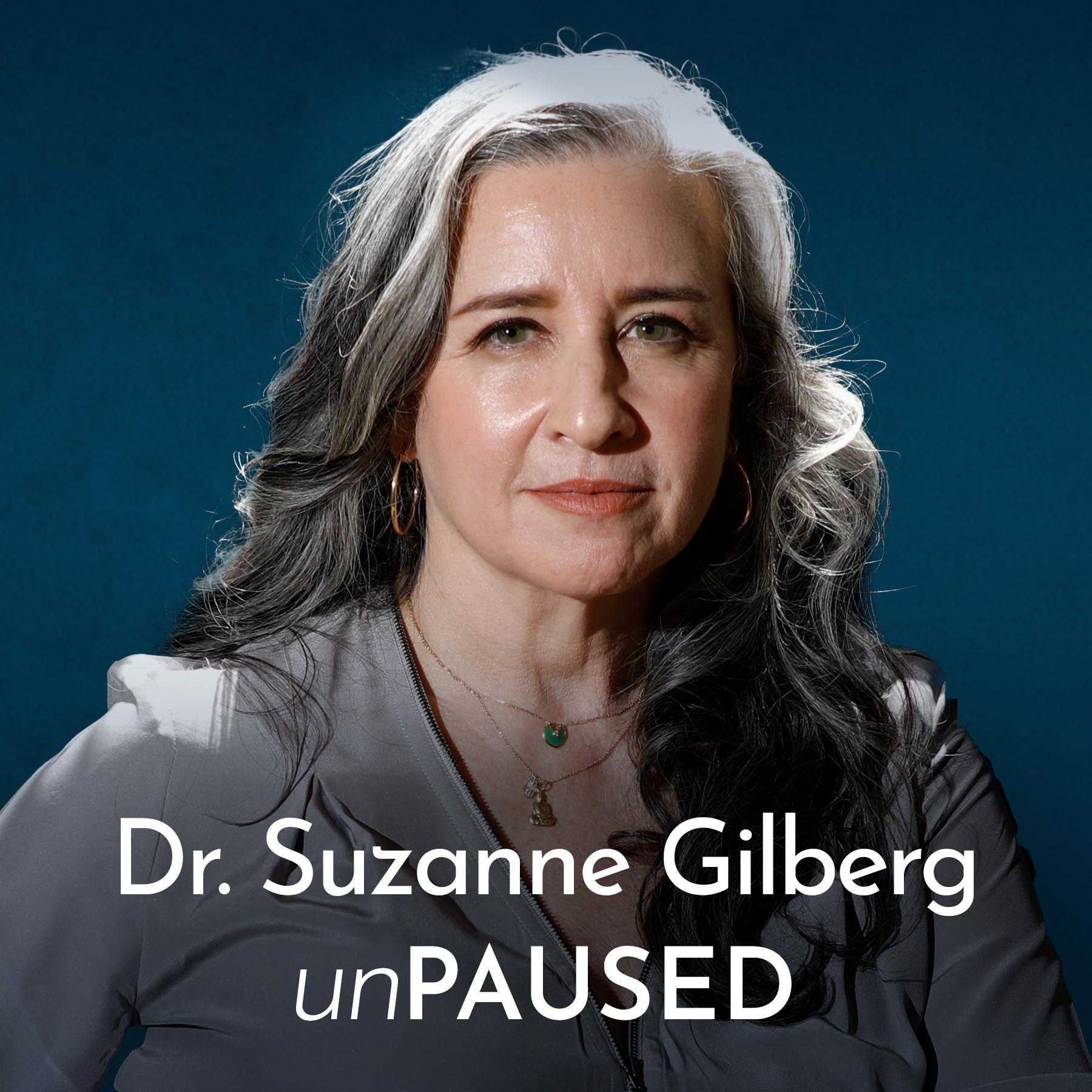
Plant Medicine for Menopause: What Science and Ancient Healing Say Actually Works
from unPAUSED with Dr. Mary Claire Haver
66m 38s
The transcript critiques a healthcare system that prioritizes productivity and reimbursement over genuine patient care, particularly for women in midlife. Dr. Suzanne Gilbert-Glens and Dr. Mary Claire Haver discuss how time constraints and metrics like RVUs prevent clinicians from listening, recognizing patterns, and addressing complex issues like perimenopause. They emphasize that perimenopause, often misdiagnosed or treated with polypharmacy, is a normal physiological phase marked by loss of resilience, requiring personalized support rather than quick fixes. The system also fails women postpartum, especially those over 40, by ignoring the overlap with perimenopause. Dr. Gilbert-Glens shares her breast cancer experience to illustrate how health span—defined by vitality, joy, and authenticity—can be pursued despite adversity. They highlight moral injury in physicians forced to turn away patients or rush visits due to systemic constraints. Additionally, reimbursement disparities undervalue women’s care, such as OB services and procedures on female anatomy. The conversation calls for a shift toward relationship-based, time-rich care that respects women’s lived experiences and empowers them to advocate for themselves.
The system is not set up for people to experience each other and for your doctor to experience you. We just don't even have time. So we don't get reimbursed by insurance for the amount of time that we're spending reading about this, thinking about you, calling you back, reviewing your labs, sitting and hearing your story. We get paid for how many people we saw that day. That does not lend itself to dealing with these kinds of issues and talking about stuff and recognizing patterns. Yeah, it just doesn't. The views and opinions expressed on on pause are those of the talent and guests alone and are provided for informational and entertainment purposes only. No part of this podcast or any related materials are intended to be a substitute for professional medical advice, diagnosis or treatment. One of the things I've learned after years in medicine and talking to women in midlife is this. The system doesn't give them the time, space or respect to be truly known. And yet, the problem is often framed as that women just don't know their bodies. My guest today deeply understands this. Dr. Suzanne Gilbert-Glens has spent her career caring for women across every life stage, but especially in midlife where complexity is the rule, not the exception. She's a clinician, an educator, an integrative medicine expert, and now the Chief Clinical Officer of Monarch, a membership-based healthcare practice designed to restore something modern medicine has almost completely stripped away, time, relationship, and trust between women and their clinicians. This conversation is important because the current healthcare system is failing on two fronts at once. It's failing women who need care that is nuanced, layered, and deeply human. And it's failing clinicians who are increasingly trapped in rushed visits, administrative burden, and productivity metrics that reward procedures over listening. The only groups consistently benefiting from this system are insurance companies and large corporations. Meanwhile, physicians experience what we now call moral injury, the distress of knowing how to care for patients, but being structurally prevented from doing so, and the patients are paying the price. I'm so excited that Suzanne is here and we can talk about the hard questions about what good healthcare really looks like and who we are willing to fight for. I'm Dr. Mary Claire Haver, a board-certified obstetrician and gynecologist and certified menopause practitioner. I'm also an adjunct professor of obstetrics and oncology at the University of Texas Medical Branch. Welcome to Unpost, the podcast where we cut through the silence and talk about what it really takes for women to thrive in the second half of life. So Suzanne, welcome to Unpost. Thank you for having me. We talk a lot about health span on this. Yes. And on God on social media. I don't know if we're being fed the same stuff. I'm sure. But it is through a very male, yeah, Lynne, the whole biohacking and it's exosthenics. How do you define health span for women? Well, I mean, I'm going to say something that I know you know and I'm sure you've talked about many times on the podcast. I love the word health span as opposed to life span for obvious reasons because being alive but not doing well and not thriving. No, thank you. No, I think we all know how we feel about that. Nobody wants that and we know that women live much longer than men and in much poorer health. So this idea of health span is unlocking that vitality, unlocking the opportunities, the inflection points that we have and they are numerous. It's not like it's ever over, by the way. It's not like you missed the boat at 70. It would be better if you're working on it at 20. Like I saw an influencer the other day who's got probably a beat. I think it was a PhD and she was talking about osteoporosis. She's like kind of coming down on on the osteoporosis movement and all the talk about it because you've reached your maximum of density at 30. Right. To be talking to 25 years. She's not wrong. Right. But that is I mean, we never know 100%. So listen, I even look and I'm a person who's been you know, a fitness person my whole life. But I'm at risk for osteoporosis for a number of reasons. I'm a small person. I had breast cancer, I whatever, blah blah all the different things. And this is a good example. I doubled down in the last year on really getting to the heavy weights and like not just talking the talk but walking the walk. I've been on hormones now for like almost two years. Okay, well, you know, people's heads just exploded. Oh, because well, they don't we didn't talk because I'm a breast cancer survivor who's on. You know, I forget that about you from time to time because you're not my whole personality. You're in the thick of it. It's your whole personality. But go back to that because I think we have several pre-vibers survivors. Yeah. People in the world of having to deal with. Yeah. The potential or having had breast cancer or pre-cancer cells and all the things. Can you barely talk about it? I mean, I do sometimes, but I mean, I don't I don't focus on it a lot. I mean, that's a whole story and I know of itself. But when you talk about health, man, that's a great example. So I was diagnosed with breast cancer at 47. And of course, it was devastating and traumatizing and all sorts of things and it changed my life forever. Now in the end, I am grateful for it. It because it forced me to really look at like who I was and how I wanted to live. But you could take that diagnosis and say, okay, your lifespan is particularly. It may be shortened. So what is going to be my health span? How do I want to live my life? It's not just like taking hormones and lifting weights and whatever biohacking thing we're talking about for women because I think you and I are on the same page that dealing and managing our menopause appropriately, which is something that we have to decide for ourselves in consultation is 100% going to impact your health span. And I'm not saying I didn't have those moments. I did, but it's also joy. It's also curiosity. It's also what is what do I have in front of me right now? How do I want to live right now? And how does that set me up for so many other opportunities? Because when you are open to yourself, this is where I get really into the philosophy of stuff. When you're open to you, you're authentic self and who you want to be and you're expressing that, wow, you draw the right friends, you draw different opportunities, you see your world differently. That's to me, that's vitality. That's health span. What I see is that women, the medical system is set up to force this breast cancer diagnosis or potential breast care diagnosis to be their whole person. Oh, yes. Because it's because everything is so long. You can or cannot because there's potential that one cell may be, and the whole rest of their body, their lives, their happiness, their fulfillment, their sex life is ignored. The only thing that exists is the breast cancer diagnosis. This is a human being. And I will say that some of it's just my personality. I'm an optimist. Some of it is what I had done to work on healing myself. I had been doing yoga and meditation for, I don't know, about 10 years before my diagnosis. And I will never forget going into the MRI. I had the biopsy that I had breast cancer. Now I had to go into the MRI and see where else is it? What is going on? I got into that MRI machine and is so overwhelming. You're literally surrounded. Knowing like, okay, my fate is right. I said, no, your mantra to get through this very uncomfortable experiences, this is not who I am. This is happening to me. That's literally that's what popped into my brain. And that's what I did. And I did that for 45, f-ing minutes in that machine. Oh my god. If anybody's had an MRI, that's what it sounds like. It's not fun. Yeah. And that's what I said to myself. I said, you know what? You're not going to wallow in self-pity. You get some time to be sad. And I was freaked out. My kids were so freaked out. Oh my god. And I said, no, you're not going to adopt this as who you are. That was my decision. Yeah. You've talked about Perry Metapause. Yes, I have. For it was like even a word that the internet knew how to say, I feel I feel like and I'd love to hear your opinion that Perry Metapause is kind of where Metapause was three years ago. Yeah, I agree. People are starting to really understand like, it's not it's not about that final menstrual period only. It's about the decade that you spend leading to that. That people don't realize like what do you think women should be doing during that decade? Well, first of all, we have to be talking about it more so that younger women and younger men, they have women in their lives, like, understand the experience. It's it's a like a very low prolonged puberty. And it can be quite discombobulating and very disconcerting and people feel not like themselves. We know we talk about this. When I talk to patients and I teach about it, if I were to characterize it in one term, I'd say it's a loss of resilience. Yeah.
on all levels, emotional, spiritual, psychological, physical. It's really rough. So if we don't prepare ourselves and our patients and our colleagues for this experience, people are going to be searching for a solution that may not fit what the actual issue is. And I'm not calling it a problem on purpose. I'm not saying it's not problematic, but let's also, can we reframe this? This is physiology. So if we understand it as an expected shift in physiology and we treat it as such, we have more appropriate opportunities to intervene in a more precision manner. What is your personal history? What are your goals? What's your family history? What are your risk factors? What are your data points? We have to kind of combine it, the art and the science of medicine in here, and women are going to have to advocate for themselves because they're ahead of the medical community on this. They just are. We know this because you and I have been seeing these people for a very long time who are now on polypharmacy, antidepressants, and go- Polypharmacy for our listeners is on multiple medications. So it was not unusual to have a woman in Perimenopause who's been given sleeping pills for her insomnia. She's been giving anti-anxiety meds. She's been giving antidepressants. She's on something for her fibromyalgia, something for her irritable bladder. Her fibromyalgia, which I'm going to go ahead and say is just Perimenopause. Muscle, skull, syndrome of medipause. All sorts of weird, you know, random diagnoses which may or may not be accurate. It's also a time where because of the loss of resilience, we see things that are big risks that get uncovered if we're looking. So again, it is unfortunately it's on us as women to understand enough to ask the right questions and to also understand that we might be, I'm going to use an old analogy, if you go to the hardware store looking for milk, you can keep going back to the hardware store and you are never going to find milk there. So you might be going to a clinician who just does not understand it, does not grasp for whatever reason and it's going to have to be time to move on. So you were practicing obstetrics until very recently. So there's something we get a ton of questions on. And I just read the statistic last year that women now over 40, more women over 40 are having babies than under 20. That was the first women history we've seen that switch. And so talked me now I stopped doing OB, I was doing emergency care only since 2018. So I stopped my full OB practice in 2018. So almost 10 years. And I was aging along with my patients. I was starting to see it, but I didn't know enough about parrymenopause to recognize it. So like so many questions about the shift from postpartum directly into parrymenopause. What does that look like in women or light, heads are exploding right now. Well, I will say that I feel like an I/O in apology to many of my patients. Well, same. Because I didn't really get it myself. And here I was like doing OB for a long time. I was really had entered into the menopause space quite early through my, actually my breast cancer experience. I was seeing all these young breast cancer survivors and they were going through menopause early. And I was like, "How I started in menopause." So now I'm in Los Angeles. A lot of women have babies over 40. I had a lot of women in parrymenopause getting pregnant and having young children. And we were telling them like, "Look, you're 42 with a two-year-old, you know? Of course you're tired." Yeah, it's just so much harder. I mean, which is true. But like one of the reasons it's true is they're in parrymenopause and nobody knows it. So Ion apology, but I think that, once I started realizing like, "Oh, wait a second. This is something more than that. Why is nobody talking about this?" This is enormously important because it's affecting not only people's fertility, but it's affecting their postpartum experience. So they're having a much more difficult time with sleep disruption with mood disorders. I mean, we know that a pregnant woman through the night that mama is in. Exactly. Yeah. And is it really postpartum anxiety or is it really parrymenopausal, PMDD, that's showing up, you know, severe mood disorders? All these things that we know that are happening in the parrymenopausal population, it's like on steroids if you've just had a baby. And it's really this confluence of a lot of unpredictable hormonal fluctuations, right? You're going from this really high level, really steady state of estrogen and progesterone. And it is just dropping precipitously postpartum and it's plummeted you into an era where you're not even going to be going back to regular cycling necessarily anyways. So you're about to excrete high highs low lows and you just, you feel like a truck hit you. I mean, these are women that really deserve our attention. Yeah. And there's almost no papers on it. I rarely see it in the academic literature. No, I haven't really seen it. I see it on social because again, women are around the social water cooler and finally talking about it, oh my God, that was me. And but I think, you know, we owe that population. We owe women thousands of years of research, but they are particularly because they're becoming more and more common now. Yeah. And we're not preparing them for this. No, and this is people's lived experiences. They're so vulnerable. Yeah. Very much so. And again, this is a really big opportunity to understand, like to support them through it so that they understand the impact that this could have on the rest of their life and on their health rather than, again, I don't want to sound anti medicine. I use medicine. I prescribe medicine. But it is not, there's not, this is like a not a pill for every ill situation. Like everybody does not need to be Medicaid. They need to be supported or they need to understand what the medicine is for and why we're using it rather than just like I have seven minutes to see you and I don't have time to unpack this, which as you know, I have a lot of compassion for our colleagues that are living in that system. Yeah. Yeah. We lived in it for many decades. Yeah. Many decades. But you know, if you don't have the time and there's no literature on it and it's not being pushed in the guidelines, it doesn't exist. It doesn't. We don't have time to make it exist. No. Yeah. Why is time? Why has it become such a critical and endangered resource, especially for women and women self-care? You know, if you look at the systems under which we are trained, the systems in which we work, we're navigating something that really isn't set up for humans. It's set up for shareholders. It's set up for reimbursement structures. It's set up for workflows, not necessarily for the excellent connected practice of clinical medicine. That requires that we talk to each other, that we, as clinicians, have the bandwidth to listen and then to apply our knowledge. If we are being forced to work for RVUs and-- What's in RVU? It's a relative value unit. Okay. That sounds like you're working in a factory. That is how our time is valued. It is called a relative value unit. And it is decided by a room full of crusty, dusty, mostly male, mostly surgeons who decide-- The relative value of our work. The relative value of your work. Yeah. So the work of the mind is not reimbursed. No. Only the work of the hands. Yeah. So I'm a surgeon and I did a lot of procedures. I mean, I did them for the right reason. Believe me, I wasn't making enough money to be doing surgery on you just to make-- trust me. I was losing money in the office. That's a whole other thing. So the system is-- it's not a whole other thing. It's related. That does not lend itself to dealing with these kinds of issues and talking about stuff and recognizing patterns, you know? Yeah. It just doesn't. And also, when you even look at procedures, if you look at equivalent procedures-- Oh, yeah. --to tell you on women versus men versus the equivalent procedure done on men because we have-- especially in urology, right? We have autologous body parts. So the clitoris is the equivalent to the head.
of the penis. So if you look at these procedures, men are reimbursed like three to five times higher for the equivalent procedure. I remember learning because you know when you work for a corporation, they are controlled by this model of as many patients that you can see in the clinical setting and do as many procedures as you can. And that's where the money is made. They are a slave to the same system, the same reimbursement system. Yeah. And it is, it's heartbreaking. So nine months of care for OB, right. Dozens of over a dozen visits usually. And then God forbid she has some condition that needs to bring her in. Ultra sounds, you know, and then delivery, which might take five minutes, might take 50 hours, you know. And you have two patients. And you might, yeah, you're responsible for two patients. Or maybe three or four. And when you look at what the reimbursement rates for for that versus you break your leg and you go to orthopedic surgeon and they put a pen in it. And you know, which is a complicated procedure. And you know, yeah. But the reimbursement is like 10 to 1. But tell me you don't care about women's lives, you know, it's like wow. Yeah. I did it as long as I did because I loved doing I loved my patients so much. And then I just got tired and old. And I didn't really had a, you know, we're going to talk about this some more, but I had a moral crisis when I was like deciding to leave the traditional reimbursement system. Because that's what I was brought up in. But actually at the very beginning of like medical school, it wasn't that bad. And in residency, we operated under a charity system. Uh-huh. Yeah. So we took everybody. Yes. Yes. We saw everyone in the state, which is right checks. Right? Yeah. That stopped. Yeah. And by the time I became faculty. Yeah. And we were to turning people away. Yeah. Who we could cure their disease. We could cure their cancer. They were having stage one in a mutual. Yeah. Turning them away because they didn't have insurance and couldn't find coverage from their county or whatever. And I wanted to do as faculty signing off on that chart. Yeah. Yeah. But the hospital was like, unless it's an emergency. Yeah. Yeah. We're not going to do. Mm-hmm. And that's not why we signed up to take care of human beings. We used to like, how she had her kids or five years ago. She would have done it and not thought twice about it. You know, to the teaching institution. Yeah. I had a similar. I mean, I think we trained at the same time. I had a very similar experience because I started at a county hospital in medical school. So literally all comers. And I mean, it was wild. And I learned a ton. I'm so grateful to those patients. And then I went to Cedarson, I medical center, which is shirts, you know, hospital discharge. But also at the time, we took all comers. I mean, obviously through the emergency room, it's a federal violation. Right. Not to accept anybody. But it was not an emergency. But we took everybody. And we had one of the reasons it was such a great training program is that we had an enormous number of patients who were either indigent or were coming in through like emergency medical. And that all shifted. We had this pregnancy is different. Yes. We could get anything covered in pregnancy. But I'm talking about like, yeah, I got a call out. Yeah. Yeah. It all shifted. And that was very scary and sad. It was horrible. Mm-hmm. So horrible. Yeah. So when I was 25 weeks pregnant, I was a second year resident. And all my girlfriends that had their babies or were about to deliver. And I was walking around my brother-in-law and his wife had come to visit and would Galveston. And it's, you know, old streets, cobblestones. And I'm walking in these cute little wedges, like trying to be cute at 25 weeks. And I twist my ankle stepping up on a curb. And I kind of stumbled back. My brother-in-law caught me like basket cut, which under the arms. And I remembered this like stabbing pain in my foot like this sharp like well. So I couldn't walk on it. I couldn't bear weight. They bring me home. Of course, we call our friend, the orthopedic surgeon resident. He comes over. He's like, yeah, it's probably broken. You need to be the ER. Okay. I'm in a ton of pain and I can feel my tummy getting tight. Oh wow. And we go to the ED and they all freak out because I'm pregnant. And ortho comes and they're like, oh, she's pregnant. You know, like they get the monitor. I'm contracting. Okay. And they're like, are you in pain? And I was too scared to tell anyone how much I was hurting because I thought they would label me as a drug seeker or whining. Whoa. Just because of, do you think that was because of your own experiences as a resident and how people treated women coming in with pain? And like we were taught you need to minimize your symptoms. Wow. Yeah. I was, I had a, my God. And my foot that had snapped into the pain was so severe, I was in preterm labor. Oh my God. And I was too scared to admit it because I was worried I would get labeled as a drug seeker. But that's also like medical training too. I mean, I think, you know, as we get further in chart careers, I don't know, I've just gotten more into, I was always introspective, but I'm very introspective now. I have more time to do it. And I think about the stuff that we subjected ourselves to because I didn't realize like we were that parallel because I was pregnant in my whole residency also and sucked it up so hard because I didn't want people to feel like she got pregnant and she got lazy and she didn't carry her way. And we're taking more call because she got pregnant, you know, and whatever. And I was like, Oh my God, I was a pregnant intern. Cover at night, you would have to cover the whole house, right? The whole hospital. So I had four pages. I'm like, I don't even know how I had my, how my scrubs weren't falling off. You'll get a clown, right? The scrubs are tied up here. I had the dynaumc pager. I had the emergency room. I had labor and delivery. I had the floor and we had those old, no, those humongous, huge ultrasound machines. Oh, yeah. And we were like, I'm pushing them and I'm pushing it down the hall. And I'm like, oh my God, sciatica. And I mean, I'm what the hell? No normal pregnant woman would do this. And nobody else who worked with the pregnant woman would let her do it. They were fine. I was the intern. She's doing her job. I mean, I would never have complained. It's so crazy. It's so crazy. It's so not normal. Yeah. I don't know. And then, you know, then you come out and of course you're like, if you're, if you're an empathic person, your response would be like, I would never subject anybody else to that. But people are people. And they're like, I did it. Why can't she do it? Yeah. And that's how they treat their patients and their colleagues. Yeah. That's not good. I worry. No. What do you see when a woman finally feels and I've experienced this in my clinic? Certainly, I had wonderful moments under the old system. Yeah, of course. Yeah. Of course. I just, you know, it was getting so bad at the end. The moral injury, the administrative burden, you know, the paperwork just fighting with insurance companies for more people being hired to tell me what to do. And this was what I was at and just not feeling like this was the best medicine I could practice. And then leaving that system and going into building a new system, I didn't know how to open a medical practice. I'd always been employed my whole life. I showed up with my stethoscope and they gave me a room and I stuck a chart. Right. Right. And I went to work. Right. And so I literally like got the idiots guide to opening a medical practice. Like, like, I didn't know the rules. Like, do we charge taxes? Like, what? How do you and I do incorporate and all this stuff? But we decided to do fee for service. And that worked for us. But like, for the first time in my career, other than sitting bedside with someone in labor, right? When I was on my own time and just visiting with a patient, I had a whole hour just spend with a patient and really get to know her and really understand her goals, her needs, her wants. And I just within the first month of practice, I just realized I never felt that good consistently. Yeah. You know, not everybody had a happy outcome. A lot of survivors would come to me and say, nowhere to go. And I, you know, couldn't fix everyone's exact problem. But I could give them the gift of time and give them the gift of my heart and not feel so fractured and having to choose my family over my work. And it was just unbelievably magical. Like, what's that been like for you? Oh my God. Exactly what you're saying. I mean, that word fracture really resonates with me because my stress level was so high. Like, I'm thinking about it now. And I was like, you know, a little bit of chest pain, just like running from room to room or knowing like, oh my God, I'm running over because she's crying and I can't, she needs me. I cannot walk out right now. I can't be like, you know, or your hands on the door and you know, there's three rooms full. And now that's when the real question emerges and you're just like, oh my God, I can't, I don't feel that at all anymore. But it's really interesting because I remember initially when I started. So I left a 20 plus year career in a very large prestige practice here in Beverly Hills where we had very high volume and did everything and prided ourselves on doing everything. And it just for me, I just, it wasn't, it wasn't me. It wasn't what I needed to do or what I wanted to do. I wanted to spend the time. And I was always running late. And even when I started the new practice, I remember being nervous like, oh my God, I mean, how am I going to, how are we going to fill 45 minutes? Oh my God. It's like so hard. It's so hard. You just sit back. You sit back and listen. And you get all the information you need and more. You get to really engage. I really knew my patients. I think pretty well considering. And I had patients for decades who stayed with me and children I delivered who then became my patients. You know, multi-generation families. I was connecting, but I was doing it at a big, actually a really huge cost to myself. Yeah, me too. Because I was giving, giving, giving and I had no time to like relax and think. And also I felt like so
pressure that I'm going to make a mistake. I'm going to harm somebody unintentionally because I don't have enough time. I was so insane and looking back on it, I don't know how I did it as long as I did. But I will say I was initially nervous like how can I do this? A year in, I just completed my first year of my practice. It has just been enormously gratifying and I can't tell you, you know, the end of the year I had a lot of patients come in with a lot of gratitude telling me how I change their lives because I had more time to thoughtfully order those labs and pick up on things that I wouldn't have had time to address. I was taught very old school, don't do labs that you can't act on results with. So even if I knew what the path for would be, I'm not, I really, when somebody would say to me, hey, can I just do my, you know, blood test here? I'd be like, cringing because I thought, oh my god, because it's going to be more stuff, I'm going to have to address honestly. Then again, I just didn't have the time. I have all the time in the world. They get on the body composition. I do their labs. I do a deeper dive into lipid pro, I mean, just by adding lipolidol A, Lp little A, Apo B. I cannot tell you between that and body composition looking at. Oh my god. They're fat. They're visceral fat and their muscle. It's, it is a game changer. It's a game changer. And it is helping someone plan the next 30 years of their life because I think people knew me here in LA as like, you know, she does Manipause, she wrote this book, she's, you know, on social media, whatever. But it's not really just the hormones. I mean, sure, it's the hormones. Yeah. But it is not, it's that this is the moment in time, whether you're, and I'm thinking about specific people, whether you're 47 or you're 69, whatever moment in time, you come to me, there is something that we can do for you. And I'm seeing massive results. These are women who are really, really high functioning, successful, sophisticated people. And they were running all over town, getting no help, couldn't figure it out. All they needed was that being able to sit, tell their story, we can unwind it. That's also when some of the secrets come out, things that they never told anybody that they had a history of abuse that they have a substance problem, that they are trying to work on their eating, that they have all the stuff that has big health consequences, mental health and physical health consequences, that they're not telling people, because you're not going to walk in and say, hey, I have a history of an eating disorder and I'm really worried about my bone density. Who says that? They don't. But you know what? You spend a couple hours with people, they feel safe. Yeah. To open up to you. You can do the real work. Do you think that are the way we deliver healthcare in this country for most patients is broken? Yeah. It's just not human. It's not human scale. It's not human size. It's not human for any of the humans. You and I are humans. How would you fix it? I mean, I'd blow it up. That's what I do. I think we need help get for all. Because it's been insidious and we live through the change. Right? Oh, yeah. We've watched it. We've watched it. We've been in I think in a slow mo implosion. I think the most in Dr. Mike had put this graph up super popular. I'm an educator on social media. He said, family medicine doc. And he put the graph up that I've seen multiple times when you look at physician, payment over time, which has grown under the cost of living. Yeah. Yeah. Oh, yeah. And then you look at administrative costs. It's insane. And literally it is like a skyrocket that has gone. We basically healthcare cost of increase because of the cost of administrative healthcare. Not. Yeah. And our outcomes are not finished. And you're delivering the healthcare and the outcomes are. I mean, in OB and OB specifically maternal mortality. We've lost ground. Yeah. In so many areas. And I've watched it reshaped the way medicine is practiced, which is really scary to me. Tell me tell me like what are your impressions about how they've been? It's been recently. Well, one that we used to take care of curable cancers. We used to take care of these themes for all the patients who walked in, but but really being so hamstrung by the time constraints. So like this administrator breathing down your neck, not only to see 30, 40 patients in one day. Yeah. But to get all five stars. Yeah. Yeah. Exactly. Right. So our pain. And then they tell us what we can and can't do was getting deep to take care of these patients. And then the patient is frustrated because insurance won't cover. You know, they're all coming in on multiple different insurance plans. And there there was no method for a long time that there's a better one now. Of me being have any idea of what their insurance is going to cover. Right. You know, and then if you look at the rate of prior authorizations and how that has skyrocketed. I mean, it is a racket built to destroy patients and their clinicians try to take care of 100%. So yeah. I mean, they don't want to spend the the money that you invested. So who's making money in healthcare right now? The insurance companies. The insurance, I mean, the hospitals are losing money handover fists too, by the way. Yes. There's a lot of misconception about that. Yeah. I mean, people are getting these crazy, crazy bills and like their Tylenol is $80, whatever. But that's because they're the hospital cannot bear under the weight of the insurance system either. So the pharmacy benefit managers, which are essentially owned by the insurance companies, which are setting the rates and telling you whether or not this medication will be covered. This is like a freaking cartel, man. It's a cartel. And I think the other thing is when people call it a healthcare, it's healthcare. It's health insurance. I mean, it's there for God forbid you end up with a heart attack or cancer diagnosis or a car accident. You need to be insured. I believe in my eyes and I are fully aware that our health insurance is to keep us from going bankrupt. Yeah. Something catastrophic happens. But I don't know if our listeners understand. I do not think they do. Number one cause of bankruptcy in the United States. It's medical. It's medical bills. Yeah. The number one cause of this does not exist in Europe. It's just it's just not existing Canada. It's about a real injury and then we're in the other countries. Then it's wrong. - How old are you? - I'm fine. My baby. - I'm doing 5 or 6 years old. - I'm your baby. - How old? - I'm about 10 years old, - I'm sick of hearing a baby. - Really? Yes, I'm fine. I'm very tired. Oh, right. It's good to have a good sleep, - and have a good sleep. - Have a good sleep. - Have a good sleep. - S.A.K.O. Pistefi. - A good sleep. - Have a good sleep. - We're going to have a good sleep. We're going to have a good sleep. - Okay, so I have a 25-year-old who is on my insurance - for another 9-1 world. - I got one too. - I'm not counting because we are. And I mean, I'm spending almost $2,000 a month on the premium. That doesn't mean that it's paying for anything that I need or she needs. I had a fabulous experience this year where I ended up having to get whatever I had. I got a biopsy on my other breast and everything's okay, but it was, I was $3,000 out of pocket. And I'm paying my premiums. And this was a recommend. I wasn't doing some experimental procedure. It was like, "Hey, we saw something abnormal. We need a biopsy." No, I got to pay for that. You got your deductible. You got all these things. It's insane. So how do I think it needs to be fixed? I think that needs to go away. I think there needs to be a level playing field. I think there needs to be national health care for people. Will it all be fabulous? Maybe not. But it'll be something. It's better than people not being able to afford, not qualifying for state or federal insurance. So then they're not taking care of their chronic diseases. They're developing chronic diseases. They don't have any access. And now they're showing up to the emergency room for their chronic disease management. And it's costing them their lives. It's costing them their finances. And it's costing us a lot of money. Because someone walks in, having that stroke, we're going to treat them. So now it's costing a ton more money than if we just would have treated them. And there are going to be people like in other countries where there's national health care who have the means to invest in their health. And is it fair? It's the way it is. And they will seek doctors like you and I and have a different experience. And I think there's a trickle down. One of the things that I say to my patients, you know, because I called you a lot about this. It was a very, very hard decision for me to make ethically and morally to leave the system behind as well. For the exact same reasons. And so when we talk about alternatives to insurance, there's a lot of pushback from people who believe in socialized medicine or that health care should be right and not something. How do you respond to that? I think they're right. I think it is a right. And I think it shouldn't be a privilege. I think people who have the privilege to afford the care that they want to access should have that right as well. And these are people often that are influential. And that can also have big impacts out in the world and the ways that they are, including in policy. But the reality is, why are we either oring everything? Why is everything so binary? It's very important that we have more than one way to do this. And I do think that it is a right. But the other thing is that people don't understand how you and I got here, right? I self-funded my medical education. Okay. I, my debt was probably half a million in premium, in like, you know, just in my loans. So you can't ask doctors to sacrifice
a decade or more of their life, plus their financial future, and then come out and not be cared for. It's not a human system. I don't think any of us are saying, like, I didn't go into medicine to get rich, okay? Hello, my friends of mine who wanted to get rich already did that like a long time ago. - Yeah. - That's not why I'm here. I didn't work 80 hours a week while I was pregnant 'cause I'll like care about his money. And I feel like if people understood what it took for us to become physicians and then to stay physicians, they would understand that we're on the same side. And this is also this polarization is coming from forces that want us to stay divided because if we all united, then we would all recognize where the problem really is. And it's not who's delivering healthcare and who's receiving it. It's how healthcare is getting delivered and who's controlling that. It's a complex situation. I do think it's solvable and I think right now we're in an interesting time because people are thinking more creatively, people are thinking in a more positively disruptive way. And I do think that social media has brought patients and clinicians together in a very powerful way. - Yeah. I am a member of several physician groups online and it just seems to me that a lot are leaving traditional medicine, wanting to leave traditional medicine or can't leave because they're tied down by loans or contracts and whatever. What do you say to them? - Well, I mean, we are looking at, I think a deficit of something like 86,000 physicians in the United States in the next like 10 years. That's a huge problem. Who's delivering care, right? And we've been talking endlessly about how the system is really injuring the patients and the clinicians. So of course they're leaving. They can't take it anymore. And there's this sort of conversation that you brought up actually about burnout versus moral injury. And they are different. Burnout is physical and emotional exhaustion. And it sort of centers the problem on the person experiencing it. People will kind of depersonalize, get kind of like, you often see a lot of negativity, skepticism, cynicism. Moral injury is the choices you're being asked to make are in conflict with your own ethical and moral guidelines. - Yeah. - And that is why people are leaving. - That's PTSD. We were kind of taught and we knew to expect the exhaustion. That is what you signed up for. - Yeah. - And at some point in your career, you start pivoting and shifting and whatever. But like people are leaving the system. - They're leaving because they can't take it anymore. - Yes, that's exactly right. They cannot resolve the conflict in their head and it's killing them. - Yeah, and we don't, and it is killing them because physicians have actually the highest suicide rate of any profession. We're sensitive people. And females live longer than males. - Unless you're a female physician. - There's no joke. - You lose. - This is some serious stuff. - That advantage. - And we're not here wanting and complaining. We're not just stating the fact. - It's just, - Well, 'cause it's gallows, that's how you get through it. But I mean, we're just stating the fact. So it's like if we wanna have excellent healthcare, excellent provision of medical care, which is what all of us deserve, then we need to start supporting our clinicians in a real way and offering opportunities for them to practice the best medicine. If people wanna get great medicine, they have to expect it and they have to expect that the people who are delivering it are being treated well. I mean, this is a whole podcast in itself. Unionization and all these other things. My response was to pull out of the system and say, you know what? I can't do this anymore, but I don't wanna leave medicine. And with the help of a startup that I was a part of, I was advising and consulting for years in industry. So this is monarch. - Yeah, so the monarch, yeah. - And let me get this right. You are the chief clinical officer. What does that mean? - It means that I'm in charge of the clinicians, right? Basically, I help to shape who we want to bring into the company and I'll explain what we do. I also help support these doctors in practicing in the way that they wanna practice. The company itself is operational support. So we support independent practitioners, the physicians own their own practice. We come in as operational support. All the things that doctors are not good at, running a business, like you said. We don't know how to start a business, the legal, the insurance things, the back office, the marketing, the billing, all that stuff. So we come in and we do that. And you get to practice medicine the way you want. It's membership model. So that also actually takes a lot of pressure off because people pay for the year and they're getting their care. And now every visit isn't being billed. You're not like, do I call her because I'm gonna have to pay? And I'm not thinking, do I fill my day with 25 patients or I'm not going to be able to pay my rent and my staff. It just removes all of those barriers and what you get is time and you get banned with and you get creativity. So as chief clinical officer, I'm helping a shape who's joining us. And I'm also helping shape the clinical protocols. We don't have a monarch way, but we are really excited to be working on a sleep module. We're working on a cardiovascular health module. So if you are practicing in an environment where you have great clinicians and referrals and people that you're working with already terrific, but if you don't, here's what we have to offer you. It's really powerful medicine. We're allowing people to do great medicine 'cause we're doing that structure and that foundation. So for me, it's been super exciting. And also listen, Mary Claire, I've been all over the country this year talking to doctors like me, hearing their stories. And it's been hard. It's been gratifying because I think that I'm, whether or not they decide they wanna do this kind of medicine, they see that there is some hope. There is a way forward for them, but it was rough to be all over. I mean, the East Coast, the South, the Midwest, it's everywhere where doctors are like, I'm done. I'm piecing out or I can't afford, I have to keep doing this. I have all these bills to pay. I'm stuck and I'm miserable. I mean, that is terrible. That is not a person who's gonna be able to provide great care to anybody. So having an option for them has been very, very, it's been fun, actually. And reignited my passion for this. - Now it's time for the Mitty Paws. I'm Dr. Mary Claire Haver, hosted the podcast, Unpaws, bringing you a word from Mitty Health. Today we're gonna take a pause and discuss heart disease. Did you know that heart disease is the number one killer of women responsible for one in three deaths? And here's what many women don't know. Up to 80% of your cardiovascular risk is shaped by your lifestyle. When estrogen declines during Mitty Paws, it's protective effect on your cardiovascular system go with it. Cholesterol rises, blood pressure climbs, and visceral fat increases. Your heart needs more support now, not less. Heart health can have a significant impact on women, especially during Mitty Paws. The same hormonal shifts that trigger hot flashes and brain fog can hurt your cardiovascular health, but treatment could make you feel better. That's why Mitty Health is dedicated to changing the way Mitty Paws is treated with a personalized approach to each women's specific needs. Women come to Mitty Health to address the symptoms of Mitty Paws they see and feel every day. They partner with you to find a treatment. Whether that's HRT or a non hormonal solution that will relieve your symptoms and make heart healthier habits easier to put in place. I personally have found that these five habits can make a real difference. Number one, don't ignore your hot flashes. They're not just uncomfortable. Frequent untreated vasomotor symptoms are a signal that your cardiovascular system is under stress. Take them seriously. Talk to your clinician. Number two, move your body. A sedentary lifestyle is a major risk factor for heart disease. Aim for 150 minutes of cardio per week plus two to three strength training sessions. Even daily walks add up fast. Number three, eat for your heart. Colorful whole foods, enough protein and fiber, healthy fats like omega-3s, and cut the ultra-process foods. Studies link them directly to higher cardiovascular risk. Number four, if you smoke, please stop. Smoking is the single most modifiable risk factor for heart attack and stroke. Number five, have the HRT conversation. Women who start hormone therapy within the first 10 years of menopause or before the age of 60 show lower cardiovascular risk and lower risk of death from any cause. The science is clear. You deserve to know your options. It may not be right for everyone, but every woman deserves the conversation. And Midi Health is setting a new standard for health care. As the nation's fastest growing women's telehealth company, Midi provides accessible insurance coverage services. Building on its leadership and parry menopause and menopause, Midi fills the critical health gaps women face at every age and life stage. If you want a clinician in your corner who understands what your body and your brain need right now, that's exactly what Midi is built for. Go to joinmidi.com, join midi.com, and connect with one of their clinicians today. (upbeat music) - Integrative medicine. - Yes. - What is that? 'Cause so many people don't know what that is. - I mean, integrative medicine is really integrating more traditional holistic indigenous systems. - You have a special training. - Yeah, I'm trained in Ayurvedic Medicine, which is the medicine of India, the ancient medicine. I mean, it's probably,
One of the oldest medicines recorded on the planet. There are textbooks on surgery and on anatomy from You know depending on how you date them two to five thousand years ago So it's pretty interesting it came out of spiritual practice like most indigenous medicine, right? It's rooted in the land in the plants in the seasons in what was available there in Something bigger than ourselves came out of Hinduism Chinese medicine developed around the same time and so I Just set up my own curiosity started studying that after I finished residency and I think it's because there was something missing I was like all this technical stuff is magical You know I can do surgery and people can be in the ICU and all these things and I can you know do a C section of I have to but something was not quite there and I was seeking I Think some deeper meaning and I found that the more holistic traditional medicines Used everything they talked about community and spiritual and plants which are medicine and Procedures if you need to do it. It was fascinating to me So I did it initially out of my own curiosity and a sort of fill some sort of gap that I thought I had But then people started hearing like oh, you know she's open-minded. She'll use herb I wasn't practicing Ayurveda. I was more open to things So integrative medicine takes the best of science and modern medicine and convention and evidence and Combines it with ancient because this idea that conventional medicine like Booped onto the scene magically like that's ridiculous. It's it's you know the great great great great great great great grandchild of all these traditional medicines Yeah, and it's been really satisfying for me and interesting to me. Do you feel like this model? Your new model allows you to like integrate integrative practices more. Yeah, definitely I don't have patients responding today. I think you're too woo woo I mean, I know I know you know, listen you meet people where they are. Yeah, so I'm not like throwing herbs and meditation Everybody I saw you speak multiple times before I knew you did any of this other stuff because I'm like a regular regular doctor with like this other interest I Weave it in it helps me understand where that person's coming from for a long time Especially when it came to paramanopausal menopause people came to me because They didn't feel like I was gonna force a prescription on them and so I do have Specifically around that I have a lot of interesting herbs that I use that have decent evidence to support their use Okay, tell us. Yeah, everyone's curious. I love chase berry Which is also called vi text. That's the Latin name and One of the ways that it works is probably in helping to Increase the amount of progesterone that is secreted from your own body in the second half of the cycle So in paramanopause it works really well because we see a loss of progesterone secretion in the egg is it's aging And that's where we see a lot of the physical symptoms a lot of the mood symptoms and disruptions Yeah, exactly so that's a big one and it can help especially with mood sometimes some of the physical symptoms like breast tenderness Sometimes sleep that's a great one and that's safe for everybody things like Russian rhubarb Siberian rhubarb Acts possibly like a selective estrogen receptor modulator and can be quite helpful for hot flashes I think we know black co-hush which got a bad name It is not hormonal But there were a couple of case reports of liver toxicity and so now all of a sudden black co-hush cut no If you don't have high quality medicine whether it's Pharma or plant number one liver toxin is acetaminophen exactly that's exactly right But there's a long history in this country of marginalizing anything that is not standard of care Who is setting the standards? Yeah, this is so fascinating a substack so Dr. Sussan has a substress I have a so I'm obsessed with Talking about the flusso report. Oh my god. Yeah, I think it's worth it for our listeners. I think they'd be fascinated It hurts my heart so much to talk about it because it's so I knew about it And I think I even mentioned it in my first book I'm working on other book on on Yes But when I looked into it even more deeply I was like whoa so in 1910 the very Early formation of the American Medical Association was supported by Rockefeller and Carnegie Foundations for better or worse to look at like hey Can we clean up medicine because it's a little bit of the Wild West out there? Yeah, so I think that there were Intentions were good intentions were good But you know now in retrospect it's like but were they because there was also a big push from the early You know developing pharmaceutical industry To sort of standardize things not necessarily bad, but you know what's going on So I want to make sure I know one thing something like a crazy anti-farm up because I'm not Okay, so you prefer I more yeah, I do I prescribe. I just sent a Z-pack to our friend last night Anyways, I so the the hired Abraham Flexner who was an educator and he went all across the country looking at all the medical schools And medical schools look like back then well they looked like everything So a lot of them actually integrated a lot of them taught homeopathy a lot of them taught natural medicine A lot of them taught women it turned out there were all these part-time medical schools that women went to It's not true that women weren't going into medicine But they were doing things they were having babies they were taking care of families they couldn't just Up and you know if you weren't rich you couldn't just go to Harvard And also if you were in a white angle sex and male you were definitely not going to Harvard So anybody who is ethnic of any sort was not going getting into these schools And there were seven black medical colleges at the time They shut down all but two of the black medical colleges They shut down like 80 or 90% of the part-time for profit colleges, which is where women went and You know they got rid any homeopathy natural medicine all was marginalized. This is bad. This is dangerous It became doctor as technician patient as pathology Look there were things about that that were very modern and progressive for the time But it was Exclusionary to the point of really damaging I think damaging the way we delivered health care and the way we looked at humans We we started isolating parts and pieces of bodies And the whole the whole person and the cool thing that I have found and I knew this from my my study of Iroidic medicine Was that it turns out all indigenous Medicines Were communal So there are these ideas for instance that if you're sick your family is sick your community is sick So we need to work together to help you heal you have to take responsibility and you have to do certain things different But we are a whole doesn't that sound like something we might want to look at again One of the biggest problems I'm seeing now is isolation We know the surgeon general has told us that isolation and loneliness are more dangerous to your health and smoking cigarettes I think we got a bad taste of it during the shutdown on the pandemic But it's deeper than that we can't even talk to each other if we don't have the exact same opinion. What is that? Isn't our humans we're tribal So I'm a little Polyanna-ish I guess but I don't think we have to all like throw out our scripts and you know roll around the dirt Okay, I'm not telling you to do any of those things if you want to go for it It might might be fine, but I think we need to be a little more expansive And a lot more curious and humble that to me is what medicine is What is my toolkit big and wide? Yes So your new book is called plan medicine And it's a little bit of a play on things because I know that for people who are in the know Plant medicine sounds like psychedelics and that's very interesting for people right now But plant medicine is really where medicine comes from plants plant over 30% of our pharmaceuticals today are plant arrived And they did not again some genius and a lab 100% right exactly and we Barled them from whatever People were living in that area. Okay. This is not new So the book is about both the use of botanical medicine and how we can use it today and what the actual evidence to support that use is But also the history of medicine and the history of humans with medicine and how we interact with nature in order to heal ourselves And that is an inclination that we've always had it's super fascinating I'm having the best time working on it and I so excited to share it with the world. We should read it Everybody should read it I mean anybody who's interested in healing themselves. This is not just for women. This is for everybody I mean, there'll be some recipes in there for things I brought you some things today that I made But also people who are interested in history of medicine or the history of like how humans interact with each other It's the book that I've always wanted to write well. What does it look like when science and ancient you know practices coexist It's me are that I think they're exclusive, right? Of course not But people make assumptions and I think if you understand that flexors thing You understand where some of our biases come from like we didn't get trained learning about flexor at all or like never heard it on right? Right so I there's a lot of biases that are built into to the way we as clinicians are trained and I think That's a big opportunity to widen the lens here and look at like wait What is medicine? What is the art and the practice of medicine and this idea that there's no science to support the use of herbs is untrue There's a ton of ethnobotanical research. There's a ton of bench research, you know, so so not clean up not necessarily in humans But we know how rosemary works right we know that rosemary most of your cooking herbs are medicinal Because they have very specific chemical components that for instance are immune boosting or are and literally Anti-infective they work against microbes. They're antimicrobial So you know, we know that honey does that too
There's science to this. I'm not making this up. How would a woman integrate this into her life responsibly? - Also a couple of things. First of all, because most of you aren't gonna go out and make your own medicine, although if you grow oregano, for instance, it's very easy to infuse it into oil. I mean, I'm gonna tell you how to do it right now. Clean it off. Make sure there's no pesticides on it. Dry it. Put it into a jar, like maybe an eight ounce jar of really high quality olive oil or some oil that you like. Let it soak. Close it. Sit it in the sun in a sunny window for two weeks. Strain it. Now you have a regular oil. You can put that on a burn, on a cut. You can put a couple of drops in your mouth to help fight off a cold. Anybody can go to the market today and do this. Most of you are not gonna make all your own medicines. So if you're looking at the supplement world, it is regulated. It is not regulated to the same level as the FDA and Pharma. There's something called the Shay. It's not perfect. It's something. You have to be very careful when you're purchasing online or in a store, you need to make sure that that is third party tested. That what you think is in it is in it. How would they know it's third party test? There's usually a label on there. And if you go online, you can just, usually there'll be a search engine in their own website. Just put in third party. If you can't find it, if you're looking for a long time, forget it. It's not there. It shouldn't be that hard. It shouldn't be prominent. Right. Because any brand that has integrity wants you to know that somebody else is coming in, scientists are coming in and testing it and saying, yes, this is the strength. Yes, it's unadulterated. No, there are no, you know, lad or mercury and contaminants. Exactly. A lot of stuff is coming from other countries and it's not so clean. So that is my number one piece of advice. And I think working with somebody who really knows what they're talking about. Because I think if you're going to start treating yourself and now you're going to go to your physician and they're going to be like, what are you doing through all that out? I mean, that's not helpful. I will say just from the Ayurvedic perspective, we don't treat the same way. Like, oh, you have this problem. Here is the solution. It's much more nuanced than that. So we're going to leave that to the side for a minute. But there are plenty of things that we can reach for. That can be helpful to us on a daily basis. And I think the practice of it helps us reconnect again to our human history, to ourselves, to some kind of intuition. And I think that's really healthy. Because when we're outsourcing, you know, we started talking about how to advocate for ourselves. When we're outsourcing our entire being and all of our health, that's actually where we get into trouble. I think you're right. We got to own it a little bit. It's so confusing. It's very-- It's so much-- It's very confusing. Misinformation, disinformation, you know, people trying to profit. Yeah. And people also who really think that they know and they don't have the chops. I have been in medicine for-- I graduated my residency 26 years ago. I have been practicing medicine for 26 years. I had four years of residency, four years of medical school, four years of life, and four years of college before that. OK? I have studied Ayurveda for almost 20 years. I'm an authority. OK? I think there are people out there who are super interesting creative brilliant thinkers and they don't have the chops. So I think that they should say they have an opinion, say they're thinking about something, share their ideas, collaborate with people who have and works-- I studied with people who studied this ancient technology for years and decades and had generational transmission of this information, which is what we did in medical school, too. And I still am learning. I don't know anything. So we have to be a little bit careful about where we're getting our information from. And just because somebody says their authority does not mean their own authority. I know. I always like-- if you can't clearly see someone-- they're representing themselves as a doctor. Like I see this all the time on social. You'll see Dr. X, right? But there's no credentials after their name. Dr. of what? Dr.-- And I always tell people, take that with a grain of salt. Most of us will put our credentials out there. Exactly. So you know where this person is going. That's exactly right. These kinds of conversations bring me hope. I think working on this book has given me a lot of hope also because I see that humans have always struggled and we've always had challenges. But when we come together, we come up with solutions. I got a shout out my dad for being 89 and publishing a book. That gives me a lot of hope. And it's interesting because I really in this kind of menopause conversation, I talked a lot about shifting the narrative and reminding people that menopause and beyond is a significant part of your life. And it can be the best part of your life if you have the right resources. To look at my parent who just keeps going and decided he should write a book at 89 says everything. It's over when you decide it's over. That gives me hope. I'm here now. What do you want women to feel after listening to this conversation? What are your big takeaways for them? I want them to feel like they have a chance. I do want them to stop adopting that narrative of victimhood, that there's nothing that they can do, and that it's all like we're being oppressed. I mean, we are. We are actively being oppressed, OK? But that doesn't mean that we can't exist in some very specific way. We always have. When I look at the history of women and the history of medicine and the history of witches, seriously, like female healers midwives existed always. And they always were a little bit under the radar. And they were super powerful. I learned that some of the only women that were allowed to travel around the countryside in the middle ages were midwives and healers. They could go independently. These ladies were very smart. They were going around. And they were not just going around and taking care of health. And they were talking to people. They were listening to people. They were empowering women in the way that they were capable of doing. So we can do things. But we have to work together and support each other. Yeah. We have to lift each other up. We don't have to be slapping each other down. That doesn't help. Yeah. That, I think, is core, at least in our field. Yes. At this level is really collaboration. You know, respecting each other's strengths, really respecting differences. Yeah. Really, if someone is thinking different than you listen to her, try to understand why. It's usually you'll learn something from the conversation. It's an opportunity. Thank you so much for coming on. I love you. Thanks for having me. We love you so much. We love you more. You can find Dr. Gilbert Lins on most social platforms at AskDrSuzanne, or through her website at thedoctorSuzanne.com, or at www.gilberg.monarchmd.com. You can find full episodes of Unpost on YouTube at Dr. Mary Claire. I would love to hear from you about this topic and anything else that's on your mind. You can find me on Instagram at Dr. Mary Claire, and get honest and accurate information on health, fitness, and navigating midlife at thepawslife.com. My new book, The New Perry, Menopause, is available on Amazon. If you're loving this podcast, I have an important request. Please take a moment to follow Unpost on your favorite podcast app. Following and listening is what pushes this information to more women who need it. So if this podcast has helped you feel seen, understood or supported, hit follow right now so you never miss an episode. Thank you for being here with me. Let's keep going, Unpost. Unpost is presented by Odyssey in conjunction with Pod People. I'm your host, Dr. Mary Claire Haver. The views and opinions expressed on Unpost are those of the talent and guests alone, and are provided for informational and entertainment purposes only. No part of this podcast or any related materials are intended to be a substitute for professional medical advice, diagnosis, or treatment.
Podcast Summary
Key Points:
The current healthcare system prioritizes productivity metrics (e.g., RVUs) over time for listening, relationship-building, and understanding patients, especially women.
Women in midlife often face misdiagnosis or polypharmacy due to lack of recognition of perimenopause as a normal physiological shift.
Perimenopause is characterized by a loss of resilience and can be mistaken for other conditions; it requires individualized, holistic care.
The system fails both patients and clinicians, causing moral injury among physicians who cannot provide adequate care.
Health span for women involves vitality, joy, and authenticity, not just longevity, and can be improved even after major health events like breast cancer.
Women over 40 having babies face compounded challenges from perimenopause and postpartum hormonal shifts, with little research or clinical support.
Reimbursement disparities exist, with procedures on women often undervalued compared to equivalent ones on men, reflecting systemic bias.
Summary:
The transcript critiques a healthcare system that prioritizes productivity and reimbursement over genuine patient care, particularly for women in midlife. Dr. Suzanne Gilbert-Glens and Dr.
Mary Claire Haver discuss how time constraints and metrics like RVUs prevent clinicians from listening, recognizing patterns, and addressing complex issues like perimenopause. They emphasize that perimenopause, often misdiagnosed or treated with polypharmacy, is a normal physiological phase marked by loss of resilience, requiring personalized support rather than quick fixes. The system also fails women postpartum, especially those over 40, by ignoring the overlap with perimenopause.
Dr. Gilbert-Glens shares her breast cancer experience to illustrate how health span—defined by vitality, joy, and authenticity—can be pursued despite adversity. They highlight moral injury in physicians forced to turn away patients or rush visits due to systemic constraints.
Additionally, reimbursement disparities undervalue women’s care, such as OB services and procedures on female anatomy. The conversation calls for a shift toward relationship-based, time-rich care that respects women’s lived experiences and empowers them to advocate for themselves.
FAQs
The system is structured around insurance reimbursement models that pay based on the number of patients seen per day, not the time spent on thoughtful care, such as reviewing labs or listening to patient stories.
The system often blames women for not knowing their bodies, but in reality, it does not give them the time, space, or respect to be truly known by their clinicians.
Perimenopause is the decade leading up to menopause, characterized by a loss of resilience on emotional, physical, and psychological levels due to hormonal fluctuations, often causing symptoms like sleep disruption and mood disorders.
Women are often ahead of the medical community in understanding perimenopause, so they need to ask the right questions and consider finding clinicians who grasp this phase, as many may prescribe multiple medications without addressing the root cause.
After childbirth, hormonal levels drop sharply, and women may experience intensified perimenopausal symptoms like severe mood disorders and sleep disruption, yet there is little academic research or preparation for this vulnerable period.
The Relative Value Unit (RVU) system values procedural work over cognitive work, leading to rushed visits and under-reimbursement for complex care, especially for women, with procedures on women often reimbursed less than equivalent ones on men.
Chat with AI
Loading...
Pro features
Go deeper with this episode
Unlock creator-grade tools that turn any transcript into show notes and subtitle files.
 PodcastTranscript AI