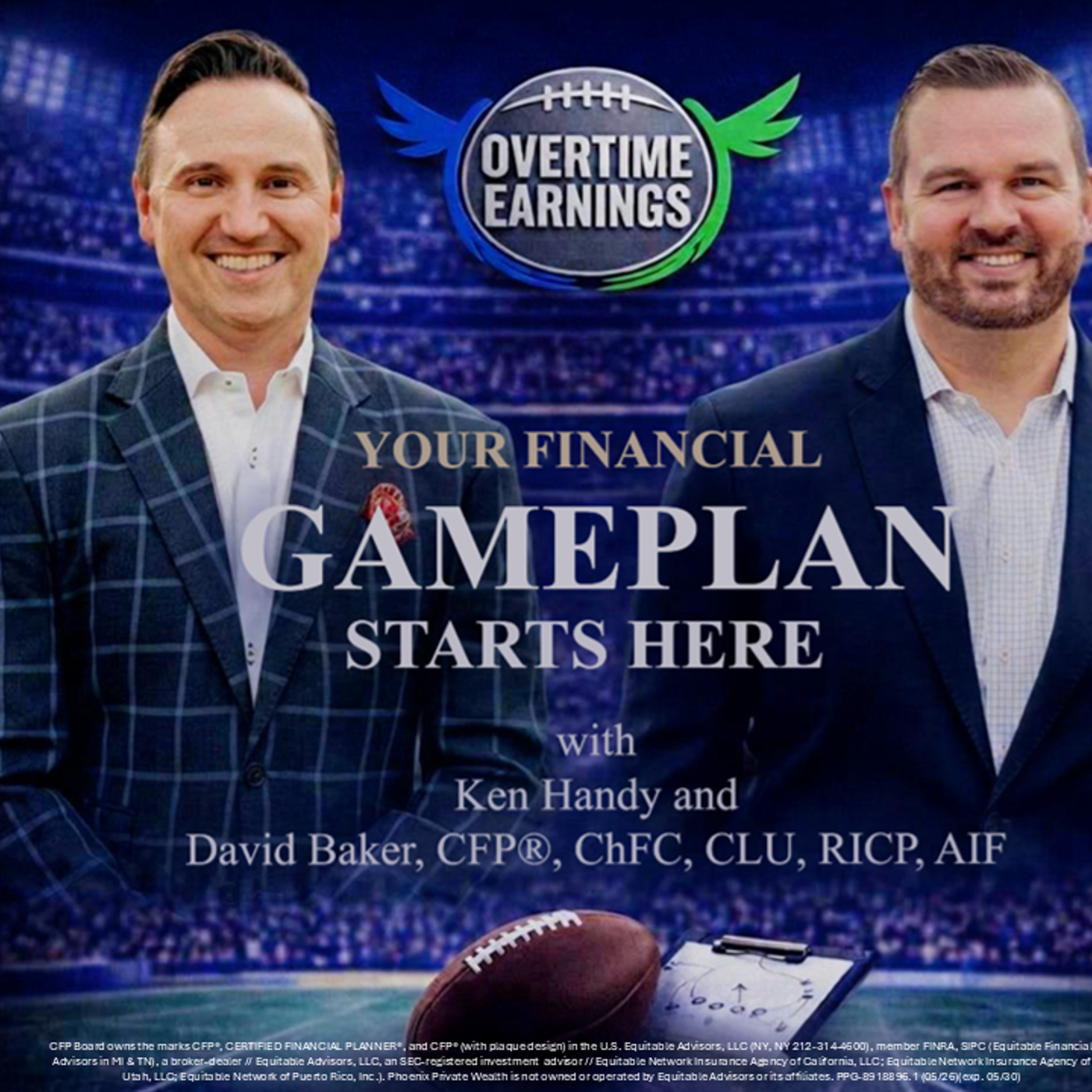
Plan Together, Stay Together: Navigating Family Succession
from Overtime Earnings
22m 11s
Family succession planning is a vital but often avoided topic due to its emotional weight and the unpredictability of aging. Unlike sports where rules and timing are clear, family dynamics lack defined parameters, leading to confusion, conflict, and crises when parents or key family members suddenly decline. The danger of delay is real—cognitive changes can happen rapidly, as seen in the speaker’s grandmother who lost memory in just six months. Without early conversations, families face emotional damage, financial inefficiencies, and disputes over inheritances or heirlooms, which carry more emotional value than monetary worth. Simple steps like having one foundational conversation, inventorying key documents, identifying decision-makers, and addressing emotional assets can prevent future chaos. A neutral advisor can help navigate difficult discussions. Ultimately, succession planning is not about financial transaction alone but about ensuring clarity, fairness, and emotional continuity. As the podcast emphasizes, preparation—not improvisation—builds resilient, connected families. Waiting until a crisis strikes is a recipe for regret and broken relationships. The message is clear: do not wait for the two-minute warning. Start now.
- Everyone, welcome back to "Fing's Frank Wells" podcast
"Over Time Runnings."
I'm Ken Hamley.
This is Steve Hicken.
Dave, what are we talking about today?
- All right Ken, today we're talking about a topic
that essentially a lot of families avoid
like the middle linebacker dealing with agent parents.
Honestly, family dynamics, succession planning.
This isn't just exos on a whiteboard, by the way.
This is messy, it's emotional, it's personal.
Why does it feel harder than any conversation we have?
That's what we're really trying to get at.
- Yeah, I mean, in all honesty, Dave, it really does
'cause it's not a game, right?
It's your family.
We're talking about succession planning,
we're talking about our parents getting older.
That changes the pressure in the situation.
In sports, everybody kind of knows the rules,
they know the clock, they know the time right,
but in families, and the things we're talking about,
we don't always know the clock.
We don't always agree on the rules.
We don't even always agree on what the outcome should be,
which makes it so unbelievably hard
when we're really talking about these topics.
That's what we're gonna tackle today.
- Well, look, the clock's running,
whether you call the player not realistically,
so let's kind of start here.
Families often say we got time, but tell me,
why is that so dangerous?
- Yeah, you know, when you say you have time,
I think here's a good sports reference.
It's like saying, you know, we're gonna start running
our offense when the two minute warning hits,
but prior to that, we're just not gonna do anything.
That's literally kind of what you're saying,
to give everybody a sports reference there.
The reality is aging, it doesn't follow a schedule,
it doesn't, you know, health can change it in instant,
cognitive decline and loved ones.
You know, you can give all the ranges you want,
but the playbook isn't the same in every family.
You can see a cognitive decline in witness this
in my own family with my grandmother,
where six months went by and she went
from completely lucid and there,
and you could have a conversation too,
she didn't know who you were.
There's no, that could have taken two years,
but it took six months, and you get blindsided by that, right?
You can't, over that six months,
you're trying to do so many things,
and a lot of people don't have the conversations.
You know, they get forced to later,
and they're like, oh, we'll get to that,
we'll pass it down the line,
and they get passed to when it's a crisis,
and when it's a crisis,
none of us make good decisions.
That's when you're honestly,
it's when you're down by seven,
you're like, panicking, you're freaking out,
you're like, oh my gosh, we only have 10 seconds left,
we're down by seven, we got 50 yards ago,
we got to throw a Hail Mary and hope it works.
It's just, that's why it gets so scary, you know,
is that people just think times on their side,
and it's not always on their side.
- Well, I'll throw an example out there, you know,
just a couple of months ago,
I actually had to meet with a client,
whose wife just passed away,
and just to get real with everybody here,
for just a moment, we'll go back to having fun a little bit,
but, you know, his wife passed away,
and he told me when I was sitting with him, he says,
you know, we had planned on going to get our state planning done.
We had planned on going to get our wills and trusts,
and all these things taken care of,
but we ran out of time.
And I almost, I'm obviously getting emotional,
sitting there with him,
and we're talking about this type of thing,
but that's the reality of what we're talking about here.
So, you know, just making sure that we're,
that play clock is shortening,
you might not even know it's shortening,
'cause you're so ingrained in the game, if you will,
but I mean, at the end of the day,
you know, it's still gonna run.
It's still gonna run.
- It, you know, I hate to say it to you,
if it's like our partner says, you know, David Whiteout,
there he says, we all kind of think we're superman,
we have more time than maybe sometimes we do.
You know, it's not gonna happen, I got tons of time.
Time isn't always on our side.
- You're right.
- It's always on our side.
I'm really glad you mentioned that,
'cause you don't know what tomorrow burns.
You just don't.
- You're right.
- So, so then we're, Ken, let's kind of think about this.
Where do families start when parents are aging,
but they're still doing okay?
So there's, it's almost like the,
the roster is starting to change a little bit,
if you know what I mean.
- Yeah, I mean, you've got to start by acknowledging that,
yes, my parents are getting older.
And honestly, you have to start by saying,
we probably need to have a conversation, you know,
just to start having the discussion of what that means.
I mean, think about it this way.
Your parents have been the quarterback
of the family for forever, right?
For decades, they've been leading and doing fine
and everything's great.
Well, at some point, that role starts to shift,
where maybe you are sibling and other loved one.
You know, it's not that I'm benching mom or dad
or whoever, you know, those folks are,
but it just means I'm planning the transition.
I've got to talk about what happens
and what plays are we in a call
if something happens suddenly.
You know, if something happened to dad tomorrow,
what player are we gonna call?
What are we going to do?
More importantly, you know, these are things
that just get forgot about, who can access the information?
Dave, how many times have we had a client
with or had had a conversation with one of our clients?
And maybe both of them don't know how to access
all the information.
Maybe one of them accesses the information all the time
and the other one goes, well, that's what they do.
I don't really tune in.
I'm not even sure I know what the password is.
Or I'm not even sure I know where it's at.
Unfortunately, that happens, right?
'Cause why, you know, we've been this way for 20 years.
Why would I think tomorrow would be different?
And unfortunately, as well, sometimes you might not even know,
honestly, where things are and if you think about it,
maybe two spouses might know where things are.
But let's say mom and dad start to decline
and you go, well, me as their son, do I know where everything is?
Do I even know where to find where everything is?
If I haven't talked to my parents,
how would I know, you know, what's out there or where you go?
So yeah, and unfortunately, those are questions
you've really got to ask.
I mean, documents, accounts, password, intentions,
all of those things.
Well, go ahead.
- No, I was gonna say you're 100% right.
I mean, you don't really feel because you have bad intentions.
You just failed because you didn't have a plan.
You don't know what's really going on.
You know, so I'm really glad you mention that
'cause you just don't think about it sometimes.
It just kind of slips off the side of your head.
- Yeah, yeah.
Okay, so then let's get into succession planning.
I think that most people hear this,
they think about business owners, CEOs,
but it's not just for businesses.
So tell me, why does every family really need a succession plan?
And what does it entail really?
- Every family is just a small company,
a small organization, it's a family business, right?
Every family has some type of asset associated with it,
most likely, you know, cars, houses, maybe investments,
maybe pensions, maybe social care.
It's just a small company, a small organization,
and succession planning for your small business,
which is your family determines things like who steps it?
In the event, something transpires, in the event,
you know, you need to get a decision made.
Who's making the decisions?
How are they gonna get made?
You know, what does the authority look like?
Who's in charge of this thing?
And I say that importantly because if we think
about a small business just for a second,
let's say I had three key employees,
well, if I pass away as the business owner,
I have three key employees.
If I didn't tell anybody who's running the company,
well, how do they know what to do?
You know, that's where you create some type of issue
or problem where you've got three great people,
but nobody said, hey, Sandy, I want you to run the company
and you're gonna be the one to take over.
So Sandy doesn't know that.
Joe didn't know that.
Nobody knows what the next steps are.
And then more importantly, if there's conflicts,
how do they get resolved?
You know, so if I have a good succession plan,
I know who's gonna step in,
who's gonna make the decision?
What the authority looks like?
You know, and how complex to get resolved,
but without, if I don't have those questions answered,
or I haven't even asked them, that's where you get chaos.
That's where you get the three brothers.
As an example, I've got two brothers as you know, Dave.
If there isn't documentation, that's where you can have
arguments and issues where you go.
I don't know what's supposed to happen.
I thought it was gonna be this way
and somebody goes, God, I thought it was gonna be that way.
That's a problem because you didn't really have a coach.
You just had players yelling from the sideline going,
oh, let's do this or employees and no one knows.
So that's an issue.
- I'd imagine there's some resentment
that creeps in there.
- Oh, for sure, man, I mean, you've got siblings.
I've got siblings.
I mean, the last thing I want to do is have a fight
with my family or my brothers
because you just didn't know what the framework was.
You know, when you've got someone who feels shut out
or left out or just doesn't understand,
you don't need to have a rivalry week.
You know, when it's the holidays and you're like,
what we just didn't know, you could resolve all of that.
If you already have the playbook out there,
you've already had the conversations.
Otherwise, you've seen it.
I've seen it, you know, unfortunately that happens
if you don't have these things spelled out.
- That's right.
Well, okay, so then we're talking to them,
just talked a little bit about succession planning
but what about inheritances here?
So, you know, families, they say it's really not about
the money, but kind of is.
So talk to me about that.
- Yeah, I mean, I hate to say it this way,
but it is what we's about the money.
And it's not always about the dollars,
but it's about the meeting that's attached to those dollars
or those assets, you know, for a lot of folks out there,
money.
represent, you know, fairness, you know, love, approval, you know, just to give it
some terms, but if you think about it and I'll use this situation, if you've got
three people involved in an inheritance, just as a quick example, and the
inheritance has to go in whole percentages, and you wanted to make equal
percentages, well if it had to be whole, you could have two people getting 33
and someone's gonna get 34. Well, who gets the 34 could create resentment to the
two people that got the 33 because they go, what did they love the 34 more than
the 233's? That might not have been a, that may not be no, but it might feel
that way. If there's no conversations, when you don't talk about expectations,
when you don't talk about what's happening, to fill in the blanks or what not to
help people understand why maybe something's being done or why it's being
spelled out by nature, you know, we're all human beings, we start to fill that
in for ourselves many times of what that narrative might have been of why
did you get the 34 and I got the 33? It's unfortunately sometimes that creeps
in when you just haven't had those conversations. Yeah, and certainly that
makes sense. I mean, I would imagine that people are a little shocked when that
will gets read every once in a while too. Yeah, well, you don't like finding out you
had something in your head and then the will gets read as you just mentioned, and
what's really happening is something completely different than you thought, and
it's your, you're sitting there and you're like, I thought this was totally
completely different and it turns out it's not. That's why you got to have
an early conversation. You know, they might not be fun conversations, they might
not be the most exciting topic or the thing that you want to discuss, but you
have to discuss it so that you know what's happening and not just from what
transfers or what moves, but so things happen fluidly and more importantly, if
it's me who's passing these things on to those folks, I want to make sure it's
going where I want it to go and that people understand why I'm doing what I'm
doing. I don't want it to be this big surprise of, well, hey good luck. Right. Did
this with everybody's kind of guessing. I mean, for most of us, we don't want
that. Maybe there are some folks out there who do, and that's fine, but for me,
I just would want people to know why I'm giving what I'm giving and when I'm
giving it on that side. So no, it makes perfect sense. That makes perfect
sense. Well, let's kind of pivot here a minute instead of just talking about
money. Let's talk about some small things that might create some bigger
emotions, family heirlooms. So jewelry watches, furniture, keepsakes. I mean, geez,
I know you're still missing your crab suit recipe. Yeah. Yeah. Why do these tend
to blow up families? You know, it's it's fun to you say that day if you
mentioned a crab suit recipe, I just had a conversation today. I had lunch
with my parents and my brother and my wife and my daughter. We had lunch and we
specifically brought up the crab suit recipe, as well as the only store-stew recipe
that apparently my grandmother had. I didn't eat oyster stew. So I never really
afflicted me. But you know, heirlooms aren't just assets. It's not just the
ring, right? They're really a symbol and it's not just a dollar value. It's not the
fact that, you know, the desk is worth $3,000. It's the fact that that was dad's
favorite desk and he sat at that. And that's where he did all of his work. And he
now gave that to me. You know, where he gave that to my brother or whoever. That's
what it means. It's not a piece of furniture. You know, it's not a dollar amount
most of the time. It's a memory. You know, it's something where if you're sitting
at that desk, is it an example when your dad had a desk that he always worked at
and he gave it to you? When you sit down at that desk, you're thinking about your
father and work in another time and maybe you're younger and you pull a memory
out of your head that is specific to that desk in your dad. It's not the fact that
the desk is worth $2,500 because somebody appraised it at a $2,500 value. It's a
fact that that was the desk your dad was at every day. You were like, "That's
mine. I get to sit there." You know, I think about those things and it's funny
because where we're doing this podcast, this picture behind me, that's my
grandparents picture. That I'm on their wall and their living room. It's hard not to
get emotional when you do these things because just looking at it on the camera
brings back a memory and just saying that out loud brings back memories of me
being with my grandparents in their living room with that picture behind us,
you know, with the holidays and sitting there with family or having crab soup,
which by the way, Dave brought that up. My grandmother did not pass along any of
her recipes. By the time anybody got around to asking about them, she had
dementia and couldn't tell you what was in the crab soup recipes. So lost
forever, but this painting behind me, that was theirs. And it's here. I see it
every day in this office and I have another one of the things that came from this
same place, which is the grandfather clock, which is sitting on my wall over there.
But those, these aren't dollar values to me. That's a memory right there behind me.
And many memories behind me and my grandparents. So, you know, again, it's
it's just helping to assign things ahead of time for people to understand, you know,
maybe who gets what, you know, that way emotions are overriding, you know,
logic per se and you're trying to figure out what's what or you're suddenly
arguing over the lamp or something like that. If it's spelled out, okay,
you don't want three people sit there having a fist bite over the picture or what
have you. No doubt, no doubt. Yeah. So, so I know we kind of brought this up
earlier about waiting too long, but if you had to summarize some of the risks
associated with that, what would you summarize them to be?
Yeah, so first, and I'm not going to put these in any particular order, but I'll
kind of list them off and I'll say first, second, third, fourth. So first, I
would just say loss of clarity, right? Somebody ends up in a cognitive decline
and they can't really explain their intentions. The example is my grandmother with her
cramps suit there, right? Like you just can't, you just, she couldn't tell anybody that.
The second, I would say, is you end up with family conflict, right? It's the
nobody explained why it's 34, 33, 33, and why you got 34. So now you got siblings
who are arguing together or family members arguing, going why did dad give you 34
only give us 33? Well, there's no referee appointed there. So everybody argues and
people get hurt and upset, and I'm not saying that always happens. I'm just
telling you things that can happen in this issue. The third, which may be one of
the big issues that we're all trying to avoid, is just financial inefficiency.
You know, if decisions are rushed and I didn't have a good plan,
I could make mistakes, I could end up going more taxes, I could end up giving
more money to Uncle Sam on a federal or state level, potentially, you know,
and obviously, depending on your state, you could look at their guidance on their
tax page, you know, same thing on the IRS to understand how things move,
you know, when we're talking assets, but that could be an issue.
And then I'd say the other component which could be the most lasting
is emotional damage. You know, in my example of 34, 33, 33, I know it sounds
small, but if you really got in a fight with your siblings because one
person got a percent more than the other two, and that person cared that much,
you might have an issue where you don't talk to your siblings anymore,
or one of you may not talk to the other, that could have been
easily resolved by just having a conversation ahead of time,
but because nobody thought about it, and no one did it. Now you end up in a fight
of three people with no referee, and someone can get really upset. And sadly,
Dave, I think is we're having this conversation. Everybody out there listening
or watching this can probably pick someone you know, it may not be personal to
your specific family or situation, but you could probably recall a story
where something of what we're talking about has happened.
It a group of friends or a group of people that you know where one of these
instances has happened, and you've seen some of these negative things occur.
They can easily be solved by just having a conversation
regarding these things at a time, and not waiting until it's too late.
Absolutely, no doubt. Waiting can definitely hurt
contrary to popular belief in some cases.
Okay, final two-minute drill. Let's talk about fractal next steps.
What can families actually do this year?
Yeah, so just start with a basic conversation. Just have one conversation.
You don't need to have every conversation about every single thing that's
going on. But if you start with one, you can stack one on top of that,
and you can start the dialogue, and you can begin to understand
what and where and how. Which really leads to also
inventorying your documents and the key information.
So in my example here, and I'll say for my mom and dad,
where are the accounts? Where are the passwords?
Where are things held? What do you, you know, what are the key pieces of
information? Where are the recipes? Trust me, the recipes my mom
had that I know where they are. We're not having that happen again,
like I do with my grandmother. But it's just
inventorying the documents and the information.
Who's going to be the decision makers? You know, who's going to be
potentially in charge of the estate? Who's going to make decisions based on,
you know, health issues or components along those lines?
That you have to identify, honestly, for all of us,
what matters emotionally, not just financial.
So what's important to those out there that just doesn't have a dollar value assigned to it and how are we handling that?
And honestly, if you have a hard time maybe having some of these conversations, bring in a neutral coach.
There's nothing wrong. Dave, you and I have sat in these conversations with clients as advisors, you know, and planners.
Attorneys have sat in these conversations, you know, to really talk through folks of what do you want to see happen?
And let's make sure that spelled out properly or where you want it to be.
Just those simple things can make a world of difference over time.
So those are five simple places you can start. Again, you don't have to have every single conversation known to man.
Just start at square one and build off of that issue.
Well, it makes sense because I can tell you this much, championships certainly don't come from winging it. There's no doubt.
No, no doubt come from preparation and communication. I mean, trust me, nobody goes out wins the Super Bowl and their game plan is.
Yeah, let's just do it. Let's just go.
Yeah, we'll just see what happens today and yeah, maybe we'll win. Maybe we won't, but let's now they have an entire playbook in gameplay.
That's right. That's right. You're 100% right.
Well, can awesome, awesome stuff there. You know, I just want to say to everybody, you know, that's today's episode, hopefully, you know, if this sparked the conversation that you've been avoiding, that's a good thing.
Do not wait for the two minute warning. Do not wait to the last second.
Can always great stuff really appreciate your insights on this.
Yeah, I mean, honestly, everyone out there, if you plan together, you stay together, you stay connected long after the final whistle sounds everyone, we truly appreciate you tuning in today to Dave and I to feed private wealth and overtime earnings.
Please tune into a future podcast out there and the ones that are up now, we will be talking about topics just like this and other areas that we think will be important to you.
Again, I'm Ken handy. This is Dave Baker. Thanks for coming in everyone. Thanks for everybody.
Podcast Summary
Key Points:
Family succession planning is emotionally complex and urgent, not a distant or optional topic, due to the unpredictability of aging and cognitive decline.
Families often delay critical conversations, believing they have "enough time," but aging doesn’t follow a schedule and can lead to sudden crises with no preparation.
Without clear documentation, families face confusion over assets, access to information, and decision-making authority, leading to chaos and conflict.
Inheritance divisions—even minor ones—can cause deep resentment and emotional damage if not discussed openly and fairly beforehand.
Heirlooms and emotional assets like recipes or family heirlooms hold greater value than monetary worth, as they represent memories and identity.
Poor planning results in financial inefficiencies, tax burdens, and emotional harm, including long-term family rifts and loss of trust.
Early, structured conversations—especially with neutral advisors—can prevent crises, clarify intentions, and promote unity among family members.
Succession planning is not just about money; it’s about establishing clarity, respect, and emotional continuity in family dynamics.
Summary:
Family succession planning is a vital but often avoided topic due to its emotional weight and the unpredictability of aging. Unlike sports where rules and timing are clear, family dynamics lack defined parameters, leading to confusion, conflict, and crises when parents or key family members suddenly decline. The danger of delay is real—cognitive changes can happen rapidly, as seen in the speaker’s grandmother who lost memory in just six months.
Without early conversations, families face emotional damage, financial inefficiencies, and disputes over inheritances or heirlooms, which carry more emotional value than monetary worth. Simple steps like having one foundational conversation, inventorying key documents, identifying decision-makers, and addressing emotional assets can prevent future chaos. A neutral advisor can help navigate difficult discussions.
Ultimately, succession planning is not about financial transaction alone but about ensuring clarity, fairness, and emotional continuity. As the podcast emphasizes, preparation—not improvisation—builds resilient, connected families. Waiting until a crisis strikes is a recipe for regret and broken relationships.
The message is clear: do not wait for the two-minute warning. Start now.
FAQs
Giving families the impression they have time can be dangerous because aging doesn't follow a schedule. Health can deteriorate suddenly, like cognitive decline, leaving family members unprepared and blindsided. This lack of foresight leads to rushed, emotional decisions during crises.
Delaying conversations leads to loss of clarity, family conflict, financial inefficiency, and emotional damage. Without planning, decisions are made under stress, assets may be misallocated, and siblings may argue over inheritances or heirlooms with no clear framework.
Families function like small organizations with assets like homes, pensions, and heirlooms. Succession planning defines who makes decisions, how authority is shared, and what happens if a parent or key family member is no longer able to lead.
When inheritances are split unevenly—like one sibling getting 34% and others 33%—it can create resentment. Without prior discussion, family members may feel the distribution was unfair, leading to arguments and damaged relationships.
Heirlooms like recipes, furniture, or photos represent memories and emotional connections, not just monetary value. Passing them on without discussion can trigger strong feelings, especially when the original owner is no longer able to explain their significance.
Start with a simple conversation about family goals and responsibilities. Then inventory key documents, passwords, and assets. Identify decision-makers and clarify who will manage the family’s affairs in times of crisis.
Chat with AI
Loading...
Pro features
Go deeper with this episode
Unlock creator-grade tools that turn any transcript into show notes and subtitle files.
 PodcastTranscript AI