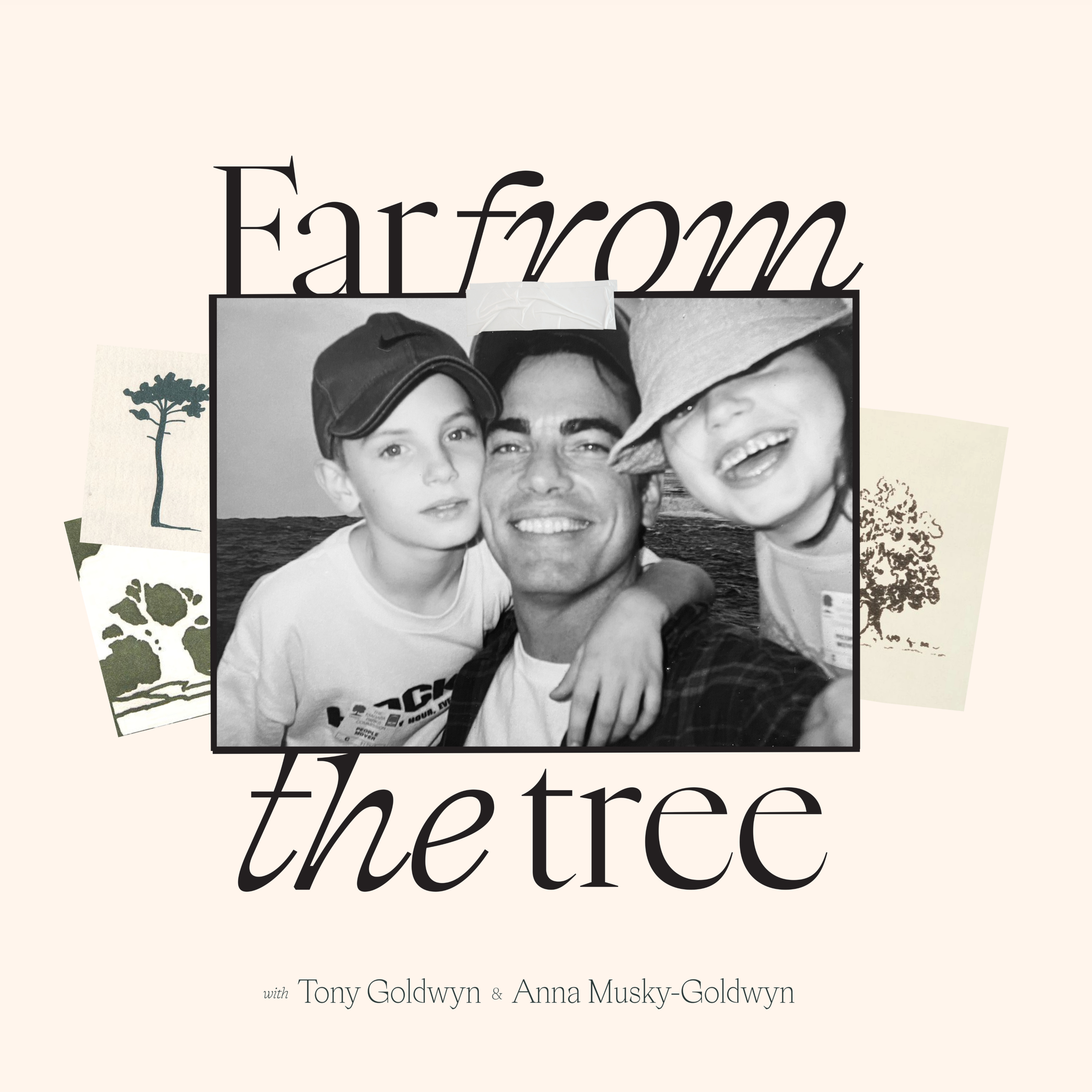
In this transcription, Anna and her father discuss the importance of creating space for focused creative work. Anna shares her experience of a mini retreat where she wrote a pitch, realizing she needs to set boundaries to avoid distractions like petting dogs or doing laundry. Her father agrees, noting that deep concentration requires eliminating devices, as he learned from directors who banned cell phones on set. He references the writer Bo Goldman’s concept of “dream time,” where allowing the subconscious to emerge is crucial for creativity. The conversation then turns to Peter Gallagher and his children, Jamie and Catherine. Anna introduces them as old family friends, noting Jamie’s work as a director and Catherine’s as a singer and actress. Peter describes each child with admiration: Jamie as a “closer” who sees the big picture, and Catherine as irrepressibly joyful and courageous. Jamie recalls discovering his passion for directing in a high school acting class, while Catherine showed her performing drive from a young age. The family’s mutual respect and humor shine through, with Peter emphasizing that showing up is the most important thing a father can do.
[music] Hi, Anna. Hi, Dad. How are you today? I'm good. I'm home in New York with you in. I know we are. We're in different rooms, but we're together, which is so nice. It is nice. And there's some outside on the ground. I will say that's the thing, but I feel like whenever I'm in LA, I love living in LA, but coming back to normal seasons is always very refreshing and feels like a privilege to be able to have both. I know it's pretty cool. I do love it. And what's going on with you? How's everything in your life? Everything is pretty good. I think you know. You just know the mini retreat by yourself? I just went on a mini retreat because I booked a non-refundable hotel room for me and Billy, and then Billy had to stay in LA and work. So I went and brought the dogs to this little hotel in upstate New York. And I was there for two nights, and I wrote an entire pitch, which was great, and made me kind of realize that I need to be putting those sort of guardrails on myself creatively a little bit more, because I think when you're in your own home, it can be very easy to get distracted, and you know, like living with another person, you sort of get in a routine with them, and I think sometimes I struggle sort of setting those boundaries of like closing the door, locking myself, and just spending the time. So it was not only was it helpful because I actually wrote something, but also I think it gave me a little bit of perspective, maybe, of how to try to be a bit more attentive and focused. Oh, that's my experience. Because you and Billy both. Is Billy working at home now? Does he have to go into the cutting room? No, he goes into like a post-production facility. But sometimes he works at home and his. Sometimes, I mean during COVID, yeah, but, and if he's doing like a small project, yeah, but for bigger projects, he'll go into the editing, editing base. Yeah, so do you feel like you need another space to work, or it's just about how you close the door? I think it's both. I mean, I do get out of the house if I'm working on something, I have places that I'll go to like really try to, you know, block things out and not be home. I think also what it is is just being a lot more attentive about. It's just because like writing is so hard to be more attentive about like scheduling those four hours and not allowing myself to. It's not even about like the phone or anything, it's about like don't pet the dogs, you know, don't. Like everyone struggles with it, don't get up and do the laundry. Like I think when I'm in my own space, I'm much. I get a little bit ADD and want to kind of tend to anything else because writing can get very difficult, but I think it is true. I was just listening to a podcast about this. Like it's so true that if you just sit there and allow yourself to think even if you're stuck, like something will hit you and some sort of musing will enter your brain. And you know, I feel like I'm pretty good when I'm like actually writing a script that I can do that. But sometimes when I'm like more in the brain storm phase of things, I do allow myself to get a little bit distracted and this was a helpful reminder. Yeah, it's really interesting the nature of concentration. I found myself. I worked on a couple of movies over the past year or two where the directors allowed no cell phones on the sets. No devices at all. And I found it, I was like so turned on by that idea that I didn't allow when we'd made Ezra that I did no cell phones. And then I never bring my cell phone to a set when I'm working now. And it's shifted my concentration. They ability to have deep concentration and not be distracted. And it is true. I think you know, like this wonderful mad writer I worked with years ago who I think I told you about this guy, Bo Goldman. It was a legendary hero, one full of the cookers nest and Bo was just a real character. But Bo called it Dream Time. That's like the necessary dream time when you're not actually doing anything. Thing, you're just allowing yourself to. you're subconscious to start to emerge. And it can be quite a. almost a scary process, but until it does, because you think nothing's going to happen. Like for a writer you're staring at a buying page. I think it's so crucial to create a creative environment where you have that space as opposed to it just being task, task, okay. And then I sit down and get boom, boom, boom, boom. And then if you're not actually executing, it feels like I need to bail and do something productive. It feels more productive like checking my emails or doing the laundry or the dogs. We have three guests. And I guess I'll start it. I'll introduce them by talking about they are almost family to us. We're very old friends of ours. When I was just starting out my career in New York, I think my like my third job was going into a show on Broadway called The Real Thing that Mike Nichols, legendary director, Mike Nichols directed. And I went in as an understudy and I went in. I was hired because the guy who had originated the role left the show. And I went in his understudy, went on and this was toward the end of the run and I went in as the understudy. And that actor was like the coolest actor in New York as far as I was concerned. He had done numerous very cool Broadway shows. He was a musical star. He worked with like serious directors like Mike Nichols on major plays as well as musicals. And he was busting into movies and was kind of like, anyway, I just, he was the guy I kind of wanted to be. But he left the show so I didn't get to meet him until one year later when I got cast in another play and we got to work together. And that actor was Peter Gallagher. And we have been very close friends ever since. So a lot of you know, Peter's work, you know, most famously he was on the TV show The OC, which was a massive hit. But on film, he's been an American beauty, sex lives and videotape. And so many others on Broadway. He started too many Broadway shows today. I'm nominated for Tony Award for a long day's journey into night that he did with Jack Lemmon and Kevin Spacey. And he's now on Broadway and left on 10th with Julianna Margherly's Peter is career is just really too broad to name everything. So that leads us to his children. And your first friend, I think Anna. Yeah. So Peter's children, Catherine and James, but we call him Jamie because Jamie was literally my first friend. We were born I think less than a month apart. I think like 10 days maybe. Yeah. Yeah, he was born at the end of April. I was born at the beginning of May. So he was like the first person that I knew outside of my immediate family essentially. And there's photographs of us like in cribs together and you know on our dad's shoulders together. Not that I have any memory of these things because we were babies, but you do. So Jamie is now an amazing director and just directed this incredible documentary called Songs About Fucking That Was At Tribeca. And Jamie's really good. Really good, super creative. And he's just I love Jamie because he's just a Catherine kind of says it in this episode. But he's just like he sort of knows everything. He's like one of those people that you would trust to tell you the truth about any subject you asked him about. I would trust his opinion and knowledge about it. And so Catherine, his younger sister, I've also known you know, we've known since she was born. And Catherine, my memories of Catherine are like her performing Britney Spears songs in my bedroom when she was three years old and always being such an extrovert a performer. And now she is that professionally. She's an incredible singer, songwriter. And now she was nominated for a Tony when she appeared in Jagged Little Pill on Broadway. She's the Atlanta Smartset musical. Her debut on Broadway was in a really amazing production of Spring Awakening with the Deaf West company where she was the voice of a Deaf actor who was performing the musical on TV. She's been a gossip girl, modern love. And then on film she most recently is in this Netflix movie Woman of the Hour which was directed and started with a biannictandric. And both Jamie and Catherine are amazing and as is Peter and I feel like Jamie and Catherine are amazing siblings to hear talk because they're sort of like two sides of the same coin. And you know, I think they are like family to us for now, you know, however long given on Peter but for my entire lifetime. And the real thing if I could interject, it's really cool for me. And so relevant to what we're talking about on this podcast is Jamie and Catherine have grew up, you know, as kids that I was just super fond of from the time there were babies. And I've grown, I have so much professional respect for each of them individually now that they're adults. Jamie really is such a gifted filmmaker and a wonderful writer. He made another great film. Photographer. I think he saw his film love and it was about his. It was about ten knows about ten. She animated documentary about his grandmother, which is also amazing. Jamie's, anyway, she's just such an interesting brilliant person and Catherine for those of you who may have seen Catherine's form, she really is extraordinary.
So that's a very cool thing for me to see my friends, kids, grow into these professionals who I have this, you know, quite separate admiration for individually and they're so different. So this is going to be a really interesting conversation. Well, first I have a question. Okay. Jamie, can I call you Jamie on this? Yeah, of course. Yeah, for the world, James Gallagher. I was like trying to say James in my head and I was like, I can't do it because. That's so funny. Yeah, of course you can. So yeah, okay, to me, you're Jamie forever. I think when you've like shared a crib with somebody as a baby, that's just how it goes. I've known you longer than I've known Catherine, which is the same story. Jamie, you know, something that we thought would be fun to start off with and then we'll get to you, Catherine. But is how would you describe your dad? Oh, no. We're going deep right off the bat. Yeah, that's a great question. Ruthless, unforgiving? No. Really? I've been striving for that and thought I'd fail to those attempts. No, that's I hope sarcasm reads in an audio environment. That's interesting. There are so many different versions of Dad of who Peter Gallagher is to me. So there's my sense of Peter Gallagher in the world. And then there's obviously my sense of Peter Gallagher as Dad, who I'd refer to as just Dad. The first thing that comes to mind is something that I've heard you say Dad more than maybe you're most commonly cited quote is that 99% of life is showing up. And I think if there's one thing that I think about with you as a father is that you do above all, always, always show up. And I think that's about the best thing a father can do. Catherine, would you would you have anything to add to or a different perspective from what James was saying? Yeah, I mean, I agree 1000% I was really moving. Although the only thing I add is like when I think of you, Dad, I think of like someone who's extremely goofy and like has given me a real like which I think is honestly the thing that people would assume the least because not really most of the characters you've led with have been like doing musicals in the living room. But as a father, he certainly does. And I think that it's like there is a the overwhelming like memories I have, spedding time with you, Dad, is like laughing so hard. Any moment of like any time I was being bratty as a little kid or you know 13 and upset, my dad would tell a ridiculous joke or story or make a face or do some sort of bit like pretend to walk into a wall while exiting a room. And everything would be okay because we'd be laughing so hard. And so that is like, I don't know, I think like funny and goofy and like really a I don't know, you make life very fun, Dad. I'll work on it. So sweet. Pete, I just would love to hear how would you describe each of your two children? No pressure. You go deep, you go fast. As the well as the best things that have ever happened to me, first of all, the best experience I could have hoped for, you know, as fatherhood of these two. They're both so surprising to me. Okay. And different. And they surprise me each and every day. And the things that might rankle me are the things I know I recognize in myself. But I'm, you know, with Jamie, I always, you know, when he was a little boy playing hockey, he could win a game. And I always referred to him as the closer because he could get to that final point and not give it up and win. And I can see his mother in him. I can see me in him. I can see my mother in him and my father in him. And yet in another instant, he is all completely himself. And surprising me again. I could say many of the same things about Catherine. They are both mysteries to me that continue to unravel and yet completely familiar. Catherine, it is her irrepressible spirit. And joy and capacity for belief and courage. They both have a lot of courage, I gotta say. And they both have courage in pursuing their beliefs. And I see grandma in Catherine. I see my mother. I see her mother. And I'm hoping what we have endowed them both with. I suspect it will be, will be enough. And I, you know, I love them so much. That was very sweet dad. Okay, that's that we're done. You know, we're done. Yeah, thanks guys. We're done. We just wanted to know what you thought of each other. Okay, that was beautiful. Thank you guys. That was really cool. Well, that's great. We'll hope to see you guys soon. To dig into the work of it all, something that my dad and I have talked about a lot is that we have different recollections of when I sort of decided to pursue a creative life. Like for him, it was one moment and for me, it was a very different one, a much later moment actually. And I'm curious, Peter, if you remember a moment or, you know, different moments where you realize that Jamie and Catherine were like 100%. This is what they were going to do with their lives. If there was a moment or a time or a memory for each of them that that sits with you. Well, I'm always prepared to be surprised, but I had the strongest suspicion from very, very early on first with Jamie because he would play video games and really play them so well. And I would try so hard to, when he was like, I don't know how old we were, when you started like two, it felt like, no, but I mean, we're a little older than that. But he was still just kill me in Bond or Donkey Kong or any of these things. And then I would try to encourage him to read the manuals or the instructions. And you look at me like, what are you crazy? No, I'm going to figure this out. And I was astound and I would watch him play and I would start to say, you know what, Jamie, you could be a great director. I said, you see the big picture. You see how all the pieces move around. You're not flummixed by a massive amount of material that, you know, others would try to pour through. You just go into parts unknown and find your way. And then as he became interested in images and photography and he started shooting, he captured such life and a story in his still photographs and then was able to translate it into film that I was thinking, wow, this could really happen. And then he started working in film, you know, in professional productions starting the bottom of the camera department. I really wanted nothing to do with the film business for a long time. You're welcome. I mean, but that is why is I felt like, a number one, it was something that everybody always asked me from like the day I was born is, what are you, what part of this are you going to be in? And I felt like, I'm going to decide my own fate. I think of it, but the irony of all of this is you're right about the video games. And I also remember playing with my Legos and working myself into tears over these narratives I would make up about these Legos who, you know, it was like these operatic plots I had in my room with Legos. And it's so not different than me doing what I, I mean, it's exactly the same circuitry as what I do now. I was the same way with Barbies. Yeah, it's like you're, it's in there whether you want it to be or not. And I think for a long time, I really didn't want it to be, I wanted to be normal, which in my growing up in New York City meant like being a lawyer or a doctor. Yeah. And I thought that was that. So that was there a moment for you, Jamie, when you went, because I had, I felt exactly the same way growing up in a showbiz family. And yet there was a, like for me, there was a moment when I went, oh shit. Yeah.
I need to do. Was it that for you or was it just working in the film business where you, you know, it was way before that was in high school. It was in an acting class. And just as just because everybody had to do so, it was like acting or pottery. And I was like, well, I'm not going to be a potter. And Ben, what if you had taken that very good? And it was a near and school where I was really struggling. And we had moved a lot because we grew up mostly in New York. And then I did ninth grade at one school. And then 10th grade of a new school. So this is 10th grade. It's my third school in three years. And because we were following that around while he was doing the job. And and we were in an acting class and we all got a chance to direct. And I had always been a very good student. But this year I'm getting like my shit kicked in. And so I just feel kind of lost in every kid in this class gets like a page and a half to direct the scene from the glass manager. And I go up and I do my page and a half. And it's felt instantly good. Like the way I could describe it is I felt like I saw the scene and I was like, Oh, none of this is right. I have to now make it right. I didn't think of it as directing. I didn't think of anything other than putting things where they belonged. I didn't realize that there was any like personal bias or point of you in it. I was just like, there is a way this scene should work. And I need to make sure people are doing it in that way. And then it was kind of love it for a site. Yeah, right. That's so cool. But I fought it the whole whole way. Yeah, until it was love it for a site. And then since then when I was like 16 or so, I have really not considered anything else. Yeah, we really share that. That's very similar to my experience. People woke us. Let's switch over to Catherine Peter. How would you just was there a moment where you knew me? You saw it in Catherine or was it a similar evolution from your perspective? I feel like Catherine was performing from the time she's like. And Catherine was all probably. She made it clear. She made it clear instantly. Came out though. All you had to do is walk into our front hall in New York on 71st Street. And there's you would be in her any costume. You know, singing tomorrow. There was no doubt in my mind that this is what she, what she loved and what she would pursue. But she was also a child and so much can happen along the way. And I remembered, you know, when she was a very little, when she was at still at Riverdale in New York, she said, "Dad, I've got a band now called The Tuffies." And we're playing Madison Square Garden on Friday. And we're opening, who are you opening for for like, Mandy Moore? Mandy Moore. Mandy Moore. And we're getting a limo ride to Madison Square Garden and we're opening for Mandy Moore on Friday. I said, "Catherine, that's awesome. That's how exciting is that. You know, even if it doesn't happen, even the thought of it is exciting. And of course, no, we're not going to go to Madison Square on Thursday. We're not going to go to Madison Square. We're going to go, you know, get some candy or whatever it was. They're going to do it. But when you were about 13, you came into the room when we were in California and said, "Dad, I'm going to be playing the Whiskey a Go-Go on May 15th for a Women in Rock concert." And I was thinking, "Well, Catherine, it's going to be great if the phone rings." And it's the Whiskey a Go-Go. And saying, "Listen, yeah, we've just asked your daughter to perform, you know, in that she sent the music and, you know, just want to make sure it's okay with you." She said, "Sure. Yeah, it's okay." And then that transition to that first performance, it's one thing to, you know, Jamie's trajectory is a director. You can go about it without having the glare of public opinion and write on you right off the bat. But when Catherine was going to sort of enter the belly of the beast at that age, it was very difficult. I remember thinking, "Hurt me. "Hurt me. "Do not hurt her. "Let do not hurt her yet. "Hurt me. "I can stand it, but do not hurt her. "And just having to shut up." And, you know, just, and watch whatever was going to happen happen. Well, for people that don't know, Whiskey Go-Go is like one of the legendary rock clubs in Los Angeles. But I remember you calling me and saying, "Hey, Catherine playing at the Whiskey." And I was like, "Wait, isn't she 12?" I was being so shocked and amazed that you were doing that. So, so, so, so, so, Catherine, what about for you? Like, was that the moment that difference? It's one thing, like being a performer as a kid and always loving and being a passion. Was there a switch where you went, "Oh, no, this is, I'm never not doing this." Was that always the case for you? Or did something click for you? Did you have a moment the way the Jamie described in high school, which is exactly what I had? I, it did not occur to me that there were other jobs. I was like, "I know how to do one thing." The only moment of change for me was when I was like 19 and there was about a month where I very seriously considered stopping performing and going to pastry school and living in France. And that was the closest I've ever come in my entire life to thinking about maybe doing anything different. I think for me, it's the only time in my life, especially when I, you know, when I was younger and I had a pretty rough time in middle school. And I think that so much of my desire to make it real and to really turn it into a job was like, "I can't control what's happening over here." And like, you know, it got, it got pretty rough out there in the mean streets of Santa Monica with the kids on the internet. And I couldn't control that. But I could go into my room and I could write a song that if I worked hard enough, could be good enough, that would mean I wouldn't have to be there anymore. And so I think so much of my drive was like the only time life feels good is when I'm making music. And so if I can work hard enough, that can be my whole life. And I don't have to be here anymore. I mean, I think that's like such a, I wouldn't say universal but common story of people who find creative outlets, you know, it becomes, it's sort of like a defense mechanism. It's an escape. It's sort of a way of validating yourself when no one else is validating you. And so yeah, I mean, I think obviously everyone has their unique version of it potentially. But I think that it like, it's, you know, I feel like so many people go through that who end up doing things that are sort of like just left of center because the center doesn't quite feel like it's going to work. Yeah, I think I didn't, I didn't feel any peace anywhere really. I mean, ironically until the two places I felt good were when I was in my room writing music or recording or, you know, whatever spectrum that was or like with my band in band practice or in rehearsal. And so, you know, I was doing the utterly school in the weekends. And I think for me, I also never thought of any shows. I did not perceive the whiskey show at a different level of importance than my Saturday Matt and I at the Adderley School. I was like, I'm making my Broadway debut at the Adderley School on Saturday at noon. And like I care, they all carried so much weight for me because it was like, yeah, this I'm, I'm on, like, I'm on stage. This is so cool. And so I think that I carried that level of, and I was very lucky too because the friends that I grew up with also really took it seriously. So all of us on our breaks were like rehearsing choreography and like going over notes and thoughts and like, you know, it was so I think for me it was always like, this is the only thing I know how to do. It's the only thing I want to do. And so my brain, I mean, I was drawing up stage plots and algebra. Like, my brain was always thinking about, how can I turn this thing into a job? And, and I, I, you know, I'm like, that's still the only thing I think about. That's funny, Catherine. I heard you just say something that I've heard dad say a million times, which is you pointed out that the shows at Adderley, which for people who don't know is like, little kids doing weekend theater. And the show at the whiskey go-go, which is like one of the great rock and roll venues of all time, didn't feel all that different. And I think that since we arrived into this world, dad has talked about the absolute privilege of being able to get to do the job every time, no matter what in any context. And I think there's two things in that. One is the privilege of getting to do it. And the second part is the job-ness of it. That it really is a thing, not unlike laying brick or anything, there's work that you can do to prepare for and be ready for it. And so you have to do both. One thing I'd add is I think one of the, like, sincere privileges of being in, well, and Tony, your thoughts too, is like growing up in this
business, you're not as disillusioned by the glitz and glamour. You know that that is not what it looks like in a magazine. You look at, I think knowing that the real good stuff happens when you're working at work and that those shiny moments are like, usually, I mean, at least for me, truly the most stressful and anxiety-producing and least rewarding moments. And they don't compare at all to showing up to work prepared and then crushing it in a scene. That is the moment where you're like, "Oh, I could do this for the rest of my life and I want to." And I think knowing that going in, that you're showing up to work and you're doing your job and that this other side of it that is the most public-facing part of it is a side effect and part of the job nonetheless. That's part of the nine to five, not some sort of constant celebration of the unice. And so I think that's a really beautiful perspective that we get very early on before learning it ourselves, which can, I think, be a harsh landing for a lot of people. Well, what's interesting is I agree with you, and then in some ways I think there's a self-discovery that also comes because I think as much as, and my dad and I have talked about this, as much as the field can be laid before you, the rules can be put out. You can understand all of that and it's demystified. It still takes like having a high and having a low to understand that no matter what we just as humans would expectations on ourselves, I think. And I think that even if you are in a privileged position where you understand the rules of the game and you understand that the field is not made of glitter and it's just as dirty as everybody else's shit that like there's at least for me, it took going through the game myself to actually understand like what my perception of it was as opposed to just what I saw my parents doing. For me, it was very, very, very difficult early on to overcome, to sort of get beyond the weight of having a famous last name and at first like Eugene's, I wanted nothing to do with it and then I was undeniable and then I had to kind of like, you know, when I was first friends with your dad, I had a lot of baggage I was trying to get out from underneath of what my forebears had accomplished and that felt like, oh my God, what if it doesn't work? That'll be really bad. So I don't know if you've experienced any of that but once I kind of figured out, I realized that was my own bullshit on my own head, it became this beautiful thing to be a part of a legacy and have that, the things like you referenced Catherine of knowing that what's important what actually matters and you know, it was my dad used to say to me, look, it's not about being on the cover of a magazine of 24, it's about doing this when you're in your 50s and having built a body of work that you're proud of, you know, or that you can stand on. Those kinds of things, I'm like, oh, that's a, or things you just learned through osmosis. I don't know how I learned it but I just knew certain values that like my grandfather had and I didn't realize it till I was much older and I was like, oh, that's kind of how I've always looked at things. Was the fact that your dad was famous, hard for you or that was like cool and fine? Was that, how was that for you? I'm just curious. In the beginning for me, so I distinctly remember an interview I was doing when I was probably 19 and it was music focused. I had this record coming out and we were to like film this thing on the deck and I was going to sing and then there was this interview portion. And the only questions asked were about my dad. So I remember being in that moment being like, I've worked so hard to make this thing and the only important thing about me is my dad. Like this sucks. And I remember feeling like, okay, well next time I have to be like, please no questions about my dad, which for the first bit of my career, that was important to me. And then I think there's a switch when I felt when I got older and sort of felt more confident in what I had done. I also started to get older and have it like a sincere, deep appreciation and love for what my dad has done. And also for like what my grandma, my mom's side had done and like really thinking of the legacy and I think it shifted when I made my Broadway debut because I think Broadway is such a legacy focused, you know, performing art. There's you, you see the playbills on the walls and I specifically with Jagged, I remember it because it was in the same theater as long as you're in tonight. So every day I would go to work, I'd pass a photo of my dad on the way to the dressing room and I started feeling the sort of insecurity of like, well maybe I can't do this on my own. And if my dad wasn't my dad, like would I have, maybe I wouldn't be successful and like all of that shame and internalize like all that insecurity became like a fact of me and I was like, well that's actually not my situation. I'll never know. And also without my dad being my dad, I probably wouldn't be good at it because it's, I'm his kid like, this is what I learned. So we sat at the dinner table talking about and and I he taught me the thrill and the joy of loving the theater. And so being my dad's kid and my mom's kid and my grandma's granddaughter gave me the love and the appreciation. And then once I sort of shifted that to like, it's what you're saying Tony. And it's like, I realize like this is cool. I get to really know my roots through this thing that I do on stage right before our grandma died. She said to me she was, I was about to, who is a dancer by the way. Yes. Yeah. Brilliant. She was in the Radio City ballet company, very different than the Rockets. She said, your eight shows a week, I'm going to be on stage with you. I'm dancing right next to you. And so there was this real switch for me really during Jagged where I just felt like how lucky am I to get to continue this family tradition of being on stage. And now when people ask me about my dad, I'm like, yeah, this is freaking cool. Do you know how he brought my shows? He's done. He's like the coolest guy in town. Like I get so excited talking about it. And not only switched when I sort of changed my perspective about myself, which took, you know, that was about eight years, seven years, I'm doing it. It's a job. Yeah. So it took a minute. What about you, Jane? Yeah. It was, it's funny. The way I first think about it is when I was younger because you, our dad did the OC when we, I think I was 13. And up until that point, nobody, my age had any idea who my dad was. Nobody really cared. And nobody was, I'm sure some teachers did or something like that, but I never got the sense that anybody really gave a fuck. And then this show called the OC came out and very quickly, everybody, everybody, everybody cared. And for about two weeks, I thought I had just all of a sudden become very cool. And I felt great, everybody was nice to me. Girls started to talk to me. And then I realized that it had nothing to do with me and it had all to do with that and the show coming out. And that was the challenging experience because it became, for a few years, very hard for me to tell whether or not I could trust affection, whether or not if somebody came to me with kindness, was it like somebody stole my phone at that point to get your number out of it? Like, I started to become very wary of anybody who wanted to get close to me. But then eventually I found great friends. Like in many ways, I'm grateful to it now because I think it taught me to keep my eyes open. And yeah, I'm sure that was part of why I wanted to separate. I was the thing that defined me from about 13 on whether or not I wanted it to be, which is part of why I think I was so reluctant to be called the director. I was like, you don't know any, you think you know this about me because you have what feels like a lot of information about me. And I'm here to tell you that you're wrong. But I'm actually not at all what you think I am. Which I think is probably pretty natural for a 13, 14, 15, 15 year old to one. I mean, it's interesting hearing you say that because I feel like every preteen goes through some version of, I don't want to be what everyone is telling me. I am or I'm suspicious of why people are friends with me. And it's almost like to what's I think is difficult about what you're describing is like, you had proof that that was what they wanted. You know, like that's true. Three teens internalized in teenagers, we internalized so much sort of doubt and insecurity. But like when you have proof of, oh, they really don't like me for who I am. That's a whole other level. Hearing you guys talk and curious like Peter, if you in that moment, because like I felt the same way about my dad for a long time. I was like, no one cares. You know, like he's the adults were like, oh, he's the guy from ghost or whatever. It was cool to use Tarzan, but no one's doing it. - She's doing it, but she said that?
- Your famous ish. - Yeah. (laughing) - Yeah. - Well, I've tried to stay famous ish. - Great, great. That's the idea for their own good. - That seems amazing. But I'm curious, Peter, hearing your kids say this and from things you guys have talked about in your family in the past, what was your sort of conscious internal dialogue that was happening about your career and your children and were you aware of how they were feeling, I guess, at the time? - I wasn't as aware of how they were feeling as I became later on. Because I don't think any of us were fully aware and I wasn't even aware that, you know, in Katherine's middle school years were difficult, but I didn't, wasn't privy to the specifics until a while later and I'd probably be in jail now. If I, you know, had been aware of it sooner. - Yeah. - What I was aware of at the moment was, oh my God, I get to live with my family and work. And when I would call Paul as their mother's hand, we're walking down the streets of babies, and I'm gonna get better than this. We're gonna afford things. I get to spend the night, every night at home, get to be here when the kids are growing. And of course, I was busy and I was working and somewhat shielded from, I mean, I was, tried to be very aware of everything that was going on, but I wasn't really, as intimately aware of how challenging it was for both of them until a few years later. When I was out of work and I was dead nothing to do. (laughing) Fortunately, the show only lasted three and a half years, but it was a, you know, it's one of those ironic things. - Something that you just said, like really struck me that you were just so happy to work. And I think that that's something that I have sort of garnered now being older and Catherine was touching on it before, like, that just to have the ability to be working. - Right, and I got to live at home, which was so unusual. Usually you have to go far afield and slay the bear and bring it home and also fortunately, both Jamie and Catherine were resilient and strong. And, you know, it didn't and had a lot of support, you know. Paul was there for them. - I think it's interesting because you, the question was about like what was difficult about it, and that's true, but the other thing is that it was kind of amazing was that for the first time in our life, we were all together all the time. Like you went to work and you came home every night. You know, that was not at all a given until we were 14. Like you were gone pretty constantly, which, and in surprising moments, you know. You would be home when we were at school some days and then you'd be gone for the whole vacation. And then all of a sudden for the first time in our lives, we had a dad who came home, albeit like sometimes two or three or four or five or six in the morning. - You came home at six in the morning, you'd be up when you'd be getting home from work when we got up for school. And that was in that way, it was so normal and exciting feeling. And I even wanted to add to like the flip side of that attention is some of that attention is good and like feels good. And that's part of what's complex about it too. As you're getting this thing where somebody is paying attention to you, and even if you know it's not really for you, you're a 13 year old who's getting attention for the first time. And that's like, I don't know, that's pretty narcotic. And so I think part of what's difficult about it is it's actually hard to figure out. You can't separate yourself from the experience at all. - Yeah. - It is the thing I am so profoundly grateful for it. And also recognize it as with its own peculiar challenge. Do that make sense? Am I art to do it in that way? - Yeah, totally. LA was such a good example of that. It was brutal to move out on such short notice that have our lives upended. And also it was the first sense of like major normalcy in a weird way. And I never felt like I could divide one side of it from the other was just what it was. - So I guess this question is for you, Peter, you know, in our certain sense because we're in the similar world as our kids professionally, there's a lot of mentoring that just naturally goes on and is such an integral part of our relationship with each of our kids in a really, well I think it's so cool. But are there ways that you have to constantly remind yourself because you're also their dad? - Yeah, well I just have tried to learn to keep my mouth shut. And really believe that what I do, that they watch like hawks what you do. And that seems to be most effective. And I also never wanted to deprive them of no one ever really expressed any interest in what I was doing growing up and stuff or having opinions. Nobody paid attention. I had like a free reign to screw up and not and so on. And I didn't really want to deprive them of that opportunity to sort of find their way. And also to understand that there's nothing more irritating on an adolescence ears than this sound of their father's voice. And so I tried to and also to have to have two parents are very lucky about that. We could sort of tag team a little. But mostly I just felt that I've said those the things that I've said had infinite item that you will at all. You know resounding in your skulls, 90% of life, 99% of life I'm showing, but blah, blah, blah. And so my mother used to say being a parent's the toughest job in the world and there's no school you can go to for it. And so that it would be how I conducted myself that would be, you know, speak the loudest rather than what I said. And is that true now as well in terms of it now that Jamie and Catherine are adults in the. Yeah, I mean, I was, yeah, I mean, I will now that they're a little older, I will venture in with more of an opinion because they're more confident and they have more, more of a buffer between their identity and their reactivity and that they can process it. I mean, I definitely talk too much anyway when I say try to keep my mouth shut. I'm still talked a lot. So does my dad, okay. We share that. We never know. I know, I just like, why, as I'm fine to say, what I do when you can overdo. (laughing) And frankly, and my father never spoke to me. So, you know, I remember the earliest, my earliest, not earliest, but a very early memory with Jamie as a brand new father. He would ask me some question, dad, and we could be anything. Dad, the son, what's that? Well, Jamie, fission. (laughing) And I'd go on and on and on and on and on and one eye, just one eye independently would drift to the northeast. (laughing) As he would stay in there patiently looking at me and it was one eye would be pointing up over there. And I thought, oh my God, Jamie, am I talking too much? He gone. (laughing) - Yeah, dad. - And Peter's nodding. (laughing) - Yeah, so, so, so, I learned a lot about it. I learned kind of early that there was no way I was gonna make up what the deficit I felt from my father by talking too much to them, that, you know, there would have to be a, you know, more potent ways of communication and to have confidence in Paula too, that as I say, they had two parents, they have two parents, and then action speak louder than words. And I learned from them. - Yeah. - I, because of the, who they are, they have capacities and understandings and courage in areas that I, you know, evade me. And I look with admiration and I get inspiration from what Catherine think. I wonder what Jamie would think of this. I could ask them, why would they do this? Or why would they? Because they were unfettered in a way that I was a little bit more and I just, I'd take delight in that. - Yeah. That's kind of a beautiful place throughout this up 'cause you guys have been really generous with your time. Well, guys, we love you and this was a great conversation. I wanted to do it just like hanging out in your bar. - I know. - I miss you guys. (laughing) (upbeat music) - Thank you for listening to Far From the Tree. Be sure to follow or subscribe wherever you get your podcasts. - And we'll see you next time.
Podcast Summary
Key Points:
Anna and her father discuss the value of focused creative time, using Anna’s mini retreat as an example of blocking distractions to write a pitch.
They explore the challenge of maintaining concentration, referencing concepts like “dream time” for subconscious creativity and the benefits of device-free environments.
The conversation shifts to Peter Gallagher and his children, Jamie and Catherine, highlighting their close family bond and how each discovered their creative path—Jamie through directing and Catherine through performing.
Peter Gallagher describes his children as surprising, courageous, and uniquely themselves, while they recall him as a supportive, goofy, and always-present father.
Summary:
In this transcription, Anna and her father discuss the importance of creating space for focused creative work. Anna shares her experience of a mini retreat where she wrote a pitch, realizing she needs to set boundaries to avoid distractions like petting dogs or doing laundry. Her father agrees, noting that deep concentration requires eliminating devices, as he learned from directors who banned cell phones on set.
He references the writer Bo Goldman’s concept of “dream time,” where allowing the subconscious to emerge is crucial for creativity. The conversation then turns to Peter Gallagher and his children, Jamie and Catherine. Anna introduces them as old family friends, noting Jamie’s work as a director and Catherine’s as a singer and actress.
Peter describes each child with admiration: Jamie as a “closer” who sees the big picture, and Catherine as irrepressibly joyful and courageous. Jamie recalls discovering his passion for directing in a high school acting class, while Catherine showed her performing drive from a young age. The family’s mutual respect and humor shine through, with Peter emphasizing that showing up is the most important thing a father can do.
FAQs
She realized she needs to set creative guardrails and schedule focused work time, as writing at home can be distracting with chores and pets.
It shifted his concentration, allowing for deep focus without distractions, and he now never brings his cell phone to a set.
Jamie is a director and Catherine is a singer-songwriter; they are the children of Peter Gallagher, and Anna has known them since birth, with Jamie being her first friend.
He described him as someone who always shows up, citing Peter's quote that '99% of life is showing up,' and emphasized that showing up is the best thing a father can do.
She said he is extremely goofy and makes life fun by telling jokes, making faces, or doing bits to make her laugh, even when she was upset.
In 10th grade, during an acting class where he directed a scene from 'The Glass Menagerie' and felt an instant sense of putting things where they belonged, leading him to never consider anything else.
Chat with AI
Loading...
Pro features
Go deeper with this episode
Unlock creator-grade tools that turn any transcript into show notes and subtitle files.
 PodcastTranscript AI