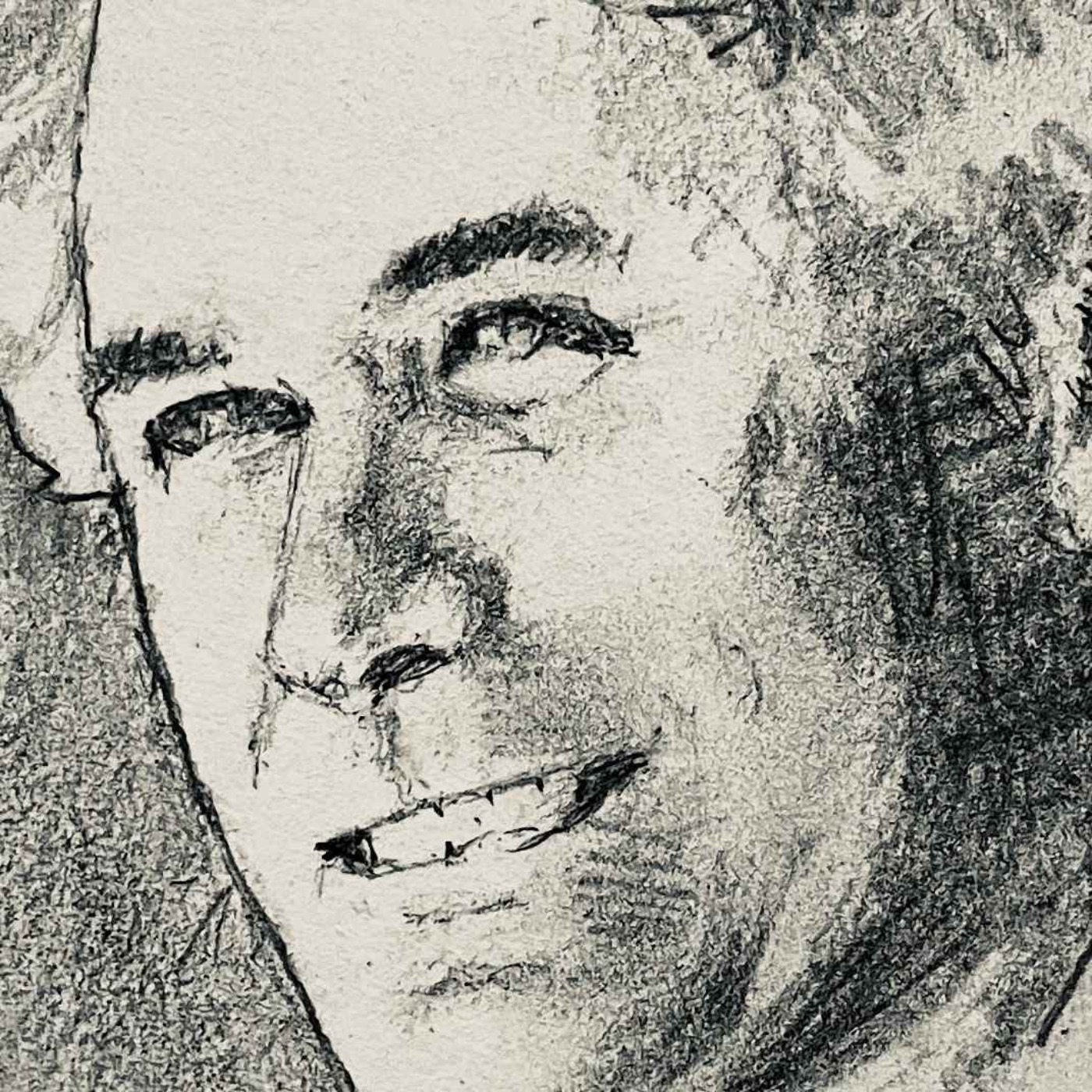
'...PERCHANCE TO DREAM: On the neuroscience of sleep and dreaming...
59m 11s
In the BrainLine podcast, Ken Barrett spoke with Monk Soms about Freud's impact on Soms' research on brain injury effects on dreaming. Dreams have inspired artists, leading to discussions on dreams' influence on cinema, visual art, and neuroscience in upcoming episodes. Early neuroscience focused on sleep versus waking states in the brain, with research linking REM sleep to dreaming. Charcot's interest in dreaming and Freud's study under him were noted. Soms conducted doctoral research on brain mechanisms of dreaming, exploring how different brain lesions affect dreaming functions. The podcast provides insights into the history and scientific exploration of dreaming, shedding light on its subjective and physiological aspects.
Transcription
8904 Words, 51146 Characters
Hello and welcome to the BrainLine podcast. I'm Ken Barrett.
Earlier this season, I spoke with neuropsychologist and
psychoanalyst Monk Soms about Freud, whose work he turned to
after his own seminal research on the effects of various forms
of brain injury and disease on dreaming. When we dream in the
middle of a complex multisensory hallucination, at the time we
believe is real, a kind of nightly psychotic state. But not
surprisingly, artists and a number of creative fields have
been inspired by their dreams. So this seemed an obvious topic
for BrainLine. In the episodes that follow this one, we're
going to discuss how dreams have influenced two artistic genres,
cinema and visual art. But I wanted to kick off with an episode
about the neuroscience of dreaming. And Mark Soms was my
first protocol. I've delighted that he's agreed to return to
BrainLine.
So thanks so much for coming back on, Mark. I mean, for those who
missed your last appearance, will you tell us a little about
your background and what brought you to dreaming?
Yes, I'm a neuropsychologist by training. And my earliest piece
of neuropsychological research was, in fact, on brain
mechanisms of dreaming. The reason for that, why I studied
brain mechanisms of dreaming is because I was interested in
consciousness. And those days, I'm talking about the early 1980s,
consciousness was not an entirely respectable subject. It's
quite, it's quite something to think about that in the light of
of its prominence in neuroscience today. But those days, the
only aspect of consciousness that was kind of serious was sleep
versus waking. In other words, you know, what, what, what is, how
does the brain move from being unconscious and asleep to being
conscious and awake? So that was my, my entry point into my, the
only way I could study consciousness was, was via sleep
and, and the most interesting part of sleep is dreaming, which is
consciousness while you're asleep, you know, which is, which is a
very striking fact.
Yeah. Well, I mean, you, you addressed this subject early in
your book, The Hidden Spring, and also describe how you found
yourself in the middle of a kind of scientific culture war,
involving mainstream cognitive neuroscience. Can you tell us a
bit about that? Why was it so comfortable at the time?
Yeah, I've sort of touched on it already when I say that, you
know, I wanted to study consciousness, but it wasn't
really respectable. By consciousness, you know, I mean
subjective experience. Why on earth is, you know, machines can
remember cameras can perceive as it were. You know, our phones can
recognise a face, etc. So all of these things, the functions
don't require consciousness. You know, the functions can be
performed without consciousness. And the, the neuro psychology
that I was taught was all about the functions. This again, I say
is the early 1980s. So the question was, well, why do we
experience these functions? What does the experiencing add? And I
was literally told by my professors, don't ask questions
like that. Those are not scientific questions, or those
kinds of questions are bad for your career, you know, and the
like. So to me, this was completely dismaying, because
surely the most interesting thing about the brain is that it has
experience. You know, this is what sets it apart from everything
else, at least in the body, if not in the whole of the rest of
nature, you know, that brains feel like something. So the my
frustration in this respect, you know, was a frustration at this
culture that you're speaking of, where the most obvious thing
about mental science was excluded from mental science,
you know, namely that the mind is something subjective, and
there's nothing embarrassing about that. It's part of nature,
you know, experience is a fascinating part of nature. The
fact that we have it needs to be incorporated into science, you
will never understand how the brain works. If you don't
understand why it feels like something and what the feelings
do, anyone knows from their daily experience that what they
feel has a hell of a lot to do with what they do. In other words,
we do things in order to feel better or to avoid feeling worse.
And sure, you know, it's got causal power. So, you know, you
can't leave it out. But those days, it was left out. So, you
know, I was I was caught between a rock and a hard place. And
I'm afraid to say, on the basis of my experience, I think many
people, just like me, go into neuroscience, because they
interested in these mysteries in these incredibly, you know,
fascinating questions. But then you get it beaten out of you.
You know, you get turned into a rat, you know, technician. And
you forget why you were really interested in the field in the
first place. So my personality is such that I decided, I'll
rather stick with why I'm interested in this field than,
you know, then get myself panel beaded into becoming something
that I never wanted to be in the first place.
I mean, it was literally, I suppose unthinkable for scientists
to do that, wasn't it back then? That was a, you know, that it
fitted that really. And it highlights the fact that there
are these dogmas in science, much like religion, really. And I
remember somebody writing about invisible colleges, you know,
that there's unless you follow the sort of the current trends in
thought, then you're not going to get on your paper won't be
published, your research won't be funded and this sort of stuff.
So I'm finding it really interesting. That's what I'm
sociology is.
It's terribly important that it's important that can you know,
there's a wonderful phrase, the arrogance of the present, which
so it's easy for us to recognize, oh, the behaviors, the
behaviorists, you know, that was, that was dogma. You know, they
said, you could only study behavior, then you can't study
internal states at all. I mean, that's like excluding the
psyche from psychology. And, and then there were the cognitive
scientists who were saying, well, okay, we can study the
internal states, but only from a third person point of view, you
can't study the first person aspect of it.
The subject and always the introspection was always of a no,
no, wasn't it really?
Absolutely. And so my feeling is that science has to adapt its
methods to the objects that it studies. You can't adapt the
objects that you're studying to your methods. So the object that
we're studying in, you know, the science of the mind is
something subjective. It's not only subjective, but, you know,
in large, the large part of the interest in the mind, one of, if
not the defining feature, is its subjective experiential aspect.
And how can you exclude that? It's, it's truly absurd.
Well, before we focus on dreams, I mean, can we talk briefly
about the neuroscience of sleep? I mean, during my training, I
came across a book on the subject by Dr. Dement, probably
attracted by the unusual name, I have to say. I gather he and his
colleague were the first to record E.G. during sleep in the
early 1950s. Can you tell us what they discovered?
Yes, in fact, William Dement was working with Azurinsky and
Kleitman. They did, it was Azurinsky and Kleitman who made
the first discovery. That was, let me just first of all remind
you that those days, which is the early 1950s, the only method
we had for studying brain activity in vivo, in other words,
studying the living brain, was the EEG, the electroencephalograph.
And so this was, the EEG had been invented by Berger, I think
you know a lot about that.
That's right. Yeah, we did a great part of that.
Yeah, so I better not belabor the point. The fact is that only
after the war, the Second World War, could it be properly
explored. And so Azurinsky and Kleitman were doing, you know,
the most obvious thing. They wanted to see what happens to
the brain when you go to sleep. And the expectation was that
the relatively fast waves would become relatively slow waves.
In other words, the brain would kind of decelerate. It would lose
volume as we went to sleep. And that's exactly what they found.
But then came the surprise. That's the wonderful thing about
science, is you don't only find your Easter eggs where you
already knew you'd hidden them. So the surprise came that 90
minutes after falling asleep, the brain boots up again, without
waking up, the brain waves speed up. And then they slow down
again. And then 90 minutes later, they speed up again. So this
was the question that they passed to demand. What's what's
this all about? So Azurinsky and Kleitman discovered it, what
they called paradoxical sleep. And for them, the paradox was,
how can the brain be aroused? And yet the person is asleep. And
that coincides with another paradox. In fact, the one I
mentioned a moment ago, how can you be asleep? And yet you're
having conscious experiences. So they not unreasonably linked
those two paradoxes, and suggested that perhaps during
the paradoxical aroused state of sleep that we now call REM
sleep, perhaps this is when we're dreaming. These two things,
the REM sleep might be the physiological or objective
equivalent of the psychological or subjective experience of
dreaming. And so Dement tested that hypothesis by waking people
up during REM sleep, and waking them up during non REM sleep.
And what he found was confirmation of the hypothesis,
roughly 90% of awakenings from REM sleep, produced dream
reports, and roughly 10% from non REM sleep. So that's about as
close to a perfect correlation, as you can hope for under the
circumstances, considering how notoriously forgettable dreams
are, considering that they're happening while you're asleep,
for God's sake, you know, that you have to you have to arouse
the person from sleep and ask them, you know, what what was
passing through your mind. And so from then onwards, 1955 was
Dement's paper, Dement and Kleitman. From then onwards, it
was assumed dreaming and REM sleep are the same thing viewed
subjectively versus objectively.
I mean, the hunt was then on in the 60s for specific brain
areas that trigger sleep, and the brain chemicals responsible,
and a neuroscientist called Juve, with the help of his cats made
some key discoveries, didn't he, in that period?
Yes, what Juve did, it's kind of horrifying. What he did was he
sliced through living cat brains, it's going from the frontal
cortex, slowly backwards and deeper in the neorexus. And
trying to find at which point does REM sleep stop? In other
words, he wanted to see at what level in the neoreaxis is REM
sleep generated. And he made a cut eventually, at the top of the
midbrain, which just to explain to those who are not familiar
with brain anatomy, there's a brain stem, which is a sort of
stalk of the brain. And then there's the, then there's the
forebrain, which is sort of like the, the petals, or the, or the,
or the leaves and, you know, of the tree. So this, he separated
the stalk, the brain stem from the plant, the flurrid part of
the plant, the mental part of the brain, the organ of the mind
is the forebrain. So he severed the brain stem from the forebrain
and still the cats carried on having REM sleep. So he
cut deeper down into the brain stem, and it was only when he
reached a level called the pons, which is one level down below
the, below the midbrain. If you go below that, you had a
thing called medulla oblongato, which is basically just, you
know, reflexes that keep you breathing and so on. And below
that you're at the level of the spinal cord. So what you've
showed is that REM sleep, and the assumption was therefore
dreaming is because of course cats can't tell you what they
experiencing. But the assumption was, well, by the same token,
you can't go slicing through human brains. But, but the
assumption was that dreaming and therefore REM sleep was
causally generated at the level of the pons, which means at a
very lowly functional level, at a, at a non mental level, and
not in the organ of the mind, but rather in this kind of purely
physiological body regulating kind of organ. And, and, and with
that, we have to remember, it happens like clockwork, every
90 minutes. So the idea that, that dreams had all of this
psychological motivational meaning and, and, and cause was,
was seriously questioned after juve's juve's paper was
published in 65.
Right. I mean, turning to dreaming, then, your book on the
subject, specifically on, on, on neuropsychology of dreaming
opens with the observations of the famous French neurologist
Charcot back in the late 19th century. What was he interested
in? And why did dreaming fall out of research in the last
century?
And Charcot, it's important to contextualize that you're talking
about a paper, excuse me, that he published in 1883. It was the
study of a case of a man who stopped dreaming in the sense
that he no longer saw anything in his dreams. So it's quite a
remarkable thing that the man, the man stopped having visual
dreams, but still continue to dream non visually. And the
context is that Charcot, the context is twofold. The one is
that Charcot, his method was clinical anatomical correlation.
So he was interested in making clinical observations during
life, and then at autopsy anatomical observations in order
to see what part of the brain did what. So this he did not only
with, with, with the, the, the kind of bodily functions of the
brain, but also with the mental functions of the brain. So a
case like that would have interested him because, you
know, this chap evidently had a stroke, I say evidently, for a
reason that I'll explain in a second. And this made him lose
visual dreams. So Charcot would then wait for him to die, do an
autopsy and see, okay, which part of the brain generates dreams
then, or at least the visual component of them. Problem was that
Charcot never got to do an autopsy on Monsieur X was his name,
either because he outlived Charcot, or he moved to another
city or something. So we don't know what part of his brain was
damaged. But the other part of the context was that Charcot was
at the height of his fame. In the 1880s, he was really the
preeminent neurologist in Europe, and therefore in the
world. And so he could afford to dabble in it in anything he
liked. And so shortly after he made that observation, he, he
will not actually shortly after around that same time, he was
beginning to become interested in what was then called hysteria,
which is nowadays called functional neurological
disorders. So he was also shifting toward being more
interested in the higher functions of the brain, you know, in
the mental, the mental side of things. So it was, it was really
those days were the very beginnings of what became
neuropsychology.
And Freud spent three months around about him, didn't he really?
I mean, did, did, did he, did he pick up an interest in dreaming
from from him? Or was it just one case that he wrote up? And it
wasn't a big deal for him?
No, it was just one case that he wrote up wasn't a big deal for
him. The for for Chaco, I mean, Freud, interestingly, correctly,
you said that he studied under Chaco, that was in the winter of
1885, 1886. And he didn't go to Chaco, because he was interested
in hysteria, or the mind for that matter, Freud went to Chaco
because he was interested in his methodology. In the German
medical schools, they were much more explanatory. They, they
wanted to explain, they didn't want to just describe clinical
syndromes, and, and then correlate them empirically with
an anatomical lesion sites. They wanted to explain
physiologically, how does this lesion produce that function,
what is, and Chaco's approach was much more descriptive, much
more cautious, and, and, and also focused on, you know, this was
why he could study something like functional neurological
disorders, where there's no lesion. So he was interested in
the clinical characterization of the syndromes. And so Freud, I
don't know if he was frustrated with the German approach, or if
he just had learned all there was to learn. He said in his
application to for the, the bursary that sent into Paris, he
said he wants to learn the other approach. So he went to study
on the Chaco in order to learn the clinical descriptive
approach. And it just so happened that Chaco was at that
point, describing functional neurological disorders, what we
know what, what those days was called hysteria. And that's how
Freud became interested in hysteria was by mistake.
Well, I mean, almost 100 years after Chaco wrote up that case
in the 1980s, you began your own doctoral research on dreaming.
So you mentioned what a tragedy to dreaming is a kind of way of
studying consciousness when you weren't conscious, as it were.
So what did you do in that in that research?
I did the most basic of things. And, and, you know, it's
remarkable, as you've just observed, it was 100 years
after Chaco's original case, which was followed up in 1891, in
other words, eight years later, by another case reported by
Vilbrant, who was much more interested in what he had seen.
And Vilbrant did follow his case to autopsy and published
another paper on it. And then in the early 20th century, there
was there was a flurry of work, building on what Chaco and
Vilbrant had done, and then comes behaviorism. And so in the
subsequent 100 years, just about nothing had been done on the
brain mechanisms of dreaming. And you might think I'm
contradicting myself, because I said in the 50s, you know, there
was this research on REM sleep. But that was on REM sleep, and
it was in animals. And so they, you know, we weren't studying
the dreams. I mean, the brain part of it was on animals,
because, as I said about the poor cats, you know, you can't do
that to human beings. So we could we correlated REM sleep and
dreaming in human beings. But then we just studied the REM sleep
part of it in animals. So the most basic thing that you do in
neuropsychology, building on Chaco's clinical anatomical
method, if you want to study language, then you see what
happens to language with damage to different parts of the brain,
then the different the differences in what happens in
different lesion sites enables you to see how the function is how
it's organized in the brain, same with memory, same with
perception, same with executive control, same with spatial
cognition, etc. The whole of neuropsychology works like that,
but nobody had ever done a systematic study of dreaming
from that point of view, the function of dreaming had been
left out. Guess why? Because it's a subjective phenomenon. So
my PhD was simply to do the ABCs of what you do in
neuropsychology, which was take a large population of patients
with focal lesions to different parts of their brains, giving
you groups of patients with damage in the same areas, and
then seeing, well, what regular phenomena occur with damage to
those different areas. And I had some sort of absolutely
obvious predictions, you know, based on Chaco and Wilbrun's
cases, I predicted damage to the visual part of the brain,
which in Wilbrun's case, we know it was in the occipital
cortex, that this will lead to non visual dreaming, damage by
the same token to say the left motor cortex, which leads to
paralysis in the right side of the body, I predicted these
patients would be paralyzed in their dreams too. If you can't
see when your visual cortex is damaged in your dreams, then
you presumably won't be able to move when your motor cortex is
damaged in your dreams. Likewise, when the language cortex is
damaged, if you can't speak in waking life, presumably you
can't speak in your dreams either. Those were the sorts of
things I was expecting. ABCs, as I say.
So what didn't you expect? I mean, what particular patients
proved especially illuminating to you then?
Well, among all of my predictions, I want to first of all
tell you, I made only one that was interesting, theoretically.
And that was I thought that the dorsolateral prefrontal
cortex, which is the highest level of the brain and which is
uniquely highly developed in human beings, and which is
responsible to summarize or to simplify, responsible for our
goal directed purpose of, you know, planned actions. When this
cortex is damaged, you lose those functions, you no longer are
able to follow goals, you no longer able to plan and think
strategically, you sort of lose the plot as it were. And I
thought, Well, actually, in our dreams, we're not in control.
We are sort of like carried along by the dream. The dream
happens to us. We are not in charge of our own mental house
while we're dreaming. So I predicted damage there would have
no effect on dreams. It seems that part of the brain is not
deployed during dreams. And I was right. You know, it's quite a
remarkable thing that if you give blind raters the dreams of
patients with significant prefrontal cortical damage, and
normal people, they can't tell them apart. But everything else
that I predicted was wrong. And the most interesting findings
were completely by surprise. So you know, it's one wants to take
credit for one's discoveries. But really, so often, they come by
by sheer luck. So the two most interesting things that I found,
the one which wasn't even anything was it had nothing to do
with my hypothesis. The one thing we knew about dreaming, I
thought was that the ponds, which drives REM sleep drives the
whole the whole thing. So, you know, obviously damage there is
going to lead to loss of dreaming, but it didn't. Right. So I
had 18 patients with damage in the crucial part of the brain
stem in the ponds that generates REM sleep and all 18 of them
continue to dream. That's my first of my two really interesting
findings. The second one was that I found patients who did lose
dreaming with damage in an entirely different part of the
brain in the in the forebrain in the quarter in the cortical part
of the brain. So that established what's called a double
dissociation of function. It's the gold standard in neuropsychology
for how you localize functions. And what what the double
dissociation principles stipulates is that if damage to
area A leads to loss of function A, but preservation of
function B, and damage to area B leads to loss of function B,
but preservation of function A, then they're two separate
functions. So what I found was damage to the the the forebrain
leads to loss of dreaming with preservation of REM sleep and
damage to the brain stem leads to loss of REM sleep with
preservation of dreaming. So clearly REM sleep and dreaming,
although they correlated with each other, are not the same
thing. And that is a fundamental we teach our undergraduate
students, you know, don't confuse correlation with
causation. And that's what we had done. We had with correlated
dreaming and REM sleep in in human studies. Then because we
wanted to start poking around in the brain, we left the humans
out and started poking around in the brains of cats and rats.
Assuming that what we were doing was identifying the brain
mechanisms of dreaming, when in fact, what we were identifying
was the brain mechanisms of REM sleep, and not making the
correlation to dreaming, partly for methodological reasons, as
I say, because you can't do those kinds of experiments on
human beings. But but I think also for, for what we were
calling dogmatic reasons earlier, it's that we don't want to
study subjective phenomena. So as soon as we discovered the
correlation between REM sleep and dreaming, the great thing was
yippee, we can jettison the dreams, you know, this slippery
subjective data, which is an embarrassment to science. And we
just look at the at the objective physiological markers. And
then we're doing proper science, but spot the mistake, you know,
by leaving out the subjective data, you make this gigantic
error of assuming that because these two things correlate with
each other, they are the same thing.
And when it was when it was just Brainstem, Allah Jovey, then
Freud was ruled out of court, wasn't all this stuff about
dreams and high life. But we in your last podcast on Brainland,
you, you talked about how this drove you to psychoanalysis, in
a sense, which is that interest has has carried on. And how
was, how has that been investigated since then, you
know, so you discover that the cortex, I mean, has it been
refined, this understanding since since your discovery?
Yes, it has been partly by myself, and, and, and largely by
other people. So, so far, I've said that what I found was the
Stubble dissociation. And what I haven't specified is where in
the forebrain the lesions are the damage is that leads to loss
of dreaming. It turns out that it's two different parts of the
forebrain. One of them is the what I spoke of earlier, this
visio visio spatial part of the brain at the back. And it's not
surprising that damage there should, because I found what
Chaco had observed happens if the damage is very far back in the
visual brain. If it's further forwards, where the visual cortex
merges into what is called the parietal lobe, which is kind of
like hetero modal multimodal cortex, it's where all the
senses come together. If the damage moves into the parietal
area from the visual cortex, then you lose dreaming entirely.
So that was my the one group of patients who lost dreaming lost
dreaming because they lost the ability to generate mental
images. So that's not, you know, a great surprise. And the other
group were much more surprising. They had damage in the white
matter. The the white fibers that go course through the bottom of
the frontal lobes, connecting the well, connecting just about
everything with everything. But the point is that they are in the
frontal lobes, not the part I was talking about earlier, which is
where these higher cognitive capacities are, but rather in the
deep bottom white matter of the frontal lobes. And I was really
puzzled by why would damage there lead to loss of dreaming and
it reliably did. And so and to cut a long story short, because
it's a long story, eventually, we were able to identify that the
part of the brain, the part of this, this spaghetti junction
where all these white fibers are, the part of that, the pathway
that was the crucial one was it's called the, but it's got
various names. Jacob's a mouthful, I'm afraid, meso cortical,
meso limbic dopamine system. And the important thing is that
it's dopamine is the is the neurotransmitter involved. Whereas
the part of the brain that generates REM sleep, the
neurotransmitter is acetylcholine. So they're two
different neurotransmitters. And I won't bore you with the
details of how we were able to isolate that. But what I need to
acknowledge is that after I had made that hypothesis on the
basis of my first studies, many other people using much more
sophisticated methods than I did, confirmed it in every way
possible. So we now know for sure, that it's this dopamine
system that drives dreams. And that was part of why it made me
interested in Freud. There really two reasons I became
interested in Freud. The one was because I was so frustrated
with neuropsychology, that wouldn't study the subjective
side of things. I thought, Well, you know, to hell with it,
let me go to the other extreme and study only the subjective
side of things and then try, try sort of correlate them with
each other. But the other reason I became interested in Freud is
because that dopamine system is the most powerful, positive,
motivational system in the human brain. It's it's it's
commonly called the brain reward system. And Freud's whole
idea was not only that dreams are motivated, but that they
wishful. If you had to say, which part of the brain gives rise
to wishes, if you had to, you know, be so simplistic as to
say which part of the brain gives rise to wishes, you would
say that dopamine system. So, you know, I thought, Wow, you
know, Freud, who I had no reason to take seriously, as I was
taught, you know, that Freud was was just pseudoscience. This
was the 1980s. And and by the way, juve student Hobson, who
took Alan Hobson, who, who took over the the baton from from
juve and really nailed down exactly what's going on in the
brainstem that generates REM sleep. He, he hated Freud and he
hated psychoanalysis. So, you know, he really made sure that
everybody understood that what he had discovered building on
juve and Dementin, all of them just showed that Freud was 100
percent wrong. When I found that this motivational, wishful,
positive emotional system is switched on like a Christmas
tree, you know, during dreaming sleep, I thought, Well, look,
we, we owe Freud an apology. And, and made me much more
interested in, in the fact that he was able to discern, I mean,
I don't know about you can, but my dreams look anything but
wishful. You know, the fact that Freud was able to discern
that behind all of this bizarre mishmash is some kind of
heartfelt wish, which is what the brain findings suggested the
same, you know, that this is the brain reward system is
driving dreams. I think that's absolutely remarkable. And
back to the cultural zone, you had a bit of a run in with
Hobson, didn't you? And when he, you know, he wouldn't publish
your paper because you'd, you'd, you'd mention this in the
paper. It's like you'd, you know, you've gone over to the
dark side. Yeah, well, you were speaking about the sociology
and politics science. That was a remarkable thing, you know,
actually, when I first published my findings, which were in
1997, and I published a book with the title Neurosycology of
Dreams, Hobson reviewed it in a very respectable Neuroscientific
Journal, and he reviewed it very favorably. And he invited me
over to Harvard to present my findings. So I went there, and
you know, I was a, I was a youngster. I went there,
presented my findings. And when I got to this part, which was
my latest, the latest development in what I'd been
doing was pinning down, you know, that the part of the white
matter that drives the dream process is the dopamine part
of it. So I said to Hobson, you know, half jokingly, at the
end of my presentation, I mean, was in the in the discussion
afterwards. I said to him, it looks like you owe Freud an
apology, you know, because this, this looks very much like
his libidinal drive system. And it was a throwaway comment.
But when I got home, this is, you know, this is it's sort of
like truth is stranger than fiction. When I got home,
Hobson wrote me an email, which was still a new thing those
days, emails, you know, and luckily for that reason, I
printed it out, because I didn't, you know, I thought
that's what you do with letters, you know, you file them.
So, so Hobson wrote to me and he said, did I hear you
correctly at the end there? You said that you're
interpreting your findings as supportive of Freud. You
know, Mark, I've acknowledged the importance of your
findings, as you know, and I think that this is really
significant new, just new developments. But if you're
going to use your findings to rescue or revive Freud, then
I'm not going to acknowledge the value and importance of
your findings. So so much for objectivity and science. And
then the great, the great pleasure of all of this for
me, I must tell you is that about 10 years later, at the
science of consciousness, because in a consciousness
eventually became a respectable topic. And they
started a science of consciousness conference. They
had a Tattoo Sun Arizona every second year. And I was
invited with Alan Hobson to debate our respective theories
of the brain mechanisms of dreaming. His had dominated
for, you know, for the previous 30 years. And, you
know, I was the new kid on the block. And so Hobson
said he will debate me, but on on condition that we
don't debate our respective findings and our
interpretation of them, but rather we must debate
whether whether Freud's theory is scientifically
credible or not. So that's just like handicapping me,
you know, like I've got to go and defend a 100 year old
theory rather than defend my own theory. So but that
was the only. It really is healthy, isn't it? It
really goes back to that sort of, oh, this is heretical.
You know, it's the same thing, isn't it really? The
happy outcome of the debate was to my absolute
amazement. I won the vote. Oh, but that didn't go down well,
yeah. Two-thirds of the of the assembled consciousness
scientists voted that Freudian dream theory
was scientifically credible or viable or something
like that. Wow. Before we go back to that, can we talk
a little bit more about REM, rapid eye movement
sleep? When the term rapid eye movement might bring to
mind the kind of very rhythmic side-to-side movement
you get in the stagmus, but that's not the case, is
it? This is more sort of roaming around underneath
your eyelids. What's the current view on why we do
it? It's embarrassing, Ken. We still don't have
consensus. The old view, which we thought was
disproven, has now recently gained new credence. So
the old view was that what your eyes are doing
are, you know, it's visual, it's gaze, it maps onto
what you're looking at in the dream. Yeah, so in your
dream, you're visually hallucinating, as it were,
and then you're just following it with your eyes.
Yeah, so that was the original idea that, well,
clearly you're busy seeing stuff because, look, your
eyes are dotting about, but that was discredited
in the sort of 1980s, I think, and recently there's
new evidence in support of it coming from, I think,
mice or rat studies, where they correlate the eye
movements with other cells which show the motor
intentions of the little mammal. And so the eye
movements do seem to have something to do with
what else the brain thinks it's doing, but that
doesn't disprove the alternative theory. The
alternative theory is that there is a mismatch
between your actual body position, which is, you
know, usually prone, horizontal on a bed, and what
your brain thinks you're doing, which is all kinds
of other tricks. So it's the, it's a vestibular
disjunction that you're trying to compensate for.
So I say it doesn't disprove that second theory
because if what's happening in the eyes correlates
with what else is happening in the movement part
of the brain, that doesn't mean that the idea that
what you're trying to do is to correct for the
incorrect, the disjunction between the two.
You know, you would expect the two to be correlated
than if you're trying to correct for a disjunction.
But we don't know. The bottom line is we still don't know.
I'd like there to be a connection between eye movement
desensitisation, actually, you know, that's used
as a trim for person with stress disorder.
And I find it sort of weird because it's the same sort of
odd sort of side-to-side movements, isn't it really, but that's a long way off.
So for audience who are not familiar with EMDR,
this is a form of psychotherapy in which the person is
asked to or invited to remember a traumatic event
and then they make alternating eye movements following a metronome or
something of the kind and that desensitises it sort of
because now it's happening in a calm consulting room
rather than in the battlefield or whatever, the memory,
the emotional tone of the memory is reduced.
Now, when that was discovered to have therapeutic benefits,
the surprising, the simple technique of eye movements
together with the desensitisation of the traumatic memory,
it was, the link was made to REM sleep.
Maybe REM sleep is doing something like this.
And there is evidence that during dreams
there is a reduction in negative emotion during the night.
If you wake people up over the 4 REM periods
each time the dreams, unless they're ill,
I mean depressed, each time that the emotion is
less negative. But that correlation is, or that hypothesis,
is very unlikely to be correct, Ken, because EMDR,
it has since been discovered, you can have the same therapeutic benefit
without eye movements. You can just have rhythmical tapping of the shoulders.
So it's not the eyes, it's the distraction by some monotonous rhythmical
bilateral stimuli or alternative stimuli.
I mean about 1 in 100 people, apparently, sleepwalk on a regular basis.
What's the explanation for that, for sonambulism, I guess?
The, first of all, let me remind you, it's most common in children.
Right, much more common than that, actually, of course.
And there's a reason for that, because it's got to do with the developing brain.
And so, in REM sleep, or I shouldn't say in REM sleep,
in sleep altogether, there are a number of different variables
that are cluster. So, for example, during REM sleep
you have those rapid eye movements, you also have a complete loss of
muscle tone below the neck, you also have that
characteristically increased power in the EEG,
and various other things happen. So these things,
they vary different things, you know, the one's got to do with eye movements,
other one has to do with muscle tone below the head,
in other words, separately from where the eyes are,
and the other one has got to do with the brain and its activity and so on.
And various other things, like in men, they have erections during
REM sleep, your temperature, there's a massive change in
thermoregulation and so on. So, in semnambulism is
one of a group of disorders or a group of anomalies
which are called parasomnias, and parasomnias
just refer to when this orchestration of things
falls out of kilter. So, you shouldn't be walking while you're asleep, you
shouldn't have, while you're dreaming, you shouldn't
have the muscle tone to do it, but if the muscle tone is
not switched off, you walk. Likewise, there are people who
wake up in the morning and they're still paralysed,
so they're no longer asleep but the paralysis is not switched off.
Sleep paralysis, isn't it, that sense, or the other thing, that you're awake,
you can't move. Yeah, and some people, they wake up,
they're no longer asleep, but they're still dreaming, so they're having
hallucinations. And so, these are all examples of
the parasomnia. So, semnambulism is a parasomnia,
but it's also a normal developmental phenomenon because
in brain development, things don't always develop exactly in
synchrony, and it also can be, I'm sorry to say
this because I don't want to alarm people, so let me just say,
it indicates a greater likelihood, but not by any means does it predict it
in any kind of one-to-one fashion, but there's a greater likelihood of a
Parkinsonian neurodegenerative disease. If you sleepwalk,
semnambulism predicts Parkinson's disease, but
I say again, it's only in the sense that
in Parkinson's disease patients, there is a disproportionate number of them
who were sleepwalkers, but that doesn't mean that if you're a sleepwalker, you're
going to get Parkinson's disease, and that's got to do with
causality again, isn't it? Yes, exactly, and it's got to do with the fact that
Parkinson's disease, in fact, in some patients, with many patients with
Parkinson's disease, they have what's called Rembehaviour Disorder,
which is just florid semnambulism in the sense that
they act out their dreams all the time, big time, and it's actually dangerous,
and so that's because the part of the brain that's supposed to switch off the
spinal motor neurons, which is right in the area where
Parkinson's disease attacks a thing called the
Substantia Nigrant, right next to that is the part of the brain that
switches off the motor neurons in the spinal cord,
and so that degenerates too, and so they have this
parisomnia. Right, and it's quite a big deal medical
legally now, isn't it really? You know, with it being brought up in cases of
murder and this sort of thing, so very interesting subject for an
episode on it's own. It's always struck me that Freud and
his patients have much more interesting dreams than me. I mean,
most of the time anyway, I'm an outsider of kind of exciting psychodynamic
theories then. What's a content provider of our dreams? I mean,
is it known? Is it, you know, what are the theories, I suppose?
Yeah, well, fortunately there's some empirical
stuff. We don't need to only speak of theories.
The major content provider of dreams is the events of the dream day, in other
words, the events of the past 24 and to a lesser extent past 48 hours,
and current concerns. So it's not, it's the events of the
last day or two, and the things that have been
preoccupying you over the last day or two. Those are the main
content providers of dreams. You say that it seems as if
Freud's patients had more interesting dreams than you,
and I'll tell you because I've been, as it were, Freud's patient. In other
words, I had a psychoanalysis, and while I was being psychoanalyzed,
I paid more attention to my dreams, and so, you know,
it seemed as if I was having, it's not really that you're having more
interesting dreams, it's that you have more interest in your
dreams, and so you retain them and, you know, you spend more time on,
you know, on, because they really are quite remarkable things.
When you, you know, when you spend time on trying to pick apart,
pick apart, you know, what made you dream what you did,
it's a fascinating process. They're very complicated mental phenomena,
but the current uncontroversial
view is that it's recent memories, so you're busy
consolidating recent events, which necessarily means you're integrating
them with past events, and that it's in particular
recent events of some emotional consequence, in other words, current
concerns, that, so there's a strong continuity between
what you dream about and what you're, what you're
worrying about during the day. Having said that,
I'm recording three episodes on dreams this week and next week,
I have some really interesting dreams this week since this has been going on.
In my introduction, I mentioned that dreaming is a kind of nocturnal
temporary psychosis that we all go through. I mean, how has actual waking
psychosis, as a mental illness in other words, been linked to dreaming?
Oh, it has been linked significantly. The, I mentioned that I found that
patients with damage to the prefrontal cortex,
that their dreams are not in any way different from yours and mine.
Subsequently, Alan Brown and others doing fMRI and positron emission
tomography showed that, in vivo, that this is the case, that the
prefrontal cortex does not, is not active during dreaming.
The other thing that I found, as I said, was that, that dopamine
pathway drives the dream process and in imaging studies, again,
Alan Brown's and others, they show that this is
absolutely switched on full blast. As I said, many other people have shown
in other ways that this is the thing that drives the dream.
So now as to psychosis, if you image, as did, for example, David Silbersweig,
I always have to mention this study of his because I find it so astonishing.
He managed to persuade a group of paranoid schizophrenic patients
to go into the scanner while they were in the group of a paranoid
schizophrenic hallucination and image them. I mean, can you imagine what kind
of persuasive powers does it take to get paranoid schizophrenics
in the grip of an hallucination to agree to go into a scanner, but he did.
And so what, what he found is, first of all, reduced activity in dorsal,
in the prefrontal convexity and secondly, massive activation of the,
of the dopamine, the dopamine system that I was talking about.
What he also showed, I mentioned that the back part of the brain,
the visio-spatial part of the brain, damaged their leads to loss of dreaming.
In the schizophrenic hallucinations, which are auditory hallucinations,
it wasn't the visual part of the brain that lit up, but rather the language area,
what's called vernicus area. So what Silbersweig showed, the functional anatomy,
or shall I say the physiological geography of the dreaming brain
and of the psychotic brain, overlaps strikingly. The only real difference is,
you know, what kind of perception, what kind of hallucination are you having,
dreams are predominantly visual, schizophrenic hallucinations are predominantly auditory.
So there's a strong overlap. And if you think about it, the main,
for decades and still today, the mainstream treatment for psychosis is anti-psychotics,
which are dopamine blockers. So they're blocking the very thing that drives dreams.
Interestingly, I told you that I discovered these patients who
with damage to that white matter that they, that they stopped dreaming.
I went back to the old literature and I found that the prefrontal leukotomy,
which was that horrible operation that was done for the treatment of psychosis
back in the first half of the 20th century. 70,000 people had those,
it was one of the things I'd studied really. And they cut exactly the same pathway.
So they cut the pathway that we now block chemically with anti-psychotics.
And one of the psychosurgeons from that period, his name was Schindler,
he said, this was in the 30s or 40s or something, he said that if the patient,
these are psychotic patients, he said, if the patient continues to dream
after the operation, that's a bad prognostic sign.
So that makes sense. If you can generate a dream, you can generate an hallucination
and a delusion.
Coming back to Freud, I mean, how does what he wrote about dreaming,
very much from a materialist neurologist perspective, I have to say, and like young,
how does it map onto current neuroscience?
Well, the short answer is, Hopson and I debated that in 2006, and the assembled
scientific audience said, two thirds of them said, well, this maps on pretty well to what Freud said,
but I really don't think it's as simple as that. I think that the idea that dreams are motivated
by this, you know, that's that idea of Freud's by this positive sort of like wishful for one
to another word. That I think is, you know, that system certainly, you know, it's it drives the
process. The fact that our reflective, what Freud would call pre-conscious or something,
that that the prefrontal cortex is switched off, that fits with Freud. The fact that it
regresses onto the perceptual systems, which is no surprise, that fits with Freud.
The fact that it's got something to do with working over the memories of the day,
that fits with Freud. But I don't think we should overstate it, you know, I think so in very broad
outline, Freud's ideas are not crazy in comparison to what we think today about the dreaming brain.
They're compatible, but it doesn't mean in every detail, Freud's views have been proven
correct and not at all. And in every day, I mean, I had a dream the other week, I did some
utterly ridiculous in it. And I don't know, I'd spent some money on something absurd in this
dream. And I woke up thinking, why have why have I done that? And then I suddenly thought,
okay, it's a dream. And it is literally your prefrontal cortex kicks in, and then reality
checks it, doesn't it really? And you know, this isn't true to me. So it just everyday experience
sort of supports that. What you've said, isn't it? So I mean, looking to the future, I mean,
what's still to be discovered about dreaming? What are the big research areas going on at the minute?
I have to say, first of all, that dream research was greatly hampered by the mistake
that dreaming and REM sleep are the same thing. So for decades, when we thought we were researching
the brain mechanisms of dreaming, we were actually researching the brain mechanisms of REM sleep.
And when we thought we were manipulating variables that were dream variables, they were in fact,
REM variables. So a lot of the early findings, you know, or the early theorizing from the 1950s
to the 1990s, which is like 40, 50 years, unfortunately, it was confused. So there's
been a renaissance of research in ours in the present century, the last 20 years.
And there's a lot that's of great interest. The one line of research, I think the most
solid line of research is to do with memory consolidation. In other words, what kind of,
it's a very interesting fact. And I call it the fact that the brain is active during sleep. It's
doing work and it's doing mental work. And the mental work that we absolutely sure is involved
centrally in it all is the consolidating of new memories. It's terribly important to sleep and
memory are deeply bound up with each other. So the one interesting line of research is exactly
what it's not only what kind of memory consolidation happens in REM sleep. It's because remember,
that correlates with dreaming. It's what what kind of memory consolidation. What is the actual
experiential phenomenon of the dream? What is that doing in terms of memory consolidation?
That's a very interesting line of research. The second really interesting line is I mentioned
it emotion regulation, that we've learned that over the night, negative emotion reduces
from one dream to the end. By emotion here, we're talking about something that you actually
experience in the dream. And in depressed patients, it doesn't happen. And it's even a predictor of
depression, if it doesn't happen. So the role of dreaming in emotion regulation is important.
As you can imagine, if we can understand what is it that happens during dreaming,
that makes you feel better. That's an important tool that you might be able to use therapeutically.
There's also a line of research on, well, there are many, many other things. In fact,
I'll see me at the end of our time. So let me just mention one. It started with a Japanese
researcher who I couldn't believe my eyes. He's able to identify what the person is dreaming
from a computer analysis of the fMRI data of what's going on in the posterior record.
That's sci-fi, isn't it? It's literally mind reading.
That is just incredibly interesting. That's extraordinary. Well, that's been really
fascinating, Martin. Your enthusiasm is kind of infectious for this, really.
Obviously, it continues despite all the sort of knockbacks you've fought through the culture wars
and on the winning side now, really. So thanks so much for coming on again. It's been great.
Thank you very much, Ken. Great pleasure being here. Thank you. See you next time.
Wow. Thanks so much again to Mark Soames for a really clear exposition on dreams and sleep.
I'll put various links in the episode notes and there's two more on dreams coming up in the next
two weeks. So thanks to you for listening. Bye.
Podcast Summary
Key Points:
Neuropsychologist and psychoanalyst Monk Soms discussed Freud's influence on his research on brain injury effects on dreaming.
Dreams have inspired artists and creative fields.
Dreams' influence on cinema, visual art, and neuroscience discussed in upcoming episodes.
Early neuroscience focused on sleep versus waking states in the brain.
Research by Azurinsky, Kleitman, and Dement linked REM sleep to dreaming.
Neuroscientist Juve's research on brain areas triggering sleep in cats.
Charcot's interest in dreaming and Freud's brief study under him.
Mark Soms conducted doctoral research on brain mechanisms of dreaming.
Summary:
In the BrainLine podcast, Ken Barrett spoke with Monk Soms about Freud's impact on Soms' research on brain injury effects on dreaming. Dreams have inspired artists, leading to discussions on dreams' influence on cinema, visual art, and neuroscience in upcoming episodes. Early neuroscience focused on sleep versus waking states in the brain, with research linking REM sleep to dreaming.
Charcot's interest in dreaming and Freud's study under him were noted. Soms conducted doctoral research on brain mechanisms of dreaming, exploring how different brain lesions affect dreaming functions. The podcast provides insights into the history and scientific exploration of dreaming, shedding light on its subjective and physiological aspects.
FAQs
He was interested in studying consciousness through the lens of dreaming and exploring how the brain transitions from being unconscious during sleep to conscious when awake.
The scientific community at the time did not consider subjective experiences and consciousness as respectable topics, focusing more on observable functions rather than the experiential aspect of the mind.
They found that brain waves speed up 90 minutes after falling asleep during REM sleep, suggesting a correlation between REM sleep and dreaming, where most dream reports were obtained from awakenings during REM sleep.
Juve discovered that REM sleep, and by extension dreaming, is generated at a low-level functional area in the brainstem called the pons, challenging the notion that dreams have deep psychological meanings.
Charcot's clinical anatomical approach to studying a man who stopped having visual dreams shed light on the relationship between brain function and dreaming, marking the early days of neuropsychology.
Soms conducted the first systematic study on brain mechanisms of dreaming, aiming to understand how damage to specific brain areas affects dreaming functions. His research filled a gap in neuropsychology by exploring the subjective phenomenon of dreaming.
Chat with AI
Loading...
Pro features
Go deeper with this episode
Unlock creator-grade tools that turn any transcript into show notes and subtitle files.
 PodcastTranscript AI