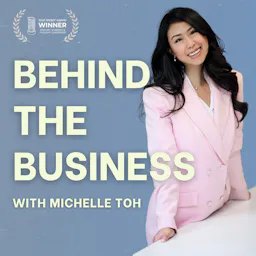
Peloton’s push into gyms: CEO Peter Stern’s big bet
50m 6s
Peter Stern, former Apple and Ford executive, joined Peloton as CEO to refound the company beyond its cycling roots into a comprehensive connected wellness ecosystem. He emphasizes that Peloton’s true value lies in empowering people to live fit, strong, and happy through a blend of fitness, mental well-being, sleep, and nutrition—all powered by AI through Peloton IQ. The company has reversed its financial decline, achieving strong profitability and stable member retention despite a previously troubled share price. Strategic expansions into gyms, supported by its Precor brand and commercial-grade equipment, and international markets via content licensing are key growth vectors. Stern prioritizes a focused "25" roadmap and core values—equipment, software, human coaching, and community—over competing in fragmented markets. This disciplined, purpose-driven approach enables rapid innovation, such as launching four new pro products in just 10 months and advancing AI capabilities in real-time form feedback and personalization. Peloton’s long-term vision is to have a profound, lasting impact on millions of lives by making wellness accessible, engaging, and sustainable—proving that long-term value beats short-term gains.
This episode is brought to you by Indeed.
You're ready to level up your business,
but the pressure to find the right person
to make that happen is intense.
Indeed Sponsored Jobs can help carry the load.
It boosts your job post
to help it reach quality talent fast.
Cut through the chaos with Indeed Sponsored Jobs.
Get a $75 sponsored job credit at indeed.com slash podcast.
Terms and conditions apply.
Hiring now?
Then this is a job for Indeed Sponsored Jobs.
All new holiday drinks are now at McDonald's.
Like the Frosted Cranberry Splash with Sprite,
the Red Bull Frosted Cranberry Energizer,
and Cookie Butter Coffees.
Tis the season for seasonal drinks at McDonald's.
This was absolutely a dream, a dream job for me.
Actually, I called Peloton.
The opportunity emerged and that was too good.
In Peloton, I saw not only a business
where I felt like I could make a difference,
but also one where we can empower people.
Today's guest is Peloton.
Peloton CEO, Peter Stern.
For years, Peloton didn't just sell bikes.
It built one of the world's most powerful fitness communities
and became one of the hottest names in global business.
The company was once hailed
as one of the biggest winners of the pandemic era.
But in recent years,
as the world shifted back outside the home,
Peloton was forced to confront a new reality.
There's been some debate from investors
if Peloton could turn around.
Now, Peter is tasked with rewriting that story.
The biggest misunderstanding about Peloton
is it's just an in-home cycling company.
And it's. It turns out it's so much more than that.
He's looking to evolve Peloton beyond the bike
with new products and even new experiences,
taking it from living rooms into gyms and beyond.
The right thing for us to do is to invest in the gym
just like we're investing in the home.
In this conversation,
we'll hear about Peter's first year at the helm,
key choices he's made,
and how the company is thinking about fitness
with AI at its core.
Let me talk about refounding Peloton IQ.
Give us the ability to have a profound impact
on the quality of people's days
and quantity of the days
that they live on this earth.
That, to me, is a purpose for our company
that befits the brand Peloton.
Peter, thanks so much for joining us.
Michelle, it's my pleasure.
So, just to start off,
I would love to hear a little bit
about your professional background.
You, like many other Type A people on this show,
graduated from Harvard with a degree in English and music
before going to Yale Law.
Did I see correctly you were even in Harvard's Glee Club?
I was.
I was a huge nerd,
but that's actually how I met my wife,
because she was in the Radcliffe Choral Society
and the Harvard Glee Club and Radcliffe Choral Society
got together for parties occasionally,
and so my nerdiness paid off.
I see it paid off in one way,
but I was so curious, you know,
what were your aspirations early on
and how did it inform your initial career path starting out?
Early on, I spent my childhood as a pianist,
and I had to make a big decision at around age,
whether I was going to ramp up from practicing the piano
about two hours a day to six hours a day,
or whether I was going to have a more normal upbringing.
And I realized that, for me,
being with other people
and collaborating, whatever that was, right?
At that time, it was mostly play,
but that was really central for me,
and so I made that decision at that age
to be part of activities with other people,
and I think that shaped my desire to be
in the kinds of roles that I wanted to play.
I think a lot of people might be surprised to hear
that you were a pianist growing up,
and I did see you started your career
at the management consulting firm McKinsey,
obviously an icon,
before going on to, we actually share a former employer,
Time Warner Cable.
What did your roles teach you,
and what guiding principles did you kind of take
from some of those experiences?
Well, McKinsey was absolutely formative for me.
There were two aspects of McKinsey, right,
that really defined that firm.
One is this focus on client service,
and to me, servant leadership is really something
that I have therefore had drilled into me
from my first days in the business world.
The second was that the firm was equally as focused
on developing great people
as it was on that servant leadership,
and of course, they needed to be
because the product that McKinsey had to sell
was the people,
and so I've really focused on
not just my own development,
but my own development,
and so I've really focused on not just my own development,
but the development as much as I can of everyone around me,
even to the point where later in my career,
I spent about four years running HR for Time Warner Cable,
so that has always been a passion of mine as well.
I'm curious as well,
obviously, you've had quite a storied career.
It would be really tough to go through
all of the different experiences you've had,
but just to skip forward a bit,
you went over to Apple,
where you managed a massive portfolio,
including iCloud, Apple News, Apple TV+,
and an offering you helped create, Apple Fitness+,
what did you learn about the subscription business
in this time, and how do you juggle it all, frankly?
I will go back,
because the very first subscription business I ran
was when I was 18 years old,
and at that time, it was for a little magazine.
When I was in college, we had 2,000 subscribers,
and I had such a tactile subscription experience,
because I literally addressed the envelopes,
like printed out the labels,
and stuck the labels on the envelopes for the renewals,
and when people sent in,
our subscription was $20 a year,
when people sent in their money,
we told them not to send cash,
but it was often $20 bills stuck into the envelope,
and I would bring those to the bank.
I really understand subscriptions in a way that,
I think in the modern era,
it feels a little bit,
it's a little bit remote for people,
but for me, it's very personal in that sense.
When I was at Apple,
the first thing I did when I joined
was get involved with iCloud.
I felt that that was such an essential part
of the Apple experience,
that sense of continuity that you would have
from one device to the next,
the ability for you to have the peace of mind
to know that your precious memories and your files
would be with you no matter what happened,
even if you lost your device,
that felt like something that we could use as a foundation
for not only creating a different kind of relationship
between Apple and its customers.
Remember, Apple did not,
know who most of its customers were.
The vast majority of iPhones are sold through a carrier.
So this was a chance to build a direct relationship
with a customer,
and then also to act as a foundation
for building all of these other services
that could enrich people's lives.
And I would assume then that that obviously
gave you really valuable insight
into how you tried to forge that connection now directly
in your role at Peloton.
It seems like subscriptions are really in your blood.
I'm so curious as well.
One thing that I did see when I was,
reading up on you,
is that some media execs had described you as a company man.
I'm just so curious because obviously you then left the tech world
for Ford Motor Company going into quite a different space,
some would say, right?
The auto world.
What drove you to like kind of make that switch as well?
And also, you know, what did you learn in particular
about merging hardware and software over there
that guide you in what you do now?
Yeah, there's, there are a lot of pieces to that.
So let me first start by acknowledging the roast of company man.
Yeah. There's, there are a lot of pieces to that. And, and here's, here's why I think people referred to me that way.
I only work for places that have tremendously strong values and iconic products.
And that give me a chance to, to produce things that I'm truly proud of.
And so it's not that I would be a company man for any company, but I would for the ones that I choose to work for.
So now let me answer the Ford part.
And, and the Ford part of the question and, and how did that come about?
So, first of all, I loved my experience at Apple, but I have three relatively grown kids.
They're all in their twenties.
And they, it was clear that they were all going to be on the East Coast.
And my wife and I decided that living 3000 miles from them was not sort of the right answer for us in the long run.
And so I left Apple with absolutely no sense of what I was going to do next.
And then some folks from Ford called.
It would be great if you could do something like what you were doing with Apple, but that idea of, I mentioned that at Apple, the company didn't really know who most of its customers were.
Ford was not dissimilar.
When you buy a new car, you buy it from a dealer.
That dealer is not owned, at least if you're Ford, it's different from some, some other companies like Rivian or, or Tesla, but those dealerships are not owned by Ford.
And so they don't actually know who the customer is.
There's a real opportunity to build a different kind of relationship.
One that allows you to communicate the benefits of your company, to deliver ongoing value through the mechanism of a subscription, but really through the products that we could create.
And when I was given the opportunity to oversee things like building the autonomous driving, um, business and, uh, and building other things like connectivity and security packages and building a B2B.
suite of products, all of that just added up to a really, really unique opportunity.
And we made amazing, amazing progress in that year and a half or so that I was part of the company, but then Peloton called, or actually I called Peloton, but the opportunity emerged.
Um, and that was too good.
Okay.
Well, let's get into that because I did see that as well.
You actually were the one I read that reached out to Peloton.
So what is the story here, Peter?
Because early last year, you then signed on board officially and started.
the job, a CEO.
It's no secret that obviously Peloton has had lots of highs and lows, as I just alluded to there.
I think it's fair to say that when you were first named to the role, this was seen as a really tall order, right?
I mean, other folks had tried and failed to kind of shore up the business shortly before you.
There had been painful layoffs.
And at the time of your appointment in late 2024, I think Peloton's share price had fallen more than 94% since its peak in 2020.
All of this is stuff that's been pointed out to you.
So first off, what motivated you to take on this challenge?
And what was the reaction from your friends and family?
I believe so deeply in what Peloton does for its members today and can do for so many more people that this was absolutely a dream, a dream job for me.
I knew that I wanted to spend as much time as I can at this stage in my life and in my career making a difference on matters that,
you know,
can bridge the gap between healthspan and lifespan that can really enrich the quality of our years on Earth.
And the best way to do that is to go upstream and start to address challenges around exercise and around sleep and around mental well-being as early as we can.
And in Peloton, I saw not only a business where I felt like I could make a difference because,
it sits at the intersection of media and technology and community, things I'd worked on before.
It was a subscription-based business, an iconic product, as we talked about earlier,
but also one where we can empower people to live fit, strong, long, and happy.
And that, to me, is something that gets me out of bed every single day, just so enthusiastic about my job.
And I'm so lucky to have that.
Looking back, it sounds like all the dots really connect, as they say.
What was the initial moment that you realized, like, okay, let's go for it?
Was it as simple as literally seeing that they needed someone else and calling them up?
Or what was the story there?
So, actually, when I left Apple, I said, you know, I'm going to be in no rush.
I'm going to be very deliberate about what I do next.
And I tried to be pretty systematic about it.
And I said, I want to do things where I can live on the East Coast, see my kids.
That's why we left.
But I want to be able to. I want to do something that I believe in.
I want to be able to work in something that has subscriptions, because I understand that well.
It needs to be media technology.
They need to be ready to entrust me with significant leadership.
And there are certain businesses that I've already done that I didn't want to do anymore.
I'd done 12 years as a cable guy, and that was enough.
And so, by the time I put everything through that filter in the New York City metropolitan area,
the only company that actually came out. the other side of that filter was Peloton, but there was no job at that time because they had a CEO.
And so that's why I went to Ford when they called.
It wasn't in the New York City area, but it checked a lot of the other boxes.
And again, that was a wonderful experience.
And I'd like to think that, you know, it worked out well for Ford, too.
All the products we were working on are doing great.
But when I heard that there was an opening at Peloton, I very quickly, through a friend, found out who
the recruiter was, called him that day.
He said, we haven't even really started.
I said, well, I'm your guy.
And especially because I had had that experience at Apple and really felt like this was a marriage made in heaven.
In terms of friends and family, was there anyone telling you, what are you doing?
You know, like, obviously, this is going to be a big ask for you or not really.
Yeah, I mean, there were certain people who might have said, wouldn't it be better to just. jump on a rocket ship, right?
My experience is that I didn't want to jump on a rocket ship and just be the guy who described the scenery.
I wanted to actually join a place where I could actually make a real difference, where my vision, coupled with that of the team, of course, and the strategy that we would put in place, would materially impact the outcome of a business that is really important in millions of people's lives.
And so, you know, once I explain that, then everyone is completely supportive.
Well, let's talk about that vision, because I've read that you've been a Peloton member since 2016, if I have it right.
So 10 years, actually.
When you first took the job, what did you think was misunderstood about the company?
And what did you believe that you could fix that others couldn't?
The biggest, I think, misunderstanding about Peloton is it's just an in-home cycling company.
And it turns out it's so much more than that.
This business, of course, is.
It is the world's largest in-home cycling company.
But we also have an amazing tread product line, and that's a very successful product.
But even more important, I think, than either of those two is the broad array of disciplines that our members engage in with our instructors.
So, for example, in a typical quarter, we'll have two million of our members doing strength workouts.
That makes us the world's largest strength subscription service.
And we know that there's so much changing in the world in our understanding of what's important.
To have a well-rounded health and fitness routine, we know now the importance of strength in addition to cardio.
That's just the tip of the iceberg, of course.
We've got stretching.
We've got yoga.
Pilates is on fire.
Not just in the rest of the world, but our members are engaging in Pilates in absolutely record numbers.
And that's something that we offer without, at this stage, having to actually have a piece of equipment or leave your home and go to a gym.
And that's something that we offer without, at this stage, having to actually have a piece of equipment or leave your home and go to an expensive studio.
So, you know, there's just so much that we do for people.
And that's just the tip of the iceberg compared with what we could do over time.
This episode is brought to you by Long Angle.
Now, here's something interesting about them.
Think about the conversations we have on the show.
What's next for the IPO market, building a $2 billion brand, AI and robotics, and even travel hacks.
Long Angle is a community where people are having these exact conversations, except with their own money on the table.
We have a private vetted network of entrepreneurs, executives, and investors, everyone with a verified net worth between $3 million and $100 million.
So when we're talking about the IPO market, their members are asking each other how to handle their own pre-IPO equity and secondaries.
When we cover AI and robotics, members are doing diligence together on robotics investments.
Brand founders compare notes on scaling and exiting.
There's even a group on flying first class for less.
So kind of the same topics, but with verified peers.
There's a lot of managers who've lived it, real stakes, and nobody is allowed to sell you anything.
Now, membership is free, but you do have to apply.
There's an application, an interview, and proof of wealth.
That's not a hurdle.
That's the point.
It's why the room is worth being in.
If that sounds like you, go to longangle.com/business.
That's longangle, A-N-G-L-E,.com/business.
If you're interested, check out the link in the description and pin comment.
So was that one of the key mandates that you saw for yourself walking in on the IPO market?
And was that one of the key mandates that you saw for yourself walking in on day one, like, we need to really hammer at home the wide array of offerings we've got and make clear that it's not just a bike in your home?
Absolutely.
And I'll just zoom out a little bit from that.
For us, the vision is that we go from being a connected fitness company, which is a wonderful thing to be, to being a connected wellness ecosystem.
Because ultimately, that's how we make the most profound impact on our members' lives.
It's I'd love to be used by.
More members, more days of the week for 20, 30, 45, 60 minute bike rides or for treadmill runs and walks.
But even better than that, from my perspective, would be to do those things and also be there for them in their outdoor runs and to be there for them with their meditations and to be there helping them get to sleep and deal with the stressors of the day to substitute for, you know, especially if they're a busy parent and it's hard to get out of the home, having to do something in a studio.
Like Pilates, all of these things are not they're not future dreams.
They're actually things that Peloton offers today that we need just more people to recognize and we need to find more ways to activate them.
Right. And is that why actually I think I did see a headline.
Didn't you guys acquire a breathwork app last year?
That's a big part of the whole push into overall wellness.
It sounds like.
How do you then go about, you know, enacting some of these changes?
I hear that it's a process that's been described as refounding.
And I'll start, by the way, with a moment of acknowledgement for the incredible founders of Peloton, because the fact that we refounded should take nothing away from the work that John Foley and team did to remarkably create a product market fit where there seemingly was none before and to identify this idea of in-home connected fitness that a whole industry exists because of what they did.
Well, over time, I believe that the definition of the company had just become too narrow compared with the potential for our impact.
And so the idea behind the refounding was to start at the very, well, foundations, similar word, and to redefine our purpose, right?
Empowering people to live fit, strong, long and happy to expand the scope of our impact.
To ultimately global impact on people to.
focus on not just fitness, but also all the domains of wellness, cardio, strength,
mental well-being, as you mentioned, with the app we bought, sleep and recovery. Even over time,
we're exploring areas in nutrition and hydration. All of those things, when you wrap them in an
intelligent layer, what we call Peloton IQ, give us the ability to have a profound impact on the
quality of people's days and ultimately the quality and quantity of the days that they live
on this earth. That to me, that's a purpose for our company that befits the brand Peloton,
that wonderful brand. Now we are working across every one of those dimensions to deliver breakthrough
experiences individually and then to tie them together again with Peloton IQ so that our
members have the. The guidance that they need and the personalized plans to complement what our human instructors do
that deliver a plan that'll make a difference in their lives.
Well, okay. That segues really well to something I wanted to ask you about because you can't sit
down with a CEO today without talking about AI. You've been bullish on this, I think, Peter.
I'm curious if you can share, you obviously talked about Peloton IQ, how Peloton is
integrating AI into its lineup and your outlook more broadly going forward. What is the game plan
here?
What do you say to critics that say, we're in a bubble?
There are lots of examples where AI is of dubious value or it may have mixed results in the world.
But what we're doing at Peloton is definitely not one of those.
For us, AI is an unalloyed good because we are using it as a way to take our 57 instructors.
We have 57 instructors and we have 6 million members. So what does that mean, right? The ratio
is. The ratio is 100,000 members to one instructor. Now, the beauty of our system is that our
instructors can deliver group classes. In many cases, tens of thousands of people will tune in
for the same class. But they're simply, even though our instructors are remarkable human
beings, they cannot connect individually with 100,000 people each and develop a plan for each
one of those people. And also then monitor your progress and your changing goals and
achieve your goals.
Adapt that program to you. But with Peloton IQ, which channels the capabilities of AI,
we now have the ability to deliver the benefits of a group class, that community experience that
so distinguishes Peloton with a completely personalized experience. We then even have
taken it further than that. And the work that the team here has done, that the team has done,
is remarkable. On our plus line of equipment, we're able to use computer vision,
and again, all of this has been built using machine learning and AI, to analyze your form
as you're, for example, doing strength training. And we can give you feedback on whether your
form is good or what to correct. So things like straighten your back. I should probably
do that right now. Or we can count your reps. We can even tell you when it's probably time
to either go up in weights because it's too easy for you. Or we can tell you when it's
too easy for you. Or maybe you want to back off because we can see your form is breaking down.
You want to go down in weights. These are all examples where we can basically bring
some of the benefits of personal training right into your home using AI and augmenting the amazing
human capabilities that we have as a company. So I'm incredibly bullish on AI. To your broader
point of whether we're in an AI bubble, that's for other people to answer. But we're not in an
AI bubble at Peloton. Those are some great use cases there. I'm so curious. Obviously, you've
had a lot of different offerings that you're working on. Some investors have argued that
Peloton should lean more heavily into the whole software and subscriptions rather than focusing
on hardware, which can be a bigger drag on margins. How do you think about that balance?
So one of the aspects of the refounding that I did was to get us focused again on what makes us
truly unique. And that is what I call our magic formula. The magic formula at Peloton is
world-class equipment plus intuitive software powered by AI. It's unmatched human instruction,
and it's that supportive community that ties it all together. We have to go back to what drives
a habit. Because in the world of exercise, fitness, wellness, habits are everything.
It's not getting started. It's staying with it that matters. And for something to become a habit,
it needs to be obvious, attractive, easy, and satisfying. Having a physical piece of equipment
in your life, that's like what we produce at Peloton, checks a bunch of those boxes like
obvious and attractive and easy. And then, of course, we make it so it's really satisfying.
If you just have an app, it's somewhere, you know, on screen three on your phone or
that's not obvious. And so we are distinguished from all of our competitors. And that plays out
in the metrics of the business. When you look at the typical churn rate, right, so
the inverse of how long someone stays with the business, for an app-based fitness business,
it's typically 6% to 8% a month. Multiply that by 12 months, you're getting very close to turning
over your entire base every year. Look at our business.
We have somewhere closer to, on a net churn basis, 1.5%. So our average member is staying with us for
five and a half years. That's a fundamentally different business. And it's one in which we can,
because the member is choosing to invest in us, we can afford to invest in them. We can put together
a much higher quality experience. We can afford 57 world-class instructors who are stars, each and
every one of them in their own right, because we have that equipment that drives the habit, that
drives the longevity. And we can afford to invest in them. That drives the value for the member and for us.
Some news you made recently as well, Peter, is that Peloton is heading to the gym.
Talk us through the decision to push into the commercial business and the reception you've
seen so far.
So I'll start with the reception, which is the gym operators are so excited about
what we're doing there. And that, I think, validates what we believe. If you divide
people into how they work out, they're in three categories. There are people who work out at home,
and there are people that work out in gyms, and there are people who do a little bit of both.
And if we only focus as a company on the people that are at home, then we're missing out on having
a really big impact on the people who only work out in gyms. And we're only meeting part of the
needs of our own members, who, in many cases, are splitting their time between a workout at home and
in the gym. And so once we recognize that gym versus gym is a different thing, we're going to
recognize that gym versus home is not a zero-sum game. This is a situation where all of us are just
focused on helping more people get fit, live better lives, think of themselves as athletes.
Then it becomes obvious that the right thing for us to do is to invest in the gym, just like we're
investing in the home. Now, building products for the gym is really different from building
products for the home. They might look very similar, a treadmill in the home or a treadmill
in the gym. But take the example of a bike at home. Maybe you've got two people in the family
who share that bike. That's often the case for us. They occasionally have to adjust the seat because
one member of the family might be taller than the other one. But it's once a day or once every
couple of days or something like that that gets adjusted. When we're talking about a gym
environment, this is equipment that's getting used 16 hours a day. And every single person who gets
on it needs to customize that experience. And they're putting stress on that product,
in a fundamentally different way from the way that you do it in the home. And so we had to
build those products basically from the ground up to be ready for the gym. The really great
advantage we have is that Peloton also owns another brand called Precor. And Precor is one
of the leading suppliers of equipment to gyms already. And they build stuff that is truly
commercial grade. So what we've done in the last year is begun to merge Precor and what we called
Peloton for Business into a single brand. And that's what we're doing. unit that brings together the industrial grade manufacturing capability and the service of
Precor, which is designed for those heavy use environments, together with the industrial design
and the software and the human instruction of Peloton. And when you put that together,
you have something that's really magic. When we talk to gym operators, they have always said to us,
since I joined, there's only one brand.
That my members ask for by name when they come in the gym. And it's Peloton. And I don't have
anything for them. So now we'll be able to check that box by the end of this calendar year.
Well, it's just so smart, because I think one, it's a clap back to anyone out there who would
be like, that's just a pandemic play. And then two, I would assume not just in terms of, you know,
reaching back out to the users that you already have, that might be, let's say, on the road
traveling, and don't have access to their Peloton, you would also be reaching new users who come into
the gym, see it, and might want to test it out.
Absolutely.
So you have also hinted, by the way,
that hospitality settings could come into play here?
Does that mean that Peloton could also be headed to hotels?
Do you want to make some news?
And we have actually really great partnerships already
with Hyatt and Hilton, for example.
And we are in the vast majority of their locations
with our equipment today.
But we'll be working with those companies
to refresh all of that equipment over the next few years
and put in place the commercial grade stuff that we've got.
We even have some suites
where you can get Peloton equipment in your room.
And that's an absolutely transformative experience
because now you can wear whatever you want.
I don't want to know.
So another big push, by the way,
has been the effort to evolve Peloton
beyond just the bike, as we spoke about.
So last fall, you unveiled as many as five new products,
I believe, including a cheaper base model of the bike,
a treadmill, and a new rowing machine,
letting users switch between cardio, strength, yoga,
some of the things you've talked about.
How has that new rollout performed so far?
And what feedback have you heard?
Yeah, we're getting great, great feedback on the products.
So this is called the Peloton Cross-Training
Series.
And the vision is that we know that the optimal fitness
regimen for anyone includes a mix of cardio and strength,
especially in this era where more and more people,
for example, are on GLP-1 drugs.
And they're at great risk what's called sarcopenia, right,
which is muscle loss.
It's ever more important that people
make sure that they are engaging in strength training.
That being said,
cardio is actually still the foundation of anybody's workout,
what that does for your heart health.
Even cardio exercise even recruits your killer T-cells to go after cancer,
which we're all making cancer all the time, unfortunately,
but our bodies attack it.
And cardio exercise encourages five times more killer T-cells to actually go
into the bloodstream and go after cancer than anything else.
So when we look,
at what that does for metabolic disease,
diabetes,
et cetera,
it's really important.
So what we tried to do was create a product that wasn't optimized for cardio
or optimized for strength.
It was optimized for both.
So every piece of equipment in our lineup now has a screen that pivots,
pirouettes,
we like to say,
and that allows you to have both an excellent on-device experience,
whether you're on the bike,
you're on the tread,
you're on the rower,
but,
but then to be able to step off that equipment and to be able to have a
camera that shows you doing the workouts yourselves in the case of our plus
lines,
but on all of our products,
make sure you can see our instructors on that big,
beautiful screen with the amazing sound that we offer.
And in some cases in partnership with Sonos delivers this,
this complete home gym experience with one piece of equipment.
I'm so glad you mentioned that because I was going to ask about the rise of
GLP-1 with drugs like Ozempic.
You know,
some have obviously said that weight loss is starting to happen.
They're starting to shift from the gym to medication.
I was going to ask how that factored into your approach at all.
It sounds like that's a big part of it,
pushing the strength training and making clear that there's still other things that people should be doing,
even if they are on such a medication.
Well,
absolutely.
So we know right now,
somewhere in the vicinity of 12% of us adults have at least been on a GLP-1 for some period of time,
which is incredibly rapid uptake.
And in many ways,
these appear to be miracle drugs,
but they,
they don't actually replace,
the importance of exercise.
Quite the contrary.
They actually require you to be even more deliberate about exercise.
And the beautiful thing that we have seen,
and this is really only emerged over the last few months that we have data.
Before this,
it was a hypothesis.
But there was a recent study that I believe was,
was put out by Morgan Stanley,
that where they looked at the zip codes that had the highest number of people that were taking GLP-1 drugs.
And they looked at the number of those people that were actually going to had gym subscriptions,
because that's those are both things you can measure,
right?
And it turns out that they are very positively correlated.
And so we're seeing not that people are getting on a GLP-1 drug and saying,
well,
okay,
now I don't have to exercise anymore.
In fact,
they're getting on the GLP-1 drug and they're saying,
you know what?
I feel better in many ways than I have before.
I'm ready to try things that I didn't do before.
And I know how important it is that I actually take care of my body.
And so it's turning out to be a real positive for both the patients and also for the fitness industry.
And we,
you know,
we plan to make sure that we're there for every one of our members who decides to go down that path.
It's like this episode is brought to you by Indeed.
Get a $75 sponsored job credit at Indeed.com/podcast.
Hiring now?
Holiday drinks are now at McDonald's like the new Red Bull Frosted Cranberry Energizer.
It's Red Bull mixed cranberry flavors topped with cold foam and sprinkles made to charge your holiday spirit now at McDonald's.
Sam's Club is the club for every holiday.
It's the best holiday club.
Guess who's joining the club this season?
Walmart Plus.
Yep.
Sam's Club Plus membership now comes with Walmart Plus at no extra cost.
Two memberships.
One great price.
Just 120 bucks a year can save you time and over $700.
Want to get in on the membership duo of the century?
Visit samsclub.com.
Come join us.
Sam's Club.
Annual plan only.
Auto renews.
T&C apply.
Estimate based on average combined Walmart Plus and Sam's Club Plus savings among members
of both for one plus year versus non-member or club member pricing/fees.
Excludes membership fees.
See Walmart Plus terms and Sam's Club terms for more info.
Somewhat counterintuitive.
Sounds like a great win for you guys.
Looking ahead, I guess, to the near and mid-term, Peloton has been expanding into international
markets like the UK and Australia.
What are you most focused on, you know, abroad and which markets do you see as the next big
growth opportunities?
So there's a couple of ways that we're approaching this.
Peloton's actually only in six countries right now: US, Canada, UK, Germany, Austria, Australia.
But Precor, which I mentioned earlier, that has all of these relationships with gyms,
they're in 60 countries.
They're 10 times the number of countries in 80,000 gym locations.
So the first thing that we're focused on is making sure that Precor is able to take that
Peloton experience to gyms in any of the countries where it operates.
And so we've been building out that capability.
That's one way we're working on international expansion.
The second thing, and I can't get into detail on this one, but we have part of our business
that we call content licensing.
Right.
Yeah.
And that's iconic class content available to third parties for them to distribute on
their platforms.
And we have something really cool coming very soon that will put us in over 100 countries.
And that will allow us to touch consumers in a very broad way.
So when you think about that strategy, we've got gyms, really like that high-end subscription
experience.
We're going to have lots of consumers in over 100 countries.
We're going to start to build the Peloton brand really organically.
As Michelle, you pointed out earlier, being in a gym and trying a Peloton piece of equipment
is a great way to get to know us.
And then we'll also have people exposed to our amazing instructors and content.
That then sets the stage in the future for us to potentially expand even further ourselves.
But that will rely on another use of AI as well.
And that's AI dubbing.
Content licensing.
I'm so curious.
I'm sure you are not able to say too much more.
But just blink once if it's anything to do with your old employer, Apple TV.
I'm trying to be very conscientious right now about. Yeah, I'm not trying to help you validate NDA.
Okay.
Well, looking out, I guess, one thing that has always been a question, I think, for you
is Peloton's performance on Wall Street.
I'm just so curious, has this been just like a bear for you in the sense that every quarter,
you obviously have to go out and face shareholders and deliver the earnings and whatnot.
It's the age-old question of how do you manage the pressure of delivering short-term expectations
to Wall Street investors while trying to carry out that long-term plan that you've seen?
What I would say is, one, I have a very supportive board.
And that matters a lot.
And the reason I think that that board is supportive is because they can see that we
have the right long-term strategy.
They don't encourage me to try to do anything that is short-term.
At the expense of the right thing long-term.
And when you have that kind of support from your board of directors and then you can do
the right thing, then it makes it easier to get through each of those quarterly report
cards that we have to do.
That all being said, when you look at the trajectory of the business, it's so positive
what we're accomplishing.
This is a business that two years ago had typical measure of profitability in this
business is something called adjusted EBITDA.
For us, two years ago, we were basically break-even.
We, and again, we're in a quiet period, so I'll just talk about what we guided to last
quarter.
But as of last quarter, we were guiding to somewhere between $450 to $500 million of
adjusted EBITDA.
This is a business that was declining three years ago.
Revenue was declining by over 20% three or four years ago.
And we guided for the back half of this year to close to flat.
That's not a complete turn.
That's not a complete turnaround on the top line of the business, but that's exactly what
a turnaround looks like.
It's making progress every single quarter. And so whatever metric you have, we're actually demonstrating that consistently. And I think, therefore, that the right long-term investors will want to buy Peloton and they'll want to stay with us. And if what you're interested in is just a short-term pop, then we're probably not the right company for you.
Zooming out, what is your endgame here? If we were to sit back down in, let's say, 10, 15 years, where would you want Peloton to be?
And I love that you pick a long time frame, because we're really trying to build something here for the ages. So there's no endgame. We're just going to keep on getting better at this.
But what I'd like people to be able to look back on is to say, this company made a profound, really fundamental difference in millions of people's lives.
It's a company that took the deeply confusing and. In many cases, bewildering world of wellness and translated it into specific programs and plans that people could adopt and they could adhere to.
And when they did that, they felt better. They lived better. They shared it with their friends. And they strengthened the community of Peloton.
And sure, that delivered remarkable financial results and incredible returns to shareholders.
But it did it for the right reasons.
It did it because we made, really, this difference in people's lives every day.
And by the way, I don't want to lose this, because, Michelle, you mentioned this earlier, we also made it fun.
That's part of the power of Peloton, is that we're not like every other piece of equipment that you might stick in your basement and then never use again.
Because there's this community, whether it's our instructors or whether it's our members, that basically hug you and make you feel like you're part of something that's really important.
And that's really big and that you feel accountability to because we're accountable to you.
To that point, though, I'm just curious, obviously, with regard to what you just alluded to, you know, some of the financial constraints that you had to deal with when you first came on board.
How do you manage to still try to fire in all cylinders, obviously, all in so many different areas that you're trying to chase right now, right?
With, you know, obviously, the realities of, you know, a budget that you've got to manage and, you know, like, I'm sure there are things that you've got to do on the cost side to manage.
But while making sure you're chasing growth appropriately, like, frankly, how are you able to do that if you don't have, like, the most giant staff?
A couple of things I'll note.
One, we have a system, we call it the 25, that is a prioritized list of the most important things or really the only things that we're working on cross-functionally in the company.
25 is the limit of what we'll do.
I think right now there's 22 things that we're working on.
Everyone who needs to know in the company.
They know what those things are.
They know what they are.
They know what the ranking is.
They know if push comes to shove, project number one is more important than project number two.
And something's going to have to give if project number one needs extra resources.
So that creates a level of focus that I think is incredibly helpful for us as a company.
But more important than that, and I'm really not just saying this, the people of Peloton are remarkable.
So when I left these really big, big companies, you think about Apple, right?
Give or take $400 billion.
You look at Peloton, $2.5 billion in revenue.
So the one is 150 plus times larger than the other.
Some people said to me, oh, you need to be prepared for the fact that you're going to be at a smaller company.
You might not have the same kind of talent that you had before.
No.
There's something so powerful about Peloton's purpose, about this brand that stands for all of our aspirations of living better that enables us to attract remarkably
capable talent.
And so even with a smaller staff, certainly than I've had in some of the other companies that I've worked at, we're able to produce an enormous amount of work.
I want to acknowledge that that is not easy for people.
Everyone feels like they're right at that bleeding edge of what they can possibly accomplish.
But we all have an immense sense of ambition and pride in what we do, and it powers us in a way that we can actually do.
We can actually accomplish a lot.
That's why 10 months after I joined the company, we were able to replace every single product in our lineup and launch four new pro products in one shot in a hardware business.
If you think about most hardware businesses, that doesn't happen in 10 months, but the people of Peloton actually pulled that off.
In that short amount of time, we were able to make really fundamental leaps and launch Peloton IQ in such a way that we're actually leaders in the field of AI.
Again, that is the remarkable thing.
That is the remarkable capability of the people of Peloton that made that possible.
No, I have to say, I was astounded by the number of announcements I had to go through just in the past year alone.
So clearly, you guys have been busy.
All right, this brings me to a segment we're calling What It Takes, where an audience member gets to ask for advice or hear more on what it takes to get where you are.
Today, Angus, a wellness founder based in Hong Kong, asks, what is something you've deliberately chosen not to do as CEO, and how did you make that call?
Well, so note that that prioritization process that we created, that we call the 25,
is fundamentally about what not to do.
I'll go back to the magic formula that we talked about earlier.
There were a lot of things that we could have done to invest in our app, in just the basic app business.
And we shut almost all of those things down when I joined, because we had to prioritize the things that make us totally unique from everyone else.
And that is equipment, plus software, plus human coaching, plus community.
And if it doesn't actually integrate all of those things, then it's not us.
We'll let somebody else go pursue those opportunities.
I wish them luck, but that's not us.
And so that prioritization process, coupled with really knowing who you are, knowing what distinguishes you from the competition, is the key.
Thank you, Peter.
Now we're going to do a quick rapid-fire round.
Don't overthink it.
Just say whatever comes to mind.
Ready?
I hear you are an avid reader.
What is one book you'd recommend everyone pick up right now?
The Tao of Leadership.
Favorite workout on Peloton?
Right now?
Sim 60.
It's a tread boot camp where you do 10 minutes of brutal, as fast as you can go or as running.
And then you get off and you do 10 minutes of strength.
And then you do that three more times.
So it takes you 60 minutes with basically one minute break in the middle.
And it's by Jess Sims.
I can do it because I stay with Jess, but it's brutal.
That sounds brutal.
Okay.
Fact check.
True or false, you are an inbox zero person.
Yes.
Try to follow a philosophy that I call one touch.
If I receive something, the most efficient thing I can do is touch it once.
If that means replying right away, great.
If it means making it into something on my to-do list, then that's great.
If it means that I don't need to do anything with it, get rid of it.
But that way, I don't have to do anything twice or three times.
That slows me down.
That is a great one.
I'm going to steal that one.
How do you prep mentally before a bake?
Meeting or about any rituals?
Well, it depends if I have to have it memorized or not.
So if I have to have it memorized, which is really hard because I'm not trained as an actor,
I read the thing many, many times.
Then I handwrite it in cursive.
That experience of cursive really slows me down and requires me to be very deliberate about it.
Then I read it many times in cursive.
Then I write it again.
But just the first time.
The first letter of every word.
And then it forces me to remember each of the words.
But I've got enough cues because I've got the first letter of every word.
And then I do the first letter of every sentence.
And then the first letter of every paragraph.
And at that point, you've got it memorized.
So that is a ritual I use when I need to memorize something.
You have it down pat.
Okay, I'm taking note.
Lastly, what is one piece of advice you come back to often?
I had an early boss.
Who is still a great mentor to me.
Who often said,
You're the fastest gunslinger this side of the Mississippi.
So you should stay out of gunfights.
I tend to go really fast sometimes.
And that's just not really productive.
And it's better for me to just slow things down.
Not find myself in a situation where I'm trying to go too fast.
And we get to better answers that way.
And we bring everyone along.
Got to do the breath work on your op.
Well said.
Yes.
Peter, thank you so much.
I've enjoyed this.
Michelle, I've had a great time.
Thanks.
Thanks for joining us on Behind the Business.
For more stories on business and leadership,
follow us on Apple Podcasts, Spotify, YouTube,
or wherever you get your podcasts.
See you next week.
Holiday drinks are now at McDonald's.
Like the new Red Bull Frosted Cranberry Energizer.
It's Red Bull meets cranberry flavor.
Topped with cold foam and sprinkles.
Made to charge your holiday spirit.
Now at McDonald's.
Sam's Club is the club for every holiday club.
Walmart Plus.
Yep.
Two memberships, one great price.
Just $120 a year can save you time and over $700.
Visit samsclub.com.
Come join us.
Sam's Club.
Annual plan only.
Auto renews.
TNC apply.
Estimate based on average.
to combine Walmart Plus and Sam's Club Plus savings.
among members of both for one plus year versus non-member or club member pricing slash fees
excludes membership fee see walmart plus terms and sam's club terms for more info
Podcast Summary
Key Points:
Peter Stern joined Peloton as CEO to refound the company beyond its image as a cycling brand, expanding into a connected wellness ecosystem that includes fitness, mental well-being, sleep, and nutrition.
Peloton’s core vision—empowering people to live fit, strong, long, and happy—is anchored in AI-powered personalization through Peloton IQ, which delivers tailored fitness and wellness plans using machine learning.
The company is strategically expanding into gyms and international markets, leveraging its Precor brand for commercial-grade equipment and offering content licensing to reach over 100 countries.
Peloton has successfully reversed its financial performance, moving from a break-even state two years ago to guiding toward $450–$500 million in adjusted EBITDA, demonstrating consistent growth despite prior declines.
Despite limited size and budget, Peloton maintains high innovation through a prioritized "25" framework and a strong sense of purpose, enabling rapid product launches and AI leadership.
The company emphasizes human-centered design, combining world-class hardware, intuitive software, expert instruction, and community to build habit-forming, long-term fitness routines.
AI is used to enhance both personalized coaching and real-time form feedback during workouts, ensuring safety and effectiveness without replacing human instructors.
Peter Stern intentionally departs from common industry trends by prioritizing core values—equipment, software, human coaching, and community—over competing in app-only or hardware-only markets.
Summary:
Peter Stern, former Apple and Ford executive, joined Peloton as CEO to refound the company beyond its cycling roots into a comprehensive connected wellness ecosystem. He emphasizes that Peloton’s true value lies in empowering people to live fit, strong, and happy through a blend of fitness, mental well-being, sleep, and nutrition—all powered by AI through Peloton IQ. The company has reversed its financial decline, achieving strong profitability and stable member retention despite a previously troubled share price.
Strategic expansions into gyms, supported by its Precor brand and commercial-grade equipment, and international markets via content licensing are key growth vectors. Stern prioritizes a focused "25" roadmap and core values—equipment, software, human coaching, and community—over competing in fragmented markets. This disciplined, purpose-driven approach enables rapid innovation, such as launching four new pro products in just 10 months and advancing AI capabilities in real-time form feedback and personalization.
Peloton’s long-term vision is to have a profound, lasting impact on millions of lives by making wellness accessible, engaging, and sustainable—proving that long-term value beats short-term gains.
FAQs
Peloton is evolving into a connected wellness ecosystem that includes fitness, strength training, mental well-being, sleep, and nutrition. The company aims to empower people to live fit, strong, long, and happy through a personalized, AI-powered experience.
Peloton uses AI through its Peloton IQ platform to offer personalized fitness plans, analyze form during workouts via computer vision, and provide real-time feedback. This technology enhances the personal training experience and helps members achieve their fitness goals.
Peloton believes gym and home workouts are not mutually exclusive. By expanding into gyms, the company can reach more people who work out in physical spaces, offering commercial-grade equipment and a seamless experience that complements its home offerings.
Peloton's magic formula is world-class equipment, intuitive AI-powered software, unmatched human instruction, and a supportive community. This combination creates a unique, habit-forming experience that drives long-term member retention and loyalty.
Peloton argues it's not in an AI bubble, as its AI applications are rooted in real-world needs—personalizing workouts, improving form, and offering tailored plans. The technology augments human coaching and serves a clear, measurable benefit for users.
Strength training is a core part of Peloton's strategy, especially as more people use GLP-1 medications. The company emphasizes that strength training helps prevent muscle loss and supports overall health, leading to new products like rowers and treadmills optimized for both cardio and strength.
Chat with AI
Loading...
Pro features
Go deeper with this episode
Unlock creator-grade tools that turn any transcript into show notes and subtitle files.
 PodcastTranscript AI