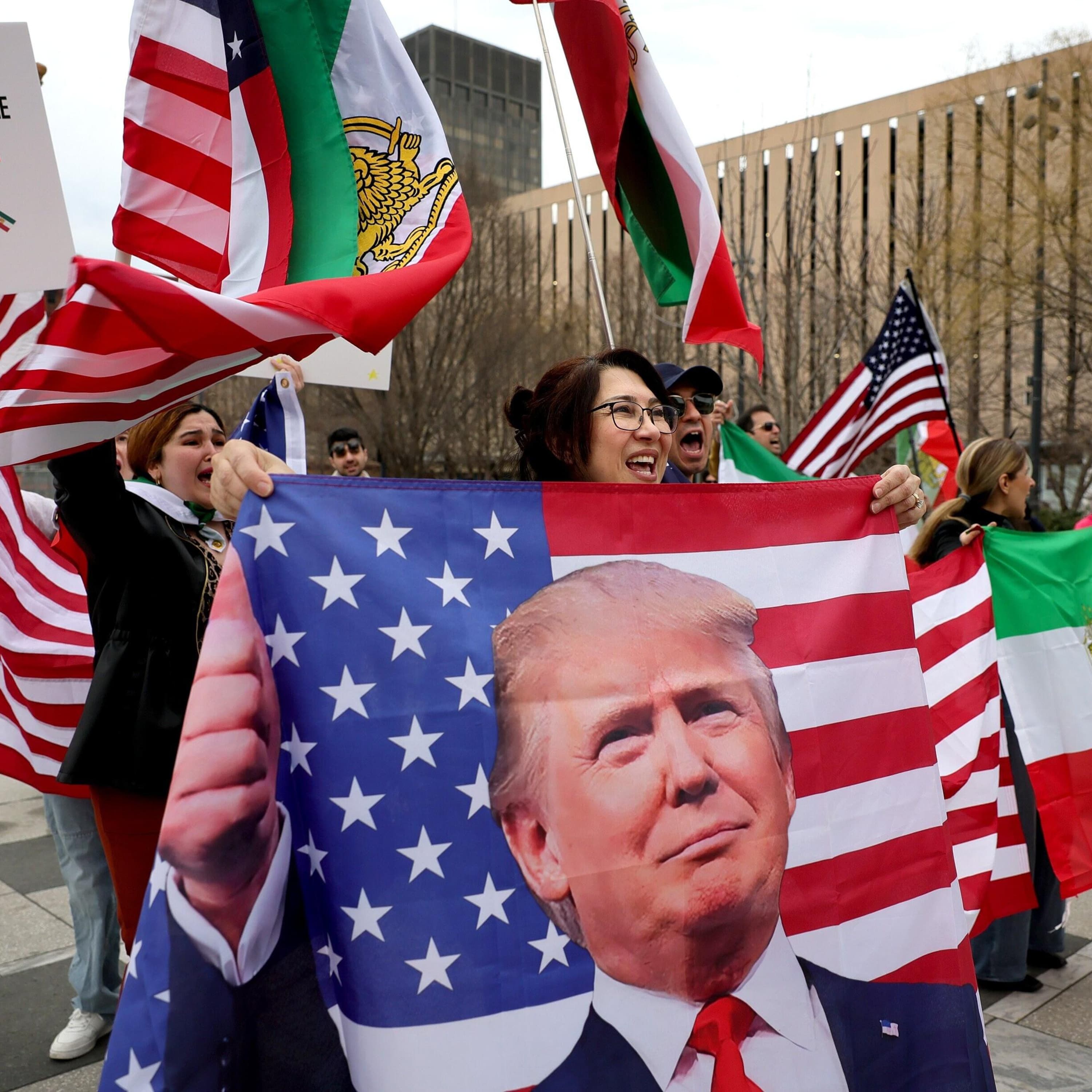
In a major escalation, US and Israeli airstrikes assassinated Iran's 86-year-old Supreme Leader Ayatollah Khamenei, leveling his compound and killing other senior officials. The event has bifurcated Iranian society, sparking both street mourning and ecstatic celebrations, while the regime vows vengeance and has launched retaliatory drone and missile attacks across the Gulf region. Analysts describe the strike as a transformational, audacious act by the US, explicitly aiming for regime change and abandoning concurrent diplomatic talks on Iran's nuclear program. The aftermath is marked by profound uncertainty: the potential for a destabilizing power struggle or civil war within Iran, the challenge of identifying a credible successor or alternative government, and the risky precedent set by the US's unilateral military action and diplomatic deception. While the move is celebrated by many in the Iranian diaspora, there are serious concerns about the lack of a coherent US plan for what follows, the civilian casualties incurred, and the long-term implications for regional stability and international trust in American diplomacy.
This is The Guardian. Hi, I'm Annie Kelly, presenter of The Guardian's Today and Focus podcast. Jonathan Friedland is away, but on what turned out to be another extraordinary weekend for US foreign policy, the consequences of which will be felt across the Middle East, I'm bringing you this special episode from Today and Focus and Politics Weekly America. Here's the show. He survived imprisonment, assassination attempts, decades of protests, and exerted a brutal iron grip on Iran's 19 million people. Now, Iran's supreme leader Ayatollah Hemeni is dead, killed by US and Israeli air strikes that leveled his compound where he and some of the most senior regime leaders were sheltering. As news of the italus death emerged, there was public mourning on the streets of Iran. But also ecstatic celebrations inside Iran and around the world. This is a big day, and this is like the belly wall has been falling. So this is a significant victory for Iranian, is a significant victory for a peace in the entire world. This is the overcoming of the light to the darkness. Meanwhile, Iran has launched retaliatory strikes and vows vengeance. It is still unclear whether his assassination will bring about the regime change that Donald Trump so clearly desires, or what will happen next for Iran, where the air strikes continue and the death toll is spiraling. When we are finished, take over your government, it will be yours to take. This will be probably your only chance for generations. It's absolutely transformational if Donald Trump succeeds in what he's attempting to do, which is to change the regime in Iran. You have changed the whole political landscape of the Middle East. From the Guardian, I'm Annie Kelly, today in focus. After a weekend that changed everything, what next for Iran and the world? Patrick Winter, you're the Guardian's diplomatic editor, and we are speaking to you on Sunday, 24 hours after Israel and the US launched extraordinary military strikes against Iran. How did you feel when you heard the news that Hamani Iran's 86 year-old supreme leader have been assassinated? Well, it was an incredible shot because it's such a moment of transition for Iran. In a way, Iran has been waiting for the moment where he would die through natural causes, but the way he's been killed by Israel and America is quite astonishing because it also, it happened slowly in the sense that rumors started to circulate coming mainly from Israel, that he had been struck, and then there were half denials by the Iranian government. And then finally, this admission. What it would now mean, politically, is just its earthquake. You've been reporting on Iran for decades now. How did you feel about this? This must have been a kind of extraordinary moment for you as well. I feel probably like many people extremely torn in the sense that I don't have much love for this regime. And I've reported on a large number of people who've been kept in Iranian jails quite wrongly. At the same time, I feel, in a way, ambivalent about the way in which this has happened, because this is at one level an extrajudicial killing, and it's yet another example of what used to be the rules-based order being totally ignored and thrown in the dustbin of history. Could you just talk us through the timeline of these strikes and what's happened since? Were they started at around six o'clock UK time a bit later in Tehran, the first warnings of strikes occurred in the sense that there were loud explosions in Tehran, and then it became clear that this was the attack, that the Iranians had been fearing. Media reports say blast had been heard in Etzvahan, Karaj, Kermin Shah, Horm, and the port city of Bushair. And the strikes themselves, could you tell us a bit about what was hit and what casualties there've been? So some of the very first attacks were on the President and on the Supreme Leader's compound, and there's been pictures of that compound, satellite pictures of the compound showing it totally incinerated a charge ruin, and from there these deaths have occurred, and it probably is from there that in that rubble the body of the Supreme Leader was found, because the initial account from the Iranians was that they had been anticipating this attack, and that the Supreme Leader was not in Tehran, he was somewhere secure elsewhere, well that emerged to be untrue. The targets have been similar to what happened last June, which is to attack the missile bases, to attack the launch pads of four these missiles, to attack the headquarters and regional headquarters of the Islamic Revolutionary Guard Corps, which is the centerpiece of the Iranian security forces. They've killed the commander of the IRGC, they've killed the commander of the armed forces, they have not managed to kill the President, which is the second time they've tried to assassinate him, must be peshetikan, and they haven't killed Ali Larajani, who is the secretary of the Supreme National Security Council, who's now going to be a very important figure, I think, in Iranian politics. There was also this devastating strike on a school, wasn't there, which resulted in the loss of life, of hundreds of young children? Yes, I mean there's a very unpleasant dispute that starts to occur in these incidents, which is whether the school was attached to an IRGC headquarters, and also whether the source of the explosion was in Israeli or American bomb, or whether in fact it was some kind of stray IRGC missile, but either way, more than a hundred people have been killed, most of them young children, and there's also a tragedy of, I think, mainly teenage girls who've been killed in a sports hall, maybe 20 there, so there are civilian deaths, and there is going to be these disputes as to how it happened. Could you tell me as a bit about the counterattacks that Iran launched in response? Yeah, they've been quicker than last time in terms of being prepared to strike, not only at Israel, but also American bases right across the region. And so they've struck in United Arab Emirates, Saudi Arabia, Bahrain, Iraq, I think, and also in Jordan, so that they warned that they were going to do this, and they went around the region saying this was going to be their response, and they are trying to draw a distinction between invading the sovereignty of these Gulf states and the attack on the bases, but I think what's inevitably happening is that some of these drones and missiles are missing their targets, so I think they're an airport terminal and Kuwait were struck. The high-rise buildings have been struck. Panic, chaos and injuries at the Dubai airport overnight, and Shahed drones striking a luxury hotel in Dubai's Palm Jamira. Oh my god. I think it's one of the most sensitive issues for Iran now is whether they're going to be able to prevent the anger that is simmering inside the leaderships, and so I particularly say the United Arab Emirates and Saudi Arabia about what Iran is doing, and whether they're going to have to pull back on that, I don't know. Yeah, I mean they're walking a real tight route, but they need to be shown to be retaliating and trying to hit those bases. It's also some of, I guess, their last remaining allies in the region as well. So hugely complicated situation. Can you just explain to listeners how big a moment is this? I mean, this is huge, isn't it? Yes, it's transformational because this regime has been in power since 1979. It's built up a astonishing array of proxy forces across the region which have been weakened in the last two to three years. The Americans now seem to be bent on bringing about a change in leadership inside Iran and what they're attempting to do is to bring in a government much more favorable, not only to America but to the rest of the Middle East, so the whole forkrum or the tension point inside the Middle East will have been removed if this succeeds. Coming and taking out the Supreme Leader is in itself the most audacious act. Could you tell us a bit about who the Ayatollah was? He was 86, ruled Iran for almost 40 years. You've visited Iran many times during his rule. Can you tell us how the Ayatollah shaped Iran during his multi-dakad rule? He shaped it to ensure that it didn't change or move away from its absolute religious basis, its sheer religious basis. And you could take the example of the women life-free in protests where he was absolutely adamant that the hijab should remain compulsory, that the relationship between men and women should be largely one of subjugation. He just saw the West as a sinister plot. He saw Israel as a sinister plot. He saw the whole country as standing up in a way that no other country did to this threat that the West were represented. One of the complexities of Iran is that when you go there you meet elected politicians or diplomats that is this veneer of democracy. There are elections. There are people who and there are choices to be made about whether you back reformists or conservatives, but throughout that whole process the supreme leader is the person that matters and he will make the decisions ultimately. Could you tell us what has been the reaction to his assassination inside Iran? It's bifurcated, it's divided as is the Iranian society. So I think by night that there were celebrations about his death by some and then today there has been an outpouring of grief in the streets of Tehran and elsewhere. So there's just reflects what Iran is going through at the present where many people hate him. They associate him with these appalling killings that happened when the protests occurred four weeks ago. They think he showed virtually no remorse after that, unlike the president and basically blamed it on outsiders and Zionists and Israelis. One human rights group has already identified more than 6,000 of the dead, almost all protesters, though dozens were simply bystanders and more than 90 were children and the counting has barely begun. So he is a figure of hatred for some and then adored by others and this is what Iran is now. And also very confusing and difficult to understand exactly what the public response has been because there are still going to be potential repercussions for people who would be seen celebrating. But despite this there have been some really quite moving videos haven't there of people shouting to each other between Tower blocks in Tehran and people have been coming out in the streets and celebrating. It is a risk to celebrate the death of the supreme leader. I mean it is one of the things that you just cannot do in the Iranian society is to criticize the supreme leader. There is this kind of political discourse that does happen but one of the boundaries, one of the no-go areas is to criticize the supreme leader specifically. But how it will play out now is obviously going to be fascinating. I mean not the leadership that survived is really pressing the button of national unity as much as possible warning that what America and Israel are trying to do is to divide the country. There is always this great fear that Iran will fragment that its constituent parts, the Kurds as of Adjani's will all kind of divide and that the whole country will break up and that's a kind of fear that the Iranian leadership are now playing very hard in their response to his death. And what's been the rhetoric coming out from those still in power inside Iran? Have they been threatening retribution for his death? Yes, I mean inevitably the promise that they will ensure that Revenge is reaped. The reality is whether they have got enough missiles, enough firepower to continue for much longer. There is going to be a limit to what they're going to be able to do militarily and despite all the efforts they've so far in terms of trying to attack American bases in the Gulf, they haven't been that many big successes. So whether there's going to be just a moment of exhaustion when they realize they just don't have the military means to defeat America, how do they sue for peace is going to be a huge huge issue and who does it? I think whether the choice of the next Supreme Leader could lead to a kind of discussion in Washington as to how much further they want to go with this. If it's a very hard line figure then you could see American continuing with the military offensive but if there's some signal coming out from Tehran that there will be a political change then you might see Trump hold back for a bit. What about Iranians abroad? What's been the reaction from the diaspora? The diaspora is absolutely going to be delighted. I mean this is what they've been craving for years and years and so many have left the country, so many talented people have left the country because they found it. So stifling and I don't know how many would want to go back if there was a different political climate in Iran. I'm sure many would. Hi my name is Karren, I'm an Iranian and the free Iran down with the regime. We only stand with our people and yeah hopefully homesuit. And many of them have been calling for the return of the sun at the Shah that former Malik of Iran haven't they? One of the biggest uses is whether the sun of the Shah, Riza Paravi, is going to be this transitional figure that he wants to be and whether he will return to Iran and he will be faded as the next leader. That would be an extraordinary turn around because he himself, his family were thrown out for being corrupt, vicious and politically just totally locked it locked up with the West and so it's extraordinary. The so many young kids seem to want to shout his name and want him back and it's almost weirdly he's got a symbol of monarchy, he's become a symbol of modernity. And also you know the fact that maybe this is just because there is a lack of other alternatives in terms of opposition figures. Most of the political opposition are either under house arrest or in jail even in the last few weeks. Some of the key reformist characters who helped position be elected were themselves arrested for having criticised the way in which the security forces had dealt with the protests. It's very difficult to see how an internal political opposition can work. And these strikes came as the US and Iran were actually supposed to be negotiating over at Iran's nuclear capabilities which the Mube music on Friday especially from Aman was that these talks were going well that they were serious, they were active, they saw a road to a deal. I read it in one of your recent pieces that the Manifurram Minister had even rushed to the US to try and explain the fact that progress had been made and that Iran had agreed to zero stockpiles of highly-riched in-ritchery uranium. Access for things like the international atomic energy agency and that US weapons inspectors might even be allowed inside Iran alongside the inspectors from the UN. So what do we know about why Trump and Israel chose this moment to strike? What changed? I think it's quite possible that these talks were largely a facade. Once the Americans knew that the ballistic missile program wasn't going to be included in the talks, I think the Americans and the Israelis planned this attack and the negotiations were almost window-dressing. It would have been possible. I think for Donald Trump to have said I have secured a deal that no one else has been able to secure and I have ended forever the risk of Iran having nuclear weapons but he chose not to go down that path. He is now this incredible risk taker. He secured a huge success in Venezuela and now he's trying to reproduce it albeit in a much more complex and difficult form but whether he's taken on more than he can digest we'll find out. Also, how is it that any other country is ever going to be able to trust the US from a diplomatic perspective any more? If it is true that the these talks were a bit of a facade, the strikes were on the table all along but they still made the Iranians go through this process. Surely that means that no one will ever take the US seriously from a diplomatic perspective any more. Well, you might not want to take them seriously but you have to take the world superpowers seriously. There's no way around it so many people might not like their methods and might hate the deception but that's what America is at present. It's do what we say or else it seems to be the general diplomatic stance that the US seems to be taking at the moment. For these reasons the United States military is undertaken a massive and ongoing operation to prevent this very wicked radical dictatorship from threatening America and our core national security interests. We're going to destroy their missiles and raise their missile industry to the ground. It will be totally again obliterated. Trump himself once railed against Bush and the Neocons over Iraq. You wrote in your analysis that it's extraordinary now that he didn't do much to convince Congress or the American people of the need need to kickstart this new war. He even admitted that American lives could be lost. How on earth is Trump going to sell us at home? Well, I think he'll sell it if it's a success. He'll just say, look, we've got rid of this terror regime that threatened the world and you shouldn't care about the means by which we did it. It's the outcome and the facts on the ground that he will point to and say force matters, might matters and we have the strongest army in the world and we can achieve whatever we want. There's no love for Iran inside America so I think a lot of people will accept that. Only is going to be a tricky thing for the Democrats in Congress to oppose this. I think mainly the issue will be around the fact that Congress is supposed to authorize wars in under the American constitution and that simply has not happened. He's just overridden any suggestion that there should be any kind of democratic oversight for what he's done. And in his comments as the strikes began, Trump talks yes about wanting to stop Iran's nuclear capabilities but also explicitly about regime change. We've now seen that play out as he's killed the Supreme Leader and targeted the president. But is this job done now? It's not job done until he knows who succeeds the Supreme Leader and whether Iran, which is lots of ways, aching to modernize and to change, is allowed to do so. You don't have ground forces. You can't drop democracy on a country from 30,000 feet. You have to have a process that's internal. We've seen so many countries where there's been attempts to introduce democracy. The notable examples are the Liberian, Iraq and it is incredibly complex and sometimes you uncork things. You didn't know where the hair. I think you maybe not enough people knew about the kind of divisions inside the Iraq society that have been suppressed by Salam Hussein and the same way. I don't think enough people knew about the divisions inside Libya that have been suppressed by Colonel Gaddafi and you could see inside Iran divisions that no one had really imagined. The threat of a civil war has to be taken seriously inside Iran. And Trump called for the people of Iran to rise up saying that this was their one chance to get rid of the regime. For many years you have asked for America's help but you never got it. No president was willing to do what I am willing to do tonight. Now you have a president who is giving you what you want. So let's see how you respond. I mean do you think he has got a credible plan? Do you think that is there any indication that the US have kind of thought this through and that they know they can see a path through this to an outcome that they would be happy to accept? No I think that's one of the more terrifying aspects is I don't think there are a lot of Iran experts around Trump. I don't think Jared Kushner or Steve Woodcoff who were negotiating on Trump's behalf know very much about Iran at all this sort of limit of it is you know it's a great civilization etc and then there are tough guys you know it's it's it's really prime evil the level of knowledge that the Americans have about Iran and it's very one-dimensional and one of the tragedies of the Trump administration is that they've sacked lots of diplomats who do understand the country and do understand the complexities. Coming up has Trump changed the Middle East forever? This has been such a shocking act we have to remember this don't you? Bombay a country in the middle of negotiations assassinating its leader going after its head of government. What is the international community had to say since these strikes began? Personally I find it's only there's been a kind of embarrassed silence to the extent that there's statements the fact that we i.e. Europeans took no part in the military operation. They then focused on how Iran should not be attacking other Gulf states but the sort of the sentence that's missing is the issue of whether this military attack should have been launched in the first place. We have seen Iran launching these retaliatory strikes at Israel and US bases across the region explosions in Qatar UAE, Bahrain Q8. How higher the risks that this is going to spill over into a regional war? Well if it is a regional war it will be a war in which the Gulf states turn on Iran but I think what they will try to do is put maximum political diplomatic pressure on Iran to stop these attacks and to sue for peace in somewhere or other. I think there will be divisions of opinion inside the Gulf states. I mean it's notable that Iran has not been attacked at all the mediators. Whilst the UAE are probably the country closest to Israel that are most angry with what Iran is doing but I don't think there's going to be. Iran just simply doesn't have the firepower to take on the whole of the Gulf and America and Israel. And I mean we're now in this era of no rules international order. They know attempt by the US to even try and justify this under international law these strikes. How do you think this new kind of world of geopolitics of might as right is going to play out over the coming months and years? Well the only kind of glimmer of my view of some kind of hope. There's two. One is that there is going to be an alliance of middle powers that will still subscribe to international law and diplomacy and the second glimmer is that I don't think this war is going to be hugely popular. We'll see inside America and I certainly we know that Trump himself is losing political support and we will have these midterm elections in November and that could at least allow there to be a clearer check and balance on the president but for the moment he is ruling the world untremeled. What about Iran? What do you think is going to happen next? Where would you put your money in terms of where this is going to land for them? Is this a real existential threat? As it stands I don't think this regime can survive. I don't think in a year's time Iran will be recognizable as to what it is now because it just it simply doesn't have the strength that it used to have. Right and I suppose it's going to be the Iranian people who are ultimately going to be bearing the brunt of this change. Patrick thank you so much. Thank you. My thanks to Patrick Winter and you can read all of his reporting and the rest of our journalism on the situation in Iran at theguardian.com. And just before we go I'd like to tell you about an episode of politics weekly America that has just launched where Jonathan Friedland speaks to the governor of California Gavin Newsom about why he thinks the democrats lost so badly in 2024 why they need to be less judgemental as a party and whether or not he's going to run for president in 2028. And that's it for today. This episode was produced by Daniel Stevens in Eli Block and presented by me Annie Kelly. Sound design was by Eli Block and the executive producer was homicollily. We'll be back Monday afternoon with the latest. This is the guardian.
Podcast Summary
Key Points:
US and Israeli airstrikes assassinated Iran's Supreme Leader Ayatollah Khamenei, targeting his compound and senior regime figures.
The attack has triggered a complex and divided response within Iran, with both public mourning and celebrations, while Iran launched retaliatory strikes across the Middle East.
The assassination represents a transformative, high-risk US policy shift aimed at regime change, bypassing diplomatic negotiations on Iran's nuclear program.
Significant uncertainty surrounds Iran's political future, the potential for civil conflict, and the broader regional consequences, with no clear US plan for a stable post-regime outcome.
Summary:
In a major escalation, US and Israeli airstrikes assassinated Iran's 86-year-old Supreme Leader Ayatollah Khamenei, leveling his compound and killing other senior officials. The event has bifurcated Iranian society, sparking both street mourning and ecstatic celebrations, while the regime vows vengeance and has launched retaliatory drone and missile attacks across the Gulf region. Analysts describe the strike as a transformational, audacious act by the US, explicitly aiming for regime change and abandoning concurrent diplomatic talks on Iran's nuclear program.
The aftermath is marked by profound uncertainty: the potential for a destabilizing power struggle or civil war within Iran, the challenge of identifying a credible successor or alternative government, and the risky precedent set by the US's unilateral military action and diplomatic deception. While the move is celebrated by many in the Iranian diaspora, there are serious concerns about the lack of a coherent US plan for what follows, the civilian casualties incurred, and the long-term implications for regional stability and international trust in American diplomacy.
FAQs
The strikes killed Iran's Supreme Leader Ayatollah Hemeni and other senior regime figures, leveling his compound. This has led to public mourning and celebrations in Iran, while Iran launched retaliatory strikes across the Middle East.
Iranian society is deeply divided, with some celebrating his death and others mourning in the streets. The regime is emphasizing national unity, warning against foreign attempts to divide the country.
Iran launched retaliatory strikes on US bases and allies in the region, including the UAE, Saudi Arabia, and Bahrain. The diaspora largely celebrated, while regional tensions escalated with civilian casualties reported.
The US, under Donald Trump, explicitly aimed for regime change in Iran, targeting the supreme leader and president to install a more favorable government. This was framed as preventing nuclear threats and promoting regional stability.
The strikes occurred amid nuclear talks, which may have been a facade. Iran had shown progress, but the US and Israel proceeded with military action, undermining diplomatic trust and halting negotiations.
Risks include civil war in Iran, regional fragmentation, and a power vacuum. The US lacks a clear plan for post-conflict governance, and civilian casualties have sparked international disputes.
Chat with AI
Loading...
Pro features
Go deeper with this episode
Unlock creator-grade tools that turn any transcript into show notes and subtitle files.
 PodcastTranscript AI