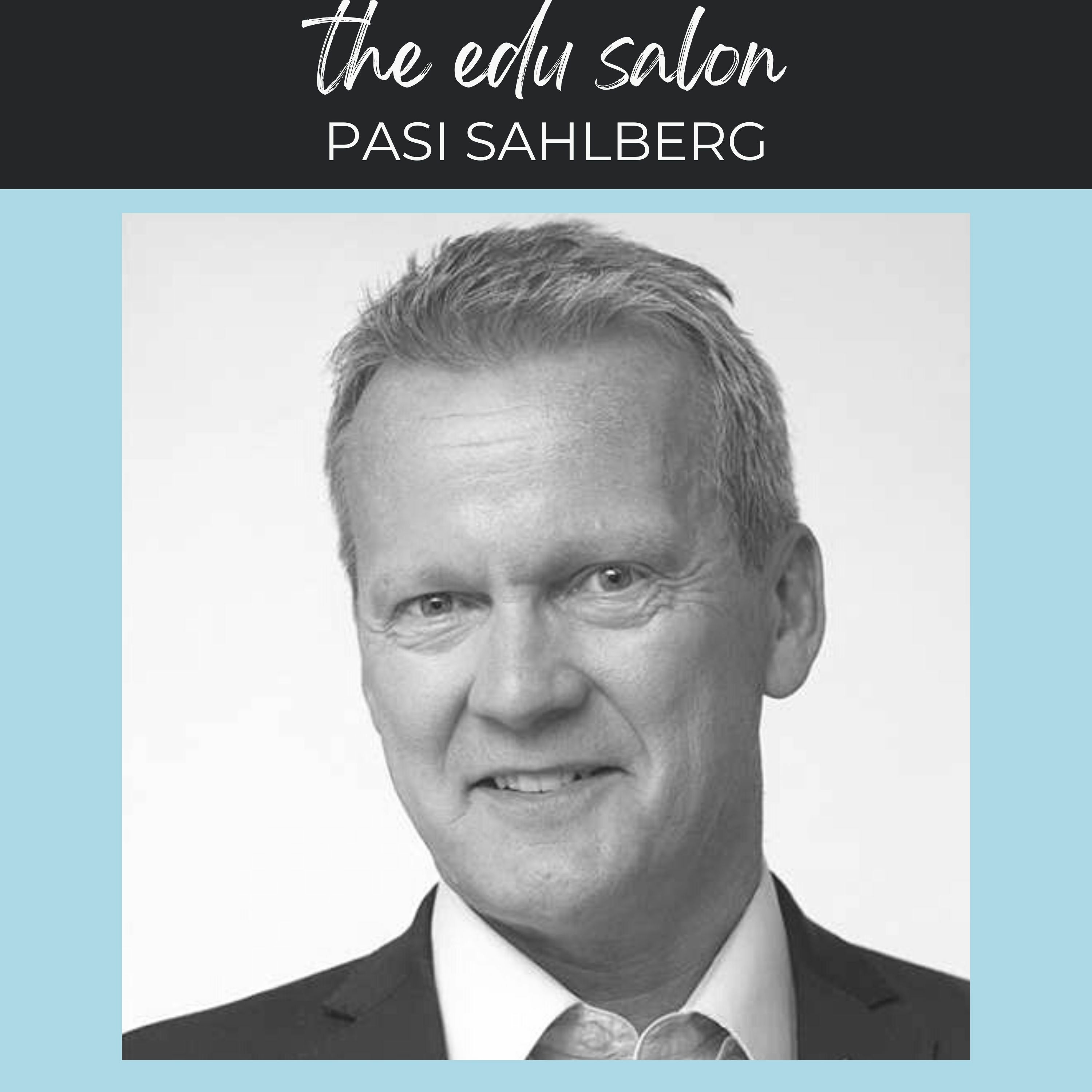
In this EduSalon podcast episode, Dr. Deborah Nedolitsky interviews Pasi Sahlberg, a Finnish educator and author, about the evolution of global education reform since his 2012 critique of the Global Education Reform Movement (GERM). Sahlberg notes that while GERM’s influence persists, many countries, including Finland, have chosen different paths centered on child well-being, collaboration, and trust. He contrasts the Nordic model—where schools integrate health, social services, and education within a culture of collective responsibility—with Australia’s siloed approach, where such services are often external and schools face accountability pressures. Despite system-level challenges, Sahlberg praises Australian schools for their local innovation and future-focused practices, though this diversity contributes to inequity. He emphasizes that building trust in teachers requires granting them autonomy and opportunities to demonstrate competence, as Finland did over a decade, cautioning that trust is fragile. He encourages educators to question outdated structures, such as rigid school schedules, and to lead change from within, as seen in South Australia’s efforts to empower schools. Sahlberg’s philosophy centers on trusting children’s capabilities, giving them space to grow, and fostering hope through collaborative, evidence-based reform. The conversation ends with personal insights, including his rock band and surfing aspirations, reinforcing his optimistic, action-oriented approach to education.
You are listening to the EduSalon podcast, a space for connection and conversation around
education.
Each episode, Dr. Deborah Nedolitsky talks with a global education thought leader to
provide insights into where education is now and where it might move next.
Hello and welcome to the EduSalon podcast, recorded on the lands of the Kaurna people
of the Adelaide Plains, to whose elders, past, present and emerging, I pay my respects.
My name is Deborah Nedolitsky and today I'm thrilled to be speaking with Parsi Salberg.
Parsi is a Finnish educator and author who worked as a teacher, teacher educator, academic
and policymaker in Finland, and who has advised schools and education system leaders around
the world.
He served as a senior education specialist at the World Bank in Washington, D.C., lead
education specialist at the European Training Foundation in Italy, director general at Finland's
Ministry of Education and Culture.
And visiting professor of educational writing.
His most recent books include Let the Children Play, How More Play Will Save Our Schools and
Help Children Thrive, Finnish Lessons 3.0, What Can the World Learn from Educational
Change in Finland, and In Teachers We Trust, The Finnish Way to World-Class Schools.
Parsi is currently professor of educational leadership at the University of Melbourne,
Australia.
Welcome, Parsi.
Thank you so much, Deb.
Great to see you.
Let's start the conversation, and I guess I was thinking back on the engagement that
I've had with your work.
Over some years, and some of the work that really probably first drew me into the sorts
of things that you've written about and spoken about.
And I was thinking back to around 2012, when you talked about the global education reform
movement that was sort of known as GERM, around that sort of standardised, compliance-driven,
corporate management-driven, test-based accountability kind of education system.
And I was wondering if you might reflect on how much there's still ripples from that movement
now, and how relevant is it still to think about what you coined back in 2012?
Yeah, it's good to meet you too, Deb, again.
And it's about 11, 12 years since this conversation happened about the global education reform
movement.
And for those who are not familiar with this idea, it kind of emerged not only through
my work, but also through works of Michael Fullan, who has been your guest, and Andy
Hargreaves, and some others.
When we try to kind of make sense that why some countries have chosen a very different
pathway in investment.
And I think it's really interesting to see how many countries have chosen a very different
pathway in investment.
That is the fundamental idea of the Finnish system as well, is that the health, for example, or social services or other support that the children often and more often now than before are receiving in the community is something that needs to be done in collaboration with the educators and others.
You know, one of those things that I've been working here in Australia now during the last couple of years is this idea of reinventing Australian schools as what we call a multi-purpose communities where the purpose of going to school would not only be learning something about the subject or skills, but it's about taking care of yourself, learn to take care of yourself as a human, as part of the community.
And so often here the conversation gets difficult in Australia.
As many others.
Because we think that education is a kind of a silo where we do our things and then other people and other services and other public policies take care of the rest.
But this is something that the Scandinavian Nordic countries have been able to leave behind quite well already long ago, that the child is at the center.
And then we collaborate and work together at the level of the policy, at the level of the system and services to make sure that children are held and supported where they are.
And school is the place where they spend most of the time outside of the home when they're young.
And that should be the natural place for providing kids with everything they need.
But you cannot do that without this sense and culture of collaboration.
And the beautiful thing with this culture, of course, is that it then benefits many other things.
If we run schools within a culture of collaboration and collectively being responsible for things, it benefits.
It benefits also adults, the teachers, when they realize that the work is not only about my work and my results and my outcomes, but it's that we are responsible for all these young peoples in our community.
And we, you know, that we should see them also as our students and our children rather than just looking at my own classroom.
And I think that lens of the child piece is really important.
Like people definitely talk about the student at the center, but I think seeing what the world and education is.
And schooling from the child's point of view is a bit of a different way to look at it.
It's not how am I taking care of this child?
It's actually how is the child experiencing this?
What is their view, their perspective?
It's quite, it's a nuance, but an important one.
Yes.
And, you know, this is sometimes it's difficult to explain those things, how they happen in other places that you really need to be aware or have some understanding of about the culture of the place.
Because the Nordic Scandinavian culture in many ways.
Is very different to what it is here.
I'm not talking about the school culture, culture in general, and that that makes it more kind of open to ideas like collectively taking care of the kids and being, you know, being responsible for everyone.
Trust is one of those things that is a fundamentally different there in the Nordic space compared to here.
And without the trust, for example, within part of the part of the school culture, it's difficult to do things.
That Finnish schools, for example, do every day, only because they have the kind of this sense of sense of to be entrusted different responsibilities in the schools, unlike often here in Australia or the United States or other places where schools are not really trusted, not even the things that they are the best at, like teaching, teaching stuff that they are all kinds of things built around the schools to make sure that they have the best education.
Yes.
That they're the principals and teachers do the right thing.
And that's quite uncommon in in the Nordic cultures, for example, when it comes to education.
Yeah. And I know that book in teachers we trust is around that trust of teachers in the education system.
But I'm interested also in that idea about collaboration that you talked about, because I I can see the idea that, you know, educators and schools need to be collaborators, not competitors.
But it sounds like the collaboration is much broader than that, that it's actually an integration of other societal.
And well-being and educational services that are sort of collaborating with schools and educators, which, as you say, is it's quite different to the model that we've got in Australia, where that's, you know, you get referred out of schools for those things as a general rule, rather than have those things integrated within a school community and what the school provides.
Yeah, absolutely.
And this public sector, public sector collaboration and and the sector policies that have been and are designed.
And prepared in these countries is a good sign of this higher level collaboration that often is missing here.
Like, for example, I often hear in these conversations about seeing our schools broader than just education, knowledge and skills, for example, when now everybody talks about well-being, that how much schools should be held accountable for children's well-being should be measuring the well-being somehow or, you know, seeing
that as one of the outcomes that often the conversation stops or gets really complicated when somebody says, so who's going to pay for that?
That whose budget is this?
If we are doing this or saying that, no, we cannot do this in Australia because, you know, education budget doesn't include these things and they are not, you know, health experts and people in every school.
And if they were, who should be responsible for those things?
And this for me, sometimes sounds like a really.
Funny conversation, because again, you know, if we put the child in the center and say that we we need to organize these things and services so that it's a most effective and economically sensible and and good for the kids, then, of course, you know, we we should not worry about who pays because the money is there anyway.
That's just to think about how do we how do we solve this problem so that the kids can be where they are and grow up in a ways that will help them to make the best out of themselves?
Yeah, so as you say, when it comes down to logistics and who's responsible and who's who's who budgets for it and how does this work logistically, that's where it kind of everyone is in principle agreement that we should be doing things like this if we could.
But then it becomes sort of in the too hard basket.
Correct.
That must be frustrating as someone who advocates for these things to hit brick walls.
Yeah, well, it's yeah, it is frustrating at some points, but I still see a lot of hope and I'm kind of optimistic in the sense that.
That we will somehow figure out, you know, this country, we live in one of the most advanced and developed wealthiest countries in the world and we can we can do anything we want.
So so, you know, this conversation would be taking place in some other places.
We would probably I would be probably frustrated saying that this will never work.
But here in in Australia, I think we have we have great schools that are already doing these things.
We have good people and a lot of research.
And we have good ideas to support this thing that we can hear.
I always say that we can do this if we only want to do so.
So it's mostly about people's understanding and really thinking about these things a little bit differently.
We will have a good have a very different school system here.
We just had more conversations and and listened to one another and then said, oh, I never thought about it like this might be a good idea.
You have written a lot about what Finland can offer the world in terms of what good education can look like.
Have you had time to reflect in your time?
Working?
With an in Australia around what Australia might be able to offer the rest of the world in terms of what we're doing?
Well, oh, we are doing so many things well.
And I just understand and see this clearer and clearer ways the more I visit the communities and schools.
This year, I've seen probably about 100 schools, 500 classrooms or more, and spoke to hundreds of principals and teachers and thousands of kids.
And there are so many good things happening in our communities that the challenge here.
Is that if we if anybody comes to Australia, Australia and look at the system, like let's say that you take the the the system level statistics and data, it seems like, you know, we're not really doing particularly well in any area that we are average in performance and we have issues with equity and and many other things.
There's not really much there, but I think it's very important here to go to the level of the schools, you know, your school and many others are doing amazing things like, you know, this is what.
I often tell my colleagues in Finland is that go and see the Australian schools that are doing things in a way that try to respond to this question of the future, like what type of learning we would like to see our children engaging in so that it would benefit their future.
We have often said that we have some of the most interesting and innovative schools here in Australia of any any other country.
But as I said, the challenge is that when they are within these systems and these are across the system.
The government and non government schools, we don't really see the kind of the system that's hides these different, interesting, forward looking schools in it.
And so that's why in order to answer your question about what Finland or other countries could learn about this is it means that you need to really go to the level of the schools and these units of the systems and look at what they do.
And so we have.
You know, this idea of future future school, the questions like what what are we actually looking at or talking about when we talk about future or think about future schools?
a future of education that's something that we can see in many other schools here and that's a very
very unique thing that it's easy to talk about this you know what the future school should look
like what what they should be doing and what teachers and principals what the leadership is
there about but what does it look like how to do that is a quite another thing and this is exactly
what we can do we can do that probably better than most other countries in the world and not only in
the one kind of one format that they would have like a one australian future school but the
interesting thing is that all of these future schools are different they're doing different
things and they have different ways to organize the curriculum or or the the school day or schedules
or personalized learning you know all those things and that is like if you have a if you have an
opportunity to do that here and travel and meet the um the staff and the kids and the communities
you see really inspiring things and you really begin to see like what this future what school
could be in the future and that's the beauty of this australian uh situation that again as i said
at the level of the system your first first impression might be that there's nothing
interesting here because we are not performing internationally any any particular kind of a good
way but as you as you kind of dive deeper and and get into these conversations it's a really
exciting and um interesting world over there that anybody all the others can learn a lot
as we're talking and i hadn't thought of this before the conversation too much but
you've written for the flip the system books one of which i've edited and you wrote a chapter for
that thank you as you're talking i'm thinking it sounds like what australia doesn't do well
is the systemness of our schooling but that if you go to that level of the school as you say
and schools that are trying to show the system this is
what education can look like there's amazing and innovative things going on
but it's having to filter up and it's not necessarily influencing how the system itself
works and that's one of your frustrations i think that you write about is the diversity is actually
not a good diversity in lots of ways it it means that there's quite a lot of inequity in terms of
which school you go to depends on the experience you have whereas perhaps in somewhere like finland
it's a much more even playing field i suppose depending on the school
that you go to because the system is allowing that to happen
yeah yeah exactly and uh you know together with the frustration that i sometimes
have i must admit that sometimes it's like frustration comes from the fact that why why
we just don't get get things these things done like equity is one of those things that we we
all we have known that for 20 years here with all the numbers our national and international
statistics but we just can't find a way to do or we don't want to probably find a way to to
solve this thing but as you know on the other side with this frustration is hope
that i'm um i continue to be extremely hopeful here when it comes to systems education systems
ability and will to to move on particularly the south australia where you are
and and looking at the system i just spent the week there working with the schools and school
leaders and it's it's extremely uh empowering and exciting situation that the state state
is now when the whole state the whole system has decided to take a much more careful good
look at the purpose of education and what the schools actually need to do and and trying to
you know give school leaders and schools much more space to figure out how to build this future
future learning for each and every child rather than try to do the same thing that many others
are doing that the system is trying to lead this future that nobody knows what it's going to be
so so that for me the the south australian case is the good recognition of the wisdom collective
professional wisdom that the principals and schools have in the communities and schools
together uh to figure out what what to do so so that what gives me hope at the same time when i
continue to be a little bit frustrated about that although we know everything we know the things are
not good we know the problem is what we still um don't want to get into this space of let's go and
fix it and have a better education and better schools a better future for all of us
and south australian education across the sectors is very flexible and innovative and
futures thinking is that certainly been my experience and you talked there again about
trust certainly trust maybe a bit by the system that schools can have some autonomy
when you think about that sense of trust and i'm thinking there's a lot going on in australia and
the uk and elsewhere in terms of teachers work conditions and well-being and in terms of the
trust that teachers and schools have or don't have from communities to do the work they do i think you
mentioned earlier that even the things that we're expert in like educating young people learning and
teaching for instance good pastoral care aren't always things that we're trusted with i suppose
i'm get i guess i'm wondering partly what that looks like but also what do you see as
things that will turn that around a bit that will help communities parents um to feel
trust in what schools are doing yeah you know again it's a great great question and
people often ask ask me and my colleagues in finland how finland created this situation where
basically all the teachers and principals feel that they're trusted professionals in what they do
and it's not only me saying this but you know you can you can ask this from anyone here in australia
who has visited finnish schools and spoken to teachers and principals they come back and say that
the trust is a kind of a common thing that most people recognize as a thing all of them actually
say that you know the trust is a kind of a common thing that most people recognize as a thing all of them actually say that you know the
trust is a kind of a common thing that most people recognize as a thing all of them actually say that you know the trust doesn't grow
just by talking about it that if we really want to
elevate the the way that society and authorities and politicians see the educators and principals
and teachers we we need to give them opportunities to be worth of trust and this is exactly what
finland systematically did it actually took took about a decade about 10 years
starting from the um the fact that schools were allowed to pretty much design their own curriculum
decide what they teach not only how they teach but what they teach in which order decide their own
learning materials even assessing the students that is a unlike many other places where teachers
may have a lot of trust and freedom to do autonomy to do other things but then there's somebody
outside who will come and say how well the kids are actually learning those things in the finnish
system this is included in this professional responsibilities that teachers have so this trust
was kind of a
growing and building over time so that it became a kind of a collective a common
feature of the culture and you know if this is true then of course here it means that
it's very unlikely that teachers would feel more trusted professional just by a minister or somebody
giving a speech and say we trust you we know that you know you are able to do this we have to be we
have to be given we have to give teachers and schools opportunities to show that they are worth
trust and this is exactly why i i'm so hopeful with this south australian uh situation right now
and it's it's similar things uh probably somewhere else but no way is is so so system-wide than south
australia where the system leaders are actually asking and encouraging principals and schools
to figure out for example how do they respond to the new strategy and oftentimes you know this is
not the case that the system may have a new strategy and then the authorities will give you
a kind of a long list of things that you need to do to implement the strategy and then somebody will
come couple of years later and check that you have implemented all those things which is obvious that
it's a very very difficult to see any trust growing in that type of environment so so we
need to give teachers and schools opportunities to show that they can do these things and then at the
same time like what finland did was that we built also these support structures around those
encouragements so that the school that is not able to do that or the leadership of teachers
don't have experience how to do that they will be supported and helped that's a much much better way
so i guess that we need to kind of assume that and understand that building trust takes time i think
in our book we write that trust arrives on foot but it leaves on horseback which means that it takes
time to build this culture of trust but then if when it's gone it goes very quickly and it takes
the time to do that again but but you know finland was kind of like what we did and some other places
like canadians many canadian provinces have done exactly the same thing that like systematically
built this sense of trust that schools and teachers and principals have over time and protect
that make sure that no policy no no new reform should be kind of going against or try to be kind of
a harmful for this trust and it's a it's a systematic systems work that takes over time but
it's it pays off in the in a in the long run as it has done in many of these other systems yeah that
time to build the trust is is really interesting i love that metaphor about arriving on foot and
leaving on horseback when you lose trust it happens pretty quick that systems approach
is one thing because you absolutely can't just say well trust me i've got this that's not enough
obviously you do have to earn trust and it needs to be demonstrated
and i like the example that you give of systems
in a bit like you would engage student voice in a school so that students are part of that process
of what the school might be doing, engaging school leaders
and teachers in what a system's doing is also part of that building
of trust and empowerment and autonomy and so on.
Yeah, exactly.
And I was remembering in 2017 you came to my school in Perth
and talked to some of our middle leaders.
I remember that, yes.
You were here.
Yeah.
I remember you challenged the room to think about the system
that they were in, so the regulatory requirements,
the systemic requirements.
Okay, these are the things that you think are your barriers,
but what can you do?
You know, what is actually available to you within your control,
in your classroom, in your school, in your role to do now?
Is that still advice that you give or what, if someone's listening
and they're a teacher or they're in a school,
what should they be thinking about now in terms of what they might be able
to be doing when they feel maybe like they're within a system
that is putting some barriers up for them?
Yeah, of course, you know, 2017 was before I lived permanently
in Australia, so I was still a visitor.
Obviously, many of those things that I spoke
about then were based on much less understanding
and experience of here.
But I would still say the same, probably the same thing,
maybe rewording it a little bit differently when people ask that,
so what can I do?
One thing I often hear, try to encourage people to say
that one thing that we should not do is to wait
that somebody will come and tell you what to do.
You know, even if you feel that you're part
of the system that is very much kind of a controlled
and part of the part of the like a larger system,
they always think that you can do.
And I think that this time when nobody really knows what to do next,
you know, if somebody believes that there's somebody in the higher
there in an organization who has a good clear idea where education
and schools and learning should go to, that's not true.
You know, it's almost so that the higher you go in a hierarchy,
the less you really know what
the future requires that this this wisdom is often in the classrooms and schools.
So that's the first thing that don't expect that somebody will come and tell what to do next
or how to how to respond to some of these goals and strategies and plans that we have.
Then the second one is that I think, you know, then there are many things in Australian way
of doing school schooling or organizing schooling that we kind of when I ask that,
why do we do those things?
People say that, well, you know, this is how it's always been.
Let me give a good example.
They still it's not in every school, but most schools are still run like this.
And I have to have two of my boys go to the school here in in Melbourne.
It's a nice school in the community.
But, you know, again, doing things in a in a very similar way than probably most other schools are doing.
And one of those things is that the school day is organized in a way that there's my boys have first two hours from nine to eleven.
They do normally two different.
Subjects or stuff, no break between mostly, you know, classroom based stuff.
And the choice, you know, trying to keep these kids engaged, which is which is OK.
And then there's a little break for the office called morning tea.
And I still don't understand why we call it a morning tea when my kids don't drink tea and they have many other things in mind that they would love to do.
Then, you know, having a cup of tea and then followed by another two hour chunk of some subjects, then there's a lunch break very late in the afternoon.
And then followed by the last chunk of, you know, hour and hour and a half or something like this before the school day ends.
And, you know, I've been asking this almost in every school where I see this, that while how did you decide to do this, you know, organize a school day like this?
And it's like, why do you ask this?
It's, you know, this was given to me.
This is a school where I went to like there's no almost like there's no other way to do this.
And but, you know, if we get into this conversation about this fact that.
Is this really informed by research and evidence of, you know, how children learn and, you know, how they grow up and how they develop, how they feel about things in a school, how much they can actually absorb or receive stuff?
There's no no research saying anything like this research is actually saying exactly the opposite things, especially in the Yankees where to talk about the primary school.
So so, you know, this this is one of those things that anybody can do.
Like if you listen to this now and say, oh, my God, you know, it's exactly you're talking about my school.
And you're telling me it sounds familiar for a lot of people, I would say, yeah, that are you saying that, you know, my school is that one of the most important things in a school that the structure of the school day is not designed or built around the based on the best knowledge or evidence that we have about kids.
And I'm telling you, yes, I am.
So what can you do?
You know, you can and there are many schools who have been in these conversations with me and other people who have decided to, you know.
You know, restructure the school day to make more more time for kids to have a recess or play or just hang around with themselves, recharge, refresh and get back and learn better.
This is a this is a very Australian way to do these things.
And, you know, there's a more than this behind this simple idea that doesn't cost anything.
Anybody can do this is that, you know, my experience is that if we want to change the culture in the school and in many places, I'm sure that you agree with me that that that, you know,
the school school culture or changing the culture is an extremely important condition for transformation or improving education.
But we can only we can only expect the culture to change if we make room for that by changing the structure.
And that's why this idea of just rearranging the time a little bit differently and having a little bit more like research informed way of organizing students work that we call learning.
Or growth in the school could make a major difference in outcomes and engagement and attendance.
You know, many of those things that we are looking at right now.
So this is one of those things that, you know, anybody can anybody anybody can do it doesn't cost anything.
The other one is one of my favorite things right now in the same space is that why do we have the system where you have four teacher, for example, is always teaching year four.
Or if you teach mathematics in the high school, you always teach.
Year eight mathematics, the response is exactly the same.
But this is how it's always been.
But guess what?
This is this is not the only way to organize your school.
Like, why don't we have a system that many Montessori Steiner schools have that you have the same teacher following the same group of kids multiple years?
Some people say, why should we do that?
Well, obvious reason is that if you want to learn to know your students and their parents, their needs.
Their their talents and passions so that you can help them to, you know, learn a growth is a much better way to do it that way than every year get a new group of kids.
You know, this is the other thing that has been for me kind of a surprisingly common thing.
Part of the Australian schooling is to do things as they have always been done.
And there are many other things that, you know, if we sit down and you start to think about those things that what do we do in our schools only because that's always always been we are beginning to realize that they are.
There are things, little things that we can change.
And as I said, it's change the structure so that there will be room for new culture, the culture to emerge.
So that's that's you know, that's part of this hopefulness that I have.
When I look at the schooling and schools and educators in Australia, we can do much more than we think we can do.
And at the same token, I'm always saying that principals and teachers here that you actually.
Know much more than you think you know about not only about what you do in the classroom or school, but how things should be or could be in the future.
And that's that's something that we need to kind of collectively build this sense of ownership and professionalism on what we do and then utilize that when we are moving forward.
Well, there's that wisdom of teachers and school leaders as knowing their context, their families, their students best actually in that environment.
Absolutely.
The lens of the child came through there again, thinking about.
What is this like for a young person?
What is their experience?
And asking that question, why do we do this?
And really interesting around changing structure to allow the space for changing culture.
Yeah, that was there was some fantastic takeaways there, but we're coming to the end of our time together.
So I'm going to move us past you to the final five questions, which I like to call the enlightening round.
The first of which is I'm looking forward to this one.
What is something unexpected that people might not know about you?
People.
Probably don't know about me that there's a there's a small rock and roll star living within me that is just about to come out any day now.
It's actually it's already out there, but I try to hold on to.
But just what's the space that you're going to probably going to hear about me, but not not in.
Do you play an instrument?
Is it electric guitar?
Yeah, I play guitar and I've been fortunate here in Australia to get to know some really dear friends of mine.
Who play music and we are going on tour soon.
Yeah, exactly.
We're trying to put together something something.
So in in Adelaide next September, we're going to have a gig.
Oh, fantastic.
You must invite me.
So that so that people didn't know.
But now you know.
Yeah.
And what sort of music does your group play?
Well, you know, that's a good thing because we we play we play music that is linked to education or leadership.
So every every every song that we perform has a story.
A story to tell to teachers or leaders or kids about learning.
So it's a it's a typically a kind of a classic.
rock music that we all love we only play music that we all like feel strongly about but also
the music that will easily engage our audience to the storytelling and then through music to
remember and experience something um something new so that's what we want fantastic and what
about something that's currently on your desk the most important thing on my desk now is the
emerging holiday i really need a break after this this has been really busy uh busy year
yeah i'm really thinking about this this like a leadership space now when it comes to work a
little bit about what would a a new type of way to help school principals and and classroom leaders
as well to think about leading future learning type of thing so it's not about kind of i'm not
talking about concrete program or professional learning or something like this but what would
be the kind of a new image for for that so that's on my
my desk here as a kind of abstract pile of questions and challenges nice when you've got
those emerging ideas that are still a bit unformed but exciting yes who is someone that inspires you
in the work that you do well i have a lot of inspiring colleagues here and things but as i
said this you know the south australia we're probably sick of south australia too much but
south australia is very inspiring it is but you know that's a honestly that's that's a place that
inspires me in the in the middle of this uh you know i think that's a place that inspires me in the
in the middle of this uh you know there was crazy world you know look look what's happening and you
open the new news this only only bad news and kind of a disappointment uh disappointing thing so
you know what's happening there is is really inspiring me but you know if i can mention
a person uh sir kent robinson who passed away three years ago and i don't know if you had a
chance to talk to him or interview him but he was um obviously everybody most people know who's
sir kent robinson is but he he was my kind of a coach and mentor for many years until he died
really um and i promised when on the on the day when he died or the week when he passed away that
i promised promised to him to try to keep his legacy on as a champion of children's play and
creativity and those things alive as long as i can do that and so he he's like a continuously
you know part of the work and thinking that i do and
especially in the times when when you feel that you know why why why do i do this nothing's happening
it's like you you need to keep on going because of this promise to uh to him and others but there
are many others but you know those those who are still with us here i have a impressive
amount of inspiring strong colleagues and friends here that is a very very important part of my work
what is one thing that you apart from your holiday or it can be your holiday
that you have coming up that you're excited about i want to see how the um how the surf goes here in
in victoria because i just got a kind of an idea of surfing waves in northern new south wales before
we got here within the warm waters and beautiful beaches i haven't tried it here with my my kids
who both of them are kind of a crazy crazy about the oceans and and waves so i'm looking forward
to this and and see whether i can do that in the future i'm looking forward to this and i'm looking
forward to seeing whether i still can can stand on the board a little bit and maybe find some
people who can help me to do that but i want to explore this beautiful part of the country as well
here in in victoria and around melbourne during the next coming months fantastic and finally if
you were to distill your current thinking about education down to its essence what's one thought
or resource that you would leave listeners with i i would say this we spoke earlier about
principals and schools and how much more they know that they uh
they think my principle is this that is uh shared with the some of my good friends and colleagues
like peter hutton here in victoria dave ranch that we often say that children have much more
capabilities to do good things for themselves and the community that we give them credit for
and it may sound like a cliche but when you think about it it's actually a really important thing to
keep keep in mind that we we
you know if we just take this to heart when we think about how to teach and how to run a school
that the kids can actually do much more than we think and not only things like technology and
other things but they have a lot of they have the power to do amazing things we just need to
kind of give them space and trust them and help and support them to do so so that is a kind of a
more and more the driving principle of my educational thinking and philosophy well
thank you so much parsy for joining me today on the edu salon
thanks uh deb and you're doing great things by the way by bringing you know giving voice to people
and sharing these things so thank you thank you for what you do thank you thank you for listening
to the edu salon podcast you can join the conversation by subscribing to this podcast
and sharing it with your network by giving this podcast a rating or review
and by connecting with deb and her guests on social media
you
Podcast Summary
Key Points:
Pasi Sahlberg reflects on the Global Education Reform Movement (GERM), noting its persistence but advocating for alternative approaches centered on child well-being and collaboration.
Finnish and Nordic systems prioritize trust in teachers and integrated public services, contrasting with Australian silos and accountability-driven models.
Australia excels in innovative, forward-thinking schools at the local level, but lacks system-wide coherence, leading to inequity and missed opportunities.
Building trust requires giving educators autonomy and opportunities to demonstrate competence, not just rhetoric; trust builds slowly but can be lost quickly.
Teachers and leaders should challenge outdated structures (e.g., school day schedules, teacher assignments) and use evidence to create room for cultural change.
Sahlberg remains hopeful, citing South Australia’s system-wide efforts to empower schools and principals as a model for future learning.
His core principle
Summary:
In this EduSalon podcast episode, Dr. Deborah Nedolitsky interviews Pasi Sahlberg, a Finnish educator and author, about the evolution of global education reform since his 2012 critique of the Global Education Reform Movement (GERM). Sahlberg notes that while GERM’s influence persists, many countries, including Finland, have chosen different paths centered on child well-being, collaboration, and trust.
He contrasts the Nordic model—where schools integrate health, social services, and education within a culture of collective responsibility—with Australia’s siloed approach, where such services are often external and schools face accountability pressures. Despite system-level challenges, Sahlberg praises Australian schools for their local innovation and future-focused practices, though this diversity contributes to inequity. He emphasizes that building trust in teachers requires granting them autonomy and opportunities to demonstrate competence, as Finland did over a decade, cautioning that trust is fragile.
He encourages educators to question outdated structures, such as rigid school schedules, and to lead change from within, as seen in South Australia’s efforts to empower schools. Sahlberg’s philosophy centers on trusting children’s capabilities, giving them space to grow, and fostering hope through collaborative, evidence-based reform. The conversation ends with personal insights, including his rock band and surfing aspirations, reinforcing his optimistic, action-oriented approach to education.
FAQs
GERM refers to a standardized, compliance-driven, corporate management-focused, and test-based accountability approach in education systems. Sahlberg and others highlighted it as a contrasting pathway to more collaborative, trust-based models.
Finland integrates health, social services, and education collaboratively, placing the child at the center, while Australia often silos these services. This collaboration allows Finnish schools to provide holistic support more naturally.
Trust is fundamental, allowing teachers and principals professional autonomy, such as designing curricula and assessing students. Sahlberg emphasizes that trust must be earned through opportunities to demonstrate competence, and it takes time to build but can be lost quickly.
Australia has innovative and forward-looking schools with diverse approaches to curriculum, scheduling, and personalized learning. However, these strengths are often hidden at the school level, not reflected in system-wide statistics.
Sahlberg advises not waiting for directives from above, questioning traditional practices like rigid school schedules, and using research to restructure time for more breaks and play. Changing structures can create room for cultural shifts.
Reorganizing the school day to include more recess and playtime, based on evidence about how children learn, is a cost-free change. This can improve engagement, attendance, and outcomes.
Chat with AI
Loading...
Pro features
Go deeper with this episode
Unlock creator-grade tools that turn any transcript into show notes and subtitle files.
 PodcastTranscript AI