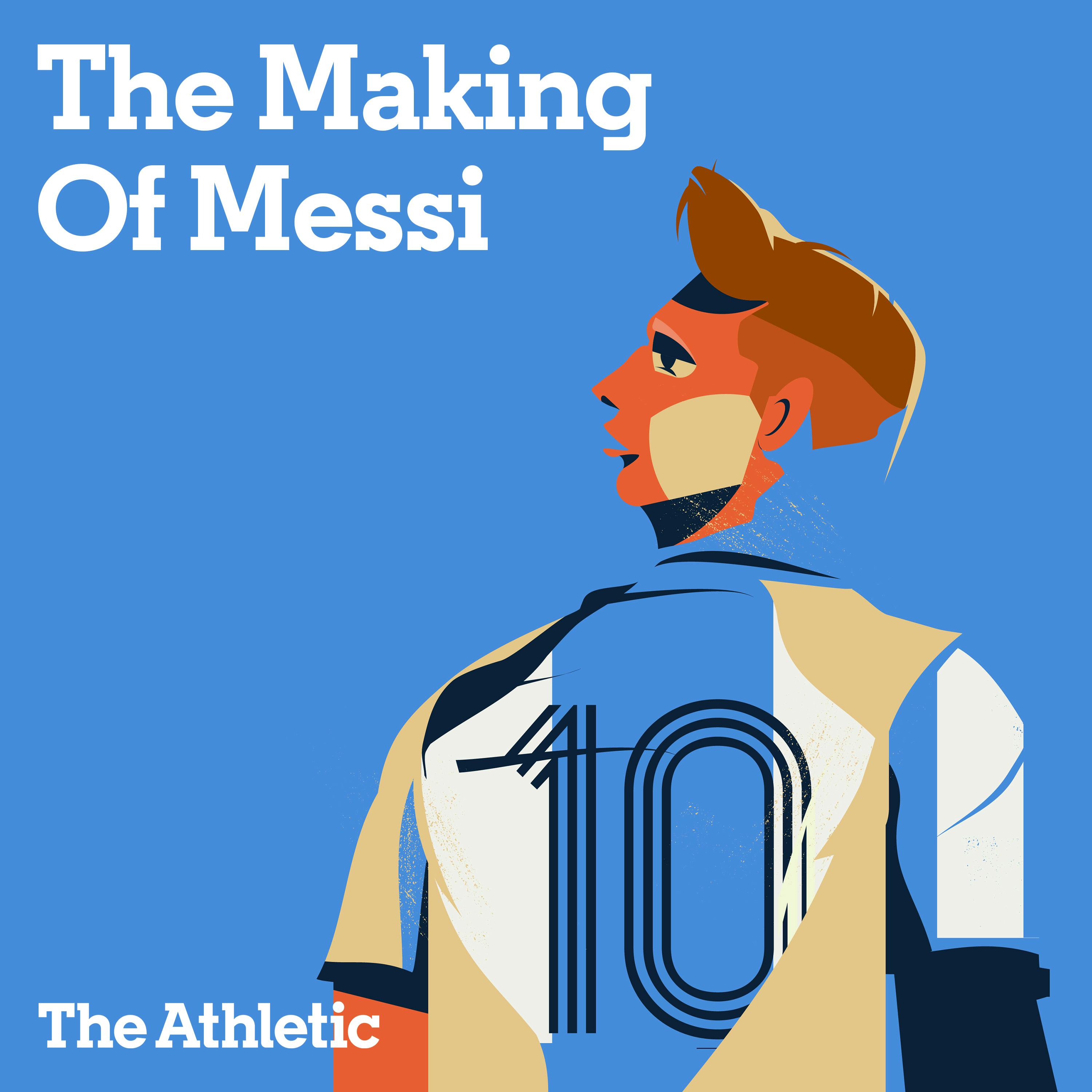
Lionel Messi’s move to Inter Miami represents a transformative moment for American soccer, echoing the impact of Pele’s 1975 signing with the New York Cosmos. That earlier landmark event revitalized U.S. interest in soccer by creating a global superstar presence, leading to massive attendance and inspiring future generations. Similarly, Messi’s arrival is poised to ignite a new era of growth in Major League Soccer (MLS), with the potential to dramatically increase fan engagement, merchandise sales, and international exposure. Inter Miami, currently one of the league’s weakest teams, sees Messi as its central asset and brand catalyst, despite past roster scandals and financial sanctions. While the club lacks star power and is currently out of playoff contention, the arrival of a global icon is expected to elevate its profile far beyond the field. The U.S. soccer landscape, historically star-driven due to limited team histories and deep-rooted fan loyalty in Europe, will rely on such megastars to attract fans. Messi’s presence will shift the dynamic from team-based identity to individual fame, akin to the NBA’s star-led model. Though challenges like travel, time zones, and cultural adaptation exist, Messi’s experience and global reputation suggest he will thrive. His influence will also reshape locker room culture, inspire young players, and reinvigorate the league’s ambition. Ultimately, Messi’s move is not just a personal career step but a strategic investment in the long-term development of soccer in the United States, aligning with the 2026 and 2027 World Cup hosting opportunities and the league’s broader goal of becoming a top-tier, widely consumed sport.
This is Episode 2 of the Making of Messy, exploring the history and culture of American
soccer and the impact he will have on it.
In case you missed it, Episode 1 follows the Argentine's rise to stardom at club and
international level.
Argentina's Lionel Messy has announced his next move after deciding to leave French
Giants PSG.
The soccer shocker of the year, Lionel Messy is headed to Miami.
This news in itself is truly just, it's beyond words, you can't put it in comparison
to anything else.
It's a game changer for MLS.
The world's best soccer player, Lionel Messy, stunning the world to come to
Major League Soccer and play for Inter Miami.
I'm so excited to be able to have a player of that caliber here.
This is the most significant day in all of South Florida sports history.
After months of speculation, Lionel Messy picks Inter Miami.
His arrival in the U.S. isn't the first time a world-renowned player has been used to
advance American soccer with their presence.
It's a trend we saw at the start of this millennium, with the signing of David Beckham.
Who, as part owner of Inter Miami, is now one of Messy's new bosses.
And a generation before, in 1975, the newer Cosmos signed the Messy of his time, the
original King of Soccer.
1,220 goals later, the legendary Pelae came out of retirement with a broad and gentle
grin.
10.
The most celebrated player in the history of the game.
He has led Brazil to three World Cup titles scoring more goals than any professional player
in history.
I had a lot to propose to go to England, Italy, Spain, but I said, no, go to Newark because
they want to make the soccer big in the United States.
The return of Pelae as attracted worldwide interest and given professional soccer in the
US a king-size shot in the yard.
When Pelae joined the New York Cosmos, they played in the North American Soccer League,
more commonly known as the NASL.
Although the league collapsed in 1984, it played a key role in growing the game throughout
America.
Just as those in control of MLS know Messy's potential impact, those in charge of the
NASL, new signing Pelae, the most distinguished player in the world at the time, was crucial
in taking U.S. soccer to the next stage.
Getting the World Cup in the country was one thing.
Getting Pelae playing in New York was another thing.
That's Clive Toy.
He was instrumental in bringing Pelae to New York.
I had come up with, if you go to Royale or Juventus, all you can win is not the championship,
where if you come with us, you can win a country.
My name's Pablo Mauer.
I'm a staff writer for the athletic.
Toy was a British journalist who booted the United States in the late 60s.
He's one of the founding members of the North American Soccer League.
A league in the 60s, 70s and early 80s that, for a brief moment in time, seemed like
it might be the first "major soccer league" to gain any traction in the United States.
When Toy arrived in the U.S., I think he realized very quickly that the league was not going
to survive without a huge name.
In the early 70s, there was no bigger name than Pelae.
So, Toy said about this sort of globe-trotting five to six-year-long quest to lure Pelae,
right?
How many followed him everywhere?
He visited him in Brazil multiple times and he was playing for Santos in 1974.
He finally nailed him down and as Toy tells it in a hotel room in Belgium, literally sort
of had Pelae sign his first contract on a napkin.
No agent, nothing.
So he did succeed eventually and obviously it would be sort of a transformational thing
for the NSL and for soccer in the U.S.
I come to play here because I believe in soccer in America.
Pelae's impact in the short-term was seismic.
Cosmos home games became a happening, you know?
I spoke to a Cosmos player years ago who told me about a game in the early 70s where
there were 200 people there and I said, you know, how do you know there were 200 people
and he said, I counted.
You could count the number of people in the stands.
So by 1977, the team had moved from this tiny derelict stadium under the TRIBRO bridge
to Giant Stadium, which was brand new at the time and they regularly drew 40, 50, 60,000
people.
They drew 77,000 people for a playoff game in 1977, which sort of defies belief almost.
You know, it was the largest crowd ever to see a soccer game in the U.S. at that point.
It was just unheard of.
Probably the most dramatic rise in the attendance has been over the past year.
If Pele is starting the whole ball rolling.
Pele inspired an upward trend in spending, which contributed to the league folding in 1984.
But in a way, it had served its purpose.
Pele obviously had a huge effect in the short-term, but the longer-term effect, which was
almost more important, was all these players who grew up watching Pele in the 80s, particularly
in the New York, New Jersey area.
A lot of those guys ended up being some of the guys on the 1990 World Cup team.
The first U.S. men's team to qualify for a World Cup in 40 years, he was huge around
the '94 World Cup.
So his effect, you know, on soccer in the United States, it's less about the 77,000 people
in Giant Stadium and the money made there, and more just about his inspiration, you know,
being the first huge soccer figure in the United States.
And now, sir, if you will, please pass the World Cup to the USA.
These games will establish a legacy for the United States soccer to flourish at every level
of play, including a new professionally, that soon will rank with the finest in the world.
From the wreckage of the NSL, the founders of MLS, when they got together in the mid-90s
to form a league that would start playing in 1996, they really sort of performed an autopsy
on the NSL.
They learned their lessons.
They chose a more reasonable path of financial prudence, you know, one that helped keep
the league alive for nearly twice as long as the NSL ever existed.
But eventually, they did sort of realize they could enact these sort of strict salary
caps and make sure teams didn't overspend.
But they were still going to have to have that mega-store, high-watt player like play.
So in 2007, the league introduced the designated player rule.
It allows MLS franchises to sign up to the three players.
They're commonly known as DPs here in this country.
That would be sort of exempted largely from the team salary cap.
All of this meant that in 2007, the league was better equipped to welcome their new global
superstar than the NSL ever was.
That season, there were 13 registered teams across the division.
In 2023, MLS has 29 teams with a 30th on the way in San Diego.
This level of growth is largely thanks to the arrival of David Beckham in 2007.
We wanted to be this super club, this team that when people thought about Major League
Soccer, the first team they thought about was the Los Angeles Galaxy.
This is the moment, this is the person, and this is going to change the fortunes of
not just the Galaxy, but Major League Soccer.
In 2006, the LA Galaxy sold around 400 jerseys.
In 2007, they sold 300,000 Beckham jerseys, 700 times more.
International TV sales went from next to nothing to distribution in 100 countries with
live games in Asia and Mexico.
It was a time when we really were going into what I would say is MLS 2.0, new stadiums,
expansion, bringing in international players.
David kind of was the tipping point of that next generation of growth.
I think MLS generally has migrated away sometimes from the sort of quote unquote retirement league
label that it had around Beckham's arrival, but I think it's still essential for the league
to have superstars.
I mean, you can look at lots on Ebert Hive, which is a fact on the game here in the U.S.
Just being here for a few years with the Galaxy, messy obviously is beyond compare, sort
of impossible to compare his potential effect on soccer in the U.S. to anybody aside from
maybe play, you know, it could potentially have a similar effect on league wide attendance,
on exposure, on merch sales, you know, and even on attracting other players.
I mean, obviously you see Messi is now bringing along with him, Sergio Busquetz and Jordi
Alba, his former teammates at Barcelona.
One of the quirks of MLS is the stadiums, you know, we call them soccer specific stadiums
here in the U.S. were constructed for relatively small crowds.
I mean, most MLS stadiums have a capacity of between 16 and 25,000 people.
That's all and well for a Wednesday or Saturday I'm less game where Leon L. Messy isn't on the field.
But with him being here, many of these stadiums could be three, four times as large as people would show up.
So it's interesting to see how I'm less teams are going to handle that.
I suspect they're just going to inflate the hell out of prices for seeing Messy.
It's going to become kind of a boutique experience, if you will.
But we'll see what happens.
In America, there is a larger focus on stars and there is on teams.
Look at the NBA, obviously, Jordan, LeBron, Kobe, et cetera, et cetera.
It doesn't mean that people aren't out there watching, whatever, the Milwaukee Bucks are some like that.
But whoever LeBron happens to be playing for those teams are obviously much higher profile because of those players.
The NBA is a star-driven league.
David Stern came in and said the name on the backs is big as the name on the front.
It worked.
We have Messy coming here, we have the men's World Cup in 2026, obviously, is in part in the United States.
By all accounts, it seems like the women's World Cup is going to be here in 2027.
You have the Olympics, you have a Copa America, all these sort of this confluence of things, right?
And MLS has always talked about being a league of choice and being a widely consumed product by the general populace in the US.
And I genuinely think if they can't seize all these moments and by 2027, 2028, this is an equal league of choice as the league's commissioner is so fond of saying,
I don't know that MLS will ever be a widely consumed product in the US.
Obviously, it depends on what your definition of that is, but if they can't do it now, I don't know that it can ever happen.
Messy has never played Club Soccer outside of Europe, like a lot of players in the continent.
My name's Nathan Manoa and I played for Real Salt Lake in MLS.
Are you doing Bradley Wright Phillips for my MLS and New York Red Bull striker?
The fun culture in the USA is very different to what it's like around Europe and the rest of the world.
Soccer isn't the biggest sport in the country whereas in MLS I do the countries it is.
The one thing Europe does have over the MLS is it's been ingrained in kids from a young age parents, their parents and so on, supported teams, so they have that history.
People who've been going to games for 20 years, 30 years, 40 years, 50 years, some of their rivalries have existed for centuries even going beyond what football is itself whereas I think in the USA.
A team might have existed for two years and the reason it came into play is because the fans wanted to have a football team in their state and they'll celebrate it and they'll support it.
But it's not as partisan as say it would be when you've got three, four generations worth of supporters coming in to try and make sure that they know that their team does everything they can to give them the experience that they want.
In America it's different because it's a few years behind.
We're starting to see more soccer specific stadiums in the US so I think that will help a lot more people are interested in watching these teams and I think in a few years you'll see it start to catch up.
In terms of the grind, MLS is different, the travel situation is different, you don't really take the bus that often, you don't really take the train like say you would do in other countries.
The travelling was something I found really hard to get used to.
The idea of travelling through the air is different but then to also add to that because the country is so big you've got different time zones.
I remember flying to Vancouver from New Jersey and it was honestly like flying to England, it was crazy, it was an eye-opener.
And then when you get there there's a time difference and then you still got to go out and win that game so that was hard.
I think you have to adapt more to the different locations that you're going to play in as opposed to just be thinking solely about the teams themselves that you'd be up against.
It's more mental than anything, once you're getting the right rest, recovery, you learn to deal with after a week or two.
In terms of the quality, there is a real mix within the states themselves. When I played there for two and a half years,
there were lots of players who I could see that could play anywhere in the world.
There were some players that I played against that were better, some that were not as good as in Europe.
When I first got here you could play against two or three really good individuals, but the whole team, the tactics wasn't as good.
When you play alongside some players you have achieve things, whether you're talking about Ibrahimovic's, you're talking about David Villas, you're talking about Messi now.
You could do get chance to play with some of the best players in the world at the same time.
Yeah, there was a stigma that the good players come when they're older, but now like I said, the coaching, the young DPs, the young superstars they're getting from South America, from around Europe, have risen the level of the league.
But the drop-off between the very best and they're not the worst player in the team, but they aren't to the same standard.
I think that gap is so big that at times that's the difference between say the other leagues whereby the variance isn't as great.
When I first got to America it was weird, there was no promotion, no relegation.
I found that hard to adjust to because for those reasons is how I could get the best out of myself in games and throughout a season.
Outside of the USA, you're always playing for your job. It's consequences to every single match that you play, where it's come the end of the season in the MLS.
If you can't really make the play in tournament, if you can't be up near the top. Not every game matters to everybody.
In Europe, if you're not up for it, you get relegated and that's the only difference where I think Europe has to edge.
It's different, it is different, but the moment you accept it, the more you realise what American sports culture is.
And once you do play in the playoffs, you then continue yourself to be in the playoffs the same way, NFL people are in the playoffs, NBA people, NHL.
Baseball is fun, it's different, but it's fun.
I'm not sure if it makes it less competitive because I've been in some of the tougher games of my life here, but I know I used to go out and you have to win this game.
If you want to win the league, you have to win this game.
Yes, there is to a certain extent less drama, but then there's more emphasis on the playoffs and the playoffs across all American sports are really exciting.
There are just tales of people who are great during the regular season, but like legends are made in the playoffs.
People love to see who can step up in the biggest moment, so that's what the class is the biggest moment, so it's about getting yourself in there with a chance to win it.
And then anything goes, and those are the most watched games, they'll tend to be the most exciting ones.
People play to a different sort of standard, and people just say they raise their game.
So the jeopardy is there, but just in a different light.
Messy will reportedly earn more than the current nine highest paid MLS players come by.
The dressing room culture, for me, especially at Red Bulls, there was no drama with DPs earning more money.
I think that's all players that have played an MLS new.
There was no animosity, and also our DPs at the time were teary on rea, you're not going to. None of us in there are going to ever be on the same wages as them anyway, you know?
So I don't think that mess with the culture is just a way of life here.
I think in 2020, a third of the league was only less than $100,000 a year.
And when you try and find a comparable two that across the top leagues around the world, you well, there isn't that much really.
But then you add in the nuance of the fact that some players were earning five plus million dollars at the same time.
So the dressing room, like it's not about money, I think that's the first thing.
It was a good dressing room, really good bunch of guys.
And most of them doing it for essentially a different reason to how you might perceive it elsewhere
because they're not being paid tons of money to do the thing that you love doing.
So they have to have a real love for it.
Having teary on rea in the locker room was that extra bite for me.
Like every day you want to go out and impress him, you want him to think that you're a good player.
On rea, they let it go right, Phillips!
He's done it again, BWP, it's won nothing New York!
You've got to be kidding me, that's about as good a goal as you're ever going to see!
Teary on rea with eyes behind his head!
He lifted everyone's games and he held the locker room to a high standard.
And I think you're talking about Messi coming to Miami, I think that would even be bigger.
Imagine you're in the locker room when Messi comes in, I'm going to sleep early that night before training
because I want to be on form, I want this guy to respect me as a player.
I want to try and help him, I want to be on the end of a pass from him.
So I think it can only be beneficial for those players in the locker room of Miami.
Bradley went on to become the all-time record goal scorer for the New York Red Bulls,
netting 126 times in 240 games.
I think there is a focus more on players at times over teams.
And I kind of hated it when it was first going on.
Just because at times I feel like I'm the voice for those that will never be heard.
When I was there, a game between DC United and LA Galaxy was Ibrahimovic versus Wayne Rooney.
And it's frustrating me as a player.
But if you think about it from someone who's essentially a neutral, doesn't really watch soccer or whatever,
it'd be far easier to explain who those two players are than to explain who the teams are and why it matters.
The other side of that is if you want to grow your audience, especially that audience that's there in America,
you have to have it based around the stars because a lot of the teams don't have the history of an LA Lakers
or a Boston Celtics.
We can sell games according to stars.
This is why I mess you going to into Miami is such a big deal.
Because the interest around into Miami will go up.
But it's all in relation to Lionel Messi.
Whereas when he's in Paris or when he's in Barcelona, obviously it brings attention to those.
But after he leaves, that's still Paris, 100 man. That's still Barcelona.
I don't think Messi will have any problem fitting into Heavenness.
You know, we can try and bring a narrative and say like, yeah, he's going to struggle.
What's he going to do about traveling?
This guy's played in every competition.
That football has to offer.
He's played in the World Cup. He's played in Copa America Champions League.
Friendlies, anything.
Any test you have in football, Messi's been there.
So I think he will adapt very well.
Maybe to travel because he is human.
But once he gets over those white lines, he's going to do messy things.
He just want to work.
Cup. We're talking about a guy that's just won a World Cup so if people think he's going to come
here and be old and it's not going to happen, it's going to be unbelievable. So Messi is like my favorite
player of all time and I've seen him do what he did for Barcelona, those are some of the best years
of me watching football. So in terms of him fitting in, ability wise, you know, there's no question
that he'll be able to be dominant within that league. But then this is when the team ethic comes in
because he's had some very very good players around him, you know, he's amplified them but they've
also amplified him to be able to be as good as he can be. I think he's going to do the best of the
account to grow the game in Miami. I think he's going to have more eyes on him in America than at any
other point in his career as well as that may sound because I think the difference is La Liga
wants to try and be fair. In Liga, they just want to try and be fair to everyone. But MLS,
I'm in a position whereby their biggest asset is a player for one of the teams in their league and
they will push it, push it, push it, push it, push it to the point where it'll seem like his bias,
that it might be who knows. And I think that'll be the biggest thing they're left to adjust to.
The fact that it's not going to be about his team, he's not going to be about his team's history,
he's going to be about everything that he's doing. And there will be shameless with it,
completely shameless with it. But like I say, he's the biggest asset that the league has ever had.
You know, more so in my opinion than Pele of Ecom's Latans, but I think ultimately he knows the
reason why he's going there. He goes beyond the money itself and it's a chance to grow the
game for that part of the footballing world. And I think he'll do a great job of that.
Messi is joining Inter Miami who currently sit at the bottom of the Eastern Conference.
My name is Felipe Cardinos and I am a football writer for the athletic concentrating mainly on
Major League Soccer and International Football. Inter Miami officially began MLS play in the fall of
2020. I believe it was 2018 where MLS awarded a football club to Miami. But before they actually
kicked a ball, there was already news that David Beckham was going to be part of a new expansion
side in South Florida. He's the face of the club. He was the face of the franchise before they
kicked a ball. He's to this day. I think he's still the face of the franchise. He's the reason why
Inter Miami is considered an international brand, even though they're still one of the worst teams
in Major League Soccer. The owners of Inter Miami are two brothers Jorge and Jose Moss.
There were other owners involved at the time of establishment of the club. But currently the two
Moss brothers are the main owners of the club and they have a deep rooted history in South Florida
as a Cuban-American family that is well established there through construction and development projects.
Their father Jorge Moss Sr was very well known in the 70s and 80s as essentially a construction
magnate. David Beckham, his ownership stake, I believe it's about 20% and so much of the work goes
through the Moss brothers and David Beckham, his role has always been on the sport inside. Yes,
he's an owner and with that comes a lot of responsibility from an administrative level, but he's
been very much involved in the sporting side of the club ever since they started playing in 2020.
In 2021, Major League Soccer sanctioned Inter Miami for around $2.6 million over three or four
years due to the club's violation of well-established roster rules. So essentially Inter Miami and their
previous sporting department were caught cheating. The cheating scandal involved signing expensive
players but under-reporting their salaries. There is a very strict salary cap in MLS and so when
they brought in plays, my Tweety, the former French World Cup winner, Gonzalo Guayin and some other
Argentine players and a Colombian defender, they listed them as players that didn't earn as much
as the top earners but essentially they were making designated player money and so that was a big
setback for the club. The sanctions limited how the club could build the roster moving forward and
I think what you see today is a very makeshift roster. You see some decent players but you see a
lot of players that I think wouldn't start on many MLS clubs. And today they're still in last place
in the Eastern Conference, they have Joseph Martinez who is one of the premier goal scores in the
history of Major League Soccer, he moved over from Atlanta United but other than him, it's a
weak squat, it's not a squat of stars and I think that was the potential here, that was the purpose
was for Inter Miami to become like a galactico team of MLS but it's going to take time for them to
establish that. Jorge Mas has probably one of the most outspoken owners in MLS and he has always
said that Inter Miami was going to be a well-known club around the world and they were going to win
multiple trophies. That was his speech from the very beginning you know before the pandemic and
before the sanctions and I don't think that's changed but certainly the monetary potential here as a
brand is going to eclipse anything that happens on the field until they're good and until that
happens we're going to hear a lot more about the brand exploding, the Jersey sales, what this
means for Messi's business as a whole you're going to see Inter Miami probably do tours in Asia,
European tours in the off season and to really build the brand internationally so that's going to
be the story immediately and until they win I think they will just be one of the biggest branded
clubs in North America. This 2023 season was left of it where you know we're more than halfway
through the season in MLS I think it's going to be really interesting what happens with Messi and
the rest of the squad and where they end up right now they're not in the playoffs nine teams
from each conference advanced to the new formatted MLS playoffs and Inter Miami are well below
the playoff line and I think there's going to be a point where mathematically they may be out
and Messi is still on the team but they won't be a playoff team.
Pablo Mauer, athletic staff writer. You know it's funny one thing I thought about Miami is obviously
they're struggling mightily and gate attendance they're one of the most poorly attended teams in MLS
and I feel like obviously every single game is going to be sold out with Messi and I do think they're
setting a precedent for themselves. The LA Galaxy did this with David Beckham, you know the Galaxy
ended up signing Stephen Gerard and Zlatan and these other huge names because they became sort of
the standard bearer for MLS when it came to that big star megawatt kind of thing right and I don't
think if you're in Miami you know your reality is never going to go back to being able to get away
with playing sort of college kids home-going players that sort of stuff you're going to have to
find a replacement for Messi but you know by all accounts that may be what they want. Miami is a
market that's very star driven and people want that element of celebrity and glitz and stuff so
Messi is probably the start of something pretty similar long term for Miami. Coming up on episode 3
Messi and his legacy we will dive into how Messi will change Major League Soccer and the sport
in the United States. The making of Messi is an athletic media production it was presented by Mike
Zimmerman. It was written and produced by Mike Zimmerman, Mike Stavrou and Jay Beale. The executive
editor was Ben Green and the managing editors were Ian McIntosh and Alex K. Jelski.
The Athletic.
Podcast Summary
Key Points:
Lionel Messi's move to Inter Miami marks a historic moment for American soccer, comparable to Pele’s impact in the 1970s.
The arrival of Messi, like David Beckham’s, is expected to dramatically boost attendance, merchandise sales, and global visibility for Major League Soccer.
Inter Miami, currently struggling in the league, aims to become a global brand, with Messi serving as its centerpiece and a catalyst for growth.
The club’s past roster violations and sanctions have created a weak, makeshift team, making Messi’s arrival essential for both credibility and competitiveness.
Messi’s presence will shift the league’s culture from team-centric to star-driven, similar to the NBA’s model of player-led fandom.
The U.S. soccer environment, shaped by a lack of long-term team history, relies on global superstars to spark interest and engagement.
Despite logistical challenges like travel and time zones, Messi is expected to adapt quickly and dominate on the field.
The long-term goal is to elevate the U.S. soccer ecosystem, with Messi helping establish a legacy of professional excellence and global appeal.
Summary:
Lionel Messi’s move to Inter Miami represents a transformative moment for American soccer, echoing the impact of Pele’s 1975 signing with the New York Cosmos. S. interest in soccer by creating a global superstar presence, leading to massive attendance and inspiring future generations.
Similarly, Messi’s arrival is poised to ignite a new era of growth in Major League Soccer (MLS), with the potential to dramatically increase fan engagement, merchandise sales, and international exposure. Inter Miami, currently one of the league’s weakest teams, sees Messi as its central asset and brand catalyst, despite past roster scandals and financial sanctions. While the club lacks star power and is currently out of playoff contention, the arrival of a global icon is expected to elevate its profile far beyond the field.
S. soccer landscape, historically star-driven due to limited team histories and deep-rooted fan loyalty in Europe, will rely on such megastars to attract fans. Messi’s presence will shift the dynamic from team-based identity to individual fame, akin to the NBA’s star-led model.
Though challenges like travel, time zones, and cultural adaptation exist, Messi’s experience and global reputation suggest he will thrive. His influence will also reshape locker room culture, inspire young players, and reinvigorate the league’s ambition. Ultimately, Messi’s move is not just a personal career step but a strategic investment in the long-term development of soccer in the United States, aligning with the 2026 and 2027 World Cup hosting opportunities and the league’s broader goal of becoming a top-tier, widely consumed sport.
FAQs
Messi's arrival brings unprecedented global attention, significantly boosting attendance, merchandise sales, and media exposure. His presence is expected to elevate the league's profile and inspire a new generation of fans in the U.S.
Pelé's arrival transformed soccer in the U.S. by drawing massive crowds, inspiring young players, and establishing the first major international star in American soccer, laying the foundation for future growth.
Beckham was a key founding owner and face of Inter Miami, helping establish the club as an international brand and setting a precedent for using global stars to boost league visibility.
Messi's presence is expected to raise the standard of play in locker rooms, inspire teammates to perform at their best, and create a more competitive and high-standards environment.
The team currently sits near the bottom of the standings and lacks depth, making it difficult to compete. Messi's success will depend on team cohesion and the ability to develop surrounding talent.
American soccer is more star-driven and less historically rooted, with fans often supporting teams based on novelty rather than long-standing traditions or rivalries.
Chat with AI
Loading...
Pro features
Go deeper with this episode
Unlock creator-grade tools that turn any transcript into show notes and subtitle files.
 PodcastTranscript AI