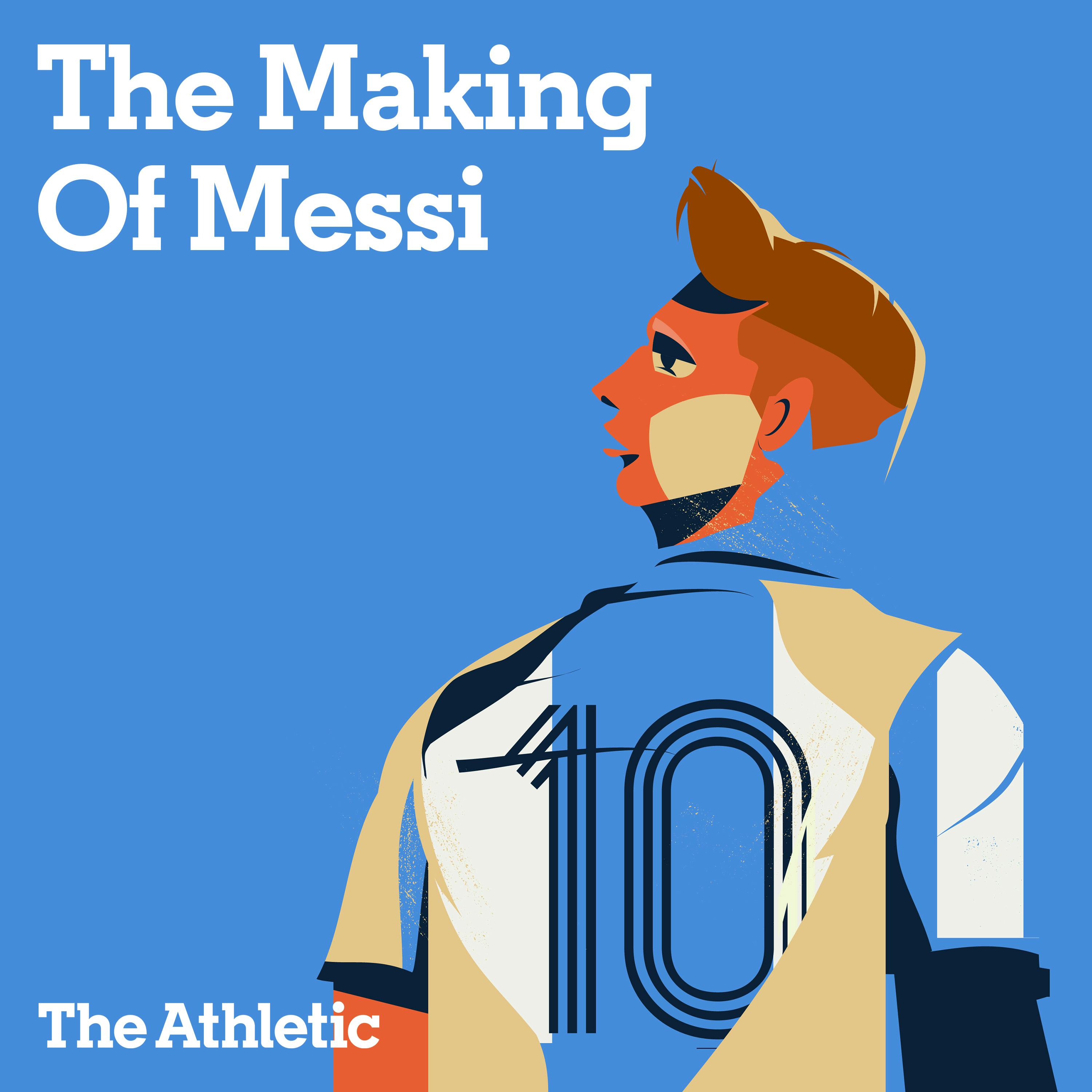
Lionel Messi’s move to Major League Soccer, joining Inter Miami, represents a transformative moment for American football and global soccer culture. While Saudi Arabia’s aggressive financial push—driven by economic diversification and "sports washing"—offers a massive financial appeal, Inter Miami’s strategy emphasizes personal and long-term benefits, including proximity to Messi’s family, post-retirement equity, and integration into a growing U.S. market. The deal is seen as a strategic milestone that could catalyze a wave of top-tier player signings, much like David Beckham’s arrival in 2007 did for MLS. Messi’s presence is expected to ignite unprecedented media coverage, especially leading up to the 2024 Copa America and the 2026 World Cup, with major sponsors like Apple investing heavily to boost visibility. The success of this transition will be measured not solely by goals or trophies, but by broader league development—rule changes, expanded attendance, and increased commercial growth. Crucially, for the league to succeed, Messi must deliver on-field results, elevating Inter Miami from a weak team to a competitive force. Ultimately, this moment presents a rare opportunity for Major League Soccer to leverage Messi’s global legacy to transform the sport’s cultural and commercial footprint in the United States.
This is episode 3 of the Making of Messi exploring what Messi will leave behind.
For Messi's soccer journey and what led him to this point, along with how Messi fits into
Major League Soccer history and culture, check out episode 1 and 2 of the series.
Well Messi is different, Messi is like genius.
I think he is very unique, I think he is a subset of one.
I think Messi is one of a kind.
But he is doing, I don't know if you will see another player do the things that he does.
In the words of the great American poet and activist Maya Angelou, if you are going
to live, leave a legacy, make a mark on the world that can't be erased.
Lionel Messi has always been one of a kind.
From changing the way we view the false 9 roll, to a new Instagram benchmark.
The Argentine continues to rewrite the history books and set standards that seem impossible
to reach.
So if you put all those things together, you have someone who frankly is clearly not a human
being.
We will explore the legacy Messi will leave behind as he takes his journey down an unbeaten path.
The Saudi pro league has been using a big spending tactic to attract some of the biggest
stars in the world.
But what is the Saudi pro league and why attempt to make a huge splash for a player like Messi?
I'm Matt Slater and I'm a senior news reporter for the Athletic.
The situation in Saudi Arabia is part of a wider strategy to use sport to diversify the
Saudi Arabian economy.
That really is the most important thing to understand about everything that Saudi Arabia
is doing.
At the same time, there are other benefits to Saudi Arabia's big push, big bet on sport.
And of course, one of those is sports washing, if you like.
It's a slightly contentious term and it means different things to different people.
But it's indisputable that countries like Saudi Arabia that have problematic human rights
records and have very different systems of government to us in the West and have some
things that they want us to stop talking about.
I retract it to sport because sport is by its nature fundamentally positive, it's
very popular and it's a great way of changing the subject and portraying a more positive
image of what you are, your company, who you are, your country.
It's a very powerful tool and various people have tried it.
But I do want to stress that point that I think with Saudi Arabia, it is part of the story.
It's all wrapped up together, of course.
But using sport to diversify the economy is just something that everyone should have
in their mind.
That's a genuine and very real and very important motivation.
I can say now I had many opportunities in Europe, many clubs in Brazil, in Australia, US,
even in Portugal, many clubs tried to sign in but I give the word to this club for the
opportunity to develop not only the football but the other part of this amazing country.
And the Crown Prince there, Mohamed Bill Salman, who is absolutely central to this and has
really, I think, galvanized his people around his vision for the country which he constantly
talks about, vision 2030, it's almost a state of mind now, this sort of belief in where
Saudi is at now and where it can get to and there's sort of impatience to get there.
Some of it is around becoming a regional power, regional superpower.
Some of it is about sort of this status in the world where we're going to become a big
player, a significant player, you know, we've got oil wealth, but we want more, and Gulf,
F1, boxing, WWE, tennis now.
The US-based PGA Tour, the European-based DP World Tour and the Saudi-backed Liv Gulf
Tour have announced a landmark agreement to unify their sport on a globe.
It's all of a piece, you know, we are going to create a sports industry, there's jobs
and money there, but it's tied to tourism, leisure, we have some public health messages
we want to send out as well to our people, is there a better way of doing it than throwing
those and those of money at top football players, yeah, yeah, there's probably many different
ways you could do it.
And their pursuit of Messi wasn't a secret, Messi appeared to announce his public partnership
as an ambassador to promote tourism in the state of Saudi Arabia in May of 2022 via a post
on Instagram.
The working relationship was already in place, but with a year left on his contract at PSG,
Al Hilal, the club chasing Messi's signature, had stiff competition from Inter Miami.
I'm Paul Tenorio, senior writer and I cover Major League Soccer in the US men's national
team for the athletic.
Inter Miami's interest in Lionel Messi started almost from the very beginning of the existence
of the team.
And David Beckham and the Moss Brothers announced Miami as the forthcoming MLS expansion team
way back in 2018.
There was a video that played and in that video, Lionel Messi spoke and he joked that maybe
I'll see you in a few years in Miami.
And while it was a video that featured a lot of celebrity names and it spoke to David
Beckham's presence as an owner of the club and I think spoke to the celebrity driven ethos
behind the sports scene in Miami, it was something that was taken seriously by both David
Beckham and Jorge Moss and the other partners in the team.
They wanted Miami to be a club and a team where top players came to play where they were
considered in much the same way that Galaxy were after David Beckham arrived, that this
was a place where top players in the world wanted to play.
And if you go back to those first comments that the owners were making back in 2018, they
spoke to that.
They said out loud we want players like Lionel Messi, like Cristiano Ronaldo, the best players
in the world to wind up in Miami.
We've got great opportunities down in Miami, you know, as any owner, you really want the
best players.
And if we have the opportunity to bring in players like Cristiano or Leo Messi, if we could bring
those players in then great.
So you can't really separate the idea of Inter Miami from the idea of Lionel Messi coming
to Inter Miami.
They are entwined going back to the very first days of this club.
While Al Hilal was reportedly offering around 400 million euros a year, Miami had to put
together a creative package of their own to entice the seven-time ball and door winner.
MLS knew that its offer was going to have to go beyond just the financial levels because
it couldn't compete with the offer coming from Saudi Arabia and it couldn't compete
with the emotional side of returning to Barcelona.
And so they had to determine and figure out a way that they couldn't entice Messi to
come to Miami and it was threefold.
I think the first part of it is family.
Miami is closer to Buenos Aires to Rosario.
It's an easier flight from Miami to South America than it is from Europe to South America
or from Saudi Arabia to South America.
And Messi already owned a home in Miami.
It was a place that they felt could become a hub for the Messi family as he embarked on
this next part of his career.
And so they appealed to him on that side.
And they appealed to him on another side too, which is post-socker.
What are you going to do when you're done playing?
And so the offer, the contract offer included pieces that went beyond the playing days.
This is going to be a two and a half year contract with an option for another year.
But the benefits of this contract will extend well beyond that.
And you can see that in a number of different places.
There's an equity stake that Messi can trigger when he's done playing in MLS to own a portion
of inner Miami.
That's a benefit that's going to keep on paying dividends as we've seen.
The valuations of MLS teams continue to rise.
And so you can see the long-term benefits for Messi in the equity of the club.
So equity in inner Miami should be a pretty penny.
But what else was on the table?
Then there's the corporate side of it, the partnerships with Apple, with Adidas, where
Messi already had a long-term contract, yes, a lifetime contract.
But it opened up avenues for growth in revenue in North America.
And so there was this kind of economic enticement that went beyond that.
the playing day. And speaking of long term, I think the last part was legacy. And the idea that
when you look back and part of where Hamas' pitch was in 1975, Pele came to the US to help grow
the sport with the cosmos. In 2007, David Beckham came to Major League Soccer to change the league
forever. And now in 2023, Leo Messi had the chance to do the same thing. He had the chance to change
the sport in this country to change the league in this country and to push it forward ahead of
that 2026 World Cup. And so those were kind of the three elements that inner Miami pushed for
to separate themselves or to be competitive with the offers that were on the table from PSG,
from Barcelona and from Alhilar in Saudi Arabia. Sure, Major League Soccer has limited resources
compared to the Saudi pro league, but the additional commercial lifestyle and long-term benefits that
the league and the United States can offer can even attract the biggest star.
Lionel Messi is taking his talents to South Beach. Lionel Messi says he is coming to play for
Enter Miami. Lionel Messi says he is joining Major League Soccer and Messi told two Spanish
media outlets he plans to join inner Miami, leaving his current club in Paris. Lionel Messi has
confirmed that he will join Major League Soccer side into Miami. This is massive. It's impossible
to really overstate just how big this is going to be. People are going to get a first-hand view.
Does it get to the stadium in particular to see this little magician work?
The full details of Lionel Messi's contract and the compensation he'll make here in Major League Soccer,
I don't think we'll ever be known with 100% clarity. There are things like marketing rights that
will run through separate companies. There is the equity portion. We don't know what percentage of
inner Miami Lionel Messi will own. We don't know the valuation that option will be set at. We don't
know when Messi would sell those options and where what kind of equity stake that would look like
down the road as the valuation of the team goes up. All of those things factor into the overall
valuation of this deal. But speaking to people who have been briefed on the negotiations,
who have been involved in the negotiations, they speculate that this contract will be worth
somewhere between 50 to 70 million dollars per year over two and a half year contract with
an option for another year. I think the fact that Messi has chosen MLS is not that surprising at
all. He looks at a big cash offer to go to Saudi Arabia and he's gone, I maybe take a smaller
base salary over here in the States. The think of the fringe benefits. I'm going to be part of a
better league in a richer country, a much bigger population. We've got the World Cup round the corner.
Soccer is going to be one of the big stories in this big rich country. For the rest of my playing
career, it sits well culturally for me. It's a great place to live. I'm also, there's a lot
of upside. So all those kind of wonderful things about the wind in soccer sales in the US.
I can have a piece of that. So I can make up the base salary by getting a share of the profits.
While Lionel Messi has changed the way we look at contract financials, his mere presence also
carries weight. The player recruitment of European stars may increase and even rule changes could be
on the horizon to push the league forward. I think certainly the goal is that Messi's introduction
to Major League Soccer will open the door for more players to come. Much in the same way that
David Beckham's arrival in 2007 signaled to others that they could come to MLS. And Beckham
was really the first of his kind. He was a 31 year old player who was starring for Real Madrid,
late in the season. He got back into the starting lineup. He was a big part of a team that won
La Liga. And in fact Real Madrid tried to keep him from going to the galaxy. They tried to buy him
back. That didn't happen. And over the next five years, it wasn't a perfect introduction for David
Beckham. In fact, the first couple of years went quite poorly. And then he went on loan to AC Milan.
And it was kind of an ugly start to his first few years of Major League Soccer. But he eventually won
two MLS cups. And that signaled that you could go to MLS and have success. And that you could have
some level of competitive football still in your life. It wasn't just a move for Vanity's sake
or for entertainment's sake. And we've seen the impact of that over the years. We can rattle
off the names of other DPs who followed Beckham Terry on re and Bass and Shwine's Tiger.
Off one walk it in. I'm re from the impossible angle has put it home.
Boston Shwine's Tiger in the fire league. David Villas, lots of neighborhood Hima Vitch,
Didi Adragba. You can go on and on down the list, Kakai in Orlando. And now you have the greatest
player of all time coming to Major League Soccer. So of course, the hope is that this kind of sparks
that next flow of players. The question really is what real change does it drive? Does it have
the sort of impact that the designated player rule which was created for Beckham had on MLS
to push the league forward? And there are a lot of people who are arguing that Messy's
arrivals should prompt Major League Soccer to think about changing its rules so that it can
accommodate more top level players. That it can spread money over more of the roster and thus
entice more big name players and more high level players to Major League Soccer. So do I think
that we could see more superstar players come to MLS of course. I don't think that will ever change.
And I think Major League Soccer will be in for names like Namar and Griezmann and eventually
somewhere down the road in Bape. While we could see players follow Messy to MLS,
where else will we see growth? Well Apple, pushing further into sports content,
announcing a partnership with MLS Major League. $2.5 billion at a minimum. That's a 10-year deal,
so $250 million annually. So how will Messy change the landscape of Apple's soccer coverage in
the United States? I'm Richard Dyche and I'm a media reporter for the athletic.
Apple needed something that would be a massive catalyst. There's no potentially bigger massive
catalyst than Leo Messy playing in your league. So I think they will try to take advantage
of every possible way they can. They'll probably figure out, they'll have to figure out what a
good price point will be next year for those fans who want to get on the subscription from the
beginning of the year. I have no doubt that every single advertisement when it comes to MLS
and Apple next year will feature Leo Messy's face. They'll probably figure out ways this year
to put Messy on some free-to-air television. So Messy will appear on Fox at a certain point
just so that people can get a sense or a taste of what the product is. You can probably this year
maybe give away let's say one Saturday's worth of games so maybe people can actually stream Messy
for free. Even if you don't have the Apple TV subscription, they're going to figure out creative
ways to do stuff because they will never have a better opportunity than this. And while Apple has
an opportunity to grow their audience, so does the game of soccer with historic competitions coming
to the U.S.? The member associations of Canada, Mexico and USA have been selected by the FIFA
Congress to host the 2026 FIFA World Cup. The 2024 Copa America will be played in the U.S.
For Argentines, Silverware with the national team is everything. It's feeling every ounce of pressure
to win. I always say that the worst thing that could happen to Messi was Maradona. But once that
pressure is lifted, it's immortality. For Lionel Messi, a moment that cemented his legacy as the
greatest of all time. And Lionel Messi, finally leading his country to the pinnacle, now has a seat
next to LPbe de Oro, Diego Maradona. Legendary broadcaster and Argentina native Andres Cantor
has this to say. Even though he won so many Champions League, you know, all the personal records,
but yet for Argentines that have the World Cup as a threshold of greatness, so now obviously he is
Mount Olympus right there, taking hands with Diego and you know, we all think that he is probably
the greatest of all time. Copa America 2021 World Cup 2022. Lionel Messi, the current
holder of the two biggest prizes in South American soccer, will have a chance to impact those
international competitions as they'll take place in his new home of the United States.
With the 2024 Copa America and the 2026 World Cup being played in the US,
Messi playing his soccer in Miami can only increase the awareness of the sport within the American
market. I think in terms of the, in terms of how the media approaches Messi, interestingly enough,
I think they'll be far more coverage from when Copa America happens in 2024. And presuming he's still
in the United States, I think the run-up to the World Cup is when Messi will get the most coverage.
Let's say he's still here in 2025. I think that's the season, presuming he's healthy, presuming he
still can be a factor in MLS. That to me would be the season where I think a lot of mainstream sports
outlets really jump on him because it's a prelude to the World Cup and you can use him in Miami
as a bit of a jumping point regarding sort of soccer writ large in the United States.
For a long time now, Major League Soccer has talked about 2026 and the World Cup as being this
potential springboard for the sport in this country, for the league in this country. Much in the way
the 1994 World Cup was for soccer and then of course the 1999 Women's World Cup and changing
changing the popularity of the sport, changing how people think about the sport, changing
how many people are participating in this sport.
And the question was, can MLS really leverage that moment?
Can they take advantage of the sport's biggest stage
being back in their backyards?
And I think Messi now gives a real runway
for American soccer, North American soccer,
to kind of launch into 2026, to take advantage of that moment.
And as a result, we're kind of seeing these
enormous opportunities grow beyond just 2026.
So now you have Messi arriving in Major League Soccer in 2023.
You've got the 2024 Copa America in the United States.
You've got 2025, the club World Cup being played
in the United States.
You've got the men's World Cup in 2026.
And potentially, the women's World Cup in 2027.
And Messi being in the US during that time period,
of course, becomes this sort of parallel path
of can we take advantage of the eyeballs
that are going to be turning to this country, to this league?
And certainly, I think we're going to see now the type
of attention that the business side of the sport wants to see.
Corporate sponsors who want to be associated with Messi,
that want to be associated with the growth of the sport,
that want to be associated with the run-up to the World Cup,
instead of just the companies that kind of pop in for the World Cup
and then pop back out of the sport.
So that's the potential impact that Messi can have
when we talk about kind of the commercial growth of the sport.
I think really the hope has to be
that Major League Soccer embraces this moment from Messi
and uses it to pull more casual sports fans into its product.
We know that the popularity of soccer, the sport itself,
has grown seriously in this country.
We can look at the popularity of League of Mekis
in the Latino, the Mexican community here
in the United States, the most popular soccer league
on television in the US right now.
We can look at the popularity of the Premier League.
We can look at the fact that there are streaming companies
that are constantly buying rights to the Champions League.
And CBS and Paramount Plus have won the bid
for TV rights for the Champions League.
It is a six-year deal worth $1.5 billion.
Big Un in France to the Bundesliga, go on down the list.
Even the English Championship we can get on streaming here
in the United States.
People want to consume the sport.
They're willing to pay to consume the sport.
Now the question is, can you get those eyeballs?
Can you get those fans to turn to Major League Soccer
and grow the league?
And can that help to grow the sport?
Can this work in concert to help grow the on field product
in the United States to make better players
and ultimately a better national team?
That'll be judged on a much longer timeline
than Messi's two and a half or three and a half year contract.
But I think we have to acknowledge
that this four-year period from the summer of 2023 through,
potentially the summer of 2027,
if the Women's World Cup comes,
you'll be able to look back and say this had an impact.
This made change in the sport.
And that's where the potential lies.
(soft music)
Will Messi change the league?
That will be how we look at it as a success or a failure.
It's got to be successful on the field
for it to be successful off the field.
And for Messi to take it to the next level,
he's got to be productive on the field.
They have to be a winning team.
There are so many expectations surrounding
Messi's arrival to Major League Soccer.
So how will we judge this move as a success?
When we talk about how a player will be judged
in terms of their impact to Major League Soccer,
it makes me go back to an interview I did
with Tim Laiwiki,
who was one of the architects of David Beckham's deal
back in 2007 with AEG with the Galaxy.
And he made an interesting point in that he said,
the impact that David Beckham coming to Major League Soccer
would have been completely different.
Had Beckham not fought his way through those first few
difficult years and won back-to-back MLS cups
at the end of his five-year tenure with the Galaxy.
The whistle goes, LA Galaxy are the champions.
And it's back-to-back MLS cups for the Los Angeles Galaxy.
That success showed again to other players
that you can come to the US and have some level
of sporting success.
That you can be an on-field success story
and not just kind of a side show.
It's not just a retirement league.
And he felt that was really important in sending
that message and creating that legacy.
And I think it'll be the same for Leo Messi.
The goal has to be that Leo Messi has on-field success,
that he takes Miami to the playoffs.
Right now it's the worst team in the league.
So you can only go up from here.
And I think if Messi and the players
that they put around him are able to turn the team around
and get to the playoffs to potentially win a championship,
the tenor around that tenure will be completely different.
It'll speak to the fact that going
and buying these really important players
isn't just about growing the sport off the field.
It's about improving the sport on it as well.
But I would be remiss if I didn't mention
that this is such an important moment
that it can't be about on-field results.
So knowing that he's 20 minutes away, it's insane.
And I could actually have a chance of getting his signature.
If the league changes, if it grows, if it adapts,
if it gets better, if the rules change,
and the level of play around the league gets better,
and more owners are incentivized to go and sign better players
for more money or spend their money smarter.
And more people are watching the league
and the audience gets bigger globally
and the audience gets bigger locally.
I think Messi can push soccer more regularly
into kind of back pages and whatever sports center's talking about.
You know, NLS abroad has in some field
all this media, everyone knows that it exists
and the fact that they're getting Messi
is a huge success for them.
The corporate dollar behind Messi
will guarantee this that this is a success.
Like if we wrap up this three and a half year period
or two and a half year period,
however long Messi's playing in Major League Soccer,
and all we're sitting and talking about
is whether or not Inter Miami were good or bad
and how many goals Messi scored,
then it's been a failure for the league.
This is an opportunity, a very rare opportunity
that you have the best player in the history
of the sport playing in your league.
And the way you leverage that moment,
the way you take advantage of that opportunity
is what ultimately this moment will be judged on.
[MUSIC PLAYING]
From Rosario, Argentina, to Barcelona
and Paris, to now the shores of South Florida.
We know Messi has arrived in South Florida.
A larger-than-life icon takes on his next challenge.
He brings with him more than 800 goals,
the most coveted trophies, the hope of growing a league,
and the fuel to the already burning fire of soccer and America.
For me now, he is the greatest ever.
The greatest.
The best that's ever been the greatest of all time.
The greatest of all time.
He is the best player I've ever seen.
He's mesmerizing.
He is out of this world.
Majestic.
That's astonishing, guys.
Absolutely world-class.
He's messy.
[MUSIC PLAYING]
The making of Messi is an athletic media production.
It was presented by Mike Zimmerman.
It was written and produced by Mike Zimmerman, Mike Stavru,
and Jay Beale.
The executive editor was Ben Green,
and the managing editors were Ian McIntosh and Alex K. Jelski.
[MUSIC PLAYING]
Podcast Summary
Key Points:
Lionel Messi’s move to Major League Soccer, specifically Inter Miami, marks a historic shift in global football, positioning him as a pivotal figure in American soccer’s growth.
Saudi Arabia’s investment in football, including a major push through the Saudi Pro League and sports partnerships, reflects a broader economic diversification strategy tied to Vision 2030.
While Saudi Arabia offers massive financial incentives, Inter Miami’s appeal lies in family proximity, post-retirement equity stakes, and long-term commercial benefits in the U.S. market.
Messi’s arrival is expected to trigger significant media attention, corporate sponsorships, and increased visibility of soccer in the U.S., especially ahead of the 2024 Copa America and 2026 World Cup.
The success of Messi’s tenure will be judged not just by on-field performance but by how the league evolves—through player recruitment, rule changes, and broader audience growth.
Apple’s $2.5 billion partnership with MLS aims to leverage Messi’s presence to expand sports content reach and engagement in North America.
Historical comparisons to David Beckham’s impact suggest Messi could spark a wave of high-profile player signings, transforming MLS into a competitive global league.
Long-term success hinges on Messi’s on-field performance, league development, and the ability to make soccer a mainstream cultural phenomenon in the U.S.
Summary:
Lionel Messi’s move to Major League Soccer, joining Inter Miami, represents a transformative moment for American football and global soccer culture. S. market.
The deal is seen as a strategic milestone that could catalyze a wave of top-tier player signings, much like David Beckham’s arrival in 2007 did for MLS. Messi’s presence is expected to ignite unprecedented media coverage, especially leading up to the 2024 Copa America and the 2026 World Cup, with major sponsors like Apple investing heavily to boost visibility. The success of this transition will be measured not solely by goals or trophies, but by broader league development—rule changes, expanded attendance, and increased commercial growth.
Crucially, for the league to succeed, Messi must deliver on-field results, elevating Inter Miami from a weak team to a competitive force. Ultimately, this moment presents a rare opportunity for Major League Soccer to leverage Messi’s global legacy to transform the sport’s cultural and commercial footprint in the United States.
FAQs
Messi is joining MLS due to a combination of family considerations, long-term financial benefits, and the opportunity to leave a lasting legacy on the sport in a growing market.
Inter Miami offers a two-and-a-half-year contract with an option for another year, an equity stake in the club, partnerships with major brands like Apple and Adidas, and a long-term vision for the growth of the league.
His presence is expected to significantly boost viewership, attract more global and local fans, increase commercial partnerships, and elevate the league's profile ahead of the 2026 World Cup.
Apple is investing $2.5 billion in MLS over ten years, with Messi's arrival serving as a key catalyst for increased advertising, free-to-air broadcasts, and expanded digital content.
Messi's presence is expected to drive greater media coverage, deepen fan engagement, and position MLS as a premier destination for top international talent and corporate investment.
Success on the field—such as reaching the playoffs or winning a championship—is critical, as it will validate the investment and prove that MLS can compete with top global standards.
Chat with AI
Loading...
Pro features
Go deeper with this episode
Unlock creator-grade tools that turn any transcript into show notes and subtitle files.
 PodcastTranscript AI