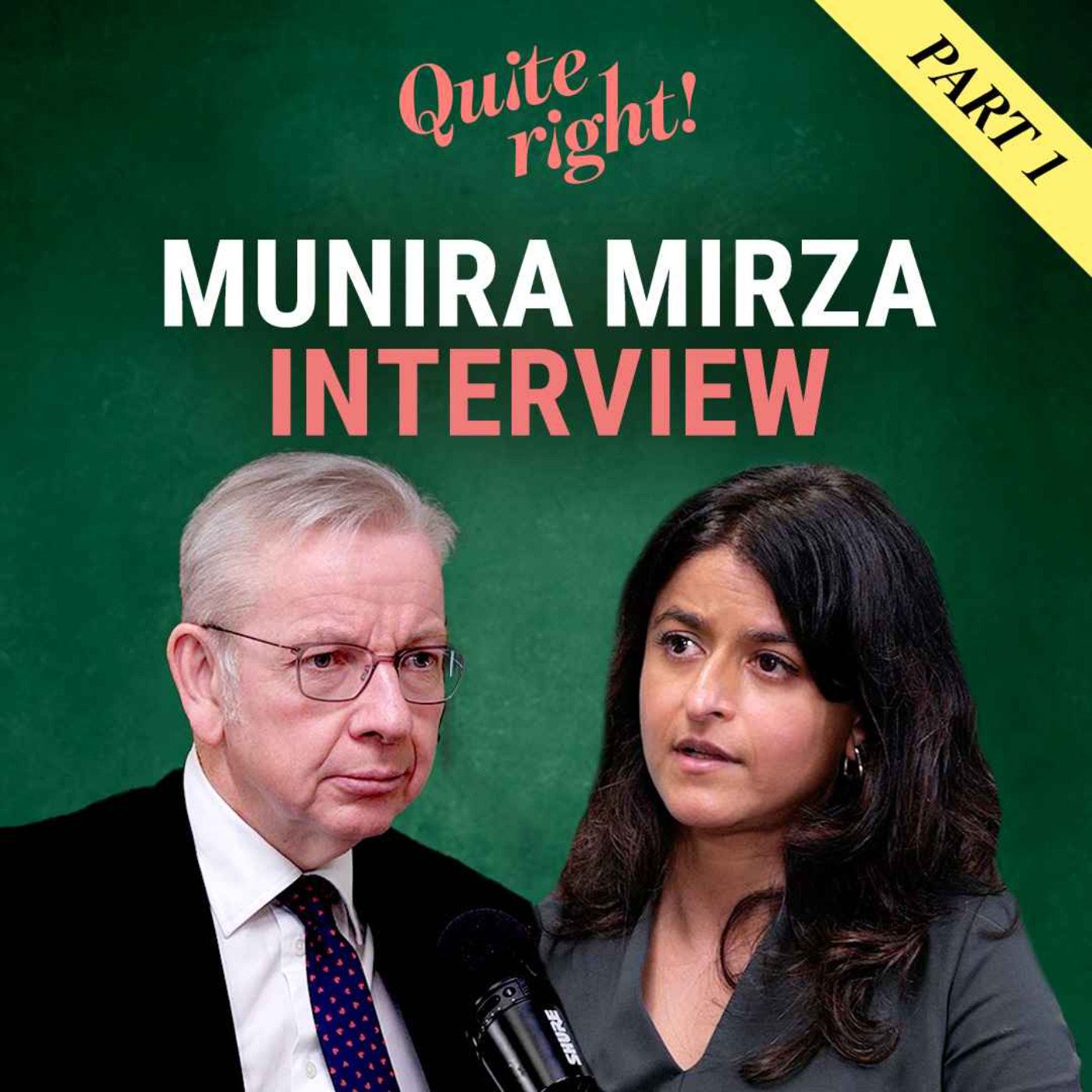
Part one | Munira Mirza on multiculturalism, Islamism & how fear of racism is distorting policy
40m 11s
The text begins with an announcement for a Spectator debate on abolishing the BBC license fee. The main content is an interview with Munira Mirza, a former policy advisor. She analyzes the political landscape following by-elections, noting a significant rupture between British Muslim voters and the Labour Party. This shift is attributed primarily to the Gaza conflict as a catalyst, but also to long-term local grievances, economic issues like cost of living, and a feeling of being taken for granted. Mirza discusses the growing politicization of religious identity among younger Muslims and the appeal of Islamism, criticizing police and local authorities for naively engaging with extremist community representatives, which reinforces separatism. Reflecting on her time in the Mayor of London's office, she describes efforts to move away from divisive identity politics. Finally, she connects institutional failings in addressing grooming gangs and mental health care to a misguided fear of being accused of racism, which she argues compromises public safety.
On Tuesday the 24th of March our speakers will debate the motion. This house believes we should abolish the license fee. Spectator Chairman Charles Moore and the telegraphs Alison Pearson will propose the motion with Spectator Editor Michael Gove and former BBC America Editor John Soaple opposing. I'm Isabelle Hardman and I'll be in the chair to maintain decorum and take your pressing questions. Join us on Tuesday the 24th of March at 7pm and book your tickets at spectator.com/debate. Hello and welcome to quite right. This week Maddie is away and I'll be talking to Manira Merza. Manira has been at the heart of some of the most consequential decisions in British politics. A graduate of Oxford University having been brought up in Oldham. Manira worked at policy exchange. I think that which I helped set up. Manira was central there to the debate on what made a successful multi-ethnic, multi-cultural society. She then graduated to work for Boris Johnson when Boris was mayor of London and Manira was deputy mayor in charge of arts, education and culture. Manira then went on to work for Boris in number 10 as head of the policy unit. She was the author and architect of the 2019 election manifesto which secured a landslide victory for the Conservatives. And she was there at the heart of the Boris Johnson government until resigning before Boris himself stood down. Manira has seen the system from the inside, knows what's going wrong and is determined to fix it. In our two parts discussion we'll be discussing first of all some of the issues around multiculturalism which Manira first began to study more than 20 years ago. Questions of racism, discrimination, Islamism, the extent to which Britain particularly as we contemplate the results of the goughton and denton ball election is the country divided. And in the second part of our discussion we'll be discussing leadership, what are the lessons of Boris's premiership, what are the failures of stormers premiership and how can you actually as Manira is dedicated to doing fix Britain. Manira, welcome to quite right. You grew up in the northwest in old and obviously the political eyes of the country are trained on the northwest of the moment because of the goughton and denton by election. What lessons do you draw? It's an area I know a little bit because my family have some connections to the to a mosque in the area. So I know that that strip the stock putt road quite well and it is a very diverse area. I think it's fair to say it feels quite run down in some parts of it. So a lot of the general dissatisfaction with government particularly in last year or two. I think quite stock in that constituency. I mean all by elections are really a message to the incumbent government. And I think it will be a huge amount of anger and frustration about the current government disappointment from a lot of people. As you say reform a polling at least in some polls are ahead. The complication is that there is a very large Muslim vote in that area. It's about I think about third of the voters of Muslim. And therefore the Greens are very active. The campaigning in mosques. They're obviously campaigning on the issue of Gaza which has detached the Muslim vote from Labour quite significantly. So even though this is a very strong traditionally a long strong Labour seat. The Greens are very likely to be able to mobilize a high turnout from that group. So I mean what are the lessons well Labour are under serious threat. And they have lost to some extent quite a large part of their voting base in that area potentially to the Greens. The thing that we can't predict. I mean I'm not an expert in judging from polls but whether Labour can mobilize sufficiently the anti reform vote has has been happened elsewhere. And even though Labour is saying well reformer, you know, doing very well we need to get the vote out. We're the only party that can be reform. That's their main sales pitch to the voters. It's not a very inspiring one. It's not really about what have Labour achieved, what do they want to do. It's more let's stop these guys from winning. British Muslim voters traditionally were one of the constituencies upon which Labour could most rely. Why do you think there's being a rupture between British Muslim voters and Labour? Well, the straightforward answer is the recent events in Gaza. But it's been, I think it's been happening for quite a long time. Actually if you look at the constituency I grew up in Oldham, there has been quite a lot of dissatisfaction with the local council. There's a lot of interneasine fighting as well in that area. And a sense that Labour have probably taken that group for granted. The Conservatives have also done this to some extent in some constituencies, not just the Labour phenomenon. But the tendency to go to the leaders of the local religious communities, to curry favour, to try and build a voting base through them. That has worked for quite a long time, but it started to fray now. And once people switch their votes, it's a bit like having an affair, once you've done it once, it's easiest to keep doing it. And that has started to happen that people have realised that they don't have to vote Labour in order to influence what's going on. And the Greens are going to capitalise on that. The independence that it reflected in the 24 election have also shown that there is an alternative to Labour. So I think that's a both being taken for granted, things are getting worse. And actually, lots of Muslims are just motivated by the same things as everyone else, cost of living, the energy bills are going up, the cost of butter is going up. They're really frustrated that the area looks run down. They're also frustrated about the rise in immigration and legal immigration, which affects them because they live in poorer areas where that has a bigger impact. So all of those issues, Gaza is probably the lightning roll, the thing that sparks that detachment. But the currents have been there for a while. Why is Gaza the polarising and energising issue that it is? If only we're living in Manchester, I might be worried about public transport, I might be worried about inflation, I might be worried about poor housing. Why should I worry other than in a general humanitarian sense about what's happening in Gaza? For Muslims, in particular. Well, Muslims and parts of the left. Yes, exactly. I mean, why has Israel and the Palestine issue been a significant concern for the left and for Muslims for decades? It is just one of those facts. It has felt very, very deeply by a lot of people. It's also been, to some extent, mobilised by people like George Galloway, who have used it as a way of saying, you know, Muslims are being a press around the world. And therefore, if you are a devout and serious Muslim, if you care about your wider community, then you will vote in any way that will influence foreign policy in the UK. I think that has been quite a kind of well-established tendency. And do you think part of it is an attempt by some to say that people's Muslim identity, and therefore their solidarity with brothers and sisters who are suffering in Gaza, is more important than their British or mench to identity. And their concern about interest rates and bus routes. I think that is part of that, that is the tactic that's been used, particularly by people like, you know, Galloway and some of the independent MPs. I don't know if that's sufficient in itself. I think if you had broadly a dynamic economy, lots of jobs being created, the bus routes were working, then maybe that wouldn't have such a galvanising effect. But it's the fact that everything else is going so badly wrong. They're fed up with Labour anyway. And this issue, it votes a great deal of emotion. Is it the case that Muslims in this country are more preoccupied with their religious identity? I mean, we don't have enough real in-depth research to be able to judge that. But it does matter more, religious identity does matter more to Muslims than perhaps other religious groups. And it is more politicised than for other religious groups. Within that, one of the concerns that I've had is that the government and organs of the state, whether that's the police or local authorities, have a very, very poor understanding of the different traditions, values, ideologies, within British Muslim communities. So there's a tendency to say, "Muslim." But not to think about different religious traditions, whether that's Burel, or Diabandhi. Not to think about parts of, for example, the sub-constant, the individual families might be able to trace their grandparents back to. There's a difference between someone whose grandparents might have come from Kashmir and someone whose grandparents might have come from a different part of Pakistan or indeed from India. Do you think there is that lack of knowledge there? Does it matter? So I started writing about radicalisation of Muslims about 20 years ago, for policy exchange, I wrote a report, which argued that there has been an increasing politicisation of the Muslim identity in Britain. And bizarrely, that the more extreme ideas were more popular amongst younger people than older people. So this was a modern phenomenon. People have been brought up and educated in England. And their parents tended to be more small-seek and conservative and kind of be more preoccupied by old-fashioned communal politics and national identity. But the younger generation was more preoccupied by religious identity and Islamism. Still minority view, Islamism, the political form of Islam, more extreme form, that was motivated and provoked by the well-trade bombings and the subsequent wars. But that was becoming a phenomenon 20 years ago. I think it's now much more widespread. I think it is a serious issue. I think Islamism is a poison. It's a poison in Britain. It's a poison in the Middle East and in many other countries. It is also vying against more moderate forms of Islam. And I think to answer your question, the authorities in this country, local authorities, the police, are very easily captured by a particular part of that Muslim community, which is that the more extreme Islamist end. So that's not to say that everyone the police talks to in a local community setting has extreme ideas. Many of them are just moderate and normal people with concerns about local issues that affect them. Without wanting to sound conspiratorial about it, there are groups that are just simply trying to use their influence with the police as we've seen recently in the case of Birmingham to try and get results that they want, that benefit them. And to dominate how Muslim communities think and talk about certain issues. So the Macarby Tel Aviv case is absolutely just exposed how this works. And there's obviously this is sort of tactical operational weakness on the point of the police or local authorities in taking extremist advocates as proxies for the whole of the British Muslim community or communities. But there's also a deeper question perhaps which is why is it that for many younger British Muslims Islam is a more important part of their identity and Islamism is an appealing ideology. If there's a failure that can be laid at the door of British institutions in allowing that to happen, where does that failure lie? Oh, I think there are many different organizations that are probably responsible. So there's a bigger phenomenon which is the geopolitical phenomenon which the Islamism has been growing around the world. There are organizations in other countries that have been deliberately trying to stoke tensions. The Muslim Brotherhood have proxies in Britain and elsewhere that are trying to turn the Muslim versus the West story into a dominant narrative. And they've been quite successful. They have therefore been then been abetted by slightly naive organizations like the police who have these sort of community liaison type relationships with local leaders and various groups. Not doing property diligence, not checking what these people have said online, believing a bit naively that their intentions are to build communication and so on. And it's their naivety that has allowed lots of these people to come into these sort of local government meetings and parade to the rest of the community how significant and influential they are. And therefore they've developed quite a cozy relationship in a lot of places. It's definitely the case with local authorities that a lot of and some of this is well intention. They want to engage with ethnic groups in their area, ethnic populations that are perhaps a little bit more removed from the democratic process. Understandably in the 90s, 2000s, there was an effort to reach out to them and these so-called community leaders come forward and say, well, we can give you access. We can come and speak at our mass. You can come and speak at our community center. The problem is that the more that authorities try and talk to Muslims through these intermediaries and the more they emphasize the difference that Muslim, the different kind of distinct concerns and interests of Muslim people. The more they stoke that sense of Muslims are separate to everyone else. And that I think is a process that has now led to all these ill effects. When you were working for the Mayor of London, you had responsibility for arts, culture, education. Obviously quite a lot of the levers in those areas were in the hands of national government or in some cases the local authorities or individual schools. Were you able to, during that time, develop policies to tackle both that sense that some people considered themselves communities apart and the unwillingness of some institutions to think about how to deal with multiculturalism and separatism? I remember one of the first decisions we took when Boris became mayor was to cancel a festival called the Rise Festival, which Ken Livingston and his advisor, Lee Jasper, who I don't know how many of your listeners will remember Lee Jasper, who's a controversial figure. And energetic, very jolly, Marxist, Lufthead of Ken Livingston. And Ken himself, who in many respects actually was quite an effective man and to give him credit, did a lot of good things for London. But Achilles heel was this kind of pandering to identity politics. They had all sorts of events and policies which were about trying to relate to ethnic groups as distinct groups and through their funding, through their various sort of promotional events and so on. The black community, the Muslim community and so on. We came in and this festival was an anti-racism festival in a park in Northern, I think it might have been Victoria Park in Northern. And we said we're not going to do it as an anti-racism festival. It's going to be a much more positive spend that we're celebrating London's diverse communities and so on. Basically trying to take out of it this sense that there's a victimized, oppressed set of groups in London that are, you know, there's a lot of kind of racism against them. Not to say that racism doesn't exist, of course it does, but to try and change the narrative and make it much more about everyone coming together. And this was a really controversial decision, I remember. I'd only been in the job for about six weeks and we announced that we were going to do this and all of the people who had supported Ken during the election campaign and Lee Jasper came out and said, this is terrible. And in the end we changed it and it was fine and the world didn't fall apart, the sky didn't fall in. But it was a very, very strongly held view that the mayor, all the local authorities had to have these constant anti-racism initiatives. Because if they didn't, then all these white Londoners would go back to their racist ways and would continue to oppress these minorities. I think the over-to-window has moved on. London is obviously much more diverse than it was even back then. And I think there's probably a more of a sophisticated argument about, you know, identity politics now. I think people are aware now that stoking division in that way, creating a sense of grievance, telling ethnic minorities that they're victims of white people in some way. In some ways that conversations become more nuanced and sophisticated than it was, some ways it's got worse. But, yeah, I mean, did we change how people thought about these issues. I think we try to use the bully pulpit a bit. I regret not being able to do more. But as an in the mayor's office, you have limited powers to be able to influence what's being taught in schools or how cultural organisations talk about these issues. I wrote quite a lot and I spoke at things. But, you know, ultimately these are cultural trends. And what I think politicians can do is use the bully pulpit. I think they can make the argument for why, you know, this kind of culture of grievance and victimhood will damage our society. But it's very hard to introduce a piece of legislation or a policy that will fix that. One area where perhaps a lack of preparation has been dealing with grooming gangles. There's also though another issue in the news this week. And that is the reporting on the killing and notting them by mentally ill individual, the elder pelican. As you look at that case, and indeed as you look at the grooming gang question. Is there anything that you would draw as lessons partly from the grooming gang's issue, but also from the mental health questions that perhaps have gone unexamined with sufficient rigor? Yeah. So this the case that you're referring to is very, very fragile case of three people who were tragically murdered. And the person involved was a mental health patient who's black. He was seen by various doctors. And it was reported in the newspapers that one of the reasons that doctors didn't give him a community treatment order earlier was because they there was a concern about the disproportionate number of black men who were being detained in the mental health system. And I've written about for a long time, I've written over the last 20 years about the fact that there's this perception that the reason that there are more black men detained proportionally in the mental health system because of institutional racism. And this is fundamentally a misreading of the data. The real expert on this is a man called Professor Suar and saying who's based in Morick, he's an academic and a clinical psychiatrist. He came to my attention, I think probably about 20 years ago, saying that the psychiatric profession has got itself into a state where it believes that this inequality, this racial inequality is therefore that there's somehow there's racism in the system. And his argument is that that's not the case. There is genuinely the case that there is higher prevalence amongst some ethnic groups. And this is a misreading of the data. In the same is there's a high incidence of diabetes amongst some ethnic groups. I mean, it's a complex thing and we spend more time talking about it, but fundamentally the pressure has been for the last 20 years and the Royal College of Psychiatry has been part of this is to try and put pressure on people in clinician roles to not detain people even if they are high risk. And so this incident this week is just one of actually quite a large number of incidents, but they haven't been talked about. I think if somebody looked at the data properly, this is as scandalous as the grooming gang situation. We are effectively increasing the risk to the public because of this fear of being accused of institutional racism, which is a misreading of what's actually happening. There's a phrase suicidal empathy, which originally was coined in America. It's subsequently been popularized by Matt Goodman for the law of the reform candidate in Denon Gordon. And it is a kindness towards those who are considered to be victims that actually ends up causing far more harm to those with whom you are empathizing and others. And it's arguably at work here, people who are in the grip of mental and it's naturally need care and attention discrimination on the basis of irrational prejudice is obviously sinful, but it's no help to the individual's concerned little loan to wider society to have people who are in the grip of psychosis or another mental disturbance, roaming freely and to have those people roaming freely partly because you think that there is something institutionally racist about appropriate care. Yeah, so I think it's even worse than that. It's partly kindness. I'm sure for many people it's motivated by desire to kind of make sure that people aren't treated unfairly or face discrimination. I think it's also a fear of being accused of being institutionally racist. And that I think is much worse because people actually know why there is this disparity between ethnic groups. But they still haven't changed the way that they deal with these decisions on the ground. I think it's a very good example of where even when people look at the evidence and the data. This is something that has been known and talked about in academic papers. I mentioned Professor Singh just now who's written about this. I think lots of people know that the cause is not institutional racism. I think they know that we need to detain people who are high risk. But they're still not doing it because of this political pressure and it's an ideological pressure. And so just like the grooming gangs where lots of people know that something is happening. In relation to one particular group in a community, they're still not intervening because they're afraid of being accused of racism. So that's different. So just we want to be kind. It's not just about good intentions. It's almost a willful ignoring of the data. You know how some labor politicians who use the allegation of racism against people in reform. You know how campaign organizations like Hope Not Hate, born out of anti extremism that are energetic in identifying people whom they accuse of being racist. Obviously irrational prejudice is a sin. But have we now reached a point where the allegation is long around so promiscuously that is not just the case that it may be drained of meaning. It's actually become counterproductive to go racist hunting as it were. So to be clear, racism exists. I think there are there is prejudice against particular groups. I think you know the it's right that we have anti-tribalization law, etc. Just be absolutely clear. The issue of racism has been weaponized to some extent to try and and has introduced a lot of bad policy bad outcomes. And I think there are lots of people who are aware of these adverse consequences who are not doing anything about it. In the end, the groups that often suffer the most are those ethnic groups. I mean, if people who are suffering severe mental health problems get subrenial and not getting treated and they end up committing a horrendous crime and then end up in jail, that is really not good for them either. So I think those ethnic groups, no matter how well intentioned these policies are, are the ones who offer suffer the worst consequences. I think your question was, you know, is this counterproductive? Yeah, it's deeply counterproductive. And I think politicians because they are afraid of leading and making this argument are reinforcing this very bad trend. Just at the time that you left the mayor's office, obviously we had the EU referendum. Which side did you back and why? I backed leaving. I supported the vote you've campaign. I helped Boris prepare for the various debates. I still back leaving. As controversial as it is, I still think it's the right thing for me. I still think it's an effect actually I did quite a lot of hustings in the creative industry sector, which didn't make me popular. And you know, that sector has been quite, you know, has had a few negative effects, quite a few negative effects from Brexit. So, you know, absolutely not not pretending that the short term effect of it has been great for everybody. And I always thought that would have some short term negative consequences because it is quite a big rupture. But I think long term for the country, it's better to have control over our laws and our regulation. I think that's already bearing out. You know, the EU has already introduced quite restrictive regulations around things like AI in a way that I don't think we should. I think we should have regulation there, but I think it should be a different model. And then, you know, when I was in number 10, we made quite a few changes to regulations since leaving the EU. Things around precision breeding gene editing, clinical trials reform procurement. So we did start to make some changes. All of which for a fun thing, I've sort of proscience as it were. Yeah. Because again, one of the lobbies that was most sort of a critical of Brexit were people speaking for scientists, worried about loss of access to funding as well. But it is interesting that as you mentioned, whether it's precision breeding gene editing, AI and so on, that the EU's approach, maybe influenced by things like the precautionary principle, has tended to be less welcoming to innovation than the approach that we've taken subsequently, perhaps tentatively, perhaps in a, in a factual manner. But definitely the divergence has all been in favor of innovation rather than anything else. Yeah. So I think there's a sort of set of principles, which guides the EU on a lot of these things. As you say, the precautionary principle, she's tend to be quite cautious as the name would imply. And also because they have a lot of countries that are trying to preserve existing vested interests, other companies that maybe don't want to be disrupted. And that a lot of influence over how regulations are formed. So, you know, just on pure regulatory basis, I think it's better to be able to decide and determine our own regulation. Britain also has a different economic structure. We have real strengths in science and technology. And therefore we want regulation that suits our industry and suits our economy. So on that basis, I think it was the right decision to leave. I wouldn't defend every single thing we've done since or how we've left. And, you know, I think there's room for improvement. But it's a process and not an event is it's allowed us now to have much more freedom about how we do things. And fundamentally, I think all our regulation, all our laws, should be democratically accountable. So, if stakeholders in this country, if vested interests or NGOs have strong views about things, they should be able to influence the regulation and the policy that comes out. And it's much harder to do it via the EU. How did your friends and family in Alderman in the Northwest feel about Brexit? Well, I mixed, I guess, like an outsider. I have lots of friends in the North who, I mean, I have one friend who, I remember at the time, told me I've never met anybody who voted leave. And she would have lived in Manchester. So this divide, this idea that, you know, London was all remain, the rest of the country was all leave. That's not true. It wasn't much more urban, city, phenomenon, maybe versus small towns and suburbs. And then I, you know, I have family members who were sympathetic to leave as well and friends. Because the 2019. Why do you ask, Michael? The reason I ask is this. So you've got a life experience with which I can identify somebody who won't find the hard. In that both of us were born and brought up in provincial towns or cities. Both of us had families, please correct me if I'm wrong, who believe they're strongly in the value of education. Both of us found ourselves at Oxford University, at different times, many years before you. But with our families taking a certain degree of probably, I suppose, in that educational journey, then both of us found ourselves in politics, though doing different things. And then both of us were convinced of leave. In my own case, my mum and dad were not particularly political, weren't particularly political, but they were supporters of leave. And I did feel that it was one of those moments or issues where the instincts of any people within the political world about the debate were divorced from, not in a patronizing way. That sometimes came about, but were divorced from their feelings, the instincts of many other people in the country. And I felt that there was often insufficient curiosity and sympathy, including from some people who are advocated leave, with the sentiments of those who actually voted leave. And this is a way of going to 2019 and the Conservative manifesto then and what followed. During the course of the Brexit debate, and particularly afterwards, though was undecidable talk about deregulation, good thing in favour. Talk about trade, but actually one of the things that not everyone realised, but I think you did and I think Boris did, is that part of the Brexit vote was also an attempt by many people in the country to say, the managerial political managerial class that's been leading this country has become cut a drift. It is introspective, self referential and its values are dictated by applause from within a tight circle, rather than an effort to serve the whole country. People like David Goodhart have talked about the somewhere anywhere divide and I think while it's a simplification, it's pretty accurate. And the 2019 manifesto and the broader levelling up drive, now levelling up derided, I actually think got to the heart of one of the reasons behind Brexit, which is that the economic model and the style of the political leadership, that people saw in Westminster and even more so in Brussels, was one that wasn't serving them. So I think, I mean, I'm not referring to people in the north and necessarily the I was. But it's, I think the biggest driver of course immigration, that was the thing that brought home the failure of the system, the elite to listen to people's concerns. The numbers had got quite significant at least, but then it seemed significant, but now it looks relatively small. And that was the major driver, the sense that the public have been saying for 20 years or more we want to reduce immigration and it keeps getting bigger. And even under Cameron, who had said that it would reduce it to under 100,000 and it kept growing. The reason it kept growing is because of free movement from the EU and the inability of government to be able to exercise any control over that particular route. So that's why it was crystallised, that's why it came out. I don't know to what extent people around the country were thinking, well, you know, it's the broader, you know, kind of malaise and the EU and the economic models failed because of our membership of the EU. I can't say for sure if it was kind of understood or felt in that way. I was surprised actually during the referendum how knowledgeable people were about the EU. There was a lot of talk afterwards that people had been tricked into voting leads and didn't understand what they voted for. My experience and lots of people I know who'd campaigned during that period said, no, no, no, people were pretty clued up actually surprisingly so. And obviously voter turnout was quite high. Highest for a long time. People were not simply voting kind of identically. They were I think engaged in the arguments. But you asked about 2019 manifesto. Obviously the point space system was in there saying we're going to change the immigration model was part of it. You're right that really it was this bigger problem, which is why had we had so much immigration for that period since since 2004 what had been the driver. It was partly a cultural ideological thing to do with ideas of globalization. You want a country that welcomes people. There's also because our economic model was failing even before 2008 there were serious problems with productivity and with investment in this country and we had had for a long time. Basically a model that relied on expanding the number of people in this country. Expanding GDP but not GDP per capita. And I think leveling up sometimes people very scathing about the phrase and say well you know it's just about redistribution or making towns and cities around the country look a bit nicer and it was not a real thing. In my view it was about fixing the the broken economic model. Not broken irreparably. I think it's a you know that we have lots of strengths in this country but we have over the last 20 or so years done things that have caused a lot of self harm which have made it harder for our best industries to expand for productivity to increase to create good jobs around the country. There is a real problem that are parts of the country like the northeast where there are more people employed by the public sector than the private sector. And that is something that the 2019 manifesto was trying to address this deeper structural thing of how do you get the country's economy to start growing again in a way that everyone benefits. And I think that the concerns about immigration were both about immigration themselves but also what immigration signified so exactly as you say it was symptomatic of an attitude which was traditional industries brackets in which many people have taken pride don't really matter anymore. And you know a sophisticated modern economy doesn't need them what we need are successful financial services sector and then the ancillary workers baristas cleaners people working in the health and care sector to service that if your community changes as a result. And I know there's a touch of what's your use of has been saying this week in this if what was the local church brackets you might not gone there but maybe you're parents did if that changes and becomes a mosque if it is the case that the streets and which you grew up are transformed. Frankly either we don't care we the governing elite don't care or we actively think it is good for you to have that which was familiar change because we're not stating it out loud but we do think that your racist and you need to be educated out of it well they did state it out exactly in some cases. And for many people it would be it would feel entirely understandable that they would think you're not concerned about dignified jobs in my area you're not concerned about the pride that I taken my community you're not concerned about that which is familiar which gives me a sense of affection and loyalty to this place you're principally concerned about two things one what is economically convenient for those who are already wealthy and secondly robbing my nose in it by saying that you are more enlightened. You are more enlightened than I am and that I have to bear the consequences and unsurprisingly people thought given the opportunity to say no to that they would take it my own hunches that that you haven't been taken people's general view would be okay and this I think was the point of the 2019 manifesto I hope government that you've got the message. We're not really going to obsess about migration we would just like the numbers now to go down what we really want to do is to see that you understand what has happened to our communities and to the country of which immigration has been a significant part and let's tackle that and as you say it was about changing that political economy and thinking in that way I'm I over romanticizing the views that you in others hand at the time the time you're not. And at the time of the 2019 manifesto being written that was a view that we had an opportunity to both change that you know use the levers of power to try and get. So you can be growing again deal with the fact that energy prices have gone up we can build infrastructure reform planning all those things which are been holding that industry and you know parts of our economy that actually you could function quite well. It was also about you know really responding to public pressure and saying you know we we hear you and we understand that you want to try and slow down the pace of this demographic change. Subsequent events did not bear out in that way so as you know you know for reasons that we can go into but the I think after after the Brexit vote happened the reaction and also during the referendum campaign itself the reaction of some people in authority some political people. Characterizing the desires of control immigration as fund as racist yes I think probably did just aggravate a very large part of population and I I've spoken to quite a lot of people who changed their mind after. Because it was so pulled by the way that you know authority figures were demonizing the working class or you know even frankly parts of the middle class for saying well maybe we maybe we don't want free movements maybe that's not the right thing for this country. And so in a way the narrative that the remain campaign used to try and scare people or morally black male people into voting their way I think back fired and I think a lot of people felt quite hacked off that they were being told that there was something wrong with them morally because they wanted to be able to put put some controls back into the immigration system. But yeah I mean fundamentally I think you know these these drivers are partly political ideological you know it's to do with you know how we feel about ourselves in the country wanting to present Britain as this open multicultural society therefore you know we shouldn't have borders at all versus a conception of actually we should have an immigration system that works for the people who live in this country. [Music]
Podcast Summary
Key Points:
A debate is scheduled on abolishing the BBC license fee, featuring notable proponents and opponents.
An interview with Munira Mirza discusses the political shift of British Muslim voters away from Labour, driven by Gaza, local dissatisfaction, and broader socio-economic issues.
Mirza analyzes the rise of Islamist identity among younger British Muslims, critiquing authorities for engaging with extreme community representatives and fostering separatism.
She highlights institutional failures in mental health care and grooming gang cases, where fears of being labeled racist prevent proper risk assessment and public protection.
Summary:
The text begins with an announcement for a Spectator debate on abolishing the BBC license fee. The main content is an interview with Munira Mirza, a former policy advisor. She analyzes the political landscape following by-elections, noting a significant rupture between British Muslim voters and the Labour Party.
This shift is attributed primarily to the Gaza conflict as a catalyst, but also to long-term local grievances, economic issues like cost of living, and a feeling of being taken for granted. Mirza discusses the growing politicization of religious identity among younger Muslims and the appeal of Islamism, criticizing police and local authorities for naively engaging with extremist community representatives, which reinforces separatism. Reflecting on her time in the Mayor of London's office, she describes efforts to move away from divisive identity politics.
Finally, she connects institutional failings in addressing grooming gangs and mental health care to a misguided fear of being accused of racism, which she argues compromises public safety.
FAQs
The debate is on the motion to abolish the license fee, featuring speakers Charles Moore and Allison Pearson proposing, with Michael Gove and John Soaple opposing, chaired by Isabelle Hardman on March 24th at 7pm.
Manira Merza is a former deputy mayor of London under Boris Johnson and head of the policy unit at Number 10, known for her work on multiculturalism and as architect of the 2019 Conservative election manifesto.
The detachment is primarily due to the Gaza conflict, but also stems from long-term dissatisfaction with local governance, economic issues like cost of living, and a sense of being taken for granted by Labour.
Islamism has grown as a politicized identity among younger British Muslims, influenced by global trends and groups like the Muslim Brotherhood, with authorities sometimes naively engaging with extremist elements as community representatives.
As deputy mayor, she helped cancel an anti-racism festival to shift focus from victimhood to celebrating diversity, aiming to reduce divisive identity politics and promote unity in London.
The by-election shows Labour under threat from the Greens mobilizing Muslim voters over Gaza, highlighting broader voter frustration with economic issues and a shift away from traditional party loyalties.
Chat with AI
Loading...
Pro features
Go deeper with this episode
Unlock creator-grade tools that turn any transcript into show notes and subtitle files.
 PodcastTranscript AI