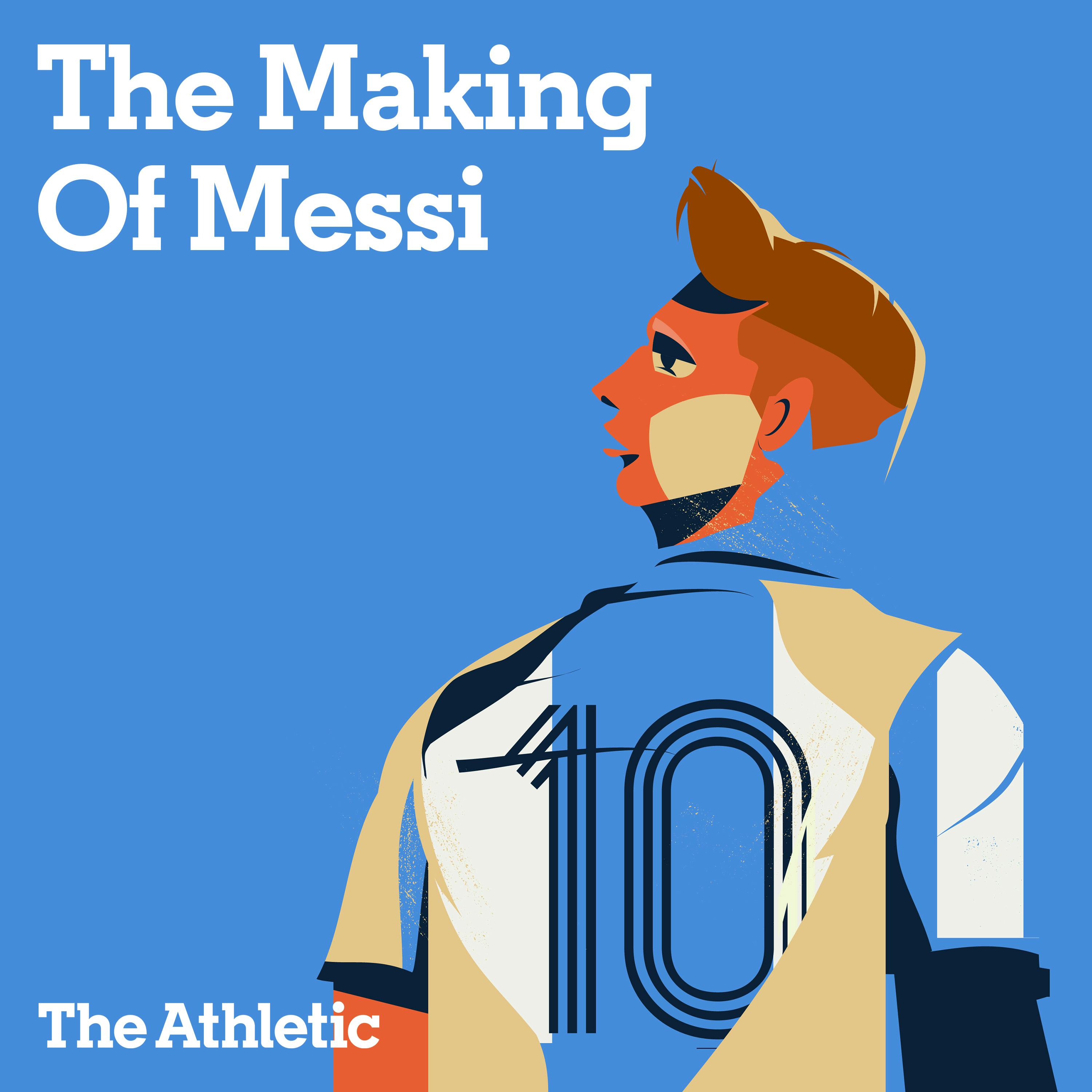
Lionel Messi’s journey from a modest upbringing in Rosario, Argentina, to global football superstardom is defined by resilience, talent, and pivotal moments at Barcelona and Argentina. Despite early skepticism due to his small stature and health issues, Messi quickly rose through Barcelona’s youth system, forging a legendary partnership with Pep Guardiola and winning multiple major trophies, including a historic treble in 2009. His individual brilliance—exemplified by record-breaking goals, passing, and dribbling—earned him seven Ballon d’Or awards. However, his career faced challenges, including personal struggles, conflicts with club leadership, and a difficult transition to Paris Saint-Germain, where cultural and tactical mismatch led to limited success. In Argentina, Messi endured years of disappointment, including missed penalties and early tournament exits, until his breakthrough in the 2021 Copa América and the 2022 World Cup, where he helped Argentina win a long-awaited title. This success marked a turning point, solidifying his legacy as a global icon. Now, at age 36, Messi is moving to Inter Miami in Major League Soccer, a move seen as a strategic effort to expand the reach of professional football in the United States. The story explores how his arrival could transform American soccer, echoing past attempts by stars like Beckham and Pele to grow the domestic game. While Messi’s financial success is immense, his legacy remains rooted in his on-field performance, leadership, and deep connection to the sport and its fans.
[MUSIC PLAYING]
The Athletic.
[CHEERING]
Hey, Siri.
Define, go.
A hardy domesticated room and a mammal
that has backward curving horns.
No, scratch that.
It's Leon L. Messy.
[MUSIC PLAYING]
[MUSIC PLAYING]
[NON-ENGLISH SPEECH]
So right now, catch away from the goal.
We'll put a feather inside time.
[MUSIC PLAYING]
[NON-ENGLISH SPEECH]
Sports fans across the world are obsessed with the concept
of the goat, the acronym for the greatest of all time.
Whether it's Michael Jordan and basketball,
Muhammad Ali in boxing, or Tiger Woods in golf,
sports fans need to crown the intergenerational king
of their craft.
The player is most often associated with goat status
when it comes to soccer, or Leon L. Messy, fellow Argentine
Diego Maradona, Brazil icon Pele, and Portugal's
Cristiano Ronaldo.
Messy's sprinkles starved us wherever
he goes, winning 12 league titles in two countries
and four Champions League.
The annual competition between the best teams in Europe.
He's also scored a sublime 807 career goals
for Barcelona in Spain, PSG in France,
and his country, Argentina.
However, he had to wait for the best part of two decades
for silverware with Argentina.
First, it was the Copa America, the competition
which crowns the best team in South America.
And then, the most prestigious trophy
in the international game, the World Cup.
The focus is on Leon L. Messy.
[CHEERING]
You know, as much as Messy going on to win the Copa America
in 2021 and the World Cup in 2022,
it's easy to dress this up as an inevitability
that it was always going to happen for him.
It might not have.
As his career begins to wind down at the age of 36,
Messy plans to conquer America with his move to Inter Miami,
the Major League Soccer Club, part on by David Beckham.
This series from the Athletic will bring you expert insight
into the inner workings of the Argentine Switch
to South Florida and how it can make MLS go boom.
We'll also look back on the signings of stars
from previous areas like Pele, Rotan Ibrahimovic,
and of course Beckham himself and how
they attempted to grow the domestic game in the US.
This is the Making of Messy.
Our story begins in Rosario, Argentina,
a bustling city of around 2 million people
in the province of Santa Fe.
Rosario is the birthplace of the Argentine flag,
as well as Marxist Revolutionary Che Guevara.
This is also where the greatest soccer player of all time
is born.
Messy's parents are normal people working normal jobs.
His father Jorge, who's now his agent,
was a supervisor at a steel company.
His mother Celia, she worked at an electrical coils company.
I think the fact that both of his parents
work tells you that they had to make ends meet.
They had to support a family of six.
There are four children.
Messy has two older brothers and a younger sister.
There's his home in Rosario, where he grew up.
It's still there.
It's just a humble, two-story home.
And I think essentially, Messy came
from just a middle class upbringing
to what he's known as today an absolute superstar.
My name is Felipe Cardenas, and I am a football writer
for the athletic, concentrating mainly
on Major League Soccer and International Football.
Messy joins his boyhood club, Nools Old Boys, at the age of six.
Nools was established by Englishman Isaac Nool
in 1903 in Rosario.
And their list of alumni is quite special.
Some of the biggest names in football
that you recognize have come out of that club like Marcelo
Bielsa, Gabriel Batistuta, Mauricio Pochettino,
play there as well.
Herrardo Patamartino, who is now going to coach Messy
and Inter Miami is also a legend at Nools.
As a youngster, Messy is busy showcasing
his abundance of talent.
However, it wasn't like he was known throughout the country.
We had the superstar that's in the making
and look at this young kid play.
No, if you didn't go to the youth games at Rosario,
you didn't know who Leo Messy was.
The problem with Messy was just his size.
When Messy is 10, he and his family
are deliberate some bad news.
He was diagnosed by a pediatric endocrinologist
as having growth hormone deficiency.
The Argentine is just four foot two at the age of 10,
well below the average of four foot six for boys his age.
And there was treatment that was needed.
And at the time, it was treatment that was very expensive.
Even today, it's an expensive treatment.
It was something that the family could not
expense on their own.
And so they sought help from the club.
And in Nools old boys, they didn't necessarily
turn their back on Leo Messy.
But it was a hurdle perhaps to hide for them at the time.
Enter Barcelona.
Barcelona have scouts all over the world
and they look at thousands of players.
But they're staggered by what they see with Messy.
Couset tapes show him slalom through defenders
with ease and scoring countless goals.
But there are doubts.
Horatio Gaggioli, an agent who worked on the Messy deal
for Barcelona, was shocked when he met the player
for the first time.
There's no way you can play.
This child's too skinny.
He described his legs as the size of fingers.
He was concerned for Messy that his legs would be broken
as soon as he started playing competitively
and within the Barcelona youth system.
But it only took a day, the very next day,
as soon as they dressed Messy in Barcelona gear
and had him train with the youth team,
he was heading shoulders better than everybody else.
Messy impresses during his trial, but Barcelona has a team.
After lots of back and forth, a contract offer
on a now famous napkin seals the deal.
December 14th of 2000, we're in Barcelona
where that's where this took place.
We needed a final decision.
Carlos Ressache, the sporting director at the time
for Barcelona just grabbed an napkin and wrote a contract
and said that people here at this dinner,
including Gaggioli, his partner and myself,
are now responsible for this player, Leonel Messy.
That napkin to this day is revered in Barcelona.
And Gaggioli told me that he keeps it at a bank
in a safe deposit box.
It was notarized by his attorneys
and it became a legal document, a napkin,
which established Leonel Messy as a Barcelona player.
That's where Barcelona and Leonel Messy's adventure began, essentially.
Messy can finish off from the parade.
Messy!
Go!
It's party time in Barcelona.
That's where you pay over new kings of Europe, Barcelona.
Leonel Messy and Pep Guardiola are a match made in heaven.
If Messy is the goat on the pitch,
Guardiola is the goat on the touch line.
In the recent 2022-23 season,
the Spaniard led Premier League side Manchester City
to their best ever campaign as they won the treble.
But his legacy was forged at Barcelona.
He went from a ball-boy to captain of the team
to then winning 14 major trophies in just four years
as head coach at the camp now.
Barcelona's iconic stadium.
Together, in the 2008-2009 season,
Messy and Guardiola make history
when Barcelona become the first Spanish team to win the treble.
That's La Liga, the Champions League, and the Copa del Rey.
Barcelona couldn't compete with the number of potentially that rather than the past,
but with that travel, Barcelona managed to get something
that Barcelona didn't still have to do.
Messy, dentro del área, el remato de Messy!
Leonel Messy was the start of the show.
He went from being a talented youngster
to become like a world star with a monster mentality.
My name is Paul Valleus and I'm the athletic correspondent
at Barcelona covering FC Barcelona.
In 2009, something special happens for Messy.
He wins the first of his record seven ballendores,
the yearly award for the best male soccer player on the planet.
Barcelona fans were realizing
that Leonel Messy would start like an hero of domination
and dominate he does.
But we're not of the three-fifth battle to it.
Leonel misses.
Leonel messes.
Leon messes.
Leonel messes.
Well, it's not all sunshine and rainbows for Messy,
especially at the start of his 20-year-bars of career.
We don't realize like about the change of life
that he had to go through at the age of 13.
On the pitch, things were going quite okay for Messy,
but off the pitch, when he came back home,
he just basically locked himself on his room
and he applied himself like the treatment
of growth hormones that he had to go through, basically, just to get over with it
just keep going. Despite his off-field troubles, Barça are brewing it.
super star in their academy. La Masia. What is La Masia you may be asking? It means like
country house, like a farm house. That's like the literal meaning of it. It was like in practical
terms it was like located next to the Camino. Most of the players from the Barcelona Academy
used to live. Later from all ages used to live there. They went to school together. They went to
high school. Then they went to training. It is really known like for the production of talent that
it had basically. Andres Iniesta, Leonel Messi, Savi, Carlos Puyol, Victor Valdez. Messi quickly
goes about setting records. Something he does a lot of in his career. There's like a really
particular season on the 2003 and 2004 season where Messi sets up a course that hasn't been broken
yet at the Barcelona Academy which is playing with five different teams in the same season. He played
with five different age groups in the very same season. Like from the under 18s, the under 19s,
and then Barcelona beat him. Barcelona beat him because they had like two amateur teams.
And then the first team he made his debut with the first team. This team made it just like
couldn't believe it. So the skinny boy from Rosario is now playing with Brazilian World Cup winner
Ronaldinho, Portugal legend Deco and Cameroon star Samuel Eto. Messi goes from strength to strength
and Boris' domination kicks in when Guardio arrives in 2008. In 2015, they win the treble again
under current PSG boss Luis Enrique. But there's someone who wants to spoil the party.
That rivalry against Manuel Messi, Cristiano Ronaldo is an opinion one of the most impressive things
in sport that we have ever seen. It's going to be really difficult in the future to see a rivalry
with that level. Like that many years, like fighting against a really worse life. It was amazing to see.
As the cliche goes, all good things must come to an end. Messi continues to do his job,
but Boris's hierarchy don't. At Spanish football clubs, things work a little bit differently
to the rest of Europe and other continents. Clubs have presidents who oversee the overall
management of the club. And in Barça's case, they have like the president, they also have an
sporting director and people who deals with transfer and contract extension. And presidents at Barça
are voted for by the club Sofios, like the memberships who are allowed to participate
on the election and just to place their vote for whoever president they want to win the election
for the club. A series of bad decisions on transfers like letting Brazilian superstar
Neymar join PSG in 2017 leave the club in turmoil behind the scenes.
Spanish businessman, Josep Maria Bartomeiro becomes president in 2014.
The financial problems which still plagued the club today, almost a decade later, start here.
Barcelona weighs close to a quarter of a billion dollars on expensive flops like
Philippe Coutinho, Wismond and Bele and Antoine Griezmann. There wasn't like a solid leadership,
a solid person guiding the club through like firm decisions and out of the blue like the power of
the club ended up in the dressing room. It was not under pressure or in the manager and that was
extra pressure for Lionel Messi. This is the beginning of the end and the unthinkable becomes a
reality. That Messi might not finish his career at Barcelona. Messi sent his bureau facts and
the legal document to the club showing his desire to leave Barcelona on a free transfer because
according to Lionel Messi he had a clause on his contract. He could live on a free if he decided
to. Josep Maria Bartomeiro replied to that clause saying that he wasn't valid anymore because he
came after COVID, timings were in a gray area basically. He made Messi stay at the club against
his will would just something that the fans never forgave him. Fast forward to 2021. A popular
former bar surprise in John LaPorta is reelected. There's renewed hope but not for long. John LaPorta
was the president when Lionel Messi came through the Academy of FC Barcelona and made it to the
first team and the bond that LaPorta Lionel Messi had was great. They negotiated for a new deal
and a regional agreement with Messi taking a huge picket knowing that the club was like facing a
tough summer in terms of like the financial side of the club. On the very last minute like the
club asked Lionel Messi scammed to help like a last minute meeting. They told them like the last
minute problems that they had in terms of like finances. They couldn't register Messi within
LaLiga limit. They tried to negotiate in some sort of detail but it was already broken. It was like
tough for Messi to take and we could see how he cried and how emotional he was on his farewell
even at the club because he had to leave the club of his life against his will.
So from a playing perspective why is Messi considered as one of the best ever to play the sport?
His pick Messi was the best at shooting and passing and dribbling. There's pretty much only
three things you can do when you get the ball. Those are the three things and he was the best
to each of them. Football tactics writer for the athletic Michael Cox picks out goals with showcase
Messi's excellence in those three key departments. One from the World Cup last year,
it maybe wasn't the most spectacular goal but it was a really big goal in the second round against
Australia. It's a kind of classic Messi finish in that is placed rather than driven. I mean obviously
the one of the differences I think between him and Cristiano Ronaldo over the years has been
power. I think power in the way that they're run but also in terms of how they finish. I personally
always like a neat little finish and this is just slid past the defender. It's not even really
in the corner but it's done at such speed that it's quite difficult for the goalkeeper to read.
Unquestionably my personal favourite Leo Messi goal was in a three-one win against Philly Rayout
back in 2010 and this was really the crucial goal. It's when the game was won all
passer in a little bit on the back foot and it comes from a quickly taken free kick in midfield
by Javi and the thing I like about it is when Messi gets the ball there's basically nine outfielders
between him and the goal and kind of only one attacking player who's an option who's Pedro and
Messi gets the ball in front of the Villarreal midfield and he plays a first one too with Pedro
to get the ball between the lines and then as soon as he gets the ball that time he then plays
another one too with Pedro to run in behind and then he dinks it over the goalkeeper with his right
foot. It just summarises what Messi's all about he can be a deep playmaker he can be between the
lines he can be going in behind and he does it all in the blink of an eye really before Villarreal
have even switched on for the free kick. A very famous goal that he scored for Barcelona against
Real Madrid in the Champions League semi-final back in 2011 was the first leg it was quite a
brutal game really Real Madrid I think at that point didn't really feel they could cope with Barcelona
in terms of tactics or technique and they really went after them in a physical sense.
The good thing about the goal is it's basically Messi doing it all himself but he uses buskets as
basically just a wall it's almost like buskets briefly as the the number nine is the big center
forward just playing a hold-up role and buskets gets an assist for what is not even a pass I mean
he basically just traps the ball stands with the ball and lets Messi do this thing away from two three four
wonderful wonderful how good is he and it's just an extraordinarily good goal the directness and
the speed and of course the fact that he finishes it with his right foot as well I mean he beats both
center backs and Marcelo the left back and then Rose at Pascal Sears he's just brilliant best
player in the world bound on we've heard a lot about Messi the soccer player but what about
Messi the man and what drives him my name is Nick Miller I'm a writer for the athletic what I've
found out about his character and what he's like away from the pitch is not a lot because it seems
like there's not really a lot to find out when he first joined Barcelona he was so quiet that
people thought he was mute these days is a little more forthcoming but people who have met him say
he could be quite easily sitting at the next table to your restaurant and you probably wouldn't
know that the greatest football to ever live was next to you his life doesn't seem to be that
exciting you went to cold play recently what is another remarkable thing apart from his talent is
his money money has been a key theme and running throughout his career to the point where one person
I spoke to said it was his number one passion we should probably point out a few other people
disputed that but the figures are astronomical his final contract at Barcelona the one he tried to
get out of with the infamous bureau facts could have paid him 55 million euros over four years that
deal was a big contribute to fact to Barcelona's financial problems and the main reason that they
couldn't sign him back for business to make he makes around 65 million dollars every year for
endorsements companies like address Pepsi Budweiser Mastercard Louis Vuitton Hardrock Cafe
the wide range of crypto companies with strange made-up sounding names plus of course
that deal with the Saudi tourist board you probably could have earned even more money by selling
for a Saudi club rather than into Miami but
he's betting on the commercial potential of being in the US now and after his career finishes.
Does any of this matter? Does it matter if he's rich and boring? Maybe not. Even if some of his
money is from slightly questionable sources. Ultimately, all anyone will really care about his
how he plays on the pitch.
These are the shots that many thought they would never see. Linel Messi wearing a football club shirt
that didn't belong to Barcelona. He was at the park, depressed in a PSG kit and he were
aware of the number 30 the number he had when he made his debut at Barcelona. Messi's story resumes
in the city of love, Paris. However, PSG's journey under its guitarry owners has been anything
but a love story. In fact, it's been a tale full of European heartbreak. Although the French
side are all but certain to win their domestic division every year, the Champions League is the
silverware they so badly desire. The closest they've been to the Promised Land was in 2020.
When they went all the way to the final, only to lose the Germany's Bayern Munich.
When Messi comes along in the summer of 2021, PSG must have been thinking surely this is our time.
Here was Messi joining forces with French World Cup winner Kylian Mbappe and his old teammate
from Barcelona, Neymar. But it all goes wrong for Messi at PSG. Why? Well, where'd you start?
I'm Tom Williams, I'm a football writer and broadcaster specializing in French football and I
contribute to be athletic. Everyone knew from the start that he didn't want to be there. We saw him
crying in that in that press conference when he announced that he was leaving Barcelona. He didn't
want to leave Barcelona. Barcelona didn't want him to leave but I don't think anyone in football
really wanted to see him play for another club. Joined a team who weren't playing particularly
good football and weren't in a successful period of their evolution.
Struggle to adapt to French football. Found it very physical, I think, perhaps more physical than he
was expecting. They expect the best. They expect the best from people. When you serve people
come here all the time and suddenly you don't give them that. People don't care that you move.
People don't care about your kids. Adaptive people don't care about your wife. Adaptive people don't
care about you. Adaptive fell short in terms of his primary objective which was taking PSG to the
next level in Champions League. It's Messi and it's saved by Courtaire. One of the big moments in
this Champions League last 16 die. Courtaire denies Messi. Never engaged with Paris as a city in any
real way with France as a country in any real way. Ran out of puff about halfway through his
second season and then gave PSG an opportunity to make him an example by going on on an authorised
trip to Saudi Arabia. Messi has been suspended for two games and find two weeks wages for going
on a personal promotional trip to Saudi Arabia without permission from the club. I think from PSG's
perspective given that they were already starting to think about you know the kind of the post
Messi era it kind of suited them. It was a bit of an open goal and for once PSG didn't miss it.
So I think if you kind of add all those things together perhaps throwing a few other factors
you get an explanation for what I didn't work out.
Club football, Messi's completed it. International football, not quite. Messi the second he steps
on a field without that core is average because Shabby's not there, because NES does not there,
because David V is not there. So how do Argentina go from this in 2014?
To this, eight years later.
I'm James Horncastle. I cover Syria for the athletic but I followed Argentina at the World Cup
and Qatar over the winter. I described Messi's relationship with Argentina as heartfelt
and yet quite complicated. Messi got this opportunity to go to Barcelona. It meant he's never played
club football in Argentina, certainly at a professional level in the way that some of the countries
other icons did. Diego Maradona, Mario Campes. And so it became quite easy to frame Messi as a foreigner.
In 2006 in Germany, Messi's first World Cup there was already a lot of anticipation
for him to be kind of thrust into the national team. He'd already made his debut, which
was kind of a bad omen really because he got sent off very shortly into it.
There was this pressure on Jose Peckerman, the coach at the time, to include Messi more,
regardless of his age and to play him more. Argentina crashed out at the quarter-final stage at
the 2006 World Cup, losing to host Germany. Messi is left on the bench during that match and people
aren't happy. Argentina's elimination was framed around Peckerman not using Messi. Every major tournament
would be seen as, can Messi do this for Argentina? If Messi can't, no one can. And it all, again, became
pitched as well with Maradona could do this for Argentina. He could take the team on his back,
the country on his back. Messi must do this. It was a big shortcoming I think in the coaching
team. That Argentina and Messi was receiving, compared with what Messi was getting in Barcelona.
There was a lot of dysfunction around Argentine football at the time, because of the financial crisis
at the turn of the century in Argentina. If you go back to Maradona's World Cup performances,
always playing time with Argentina, he was seen as someone who got to benefit from playing for
great coaches like Menotti, Basile, as well. Diego Maradona comes up a lot when discussing
Messi in Argentina. Maradona did what his modern counterpart couldn't do for a long time,
when he kept in Argentina to World Cup glory in 1986.
Forget about the go for a second. Maradona was seen as more than a footballer and more than a human
even. You talk about the supernatural how Diego Maradona, for example, is often so associated
with being a sort of pagan god. Maradona was a larger than life character. It's hard enough
living up to a great footballer's standards, let alone a god. Messi for a time was seen as
taciturn, quite introverted, quite quiet, certainly in comparison with Maradona.
You know, when Argentina started losing these Copa America finals, Maradona said that he
did not believe that Messi had the character of six to be a leader. In 2016, Messi hits rock bottom.
You have the 2014 World Cup, which they lose their Germany. They then lose the 2015 Copa America,
Chichile, and then in 2016, there was this centenary edition of the Copa America in the United States,
and it goes to a penalty shootout.
And Messi misses Argentina's first penalty, and Chichile goes on to win that as well.
And if you think about that, that is three consecutive years in which you've taken your country
to a final, and you lose all of those finals. But we start with big breaking news this morning,
and Leonardo Messi has told Argentinian television that he is retiring from international football.
He's kind of humble enough to accept at that moment that, you know, maybe all the trophies he was
winning isn't individual, or the trophies he was winning as a club were not going to be matched
by what he did with his country. What his mini retirement doesn't last long. Two months later,
Messi is back in business. Leonardo Skologny takes over as Argentina head coach in 2018,
and a few years later, in the lead up to the 2021 Copa America, everything changes.
You have a group of players which I think Messi felt comfortable in. He felt there was a good chemistry.
He compared it with the team that had reached the World Cup final in 2014. It was one that
liked being together. It was the one that had solidarity with one another. And it was one that was
coached by somebody who understood Messi in Lionel Skologny. Skologny, he'd been a teammate of Messi's
with Argentina. The vibe and the atmosphere around the team is right. And they go all the way.
And they beat Brazil in the final in Brazil.
Once they won that title, it relieved Messi of some of the burden.
I remember going into, for example, the 2022 World Cup.
The debate around Messi was already kind of shifting.
It was shifting away from does Messi need to win the World Cup in order to be considered the greatest of all time or the equal or some of the good past marathoner.
It's World Cup time.
Argentina, after their Copa success, are one of the favorites going into the tournament in Qatar.
They have an opening group game against Saudi Arabia.
It should be fairly straightforward, right? Right?
The longer that game went on, the more the fans believed.
The more frustrated Argentina got, and Saudi Arabia were able to use that to their advantage.
And they upset Argentina in one of the greatest kind of shocks in World Cup history.
Messi was asked about the atmosphere in the dressing room and he said, "We're dead. We're dead in there."
Operation Resurrection begins.
There are labor victories over Poland and Mexico in the group, followed by an easy-ish win over Australia and the first knock-out round.
There's the dramatic battle versus the Netherlands, which goes all the way to penalties.
And a dominant 3-0 win over Croatia to set up the final.
It's Reigning World Champions France in the final, and Messi versus his PSG teammate and Starboy of the World in Bape.
Finally, it was the fairytale ending.
It was a great part in this epic poem of Messi's career for Argentina that the last possible opportunity is when he wins the World Cup.
It will go down in football law as the greatest World Cup final.
"Ruddy Brinkley ever been,uddy Brinkley ever been,uddy Brinkley ever been,uddy Brinkley ever been."
Montiel!
Argentina!
Champions of the World!
Again, at last!
The final Messi has conquered his final peak. The final Messi has shaken hands with Paradise.
The little boy from Rosario Santa Fe has just pitched up in heaven.
He climbs into a galaxy of his own. He has his crowning moments, and of course he is not alone.
That one feels from Bape who scored a World Cup final hand trick and lost.
It felt like it was kind of a fitting end that a crazy final after a crazy tournament would go Messi's way.
There were suggestions Messi would retire from international football after Argentina's triumph in Qatar.
But there doesn't seem to be any signs that he will hang up his boots.
In the next few years, there's the Copa America in the US in 2024, and the World Cup in the US, Canada, and Mexico in 2026, both of which coincidentally are tied into Messi's move to Miami.
Coming up on episode 2 of the Making of Messi.
Coming to America.
We dissect what the Argentine's arrival means for US soccer.
Speaking to former players who have attempted to crack the United States, Bradley Wright Phillips, and Nathan Manuaha.
It's not going to be about his team. It's not going to be about his team's history. It's going to be about everything that he's doing. He's the biggest asset that the league has ever had.
The Making of Messi is an athletic media production. It was presented by Mike Zimmerman. It was written and produced by Mike Zimmerman, Mike Stavrou, and Jay Biel.
The executive editor was Ben Green, and the managing editors were Ian McIntosh and Alex K. Jelski.
The Athletic.
Podcast Summary
Key Points:
Lionel Messi, born in Rosario, Argentina, rose from a humble middle-class background to become one of the greatest footballers of all time, overcoming early challenges including growth hormone deficiency.
His recruitment by Barcelona was initially doubted due to his slender frame, but he quickly impressed during trials and signed a historic contract sealed on a napkin in 2000.
Under the leadership of Pep Guardiola, Messi won multiple domestic and European titles, including a record-breaking treble in 2009, and earned seven Ballon d’Or awards.
Despite his on-pitch dominance, Messi faced off-field struggles, including emotional turmoil and conflicts with club leadership, leading to his eventual departure from Barcelona.
His time at Paris Saint-Germain was marked by cultural and tactical struggles, including a suspension for a personal trip to Saudi Arabia and failure to elevate the club’s Champions League aspirations.
Messi's role in Argentina was fraught with pressure and setbacks, including missed penalties and early exits in major tournaments, until a successful Copa America 2021 and World Cup 2022 victory.
His move to Inter Miami in Major League Soccer signals a strategic shift to grow American football, drawing on past successful signings like Beckham and Pele.
Despite immense wealth from endorsements and a global fan base, Messi remains defined by his playing excellence, leadership, and emotional connection to the sport.
Summary:
Lionel Messi’s journey from a modest upbringing in Rosario, Argentina, to global football superstardom is defined by resilience, talent, and pivotal moments at Barcelona and Argentina. Despite early skepticism due to his small stature and health issues, Messi quickly rose through Barcelona’s youth system, forging a legendary partnership with Pep Guardiola and winning multiple major trophies, including a historic treble in 2009. His individual brilliance—exemplified by record-breaking goals, passing, and dribbling—earned him seven Ballon d’Or awards.
However, his career faced challenges, including personal struggles, conflicts with club leadership, and a difficult transition to Paris Saint-Germain, where cultural and tactical mismatch led to limited success. In Argentina, Messi endured years of disappointment, including missed penalties and early tournament exits, until his breakthrough in the 2021 Copa América and the 2022 World Cup, where he helped Argentina win a long-awaited title. This success marked a turning point, solidifying his legacy as a global icon.
Now, at age 36, Messi is moving to Inter Miami in Major League Soccer, a move seen as a strategic effort to expand the reach of professional football in the United States. The story explores how his arrival could transform American soccer, echoing past attempts by stars like Beckham and Pele to grow the domestic game. While Messi’s financial success is immense, his legacy remains rooted in his on-field performance, leadership, and deep connection to the sport and its fans.
FAQs
Lionel Messi is a world-renowned footballer from Argentina, widely regarded as one of the greatest players of all time. He is known for his exceptional skills in dribbling, passing, and shooting, and has won numerous individual and team accolades, including multiple Ballon d'Or awards and major club titles with Barcelona and PSG.
Lionel Messi was born in Rosario, Argentina, a city with a rich footballing tradition. He grew up in a middle-class family with parents who worked regular jobs to support their family. He joined his hometown club, Nolito Old Boys, at age six and began his football journey in a modest two-story home.
When Messi was 10, he was diagnosed with growth hormone deficiency and was only 4'2" tall. The treatment was expensive and initially out of reach for his family. However, Barcelona's scouts saw his talent and supported him, leading to his eventual signing. He quickly adapted and excelled in training, proving his potential despite his size.
Lionel Messi signed with Barcelona in 2000 after impressing scouts during a trial. The contract was famously sealed on a napkin by the club's sporting director, a symbolic and historic moment. It marked the beginning of his rise to global stardom and laid the foundation for his success with the club.
Messi won 14 major trophies with Barcelona, including the treble (La Liga, Champions League, and Copa del Rey) in 2008–09 and 2015. He won seven Ballon d'Or awards, scored over 800 career goals, and led Argentina to victory in the 2022 World Cup, cementing his status as a global football icon.
Messi faced significant pressure and setbacks in Argentina's international tournaments, including missing penalties in 2016 and being excluded from key matches. Critics compared him to Diego Maradona, and for years Argentina failed to reach a final, leading to doubts about his leadership and impact on the national team.
Chat with AI
Loading...
Pro features
Go deeper with this episode
Unlock creator-grade tools that turn any transcript into show notes and subtitle files.
 PodcastTranscript AI