Part 1: Relational Conversations and Holistic Conflict Management for Indigenous Employees in Canada
23m 24s
The transcription introduces a negotiation and conflict management podcast series by the NAPC team, highlighting Wendy Adair's research on Indigenous Workways focusing on empowering Indigenous youth and enhancing workplace communication practices. It discusses the significance of land acknowledgments in Canada and delves into the concepts of the four Rs and relationality in working with Indigenous communities. Additionally, it explains high context communication and its role in workplace conflict resolution, emphasizing the importance of understanding different communication styles to manage conflicts effectively. The podcast aims to educate listeners on diverse topics related to negotiation, conflict management, and Indigenous perspectives, encouraging engagement with the presented concepts and discussions.
Transcription
3098 Words, 19608 Characters
Welcome to the negotiation and conflict management podcast series. I'm glad I know that now.
This series is brought to you by the NAPC team. NAPC N-A-C stands for negotiation and conflict.
NAPC is made up of a team of scholars who are passionate about the teaching, research and practice negotiation and conflict management and all related topics.
We offer you this podcast series to highlight the work of global academic thought leaders who have a NAPC for negotiating and managing conflict.
We hope you enjoyed this episode. I'm Michael Gross, your podcast host for the day.
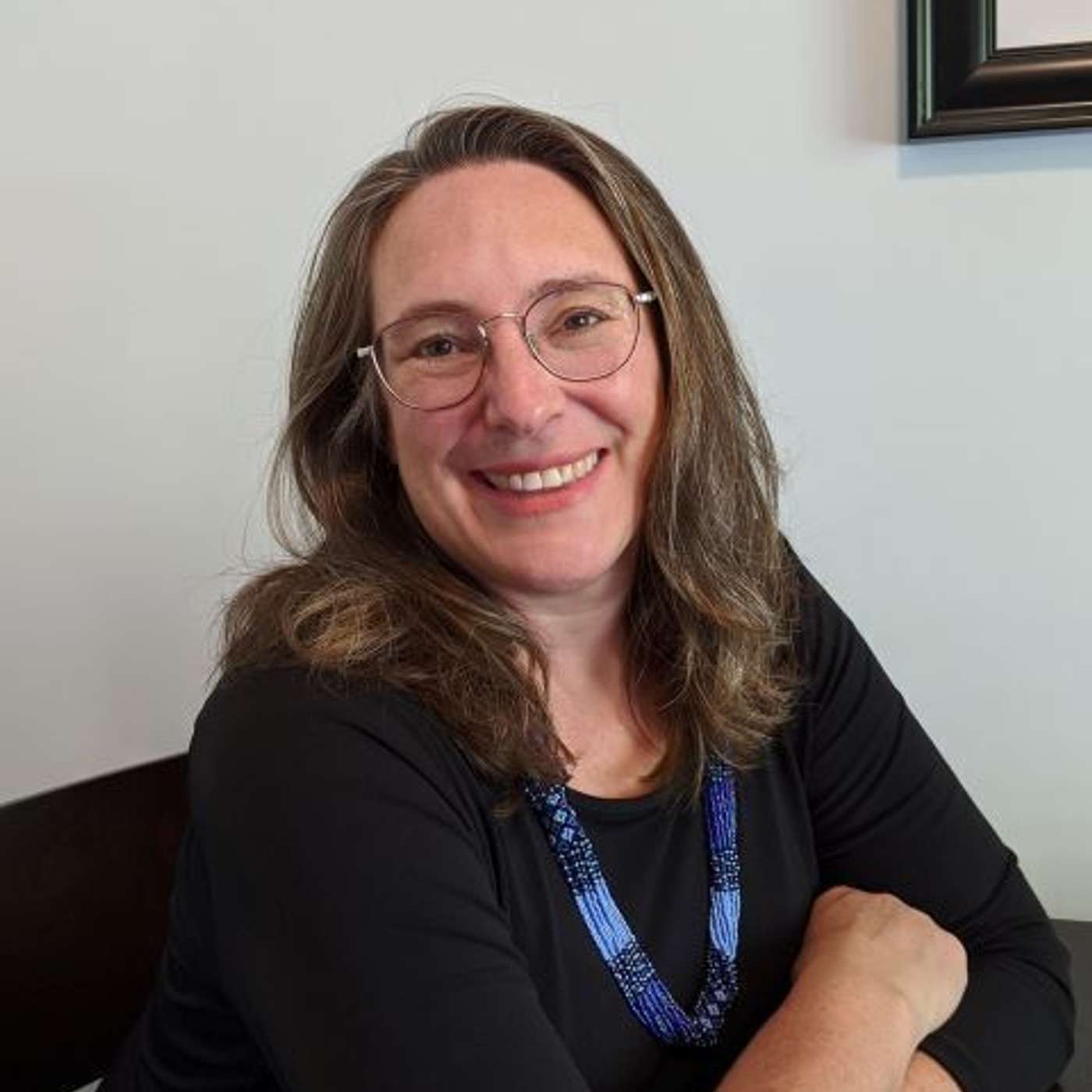
Our podcast guest today is Wendy Adair, a professor of industrial organizational psychology and director of the culture of work lab at the University of Waterloo, Ontario, Canada.
Wendy is a co-principal investigator of Indigenous Workways, a collaborative project among faculty and Indigenous student centers in Ontario
to develop a sustainable solution to underemployment among Ontario's Indigenous workforce by empowering Indigenous youth with career mentors and opportunities
and Ontario employers with relational, respectful, reciprocal and relevant workplace communication and climate practices.
Her other research examines the impact of culture on communication, for example, what is said, what is not said
and interdependent work outcomes such as communication effectiveness, conflict resolution, trust and team performance.
Her work appears in outlets including the Journal of Applied Psychology, Negotiation and Conflict Management Research, Journal of Prosecultural Psychology and Academy of Management Discoveries.
Wendy has served as associate editor of Negotiation and Conflict Management Research and the president of the International Association for Conflict Management.
Today's episode is on Indigenous Workways, a collaborative research effort among scholars and Indigenous education centers across four
are recognized Southwest Ontario Institutions, the University of Waterloo, the University of Windsor, Wilfrid Laurier University and Cronistoga College.
Their goal is to develop a sustainable solution to underemployment among Ontario's Indigenous workforce by empowering Indigenous youth with career mentors and opportunities
and Ontario's employers with relational, respectful, reciprocal and relevant workplace communication and climate practices where Indigenous world views can flourish.
We hope you enjoy this episode.
Hi Wendy, welcome to the podcast. I've been looking forward to this topic and you as a guest since we began our podcast. So I'm so glad you could join us today.
Hi Michael, thanks so much for hosting me. I'm excited to be here and to share with your listeners the conflict management work we're doing at Indigenous Workways.
Well, it seems like we should begin with a land acknowledgement for our listeners. Can you tell us a little bit about what a land acknowledgement is and how important it is. Sorry.
Okay. So, yeah, a land acknowledgement here in Canada, a land acknowledgement is since the Truth and Reconciliation Commission reports came out in 2015, land acknowledgements have become very commonplace in Canada.
And a land acknowledgement is a way for descendants of European settlers who displaced Indigenous peoples from these lands to recognize that these acts took place.
So often these acts were violent or involved treaties that were not upheld. The downstream effects of this displacement and reservation systems and residential school systems persist in the lived experiences of Indigenous communities and urban Indigenous populations today.
So I will go ahead and do start with a land acknowledgement and then maybe you'll want to do one. Okay. So I would like to acknowledge that I live and work on the traditional lands of the Anishinaabe, Haudenosaunee and neutral peoples.
This land is situated on the Haldeman track. The Haldeman track is 950,000 acres of land on either side of the Grand River in southwest Ontario.
And this is land that was granted to the Six Nations in a 1784 treaty.
So the Six Nations include the Mohawk, Seneca, Oneida, Cayuga, Anandaga and Tuscarora nations.
And today the Six Nations, which is Canada's largest reservation, resides on just 48,000 acres of land.
And so for more information, I encourage people to learn about the history of Six Nations people, land and cultures, and you can do that by just going to SixNations.ca on the internet.
Thank you. Colorado State University, and that's where I'm at here in Fort Collins, acknowledges with respect the land we are on today is the traditional and ancestral homelands of the Arapaho, Cheyenne and youth nations and peoples.
This was also a site of trade, gathering and healing for numerous other native tribes. We recognize the indigenous peoples as original stewards of this land and all the relatives within it.
As these words of acknowledgement are spoken and heard, the ties that the ties nations have to their traditional homelands are renewed and reaffirmed.
CSU, Colorado State University, is founded as a land grant institution, and we accept that our mission must encompass access to education and inclusion.
And significantly, that our founding came at a dire cost to Native Americans and peoples whose land this university was built upon.
This acknowledgement is the education and inclusion we must practice in recognizing our institutional history, responsibility and commitment.
Very nice.
All right, thank you. Okay, so first off, can you tell our listeners how you first got started in this area of research, a bit about your background and the origins of indigenous workways, and about some of the work you and your colleagues have been doing over the last several years?
Yeah, absolutely. And I don't know, I guess I'll go back to my roots that led to me being here. And if I talk too much, you can just edit it out later.
I studied cross-cultural negotiation at Northwestern University, and I worked at Cornell's Business School before moving to Canada and a psychology department in 2006.
So I identify myself as a cross-cultural organizational psychologist, and my research focuses on communication processes in diverse workplaces.
So I had been researching negotiation and conflict management processes within and between national cultures around the world for about 15 years before I had a graduate student here in Canada.
She was a white European settler student from Val d'Or that is a Canadian mining town in northern Quebec.
The town is located on the territory of the Cree, Algonquin, and other indigenous communities as well.
And so she really grew up in an environment where she was living with and near many indigenous peoples and was involved in the Indigenous Friendship Centre in her local community.
And so she came to my lab and said that she wanted to study the culture of indigenous peoples in Canada.
And so, embarrassingly, my response was, "Who?" And at that time, I did not know what she meant.
So like many descendants of white European settlers, I knew nothing about indigenous people currently living in the US and Canada.
So thank you, Amy Racine, for introducing me to the history and the lived experiences of some of the many indigenous peoples in Canada.
And so just as a bit of background, there are more than 630 First Nations communities in Canada, and this does not include Métis and Inuit peoples.
In the US, there are 574 recognized Native American tribes.
And so when I use the term "indigenous," I'm speaking of the original inhabitants of North America in my research.
So there are many distinct peoples and cultures and nations among these indigenous peoples.
But in general, these groups share a set of worldviews that are more collectivist, relational, and high context than the white Western European cultures that have defined and dominated our workplace.
So Amy's research looked at how indigenous employees in Canada experience role conflict and identity conflict and how it impacts emotional exhaustion at work.
And so it was through Amy that I got connected with a researcher, Catherine Qantas at University of Windsor, and her graduate student who was looking at indigenous leadership models.
And so from there, we began thinking about how our respective backgrounds in cross-cultural workplace communication and organizational culture could be applied to the context of Native American and indigenous peoples at work.
So we spent several years consulting with indigenous student centers in Southwest Ontario to understand some of the challenges for indigenous post-secondary students and graduates as they transition to the workplace and also as they move through their career paths.
We spent time both here in Ontario and also in British Columbia sitting in Sharing Circle with indigenous employees as well as managers from indigenous and non-indigenous organizations.
So we listened to people sharing stories about their experiences at work, what was difficult, what was good, what was challenging for them.
We listened a lot, we read a lot, and we eventually focused our research on developing solutions for underemployment among Southwest Ontario's indigenous workforce.
And so we are tackling that problem by uncovering ways from an indigenous perspective and the experiences of indigenous employees, uncovering ways to empower indigenous youth as they are moving through these, you know, school to work transitions and through their careers.
So we're looking at career mentors, we are looking at opportunities for networking among indigenous youth, and then we are looking to work with Ontario's employers, so organized mainstream Canadian organizations,
to help teach them about relational, respectful, reciprocal, and relevant workplace communication and climate practices that indigenous employees have told us are things that they would welcome and would help to build an environment of trust.
So trust in co-workers, trust in managers, trust in the organization itself.
Yeah, so this project was funded by the Ontario Research Fund and the Social Science and Human Humanities Research Council.
We have 15, over 15 sponsors and supporters, and we have local and national and Canadian and indigenous representation from education, employment, and financial sectors.
It's probably way more information than you wanted.
The research stream I lead is focused on interpersonal trust.
So we have three streams, interpersonal trust, organizational trust, and networks of trust.
And so I'm leading interpersonal trust, and so we are focusing on building strong, trusting interpersonal relationships at work.
So relationships to the self, so self identity, relationships with co-workers, relationships with the land and the place.
And so our goal is to offer organizational tools for holistic conflict management and relational conversations.
And that's what I'm here to talk about.
Thank you so much.
I understand relationality is an essential concept when working with indigenous communities, including what's known as the four Rs, respect, relevance, reciprocity, and responsibility.
From the work of Kirkness and Barnhart in 2001.
And so I guess it's really the five Rs.
So what do the five Rs mean?
Good question.
So I'll talk about them separately because they really came from separate authors.
So as you noted, Kirkness and Barnhart were first to talk about these four Rs.
This was in a paper in the Journal of American Indian Education.
And they proposed these four Rs as pillars for building higher education programs that respect indigenous students as they are.
So you don't have to, indigenous students don't have to check their indigeneity at the door when they enter school.
Education programs that are relevant for indigenous students.
So that means teaching to the interests of indigenous students and incorporating the knowledge of indigenous peoples in the educational curriculum.
Programs based in reciprocal relationships.
So this means really involving a given take.
So recognizing there's less of a hierarchy, recognizing that all parties can listen and learn from one another.
No party really takes from the other or dominates the other.
And then programs that are characterized by responsibility.
So sharing and taking responsibility for one's words, learning and choices both from the students and the teachers.
And so these principles have been shared by other indigenous researchers and authors as a framework.
For example, as a framework for learning to work together on the environment or bringing traditional indigenous knowledge into the hard sciences or law.
So that's the four Rs.
Relationality is a concept I learned about from Sean Wilson's 2008 book that's called Research is Ceremony.
So Sean Wilson introduces relationality as an indigenous ontology.
It's one that says we are all related to each other.
But here the we refers not only to humans, but it refers to what indigenous people say for legged creatures, birds, fish, all inhabitants of the natural environment.
And this includes trees and plants and water and also the spiritual world.
So indigenous worldviews recognize that these relations rely on and support one another.
And so it is through these relationships and this systems of reciprocity and people being responsible for one another that we're able to maintain and have well being in a shared ecosystem.
So relationality is key to understanding indigenous perspectives on community and the environment.
But all of these Rs, the four Rs and relationality are important concepts for any researcher to understand if they want to engage with indigenous populations.
So at indigenous work ways, we are very mindful of the four Rs in our work with community partners and when we aren't they remind us.
Conversations with indigenous employees are helping us understand how these principles could be introduced and nurtured in mainstream Canadian and US workplaces.
And I guess at this point I just also want to say because I don't know if they're just claimers or what they are, but the first one was previously when I talked about the many different cultures and nations and peoples represented under the umbrella term indigenous.
So another thing I like to just put out there is that, you know, what I'm sharing with you today, what I have the privilege of sharing with you today is what I've learned from my indigenous colleagues, student authors and community members.
So these concepts, this knowledge has been shared with me with good intentions to help me learn about indigenous worldviews and support the research.
As I said, the goal of which is to help mainstream Western organizations make space that is welcoming and supportive for indigenous employees.
So when I apply these concepts like the four Rs and relationality to Western scientific models of conflict management, I do so not to claim any sort of ownership or authorship.
Publications are really secondary in this work because I can't speak for indigenous employees.
I can tell you what I learned from them and reluctant to publish anything without an indigenous co-author.
Indigenous principles of data ownership and management specify that any information shared with me by a research participant belongs to that participant and/or their community.
So I can't claim ownership or intellectual property or sign it off to a journal publisher.
And so it's very important for us to have indigenous guidance throughout the research process to make sure that we are doing things in a good way.
Wow, give us some ideas.
What is holistic high context communication?
And what does this have to do with workplace conflict?
Okay, yeah, great. Let's get into talking more about conflict.
So the construct of low high context was introduced by anthropologist Ed Hall.
And high context communication is communication that uses implicit cues surrounding a verbal message to convey information.
So importantly, these cues can be in the party's relationship, physical space, nonverbal cues, and even temporal environments.
And so low context communicators are very direct.
They say what they mean and mean what they say.
But high context communicators rely on the listener or the message receiver to infer meaning from the cues in the context surrounding the words.
It's high context and low context. It's not just indirectness, directness.
And as an example, Hall wrote about Mexico and called it a high context culture.
And if you have ever been to Mexico or have any colleagues from Mexico, and I know you grew up in the Southwest of the U.S.
So you probably have some experience here.
You will know that the culture and the communication style is not indirect.
It is very direct and expressive.
So an expressive communication style can be highly relational and direct.
It's one in which shared space is used to communicate.
In East Asian cultures like Japan, personal space and silence, so sort of empty space carries meaning.
And there we see more indirectness, but they're both high context communication cultures.
So holistic communication captures, I think, both direct and indirect high context communication.
Because it's communication that occurs within a relational spatial and temporal context that informs what is being said and what is not being said.
So holistic communicators attend to the big picture beyond just the words or just the task at hand.
So my work, even with just national cultures and others, many others have researched this, showing that differences in low and high context communication norms are the source of many workplace conflicts.
And I think this is particularly relevant for relationship conflict, because we tend to make attributions about different communication styles.
So for example, a high context communicator who spends meetings engaged in listening and processing information may be perceived as disinterested or unengaged.
A high context communicator who shares communication space through dramatic expression and interruption and even physical engagement, patting someone on the shoulder, they could be labeled as overbearing or aggressive.
And a low context communicator who is direct, straightforward and task focused may be perceived as controlling or impersonal.
So these differences also impact how conflict is resolved.
Someone who wants to confront conflict, express their frustration and quickly problem solve is going to seem aggressive and overbearing to a high context communicator who may want to approach the issue indirectly or diplomatically to save face.
Or they may want to work on repairing the relationship before tackling the task.
What we learned today from our podcast guest is about relational conversations and holistic conflict management for Indigenous employees in Canada.
Once more, I'm Michael Gross, and on behalf of all of us, we thank our guest.
As our series name states, I'm glad I know that now. On behalf of our NAC team, Deborah Sye, Michael Gross, Jennifer Parlavas, Laura Reese and Ming Hong Sye, thank you for listening.
For more information about this and every episode, you can check out the podcast notes on the NAC website at www.conflictandnegotiationteam.com.
So that's one word, conflictandnegotiationteam.com.
There you can find additional sources and links to materials cited in each episode.
Please tell a friend about our podcast, and we hope you'll join us next time for another fascinating discussion about a topic you'll be glad to know about.
Podcast Summary
Key Points:
Introduction to the negotiation and conflict management podcast series by the NAPC team.
Overview of Wendy Adair's research on Indigenous Workways and its goals.
Explanation of land acknowledgments in Canada and the importance of recognizing Indigenous peoples.
Discussion on the four Rs (respect, relevance, reciprocity, responsibility) and relationality in working with Indigenous communities.
Explanation of high context communication and its relevance to workplace conflict resolution.
Summary:
The transcription introduces a negotiation and conflict management podcast series by the NAPC team, highlighting Wendy Adair's research on Indigenous Workways focusing on empowering Indigenous youth and enhancing workplace communication practices. It discusses the significance of land acknowledgments in Canada and delves into the concepts of the four Rs and relationality in working with Indigenous communities. Additionally, it explains high context communication and its role in workplace conflict resolution, emphasizing the importance of understanding different communication styles to manage conflicts effectively.
The podcast aims to educate listeners on diverse topics related to negotiation, conflict management, and Indigenous perspectives, encouraging engagement with the presented concepts and discussions.
FAQs
A land acknowledgement is a way to recognize the displacement and mistreatment of Indigenous peoples by European settlers. It is important as it acknowledges historical injustices and the ongoing effects on Indigenous communities.
The four Rs (respect, relevance, reciprocity, responsibility) are pillars for creating educational programs that honor Indigenous students. Relationality emphasizes interconnectedness with all beings in the environment, crucial for understanding Indigenous perspectives.
High context communication relies on implicit cues to convey meaning, while low context communication is more direct. Differences in communication styles often lead to conflicts in the workplace, particularly in relationship conflicts.
Wendy Adair's research journey began when a student introduced her to the culture of Indigenous peoples in Canada. This led her to collaborate with researchers focusing on Indigenous workways, addressing challenges faced by Indigenous employees.
The goal of the Indigenous Workways project is to empower Indigenous youth with career mentors and opportunities, while also educating Ontario employers on respectful workplace communication practices. The aim is to address underemployment among Ontario's Indigenous workforce.
Holistic high context communication considers the relational, spatial, and temporal context of a message. It involves understanding not only what is said, but also the surrounding cues and context to convey meaning effectively.
Chat with AI
Loading...
Pro features
Go deeper with this episode
Unlock creator-grade tools that turn any transcript into show notes and subtitle files.
 PodcastTranscript AI