Padres Owner Kwanza Jones Reveals the “Boost Bus” Bringing the Apollo Across America
29m 47s
The podcast features a deep conversation about the Apollo Theater’s enduring cultural significance and the launch of the "Boost Bus" initiative, a non-profit, community-driven vehicle designed to carry the Apollo’s legacy beyond Harlem. The bus, which tours across the U.S., serves as both an educational tool and a living exhibition, introducing audiences—especially college students and younger generations—to the Apollo’s history, mission, and role in American culture. While the Apollo’s main stage is undergoing major renovations, the bus ensures visibility and continuity, offering interactive experiences like performances, storytelling, and live recordings that allow participants to submit their own stories for potential performance at amateur night. The initiative is rooted in a philosophy of shared growth and empowerment, where individuals are seen not just as consumers but as contributors to cultural evolution. The host and team emphasize that the Apollo is not just a stage, but a space where identity, voice, and creativity are formed. The effort blends philanthropy and mission-driven investment, with contributors encouraged to "invest" in the Apollo not through charity, but through active engagement and belief in cultural sustainability. The tour includes stops in diverse locations like Detroit and Los Angeles, with targeted programming for colleges and schools to foster awareness. The central message is that every person carries an "Apollo story"—a legacy of resilience, creativity, and cultural contribution—and the bus serves as a vehicle to inspire that legacy, proving that culture is in motion, not static. The initiative exemplifies a double-bottom-line approach: advancing cultural awareness while creating real opportunities for community participation, innovation, and self-empowerment. The word of the day, "Van Gartis," highlights the spirit of innovation and pushing boundaries in culture and empowerment.
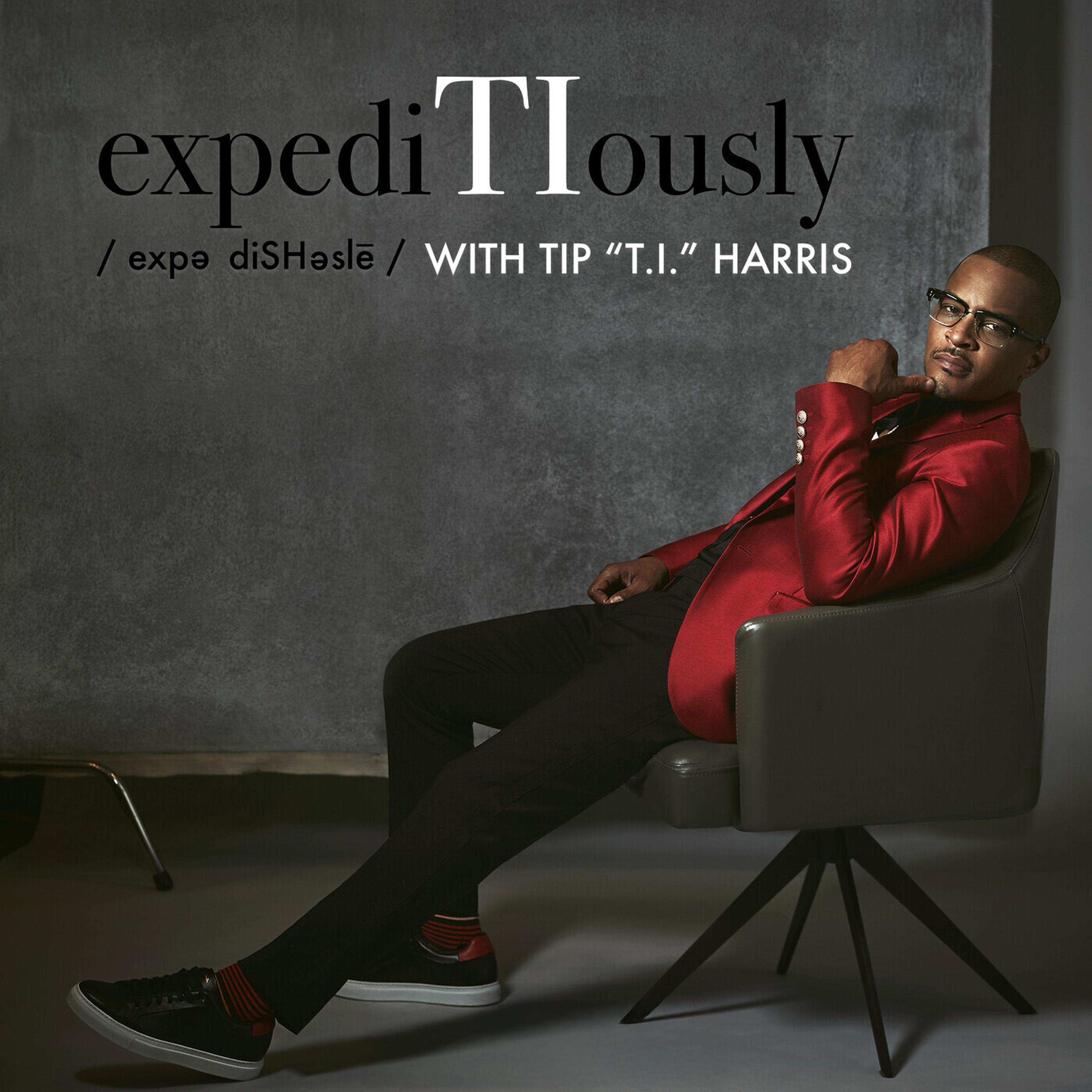
This is expeditiously, I am till T.I.A. Uh-huh, now the following experience is not a test. The conversations and stories expressed on this podcast are meant to be an expression of purpose and truth. This show, properly entitled expeditiously, is a free exchange of ideas and opinions. No judgment, no preconceived beliefs, no fear. You're encouraged to share your thoughts and ask any question as long as it's done with respect. Ask through true love and respect for others that we would change the world and speak truth to power, once you're at a time. Now without further ado, this is Expeditiously, I'm till T.I.A.A. What about, like, how do you say I want to get into, I want to buy the Apollo? Uh-oh, take the Apollo and take it on the road and have a bus. How do you go from there? How do you say I want to be, uh, I want to own an MLB team. Uh-oh, okay. So I'm going to talk about twofold. One from an industry perspective and one from a people perspective. Apollo's not for sale. We all know that it's a non-profit. It used to be for profit. People didn't know that banalism. When did it switch? Uh, in the '90s. In the '90s, it turned into a non-profit. So you didn't buy the Apollo? You just bought the bus. But didn't even buy the bus, just came up with a concept and idea for me. The Culture Emotion, which is what the project and the platform is with the Apollo. Okay, Culture Emotion. Culture Emotion. Please tell us about this. I'll tell you about it because it's connected to the Apollo because I'm on the board of the Apollo. Got it. And when I was at Princeton, I performed at the Apollo. Okay. And what I saw that the Apollo did, even for me, is, and this takes it back to you asking, "How did you get to Princeton?" And I mean, how did you decide that this place? I'm at Princeton. You performed the Apollo multiple times so you know the Apollo. You have friends who perform the Apollo. They know the Apollo. Whether at, okay, right, exactly. Keep going. Yeah. Exactly. And some, whether you were top billing there or whether you came Amherstra and I, different people, I remember Fat Joe and I were at the Apollo presenting an award to Babyface. And we were both talking and saying like, "We want Amherstra night." That was our Apollo, starting our Apollo story. So we were like, "Oh, that's all right." You may get booed, but it's a proof of ground. Here you go. So I bring it up because coming from a place like Princeton, performing at the Apollo, my dad had a law office and an employment agency in Harlem. So we would have to go work at the law office and work at the employment agency on the weekends and during the summer. So I would walk by the Apollo all the time and he'd tell me all the stories. My mother would tell us all of the different stories we'd go. By the time I went and said, "Okay, well, I'm going to go perform at the Apollo." I'm at Princeton. It's only 45 minutes away. Yeah, well, I'm not going to do that. So that's what I did. I also knew for me Apollo was such a beacon and such a cultural institution that it was not just of Harlem, or just for black people, that it was for all. Apollo is an American treasure. Princeton, as you know, is not just black people that are Princeton far from it. So I said, "Oh, wouldn't it be great?" And here's the bus tie-in. If we have some friends from Princeton get exposure to the Apollo because they've never had an experience like that before where you can go to a place and if you don't like it, you boo. And you are part of that give and take. Part of that audience, you are part of creating the outcome that you want. So had a bus of, I think it was 40 students or so, that came from Princeton, going to the Apollo, eyes wide open because of a lot of these photos. Still a performance. Well, it was amateur night. So it was only 90 something. Yeah, exactly. So in this instance, they're there and they're like, "Oh my gosh, the takeaway was that when we got back to Princeton and you know, the Apollo sits more than 40 people." So it wasn't like I brought people and you're like, "You're going to make me win." So they didn't even know what to do. You got to listen, you're supposed to boo if you don't like it. Clap if you do. But I bring it up because the takeaway was that there was a different understanding that folks had. And it was an exposure to different cultures and why and how that ties into a story of something like the bus for the Apollo, the bus business opportunities is its exposure and its people. The Apollo, in this instance, by seeing how it could connect and open people up to new ideas that many years later, when I was on the board of the Apollo, I think I'm the first person on the board of the Apollo to have, at least that's what they tell me, to have formed and won at amateur night. Did you pursue a seat on the board? No, I was asked. I was asked. And I know Pharrell was on the board of the Apollo. I didn't know that. Yeah, his term is over, but yeah, he was also. How long is a term? It's a four-year term. Are you in the beginning of your term? I know. I'm near the end. And you know, oftentimes they will ask you to extend and renew. So I'm near, I'm in my fourth year. So what happened is the Apollo was going dark. First time, meaning the main stage, which you know very well, it's a need of renovations. So it was closing. So if it's closing, then what happens? Right. How do people get to still be connected? And tell us why, why was it closed? Well, let's think about, I don't know. Maybe it's a favorite car you have, or a favorite pair of shoes, or something. Just sometimes things get a little tired. So you got to renovate? You got to renovate. It needed more back, it needed a technical back, like the whole back line and structure, just even of technology and audio and video and camera. It's not closing, it's being updated. Right, that's the renovation. But the main stage means you can't use it because they're doing a complete renovation. Meaning in scaffolding, everything around the stage, there's some pictures online that folks want to see it. Yeah, yeah. Marquis being redone, that's outside, but everything, it is unusable. Okay. You can't do anything inside on that main stage, which means where did they run amateur night? On the main stage, where do they have the performances? On the main stage, if you can't have the main stage there, now the Apollo has a few two other smaller stages in a building that's right next door. But if you have, excuse me, one of them's like a 99-seat theater. And if one of the ways you make money at the Apollo and revenue is by having shows there, whether artists are performing there or you're leasing out the venue to folks, then your revenue stream is gone unless it's donations that you're having. And that's what led you to the bus. And that's what led me to the bus because I said just because the main stage is closed, and it's going to be almost a year that that's done, we can't have it where folks are like, "Okay, Apollo is gone, gone, like completely gone." Yeah. Because like you just said, "No, it's not closed, it's just being renovated." Right. But some people will see it and see that it's dark and be like, "The Apollo is gone." So tell me, what is the function and intention for this bus? So the function for culture and motion is the Apollo being such a cultural mecca, if you will. Okay. It's for folks to understand, and especially maybe even like your kids too. I mean, I need to understand. You're teaching me? But I'm telling you the thing is, you know the Apollo because you performed there. Your wife knows the Apollo because she and her group performed there. So your kids, because of that, know the Apollo. Now imagine if you haven't seen Showtime at the Apollo. Okay. Which is how a lot of folks were turned on to the Apollo because they saw it on TV. It's not on TV anymore. That was before American Idol, that was before AGT America's Got Talent. Before all of these things, the Apollo was doing Showtime well before. And I'd like to say, it's like always imitated, never duplicated. Apollo is where culture is created. That's what I'm just saying. And the reason I say that is because it's not just a statement and a testament to the Apollo. It's a statement and a testament to us, to our background, to our culture, and to what we bring. It's the 250th anniversary of the United States or birthday of the United States of America. At a time when so many things are saying that people that are looking at us. This established, this established, this collection of states. There you go. 250 years of that. Correct. But it existed before that. Correct. And something else. Exactly. And it's something else, but see the something else that people don't even think about because there's this narrative that it is only when these folks say that it's important. So I'm trying to make sure that again that folks understand during this 250th as folks more commonly know about it. It's like culture and America as we know it is not just the voices of the people who sign the Declaration of Independence or who sign the Constitution. There are a lot of people who make up this country. And the Apollo is an example of that. So the reason for taking it on the road, especially even now is one main stage was closed. So there was an opportunity there. So how do you evaluate from a business lens? What are opportunities? Where are their opportunities when you are looking? So I'm going to tie a few things together. Okay. I'm going to tie the culture of motion together.
I philosophy and an approach together and I'm going to tie people together with this too is you look for opportunities in places Where oftentimes other people do not right and the way you can look for those opportunities is by being open to it And by being a person of color and a black person and my husband is Puerto Rican We're just like we're used to being underestimated. We're used to being the people that folks are like oh, oh, yeah Uh-huh, they're there, but they're not really there. That's an opportunity. You guys were at Princeton at the same time? Uh, yeah. Okay. Yeah, uh-huh. And so it's like we're which by the way then for folks who are like oh, it's so funny If you were like oh, yes, you know, she married a billionaire. I'm like excuse me. Huh? What do you mean? Uh-huh, I'm like excuse me. What I mean like as opposed to what? As opposed to I mean love is love But it's better when there's money. And now I mean you build you build you build together. Okay. You've been married What over 15 years? I've been married 16 16 years. Okay. So it's a partnership. You build. That right. You build And I was broken in my wife. She had my hand. Well, look see so you build not enough to talk about it. All right, look at that I was just saying the whole concept again of building and people and investing and seeing opportunities The opportunity for the Apollo to take it on the road was an opportunity to expose people to a culture that Also is our culture that shows how much we are able to contribute and make the fabric of America what it is and this is the bus and this is the bus. So I want to see the bus. I want I want to show I want to show the viewers the bus. Yes. I need to know though. Is this is this like a like feeling Traffic effort where it's like a museum or is this for profit because the main stage is closed and they Can't see it. Okay, so I'm gonna tell you about it. It is for my husband's and eyes lends a philanthropic effort Because what we're doing is underwriting the cost of the bus. We fabricated the bus. We had a built a Company and a team and we're not making any money. We're not taking any money and not making any money. We're putting lots of money into this so that there is visibility and awareness for the Apollo and That you're able to have infrastructure and you'll see it as we walk through the tour the different Zones of the bus. Okay, one of the things that we have is our mission which is the Kwanza Jones and Jose Feliciano initiative is to boost humans and humanity and I'd like to say our one of our goals is To boost a billion lives. So boosting whether it's economic opportunities whether it's through philanthropy or Whether it's through investments and I talk about investing in for profit and also investing and not for profit. So the investment in the Apollo we're not making money on it but it's a I don't like calling it Don't donations and I don't like calling it charity because if you do that then folks don't have any incentive To want to contribute to the success of it. We need folks to also have some skin in the game in this instance So in this instance Where success will also be is for folks to understand look donated at the Apollo you can go to boost bus.com There's a link in there that says donate it takes you to the Apollo website Where you if you want to donate you can donate because the Apollo was here for almost a hundred years. Can you invest in the Apollo? Well, I like to call it investing. Okay. I like to call it investing but it's a not-for-profit organization. So you can invest in a not-for-profit organization of the Apollo and and that's what it is. So we're not making money. It's more philanthropic for us to be able to have a literal vehicle That can help continue to sustain culture now for my final question before we show the bus Yeah, how do you balance your mission driven work with your your for-profit? Oh I'll tell you Because I think of everything as an investment Whether it is mission driven philanthropic or whether it is To increase the balance sheet and have more zeros And it's really always about boosting and building and creating opportunities And finding things and seeing things that other people don't see And what happens even uh, uh, got the mic in my way I was gonna say in terms of this sort of murder It's out of damage you got on. It's okay This is all right, it's all right. It's all right. It's all right. The mic can work I'm just saying it It's the right way to protect them. The mic gonna be out of it Oh my goodness. Um, what I do is uh, and I'll say and I do this quite often is when we are evaluating Who we want to invest in and who not just individual people but also institutions too We're looking at the people and what they are aligned with Because again At the end of the day if you're not connected and committed to some of the things that we're connected and committed with And two then our money may be better spent and better invested elsewhere So that's how it's combined is really looking at who do we want to and some people call it strategically partner with Who do you want to work with? Okay. How do you want to make change and and what do you want that to be and how do you have I call a double bottom line. I also call it an impact multiplier How do you multiply the impact that you can make you multiply the impact that you can make because again At times if you're given time talent treasure your treasure can be money Your your treasure can be your talents too But if you are able in whatever way and wherever seat you are sitting in bring that into the table And then offer that and that's going to help boost and that's going to help build in an organization It means if you have the right people there in that organization taking it back to the people Then they're going to be the ones that are going to help grow that particular business And then that's going to in turn help you When you're investing and hopefully help your mission too and for me the mission is that It's just always got to be more than just about the money. It's got to be about that double bottom line that double impact boosting and Knowing that no one succeeds alone and you can't be just for you. You got to be for others. Okay. Well, thank you But listen, that was a phenomenal. That was a workshop. And that's it. I think I thought it was a workshop for me too So thank you. I love to learn especially about you know about building. Oh Growing yeah, you know, yeah, well And there are many more things Because there are one day we'll have to talk about the technical things Well, why not? Well, we got enough time. We don't have time. We'll do it some other time because there are structures Okay, that as you know, whether it's operating agreements, whether it's LLCs, whether it's entities, whether it's just all the things that people don't know So I would say one of the biggest takeaways before we walk through this bus too is Make sure folks understand Open your mind to learning and knowing that you do not know everything so round yourself with folks who you can learn from I'm sitting here learning from you today You're sitting here learning from me today. We're sitting here learning from each other And that's how we continue to grow and build and then there are other things too that can come from that So this is just the first page all right now Well, let's see. Well, what do we start? What do we start this to? You We're bringing part of this here so people understand you are more than just you You've got a whole legacy like the roots of a tree So what we did is just like backstage we have here you can sign in and it's the wall of signatures All of the renovation the stage is being this is still going to be there. They were carefully protecting it Well, we'll be coming back into like the discovery and the history and the legacy And it shows you and tells you about Harlem and the Apollo and all the things that have happened throughout the year Well, that was one look. I'll have this one do listen because then they have the headphones you can go and this is sounds of the Apollo How much of how much of your historic nature is being Is being kept in how much is no going to be written? I would say the majority of it is being kept That's why it's costing so much and that's why it's taking so long because the goal is to try to preserve the Apollo But then still make all of the back line all of the audio gear the video gear New and next level and you know and then you turn around and it's more than a stage These are literally seats from the Apollo So what happens is with the Apollo being more than a stage and the Apollo is always man. I just can't bring a little more energy But this is why you look at this this video our team did 90 years and 90 seconds Because the Apollo has been around for 90 years. So this gives you For all of these decades a little bit of what the Apollo has been And yes, so you can see it's not just music. It's not just arts. It's not just politics. It's not just activism It's like really bringing together just a quick question. Yeah, who started? Oh, so it's an interesting story not a black person by the way Your Apollo theater used to be this Burlesque type of theater way way back in the day. I imagine you see Yeah You say And what happened is at one point there was a family that took over the Apollo and started booking Black artists there. I think now that there wasn't a place where you could perform You know people who are going about the
Shipland Circuit. That was the only place where you could go. So then folks ended up then seeing them. Wow, here are these artists and these performers and it was really just really really great. The Shiplands I think was their name. So again it's about being more than a stage but a place and a space where you can learn how to use your voice. When you come in here on the bus it's about taking it from heritage and lineage coming into the supercharged energy but it's about the philosophy meaning I'm all about boost. How do you boost your community? How do you boost your voice? Boost your life. We were talking about some of that with our premier ship. We're talking about that with opportunities. How do you boost your creativity? How do you boost your world? Like there's so many different things and you're seeing the Apollo can be a vehicle for that but also in partnership with folks. If we understand you don't succeed alone you bring that energy and that's why I say what a shared growth like when you are going and you're sharing information knowledge opportunities business partnerships things can grow. So that is where people go here. Let me see if we're out of this. You press the button and you get a little boost. Okay. You got a little motivational word in there and you got a Apollo sticker and you've got a little culture emotion pen. Okay. You see that's it so and the whole point is there are enough things in here for people to be able to take a little bit of the Apollo with them because I like to say and a little supercharged energy. I think almost everybody has an Apollo story. The question is where does yours start? Some people there's it's only going to start when they get on the bus because they've never been. They've never heard about it. They've never seen it. If we do not remember that there took a lot of effort and energy of a lot of people to enable us to have what we have today and if we all don't support it in what happens and it's not a given letter will be around. And this is a part I love infinite possibilities. It just keeps going and going and going. So when you are thinking about literally seeing yourself and infinite possibilities infinite universe infinite opportunities. Okay. You have done so many things where so many folks would think that oh you should only be in one lane. So why are you in more than one lane? How are you able to have those infinite possibilities? Why for you is that the case? Ambition. There you go. Believe. You better for it. I'll see. No I mean I'm getting chills because there's what I'm talking about. Ambition, belief, effort, all those things are things that you see at you and you take action. You know and how do you decide what seed is to go to? I'll see I'm wanting this to be an appreciation tool. I want it to go on the road to any place where there were a follow along. It's a thank you. It's a thank you for being on. I'm getting a little emotional about it. Detroit has to be. Well Detroit is on there. Yes we are heading up there but when I head into the winter I'm not going there. It's going to be too cold. But it is it's going and finding those places and spaces where we've seen a follow along to our active in that community like you who are about doing and being more than just what the stage is. What's one of the first words you see? How? Oh yes. No but what I'm telling you is this. Literally what I have and I designed this space to be the first thing you see is the thing that resonates with you because some people see this as he empowered. Some people see power. Some people see bills. Some people see loans. Some people see boost. Your core is power. You understand that you are powerful. That you are super charged. That you are infinite. That you can create and make opportunities not just for you but for others. It's literally how you live through. We've done some college takeovers in different places. We've been hamped and we did it. Norfolk State. We did it. We were on the yard in some of the college. What stuff is this? This I got to count. It's probably 35 there because we go in different regions. We started. We did the virtual kickoff in Harlem. And then my point was how can we show that the Apollo is not just in New York City and in Harlem? Let's go as far away as we can to the west coast I went to LA and started the road show there. What was the most engagement when I say the most enlightenment? The people that were most unaware before this bus. You know what? For most of them? The colleges. Which is kind of shocking and kind of sad because you think if people think go college. You understand. You have history. You have legacy. You have people understanding. But the college people are familiar with it. There you go. On some of the stops we have the Apollo Puns and Jones Cultural T-shirts that we give as a giveaway and as a gift to folks. And then we have these different drumsticks. There was a student and one of the stops and it's like Apollo. Well I'm from New York. I live in Brooklyn. He had never been to the Apollo. But he had heard of it. He had never been. But so then they see this bus and we're like hey come it's an opportunity for you to record for you to tell your story for you to whatever it is. We want that we tailor the activation based on where we're going and what we think resonates. We've had the little kids. We've gone into schools because the whole point is if you teach them when they're younger they're going to understand the history and it's going to hopefully connect with them and they'll remember it. But the colleges were the ones where most were like oh my gosh because what happens is when we go outside the bus we don't have it out here. We have a stage that we put out to it's literally a stage that is almost the length of the time bus. Yes. Okay so who's that? That's exactly. Now you're asking the right thing. So that's where we tweak it a little man because we gave everybody an opportunity because what we're doing is you can go in and on some where we're doing it live you do it on the stage others they can come in and they can record for it to be submitted and then they'll be able to go to New York once it reopens and be able to go perform at amateur night there. And that's when they'll get to see or maybe not see 10. When is it expected to be reopened? By the time the roadshow was rolling through with all the different towns and seeing these in the states right around the center. So we're trying to have it where the bus gets a back to Harlem, back to the Apollo right around Z. My legacy with it is if people can see that the Apollo is more than a stage. If people can understand that their voice has value but it becomes even more valuable when you use it. If you can understand that you can take the lessons from the Apollo whether you were considering yourself to be an artist or not and this culture and motion because it's the boost bus get on the bus for a boost that if you can quite literally understand that this is a vehicle that can help propel you into things that you have not ever even imagined that for me is power it's possibility that's being supercharged and that's that's what I would just for that to be a just a little bit of what it means to have culture that's in motion that's coming from a space in a place where so many others made it possible for us and I can just continue to keep planting right on to keep growing. Well thank you man. Thank you. Come on bring it in. Thank you for allowing us to experience this because I probably wouldn't have had an opportunity had it not been you know for this invitation I appreciate that and thank you for you know just just expanding upon so much of your journey for the for the for the viewers and listeners. Now here at Expeditionally we do something called word of the day is a word that is chosen to represent the guest or the conversation that has been here and today for you the word that's been selected. Uh oh I can't wait. Van Gartis. Van Gartis, a person who actively pushes new innovator or experimental ideas ahead of mainstream acceptance and I'm using it in a sentence just so you know though because I'm here to learn. Yeah just so people can try to use it. Quiles of Jones stands out as a Van Gartis using her music and entrepreneurship to challenge convention and push forward new models of empowerment. Thank you for all you do. Thank you again thank you thank you thank you and we will connect again once we get MLV approval on the Congress so we can talk sports culture entertainment. You know we've got so much more. Let's go. Let's just get it again. Okay thank you to Expeditionally. You feel me yeah what she said. That's it. This is Expeditionally I am too T.I.A.
Podcast Summary
Key Points:
The Apollo Theater is a cultural institution and nonprofit legacy, not for sale, with a history of serving as a vital space for Black artists and American cultural expression.
The "Boost Bus" initiative is a philanthropic, non-profit effort to maintain awareness and accessibility of the Apollo’s legacy, funded through investment and community participation rather than profit.
The project emphasizes cultural education, community engagement, and the idea that every person has an "Apollo story" rooted in heritage, voice, and empowerment—promoting a philosophy of "boosting" personal and collective potential.
Summary:
The podcast features a deep conversation about the Apollo Theater’s enduring cultural significance and the launch of the "Boost Bus" initiative, a non-profit, community-driven vehicle designed to carry the Apollo’s legacy beyond Harlem. , serves as both an educational tool and a living exhibition, introducing audiences—especially college students and younger generations—to the Apollo’s history, mission, and role in American culture. While the Apollo’s main stage is undergoing major renovations, the bus ensures visibility and continuity, offering interactive experiences like performances, storytelling, and live recordings that allow participants to submit their own stories for potential performance at amateur night.
The initiative is rooted in a philosophy of shared growth and empowerment, where individuals are seen not just as consumers but as contributors to cultural evolution. The host and team emphasize that the Apollo is not just a stage, but a space where identity, voice, and creativity are formed. The effort blends philanthropy and mission-driven investment, with contributors encouraged to "invest" in the Apollo not through charity, but through active engagement and belief in cultural sustainability.
The tour includes stops in diverse locations like Detroit and Los Angeles, with targeted programming for colleges and schools to foster awareness. The central message is that every person carries an "Apollo story"—a legacy of resilience, creativity, and cultural contribution—and the bus serves as a vehicle to inspire that legacy, proving that culture is in motion, not static. The initiative exemplifies a double-bottom-line approach: advancing cultural awareness while creating real opportunities for community participation, innovation, and self-empowerment.
The word of the day, "Van Gartis," highlights the spirit of innovation and pushing boundaries in culture and empowerment.
FAQs
No, the Apollo bus is a philanthropic effort. The creators are not making a profit; they are investing in the Apollo's mission to promote culture and awareness, with no financial gain from the bus operation.
The bus was created to maintain public awareness and connection to the Apollo Theater during its renovation. It serves as a mobile platform to share the cultural heritage and legacy of the Apollo, especially in communities that have never experienced it firsthand.
The mission is to 'boost humans and humanity' by promoting cultural education, economic opportunity, and community engagement. It aims to inspire individuals to grow, create, and contribute to the cultural fabric of America.
Yes, people can 'invest' in the Apollo through the initiative, though it is not for profit. Donations and contributions go toward funding the bus and its outreach, and supporters can access the Apollo website to contribute directly.
The bus visits diverse locations, including colleges, schools, and cities across the U.S., tailoring its activities to each audience. It includes live performances, recording opportunities, and educational content to foster community connection.
Recordings from participants are submitted and may later be featured at the Apollo’s amateur night when the main stage reopens, giving individuals a chance to perform and share their stories with the Apollo community.
Chat with AI
Loading...
Pro features
Go deeper with this episode
Unlock creator-grade tools that turn any transcript into show notes and subtitle files.
 PodcastTranscript AI