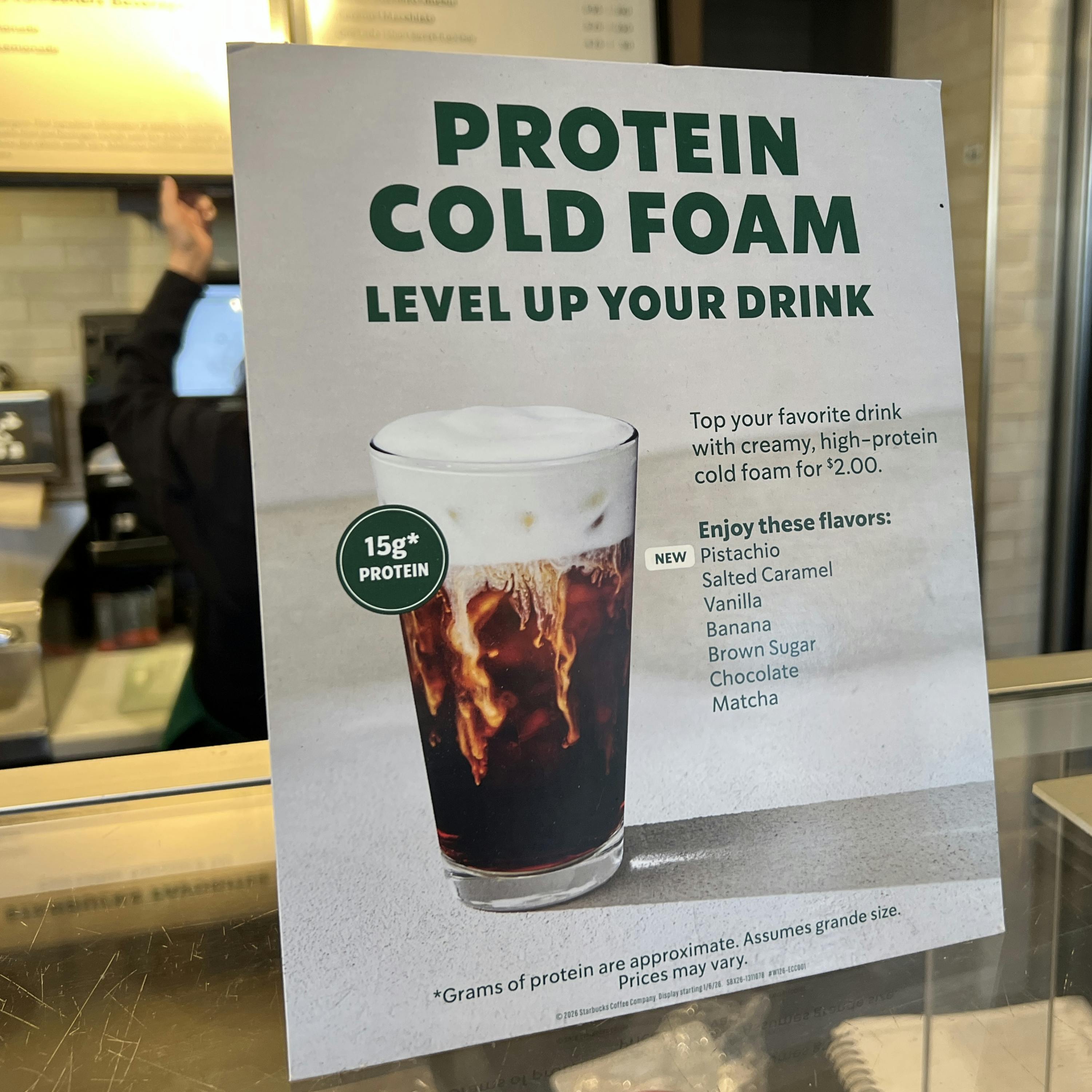
The transcription traces the origins and expansion of the modern protein obsession. It began post-World War II with industrialized dairy creating whey surplus, which was later processed into powder. The 1970s bodybuilding boom, popularized by Arnold Schwarzenegger, fueled demand. Today, the industry utilizes byproducts from plants like soy and peas to create protein powders and fortified foods. This growth is driven by protein's universally positive health reputation, contrasting with fats and carbs. Fitness influencers, including figures like Dr. Gabrielle Lyon, now evangelize high protein intake, particularly to women and aging populations. Concurrently, the popularity of GLP-1 weight-loss drugs (e.g., Ozempic) is shaping the market, as users seek nutrient-dense, protein-packed foods due to reduced appetite. Major food corporations, such as General Mills, have capitalized on this trend, developing products like Wheaties Protein through extensive R&D to meet consumer demand and achieve significant sales, illustrating a powerful convergence of historical waste repurposing, cultural shifts, and modern marketing.
(upbeat music) - We are going to extreme lengths to get more protein these days. The powders, the shakes, the cottage cheese and the oatmeal, the peanut butter and everything, and the chicken smoothie. - I went to the store, got like some chicken breast, boiled it, blended it in a blender. (laughing) It was like, it's added a splash of water, and then it smelled like, you know, I'm just like, dude, I'm making soup here. This is so weird. So then I added like every berry, every frozen banana, like everything I could basically find in my freezer and, you know, to make it a little bit more tolerable. - Have you tried the chicken smoothie? - And then my wife tried it too, and she was like, oh, yeah, you could definitely feel the chicken on that. And so I had this like, you know, venti-sized chicken smoothie that I had to drink all myself, 'cause I can't waste anything in my house. (upbeat music) - Coming up on today, explained protein madness. (upbeat music) When things get hard, how do you talk to yourself? I'm Robin Hedge Sun, VP of fitness programming and head instructor at Peloton, and this week on my new podcast, Project Swagger, I'm sharing my strategies for how to build better self-talk. It's time to work on befriending yourself. Follow Project Swagger, wherever you get your podcasts. - Megan Rapinoe here. This week on A Touch More, we've got something for everyone. We're talking about the US women, Olympians taking home more medals than the men. The US women's national team roster, heading into the Shee Believes Cup, and the latest on the WNBA CBA negotiations. Check out the latest episode of A Touch More, wherever you get your podcasts and on YouTube. (upbeat music) (upbeat music) - You're listening to Today Explained. - I'm Noelle King. Today's show is a rerun, and we are rerunning it because you and me and everyone we know is going to the gym lately. And so is writer Chris Giamali. Chris publishes a health and wellness newsletter called Hevis. And last year he wrote a big piece for Grubb Street about protein that started with his path to protein obsession. - This actually started a few years ago. Here in New York, once locked down, restrictions sort of eased up, the gyms were kind of the first thing to open. And so mostly out of boredom, I started going to my Moe Tijim like five or six days a week and got really, really fit. (upbeat music) Around that same time, I started listening to health podcasts like Huberman Lab. - When I heard this, I thought, there's no way this is true, which was making sure that you get 30 or so grams of protein within 30 minutes of waking. - And I was constantly getting all these messages out like, you're not getting enough protein in your diet. And so that sort of triggered my fall down this trap door towards the protein event horizon. - People think it's crazy that I've eaten 200 grams of protein for almost 20 straight years every single day. - The biggest lie that you're telling yourself is that you can't hit your protein goals. - Stop over complicating it. - I blend chicken twice a day to be an open-pro bodybuilder. Check that baby down. Somebody get this, my sub protein. (upbeat music) - I myself do listen to Huberman and I have gotten the message too. I think a lot more about protein than I ever thought I would think about protein. - Same here. - Me of 36 months ago would not recognize this person. Tell me where protein mania begins. Is this a recent phenomenon? - So it actually really starts with way protein and for that you have to go back to right after World War II. - The Japanese have accepted our terms fully. That is the word we have just received from the White House in Washington. And I didn't expect to hear a celebration here in our newsroom in New York, but you can hear one going on behind me. - A lot of farming became really industrialized. And around that time we really saw dairy production really start to ratchet up here in the United States. - Milk is one of our most wholesome foods. Now where are the milk cows and the dairy farms of the United States located in an area commonly called the dairy belt? - There was just like so much cheese that they were making, especially in Vermont and Wisconsin. - Cheese, a more concentrated food, is more valuable per pound than milk. - When you make cheese, its liquid byproduct is way, which has historically been treated as a refuse that was like either dumped in the rivers or fed to pigs and cattle. Once the way is discarded at least, it kind of has nowhere to go. And there was one cheese plant in 1942 that actually used to dump all its way product into an old drinking well. The substance produced so much gas that at one point the wells cover blew off. Things really started to change in the 1970s when a couple of things started happening in tandem. The big one was, there was kind of this swell of environmental legislation that came out that sort of just made dumping away, not the move. All these manufacturers had to find a use for this stuff that was essentially garbage. And meanwhile there were technological breakthroughs in fields like micro filtration, which made it easier to transform the way into a powder that you could actually mix with water and drink down. So that's kind of how we got to this point where you're able to drink way protein as we know it today. And then the other thing that happened was in 1977. There was this big documentary that came out called Pumping Iron. - And now we come to the heavyweight, over 200 pounds. - Starring Arnold Schwarzenegger. - The greatest feeling you can get in a chamber, the most satisfying feeling you can get in a gym, is the pump. - It was kind of a mind-blowing thing at the time. Like this guy came out of nowhere and had biceps on top of his biceps. - Blood is rushing into your muscles and that's what we call the pump. Your muscles get a really tight feeling, like your skin is going to explode any minute. - It kind of kicked off a real bodybuilding boom. And from there people just really wanted protein until it looked like a determinator. - I'll be back. - Way protein, like that kind of set the model for a lot of different plant proteins. It was basically the same model where it was like, you know, we have all this excess trash and mush, like especially from the soybean oil industry. And they were like, hey, we have all this soy mush leftover from, you know, extracting oil. What should we do with it? And then they figured out that you can really transform this stuff into soluble powders. And it's actually pretty nutrient dense too. But what's really funny about it is just like this whole protein boom is like people just figured out that you can take existing garbage essentially and sell it to people. And so that's how we got to where we are today. But more recently, you know, there's sort of synthesizing all sorts of plants. There's soy, there's pea, there's algae, there's hemp, there's rice. Yeah, all sorts of stuff that they are, they're sort of mushing up and extracting protein from and turning it into powders that they can jam into all sorts of wacky snacks, which I've tasted a lot of during this journey. (laughing) You also tasted a protein soda. Tell me about that. Oh my gosh. (laughing) When I came across this existence of this protein soda called feisty, I was like protein soda. That's so wild. But then I talked to the founder. Yeah, hi, my name's V, I am the founder of feisty. And she's a former designer at Louis Vuitton based in London. And she actually had her own interesting journey with protein. She had like a gnarly knee injury not too long ago. And her PT was basically like, you should get into lifting. And I gave it a go. I've never been sporting my whole life. I never had this feeling of like an endorphins hit before. And I was like, wow, this is so incredible. And just like fell in love with like all things fitness. And from the lifting, she kind of fell in love with the sport and then started researching how to create her own. Drink that was in as heavy, not like a shake that you would have to guzzle down. And so she landed on this idea for a for a fizzy protein soda. I heard of this like hydrolyzed pea protein which is like a pea protein which dissolves in water as clear. And I was like, why is no one put this in a soda? This is cool. You did talk to some plant protein scientists. What is that job in tail? There's a lot of research being done right now in like genetically modifying certain plants, say P, or even potatoes. So protein is really tricky. And by no means an expert in like how all that stuff sort of holds together. My name is David Julian McClements. And I'm a distinguished professor in the Department of Food Science at the University of Massachusetts. And I do a lot work on protein fortification of plant-based foods. First of all, ridiculous that that exists. You can love it. So we're trying to make plant-based alternatives. The most common way is you just basically take the plant. You grind it up into a powder, then you put it in water. And then you make it very alkaline. And that causes the proteins to dissolve. And then you collect them. And then you change the pH again. And they all come out of solution. And you get this big curd that you can take and dry and use as a protein isolate. So we've made sort of plant-based scallops. I admittedly like get a little bit squeamish. I'm like fake bees like that. Plant-based chicken and plant-based eggs that are fortified with proteins and other healthy ingredients. So things like potatoes, or peas, or soybeans, or nettles. There's no way I should be eating this burger that is designed to taste like a cow, but isn't a cow. I'm kind of like just be yourself. Burger.
So there's two parallel tracks here and one is we are able to just make more kinds of proteins and put them into more types of foods and then sell them to people and the other is people want them. Right? People are also buying the stuff. What came first? The chicken or the egg? Or is this just a nice confluence of what the customer wants? The industry is prepared now to provide. In my reporting I sort of found that you know of all the macronutrients the big three are fat carbohydrates and protein. Proteins kind of the only one that's never really been demonized by marketers and like pop scientists and accons and like all that stuff. It's like you think of carbohydrates it was like that was verboten at one point. The great diet debate, mo-carb or no fat. You probably have had some friends or family members or yourself trying the no-carb or low-carb diets. Fat definitely verboten at one point. The analogy I like to use is proteins kind of like the dolly part in a macronutrients. Like we can all agree that she's pretty great regardless of your identity or like political affiliation. My hopes for the new year is a little more kindness a little more love. So speaking of dolly and also speaking of Arnold Schwarzenegger. Yes. I love Arnold but as like a woman I don't aspire to look like Arnold. But the algorithm has found to be anyway. Like I go on Instagram and the ladies are serving me protein. Most women are not eating enough protein. Oh my god you're looking for a high protein breakfast often that takes us into a minute to make and it's 65 grams of protein. Yeah buddy. I know that's what you wanted and I'm a giver. I'm a lover. How did we go from this is kind of male dominated muscles on muscles on muscles to a lot of female health influencers are. Mm-hmm. Evangelizing it also. When does that turn happen? It has to do with this sort of normalizing of fitness culture which you have also fallen into in the past. I work out all the time. And it's a dig thing right and I think part of it is like you know post pandemic we were just so concerned about our mortality and watching death sort of surround us in a real way that a lot of people decided to get healthy kind of at the same time. But also you know your point about influencers is really interesting. One of the big ones is Dr. Gabrielle Lyon. She's a part of the sort of Hubertman Cinematic Universe. There is not one macronutrient more important to an aging individual than protein. Really compelling figure in her mid 50s I think and she looks like she could deadlift like a meyata if she needed to but she's she's argued that women especially as Anna Manipaz need to be lifting weights and eating way more protein to stay healthy. Protein for dummies source meat which include pork beef lamb. She's so turbo but I think she's onto something and I think that's really like hitting a note with a lot of people across all stripes. The other big cultural moment that we're in is the moment of ozempic and mongaro and other GLP ones. Those also affect how much protein we want or need. You know retailers like Walmart especially are like sort of already stalking their shelves with foods that are a little bit more nutrient dense and high in protein. Nestle just announced a new frozen food brand that it says is intended to be a companion for GLP one weight loss medication users and consumers focused on weight management. The makers of KitKat are coming out with some food items that you'll be able to find on your local grocery shelves soon and these foods will be geared towards you and me users of GLP one medications. Let's take a look at what they are. Mostly because these kind of drugs are so popular right now and they really do limit the amount of food you can eat. So if you can eat as much food the thinking goes that you need stuff that's just packed with more nutrients in order to feel okay and good and healthy. So that's it's kind of really shaping the industry in a in a very real way right now. What I eat in a day I'm a so zempi. I always start my day with some Greek yogurt, chobonis my favorite and then today is the day that we take our ozempic shots you already know what that means we need to get in a good high protein meal before doing so. Let's make a protein coffee while I talk about the importance of protein malonigial, GLP one medication. I was like shopping for breakfast cereals for my three-year-old just like looking around and I noticed this spelt new box of Whitties protein which like advertised 20-something grams of protein on the cover. There was no old Whitties. Like this it had been replaced seemingly overnight by this like very you know buff new insurgent. And so I was kind of like I was like huh. And so in the course of this I hit up General Mills which you know owns this big portfolio of food products and Whitties especially then asked if I could come out and check out what they're doing over there and weirdly enough they said yes. Coming up Chris goes behind the veil at General Mills. Hey everybody, Aesthet Hurnton here. I wanted to let you know that Vox Media is returning to South by Southwestern Austin for live tapings of your favorite podcasts. Join us from March 13th through March 15th for live tapings of pivot, Taffy Talks, Professor G's Markets, where should we begin with Esther Perrell and the special live taping of today explained hosted by yours truly. The Vox Media podcast stage will also feature sessions from Brunei Brown and Adam Grant, Marcus Brownlee, Keith Lee, Vivian 2, Robin Arzone and more. Visit voxmedia.com/SouthbySouthWest to pre-register and get a special discount on your South by Southwest Innovation badge. That's voxmedia.com/SouthbySouthWest. Hope to see you there. What are the main takeaways of the foreign policy section from Donald Trump's state of the Union address? I do think they've made a decision to elevate domestic issues as we head towards the midterms. We'll see if that sticks because he keeps getting drawn back to the foreign policy issues. I'm John Feiner and I'm Jake Sullivan and we're the hosts of the Long Game, a weekly national security podcast. This week will react to President Trump's state of the Union address, the situation with Iran and the eruption of violence involving cartels in Mexico. The episodes out now search for and follow the Long Game wherever you get your podcasts. This week on "N Out Written Chill" I'm joined by her first 100K, aka Tori Dunlop, a fellow personal finance creator who's changing how an entire generation thinks about money. Tori's journey is a master class in turning personal finance wins into a platform that empowers millions. She opens up about the real strategy behind hitting that six-figure milestone without the typical privileged blind advice and how she's redefining what it means to be a wealthy woman in 2026. We're diving deep into investment strategies for real people, with real budgets, and why financial feminism isn't just a buzzword, it's a movement. Get ready for an unfiltered conversation about money, entrepreneurship, and what it really takes to build both personal wealth and a business empire. Listen wherever you get your podcasts or watch on youtube.com/yourrichbf. Here at Gastropod we ask the tough questions like what should go on top of a pancake? My mom always had peanut butter and brown sugar, she was not a syrup person. I am loathe to judge people's personal pancake pleasures, but that's a hard no. I'm on team maple syrup, but for a long time for a lot of Americans maple syrup was too expensive so they used pancake syrup. But what is pancake syrup? I mean like maple syrup it's also kind of caramel color. This episode of Gastropod we've got the answers to all your pancake questions, including what even is a pancake? And does a Latka or a Dutch baby count as a pancake? To find out, find Gastropod and subscribe wherever you get your pancakes. I mean podcasts. Today explained his back with me, Noel from work, and Chris Gail Mali. Now as you've skittered around the aisles of your local grocery store, you have likely wondered at some point how are they getting the protein into all this stuff? Chris had the same thought and then he scored an invitation. So last November I landed in Minneapolis and took an Uber out to General Mills headquarters and it's this beautiful picturesque campus just outside of Minneapolis. They have like this sculpture garden outside. It's just this beautiful campus with duck ponds and there was like foliage everywhere and then I'm inside this building where they make all these snack products. General Mills, they began looking into you know jamming protein into a lot of their products maybe a little over 10 years ago. They had this nature valley bar that they had like jammed a little bit more protein in and then once they started selling it they realized they could make a lot of money off of this stuff. I think it did like a hundred million dollars in its first year or something like that. So they were like okay maybe there's other products we can put protein into that would make us a ton of money. And so Whiti is being you know their flagship sort of cereal product that like you know has tag wards and Michael Jordan and Serena Williams and all those people on the cover. They realized Whiti's would be a good test for this stuff and so they went out to their the roster of like fitness enthusiasts and the information they were hearing back was you know a Whiti's protein product would ideally have at least 15 grams of protein preserving which is kind of a lot you know the challenge for them was preserving the fidelity of the flake because Whiti's eaters are surprisingly hardcore about what Whiti should taste like and how hard it should be like how crunchy it should be. So it was actually Whiti germ.
and soy protein isolate that they had to combine and make it somehow taste like the old version of Wheaties. And they went through 40 different iterations over it over a multi-year R&D period. And it was kind of funny, 'cause they rolled out all these different versions over the years in little glass containers, kind of like little, I don't know, like Jurassic Park embryos or something. (laughs) And I asked them to take a picture of it, and then they were just like, oh no, we can't do that. Like it was like illuminati levels of secrecy for all these serial shapes. - Speaking of Jurassic Park, I was trying to picture how do you get protein into food? 'Cause it's not just Wheaties, it's also Cheerios, it's also, like you said, it's Grinola Barces, everything. And all I can imagine is a person with like a big needle. (laughs) Somehow the needle has liquid protein, they're just like plunging the needle into a Wheatie flake. I'm guessing no, but how does it work? Like how do they get the protein in there? - It isn't too far off from Jurassic Park, as I understand it. You're altering the DNA of whatever the food is on the like a miracle, like a regular lull. - You know, it's like they'll take the wheat germ that they were using for Wheaties, for example, put in some protein, and then they have like all these calculations about like how much liquid to use. And they're just calibrating that until they get something that sort of resembles the traditional product, but is maybe just a little bit off. And then on top of that, they'll try to mask it with, you know, not clusters. And all this other stuff to sort of like take your eye off the ball a little bit that this isn't the old one you're eating, but it's a little bit different, but it can't be too different. And I think that's kind of the trick towards all these new protein food products, honestly. - You know, you're pointing at something here. Listers will know I am obsessed with ultra-process foods and what they may be doing to us. I drank a protein shake the other day, and I was like, oh my God, none of this is stuff that I could find in my own kitchen. And so a thing I wonder is, are we just eating junk food? Is all the high protein stuff crap? - Yeah, you know, where I sort of landed and this flip-lops every day, if you ask me the same question tomorrow, I might have a different answer for you, but it's still junk, but it's kind of a lesser evil situation to my mind. A lot of the researchers I talked to, there was this one guy named Alan Errigan, who's sort of like been at the forefront of a lot of protein and fitness research over these past couple decades. He made the point that really kind of shocked me that this stuff is actually really useful for people who are maybe a little bit older, and they're dealing with age-related muscle loss, and it's just so much easier for them to eat a bowl of cereal versus like a huge sirloin steak that a carnivore diet influencer would make for themselves to need off a cutting board or something like that. It's maybe not ideal. Maybe we should be getting our protein from whole sources like fish and grass-fed meat and tofu and stuff like that, but we don't live in a sort of ideal world. We're always on the move and need convenience when we can, so all occasionally indulge in a protein thing that tastes like a pop chart and feel not too bad about it if I can help it. - There's a thing that happens. It has certainly happened to me, probably most people, where you realize that you're not getting enough calcium, or enough iron, and then suddenly you are slamming iron tablets and spinach and steak, and then you read something that's like, oh, you should only actually be getting such and such milligrams every day. We are, as a culture, really obsessed with protein right now, has anyone dug into whether we are getting too much? - So in terms of how much protein a person might need, the RDA works out to basically point eight grams of protein, per kilogram of body weight. That's a lot of math, but most people probably aren't getting enough, especially if you work out, and protein is the source of our cellular, like, healing and all that stuff. So yeah, we're probably all not eating enough, honestly. - We've all learned to be suspicious of big food companies, right? There are a lot of problems with the American diet, and we're all aware of it. There are a lot of chronic conditions that stem from the American diet. When you think about what the story of protein and its rise and then continued rise, tells us about ourselves, what do you think is the story behind the story here? - I feel like we're just getting so much smarter about nutrition now. I always think back to my youth when the, you know, the food pyramid at the bottom of it was like, your foundation of a healthy diet is like six to 11 daily breads or something. That's so many carbs, that's so much bread. It's so weird because some of this stuff gets really rigid, really fast, but then research is also moving fast, and so it's kind of weird because you have to balance some conspiratorial thinking with all these podcasters and people at Rando's on TikTok who are making really strong health recommendations not found in any sort of like real science with sort of what sounds about right. And so it's kind of like a personal calculation is where I've kind of landed on it. If like eating a little bit more protein helps you feel good, then by all means do it. I've personally sort of started in double the amount that I was eating prior to reporting this story. Then I feel pretty good and not too terrible with myself, so that's where I've landed with all of that. - And your muscles got bigger? - Yeah, my muscles are so brolic right now. - There you go. There you go. That is it. That is why we do it. - I know. (upbeat music) - All right, Chris Gaiomali. Check him out at Hevis on Substag. Gabrielle Burbe produced today's show, I'm an L.Sati edited Matthew Billy and Andrea Christen's daughter engineered and Laura Bullard checks the facts. The rest of our team includes Hadi Mwagdi instead herned in Danielle Huitt Miles-Brian, Ariana Aspudo, Dustin DeSoto, Kelly Westinger, Sean Ramis from Miranda Kennedy, Avisha Artsy, Jolie Myers, Patrick Boyd, Peter Ballon, Androsan, Andre Lopez, Chris Sato and David Tattasher. We use music by break master cylinder. I'm Newell King. Today's playing is distributed by WNYC and the show is a part of box. (upbeat music) (soft music)
Podcast Summary
Key Points:
The modern protein craze stems from historical factors like surplus whey from cheese production and the bodybuilding boom sparked by Arnold Schwarzenegger.
Today's protein industry expands by processing plant-based byproducts (e.g., soy, pea, rice) into powders and fortifying everyday foods and snacks.
Protein's popularity is driven by its positive health image, fitness influencers targeting diverse demographics, and the rise of GLP-1 weight-loss medications increasing demand for nutrient-dense foods.
Major food companies, like General Mills with Wheaties Protein, invest heavily in protein-fortified products after seeing significant consumer demand and profitability.
Summary:
The transcription traces the origins and expansion of the modern protein obsession. It began post-World War II with industrialized dairy creating whey surplus, which was later processed into powder. The 1970s bodybuilding boom, popularized by Arnold Schwarzenegger, fueled demand.
Today, the industry utilizes byproducts from plants like soy and peas to create protein powders and fortified foods. This growth is driven by protein's universally positive health reputation, contrasting with fats and carbs. Fitness influencers, including figures like Dr.
Gabrielle Lyon, now evangelize high protein intake, particularly to women and aging populations. , Ozempic) is shaping the market, as users seek nutrient-dense, protein-packed foods due to reduced appetite. Major food corporations, such as General Mills, have capitalized on this trend, developing products like Wheaties Protein through extensive R&D to meet consumer demand and achieve significant sales, illustrating a powerful convergence of historical waste repurposing, cultural shifts, and modern marketing.
FAQs
Whey protein is a byproduct of cheese production that was historically discarded. In the 1970s, environmental regulations and technological advances led to it being processed into a drinkable powder, coinciding with a bodybuilding boom sparked by the documentary 'Pumping Iron'.
Plant-based proteins are often derived from byproducts of food processing, such as soy mush from oil extraction. They are turned into nutrient-dense powders that can be added to various products, offering a sustainable and versatile protein source.
The normalization of fitness culture post-pandemic and influencers like Dr. Gabrielle Lyon have promoted weightlifting and high protein intake for women's health, especially as they age, shifting protein marketing toward a broader audience.
GLP-1 medications limit food intake, increasing demand for nutrient-dense, high-protein foods to maintain health. This has led companies to develop products specifically for users of these weight-loss drugs.
Companies use ingredients like wheat germ and soy protein isolate, undergoing extensive R&D to preserve taste and texture. For example, General Mills created Wheaties Protein through over 40 iterations to meet consumer expectations.
Protein has never been demonized by marketers or pop science like fats and carbs have. It is widely accepted as beneficial, making it a consistently popular focus in health and wellness trends.
Chat with AI
Loading...
Pro features
Go deeper with this episode
Unlock creator-grade tools that turn any transcript into show notes and subtitle files.
 PodcastTranscript AI