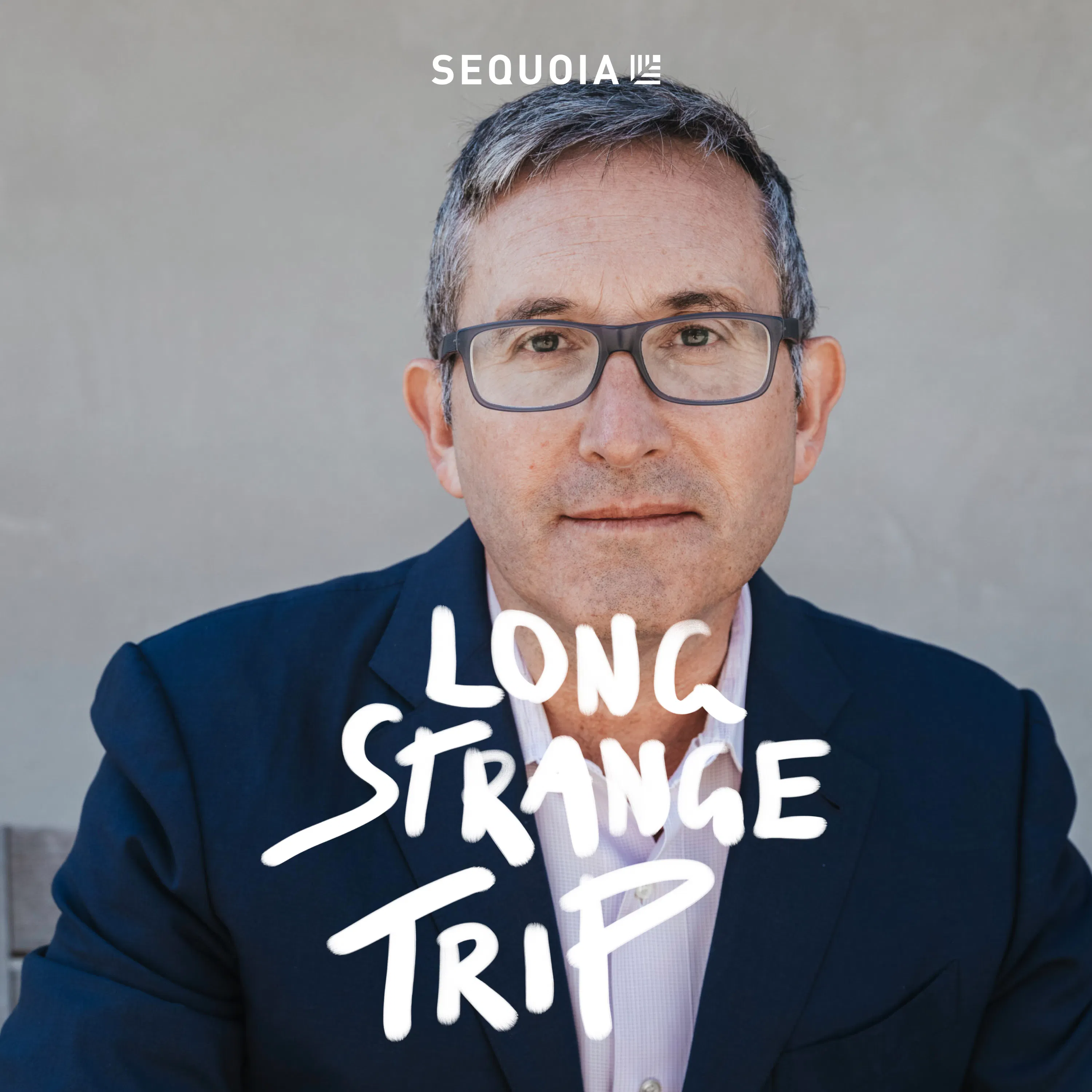
Oura’s Tom Hale: What People Don’t Tell You About Being CEO
from Long Strange Trip: CEO to CEO with Brian Halligan
59m 39s
Tom Hale, CEO of Aura, shares his experience transitioning from a corporate executive to a CEO later in life, motivated by a near-death snowmobile accident. He describes the role as far more stressful than anticipated, involving constant responsibility for employees, customers, and the board, with a high ratio of "kibble to champagne." Hale advocates for a non-hierarchical culture where ideas can move freely across levels, achieved by being visible and engaging directly with teams, such as through Slack. He manages a diverse workforce split between Finland and the US, noting that cultural differences—like Finnish socialism versus American capitalism—should be leveraged for diversity rather than homogenized. During the 200-2,000 employee growth stage, he warns against hiring "bozos" who lack commitment and emphasizes preserving the original mission. Post-COVID, he prioritized in-person team gatherings to strengthen social capital and introduced a balanced approach to work intensity, avoiding constant high-pressure cycles. Hale believes this scale allows CEOs to have direct influence and accelerate employee careers, but warns of politics emerging above 2,000 employees due to work scarcity. Overall, he stresses the importance of humility, recovery, and personal accountability in leadership.
just by paying attention to the work that was happening at all levels of the company, from the lowest to the highest by paying attention and being like, "Hey, that's a really good idea." Or, "Have you considered this?" It made a culture of, "It's okay to have ideas and have them move up and down." And by the way, people would challenge me. And in challenging me, they felt confident that like, we were going to get to the best idea because it wasn't just my idea. Creating this sort of non-hierarchical culture that's not bound by time or geography or role, really powerful. Okay, this episode is with Tom Hale, an old friend of mine who's the CEO of Aura, or a ring fame. When I was in my early 50s, I had a very bad stomobile accent and drove a stomobile off a cliff. And you can't see my body, but it's absolutely chock full of metal. And I thought it was going to die that night. It was lying at the bottom of the cliff. And I've been a CEO of HubSpot for 15 years like, "I'm done. I'm tired. I'm done. I'm burnt out." He went the other way. He had been a corporate executive, some really interesting companies his whole career. In his early 50s, he's like, "I want my shot." And so we talked about that. What he didn't expect from the job, the good, the bad, and the downright ugly of being a CEO, he's pretty thoughtful about that. What really is interesting to me about Tom is he spent his entire life in companies between 200 and 2,000 employees. That is the messy mental. That's where things slow down, that's where bureaucracy happens, that's where it'll managers happen. That's where you really slow the years of progress down. And we talk a bunch about what it takes to keep that engine revving through that and not to get caught in the quagmire. We also talked to me. He's got a team in Finland. This company was started in Finland and he's got a team here in the US and manner they different. Americans are obviously very capitalist creatures in the finisher, much more on the socialist side. And we talk about how to manage those two. And a lot of you are in the US now in thinking about going international. I think there's a lot of lessons here for you. So lots of good stuff. I'm going to clear back to the end with my take on what he had to say. Thanks for being here. Hey, thanks for having me, Brian. I have a little story for you. Okay. Four years ago, I was snowmilling in Woodstock for a month. As one does. Yes. And with my son and the snowmobile went off a cliff. Oh my god. It hit the bottom. Snowmobiles in a million pieces. My son and I were in a million pieces. And at the bottom of that, I know a new where we were. And it was four o'clock in the afternoon. I was pretty sure we were both going to die that night. And while I was sitting there at the bottom of the cliff, I said, I need to make some big changes in my life. No more snowmobiles. Yeah, that's that too. But the biggest change was I don't want to be a CEO anymore. Why did you want to be a CEO after all these years? Oh, it's a good question. I think the obvious answer. And maybe the really the true answer is it was a bucket list. I don't mind. And the thing is actually, and maybe this is TMI, but I also wanted to prove to myself that I had it to do it. Is it everything you had hoped? And more really much, much harder. Okay. Then I thought, and I'm sure you can appreciate that in any CEO in the world. We'll appreciate that much harder, much harder than I thought. What's harder than you thought? It's it's not the work that's harder. It's the responsibility and the stress. It's the waking up at 4 a.m. and being like, Oh my God, is this going to work? And what is it going to take to make it work? That I think it's pressure, it's stress, it's responsibility. It's all the people that you have, you know, you they put their faith in you, whether it's your board or your employees or your customers, and you have to carry that. And you know, what they say, the buck stops here. Absolutely. I felt that too. I was pretty calm in the first four or five years of HubSpot, but I was kind of stricken with stress and started having, I never had them before, panic attacks like five years in. And it was that. It was like, Oh man, we have a hundred employees that are really counting on me. 100%. That was the, what do people misunderstand about CEOing? Well, I think they think it's a lot more fun than it is. Okay. So is it not fun? No, I mean, I don't think actually it's not fun. I think there is fun. I just think that the sort of ratio of kibble, you know, to champagne favors the kibble. Yes. In the champagne. Yes. And I think that part of it is the responsibility, which we just talked about, but part of it is also you kind of, the things about work that I really enjoy, like building something in a fine grain of detail and making it beautiful and owning that and feeling pride in that. And I still get that, but just not as much. Or feeling the success, you get everyone gets to participate in the success, but in some way, like it's really your team. It's not you who gets to own that success. But you know what, participating in failure, you get to own that failure because in many cases, like it was either your decision or your direction or the system that you set up. So I think that's, I think that's the thing people get wrong because they don't, they don't understand. They think it's like it's glamorous and it's, it's this and that and you're on podcasts or whatever. Like that's sure there's an element of that, but like that is not the main portion of the experience. At least not for me. I call it the shit umbrella. You have to like absorb all the shit for the company. I think that's right. I mean, my, my analogy is that you're on a boat and that boat, if it's going great, your job is while everyone's over on this side of the boat being like, "Hey, things great over here." And you have to go on this and be like, "Everything's terrible. We have to think about that." And by spursa, when everything's terrible, you've got to go to the other side of the boat and be like, "Hey guys, there is light on the horizon and where we're going is going to be great." It may feel terrible right now, but we've got to get there. And I think that, that's, that's a big job. The big job of responsibility and it's hard. I had some CEO heroes that I copied. Yeah. I copied Steve Jobs, Jerry Garcia, and my dad. They were my Mount Rushmore. Wow. Okay. Inspirations. Who's on your Rushmore? Well, you know, seed jobs, I think would make it. For sure. And I kind of were probably similar age and I think people who grew up. I got to work, you know, tangentially. We were an ISV on the Apple platform. So we got to meet him a couple of times and he was a hero. Yeah. The person who came back and recovered Apple from its demise was a hero, bona fide, and the sort of champion of creative professional. So he would be one, I think, not necessarily a CEO, but Gandhi, partially because he sort of is a man of the people. And I think humility is such an important both value for me personally, but also for a CEO. It's important. So Gandhi would have it and then got if I had to think of one more. Oh, I know who it would be. So my Angelou, not because she's such a great CEO, but because she said something which I really believe is which is like people will remember how you make them feel. And I think as a leader, that unintended consequence is actually the greatest risk, not the intended consequence. And if you leave people feeling, you know, in a way that you don't intend to, I think that could be devastating for a company. A lot of CEOs of the generation younger than we are. It's not jobs, it's you on. Yeah. And they've absorbed his, for better or worse, his work ethic. Yeah. And 996 and hard cornice about it. This whole generation of founders is kind of like that. What's your take on that? And is your company like that? I am somebody who probably works 996 or, you know, something like that, some approximation of that. And I think I think there is value in it. However, I would modify it one bit, which is that if you're working 996 or your version of that to the exclusion of making sure that you are thoughtful and recovered and in a good state of mind, if you're in a constant state of anxiety and a constant state of activity and you don't leave room for any kind of recovery or reflection, you're probably not doing it right, at least in my book. And so at, at, aura, and what's interesting about aura is that we make products that are there to help you be healthier and to find mindfulness and recovery in your life. Actually, when I came on board, we had to sort of push a little bit towards the performance and, you know, we would never say 996, but we'd say, like, no, we like, we get the job done. And we do what it takes to get the job done. And so I had to shift it a little bit in that direction, but that at the same time, we never lost the values of rest and recovery and the importance of it. I think the thing is like finding that balance, that's what we talk about. We talk a lot about balance. How do you find balance? And I think one of the ways to think about it from a CEO perspective is that different parts of the company at different times in the year, different stages of the product cycle are going to be at peak 996 and other parts are going to be at recovery. And that's like, you just ship, you know what? Probably shouldn't go back 996. Take a couple days, recover, rest. Think about what you want to do next, be intentional. And so I think that kind of idea that you can't run everybody at the red line all the time. You got to dial it up and dial it down. You got to recognize that if you're on the bomb run to ship, it's going to be 996 or whatever it is to get there. Okay, speaking of your employees, your CEO of a company that was founded in Finland. Yes. Very proud. Yeah, they should be. And you should be. It's a wonderful company. Tell me a little bit about you.
your first trip to Finland. (laughing) - Yeah, so I have worked with, you know, fins in the past. So I had a little bit of experience, but I'd never been a leader of fins. I'd been a partner and a colleague. And so there's also I think a good tradition, I think in Finland of like, they're not hierarchical, right? Not a lot of respect for-- - Not that they don't have, they're not disrespectful. It's just like, look, you know, we're on, it's very socialist, non-hierical society. So I show up and, you know, well, we're gonna go do some salina. And of course, as you know, it's a Finnish national tradition. So we go to the sauna, get in the sauna, it's hot, I'm very hot. And then we, you know, we go outside and it's very cold and we get in the freezing, freezing cold water and you're shaking and then you get back in the sauna. It's great. And I was like, this is amazing. I feel like I've passed the test. I've shown my true fineness. And then of course, we went to the second office, which is in Olo, which is a little bit further closer to the North Pole. And we did the exact same thing, except no sauna. (laughing) And so this time, like literally, I'm not even getting hot to get in the water. I'm just like, you know, I'm stripping down to my skivis, I'm walking into a river where it's freezing cold. I'm sitting there for 45 seconds. I'm monitoring my heart rate on the Aura Ring app, mostly to say, makes you, I stay alive, and walk out and there's nowhere to get warm, just to towel. - Okay, so you passed, sounds like you passed the test. - I think I passed the test, but baby just barely. - Okay, you referred to fins as socialists. Americans are very capitalist. - Of course. - You've got, call it, close to half your employees in each country. - Yep. - What's it like with two different, very different cultures and trying to blend them in management? Like what? - Maybe this was a philosophy of culture, which is that you can't make a single culture. I mean, you can. There are elements of our culture, which are shared across Finland in the US. You know, passion for the product and a sense of mission around health and blah, blah, blah. But the thing is they're very distinct. I think culture begins and ends at the door. The finished culture is actually different from the US culture. And what makes the company strong is that those cultures can coexist and they can stimulate each other and they can propagate ideas across. They're not like, they're not one monoculture. They're two cultures and they generate ideas and they generate activity in ways that are different. And quite frankly, I think it's part of what makes the company good is to have a diversity of cultures and viewpoints. - Okay, I would imagine you kind of like at HubSpot and lots of other scale-up companies, post-pandemic people got a little more hardcore and more into performance culture. Just started pushing harder. Not easy. What was, it sounds like you kind of went through something similar. What was that like in Finland with the finished employees? Had that go over? How'd you manage through that? - Well, first of all, I think COVID in a weird way was a health crisis that everybody on the planet experienced. And so in some sense, you had a huge commonality, weirdly. And as a healthcare kind of oriented company, it actually pulled people together. In a weird way, it also changed a bunch of other norms about how you work remotely and all that. And actually quite positive. But to kind of go to your question, when post-COVID you sort of had everybody, I don't know if I felt like the whole civilization of humanity was in recovery post-COVID. And so one of the things that I felt really strongly that we had to do was to sort of establish norms of getting people to work together in person, but not to an office. And so what we did is we set up like a fund and a practice of bringing people together, having them stay together for two or three days, making it really intense, a lot of connection. We shifted budget and time and energy to do that. And that actually I think made a huge difference. - Super-covid. - But make sure you got it. You're kind of a remote culture, but you've fun, get whatever. - Yeah, at the team level, at the organization level, at the company level, and get people together in person, because it turns out, I don't know, a hundred thousand generations of humanity have optimized for connecting in person, right? I can read your face and know that like you trust me or you're listening to me, or you care about what I'm saying. And that just reinforces all this cultural and social capital that you have as a team, that you're sort of banking. So that later when things get tough or you're remote or whatever, you can draw on it. So that was a big part of what we did. I think the other thing that, maybe this is what I did personally, was I made a point of being incredibly visible. Even when I couldn't be, we had a hard a bunch of people during COVID. So I can't drop by your office, but you know what I can do? I can kind of lurk in your Slack chat. And if I see some really great work, I'm gonna comment directly right on that. And I think this is, maybe this is a hint for other folks, or maybe if they wanna do this, they can. Just by paying attention to the work that was happening at all levels of the company, from the lowest to the highest, by paying attention and being like, "Hey, that's a really good idea." Or have you considered this? It made a culture of, it's okay to have ideas and have them move up and down. And by the way, people would challenge me. And in challenging me, they felt confident that like we were gonna get to the best idea 'cause it wasn't just my idea. And you would do that, we did that in Slack or we did that in these meetings that we pulled people together. Like creating this sort of non-hierarchical culture that's not bound by time or geography or role, really powerful. Okay. Just kind of back to you. You've had a super interesting career. You've kind of lived in that kind of, call it 200 to 2,000 employees roughly. Yeah. A lot of the founders, I work with are kind of in that spot. Yeah, or about the go in that spot. What goes wrong between 200 and 2,000? Yeah. Yeah, let's start there. Well, Steve Jobs famously said, right? When the Bozos come. Did they come? They did. I think in every company in that state, you end up hiring a lot of people. And sometimes you're hiring is maybe the stakes are, I don't know, slightly less high or something like that. And somehow some some Bozos might come. And so the key is like, you want to resist that. You want to identify that and move to correct it if you can. And by Bozos, just to be clear, there are people who are well intentioned, but maybe not as committed or as mission-driven or as focused or whatever it is. So in that scale, you have to be careful. That's probably the biggest risk I can see. The other risk, of course, is that you lose whatever it was that got you to 200 people. Which is that kind of like that passion, the spirit, the sense of mission that brings everyone together to accomplish a common goal that's very difficult, but requires everybody to like put their shoulder against the wheel. And I think what's interesting is that if you can preserve that between 200 and 2,000 people, it's the most interesting time in a company. More than 2,000 stops being interesting because you're managing managers or managing managers. And your influence is muted. At 200 to 2,000 is a, I'm not a founder. I'm a CEO, but as a CEO, I can be in touch with directly those 2,000 people. And I can touch them. Just like I was talking about this idea of like going into someone's small groups lack and being present and being visible, you can do that. And people can talk to me. They can walk up to me and I can know their names and know what they're working on and have an idea about what they're doing. And I can say that's not just, hey, clap on the back. Great job. It's more like, I noticed what you did here. And it was really great. And those little moments with a CEO-- I agree with that. Huge. I didn't do enough of that. Huge. I mean, I remember coming up as a staffer. If the CEO noticed what I was doing and gave me a complement, I could go lower year. And so I make a big effort to try and pay that forward in some way. OK, so I took two things away from there. Be careful not to hire a bunch of Bozos. Well, yeah. How do you do that? Oh, and my second takeaway is-- OK. --be very present and give positive affirmation from time to time. And negative, too. Yeah. You have to be able to let people know when they're not doing a good job. And I'm kind of disappointed in you. And it's not like, you're fired. Whatever. It's more. It's like, hey, I expect more from you. And the thing is that that's a personal accountability. That's really powerful. One other thing-- and it'll come back to your question. I think one other thing about 200 to 2,000 is that there's an asymmetry. And in a startup, there's this amount of work in this many people to do it. So you have to be really selective about what work you choose to take on. In 200 to 2,000, there's this amount of work and this many people, which actually means you can grow someone's career really fast. And that's a great trade. Work hard, and we'll move you quickly through the organization. We'll give you experience that you could never get in another company. And it's a really powerful way to get the most out of your human capital. Above 2,000, you have this much work, and you have this many people, which means they're fighting for the best work. And that's politics. Yeah. And you talk to them about how they don't like politics. How do you keep it out? You fight like hell to make sure that that asymmetry still favors work versus people. Because that's sort of the root cause in my mind of politics. What do you do other things, too? You say, we don't have a political culture. Or when you see someone behaving in a political manner, you say, you make an example of it. And you say, this is not how we behave. We don't do this. I think that's sort of setting a norm, hiring leaders who are not political. And then allowing them or encouraging them to model non-political, non-hierarchical behaviors. But I think the fundamental is this asymmetry of work to people. Because what happens is people get territorial, and they start to protect their work, or they start to protect their opportunity. And then that becomes-- you're talking to each other about what you should do versus your customers. I really like that. I'm going to be mind if I borrow your little-- You're welcome to completely steal.
I'm sorry someone told me. I just like, I know who it was. - One of the things I noticed in these companies is like, it's the director layer comes in. - Yeah, yeah, yeah. - And that, it's by definition a middle management layer. And I encourage founders to push that director layer off as long as possible. - As long as they can. Do you have any advice for like, when that comes in, how do you make that productive? - How does it not turn into Dilbert? - Well, and by the way, for those of you who don't know, Dilbert is a late 90s comic strip with the pointy haired boss. I guess everybody knows Dilbert, or maybe I don't know, I don't know. - If I ask my kids, I'm sure they'd be like, what are you talking about? - That's a good point. - Thank you for coming. - But okay, no, just okay, just setting this. I talked to a lot of millennials and a lot of Gen Z now, so I gotta be really on it. - You got a lot of raised by the way. - Well, that's it. - You got a lot of raised. - Thank you. Thank you very much. No cap. So stuff just slows down. - Yeah. - And the to do list for HubSpot, like it just got shorter. Like the bigger you get, the less you get done. - Yeah. - You have tricks on how to keep the pace going. - Yeah, yeah, okay. I got a couple tricks. I don't know. I think they work. But here's one. Okay, so the first thing is, you keep as few layers between the top and the bottom. Meaning, you don't have senior directors and directors and VPs and senior, like you just try and kind of resist that for as long as possible. I think this is famously a flat organization if you can do that. So I think that's one way to do it. I think the second one is when you think about middle management, I often favor promoting people internally in the company into middle management as opposed to hiring them. No, I don't always do that. But one of the reasons you do that is because you're able to identify both the kinds of people who might be good at it, but also you're able to identify are they true blue believers and do they have the passion in the mission because the worst thing you can have is somebody who's in middle management who has no ambition. Because that's actually the Dilbert. The Dilbert is like, I don't want my life to be complicated. I want my work life to be as manageable as possible. And I'm going to manage everything to be managed. And that's the definition of an empty suit, right? What you hire is an ambitious middle manager whose ambition is to be a CEO and know that at some point they're going to leave because they're going to have to. But that ambitious middle manager is one of the most effective prophylactics against sort of the propagation of bureaucracy. I think the other thing that you do is you say, listen, we really are going to empower you and we're going to hold you accountable and then you make that true. You can't hire a dog and then bark for them. You have to hire somebody and say, like, you have got to do this and I'm going to hold you accountable for it. Now, I might have some advice for you and I might have some guidance and like, but you've got to do it. And I think it comes back as sort of a variation on ambitious middle management, but it's basically, we're going to give you the keys to the car. So drive fast, but don't crash. And I think the last piece of it is you create a company culture that reinforces that that's like risk taking. We're going to let you take some risk. And, but we're going to support you through that and we're going to give you the best advice that we can. It goes back to this asymmetry thing where if you have enough time and energy to talk to people in middle management, you can one, root out the people who are the Dilberts because you're talking to them. And then two, you can find the ones who are not the Dilberts and you can encourage them and model and say, hey, do what Sal's doing. Sal's doing an amazing job. Okay, we're related to this. This is more B2B than B2C and you work then a bunch of B2B businesses. As the layers come in, the distance between the CEO and the customer increases, do you have any hacks for, okay, you got a bunch of layers? How do you stay in touch with the customer? How does that customer's voice propagate through the award? Yeah, well, I worked at SurveyMonkey for a couple of years. I know. This was one of the things that we did was like to make sure the voice of the customer was sort of both programmatically pulled into the company and then distributed it without the company. So I think the ways you do that are like NPS surveys and sharing the verbatim and you have rituals and meetings where you do that. And I can't remember what's the hub spot that where they had the customer at the table every time. We did. Right, you always had like, we still do it. The board meeting, we invite a customer, we do a customer panel. And I just, I think that's what you do. You set a culture that says it is part of your job expectations that you're going to have customer interactions. If that's cruising Reddit or talking to people on airplanes or going to, you know, it'd be to be going and talking to customers, you are just going to do that. That's part of the job expectation. And you create both the time and the expectation that you do that so that you end up with more customer input. And then you say, by the way, this is how you're successful in this organization. You're successful when you're framing things in terms of customer needs and solutions for customers and customer narratives and customer values and in health in particular, like it's actually really easy because the customer stories for us are things like, you saved my life. You got me pregnant. You saved my father's life. You helped me change my life for the better. And those narratives, by the way, are incredibly motivating. Those kinds of narratives, like people wake up in the morning at ORA and are like, man, I could save someone's life today. What am I going to do to make that better? And the thing is that flywheel of like both customer understanding means you do a better job. But also customer empathy for something that's important. It just drives, I don't know, extra 10, 15, 20, 30% in performance because people believe in what they're doing. OK. A lot of founders are asking about this, that kind of a missionary to mercenary ratio and the mercenaries start showing up around 200. Talk to me about-- Hey, listen, if you're in sales and you're not a mercenary, and so it's different by different companies. I mean, some companies are more sales driven, some are more market driven, some are more product driven. So I think that ratio, by the way, you need both. You need missionaries and mercenaries. I think if you have mercenaries in your product and engineering or probably not the right place for mercenaries, you want people who want to build beautiful things that are amazing that are expressed who they are. I do if you're building something boring. Same. You find the people who are passionate about it. You find the people who care about what it is that they're doing. Or you find a way to make them care. I mean, it's a survey monkey. It's interesting. It's a survey monkey. We translated the mission into giving a voice to all the people who don't have voices. And the thing is like, OK, sort of true. But the reality is the people came to work. We're like, yeah, I'm amplifying the voices of employees or customers or whatever. And that was a reason for them to be committed to their mission. So I think you've got to find something that does it. I think it is so important to have missionaries in the company and to elevate them. At the same time, if you're going to market, you want people who have commercial instincts. And commercial instincts are correlated highly with a mercenary viewpoint. No. I think mercenaries are also a costic term. It basically implies that you're willing to kill for money. And I don't think-- Well, as I was just saying, that's what that term means. And what you really want are people who, they want to solve customer needs and drive a commercial outcome. And that's what the thrill of the chase, the sense of victory when you have a customer win. And it doesn't have to be a zero-sum game. Or the customer loses if the company wins. And by the way, that they get their jollies out of seeing the numbers and putting them up. And I just think you need both. Maybe it's 80, 20, I don't know. Making it. OK. You've been through some dramatic moments in your career. And I want to get to that. But one of those dramatic moments was you made a business model shift. Historically, you just bought the ring, and that was it. Typical hardware model. You introduced a $6 a month subscription service. Can you-- and it was controversial. You customers weren't not happy. Just take us behind the scenes of that decision. Was that kind of percolating in the org in your head? Was that the first thing you did when you came to the CO? Was it contentious within the leadership team? I think the answer is it was the strategy. And the strategy was, in order to be the most competitive hardware company in the world, you needed to be a really great software company. And to be a really great software company, you needed a business model in a way to deliver periodic software value. The problem with the hardware model is that you ship your hardware, and it's fixed. And that's it. And you might ship a little bit of a software update, or firmware update. But really, you're not really changing the value proposition for that product with new capabilities. And the reason why is because when you ship the next version of the hardware, you want all that value to go in that next version of the hardware. So if someone moves from their iPhone 13 to their iPhone 14, so you're disinscented actually to provide value to your customer over time. The power of a subscription model is that you got to kind of earn your stripes with your customers every month, every month. And up by the way, $6 a month for Aura is kind of a low bar, whatever, two cups of coffee. And if we're delivering information that helps you with your health, the value of that is so priceless. Like the two times that we help you get to bed early, or we predict that you're going to be sick, or we tell you when to procreate in order to have a baby. The value of that is so high that the ratio of V to P value to price is measured in most contentious inside the org. OK, so I'm getting to that. So I'm saying it was our strategy. Yeah, it was our strategy. You brought that in as your strategy from what I understood. Well, no, actually it would hit our-- It was already there. It was already there. And I think there were things that I did maybe to tune it a little bit. But I'm going to say, I, I'd say the team did this. But was it contentious? It was contentious. And partially it was contentious because going against the grain of expectation, Hardware shit.
would be a single price. It was contentious. And this idea that like, I don't know, you probably have some subscriptions that you would be really sad if you stopped paying for them, right? Like Netflix and Spotify or something like that. You probably use those things. And if you were forced to give them the way I'm not a spy. And if you were forced to give them way, you'd be really sad, right? So the idea is like, well, if you can do that, then you probably have a right to charge for subscription. Now that being said, there are lots of subscriptions that you probably pay for that you don't get any value from. And you continue to pay because of either inertia or whatever. And those things we used to call them in the back of the day, as we call them, zombie subscriptions. And the customer who used them were sleeping bears. Yep. You know what you don't do with sleeping bears? Pokemon. Yeah. You don't poke them. And so as a result, what you want to do is avoid the situation where you got a bunch of customers who are not getting value, but you're still collecting price. In which case, the value is low and the P is high. You want to avoid that. So I think we felt that that was the strategy. And that was going to be okay. So that controversy part actually was relatively easy to kind of navigate because we said, listen, one, there's a reason that we're doing this. We're creating a business model that will allow us to invest in software value and deliver feature value and analysis value on your health over the periods of time. And like the product will get better every month. And like SaaS, you're getting in your release every time. And by the way, it turns out that worked. We don't, we have some of the, like literally, the best retention I have ever seen in my 30 years of working in subscription business at Laura. And that's because the value that we deliver is constantly a multiple of the P, the price that we take. So that was, that was that part. The second part of it was, but what about all our customers who bought a product? How can we introduce a subscription for them? And that was easy. That was, give them a pathway to get to effectively what they had before. And so in the, in our version of it, if you were a Gen 2 customer, if you wanted to get a Gen 3 and you paid to get a Gen 3 and we gave upgrade discounts, which is crazy. Who gives upgrade discounts on hardware? If you did, you would be a lifetime subscriber. And it was to make that transition and business model as smooth as possible. And so in doing that, actually, tremendous value because if you were a lifetime subscriber for the committing to just the next version, you were gonna get free software for the rest of your, you know, time that you wore in your ring. Great deal. In fact, some of our most loyal, highest retaining customers are those customers because they have no disincentive to turn. So that was the second thing. And then the third thing, and this was a little bit like the genius of it. Can you buy a HubSpot in a like a perpetual Iced It's model? - No. - No, why not? Because that's how it's sold. Same thing. I think people have an expectation about subscriptions that it's the freemium business model. I give you 50% of the value for free because I want you to try the application. And then if you pay, you'll get the other 50%. And we did something very different. We said, it is a subscription product. And if you pay, the product will be as functional as it is. And if you don't pay, it'll collapse down to be very minimally functional. It won't work, but it's not 50% of the value. And so as a result, interestingly, when we rolled out the subscriptions, what we saw was that some people are like, "Oh, I'm not gonna pay a lot of people." And actually less than you would think. It was a lot of agita. But like the-- - For six months a month there was a lot of noise. - It was a lot of noise. And I think, you make a bargain with your customer. It's hard to change that. There's no question about that. But what would happen is like someone would see the product and then they'd stop paying. For whatever reason, sometimes they're just like their credit card died and you didn't update it, whatever. And it would collapse down to sort of its non-subscription kind of experience. And then they'd be like 24 hours later they would renew. Because they would see that the value that they were getting was to absolutely work at that price. And I think that is the key. If you can keep that value over price ratio north of one and a half or two, then you're doing it right. And your customers are gonna reward you with retention and loyalty. - Okay. When this rolled out, it was noisy. You were newish. And you were catching hell on the internet. - Yeah. - What did that feel like inside your body? Did that bother you? Is it roll out? Like that kind of thing bothered me when that happened. - It did. And I'm, I'm, you know, I don't know if this is something that everybody does. But like I spend a lot of time reading Reddit and interacting with customers. And I respond to people who, you know, connect to the online. - Flaming on LinkedIn and people were flaming us. And I would argue with them, not argue, but like be like, hey, let me tell you what this means is that if we can invest in this, we can, we can invest more in science so we can invest more in research and we can deliver you more value. - When you explain you lose. - I'm not sure that's true. - Okay. - Because sometimes I would win, right? And sometimes, and when I won one argument like that, that person would become, you know, an agent of making that argument 10 times to 10 other people without me in their room. And the reality is it's like, if you think about sort of that transition, it's been an unqualified success. - Unqualified success. - At any point during the very noisy parts, did you and the team say, (sniffs) maybe we shouldn't have done it, maybe we should roll it back or inside your belly, you know, after a couple of rough reddit threads, did you think maybe I should roll it back and then talk to yourself out of it? - I think once. I think once. And I can't remember the exact moment, but I do remember where I was when I was having the conversation. I was in the garage and Salesforce tower. - Okay. - I was talking to someone on the phone, and I was like, oh, this is like this painful. And I thought, you know, the only way out is through. Because if we do roll it back, then everybody would have been right, and we would have been wrong. And there's no recovering from that. So we went through and by the way, like I think it was the right, it was the absolute right way to approach that problem. - Yeah. - You have to get, maybe this is a good CEO lesson for a person who has been a CEO now for, you know, some number of years, is you gotta be comfortable being uncomfortable. That is the key. That is the nature of it. You can feel that discomfort, and you gotta let that discomfort and sit with it, because like that's actually where the magic happens. When you're doing something that either no one else is done or doesn't feel like it can be done, we were defining a new way to think about hardware and like a business model around these kinds of products. No one else was doing it this way. It was just us. - Okay. I'm a customer. You've got one, you've got one subscription levels. - Yeah. - I have a lot of conversations with founders about pricing. Like a lot. - By the way, that's great. - Things that would think, everyone would think about that more. - Yeah. - And there's like, there's entropy and there's like gravity in the world where over time the pricing just gets more expensive for everything almost. And over time it gets really complicated. And I think there's a big cost to that complication. I also think there's a cost, particularly for startups for making their product too expensive. It creates friction, slows down the sales process. It creates an avatar relationship with the customer. And my thinking is that gap between what they would pay and what they pay, there's goodwill in there that pays itself back over time. - I agree. Why don't you introduce another tier with more stuff in it? Do you have these conversations? - We do. - What's your price? - Every time we bring a new feature and we decide to put it into the product for free. - Yeah. - I think about that value over price ratio and keeping it, keeping that value over price ratio north of 1.5 or two. And new features is part of the promise that we've made. Now, there might be something that's completely nonlinear, right? Some value, an example, we partner with a company called Natural Cycles. They make a FDA clear digital contraceptive. If you use Aura in concert with natural cycles, it's a way to not have to do hormonal birth control or have a surgical IUD and have a way to not get pregnant. Wow, interesting. Should that be free inside of a $6 a month subscription? Probably not. And why not? Well, because the value that you're getting from that, much, much greater than the value might get from some advice about your sleep or your health or how many steps you took or whatever, all the things that you do value. And so, in that case, there is kind of a tier. Because you're buying Aura and you're paying an Aura subscription, then you're adding natural cycles on top of that. And that natural cycle, is like $20 a month. So you understand that value. So the key is, is that, and I think your premise is really the right one, which is the delta between what they pay and what they might pay is goodwill. And thinking about that in the right way, you're thinking about like, what is the optimal price point? I also think to you, and maybe the underscore what you said, but worth repeating, complexity kills. It does. Complexity kills. And I know some people are like, well, it gives our sales people a lot of ability to understand how much value we're delivering for the customer and then price into that value. For consumer products or products where it's a single decision and there's a low, like people can turn off or, click the button, and they're out, you've got to make it simple so that they can do the equation in their head. Am I getting enough value for this $6? And the answer is yes. - Okay. Another question that a lot of founders and CEOs that a coach ask is about doing big partnerships. - Yeah. - You've got some interesting ones, very interesting ones. - Yeah. - Gucci, I believe is one of the partners. - Gucci was fascinating. - Great stories with you, I'll tell you that much. - Okay, I want to hear that. Most partnerships fail over the long haul. If the incentives aren't aligned. - Okay, so talk about that. Tell me about how the Gucci partnership happened and tell me about the incentives. - Well, let's do them all the way up. - Sure. - I think you have to be selective about who you partner with and maybe one of the criteria for that selection is do you have mission alignment and do you have incentive alignment? Because if you do, then you're building something that probably has more durability than a very commercial transactional partnership, which is just about if you make money, I make money, and there's more to it than that. And that alignment, by the way, will get you through those rough moments when your partnership might.
dissolve, like a marriage or something like that. So I think that's really important to recognize that there are different classes of partners too. There are people who are on your platform and your obligation to them is to provide that platform and have it be robust and perform it and scalable, but you don't have to do a whole lot for them. And then there are ones that you are like, you're natural cycles in Aura, great example of a really, really close partnership. And if one of us got into a bind, we would come to each other's aid in a second, in a hot second. So different scales of partnership. Now, the question is, like, how do you make that decision? I actually think if you're a vertical product with a narrow customer ICP, actually guess what? Service that customer really, really well. And if you're a broad horizontal product and you need to service a wide range of ICPs and a wide range of customers needs, then partnership is literally your best way. Because it turns out you're going to need that both to be able to build a complete solution or product for a customer and go to market because you need that go to market. Maybe infamously an enterprise software going to market in all these different categories. You need partners to do it. This is why Salesforce had, you know, forrest.com and like every platform company in the world does it. So it's really important to understand what it is you're trying to accomplish. All right. So that's that. So with Gucci, what was interesting is they were both. How did it start? You know, who called, did they call you? You call them? You know, it's a good, I'm not sure. I'm a short list of. No, I'm not sure. Well, you know, we sell a lot to women. Of course. You know, one of those sort of critiques from women is like, can you make it? Can you make it more appealing? Can you make it more beautiful? Can you put diamonds on it? We actually, for a while, had an aura ring with a diamond in it. And people loved it. I mean, and what that sort of tells you is that there's utility value that we deliver. But there's also kind of like this intangible fashion value. So when it came time to partner with Gucci, they had the design. They had a design that was a successful design. It was a black ring with sort of what's called a gold torchon. What do you mean they had a, they brought you and they already know they already had a design that was successful in the market. It was a non-tech ring. Okay. It was just the design part. It was the fashion part of it. Okay. They had a ring that they had that work. And then they sell lots of rings. And so this, but this one was particularly successful. It was black with gold and the interlocking. And it was kind of like, I had described it as the kind of ring you might wear. If you were a Roman emperor at a gladiatorial contest, where you were about to decide whether or not like someone was going to live or die. It was like that kind of vibe. It was, I mean, it's beautiful. It was boss. I mean, you felt like a Roman emperor when you wore this ring. Okay. I mean, I need some more boss in my life. Yeah. Of course we all do. So, you know, the two things that I remember so distinctly about that was one actually goes to pricing. And we were like, how much do you think we should price this for? And like we charge our $2.99 is what we charge. And they were like, $9.99. And I was like, no way. We can't charge that much. This is the Gucci team. Which person? We're dealing with the CEO of Gucci. Marco Bazar. And he's a genius. I love him. He's no longer the CEO of Gucci. But he said, look, $9.99, it's a no brainer. And I'm sorry for the accent, but like it was, it was amazing because he had so much confidence. And we said, wait, is that because of Gucci? And he says, no, because of aura. You don't know how valuable it is. And so we priced at $9.99 and I remember being like, my jaw was on the floor and I was terrified that it was not going to work. And when we launched it, literally we sold through them in like five weeks. And it was just, and the thing is this because again, the power of non-utility value, it's an intangible, but it's one people care a lot about. Who sold it? Did you sell it or did they sell it? Well, so that was the other. That was the other observation. Remember how I said, like, partners can be distribution and they can be value. So they gave us this sort of value. Their value was the design and the Gucci brand and the power of their collaborations and a customer base who loves Gucci and all that stuff. They also had a distribution. They had retail distribution. So they sold it. We didn't even sell it on our website. You had to go to Gucci's website or to a Gucci store. Okay. And the thing is they were your channel. They were our first channel partner. Okay. And the thing is it was like hotcakes. Of course, Japan in the Middle East, top two markets, flying off the shelves in the Japan and Middle East. And what we learned was, oh my God, this thing, it's a piece of jewelry. It expresses something about you and you want to look at it. You want to put it on your body and you want to look at it and say, oh, does it look good? Is my fingers tied to shape of my finger? And we were like, oh, insight, retail is a critical channel for us. And that gave us the confidence to enter retail. Now we're in target best by Costco. We'll be everywhere. And that insight was critical because what it did is it put this object of desire in the focus of people in a way that we couldn't do that on the website. Wait, and how did the, and then give me anything comprehensive? Well, how did the terms work? Did Gucci pay you $2.99 for everyone they sold? Yes. That's basically the way it worked. Yeah. They were our distribution partner. There were other elements of it that had to do with the way the subscription worked. You know, because of course, we had to solve that problem. But effectively, yeah, they were a distribution partner. And in Gucci's famous for doing collaboration. Of course, that's part of what they knew how to do that really well. Okay. This is scarcity, by the way. That's the so what of it. We just have the Ferrari CEO on talking about scarcity. Okay. When I was growing up at HubSpot in the early days of HubSpot, Salesforce.com was a terrific partner. They sold sales software, we saw marketing software. They were the older, bigger player in the space. I would go to the Salesforce conference every year, dream force waiting to see sitting there like, here's our new, it's called sales spot. And then 2012. Yeah. Yeah. We used to say Salesforce is the sales of HubSpot. It's the marketing and under our breath would say until Salesforce says anyway, they did it. And that was that was painful, but we pivoted. It all worked out great. And don't spin me on this one. Why would I spin you? What is there to even spin about? Apple. Yeah. They have their big announcement. You're sitting there watching the announcement. Do you have the same feeling in your stomach I had when I was a dream force that they're going to come out with a ring and blah, blah, blah, blah. You know, I mean, that's obviously one of the things we think about is like who and which major tech platform is going to come out with it. But I'll give you a couple of reasons why actually I sleep soundly. Okay, about that. And I'm not spinning you. I'm just going to tell you how it is. So the first one is you might be surprised to learn this, but really two thirds of orering wares have a second wearable. Yeah. And most often that second wearable is an Apple watch. And that's because in the weird way, they're complimentary. We measure it night during the night, your Apple watch is usually on your bedside stand charging. They provide a lot of utility during the day with notifications and alerts and a screen to display it on. We're kind of a quiet in the background. Check engine light for your body that sort of so kind of complimentary. I think the world is going to be one where you're going to have a bunch of different, you know, things that deal with you and your health. And those things are going to talk and they have to talk. That's the second reason. And so in a world where you have an Apple watch or a garment or whatever, like your or a ring which is measuring over time, long periods of time, measuring at night when your body's at rest. And so the data quality and signal is very, very clean and very, very clear. And by the way, the accuracy of measuring on the finger is very different than measuring on the wrist. Our signal strength is 50 to 100 times stronger there. And so as a result, more information is stored. We can derive more things from it, all sort of interesting. So that kind of complimentary still exists. And then maybe the last one, and I think this is maybe more specific and germane to Apple, is that like, I think all of this stuff is data is kind of the oil for the predictions, the inferences that an AI might make. And in order to do that, you need to collect a lot of data. And we have a huge advantage in that. Yeah. A lot of people are talking about hardware these days. Any advice on getting into the hardware business? And is there different ways to think about the business model and how it works? I think-- I think-- Yeah, I grew up in software business. And so I think I always tend to think in terms of software. But advice I might offer for hardware folks. I think the barriers are interestingly lower now. But you have to maybe resist some of those shortcuts. So for a long time, famously, we did not manufacture in China. And for a lot of different reasons. Today, actually, we are opening up a factory in the United States to serve one of our customers who cares a lot about security and privacy. So we made a decision that was maybe not the easy decision. The easy decision is like, find a factory in manufacturing in China. It's the cheapest, fastest, and they do an amazing job. And for a long time, really kept control of that. By the way, that was a competitive advantage for us. It allowed us to build the art and science of building our rings in a way that not everybody could copy and gave us a lead. So resist that shortcut. That might be one. I think the second one, and this goes to your business model question, is to think about the power of hardware and software. And how you think about those business models having interplay. We don't say, oh, it's a piece of hardware. And if you want, you can buy the subscription. Nope, it's a subscription product that's integrated hardware and software. And that is the value proposition. That's the business model. By the way, I think that's really, really useful. And then maybe the last one is you think about what are the constraints in hardware, which are like, I don't know, the laws of physics and cost. And the fact that you have to have physical inventory and all those things. And find ways to get really, really good at those. If you're going to build hardware, you have to be really, really good at those things and you have to be really good at forecasting.
And so make sure you are good before you try and scale up or spend too much money. The last thing I'll say, and this is inspired by being here, is that I think AI is changing the game. AI is changing the game for how you do it. The ability to iterate over a thousand different designs and to test them and model them, like that's unprecedented. So if you're doing anything in hardware, think about that. Okay, last question. A lot of people listening to this podcast, or let's say a VP at such and such a company. And they want to be a CEO someday with advice for you, give them. Maybe they don't want to start something they want to become a CEO. I think, again, this is sort of reflecting on my own experience. And so it's an end of one. But I was very intentional in the middle part of my career about operating every function. So, you know, I run call centers. I've been on a sales team. You know, I was a product person by training. You know, I did a bunch of time in the field. You know what? I was an M&A executive. I did internal startups and I did like, you know, running big businesses. So I think it's about that diversity of experience as a CEO. That one gives you empathy for all the different functions that you are ultimately going to have to oversee, and maybe even assess the leaders that you choose for those functions. And then maybe more importantly, you start to see how they, how the interplay works inside of a company. And then you start to see how they work. And then most of my like these days coaching first time CEOs in really great companies. And I kind of added up the things that surprise first time CEOs. So if you're a CEO, want to be these are some of the surprises. The first surprise is this is actually way more stressful than you thought when you started it. And for me, where it got really stressful wasn't so much like 10 employees. And I just started thinking about man, all those employees are counting on me. They're spouse and their kids are counting on me. A lot of times their parents are counting on me. And so my stress level really cranked around 100. I started getting help for it. I started, I got on an SSRI was having panic attacks and kind of calm myself down. But the ironic thing is the bigger the organization gets, kind of the more pressures on you. And the other thing that seems to surprise most first time CEOs is really you're constantly selling. You're selling to accounts, customers, you're selling to potential employees, you're selling to investors, you're selling to partners. You're just always selling and that's prizes, particularly technical founders. The third thing is just like the sense that no one's coming to save you like in my previous jobs. I always had a boss or I had all these resources are around me in a bigger company. But like it's really on you your VCs aren't going to save you your co-founders are going to save you the responsibilities much, much bigger than being a second another startup. As part of that like as a CEO you got plenty of complaints. You complaints about your VCs, complaints about your employees, complaints about your customers. You get a lot of complaints if you're like me. There is nobody to complain to except your co-founder. You can't really complain full hog here VCs. You can't really complain to your employees so it's like pretty contained. Almost every one of the 10 CEOs of interview has been through some kind of really hard crisis. Like Parker from his first start of blowing up to his big drama with deal. Almost all of them have really traumatic crises and that can kill a company quite easily unless you're quite thick skin. So the thick skinedness is really important. The problem when you hit those crises is you think like you're floundering in the wire you're in the middle of this crisis you think it will never end and people on X and people on Reddit will dunk on you and tell you what or more on your that surprise me it shouldn't have but it did. The hours are brutal whether your company is 996 or not your 996 especially in the early days firing people is worse than you thought never gets easier. The other thing that kind of happened to me is the larger the company got. I noticed that the company and I like my brand kind of merged with the company and everything I said and everything I did. All the employees the more everyone's watching up everything very carefully and they may not have pretended they were listening to that carefully but if I said something in the hallway like wouldn't be great if it's this feature five minutes later someone's coding it so you really can't think out loud that much as a CEO. Those are some of the surprises the first time CEOs he talked about a couple of those. A bunch of the other ones that picked up from the CEOs I work with hopefully you're avoiding some of them Tom is an expert in going from 200 to 2000 and not losing your mind on the way and typically what happens from 200 to 2000 is things really start to slow down and lots of companies kind of die in there. A couple things to avoid that quagmire one is there's an old expression higher slow and fire fast very old and it's very true. Now it's easily said been done lots of founders tell me the first time I thought I should have fired somebody I should have fired them because I always end up firing them I say that same thing but I never really did I was always more patient that I should have been but I'm also a homo sapien and it was hard for me to do that. The second thing I would say is you hit 200 employees and maybe get some bp's that's when the director layer shows up and in particularly when you hire that director layer from the outside they're kind of a professional mental manager and so push that director layer off as long as you can keep the span of control maybe it's not gents and long 60 but keep it wide and avoid that middle layer. The thing that really helped hub spot is we talked about e v enterprise value versus TV your team's value versus me V your own value and the thing that happens inside of companies is that they get bigger people don't solve for themselves as much they solve for the team when they solve for their team they kind of sub optimize the team next to them so that TV is where a lot of it's excellent. A lot of it's excellent a lot of companies fall down so I recommend that I wrote on whiteboards all over the place e v greater than sign TV greater than sign me V and I kind of pounded that company anytime someone in a meeting was talking very TV I would push on the e v. I don't think you should have all been there done that folks I think you should have 50% been there done that and 50% home grown that institutional knowledge for the home grown is super useful. People underestimate the value of home grown and how people can grow and learn so I like that ratio and the last thing I would just say is Elon this is a big Elon thing. I was at the Sequoia's base camp event. It must have been 10 years ago where he did this vector alignment thing and he described all his employees as vectors and there were different sizes some people are more powerful than others but they were kind of all pointed in different directions and he said the key for him is no matter how big or small the employee is how do you get them all pointed in the same direction gets up done vector alignment and little tiny bit of lightweight planning can help you a lot of that. Those are some of my tricks to not fall into the 200 to 2000 trap OK Tom had some interesting thoughts on pricing I do two. You know when Moses came down from the mountain as well know he had 10 commandments I want one tablet five on the other it's not as well known that there was a third tablet within 11th and a 12th command the 11th command was over time your products pricing. The 12th was over time your products pricing will get more complicated now your sales organization loves that your products don't what I liked about what Tom did he shifted his business model to subscription but he kept it relatively cheap at six bucks a month. And you know he didn't over complicate it was quite simple and I think a move for for founders is like at the supply and demand curve looks like this. People very quickly rush almost perfectly match that supply and demand curve the willingness to pay with the pricing all and that encourages the pricey money get more complicated and more expensive. I think that's fine when you're 15 years old but in startup mode I think you want to gap between those two things you want a less adversarial relationship with your customers you want to be delivering maximum value so you get word of mouth. And that gap is good will and that good will pays itself back in space so don't maximize that's fine demand curve of being my advice. Okay those are my thoughts on Tom some really good tips in there I thought I hope you enjoyed it and I'll see you on the next episode of Longstream Strip.
Podcast Summary
Key Points:
Tom Hale, CEO of Aura, discusses his journey from a near-fatal snowmobile accident to becoming a CEO later in life, driven by a bucket list and a desire to prove himself.
The role of CEO is much harder than expected, with stress, responsibility, and pressure being key challenges, outweighing the glamour often perceived.
Hale emphasizes creating a non-hierarchical culture where ideas flow freely, and leaders are visible and engaged, using tools like Slack to recognize work at all levels.
Managing a company with employees in Finland (socialist culture) and the US (capitalist culture) requires embracing cultural diversity rather than forcing a single culture.
Between 200-2,000 employees, companies face risks like hiring "bozos" (less committed hires) and losing the original mission, but this scale allows direct CEO influence and fast career growth.
Post-COVID, Hale focused on in-person gatherings to rebuild social capital and balance performance with recovery, avoiding constant 996 work ethic.
Summary:
Tom Hale, CEO of Aura, shares his experience transitioning from a corporate executive to a CEO later in life, motivated by a near-death snowmobile accident. " Hale advocates for a non-hierarchical culture where ideas can move freely across levels, achieved by being visible and engaging directly with teams, such as through Slack. He manages a diverse workforce split between Finland and the US, noting that cultural differences—like Finnish socialism versus American capitalism—should be leveraged for diversity rather than homogenized.
During the 200-2,000 employee growth stage, he warns against hiring "bozos" who lack commitment and emphasizes preserving the original mission. Post-COVID, he prioritized in-person team gatherings to strengthen social capital and introduced a balanced approach to work intensity, avoiding constant high-pressure cycles. Hale believes this scale allows CEOs to have direct influence and accelerate employee careers, but warns of politics emerging above 2,000 employees due to work scarcity.
Overall, he stresses the importance of humility, recovery, and personal accountability in leadership.
FAQs
By being highly visible in tools like Slack, directly acknowledging good work at all levels, and encouraging challenges to their own ideas, creating a culture where ideas flow freely regardless of role or geography.
People think it's glamorous, but the hardest part is the constant responsibility and stress—waking up at 4 a.m. worried about making things work, and carrying the weight of employees, board, and customers.
Run at full intensity for key pushes like shipping a product, but then actively dial back for recovery and reflection. You can't run everyone at the red line all the time.
Don't force a single monoculture. Let the Finnish and US cultures coexist and stimulate each other, leveraging their diversity of viewpoints to generate ideas and activity.
Losing the passion and mission that got you to 200 people, and accidentally hiring 'bozos'—well-intentioned people who aren't as committed or mission-driven.
Invest in bringing teams together in person for intense, connection-focused gatherings to build social capital, and stay visible and engaged in digital channels like Slack.
Chat with AI
Loading...
Pro features
Go deeper with this episode
Unlock creator-grade tools that turn any transcript into show notes and subtitle files.
 PodcastTranscript AI