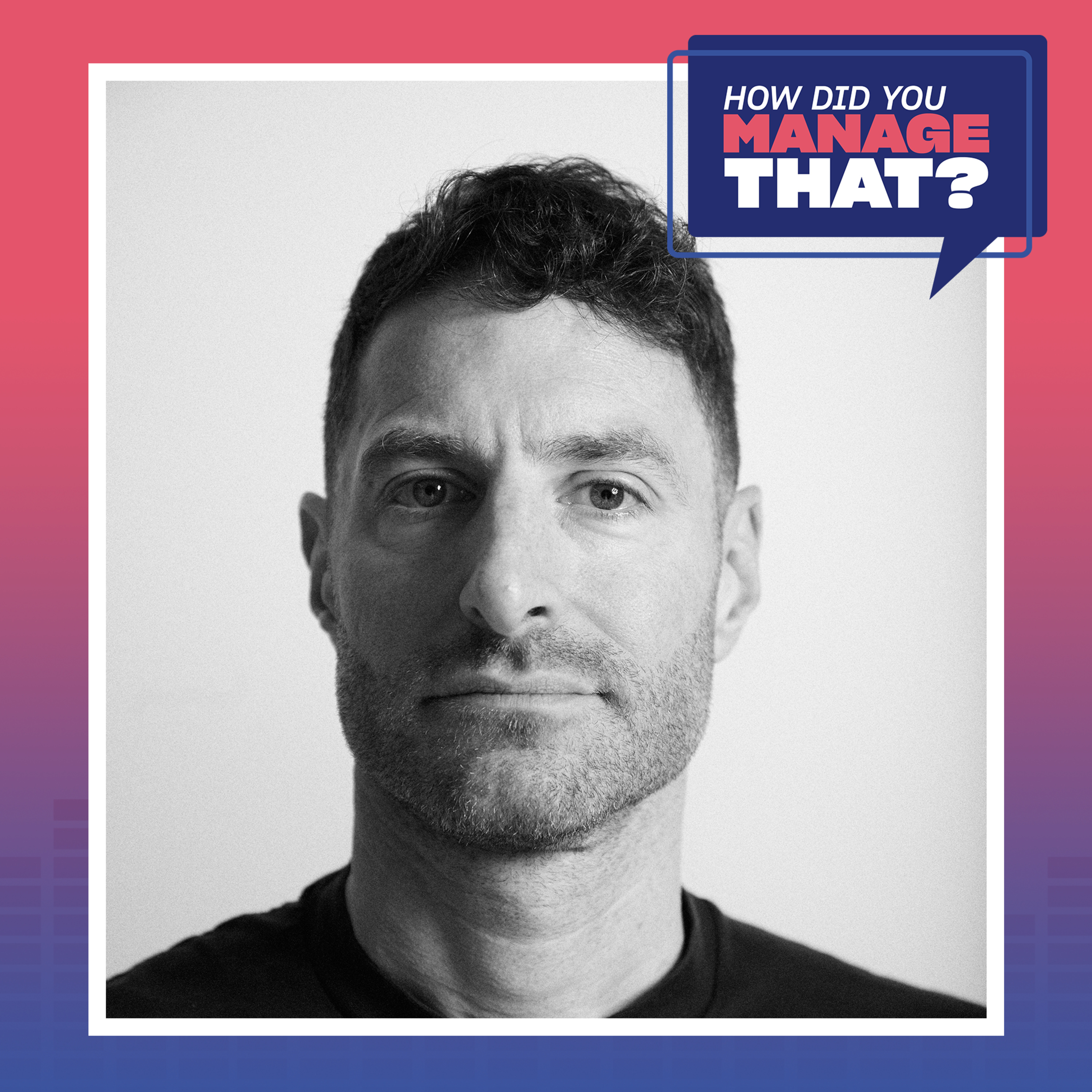
Oli Isaacs (Bicep, James Ford) on creating meaningful fan communities.
54m 52s
The podcast episode features Oli Isaacs, founder of This Is Music, discussing his journey from a corporate law career to music management. Initially organizing club nights as a passion project, he transitioned after meeting artists like James Ford and Jas Shaw, eventually building a management company with a specialized team. The company prioritizes long-term artist development, aligning commercial opportunities with creative integrity, as exemplified by the six-year runway before Bicep's debut album. Oli emphasizes balancing art and commerce without internal conflict, relying on shared values with artists. The conversation also addresses industry adaptations during the pandemic, such as innovative live streams and direct fan engagement strategies, which earned them an innovation award. Throughout, Oli advocates for patience, strategic fan community building outside algorithmic platforms, and focusing on sustainable career growth over fleeting content trends.
We are back. How are you, Oli? You good? - Did you call me Oli? - I'm called Oli. We're called Oli. What the hell? - He called me Oli. - Because Oli's a guest and we haven't done a podcast for the very three years. - Oh, Oli on the brain. Exactly. Oh my God. Right, start again, right? We are back. Welcome to How Did You Manage That. I'd just like to note that I've had to record this intro three times because it's been a while. I'm Sophie. - And my name is Ali. This is a podcast where we grab a different music manager every episode and pick their brains, find out their secrets, find out about highs, find out about the lows and try and get the inside scoop on how they have been managing their artists' careers. Our first episode in 2022 is a big one. We have got Oli Isaacs on the podcast. He runs This Is Music, an amazing music management company and label which is founded out of a real independent spirit. And if you love electronic music, you are going to want to lock into this. - For those of you that don't know, This Is Music is an incredible music management company. They are a label, they've put on club nights in the past. They are just kind of legendary electronic force in the music industry. I think it's better to say that also, his roster has been nominated pretty much for every single of a musical award you can think of. I think Mercury's, Brits, Grammys, everything is insane. - We had so much to discuss with Oli about that incredible roster, about how he started out putting on club nights and came from a very, very different background professionally to get into it. We talk about the struggles of the last couple of years. We talk about the successes of the last couple of years, including Bicep, who released a second album, which for me felt like the soundtrack of the pandemic in no way should that be seen as a bad thing. I think it just shows how hard and how innovative they worked and all he worked to get that music out there during that really difficult period. - And if you want to get in touch while you're listening, you can reach out to us at any of our social handles. It's @managethatpod on Twitter and on Instagram. We are hoping to start a TikTok, but please don't help me too. - Right, enjoy this. This is a brilliant Oli Isaacs of This Is Music, tell us how the heck he managed that. (upbeat music) - So joining us today is the amazing Oli Isaacs from This Is Music. They are a phenomenal management company. They look after some incredible acts, the likes of Bicep, James Ford, J.D.G, Roosevelt, Ross McFriends. If you haven't heard of any of those artists, then what have you been doing and where have you been? Would it be my questions for you? So please go and check them out, if you can. Oli, thank you so much for joining the pod. Let's just start off with a really simple question we ask people, which is, what's on your to-do list today? - Today is a busy day of meetings. I spent the morning thinking about priorities for the year on a personal and the company-wide level, but I've got after this podcast, three more hours of zooms with managers in our team and artists and one pitch meeting with a label services company. - Nice, let's dive in just first of all, talking about this as music as a company. I thought it would be great if you could, in your own words, kind of explain a bit about the company, the artists, the culture, day and I say it without sounding too wonky, the mission statement. Like what are you guys about? Because it seems like a really interesting place. I mean, we had a note that you've got seven managers on the team, is that right? Including a lawyer, a neuroscientist, a radio plugger, and a live agent, is that by design or just by luck? - Not by design, no, although it's, I suppose, part of the DNA of the company is that, whilst managers generally are jacks of all trades, we have people who are specialists in certain areas and bring individual kind of backgrounds and skill sets. I think to tell the story of the company, I probably need to talk a little about how I came to be a manager and my background and my sort of origin story, so to speak, within the music industry. And because the company really has grown from me being on my own, I don't know, like 15 years ago, it's such a long time, I'm a bit hazy on the actual specific date. I mean, this is music I think was incorporated as a company in 2007. So is that 15 years? That's so we're 15 this year as a company. I was managing probably for two years prior to that on my own. And was joined quite quickly whilst on my own by Luke Williams, who's one of the other directors here. So he's kind of been here the longest apart from me. I was not really aware of the fact that you could have a career in the music business when I was thinking about career paths and doing A levels and a degree. I went to university, got a law degree. I qualified as a barrister. I practiced law as a barrister for a number of years, originally doing criminal law. I was predominantly doing criminal defense work, but also some public law, a little bit of prosecution, became disillusioned with that for various reasons, which I think are not the subject of this podcast. And I ended up going to work in the city for a massive law firm doing commercial work, did a bit of corporate stuff, got into doing IP, although not the sort of sexy IP that we deal with in the music business or entertainment, I was doing fairly boring, domain name disputes. I was doing patent law, I was doing a bit of trademark stuff, but it was all thoroughly boring and not for me. So at that point, had a bit of a career crisis and was like, how do I do something with my life that reflects my personal interests? And I had always been really obsessed by music from the age of about, I don't know, 10, 11, 12, 13, getting into listening to my parents' records and then eventually kind of adopting, becoming a fan of artists on my own. And I had basically for fun set up a club night in what is now the old blue last. It was actually called the old blue last at the time when it wasn't owned and operated by vice. It was run by an old East End gangster called Tommy, I hope he's still around, you might not be, I don't know. But he went back to the crazy warsheetskin coat he drove a second time Jag. And he let us do parties at the old blue last 'til three, four in the morning. It was really fun. We had a bunch of people come and DJ, we had some live acts. It was something that me and two mates were doing really for fun. And through that, I ended up meeting James Ford and Jas Shaw, who were friends of friends. And actually it's quite interesting at what a small world it is because they were friends with lots of people. I was friends with Tanya Gendley but we hadn't ever met until they came to DJ at one of our club nights. And it was just really good timing. This is like a sliding doors moment, so to speak, on which pretty much the whole of the rest of my life unfolded. - It is. - Because they were just going through the breakup of their band Simeon. They had kind of formed Simeon mobile disco as the dance music offshoot. That's how come they were DJing for us. They were breaking up with their manager. And the manager took the lawyer who they had been previously using. He was Gavin Mord at Russell's. And they sort of said, "Oh, yeah, we really need a lawyer." And I was like, "Oh, I'm a lawyer." I didn't know anything about music law, I have to say. And probably should have told them that. Eventually, I think, because they were maybe naive, or I was persuasive or both, I ended up becoming their lawyer. And very quickly moved to a music law firm, working with two partners who had both come out of major labels. I did about two years as a music lawyer, working with various people, and ended up managing some of my legal clients, among whom were Simeon mobile disco, both James Ford and Jas Shaw, as producers, little boots, who we ended up signing to Warner's and having some success with. And the guy called Finlay Brown, who also had a bit of a moment, and we'd made a couple of records, which we're still incredibly proud of. And I think you probably never took off in the way that he perhaps deserved to, but he was certainly one of the foundational artists that I learned to manage by working with. Very quickly realized that, "Hey, I couldn't do all the work myself, and be able to have quite a large amount of the work that I didn't really want to do." And I think, I like doing the stuff I'm good at. I don't like doing stuff I'm not good at. And so I started to figure out how I could kind of build a company and delegate some of the work. And I think I'd always aspired to growing it a bit. And where we are now is sort of the, the next, it's probably a third phase of the journey, the first phase being me on my own, Luke then joining the two of us working out of, we had one desk between the two of us at the premises studios on Hackney Road, where James and Jas from Simian had their studio. And we couldn't come in on the same day because we only had one desk. And then eventually we kind of moved out of there and moved into an office in Haggeston. I actually, I moved to the States between 2011 and 2016. So I was working kind of on my own there.
And we built a company bit by bit with different people coming in. The team we have now largely have been with us for a long time. Simon Gold, I think, has been with us 10 years and he's a superstar manager. Somebody who came in as an intern, became an assistant, became a manager and now has phenomenal roster and is just doing incredible things. We have three directors, we have four managers now and we're sort of in this phase where we're looking around and saying to ourselves, how can we provide better services to our clients and how can we investigate and kind of try out different models, both for ourselves and for the clients, that will yield better outcomes for them. Because I think everybody wants to work smarter and more efficiently. There's a lot of opportunity at the moment, a lot of things we can experiment with. Definitely, we've got loads of questions to hit you with specifically about the artist, but I'm really interested about that early period when you were putting on these parties total passion project, but also daytime you've got almost that sort of split life of very corporate, very IP, you know, unsexy stuff, as you said. When you first started making a business out of the art, how did you find that was that an internal conflict or did that just come naturally that it felt right? There's always this tension between art and commerce and I think good managers, good labels, good artists even get it right and I think it's about understanding this attention and understanding where the balancing act lands for you. I think necessarily for artists because they're on the creative side, they will probably land towards the art and managers will tend to land towards the commerce and you've got to balance that out. I've never found it particularly a problem. We've defined a set of values within the company now, which we've actually written down and published internally. I don't know that we'll ever publish them externally because they're not relevant. They are to the rest of the world. What we're looking for is artists who share our values so that there isn't really a whole dispute over, "Oh yeah, we want you to go and play this gig in Saudi Arabia." And then, "No, no, we don't want to do that because we're, I think, we opposed to it." We're pretty much on the same page as our artists. But when it comes to the balancing act, I think what we're looking to do and what I've always looked to do when I was a lawyer and as a younger manager was to present the artists with opportunities to grow their business and to monetize their audience, but to do it in a way which is compatible with having a long-term career. And I think when you train as a lawyer, you're well versed in firstly worst-case scenarios. And secondly, in the balancing of rights and responsibilities, and it's quite easy then to give advice and either have somebody follow it or have them not follow it. And at the end of the day, I've never been in a situation where I did something I regretted or didn't do something that I regretted with an artist. It's just never really come up. I think what's really interesting and what you touched on Ali is that, like you said, this relationship she's not on commice, but now this kind of always-on-always-producing content world that we live in. And I think when we look back to, for example, your kind of management and history of bicep, I think from our notes, you started managing them in 2011, but the debut album didn't come out until 2017. I mean, it can't imagine if you'd side with a major being like, we're going to sign with you, but we're going to give us six years or so for the first album. I mean, that would be like, I'd love to be in a fly on the wall for that conversation. So obviously you didn't side with a major, but how did that process work? I think that's fascinating that you can be with an actress so long. And obviously they do have an output. They are putting out tracks, they're DJing, they're travelling the world, whatever they're producing. But can you tell us a little bit about that story and how you got from, you know, managing them in 2011 to that debut album not coming out to, like, you know, six years later? Yeah, I mean, the joke is, and it's sort of not a joke, you know, in the ideal world you'd have that six-year runway before you get to the point of, you know, development for an artist. And I genuinely believe that you have to be patient, you have to take your time. That said, I don't know that many businesses that can sustain that long a runway into, you know, monetising value in a project. I think with Bicep, they're a special case and they're a special act because, you know, you started off talking about the content, sort of, merry-go-round or whatever. And there was a really interesting short piece in Music All I this morning, which kind of picked up on that Chelsea Cutler Instagram post. And we can talk about that. And I think it's really important to kind of get to grips with what algorithms have done to productivity and creativity and all of that. But that wasn't the case when Bicep started out. Now, Bicep had been, before we started managing them, they had been absolutely brilliant as content producers because they were working on a blog, which again, for them was a labour of love. It was a reflection of their musical passions and interests. And they were unearthing files of rare italotracks, things that they liked. And it was in a time where not everything was online. So they were finding these things, digitising them, putting them online and writing about them. You know, we talked to them quite a lot about how we can work going forwards on maybe bringing the blog back in a serious way or what our content strategy actually is beyond doing the traditional things that we do at the moment. And one of the things that I think it was Matt from Bicep said was, "Oh yeah, it would take us longer to find the artwork images for the blog post than it would define the music." And, you know, this was the health-fustigious they were about the quality of the content they were putting out. It certainly wasn't super disposable, you know, kind of TikTok, Instagram kind of posting. And that's the world that we live in today. And, you know, for better or for worse, that's what a lot of labels are focused on. We go into meetings with labels who are pitching our artists and they want to talk about your TikTok strategy. I've never used TikTok. I don't know much about it. I don't know if any of our artists really use it personally. And we do use it professionally for a few of the projects. But I hope I'm not revealing any secrets that will kind of devalue my mind. I don't know anything about TikTok. I know that it's useful. I know it's useful because I've seen stories in the music press, not to be useful, but it's not something that I personally have any experience of. I'm actually off social media largely apart from Twitter, which I like to use for football stuff. But I don't really use any social media personally. And that was a decision I took a few years ago because I was spending time on it that I wanted to spend reading books and hanging out on my kid. You know, I don't want to be sat at home scrolling through Instagram. It's amazing that you mentioned, when talking about Bicep and the concept, the content that everybody else does. But you guys recently won an innovation award, the MMF's Artist of Managers award. And that was between this as music, your company and the act themselves, which I think is a beautiful thing to see both sides getting awarded for that innovation. It'd be great to talk about the IELTS campaign, the second album from Bicep. And obviously, you know, we can have a podcast like this without discussing the last two years of the Hellscape of the live music industry because of the pandemic. But not least because I feel like a hair day per cuts all the time on Radio One and Six Music, but it did feel like Bicep really had a moment last year specifically. And yet, I'd love to know about that campaign. You know, we've seen notes and articles on WhatsApp groups with fans and the artwork was just spectacular, a live stream with what participants from 70 countries around the world. How did you approach that and was that fully planned within the pandemic or was it kind of half planned? Was it quick turnaround change the plan? How did that go? It's really hard to remember, I think it was a bit of both. I don't know what I remember. I think it was a bit of a good look at it so long ago now. I mean, you know, we're coming up on this month. I think this weekend is the first anniversary of the record. And we've got a few bits and pieces planned, like there's going to be a playback on Twitter and sort of listen back on Twitter. But in terms of how we planned it, we did have to pivot. We obviously had touring plans to support the album, which we couldn't do. That was where the live stream concepts were born out of. And I think it's really important to recognize that when we get an award for innovation, we're obviously mega proud of getting the award with Bicep. But, you know, I think to a large extent, they and their creative team are the innovators. We put a strategy together with them. And we, you know, we, I'm not trying to be sort of fake modest about it, but we came up with a strategy with them, but they execute that. And there's no innovation without the creative side of what they delivered. And I don't think it would have been successful. Had we not been able to go from the first live stream, which was brilliantly done to the second live stream, which was different. And they had so many refinements to our original strategy proposal. We proposed these big picture strategy ideas. Can't tour. Let's do a live stream. But they then refined that down into the product that the fans consume. And that's why it becomes successful. And that's why it's innovative. How we, how we did, you know, things like the WhatsApp groups. And that's, that's simply part of the philosophy we have for fan base building. When you look at the algorithmic and database businesses and platforms that you have to work with, whether it's face.
book Instagram, whoever. You're working on the terms of those platforms. You are allowed access to your fan base based on a take rate of whatever it is that they get to monetize your data, your fans, and they allow you access to those fans and they change the rules from time to time. They change the algorithms from time to time. That is a very imperfect world for community building, for fan base building. One of the things that we are mega conscious of and striving towards getting better at is the idea of direct relationships with our audience. I wish we were as able to define how we've done that on all our projects as well as we can with Bicep. We literally have these WhatsApp groups in which we can communicate with real fans in real time. Okay, WhatsApp is open by Facebook, but never mind. At least we can have a direct conversation. One of the things that we'll be able to do in the future is find ways outside of WhatsApp to communicate directly with fans, to create a sense of community, to create real engagement direct to fan. I'm really passionate about and wanting to follow through on this idea of a thousand true fans. It's really important. It doesn't have to be a thousand, but small groups of fans who you can talk to directly without having an intermediary third person platform in between that's making money out of your data, that's going to allow you to a, deliver what the fan wants, but be to grow a business which doesn't rely on algorithmic platforms owned by other people with only their own interests or their shareholders interests at heart. I'm not down on DSPs. I love using Spotify. It's great, but I totally understand why people don't want to be on it. I totally understand why people want a cell through bank. Do we want our artists to abandon DSPs? I don't think we do, because actually I was talking to a colleague about this this morning. I think that for Bicep, for Roosevelt, for our artists generally, I think that in the long term, they will probably make more money out of their masters through the streaming ecosystem, long term, than they would have done, had we been selling a physical record, getting a percentage of a dealer price on a one time transaction. If you think about the dealer price of record used to be 699 or something, and if you sign a traditional record deal, you'd get maybe 20% of that. If you're lucky, less whatever deductions were in your, you're probably unfair royalty account. Lovely packaging deductions. Yeah, packaging deductions, also some deductions, mid price deduction, budget price deduction, anywhere they could reduce your royalty, they would reduce your royalty. Even if you even if you aren't worrying about that kind of royalty calculation stuff, it's a one time transaction. So even if you've got the whole of the dealer price, even if you've got all 699, you know, on any transaction basis, you're only getting it one time. And so five years after, you've got catalogs, but your catalogs are not really earning for you unless you're syncing it. Whereas now, actually, if you can figure out ways to keep your fan base engaged, then subject to the algorithm committing it, you will get paid by your distributor or whoever's looking after your rights for you, you will get paid long term. So I think long term actually does work out. My big bug bed, the thing I'm critical of actually is the traditional deal models being applied to the streaming ecosystem. And it's obviously a huge hot topic in the music business. But I'm not that worried about what Spotify, but I'm going to rephrase that. I'm not saying I'm not worried about it. I am worried about what Spotify pays per stream. I'd like them to improve it. But that isn't the biggest problem. I think the biggest problem actually is on fair record deals, which provide the lion's share of digital income to record labels rather than to artists. And I think there's a certain point at which artists need to, a, protect their rights and be able to lion's share of that income if not half of it. So that's the thing that I'm looking at sort of deal-wise. That makes a lot of sense. Bicep for one obviously huge stats on Spotify specifically. And number two album in the UK and Irish album charts. Number five in the world wide Spotify album charts. Obviously on the playlists as well, they land on so many playlists that I just appear naturally by us most as well. How do you find that for some of the more emerging acts you're working with editorially at DSP? How are you finding that not battle, but is it something you worry about? Or does it just if it comes great, we're building the fun bit? Yeah, you worry about it maybe at certain points. I think there's a bit of a period of time where what you're trying to do is just put records out and you know trying to activate pockets within that kind of early adopter audience and editorial is a big part of that. But I think we are working on a bunch of development projects at the moment and it is really clear that if you don't get editorial support you don't really acquire an audience. And we've been scratching our heads a fair bit about what we're you know what we're terming the cold start problem when you're a brand new artist without an audience. How do you then connect with people you want to hear it? And you know just to use an example typically the sort of music we work with is very much in line with the altar playlist on Spotify. And so altar play as first is kind of almost preaching to the converted in a way. We would expect our artists to go on that playlist and generally they do. I can't think of a project we've put out where we haven't had support from that playlist which is fantastic and we're grateful for that. But in order to grow outside of that world and not just preach to the converted but to find fans in a broader sense then we need to be doing something different. And I think it's the problem poses a question to which there isn't one solution there's a whole menu of solutions and a whole toolkit that you need to address. And this is you know there's not enough time in the world to do all of these things but you know what we're looking at is every single platform which is right for the artist which is right for the content strategy that artists has which is right for their music that they have the temperament that they have you know what are they naturally inclined towards and then we're dealing with the problem fragmentation of media. And you know the lack of value in press there's a perceived lack of value in press certainly early on for artists when there isn't as much of a narrative. How do you even have a conversation with radio? It's very expensive. What is the relationship between radio play and streaming? Does radio play promote streaming? You know we've got a project at the moment which I think typically you would describe it as a development project because it's a brand new artist by the name of Anish Kumar who's unbelievably exciting talented musician and somebody who just really lucky to be working with because he's so prolific and has such a detailed idea of how he wants to run creative and really discerning. And but you know the reason why he's somewhere you know it's further down the lines because he's been playlist for the radio one as of this week on his debut single which is really like unusual. We've been discussing with him the idea of the cold start quite a lot because he started throwing tracks up on YouTube and you know the level of engagement on YouTube is not that you that you would expect from some new just got playlist on radio one. Radio one is not sending people to his YouTube channel they're listening to it on radio one wherever they listen and they're satisfied with that. They're actually shazanning the track a lot it's in the top 30 or top 40 on shazam it's in the Spotify viral chart now but you know streaming you would expect streaming numbers to be really high on a project which had so much radio support and they're not bad I'm not I'm not negative about them but then they're certainly not into the millions yet and this is for a project that's been out for you know certainly a couple of months now and is just gone on the place so what will see what happens I mean there's a I think label it's an update saying there's a 20% or 27% improvement in streams just prior to going on the playlist and off to see what the playlist does and what our journey is on radio there but you know that's that is something we do you know we do worry about how to get outside of the the natural environment on DSPs and and and into you know how do we fare on on the new music Friday playlist which are very broad general wise you know can we compete in you know we describe our spaces underground to crossover electronic music how does underground to crossover electronic music compare to major label pop you know and and all the other things that get thrown into get thrown into those playlists you know can we actually compete there yeah I kind of understand what you're saying I think it was Kevin Kelly that did it about the first 1000 fans you have are your most important because they are your most dedicated and the ones that are going to take your message and travel and recommend your track to 100 other people and they're just so engaged and yeah it's it's really interesting we have quite a lot of young up and coming managers who listen to the podcast and they've just started managing an act and they love them and they'll say something like I've got 500 pounds or a grand or two grand for my first kind of single with my act it's all done it's all recorded artworks done everything he's the creative whatever but what should I be spending that and should I be spending that on press should I be spending that on radio should I be taking that to grand and doing an event or building something special on discord like what would be your advice if somebody said I've got an amazing new electronic act his creative is amazing we've done this great video visuals I've got 2000 pounds in the bank where should I spend that what should I do with that that money I think it's a really hard question to answer and you know we even with the number of years we've been doing it still ask ourselves that very same question the first answer is it's different for every project so there isn't a one-size-fits-all.
answer. I think the second caveat to any advice on how to spend a budget on a release is that your strategy shouldn't be focused on one release, it should be focused on a period of time, potentially a year, but you know if you want to be short-term six months to a year, if you want to be medium-long term you're looking at you know one to three years and what you want to be thinking about is how your single release through the next single release or next record release joins up with the rest of the plan and that will inform your question about how do you spend your budget because if you just isolate the question how do I spend let's say two thousand pounds from X distributor that they've given me to do this let's let's say it's a single I don't think you can answer that question without knowing what the next release is and what the goal is in terms of are you gonna get towards an album is your is your artist an album artist they don't have to be it's not sacrosanct that you have to do albums so that's the first thing is like how do you join it with strategy that will determine what to spend this I think it might be easier to say what I wouldn't spend it on starting out I wouldn't spend it on press because I don't think until you've got a story unless your artist has a story already I just don't think it's worth spending on and I'm not trying to be down on publicists there's some amazing publicists to give amazing advice and they add value on strategy they help with social stories as well as create you know content creation ideas so you should engage with PRs but I just personally wouldn't do it for an electronic artist on the first go round what you're actually looking to do is create a moment that resonates somewhere within the bigger strategy that you have and that's what will determine what you spend your money on so it might be spending on a video you might spend it on content you might spend it on simply advertising the content you already have within the online advertising world again I'm reluctant to advise people to spend all their money on advertising because I think you know you've got this cold start problem unless you have some really sticky viral content and who knows what that is it's really hard to predict what's going to be sticky and viral unless you've got the right content then spending money to promote it you won't see a proper return on investment so you know ultimately I think you can do quite a lot without spending money if you've got a patient long-term strategy and you don't expect to see immediate results within the first three months six months whatever I think there's nothing wrong with creating a sort of online world for your artist taking advantage of platforms which are free you know distribution publishing which is free on those platforms the key to it is just making really good content and then I think beyond that what you're looking at doing is creating a community or network at which sorry of which the artist is at the centre and and it's an interactive network there was a sort of concept that I don't know 10 15 years ago marketing used to be done via channels to an audience and it used to be one dimensional you'd pump your content down the channel it would be consumed by the audience now we're in a sort of network environment where actually what we're looking for is a back and forth interactivity between artists and fan between fan and fan you know having that having that those fan to fan networks and being able to create you know even very small networks of artists to artists and I think it's really important to find artists you are able to consider themselves part of an artist community and that's another way that you'll build up your artist presence so if you've got a big club record then spending money to promote to DJs and within the club scene is a valid way to spend money I think it's about just trying to do what you can without having to try and yield measurable results through spending initially because I don't because I actually don't think that there's that many results that you where you'll look back and you'll be like oh that was too round well spent no the end of the day it might be that the artist has some crazy creative idea we're like I really want to make this amazing video and this is the idea I'm going to need 15 hundred to do it you know my mates got a camera but we're going to need to hire some stuff that might be a valid way to spend it as well and it on creative I just I don't I don't think that you've for two grand you're going to get some crazy measurable result that will be the launch pad to your career I think it's much more likely to come out of just having a really solid set of tracks and and a strategy that isn't just what's going to happen with this release but what's going to happen this release to the next one to the next one and really look take a long view because because two grand's not going to two grand at the end of the day isn't going to be a budget for 12 months you know what you want to do is put yourself into a position where you find a partner who will back you for more than just one release or back you for three four five six releases I think that is one of the best and most eloquent answers to that very difficult question we've ever had because that's so many roots that I think maybe someone just getting into industry might not have considered and just looking at things in in a different way so I appreciate it. I just wanted to add something on that which is which is the I mean we think about these problems a lot and so you know these are things that I'm thinking about on a daily basis but one of the things that I'm yet to find a solution to because we've got all this data none of us are data analysts we're not specialists so actually if somebody was giving me budget for something and it would be a lot more than two grand to pay for it I'd want to hire a data analyst who could actually tell me this is what your data says and this is what you need to do about it those people are really expensive and they're mainly working for tech businesses but the big problem that we've identified and don't you have a solution series when you've got all this data and you know how many fans you've got on Instagram you know how many or what your audience says you know how many people are listening and Spotify how do you convert that data into a measurable and worthwhile result for the artist and that's that's much more difficult. Capturing an audience on a social platform is one thing but actually being able to convert that into probably the two most important things which are your record sales or streams and then tickets that's that's that's the magic and you know I just I think part of it it may be going to instead of saying to your label partner I want my two grams so I can spend it it's probably going to find a label partner who has a data analyst or who has an audience acquisition department who gets your artist and gets how to get moving from A to B. Yeah that's that's really crucial I was just really keen on discussing about the production business of a lot of your artists because I think that's obviously from inception of this is music James Ford of course you told us that story about when you met he was moving from band to DJ and to then into production and then of course has gone on to produce some of the biggest albums in the planet. How do you kind of manage that process with the artist is it quite natural? Okay I've done an artist campaign and now I think I want to focus on production work or is it a constant struggle does one help the other? Yeah again different for everyone in James's case. I mean James is fortunate to be the most talented person certainly from musical perspective that I've ever met you know he's up there with the absolute you know sort of the best and he's kind of up the the zenith as a producer you know he's lucky that he gets to choose the project he wants to work on and when he started out I mean I think James had produced a number of records for his own band and projects for himself before we met and one of the things that I was doing as a very new manager and actually as a music lawyer as well and this wasn't through any great stroke of genius on my part it was literally I didn't know what else to do but I was putting my producer client with my artist clients and ended up putting James in with a band who I was also the lawyer for called Testicycles and I don't know if you remember Testicycles but there were signs of Domino. There were signs of Domino. They were amazing they were amazing so Dev Heins of course has gone on to great heights but he was in that band James produced their first album and that was as a result of him going into make some demos for them because they were managed by a guy called Ian Watt he's also a very successful manager but you know they need some demos James produced Domino signed them and that was really the first thing James did for Domino fast forward he's produced I don't know how many Arctic Monkeys records I will refrain from talking about the next Arctic Monkeys record with the James produced because it's probably a barcode but you know he certainly he's built his career around that you know that backbone of having one band who he's done a lot of work for and I think you know that's something that we're really proud of for James you know he's not just somebody who's gone and made lots of successful records for lots of different people but he gets a lot of repeat business because he's amazing to work with I hope it's fair to say and I hope that I won't get in trouble of saying it that he's almost like a member of the Arctic Monkeys at this point because of the level of input that he has. For other artists that we work with we're always looking for you know everybody we work with is a producer. Everybody plays instruments and producers. I think there's a time that's right for them to get into producing for third parties it's quite a different gig you have to make more compromises it's not all about you it's one of the reasons why James is so good actually is that he's an amazing negotiator. A) because he brings a lot to the table talent wise but B) because his sense of aesthetic and taste is so good and and he really like will improve any piece of music he's given to work on and but it's not just about can you improve it it's about can you get those improvements past a bunch of people or one person who's the artist who really cares about their vision and not necessarily about your vision. The producer is not there being artists are there to augment the artist to facilitate the artist to enhance the project for the artist so temperament wise being a producer is not right for everybody collaborating in a room is not right for everybody some people do it better remotely which has been obviously very interesting for people over the last
two years where sessions have become remote for a large part of the time. But, you know, we generally have a really strong approach to how we do produce a management work. It is something that the artists can leverage their artists records to bring in. I think Rooze has also a good example. He gets producer work because other artists like his Rooze of Art records. He's also incredibly talented and plays any number of instruments. He's produced three of his own albums, has recently started working as a producer for other people and doing lots of bits of work along those lines. But I think, you know, everybody we work with has the potential to be super successful as producers. Bicep, I think only one cut to their name. And that was a project. It was the last Jesse Ware record. It actually wasn't on the album. It was a single that came out before the album. James Ford was producing the album and brought Bicep in to kind of co-produce on the track. They've been approached by loads of people. They haven't ever felt the time was right for them to kind of jump off into that. Let's produce for the people. And I think it's partially a psychological thing for them is like, how do they want their work to go out into the world? And at the moment they want to go out into the world as Bicep tracks. Or, you know, under kind of a project that they have a lot of control over. So I think as a producer you sort of see control to the artist, to a large extent. And as an artist you see control to the producer. To a large extent there's this balancing out going on. How do you, if we come away from production slightly more into the writing world, some of the things that we've kind of been deep diving into recently is, and obviously there's been a lot in music press and the MMF and musicians union and versatile. There's fighting for kind of more rights for writers I suppose because obviously they are no songs without them, but they kind of get the bottom of the barrel when it comes to any kind of fees. If you're lucky even you even get a fee as a writer. And in terms of the cuts they get from publishing when it filters down to the DSPs and things. How do you, I mean, I presume that most of you guys probably write and produce, right? It doesn't just sit, it's not just a top liner who comes in and vanishes and it goes into the, the producers fear. How do you feel as a manager and also obviously you've been a lawyer and you still probably are in some respects? How do you feel about those deals that writers have at the moment and how do you feel they should be shaped to make them more kind of sustainable for the future? Yeah, it's a really good question. The slice of the pie from streaming revenue, from digital revenue that is purely reserved for writers is very small. And I think if you look at certainly outside of the kind of million, billion streaming tracks, if you look at the publishing income that's driven by streaming, it's quite low. I started out doing my first publishing deals before streaming and publishing seemed to represent actually a really good way to make a living. You know, get a solid advance and you could recoup that advance if your projects were the right ones. And I think there's some truth in that now, certainly on our roster there are people who have decent publishing deals with decent publishers who are backing them financially. But then when you actually interrogate, you know, per million streams, what a public, what a writer who has 50% of a song gets, it's very little. And so that's troubling because, you know, we think about actually how to run a business for our clients. And when we look at the business, it isn't just, before I said it's the two important things, the sales and streams and tickets. But actually, the important thing is that every year we look at the artist's business and we say, how did your business do? Did you make as much money as you want to make, as you need to make? And are we stimulating progress and growth in line with the strategy that we all agreed upon when we started out this period of time working together? And I'm deliberately being vague about all those things because every artist is different. And you know, some people want to earn as much money as possible in a shorter time as possible and that's their prerogative. Most of the artists we work with want to earn a decent living, they want to earn a sort of middle class wage and they want to have proportion of free time for themselves and they want to have total creative freedom. And over time they want to then see their businesses grow in line with the values that they have both creatively and sort of philosophically. And so the question is, where does writing and publishing fit into that as a sort of slice of the pie as an income stream? What we're seeing, we tend to try and prioritize deals that have the highest share of the revenue created for the artist. So therefore we don't take a lot of up for money most of the time, although we have done some deals where we've done traditional publishing deals taken a decent sized advance. But where we're starting to see good money coming in is at the higher end of streaming. So you really have to have high consistent streaming to actually make decent money from that side of publishing and songwriting. Would we work with somebody who was simply a songwriter and not an artist or not a producer? I honestly don't know that we would. Never say never, there might be somebody who comes up and we just fall in love with what they're doing. But I think it's a very specialized game and I don't think we're specialists in that world. There are people much better than us who do it who are specialists. And then the people we go to when we want the top liner or we want a writer who just writes. But equally I think there's a business model. I think that's very tough. I think unless you're writing for a Dell or you're writing hits, I think it's really tough to be a writer. And I don't really have a solution to that other than people are saying we need to legislate to kind of enhance the income streams for writing. I don't think there's a huge appetite to legislate. I think obviously the recent select committee hearings were very interesting but has there been actually any action? We'll see where that ends up. I think with everyone's very focused on streaming revenue and equitable remuneration and that kind of stuff, no one's really talking about how to make sure that writers are fairly compensated. I mean it's a struggle to even get a writer's page on Spotify at the moment. I don't think James has one. James has done a fair amount of writing. I don't think he has a writer's page on Spotify. We're waiting for them to open up some more. A good starting point just to give writers a bit more public credit. You can see who writes a track on most of the things on Spotify and Apple. But actually beyond that they're not really getting the same level of awareness and credit that producers are. And then if off the back of giving them credit and giving more awareness, maybe then there'll be a conversation about getting them paid fairly. So something we try and promote on the podcast here and we're quite into, is talking about balance, I suppose, is the term rather than mental health, which is how do you as a manager? Because a manager is not a 9 to 5, I think we're all very much aware of this now. How do you as a manager strike balance? I'm really lucky that I have an amazing team that I work with in the company. And so there's a lot of sharing of work and of stress and I think we all kind of like help each other with that. But I'm sort of, I'm lucky in the regard that I very rarely get called at 11 o'clock at night with a crisis situation going on. Certainly not for a number of years. So I think my stress levels are that a bit more manageable as a result of that. In terms of things that I do personally, some years ago it was a lot of yoga. I don't do so much yoga anymore, but I'm really, I exercise religiously. Like if I don't exercise, I don't feel good. So I run, I do crossfit, I go to the gym. I did meditate, I love meditating, I don't do it enough. I wish I had a regular practice, which I could say, I meditate by, by don't really. I think there are things that I do that have a meditative effect running is probably one of those. I think also it's just important to delineate the line between work and personal life. And I think when a lot of the time it's fluid and malleable and that's okay, but sometimes you've got hard lines. And that's just important to preserve mental health. I'm lucky in that my mental health has been fairly robust. Certainly sometimes get more stressed in other times, but I advice that we don't recall many sort of huge personal crises caused by work or otherwise. I'm really lucky again that I have a mega supportive family who understand the work and it would just incredibly foundational. For me being a function in human being. I think also the philosophy of stoicism and it sounds like a funny thing to say, but during the pandemic we, as we went in the office together, I guess we still are during the pandemic, but the first part, the more worrying part of the pandemic, we still do a daily Zoom, but we institute a daily Zoom and we kind of share bits of like stoic philosophy, so markets are really us and people like that, Senica. And so we don't sort of learn a bit about those kind of thinkers and then how to apply them. There's a guy called Ryan Holiday who, as a podcast called the Daily Stoic, who I got really into. Just a bit of his book about the ego. It's a super interesting philosophy. Yeah, lots of those tools. Those are some of the kind of key philosophical tools, but really, otherwise it's just taking time for myself. I watch a lot of football. I don't go out that much anymore and I think actually one of the things that keeps me sane is going to bed early. I get up really early, I go to bed early if I can, but just taking time for myself. I'm absolutely not shy of taking time for myself. I was beginning of the year, I went off to the Russian back
in the Banya number one in Hoxton for three hours on a Monday afternoon. I did some email from there, but you know, just on my own, I had a bit of a nice time, just to decompress, and I thought, maybe I'll do that once a month, maybe I'll do it every week, I don't know, but it is about just taking time for yourself. You can't be on all the time, it's impossible, no one can live right now. Amazing, that feels like a really good place to end. I was only going to bring up one last thing, which was, we started by chatting about Bicep and the incredible year they had last year. How did it feel at any of the shows that you were on that run that was delayed? You know, there was three sold out nights at Brexit, and there was a two massive shows in Belfast. How did that feel to see it finally realised after all the successes that that second album had? I think three feelings, firstly a massive sense of relief that those shows were happening finally. Secondly, pride in Matanandi and their whole creative team, the tour management team, Simon and Sasha from our office who run the project. And then just joy, because that was as a fan more than anything else. I love the music they make, I love seeing them live, and there was a massive amount of joy seeing them three nights in a row at Brexit and seeing them a field day. I was just so happy because I hadn't seen, I think, try to feel that, I hadn't been to a gig for however long. I'd been to a couple of socially distant shows, I hadn't been to a proper gig with an audience. It was amazing to be in a crowd. It was amazing to see people dance. It was amazing to dance myself again, you know, don't do enough of that. I could do a bit more of it. Can you tell us about a song that has soundtracked your life? And what I mean by that is it dubious, you associate this song with a big event or change, or not even a big change, maybe it's the song that you always listen to on a bus and school. It's even a song that changed your life because it was your first big hit you had with an artist. Is there a song in particular that when we say, what's your song or a song that kind of soundtrack your life? What is that? What track is that? I think the first thing that jumped into my mind was Simmy and Mobile Disco Hustler. I think just because it kind of was one of the first, it was never really a hit song, but it was definitely an underground club hit. I used to get a real buzz from hearing it played out by other DJs. It's also an amazing record because it's just so idyllic and it really was a disliked guy at the time. So I think that was the first thing that jumped into my mind. Brilliant. Brilliant. Thank you so much, Tony. Well, thank you so much, man. Amazing to chat to you. It's so good to just hear that passion. You've got so excited every time you mention another one of your artists and just went in another tangent about it, which is just so good to see. I think it's bizarrely, I think we've done what? About 2025 with these interviews. You're one of the first managers to speak about strategy, not just as a buzzword or strategy or vision. You've actually gone, "Well, we do this as a process." And loads of managers do. Obviously you have to. It's a huge part of the job. But I feel like you're embodying that in what you're doing. So it's been brilliant to hear a bit about that. So thank you, man. Thank you for the time. Thanks for sharing. Thanks for having me. It's been a pleasure. Thank you. Nice one. Cheers, man. Yes, Oli, I loved this chat, Ali. And it's something I really needed to hear for myself, because I think it's been two years. We know what's been going on in the world in that time, Yardayard, a pandemic. And I just loved Oli. He's like enthusiasm in the way. He just, yeah, the incredible journey he's been on with his artists in that process in all these two years. And I just thought, yeah, I just needed to hear that. I needed the positivity for him, and I loved it. So it was great. Yes, all about that. Thank you so much, Oli, and this is Music Team for setting that up. And spending some time sharing those pedals with them with us. We're going to be back in two weeks time with another episode in your feed. If you want to hit us up before that, it is @manage.com, and Instagram and Twitter. And if you want to let us know, anyone that you would be interested in, I was talking to someone that you think has got a totally different perspective. Someone that is innovating like nobody else. Let us know @manage.com, and we will see what we can do to get them on. We are also going to be starting a Spotify playlist of all the amazing tracks that the managers talk about in the podcast. So we'll stick that in the show notes, go and check it out. Like, shout out to the Music Managers forum. If you've not heard this podcast before, and you've not heard of the MMF before, and maybe you're interested in Music Management, or you're looking for some support or guidance, maybe you're even an artist looking to take things to the next level and find the manager. Check out the MMF.net to find out more. We will see you next time. Bye.
Podcast Summary
Key Points:
The podcast "How Did You Manage That" returns with an episode featuring Oli Isaacs, founder of the music management company and label This Is Music.
Oli shares his unconventional career path from practicing law to entering the music industry through organizing club nights, eventually leading to managing artists.
This Is Music has grown into a company with a specialized team, focusing on long-term artist development and aligning commercial strategies with shared artistic values.
A case study of managing the electronic act Bicep highlights a patient, six-year development period before their debut album, emphasizing quality over rapid content output.
The discussion covers adapting to industry challenges like the pandemic, including innovative campaigns such as live streams and direct fan engagement via WhatsApp, for which they won an innovation award.
Summary:
The podcast episode features Oli Isaacs, founder of This Is Music, discussing his journey from a corporate law career to music management. Initially organizing club nights as a passion project, he transitioned after meeting artists like James Ford and Jas Shaw, eventually building a management company with a specialized team. The company prioritizes long-term artist development, aligning commercial opportunities with creative integrity, as exemplified by the six-year runway before Bicep's debut album.
Oli emphasizes balancing art and commerce without internal conflict, relying on shared values with artists. The conversation also addresses industry adaptations during the pandemic, such as innovative live streams and direct fan engagement strategies, which earned them an innovation award. Throughout, Oli advocates for patience, strategic fan community building outside algorithmic platforms, and focusing on sustainable career growth over fleeting content trends.
FAQs
It's a podcast where hosts Sophie and Ali interview different music managers each episode to learn about their experiences, secrets, and insights into managing artists' careers.
Oli Isaacs is the founder of This Is Music, a music management company and label known for its independent spirit and focus on electronic music.
The team includes specialists like a lawyer, neuroscientist, radio plugger, and live agent, bringing diverse skill sets to complement the managers' generalist roles.
After a career in law, he started a club night for fun, met artists James Ford and Jas Shaw, became their lawyer, and eventually shifted into managing artists full-time.
They emphasize patience and long-term career building, as seen with Bicep, who took six years from management start to debut album release.
They focus on quality over quantity, using methods like WhatsApp groups and live streams to build communities outside algorithm-dependent platforms.
Chat with AI
Loading...
Pro features
Go deeper with this episode
Unlock creator-grade tools that turn any transcript into show notes and subtitle files.
 PodcastTranscript AI