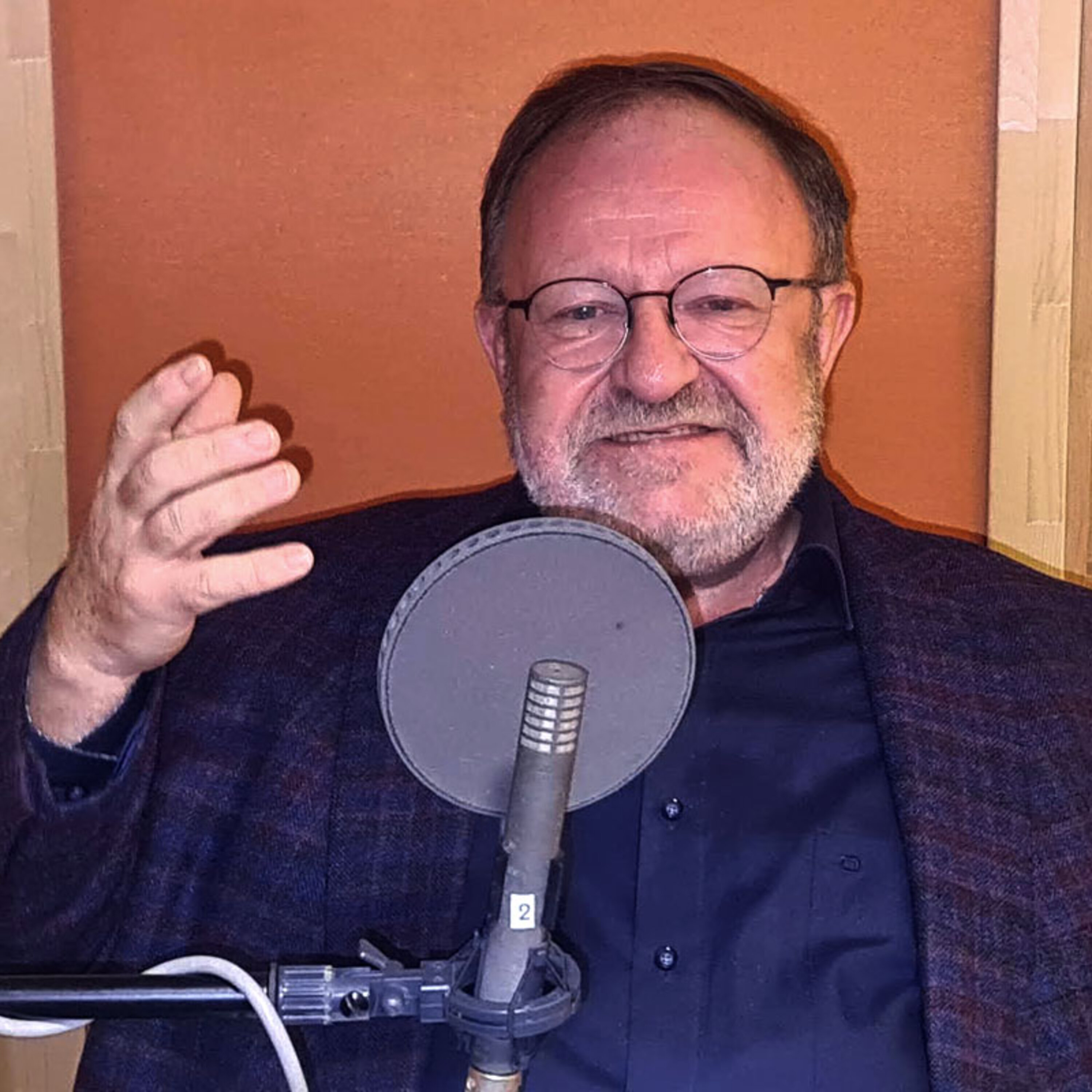
Oldřich Šubrt (Health Plus): Českému zdravotnictví chybí efektivita, aby mohlo zařídit pro lidi zdravý život
32m 4s
The transcription discusses the challenges faced by the Czech healthcare system, particularly in the context of Minister Válek's reforms and post-COVID issues. It highlights global struggles in healthcare systems due to mismanagement and financial constraints. Inefficiencies, lack of transparency, and a focus on treating diagnoses rather than promoting overall health and well-being are identified as key problems. The text emphasizes the need for a shift towards more effective, value-based healthcare and the importance of addressing issues such as waiting times, misallocation of resources, and the lack of preventive measures. Additionally, it points out the potential benefits of data sharing and predictive medicine in improving healthcare outcomes in the future.
Transcription
5011 Words, 26893 Characters
Our health system is the first in the world,
depending on the health, on the workers.
I don't understand how it is possible that after 30 years
there is no news that we have been living for 8 years
since the revolution, but we have been living healthily for 8 months.
And now, after COVID, it has decreased in 3 years.
If we had decreased in the Czech Republic by 10%,
if we had continued living healthily for 1 year,
so that we would increase our GDP by 11.3%.
PICCZ, PICCZ, PICCZ, your message from the world of business.
The Czech health system will be the end of 2020 in Horki.
Minister Válek has called on the doctors over time
to refuse the PICC health system,
which has provided a number of thousands of doctors on protest against the minister.
How is the current situation?
What will be the health system in 20 years?
How much will the technology change?
In the podcast I will tell you about Polcik Schubert,
the founder and also the director of Clinica Health Plus.
PICCZ, PICCZ.
Welcome to the microphone.
Good day, thank you for your invitation.
Ladies and gentlemen, you have experience in the animal sphere.
15 years ago you were in the demonstration at the home,
and now you are in the hospital.
How do you look at the current health system
and the responsibility of the doctors with Minister Válek?
I have been doing the health system for 32 years.
I finished medicine 20-30 years ago,
and I took care of it.
I think there are two problems that arise.
One is that we have some basic mistakes,
the attitude of the entire health system
or the lack of this attitude since the 90s,
and it does not change.
And the other thing is that we are in a post-COVID situation
with two other crises.
The war and the economic one.
And that means that if we have some things wrongly set up,
then when you get into the crisis with them,
then it will start to fall apart somewhere where you did not even realize that it can happen.
That means that I can start from COVID,
which is very interesting when you look at it whole-worldedly.
I travel every year to London every year
for such a whole-world conference
for health care at Business International.
And the Rothschild Bank has a large department for health care
and has a whole additional seminar there,
what is happening in health care in the world,
and then people from various continents come up to it.
And it was fascinating that all of them said the same thing.
Even if they were from Japan, or from Brazil,
or from the United States, or from Qatar.
And they said, when COVID came,
then all politicians,
because today all politicians are populists,
took one to two to calculate health care,
and put them into health care,
so that they could know that they do not know what to do.
It is not a joke that they do not know what to do,
but it is better that they pay for it.
By the way, the money was distributed in the health care system.
And health care was used to receive twice more money at once.
Of course, that something was still waiting,
something was still going on, all the bonds and so on.
But those are not important investments,
or investments, because there was no complete health care.
So you had a lot of money at once.
Everyone got used to it.
The second thing is that a lot of health care was not carried out.
Even today, when you look at the mortality rate in the Czech Republic,
in the summer of this year,
it is higher in those months than before COVID.
But COVID was no longer in the summer.
That means that we have postponed some health care,
health care is no longer like before the pandemic.
Some operations that should have been planned in 2021,
are still okay.
That means you have a deficit of work.
But you have lost twice more money.
And you got used to it.
And inflation came into play.
That means everyone expects that they will be given a lot of money.
But they are not, because the States no longer have it.
And if they do, they have to go to war.
And people don't have money,
because there is inflation.
And that is always harming people.
So we got into the situation that everywhere in the world,
health care is worse than before COVID.
Not because of COVID,
but because of the way we managed COVID.
And that is a big problem.
It turns out that the only one who will be able to save it,
will eventually be citizens,
who are sure that when health care is worse,
and they don't give in to the money they don't have anymore,
they will have more powerful facilities.
They will have facilities that will go further into work.
And so on.
And these are of course major losses.
In the world, these problems,
that would be discussed by the local authorities,
which is the state in the first place.
They mentioned the cross-sphere.
So in the world we don't see these problems from the table.
Yes, and now we are going to the present.
Why is it worse for us,
more than anywhere else?
In the last four years,
we have increased by 50% health care.
It is no longer possible.
Yes, what happened to it?
We were the country that had,
it was the fourth from the bottom,
in the GDP percent, in the European Union.
Now we are the third from the bottom.
This means that we are saving money,
but it is not enough,
because our health care is the first in the world,
depending on the sources,
on the workers.
In our health care,
87% of all the money that are in the system is created.
About 4% is given by the Ministry of Health,
the Ministry of Health of a person who doesn't have any money.
All the money has been saved.
And the expenses, which are the salaries for the doctors,
so let's pay our own money.
And nowhere in the world is there such a measure,
that 87% paid for it,
how high the salaries are,
and how many people are paid for it.
This means that the higher the health care,
it is very volatile,
depending on the inflation,
and how quickly the salaries are paid.
We were before that,
when we did not increase the efficiency of the economy,
but we increased the salaries,
when we were before the covid,
so it was obvious.
Every year, 12% increased the health care,
because the salary increased in their cities.
But the salaries started to decline,
the inflation was faster than the salaries.
So it quickly decreased.
And this is a big problem.
The second problem is
that the current Czech economy,
that we do not have any objective system,
access to the health care system.
That is, who will become a doctor who has a salary?
Who will become a shareholder who has a salary?
Who will be the new orthopedist who earns a salary
with a higher health care system?
There are various choices,
such as the treatment that will be done in our city,
but it is not quite transparent.
I am not talking about corruption at all.
I am talking about the fact that it is not decided
what is more effective
from the result of treatment and prices,
and that there is no system for this,
which is usually led by the OECD in Poland,
in Hungary, in Romania and in Ukraine.
We are defending it a bit,
and it is such a human creation
between the health care system,
a bit of ministry and a bit of all of us,
which we want to get the most money from.
And now it's all the same.
And if we want to talk about the reason
that is now that doctors are talking to the minister
and they say this is a party and so on,
have you ever heard that some salesmen
or some local people,
or some people with a car,
went to demonstrate the industry before the ministry
and wanted other dreams?
It doesn't make sense.
The minister doesn't manage these dreams.
Especially when he has to take care of the ministry,
it is only two and a half percent,
which he can manage.
He can manage the laws,
but before the day they are under the law.
And we have supported and ministered
both socially democratic or leftist,
or populist when there was a woman,
or conservative when, for example,
I don't know, someone stepped nine,
and it's conservative.
So they all let themselves into the past.
I will help you.
I will assume that there will be other tariffes.
Why?
Besides the fact that I support,
I run a school, an academic management,
where we teach young managers of health care,
we have MBA there and such things.
Is that something else?
Yes, and when we have fun with young doctors,
so we say at the beginning,
I always have the first module and the last module,
that is the year and a half.
And in the first module, everyone says,
how is the system scary,
and how is the ministry impossible,
and how can you not live here at all.
And in the last module, I have a decision in health care.
And in the year and a half, the people say,
it's good that it's a bit of a mess here.
We are actually doing our own order,
and we are doing it.
It means wanting to do things in a creative way.
And when I'm having fun,
now that it doesn't make sense to you at all,
but if you start a camp or start a medical chamber,
be a volunteer club,
I said to myself,
don't go after that minister,
but learn those young doctors,
in Motol, in Brno, in Ostravje, in Vesnice,
to be able to count what is worth.
Go after your prime minister,
and make the reflector young,
I'm already very old,
so I still remember communism,
but make the reflector and say to the minister,
we know how to do this operation differently,
we know how to start in the morning,
and how to do it in three days.
The incompetence has seen more than 20% of it.
Give us 5%.
Does it mean that doctors should absolve
some kind of economic and social distribution?
But the main thing would be to think about
that there is some money on the town before the ministry.
There are no there.
The incompetence, you see, these are huge goods.
Today the faculty of the incompetence doesn't know who it is.
These are tens of billions.
In every city, in every part of the republic,
where there is an incompetence,
there is an incompetence in the company
with the greatest brother,
who is still young, Boleslavio.
And by the way, this is a subordinate,
which is supposed to be called subordinate,
by the way, only one is state,
but two are also state.
We completely resigned from that.
And I don't understand why the minister doesn't stand up
and doesn't say to his friends,
come help me.
Go to your incompetence,
and you will find the effectivity there.
Well, the sport,
which I also take part in,
is actually about those over time.
At that moment,
the doctors had some kind of pension over time,
thanks to the novelization of the law of work,
the pension over time increased to twice the amount,
which the doctors don't like.
And that's the primary sport,
which is then transferred to those departments
and to those health providers, in any case.
You see, this is the first plan,
and I don't even compare it at all.
I think that this is a problem of modern media,
which is the deepest.
The problem doesn't disappear like that.
The problem disappears.
I recently wrote it in a article.
When you come to the US emergency room,
in the size of,
for example, Motola, so we all know him,
he will serve in it
eight times less doctors
than in the Czech emergency room,
but it's just that they have it set up like that.
Today in the US,
it's important that those doctors
have to serve a little more,
because then they won't be able to do everything at night.
But they have them eight times less.
And when I was managing the emergency room,
whether it's state,
or for a Czech or for a German worker,
I just said this,
as I said,
here I have 200 doctors,
or good, so I'm in Motola,
but I don't want to be
the manager of the emergency room,
because it's an incredibly complex problem.
But let's say we have,
we have 200 doctors, or 70 doctors.
For me,
three of them are very important.
And I give you a high salary.
And I say, I don't want you to serve.
You have a salary here.
And if you need help at night,
don't sleep here.
Don't go after those shots.
But before that, if you need to serve the decision,
or after the video,
or after the phone, or before anything else,
we gave a little higher salary.
And those people who served were killed.
It's only the manager's decision
how to organize it.
You just have states
where they serve half,
half, third, fourth people, than in the Czech Republic.
Why?
Because the whole time we got used to,
and this is not a problem in Czech,
it's in German.
We are used to that doctors
serve more for the services.
I hide it with a simple object.
The law was changed
in which you speak,
and in which you moved over time.
I came to one dermatologist
who I treated.
And I met my colleagues there.
And they came up to me and said,
"Oldo, that's bad.
What have they done to us?"
And I said, I will say that they will have to serve.
They gave them 800 hours.
Before that, it was unlimited.
We will come in 30,000 months.
We want to serve.
I didn't hear this news in any news.
I heard news
of the same five people.
They say the same thing.
And these are rebel things.
But the rebel things to the subordinate
look after the rebel reunification.
But it didn't work.
What is the effectivity problem?
You know,
and I think that
when we said some serious problems
and some specific problems about COVID-19,
it is the most important word
that when someone comes
from another industry
or from the economy to health,
he looks at it like a bull.
Where is some measurement,
some valuation,
some contribution,
where is the effectivity?
Not at all.
Because
in the past,
we were watching how we were able
to win a fight with a diagnosis.
You were not interested in us.
You were interested in the number of the diagnosis
and the numbers that show on the invoice
to cure the diagnosis.
But the meaning of health is not
that they will win a fight with a diagnosis,
but that I will help you
with a happy and healthy life.
And it doesn't look good at all.
But now, when you said at the beginning
where we will finish,
we will finish so
that we will be okay,
because for us it is beneficial for our health.
We will support
that we want to be paid for the fight with a diagnosis
and for the performance.
We will make as many performances as possible.
If you give us 100 billion more,
we will need it next year
and we will have decent payments.
We will say that.
Or
we will start doing some valuation
of what it brought.
I don't understand
how it is possible
that after 30 years
there are no full news about it.
We have been living for 8 years
since the revolution.
But we have been living a healthy life
for 8 months only.
And now after Covid
it has decreased in 3 years.
Why is it not written about it?
If someone wants to serve him
he doesn't want to serve him.
It is not interesting.
You don't care about it, do you?
It is not a positive thing.
Yes,
but if you take it
so that we can
connect it
for example,
an emotional
and healthy relationship
to society, which would not be a problem.
One small mistake at the beginning.
When the fact that I heal
and go to work,
I have 3 non-economic benefits.
So it would be
one effectivity.
The fact that
the locals could sing
for their locals
to have better preventive procedures
or something like that,
so that they could keep it well.
Because they can buy
a Japanese-made robot.
But they can't buy a doctor
and give him to the hospital
because it is a front of local practice.
Yes.
And if these things come to that,
we do it in our school
because we have such a team
that the economy and other things.
So we have been doing calculations recently.
If we would reduce in the Czech Republic
by 10%
the non-economic share
and if we would
continue a healthy life in one year
so that people would go to work in one year.
So we would increase
the GDP
by 1.3%.
Try to increase it just by 1.3%.
And we would definitely be able to do that.
But it would have to be someone
who wants to be healthy.
And it would have to be controlled.
And this is the thing that I see now
in Scandinavia, in Rakauska,
in Canada
and in Brazil
that they are starting to look at it
not as much
as we have undergone in the heart.
But how did we continue a healthy life?
How many people
have a long absence?
How many people return to work
after some operations?
How, when they are diagnosed
for a long time,
the Czech Republic
has one of the best specters
for all the patients
who exist.
For example,
we are the third generation in Europe
between the diagnosis of your patient
which takes about 3 months.
Why?
These are different
small problems
and it would be important
to talk about them
what is the meaning of health
and what we want.
I am very happy that there could be a discussion
between health workers
because we have
populist politics.
We have democracy, but populist.
Politicians will do only what
they want.
And people would like
to do, to do
effective
value based health.
And people will
go to the city and say
why, when in my child
after a child's neurology it is even half a year,
why do we have the most
heart surgery,
but at the same time
so many people die here
for heart failure
of cardiologists.
And we will talk about these questions
maybe
then the politics will say
it is too hard.
My personal opinion
is that at the moment
when I want to be alone or with a child
who has a problem with something
I don't know where I should be
so it is my personal opinion
but I will find someone
who will look at it.
I don't know who the cat is.
I will come to the doctor
I will come there with a hard problem
but then I sit there for 3 hours
and wait and wait
until something happens.
And I understand that it is just that
the child is with older people
who have to wait there for half a year
before getting married.
And why do I have to wait here?
What do I have to do with it?
Who doesn't want to come here?
There are many of them.
Why? Is it the ineffectivity?
Is it ineffectivity?
And then
it is interesting in Central Europe
and especially as a Catholic Central Europe
when we are all
as we are not believers
then it is a Catholic space.
So here I am very free
in comparison
with the Protestant world and the Jewish world
and the Arab world.
Being free here is digitalizing
far smaller
even in Germany, in Austria, in Switzerland
and in France too.
And there is great hope
because in a moment
where society will want
how the doctors
don't have all the documents
that are submitted
how you don't know everything in me
when I will agree with that.
So that you don't make unnecessary research
so that you can find your confessions
and you don't have to even look
when you make artificial intelligence
then everything will tell you
why it is not all
because it is in all other
Catholic communities
but it is not in health care
and it is not because it is not in health care
and it is not in Central Europe
because at the moment
you can increase the effectiveness
by 30-40%
because you will spread the data
we are now in our health care
system where there are about 15,000 people
so actually
because we give all the data to society
we pay them
so that we can get all the data
that was sent to us
so that we have
all the data in you
in those 15,000 people
and today we say
when we know you for two years
when we have your two preventive researches
we will make you genetics
and we have everything
what happened to you in those two years
and we have seen you a few times
that we know what life is
in the next 20 years
we will take everything
and that is what medicine is
in the next 10-20 years
when it will be in the right way
that is predictive medicine
today in Estonia
in Finland
in Denmark
in Israel
you will get a note
where it says
next three months
get to your cardiologist
get to the infarct
and you will feel nothing
and you will go there
You ran a bit ahead of me
and I wanted to ask you
that the help to improve the effectivity
because the modern technology and digitalization
should be reasonable
and in the second place as you present it
then you will be able to guess
how many modern devices
are in the Czech Republic
because from my point of view
this solution
is not a question of the exceptions
it is a question of the setting
of the whole connection
today we have some places
the Czech Republic
the north Morava
there are three big elevators
but some have been added
or some places we have
which are completely digitized
but it is only from 3 pktp
which means that the laboratories are different
some diagnostic centers are different
all practices and some specialists
are not included in it
I am just saying
if someone wants to improve the Czech healthcare
and if someone pays for it
to make a huge amount of money
then they connect
regionally all healthcare companies
and all healthcare companies
because at the same time
as I say you don't have to do 30% of the training
and you have all the diagnoses
far too fast
and you have to go far too fast
that means the problem is not
digitization
but it is not
information connection
some states
like when they are in the faculty
or in the government
which are very good
but they are not connected
that means you only have
the piece that today
when you are in the end
they write to us
and you will come to Prague
so they see there
they just pull out
from old issues
some important
full text
which would not be possible
in the huge amount of information
but it all runs
but we need to connect it now
and we actually did
the only thing that we connected
is the ERECET and EN
but we are still not going
we are still defending it
why are we defending it
we will connect it
so you will see the effects
and the imperfections
because you say
the data is connected
it is not about health
it is just about big data
showing how the world works
this is not a connection
it is not a problem of health
when you look at the history
in the religious sphere
hundreds of thousands of organizations
each has its IT system
it runs on something else
and the problem with this connection
is also how I perceive it
so basically it is getting closer
to better times in Czech Republic
and you have the chance
to help the campaign
minister of local development
Mr. Bartoshe
who basically gave himself
digitalization to the cloud
because he is not determined
on health
he is determined on the business sphere
I am not an expert
I can not say
I am just looking at the open piece
that many countries
who wanted to speed up
allowed the bank identity
maybe
they knew a little bit about the bank
maybe a little bit
too much
that we will show the bank identity
because it is absolutely right
because it did not happen to you
in the last two years
with all the money
from the bank
everywhere in those states
where it has become a bank identity
we make a state identity
I just go back to the 90s
and say
who knew it
are there any other states
how much it has become
more than 5 billion
probably 7
and we do not have it
maybe it would be a faster solution
for our health care workers
in the last 20 years?
now an interesting term started
I hope that no one will bother me
or the doctor's colleague will not bother me
but in the last three months
in the care of the manager
or the health care organization
use the "hospitalization of health care workers"
what is happening now
because the availability has worsened
because it is a health care worker
who is used to spending money
and they are not satisfied
so he is not satisfied
so there is a reason
for a place
where you have to pay cash
what is a stomatology?
the stomatology has been replaced
by the health care organization
and today
even if your mother
or someone from older people
goes and spends 3,000
per hour on stomatology
it does not look strange
even if you cannot find
how much money will be
and you spend the most money
today
you go to the orthopedic
and then you go to the control
and after that you do not want to wait for 3 hours
so you go to others
or it will be a failure
so there will definitely be such a bubble
which we see in Poland
which we see in Hungary
in those 30 years of post-communism
that there will be a lack of health care
but with that
in the future or in the next minister
there will be a big bubble
because at the end of the day people
really came to the city and said
"I am going to break my leg"
"I will not go to the orthopedic
and pay 15,000"
that's what you think
and at that moment
things will start to change
and get better
but it will be the lack of health care
which will rise
according to my view
if you do not become something worse
than such a hospital
it will happen
that we will have to pay more
and we will ask
why?
People do health care
when I take 100,000
I will take 45,000
I give a lot of money
and my employer too
and where is it?
what kind of 400 billion do I have?
and I will start the discussion
"I will give you a better access to the doctor"
"you will continue your life"
and then it will be good
in 20 years it will be good
I am happy that you have experienced it
also because our generation
our generation is old
and will be old
that is such a bonus
but I am quite excited about it
because
I organize health care for 32 years
and so I have a lot of friends
who are older
I have a client
who is 15 years old
and when you go through
these two categories
one of them is around
55 years old
when these hidden emotions are coming
start
and now they will be found at the beginning
so the secondary prevention begins
and the health care will pull you out
into the normal world
and then there will be such a category
it should be a bit different
when there will be some importance
and you have
a good access to the doctor
or you have a whole history
who is old, there are some chronic disease management
and so on
and they will tighten you up again
even if you are a little sick
and you have to take some pills
so
I know a lot of people
in the 80's
and I always say when you enter
into the business class of Lufthansa
there will be
80 years of people
who go to conferences
in Boston
and are completely healthy
and when
you look at these two things
such a category
and you have a good team
I think that
in good condition
when you don't come to an agreement
unpleasant thing but it happens in 10%
in 90%
beautiful, 87, 2, 90 years
and it's okay
and he says
thank you for your time
and have an interesting conversation
and good luck
Podcast Summary
Key Points:
The Czech health system has faced challenges and protests against Minister Válek's reforms.
Post-COVID, healthcare systems worldwide have struggled due to mismanagement and financial issues.
Inefficiencies in the Czech healthcare system have led to decreased quality and increased costs.
The focus on treating diagnoses rather than promoting overall health and well-being is a common issue.
Lack of transparency, inefficiency, and mismanagement are significant problems in the Czech healthcare system.
Summary:
The transcription discusses the challenges faced by the Czech healthcare system, particularly in the context of Minister Válek's reforms and post-COVID issues. It highlights global struggles in healthcare systems due to mismanagement and financial constraints. Inefficiencies, lack of transparency, and a focus on treating diagnoses rather than promoting overall health and well-being are identified as key problems.
The text emphasizes the need for a shift towards more effective, value-based healthcare and the importance of addressing issues such as waiting times, misallocation of resources, and the lack of preventive measures. Additionally, it points out the potential benefits of data sharing and predictive medicine in improving healthcare outcomes in the future.
FAQs
The Czech health system is facing challenges, with doctors protesting against the Minister due to issues in the system.
The future of the health system is uncertain, but changes are expected to address current issues and improve efficiency.
Technological advancements have impacted the health system, but more changes are needed to enhance effectiveness.
COVID-19 has led to a decrease in health care services and financial challenges in the Czech Republic.
Health care spending in the Czech Republic has increased significantly, leading to financial strain on the system.
Transparency issues exist in the Czech health care system, affecting decision-making and resource allocation.
Chat with AI
Loading...
Pro features
Go deeper with this episode
Unlock creator-grade tools that turn any transcript into show notes and subtitle files.
 PodcastTranscript AI