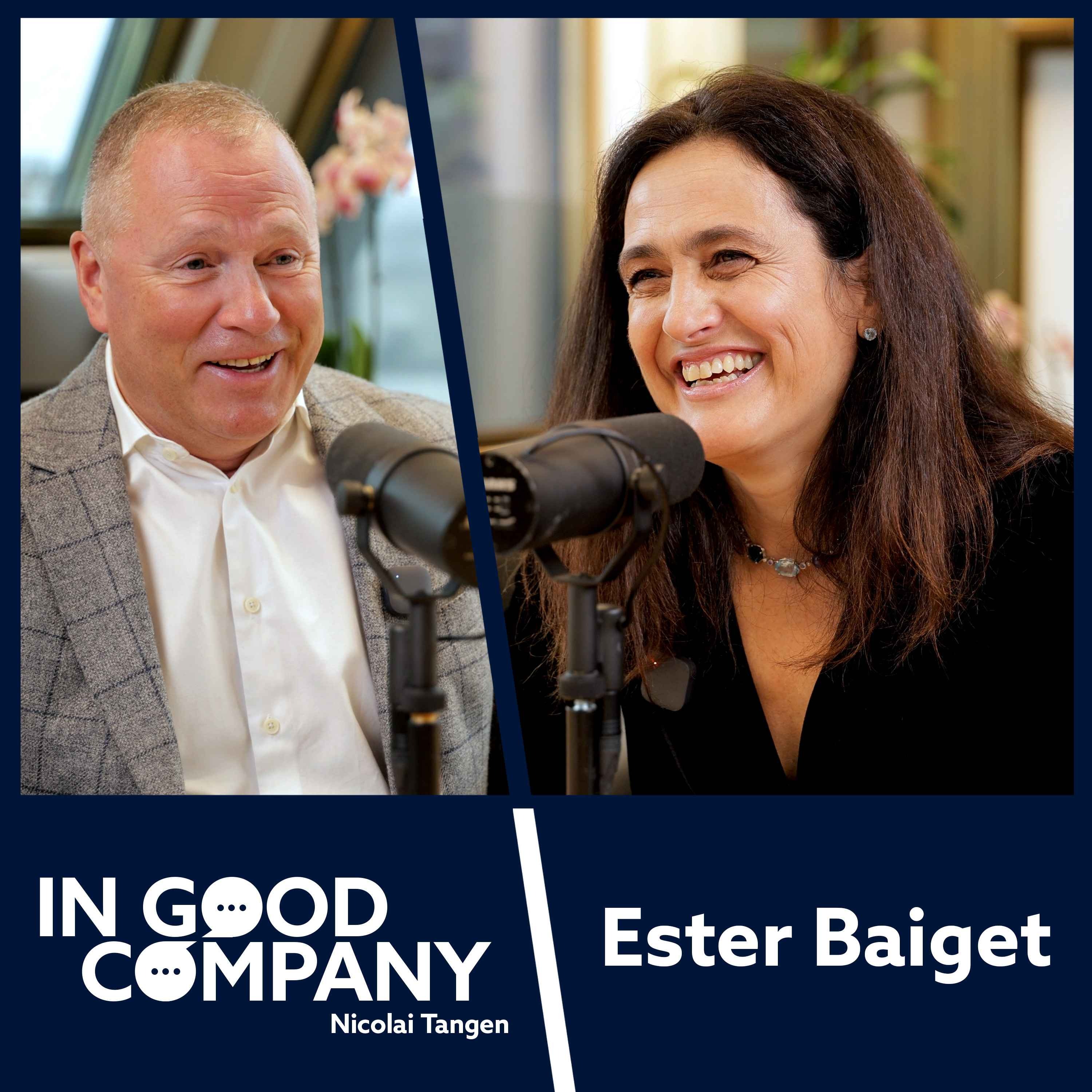
Novonesis CEO: Biosolutions at Scale, Replacing Chemicals and Leading for a Healthier Planet
46m 48s
Nikola Tangyan, CEO of Norwegian Sohwanwalfan, interviews Esther Bajet, president and CEO of Novo Nices, a bio solutions company specializing in enzyme and microbe production. Novo Nices focuses on replacing chemicals with nature-based alternatives, impacting products like food, detergents, and biofuels. The company operates through fermentation processes, using advanced analytics to scale up production. Novo Nices offers customized solutions for customers, with a diverse range of products tailored to specific needs. The company aims to address regulatory challenges in the industry, highlighting the potential of bio solutions for environmental and economic benefits. Novo Nices' library of 100,000 strains enables innovative product development, with costs typically accounting for one to five percent of the end product. The company's strong position in the market and focus on customer value drive its growth in various industries globally.
Transcription
7670 Words, 41689 Characters
Hi everyone, I'm Nikola Tangyan, the CEO of the Norwegian Sohwanwalfan and today I'm here in really good company with Esther Bajet, president and CEO of Novo Nices, which is one of my absolute favorite companies. Esther is leading the transformation to bio solutions and which basically replaces chemicals with nature-based alternatives. And you'll have it in everything you eat, bread, to the stuff you use to clean your clothes and basically Novo Nices is part of very many things in your life. We own two and a half percent of Novo Nices, which is more than 700 million dollars. And we are just super excited to have you, Esther. Thank you very much and delighted to be here, Nikola. So let's just start with the basics. What do you do? What do we do in Novo Nices? No one, I mean, you actually made a beautiful description of who we are, Nikola. We are the leading bio solutions company. We silently touch with our enzymes, with our microbes, more than two billion people every day, enabling a healthier life, a healthier life, a healthier planet, enabling solutions that drive value for our customers, transforming the way that they produce and the foods that we eat. But I mean, bio solution, what is it, exactly? And what is an enzyme? An enzyme is a protein that acts as a catalyst and makes things happen in life. You make enzymes, I make enzymes, existing nature, they are developed by nature. What we do in Novo Nices is we bring them up to scale in a professional way. We help nature to be better. Through bioengineering, through very high advanced analytics, we train more than 100,000 microbes in our libraries and scale up capabilities. We take solutions inspired by nature and we bring that to scale, enabling then value added for our customers. And how do you produce these things? Through fermentation. They go like big tanks and you just ferment them? We have big tanks. We have really big tanks and we also have tiny tanks. What it's important, it's not only the fermentation, it's the finishing and bringing the right level of formatting for our customers. So anyone can ferment, you let bread in the back and eventually it would mold, that's a fermentation. We ferment at the professional level, we only get that microbe or that protein that you seeking for with the right level of performance. And then we stabilize it and put it in the right format for our customers. It's not the same an enzyme that goes into the torgion, that an enzyme that will enable a biofuel, that an enzyme that goes into baking or probiotic that will go into the oven for God's health or culture that will enable dairy. Very different types of formats. How many different products do you make? Thousands million, I mean, we, from the products, it depends how you count them. If you account on what we ferment or if you count on the way that we supply to the customer, which at the end is the final product, because what makes us very unique as a company is our capability to connect customer needs with biosolutions. So we make tyler made solutions specific for our customer and that's the combination of not only one solution, we make what we call cocktails, which is blends of different enzymes or enzymes and needs, but then they will drive that right level of performance at our customers. So what are the biggest industries you sell into? We are present in food and nutrition in dairy when you eat yogurt, especially if you eat a high protein yogurt, extraordinary high likelihood that we are there, enabling the taste, the texture, the politability and healthiness. Also with a competitive and high reliable way of bringing productivity at our customer. If you eat bread, we are there, enabling the freshness and the molness with clean level. When you go into biofuel, you fill up your car, well, not in Norway, mainly electrical here, but in the rest of the world, in North America, in Latin America, in India, we are going by volume in biofuel, we will be there. When you wash your clothes, we will be there on those detergents, allowing you to wash at low temperatures. That's the beauty of enzymes, they're catalytic, they don't need high temperature and energy to act. So you can wash your clothes at low temperature, get that level of cleanliness, saving energy and consumers and at the same time, bring in bio degradability because our solutions absorb by nature. How do you replace fossil-based chemical solutions? Everywhere. Everything we do is go back to the fundamentals and answer the nature already developed and then we brought chemistry, fossil-based solutions to fulfill the needs of the society. And now, thanks to science and technology, we can master the art of nature and bring the solutions based on nature to fulfill the society needs. How big is this market that you are addressing here? Today we're proud of who we are, you're the biggest, right? Yeah, but I would say, you could look at our market share and say, "Oh, we're very proud of our market share." The way I like looking at it, it's a dressable market share. So yes, we have a very strong position on bio solutions, but if you look at that. What is your market share? It's good. I have to give us a number. It is strong. In some cases, it's a very solid market share. The one that we have in some markets, we have a very strong position. As I said, you look at dairy, extraordinary high level of probability that our solutions are there behind. You look at biofuels, extraordinary high level of probability. I don't think we talk about market shares specifically. But the way I like looking at it, it is the bio solution market. It is a 60 billion market, and that's including amino acids, vitamins, broad range of solutions that you can produce on fermentation. But I really like to look at the specialty chemicals market, which is a trillion dollars market. How fast are you growing? We're growing a high single digit, and that's also the space that we have put for our term growth rates to continue to grow a bulk market. We typically present in markets that they grow at one to two percent. That's the food market. That's the household care market. But we outgrow two, three, four times the markets that we present. And why do you do that? Because we bring value for our customers. And we grow. But I mean, competition is trying to do the same, right? We grow much faster than the markets that we present because we are the partners to go with our customers on bio solution. And why are you the partner to go? Why do they want to deal with you? Because we answer their needs through science, through innovation. We spend 10% of our revenue in R&D. And then we have three things that makes us unique. We have a broad range. We present in more than 30 different markets. We global. We're really good listening to our customer needs. And then we have an amazing R&D machine to translate those needs into answers. And then we can bring them to scale. So when we connect these three, that puts in a good position to be the partner for growth for our customers. We grow by volume mainly. We also grow a little bit by price, but mainly through volume. And we grow by penetrating in the markets that we in. We typically are one to five percent of the codes of good salt of the products that our customers produce, in a detergent, in a bread, in a dairy yogurt, in the biofuels. But we enable significant amount from the value. You cannot make microplacid replacement with cheaper microplastics. You cannot make low sugar added with cheaper sugar. You cannot improve the washing at lower temperatures with cheaper surfactants. This is the type of performance that we provide to our customers. Now, Nomenesis is the merger of two companies, Christian Hansen and Nova Zimes. I think it's kind of fun because those two companies, which I'll follow when I was an equity analyst and I loved both companies and now you are one. Now, why is Denmark so strong in this industry, you think? There is a culture and probably a heritage of fermentation embedded in the culture. I mean, actually, we just established a partnership with NOMA, the restaurant who grew through bringing fermentation and the art of fermentation and functionalization of fruit. And we have just created a partnership in that direction showing the beauty of fermentation and how we can transform the world. So there is a driver of heritage and culture on fermentation. Then there is strong foundations that continue to bring the reinvest and give back to the society. We're part of also, I mean, we'll mention a whole that is also a foundation, the Nova Nordic Foundation and then there is an extraordinary network between universities, small enterprises, big farm, bio-farm companies that one fits the other and creates a hub of excellence of biotechnology and also competitiveness that continues to track the very best talent in the world. What's the advantages of being part of the Novo Swear, so to say? We are very thankful, and maybe that's also to you to have long-term shareholders. That's a precious gift that gives us the right and then equips us to be able to make decisions thinking on the long-term value creation. So we're very thankful for that. At the same time, it also comes with a responsibility to deliver every day. But do you get expertise and knowledge through these ownership and relationships? Well, from one side, the governance of the long-term shareholders allows you to make the right decision at the long-term and then the foundation network in Denmark. It reinvests back into talent. It creates the pull also for really good universities. It creates SMEs, small companies that they create the network of knowledge and understanding that makes it a very attractive place. But we are a global company. We're not only present in Denmark and we have a strong brand in Denmark, but we see it growing rapidly also across the globe. Just how does regulation work in your industry? What kind of regulations are holding back your development or spurring them? We live in a wall that's very logical. The regulation that we have, it's based on the legacy of the past. We're living and we're framing a regulation which is based on chemical fossil-based solutions. And that's the path that we have to go through. This creates unnecessary roadblocks on speed of penetration of innovation. Bio-solutions are biological. They are observed by nature. Still they have to be treated and registered and assessed like solutions that they are not biodegradable. So we have to go through several steps that they are probably not adding any value, but just delaying the time. And some countries are better than others on creating a separate path for bio-solutions. Which countries are good and which about? I may give you a couple of examples. In Europe, it takes six to eight years to register a microbe to replace a fertilizer. In Brazil, you can do it in two. In Europe, it can take up to five years to register a protein, a novel protein. Which is this is nature, but we can bring up to scale through fermentation and give a special nutrients or a muscle weight recovery faster or given functionalization. It takes five years in Singapore, you can do it in six months. What about the US? US, in many areas, it's faster. In proteins, you can do it in a couple of years. Still, you could do it much faster. Why is it so slow in Europe? It takes time to change. We are here bringing exactly that voice of the hidden potential of the anti-potential, not hidden. It's clear and it's visual and many countries see it. Plus, not only of bringing the answers that the society is seeking for, but also as a job generation. So you and I, we met in Brussels at the EU Commission. How would you characterize the EU Commission in work here? We're speaking the same language. I hear the language and I hear the, I feel the understanding that we have an unnecessary level of regulation or that grow blocks. I'm missing speed. I'm missing speed on the change and on the effectiveness. But this is just, but what you do is just, isn't it just like good, good, good? I mean, it's, it's healthy, it's healthy, it's environmentally good. It's unprofitable. Yeah, for you, of course, and for us. But why would they not just want to stuff your things into everything? And that not only speaks for Europe, it's for everywhere. Yeah. It's not only good, good, good. It's good for the environment. If you would move to its full potential, only the solutions exist today. We would reduce the CO2 emissions of the planet 8%, no new solutions, only the ones that exist today. If we would continue and tap the potential of bio solutions as it is today, that will unleash 800 billion economic profit by 2025, 35. This is homegrown solutions, you don't need chips, you don't need import after, it's based on biomass. So it's local jobs, homegrown solutions that drive and bring value for your customers and fulfill the consumer needs. Why is no happen faster is exactly what we're bringing as a loudly and hopefully constructively. Also, we see the pull, some countries moving faster. As you said, US is moving, China is moving, boldly, India is moving, Europe is making the right noises, we need speed. Can we just visit one of your factories? So, let's visit one of your factories now in Denmark, right? So we go into the door and are these like huge factories, are they big, are they just what do they, how big are they? Everything is relative. I'm coming from the chemical industry. If you look compared with a cracker, with small, if you compare with a biofarm, biofarm, we're big. Okay. So we come into the door. Does it smell? Does it smell like? No, no, no. It doesn't smell. Okay. How many tanks do you have? I mean, like, it will depend on the plan. But if you go in a site like Kalenburg, you would enter, I mean, it's big roads with cars and trucks and our fermenters, they can be 300 cubic meters, so they're tall. They would be like a building. Okay. So what's in the tank? What kind of stuff is in the tank? It's biomass. What is that? It's carbon. It sugars. It is nutrients for the cultures. Okay. What is the curiosity? So what does it mean fermentation? So does it like bubble in there? Does it like bubble? Well, they have stainless steel. So when you enter in the plant, you would see lots of pipes, lots of. It's like a plant, an industrial plant, and you will see at the very end a big fermenter. By the way, it's not on the street. It's close. Because. And also especially, I mean, you have to think we make solutions for biofuels, but for food, so they have full fill all the requirements for the different range of markets. And this stuff you have, how long is that inside the tanks? Those are batch processes. The processes can be from one day to two days, the batch fermentation processes. That's the fermentation. But then afterwards, you go through the whole process of separation, so separating the biomass, the microbes from the enzymes and the proteins, that's when we produce protein. And with the product that we sell, it's cultures. Then it's a much smaller tank, and it goes directly as a culture as the answer. Am I confusing you? No, not at all. Oh, I see. So we always do the same. We ferment. We feed sugars to the little box, beautiful box. And then the microbes can be the answer, like when we sell in dairy for fermentation or bioenergy, the yeast, or we like the product that the microbes will make during the fermentation, which is the enzymes or the proteins, and then need to be separated. So the bigger the tank, the more profit you make, because it's cheaper per unit you produce. It depends. Microps, they need smaller tanks, because the answer, the product, they're the microbes. So we want those microbes to be healthy, to be nice, to be alive and fruitful for when they are supplied to our customers. When the product is the protein, then we like big tanks, to have that fermentation. And at the end of the life of the batch process, then it's when we separate. So do you sell these things in small bottles or boxes or. We do everything. We sell them to little tiny pots, to really big containers, that they would be shipped and supplied directly to our customers and plucking plate. So if I brew beer, I need some of your things, right? If you do beer, we would use our yeast, or you would use also our micro, so you would use our enzymes. You use a combination of all our products to ferment, or to bring that level of functionalization. If you make a non-alcohol beer, you would like the enzymes to be able to help you on that process, beyond the physical process that you use. Do you eat a lot of these things yourself? I do. What kind of things do you eat? I mean, we don't need what we produce. No, no. The probiotics. Ah, the probiotics, yes. The probiotics. Probiotics I do take. Yes. So what kind of things do you eat that do you produce? What we produce, the only thing we consume exactly when we produce is the probiotics, that we supply bulk, some customers, they would sell the probiotics, but we also produce probiotics that in the US, we have a group of, we can sell directly to the practitioners in mainly in the US, or in some other channels. What do I eat? I eat the yogurts that our customers produce, I eat the bread, the beer, I mean, sausages, and I would also use the detergents. I would also bring in, well, I have an electrical car, but I would also put biofuels when we travel abroad, and we will use all the detergent, the products that we use somehow embedded there. Okay. So let's say I want my baker, and then I go to see you and I say, "Hey, can you help me to make a good bread?" Yes. So I'm going to your library, then I look at all your different cultures and discuss it, or how do you do it? First, we will look at what we have available, and the magic here it is, what do you want to achieve? You want to bring a sponjability, formness, freshness, you want to make less sugar added, less salt, with always without compromising costs. Everything we bring in, it's value added for our customers, a given feature, but the final formulation needs to be still competitive for the consumers. We will ask what is that unit, and then we would play. Most probably we'll be with existing answers that we already have, combined in a different way, tell or made for you. Maybe it's a completely different unit, and then we'll go through the innovation machine, and yes, look at our strengths, our libraries, and bring in the engineering that we will produce that exact protein that you're looking, that exact enzyme that you see. So when we come into your library, what does your library look like? Is that bottles, or is it like. It is in the freezer, actually, and the beauty of our libraries. How big is your library? I mean, we have 100,000 strengths in our libraries, they are not all in one place, and the beauty of it, it's like a library, actually, it's the same, it's not a bunch of books, it's how they are structured, and how they are organized, what makes it available. Same as you go to libraries, not only that I have a ton of books, is that they can find exactly the one that you're looking for in a very fast way. That puts us in a very good place, also, to embrace AI. AI is a tool. It's how you feed it, what makes it powerful. The fact that we have all our strengths perfectly documented and organized, and we can link them to the performance of those proteins and those microbes at the field, that's the power when we combine these ones, to advance analytics, we accelerate and we unleash the value that we can produce. So one of the reasons why I think you have such a fantastic company is because what you produce is a very small part of the costs of the end product, right? So what would that be on average? So let's say now I'm a brewer, or I'm a baker, or I'm a detergent maker. So the stuff I buy from you, how much would that cost? Typically it's one to five percent of the cost of goods sold, but yet the big enabler of the value. Yeah. Because it decides the characteristics of your product, or the product, right? It will bring in a dairy product, will bring the politability that takes the texture and also improves yield and efficiency. In baking, it will define the sponginess, in detergents, it will define the brightness, the cleanliness, the freshness. In biofuels, it's what enables them to produce. So how difficult is it for the clients to change products and if they started to go with your product? I think the question is, why should they change? You have to give them a reason, or why would they change? Why would they change them? Only if you mess up. We have to continue to invest on capacity. Typically every year we grow two to five percent on more volume, simply by productivity, simply by improving the way that we produce, simply by improving those strengths. But then we outgrow our capacity to grow my productivity, and we're investing to be there the partner of growth for our customers. So why would they change? A reason would be if we could not supply, once they make, once they change, you have to be there reliably. How much turnover do you have amongst your clients? We have long-term, I mean, stable, relative to kids. Friends, you do what is called cheese friend, which is the characteristics of the cheese. So friends, do you do y'all'sburg? Do you supply the y'all'sburg cheese? Are you the y'all'sburg people? Y'all'sburg. It's an Norwegian cheese. I would assume we do, but I'm very sorry to say. I can tell you, and typically also we don't sell the cheese. How many cheeses do you do? We enable the cultures for our customers to do cheese. And in cheese, we are in an extraordinary good place to supply our customers. So to your question on rotation, once we go into a customer, we stay. Because actually it's the opposite, we start small, and then it's when we start talking. How can we help you more? I'll go on the example of dairy. We enable your yogurt or cheese to be produced. And then we bring through cultures, and then it comes with high protein, and we can help you with enzymes, and make that texture, that flavor. But then also that product is more available, then maybe you can give you some good cultures that prevent bad cultures from forming fungi to be preservatives, but natural preservatives. Okay, so now I'm a cheese factory. I have, I'm buying your, you know, your rennet, I'm very happy with my cheese. Now what do you do with the prices you charge me? Because you have brought in a new kind of price discipline to the company I believe. We've always been very good when you say a new price discipline. Thank you for that. But let me just paddle back here. We have been always very good at pricing. You don't have 25% EBIT margin, or 37% EBIT margin, if you don't understand the value that you bring in, and you don't price it correct. What we have brought as a discipline, and just to explain the EBIT margin, that's basically how much, what percent of sales that you have as profits. Yes. Thank you. And you, so every, so when you sell 100, you basically keep 25 as profits. We, we thought, now that I'm most talking about the legacy novel company, now at the, where we are, we measure ourselves at EBIT margin, but that we are on the space of 37%, but that's a great description of how you're doing. So pricing, we've always understood the value that we bring for our customers. And this is a relationship conversation based on trust. We understand the value, and then we price, that is not value for them, and not value for us, because what we want to do is grow. What we have changed in the company, and that's the, the spin that you were hindering Nikolai, it is we have this conversation every year. So not only when we launch, it's as the price, as the life of the product continues to move in, we continue to revitalize this conversation. So the pricing has moved from one to two percent erosion on the legacy nobozymes to one to two percent contributed of revenue growth, simply by bringing the revitalization of price of the existing products, and having that conversation of fair share of value with your customer, once the contracts expire, my. You touched briefly on AI. How is AI changing the way you work? We have been playing with AI, it's never, even before it was called AI, on R&D, on the way that we develop, on the way that we bring the bioengineering and the screening of the strains. To put you one example, a few years ago, to define the shape of a protein of an enzyme, that's what defines the performance. Because I'm that cleans the strain, it's because it gets touch the strain and takes it out. It's the shape, the ones that defines how effective it's going to be. Changing an amino acid from the chain, it makes a difference on the protein. One year ago, a few years ago, one amino acid change to predict the shape of the protein, it could take one year of lab data. Today with advanced analytics, and because we have all the data, you press in the computer and in a few seconds, less than a minute, you can predict the shape of the protein. There's been a speed on the way that we screen solutions, we develop them and we bring them to scale. What we are, and we continue to be on top of the technology, and we continue to bring this on the way that we run in R&D. Maybe what it's changing in the company, it's also how do we bring AI on the way we interact with our customers? How do we do modeling? How do we interact? How do we sample? How do we capture the insights from the customers that we feedback into organization? How we continue to improve even productivity, even further with AI? Those are areas that we're growing, and we're also embracing moving forward. When you look at the map for your R&D development going forward, one of the type of solutions that you can see, which we are not having now. We very please on where we are, and then we have solutions ready to bring carbon capture. We have solutions ready for make plastic recycling. We are very excited about the antapotention of high-value specialized proteins that will bring different answers for the nutritional needs, high muscle weight recovery, proteins that will boost the muscle weight, proteins that will be for special patient needs that they have some travels of the gesting one proteins and providing another one. We see really tremendous potential on helping biofarmer, on how to boost productivity by making the right enzymes, that we're not farmer, we're not farmer, but we can help farmer. But which of these do you think will be big blockbusters? For instance, on plastic, you know, breaking down plastics, sounds like a good thing to have. It is and I wish, so your question is which would be with plastics, I wish I would be all. And the answer is they all will be, maybe the right answer is when, maybe that's good question, when will they be? So when will they be? That depends mainly on regulation. Regulation can help. We are okay with the regulation that we have today for the solutions that we have today, but for the really unleashing the potential and moving this new alternative faster, regulation could be an accelerator, it also would depend on the rest of the steps of the value chain that need to happen. We can, there is enzymes that break PET back on the building blocks and you can recycle it infinitely with lower use of energy. Somebody needs to build a plan and somebody needs to collect also that PET to be able to be recyclable. So there are milestones that need to happen outside of our space that they define the speed. What we do here is we only invest further when the market is ready. I will give you an example showing that tempo, biomass for bioethanol. Ten years ago we had answers already for making biomass for bioethanol, but the market was not ready. The technology to bring biomass into bioethanol was not there, to pennies to develop. And now we see those plants, we see them in Brazil, we see them in India, Japan is even talking about that. So that's the level of timing that we're talking about. Changing topic of PET and moving on to leadership, you were 25 years in down chemicals. What did you learn there which you have brought to known issues? I learned the power of the AN, it is about just delivering the results, it is doing with the right ethics, it is not at any price, and it is looking at all the lines of the P&L, the financial tools. It's not only about growth, it's also about how healthy that growth is, it's also about cash flow, and then it's also on how we do it. I also learned the joy of being in a broad multinational company, where different voices are being there, and those are gifts that I'm very thankful I had the privilege to grow in an organization like that. What are you doing better in an organization than what Tao is doing? I like to think of what are we doing in an organization that I like, and what I do love on what we're doing in an organization is we are creating a category, we are creating the platform of a new way of how the world is going to produce and the foods that we're going to eat, and we're doing that through science, we're doing that through technology, we're doing that with the trust of the shareholders like you, but also I would like to say we're doing it with a lot of pride, the employee engagement, it's extraordinary, strong, the pride of what we're doing. Why is your employee engagement strong? I can tell you why I'm engaged, and also maybe what I'm feeling about the organization, it is a seamless continuity between your personal values and what we do. We are enabling a healthier life and a healthier planet, and we're growing, it's also a joy on growing, on being successful, and you do feel you're changing the world, you do feel you're in an inflection point, but how do you, so that all sounds great, right? But now I'm working in your factory, I'm cleaning your tanks between each batch, right? That's my job, I put on my suit, I'm cleaning the walls of the tank, you know, why do I think it's great? I would like to think that because you understand that what do you do, it's important. And how do you make me understand that? We explain it, and we say a lot of thank you, because if you're not cleaning the tank right, that performance of that good, it's not going to be there, and we won't be able to supply our customer with the right time, with the right delivery, and we're going to miss a big opportunity in the market. Do you think you say more thank you than other companies? I know, I like saying thank you. Because I just, it just struck me that perhaps we are not thanking our people enough. I enjoy, I like it, it's fulfilling, saying thank you. And I like also explaining it, now we just launch the strategy. It's only slides, if it doesn't mean anything for people. So we're spending a lot of time sharing it. We're spending a lot of time sharing the strategy from different angles. It's not only the corporate view, the business view, the geographical look, that everybody understands. Not only the strategy, but what does it mean for me? Why am I contributing? If I am in manufacturing, I make a difference because I'm making those products be there. And that's the impact I make to the wall. If I am in finance, I'm bringing, if I am in supply chain, if I am in R&D, I'm developing them. So everybody feels that pride of how we contribute to the full machine. How would people characterize your leadership style? You have to ask them, definitely you have to ask them. I hope they would say, I'm good making questions. I hope they would say, it's fair and courageous. It's the heart to the couple, what is your leadership type and also what is you as a person. They go a little bit together. I thrive in an environment where I surround myself for people who is better than me. I love being challenged constructively. But are you tough, or defined tough? Well if people don't perform to your standards, what do you do? I am demanding, yes, because I think we deserve high standards. I think you deserve high standards. I think our customers deserve high standards. But also we embrace failure. We are an R&D company. We are a science company. Of course we fail. That's R&D. Otherwise it would not be innovation, it would be physics. We know that we are going to fail, but we just have to fail fast. We have to learn from those failures, and we have to move on. Who have been instrumental in shaping you as a leader? Everybody. This is not one, this is a very good question, but I don't think that's one single way. I have been extremely fortunate, first to be grown up in an environment where values were very important, so that's maybe the seed that is inside you. You mean from your family? Yes. What did your parents do? My father worked in tourism, and my mother did many things. Some of them were taking care of five kids, which was a full house, and I was the worst probably. Where were you in the range there? The oldest, the oldest, the worst, as my mom used to say. What's driving you now, then? Curiosity, change, impact. I'm an engineer, chemical engineer, so I need to understand, but I also did an MBA, so probably it's an engineer brain with a commercial heart, and it's the combination of both things on understanding, learning, eager of bringing new dots, embracing new questions, but then making them practical and translate them into value, creation. And how is it to be Spanish and running, well, I mean, it's a global company, but it's quite Danish as well, right? Yeah. So how is it to be Spanish and running Danes? I've only been Spanish and Catalan and running Danes, so I don't know how it's not to be good. I would say it's fine. I mean, I never look at it and how is it to be from one country and other. It's more, how is it being in the team? How do you feel with a team that you are in and that way you're from? It's not so important. It's more whom you are as a person. What do you bring to the group? But what does it mean to be Catalan? I mean, you mentioned it yourself. Probably it's a little bit stubborn. That comes a little bit with the nationality. The language, this funny accent also means that brown hair, dark hair and black eyes, some jeans that you can help. Are you a different leader now than you were when you were younger? You have to ask my husband, but I would like for him to say that I'm the same person. Older, more wrinkles, but a person, not change, leader, you learn, you grow. You cannot call yourself when 30 years ago in the job that I had with the one that I have now. But as a person, I was an individual. I hope I haven't changed that much. As a leader, of course you grow. You grow with the job, you learn with the job, you hopefully become better with time. What's the corporate culture like and no one is this? We have a culture that we care of each other, but we also care. Care is broader than just care of each others. We care about the planet, we care about how in the society that we belong. We also have a curious culture, a culture that we want to challenge each other. We have a culture, we want to continue to have even a bolder culture on accountability, on embracing failure. A culture of saying no, that doesn't go very strong with our culture. We're working on that, on saying no, or saying yes, but later. It is very important when you have so many opportunities in buyer solutions. Our biggest threat is if we don't prioritize right, because so many things we can do. So for that means a yes and also needs to mean a no or yes, later. Do you have a Danish company, do you have a lot of Higgia? Higgia? Yes. You mentioned before what people say when it comes to your office, when people come to headquarter and say, "Oh, people smile a lot here." You guys laugh, it's like, "Yeah, why not? It's supposed to be fun, and so as you are working, we do work a lot, but I would also like to have some joy as we're working." So like cinema bands are very bright, and kind of stuff? No, this is not cinema bands. It looks very professional, but then there's a very nice Danish design with the lamps. You can't tell you're a Danish company around the globe. When you go to Shanghai, when you go when you're in US, when you're in Latin America, that is this. You can't tell the corporate culture and the Danish, beautiful worms in the workplace. Were the two cultures different from Novosigms and Christian Hansen? Of course, there were many similarities. The legacy, Danish, but more importantly, the similarities on the values and the purpose, making the wall a better planet, one with cultures, the one with enzymes. But there are also areas that we need to continue to put them. But the way that we draw it, this is the culture that we're going to go through. We have one year to prepare between signature enclosures, thanks to the beautiful process. So that also gave us time to prepare the culture. And we ask the 10,000 employees, "What is important for you? What do you want to take home to the Novosigms?" And what would you be willing to let go? And those answers were not necessarily the same, in both similar, but not 100% the same, from both legacy companies. So then we created the breadcumps from where we are to where we want to be in Novosigms. The culture of Novosigms is not legacy one or legacy another one. It's the culture of Novosigms, the one that we're creating. How do you relax personally? I cook, I eat, I read. What do you read? Actually, not very, my husband says very boring books. Now I'm living the, reading the life of Genghis Khan. I'd like reading ancient, also a little bit of, I read boring stuff, probably, for most of the people. And it gives me peace. It puts me in a space of completely, I like people reading about lives of other people. I like reading about thoughts of other people. What can we learn from Genghis Khan? He, many things we don't want to learn. But actually, he's a really amazing guy, right? From his, I mean, what I, what I was amazed is that he's so, so rapidly that for growing so fast, he needed to embrace the people that he was, the country he was conquering. And he had to bring them in his organization. And the way he did it, on rapidly selecting the nobles or the, or the rich, selecting the ones that they were fruitful for him. Who does the word? Who are the descriptions? Who are the ones who know how to work with metal? Who are the ones? These ones, they come in. The rest, we don't want to learn so much of how we treat him, treat them. But the way that he could build an empire and create a culture of one team, with the tools that they have, no AI, no digital, no phones. Just some horses. Yes, tiny horses on top, short legs horses. It's simply impressive. Also the way that he embraced diversity, he didn't care. It was the very first places that you had all religions sitting in the same culture, same organization, no problem. Because they were all part of something bigger, which was the Mongolian part. So there are some cool learnings, I don't think that book sounds boring at all. What do you cook? I cook mainly Mediterranean food. I cook every day, with home, every day, when I'm not traveling. So we cook normal stuff. But then I like cooking nice stuff also, from when I have time, more time. And that will be mainly fish, I really like fish more than meat. But also things that look beautiful, and they take a lot of time to cook and you eat very fast. Good. When do you wake up in the morning? I wake up very fast. I am not a very good wake up person, morning person. I wake up and then in 50 minutes, 20 minutes amount of the road. It depends on when I take a flight, or when I don't take a flight. But I wake up when the alarm clock sounds, and if it doesn't sound, I don't wake up. I can sleep a lot. What is your advice to young people? Don't give up. Keep bringing your voice. Have the beauty of being a CEO, is it gives you access to forums, different places. I like being explored to use the well-economic forum, or BTI, or different frameworks outside of our organization. And I like being challenged, and listening, and being on those dialogues. I would, if I hadn't asked, it's not advice, it's an ask, don't give up. But then also, if I hadn't asked, would be, give us the benefit of the hope, companies, that we're doing our best. It's good to vent, maybe you have millions of reasons to be, probably you have many reasons to be angry. I'm not challenging them. Please keep venting, keep complaining, we deserve that. But then also, seek for the breach on how we can do it together. And we're learning also with our voices, and we need to continue that to be there. What would you say to you? What I say? Oh, I mean, you know, rent awards problems, learn all the time, all these kind of things. Travel, spend money traveling, you know, have fun with friends and family. So all these kind of things. Make a family. Think about the future. You have to be thinking about, yeah, a better future ahead of us. And sometimes I feel that that's not really the, there embedded for all the youth. There is this little bit thing that, oh, this is going to go in in a good place. That's not, that's not, that's only going to happen if we think that that's going to happen. That's not going to happen if we believe a different path. Yeah. Esther, you and I were going to say, clearly, is making the world a better place. And I hope all the listeners understand why we totally love these companies, be great and have you all know. Through the pleasure. Thank you so much. Thank you.
Podcast Summary
Key Points:
Novo Nices is a leading bio solutions company focusing on enzymes and microbes.
The company operates through fermentation processes to produce bio-based alternatives for various industries.
Novo Nices offers tailored solutions for customers in food, biofuels, detergents, and more.
Summary:
Nikola Tangyan, CEO of Norwegian Sohwanwalfan, interviews Esther Bajet, president and CEO of Novo Nices, a bio solutions company specializing in enzyme and microbe production. Novo Nices focuses on replacing chemicals with nature-based alternatives, impacting products like food, detergents, and biofuels. The company operates through fermentation processes, using advanced analytics to scale up production.
Novo Nices offers customized solutions for customers, with a diverse range of products tailored to specific needs. The company aims to address regulatory challenges in the industry, highlighting the potential of bio solutions for environmental and economic benefits. Novo Nices' library of 100,000 strains enables innovative product development, with costs typically accounting for one to five percent of the end product.
The company's strong position in the market and focus on customer value drive its growth in various industries globally.
FAQs
Novo Nices is a leading bio solutions company that provides nature-based alternatives to traditional chemicals, touching over two billion people daily.
Novo Nices produces its products through fermentation, using a combination of big and small tanks to create enzymes, proteins, and microbes.
Novo Nices produces thousands of different products, including tailored solutions for specific customer needs.
Novo Nices sells its products in industries such as food and nutrition, dairy, biofuels, and household care.
Regulation in the bio solutions industry is slow due to legacy regulations based on chemical solutions, creating unnecessary roadblocks for innovation.
Novo Nices customizes solutions for customers by understanding their specific needs and creating tailored blends of enzymes and microbes.
Chat with AI
Loading...
Pro features
Go deeper with this episode
Unlock creator-grade tools that turn any transcript into show notes and subtitle files.
 PodcastTranscript AI