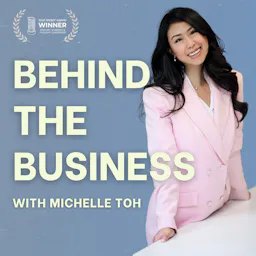
'Not just hand sanitizer': How Touchland built an $880 million brand
1h 3m 3s
Andrea Lispona founded Touchland in 2018 to reinvent the overlooked hand sanitizer category by transforming it into a sensory, joyful, and skincare-friendly experience. Rather than focusing on price or function alone, the brand prioritized emotional resonance through unique scents, sleek design, and a “micro-joy” philosophy that appeals to all ages. Despite early skepticism and a significant supply chain disruption during the pandemic, Touchland grew steadily, proving its value through consumer demand, retail success, and strong community engagement—especially via social media listening and Kickstarter validation. The brand expanded into body mists and hair fragrances based on customer feedback, showcasing its evolution into a full on-the-go self-care ecosystem. Touchland’s lean team, built on a shared mission and work ethic rooted in personal and familial entrepreneurship, achieved $100 million in annual sales by 2024. Its success is not measured solely by revenue but by the emotional connection it fosters—seen in viral customer stories, kids using it at school, and celebrities sharing their love for the brand organically. The company is now being acquired by a major personal care giant for up to $880 million, reflecting its market impact. Andrea emphasizes that true success lies in building a lasting legacy of everyday joy, not financial peaks, and remains focused on innovation, authenticity, and human-centered design.
It was not a sexy category, it was not understood, we need to give us a chance to prove you, that we're not just hand sanitizers. Welcome. I'm Michelle Toe, a journalist most recently with CNN, and this is behind the business, a show about the people behind top consumer brands, category creators, and emerging disruptors, and how they push through to make the most of both work and life each day. Today I'm here with Andrea Lispona, who's enjoyed a stunning ascent as the founder and CEO of Touchland. Now for the uninitiated, Touchland is a personal care and beauty brand that launched in 2018 and scaled to $100 million in sales last year. This year it's being acquired by a personal care giant for up to a whopping $880 million. It's best known for its hand sanitizers that come in an array of cents from rainwater to mango passion to blue sandalwood and has since expanded to body myths and hair frequencies. The brand is sold at about 3,000 retail locations, including Sephora and Alta Beauty, in addition to direct to consumer. Why should a consumer purchase a Touchland hand sanitizer for between $10 to $16 versus let's say $249 for Puril? Now what's that Touchland apart is that it's developed something of a cult following and it hasn't hurt that Touchland has fast become a celebrity favorite, described as an everyday essential by stars like Kim Kardashian and Rosie Huntington Whiteley. In some circles it's even become a collector's item traded by kids and teens on the playground at school. The company estimates that one is now sold every two seconds. I never cried in public. They said this has been the best investment they've done in their lives. Andrea, thank you so much for joining us. Thank you for coming, Michelle. So I want to clear something up straight away. Despite it being what most people know you for, you don't see Touchland as just a hand sanitizer company. Is that right? Correct, yes. Tell us why. We have transformed the most commoditized and sexy functional category into something that people look forward to and how we did it with being extremely methodical about that surprise and the light component of the brand and really being able to create those micro-joys in the everyday. In the case of the hand sanitizer we transform the category within four foundations. The first one is again everything that we do has to be on the go because it really builds a relationship with you that you don't build with the products that stay at home. The second element is to truly design and create a product that really disrupts the industry and so we create a design that really feels like something that you can put in your pocket, you can throw in your bag. It is endless which again you can use without any type of mess. The third element that we brought in is merging two elements into one which is again the functionality within this case the skincare forward element. You do not have to sacrifice your skin in order to keep your skin sanitized so we added emolients and ingredients that really take care of your skin and the fourth element is the sensoryality component which really connects the dots of the whole touchland experience and sensoryality can be everything from the non-stickiness of the formula which really it's not pleasing when previous competitors had that you had to be shaking your hands for several minutes in order to get it dried up but it also takes into account the scent profile. One of the things that touchland has brought in is that surprise and the light with multiple scents that really match every mood and day of the week. We can really have 15 plus scents within the hands sanitizer and we launch eight body and hair fragments. So we always want to offer like a wide range of variety that really enables you to uplift your mood and really find something that matches that day of the week and one day you want to feel like beach cocoa and another day you want to feel like wild water melon and that's kind of the fun of the brand. Yeah and I see that you've put that in your messaging a little bit right? I think that having seen the organic growth of the brand we have seen that the brand is cross-generational which is one of the periods about the brand like we're as successful with a 10-year-old than with an 80-year-old and that's because again we want to tap into a psychographic we want to tap into people that look to find the light into the small moments that being a cup of coffee that being a spritz of touchland and that is really something that we've been fascinated by the complexity and the results with people like when people have been creating content about matching my outfit to touchland or again like just describing how they go to school and they are excited to go to school because they are going to treat touchland with friends and so on so it's definitely an incredible reception of the brand in dimensions that I would have never imagined how people has incorporated touchland into the day and every day and we'll get more into this later but just to share some context tell us how you decided to become a founder in the first place I understand that you know your family had a big influence on you growing up. Yeah definitely I was raised in a family of entrepreneurs and for good and for bad I understood what it is to be an entrepreneur from very early days it's about feeling comfortable with the uncomfortable every single day and there's no guarantee there's no security and I feel like either you like that type of approach or you don't like it and I grew up to love it and I knew since I was a kid that I wanted to be an entrepreneur I think one of the most important things when you start this journey is you really have to find your reason why and for us when we started I had to find the reason why I would wake up every day and fight this battle and and when I discovered this category I was fascinated by the rich and the impact that can have in people's health again like the easiest way to stay healthy is to give your hands clean but you don't look forward to sanitize your hands so for for me was a personal challenge of how do I transform these perception on people about keeping your hands clean should be something you look forward to and that's how we got playful we reinvented the category the product experience and so on and we were able to somehow successfully change change that approach. I know that on your father especially had a big influence on you you mentioned previously that he's kind of taught you to be bold and not be afraid of taking risks. Are there any kind of certain stories or examples that come to mind when it comes to how he encouraged you to push the boundaries? Yeah I feel like it's been more what I've seen from him that has given because you always have to lead by example and and teach by example right and even if he would have given me like guidelines and so on for me was what I saw in him every day he's almost 70 years old now he has gone through all of the cycles of being an entrepreneur like he was he created a business grew the business then the recession in 2008 came he lost everything he had worked for all his life he stood up again he revealed the business he did it better smarter and so on so I think for me that was incredible because again to see someone that at 70 years old still wakes up at 5 a.m. to go to work is the last one to close every day the office like that kind of thing always hits you and and that has been for me like my my grit and my work ethic comes from what I've grown up next to he he was in the import export business he distributed multiple products American products in the Spanish market and he's been able to create a pretty sizable business in Spain and with a very nimble approach also and he has learned right he he grew the business through again external funding when the crisis came in he lost everything so when he started again he's like I will never depend on external funding again so I think if I look back on how I've grown this business and the way that I've grown it part of the reason why I've been able to do it in such a nimble way in such a efficacious way it's because again I wanted to make sure that I would control my destiny and that there would not be any sort of macroeconomic impacts or anything that we would be depending on having gas coming from the outside to to be able to scale this. Some ways it sounds like that really primed you to be an entrepreneur. How old were you when that happened when the crisis hit? Let me see I was 23, 23, 23 years old. Still in those formative years right we're really thinking about what do I want to be in this world. Correct. And in some ways did you kind of just always know this was a path you were going to take like even before all that you know just as a kid were you always thinking like I want to start my own business I want to be 100% always but I think for me what's about finding the reason why I've been always about finding again I don't believe in like competing in prices competing there's like always someone that can do it cheaper than you there's always someone that can be more aggressive than you so I believe in creating value and creating differentiating value propositions and I had to take my time to find it and I think I got inspired because I studied in in the U.S. for six months when I was doing my Erasmus in from from his other business school and I came across this product that everyone hacked hanging on their backpacks everyone was
complaining about and I'm like that is fascinating because back then in Europe you would not see hand sanitizers in 2010 and so that's what got me again interested in understanding how big the reach of this category was how important this category could be into playing into people's life and how upset was people to use this product so I the similar on how to express or transform coffee industry and Apple transform the phone industry and and Dyson transform they don't industry I feel sometimes you simply need to see through different lenses to transform the consumer journey so you saw people literally carrying it on their backpacks hands and sanitizers and you were like this is everywhere yet it's not something that's really been reinvented yet correct correct I see that you studied fashion design and then went on to one of the top business schools in Spain your professional background pre-touch land was also in fashion right particularly on the marketing side how did those experiences inform you on what you later decided to build well I first studied the Sade because I wanted to study business administration I wanted to have the foundations to understand how to run a business it was a very competitive school that was a school that my father had gone to and he was kicked out and then he said there's no way you make it five years through Sade so I almost end up going there for a bed with my father not only I finished I finished top top students in the in the year so so I finished that and then I've been always passionate about design and how it changes people's perception and how it really transform experiences so I studied fashion design and I quit it during the middle of the three-year course because the crisis came and I decided not to be more a source of expense but to start becoming a source of income to support my family so then you decided to go and work for the family business or what did you do in that time not really so I wanted to do it in my own ways so that's when I started distributing other hand sanitizers to really learn on the business and I did it by myself and I started again learning from feedback and I always think that entrepreneurs when they design products they need to always listen like I always say we have two years and one mouth to listen twice as we talk and so never make assumptions false assumptions about like when we started distributing hand sanitizers I'm like maybe people like alcohol sand I'm not going to make an assumption just because I know like that key lesson that comes from hand sanitizers that is gonna it's it's gonna be everyone's perception so it was about listening and understanding and and really crafting then a solution that is for everyone right don't you don't have to act like you're the smartest person in the room right like there's no stupid question here you can you have to go and actually study and examine and find out what's actually happening in the market correct and that's how we approach innovation for us like everything that we do is always we do a lot of social media listening we really I go through social media read comments I really need to understand what our audience and our community needs as we continue to graph the future of the plan so even before touch land Andrea you were already in the hand sanitizer game you were distributing hand sanitizers right who is the pre pre phase of launching touch land what really learning that must have been great market research for you it was it really was yeah well okay let's talk about the origins of touch land I gotta say when you first started this there probably weren't that many people around who would look at a hand sanitizer and say this needs to be more chic right but here we are how did you come up with the idea you kind of touched on this already seeing people carrying it and not necessarily having the best experience but kind of walk us through this this experience for you yeah again it also comes from looking at other industries right when as I said I've been always inspired by disruptors that have changed I never thought I would be excited about the hairdryer and here I am super excited about my Dyson hairdryer I would not have had the patience to warm coffee every morning if I didn't push a button and get my coffee out of the out of the next person machine so I am amazed and and always surprised about how you can you don't need to invent something you can simply reinvent experiences in multiple ways that being designed the form factor the the formulation and for us with hand sanitizer was the opportunity to really do the same that other people that inspired me from other industries we could bring those learnings and do it with hand sanitizer and again we wanted to create a product that would become a status symbol like something that would be recognized that could bring again that connection with people that would create that conversation with a stranger industry about what are you wearing what is that and so that's how that's how it all started wow because I was going to ask you did you always set out to invent a whole new category or did it kind of come about very organically it sounds like it was a bit of both it we always I always say like if I start something I have to be the number one so when we started that it was not to let explore like we wanted to create the disruptor off on the go personal care and we wanted to take the hardest category and really and really surprise on the light people because once you get one thing that is the hardest right you get the respect from the audience to be able to do it in other categories and you studied the playbooks of companies like Dyson like Nespresso like Apple to kind of see okay what are some of the tips and tricks here that I can take and apply to my category correct correct so Andre you moved here to Miami as well by the way in 2018 which was a pretty big move I can imagine you know new country you probably to operate your whole life back home I understand you had spent some time here before but what brought you here to Miami specifically well in 2016 we knew that if we wanted to launch a company in the way that we wanted to launch it and really have impact worldwide we had it to do it in the biggest market so we decided to move to the US it took us two years in between developing the product and so on to make it compliant and so we launched in 2018 and we were deciding where to go I feel it was more of a decision of I had to study it in LA I loved LA but as an European that talks to their family three four times a day that became very challenging when I was studying there to truly make me disconnect from Europe because of the time difference and I think Miami coming from Barcelona it's I mean it's very close that whether the culture the the dynamism the colors it's it's a very vibrant city and so we moved here in 2018 and we love it here I never look back I mean I look back because of force I we let as you said we left behind families and so on so it's always challenging because I'm a very familiar person but I knew if I wanted to do something big I would not be able to do it from Spain so that sometimes sacrifices that entrepreneurs have to do in their lives and I always said like if I if it didn't work out it would have been challenging but it worked out so the sacrifice the challenge the missing and so on at the barely was worth it because we were able to prove these was the place we had to be to launch the brand and so definitely we we are very happy here so you felt like to crack the US market like you had to just take the plunge go all in let's move there just do it like forget like flying in and out like every whatever like to just be committed and do you have to yeah yeah we talked to our retailers almost weekly if not daily like it's we build a team here you get to understand the market here I I don't think I would have been able to do that the same job and execution from an office in Barcelona and under how did you get started when it came down to even financing the business right because there's so much that goes into it to even get off the ground I know you ran a Kickstarter campaign which raised $67,000 beyond that did you also have to you know bootstrap with some of your own money in so we've been very scrappy from the beginning we did a very small round to be able to move from Europe to the US and it was very challenging I always said that fundraising is one of the things that distract the most founders because founders should allocate their time to grow their business that's what you create true value and that's why we've been so scrappy because what I'm most valuable is running the business creating ideas and all that and fundraising can for some funders can take most of the time and I feel like that doesn't really add the value to create more innovation and so on in the business so it took us a long time to find the right partners and we were able to secure a family office from Europe that that happened to know from business school they knew my work ethics so when I pitched to them they took the decision in 24 hours not because they they even saw the business plan they said no matter what you're you said your eyes to like your work ethics your create we want to be partners in this journey and that was they were an amazing first partner to be able to move here this is a better on you it's a yeah usually it's in the beginning for everyone it's it's a better on the founder yeah yeah that must have been so humbling I never cry and must say that the day they told me that in 24 hours we had to make them move to the US and they decided in 24 hours I never never cry in public that day I remember the words that I said
said to them, "You're never going to regret it." And they said, "This has been the best investment they've done in their lives, so." And you were like getting on the plane, like. Yeah, it was emotional and movie moment. Yeah, no. It's those highlights, really, that probably make the journey not feel so tough sometimes, right? Yeah, and it's who you surround with. I feel like with everything that we've done, since we've started, has been a gut feeling decision always, and it's never felt us. And I feel like with partners, with investors, it is very important that you find people that share the vision that are going to be supporting it, that are going to be your sidekicks, and I feel like, in our case, we've been extremely fortunate, because it's already. You have already a lot going on as a founder, and I've heard a lot of stories of founders that didn't have the same luck that I did, and I do think that it makes the journey way more pleasing to be surrounded with great people. Well, a lot of people don't know also how much goes even into the crowdfunding side, right? What did you learn from your Kickstarter experience, and is there any strategic advice that you'd give to folks at the early stages of their businesses now looking to take that route? Sure, so for us, the Kickstarter was more of a market validation process. As I said, like we're extremely humble, we're very hungry, we're very ambitious, but at the same time, we're very humble. And so when we were about to launch in the US, the product was going to be launched end of 2018, I'm someone that always want to be doing something. So we moved to Miami, June, and so from June to December, we were like, what are we doing here in Miami? Some people would take a vacation, which maybe we wouldn't have been a bad idea, but we're like, no, let's do a Kickstarter, let's test the market, let's see how people feel about it, and it was extremely successful. But I think the most important is it started building this community power brand, and it's incredible because the way that Kickstarter works is every time that you reach a certain milestone, you unlock some perks, and those perks usually are defined by the backers. So for example, one of the things when we reach in 24 hours our goal, we ask the community, hey, what would you like to see from the brand and people was like, it could be great to have like a case with that you can attach to your kids. So right now again, fashion accessories for touchland, dressing our products is a big part of our business, and it all came from listening to our backers and kickstart there, and it is amazing, for example, like when we see comments on social media, we've done some events like, hey, I was, I was a backer in 2018 and like, and they have so proud that they got to believe in the brand even before we launch in the US market. Oh, yeah, no, I'm sure, I mean, you might even like hear from some of them now, right? Yeah, yeah, yeah, I said, like I was part of your kickstart the campaign seven years, they feel like they've been part of the growth. Correct, all the journey. Well, on the product side as well, how did you get started in terms of formulating the spray, looking for partners, and creating those initial prototypes? So let's rig it down for the design, the design again, it was we look at other brands that we like to water the design principles, we were looking at the golden ratio principle in design. And so when we were looking at the shape of the product itself, we applied that principle of design, and it is something that again, not everyone is going to look at it and say, oh, that's a golden ratio item, but it's designed to be pleasing to the human eye. And so that was one of the things that we applied when we created it in terms of the formula, we always like to partner with people that is expert on the matter. And so we have a lab that helps us develop our formulas, and when we develop formulas, we do it like in a two way approach, which I think it's very unique to touch on one is the end goal and the functionality. We want this to be hydrating or soothing, we want this to be there's revitalizing okay, that's one thing, but then sometimes you start building the formula and the formula starts delivering certain sensorial feelings that we don't want like stickiness, it's not the consistency is not good enough and so on. So whenever we create a formula it's always that balance of end goals and sincerity like it needs to feel amazing on skin, it cannot feel sticky cannot dry your skin, so that's how we develop formulas and it takes us a lot of back and forth right, so they all have to pass that test right and how long did it take you to kind of get your first product made and out to market with the long process for you. It's a long process for us to create products usually two to three years. It's a long process even now right yeah yeah because obviously you take your time with R&D you want to make sure that you're iterating yeah and from day one Andrea it sounds like you had a pretty clear vision in mind. What was your response to critics who didn't or perhaps still don't get the appeal of the product right off the bat so for instance with respect. I should a consumer purchase a touch landhand sanitizer for between 10 to $16 versus let's say 249 for PURL correct I think like in regards of the pricing touch on offers a lot of benefits that the 249 doesn't offer like again like the formulation again it's good for your skin. It comes like with fragrances again that are uplifting that they are developed by Jiva Nperfume House which is one of the top perfume houses in the world. It's a couple of experience it's not a goopy experience you can put it in your pocket it's a lot of benefits that really create that experience on top of that not only the product benefits it's what people also connect is the whole brand like being part of a much larger community the social media like the fund that we have with it. The partners that we have created it really has created a 360 experience. So for us like it's very fun because it's as I said it's not a demographic it's a psychographic not everyone is going to buy the same phone not everyone and you can have people thinking. The phone that everyone uses may not be the best but again it's what you look for that like in my case when I look for. The the product that I use it's like user experience for other may be the jikavites that the phone has so it is about really creating something for your audience and for us is that surprise on the light we want to. Get to people that really looks to inspire that every day that moment of happiness and again it's not just a functionality like if you just want to sanitize your hands but you're not looking to really have these elevated experience most probably you're not going to end up buying. But I think like that's also feeling comfortable about building a brand that it's designed for people that really understand and and appreciate those those surprise in the light moment knowing your customer in a really deep way. Right and I'm actually curious do you even see purel and that's all in the like your direct competitors anyway would you say that in some ways they're not even the same direct competitors. Touchland offers a beautiful word experience so we don't really if we think about our retail distribution partners. Touchlands I would say the only if not the like there's two three brands of hand sanitizer that they sell because they are in the business of beauty and skincare so what touchland has been able to do is really create a category within beauty and skincare for personal care. So that's why we don't even compete in the same channels yeah that that most of them they sell through pharmacies supermarket like touchland has decided to really open up a different distribution strategy. How did you manage to convince folks to get on board with the concept that this. It wasn't entirely new at the time wasn't it that this was a beauty product obviously the skincare benefits that you've outlined are really visible. But for instance when you first went to pitch stores like Sephora or alter what did that look like did they get it right away or was it kind of like hey that's nice but why don't you try CBS down the road. I feel like we've been very fortunate that the product that's most of the word like even if you see we see content creators that buy the product to review it. And then like they start of like I don't get the hype with this and sanitiser I've seen it everywhere then they open it. Oh so that transformation from skepticism to I did not imagine that I would be so surprised and excited about it happens with a couple of speeches. So I feel with our retailers we've been fortunate enough that they've been evangelist of the brand users of the brand they loved it. And so again and they also made a bet on us like when we met with Ulta in the end of 2019. I mean we didn't have any large distribution partner and then they they were like we're going to give you the chance we're going to launch you all doors and see what happens and we launch and we sold that within weeks. And let's talk about retail actually because you went into conventional retail fairly early on which can be seen as a scary place for many founders that tend to. You know want to stay direct to consumer online how did you decide to make that leap. So we took a one year before we went to retail we started with a D2C because we wanted to know our consumers. I mean one of the things that we were most fascinated about is how we transform the way people buy personal care like when you think about personal care. And the other and or anything you usually buy one at a time and you buy the next word you're running low when we launch our day to see one of the things that we saw as the average or that value was four five six units at a time.
So people was buying the same functional bottle for five. So we started calling customers and asking, hey, why are you buying five at a time? Like, are you stocking them for the next six months? And people was telling us either it was buying for friends and family, which is very unique in the personal care space. Like, I don't know if I would be happy if someone would give me a pack of the other end. I mean, maybe there was a subliminal messaging in there. But we truly transform how personal care can be giftable and exciting. And the second element is like, no, I buy multiple cents because one day I feel like I want to wear one a cent and another day. I want to wear another cent. So that capability to really select out of a wide array of cents, depending on how you feel that there is also the reason why. We got such a high average order value. And then we started receiving calls from retailers and so on. And that's where you need to make the right choices. Like for us, we've always taken a very disciplined approach into everything that we do. Everything that we do, there has to be a reason why. So when we thought about distribution, you cannot make a small mistake. Like, everything that you do builds up to the brand image. So for us, we knew we have to grow within prestige, beauty, partners. And that's why we started working with Olga very early on. We launched in Blooming. And it's like in places that they didn't sell hand sanitizer at the time. Well, that. And I do want to note, it's also extremely rare for brands to be available at both Sephora and Ulta. It's quite a win for you. Given what it requires to not just succeed in one, but also the fact that they often ask brands for exclusivity, can you talk a little bit about how you manage to navigate those conversations and secure both? And what were some of the thoughts behind the decision to go for both? So I think we knew one of the dreams for the brand is Tajlan should be in every pocket. And I think, like for us, making the product available in a very disciplined way, it's very important. And because we know that with the growth that we've had, with a very streamlined discipline approach, most brands would have opened the gates and sold the product everywhere. We've been very disciplined about controlling how do we grow, where do we sell, and so on. So we started with Ulta. They supported us through their accelerator program. They have been a phenomenal partner of us. And as we continue to expand, we also met with Sephora. I think because of the category and the wide opportunity for the brand, they understood that Tajlan was going to be a brand that was going to be distributed in multiple retailers. And they have been supporting the growth, both of them, for the last years. So Andrea Tajlan has had a remarkable run. The company has now scaled to $100 million in annual sales. And I got to believe that was a pinch me moment for you. What was your reaction when you first saw you'd cross the milestone? I wish I could say that I was super excited and all that. I think because I have such a big pressure, the moment you keep growing, the pressure keeps growing. And I feel a lot of people around me say, you should have those moments of celebration and so on. For me, everything that we continue to grow, the backpack, it's heavier. And I feel it was an amazing moment. But I'm also someone that is like, OK, what's next? I'm the moment that we reach a certain milestone. I celebrate. But I'm always on the eye of, OK, let's go on to the next one. And that is something that I need to work on. That a lot of people have said, you should just stop, pause, and celebrate the moment. But I feel because it's such a big responsibility. It's always that that concern inside that you have of like wanting to protect it, wanting to make sure that you can continue growing and not ever getting to full about growth. Because a lot of people, when they reach certain milestones, they are like starting to think that they are untouchable, that they, and you're always touchable. You always can lose what you have. Because I've been there, I guess, is because it comes from what I saw with my family of going miles and miles of growth and then pull back to square one. So I think it is a good thing because it enables me to always have a fit on the ground. And it has to be very aware and to really feel accomplished. But at the same time, also to understand that it's not about a certain number. For me, it's every day, the journey, the team meetings. That's what really fuels me. Results come off doing a good job. And that's for me, like that has been my approach to business of really enjoying more of those moments with the team. When we launch a product, the stress, the nerves and all that, rather than crossing certain dollar milestones. Because I believe that if you focus on doing something very well, the financial goals will come after. But if you focus on financial goals, you may miss all of the fun and all of the journey. What has meant the most to you throughout this process? Has there ever been anything that's really stood out? It's like, wow, that was really something. To me, to create a product, the ultimate goal is to make people's life a little bit better. And I think for me, what I feel more accomplished is when I go on socials and I see all of these people and videos and kids getting dressed up, touch them for Halloween, those things are mind blowing to me. I'm like, I text them personally on Instagram. I'm like, thankful. I thank you. And they're like, oh my gosh, my daughter. So you're coming. You made her day. And I'm like, no, she made my day. I truly feel like the way customers have loved the brand is to meet the wow moment. And it's a well moment that happens every day when I visit socials, when I see videos. Like, that is, again, the reason why I have gone through every single wall that I have encountered for the last year. And you did all this with a fairly lean organization, too. Remind me how many employees you currently have full time? 13. Wow. 13. Yeah. To get here with a relatively small team is pretty remarkable. To what do you attribute that success? And how have you done it quite frankly? So the reason, again, how we've grown the team is-- I founded this business with my husband. We are the young. He's always been the systems, the process, the operations. And I am more like the energy, the sales, the strategy, and so on. And we balance each other very well. And we have been able to build a business that is extremely efficient, like part of the reason why we've been able to do it, which is such a lean team, is we implemented very early on a near-peace system. That's it, which usually companies tend to wait much longer. And then it's more chaotic to try to bring all those Google sheets and all that into the system. So I think doing that at such an early time enabled us to be able to scale so quickly in operations and so on. And then I've built a team of, again, people that has a lot of ownership, that has a lot of hunger, that really is passionate about the brand. And we're growing the team, but we also take time, because we feel such an amazing culture, that you also want to protect that at all costs. And whenever we are in the process of hiring, everyone is, again, gets involved, because we want to make sure that, again, everyone that starts in the business really contributes at that greed and excitement and never settling for what we have. So that's why it's hard, also, because in Miami, we're hiring in Miami and in office. So that has limited also our growth. But right now, we're hiring a couple of people and, again, little by little and making sure that each individual really plugs perfectly well into the team. Anything you look for in particular when you're scouting for those new team members, especially since when you do bring them in, it sounds like they're a family to you. It's a very tight organization. Yeah, I was listening to podcasts the other day and they said that brands should look at team members like a sports team. Because I remember that I heard that they said, if you treat them like family, sometimes don't like someone in your family, but you have to take that member of the family because it's part of the family. But if you think about sports teams, it's about a group of performing individuals that contribute to a much larger goal. And you don't think of the number in the bag. I think of the logo on the front of the shirt. And I feel like Furtutsland is the same because it really helps everyone be motivated. You want to make sure that there's not someone that is taking advantage of someone else, that everyone feels the same sort of commitment with the company. And I feel like we have been able to create this culture that everyone feels the same way. And so when we look for people that we hire, yes, resumes are very important and experience is very important, but it's almost more important to me, like the work ethics and the culture, like the attitude. Because again, we are challengers, where people that don't settle for the norm, and you need everyone to have this need inside them to always go for one more, like try to challenge everything, not settle for what's the norm and the standard. So that's something that it's for us, it's a must when we look for new team members. That dedication to go above and beyond. Yeah, the detail of the environment, that craftsmen,
that in everything that you do, like I was looking at other companies even, for example, when they think of customer service, and they externalize that, we don't. Like I was doing, last year, several weeks of customer service myself. Because again, how you answer every customer, like what they tell you, like that's a source of knowledge, and we try to really look at, I always say, takes a lifetime to be trust and one second to lose it. So every answer that we do in customer service needs to be the best in class answer. Every time that we post something on social media, it needs to really meet the principles of the brand. So this approach has enabled us to really maintain this brand consistency and this perfectionism. - I think you're right to focus on that. It's not something that everybody devotes that much time and energy to. One misconception of your business is that this took off only because of COVID. And to be clear, your company did enjoy success in those early days. I believe in 2020, touch land blew up on TikTok, and sold out the first week of the pandemic. At one point, it was reported that you even had a wait list of nearly 35,000 people for the hands sanitizer, is that correct? - Around that number, yeah, I don't get no exactly the number but yes. - A lot of people. But contrary to what some may think, much of your growth has actually come post COVID, right? In the last couple of years specifically, which I think is so fascinating. Revenue has grown from $15.9 million in 2022 to over $100 million in 2024. Why do you think it's caught on so well despite the slowing market? - Yeah, we definitely, that is this misconception of the brand. The brand, again, was having success in 2019. We suffered a supply chain challenge that left us without product for a full year during 2020. And then we relaunched the brand in a moment where the category was decreasing by 6%, retailers were floated of hand sanitizer not selling. But again, we knew we were not selling just hand sanitizer. So we were able to be given a tiny bin in those retailers. We were told that's all you're gonna get because hand sanitizer is not selling anymore and we knew just give us a chance to prove you that we're not just hand sanitizer. So fast forward from that tiny bin in August 21 to today, we have 2,500 handcuffs between Sephora and Ulta. It's been quite a journey and it's been one step by step proving with the metrics and the velocity that we were overperforming the trends. And so it's definitely, it's definitely been a journey of, again, one step at a time. And really, we didn't go from zero to half all those handcuffs. We had one bin, two bin, three bins, 100 handcuffs and it's been growing to this point. And I think part of the success has been product availability. Like there's still a feeling that those lonesys cares and hard to find, even though we have grown tremendously and it's because again, there's a lot of demand for the brand. So I feel that the awareness that we have seen growing has enabled us to be able to put more product in the market and really define how high it's height, which again, doesn't feel like we have gotten any word to understand what is that number? - Those who don't know though, with the supply chain issue you had during COVID, how did you actually manage to bounce back? Because I can imagine that was really brutal at the time. - I think it's because of what I experienced with my family and what I saw with my father of, again, he had to restart from scratch and I sort of did the same. And I feel like it's about like kind of containing yourself, rebuilding yourself. And again, every good story always have a rock bottom moment. And I feel like in our case, it was a pretty big rock bottom moment, but we were fortunate enough, I think, not only to be given a second chance by consumers to come back and see these demand even bigger, but also from retailers like Ulta, like they supported us, they gave us a second chance because we left those shelves empty for a long period of time. And so we're always thankful for partners that have been, because that's about the partnership, right? There's going to be good moments, hard moments. I believe in honesty and I believe in transparency and like bringing them in and opening when you have a challenge. So they get aware of what's going on. And so I feel for us, it was about what I had seen at home and really having to, unfortunately, have to go through a very similar situation. - Yeah, and I think it's a good reminder, right? That at the end of the day, all these people behind businesses are just human beings, they're people too, right? Like during COVID, there were countless businesses that were stymied because of supply chain issues around the world, so you weren't alone in that boat. - Yeah, definitely, our partners were very understanding and I feel like it's about again, you have two choices, either you quit or you stand up again. And in our case, we stood up again and we were able to prove that this was much more than hand sanitizer. - If it weren't for COVID though, Andrea, do you think your business would have taken a different trajectory in the sense that obviously, there's nothing that brings more awareness to sanitizing your hands than a global pandemic, right? That spread through touch. Was that kind of the moment that you saw, okay, this is gonna go big or did that come after? - I would say it was actually more the opposite. If anything, when COVID happened, it made it harder because again, we were already having really good metrics and growth and when the pandemic happened, actually a lot of people and the mentality was, oh, that's a COVID thing. And for us to rebuild that communication, we did a very fun campaign to really tell people, this is not about a pandemic, this is about wellness and self-care. And so we did a campaign called touch like in the before, was like a very risky campaign, I would say, but we wanted to deliver a message that again, the brand has always been about finding the light on everyday moments. And so part of the things that I think through the pandemic, we were deprived is just to be human, to hack, to party, to go out. So we did this campaign called touch like in the before. And it really wanted to promote the message of just like hugging those human feelings that we have not been able to do for those are the kind of things that we have always been as a touch land, like communicating and empowering. - Touch land has had some prominent collaborations with partners like Sanrio, the company behind Hello Kitty. I see this particular line had a 27,000 person wait list before selling out in a day. What made you think of that? And how did it all come together? - I think in the last five years, we've had four collaborations. So very, very disciplined approach also to collapse. When we think of collapse, we always wanna find again, brands that really match our DNA, that match our principles and that share our patience. So we've collaborated with Disney, with Smiley, with Blackpink, and last year with Sanrio. And again, part of this is like, yes, it really matches all of our criteria of really bringing the light to everyday moments. Like we know Hello Kitty does. And the second element when we think of collaboration the side of does it really align with the brand is the world community, does our community want it? And when we release the collaboration, we did a teaser where it's like hundreds of comments of people, Hello Kitty, Hello Kitty. So that's what I was saying about the social media listening. I think it is so important to read the comments. We always, always really review comments of who should we partner with? We just sent you, we launched and all that. And so for us, when we released that, it was almost like, yeah, we listened to you. We've been screen-sharing every comment that you guys did for the last years. And here it is. - So that was when you were asking your customers who should be next? Or was it just something that organically useful? - Generally, generally both. Like we sometimes do post what we ask who should we call up next. But also like, we receive a lot of comments on, like every day posts, yeah, often suggestions, via email, via DMs, so. - Yeah, people are invested. - Yeah. - You've also been very fortunate in that your product has become a beloved staple that's shouted out by celebrities online. A lot of brands have to fork out heavily for this kind of content. But you've talked about not spending a dollar on sponsored posts. Talk us through your approach on that. - So one of the things that we wanted to maintain is self-centredity. For the brand, I feel like the way the world has approached today when I'm screening through social media. And I see someone talking about a great product and how much I love it, #advertising. You start wondering if there's like real love for the brand or if there's like, again, that financial boosting to really align with the brand. We've been approached by celebrities and so on that they wanted to receive the product. We send it, but it's up to them if they want to pause. Like we don't want to, again, have to force anyone like pay anyone to pause. Like if someone really loves the product and goes on a stage in a concert and uses a staunch land, that's phenomenal. And that really shows that the love for the brand that goes, again, without any financial contribution that really boosts that sort of act. And so for us, it's been about maintaining authenticity on reviews because it really has allowed us to create this organic community that really loves the brand for what it is and the product for what it delivers. Well, I want to get your thoughts really quick on coming.
In an interview about two years ago, you mentioned that you were dealing with 2,000 patent infringements. I imagine there's even more by now. Is that something Andrea that you expected coming out of the gate? And how do you deal with the knockoffs? I think like that's part of being successful, and that's why we invested in design patents from the very beginning, because we knew that this was going to be again something that would happen with success, and it's part of the game. I feel like it happens to all of the best brands, and it's a process that you need to be extremely diligent about keeping it and enforcing it on a daily basis. And so we have a lot of programs of enforcement, we have a platform where we screen through all of these listings and enforce them automatically. So there's like an ongoing process, so this doesn't get out of your hands, but it is the unfortunate part of growing and being successful. Well, just to check by the way, what are you most commonly seeing? Is it infringements on your design, your utility patents, like what is it that you're specifically? It's on the design of the bottle. I see. Yeah. Was there a concern Andrea that this would significantly take share from you guys at any point, because you come across pretty unfloppable to me, but I got to imagine that that took a toll on you some days. I don't think that this is the case. Like I think like for like who wants to buy touch land, will buy touch land and who buys a dupe. It's going to buy a dupe. Like I don't feel like we're losing a market share if anything. I think it's even given us more awareness as a brand. So I think it's part of what it is again, like the only thing is that there are, this is like illegal behavior. And again, like that's why like if you don't have design patents, you have to deal with it. Or brands that have design patents, again, it's that ongoing effort to make sure that you keep your rights on your patents, because ultimately it also makes you a confusion. It makes you a confused customer, so you have to be able to again keep fighting this fight. Well, no entrepreneur goes through this journey without facing rejection at times. What were some of the hardest moments looking back on your journey, and how did you deal with setbacks? I mean, I think until very few years ago, I feel like hands, like every time I say, hands sanitiser, like, building the head, and it's been a lot of people just judging from the outside of like, it was not a sexy category. It was not understood when we did fundraising, people did not even consider this could grow to the size that it's grown. So again, when you're doing something that has not been before, done before, you have to be able to understand that not everyone will understand it. And that doesn't mean that your idea is not good enough. Sometimes it means that you just have to prove them wrong. And I think for us, we saw that there was the opportunity to really take this category to everyone's pocket and to really create excitement as others did in other categories. We just had to prove it, and there's no better way to prove it than growth and metrics and so on to really show that there was really the man for something better. Yeah. And in some ways it feels you, doesn't it? Yeah. It's kind of like, just watch. Kind of. Just watch. Yeah. Let's talk about roadmap. It's been just weeks since you launched your latest products, the body mist and hair fragrances. How has that been going so far, and why did you pick this category? It's been an amazing moment for the brand because again, we were a single SKU category for five years, six years now. And so for us, it was an important moment for the brand when we thought of like the pipeline of innovation, we knew that we want to own the sensorial self care essentials on the go. That's what we want to grow into. And we also did social media listening. A lot of people was asking for many years issue, do body mist, issue, do fragrance. So saying that they were using touchle and already as a fragrance. So we were like, this has to be the second out of the five categories because it really connects the dots. It's the next extension in the most requested categories. On the go, no one has thought about fragrance concept on the go aside of the roll-ons which are in glass. They are not very like, if you're clumsy, which I am false to the floor and it breaks. So really creating a concept of that compact fragrance on the go was something that we threw the touchle and lenses wanted to reinvent. It's been mind blowing like the shells of Sephora and Ulta were empty. The metrics are doing phenomenally well. So of course, we took that very seriously because again, we're, as I said, part of being very humble is that you don't think you're going to win everything. And that makes you always be ultra cautious, ultra competitive with yourself. And so when we did that, we put everything for this category launch. We did an amazing campaign. We did a new website. We did everything to make sure this category would be a success. I'm curious as well about your international plans. Now, obviously, we're both experts. You're from Europe. I come from East and Southeast Asia where it's much more ingrained in our culture to constantly wash your hands when you come home, hand sanitize on every flight, COVID or not. How do you think about plans to push into those markets or back home to Europe or any other region outside of North America? Yeah. We've been focused on the U.S. for the last years. We're recently launching Canada in January this year. It's been a phenomenal success, like way more than any of us or them expected with Sephora Canada. And then we are going to be launching in a month in Sephora, Middle East. And we're very excited about it. We're going to have like a window at this play on Dubai Mall of Sephora and Sephora Dubai Mall. So very excited about the first launch outside of North America. It's very exciting. Dubai Mall, that's quite an iconic property as well. Yes. Yeah, I've heard that that's actually one of the world's best performing Sephora. Right. So Middle East is the next big frontier. And Andrea, what is the end game for you here? I know that you are saying that you feel like you've kind of just gotten started in some ways, even though of course it's been a year's long journey. Is it owning your own physical stores one day? Is it becoming the next beauty and personal care unicorn? Is it to go public one day or, you know, if a large consumer goods company came to you tomorrow with a huge track to buy you out, you know, what would you say? We, I feel like we are so focused on the everyday and the journey that we again have not defined what that success is. I feel for us, we have the opportunity to build a legacy brand and that's the ultimate goal. Like I would love Touchland to be a brand 20 years from now that has remained like the apples of the night keys of the world. And again, that takes a lot of innovation, scale and all that. So for us, like that's the ultimate goal to be able to build that legacy, legacy brand. And to do it with your husband, right? Just correct. A lot of people I think don't know that you actually work with your husband who is a co-founder. Correct. Wow. That's incredible. It's been an amazing journey. And I feel like being an entrepreneur is a very tough journey and doing it with someone you trust, someone that balances you, someone that's going to call out what other people may not want to say is has been the best for me in my case because my father had to do that journey alone. Now recently, my brother has started working with my father and I can see that change of he has now someone that he can trust to and I have been blessed enough to have a partnering crime through this journey that has been next to me, do not tell me everything that I do good, but also watch out for this, be careful here. And I feel like having that someone that you trust, covering your back and Mike is covering his back, it's been the best and the reason why we've been able to get it here because each one has its own skills and very different from each other. And I feel like that has helped us create the company that we've built a true partnership in our response. Correct. This brings me to a segment we're calling What It Takes, where an audience member and fellow entrepreneur gets to ask for advice and hear more on what it takes to get where you are. So Alina from Dubai who runs a cosmetics business, winning a beauty retail seems to be a matter of how much capital brands have access to, was fundraising essential to your decision in entering major giants Sephora and Ulta. And can you share any real insights on how demanding it is to do well in retail? In our case, as I said, we've been able to do it with a very efficient and self funded growth, which is very unique and we've been able to go to large players like Ulta and Sephora being mostly self funded through the whole journey. What I think it is very important to win is to do one step at a time. I feel for touch land, we had patience, we had resilience, we were okay with one bit at the beginning, then a second, then a third, and then you can build up the business. So you have the financial, you don't financial support. Of course, if there's a brand that launches 2000 end caps without testing the brand without yes, you run a lot of risk because if it doesn't sell, most probably they're going to return to Bender and that is very risky. So I always say to do one step at a time to start small and grow big because again, when you start playing with those retailers, you have to make sure that there's demand. You have to make sure you're going to succeed because if it doesn't succeed, you only have one chance. You're not going to reenter again two years later to prove that you have velocity. So I would say in my own experience, we did it very conservatively, very cautiously.
and we did it self-funded, most of the journey. So I think in my case, I did not wanna just take outside cash to fund massive launching those retailers. I wanted to do it also showing that the man for the brand was there. - So you don't feel like someone necessarily needs to always have that big BC or, you know, war chest come to the table. - Not in our case. In our case, we've done most of our growth self-funded. And again, doing it one step at a time, very cautiously, one being at a time, one new space at the time. So we could gain confidence that the velocity was there to keep investing in it. - And what kind of metrics inform your decision on those things? When you say we waited till we were ready, we were patient about it. Was it monitoring your sales data and seeing, okay, look, this is really taking off to the level that we think it's right now. Or what do you mean by that? - Yeah, it's weekly velocities. Like I think all of the retailers give you the retail POS on a weekly basis. And it's about that growth. You don't need to do one to 1,000. You can go 100, 200, that sort of growth that enables you to prepare for it. Because again, like some of this can be very rocky. So you, it's better that you do it one step at a time, one space at a time, maybe few stores at the time, prove the numbers and then get more space and more space. - Thank you, Andrea. Now we're gonna do a quick rapid fire round to end off. Don't overthink it. Just say whatever comes to mind, okay. How many hours of sleep do you get every night? - Four to five. - Stop it. - How are you? - It's a long story, not a long story. - What's something you do to manage stress? - I have a couple of dogs. So I love animals and that really distress me. So I always bring my dog to the office and she gives me a lot of fun. And I try to call my family to, when I need to distress, I love to watch Netflix. I mean, someone that also needs my 30 minutes of Netflix a day to decompress. So I like to find those micro joys in the everyday because if not, I would go crazy. - Yes. - How do you prepare mentally before a big event? - I tend to listen to music and try to not talk to anyone for 30 minutes before the event. - If you could go back and give yourself advice in your 20s, what would you say? - I would say to, again, to not, which I haven't done it, but even more to not listen to anyone, to trust yourself to drink beer from the beginning and because at the beginning I felt like I had to prove a lot and I trusted myself earlier on to do certain things. Like, for example, moving to the U.S. Like it took me quite some time to make that decision. - Trust your God. - Yeah. - Yeah. Andrea, thank you so much for being here for this conversation. - Thank you for having me. - I really enjoyed it. - Thank you so much. - Thanks for joining us on Behind the Business. For more stories on business and leadership, follow our show on Apple Podcasts, Spotify, YouTube, or wherever you get your podcasts. See you next week.
Podcast Summary
Key Points:
Touchland transformed hand sanitizer from a functional, overlooked product into a sensory, emotionally engaging experience through design, fragrance, and skin-friendly formulations.
The brand’s success stems from a psychographic focus on “micro-moments of joy” rather than demographics, resonating with people across age groups and lifestyles.
Early growth was driven by strong community engagement, validated through Kickstarter, social media listening, and consumer-driven product development.
Despite initial skepticism and supply chain challenges during COVID, Touchland grew steadily by proving its value beyond basic hygiene through innovation and retail partnerships.
The company expanded into body mists and hair fragrances based on customer demand and a strategic vision to dominate on-the-go, sensorial self-care.
Touchland’s lean team, strong founder alignment, and culture of ownership and authenticity enabled rapid scaling without sacrificing quality or brand integrity.
The brand achieved significant revenue growth post-COVID, with over $100 million in sales in 2024, and is now being acquired by a major personal care giant for up to $880 million.
Success is defined not by financial milestones, but by creating lasting emotional connections and fostering a culture of daily joy and authenticity.
Summary:
Andrea Lispona founded Touchland in 2018 to reinvent the overlooked hand sanitizer category by transforming it into a sensory, joyful, and skincare-friendly experience. Rather than focusing on price or function alone, the brand prioritized emotional resonance through unique scents, sleek design, and a “micro-joy” philosophy that appeals to all ages. Despite early skepticism and a significant supply chain disruption during the pandemic, Touchland grew steadily, proving its value through consumer demand, retail success, and strong community engagement—especially via social media listening and Kickstarter validation.
The brand expanded into body mists and hair fragrances based on customer feedback, showcasing its evolution into a full on-the-go self-care ecosystem. Touchland’s lean team, built on a shared mission and work ethic rooted in personal and familial entrepreneurship, achieved $100 million in annual sales by 2024. Its success is not measured solely by revenue but by the emotional connection it fosters—seen in viral customer stories, kids using it at school, and celebrities sharing their love for the brand organically.
The company is now being acquired by a major personal care giant for up to $880 million, reflecting its market impact. Andrea emphasizes that true success lies in building a lasting legacy of everyday joy, not financial peaks, and remains focused on innovation, authenticity, and human-centered design.
FAQs
Touchland transforms hand sanitizers into a sensory experience by offering a wide range of scents like rainwater or mango passion, designed to uplift mood and create 'micro-joys' in daily routines. These scents are developed in collaboration with top perfume houses and are part of a broader strategy to make hygiene feel enjoyable and personal.
Touchland redefined the category by focusing on design, skin-friendliness, and sensory appeal. They created a product that’s easy to use, non-sticky, and enjoyable—transforming hygiene into a daily ritual. This shift in experience helped shift public perception and built a loyal, cross-generational community.
Touchland actively listens to customer feedback through social media, using insights to guide product design and innovation. For example, customer requests for body mists and fragrances directly influenced the launch of new product lines, showing how user-driven insights shape the brand’s evolution.
Touchland bootstrapped early by launching a successful Kickstarter campaign and securing a small investment from a family office based on founder work ethic. They maintained a lean team of 13 full-time employees, focusing on efficiency, strong internal culture, and operational discipline to scale rapidly.
The brand expanded into body and hair fragrances because customers frequently requested these products. The launch was a logical next step in their mission to offer 'on-the-go' sensory self-care, built on the same principles of playfulness, usability, and emotional connection.
Touchland earned retailer trust by demonstrating consistent growth, customer demand, and superior product experience. Retailers like Ulta initially gave them a small shelf space, and as sales grew, they expanded distribution—proving the brand's value through performance and market demand.
Chat with AI
Loading...
Pro features
Go deeper with this episode
Unlock creator-grade tools that turn any transcript into show notes and subtitle files.
 PodcastTranscript AI