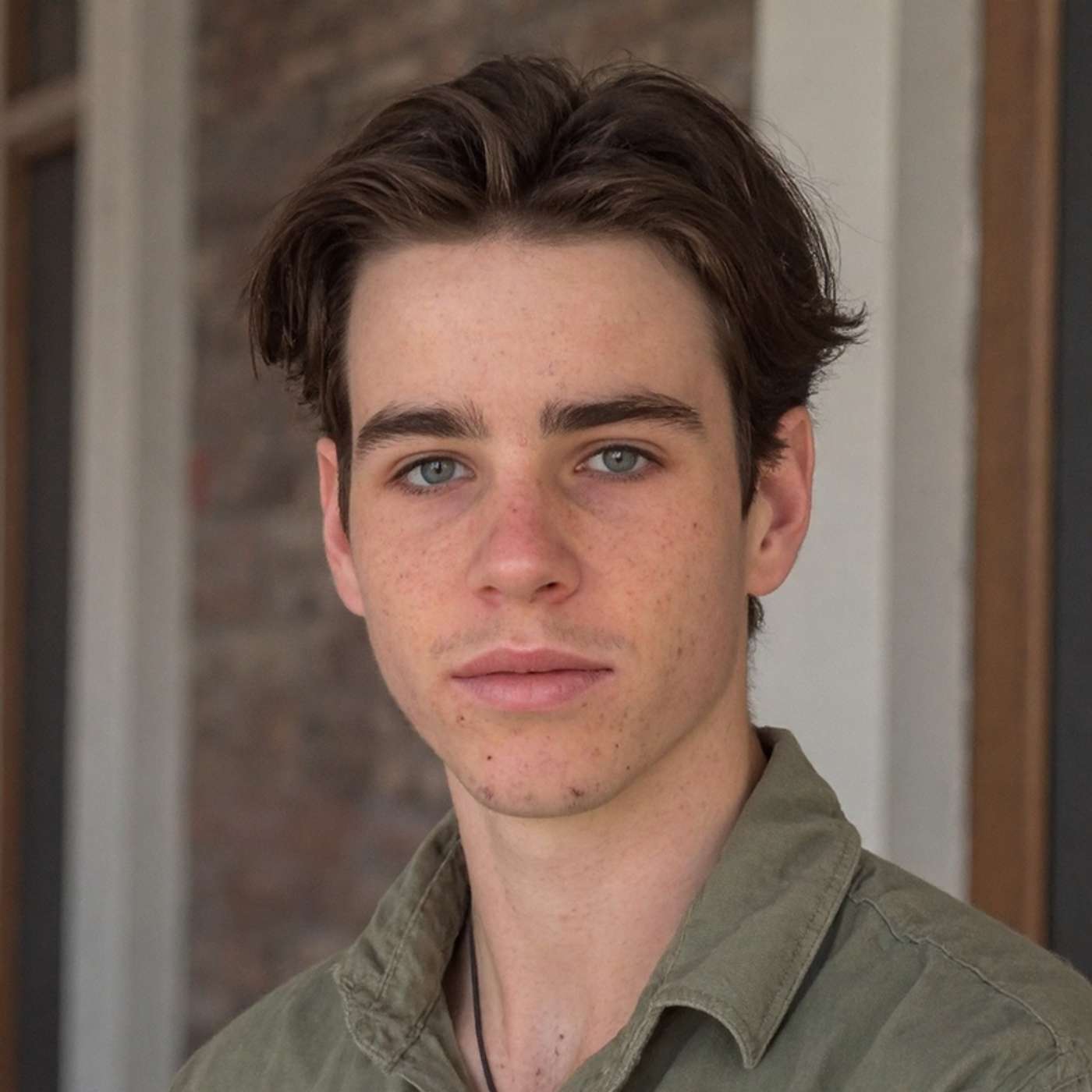
North Queensland's Robot Cowboys and the Future of Farming with Sam Rogers
33m 45s
Sam Rogers, a 19-year-old entrepreneur from Queensland, founded Grazemate, an agricultural technology company that utilizes drones to streamline farming tasks such as moving cattle, analyzing pastures, and estimating livestock weight. His journey is marked by resilience, having survived a spinal tumor as a teenager, which taught him the importance of pursuing passions without delay. This mindset led him to climb a Himalayan peak and later develop Grazemate after observing traditional herding methods in Nepal. The startup has attracted global interest, featured in Forbes, and raised $1.2 million in funding. Sam highlights the value of understanding diverse agricultural challenges worldwide, from cattle ranching in the U.S. to conservation efforts in Africa. Raised in a tight-knit farming community, he credits his background for fostering innovation and a problem-solving approach, aiming to bridge technology gaps in agriculture to enhance sustainability and productivity globally.
The biggest thing I learned was that that wasn't promised. If there's something that you feel really strongly about, there's no time better than now to go after it. There may not be a tomorrow where you've built Gracemate, which is dubbed RoboCowboys, where it's a ton of the drones that will mustier cattle, it'll tell you how heavy they are, how much grass is in a paddock, give you a ton of insight that comes straight down to your phone. Why don't you teach one robot how to do it once? That code, I guess, and that behaviour can be sent to every other robot of its type. Well, good day. Welcome back to another year. 2026 and, I'm genuinely really excited to be back with the podcast. It's taken a little bit to get back into the Swinger things. I know we finished up with our last episode back in November. We released a couple of those spotlight episodes of. Interesting people that we'd chatted to over the years, but it has taken a little bit to get back into working out who and how and what we would talk about this year. And so, I'm bloody excited to be back in and I think to kick off the year, we're a couple of weeks out from a vocag, 17th and 18th February here in Melbourne, and you might have seen or heard that I'm emceeing the event again alongside Tim and Liz, and it's so, so good to be part of it. But one of the highlights of being involved in a vocag is just the different speakers you get to have a chat with and come across. And so, today, on interviewing a bloke who, "Cheers, where do we start?" He's had a heck of a lot of media in the last few weeks. He's 19 years old. He's running an ag tech called Grazemate. He's relocated to Sacramento in the US to continue to build his startup. Now, I think Sam Rogers is similar to Clancy in the sense as someone who's had a lot of different life experiences that ultimately shape who they are. And Sam Rogers is definitely a name which is going to remain forefront for Australian ag tech and I think for the Australian industry. Because Sam's back when he grew up on a cattle property in North Queensland, he, at the age of 14, competed internationally in robotics and AI competition. He came second in the world against thousands of other people. But his life hasn't just been straightforward. He survived a spinal tumor as a teenager and then went on to climb Everest-based camp and the third highest peak in that region. But what is Grazemate and what makes it significant? Well, Grazemate is a company that's using drones to help farmers move cattle. But it's not just, I guess, moving animals through the paddock, it's looking at waters, it's analysing pastures. It's being able to calculate the weight of the animals within about 10 kilos. It is genuinely remarkable. I loved learning about it. Not only is Sam building a team, he's been able to raise capital in about $1.2 million recently, but it's the figure. And he's going to be Trunt and Centre on stage at Avokag, as one of the ground breakers. So I'm just going to jump aside and let's get into this episode. As our audience knows, because we've been plugging in a little bit, Avokag's coming up around the corner, the 17th and 18th of Feb. But somebody who's making headlines and I think what is just amazing about the Avokag event, but also just what it uncovers is the ground breakers and the next generation of talent. But Sam, I'm struggling to even call you the next generation of talent, because there's not too many people, I'd say, in startup business, who can raise $1.2 million, who take themselves over to the US, really, and like these early and really formative stages, if you come near. But your background is remarkable, but firstly, congratulations and welcome to Humans of Agents, great to have you. I appreciate it. Thanks so much for having me. I'll concur that the rest of the ground breakers are absolutely amazing, but I'm looking forward to going through the story of the last couple of weeks and months. Yeah, can't wait. Talk to me just about the last couple of weeks, because obviously it's not every day that, also, just when you see an Ag story on Forbes, and then taking mainstream media by storm. But really, the last couple of weeks, your business is really blowing up nationally here in Australia, but also, I presume, internationally too. Yeah, yeah. We, for one reason or another, end up front page of Forbes Australia and Forbes Brazil, which I think there's more stuff in Portuguese than there is in English about Graysmith now, which is super exciting. But yeah, no, it's been unbelievable, and just really, really exciting for the kind of thing about we've got from farmers going, "Hey, this isn't just a problem that you've had on your farm. This is something that sort of, we haven't Brazil, we haven't Queensland, we haven't Victoria, we haven't Kazakhstan somehow." And yeah, yeah, look, it's been amazing. Super privileged. And so, talk to me about that, because I'd really be interested in just what you've learned in some of these conversations and the people who have fled into your DMs over the last couple of weeks, just about agriculture globally. Yeah, look, I think the worst thing we could possibly do is dive into new conversations with people on the other side of the world and have kind of preconceived notions about the problems that they go through or the way that they from their farm or their ranch as it is over here in the US. And this has been an unbelievable amount of learnings in such a short period of time. So, everything from, I've been over here in Sacramento and a rancher goes, "Alright, we'll jump on the Japanese Kourler Horse and we'll go out and check the cattle." I was expecting an actual horse, turns out a Japanese Kourler Horse is a Honda bike, but there's, there's still all of these super, super specific things that you just wouldn't know. There was someone managing 60,000 cattle in Kazakhstan, like they're breaking their backs, trying to rotation their grades and they just can't keep up. Massive heard of some really tough conditions and then everything to like water buffalo in Africa and people looking for ways to sort of increase their conservation efforts through an immediate. It's just unreal sort of the breadth of challenges that we can solve in agriculture and, you know, it's half the world sort of like landmass agriculture, but just the depth that everyone goes into in their own corners of the world and have their like own systems that work so well and trying to understand even one of those is a really tough job, but now being privileged to see sort of lots of them all at once is just unreal, it's amazing. Amazing, incredible. Talked to me a little bit about home first, about pros and cons in Quanzan. What's the community like and what does your family do back there and what are your memories of being back home on the farm? So I spent the first 16 years of my life up in North Queensland before eventually going to uni and it's always unreal going back because everyone knows everyone. We had our team eventually as a craze mate up there just a month to go or something and a lot of them had come from the city and then getting the whole crew up to Prosopan where you're sort of walking into the wall, so it's oh there's the PET, each of them are high-spiritual, oh there's like your best mate there's it's just like on and on and on and I think we spent probably two hours in a super market just going to everyone because it's such a tighter community and everyone's got each of this backs which is just an incredible sort of atmosphere and kind of a place to call home. Like I grew up on a cattle farm we across two farms in Prosopan and Bowen run about the 6,000 head and more and more we've been trying to rotation the grays as much as we possibly can to increase our stocking rates and increase our grass utilization but it becomes really difficult particularly family run operations because there's kind of just a set number of hours in the day and my brother and I both went off to uni and then that kind of left dad to fend for himself a little bit along with the team up in North Queensland so it's been amazing of the last six months since leaving uni to be able to get back into that instead of put my hand in where I can and try help wherever possible. Well I think that's caught my attention and I'm interested to know like talked me a little bit more about your parents and the influence they've had on you because really I'd say my understanding is what the world's been your oyster Sam and you've been challenged to kind of pursue and broaden your horizons in all sorts of fields but tell me a little bit about your parents. Yeah yeah mum's a primary school teacher she was in prep for a long time and she's sort of working away out I think she's in grade two now so but like from a really early age being encouraged to kind of just ask lots of questions everything from wise this guy blew to why do we spend so long living our cattle and then I got into science from a young age and was running different experience and just I had to say fuck around and find out to some extent like I mean it's a story of every sort of country of kid right you just have a little bit more for you rain to figure out sort of what works what doesn't and where you kind of fit into all of that and then dad's sort of likely running the cattle farm back in Rossi my brother and I was so privileged to really be able to explore and just figure out what we wanted to do where we wanted to do it and who we wanted to do it with. Strong communities are the backbone of Australian agriculture because farming isn't just a business it's about people
places and the local networks that keep regional Australian moving through the good seasons and through the tough ones. Since 2021 the Rabobank Community Fund has invested more than $4 million into grassroots initiatives to build leadership, skills, wellbeing and resilience across regional and rural Australia. From financial skills workshops and succession planning sessions to youth programs, community hubs and health services, this is about practical impact on the ground. If you're part of a local group, a volunteer organisation or a community initiative making a difference, Rabobank would love to hear from you. Applications for the 2026 Rabobank Community Fund close on the 15th of March, so you better get cracking. Apply now at rabobank.com.au and click on the community page. What a big new interest because yeah, 14 you competed internationally in AI. I think you came second in the world, thousands of different competitors, but you could have done anything. So what have been the interests? Yeah, look, I think it was always too tight to my kind of background growing up. So that composition you were talking about, I built a robot arm that sorted electronic waste out of conveyor belts of sort of regular waste streams because I figured out that above everything, the thing doing the most damage to places like the Witsandes probably grew up and the environment as a whole is electronics and the chemicals in batteries and the likes leaching into soils and then polluting waterways and causing ridiculous amounts of damage when we're only recycling 12% of electronics. So decided that we could realistically, I'd done a little bit of work in that space and figured that it shouldn't be that hard. Like I had more time than most of us sort of just in grade 9 or something. So decided that I should order a bunch of parts into the shed and make up this 40-gill or a robot arm and then yeah, partnered up with CSIRO and had a bit of luck in that competition. And yeah, then the sort of next step on that was okay, what else is happening in my environment and my background and that really quickly led to ACTEC. How do you learn these things? Like at that age, like is it YouTube? Is this stuff that you were learning like through school? It was literally, I know you said before fuck around and find out was this literally just trial and error and just working out how stuff's made and how things work? Yeah, yeah, I mean, I was always interested in electronics and kind of what went into them. I mean, as any kid does, I sort of just kept googling things until I kind of figured that out and then I figured out that it may not be the best thing. I don't know, I think at the time we were having all the containers to change ads and we were getting pretty good at recycling plastics and glass and your traditional things, but then we sort of just had a ton of batteries that sat in a electoral in the office because I didn't know what we were meant to do with them and I would eventually found out that yeah, most people don't. So that was I guess stage one of this journey. And so it talked to me, great as my like, what did it look like? Take you back to the day where you thought of and identified the opportunity and where you went from there. I wish there was like one kind of moment that like the light bulb appeared up my head and was like, oh, I wish to do this, but I think like I'd been been mastering with the drone for a couple of years helping dad out because we were sort of most of the land that we grazed is on my flood plain. So sort of you'd get a call up at about 9am every morning and dad'd go, oh, I'm bogged again, worry bogged, where do you think I'm bogged in the creek? And it was just that process over and over again where you just you really needed something that wasn't on the ground to get by and to sort of help us graze the way we wanted to. So I sort of knew like many others at the time that drones could be a big part of how we rotate stock, but I then went off to study at the University of Sydney. I was doing robotics there and I'd sort of been talking with the idea more. It just the more I called out every week and just hear the sort of pain in his voice as he was sort of cycling through different buggies trying to kind of farm the way he wanted, but not really being able to. So did a year at the University of Sydney and I suppose that was coming up to 12 months after I'd broken my back from a spinal tumor and my kind of year 12 high school looked fairly different to most. I wasn't there most of the year. I was in hospital not really able to walk very well and not super sure what the future kind of looked like and from that hospital bed I decided that the one way to make sure that I was able to kind of keep going to the path I wanted would be. I was to book a one-way trip to Nepal and I was able to do effort space camp and I realized that be in time to be the youngest Aussie decline in the Mjc which is this 6,300 meter peak. I thought that would be pretty cool. And it would prove to myself more than anything that I could kind of overcome that obstacle. But the thing I didn't expect at all from that was like watching Sherpas herd yaks on the way out. I was there for about a month and along this trail there's the Sherpa people and they're grazing these yaks through ridiculously difficult country. It made everything back home look like a cakewalk but they didn't put so much ease they were just climbed to the top of the hill. I had these big bells that they would sort of get two of them and just ring them from the top of the valley and the whole sort of mob of yaks would look up at that bell and realize it was time to move and they would be moving cattle from one side in Nepal to the other it was ridiculous because it's obviously fairly cold in Nepal and between monsoon season and winter they move them from one side of the country to another. You go how the hell do they do that and it turned out it was just through this natural signaling and I guess from that point the idea never really left me. I think I started working on graze mate on my way down from the mountain in Nepal. I want to ask you more on graze mate in a second but just talk to me about what it's like to go through such a life changing and life forming event like that tumour what is it changing your mindset and how you view things of what's possible. I think I'm still obviously fairly naive I'm only 19 and still trying to figure out what I want with my life and how everything should look but at the time I had this big 80 year plan of what life should look like and where I should be at each stage there. The biggest thing I looked was that wasn't promised and that if there's something that you feel really strongly about there's no time better than now to go after it because there may not be a tumour to do that in. So kind of facing that at that age I think just gave me a kick off the pants to kind of really appreciate the time I've got and to make the absolute most of that with every day and unfortunately now to be totally recovered from that and sort of hoping to grow very old but I think that it's not something that leaves you super quickly and I'd be decently comfortable saying that everything since that point has kind of been a result of that experience and the kind of I guess switch that flicks. Yeah and so with graze mate like and forming this idea I guess you've got this background where you've proven your capability amongst a cohort of people similar age to you as you've gone through school and you've competed in different competitions you've been able to create different like yeah the robotics arms and then you've also been able to network and I guess get the backing of CSR on others in it like what's your view in terms of like what's possible through the vehicle of using agriculture as it but on a global scale. I think there's no big industry and I think there's not one in any way close to as important as agriculture is and I think it's also true that there's a lot of legacy in agriculture which is amazing but there's also room to potentially see benefits we haven't been able to see in the past and I think almost being naive to that along with working with the people who have sort of got far more experience than I do I think you start asking questions that are a little bit different to what's been asked before and there's no status quo if you're sort of not new to the industry you'd per se but if you have a different vantage point then you like inherently see different things and I think it was a really fortunate position where I sort of had this like I'd seen it day in day out growing up but then I'd also seen the other side where there's all this amazing technology coming out of the University of Sydney where I was at and everywhere else across the world and then coming back to the farm every few months and seeing that it didn't follow me back there was quite disheartening to know that this like hugely important industry wasn't necessarily seeing the full breadth of tech capability that we has now. And I think there's, I'm going to book this quote, but
It was something said by the co-founder of Instagram. I was talking to a couple of months ago. He said that it's really disappointing that the greatest minds of the last 20 years have spent their time and their energy and their willpower optimizing for people to click on ads when there are so many huge problems in this world, like the ones facing farmers, facing ranchers, facing the people that feed this world that I'm not getting as much time as they, I suppose, compared to how do we make people click on these ads and how do we convert inbound into customers and all these different things that matter so much less than what people are doing out in the paddock? Yeah. It's so interesting because I think for me, I'd say I want to talk to it a bit of, "Oh, this is a tangent, is around this, like, what we're rewarded by, like, we can have all this energy and optimism about the how or what could the world look like?" And so I think, as you said, it's addressing these environmental challenges. It's giving farmers both the tools and skills that they need to run more profitable, more productive, more sustainable businesses. But then what society actually rewards as you're saying there is these things that genuinely don't matter except for making rich people richer and also taking so much from society too. Exactly. Yeah. There's a ton of good to be done in this world, I think, before we need to really be optimizing for click through a rate and everything that we have been through this kind of social media age, I suppose. Totally. So, mate, I want to come back to growth. I want to come back to growth, because I think it's obviously a huge part of your journey right now. You've found yourself in the US. It's been a bit of a journey. You've landed there with a bit of funding, but what's actually happening in the US at the moment? And what are you guys trying to do from being in the US? Yeah. I suppose the, I mean, the bigger picture and the bigger goal is to give farmers better tools to help them move cattle more often to gain better oversight over their properties and to kind of farm the way they've always wanted to and to give them the ability to have more authority over their time than they do right now. To do that, we've built craze mate, which we've dubbed robot cowboys, where it's a ton of the drones that will muster your cattle. It'll tell you how heavy they are, how much grass is in a paddock, and give you a ton of insight that comes straight down to your phone. The thing that led us to the US, I suppose, is we were fortunate to be working with a few farms across Queensland, New South Wales, trialling this. But unfortunately, to actually get it approved and legalised when you would need trials and validation in a market that is slightly more open to autonomous drones right now. So in Australia, you've got the civil aviation safety authority who, like, super correctly have been slightly more conservative on drone laws than what we're now seeing come through in the US. The best way to prove that what we're doing is a net good impact for farmers and air space in general and to Casser and to farmers as well is to prove that in an environment that is slightly more accepting of that, which has led us now to California, where just before this I was out on the farm in Sacramento, or on a ranch, I should say. And we're setting up these drones that we install an app on a farmer's phone, a ranch's phone, still getting used to that. And it means that instead of maybe only being able to move their cattle once a month or sort of seasonally, they're now starting to be able to do that more often and with less time. So a farmer can schedule a move straight from their phone now rather than either needing to pilot your own himself out of the paddock or be doing that on horseback or motorbikes or helicopters. We're still super early on in that journey, but it's been an amazing opportunity to come out here, get in my F-150 that I bought off Craigslist and just go up and down California and talk to all these different ranchers and figure out what they're struggling with, figure out where we can help and hopefully give them sort of a way to ranch that works sort of a little bit easier and a little bit better for their families and their operations. Right, you're definitely leaving the American drone getting an F-truck. Hopefully you've got a big hat as well. One of the banks that was trying to sell us over here, they sent us all branded belt buckles. Yeah, that's cool. And now we've got Grazemeat belt buckles that can tell over the RM Williams belt, which I don't know how I feel about that quite yet. It's been a culture shift, so it's good. It's great. There's two blogs, Tom and Mike, they do a monthly episode on humans' vague and Eric and there is a lot up and you know the dance of what you just said is they're going to ask me and say, hey, we want our own belt buckles as well for the Tom and Mike show. So I've got your connection if you need it. Yeah, perfect. We'll send them to America first. You haven't just had to convince farmers though. Like I guess farmers are your customer, but then also you had to convince investors. You've got a world of experience. But talk to me about your team as well because yeah, how have you been able to really be able to convince investors to give you what you need to be able to scale and grow this tech? Really good question. One that you may need to ask them before you've asked me. I think the biggest thing with any kind of agriculture thing is to partner with the people who really know what they're doing and to work in groups. I think if I came at this sort of alone, we would be in a much worse position than we are right now. So on our personal team, we've been super privileged to team up with some of the smartest guys that I've ever met, PhDs in robotics and physics and the best software engineers at the University of Sydney that I could find. And then we've also been able to work with low-stress stockmanship experts who literally wrote the book on how you move cattle. And they sort of teamed up with our engineers and eventually with that crew, we were able to teach a drone as well as I could move cattle as well as those experts could move cattle, teaching a drone how to do that itself. It's just generations of knowledge that are really difficult for one person to put together. It's such a cross-disclimary thing where you've got like the bleeding edge of robotics and AI and all the other buzzwords at the moment. And then how do you actually make this work on a farm? How do you integrate into the workflow of a rancher over here? And then how do you understand cattle if you've just got zeroes and ones? And it's been incredible to work with people we have. And I think that kind of basis and that team means that investors will follow wherever we take it because we're able to be talking to so many farmers and so many ranchers over here that as long as we are really focused on building something that actually works for them and like never being attached to the solution but being so at least a focus on the problem, it means that we can adapt where needed even if things change, even if the market shift. So we build something that doesn't work. The kind of problem is such a real one. It's such a big one and it's such an important one that we've been able to attract the capital to solve it. Someone said to me, well, listen to it on a podcast. Someone said to me, I guess they said it to me if I was listening to a podcast. The extraordinary thing about robots is you can teach one robot something. So let's say it's in your case, it's how to read cattle behaviors, how to adjust to that but also similarly, let's say it's about pouring a coffee and how many stirs is good to break the coffee up. Once you teach one robot, how to do it once, that code I guess and that behavior can be sent to every other robot of its type. So the opportunity that you've got using autonomous drones is you teach and develop these drones once but then the scalability of that if we talk around labor savings but also just the speed of the development of what these drones, robots and kind of technology can pick up is genuinely extraordinary. It's super exciting. Yeah, because our models, I guess right now they've lived about a lifetime of mustard and cattle. So they've sort of, I guess got the some of the intuition that someone who spent the whole life moving a mob has. Then you think about, okay, we managed to sink that in in a few months. This can be possible in a year, what's going to be possible in 10 years and what is it going to learn by the time we get there and what we've seen so far is it'll treat every herd differently. So to understand if you've sort of got cattle that might have been moved with the helicopter and a more sort of skittish to things in the air compared to animals that have been moved by a force the whole life, you might need to go in a little bit closer and kick things a little bit calmer. So I think the real opportunity is where you can be building out these models that quickly try and I understand sort of.
every individual farm and ranch to a level that we can't get right now and no kind of new human would be able to get to like stepping onto that ranch for the first time. But then if we can collate a thousand years of experience into one thing and scales across sort of a million masters every day, it's exciting as to where that can lead. It's already sort of picked up some weird things like we can tell you the weight of a cow within 10 kilos just because as it flies around them it all sort of build you a model of a cow and then tell you from there and you know like it's exactly what that sort of experience stock anglers can do. They can sort of unbelievably tell you within about five kilos how heavy a beast is. But if we can keep bringing that down and keep seeing millions more cows it's exciting what could be possible. So Sam I'd love to know and probably to wrap you get the chance in a few weeks you'll be standing on the stage at a Vogue Ag but the chance to be back home in Australia with everything that's kind of going on around the world with your business. But the chance to talk to the home crowd what are your messages and what are you really wanting to talk to a Australian agriculture about. I'm super excited. I think the one gripe I have with agriculture is that everyone's so far apart usually and a Vogue Ag is a fantastic opportunity that kind of brings everyone together every year and it's really the who's who of agriculture. It's just amazing to kind of get everyone in one room and more than saying anything be able to listen, be able to understand and be able to sort of leave that going forward with sort of a better appreciation of the problems that people have and how we might be able to solve them. When I get on stage for the ground-breakers thing a lot of that would be about my story but then I think there's in particular a few things one around like what's possible with aviation and autonomous drones and the incredible work that people like SkyCelby people like Dronehand people like the like foliar application drones and everything that's coming out there the like exactly what's possible for agriculture in that coming wave of this sort of second version of attractor I suppose and how important it is that we are kind of working towards making that possible for farmers and aligning incentives between the people in the ground and the people in the sky is a huge focus right now both in Australia and globally and then yeah just hopefully we get to a pub afterwards and can just listen and learn and have a good chat to everyone so it'd be great. Well my dear Dithin Melbourne there's no shortage of pubs so what better place to be and yeah really looking forward to meeting you in person I know we've got a couple of chats online between now and then but all the best for the next few weeks and Sam thanks so much for taking the time to have a chat today. Thanks for having me, Oli that was awesome look forward to it once I see you at a vote. Now they do say that feedback is a gift and it's something that we absolutely love to have here. If you want to flick us a message send us one on your favourite social media app we'll get back to you otherwise if you'd like to please rate and review a five star rating or a little bit of feedback always helps us continue to make the show better and we have the conversations that better enjoy your day keep smiling we'll see you soon bye. you
Podcast Summary
Key Points:
Sam Rogers, a 19-year-old founder, launched Grazemate, an ag-tech startup using drones to assist farmers with cattle mustering, pasture analysis, and livestock weighing.
He overcame a spinal tumor as a teenager, which reshaped his perspective on seizing opportunities, leading him to pursue entrepreneurship and significant challenges like climbing a Himalayan peak.
Grazemate has gained international attention, raised $1.2 million in funding, and addresses global agricultural inefficiencies by leveraging robotics and AI.
Sam emphasizes learning from diverse farming communities worldwide and values his rural upbringing in Queensland for fostering innovation and resilience.
Summary:
Sam Rogers, a 19-year-old entrepreneur from Queensland, founded Grazemate, an agricultural technology company that utilizes drones to streamline farming tasks such as moving cattle, analyzing pastures, and estimating livestock weight. His journey is marked by resilience, having survived a spinal tumor as a teenager, which taught him the importance of pursuing passions without delay. This mindset led him to climb a Himalayan peak and later develop Grazemate after observing traditional herding methods in Nepal.
2 million in funding. S. to conservation efforts in Africa.
Raised in a tight-knit farming community, he credits his background for fostering innovation and a problem-solving approach, aiming to bridge technology gaps in agriculture to enhance sustainability and productivity globally.
FAQs
Grazemate is an ag-tech startup that uses drones to help farmers manage cattle, analyze pastures, check water sources, and estimate animal weights within about 10 kilograms, providing insights directly to a smartphone.
Sam Rogers is a 19-year-old Australian entrepreneur who grew up on a cattle farm, competed internationally in robotics at age 14, survived a spinal tumor, and later climbed a 6,300-meter peak in Nepal. He founded Grazemate and relocated to Sacramento to grow the startup.
The idea sparked while observing Sherpas in Nepal herd yaks using bells, combined with his own experience using drones to help his father on their flood-prone farm. He realized drones could revolutionize livestock management through natural signaling and technology.
It addresses labor-intensive tasks like moving cattle, monitoring pastures and water, and calculating animal weights, especially for family-run operations with limited time. It helps optimize grazing, increase stocking rates, and improve overall farm efficiency.
Grazemate has raised about $1.2 million in capital, gained international media coverage including Forbes, and expanded its team. Sam Rogers is also featured as a groundbreaker at the Avokag event in Melbourne.
Surviving a spinal tumor taught him that nothing is promised, motivating him to pursue his passions immediately. It shifted his perspective to appreciate time and take action on ideas without delay.
Chat with AI
Loading...
Pro features
Go deeper with this episode
Unlock creator-grade tools that turn any transcript into show notes and subtitle files.
 PodcastTranscript AI