No Pain, No Gain: Why the Hard Path is Worth It - Season 12 (Japan, March 2025)
10m 42s
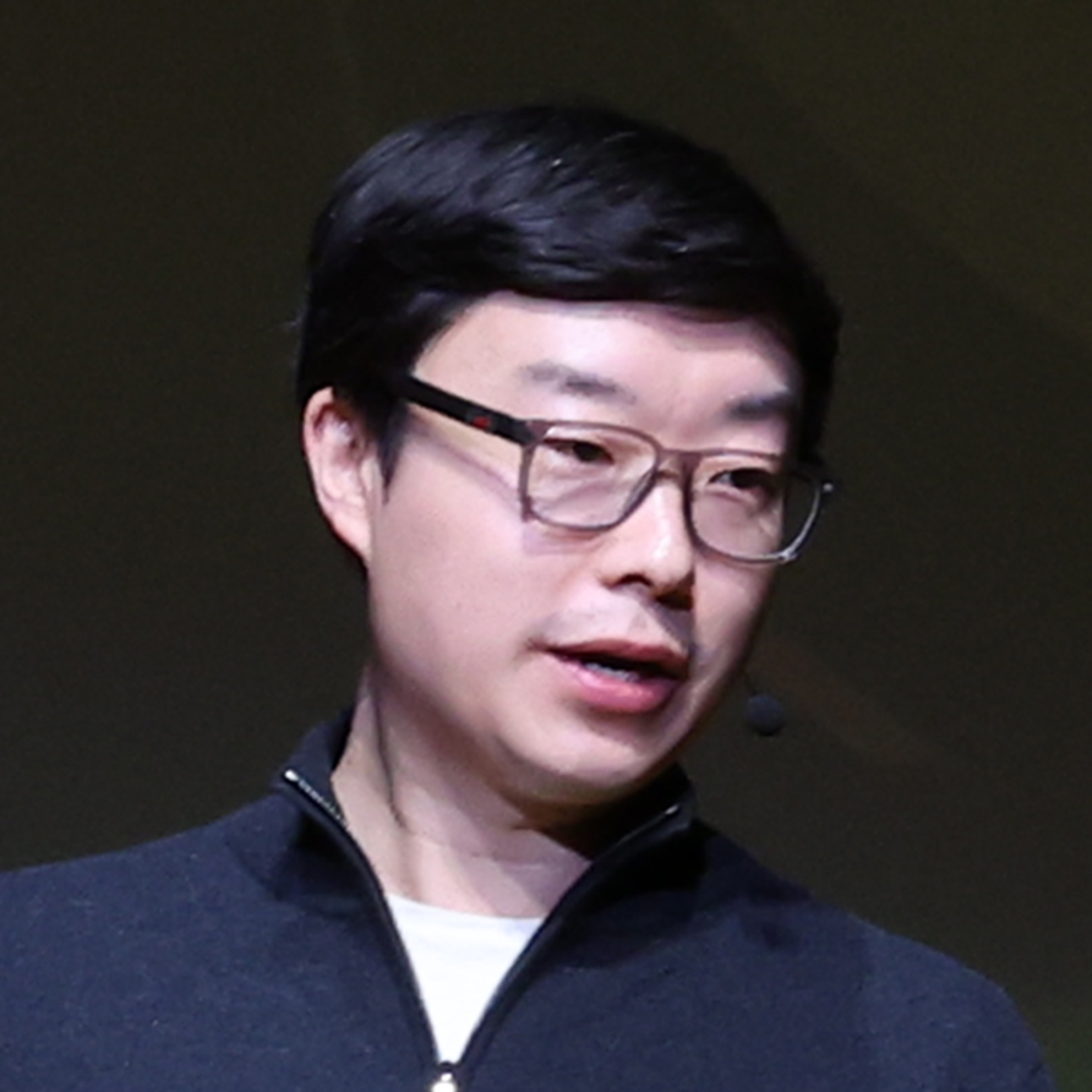
Howard Wu, a cryptographer and founder of Aleo, shared his journey of developing a blockchain platform during a talk. He highlighted the struggles faced in building Aleo, including the need to rebuild from scratch to maintain decentralization. Additionally, Howard discussed the regulatory challenges in the US crypto industry and the decision to establish Aleo's foundation in the US, despite conflicting advice from legal counsel. By choosing the hard path and staying true to their values, Howard and his team successfully launched Aleo, positioning it as an innovative and authentic blockchain project. Howard encouraged founders to trust their instincts, embrace difficult decisions, and remain committed to their core values to achieve meaningful success.
Transcription
1621 Words, 9394 Characters
Our guest, Howard Wu, is a cryptographer with a passion for privacy.
He's the founder of Aleo, a blockchain built for smart contracts from the ground up.
He launched it at the start of the pandemic, betting on zero knowledge tech before most
people could even spell it.
But in this talk, Howard takes us behind the code into the brutal rebills, regulatory
risks and hard decisions that tested everything.
In his talk, Howard makes a compelling case for choosing the hard path, especially when
it's the only one that aligns with your values.
Here's Howard.
Before I begin, I want to thank Naveen and also Sagari for inviting me to the Founder's
Peak and to speak at the Yellow Circle.
My name is Howard Wu.
I'm a founder and today I want to share with you my journey.
So about 14 years ago, as a kid in high school, I was really fascinated with computers.
I stumbled across a Forbes article that was describing Bitcoin as this new internet money.
And that simple article sparked my journey into crypto.
It was a world that I barely understood at the time, but I was very eager and very keen
to explore it.
My time in university was a fortuitous time.
During that time, actually, a lot of new cryptocurrencies started coming about.
Litecoin, Dogecoin, Namecoin, you name it.
And I had no idea what these cryptocurrencies were about.
I had known about Bitcoin and I wanted to learn what made these new types of coins different.
And so I decided to pursue research and learn about how blockchains really worked.
At the time, just to put it into the context, we were early and I really wanted to try to
discover more efficient primitives to build blockchains with.
And ultimately, this led me down a really fascinating path of research.
And in 2015, a new professor had just come to UC Berkeley from MIT.
His field of research was in an area called zero knowledge proofs, or ZK for short.
To be quite frank with you, I had no idea what a zero knowledge proof was at the time,
so I did the natural thing that anyone would do.
I Googled it, I read the Wikipedia article, and I became immediately fascinated by it.
It described a zero knowledge proof as a way to prove to another person that you know a
secret without having to reveal that secret.
It was very captivating.
And so with that, I took a leap of faith, I sent a cold email to this professor, and
I asked to be his research assistant.
This bold step transformed my curiosity into a career, one that ultimately led me to found
Alio, the first public blockchain to support private smart contracts.
Today, I want to share with you two defining stories for my journey.
And these stories illustrate why choosing the harder path, trusting your instincts, and
standing by your core beliefs, even when it's painful, is crucial, in my opinion, to genuine
success.
So the first story is about facing the hard truth.
In the early days of Alio, we spent nearly three years building our technology.
We were a bunch of nerds, we really were into computers, and we were trying to develop new
techniques and develop innovative approaches to solve some of the industry's major challenges.
Finally we developed a novel mechanism in our blockchain to incentivize the development
of much needed, specialized hardware for zero-knowledge proofs.
On paper, our design was brilliant, however, in reality, it was fatally flawed.
When we launched our test net with this new mechanism, we faced a harsh reality.
This new mechanism caused inconsistent block times, which frustrated our developers.
To put it simply, the developer experience was very jittery, and worse, we discovered
that the new mechanism enabled a single participant to produce nearly 60% of our blocks.
As you can imagine, this meant that our blockchain was quickly becoming centralized, the very
thing that we opposed.
However, we were at the forefront of the ZK movement, and this was not the impression
that we wanted to give the industry, especially about a brand new technology like zero-knowledge
proofs.
We could have turned a blind eye, calling it good enough, and ship it into production.
To put it into perspective, there were and still are blockchains running today that are
more centralized than ours.
But deep down, I knew that this wasn't right, and my gut told me otherwise.
I knew that shipping a subpar product would damage our credibility and betray our mission.
So despite immense internal pressure, we shut down our test net, and we openly published
a postmortem, and I accepted that we needed to rebuild from scratch.
To be very frank with you, it was a very agonizing decision.
My leadership team thought I was crazy, and even questioned my judgment.
And our community had criticized us for making a decision that would set us back years.
At a time when we were at the forefront of this cutting-edge technology.
However, deep down, I knew we couldn't ship what we had built, and more so, we had just
learned a really hard lesson from the market on how to build the right solution.
And so we spent the next two years in a really grueling process of re-architecting and rebuilding
our system from scratch.
This is a diagram to illustrate to you the complexity of the re-architecture.
We tore down everything that we had started with, and basically rebuilt it all back up
from scratch.
And yet surprisingly, despite all of our setbacks, Alio became the industry's first platform
to successfully implement our original vision, private smart contracts using ZK on a public
blockchain.
And in hindsight, had we not gone through this challenging experience, we would have shipped
a subpar product and faced far more unpleasant consequences from our developers.
In this instance, taking the hard path, no matter how painful it was, was ultimately
necessary to achieve meaningful success.
The second story that I want to share with you is about standing by your values in the
face of uncertainty.
So when we were getting ready to launch Alio, the crypto industry faced unprecedented regulatory
pressure in the United States, the place that I and my team call home.
And to give you a sense of the atmosphere, U.S. regulators were trying to crack down
on crypto companies.
They were lawsuits against industry leaders, many that are name brands that you guys know
of, and they were accusing them of violating all sorts of rules and regulations.
To put it simply, the administration was trying to stifle crypto, and hold companies like
ours back.
And so we did the thing that anyone in this situation would likely go and do, and we went
and talked to our lawyers.
In fact, we actually ended up deciding to consult several law firms for advice on how
to launch Alio.
And to our surprise, after asking three law firms, we got three different answers.
One told us to set up a foundation in the Cayman Islands or British Virgin Islands.
Another told us to move to Switzerland.
And a third told us to launch from Singapore.
As you can imagine, the advice we got felt wrong.
After all, we were American founders funded by American research grants to develop American
technology that was built by American employees and partners.
And so if we truly believed in our mission, why is it that we would need to relocate?
And so against many people's advice, we made the bold decision to establish our foundation
in the United States.
A lot of people thought we were crazy, but we saw things differently.
As founders living and working in America, we wanted to be true to who we were.
And more importantly, we believed that authenticity and transparency mattered far more than the
perceived safety.
And so we launched Alio in September 2024 with Coinbase as our day one launch partner.
And since then, it's become clear that our commitment to authenticity has paid off.
Just months after launch, the regulatory environment in the US began to shift in our favor, namely
to put it explicitly, the political tide turned in favor of crypto friendly policies.
And suddenly beyond the technology, Alio wasn't just another new blockchain.
It became a respected example of innovation rooted firmly in our values.
Our once risky decision positioned Alio to be cited by policymakers, by the media, by
industry partners as well, as an example of crypto that was made in America.
And sticking to who we were, even when it seemed risky, positioned us as leaders.
And our integrity opened doors that we never could have imagined.
Making your gut, embracing difficult decisions, and remaining true to your core values is
rarely easy.
In fact, it can be deeply uncomfortable and even painful.
However, as a founder, I believe it's precisely this ability and this willingness to endure
discomfort that sets us apart.
No one else can see the vision that you carry in your heart.
And as founders, we took a leap of faith to start something new.
We're the ones that are in the rings fighting battles day after day, and some days it can
be very frustrating.
And ultimately, we're the ones who have the full picture in our minds.
And so in closing, I want to say to founders in the room here that it's important, and
I really believe that you should embrace your instincts, and you should take the hard path
and boldly bring your vision to life.
Thank you very much.
Thank you.
[APPLAUSE]
Podcast Summary
Key Points:
Howard Wu is a cryptographer and the founder of Aleo, a blockchain focused on privacy.
He shares stories about the challenges faced in developing Aleo, emphasizing the importance of choosing the hard path.
Despite regulatory pressures in the US, Howard and his team decided to establish the foundation of Aleo in the United States, standing by their values.
Summary:
Howard Wu, a cryptographer and founder of Aleo, shared his journey of developing a blockchain platform during a talk. He highlighted the struggles faced in building Aleo, including the need to rebuild from scratch to maintain decentralization. Additionally, Howard discussed the regulatory challenges in the US crypto industry and the decision to establish Aleo's foundation in the US, despite conflicting advice from legal counsel.
By choosing the hard path and staying true to their values, Howard and his team successfully launched Aleo, positioning it as an innovative and authentic blockchain project. Howard encouraged founders to trust their instincts, embrace difficult decisions, and remain committed to their core values to achieve meaningful success.
FAQs
Aleo is a blockchain built for smart contracts from scratch.
Howard Wu's interest in crypto was sparked by reading an article about Bitcoin as a new form of internet money.
A zero knowledge proof is a way to prove knowledge of a secret without revealing the secret.
They decided to rebuild Alio due to flaws in the blockchain's mechanism, leading to centralization and credibility concerns.
Howard Wu chose to establish Alio's foundation in the United States, despite advice to relocate to other countries.
Howard Wu believed in staying true to their American roots and values by launching Alio in the United States.
Chat with AI
Loading...
Pro features
Go deeper with this episode
Unlock creator-grade tools that turn any transcript into show notes and subtitle files.
 PodcastTranscript AI