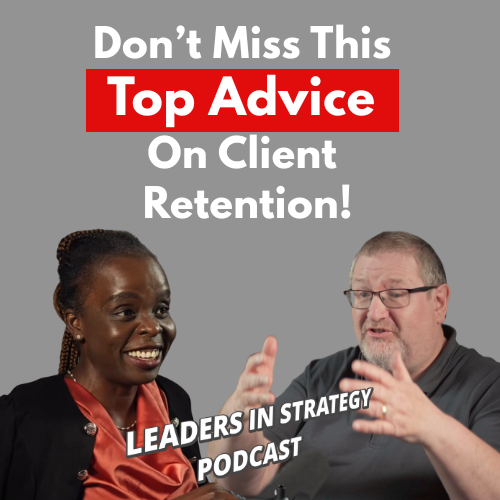
No Customers, No Business: Why Customer Management Really Drives Growth
33m 48s
In this podcast episode, Mike Harris and guest Yemi Olshan discuss effective customer management as a key driver for scaling businesses. Yemi, founder of the Change Hive, argues that most companies don't need more leads but rather need to retain existing clients by fixing leaks in their sales funnels. She highlights that many businesses neglect relationship depth, social proof, and proactive referrals, which are essential for building "know-like-trust" with clients. Her mantra, "all work works," encourages persistence, as efforts may not yield immediate results but compound over time when aligned with core values. Yemi introduces the "three C's"—Clients, Cash, and Credibility—which are interdependent: poor credibility forces discounting, reducing cash for product improvement, leading to client churn. She stresses the importance of social proof, like reviews, to shorten sales cycles and attract pre-sold customers. Practical advice includes mapping the customer journey into six steps with clear metrics, using data to make informed decisions, and maintaining 2-3 acquisition channels to avoid over-reliance. Yemi also recommends clarity on values to guide business choices, whether prioritizing cash flow or compounding growth. Ultimately, she advocates for a systematic, data-driven approach to retention, ensuring businesses invest wisely in relationships to drive sustainable growth and profitability.
When you realise that all work works, so sometimes even though you're not seeing the fruit immediately, doesn't mean that the root sandwich, building what it's, realising that as long as you're building based on your values and you're following the blueprint of what you believe your life's purpose and then keep doing what you're doing. But of course, listen to the environment for signal and see if there's better ways to alter the cells on your sheep but don't stop because you're not seeing immediate results. I'm Mike Harris and I help businesses to successfully grow their turnover and profit. In the last year alone, I have helped dozens of businesses at least double in size and I work with small, medium and large businesses including startups and multi-nationals. A key aspect to scanning your business or your customers, without them there is no business, and yet I meet a lot of company-owners and directors who seem to have forgotten this. They spend all of their time focusing internally, looking at their operations, or they look at cells through their own eyes and not through the eyes of their customers. As I say, no customers, no business. So to tackle this important subjecting, to give you some free advice on effective customer management, I recently recorded this episode and I'm joined by a very special guest. Hello and welcome back to the Leaders and Strategy podcast and today we're going to look at the really important subject, key to scaling up any business, which is customer management. And to do that, I'm joined by a very special guest, the LinkedIn Queen, Business Leader, Client Retention Expert and Coach, Yemi Olshan. Hello Yemi, welcome and joining us. Thank you for having me. What's I got? LinkedIn Queen. Well, we'll come back to that and we'll come back to why I think you're the LinkedIn Queen a bit later. So I'd like to start the podcast with a podcast pitch. So over to you, tell us a little bit about yourself, your background, and your company, the Change Hive. Sure, Mike, thank you for having me first of all. I'm well done on season three of the podcast. Thank you. That's amazing. Like what did they say? Like most podcast stop-after-sale 12 episodes. Yeah. Thank you. I'll down. Really appreciate that. So thanks for having me. My name is Yemi Yemi Olshan. I run a business called the Change Hive and essentially we partner with B2B service companies, primarily FinTechs to help them grow with retention-led strategies. Because for most businesses, they don't actually need more leads. They need to plug the leaks in the sales funnels and that's exactly what we do. So over the number of years of working in the tech and financial services space, I realized that for many businesses, three things tend to be missing, especially in all this AI buzz. One being around really building depth of relationships where they exist in client base, really build that no-like trust. I think for too long we're focused on things like adding new features or competing with the competitors and all that noise. As opposed to like really doubling down on the relationships, really building that no-like trust. So what we've come up with is a way to really help our clients develop no-like trust with their client base. Secondly, it surprised me how many existing businesses have been around for 20 plus years and you look them up on Google and don't have like two reviews. I'm like, you can't be that bad. Like if you're going to run for two years, 20 years. And you know, I think for so long, we didn't think he was important. He's kind of seen as a vanity and metric, like, well, I'm good at what I don't have to make noise about it. But maybe you kind of need to do right because the way we go shopping on Amazon is kind of how we're shopping now for the guys we choose to do business with is nobody goes to page two or page three of Amazon. Like the best place to bury a dead body is what page two. Oh, Amazon. Nobody ever goes there. Right. And your reviews affect how you show up on Google right? So we show our clients how to by delivering by deepening the relationships they have with their clients, they can then tell better stories of the transformations they delivered for their client base and have better quality reviews. And it's not just the vanity thing, but they also then shortens their sales cycle because what you then find is just that attracting people that are coming pre-sold because they've read all this reviews. I was like, Hey, if it works well, Mr Joe blogs over there like surely or for me, I'm smart to say more smart. So I'm sure I can make it work for me as well. Right. So they come like pre-sold like, Oh, yeah, fix it for me. Then third, we it's surprising how many people have built the no like trust have this good reviews, but don't actually proactively ask their client base, Hey, who else do you kind of know that we should be talking to because the thing is human being center hang out impacts right? So if I like you chances are like other people that you like as well. I want to get more people like you. So ask for it like being proactive about the ask and saying, Hey, who else do you know? And surprisingly, you don't always have to incentivize your clients even give you the referrals. Like it depends on what your industry norms are, but for most clients, they have been to kind of say, Oh, yeah, my friend blah, blah, blah, person. What you just said, I mean, just I haven't really thought of it in this context. So I get most of my work through LinkedIn, but I don't get much work if I post about the podcast or if I do a little bit about what goes into a good strategy. I get all of the people in choir when I say, I've done work with this person. I've just done this session and starting a new order with this client. And then quite often I'll get a comment from that client saying, yeah, it's really good to have you on board, really enjoy the first session. It's that that drives, which is actually the same as you saying about people going on to your website and giving a rough, you know, sort of giving a comment or a like or you know, one of the, it's the same thing, isn't it? I found it. It's just I don't do it on the website. I'm kind of indirectly doing I never thought I just never thought of it that way. I've never mentioned it. And I'm guilty. I don't even because I think it's the the British, in me that doesn't feel comfortable always like publicizing saying, hey, it's like, client just said this amazing thing about me. Like I don't want to say about it. But do you know what the number one convert and thing on any website is? Social proof. Evidence. Evidence. Right. Everybody would say, so if you have a land and page that's not converting, quickest way to fix it usually is being claimed. Social proof. So putting people's faces names and ideally job titles. And what they said about you is like, oh, okay, that person said that. And of course, then the basic things of having the clear call to action. But we underestimate how much social proof can do for our business. Right. So yeah, that's what we do. Okay. And we're going to return to quite a lot of this a bit later. Today's ice break, one that we spoke about just before we came on is what proverb or mantra do you live your life by and why? I think it's one that I heard about a month or two ago. I think it was by somebody called Myron Golden. And he said, all work works. Sometimes it works for you. Sometimes it works on you, but all work works. And for me, that just shattered so much. Because I think too often you post something and like, crickets or you set up a workshop and you don't really get the kind of turn out you're expecting or you know, you just do a big launch. But what was going to be a big launch and it's like, oh, it falls a bit flat. And you feel like, oh, maybe this is not working. Maybe it's not for me. That changed it for me because they have made to see that life is compounding. Right. It's like, it's not one big because I think sometimes like the key stories or the books have a lot of survival bias, right. They tell you, oh, it was amazing. It was plain sailing. It just kind of started and overnight, overnight success. And you're like, or why is mine not overnight? And like, I'm working so hard on this thing. Why is it not churned? But when you realize that all work works like so sometimes even though you're not seeing the fruit immediately, doesn't mean that the root sandwich built in my thoughts, realizing that as long as you're building based on your values and you're following the blueprint of what you believe your life's purpose, you know, then keep doing what you're doing. But of course, listen to the environment for signal and see if there's better ways to alter the cells on your ship. But don't stop because you're not seeing immediate results because all work works. Right. Sometimes on you, sometimes for you, but it's working. Absolutely. Yeah. Something I noticed from your website that I thought I found this really interesting. And maybe not what you typically think about if you're thinking about retention of clients, at least part of it isn't. So what you say on your website is that you focus on helping scale-ups grow through retention strategy. Okay. So I was into what you're saying. Fixing what's leaking, so fixing what's leaking clients. So all up to that. And then you've got what I would I would make it gimmicky. You've got your three C's. And your three C's are clients. Okay. Cash credibility. So just talk through those three as all three of those linking back to like retention. Why are those three things important? So clients cash credibility. So clients, of course, are people are not sticking around, why are they not sticking around? I think it's important because I think the surface solution is other, which is the crap clients. Like, yeah, they're just very fickle. They wanted a discount. Like, really, are they all that way? Or is there something in that journey? Could it be that the roadmap wasn't clear? So they came, but it is more about them maybe than it doesn't have that clients. You know, right. Because it could be it could be both ways, but to do that diagnostics and just making sure that we're not just pointing the finger and saying the blame game right. So it's a color. What a bit. You know, so it's a, are we losing clients because our, we don't have product market fair. Our segmentation is wrong. Our messaging is wrong or our product needs tightening and zoning, right? Credibility. Are we losing
and credibility because again people we're good at what we do but only us know it. Exactly exactly. You know so people don't really know that we're good at what we do so every time we have to sell it takes such a long time because I have to persuade you and convince you and buy you and bribe you and tell you what we're working for free just try our work and in all that working for free you burn out because you're like I can't keep working at a discounted rate to get the client initially and hope that they stay but then I don't have enough money to invest in the product to keep them to stay because I get them at a discount because I don't have the credibility to get them in full price and because it's discounted I can't really then invest back in the product so the product is not very good and then they end up churning so it's like you're this one is constant hamster wheel. So it's those things right and cash of course being the consequence of your own or like I'm passing right is you're spending all this money and time to acquire clients that maybe you could acquire quickly if you had visible credibility of the amazing work that you're already doing if you've been in existence for such a long time and you're not even keeping them as long so they're not even profitable because there's a payback period from where's clients start you acquire. And that's why I think it's I think it's great that you're picking all three of those because most people are talking to when they're looking at sales and clients they'll obviously talk about the client and they'll talk about the importance of credibility but that cash bit you don't naturally get linked in with those other two which is why I think it's already powerful because at the end of the day without the cash you've got no business of you you can't invest in the service you can't invest in in the products and also sometimes the most difficult conversations you have with the clients are over money in cash so you kind of got to have a plan how you're going to have I think it's only going to have a plan and how you have those discussions reclined because it's all part of that customer relationship it's all part of that management so I think it's great that you've got the three things linked together and it stood out because of saying most businesses that I know who focus on client management they wouldn't be talking about cash they'll talk about the other two but I think and I think having it in the center is actually the more important I think this so to a point about our usp this is where the tech thing helps is I'm very data informed right this is part of why I think that whole sales funnel is important so it's part of the things that we try to get the clients to work out like what is your customer journey because we think of customer journey as one big block is like I don't think is one big block I think it's six at least in my world six distinct steps at least right so brand awareness lead not your own customer conversion then you have your delivery of the service then you retain and then you check for health at each of those six steps being clear on what the key metric is that you're tracking for is important because like you want to kind of have this stuff on a dashboard and say I wake up in the morning or turn up on the Monday morning 9 a.m. look on my dashboard and say how are we doing for awareness that I that that which parts of my funnel or my journey is leaking and needs my focus right now right because then it then informs things like how much to invest because one of the questions I get give asked is well or when pushback and say oh well that's a lot of money to invest on retention like oh really let's see how much is it climbed worth to you because the lifetime value of the customer right determines how much your willing to then pay to acquire them and how much you then think you could spend to get that payback period on so without having the key data points in your business right which part of all this whole retention is is hard to make business decisions and I think that's whether you need data don't you need the data because otherwise you're winging it you know you're going out and there's nothing get wrong we're going on got instinct and you know sort of feel and all the rest of it you know we'll do it but but you're still winging it if you haven't actually got real data or facts to to back it up agreed and and okay it might only fine tune you you know you might be heading that direction you only need to move it slightly but it's still heading there when you should be hitting there so yeah absolutely agree with the data this episode is sponsored by Strategist Consulting Expert Business and Leadership Consultancy for everyday businesses and professionals what if the key to your business's next growth phase isn't a mystery by the proven process is your business at the ceiling with profits flat daily chaos and scaling up feeling like a risk elite you're not alone and you don't have to solve it alone. Strategist Consulting is your partner for structured transformative growth led by my carous a proven strategist and project manager with expertise in scaling businesses bid management and delivering results we provide clarity through our call service the business review workshop this isn't just advice it's a deep dive analysis that delivers a clear actionable roadmap we identify your bottlenecks uncover hidden opportunities and give you the precise steps to move from stuck to strategic execution visit www.strategist Consulting.com right now and transform your business trajectory so for the audience that that's watching is there any sort of top tips that you would give them that they can use in their businesses for client retention? I think first one is that's with I think you talk a lot about this right is first of all being really clear on your values I think all of all this work the the building block for it all is is really values right because the values are what then determine what kind of clients you want to work with what kind of business business you want to build if that clarity isn't there it's all very haphazard and very you know yeah let's throw something on the wall and see what sticks kind of you know right so it's spending the time to really double down on what I've had what kind of business do you want to build because I don't think there's not right or wrong because for some people is that I just want to fast catch right listen I mean look at like this is a trend we're going to jump on a trend she want to build then you know I mean and that's fine right is that's the most you're doing it with clarity I mean I I had a customer that I did a lot work with going back a few years and his business was literally he went overseas and he went to I think it was Singapore but it may not be and he would buy whatever was cheap bring it back and he would sell it to the market stalls so he wasn't interested in the products what he was interested in was the money he could make by buying it cheap and selling it other better price over here so yeah so there are people who just think that way they don't and this this business was a multi million and I'm talking about hundreds of million pounds business yeah we're not talking about the smoke but that's all he did he hit and his eyes went overboard what was cheap brought back and then from it exactly I think there's a place for that and actually think like actually most any business should actually have two goals at the very minimum right is one for cash flow and one for compounding I think if you do it properly you can actually have both but some people want to really just double down on the cash flow angle and that's okay as long as you're doing it with the I think you don't want to be deceiving yourself right if you know what to do with the right this is a cash flow business when they don't care about retention that's fine so what are your values I think it's an important starting point secondly I think it's important to spend the time really developing that customer journey like really segmenting the journey like mapping out what currently is the state for your business it's like how are you attracting clients and I like to recommend my clients think about having two to three channels to get business right because like you don't want to be overly reliant on one channel because like I just linked in for example we've linked in the size of the band yeah absolutely right so it's two to three tops right but I think more than three if you're a sole business owner that becomes a full-time job unless you want to be come on content creator what's the brand-awareness strategy then second what's the way you're going to nurture so when people find out about you it's the point earlier about like especially for most beta-be people that I work with as a business to business businesses it's a longer sales cycle right it tends to be a lot more it's not just one single person making a decision usually right they like have to talk to their board or talk to whoever else right so even when it is one person I mean I never cease to lose me it can take the 18 months for my first meeting to really get in traction and the guy I'm talking to is the guys at the top of the company and you think what why does it take 18 months to but anyway I've got used to it now so I just go with it but yeah it's odd yeah well again I think that that could also be sometimes it's just the way the company's work it'd think about your values right because it could be that maybe does another kind you kind of try to track it so I'm like it might tell you that the way they make decisions is so slow and this so and they're not the kind of because that could be a filtering criteria absolutely but the thing that's odd by dressing a bit but the thing that's odd is when I actually get to work with them the quite dynamic and quite quick in the decision making and and so there's this disparity I think I think I know why it is and I'm not going to say what it is today I'm not fair enough but I think I know what it is but nonetheless it surprised me how long that that thought process can be yeah so generally B2B cellin tends to be slightly longer but the the upside of it is it's big higher reward right? So it's been proactive about that so what's your lead nurture in going to be how are you going to make sure that when they hear about you from LinkedIn or wherever they hear networking events how are you going to bring them into your world and keep talking to them so you stay front of mine because I think part of the reasons for that length is they see you once and it knows you for like the next six months and they forget about you's like oh who are you again like Yeah, absolutely. And then you disappear.
for six months and it's like you start in the engine again but what could that be for your business? Third, being around sales, like standardizing how you sell, I think is really important for many clients because usually sometimes especially with smaller businesses it's very much a gut feel, like especially if it's very still found the lead, it's much as a I get on a call, we have a chat, we see the lightnings, so it's really to some degree like doubling down on your style and your method and the key things you need to hit in a sales conversation I think is important because then you start to be able to track your conversions, what you said, what work you work and then forth around things around the delivery, I feel like I've said this a few times now but it's really being clear on like when someone signs that check with you, what's the journey and communicating that to them because the amount of refunds and your amount of complaints that just drops when you're very clearly people. So yeah, really mapping out that customer, so about all these customer journey map out really really clearly and then third, I invite them to go to our website, there's a link to take a scorecard, it's like five minutes long, good 20 questions, it's really open so they can take those 20 questions and tell us them exactly how they rate, across this five hours, tells them to need to work on their road map routine, you know, revenue expansion and order, so that then tells you exactly what. And ask the podcast as the leaders and strategies, I always like to ask this question, so from your point of view, how would you define strategy and how important do you think it is in the business that you're on? I think strategies having a clarity or vision with a clear road map of the household, knowing the why, and also at a high level, the how it's going to get done. But I think in addition to that is then having the flexibility to pay attention to the environment, so there's a lot of experimentation that goes with strategy and I think this is why it's not just the, you can just put in chat, GPC and chat, GPC will tell you, right, so that might be a good starting point if that's what you're going to for, but I think the real skill is to sharpen up that vision, like be very clear on what your why is, have a very high level how mapped out and the courage, really it's courage to put out your not so good idea how simple that is, and see, you know, how the world reacts to it, take all of that data back and then go faster during my keep iterating, because I think strategy for me is very iterative. I think the days of having like this 5 years strategy that we sit down once and we do it and we lock it up, I think it's more, we can kind of have a direction, but I think done well, your strategy really should at least be reviewed quarterly, it's kind of how I try to do it because the good thing in the tech space is something called OKRs, the objective and key results. I don't know if you can look for us, but I'm going to look for us. Yeah, it's pretty cool. I think this is where all of it kind of all ties to get to, how I like to think about it is when I work with, like, to, first of all, be clear on your values and be clear on your lives, like, why are you doing this and why does the world even need this? I think a good way if you're not sure what the mission of your business is, a good sign, what I recommend to people is to look at the UN STG goals. So the UN, I forget the year it was now, but they put together a 17, I don't know if you familiar with the UN STG goals. I think that's a good starting point for you to show which ones are my status following. Exactly. What am I being in with this? Yeah, because usually, yeah, even if you're purely, purely pro-profit, you're just kind of a lion. I think this day, because one of the things we're talking about is it's hard to get Gen Z's to ones to work because they want to feel a mission in line and that, that, that, that. So one of the things that we are having to be very proactive about is being clear on the impact and the good we're doing the world because the younger generation, more and more, wants to be in an impactful purpose also. As a small business owner, I only think, oh, why would fancy fresh uni grad want to work for me when I can go for a GP Morgan? Why is because you're clear on your vision and you embody it and too, you're very clear on the impact you have in the world and you're part of something big. So all that to say, the impact then does matter, that UN STG goals is then important. So all of that then informs where you're going as the strategy. So that could be like your five year plan and whatnot, but then every quarter, you set an objective, right? So it's so, based on this high level strategy, what exactly are we going to do this quarter? And then what are the key results that will be a research that the objective is more qualitative, right? So we're going to do something that is quite, but the key results are quantitative, right? How would we know that we're successful? So what I look at, I mean, just on that. So I normally work on a three year plan, but the first thing I say to customers is, it doesn't matter what your plan is, something will come along that very early on that starts to change where you see my destination might not fundamentally change, but how are you going to get there or exactly that? You might flex a little bit because who knows, you know, whether that's personal or, you know, in the business or outside of the business, you never know. So you have to flexibility. But then what I do is, as well as having the three year plan, have what I call the charter, which is bringing down what are you doing over the next year? Because each year you're at a different stage of your plan. So the first year might be much more around getting out, getting new clients, working in new sectors, developing new products. Whereas the second year might be more about, I've got those new clients and I've got that new work. I'm now going to deliver it properly. So you need to think and I call it a charter because a charter, something people sign up to. So the charter you're signing up for the year, this is what you're signing up to deliver. So you need to have your Key-Ans and Object-Is, but also need to have your KPIs that you're going to track, and you need to have your clear deliverables that you're going to do in the year. And then you monitor that, at least once a quarter. I'm quite often suggest to start with once a month. Absolutely. And that starts to drive it forward. But yeah, the charter is the most people are happy with the plan. And then you certainly go, right, here's your pencil, you've got a pen, you've got a sign on the physically sign on the bottle, the charter you're signing up to this. Funny how people start going, well yeah, well maybe it was a little bit ambitious to play an after-you know, maybe it's, you know, well okay, we can go back and revisit it, but you know, two months ago, that's where you wanted to get to. I like that. It's how middle-year. Yeah, yeah. This is what you're signing up to deliver this year on it. That's smart. Yeah. But basically what you just said about having that, you've got to have things that are deliverables that you can track and make sure you, and I'll say yeah, at least once a quarter you need to be, because you leave it longer than that. The more I've run the better, but yeah. Yeah, you leave it much more than that. Then if things have gone off track or you haven't done something you should have done, you know, you're leaving it too long before you realize. Yeah. Okay, interesting. Yeah. Okay, so just talked about strategy. Right. What strategies have you found have been really useful and worked for you with the change? I think I said earlier the strategies the how, I think it's more the what, but so what strategies have we found to be really helpful? Yeah. Relationships are really being very intentional about practically cultivated key relationships because so the point or the conversation earlier, they don't always like yield results immediately, but they keep you for the longest time. So been proactive about that. For the future, I'm going to yield a lot more. Yeah, sometimes the immediate, like get the top of the immediate, which is wonderful when that happens, but you're saying the same thing. Yeah. Second is a being more intentional about LinkedIn. LinkedIn takes a whole lot of time to do especially to do it well. But again, this is why I think retention is important because if you do it well, then it means that you are intentionally freeing up space in your calendar to sit down and think because I think to do LinkedIn well, you have to sit down, reflect on your experiences, then write it down because writing is probably one of the best ways to think. Right. It's like when you put your pen to paper, you used to use the phrase thinking ink or was thinking about it and writing that thinking ink. That is so good. Because you write it all down and then usually first time for me anyway, it's a hypothesis, just like put everything on. And I remember it better if I've written it down. I can remember what I've written down. Even if I'm typewriter, I don't necessarily remember it, but if I've actually had to write it, I think. The sticks are better, right? I know. So I think it challenges what you actually know because when you come to writing, you have to explain this yourself. Sometimes you think you know it. Why would you know it? You have to explain it. So you catch yourself on your own BS. And so initially it's all like this verbal vomit. And for me, it's the first pass is too long. Then it's cut down. Then when it gets cut down, it's like, I think it's too jargony because part of what I'm trying to do is to cut it down so that UK grade five is how I like to write. So I say, I want this thing at UK grade five level. So you put it into Hemingway on edit to say what age level is this thing? If it's higher than UK grade five, like, no, sorry, this is too smart. I want a seven-year-old to read it even if they're really, really smart people because like we're also a super busier, I said the more digestible it is. The more digestible it is, the more it is.
that's a riddance so LinkedIn is. - I don't do this anymore, but I, until quite recently, I started with Twitter and then I moved to LinkedIn. And for a long time, I would still draft my posts on Twitter and then put them on 'cause Twitter forces you to get your message across in a few words. So you can out all of that rubbish, you can't say out all that jar, if you can't get your message across on Twitter, you're saying too much, I used to draft it on Twitter and then post it onto LinkedIn. I haven't done that recently, you can tell that on my recent post 'cause I was so too much. So I might go back to that actually 'cause it really was a good way of focusing your mind. You've only got a few words, few characters that you can use on Twitter. It really makes you become concise. - That's smart. - And take out the words that you don't really need. - Someone says, I think you think in bullet points. - Yeah, yeah, but actually, yeah. - You don't think in paragraphs, didn't you? - Yeah, absolutely. - So yeah, so LinkedIn is for sure part of the strategy, right, is the newsletters getting those out weekly, it's one is due to doing this together. - Don't. - So it's networking, LinkedIn and round tables have been very, very useful for us. - Oh, I'm interested. - So I think you've been talking to you earlier, we talked about how like, email life, nothing bits and real life, right? So getting the right people around the table on a specific topic and talking and discussing. - Yeah. - Build relationships quicker than anything and you can do via Zoom or Teams. It also means that we can record the content and use it online for socials and promotions and also ask for referrals from people in the room to say, "Well, should we invite to this stuff, right?" And then you start to build your network off the back of that. So yeah, that's the three key things I'm really heavily pushing. And at some point, any to the podcast. (laughing) - So I, you must do the podcast. I mean, look, if you can get what you do, well, gain digressing slightly, but I was talking to somebody the other day, well, actually it wasn't the other day, it was a couple of months ago. And I said to her, "Do you watch the podcast?" And she said, "No, don't wish for post-crossed." Somebody I know really well. I said, "Do you listen?" - She was like, "No, do you listen to it?" And she said, "No, no, listen." I said, "Well, I'm not, she said, "I'm not in taller than I like to read things." But I could read it. She said, "That's how. " So she was the one that prompted me to convert these now, and we now do a, like a transcript of it. Well, it's not a transcript, but an edited sort of highlights from the podcast that I then put out as a blog. And it was her that made me think of it, 'cause she's right, everybody. - Consume differently. So at the moment, there'd be people missing out because they're not seeing what you're putting on minting as they're not somebody likes to read. They like to view it. So yeah, I think you should definitely do the podcast. - Absolutely. - Thank you, I appreciate that. Thank you so much. - Believe a comment if you're watching this on YouTube, or you can message me on LinkedIn. Don't forget to like, subscribe, and share your experience and social media tagging this podcast. And just a quick reminder of where you can find us, you can watch us on the leaders in strategy YouTube channel. Listen to us and Spotify, Apple Podcast, Amazon Music, Podbean, and PodJaser. And of course, we upload every episode onto my LinkedIn page and also onto the strategies consulting website. All right, well, thank you for joining us. Hopefully that's been useful. The importance of retaining customers. Thank you again for joining us today, Yemi. It's been really good fun. And hopefully you'll come back and join us again soon. - Thank you. - And we'll talk about cash collection or something like that, that's equally as important. So that's it. See you soon. - Thank you.
Podcast Summary
Key Points:
Mike Harris hosts the Leaders and Strategy podcast, joined by Yemi Olshan, a client retention expert and founder of the Change Hive, to discuss customer management for business scaling.
Yemi emphasizes that businesses often need to retain existing clients rather than chase new leads, focusing on "plugging the leaks" in the sales funnel.
Her mantra, "all work works," highlights that efforts may not show immediate results but compound over time, so persistence aligned with values is key.
She introduces the "three C's"
Social proof (e.g., reviews, testimonials) is critical for credibility, shortening sales cycles and attracting pre-sold clients.
Yemi advises mapping the customer journey into six distinct steps (e.g., awareness, conversion, retention) and tracking key metrics via a dashboard to identify leaks and inform investments.
Top tips include being clear on business values, developing 2-3 client acquisition channels to avoid over-reliance, and proactively asking clients for referrals.
Cash flow and compounding goals should coexist, and businesses must avoid self-deception about their true priorities.
Summary:
In this podcast episode, Mike Harris and guest Yemi Olshan discuss effective customer management as a key driver for scaling businesses. Yemi, founder of the Change Hive, argues that most companies don't need more leads but rather need to retain existing clients by fixing leaks in their sales funnels. She highlights that many businesses neglect relationship depth, social proof, and proactive referrals, which are essential for building "know-like-trust" with clients.
Her mantra, "all work works," encourages persistence, as efforts may not yield immediate results but compound over time when aligned with core values. Yemi introduces the "three C's"—Clients, Cash, and Credibility—which are interdependent: poor credibility forces discounting, reducing cash for product improvement, leading to client churn. She stresses the importance of social proof, like reviews, to shorten sales cycles and attract pre-sold customers.
Practical advice includes mapping the customer journey into six steps with clear metrics, using data to make informed decisions, and maintaining 2-3 acquisition channels to avoid over-reliance. Yemi also recommends clarity on values to guide business choices, whether prioritizing cash flow or compounding growth. Ultimately, she advocates for a systematic, data-driven approach to retention, ensuring businesses invest wisely in relationships to drive sustainable growth and profitability.
FAQs
It means that every effort you put in, even without immediate results, contributes to long-term growth. Sometimes work works for you, and sometimes it works on you, but it's always building toward something.
Retention helps plug leaks in the sales funnel, so you don't need to constantly chase new leads. It builds trust, shortens sales cycles, and increases the lifetime value of each customer, making your business more profitable.
The three C's are Clients, Cash, and Credibility. Clients focuses on why customers leave, Cash addresses the financial impact of retention, and Credibility involves showcasing your work to attract and keep clients.
Reviews serve as social proof, which is the number one converting element on websites. They improve your Google ranking and help attract pre-sold customers, shortening your sales cycle.
Businesses should proactively ask their client base for referrals, like 'Who else do you know that we should talk to?' Most clients are willing to refer without incentives, especially if they trust you and have had positive experiences.
Be clear on your values, as they determine the type of clients and business you want to build. Without this clarity, your retention efforts will be haphazard and less effective.
Chat with AI
Loading...
Pro features
Go deeper with this episode
Unlock creator-grade tools that turn any transcript into show notes and subtitle files.
 PodcastTranscript AI