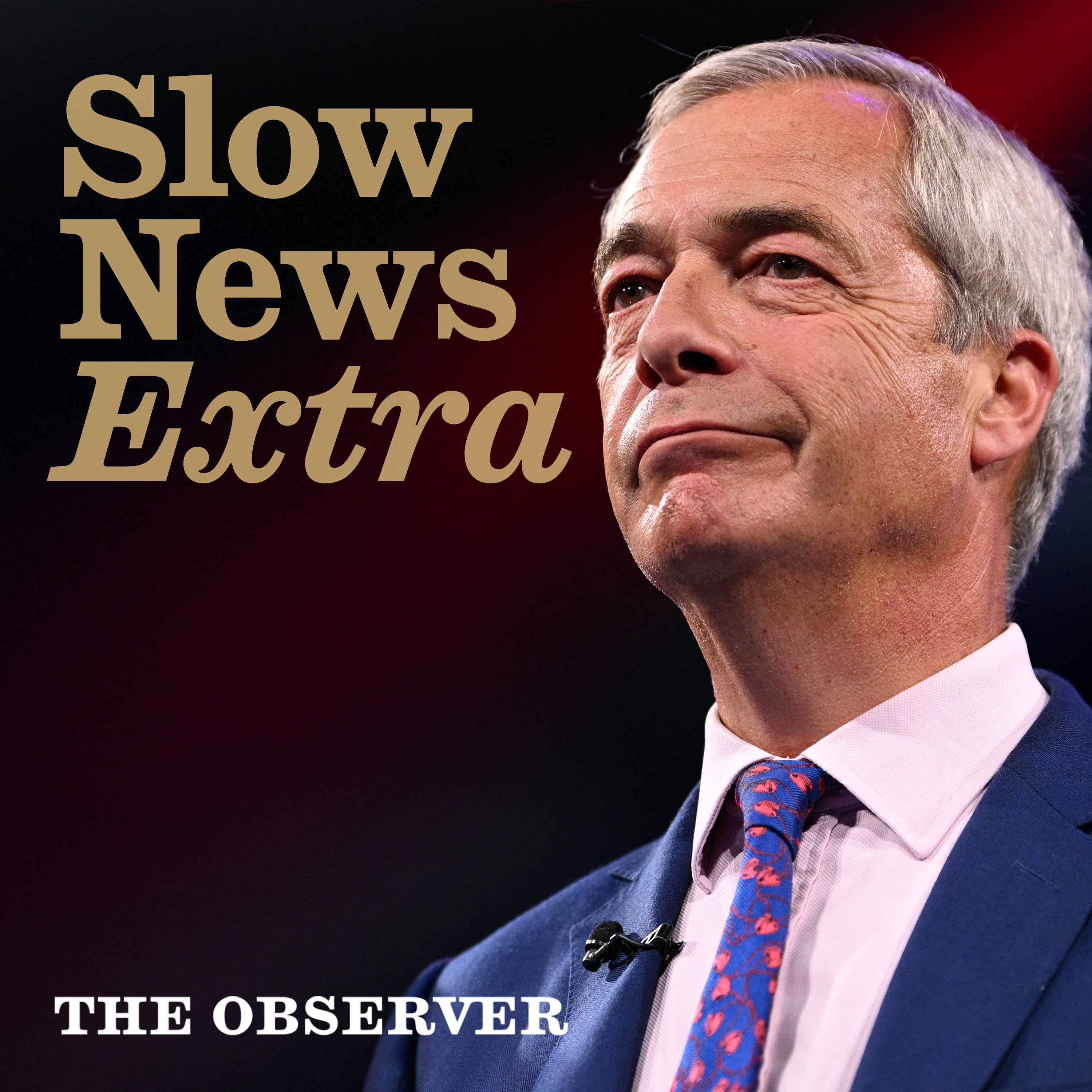
Nigel Farage and the five million pound gift: what's wrong with that?
21m 31s
In this Sloan Newscast Extra, editor James Harding and investigative reporter John Ungard Thomas discuss the underreported influence of Christopher Harbourn, a billionaire cryptocurrency donor living in Thailand, who has given over £20 million to British right-wing parties and causes. The key focus is Harbourn’s £5 million personal gift to Nigel Farage, which was not declared and is now under investigation by the Parliamentary Standards Commissioner. Farage claims the money was for security, but the timing and lack of disclosure raise questions about potential conflicts of interest, given Farage’s advocacy for cryptocurrency policies that could benefit Harbourn. The discussion explores how such large donations can distort political influence, especially when donors have clear policy interests. Thomas notes that while the sums are significant, the real issue is the systemic lack of donation caps or public funding in UK politics. The investigation could lead to serious repercussions for Farage, including a suspension or recall election, but Harbourn faces no consequences. The conversation also touches on media dynamics, where donors like Harbourn and others bypass investigative queries by giving exclusive interviews to sympathetic outlets. Ultimately, the case underscores ongoing concerns about transparency and fairness in political financing.
[Music] Hello, I'm James Harding, I'm the editor of the Observer and welcome to the Sloan Newscast Extra. There's one of those old jokes in newsrooms that we spend a lot of time reporting things that we find interesting but don't understand at the expense of things we do understand but perhaps are not so interesting. And this week when the drama of Downing Street is consuming everyone's attention in Westminster, we are deliberately going to put our attention elsewhere. I'm joined by the great John Ungard Thomas who's one of the great investigative reporters in this country and I'm proud to say at the Observer. And we're trying to dig in to understand the strangely underreported fact that a billionaire who's made his fortune in crypto, who lives in Thailand, who's given probably more than 20 million pounds to British politics on the right and a 5 million pound gift, quote unquote, to Nigel Farage, is getting quite to a little attention and yet seems to be one of the strangest moments of financing politics that I can remember. And so this is really an attempt to try and make sense of that to understand it. John, where do we start? Let's move to start with Chris Harbourn. There we. He's met a lot of his money from cryptocurrency. So he's got interest in aviation but he's got a very significant stake in a cryptocurrency company, called Tether. Now Nigel Farage, as we know, is a big champion of cryptocurrency. And any money that Mr Harbourn gives to a reform party has to be disclosed because clearly it could be a conflict of interest here. And he has given more than 22 million pounds to reform. But is it reform, which reform and the Brexit party? I think it's just to reform because I think it's before it became the, I think it's just to reform. He also gave money previously to Brexit. And he gave money to the Conservatives. And he gave money to the Conservatives and he gave money to the private company set up by probably Johnson after he left Parliament as well. So he's a big political donor. But the kind of bombshow revelation has been the five million pounds that he gave Nigel Farage before he became an MP. And the reason that's so significant is because it wasn't disclosed. Well, it's significant because it wasn't disclosed and it was personally, it was money put into the pocket of Nigel Farage, not even a political party donation. Correct. Nigel Farage says it was his, for his security and he doesn't think he needed to declare it. But I think he's potentially going to come into problems on that point because if you, if you, when you become an MP, you have to disclose any donations for the year before you became an MP that could potentially be seen to be influencing you. And I just don't see how anyone could argue that this wasn't a significant donation that had to be disclosed. And I just say the Parliamentary Standards Commission has now launched an investigation into this. So Farage is potentially facing quite significant difficulties on this. So let's go to the investigation in a minute, but just, just too bit to it that I don't really understand. So if the argument is this was just a personal gift and putting aside that I've never heard of anyone. I mean, you know, it's hard enough for wealthy people to give 5 million pounds to members of their own family, you know, on inheritance basis. 5 million pounds has been given to Nigel Farage. It's gone into his personal bank account. And then he says, "No, that's actually for my security." But at the same time he's saying, "I was given that money when I didn't intend to be a politician." So he's saying, "I needed 5 million pounds of personal security at a time when I was going to be a private citizen and I had no, no interest, no expectation, no aspiration to be a public figure." Well, why would you need the security then? I can see, I can see there's an inconsistency there. And I think that is for Nigel Farage to explain, because I think clearly at that point in 2024 there were discussions about whether he was going to stand and what his future plans were. I'm sure Nigel Farage would say he's a high profile individual, whether or not he's in political life, he would say that he's likely, he could potentially face risks from people who don't. I don't think that high profile everyone in LBC or GB News, but then the second question I don't quite understand is if you like from the other side of the argument. So if you're Christopher Harbourn, you say, "Look, I'm a private person, I've made my money, I want to give it to those people that I support." And all of you in the press are trying to make a link between my crypto fortune and future crypto regulation. And actually it's a really fair argument, seems to me, which is Nigel Farage wants to be the referee of our national game. You can't pay the ref. You can't pay the ref to adjudicate the future of cryptocurrency. You can't pay the ref to bet on the game. But Christopher Harbourn might say, "Actually, that's not why I'm putting money in. I'm putting money in because I want to see a change Britain and a change politics." How do we understand the idea that a single individual, putting aside what you might want to be the future of crypto regulation, that a single individual can have such an influence on a political party, and not just around crypto, around Europe, immigration, you know, where public investment happens? What's been the argument within politics about the nature of the influence that comes with the gift? So that's an issue which the political parties have been wrestling with for decades. And if you look at the history of donations, on the face of it, many people would say it looks corrupt. Because if you give enough money to a the governing political party, you can often end up with a period. And there's been shown, there's the correlation between the amount of money you give and getting the period. And the problem is that what this comes down to, and I would also say there's a juxtaposition of story after story where people have given money and then benefited from government policy. And it looks very bad. The problem is for the political parties, problem for Nigel Farage, they need the money. And that's the problem that has for our political system is that we have looked in the past about putting caps on donations. And indeed, now even Farage's body is now going to fall off the new regulations that are coming in on, and on cryptocurrency and donations from people who live abroad. But what none of the parties really want to do is grasp the nettle and say, "Okay, let's have a cap on donations." Because that would deal with the problem. Or public funding. Or public funding. But again, it comes out of the public person in this kind of economic environment. No one is going to step forward. There's a political party. And by the way, we're like taxpayers to fund a system with your completely losing faith. The sums here are big. By British standards, when you think back even MPs expenses or cash for questions, the amounts of money that were going to the pockets of politicians were never in the millions. They were actually rarely even in the hundreds of thousands. Sometimes they weren't even in the tens of thousands. So is there something significant just in the sum of money here? Well, it's a significant sum of money because it's a personal donation. The point you made earlier. It's not significant when you compare it to political donations over the years. And indeed, the scandal at Tony Player was caught up in the 2000s. It was when the Labour Party had given loans. And again, that was around 5 million. And then it turned out that people had given loans, had been given peerages. So in terms of these kind of amounts, it's not new in terms of political donations. And effectively, this is a political donation. However, he wants to give it. Except, except John, there's a massive political donation, you know, £9, £12 million in the last year to reform. So this is a donation to Nigel Thradd. This is into his bank account. Where does that take us? Let's go through a few things. So one of the things that no one's quite managed to nail down is exactly the financing of the house that he bought in Clackton, which is where he's now the MP. Oh, he's partner bought. Or his partner bought. So originally he said he bought it. Then he said his partner bought it. And of course, within our system, that makes a difference because of the difference between the first home and the second home and the amount of stamped duty you pay. Does the check from Christopher Harbourn make any difference to our understanding of whether he did or didn't pay the right amount of tax on his house? I'm not sure it does in this case. And you would need to speak to a tax lawyer. But I think the issue here is if you gifted your partner a sum of money. And they then chose to purchase their first property with that sum of money. And they are the owner of that property. Then I don't see why you should pay. You would be required to pay the additional stamped duty that you have to pay on second and third residences. So I think it's possible he's got to get out clause on that one. And so that's an angel renaf.
this is a very, very complicated area of tax law. But I think there were some more pressing questions to ask around this money, the purpose of the money and the recording of such gifts before we get onto the Clackton House. So what were the parliamentary standards commissioner look at? Should it have been declared and there's a number of MPs who think this should certainly should be declared. And let's not forget, Nigel Farage has not got a great record when it comes to declaring money. He's are a highest earning MP in terms of money outside Parliament. He's earned £2m since he became an MP. But he has to apologise in January because he's not been declaring it properly. He says because he's not very good at using computers. But I mean, it doesn't actually instill faith in his ability to understand properly how the rules work and to make sure everything is disclosed fully. But and do we end up drawing into place where people are frustrated, you know, kissed on with the Prime Minister or at least at the time of recording Prime Minister, of course, Farage, a grifter, a chance, but the reality is it doesn't really make any difference. Is there any sign that this is making a difference to perceptions of Nigel Farage to the way in which other politicians are treating him? I think Nigel Farage will look across the air and think this is not going to cost me any political capital. I think Nigel Farage is here. I think you say, look, I've been totally honest. I'm bullish about cryptocurrency. I've said I'm going to lobby the Bank of England. I've got a bill here which they published last year to say they're going to cut tax on cryptocurrency from 24% to 10%. If you're a cryptocurrency billionaire, Nigel Farage is good news. But Nigel Farage would say, yes, I am, but I'm not hiding it. But do you think we're kind of misreading the Harbourn influence, which is we keep focusing on the crypto, but my point is we live in a country now where the majority of people, if you believe recent polls, would rather see us have a closer relationship with Europe. In fact, there's argument that the majority of people rather just see us rejoin Europe. And Christopher Harbourn, an absolutely adamant leave a passionate Brexit here, has just an outsized influence on politics in this country because of the money. Correct. But that comes down to the heart of the way our political system is funded. And you're not going to avoid that without major reform of political funding. But what about the idea that you can give that amount of money and not even live in the country? We don't know how much tax he pays in this country, but we these out even presuming that, you know, I imagine that if I started or knew someone who was giving a large amount of money to another country, people have views of our external influence. Well, he's a UK citizen and we're changing the rules on this anyway. So we're changing the rules so that there are going to be caps on people who live abroad, even if they are UK citizens. So that will have an impact. But I think both Chris Harbourn and Ben Deilo, another cryptocurrency billionaire who's also given to reform. Who's he? He's a cryptocurrency businessman. He's based in Hong Kong. He's said an interview to the telegraph earlier this year that he's given four million pounds to reform. But he would be affected by these new rules, which put a limit on the amount that residents who live overseas, UK residents, can give to political parties. But he's made very clear he would come to the UK to keep on giving to reform UK. And he didn't just want to mention that he did the interview with the telegraph, John. Am I really old fashioned? So Anna Isaac broke the story in the Guardian, right? That this five million pound check had been written to Nigel Farage. By the looks of things, when you read the Guardian coverage, he doesn't answer her. He then goes to the telegraph and sets up an interview in which he frames it as money for his security. You're just mentioning Ben Deilo doing an interview with the telegraph. Are we seeing something of a breakdown of the kind of old accepted norms, which is if you put a question to a person they answer that question rather than try and kind of land a near answer to a more sympathetic outlet? Or do you think that broke down a long time ago? No, I don't. And I think this is the kind of maneuver that would have most reported absolutely spitting brass tax. Absolutely fury because one of the the the the refrains of people that media companies newspapers investigate is you must give reasonable time, proper time for right to reply. And the two sides to that one is okay. And the broadcasting as you will know have to give an even more even more rigorous regulations on right to reply. But there's a kind of two sides to this one is okay. The journalists give reasonable time for people to respond to investigations that a newspaper or a media company may have made. But the other side is that's for you to respond not to go to another media out there and give them the story and this this kind of practice it undermines papers who want to give people reasonable time. And I haven't thought about that but you're right that what you'll start seeing then of course is people saying well listen I'm not going to give the right to reply because you're just going to essentially shop what I've got to someone else and and repackage it and presented. And then if you follow that through john you end up in a world where people say well listen I'm not given kind of reasonable notice I can't defend myself so then it's essentially people telling everyone's preaching to the choir everyone's telling sympathetic audiences what they want to hear. I do think it's a change in a way we are used to political figures dealing with the media. I mean I was surprised to go and do that into the telegraph and not respond to the guardians inquiries which had the story and we really should have broken the story. So then just if we step back the parliamentary stands commissioner investigates presumably the electoral commission has to look at this too don't they've been claims complaints the electoral commission so they will they will look at it and whether the money was used for political purposes and if it was it should have been declared. And maybe I'm cynical here but is it the case that even if either one of the other finds against him it's not going to make any difference it's not like they're going to throw him out of parliament it's not like they're going to kind of prevent him from running or leading reform is that right towards the resanction that they've got at their disposal there could be much more significant for Nigel well I think it's we reported that we can I mean if he gets a long suspension from parliament that can lead to a recall for his seat. And then a by election so it is very very serious for Nigel forage depending what the what the finding is of the standards commissioner and then what the sanction is so how does the standards commissioner process work. So the standards commissioner will look at the complaints against Nigel forage and he will decide if it's been a breach of the rule if he's a person yes yeah who is it Daniel Greenberg. Okay if there has been a breach he will then refer it to the committee on standards and then that will decide the committee will decide which is a number of MPs will then decide the sanction. And what can that be a suspension from parliament and if it's long enough that can lead to a call petition which means there needs to be a by election so the so the people of clackton could say actually we want to recall Nigel forage. So it could actually be really quite serious for Nigel forage. It could be it could be serious and I forage. But what about for Christopher Harbourn in the end is there going to be any consequence for someone who simply says look I want to spend my money paying for politicians and political parties. I don't think he's done anything wrong he's it's it's it's not for him to have disclosed this and payment if it needs to be disclosed which we will find out. So I don't think he's done anything wrong I think the problem is we said earlier is with is with the system so no I don't think it's going to have any impact on Christopher Harbourn. And so far although the Conservative Party referred Nigel forage to the standards commissioner what's interesting no one as far as I can see has really put their hand up and said let's fundamentally reform the funding of political parties. I just think we've been we've been around this merry go around so many times it comes up every single time and and and they have been significant reforms of political funding over the years. Like having to disclose loans which he didn't have to disclose you that we've recently had the new rules we're just talking about with regards to a residency living overseas giving money but I don't think we're going to see a cap on donations which has been long distus and I don't think we're going to see more public funding of political parties. And presumably we might find I mean we're not though at the end of investigating or discovering what's really been going on here because we don't know whether or not other donations have been made we don't know who other donors are to Nigel forage in the party we don't yet know exactly how all that money's been spent so there's more to learn here isn't there. No we don't know so much about Nigel forage is conversion to cryptocurrency and his is his zeal for making the UK into a great center for cryptocurrency.
Because there are questions here about when did you become so enthusiastic about cryptocurrency? And is there anything to do with millions of pounds which have been given to the reform party and five million pounds given to you? Yeah, and of course what we really haven't talked about and probably not going to talk about this time is actually what crypto means. Who does it benefit? Who loses out? Is it better for wealthier people, for investors, is it better for international money? Is it better for money that comes from Shadia places? All of those questions I suppose hover over this. John, thank you. Thanks for keeping on reporting this. And thank you for listening to the Sloan Newscast Extra. What we're trying to do here is take a story that we've been looking at and try and get underneath how we look at it and how the reporting of it is. How the reporting of it works. Thank you for listening. Next week we've got really quite an amazing Sloan Newscast which is an investigation into the enhanced games. If you've followed the world of doping, there's a world of it which is frowned upon and then there's a whole industry that's infused about. The athletics event boom that is the enhanced game is all about what the world of doping can do to the human body and to human competition. Do listening. The Observer.
Podcast Summary
Key Points:
A billionaire cryptocurrency donor, Christopher Harbourn, has given over £20 million to British right-wing politics, including a £5 million personal gift to Nigel Farage that was not disclosed.
The gift to Farage, claimed to be for security, is under investigation by the Parliamentary Standards Commissioner for potential breach of disclosure rules.
The donation raises concerns about political influence, as Harbourn has interests in crypto regulation, and Farage champions cryptocurrency policies that could benefit such donors.
The case highlights broader issues in UK political funding, including lack of donation caps and reliance on wealthy individuals, especially those living abroad.
Farage has a history of poor declaration of earnings, and the investigation could lead to serious consequences, including a suspension or recall election.
Summary:
In this Sloan Newscast Extra, editor James Harding and investigative reporter John Ungard Thomas discuss the underreported influence of Christopher Harbourn, a billionaire cryptocurrency donor living in Thailand, who has given over £20 million to British right-wing parties and causes. The key focus is Harbourn’s £5 million personal gift to Nigel Farage, which was not declared and is now under investigation by the Parliamentary Standards Commissioner. Farage claims the money was for security, but the timing and lack of disclosure raise questions about potential conflicts of interest, given Farage’s advocacy for cryptocurrency policies that could benefit Harbourn.
The discussion explores how such large donations can distort political influence, especially when donors have clear policy interests. Thomas notes that while the sums are significant, the real issue is the systemic lack of donation caps or public funding in UK politics. The investigation could lead to serious repercussions for Farage, including a suspension or recall election, but Harbourn faces no consequences.
The conversation also touches on media dynamics, where donors like Harbourn and others bypass investigative queries by giving exclusive interviews to sympathetic outlets. Ultimately, the case underscores ongoing concerns about transparency and fairness in political financing.
FAQs
Christopher Harbourn is a billionaire who made his fortune in cryptocurrency, lives in Thailand, and has given over £22 million to British political parties on the right, including a £5 million personal gift to Nigel Farage, raising concerns about influence and disclosure.
The gift was not disclosed when Farage became an MP, and it went into his personal bank account rather than a political party. The Parliamentary Standards Commission has launched an investigation into whether it should have been declared.
Farage claims the money was for his personal security and that he did not intend to be a politician at the time, so he did not believe it needed to be declared.
If found in breach of rules, he could face a suspension from Parliament, which might trigger a recall petition and a by-election in his constituency.
Harbourn has a significant stake in the cryptocurrency company Tether, and Farage is a champion of cryptocurrency, leading to concerns about conflicts of interest if Farage influences crypto regulation.
New rules will cap donations from UK citizens living abroad, affecting donors like Harbourn and Ben Deilo, but Harbourn could potentially move to the UK to continue donating.
Chat with AI
Loading...
Pro features
Go deeper with this episode
Unlock creator-grade tools that turn any transcript into show notes and subtitle files.
 PodcastTranscript AI