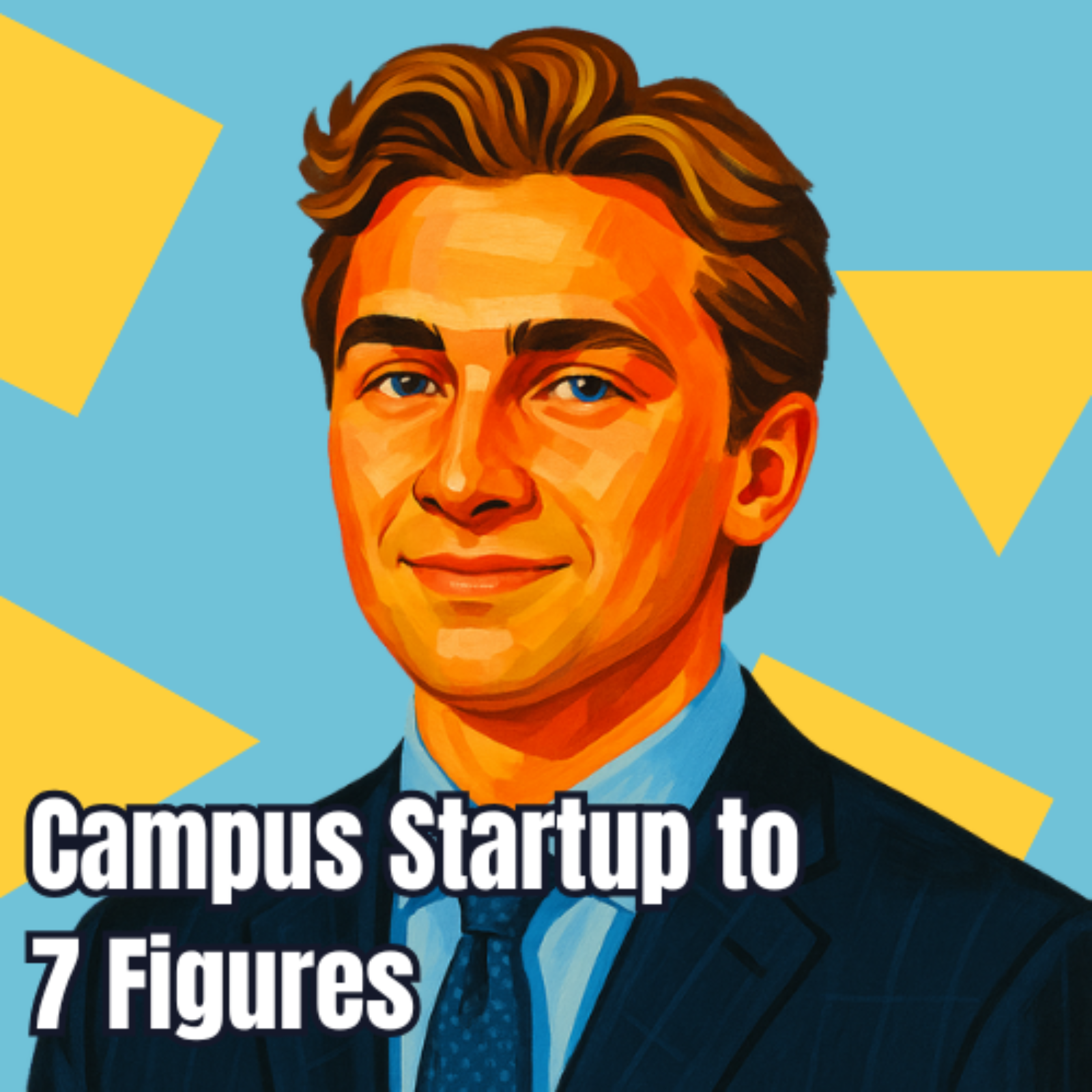
Nick Lawton: From Campus Startup to 7-Figures - The SideShift Story
from The Transcend Podcast
54m 57s
In this podcast episode, host Ben Yeh interviews Nick Lawne, CEO and co-founder of SideShift, a platform that connects students with local on-demand jobs. Lawne shares his journey from UW-Madison senior to scaling a seven-figure ARR startup in just one year. Inspired by the difficulty students faced finding flexible work and businesses hiring them, he and co-founder Canyon Pergandy created a Tinder-like job matching app. Lawne’s prior experience in sales and private equity provided a crash course in entrepreneurship and instilled a strong work ethic. Despite early skepticism, he committed fully to SideShift for 12 months, ignoring negative feedback. The founders initially struggled with marketplace dynamics, artificially balancing supply and demand to attract users. They monetized through a SaaS fee for businesses. Lawne advises students to start entrepreneurial projects early, find a technical co-founder with equal equity, and maintain discipline and conviction. He credits the support of the UW-Madison community and emphasizes learning from failure. SideShift now powers Gen Z hiring for over 1,000 brands across 4,000 campuses.
[MUSIC] Welcome to the Foundry. The show where we highlight the stories of student founders at UW-Madison, local entrepreneurs across the Midwest and campus leaders, shaping UW into a hub of entrepreneurship. Each episode we bring you stories and insights from entrepreneurs, innovators and leaders forging their own path in UW-Madison startup community and beyond. Whether you're building your first venture or just looking for inspiration, this podcast is here to help you learn and take action. [MUSIC] Hi, my name is Ben Yeh and I'll be your host today. I'm excited to be joined by Nick Lawne, a recent UW-Madison graduate and the CEO and founder of SideShift. Nick and his co-founder, Canyon Pergandy, saw firsthand how difficult it was for small businesses in Madison to hire student workers and how a few simple digital entry points existed for students looking for flexible jobs. Out of that challenge came SideShift, a platform they launched as seniors that works like Tinder for jobs. Matching students with local on-demand work. What began as a student startup at the 2024 Transcend pitch competition has since scaled into a leading platform powering Gen Z hiring and user generated content for over 1,000 brands across 4,000 campuses. In just one year, SideShift went from pitching on campus to running a 13 person office in New York and generating a seven-figure ARR. How are you Nick? I'm good, I'm good man, I really appreciate that introduction. Happy to be here. Thank you for that. Let's jump into it, man. I'm all about it. Yeah, I guess I'd like to keep it a little bit casual, we don't have to be like to, to like, I guess, like interview. Yeah, yeah, yeah, I'm not here to interview, just kind of just chat about some stuff and just kind of relate back to your work. So I guess just to kind of launch off, to start off, I know that you kind of have a background in sales and finance. You work at Sports Digital and for private equity and at JVP and I guess just start to just think about like, how do you think working in those kind of different fields or even beyond just those two, like how does your background kind of influence your method in building and scaling for a company like SideShift? Yeah, that's a great question. I would say I learned, so Sports Digital is an actual text startup, they do high-end presentation software for an array of sports team, professional sports teams across the country as well as the handful of, you know, B2B enterprises. Now, what I really kind of learned at Sports Digital was the crash course on entrepreneurship, all about, you know, product market fit, pivoting, iterations, hiring, sales, marketing, you know, kind of all of that fun stuff. Now, when I went to JVP in New York, which is private equity firm, that was like the place that really taught me how to actually work and be successful in the sense. Obviously, I learned a handful of things that I don't really use much more in my day-to-day, like I'm not really modeling anything out anymore, although I do okay, you know, but that was the place that like kind of still work ethic within me, just like seeing a really small private equity shop, like that that was, you know, probably no bigger than the team that we have here at SideShift, but, you know, having around $3 billion under management was super impressive, seeing how all those really smart people kind of worked and how hard they worked, which was kind of the, I guess like the inspiration and a blueprint for me to follow when starting and compiting. Right. Okay. Yeah, yeah. It's interesting to hear like, I guess like sometimes I think this kind of stuff can get all like kind of generalized, so I think it's kind of interesting just to hear about like what kind of background you've had and how I guess it's like a lot of companies, it's everybody's first time to start making something, like making something and like a lot of it is skill, hard work and luck, but I think it's interesting to hear from you because it's like, you know, we're talking like person to person that I'm not just looking at like your background or your stats or your successes, but to actually really hear like personally what it's like for you to like what your approach is and what inspires you like to work. What kind of drove you like if you think like from the beginning like up until now, like you've had a lot, a lot of growth, like how did it all start? In terms of knowing the company or in terms of like side shift, like my father's with entrepreneurship. Probably with side shift, like kind of what inspired you like from the beginning. Yeah, so sounds like a couple different things and one of them was going to my senior year at college, I didn't want to go back into private equity although you know I had a great experience, looked at some really great people, very talented, it wasn't what was satiating to me, it wasn't what was fulfilling to me at the end of the day, so that's when I kind of had the idea of trying to build something and I think there's a misconception within entrepreneurship that you have to encounter this problem in the real world and feel so compelled to solve it and that's how we entrepreneur starts. But I just was like kind of fascinated with entrepreneurship, with building things. I had a couple of friends who built some apps and stuff like that, my co-founder, one of my other co-founders now today, he was already building something else, I was super interested, you know, and that's when I reached out to Canyon, who is CEO here, one of my co-founders and kind of said, hey, you know, the job market's really bad right now, I don't know where you're at with things, I don't want to go back to my spot, I don't really want to try to recruit for another job, let's try and maybe build something and see what comes of it. And that was, you know, kind of the inception and the day one of "Scivshift" was ush just kind of jamming on different ideas and we basically kind of came up with the notion that it was really part to earn like a secondary form income while being a full-time student and there was this problem within Madison where it seemed like it was really hard to actually get a local job, get a going person, get a fill out this paper application, get a drop-along off and this old arcade stack, it would never be seen and our first step was like let's just digitize that process, help out the local businesses in the area, we'll help, you know, our students earn, you know, with these like part-time jobs, type side hustles and Canyon and I were like really inspired by some other badger entrepreneurs who had came through campus like Lionleap is one that comes to mind, MacShaw, Westroll, founder of Fetch was another one and then I recently found out that the team who found her went to Madison too, which was great, but like seeing what was possible kind of inspired us to just at least start tinkering with things and obviously like as many great things and start up to go like one thing kind of just like leads and snowballs into the other essentially. Right, and like going off of that like like obviously you felt compelled to kind of run with this idea but I'm sure that you've encountered having multiple ideas, did you feel like oh I just generally like this idea a little better and I'm going to run with it or was it more of kind, did you have a lot of ideas and you're like oh I'm just going to pick and just go with this one or like like how do the process kind of go for you? We had a lot of ideas, this was like pretty chat GPT2 so it's not like you can just go in there and just like kind of you add upon my startup ideas. I think like we definitely wanted to pick something in a space that we felt was like big enough and definitely growing but was also underserved at the same time and that's like kind of how we landed on the idea of the part-time job market specifically for Gen Z, you know the employment industry is huge, there's no great tool for Gen Z specifically besides handshake which was more for internships and full-time roles. So we felt like we could serve this like you know really small piece of the gig economy as a whole for Gen Z and you know we were just pretty bullish on it and we talked to a ton of our friends, nobody had jobs on campus, I said it was too tedious to get them and we're like honestly let's just we know let's just problem with this and see what happens, let's try to build it. I run spin on it you know take a traditional job at the job put this like Instagram Tiktokified version out and see what happens and I ran with it and then I see pivoted but I I could be maybe a little knight like naive or misinformed but I guess in one aspect I have like a question for you it's like when when you started like you know I'm sure you've had other ideas with startups before or even just going into like the beginning days of side shift and like you said like you just like you just want to build and kind of work with it um at what point did it enter your mind like I
How do we monetize this? And what was your approach to like kind of? - Yeah. - Yeah. I think we always knew there was a monetization strategy at play. That was another thing we didn't want to deal with. We didn't want to try to build like the classic college social network app. It had no monetization until it, 10 million users never lie on ads. We're like, it'd be great if we could actually just provide some sort of like SaaS fee up for all to these businesses and start monetizing early. But one of the really big challenges for us at the start was the fact that we were a marketplace and marketplace that I'm apparently very trick and start because you have two different sides that you're trying to activate at once. So it was like, how do we monetize one side when there's actually no utility for them? And then what we ended up having to do was telling all these businesses that there was tons of students on the platform when there really wasn't. We would go and tell the students that there were all these businesses on the platform and like that like allowed us to kind of, you know, Jimmy Riggs something that kind of worked up with start. You know, we, once we had like around 1000 and we were 2000 students at Madison, we were able to charge like 10 bucks a month for some businesses. But even that was pretty much just like eating a box and nails for so long. It was honestly really difficult. We wanted to be pivoted away once we scaled that across the board, you know, but yeah, we always wanted to build something that had early monetization in the product. - Right. And, you know, you guys started this in your senior year and for other like Madison students who maybe, like I'm a freshman, for students who might be, you know, juniors or sophomores or freshmen, do you think, you know, if you were able to pull this off, I'm sure that in your early years, you were also working in kind of like around this kind of sphere of, or how these things are floating in your head. Yeah. - Yeah, I mean, I had tons of other projects that I always wanted to start that were kind of dumb at the end of the day, but I think those like dumb projects just allowed me to stay interested in entrepreneurship as a whole. And, you know, one other company who tried to start was, like this, this party bus company that would essentially transport students all throughout campus to different bars and whatnot. And it would feel like cheaper than Uber, you get to ride with all your friends. There's actually a startup that doesn't know that went through why C partnered with Blind Laban and raised like, you know, $10 million, it's called Fettie, but originally like, we kind of wanted to do something like that back in like 2020. But yeah, I had a ton of other stupid ideas, but this isn't the one that came through it. - Right. And like, besides those, did you ever get past a certain point where you felt like, with one of those earlier ideas in your early years, you almost felt like you could have maybe scaled up to the point that where you are now, like with such. - I just, I didn't take any of them serious enough, right? Like I would like tell them to friends, and stuff, they make up, so she had great ideas, blah, blah. But like that was really it. You know, with side shift, it was more like, I'm just gonna do this for the next, well, monsoon if it fails, it fails. And if everyone tells me it sucks, I don't care. I'm just like, you just hear the stories of all the opportunities in the early days when, you know, they're building a product and nobody believes in them, but they have this on the reletting amount of conviction in themselves and their product. And that's like kind of what Canyon had, Canyon I had in the product. And just like ourselves where we're like, we're young, we're gonna just do this for 12 months, we're gonna see what happens, if it works great, it doesn't work, then, you know, we'll figure something out. But you know, luckily we stuck with it long enough, figured some things out along the way. It's a great people, you know, and things are going swimmingly. - Right, yeah, that's wonderful. But I don't mean to, you know, drill the same point too many times, but like, what would you say that in your senior year, you felt like you had a lot more freedom, 'cause I know that like, you know, maybe in your first year, like as a freshman, I personally find it, there's been definitely an adjustment period where I have to like figure out like the balance in my life to do well in my academics, while also trying to find like, you know, outside of just academics. Like, did you feel like maybe in your senior year, I'm not sure what your schedule was looking like, like did you have more free time doing that? Or do you think that like, would it be more challenging if you were like a sophomore or a freshman trying to, trying to do what you did with side shift, like then with that kind of workload? Or, yeah, I think so. I mean, like in my earlier years at college, I was definitely focused on, you know, the combatants and the experience and making as many friends as possible and, you know, making as many connections as possible. But as, you know, you kind of come around to your senior year, you start to see, you know, the tunnel of the college experience that started to close in and, you know, you're entering into the real world and that's like kind of a pivotal moment on when you have to decide, like what do I actually want to do next, what is my career going to look like? What am I going to pick? You know, but I think if I could go back, I would try to start sooner. Just because I know so many great college founders today who are running some really amazing products who are, you know, your age or a little bit older. You know, I won't drop any names, but there's some guys who are running some really opt-eer companies, specifically like kind of in our space that are no older than 21, 22. They just understand like this new landscape of everything and I'll really get an execute in. So I would have definitely started earlier by college. - Right. And like, I mean, you kind of touched upon this just a, like a little bit ago, but when did you feel the need to like solicit other people's opinions and did anybody kind of, I'm sure you've heard some people say, like, oh, I don't know if that's a good idea or how much they would agree with your idea. Like how did you kind of deal with that kind of adversity of wondering like, oh, do I want to fully commit to this idea or not? - I honestly, I don't even know this is great advice, but the fact that like me and Ken, pretty much just like made a vow or like what's gonna do this for the next year. This is what we're doing. This is what we're sticking with. You know, we've seen a lot of great things come out of just a lot of, you know, an unparalleled amount of discipline. And for 100 people say it sucks, we're still gonna do it anyway, because we believe in it. And, you know, I think oftentimes people will just discard an idea a little too early because of the idea that, you know, people might say things about them, people might think the idea is stupid, but at the end of the day, like it's really a learning experience and it should be like a self-discovery process at the same time where it's like, if I commit to something regardless of whether it's building a company studying for an exam, like just the, I don't know, Hellsider, Jean-Bat, you know, trying to do X, Y and Z if I just like give it my all for 12 months, like, can I actually push the boulder up the hill? And I'm like convinced that you can do that in really anything. If you just give it your all and put your mind to it, I mean, I know that's like such cliche advice, but really is true. Like if you just clock in, clock out, log your 10,000 hours on something, like there's a science behind that, that like you will come out bearing the fruits of your labor. - Right, yeah. And in your earlier days, like, were you ever concerned about like, like depending on your skill sets, like between you and Canyon, like, in terms like if you were to develop like an app, like earlier on, if you didn't know programming or something like that, like how did you feel about splitting up responsibilities and also potentially bringing on risks and like different people? And if it were to like, 'cause back then, I'm sure you didn't know if it was gonna take off or not to the point that we're at it is now. And like, did you worry about how am I gonna split up like, I guess people are gonna want like compensation if it does take off, like did you ever worry about something like that? - Were you being compensation like equity? - Yeah, I feel like that were like, they want credit for what they've done in that company. Like were you afraid to like, okay, I'm gonna be careful of bringing on someone, like if I wanted to build a big app, but you know, like, it's like, okay, I don't know how to program it as well. I wanna be on a talented program, but like a talented programmer, would you worry about like, the wanting more credit for building like a majority of? - No, I definitely think you should have a technical co-founder. Every getting it myself or not, type in hole and we definitely compensate for one another's weaknesses. Can't use a lot more detail oriented than I am. But I like to think five, 10 years down the line. And you know, you kind of have this interesting makeup co-founders that have been successful in the past, but they do come to me.
and say if one another or each other's weaknesses. And I think that's what we have here. In terms of like giving credit to people, no, I think you should be like generous with giving credit to people. I mean, obviously like equity is a different topic in itself, but in terms of people saying, you know, they had a helping hand in it. I hope a lot of people at Madison say they have a helping hand. Is there were a lot of people that helped us out? You know, in our early days, whether it was professors or peers or mentors or whoever it may be. I think it's a little bit unrealistic when you have a non-technical founder thinking he can hire someone who is technical and then give them one push on equity that doesn't really seem logical to me, but I've seen that with a handful of business guys with like Audrey and I and Gellery and Bill Daley, I'm gonna take 90 half percent, it's not gonna help, it works. You should be pretty, you should be equal with your partners. And yeah, I would say being generous is the move, but it's not really generous because it's like they're doing a lot like so much stuff, you don't even know. Right, right. Yeah, yeah, yeah. You also like competed, you know, like a associate with Transcend, you also competed at Transcend and you won the general track. Like do you think that experience, like in front of judges and using, like refining your pitch and having to compete against other UW startups that might be equal in skill, like do you think that shaped your journey upwards? Yeah, I think so. I think like we won the general track, but we lost something else. And I remember like one of the judges telling me that like this company is stupid or something like that. He just like didn't believe in the idea, but I mean, I like that kind of just like fired me and can't even up even more to work harder, you know, and just building even better company in, like I'm pretty sure from the competition today, I don't know if there's any other companies that actually like exist except for SideShift. As a whole, right? So we kind of won that one at the end of the day, but yeah, I think Transcend is an awesome competition. And I think there's a lot of value in it. And I think it's a great way to bring together a ton of builders on campus. And if you win or if you don't win, you get fired up all the same. So it's definitely a positive experience. Right. And like, you know, going further like to more of your earlier days, like I saw that the Instagram for SideShift was originally kind of like doing this kind of plan where you had a lot of like members of your team like going to different college campuses and trying to get like local businesses to sign up. Like where did you feel like, oh, maybe this isn't working. Like what should we pivot and like how should I pivot specifically like? Yeah. What was your problem? So we went to Iowa, Michigan, Indiana, Columbus, Georgia, Alabama, kind of other schools that I'm forgetting I'll top my head. And we would always get at least like 10 to 15 businesses signed up in each college campus. But the thing is is like the excitement from business owner was not what we wanted. And they were just really price sensitive. And it's just not a great market to begin as a whole because you're literally handling over like, is this person going to get a six month trial, a three month trial, and then are they going to pay $5 or $10? And you're like, do the math on that? And well, averaging about 15 at each campus, paying $10 a month at each one. I got to take a really, really long time to build anything meaningful. So they're doing a bootstrapped. So luckily, on the other side of the marketplace, the Gen Z side, your amount had kind of started to take over in some areas. And some businesses, more so indie hackers, I would say, discovered our platform as a great lead list to find creators for their products. And we started to really lean into that when we were able to sign these really big deals. And when I say big, I'm saying $3,000 for the entire year. And that was like, OK, well, there's $1,3000 deal that we just signed pretty easily was the equivalent to going to about eight different college campuses. And we just signed this in 20 minutes. Maybe we should rethink this fellas. And that was like what opened up the doors. We started looking at some of the other businesses, indie hackers that were on the platform hiring. And then we just really kind of started to go all in on that. We didn't abandon it. We didn't abandon the local side right away. But it became pretty clear, like, two months into that. We're like, OK, we need to cut this off. We need to, you know, like the armors infected. Let's cut it off so we can build back a newer stronger subject. That's like what ended up that. Right. That's a great way for us saying it. Yeah, it's very interesting. I guess, yeah, I think what's just like really cool to see is I think a lot of times people don't really like to talk about like the nitty-gritty parts that about like a company. Like obviously you've grown your company to a lot of success in just one year. But so far, I think that the most interesting thing that I've heard from you is that it's not like a straight shot. And it's not like very-- I'm sure there's a lot of formalities to everything. But it's a lot of just like grit and persistence and just kind of pushing forward and just seeing what works and what doesn't. And-- It's all in it. It's all in it. Especially-- that's all in it, especially in a market that like has been proven out before. You know, like we know there's a huge demand right now in the creator economy. We know everyone needs content creator of all shapes and sizes, big and small. You know, we specify like I'm one really specific type of content, which is high volume, organic. We can get into that a little bit later. But it was just a grind. Like as soon as we found that product market bit, we were like, all right, now we just like-- now all we have to do is scale. We have to just, you know, can't forget the basics of entrepreneurship and building a company. It was just like one building something people wanted to talk through to customers. What is that? That's the YC mantra, one and two right there. And you know, there's two things we never really forgot. So we come in with that mindset every day of the office. Everyone on the team talks to customers all the time. We're literally hosting a webinar right now until I was late where we're just getting customer feedback on what people want to see. And you know, it is a lot of persistence and it is a lot of grip. But once you get that first bite of product market fit, you're like, oh wow, there's blood in the water. It's time to go. Right. Yeah. And like, were there times along the journey where things got hard to a point where you felt like, man, I don't know, like, do I keep doing this? Do I keep continuing with this, like that kind of thing? Yeah, definitely. I think when I was walking off, I remember I was just like co-founder. We brought our CTO out there on the trip. That's about what we needed people. And Drew co-founder as well. And we were walking up Main Street in Columbus or whatever it's called. We were just like walking into businesses and we were just striking out in every single business. One guy that agreed to hop on the platform, but he wanted a free trial for three years and went off. Like this is just-- this isn't grind, man. Like nobody wants a rebuilding. We should just like get real jobs. But kind of knew that one time it got hard. Someone on the team could keep the fire going, even if the others didn't necessarily think so, whether that was myself or Canyon or Drew. It's the classic old adage of if you want to go far, go together. If you want to go fast, go alone. Flip that actually. But you get the point. Oh, right. Yeah. Right, right, right. You're supposed to say the second part first. But yeah, yeah. So that was definitely like a point where we thought about tossing in the towel. But we ended up really just like putting our heads down and started to look at the platform. We got that one deal, which steam rolled into another and then another and luckily we're at the point. We're out today. Right. And then do you still feel like the same fire that you had of like when you and Canyon wanted to start like sides of still remains? Because I'm sure like, you know, you've gone down a path and many things have happened that you definitely probably couldn't have predicted like, do you still keep that kind of same ambition? I'm 100%. When we first started this thing, I had no idea that I would be building something in the influencer creator economy. Like I said, you start off connecting college students with like Mondays in the KK and Madison. I didn't ever expect to be working with like paramount pictures and hooking them up with, you know, a team of creators. But you know,
And yes, when it comes to seeing all the unforeseen challenges and prediction, do we still feel the fire? Yes, I think the company changes a lot from zero to one. We're definitely more in like the one to, I mean, I would say we're past the one two stage now or like in two to five stage, we're really scaling things across the board. And it's just like a different mantra on a different mindset and philosophy, philosophy when it comes to thinking about things, you know, it's almost like, you know, things are going well. And now you have like this really big canvas to just try all these really like interesting things in business that may be fascinating, whether it's something on the product side, whether it's something on, you know, building out a paid ad system, whether it's user acquisition of the funnels, so on and so forth. I think that's what's like really exciting when you have, I don't want to say like a sense of security because you can fail at any moment. But like when you have product market fit and you have a team, and you have things that are a little bit more consistent, you have that predictable revenue, you can kind of go back to what it was like at the start where you can like experiment with things that are going to help your trajectory, you know, continue to grow, you know, to grow exponentially. Right. And like how is your education kind of like fit into all that like do you feel like you've learned a lot of new stuff like from just being involved in like the business process of growing side shift or like 100%. 100% is like the quickest way to get an MBA right? It's just started company. You know, I don't think I don't like any business program in the world would have taught me everything I've learned from building sides, which is just no way. You know, no business bro teach you how to deal with a customer who's pissed at you at 2 a.m. and wants to refund. You know, it's like this, the sanctions don't happen in the classroom. It's you they happen on the they happen on the streets. Right. And like, was there ever a moment where you're just like, I don't know like when you were expanding into these bigger deals where I know you get thrown in a term or some kind of objective that you have to do and you just go, oh my god dude, like I'm out of my field for a second, but like you got to you got to do it anyway. Yeah. 100%. And first time we signed six figure contract out of it. What the hell? How the possible. You know, but you think on your feet and you you act cool, calm and collected and then when the call ends, you celebrate a little bit. But you know, when you're on the call and you're with these prospects and you know, you act like you've done it a hundred times before and you act professional, but you know, you're staying nimble on the situation at the same time. You know, you're like, you're taking it all in. You're like, oh wow, this is what this is like. Hey, using that word so now when I go to my next deal, that's hopefully of this caliber. I can say the same thing so long and so forth. Right. Right. Yeah. And I guess to go into the more like technical aspects, you know, you've had some impressive stats you've grown from like from zero to four million ARR and you know, you've fostered like 350,000 like creators across like 4,000 campuses, like just between your partners and like your business choices, like what choices have you made that that have allowed you to scale so fast? Like is it like product market fit? Is it growth tactics or like? Is it just some kind of special mentality you have within your team? Like I think when marketplaces work, they work really well, I will say, obviously what we basically do now is we're just to do it. We help people build these internal distribution engines of a team of creators, right? Specifically Gen Z creators, although we do have like a lot of them on now on. But anyways. I think what allowed us to scale so quickly is that we were out in the world, essentially preaching this new religion of distribution, which is high volume organic content. And we had seen it. I don't know why it took us a second to literally take our own advice on what we were preaching, but what really allowed us to scale scale quickly was take all the learnings and all of these, you know, experiences we've had with other companies and we've seen what's worked for them. And we came back to the drawing board, we built our own user acquisition phone, we built our own creator team of some of the best creators on side ship. And that just allowed us to scale exponentially, right? Like we did, I mean over the course of the summer, I think we added a quarter million new users. We did probably about 15 to 20 million views. And all of those views had a really strong all that action. We haven't done it. We've never done a dollar of paid marketing on the user side of things. We do pay to ads for businesses, along with that just like better ads and other inbound kind of hacks, but besides that, like we really just practice what we preached and we reap the rewards the same way all of our customers reap the same rewards. And that's like what is so compelling to everyone. Right. Like that's why they. Yeah. Yeah. Right. And like, where did you feel like you were like you said, like you felt you've, it's almost like a gold mine to shift to like user generated content and being more specific down that avenue. Like where did you change from going just like, okay, I'm just going to make like an app that connects people with the job market to being like making the big bucks now along with the like content. Right. I think, I mean, we just listened to the market, right? Like I mentioned, like the one thing we did was when that first deal came in, we just translated that across the board into other prospective customers and like, it's really interesting when a deal like that comes in and changes the trajectory of your company as a whole. But yeah, I mean, I'm just, I'm like thinking back on it, just like so surreal to see like how far we've, we've come and everything. You know, but sorry, I was distracting him, but what you guys get back to that. I was sorry, I had a, those are how to say, I really wanted to answer that quite. It's not that it's the potato. But yeah, I mean, I mean, he's got any input. I'd love to hear it. I mean, he's got, he's done one on a call. All right. Now, yeah. And like, I guess what I'm trying to think about is as you were progressing, how did you feel like, is this something you're just like, I don't know, maybe between your partners, how well do you feel like you guys were like at communicating your vision to like people who were skeptical? Like, like, how was it? How did you do that? Like, at not just competitions, but probably at the higher levels. Like, I honestly, like, on the, when we were doing the local jobs, that was really hard to convince people. They were obviously super skeptical. And you were dealing with people who had a recruitment budget to spend, which is a lot less than someone who has a growth budget to spend, which is what we traditionally come out of now for all these different companies. And growth is like one of those things that companies as a whole are like so desperate for and will do anything for. So when we come and we preach this new religion, essentially of high volume organic distribution, it's like kind of a no-brainer to them. We tell them the CPMs, we tell them what their CAC is going to be. We tell them all these things, all these case studies. And it's not like, it's not, it's not any fougazi, right? It's legit. It's backed up by all this data and stuff that we have. So people tend to be really willing to at least try it for one to two months. And if it doesn't work, then we'll just switch over to maybe paid ads or back to like really traditional influencer marketing. But oftentimes a lot of marketing channels have been so saturated for all these different companies that they're looking for the next thing to get the lowest CAC possible. And that's kind of like where side should place a role in their tool box now. So that mixed with a lot of word of mouth has made it really easy for us to convince people to give us a shot. Right, okay. I didn't expect that, but that's really interesting to hear. And like earlier you were saying all the way back before when you were going through the ideas of just like, okay, I want to make a startup or some kind of like entrepreneurial journey. We didn't have chat chat, you can see back then to spit out a bunch of ideas like, like you know, AI is rapidly evolving. And I'm sure you know, your business has integrated that into it. But like, how is that like transformed like, you know, from when it was really like, and it's baby stage to now, it's suddenly like a very huge thing. Like, how is your business kind of dealt with that? How is, sorry, can you be afraid of that question a little bit? Like how is it? Like how is it impacted your trajectory and like your choices having AI be such a big thing now? Like, do you think that that impacts your business that like? Yes, of course. I obviously think it's very, very effective when it comes to building faster. I think a lot of our engineers would agree on that one. And then I think, you know, because of the
industry that work in. You really think about it. A lot of these companies are seeking human distribution at a very large number at a very like high rate of volume. So there's one thing that's like kind of entering our industry a little bit, which is called AI UGC. Essentially, it's just an AI influencer doing the exact same thing. You know, so we're seeing the landscape change a little bit on that front. Like I'm sure you've seen OpenAI's Sora, you know, kind of their short form video platform that they just launched, which is all, which is the AI Slop. You know, but that's like definitely one thing that we are taking note of. And obviously, these models get better specifically like the video models. It's definitely something we're thinking about maybe building into the platform. Ourself, which would be another kind of, not necessarily a pivot, that would just be in expansion of sorts. But it's like one of those things that we're just watching the AI markets super closely. And if we think it can benefit our customers or users in any way, then it's like a no brainer to figure out how we can implement it, you know, for their for the best or the better of their companies and their successes. Right. So whether that's like AI, UGC or whatever it may be, I think we just are keeping a really, really tight bulls on it. Right. Yeah. And I mean, I think it's really interesting to hear your, you guys are really like locked in on like the demographic of Gen Z. Like when I search up your site, I see like, you know, big words Gen Z. Like, do you think that like, how do you think that side shift will impact like the like the future of work? Like do you feel like you guys are kind of on the precipice of like something completely new, especially with like targeting like a younger audience that that's been different from like previous years. So I think the honest, so I think, you know, one side in the marketplace pivoted, right. And that was like from going from local jobs to people who want to create. And the other side, the user side, which is now called creators, that never really pivoted, right. At the end of the day, these people are still seeking a part-time side hustle to earn a secondary form of income. It just so happened to be that the secondary form of income is now instead of being, you know, $40 for $8 a work, it's $400 for two hours of work, through content. And when I think about, you know, like the future of work in Gen Z as a whole, as the platform just naturally grows and expands, we're starting to get a lot of people who are not Gen Z, which is obviously fine for us because creators come in all shapes and sizes and sometimes a customer needs, you know, a creator team of moms, instead of a creator team of, you know, alpha-fee swording rules, right. It's just different demographics. And if we can add in more of these creator types, it only is going to help us expand further and faster. So I think kind of eventually, he might forego the Gen Z saying and just really encompass all of these different types of people who come from all different walks of life. Right. Yeah. Okay. Yeah. You know, I'm going to start to wrap this up and probably take you off the hot seat a little bit because they now have a rapid fire question. It's in pretty deep questions. All right. Just throw some like some softballs, I guess this is maybe can bring back some memories of your earlier times. First first question, just like, just kind of like a lightning round. What was your favorite like Madison food spot like while you were here on campus? Oh, the globe for sure. Yeah. I have not. Never into the globe, dude. Get down to the globe. Go down. Where's that dude? It's right by you know what mad seafood boy, there is. Yeah. Yeah. They kind of need like par with it on. It's right around the corner. Yeah. Go in there. Dude, they serve like I don't even know what type of food. It's like Korean barbecue kind of go in there. Get the Korean barbecue tacos spice level three. You're gonna change your life. You got a lot. You got a lot in real quick. Big serving of rice. I honestly, when I was just in Madison for the like, you know, thing I wish that I would have got go. I'm so good. Well, I'll definitely be sure to check it out. Go check it out. Yeah. What is your like go to like productivity tool or app that you feel like you couldn't live without like on a day to day basis? I've used so many. I've used one day.com. I've used some random AI ones. I've used notion. Right now, I would say I never had a great one. I've just pen and paper. I would say right now I use, I'm back on Monday.com, which has been pretty good. As of late, I use slack a lot in a weird way for like productivity if that kind of makes sense. I just I have all my stuff like really neatly organized on there specifically. So I would say like slack in Monday.com. Right. And then kind of shifting back to like a more of like a like a student aspect. Did you have like a favorite like spot to go study just to like I just got to get some work like honor percent. I would go to the historical society all the time. Spend a lot. I spent a lot of time in that building. I felt like it was a carry potter. That's why I like it so much. So sweet dude. That feels so awesome. I can't hate it man. I have men with me. I need to like if I'm working a place I love to be in place where I'm feeling like like inspired. Do you like I'm rent declaration. It's your salt thing. Yeah. I was early on. I was like oh I'm just going to study in my dorm room and slide. I cannot do that. It just it doesn't work. Where do you go? Well they just opened the new mortgage hall like the data science. Yeah. I think they just renovated it. They have these like elite like I mean I don't I might want to gatekeep them but you know it's like they they got these like private like study rooms that you can go to. It looks like really really nice. And they're like yeah you know because there's like seven floors so you can go high up. Look at the glass window. Just see like the cityscape and just locking up on too much work. Yeah. That's cool. That's cool. Just kind of deep though. It's the only problem. I was like I was near salary, James hub. So like going that far was with always D. I had to go to Granger too a lot of you know NBA rooms but I never pops out. I'm so much. Right. Yeah. I'm I'm on lake shore so I mean I still still got a bike over. Yeah. That's got 13 minute like walk. Further just like then just like like kind of studying but like did you have like a routine like you felt like oh like I'm gonna gonna crush this monster and just lock in or like what was kind of your your go to kind of routine when you're viewed so I had a routine I can like so vividly remember this like when I was saying for mecon I had this like really specific routine where I would walk to the historical society. It's like right in the fall like when I was getting cold. I think November I would walk to the historical society. I would listen to the new Fred again album. I think that was actual like three at the time. I would go in there a crank for like six to eight hours. I'm like econ three oh one or whatever you can't take it at the time and then I would come home. I would watch a swear to God. That's how it looked proper all my men. I'm home. I'm walking on the Harry Potter and then I'll come back to that stay and do it again for like eight days in a row until like the completely full start. I know super super well on orthodox beers but for some reason like the like the music inspired me to like walk in and then movies like it's that name. I wouldn't do questions do that every day. I'm sorry. The Harry Potter is really just it's few it's few like it's relaxing. I mean I think you kind of answered this earlier but like what is one entrepreneur like famous or not like inspires you the most. Great question. I love that question. Who would I say on my favorite on fewest founders. I'm not going to give you like the cliche Sam Altman Brian Chesky. I really like um this guy's kind of my go-to's names. Cliff White's man he's the founder of Speechify. He's got about like 20 to 25 million years on his product. He runs a really cool team. They brings his team all across the country. They live in certain areas but like three months at a time but this guy's like never has a frown on his face. He's always smiling which is crazy as an entrepreneur so I like mending for that. And he just he has like a really good just like run through a brick walk because you love the taste of bricks mentality if that makes sense. Yeah yeah yeah. I really like him for that. I think he just loves the game. You know. And like uh beyond just like I know because because entrepreneurs is like I guess more of specific category like did you have any other like people you know you've got the whole hairy part of thing going on that was feeling your student years like you have like
a care to or a historical person or just anybody you looked up to in a way that felt like this kind of mantra that you could just fuel in your head over and over to keep pushing forward. Yeah, I mean, my parents obviously, that's always a good answer, right? My mom is not a entrepreneur or watching her build their company was always super inspiring and definitely someone I'd still look up to and go to when I needed buy something, anything entrepreneurial related. Yeah, man, it's very, very sweet. You got it? You got a founder or anything like that? Yeah, I mean, for a big part of my life, I mean, like for the last like three years since the movie came out, I was really, really into Oppenheimer. I read his whole biography and I like inspired me to do engineering. Nice. Yeah, so I know like a very stupid amount, like specifically only about this like this period of the atomic bomb being created, but I don't know how useful that information is. That's so funny. I actually put that up, but there was one guy when we were at a competition, you know, there's transcendent and then there's the one in Minnesota. Do you know the fast or whatever? You heard the E-Fest. The fast is like you, but E-Fest is pretty big. The winner gets like 50 grand. I remember like we had one guy there that we like a judge that we got close with. His dad like lived on that base or whatever and worked with Oppenheimer. He was like telling me all that. Yeah, crazy. He was like telling me all the story. On Oppenheimer, I don't think that's not, but yeah. What type of engineering are you doing? Are you not? No, yeah. I'm doing electrical. Electrical? All right. Mm-hmm. Free of. It's going to be, it's going to be hellish, but I'm sure it's, it's going to be worth it. All right, all right, then. A lot of my bodies were doing electrical engineering. Yeah. Well. And what do they think? Like you said, it was hellish, but it was worth it at the end of the day. They're all super smart kids. They have really great jobs now. It seems you have worked out pretty well. Right. Okay. Well, to wrap up, kind of like we were saying like I guess in the way that you might look up to your mom in a way to like seek for advice. What would be your biggest advice for someone just starting out as an entrepreneur like who's got this idea, who's got this passion and has some kind of fervor who wants to build something like. I would say launch as soon as possible, classic YC mantra again. Watch something, get it out there, collect early feedback, refine, reiterate over and over. Even if people tell you it sucks, just keep refining until they tell you it's good. You know, because you start with an idea and you sculpt it out a little bit, people say it sucks, bring it back to the drawing board, refine again, people say it sucks a little bit less, but that only ever happens if you start the process in the first place. So my advice would be to just start, get your first version out there and go from there. Don't try to build this really complex product on the V1. So it could be a simple Google spreadsheet for all that amount. Yeah. So how can students contact you and learn more about your work? Yeah, just hit me up on LinkedIn. I honestly like talk to students all the time, probably like once a week, I'll have a kid reach out to me and we'll just hop on a call. They'll tell me about his idea. I'll give them my two cents. I'll tell them what he should do, but know that for these last couple of months, it's been pretty fun. So get back to the young badgers out there. Yeah. Well, it's been really, really great to hear from you. I think it's been really, really insightful and I hope the listeners will enjoy the amount of detail that you've gone into. And thank you for coming on and thank you so much for going so far into your life and your experience. Yeah, honor. Thank you for having me on. Let me know when the on-pass drops and go from there, man. Grow up on LinkedIn or whatever. Sure. Appreciate you for this together. Of course. Thank you so much for coming on again. And that's it for today's episode of The Foundry. We hope you feel motivated to forge your path in shaping growing entrepreneurial journey. If you enjoyed this conversation, make sure to follow the podcast and share it with a friend. And we'll be back soon with more stories from founders, leaders and those driving change at UW-Madison and beyond. Thank you. [Music]
Podcast Summary
Key Points:
SideShift is a platform co-founded by Nick Lawne and Canyon Pergandy that matches students with local on-demand jobs, operating like "Tinder for jobs."
The startup began at UW-Madison, won the 2024 Transcend pitch competition, and scaled rapidly to over 1,000 brands across 4,000 campuses, generating a seven-figure ARR with a 13-person team in New York.
Lawne’s background in sales (at a sports tech startup) and private equity (at JVP) taught him entrepreneurship fundamentals and work ethic, which he applied to building SideShift.
The idea originated from the difficulty small businesses faced hiring students and the lack of digital tools for flexible student jobs; the founders focused on the underserved Gen Z part-time job market.
Early monetization involved a SaaS fee for businesses, but as a marketplace, they had to artificially balance supply and demand by telling each side the other was active.
Lawne emphasizes discipline, conviction, and ignoring negative feedback, committing fully for 12 months regardless of outcomes.
He advises starting entrepreneurial projects earlier in college and stresses the importance of having a technical co-founder with equal equity and complementary skills.
Summary:
In this podcast episode, host Ben Yeh interviews Nick Lawne, CEO and co-founder of SideShift, a platform that connects students with local on-demand jobs. Lawne shares his journey from UW-Madison senior to scaling a seven-figure ARR startup in just one year. Inspired by the difficulty students faced finding flexible work and businesses hiring them, he and co-founder Canyon Pergandy created a Tinder-like job matching app.
Lawne’s prior experience in sales and private equity provided a crash course in entrepreneurship and instilled a strong work ethic. Despite early skepticism, he committed fully to SideShift for 12 months, ignoring negative feedback. The founders initially struggled with marketplace dynamics, artificially balancing supply and demand to attract users.
They monetized through a SaaS fee for businesses. Lawne advises students to start entrepreneurial projects early, find a technical co-founder with equal equity, and maintain discipline and conviction. He credits the support of the UW-Madison community and emphasizes learning from failure.
SideShift now powers Gen Z hiring for over 1,000 brands across 4,000 campuses.
FAQs
SideShift is a platform that matches students with local on-demand jobs, operating like 'Tinder for jobs.' It was founded by Nick Lawne and Canyon Pergandy to help small businesses hire student workers more easily.
Nick's experience at Sports Digital taught him about entrepreneurship, product-market fit, and pivoting, while his time at a private equity firm instilled a strong work ethic. These experiences shaped his method for scaling SideShift.
Nick and his co-founder Canyon saw that small businesses in Madison struggled to hire students, and students had few digital options for flexible jobs. They were inspired by other UW-Madison entrepreneurs and decided to build a solution.
SideShift initially charged businesses a $10 monthly fee after gaining around 1,000-2,000 students on the platform. They focused on early monetization by providing a SaaS fee model to businesses.
Nick advises committing fully to an idea for a set period, like 12 months, and ignoring negative feedback. He emphasizes discipline and hard work, noting that starting earlier in college can be beneficial.
Nick stresses the importance of having a technical co-founder to complement each other's weaknesses. He recommends being generous with equity and recognizing the contributions of early team members.
Chat with AI
Loading...
Pro features
Go deeper with this episode
Unlock creator-grade tools that turn any transcript into show notes and subtitle files.
 PodcastTranscript AI