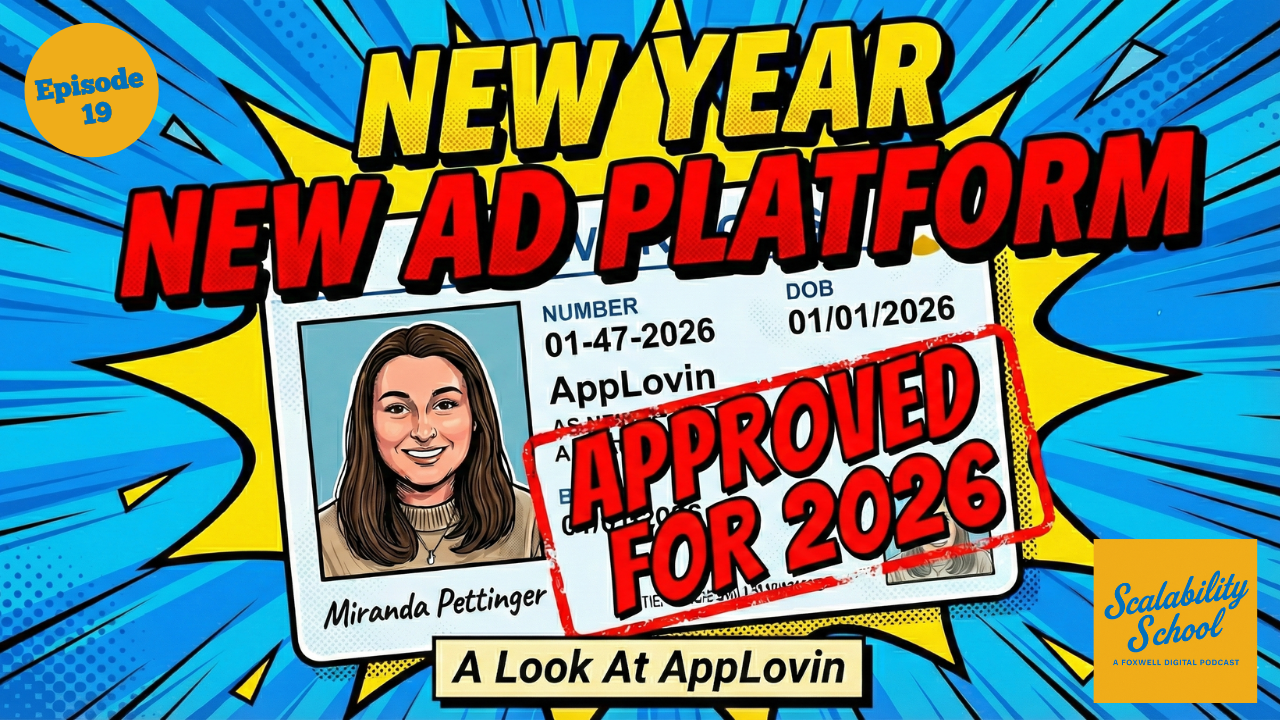
The discussion centers on the effectiveness of the Applovin advertising platform for e-commerce, particularly in comparison to Meta. The speaker highlights that Applovin's unique advantage lies in its user engagement model: mobile gamers willingly watch 30-second ads in exchange for in-game rewards, leading to higher attention and brand recall. This results in better performance metrics, including higher average order values and customer lifetime values, with a significant portion of customers converting directly after a single ad interaction. The platform's structure is simpler than Meta's, reducing complexity in campaign management. Additionally, data shows minimal audience overlap between Applovin and Meta, indicating it reaches a distinct demographic. The speaker, who manages multiple e-commerce brands in gifting-heavy sectors like pet products and jewelry, stresses the importance of adapting ad strategies to different industries and customer personas for optimal results.
I'm sitting on my phone, playing a game that I'm very engaged in. You're likely not going to get up and let it play and go to the bathroom or get a snack because like you would prefer a TV commercial because there's not enough time and you want to get back to your game. So again, I'm also entering into this agreement of I will watch an ad for, you know, a reward in my game versus I feel like anytime we serve an ad to a customer and any other platform that exists now, they don't want to see five, second, ten second videos that work in meta are not going to work in Apple even at least not at scale. You really can make an advertisement versus entertainment. I think that is the biggest mindset shift you have to take when going from meta to Apple in of say, in Q4 last year, I did pull a report of like, okay, the whole time we're on Apple and in meta for all of Q4 last year, what was the overlap? Because I think that's another pushback for people are like, oh, well, it's just going to retarget my meta customers on there. At a 41,000 orders, there was only a five percent overlap. That's insane. It was the day before Black Friday. We had spent 40 grand and it held, you know, by doubling and doubling day over day. And it was like, just put it to 80, like, let's see what happens, will it break? And it didn't. It still hit the same row as number when I hit the button from 40 to 80. And now let's take a listen to the scalability school podcast. Okay. All right. Welcome everyone to episode 19 of the scalability school podcast. The app, love and scaling playbook is what we have today with Miranda Pettinger from 365 holdings, legend in the media buying space, legend on X legendary person. I recently announced on X that Miranda is actually my favorite follow, no offense to Brad or anyone else, because all she does is just bring straight heat and actually is in the trenches and you can tell. So Miranda, thank you for the value you provide for us and welcome to the welcome to show. As you can see, we're a pretty high production here. I like the garage. Yes. Well, the garage is where we've been doing a lot of different stuff. And, you know, honestly, my the chair, those of you not watching this, my chair has been taken. And so now I have a paint bucket to sit on. So that's where we're at today. That's the kind of this. There's a metaphor somewhere in there for life. Yeah, exactly, exactly. You know, exactly. Yeah, I've always, I always laugh at like, I don't know what your setup brought or Miranda, what your setup is. But I think a lot of people have like, you know, massive monitors and all this. And like, I've always, I had a big desk set up. And like, I actually had my dad make a, like a thing for me where like he's woodworking kind of his enthusiast and had this big set up with my monitors. This was before we had Nora and now I love having the laptop. And that's it. And kind of the like, you, you haven't made it, right? You're nobody like back to my start, the kind of startup vibes. Like I love that feeling because it's, I don't know, I feel like if I make a two permanent thing, it becomes more legit and you're just a child scalar. Yeah, just kind of, it doesn't feel right. You know what I mean? Like I think so. Anyway, I don't know what your setup is Miranda. I bet you. Yeah, I like to move a lot. So like, I have my desk and then I have monitor and then I have a big chair in my office. So I kind of move and sit there. Oh nice. I just got a house with my husband recently. But last year I was in a apartment with a roommate and my dog. And I would just work at like the kitchen table or I'd like work on my bed. So I've moved up in the world in the past a couple of months as far as my work set up. And Miranda, do you suffer from what all media buyers suffer from? Which is that your friends and families still don't really know what you do? Yes. That's a lot of black Friday. I was up at like three in the morning running ads and I was at my husband's family's house and they were having like their second Thanksgiving for his dad's side. And I was just in his like childhood bedroom working on ads and taking calls with my boss all day long. And they were like, Miranda, you got to go out and eat? And I was like, I will come get a plate for like 10 minutes. But then I have to go start my computer again. Sure we'll keep that again this year. Yeah. That's just how it goes. Like they could not even fathom the amount of money that you're probably spending. And that's exactly my family's the same. They're like, I don't, I don't get it. You show me the annoying, you make the annoying things that pop up in my feed half and it was like, all right, fine. Yeah. I told my husband that I spent more than our house costs like in a day the other day. And he was like, oh, okay, that's nice. I was like, yeah, that's kind of how reality is right now. I had a friend that I was launching some ads with and now we were doing something for kind of this brand we were working on together. And he's like, all right, what do you think we should start at per month? You know, like five grand a month. And I was like, five grand a month. Come on. I don't have time for that. I don't have the money for that. Yes, it becomes. And then that's the one thing I've actually always respected about our our other co-host who's currently on paternity leave. Zach is the guest city has to spend his own money like to a legitimate level. I was like, I'm so I can do it with other people's money. It's like, yes, I have the same fiduciary duty. I feel that. But it's like because it's not mine. It's like, okay, well, yeah, we're going to we're going to get there. It's going to work. But I don't know there's something about it, right? It's like, it's really scary. Yeah, I've told my bosses. I was like, it's a really good thing that I'm not spending my own money because I would be terrible at this if it was my own money. There's yeah, there's just a different psychology to it. It all turns into a video game and you're just trying to make the numbers go up precisely. Yeah, absolutely. Well, Miranda, today we're talking about app love and and you know, the kind of thing that we're getting that you've been doing on app love and then you're spending quite a bit of money there. I think it's important to go through for those of you that don't know Miranda Miranda on acts is at Miranda petting your P T T I N G E R. I want to make sure everybody gets that. And it is a really good follow. I think what how did you get into this, by the way? And what do you do? Like what is 365 holdings and what are the verticals of the brands that are within that? Yeah, so I actually started out in photography and videography in college and in high school. I started my own photography business when I was 14 and set up my own e-commerce site. So that's was kind of how I got started in e-com and also like the creative side of marketing and kind of just self taught myself everything. There was about running a small business and kind of put myself through college with that and got into more of the marketing side versus you know, photography and video editing. So I have that background, which I think is extremely important as a media buyer, especially if you're creating ads and kind of having the eye for it. And then you know, 365 holdings was very involved with the university background. So that I kind of almost every student knew who they were since they were local. They would provide a lot of their data for our marketing research projects that came from their e-commerce businesses. So that's kind of how I heard about the company and then got employed there. 365 holdings own several different e-commerce brands. So we buy and hold, so we buy and sell. So it just kind of depends on the needs of the business. But there's currently two main brands that I work on within the umbrella of the company. And I've worked on you know, up to five or six at once in the past. That's incredible. Do you feel like this is like totally a sidebar, but do you like the fact that you get to see multiple brands or like, I don't know, is there a value in that? I have a bunch of brand side friends that they're like, they hit me up and they're like, how are things looking? You know, like, should I be upset right now? How are things looking for you? And so I, I think it has to be beneficial that you get to see a little bit of everything across. I mean, at least the two, which are spending meaningful amounts of money, but maybe a little bit more than that. Do you find that there's value in that? Yeah, I think definitely having experienced across different industries is helpful in different personas. They all behave differently. And I think it also gives me perspective of you have to run different ad accounts differently. I think the, this is my playbook. And this is how to do things. Doesn't always apply to every brand, even when you try to plug it into a different brand, you're like, oh, this is not working. So that's helpful to have just knowing every brand behaves differently. And they all have different goals. They all have different, you know, LTVs, different AOVs. So like, the math is always different for them. And the personas are different. The ads you need to create, the ad structure needs to be different. So I think that's always been helpful of like, hey, I had this playbook and it works really well. But I try to apply it over here. And it doesn't work. So I think that's where I have a different perspective than maybe someone who's leading, you know, a meta ad agency. And they have one strategy and they're just going to go to bat on that one thing every time. But I've also then touched a bunch of different companies. I'm like, okay, well, some things of this work, but then they need different things applied as well. Yeah, that makes a ton of sense, but that's super helpful context for what you can share. Like, what are the, what are the general industries? Like, gifting heavy, not gifting heavy, what are the industries look like for the brands? Both brands I'm touching now are very gifting heavy in the pet space and in jewelry. And then I've also been in like food and beverage baby and in different industries like that. But currently I'm in very heavy gifting and very heavy Q4 brands. Cool. Sweet. That's, that's very helpful. I'm, I know about you, but I'm like desperate to get into this app love and stuff. So if it's cool, I'm, let's go. I'm going to start. Let's go. Let's go. Let's go. Let's go. Let's go. Okay. Awesome. So Miranda, you, there's been a couple of sweets that I've seen from you that you, you've kind of like laid out how much you're spending on app love and relatives, like other, other channels. Can you kind of walk us through like, okay, at this point last year, maybe Meadow was the biggest thing and this is when it started to change. Like, I'm just curious what the timeline looks like from when, because it sounds like, and you can correct me if you're wrong, but like app love and is the biggest piece or might be the biggest piece of the pie from, from a total spend perspective for you. But like, when did that start to change? How does that, what does that timeline look like? Yeah, it is currently our higher spending channel and that we spend, you know, going to Q4 will spend, you know, multi millions of dollars a month. So yeah, it's our highest channel. I'm curious to see how it racks up against Meadow for the full month of November. But we onboarded with them the week before Black Friday last year. So down to the wire, basically in Q4, Meadow was underperforming for us last year. We had really strong growth on Meadow all throughout last year and then kind of hit November and had a really hard time scaling to levels we thought we were going to hit on Meadow. So that was kind of we were scrambling and then app love and was popping up on Twitter, and then triple whale had their, you know, their offer to onboard. And they were at the time they were giving away a $10,000 credit to onboard at no risk. So it kind of was a no-brainer of like, hey, let's go spend 10 grand on this platform. And if it doesn't work cool, they didn't cost us anything up to then, you know, my time. So it was a no-brainer to just jump on there. So that's kind of how we got started on the platform. So we've almost spent a year, but we haven't been in a year yet. And onboarded with them at the time, it was not even self-serve. So you could not even launch. You couldn't touch anything. It doesn't mean you're like, I can't touch a button like this is not, this is not what I want to touch the buttons. So everything, any change you had to slack the account rep of how to, if you want to change your budget, if you wanted to upload creative, like you had to message them and they would do it for you. So in one hand, it was a little bit easier because I didn't have to upload ads or deal with any of that at the time. So it went a little bit faster, but still no racking to not be able to touch anything. So how did they, how did they report on performance at that time? Like there was there at least a dashboard where you could see like real time spend and efficiency or how did performance come back to you? Yeah, we had a dashboard and then at the time they were live with the triple oil integration. So you could see all the data flowing through triple oil, which was how we were able to validate that it was working. Nice. Awesome. That's, that's really helpful. And what does it look like in reference to like now you've been on a year, we're jumping a lot over the place for like cohort wise. What is the quality of that that you can see of the customer that come? Because the reason I asked that question is because one of the things with TikTok that happened, you know, many years ago, as everybody got on TikTok and then like later the cohorts weren't as powerful. They weren't sticking around as long. Do you see that? I obviously they're probably on average if you're continuing to spend there. They're the same as meta roughly or even better, maybe. AOV and LTV are higher on Apploven than meta. I would say our demo does lean more female. And I think there are a percentage of people that I'm sure are on mobile games and aren't on social media that do have a large share of wallet or disposable income. So that's something that I think we've discovered and why I've kind of made that assumption based on the AOVs we see. Because it is always at least 10 to 20% higher than our AOV on meta. That's really interesting. Is there, I mean, do you have a sense of like how the customer differs otherwise? Like do they buy differently? Do they have different preferences? Like if you've done post purchase surveys that you've like filtered down to Apploven to see like how they're different than like a meta customer otherwise outside of the numbers? Yeah, a lot of them do play at least our customers that we know come through Apploven. So we have our post purchase surveys set up and we have, you know, where did you hear about us and we have mobile game and then we have, you know, a blank space as well and then, you know, all of our other channels that we're running. And at least 15% of them don't click mobile game and they tell us exactly which game they were playing. They'll say like add on wordscapes or add on candy crush. So that's been interesting to see that they want to tell us like, hey, I was playing this game specifically and this is what I heard about you. So that part has been has been kind of funny because I'm like, you guys are messing up my survey. Like I can't, I just need you to click mobile game because now you're hitting other and you're throwing off my data. But that's been interesting. And also the conversion paths have been a lot different. So meta will see more touch points typically, you know, and we use triple oil, like Northbeam does the same thing, but we'll kind of see people from meta clicking around quite a bit versus we've had probably higher percentage of people on Apploven click by checkout with only one click and like true first click attribution. And then also, there's a very large overlap from Apploven to Google. So people seeing an ad, clicking on an ad from Apploven and then later having a click on Google, whether it's through our brand name or even through category searches and then converting off of there. Do you think that has anything to do with like the type of the ad unit and how the ad unit actually works. And maybe it's helpful to describe that. My understanding is you have to watch 30 seconds in credits by watching it. But like you're pretty committed at 30 seconds depending on the type of video. You only have 60 seconds for the ad link itself. So like, I don't know, do you have a, do you have an assessment of why that might be? 100%. So I think the biggest difference is on meta. You're getting, again, both platforms are getting charged on a CPM basis. But on meta, you're getting charged for the person who watches 10% of your video, who watches 0.5% of your video, who just scrolls past it and did not even acknowledge the brand or anything that had to do with the ad. So the brand recall, I believe, is a lot higher because you are getting that 30 seconds of full attention. And I think the biggest thing that I think makes the platform so powerful is if you're playing a game, you're sitting there, you have a pop up that says, hey, would you like to watch, you know, a video and get coins or whatever in your game and you commit to the transaction. So you are almost like agreeing to, I'm going to watch this whole ad for 30 seconds. I'm sitting on my phone playing a game that I'm very engaged in. You're not going to, you're likely not going to get up and let it play and go to the bathroom or get a snack because like you would for a TV commercial because there's not enough time with that 30 seconds and you want to get back to your game. So and you again are also entering into this agreement of, I will watch an ad for, you know, a reward in my game versus I feel like anytime we serve an ad to a customer and any other platform that exists now, they don't want to see it. They aren't willingly wanting to watch an ad. They just, you know, they don't want to watch a commercial. They don't want to see an ad on meta. They just want to, you know, either scroll in their friends or watch their TV show. So I think that transaction almost makes this a little bit different than anything we've seen before any come. Yeah, Andrew's a huge candy crush guy. Like I'm pretty sure he spends like nine hours a day on candy crush. So he's he's familiar. Very yeah, definitely big so much so much bunch of stuff I want to ask about, but I'm curious about getting right into the the structure of it. So how do you structure this the right way, like from a campaign standpoint, from a big type standpoint, attribution window, like what do you, how do you select that? And then we'll talk about creative of course. Yeah, I think something about Apple and then it's definitely different than meta. And I think it's probably the most comparable to the meta. This is why I bring it up because I do believe it's more of a demand generation platform versus, you know, Google is, you know, demand capture. So you're kind of creating the hype, the demand for that product. It's almost similar to YouTube too in that way, but the setup is much more simple than what you'll see in meta, especially now with the 7000 AI optimizations. You have to check on off otherwise, and then they'll just force turn them on anyway. But the setup is way easier than meta and it is much like there isn't as many decision making. It's not like, Oh, should I do ABO or CBO or should I set a cap? Should I not set a cap, you know, so there's not as many decisions there. So it's pretty simple where you either choose a day zero or day seven attribution window. I would suggest if you have a higher AOV product or a longer consideration cycle to set seven days, you're just feeding the system more data. If you believe you have something that's more of an impulse and apply a lower consideration period, you probably want day zero, but personally, you know, I use seven day and then you just have to either do your cost per purchase target or your row as target and you just want to set that to whatever your business objective is. If your row as target is, you know, 300%, put it in 300%. If your cost per purchase goal is $60, put it in $60. So those are like really the only main things that you have to set there. You also then can set targeting. That's a newer feature of you can do international ads now. So if you do sell outside of the US, you can now put ads globally outside of Western Europe. So that section is still closed to Apple oven buyers, but you can also you can do, you know, Canada, Australia, Mexico, any other country you'd want to do. And then you just set your target per country. So if you are paying the shipping and tariffs and duties to Canada or Australia, then you might want to set your target higher there and to cover the Delta. And that's honestly the main targeting that you have to set up at the campaign level. Yeah. So there's a couple of things in there. I'm curious about if you see if you've tested or seen a meaningful difference from them. So I literally have my Apple oven dashboard pulled up just so I can walk through the setup. But the difference in zero and seven day heavy tested it is it doesn't make a meaningful difference or is purchase behavior kind of how you think about it. And then like there's more meaningful things that has like spend more time focused on creative than the attribution window. Yeah. I mean, personally, seven day, we saw a lot of growth by using seven day instead of day zero. But we also have a little bit longer consideration cycle. And I do believe you're being the system more data with seven days. So I would in most cases choose seven personally, but that's up to the advertiser. It also could be if you have very large swings from like the weekend to the weekdays, you may want to do day zero. So that this system is only optimizing on one day instead of, oh, well, it overachieved on Sunday. So it's going to undershave on Monday. So I've seen a little bit of that with seven day, but I think if you're trying to scale aggressively, at large numbers every day, then I think seven days feeding as much data as possible. Do you have an opinion on like raw eyes versus cost per purchase? My personal anecdote is we tested a brand that has a pretty like ranging AOV and catalog. They don't have a ton of products, but the AOV can easily swing from $4,200. I guess that doesn't mean AOV. They're common purchases swing across that spectrum. And we tried value. And it was terrible. And it was like, it was very obviously different. So do you generally start with one or the other? Personally, when everything on Roaz, I have a couple of cost per purchase campaigns for our hero skews, but at least in our case, I found I'm able to scale up more on Roaz versus the cost per purchase. But I do have both on in my account, but I would say I end up spending more on Roaz. Do you feel like in your meta account does like contrasting it? Do you have both live in meta as as well? Yes, I have both live bidcaps and I have a TRO as on in meta. So we do run both. There's been some studies at least for meta that's come out where it's like, hey, there is very little overlap from value and volume. So if you're running bidcaps and you're running TRO as meta says, you're not overlapping your customers. I don't know if that's true for Apploven, but it will work for you. Yeah, so that's my question. Cool. That's good to know. So I need to I need to revisit target Roaz. What you're saying? Because my maybe gave up on it a little too fast, but that is that is super interesting. One more question. I'm like the actual campaign setup piece of it. What about the DPA section? Like incremental, not incremental. Don't really have an opinion one way or another on that one. I do think it's incremental and I think now, so it's different now. So within the last, I want to say two weeks, they've now added the ability to edit your catalog before you only had to serve your whole Shopify catalog. So I did end up going to turn it off for a lot of our products, because we serve like 10 different products on Apploven. So I don't want to show them one, probably like an ad that's specific for one product and then see a DPA for a completely different product. What they buy on the website is up to them, but that's kind of where my opinion was at first. Now that you can edit your catalog, I do have specific product stats for the ads that I'm running, and then I do have those on. So I think that has been also helpful for if you have a site that has a lot of different products to offer. So like, for example, we sell pajamas and there's long sets, there's short sets, there's sweatpants, there's shorts, and with a peril, it's like, well, I don't like sweatpants, so I'm not going to buy. But if you saw then a DPA at the end of like, oh, they have short sets, that's what I like. Then you would be more likely to click through. So I think for a peril or jewelry or something that has a large catalog, you definitely should have it attached so that if a customer doesn't necessarily like what they see in your ad, but then they still like your product offerings in a different way, they'll still click through. Okay, that's good to know. And then, okay, I think I said one last thing, but I have another campaign set of questions like, how are you splitting campaigns and then actual like maybe the creative sets? I think it's how they phrase their ad set. It's not really an ad set level because it kind of doesn't have an ad set level, but how are you splitting campaigns? Are you role as a bunch of different products and cost repurchase need to be product specific? How are you determining how to make new campaigns and maybe creative sets at that? Yeah, I have. So I only have one campaign per product. And one case that I have two is role as an NCPP, but they have the same ads in each. So they don't have different ads. So you can put up to 10 videos, 10 interactives, 10 images in a creative set. Their best practice is to put three to four videos. And I would stand by that. I think putting 10 is too many. I think it is just unless you're going to, unless you're spending probably over six figures a day, I don't think you're giving it enough data to filter through that and all of your other ads that you have running. But I have a mix in my account. So I have some that are just one video, one interactive, um, and then one DPA. So I have some ads that are very simple. They're actually, I have one ad that's been running for almost a whole year and there and it still spends several thousands of dollars a day. So I would say the ad fatigue is not as bad as meta here. But then I'll also take winners and put them into a creative set. So I'll take, um, like, okay, here's 10 winners or three or four winners from, you know, the last 30 days and they're all in their own, you know, creative set is one video. That's rolled them up into one. I also think if you can take, if you have an offer you're running, that's for only for a weekend or I think it's really helpful to take your creative sets and then you tap on sale and cards or sale interactives because then you almost can change the creative without having to make a whole new video. So say your sale is starting now, but you don't have your videos ready. You can at least tack on like a quick image at the end with your offer, like without having to go in and edit the whole video and change the CTA. And so I think that's pretty unique about the platform and so you have a mix running of everything now. And that's what you'd recommend for everybody kind of having the creative learnings that you, you know, translating from meta as a meta forward advertiser, what are the things that other people you'd want people to know about Apple and that they would be able to utilize. I think you you have to have longer videos in there. So your five second, 10 second videos that work in meta are not going to work in Apple and at least not at scale. You really can make an ad. You can make an advertisement versus entertainment. I think that is the biggest mindset shift you have to take when going from meta to applaven of this is a commercial like this. You should almost think about it more like a TV ad than you should a meta ad. So yes, you need to have a strong hook. You need to have all of your fundamentals for advertising, but you don't have to do something crazy to capture their attention attention with the hook because they're already going to watch it. And you also have a full 30 seconds. So like I think the way to think about the creative is how can I tell someone exactly everything they need to know about my product in 30 seconds so that they will click and buy and check out today versus like meta, you're like, well, I got to show them a video ad. I got to show them, you know, a carousel. I need to give them a sale ad. I have to give them an offer ad like they need to see 15 different, you know, touch points and ads throughout their customer journey before they're going to click and buy versus you have 30 seconds of undivided attention. How can you give them features and benefits? The offer, the use cases, the you're selling supplements like the health care questions, the, you know, surprise and delight, like anything you can tell them that would convince them to buy. So if the right customers watching your ad, like, what else do they need to know that they'll just check out and buy? I mean, it really validates what you said before, right? Like, they're forced to watch it. So that's, they're, you're giving them everything that they would want to know in your objection, busting, pulling the ways. It's like, that's why you have more one day purchases because they've, they don't need, they've been forced to see the whole thing and they're like, you know, that seems like a good idea. And boom, they can click on it and get it right away. And are most of these are, are most of the ones that you're talking about, are they, are they sub a hundred dollar AOV? Um, I have one product that's 250 and above. And then I have another that, like, like you said, Brad, it was a range. So it ranges usually from like, I want to say 75 to like three and 400 even because it's a parallel. So if you buy multiple sets, are you buy for your family to match your AOV can get much higher. So in terms of, you know, a lot of mindset shifting, I think it's really important that you're talking about, right? All right. This is the mindset of a meta advertiser. This is the mindset of what you're going to need to think about as it comes over to Apple. And we've talked about some of those things. What are other pieces that people would need to prepare their clients for? Or, you know, in your case, the internal client, you know, of like, this is look, this is going to look different. It's going to be a little different. Um, these are things to watch out for. This is how it, how, you know, we see it performing differently, etc. This is what we can expect. Like anything like that that can help people make sure to talk about it the right way. In our case, Apple and WAIT under reports the purchases. So if you validate with post-purchase surveys, you validate with your traffic, you validate with your MER rate, you validate with triple whale, um, 28 day click and lifetime click, you will see there's a lot more incrementality to the platform than they are reporting on. If you have a north beam or a triple whale, I would recommend connecting like sonar. I forget what north beams data pushback is called, but we found that was helpful to you to the platform. I think there is a lot of cases where it does miss purchases, especially as you scale. So we validate everything with triple whale and I'll take, you know, 7, 14 day, 28 day windows and see how much lag there is happening from they did click and then they did purchase. You have to also consider people that are watching this out and they're not making any clicks because you may watch the whole video and you're like, oh, that's cool. I'm going to go buy that later, but I want to get back to Candy Crush. So you have the brand recognition to where you may go search for it later or you may see it on meta then or you see it somewhere else and you're like, oh, wait, I know that brand. I saw that ad for it. I did want to buy that and then you may click somewhere else. So I think if you can validate with a third party reporting tool, that will help you understand that it's working well for us in queue for last year. I mean, we scaled from zero to $80,000 a day in seven days. So it was very fast scale and my company's bootstrapped. So there's no venture capital. So if this is not working, I have no job. So I think that was kind of something people were pushing back to me on Twitter and media bars. Like there's no way that's working. Like there's no way. Like there's no way you can spend that much and you're making that much money. And I think it was me and like Sean from Ridge who were like, no, like this is working and like Sean's like, here's the check. I wrote them for like a million dollars the other week. You know, I'm not going to write this check. It was not working. So, you know, when we scaled, we ended up spending a million dollars and 30 days. And RMER went down. Our revenue went up. This is an e-com site. I have no other traffic sources other than the internet. So I mean, there was no other way to prove it. And then hey, this is working. I mean, there's a lot of metrics that support it. Maybe that that SEO that you guys did four years ago or they kicked in all at one time. You know, no one knows the confidence of an e-combo on X, of course, right? Yes. So there's no way, you know, there's no way you could know something I don't. I guess it's interesting to just rethink the whole mix. And the fact that if it is you kind of you mentioned and even alluded to the fact that it's like a lot of the audiences more female focused has app love and said this to you. Like this is for more, you know, more female focused or have you also tested across like everyone and you see cohorts for males going up as well. Because I've heard that rumblings of that, but I don't know how real that is. And like I know that guys played games all the time. Like two. So I'm curious if you were taken. I think I think there's definitely a mix. I think it does a good job of finding the correct demo. Like I think their algorithm is very smart. So the correct demo that you're supposed to find it will find. I know true classic who was on there and they were talking about how on on meta they only would serve to, you know, males buying for themselves and once they got on app love and they suddenly unlocked this new market of women who were buying for their husbands or their spouses or their friends. And it like opened up an entire new segment of people that they were never able to reach on meta. So I think that's just an interesting stat of, you know, maybe you're going to serve these ads on app love and then hit a new demo that you've never sort of to before. Meta has never found that pocket for you with your ads. And it will find a new pocket for you that, you know, is very incremental to your business. Say, in Q4 last year, I did pull a report of like, okay, the whole time we were on app love and and meta for all of Q4 last year, what was the overlap? And a 41,000 orders. There was only a 5% overlap from people touching. Touching mental. Touching meta and touching app love. And there was only a 5% overlap. If you pull Google, it's much larger. If I pull meta in Google, it's like nearly 50%. But between app love and and meta, it was, it was very little overlap. So you're finding it, it's a whole new, it means a whole new set of people really. I mean, what is what is your sense then of these people? Is it that they're their people that are over social media, but they need something to escape on their phone? And like, that's what they're, that's a, a place to reach them and they're not looking because they already have like seven billion emails that they get regularly. Yeah, I mean, I think, I think everyone in e-commerce never thought about the fact that there are people that exist that aren't on social media that will buy your product. I mean, let's be honest, yeah, everyone thinks, oh, I have to unlock my, and I'm going to unlock my business. And that is totally right. Yeah, yeah, yeah, absolutely. And the fact that we, in the month of October, but I spent around, you know, over a million dollars on ads. And most of my spend went to Apploven over meta. And that's not what things looked like last year. So I think there is potential for a lot of businesses on there. I think everyone's customers exist off off meta. They don't only live on meta and Instagram. And I think we're kind of in a world to where people are kind of rejecting social media in some ways too, where there's a lot of noise on there. And I think we've seen that and like with the political landscape over the last 30, 60 days, even of, you know, there's a lot of noise in people are like, this is all negative. Like, I don't want to be on here. So if they're not on, if they're not on a social media app, you got to reach them somewhere. So I think it's just a different mindset too of even, and even if you're scaled up on meta already and you're spending, you know, tens of thousands or millions a month on meta, like you could make even more and go on this other platform and double your spend. I mean, we spent the exact same on Apploven in December that we had done in December of last year and we matched spend. So, you know, we spent a million on each platform and saw huge growth in the business. What's your sense of the inventory? Like you said, you've been able to continue to scale and you continue to scale like it's because, you know, when you, the reason I ask that question is because when you get with meta, you can tell when you're bumping up inventory because your frequencies are going up and like, you know, results are declining, etc, etc. And obviously nobody has infinite inventory, but you scaled a ton and you're continuing to scale, even in a competitive period, you know, we're recording this in mid-Ovenbor of 2025, which is not what it's going to come out, which is why it brings up. So it's like squeezing of inventory. When, how do you see that? Is it continuing to go up the way that it has been and is it, do you feel like, you know, you're as you're increasing the results continue to hold? Yeah, that was what we just saw. Yeah, so last and again, this is a very Q4 brand that I'm spending in criminal dollars on on apploven. So we naturally scale as it gets closer to Black Friday. We naturally scale as it gets closer to Christmas and people buy in those in those trends. But the thing I found the most interesting in Q4 last year when we onboarded with them was it just didn't break when you scaled. So like I said, we were we're going into Black Friday. We had just onboarded. We we they basically spent through our 10k credit within like three days. So while I personally would have waited much longer and then really like strategic about spending 10k and make sure it was validated over like at least two weeks. They blasted through it. And then we basically hit the first day, you know, paying with our own credit card where we were at like over $10,000 a day. And then, you know, the results held and they were beating meta. And then it just came to, well, do you want to double the budget? And I was like, sure, I guess we will. And then it was the day before Black Friday. We had spent 40 grand and it held, you know, by doubling and doubling day every day. And it was like, just put it to 80. Like, let's see what happens. Will it break? And it didn't. So I think there's definitely a ceiling where every brand of how much you can spend and how much creative you have in there and how many different markets those creatives will hit. But I think the ability to scale is there. And I think once you get to a certain point like where we where we're at, it's okay, how can we hit different markets with ads that make sense? Same way that you would you would approach meta of, okay, well, we've already hit all of the people that, you know, fit this demo. Like, how can we hit another avatar? So then it becomes a creative play. But I think the ability to scale the model is very smart to scale quickly. So first on like creative testing. Like, do you have a structure for how you're testing creative in here? Or you're just kind of like loading it up? Like, what's the what's the methodology for like the actual structure of creative testing, if any? I think something that's different about Apple have been compared to meta. So meta, we have a creative testing campaign that is separate from our scaling campaign. And I've tested this. And no matter what I would do with meta, no matter how many new creatives that I thought were amazing. And I put against the winners, it would never scale. And I'd be like stuck twiddling my thumb. So that's what I've always seen with meta. And that's kind of how I run meta ads of keeping them separate and letting them scale and get data and social proof and and all of that. But Apple and you can put a new creative in. And if it's a winner, it will rise to the top, even against ones that have been in there for a year. In our case, like I uploaded new ads on Friday and they're currently number five and six as spenders. And I have over 150 ads on that campaign. You can plump new ads right into your existing campaign with the winners. If it's a winner, if it has enough data, it'll validate it and it'll move it to the top. And I also have ones that I put in there that I thought were okay. And they also didn't spend. And then I would test four different end cards and it still wouldn't spend. And I'd be like, okay, this is a smart model. And I just need to get rid of this video. So I think that's one thing that is different with the platform is you 100% can put brand new ads in there and they'll rise to the top if they are good. Another thing I've noticed too is it will not commit us. Sometimes they'll pick up an ad and it'll spend a lot on it and the return will be poor because the engagement is so high. It won't do that with these. So I've never seen an ad in the top five to 20 that is like a zero row as or like very poor row as they're not hitting the goal. So that's also something to consider of the risk to creative test is very low because it's not going to spend a lot on something that's not working. So winners win. Like that's the that's like our mantra kind of recently is like winners win. Like you don't have to like force it in. It just kind of pick. I mean, we've mostly seen that on meta too, but it's good to know that on the app love inside. Like that's the that's the case as well. Okay, very helpful. You touch on like what you could do in videos that you might not be able to do in other platforms meta specifically. Are there any like if you're going to make of these three ad creatives or if you're going to make three ad creatives, like this is the format to follow. Thank you. It suggests from like a video perspective. I want to talk about end cards and interactive. It's a ton, but video video first. I'm curious. Yeah, I think we found a lot of success with asking questions as a hook. I'm just like, did you know that you can do this or did you know that you can take a supplement that helps your hair not fall out? So whatever your hook could be, I think asking a question kind of peaks curiosity and it also hits the right customers. So it's like if they're really engaged with that and they'll click through, I think that also peaks interest from pay a little bit closer attention because you're asking them a question. And instead of like, here's my greatest and latest t-shirt that is red and green and blue versus like, did you know that you can get a t-shirt that is on sale or whatever your your angle is there? But yeah, I think starting with a question has worked really well with us across several different products. So we've really enjoyed doing those and sound success with those. I think also you can get pretty brand heavy and like talk like pump your brand name several times. It's different than meta because if you think about meta, even if you're watching a reel, you're going to see the brand name at the very top or YouTube, you're going to see the brand name at the bottom. There's no brand name pumped into the creative until the interactive at the end. So if they end up closing the app, if they end up not clicking through, if they end up clicking through and then bouncing, but you just want to make sure your brand name is really clear. So if you need to mention it six times in the ad, go for it. Like we have one that is really just like people being like, talking about the brand name 100 times with different clips. So like, I just got this, I just got this from this brand. So I think making the brand recognition really high because again, you have 30 seconds. If you tell them about your product and then they go to Google and they end up clicking on your competitor, you have not done your job as a marketer. So that's something that's very different as well. And like I said, the features and benefits of, you know, reasons why you should buy your product, you should pump in as much as you can. Sweet, I'm writing this down. That's why I'm looking down, literally taking notes as we go through this. Okay, let's, let's swap over to end cards for a second. Like what are the elements of an end card? You mentioned something earlier, which I hope people picked up on, which was you can literally take, we did this, right? We, we on Black Friday salesman live at this time. At the time of recording this about a week ago for a bunch of brands and yeah, same thing. Like I just made a new creative set and swapped out the end cards to be Black Friday specific. Those are some of the top spending pieces, top spending end cards right now. I think their creative reporting is, is interesting. I'm not sure if I love it or I hate it, but it's interesting, but that's been, that's been really helpful. So like, are there any elements of an end card that you think make a successful end card and like any fun test that you've run end card specific? And cards without an offer have a 2% lower click-through rate on average. Like proper 2% like like it's a four versus a 2% click-through rate. Like that's the same exact creative. I just didn't put the 60% off in the end card. So just make sure your end cards have offers. Just, just do it. You'll see better results regardless of, it buys you get one free, you know, whatever, whatever your offer is. Make sure it's on the end card. I've had a lot of success with making gifts that are animated, whether like the letters are popping or, you know, the shop now is popping, whether you have things flying in that, you know, even if just like a traditional graphic ad or even if it's like, you can even take some of your best winners on meta that are graphics and add them as end cards and make them interactive and make them animated. I have a video background, but I'm not an expert, you know, animator. So if you have Canva, you can easily do this with their animation settings. So very simple to do. And I think just having a little bit of movement does help instead of them just staring at a graphic for five seconds for it to end and go to the DPA. And then if you have a lot of variants or you have a lot of variation in your product, you should add those in end cards so that people can see something they like. So if you're selling a shirt, put the red, green, blue, purple, like try to put as many color variants in there as you can. So someone who's like, well, I don't like black. So I'm not gonna click, but they're like, oh, I really like the red one. Same thing, you know, with jewelry, you have silver and gold. Make sure you put both because, you know, if someone who doesn't like gold jewelry may not click because they like silver. So things like that. I found it then helpful. Usually USPs I found are as successful of like if you're just trying to put all your USPs in an end card, people aren't as interested in reading all that. But definitely having your your variations and your your offer are really important. Cool. And I mean, the USP thing is interesting, but it's like the entire video probably just like belabor the point, right? Like at least they saw 30 seconds of it. Maybe they saw the full 60. So that probably that probably covers it, you know, pretty, pretty thoroughly there. It sounds a measurement. Why is it sounds like you're doing post purchase survey and you're looking at just general, I mean, what other anything else that you're doing in reference to measurement to know for sure, like have you done specific codes only there or anything like that? We haven't done anything like that, but I think post purchase survey using longer attribution windows and triple oil because you can, you can even look at an Apple Evans platform to and see your lag time from day zero to day 28, like you can and met us. So if you find out like, Hey, there's a 50% lag or there's a 20% lag, like you could even then be like, Okay, well, I'm okay, taking a 20% lower row as knowing, you know, within 714, whatever your your window is, like then, you know, I know we're going to hit that eventually because of the lag. So that's another way to look at it. If you only if you don't have a tool like triple oil or North beam and you want to make sure it's working, you could also look at those in platform and see if you're getting some delayed purchases. Sure. Yeah, I mean, I want to ask about Instagram, but this episode is about about Apple. And so I won't ask about Instagram, but I I loved your tip the other day about removing Instagram and just targeting meta and how Instagram was causing costing you like, what was it 40% more or something? It was almost double. Yeah. And that was over like that was me looking at the last six months. So that was not Oh, I only looked at the last 30 days and it was it was double, like no, like six months of data, tens of thousands of dollars of spend and it was double. And then we've seen a lot of growth in that campaign since I removed Instagram. I mean, it's interesting. It says something about your vertical. Certainly. Do you guys do any international stuff now since you mentioned that or not, not at this moment of time? Yeah, we do our businesses 10 to 20% international and always has been. And we've seen actually large scale by adding the international Apple of an ads. And then we also run international ads on meta as well. And what do you get a sense of what's going to be continuing to innovate on the app level? Like as are there pieces that, you know, people are creating that they should be thinking about right? I mean, obviously you talked about creating and utilizing animated gifts for like other stuff like that that could be you should get better at this because app love is going to continue to do this as well. I think creative. I think one thing that's interesting is you can make a lot of creative and continue to scale as you make more creative. So I think that's something that I mean, we started on there at 80k a day and I think we had 10 ads. So there wasn't a lot in there where everyone is screaming about in drama and you need 8,000 ads a week to upload to the platform. It's not the case there. But I think the more creative variation you make and the more creatives you make, you can tap into a little bit different markets or demos. So I think that's where you can scale with the platform as it gets smarter. And I mean, it's collecting more and more data from more and more e-commerce companies every day. So it's going to get smarter. You figure when before October, there were only 600 advertisers in the platform. And that's not a lot. Now that there's more, I mean, there's hundreds of thousands of e-commerce brands. So the more data that this system continues to read, it should get smarter. Yeah. Have you seen an impact on your performance from people flooding in or not so much? No, nothing too bad. Stupyums have stayed pretty even versus Metas. I mean, Met has been increasing since the summer, at least on our end. And we're like nearly double last year. So that's been a bit difficult. Yeah. I'm just looking at my chart of spend on a couple of Apple and accounts soon. As you've been saying, things like check out the like time and check out the CPM changes. And like even into November so far, CPM is literally not changed at all from October, which you would kind of expect at this point with everybody. Yeah. Rip in their Black Friday offers, but yeah, it's encouraging. I need to like go export this all into into a dock and start ripping some apple of it out. It's a little more. That's what everybody's going to do with this episode. I know. I feel like I just have a ton of insights. I got a full page of notes. Yeah. Miranda, anything else that you want to mention for the good of the order? Anybody, we didn't really do the segment. I don't know if you're listening to the show or anything. It's okay if you're not, but we always do a funny segment where we like to create beef, but pretend beef with people. Is there anybody you want to have that you have beef with that you're like, why does this person always do this anything? I won't name names because I feel like I don't want to do that, but I feel like there are people that exist that will just tell you to make lots of creative and plug them into all of the channels. And that is not you will not find a lot of success with that. You may find success, but you will not be able to scale to large. Not consistently. Your numbers. Yeah. You're not going to be able to spend a couple million a month on this platform if you're just going to take your mod of creative and plug it in. You really do need to get specific with it and it will pay off for you. I mean, we've seen a lot of growth. The brand has seen a lot of growth. We've had a lot of really good things happen because of Apple and and like you have to make platform specific creative if you want to be really successful on a platform. Meta creative exists and there's meta agencies because they're specific creative that meta wants and needs and will optimize for in the way that users behave on that platform. The way that users behave on Pinterest and Snapchat and Apple have been are all different. And if you just make the same thing and export it everywhere, it's not going to perform at the same level as if you really sat down and made something for that user. It's interesting you said that's actually what I forgot. That's what I wanted to ask was like how specific because we have a brand that sells I'd say it's like posture adjacent things and like you could imagine an ad where it's like the person has slouched over. It's like is this how you're sitting right now as you play your game or like have you made creative that specifically calls out like hey sorry to interrupt your game this will be quick. Like have you done anything like that extreme? 100% yes we've been like hey stop watching your game for a second and listen to you know what we have to say or hey gamers like we've yeah we've 100% called them out during their game so again you can't do that on meta that if you plug that creative into meta that's not going to work. So that's where making a bunch of creative and just blasting and everywhere it's an affordable way to do things but I think if you spend an extra hour or two sitting down and really thinking about the use case and the user on the platform you're going to have way more success. And again if you're if you're you know a hundred million dollar brand and you have 50,000 creative that are in meta already you'll probably be able to plug some stuff in and it's going to work really well on Apploven. If you're a 10 to 50 million dollar brand like you definitely need to sit down and spend a little bit more time thinking about the user and that applies to Snapchat and Pinterest and every other if you want to diversify your ad channels like that applies to everything else. Yeah great feedback Miranda I appreciate your time in joining us and again everyone who is listening to this you need to follow Miranda will put it in the show notes or ex account where you can find her get insights and thank you again for your time. This episode is brought to you by Brad's company work marketing. If you need a D to C marketing agency let me tell you homestead is great but work marketing is also fantastic and let me tell you you aren't going to find familiar people out there in the e-commerce space so we decided to do these little ads for each other's company so hopefully you find it interesting but seriously great team at work marketing very smart Brad Jordan are incredibly dialed in I just gave them a lead already made this brand I gave them like I didn't even know double double the revenue that they had the previous month or something so you know it's very exciting to to be connected with Brad and if you need a great agency there's really no one better Zach anything on work marketing yeah I mean if you want an agency that cares about your business much more than they care about their own website I just try to load workmarketing.com and it was broken so they're definitely going to give more of a shit about your business than their own so I highly recommend Brad and the team over at work they've been incredible we've referred a lot of business over to them as well really really good as far as like cracking funnels and figuring out like rapid growth for brands so I recommend these guys the only way that we grow this podcast is by you sharing it with your friends honestly like reviews kind of don't really mean anything too much anymore they're really meaningful but they don't do a lot for the growth of the podcast and so sharing YouTube links sharing Spotify links sharing Apple whatever we call it under the podcast app now anything you can share the better we're going to be guys anything else you want to say on this yeah please go check us out on YouTube rack up those views for us we'd love to see it and then subscribe make sure to subscribe on YouTube as well and I relentlessly refresh the YouTube comments because it dictates my mental health for the day so please say something nice about all of us thank you everyone thanks for listening honestly
Podcast Summary
Key Points:
Applovin is a high-performing ad platform for e-commerce, offering higher AOV and LTV compared to Meta, with a customer base that includes engaged mobile gamers.
The platform's effectiveness stems from users voluntarily watching 30-second ads for in-game rewards, leading to higher brand recall and more direct conversion paths.
Ad structure on Applovin is simpler than Meta's, focusing on demand generation with minimal optimization decisions, and it shows low audience overlap with other platforms like Meta.
The speaker's experience spans multiple e-commerce verticals, emphasizing that adaptable strategies are crucial as different brands and industries require tailored ad approaches.
Summary:
The discussion centers on the effectiveness of the Applovin advertising platform for e-commerce, particularly in comparison to Meta. The speaker highlights that Applovin's unique advantage lies in its user engagement model: mobile gamers willingly watch 30-second ads in exchange for in-game rewards, leading to higher attention and brand recall. This results in better performance metrics, including higher average order values and customer lifetime values, with a significant portion of customers converting directly after a single ad interaction.
The platform's structure is simpler than Meta's, reducing complexity in campaign management. Additionally, data shows minimal audience overlap between Applovin and Meta, indicating it reaches a distinct demographic. The speaker, who manages multiple e-commerce brands in gifting-heavy sectors like pet products and jewelry, stresses the importance of adapting ad strategies to different industries and customer personas for optimal results.
FAQs
Apple's platform requires users to actively choose to watch a 30-second ad for in-game rewards, ensuring full attention, whereas Meta ads are often scrolled past or ignored, making Apple more effective for brand recall.
Data from Q4 last year showed only a 5% overlap between customers from Apple and Meta platforms, indicating that Apple reaches a largely distinct audience.
Apple ads typically result in higher average order values (AOV) and better conversion rates, with customers often making purchases after just one click, unlike Meta where multiple touchpoints are common.
Campaign setup on Apple is simpler than Meta, with fewer optimization decisions required. It focuses on demand generation, similar to YouTube, and uses straightforward targeting without complex bidding strategies.
Gifting-heavy industries like pet products and jewelry have seen success on Apple, as the platform attracts users with disposable income who are engaged in mobile games.
Apple ad viewers are more committed, watching the full 30-second ad for in-game rewards, leading to higher engagement and direct conversions, while Meta ads often face passive scrolling.
Chat with AI
Loading...
Pro features
Go deeper with this episode
Unlock creator-grade tools that turn any transcript into show notes and subtitle files.
 PodcastTranscript AI