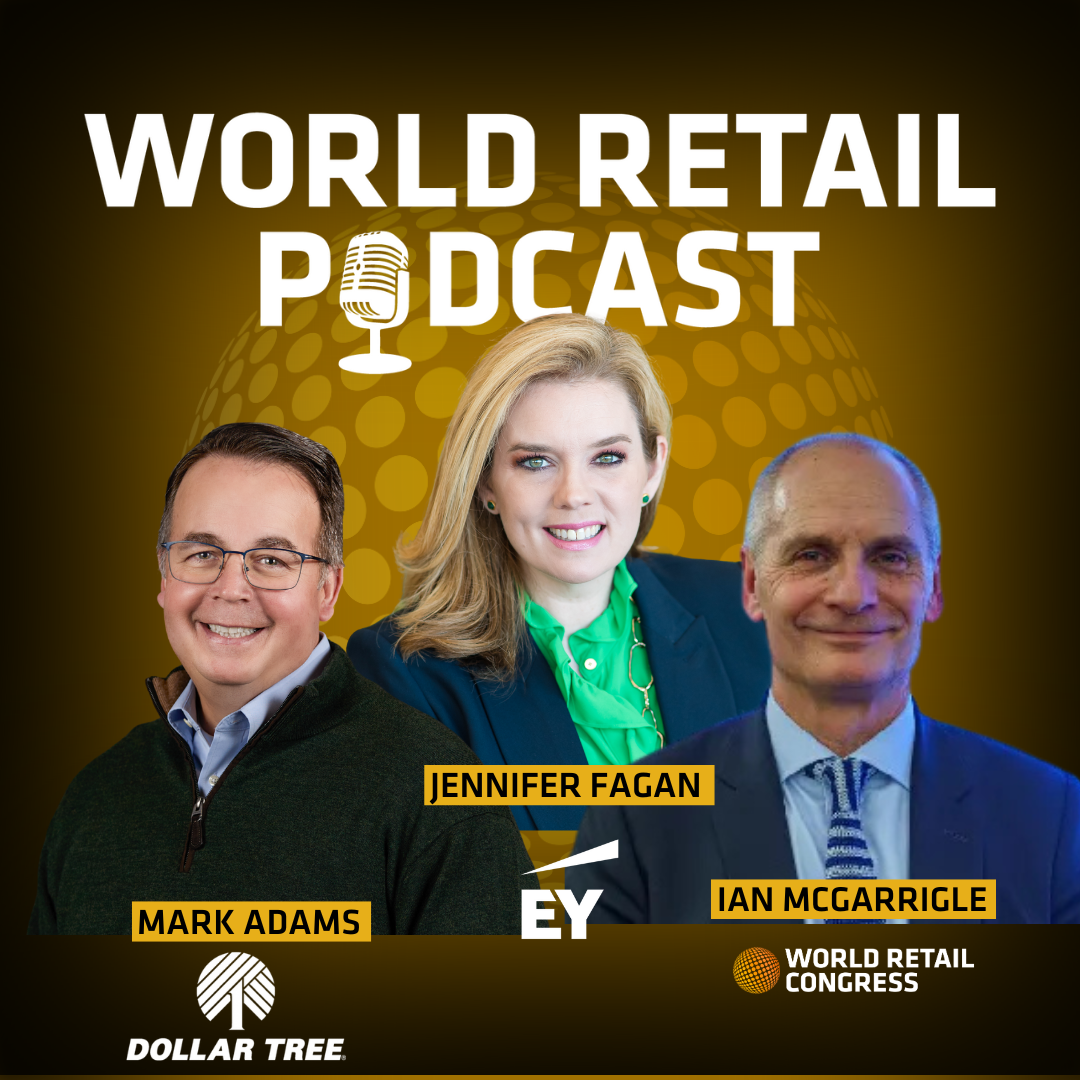
New Rules, New Retail: How Dollar Tree is Maximising Profit Through Smarter Stock Optimisation
36m 31s
The World Retail Podcast's episode focuses on inventory management with Mark Adams from Dollar Tree, discussing the retailer's strategies and challenges. Dollar Tree, known for its seasonal categories, emphasizes a balanced approach between central and local strategies, allowing store managers some autonomy. The role of inventory management has shifted to a growth lever, aided by technology like AI. Dollar Tree leverages data and analytics for demand forecasting and allocation optimization, improving overall inventory productivity. The retailer's margin levers include private label expansion and a test and learn approach to evolving assortments. Relationships with suppliers and investments in automation play key roles in optimizing stock flow and distribution efficiency as Dollar Tree continues to grow.
Transcription
6107 Words, 35797 Characters
This is the World Retail Podcast, the premier platform for global retail leaders where vision
meets insight and innovation takes center stage.
From AI to embedded finance, leadership to the ever-evolving consumer, we bring you the
voices shaping the future of retail.
World Retail Podcast, your front row seat to Retail's next chapter.
Hello and welcome to the World Retail Podcast.
My name is Ian McGarregal and I'm the founder and chair of the World Retail Congress.
This episode is part of our special series of podcasts produced in partnership with the
global retail team at EY.
This series is called New Rules, New Retail, Strategies for Future Growth and focuses on
how retail leaderships can navigate through the main changes that are impacting the industry
in order to deliver that all-important growth.
Over six episodes, we will bring you high-level interviews with some top retail leaders to
learn more about how they are finding new growth or new ways to deliver growth.
Today's episode is focused on one of the absolute cornerstones of successful retaining
and that is inventory management and allocation optimization.
And to help unlock this topic, I was delighted to be joined by Mark Adams, the SVP Planning
and Inventory Management at Dollar Tree, one of America's biggest retailers but also one
of the leading value retailers with over 9,000 stores under the Dollar Tree banner in the
US and Canada.
And I was joined for this special interview by Jennifer Fagan, partner business consulting
at EY.
I very much hope you enjoyed this episode in conversation with Mark and Jennifer.
Hello Jennifer, how are you today and thank you for joining this episode of the World Retail
Podcast, and thank you again for the partnership with EY.
We relish it.
Thank you so much, Ian.
Thank you for your time too.
Not at all.
And a big hello to you, Mark.
Thank you for joining us.
Thank you, Ian.
It's a pleasure to meet you.
Well, we've got a lot to cover and a lot to get through.
But Mark, I thought it would be useful really for the benefit of our listeners.
If you could explain a bit more about Dollar Tree, give us some context, because as I said
in my intro, it's a pretty significant retailer in the US and Canada.
Thank you very much.
Yes.
Dollar Tree opened its first store in 1986.
So next year we will celebrate our 40th anniversary in business.
We are a small box retailer.
Our average store is about 8,800 square feet on the selling floor.
We average about 10,000 skews.
Really focused on a mix between consumable and discretionary with our, we really win
the seasons.
The seasonal categories are really one of the things that drive a lot of our business
and traffic.
As you mentioned, we have 9,000 stores, just over 9,200 right now, celebrated our 9,000
store opening in May of this year.
And that breaks out to about 9,000 in the US, 250 in Canada.
We currently operate 16 United US based distribution centers and two in Canada with two additional
buildings under construction right now.
Great.
Thank you very much.
And Jen, just quickly before we sort of go into the conversation, this series is, as
I explained, is around strategies for growth.
Love to get your thoughts on inventory management, how you see this as an important part of that
discussion around how you could deliver growth in today's market.
Well, here, I think of customer back all the time, right?
And if the inventory isn't on the shelf and there's not high on shelf availability, all
is lost.
All that pre-planning upstream, unfortunately, didn't get the product where it needed to
be.
So having that visibility throughout the value stream is just so important in retail and
delivering for the customer.
So super important backbone of what we do.
Yeah.
Yeah.
Great.
Thanks.
So Mark, picking up on what Jen was just saying there, I mean, I guess inventory management
has traditionally been seen, I guess, more as a cost center, but now that seems to have
changed.
And it's now, as we were just saying, and Jen was saying, it's looked at as a lever
for growth.
So how do you see the role of inventory management has changed and evolved?
And why is it such a critical focus now, would you say?
Yeah, I think it's a really great point.
I think even looking a level above inventory management, the supply chain has ever been
more in focus coming out of the challenges and learnings from COVID.
So even from an inventory management perspective, it is one of our largest costs as a retailer.
It is second behind the store labor aspect.
So when you think about cost drivers and opportunities to improve productivity and efficiency and
profitability, inventory has been in focus more than ever.
And I think the role of inventory management has also been evolving.
To your point about being just from a cost center to an opportunity place, especially
around technology.
And so as we use and gather more complex data and pattern modeling, we are seeing the benefits
of some of these technology advantages in our business, day to day business performance.
Yeah, yeah.
Jen, what would you like to add to that?
I think it's a focus now because there is just this grand prolification of channels.
It results more in a balancing act of where to place the product closest to the customer
is ideal, but then placing bets on which distribution center, which channel, where
will you hold back?
Because this is a great asset, an expense to Mark's point.
And as well, we're living in a pretty exciting time with a lot of new technology developments,
AI. We talk about multiple times a day, but that's highest and best use is consuming and
evaluating large sets of data and inventory forecasting, inventory planning.
This is perfect use cases for a powerful tool like AI.
And then when we get that virtuous cycle going, there's timely insights from the inventory
team and forming merchandising strategy for the in season and next season.
That directly impacts cash efficiency, ROIC for the shareholders and productivity is top
of mind for retailers today.
Yeah.
So AI can really enhance and really help efficiency in this whole area, which has been something
that's not alluded, but it's been certainly the holy grail for retail forever, hasn't
it?
It has.
So Mark, looking, I mean, we just talked there about data and analytics, which is so,
so important to mean how, how are you within Dollar Tree?
How are you applying data and analytics to really help that area around demand forecasting
and I guess improving allocation?
Yeah.
Thanks, Ian.
The, uh, from, we're seeing really good results in our current execution software systems,
you know, it is using score store skew performance and recalculating nightly to improve our command
forecast forecast error and forecast bias has improved, which is allowing us to improve
overall inventory and bring the inventory down, excuse me, and improve our sell-throughs.
But we're also seeing benefits on both ends of the spectrum, veteran stocks on the highest
selling items and lower inventory with less loss sales on the slow selling items.
So it's been a benefit on both ends of the performance spectrum from an assortment standpoint.
Yeah.
We're also taking advantage of a new data lake here at Dollar Tree, which is, uh, we're
all of our previously disparate information is now being centrally located and, and it's
an opportunity to bring those data points together and get more robust and rich, uh,
reporting.
So we're seeing big benefits there and this will continue for us in the next couple of
years as we continue to add to this data lake and improve our reporting and analytical
capability out of it.
Yeah.
Yeah.
So these are recent examples for clarity.
Uh, yeah.
Last year we acquired 160 stores, uh, out of other, uh, different retailers, bankruptcy,
and we opened these stores in a really expedited fashion.
The challenge there is that, uh, they were also very geographically concentrated.
And so we were, uh, out of balance from an inventory standpoint.
And so we were pulling from a distribution center at a much greater rate than we had initially
planned and, uh, positioned our inventory at.
So the goodness is our replenishment system picked up the trend and self-corrected pretty,
pretty quickly with a lost calculation, uh, excuse me, a lost sales calculation and, uh,
future forecasting capability, but the non-basic merchandise needed the current performance
reflected in the future merchandise splits.
And that's something that doesn't happen without analytics and technology and a little bit of,
uh, forward thinking, uh, modeling from that standpoint.
So we were able to accomplish that by using some advanced analytics to modify the results
without needing a person to manually intervene every time we split a future, uh, import order.
Uh, and then the 2nd example is a little bit more recent, uh, you know, as I mentioned,
Dollar Tree really excels in the seasonal merchandise categories and Halloween started
slow this year, slower than expected, but we had a lot of confidence in the season.
So we, you know, we shifted some of the demand out of September and into October and that
allowed our allocation strategies to stay intact and, uh, we like what we see so far.
Yeah.
That's great.
That's really, really impressive.
And, and Jen, what are you seeing observing in terms of how other leading retailers are
looking at data and analytics?
Yeah, it, we're seeing a variation of applicability across subsectors.
So grocery act a little bit differently than apparel will, but overall the opportunity to
handle and ingest real time or near real time, right?
We don't, near real time is a safer bet.
Real time is a scary proposition to promise, but, you know, such as weather and, you know,
customer trends from social media, you know, those are really valuable inputs into forecasting
and planning.
And to Mark's point, the sooner you can pick up those signals as they're doing nightly,
the better the results.
And you know, to Mark's Halloween example, the ability to optimize in season is elevating
outcomes.
And we're seeing that sensing is vastly improving, particularly through anomaly detection, you
know, in the Excel days or early platform days, couldn't sense the anomalies.
So if a system is sensing in historical data, a root cause of a sales dip from last year,
and it knows that that was from late product and not low demand, that's a very different
situation as to how you bring that forward into the forecast.
So things of that sort and that intelligence are super important.
And then in the moment, replenishment, allocation, rebalancing, reorders, chase orders for those
really trendy items that catch on like wildfire, you know, those can be changed more readily
across a diverse set of stores and also customer segments.
Yeah.
Yeah.
I would just tag on really quickly.
The in season comment is really important there, because being able to sense and react quickly
in season before you do those final allocations really helps to sell through, really helps
reduce your markdowns on the back end.
And so we are seeing some real benefit in that really in tight timeframe of in season
management on the seasonal products.
Yeah.
Yeah.
I'm sorry, picking up on Halloween.
That's really fascinating.
I don't know whether it started to pick up now, but presumably your analysis has given
you an idea of where you think you will end up with Halloween.
Is it just that it's slow to start and you're just able to manage the stock flow into the
stores?
And I don't know whether it's started to pick up now as we get closer.
Yeah.
Things are directionally looking good.
We, as I discussed earlier, we're a small box retailer.
And so we, and we do so well in seasonal.
We cannot allocate 100% of our season upfront.
So it's really a hold and flow type of strategy for us at Dollar Tree.
So we'll get a 40% allocation on the initial of the buy and then we'll flow back to sales.
And then when we, you know, we're trying to get that last allocation in store about two
weeks before the season.
So we do have that timeframe that we're really reading and reacting in season and reacting
to what we're seeing at individual store level and changing those final allocations to support
where we think the sell-through is going to be.
Yeah.
I guess building on that as a really large retailer, we've set before 9,000 stores and
counting.
How do you balance the central strategy versus local needs within the business?
Yeah.
Over the years, we've really been bringing that into a more centralized strategy.
We started with the store managers actually ordering the vast majority of inventory in
the early days.
And we've been improving our technology stack and bringing that into a more centralized
strategy.
But one of the things that's a little bit different for Dollar Tree is the store manager
can still order a little merchandise.
Now it's not a ton of the total that gets sent to a store, but the store manager does
have the opportunity to pull merchandise from our distribution centers to really cater to
the local customer, support a local small business that might need a bulk order, and
those types of things that they can react to, and it primes the systems before the systems
catch a trend or an opportunity.
And so that balance between the central and the local strategy has paid benefits to Dollar
Tree over the years, nor also the merchants are also doing a good job of starting to create
localized assortments.
And we'll use some of that data that we've got coming in along with some outside information
that we're now purchasing to try to capitalize on that opportunity.
Yeah.
So, Jen, you must be seeing this again with lots of other retailers, this balance with
a large scale retailer, certainly the balance between the sort of needs from the central
organization to be able to control things, but you don't want to sort of miss local
demands and kind of what the store managers are looking for and wanting.
Yes.
And Dollar Tree, though, is one of the brands that really puts that trust in their store
managers to know their customer.
And that is a lot of trust, but they deliver well on it for sure.
Yeah.
Yeah.
So, Michael, what could you identify some inventory or margin levers that are proving
really effective in today's retail environment?
Yeah.
Thank you.
I think from that perspective, Ian, it's really around, we've evolved our assortment
over the last couple of years, too.
We started as a single price point retailer and everything was a dollar in the Dollar
Tree format.
And now we have started to offer, you know, multi-price, we call it kind of a multi-price
philosophy where we're breaking the dollar in the dollar 25 opening price point and expanding
the assortment for the customer.
And so one of the things that we're doing around evolving that assortment is we have
a really test and learn approach.
And that test and learn approach has been vital to maintaining the profitability and
reducing debt inventory.
So limiting risk while enabling speed at scale has been a winning formula for Dollar Tree.
And then that helps, obviously, improving the overall inventory productivity and our
increased turns puts more cash on the balance sheet to support our growth plans.
Yeah.
Jen, again, would you like to sort of add to that?
That's a really interesting area, isn't it?
It is.
It is.
And we're, you know, any sub-sector, we're looking at enterprise inventory visibility
as something that's super important but hard to capture, right?
But as the tech, you know, becomes more prevalent and the expense comes down with pieces like
RFID and it's sub-sector dependent where it's relevant, right?
And where the cost versus reward is there, we're working with an apparel retailer right
now where they're experiencing three to 10% growth and they're able to monitor where the
product is in the store at all times.
And sometimes it's just as easy as pulling a size from the back room to sell to that
next customer because the size medium just went through the POS and knowing that that
happened and making sure that it's there.
And that's, you know, the self-service model to make sure that you don't lose that sale.
You know, automated replenishment is also one that we're seeing trust in the data to
know the issues that you might have, whether it be shrink or, you know, quicker sell-through
than thought, go ahead and pushing that product and that in real time versus relying on batch,
you know, that is one of the newer developments, you know, waiting for that nightly batch.
Shrink detection and responsiveness, you know, getting back in stock for the customer and
that also is highly related to automatic replenishment, just making sure it's there no matter the
issue that you have and why it's not on the shelf.
And then in terms of margin levers, you know, private label expansion, right?
There is a lot of trust more so than in the past in private label, and that is a huge
margin opportunity for retailers, as well as shrink reduction and returns management.
There's a lot of conversations that we're having because that impacts margins so much.
Yeah.
Yeah.
Sorry, Mike, I should have asked on Jen's point about private label.
What's the split in Dollar Tree with brands and private label?
Oh, great question.
I think from our perspective, we do a ton of importing.
So private label is about 60% of our total and product development is a huge opportunity
for Dollar Tree and especially as we've taken and tried to develop, like I said, those categories
that are at the opening price point, you have to do a lot of, you know, individual development
and sourcing and our merchants doing an incredible job from that perspective.
So we're about a 60/40 split from a private label to a national brand standpoint.
Yeah.
Fascinating.
I want to look at sort of how do you optimize stock flow and, you know, what's your view
around partnerships and automation and, I guess, distribution efficiency to help with
that stock flow?
Yeah, I think relationships are critical in those environments and especially in the
environment that we're in now where things are changing very quickly.
So we react outside influences and having those long-term relationships in place allows
us to tackle challenges together versus on our own.
And so I think that, like I said, when we're developing product, we're working with factories
overseas and those relationships have been developed over the years.
So it's easy to lean on those relationships as you try to navigate the short-term challenges
that are coming at us from an environmental perspective or an outside influence perspective
versus an environmental standpoint.
So I think, and then also on the supply chain standpoint, we are also growing, right?
So I talked about those two buildings under construction.
And so we've got those relationships built with those contractors and subcontractors.
And so as things change, we're able to, you know, use those and leverage those relationships
to make sure we get the best possible outcome as we have to change things on the fly.
So I think, you know, improving the existing infrastructure with key investments, you know,
the throughput in some of our, we do have automation in our buildings.
It is mostly from a conveyor system standpoint.
So it is not, you know, from a robot robotics perspective, anything that well-developed.
But from an automation standpoint, we are using that to get our throughput up and to make
those distribution centers very productive.
Yeah.
So, and as a company is growing, almost the DC's worth of volume per year, we are continuing
to take advantage of automation and efficiencies in those relationships we have built.
Jen, that last stat there, a DC worth of growth, that's phenomenal, I mean, how do you manage
that growth and that point about automation and partnerships, that certainly my conversations
with retailers right around the world, these are big, big topics, aren't they?
They are.
And so he mentioned a bunch of things there that are pushing us harder and harder, right?
PACE, multitude of channels, the nodes are growing, right?
So then complexity is growing.
But the one thing that's also growing with that is the expectation of speed, right?
Expectation of speed from the consumer end, you know, in terms of results from our company's
end.
So that's where the new tools that we've been afforded and this very exciting time that
we're living in can be really put to good use.
And we take it a lot of times from a process perspective, first and foremost, to find out
where can the process be condensed, collapsed.
And so agentic AI, whereas generative AI was, you know, newer last year, agentic AI seems
to have really been more and more understood this year.
So if sharing information with suppliers automatically, right?
But making sure that that business logic is still built into that agentic AI, so it's
still in the brand voice, it's bespoke to you, but you're communicating faster.
You don't have to wait for that human because you trust the system enough to relay that
information.
It knows when to do it, and the human doesn't have to get involved.
And the probability of being spot on is greater as well when you've built that properly and
time is saved and obviously better collaboration, which is paramount and builds more and more
trust.
Yeah.
Yeah.
Mark, just a quick question that was really mean to ask the group sold its family dollar
business.
I think it was formally sold early this year.
So it was a substantial business in its own right too.
So I wondered what impact that's had and has it actually given you opportunities to kind
of look at the whole supply chain and the systems that you have and, you know, I guess
an opportunity to kind of modernize the existing infrastructure.
Yeah.
We did.
We closed the family dollar sale in July of this year.
And while the banners each had dollar in the name, they were quite a bit different that
go to market approaches.
And so from that standpoint, that required different strategies around growth, investment,
et cetera.
So the divestiture of family dollar has really allowed the organization to be very singularly
focused on the Dollar Tree banner and taking some of the noise around the dual banner, dual
strategy conflicts off the table.
So we really, as we look forward and we build our strategic plans, we're really happy to
be just Dollar Tree focused and focused on growing the brand and the sales and the revenues
as best we can as a standalone banner.
Yeah.
Yeah.
So I want to turn to kind of probably one of the biggest things, the topics that I hear
from retailers again all around the world, it's around the pressure on their supply chains
and sourcing and tariffs is the big topic that retailers are living with every single
day.
You know, it's from the beginning of this year it feels so, Mark, just, you know, wonder
what sort of mitigation strategies you've had to learn to put in place or are developing
and what safeguards to help you balance risk and resilience in the business.
Yes, it's been a challenging year from that perspective.
But I think we have put a solid plan in place around tariff mitigation.
We have five mitigation measures in place to manage costs around tariffs and other costs
that, you know, potentially impact profitability.
The first one is kind of an obvious one.
It is renegotiate with the supplier wherever possible.
And like I said earlier, those longstanding relationships have helped in that area.
And you know, we both want to be successful from a vendor and supplier, excuse me, a supplier
and retailer perspective.
So renegotiation is our first opportunity.
The second one is reengineering the products for efficiency.
Like I said, we're 6040 kind of private label versus national brand.
So our private label opportunity to reengineer a product to maintain the price point is
something that we've done very well over the years as we, especially when we were in
the dollar price point, single price point environment, we consistently have to reengineer
around challenges, raw materials and all those types of things to maintain the price point.
But now even that we've stepped outside of that and started expanding some of the price
points, that focus is still very much in place for the merchants to try to maintain opening
price point and then potentially be other reengineer products.
The third one be shift country of origin where it adds advantage, you know, and we're seeing
some benefits there as we look to the back half of this year and into 26 country of origin
changes where it works in our favor is something that will continue to push on.
And then the fourth one is discontinue the item.
You know, you can walk away.
One of the beauties of Dollar Tree is we've always said you don't have to have any single
item.
You know, we're not hard planning ground.
We're not in this really, you know, structured environment and in the ability to discontinue
an item and find something new for the customers always there for our merchants and that flexibility
and creativity has proven very, very beneficial to us over the years.
And then the last one is to, you know, target a retail price increase as the last resort.
But that's on the table too.
If the item is still very important to the customer and it's still a value in the marketplace,
we'll look to retail price last.
Yeah.
Yeah.
So, Jen, would you agree with the support those five key points to how do you mitigate
the pressures from tariffs and supply chain issues?
Absolutely.
In Dollar Tree, you know, being such a large importer, you know, they've they've seen
this movie before, right?
They have a really strong strategy.
Some of the other retailers we work with haven't necessarily felt these pressures.
So, you know, they're coming to us at different parts of the journey, you know, either at
the very beginning to quantify the exposure, you know, model the financial impacts, you
know, quick hits, mitigation steps, or even just a redesign and rethinking of their global
manufacturing footprints or sourcing diversification and then just playing off of EY's heritage
around, you know, customs and tax and accounting, you know, we look at, you know, foreign trade
zones and transfer pricing and really get into the tactical to help them.
So we have extraordinary teams in this space that have been helping many retailers.
Yeah.
And to Mark's point about shifting country of origin, is that something or clearly is
something you can do faster than I would imagine you can be done?
I think it's cultural in a lot of ways, right?
The plan, you know, and is that redundancy the right step for the client?
And that's really the question at heart, you know, is that a permanent or a temporary
move?
Yeah.
Yeah.
I'm looking at, you know, how you improve visibility and cross functional collaboration
with merchandising.
How does that help ensure the right products reach the shelf at the right time?
And that's, that's an important area of working within the business, isn't it?
It really is.
And I hate to keep pumping our merchants up here because as supply chain guy, you know,
it's supposed to be an adversarial type of relationship, but, you know, it has been a
real unlock for us, for Dollar Tree this year, especially as we expanded those price points
and the assortments are rolling out to, you know, that impact on the supply chain and
how we balance that.
So one of the things, you know, we've that multi price expansion is now in all of our
distribution centers and we've added the assortment to 3000 stores this year alone with
another 2000 being expanded next year.
So partner with the merchants on the flow of goods from vendor to DC to store and limiting
the bottlenecks has removed cost and dramatically improved our store delivery service this year.
So again, it's a complex change in assortment, but in partnership with the merchants, we're
really happy with the results.
Yeah.
Jen, what's your observation there?
Yeah.
Again, I have to go back to the customer.
So I started my career off the gap and I worked there and there was a very strong merchant
culture just as Mark is describing.
And you've got merchants that are selecting merchandise, you know, far, far ahead.
And they're very eager to understand the market reaction and learn from it in season.
And a strong partnership with supply chain is really important, right?
Because they depend on supply chain teams to make sure it's smooth delivery to stores
and understand where to place the goods.
And when that virtuous cycle is working, it makes for a really good outcome for the customer,
ultimately sales and customer satisfaction.
Yeah.
Yeah.
Drawing things to a close with my last question really, it's interesting, the theme for next
year's World Retail Congress is Retails Roadmap to 2030.
So I've really got to ask you, Mark, what's on the horizon for you in your key area of
looking at inventory and allocation, what are the big opportunities that you see for
innovation and technology, new operating models or shifts that you see in customer behavior?
What are you kind of planning for over this, what's less than five years to 2030?
But what do you see as this roadmap?
Yeah, I think technology continues to be where I'm most excited about the future, right?
We are really, again, Dollar Tree has been historically a bit slow on the investment side
and specifically in data analytics and machine learning and predictive AI.
But the creation of that data lake and reporting and analytics capability that we are merging,
really excited about how that will improve our day to day operations, improve our decision
making here at the central corporate level, and really how we can expand on that over
the next couple of years.
And like I said, as we continue to transition those price points, we recognize that there's
market intelligence opportunity, marketing opportunities, space productivity and assortment
opportunities, assortment optimization opportunities for us also.
So I'm really excited about how Dollar Tree is revitalizing the technology stack and how
we're going to be able to take advantage of that in the next couple of years.
Yeah, so that feels like that's a mix of delivering real efficiency, but also the whole discussion
we're having is around growth that those technology developments, as you described them, that can
really help drive that business, your business through, as I say, looking at cost improvements,
but also, you know, really literally helping grow the business.
Yeah, absolutely.
And being more efficient, right?
It's all about squeezing efficiency out of the network, making the network work harder
for us and doing it with as little inventory as possible.
Yeah.
Yeah.
So, Jen, 2030, what's your view on this whole area around inventory management and allocation?
It feels like could be a pretty exciting times in terms of the developments that are happening.
It is.
So, I think today we're working with a lot of new data sources unstructured and structured
and pulling them together to get new insights.
I'm really excited to see what other data sources are brought into the mix to enrich
the process.
That is really exciting to me, unexpected ones, I assume.
And then also more connection to the customer feedback, I think is one of them that will
grow informing future product, but also which channels, right?
We talked about that being a really important allocation.
And as e-commerce penetrations level off, we're finding that stores are becoming important
to the younger generations.
For instance, Gen Z is, in grocery in particular, is more apt to shop in stores than the millennials.
And they're actually acting more like Gen X than they are millennials.
And that, you know, once we can survey generation alpha, it's going to be really interesting
to see what trajectory that takes.
So it puts more emphasis on stores, but they also appreciate value and the value store experience.
So the right product in the store, discovery, that treasure hunt that Dollar Tree provides,
that's all going to be really important.
And then, of course, you know, just the new partnerships that are going to come out, you
know, of this AI era, you know, with increasingly the operating models are lending themselves
to creativity in that space, and the elimination of repetitive tasks, you know, where are those
unlikely partnerships that are going to lead to some great innovation?
Yeah.
Yeah.
And Gen does kind of wrapping up our discussion, which has been really, really interesting from
my point of view.
And for the listeners, I'm sure, give me some quick sort of points of your key takeaways
that you think we should leave listeners with around this whole discussion.
I think in terms of the number one place to start is your foundation of your data, you
know, to ensure that it is tended to, and it's not set it and forget it, you've, you're
completing the task, you're bringing it in, and you're thinking of new ways and working
with AI to bring those new insights.
And you may be surprised when the unstructured data sources could really add value and take
you in a new direction.
Yeah.
Great.
Thank you.
And well, Mark, just to also conclude, we've talked about Halloween and we're recording
this at the beginning of the Golden Quarter and the holiday season, how are you feeling
about the run into the holiday season and your DCs must be pretty full and geared up
to really replenish the stores as we go over the coming weeks?
Yeah, we are definitely in peak season right now, but we feel like we're in a great spot.
And so we're really happy with the overall supply chain performance this year.
And again, you know, leveraging that data has proven to be beneficial to us.
And I'm really, like I said, we're pretty much at the start of our journey when we get
to using data to our benefit and really leveraging that to make our business much better.
So we're off to a great start, feel great about the holiday, and so far so good.
That's great.
So as I say, it's been a fascinating discussion.
I've really, really enjoyed it.
I've learned a lot and I really want to thank you, Mark, for joining us and thank you, Jen,
also for joining us and thank you, EY, for your support for the World Retail Podcast.
Thank you very much.
Thank you, Ian.
Thank you, Ian.
Thank you for listening to this episode of the World Retail Podcast, part of our special
series called New Rules, New Retail, Strategies for Future Growth, brought to you in partnership
with the global team at EY.
We hope today's conversation gave you valuable insights into how retail leaderships can
navigate through the main changes that are impacting the industry in order to deliver
that all-important growth.
If you enjoyed this episode, be sure to subscribe on Spotify or Apple Podcasts, and don't forget
to leave us a review.
It really helps others find the show.
To stay up to date with the latest from the World Retail Congress and to access more exclusive
content, visit us at www.worldretailcongress.com and follow us on LinkedIn.
We'll be back soon with more thought-provoking discussions from the front lines of retail.
Until then, thanks for listening.
Podcast Summary
Key Points:
The podcast series "New Rules, New Retail" focuses on strategies for future growth in the retail industry.
The episode features Mark Adams, SVP Planning and Inventory Management at Dollar Tree, discussing inventory management.
Dollar Tree, a leading value retailer, has over 9,000 stores in the US and Canada and emphasizes seasonal categories.
The role of inventory management has evolved from a cost center to a lever for growth, especially with the use of technology like AI.
Dollar Tree balances central and local strategies, allowing store managers some autonomy in ordering to cater to local needs.
Inventory and margin levers at Dollar Tree include evolving assortment through test and learn approach and private label expansion.
Summary:
The World Retail Podcast's episode focuses on inventory management with Mark Adams from Dollar Tree, discussing the retailer's strategies and challenges. Dollar Tree, known for its seasonal categories, emphasizes a balanced approach between central and local strategies, allowing store managers some autonomy. The role of inventory management has shifted to a growth lever, aided by technology like AI.
Dollar Tree leverages data and analytics for demand forecasting and allocation optimization, improving overall inventory productivity. The retailer's margin levers include private label expansion and a test and learn approach to evolving assortments. Relationships with suppliers and investments in automation play key roles in optimizing stock flow and distribution efficiency as Dollar Tree continues to grow.
FAQs
The World Retail Podcast focuses on global retail leaders, vision, insight, and innovation.
The special series of podcasts is called New Rules, New Retail, focusing on strategies for future growth in retail leadership.
Dollar Tree opened its first store in 1986 and is known for being a small box retailer with a focus on consumable and discretionary products.
Inventory management has shifted from being a cost center to a lever for growth, especially with the focus on supply chain efficiency and technology advancements.
Dollar Tree is using data and analytics to improve demand forecasting, reduce inventory, enhance sell-throughs, and optimize allocation strategies.
Dollar Tree has about a 60/40 split between private label and national brands, with a focus on product development and importing.
Chat with AI
Loading...
Pro features
Go deeper with this episode
Unlock creator-grade tools that turn any transcript into show notes and subtitle files.
 PodcastTranscript AI