From Nevada Public Radio, I'm Paul Boger.
This is State of Nevada.
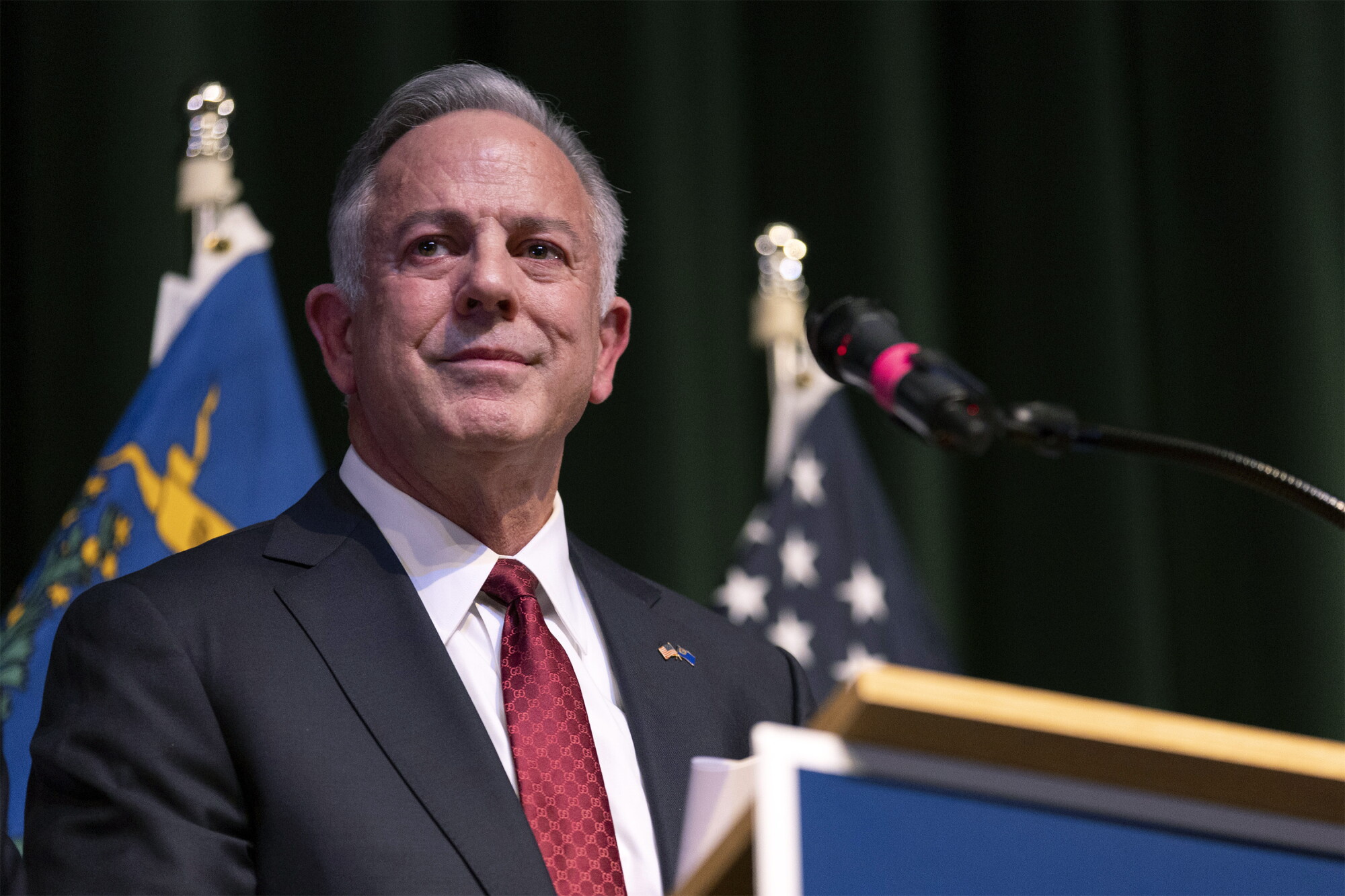
Governor Joe Lombardo broke his own record
at the end of this legislative session vetoing 87 bills.
A few of those bills were focused on indigenous issues,
including tribal sovereignty.
But two indigenous healthcare bills
did get Lombardo's stamp of approval,
with parts of those laws going into effect on July 1st.
Senate Bill 97 adds a tribal voting member
to the Board of Directors
of the Silver State Health Insurance Exchange,
and Senate Bill 312 calls for infrastructure improvements
to an underserved community.
Indigenous advocates consider the two new laws
a win for communities across the state.
At their advancing tribal healthcare gala in August,
the Reno Sparks Indian Colony
described it as "profound progress."
KNPR's Indigenous Affairs reporter, Jimmy Romo,
talked about the measure recently
with Nevada State Medicaid Director Anne Jensen
and Angie Wilson,
the Reno Sparks Indian Colony's
Tribal Health Department Director.
Here's that conversation.
- Angie, welcome to State of Nevada.
- Great, thank you so much.
Very happy to be here.
There are 28 tribal nations in Nevada.
A couple are within city limits,
like the Reno Sparks Indian Colony,
but many are in rural areas of the state.
Tell me a story from your experience
that illustrates what healthcare looks like
for our Nevada indigenous communities.
- Sure, well, I'm the Director
of the Reno Sparks Tribal Health Center,
and I can attest that we see over 5,000
American Indians and Alaska Natives
right here in the Reno Sparks area.
And, you know, healthcare for us looks very busy,
but we're able to sustain healthcare
because of the level of folks coming into the clinic.
So it really allows us to build out capacity,
access to care, have access to different providers.
You know, what we have to do a lot
in coordinating that care effort.
But there are, you know, other tribal nations
also here in Nevada that are not only in rural,
but even frontier counties.
So some of those tribes have greater needs
in regards to accessing specialty care,
especially how far out the tribes are.
So it can be difficult to look at the widespread variables
between all of us in our tribal communities,
especially when it comes from a sense
of being able to sustain providers,
healthcare, access to, you know,
higher level of care or need, emergency services,
those types of things.
So it's really important when we're doing tribal advocacy
that we take a stand point of looking
at what those healthcare needs are overall
in our tribal communities, especially when we're working
with the state or federal governments
to uphold the federal trust responsibility.
- Gotcha.
Do you think rural healthcare is meeting the needs
of indigenous communities out there?
- I think that there is a significant amount of disparity.
And I would just start with the Indian Health Services,
although there is a federal trust responsibility,
and I can explain some of that,
but we're the least funded federal healthcare delivery system
across the nation, even though there's a federal responsibility
for American Indians and Alaska Natives.
So the United States has a unique historical, legal,
and political relationship with tribal nations.
And this is established and confirmed
by the constitution, federal law,
Supreme Court case law, and presidential orders
throughout the history of this nation.
And so born out of this relationship
is the federal government's trust responsibility
to protect the interest of tribes,
including the provision of quality healthcare to our people.
The challenge here is that even though
the federal government is responsible for that,
we're only funded at 50% of the need.
So when you look at what that looks like in Indian country,
it can be very difficult for rural community health,
rural tribal health clinics to close the gap
because there's not enough resources.
This is why it's so critical
that the tribes work with the states.
And that's really important because we have a high prevalence
of folks on Medicaid, and you may not,
I don't know if you know this,
but American Indians and Alaska natives
who are Medicaid beneficiaries,
anytime that they're seen in our clinics
and the clinics build a state Medicaid program for that,
the state gets 100% of that cost reimbursed
by the federal government.
And so in order for us to really look at closing
the disparities on our funding,
it's really critical.
We have a great relationship with the state
and look at ways that we can maximize our ability to operate.
And also while working with the state
at trying to have that budget neutral.
So there's no cost to the state at the end of the day.
- And during the Nevada legislative session,
Senate Bill 97 and 312 pass in the law.
And you helped push these bills through the legislature.
Specifically, how will both measures improve the health
of tribes across the state?
- That's a great question.
So like I was talking about prior,
because of the unique federal trust responsibility,
this is where our tribes really work with our states.
And the commitment underscores the necessity
for our tribal advocacy.
It ensures that healthcare promises are upheld
and adapted to meet the evolving needs
in our tribal communities.
And it's really critical in allowing us a pathway
to voice our concerns, to push for policy changes
and securing resources.
And so during the 83rd Nevada state legislative session,
we started this collaboration
between the Reno Swarks Indian Colony
and the Senate Committee on Health and Human Services.
And we worked on the development
and really worked on what the language would say
to get to the point of having the authority council
for the tribes.
And what this collaborative effort was really aimed to do
was to be able to also address healthcare disparities
faced by all of our Nevada tribal communities.
And this is so important because when we look at
how do we expand healthcare programs or services?
How do we address staffing or the infrastructure
in our tribal clinics?
It was a goal of this initiative to have a lasting impact
and leading to better healthcare outcomes
for our tribal communities
and those generations that will come.
And so with Senate Bill 312,
it really was exciting to see that it passed,
that it led to the establishment,
the formal establishment
of the Tribal Health Authority Council.
And really assisting us looking at ways
that we can improve the critical links
between tribal entities and our state health resources,
ensuring also the culturally appropriate
and effective healthcare delivery systems.
So it was very exciting to be a part of that.
The overall bill, just on a higher level overview,
includes some of the following provisions.
One, it establishes the health council.
And what that does is it establish
the voting members of the council
that would include our Nevada tribal health directors
or their designates and non-voting members of the council,
which are our state representatives or tribal liaisons
from each of the state divisions.
It also establishes an account
for the Tribal Health Authority Council
in the state general fund.
And it appropriates $224,000 on a biennium schedule
to the Department of Native American Affairs
for a staff member and operating cost of the council.
It also allows the council to request
up to two legislative measures each legislative session,
which is really incredible.
The counties get, I think they were getting two
in the most recent legislative session that was one.
So the tribes have gotten none.
So the fact that the council now is able
to take the 28 tribes and have two related
to healthcare is pretty incredible.
And then last, one of the things that it does
is it also authorizes our tribes the ability
to do presumptive eligibility for Medicaid,
which is really significant for our tribal communities,
especially at the time when we were drafting this,
the unknown was what was gonna happen
out of the one big, beautiful bill.
And so I think that just forward thinking
what the state was an incredible measure
to also work with us as we advocated
to have this provision included in Senate Bill 312.
- Absolutely.
Also with me is Ann Jensen,
the director of Nevada Medicaid.
Ann, welcome to state of Nevada.
- Thank you for having me, glad to be here.
Ann, Senate Bill 312 also updates Medicaid.
What kind of an impact will this have
on the state's Medicaid?
- Yes, we're really excited about the provisions
of SB 312 for two primary reasons on the Medicaid side.
The first, as Angie mentioned,
creates that tribal health authority council.
Right now we consult with tribal health leaders
across Nevada every quarter.
As Angie mentioned,
we have dedicated tribal liaison staff
within each of our divisions.
And these team members work very closely
with our tribal health clinic leaders
and other tribal community members
to ensure that our policies reflect
the needs of our tribal communities.
However, more opportunities for tribal voices
to shape our policy throughout the process
and really proactively raise other areas
of opportunity with us is really gonna be crucial.
And I think that tribal health authority council
will do just that.
We're really excited to include input from the council
throughout our policy development process,
as well as the legislative process years ahead.
On the other side, it also, as Angie mentions,
introduces presumptive eligibility for Medicaid,
which in the simplest terms really allows people
to get access to Medicaid covered services faster.
This is a federally allowed process
that's currently available in Nevada for pregnant mothers.
However, this bill mandates that we seek federal approval
to do the same thing for federally recognized tribal members.
What this would look like is tribal staff,
for example, within Angie's clinic
at the Rena Sprex Indian Colony Tribal Health Clinic
could review really important information
on site at that clinic.
So things like income and household size
to determine whether someone is likely to be eligible
for Medicaid coverage.
If they meet these criteria for presumptive eligibility,
they could get these services
and providers could submit bills to Medicaid
for a visit that very day.
So it really helps speed up that process.
As always, folks will go through
the full Medicaid eligibility process
to make a final determination,
but it's really a process
that the federal government has in place
to help ensure that people can get access to care
as quickly and as effectively as possible.
So we look forward to working
with our Tribal Health Authority Council to implement this
and make sure our tribal staff members
that will be conducting prior presumptive eligibility
have all the information and training
that they need to go through this process,
but we're really excited for what this means
for our tribal community.
- And Angie, in your time with the Rena Sprex Indian Colony,
how have you seen healthcare expand for your members?
- Oh goodness, okay, how much time do you have?
'Cause I could be here all day.
Let me just say this.
I'm so proud of the Rena Sprex Indian Colony
and their provision of really looking at providing care
for an expanded population.
The Rena Sprex Tribal Health Center
is the largest tribal health clinic in the state.
And I can just tell you, as a result of some of our advocacy
and work with the state over years,
we have really been able to expand
what this looks like in our tribal communities.
And it's everything from additional providers
and clinical support staff to new equipment
that we're able to offer to more expanded services
that we can now provide in our clinic.
Because normally if folks do not have the money,
they're over income for Medicaid,
but too young for Medicare and cannot afford
to pay out of pocket healthcare premiums
and those types of things, it makes it really difficult.
In our tribal communities, when that happens,
a lot of times patients will say, just forget about it,
just go ahead and pull my teeth
because I can't afford the crown
or I can't afford the bridge.
Now they don't have to worry about that at the tribal clinic.
We're able to pick up those additional expenses.
We're able to pay for glasses or contacts.
We've been able to implement new programs and services,
support our diabetic populations.
It's just incredible to see what we've been able to do.
We've been able to expand space in our clinic
and are really looking at what the future holds
for the Reno Sparks Indian Colony.
Because I think these things are so important
when we look at our data.
What does it look like that we're doing
when we refer out services?
That's what I'd love to be able to bring in-house.
So just to give an example, one of the things that we do,
some of the highest referrals that we have coming out
of the clinic or for physical therapy.
So it allows us the opportunities to look at future ways
that we could incorporate physical therapy into the clinic.
Which is a big help not only for us
to be able to provide that service
in a culturally appropriate way,
but with a lot of our folks on Medicaid,
it also helps the state to maximize
the 100% federal medical assistant percentage.
And that's that reimbursement to the state
at 100% of those costs.
And so we're very conscientious
of these decisions that we make.
But I would just say, when I look at the clinic,
I used to be the Reno Sparks Tribal Health Center Director
about 12 years ago.
And to look at how far we've come, it's just incredible.
And I would say the same is true
in a lot of our tribal communities.
- Absolutely.
Well, with me is Angie Wilson,
the Tribal Health Director of the Reno Sparks Indian Colony
and Anne Jensen, the Director of Nevada at Medicaid.
Angie, Anne, thanks for joining us on "State in Nevada."
- Thank you for having us.
- Thank you for being here.
And thank you to Angie for all her advocacy in this work.
(gentle music)
This has been KNPR's "State of Nevada."
It's produced in Las Vegas by Nevada Public Radio.
You can support thoughtful and engaging conversations
just like these about issues that matter most to you
by becoming a member at knpr.org.
Also, for the latest news and updates,
follow us on Instagram, Facebook, and Blue Sky
at Nevada Public Radio.
You can also get in touch with us
by sending us an email to
[email protected].
I am Paul Boger.
Thank you for listening.
We'll see you next time.
 PodcastTranscript AI