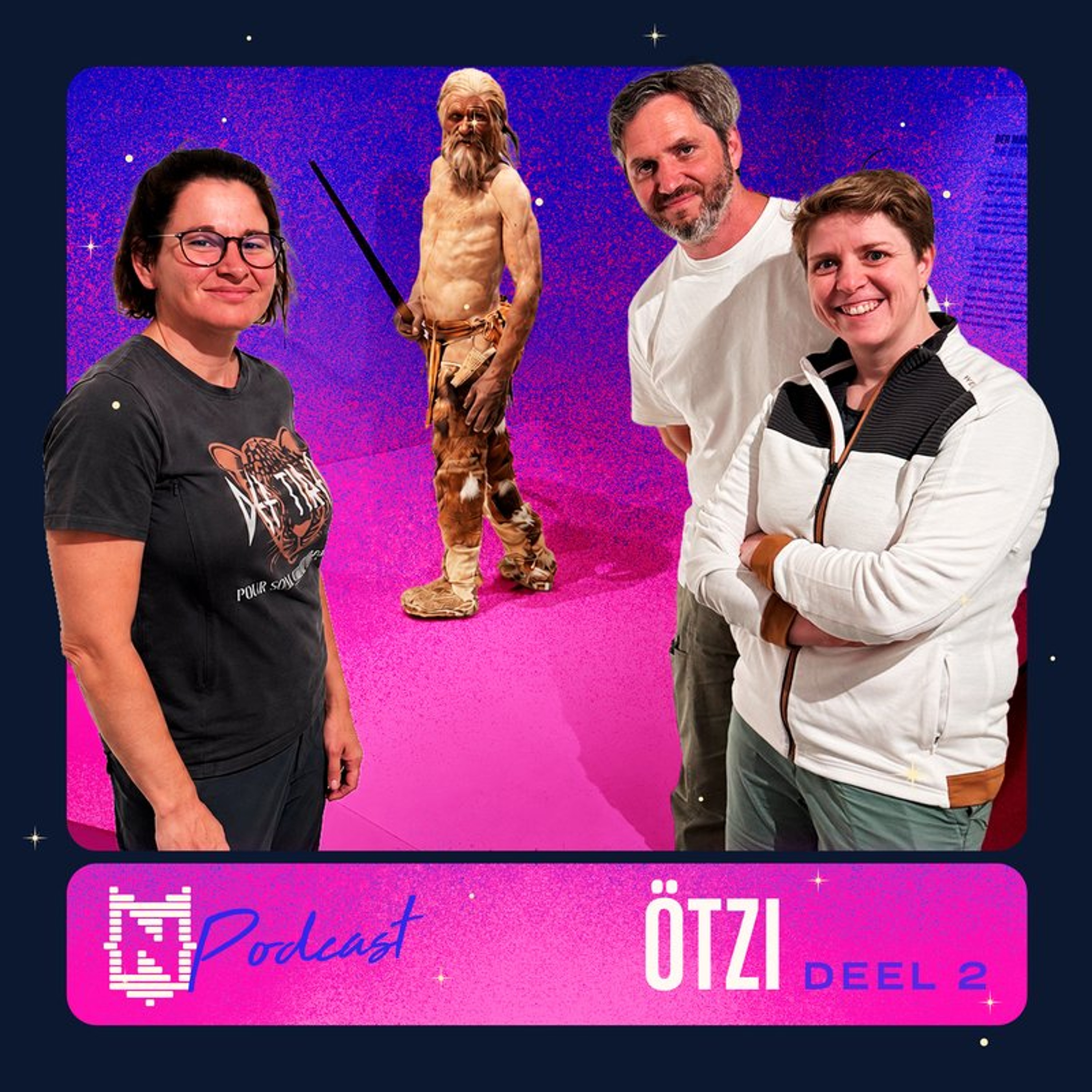
De reizigers bezoeken de vindplaats van Utsi de Eisman, een 5000-jarige mummy gevonden in een gully onder een glas, en ervaren intens de natuurlijke en technologische realiteit van prehistorische mensen. Ze zien hoe een onvolledige boog gemaakt is, wat wijst op het feit dat Utsi zelf aan het woon- en werken was. De demonstratie van een 26 kilogram trekkracht toont aan hoe moeilijk het was om een pijl te schieten met een primitieve boog. Het proces van vuur maken met tondelswammen en periets wordt uitgelegd, wat een echte, natuurlijke methode is die verder gaat dan de klassieke drijvende methodes. De mummy wordt in een klimaat opgeslagen dat de natuurlijke mummificatie na 5000 jaar overleefd heeft, met -60°C en 99% vochtigheid. Het museum biedt een persoonlijke, keuzebasede beleving: bezoekers kunnen zelf besluiten of ze de mummy willen zien, wat een ethisch en educatief aspect is. De reizigers ontdekken dat Utsi een mens was, niet een primitieve, met een leven dat vergelijkbaar is met het onze, met bijvoorbeeld lactose-intolerantie en vaardigheden zoals het vervoeren van goederen. Het wordt benadrukt dat de wetenschappelijke onderzoekingen, zoals genetische analyse en monitoring, steeds dieper lopen en nieuwe inzichten geven. Belangrijk is dat het niet alleen om objecten gaat, maar om een persoonlijke, menselijke verhaal, met een diepe verbinding tussen de bezoeker en de verledenheid. Het wordt ook onderstrepen dat een andere vondst van een dergelijke mummy zeldzaam is, omdat glacialen meestal objecten volledig vernietigen. De ervaring is dus een combinatie van wetenschap, emotionele diepte en ethische reflectie, waarbij de bezoekers een diepe verbinding maken met de menselijke geschiedenis.
MUZIEK.
Ik zeg het in het Duits, omdat we in Zutirol zijn.
En eigenlijk een 2-italige Duits-Italians-Régio.
Op uitnodiging van Zutirol mochten we hier uitzietkomen bekijken
en beleven de Vindplaatsgub Museum.
We hebben in aflevering een al gepraat over onze aankomst,
over onze tour in het museum, het gesprek met Andreas,
de archeolog die zoveel onderzoek gedaan heeft.
In geen juiste technieken, de wonderlukste details te weten.
Over het leven en zelfs over de laatste dagen van Utsi de Eisman.
Na de eerste dag zijn we een uurtje verdergereden,
richting de Vindplaats van Utsi.
En daar mochten we in het archeopark, een museum en een belevingspark.
Ja, inderdaad.
Waar je in het museum de dingen vooral ziet,
kon je ze daar ook echt vastnemen.
We zijn een boog bij zich die nog niet afgewerkt was.
En daar mag je er aankomen, kan je voelen,
hoe ongelofelijk veel trekkert dat je nodig had om die boog gespannend te krijgen.
Hier staat dus die tak.
Dus Utsi was aan te werken, en aan een boog zijn we een boog gevonden die nog niet klaar was.
Dus hij was idörlijk zelf aan het maken.
En hier staat dus die tak van datzelfde soort houd,
maar de krachtige nodig hebt om dit te buigen om mee te schieten,
is immens.
Blijkt waarom is de 26 kilogram trekken om een pijl af te voeren.
Maar omdat de zin terug in de stad dat dat toen was,
is wel heel cool.
En hier staat een installatie waar we er gekund zien,
hoeveel kilogram dat getrekt.
Zal ik eens proberen?
26, moest hij halen?
Oké, go.
Ja hoor!
24,5.
Mocht u een tegen die muuren?
Ja?
1 hand, 1 hand, 2. Ja, ja.
Ik heb nu al allemaal kracht opgebrekt.
Nee, ik ga er niet, jij lieve?
Hete kon geen pijl afschieten in de prehistorie.
Oké, daar gaan we boogschieten in prehistorieze trekkrachten.
Ja!
All right!
Hoe zwak ben ik ik dan?
We hebben ook contact hoe hij vuur maakt.
Oh, mooi jongens toch.
Dat was een wondelijk moment voor jou.
Ah, maar dat voel ik wel ongelofelijk.
Ja, met de kondelswammen,
allemaal mogen we leven daar.
Ja, en ik vond dat een enorme goede aanvulling op de museum.
Klopt.
Op eerste echte objecten zien.
En dan eigenlijk enorm pasbaar kunnen we leven.
Hoe dat toen moet gebruikt geweest zijn.
Hoe dat toen moet gevoerd hebben.
Een dagje in het archieopak.
Je kunt zien de sparks.
Wat Stone is?
Dit moet een sparks.
Dit is een sparks.
Dit is een stortje.
Ja, een stortje.
En dit spark zit op de treingras.
Het is goed.
Nee, het gebeurt niet.
Het is goed.
Het is goed.
Het is goed.
Het is goed.
Ja.
Het is goed.
Dus ik moet het in de vangels.
Kondel, de tondelwammen.
Ja.
Het is een heel fluffy en soft.
Dit is een real one.
Dit is een real one.
Het is de pard aan de beskin van de maschroom.
Ja, ik wou in de museum zien hoe je moet schoonen de maschroom
om te finden de pard dat je moet.
We call het trauma.
Trauma, sicht.
Trauma, piese.
En dit is heel flammig, dan.
Ja.
Oké.
Ik heb dit te zijn met een lov staan.
Maar je ziet ze heel vaak in België.
Je ziet hier op door de boom.
Je ziet heel vaak tondelswammen staan.
Hoe erg kan je ze?
Ja, eigenlijk.
Ze zien eruit als elfenbankjes.
Maar ze zijn iets keer dikker.
En van kleur zijn ze ook nogal gereisbrein aan de buitenkant.
Maar als je een dikke zwam, een dikke elfenbankachtig zwam op een doel je boom zie staan,
is de kans heel groot dat dat een tondelswam is.
En ik wist altijd dat het weer meer gemaakt wordt.
Maar het is de eerste keer dat ik zie hoe het gebeurt.
En de Engelsenaam voor een tondelswam, kan je die?
Nee.
Nee.
Haha.
De Engelsenaam voor een tondelswam is Tinder.
Want de app is genoemd naar het ontvlammen van de liefde.
Nee.
Of de lust, dat laat ik het meten.
Maar de Tinder, de app, is genoemd naar de tondelswam.
Ja.
Nou, ik ga het te spaken.
Het is in de pandest.
No pressure.
Dus we zien hier.
Oh my God.
Oh jongens.
Ha!
Hoe vuur gemaakt wordt?
Dat zijn ik ongelofelijk.
Daar vliegen hele kleine puntvormgevonkjes van die vuursteen.
En je denkt ja, dat doen niks.
En met dat troograaz doet dat effectief niks.
Maar vanavond dat die tondelswam raakt, begint dat er gluuen en dat blijft gluuen.
En dus nu, ja, kan je dit gebruiken, blijkt waarom dat gras mee naar de steen.
Dus vuur in de oor tijd werd niet gemaakt door stokjes op een steen te draaien.
Maar door periets, periets ooit ook wel het goud van de gekken genoemd,
omdat dat heel hart lijkt op goud, door periets de slaan tegen vuursteen.
Dat is waar we net gezien hebben.
En dat komt naar kleine vongjes van af.
Die is de tondelswam in brandseekend.
En nu ga ik er iets meer in de hei en dan de groengspark van de tindefang is.
Ik ga niet het gebruiken, omdat het 'wet' is.
Als je een bloe wilt, dan moet je het een beetje.
En dan wordt, en je kan zien, de smok.
De smuren de tondelswam in ja, droograaz gelacht.
Wat?
In Hoi?
En dan wordt Nina toegeplazen?
De gid zegt omdat onze aardemveel te vochtig is.
Maar de gid draaie is eigenlijk met haar armen weekend.
Dat hoop je gras met smulen de tondelswam in.
En daarom staat gehoord vuur binnen.
Oké, ik ga dat thuis ook doen.
Dus ik ga met een tondelswam van mijnendoorje een boom halen.
En ik denk het gevoel dat gevoel gemaakt heb.
Met dingen, ik moet wel nog een perit steen winnen.
Ik heb dat thuis.
In de nof?
Nee, ik verzamel de vroeger met een raal.
Dus ik ga het nog perit.
Maar misschien moet ik er echt een project van maken.
En zelf perit gaan zoeken in de bergen.
Ze dan, ik wak alle elementen van het vuur zelf uit de natuur helpen.
Wow.
We zien vuur ontstaande gids.
Blast nu toe een klein beetje in het smulende. vog jij watjes? - Ja.
Op een kwartje rijden van dat argio park. vertechter een kabelban, en die hebben we ook genomen.
Een kabelban met een kaberyo-dak.
Ja, dat is waar.
Dat is een grote kabine waar je dan een man of dertig hen kan. denkenken.
En dan als je 10 euro bij wilt houden, dan kan je via een trapje. letterlijk op een dak van die kabine echt. Ja, wat is het?
10,5 meter boven de grond.
En de kabine stijgt.
Nee, dan ben je dus op die 3000 hoge pick.
Daar geeft hij ook een gevoel wat dit man hier. en hoe is die met die middelen van toen tot hier geraakt?
Ja, inderdaad.
Dat was mijn meestest bijgebleven van die trip.
Dat hebben we spreken over primitieve volkeren.
Maar de kraftmenschip en de manier waarop je alle materialen. uit zijn omgeving wist te gebruiken voor een specifieke doel. dat vond ik ik wel heel inderdaad kwijken, eigenlijk.
Die man naar Bergschoenen aan, hè?
Die man naar Bergschoenen aan. met ik denk, vijf soorten materialen voor die schoenen alleen al te maken. met effectief relief zolens zoals onze Bergschoenen hebben. van gecombineerd berenleer. en geitenleer, denk ik dan.
Die had een trekkersrugsak met zo'n hartframe.
Het is eigenlijk wondelen.
Maar daar boven op die pick. helaas hadden we geen helder weer.
Je kan zelfs de voet gaan wandelen naar die effectieve vindplaats.
Dat is ja, als dat er voor ons niet in.
Maar het staat wel op mijn bucket list.
Ja.
Ik wil misschien nog wel eens aan de rots zelf staan. waar die mandus 5300 jaar geleden doodelijk gewond op gaan liggen is. vermoorgd is eigenlijk, hè?
Ja.
Dan 5000 jaar blijven liggen is daar.
Dus denk aan de voorbij je 5000 jaar geschieden is. op elk moment lag die daar. en dan daar gevonden is door die twee wandelaars.
Dus voor de volle beleving zou ik zeggen. doen nog een dagje extra hier. en ga ook nog eens naar die vindplaats gaan.
Ja, het goede vind ik ook dat echt een natuurlijke mimie.
Ik heb die smemmiest van zijn geboten.
Het is gewoon een natte mummy, die ik 5.000 jaar vooral in Eiz gelegen heeft, maar
blijkbaar gedurende die 5.000 jaar in Eiz ook, waarschijnlijk twee keer gesmolzen, die heeft dan
ook een paar maanden of jaar in het water geleer. Zijn kleeren zijn er ook van zijn lichaam afgedreven,
maar in natuurlijke mummificatie en daarbij het toevall hebben gehad om die te rucht te vinden dat
ze krijgen unieke. -Absoluut. Als prachtig dag je in het Alpendorpel zijn we teruggekeerd naar
Bolzano, terug naar het archeologisch museum, omdat we de helft van het verhaal nog moesten ontmoeten,
maar ook hadden we nog een afspraak met de directeur van het museum in Elizabeth. En met
haar hebben we het vral gehad over wat een enorme uitdaging dat is om zo een waarde vol stuk te
huwen en dat tegelijk te willen conserveren, te willen onderzoeken in takte willen houden en te
willen tonen aan een publiek. -Ja. Fantastisch interessant of grouw.
-Het is het dat de eisman was volgens 500 jaar. Is het niet leuk dat het niet meer dan een kouding is? -Ja, de objecten dat de eisman
hadden met haar, dus alle hun personalen, de eitemsten, de wepens, of ook een geval. Maar op de andere hand hebben ze
de wepens van het verhaal nog ontmoeten, de wepens van het verhaal nog ontmoeten, de wepens van het verhaal nog ontmoeten,
dat we een monitoring, de objecten, de hele tijd, de temperatuur, de humiditeit, de hele parameters, of heel stel.
En ja, er is een veel afford bij de zin, natuurlijk, om de zin te worden. -Ik kan het imagineen dat, even internationale, er is een beetje een interesse in het investing of een psychisch, psychisch, op deze object. Is dat het mogelijk is dat het iets dat mensen een opgevoerd hebben? -Ja, ik heb het.
Er is een heel veel verhaal nog ontmoeten om de object te worden. En er is een heel veel verhaal nog ontmoeten om de momen te worden.
En ja, als het technologie is, een heel veel meer verhaal nog ontmoeten om de technologie dat het nu is,
en dus we hebben veel meer nieuwe verhaal nog een nieuwe verhaal nog ontmoeten om de nieuwe verhaal nog ontmoeten om de gegevenheid genomen.
To find out what new insights about the objects, their materiality, the other hand also about preservation,
which is very important, and which never stands still. Preservation is always developing,
and we always find out what maybe could be a better approach. And so, yeah, there's a lot of research going on.
And from a practical point of view, do you then sometimes remove, let's say, an arrow for three or four months,
or is it every Monday that people are allowed to research something?
No, it's not that easy. If you have a research question, you can approach the museum.
Then we have experts, obviously, analyzing your request.
And yeah, then we will see if what's necessary. I mean, if it's only kind of, if it's taking samples, for example,
this is obviously not so easy. I mean, we have to keep the objects safe and as much as we can.
But if you have all the kind of, yeah, we have a lot of non-invasive techniques now, you have to say.
And so, yeah, a lot of more research can use these non-invasive techniques.
And so it's easier for us as or to let people do research on the objects.
So, I have a research question. I contact the museum, but it's not me who does the direct investigation.
You have experts between me and the objects.
No, it depends. I mean, when you are an expert in your certain kind of research area,
and you are from a university, or you have your own network, then you can, obviously, together with our experts,
develop your project and then try to have new insights and then publish them, obviously, at the end.
This is very important. Never forget about publishing results.
I'm pretty curious about, as you said, new techniques of preservation.
So, can you give an example of this, of something that happened in the past years.
Like, oh, if we do it like this, then we can keep an arrow better or we can keep some skin better.
Well, for an example, which is going on, we do a lot of monitoring,
micro-biological monitoring, which is now much more easier, because you can analyze DNA of micro-biological life.
And also about their potential activity, because, as you know, they are everywhere, I mean, microbes, fungi, it's everywhere.
And so, yeah, we do look very closely on what could be on objects and also on the mummy.
And, yeah, if there is any, or there should be any kind of activity, obviously, we have to react.
But for now, it looks very comforting.
Talking about the mummy, he is in a freezer or in a fridge.
Yeah, he's in a special, designed chamber.
It was constructed as a prototype for the museum.
And the idea was, and I think it's the best study ever, to keep the mummy, like it was preserved for over 5,000 years on the glacier.
So, we tried to simulate somehow the glacier conditions with minus 60 degrees, and nearly 99% of humidity.
Obviously, he's not covered by ice, because we want also to have him visible, and also not only to the visitors, but also to have a close eye on his conditions, obviously.
And so, years ago, there was a decision to regularly spray water on the mummy,
to have this very small layer of ice on the body.
So, if there is, because in every environment, you have a loss of humidity, sooner or later.
But so, this sublimation does happen only in this layer, and not in the body itself.
And so, you have this protecting layer on the mummy, which we think is the best.
And when the layer is gone, you spray again, exactly.
The way this mummy was, well, the way it became a mummy, the way it became a mummy and the way it was conserved is so very different from the other mummies that we know, like in Egypt or in South America.
Is that also important in the way you are keeping him fresh now?
Yes, of course. I mean, mummification is a very complex process.
If you see globally, you have a lot of artificial mummifications.
So, you have people, you have a culture who wants to create mummies of that bodies.
Yeah, Egypt is a very famous example for that. You have a whole culture around it, how the technique has been developed, and how it's best to do, and to keep then also the mummies alive.
I mean, they thought people to keep them alive somehow, being mummified.
And then you have others, natural mummies, for example, Inca mummies. As you probably know, Inca's had this ritual, which is called Capaculture.
They used to bring children on mountain peaks, and yeah, buried them there, and they've been mummified also naturally.
And yeah, it's the Isman, was a special situation, I would say, because there was no human intention at all.
He was killed on the mountain by an ever shot, and the body was left there, and then the
verification process started without any human intention behind it.
And yeah, what happened in the detail is not that easy to reconstruct
because 5,000 years is a long time period.
So yeah, there are a few more than one theory about it, how it could have happened.
Was it immediately clear that you wanted to expose the mummy to the public?
Or was there some kind of discussion scientifically?
As a museum opened in 1998.
That's seven years after the fight.
The first years he was kept on preserving his book.
And then this museum was built up for, yeah, also for him.
And yeah, I know they told me that there have been a lot of discussions
about, yeah, ethical discussions as well, about showing human remains.
This debate is still going on.
We have a lot of discussion in European museums.
Spain, for example, started to hide his mummies in the, I think, in the state museums
when there is not enough context.
So if they have decided not to show any mummies without context in museums.
But yeah, in 1998, there have been two questions.
One was, is it ethically legitimate to show, have a mummy in the exposition?
And the other one was conservation, preservation reasons because they had to create this cooling chamber.
And having a window into this, the wall of this chamber is not an easy thing to do.
And heat comes through exactly.
And light on the. Exactly. You need light.
You need glass.
So this was quite tricky to create this window then.
But they decided that there is a very strong interest, not only in science but also in, yeah, in education.
In people just want to know who this person was.
And I mean, he comes from a complete other period of time.
I always say he seems like a little bit of time travel to us.
He cannot talk, but he talks through his body and his, the artifacts we found with him.
And so he tells us a lot about history.
And so I think it's legitimate to have him exposed.
Also, the way you decided to do it here at a museum is if you don't want to see him, you don't have to.
You really decide for yourself, I will go after the fence and then look at him.
Exactly.
They did a great choice when they decided how to present the mummy.
There is this anti-chamber which brings you into a certain mood.
You know, you can decide, as you mentioned, is it what I want?
Did you see the mummy?
Or I can simply pass it.
And also the fact that people usually often they have to wait a little bit before they can approach a window.
And then it's always one and one.
So it's always a very personal kind of interaction.
One person, one person and one mummy.
And it's a very personal moment.
And we see a lot of people are very touched by this encounter.
We haven't experienced it yet.
So yeah, we are waiting for the moment.
And the fact that you talk about the value of this really speaks to me because I think in the past two days,
we have become intrigued even more as so many people.
And so the fact that you can actually see this legendary mummy has a huge value.
And then how many people see him per year here at the museum?
We have more than 300,000 visitors a year.
And I think most of them decide to go and see him.
And yeah, it makes him real because if you don't see the mummy, you could think it's maybe it's all just made up.
And maybe it's not real.
But when you see him there lying, he's a mummy, but he always looks like a little bit.
He looks also like that person. So it's very easy to recognize him as that person.
As a human body.
And you see the tattoos.
So you see some of the details also.
And yeah, it makes his life more closer.
It makes him closer to our life, I would say.
That's probably something that sums up our experience getting so close to this ancient time.
Also in the archaeopark, where we went, where they really revive it.
How often have you seen him?
Is it a window that you sometimes pass by or is it something that you know is there and you have to take care of?
No, I regularly obviously pass there and have a look.
And also when we do the humidification treatments, so around once every two months.
Then we put him outside the cell, we bring him an extra chamber, kind of a laboratory chamber.
There is much more light and so we can also see the surface if everything is okay.
And so, yeah, also then seeing him, he's treated and how respectful also the colleagues treat him.
I mean, this is, yeah, it's very important for us.
If we're looking at the bigger picture in designing this museum, which take home message,
do you want to give the audience when they exit the museum?
Well, I'm always happy when I'm on the exit of the museum and I hear people chatting about the insights
and what most impressed them about it.
What I like to hear is when they say, "Oh, he was one of us."
When he was a homo sapiens, I mean, he was not kind of these primitive people that sometimes have in mind
when they think about maybe Neanderthal and other kind of hominide.
So, yeah, he was the same.
Maybe he was a little bit smaller, but also due to the circumstances of life in that age.
I think when you put him in modern dress, you would not recognize him when he walks along droids.
He was lactose intolerant so that you could give him ice cream and see what happens.
Also, he was a very skilled person. He had a lot of capabilities that we have lost.
I don't know how many of us would survive in the mountains nowadays without all the equipment
and all the waterproof stuff we bring with us.
Yeah, he was a hunter for sure. He was able to find food and, yeah, he was able to repair a lot of items.
Most probably, he had this U-bow with him, which was unfinished.
And we think that he worked on this U-bow by, yeah, on the way.
This is something that I have noticed myself doing. It's the speculation.
And also, other people, almost everyone we talk to, tries to form a story.
Why was he there? How did he get killed? Was he the bad guy? Was they killed the bad guy? Stuff like this.
And of course, coming from a scientific background, you know, okay, stick to the facts. But in your own time, you can always speculate and try to form stories.
Is this something that you have time for? Or are you too busy with the practical side here?
Do you think about the human that he could of the life he could of lived?
Yeah, I mean, every one of us is interested in this individual.
I mean, archaeology not often has the possibility to bring out the story of an individual in that detail.
Because usually you, also in museums, they tell you the story about an age, about time period, about, yeah, about an archaeological site maybe.
But here we have one individual, which makes it very interesting.
Because, yeah, obviously, you think about the social person behind the mummy, you think about who,
who, our character, was he the bad guy? Was he the good guy?
And I think we tend to, to make him the good guy, because at the end he was a victim.
We think, yeah, he had to be a good guy at the end, but yeah, you never know.
I mean, what happened before he was killed because of a crime, who knows?
Yeah, we'll never know that we can find out more about his health and maybe also about
the death circumstances, but at the end, what happened before in his village or, yeah,
it's impossible to find out.
The facial reconstruction that you see a lot, is it mostly artist impression, or do we
know scientifically?
The one we have in the museum.
Yeah.
Well, it's a reconstruction with the Manchester method, so it's, yeah, it's done very well,
scientifically accurate, I would say, but there is always a certain percentage of interpretation
in all of these reconstructions.
So we have to be clear.
We had these two paleoartists, and they've been commissioned to create this figure.
And obviously, we gave them all the scientific information we had at that time, it has been
made in 2011, so it has a certain age.
And yeah, they tried to bring in all these facts by creating this figure.
But at the end, it's always an interpretation also of, yeah, what we expect this person
to be.
And yeah, as soon as we have new insights, obviously also the image changes of this person.
And the new techniques you are hoping for or that are coming in the near future for more
investigations?
Yeah, generally, but the mummy, while a lot of research is going on on isotopes, a lot
of genetic research is going on, and these research needs a lot of samples.
So what we lack a little bit is all the samples in the area.
So if we would have more grace, for example, more burials from that age, I mean, we don't
expect to find another mummy like that.
And it's quite impossible.
But if we have more bones, for example, we could understand better if we found in his genes
and isotopes, if it's what others, yeah, and do you actively search for them or do they
need to come up?
Yeah, I mean, archaeology is always between finding researchers.
But yeah, honestly, coverage is very difficult to find because you don't have a lot of structure
in the soil, the buildings, yeah, you have to be lucky to find them.
And so yeah, we don't have a lot of archaeological evidence here in the area.
But the field of ancient DNA, I've been interested in it for a while.
The past 15 years, it has exploded with what is possible to extract from old bones.
So you would expect that somewhere they would find a link to a sea.
Yeah, archaeology has completely been taken over by archaeology right now.
So you see a lot of also artifacts that maybe have been discovered 50, 60, 70 years ago.
They are now reexamined by these methods.
And yeah, they find out a lot more information about skeletons, for example, or also the gender
example.
I mean, a lot of burials have been attributed falsely to men or women, according to the
objects they have given with them.
And so if there was a knife, it was a man.
And if there was any kind of jewelry, it was a woman.
And now we found out, no, it was not a man with jewelry, this cannot be.
We are naturally beautiful.
The fact that you also say the chance is very slim that there will be another Utsi is also
for me something new that I learned here, because I thought this mummy came out of the glacier.
We have global warming with all the disadvantages, but I thought, okay, as this glacier melts down,
like in Siberia, they find more and more mammoths.
I thought, okay, the glacier disappears, they will find more Utsis, but it's not that easy.
No, unfortunately, it's not that easy.
First, because glaciers usually destroy everything.
So if you die on a glacier, usually it happens that the glacier then forms ice layers on top
of you and you are completely crashed by the ice.
So it's very unlikely that an object or a person is preserved for that long time period
into the ice.
So he was next to the glacier then, or not really?
Yeah, he was finding a kind of a gully, which protected him somehow, because if there are
meters and meters and meters of ice moving on your body, at the end, there is nothing
left to show.
Okay, I just had the dream of standing on the glacier and thinking there must be a hundred
Utsis here that, like I sometimes have with dinosaurs, that you can walk around somewhere
and think, my god, under my feet, there must be treasures, but unfortunately Utsis will
probably stay unique.
Yeah, who knows?
I mean, we still have some hope, but it would be also great to have some other archaeological
evidence in the valley, maybe the place where he lived, or some villages, some other traces
that would be very helpful.
We're going to wish you all the success in inspiring 3,000 people, 300,000 people every
year.
Also, you're moving to a bigger place, hopefully, so even more people can then visit.
And of course, at the same time, keeping this conservation and this scientific effort alive.
Thank you very much for this conversation.
Thank you for coming.
What is the insight of that woman?
She was a hero also.
Yes.
What a responsibility.
And that, that, that different responsibility, as well as that public working, that
experience, that is going to be very important for her.
Yes.
And where we are thankful for her, that we, as a whole, know society, experience, I think
this is very good.
Yes.
Can you give us all the aspects of the extraordinary story of the island where you can live here?
I just did it.
That's what I think.
Yes.
Well, our Babel brought Elisa to the house.
That's right.
The director of the museum was already the owner of the museum, who just started to come in.
And we stayed together with two kids who had the key in a life museum.
And then we went to the room, where the first time we met, to stand up in the corner,
with the character that we now have two days in each other.
Yes.
The loss of these two days here, I have always been intrigued by Utsi since the 1990s.
That was big news.
I've always asked myself, "I'm going to see Utsi and Valla, we are now ten meters away."
We have spent this moment on the island.
We have done a lot of museums, a lot of people told us.
But the thing is that we still haven't done it yet.
That's what we're going to do now.
We are also in a closed museum.
So we are very busy.
It's very quiet here.
I'm going to sit here.
I really mean it.
I'm really a little worried.
I understand.
I think so.
It's a moment.
Yes.
It's a moment of security and a light museum, both in high and elegant.
It's a special moment.
Let's go.
In the museum is the room where you can see Utsi and Valla.
The room is closed by the rest.
The room is not a room for anyone to be open with a human.
So you can go to the bathroom and in the bathroom, if you're in the mood for the room, you can get the time.
You can still see the time.
voor mij. Volgens wel, we horen hier zijn er weinig mensen die het niet doen, maar ik vind het
zeer goed bedacht dat je wel dat het een volledige eigen keuze is om naar die mimie te gaan.
Ja, ik kan mijn voorstellen in sommige andere muzieen dat het de centerpiece zou zijn,
een sneeuwetje gewijzen in een glazen kast, dat iedereen rondkomt staan, dat ze hier heel
anders opgezet en ik vind dat wel heel mooi. En het is ook zo dat ik opgezet dat je een op
één staat, dus daar is eigenlijk maar plaats voor één iemand bij de rampje en je hebt dus ook
als bezoeker hier heb je laten zeggen, u eigen halve minuutje met die mimie. Wij zijn hier nu
alleen in het muziek om, dus we kunnen ons eigen uurken hebben als we willen, maar we gaan eens gaan
kijken.
We hebben naderen het rampje. -Klaar voor? -Ja. -Daar gaan we uitzieden mimie. Het licht is oog.
Oh my god.
Ik kan niet veel zeggen.
Ja, dat is. Dat ziet er zo, dat is het waar echt uit.
Maar zo fraziel ook. -Het ziet er heel fraziel uit, het is ook bevroren.
Hij krijgt kippen wel.
Je ziet ook die eislaag die er ook opgelegd is, hè.
Man, maak het toch. Wat doe je hier?
Dat is dus een van de meest wardenvolle bewaarde lichaamen van heel de wereld, dat hier nu ligt.
Ook het gezicht, ja, dat is natuurlijk een mimie, maar het is geen skelet.
Het is geen schedel, er zit een relijf op dat gezicht. -Het toch?
Nu ga ik dat door wasjes zoeken.
Op zijn voet her. -Oh god, ja.
De drie lijntjes, ook die voet is zo de eiten, een echt een tasbare voet.
Zeker met die tattoo er nog eens op met de bot van die enkel dat er uitsteek.
En hier die hand ook heel dicht bij ons, die vingers, die kootjes.
Dit is heel slechte podcast, want je kunt er alleen maar woordloos naar staan, eigenlijk.
Dat die deed dat bijna onverandert, meer dan vijfde uitzend jaar bewaard gebleven is.
En dat dan hier bij ons is om ons zo veel te leren dat we niet wisten.
Stel je voor dat die mens daar geweten dat? -Ja, daar gaan met een tiditijdmachine meepakt naar hier, en hem dan vraagt.
Wat denk jij hiervan? -En dat de alle foto's vindt in het museum.
Die wil dan heel lange neel even nezen als in. Zo zag mijn rug sterk dan heet.
Die je beren, maar ik kakte daarin. Dat was niet voor je op mijn hoofd jongens.
Heel mooi.
Oké, dag uitzie.
Ik denk tot ziens dat ik naar Katrouw kom.
Podcast Summary
Key Points:
De reizigers bezoeken de vindplaats van Utsi de Eisman en ontdekken een primitieve boog die nog niet volledig was afgewerkt, wat aantoont dat Utsi zelf aan het werk was.
De demonstratie van de trekkracht van de boog laat zien hoe enorme krachten nodig zijn om een pijl te schieten, wat verklart waarom 26 kilogram trekkracht nodig was.
De manier waarop vuur werd gemaakt met tondelswammen en periets tegen vuursteen wordt uitgelegd, wat een natuurlijke, vroege technologie toont die verschillend is van Egyptische of Inca-mummificatie.
De mummy van Utsi is in een speciaal klimaat opgeslagen met -60°C en 99% vochtigheid, om de natuurlijke mummificatie te imiteren zoals in de glacialen.
Het museum biedt een persoonlijke, keuzebasede beleving waar bezoekers zelf besluiten of ze de mummy willen zien, wat ethisch en educatief is.
Er is een diepe verbinding tussen de bezoekers en de oudheid, waarbij Utsi wordt gezien als een mens van de moderne tijd, niet als een primitieve.
Het gebruik van moderne technieken zoals genetische analyse en micro-biologische monitoring helpt om meer te leren over de gezondheid en levensomstandigheden van Utsi.
Er is een grote discussie over het tonen van menselijke resten, maar het wordt geaccepteerd als een belangrijke educatieve en wetenschappelijke ervaring.
Summary:
De reizigers bezoeken de vindplaats van Utsi de Eisman, een 5000-jarige mummy gevonden in een gully onder een glas, en ervaren intens de natuurlijke en technologische realiteit van prehistorische mensen. Ze zien hoe een onvolledige boog gemaakt is, wat wijst op het feit dat Utsi zelf aan het woon- en werken was. De demonstratie van een 26 kilogram trekkracht toont aan hoe moeilijk het was om een pijl te schieten met een primitieve boog.
Het proces van vuur maken met tondelswammen en periets wordt uitgelegd, wat een echte, natuurlijke methode is die verder gaat dan de klassieke drijvende methodes. De mummy wordt in een klimaat opgeslagen dat de natuurlijke mummificatie na 5000 jaar overleefd heeft, met -60°C en 99% vochtigheid. Het museum biedt een persoonlijke, keuzebasede beleving: bezoekers kunnen zelf besluiten of ze de mummy willen zien, wat een ethisch en educatief aspect is.
De reizigers ontdekken dat Utsi een mens was, niet een primitieve, met een leven dat vergelijkbaar is met het onze, met bijvoorbeeld lactose-intolerantie en vaardigheden zoals het vervoeren van goederen. Het wordt benadrukt dat de wetenschappelijke onderzoekingen, zoals genetische analyse en monitoring, steeds dieper lopen en nieuwe inzichten geven. Belangrijk is dat het niet alleen om objecten gaat, maar om een persoonlijke, menselijke verhaal, met een diepe verbinding tussen de bezoeker en de verledenheid.
Het wordt ook onderstrepen dat een andere vondst van een dergelijke mummy zeldzaam is, omdat glacialen meestal objecten volledig vernietigen. De ervaring is dus een combinatie van wetenschap, emotionele diepte en ethische reflectie, waarbij de bezoekers een diepe verbinding maken met de menselijke geschiedenis.
FAQs
Utsi, een 5000-jarige mummy, is gevonden op een plek in de buurt van een gully die beschermt tegen de ijsverplaatsing. Hij werd gedood op een bergtop en liet zich door natuurlijke mummificatie behouden, zonder menselijke intentie.
Utsi wordt bewaard in een speciaal keldervoorziening met een temperaturen van -60°C en bijna 99% vochtigheid, om de natuurlijke mummificatie te imiteren. Er is een dun laagje ijs op zijn lichaam dat voorkomt dat het droog wordt.
De presentatie is ontworpen als een persoonlijke ervaring waarbij bezoekers zelf kunnen beslissen of ze naar de mummy willen kijken. Dit zorgt voor een diepere, emotionele verbinding met de passagier uit het verleden.
De reconstructie is gemaakt met de Manchester-methode en is op basis van wetenschappelijke data. Er is altijd een bepaalde interpretatie, maar het beeld wordt bij nieuwe bevindingen herzien.
Onderzoek naar Utsi en zijn tijd omvat genetica, isotopenanalyse en microbiologie. Deze studies helpen om meer te leren over zijn levensomstandigheden, gezondheid en het levensstijl van prehistorische mensen.
Het is zeer onwaarschijnlijk dat er nog andere mummies zoals Utsi worden gevonden, omdat glasvezels in ijs snel alles vernietigen. De voorwaarden voor natuurlijke mummificatie zijn zeer uniek en zeldzaam.
Chat with AI
Loading...
Pro features
Go deeper with this episode
Unlock creator-grade tools that turn any transcript into show notes and subtitle files.
 PodcastTranscript AI