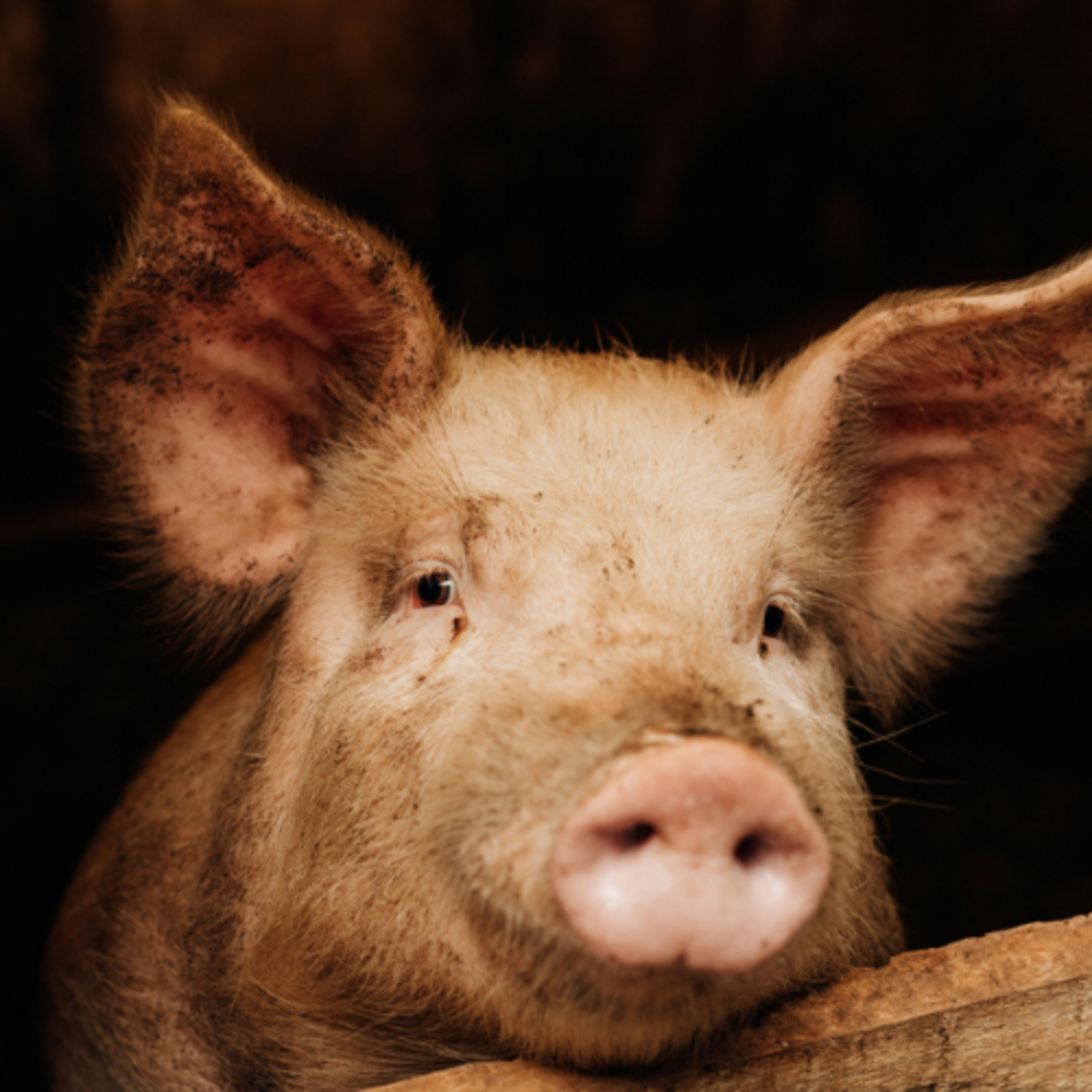
Dr. Dinesh Wadiwe argues that human-animal relationships are fundamentally characterized by violence and domination, not companionship or mutual care. Drawing on political theory and Foucault’s concept of sovereignty, he reveals how systems of power—especially capitalism—use animal resistance to refine exploitation, such as in curved slaughterhouse designs that speed up production while reducing perceived suffering. He challenges the mainstream animal ethics framework that emphasizes animal sentience and capability, asserting instead that the real issue lies in the structural violence embedded in human-animal relations. While welfare measures are a pragmatic response to the reality of domination, Wadiwe warns they often intensify animal suffering by enabling more efficient and scaled exploitation. He emphasizes that animal resistance—like chickens scratching or pecking on slaughter lines—is a form of agency and struggle, directly challenging human control. Despite emerging research into animal communication, Wadiwe cautions that such efforts often serve capitalist interests rather than dismantling domination. His core message is that true ethical change requires rejecting the myth of animal passivity and confronting the banality of everyday violence, such as a small bird confined in a shop cage with no visible purpose or connection to human life. This experience exemplifies how systemic violence is normalized and overlooked, urging society to imagine lives without such exploitation.
Welcome to Quartz of the Living.
Today we have with us Dr. Dinesh Wadiwe, an associate professor in human rights and social
legal studies with a background in social and political theory.
Dinesh is an active critical animal studies scholar and also has extensive research experience
in disability rights.
He is author of the war against animals and animals and capital.
Dinesh is also co-editor with Matthew Crullow of Foucault and Animals and Dinesh is also
a disability rights researcher and was part of a team of researchers who have produced
two reports for the Australian Disability Royal Commission.
Thank you so much for joining us Dr. Wadiwe, it's an immense honour to have you as part
of the Quartz of the Living podcast.
Thank you so much for having me on this.
To begin with, we would love to hear a little bit about your journey.
But for some of the early experiences and encounters or rather questions that drew you towards
thinking so deeply about animals, violence, capital and political theory.
Thank you so much for the question.
In some ways it was an accident that I started thinking about animals as an academic.
I had always personally been interested in the treatment of animals and as a young person
was quite horrified on a personal level about some of the ways that we treated animals
and quite early as a teenager I decided to become a vegetarian, I started to question
lots of the ways that animals were long treated.
However, I never made the link in terms of my academic or theoretical work until much
later.
When I was writing my PhD, my PhD was focused on how states had evolved in the use of violence
in the 20th century, so there was a much more standard political theory thesis.
And in the midst of that I spent a lot of time analysing the evolution of torture techniques
in the 20th century.
But somewhere along the line in doing that work, I started to notice that lots of the horrible
ways that we have devised to treat humans overlap with the horrible ways that we treat animals.
And for example, I started to see that there were some shared logics behind some of the
torture techniques I was reading about in cases of human detention.
There's a shared logic between that and some of the ways that animals were treated in
animal agriculture.
And this started me on a journey towards thinking about human engagement with animals.
And in some ways it helped to link this personal discomfort that I had around how we treat
animals with this theoretical set of questions that were emerging for me around our society
encourages the animals to add a structure to that.
Thank you so much for that response, Dr. Vadiville.
And what you spoke about about how humans have been interacting with animals.
One of the, you know, the focus areas of this season of quotes of the living has been
neighborly encounters.
And we are thinking about neighborly encounters beyond animals living in our cities, but also
the intimate ways in which we encounter animals in our daily lives.
And I recall that in your work on war against animals, you describe the live hand.
You talk about chickens on the slaughter line who scratch, peck, and sometimes defecate
on workers.
And you also invite us to think of floods, fires, and other forms of disruptions that you
think of as resistance.
And there have been some arguments about how these acts are often futile, but you insist
that they are still acts of struggle and resistance that animals are never really simply passive.
So I'd like to ask, how do you think this attention to resistance should reshape our ethical
vocabulary?
Because when we recognize resistance, does it place a different kind of obligation on us
than in terms of what violence or what violence is, we allow ourselves to commit against animals?
I came at the question of resistance as a political theorist, and I was interested in resistance
as a political way to describe the insubordination of beings towards power.
In this respect, I think resistance is useful for a vocabulary, and it's one that's different
from lots of the vocabulary that attends animal ethics generally.
And one way I'd like to think about this is that animal rights theory is perhaps quite
unique in that it was born in its modern incarnation, in its prominent mainstream articulation.
It was born in analytic philosophy departments, and largely shaped by questions around from
moral philosophy about what is the appropriate or responsible ways we should act in relation
to animals who we regard as sentient, as intelligent, as having worlds or lives or emotions
of their own.
That led to a certain vocabulary that has shaped contemporary animal rights philosophy and
ethics, and that's largely been a vocabulary that's interested in assessing the capabilities
of animals in relation to their capacity to suffer or their capacity for intelligence.
And to accord rights or recognition based upon that recognition.
For me as a political theorist, I'm less interested in those conversations in moral philosophy,
though I think they're important.
We're much more interested in questions around power, violence, justice, and institutions.
Resistance for me is a useful word because it moves the frame of our discussion to thinking
about the relationships of power that shape animal lives, the way that violence and domination
cooperate to shape the outcomes and perspectives or opportunities for animals.
But also the way that animals might exercise agency within these Five Sessings.
One reason that resistance is a useful word for me is that in some ways it doesn't have
to get into and debate over the extent to which animals can be set to suffer or are intelligent.
We can actually witness the way that animals resist in particular kinds of ways, and in
this way, we can tell us that this phenomenon directly tells us about the ways that animals
interact with our engagement within.
So it tells us directly about the agency, if you like, of animals themselves.
So for that reason I found it very useful, but I've also found it useful in a quite direct
sense because much of my work tries to theorize the epistemic violence that we apply to animals
when we think about them.
And what I mean by that is the way that our knowledge systems cooperate to silence or
prevent the perspectives of animals from interfering with the ways that we would like
to use them.
Animal resistance, in my view, directly responds to this subjective misconception that we have.
And that's because, in my view, when animals resist, they are directly to describe or pushing
their will onto us, including their will to live despite our will or a general human
will to make animals die or suffer for our own purposes.
So from this perspective, I think resistance is really useful because in some ways it
tells us directly that animals are speaking to us.
Animals are directly resisting our utilization of them and telling us that they have their
own lives, they have their own desire to not be used, to not die or not suffer in relation
to our demand to make use of them.
I remember when I was reading your work and the points of resistance, often I guess in
many situations when we think of non-human others and more than human others, we see visceral
images of them in pain, often to a lay person it seems, the emotions of fear or the emotions
of their animal is perhaps not understanding what is happening to them kind of passes off
and you feel some sympathy, but when that framing of resistance, at least when I read it
for the first time in your work, it really got me thinking exactly about the word that you
mentioned about im subordination and then what that means for our ethical response.
And I think exactly on what you said that it shows that they have their own desires and
their will to live.
And I think my next question is then also something that you
mentioned in a larger sense in your work, which is that how
resistance is paradoxically also central to systems of capitalist
production. And I think this became quite clear during the
COVID pandemic in a more human sense when so quickly and easily
the world world shifted to Zoom calls and work from home
norms. But essentially the fact that workers engage in quite
quitting and animals develop diseases or resist confinement
in different ways. And often then in response, different
capitalist processes adapts to this through antibiotics,
genetic engineering, and much more sophisticated technologies.
So then for me, at least this was suggesting that this very
act of resistance is almost a catch 22 because it's providing
capital with opportunities for innovation and generating newer
and more sinister, more harmful ways of domination. So what
is this dialectic? What does this dialectic mean for you? How
do you understand this interplay between resistance and
capital is just this, capital is very resistant ability to
constantly adapt to this and be more in genuine in the
process.
That's a great question and very interesting. And I'll say
upfront that I don't have all the answers to this
question, though I could speculate. And in some ways, I
think we can break the question down into firstly,
understanding what is this process by which production
processes or capitalism itself leaps on the resistance of
beings to work and transforms that resistance into value
producing activity. So that's one question. The second is,
what do we do about it? So they're two different parts of
that question. Just in relation to the first point, there are
lots of examples within animal agriculture broadly where the
resistance of animals is left upon by production processes
as a source of creativity. And this to me, I find quite, it's
quite insidious in some ways to think about. And maybe to
give you one example, and it's an example that I give in
the introduction to the war against animals is the
introduction of curved corals into slaughterhouses. So
traditionally, traditional solar houses had a straight
shoot that led animals to the stun gun or to the space of
slaughter. And no surprise animal agriculture producers found
that when you have a direct shoot to the side of slaughter,
animals to see what is coming, and they tend to halt or
walk or slow down heading towards the shoot because, of course,
animals can perceive either individually or collectively that
this is not a place they want to go. This led animal agriculture
scientists to develop more efficient means of feeding
animals into slaughter shoots, and this led to the
development of curved corals. So these were shoots that had
gentle curves that obscured from site, the final destination.
What this meant is that animals could more smoothly move
through those praels and not perceive what was going to
happen, and it led to speeding up production in those sites
where this is implemented. In this sense, actually, we could
read this as an example of the way in which the resistance
of animals themselves is co-opted by the production process to
produce more efficient forms of production. So in this
case of the curve grow, we can see how the resistance of
animals themselves is co-opted by capitalism. It leads to the
attempt to counter that resistance and the creation of
production techniques that actually prove more efficient
for containing, killing, making animals suffer. In this
respect, unwittingly, the resistance of animals is co-produces
the means of more efficient production that lead to
their demise more quickly. And to me, this is in a way
indicative of the way that the capitalist production process
works, which is to constantly innovate to find ways to
reduce average labour times, including by quelling the
resistance of beings to that labour itself. So we can apply
this to humans, we can apply this to animals as well. In
terms of what do we do about this? So again, I think what
was interesting about the question is, well, if resistance is
always countered by capitalism, how do we escape this? To
an extent, I think this tells us something about the way
that capitalist production processes are complicit with the
horrific violence we see against both animals, but also
humans, boiling. To me, this is a lesson about what does it
mean to think about production as a genuine reciprocal
form of co-production, rather than the parasitic form of
production that we find on the capitalism. So this is why in
some of my work, I distinctly link the project of animal
liberation with deliberation of all of us from capitalism
as an economic system. In my view, capitalism as an
economic system is parasitic in nature. It leaps upon life,
it sets that life dry in order to make money. And we see
this directly in an unlikely culture. This is very different
from imagining a form of production where beings can
centrally co-produce to produce flourishing that is
enjoyed by everybody in the production faceless. And that
to me is a very different form of economy and one that we're
a long way off from imagining in terms of our relations
with non-human animals. Thank you. Thank you so much,
Dr. Wadewell. I think just taking from your last point,
of capital being this very blood-sucking parasitic
process and how liberation for animals would mean liberation
for all in some sense. I'm just going back to something
which you said, right at the outset, right when we started
today's conversation around the shared logics of torture.
And I also remember somewhere in your work that you've
mentioned that while there are many logics which, of course,
the violence against animals is also shared by human
counterparts. I know from the perspective where I'm sitting
in India, Dalits often religious minorities, of course,
gender-based violence. There's a lot of parallels in that sense.
But I think somewhere you've also written that there is a
certain uniqueness which faces the brutality which is
mattered out towards animals. And the question that I want
to actually ask from this, because when you were talking about
resistance, the idea was they are also expressing their
desire to live and their will to live. And in that sense, they
have their own complex rich lives, right? And so much of how we
think of them is like the other, like their animalities is
outside of us and we are human in that sense and also human
juxtaposed against them. But I'm, I'm trying to go to try and
complicate this a little bit. School speaks about the concept
of the Umwelt, right? And he mentioned he gives the example
of the tick. What I understood broadly from that is the fact
that when some animals are so in many ways constrained by
their environment, that when certain specific triggers are
present in the environment, that they will automatically
respond to it. And of course, in the, in the example of the
tick that was the smell of butic acid on mammalian skin, the warmth
of blood, the feel of hairless skin. And the fact that a tick
can wait years suspended in this state till those specific
triggers appear. Now, when I was thinking of that in my own
terms, right? There could be some triggers, for example, if the
weather outside is, is beautiful, and I'm almost called out
in a way to go outside and experience that. But
let's say if I have this kind of recording, then I can control
myself, so to speak, to not do that. And then going to how
the difference, the, the differentiation which you touch upon in
your book about, high triggers, different conceptions of this.
For me, this was reaching or pointing towards some,
some state of difference, which was almost making it seem that
because human beings have this larger control of how they choose to
respond to the larger world, there is a sense of differentiation,
there is a sense of superiority in in many ways, just to just to play
devil's advocate. What is your sense of of this, this conception
or this idea of um belt and the specific triggers which which come from it?
I think it's a really great question, and I guess my starting point is to immediately
want to disarm the idea that we can understand what animals perceive and understand and that
there's something magical or unique about the way that humans understand the world that
escapes animals. And that to me is often the starting point of my word, in that I wouldn't
start with a strong claim that there's something special about humans that separates us in
a fundamental way from animals. When Bonox School makes this claim about the tick being
tied to the environment in some way, and as you mentioned, this is read by a gambler through
quite a go, and how to make the observation, or try to suggest it towards the idea that
there's something fundamentally different about design or this human perception compared
to the tick. And in that view, there's humans have a kind of a kind of being that always involves
understanding, which means a kind of distance from the environment and a capacity to engage or
praise the environment in a way that animals do not have. I think for me it's actually much more
interesting to travel this separation. And that's because firstly, as we know, there's almost
daily evidence from scientists, which says that to our surprise, all these many animals who
we've assumed do not have these capacities actually do. They have in way, they have capacities
in ways that we've never understood, and we've continually misunderstood and underestimated
them. Secondly, I just think we, using a starting point where we assume that we don't
understand what animals perceive is actually very useful for just renovating both how we
see animals and also how we see ourselves. So in the case of Bonox School's tick, it's
certainly true that the tick, like all beings, including humans, find themselves in an environment
that they respond to. But we don't know what the tick perceives, or this pace by which they
perceive, or whether the tick has some kind of understanding of the environment in the way that
we might understand humans as having an understanding of the environment. Similarly, I think one of
the things that that distinction does is that it assumes that humans do not have an
um belt, that humans do not, their being is not structured by an immediate environment
in the same way that the tick is. And actually, I think there's every reason to believe that
humans are the same, that we obviously have different capacities, different ways of seeing
or sensing, and maybe different ways of understanding. But this is also a being that is shaped
by environments as well. So I guess I would just say that, and this is, this is my reading
of some of those scholars, Bonox School, or a gambit, or a hi-degas discussion. My reading
would be, I think at this point, we have every reason to just complicate its hard distinction
between the human and the animal, the human and the insect, and lead with a much more humble
proposal that perhaps we don't, we certainly know that we are different from these other
beings, but perhaps we don't understand fully how those beings exist with their environments.
And the extent to which they, those beings understand or can reflect on those environments,
even if they, this reflection looks completely different to the way that humans reflect
on the environments, in a way that we understand.
Thank you for that Dr. Vadi Veel. Actually, trying in a couple of other responses that
you've just shared with us, I want to also take us to the larger framing that you've
made of the human and animal relationships, and the kind of situation that we find ourselves
in, in that relationship, because one of the significant departures in your work is
from Donna Haravi's framing of human and animal relationships.
And she emphasizes companionship, the companion species manifesto, and the transformative interactions
that occur in what she calls contact zones. She also talks about how we constantly shape
unshape and reshape each other in relationships, characterized by mutual becoming.
And there is a sort of a negotiation between these two, you know, set of lives.
If we follow Haravi, the ethical response that emerges from this relational process, and
the main stay is one of companionship, kinship, love, and mutual care.
But I think in your book, the main stay that you have described is war and constant violence.
It's deeply difficult to disagree with that framing, because simply because of my personal
experiences also when we go out into the city, and see the sort of deep violence that is
needed out to more than human lives, whether animals, birds, insects, plants, etc.
It's really difficult to contest the argument that you make about the constant and the deep
nature of violence.
And while Haravi does acknowledge that violence, she does not frame it as a war.
Can you speak more about this departure? And what do you see as the limitations of the
companionship framework? And why do you think it is essential to name the relationship
as one of war rather than one of fraught but generative entanglement?
And it's a really perceptive one and interesting
to engage with. And in some ways, it's useful for me to point out that I only partially
differ from Haravi, though I differ in a very important sense.
So let me just say upfront that I think Haravi produces, has produced a very useful
corrective pointing out that our engagements with animals are relational. And these relational
engagements are co-shaping to an extent. So meaning that this isn't about a one-way
engagement where humans tell animals how to be and animals don't shape us. So Haravi
usually points out that actually if we look at human animal engagements, they're co-shaping
and they're relational. And I think that I actually don't contest this aspect of Haravi's
analysis. And I'd say actually it's highly useful. And in some ways this links with Haravi's
important contributions within post-humanism or science and technology studies where she
has highlighted the way that non-human agents constantly shape what it means to be human.
Where I do depart though is firstly in wanting to highlight that probably the most important
relation that we have with animals is violence. And I want to say that actually violence is
a relation, but it's a special relation. And it's one that actually is worth documenting
and I guess my work tries to document that particular kind of relation. So we think
about violence. The nature of violence as a relation is it's non-consensuality. So
how we define violence could vary. So some people would define it as a harmful relation.
I'm going to say that what shapes violence or what makes violence violence is a non-reciprocal
strictly non-consensual relationship. I would also note that violence, violent relationships
are co-shaping, right? So they have the capacity to shape both sides of that violent relationship.
And they also are multilateral relations or bilateral relations in so far as those who
experience violence aren't simply passive victims. There are also beings who resist
that violence. And that resistance of that violence also shapes the actions of the perpetrator.
So to me that's important to describe all that to make clear that actually violence is
a relation and that we need more time to describe what is unique about the way that relationality
and co-shaping happens in violent relationships. My objection to how we work in relation to
companionship isn't so much that how our way outlines the nature of these relationships.
her shaping forms of relationality, it's just that violence is missing from this and the
way that violence produces regimes of domination is missing from the concrete.
To me, I find this really hard to reconcile just because, as you pointed out, I think it's
empirically incontestable that most of our direct, mainstay relations with animals involve
violence, which aims to establish a relationship of domination.
That to me, it just seems incontestable, and I think it's interesting in the 10 years
since the war against animals was published.
Nobody's really written a critique to say, "Danesh, you're wrong.
There are all these examples of peaceable, companionship relationships out there that would
contest the idea that there's a war against animals."
Actually, no one's really written this, and I don't mean to say this to say, "I'm definitively
right," is really to just say, "I think actually there's something empirically correct
in the idea that generally, if we look at most human animal relations that are direct,
we are talking about relationships of domination."
Even when we look at those relationships such as companion animal relationships, say with
dogs and cats, it's very hard to contest the fact that in most cases, these relationships
are very directly about humans making use of animal lives for their own ends and applying
forms of violence such as microchipping, doing sexing, control over food, control over movement
in order to generate human benefit, that none of these controls are about animals themselves.
I make all these comments to just say that to me, the main form of relationality we need
to understand when it comes to human animal relations is violence and the way that particular
violent practices produce relations of domination.
This doesn't take away from the fact that maybe amidst all of this, there are forms
of love and peaceful relationality that do happen.
For example, I know lots of animal advocates who rescue animals from horrible situations
and try to give those animals homes that feel completely different from the violence that
they experience before.
I don't want to say that those relationships don't happen, but I think again, if we look
at it broadly, most of our relationships with animals involve violence and domination,
and this is why I've, in different work, I've proposed that maybe we'd be better rather
talk about contact zones, maybe we'd be better talking about conflict zones, which to
me is actually a more accurate description of most relations between humans and animals.
Thank you so much for that response, and as I mentioned, I think it's really difficult
to disagree with that framing.
Although I do understand that there are some scholars who have spoken about that sort
of a deep relational way of being with more than human life forms, at the outset, I can
think of scholars like Radhika Gowentrachin who have spoken about the goat who died and
got sacrificed for family, and similarly, had a way to suggest that humans must learn
to kill responsibility and talk about practices like Jallikatta, cockfighting, or other animal
sports as intense sites of interconnection, learning and cross-species invention.
At the same time, she also speaks about animals and other more than human life in laboratories
as significantly unfree, but she curiously also talks about some degrees of freedom which
resists a simple category of passive victim, which is often allocated to different animals.
So I understand that you spoke about contact zones as conflict zones, but I'd like to
understand your framing of these practices a bit better, and do you see where something
other than war might be taking place, or do you think these instances deepen the logic
of that war, even when, as you mentioned, there might be involvement of companionship
and rescue from otherwise deeply violent histories.
I want to deepen that explanation a bit more.
That's a great question, and I want to preface my response by saying that as scholars and
activists, we pick particular frames because they help us to explain the world, and they
help us to move forward in terms of achieving transformational change.
In my view, Harrowway with that book in Species Me, selects a particular frame quite strategically,
and she's actually upfront about this, so she says upfront that we could use a narrative
that's more polarizing, such as the narrative from Animal Rights Theory, which would suggest
that humans are perpetrators and animals of victims, and that this is a one-way parallelation
and it's morally wrong.
Harrowway says, "Well, this misses some complexity," and she's much more interested in developing
a framework that has capacity to see co-shaping relations.
Actually, there's a really fascinating part of the book where Harrowway talks about draws
from a scholar of colonialism called Mary Louise Pratt and makes an argument that the problem
with a kind of one-way dualistic framing of relations of power like colonialism is that
it misses that actually there's a lot going on in the actual texture of how, say, the colonists
and the native live together, and so she wants to, in a way, produce a different frame
to give us a much more textured understanding.
In the war against animals, I, of course, returned to a more dualistic and structural
frame that tries to really highlight the way that all of these relationships are effectively
relationships of domination.
I could rightly be accused of committing the error that Parrowa describes of creating
this sort of binary logic by which we could understand that by which we could understand
the way that humans relate to animals.
However, one of my concerns with Harrowway's analysis is that I just think it goes too far
in this direction of negating the way that violence and domination shape relations of human
life.
Something I know, actually, in the footnotes of the war against animals, is that the word
violence itself rarely pops up in the work in Harrowway's when species meet.
Although she describes what I would describe as only disturbing violent practices such as
use of animals in experimentation, the word violence itself does not come up.
And to me, this is both strategic and worrying.
It's strategic because it allows Harrowway to produce a particular narrative around human
animal relations.
I'm a narrative of co-working and co-relationality mutual dependence, mutual co-shoping.
But this, of course, in some ways is a political move because it denies the reality of the
violence and domination that animals experience.
I say it's political because actually there's a long history of this with social movements
that have dealt with human forms of oppression.
The use of the word violence is always political.
And it's political because when you say that something is violent, it demands a particular
response that previously you wouldn't have had to engage with.
So let me give you one concrete example, for in many legal systems historically, women
could experience forms of violence from their partners, their husbands in marriage, and
this be not treated as violence under the law.
As partly as a result of lots of agitation from social movements, particularly feminist
movements, we've seen legal systems increasingly acknowledge that forms of interpersonal violence
that could be domestic or sexual violence within the context of marriage are actually violence.
In my view, here violence serves a particular purpose in mobilising a political worldview
and political action and not calling something violence in this case is also political.
It allows for forms of domination to occur without it being challenged.
In this respect, I think for me, in this book, the War against Animals, it was very useful
to. to deliberately describe violence when I see it,
to deliberately see forms of non-consensual,
non-reciprocity as examples of violence,
and to describe the way that these contribute
to systems of domination.
So when Holloway in that text describes these scenes
that as forms of co-shading such as experiments
or forms of rigorous, disappointing of dogs for dog shows,
I recognize and respect to an extent what she's trying to do.
But from my perspective,
there's a political purpose in actually naming violence
as violence because it allows us to actually be frank
about the relations of power that shape those entanglements
and also allows us to imagine how can we move past
that form of domination and imagine forms of relations
that are genuinely about deprivation and freedom.
- Thank you for that, Dr. Wadiweil.
And I want to stick with and stay with what you spoke about
about naming that violence which disrupts apparently
feasible or peaceful relationships.
You spoke about it in the context of gender like women
and men in marriage, but also when you speak about it
in animals and the context of human animal relationships.
I think one of the most powerful things that I read
has been the sentence that you use in what against animals
about how sovereignty guarantees an unending flow of pleasure
and it lays in place in almost absurd economy of greed.
And for some of us who may not be familiar with that argument
in the context of Foucault's conceptualization of war
and sovereignty in the context of animals,
I would love for you to elaborate that a bit more
about why you talk about this as an unending flow of pleasure
in an absurd economy.
- Thank you so much.
Yes, I'm happy to share.
How did the war against animals was shaped
by a set of lectures Foucault gave at the College of France,
Michelle Foucault, the French philosopher.
Okay, but the College of France, I think it's 1976 to 1977.
So these are published under the English Title Society
must be defended.
And in those lectures Foucault asks this question
about political sovereignty.
So it's interested in the ways that states,
nation states form and claim a legitimate right to rule
which we might fall for right to sovereignty.
He notes that lots of the liberal discourse on sovereignty
imagines that it is through some sort of social contract
that sovereign nation state sovereignty
gains its legitimacy.
So if you read pubs or Rousseau,
you'll get this idea that the sovereignty of nation states
is founded upon the implicit social agreement
of the constituents of those policies.
And this is usually described as something
like a social contract against this Foucault says,
well, the reality of the foundation of the nation states
as we know was nothing about fair rational or just processes,
but instead actually histories of violence,
this possession, oppression, slavery, theft,
you name it, war, destruction.
Like it's actually everything that is unjust
is what has founded most modern nation states.
As Foucault points out actually in some ways
maybe it's just sort of think about the foundation
of sovereignty through the lens of war.
Partly Foucault draws on the German theorist of war,
Karl von Krasovitz, and von Krasovitz puts for the proposal
that war is policy or politics pursued by other means.
So when Krasovitz says this, what he's saying is that
it's the moment that diplomacy or politics breaks down
that people pick up guns and fight instead
of trying to talk through their differences.
Foucault inverts this and he says,
well if war is policy or politics pursued by other means,
then surely politics is war pursued by other means.
So surely politics is about the embedding of war
like relations within the political sphere
that is that are largely hidden
so they don't exist in the form of outright hostilities.
He uses this analogy to say in some ways
this is precisely what sovereignty of the nation state
refers to.
In most nation states, it is processes that are unfair
or about war, dispossession, slavery, colonization
that lead to the foundation of that nation state.
And usually sovereignty is basically an expression
of the winners of that war
and the rights that they claim over the losers of that war.
I am speaking to from Australia, Sydney Australia
and this is a settler colonial nation
where directly we have this experience
of the foundation of sovereignty.
The British came and annexed this territory.
They stole sovereignty from indigenous people
and declared sovereignty for themselves.
And in this declaration of sovereignty pretended
that indigenous people were never here
and never had rights to the land before.
So in a sense for coast describing actual
real historical processes here,
these also describing the way that
in a sense sovereignty sets the frame
for the rights that beings experience
within that sovereign domain.
Importantly, it creates this relationship
where the victors end up continuing to enjoy
the spoils of the war and sovereignty is basically
becomes the political agreement to enable
this continual enjoyment of plunder
or what I call in the war against animals,
this flow of pleasures that arises
from that declaration of sovereignty.
Now all of this background is background to
how I use this argument in the war against animals
because when I read this section from Foucault,
I immediately thought, well, isn't that what we did to animals?
Didn't we create mass scale forms of violence
to ensure that animals were conformed to our will?
And then we declared ourselves through our own
own hubris as sovereigns.
We imagined that we are the supreme creatures on the planet
and that it is our right, our entitlement
to do these things to other beings.
And we similarly imagined actually,
not only that we have a right to use animals in this way,
but we also imagined in this whole context
that animals themselves either don't care
about the way that we use them
or even in some cases imagined that they want us
to use them in this way.
They want us to treat them with violence
in order to meet our own ends.
Is for this reason that I would emphasize
what I would call the epistemic dimension
of our war against animals.
It is not just that we use physical force against animals
for to make those beings comply to our wills.
It's also that there's a knowledge dimension
where we imagined that we treat animals kindly
that the ways that we use animals are the things
that they would themselves want.
So there's this sort of deception going on here.
And this, by the way, is completely in conformity
with the way that Michelle Foucault saw sovereignty
because he would say that actually the way
that sovereignty works is that those who declare sovereignty
will declare that peace has arrived
and they'll install war like violence within sovereign
arrangements in order to ensure that they continue
to receive the benefits of that claim of sovereignty.
But all the while pretending that war isn't happening
and that to me seems precisely the way
that we engage with animals.
We, at the same time as we pretend that we are kind
to animals that we love animals,
we direct the most horrific violence against billions,
if not trillions of animals quietly,
as if these two things are completely compatible.
And that to me is the epistemic dimension of that violence.
- Thank you.
And given that how you're framing how sovereignty
is presently framed and the impact that it has
on any possible ethical response,
then the fact that our ethical systems can then only regulate
or mitigate the worst excesses.
And perhaps sometimes not even that.
And then even in your book when you touch upon the fact
that that essentially leaves us with the welfare regime
and I think you speak about the five freedoms and so on.
My question then is that what is your take on
welfareism generally as an approach
because so much of the world,
work that is happening, the good work, the somewhat lukewarm work and so on, is in many
ways happening under this welfare regime. And I think just one example that I would like
to give something which is very alive for me is a couple of months back, the Supreme
Court in India had passed an order around stray dogs in the national capital. And the
order was quite abrupt, it essentially said that all these dogs should be rounded up.
What I found quite remarkable is what transpired after the order is very ordinary everyday
citizens who are usually not really concerned with the larger political dictates of the
Supreme Court as such, came out on the road and in their own small and big ways supported
there, you know, they're more than human others. I'm just wondering then as a strategy
as an as an operative, what do you feel about welfareism? Do you feel as a system, it
is fully, fully bleak and doomed? Or do you feel that there could be crevices or there
there's and I know it's not a simplistic yes or no answer, but generally what is your
sense on on this? I think that's that's a great question and one thing I'd say is that
the history of let's say animal rights theory or animal rights law has often seen a distinction
between rights and welfare. So it's been this ongoing tension and the animal rights people
say we don't like welfare, the welfare people say you animal rights people are unrealistic
and there's this ongoing tension. I don't really play into that tension and though I think
in a way I think we've got to be careful about welfare and I'll talk about why and it's
like, so just in relation to not playing into the tension, in some ways I would say that
welfare is the most rational response given the reality of the structural relations we have
with animals. So if we follow through the face or side advance in the book, we humans
have declared a kind of sovereignty over animals. This sovereignty is committed to absolute
continuing violence against animals that is almost completely unchecked by law. From that
perspective, it's probably rational for us to argue that we should provide minimal welfare
protections for the ways that we use animals. In line with the thesis I've put forward
in the book, sovereignty in some ways here precedes ethics. So we have already declared
that we are superior and we have a right to exercise violence towards animals and therefore
probably the most rational response is well, can we at least talk about how do we mitigate
the worst excesses that we do? The challenge of course with welfare is that in some respects
I think welfare has led to the intensification of the use of animals in a variety of different
systems. So one reason I think we should be careful around welfare is that there is evidence
that successful forms of welfare provision work hand in hand with the intensification
of animal production. Earlier in the interview I gave the example of curved corrals used
in slaughterhouses which tried to deal with the problems of having a straight shoot where
animals would slow up or start leading to slaughter and this would obviously slow production.
curved corrals served two functions. One was to reduce the suffering or trauma of animals
as they approach the stun gun but it also led to the speeding up for production processes.
In some respects I'd say that many of the most successful forms of welfare provision
have also worked hand in hand with intense fine production and this is because welfare
largely does not say anything about whether we should use animals or not and does not
stipulate that we should reduce the number of animals that we use, not in a direct or
necessary sense. So here I want to just flag that there are some dangers around welfare.
I want to firstly just say I don't want to have reproduced the framing of animal rights
first welfare because I don't know whether it's helpful. I do want to say that in many
respects given the totality of violence that animals experience and the structural nature
of that welfare is in some way the kind of rational response to that the limits of what
we can do. That said lots of welfare risk provisions in my view work hand in hand with
the intensification of production. So in the kind of global scale of things although
they might reduce suffering for individual animals they probably helped to make to
massify the production of animals and speed up the utilization of those beings.
All of that said I would also say that maybe it is conceivable that some forms of welfare
can work to countering the war against animals. So let me give you one example. Globally
there is a race to intensify production within intensive production systems. And one
of the ways that this has done is through increasing line speeds. So if you can speed
up the process of stainless slaughterhouse moving the animal through to slaughter and then
processing their bodies then this will lead to increased production. This is actually a
side of tension for a range of different constituencies human social movements. So one
is in relation to human laborers. So typically when you speed up production then the rights
of workers goes down there. And that's because you have increased rates of injury in production
lines because workers are having to keep up with an inhuman place of production. It also
leads to of course the intensive sites of production the continuing environmental disaster
that is unfolding around and like a culture. So the more you speed up production the more
those environmental harms will happen. But to me there's actually this curious opportunity
I think for welfare is performed which is about slowing down production processes. Now
this in saying that in slowing down in a campaign for slowing down line speeds. I'm not
at all saying that this will end animal production. So it's it's distinctly a welfare is claim.
But in my view putting forward a view that we should slow down line speeds in intensive
animal agriculture. To me this is actually a welfare is proposal that works directly against
the capitalist production processes that would that's that producing a nightmare in relation
to our treatment of animals. So this that's what example of something that to me highlights
that a welfare is performed isn't by isn't by definition necessarily incapable of standing
in the way of human domination of animals. Potentially their forms of welfare is claims that take
us along the road towards trying to get rid of these horrific bonds in production. And
that to me seems to be an opportunity that we should expose our inhabitants.
Thank you so much. I just want to borrow that example of for temple grandins curve Coral
and perhaps it's an unfair comparison the one that I'm about to make but much like how
grandins curve Coral is is is in many ways considered to be such a humane form of technology
but essentially leading the animal animals to a willful death. I feel more contemporary
um like there's a rise in intersection of different etologists and conservation scientists
and animal communication research coming together. And there are these projects like project
setty which is studying situation communication and then there's the elephant acoustics project
in India which is trying to document what different elephants are trying to communicate
with each other and I'm sure that like globally there must be a range of such other things.
I want to ask you what is your reading of this on one hand it it seems exciting to understand
when we will be finally be able to understand in some more detail and will that change
our response. On the other hand at least I am filled with the sense of dread still because
what if much like the curved Coral we we feel like they are not feeling pain like how
human beings are feeling pain so not only can we continue our our present relationship
but we can almost exacerbate it. But what is your reading of these developments do you
think these possibilities of learning more about animals will change our response or do
you think they will end up doing much of the harm in a much more dreadful way.
This is a great question and I wish I had a crystal ball so I could say what the effect
of this research will be in. I would say that
For the reasons you've named, there are lots of dangers around this race mode.
So firstly, as you point out, lots of sometimes well-meaning research, I think, has led to
forms of intensification in our domination of animals.
So to give you an example, at the moment, there's lots of research happening around trying
to determine animal emotion, including use of smart technologies and AI to try and work
out what do animals feel, and can we use this knowledge to improve the way that animals
are treated within animal agriculture?
The danger, of course, is that all that will happen is that we'll find the most efficient
forms of environmental enrichment, or food technology, or lighting, or whatever it is,
that allows for production processes to continue doing what they're doing, which is intensifying
and speed up.
And I don't see any evidence to the contrary.
So that's to me one danger.
The second challenge, I think, in all of this, is that we also have this political problem
that we apparently need more evidence that animals feel they suffer, they don't like what
we do to them in order for us to prompt political change.
And often the justification for doing more research with animals is to try and understand
and produce evidence so we can make change.
But I also have to ask, why do we need more evidence for this?
So this to me seems strange, right? So already we have this structure of politics that we
need to continually prove that animals feel that they have worlds, that they have a capacity
for suffering, they have intelligence, they have emotional bonds with others, when surely
it should be self-evident by now.
And certainly for lots of the animals we use in a direct sense in animal agriculture or
in zoos, we know enough to know that we are probably in a safe space to say these beings
do not want to be in the places we put them in.
So this is one concern I have about the research, leaving aside, of course, that whenever we
do research with animals, we're largely talking about interventionist forms of research,
including research that causes harm, in order for us to find out the thing that we probably
already know.
So that to me seems one constraint.
That all said though, again, I want to just point out that this is a complex story and
certainly there's lots of cases where we've seen changes in the way that the public perceives
and animals as a result of research that is emerging.
And so to give you an example in the last five to ten years, there's been a lot of interest
in the lives of the octopus.
And that's been largely driven by new discoveries in science, which has helped to highlight and
create a public imagination around these beings that maybe has been useful protection.
So again, I don't want to write off all of this research, but I do feel like there's
firstly, this problem of power and the question of why do we need more research?
And secondly, this historical relationship between research and the intensification of
production, which to me, we need to take seriously because that has been the history.
Thank you for that, Dr. Wadiweil.
And I totally agree with that question that rhetoric that you've asked about why do we
need more research?
And I know that some of the previous guests that we have had at this podcast have precisely
asked the same question.
And I think the chapter on the live hand in your book also basically talks about that,
right?
In the many ways in which chickens whom we or like the popular imagination considers as unintelligent
and easily dispensable, having no life in that way, really talks about how resistance happens
and how they are perceiving the live hand.
So I know that you have taken some powerful examples during this conversation, but also
in your writings.
If you could leave listeners with one powerful or haunting image or story about animals,
which they could really carry with them beyond this conversation, I'd love to know what
it is.
I was recently in a small corner store near where I lived, so I lived in Sydney, Australia.
And this corner store is a small convenience store.
In the counter, mounted up near the ceiling was a small cage, about 30 centimeters cubed.
And in it was a small bird, I presume a finch.
The cage was positioned in such a way that this bird had no direct eye to eye contact with
any humans in the shop.
And as far as I could see, the birds spent their days and their lifetime in this cage up
above the shop of near the ceiling.
What struck me about this whole scene was firstly its pointlessness.
I still don't understand what putting this bird in a cage contributed to the shop owners
or the customers who came in, and obviously for the bird themselves, this lifetime of
solitary, pointless confinement didn't contribute anything to their flourishing.
And to me, I think this just highlights what I consider the kind of banality or every
day in us of our war against animals.
It just highlights the way that it is so every day that we almost render it out of sight.
And we accept, even the minimal contributions that animal suffering makes to our own welfare,
we accept this in a way that's almost unspoken, we don't celebrate it, we don't even acknowledge
it, we just take it for granted.
For me, although we could point to lots of horrific ways that we impose cruelty on animals,
I guess I would like to remind people that lots of this conflict is every day, it's right
in front of us and we almost discount it, we don't see it, it's just there and it's taken
for granted, but also it's violence and suffering that doesn't really contribute to our welfare.
It doesn't, we could imagine living without it, and I think there's an important project
for all of us in imagining that, in imagining how could we spare animals, they're suffering
this destruction of the mains of their own flourishing, for what is actually minimal contribution
to our own well-being and flourishing, and can we just imagine lives, economies, societies
without these farms?
Thank you so much for that story, Dr. Varivail, and I think that really speaks to the
grief that you've written about and you have kind of indicated towards in some of your
other work when you refer to your vegan practice as well.
So I really want to thank you for taking all the time for this podcast recording and really
appreciate the responses that you've given, it's been quite an honour to have this conversation
with you, thank you so much.
Thank you so much for both of you, it's been a really lovely conversation and I appreciate
for the focus on the work that been done.
Podcast Summary
Key Points:
Dr. Dinesh Wadiwe’s academic journey began with personal discomfort over animal treatment, later linking it to political theory through the shared logics of human and animal violence.
He argues that animals resist domination in ways that reveal their agency and desire to live, challenging the view of animals as passive or unintelligent.
Resistance is a political concept that exposes the power dynamics in human-animal relations, revealing how violence and domination are embedded in systems like animal agriculture.
Capitalism co-opts animal resistance—such as in curved slaughterhouse corridors—to increase efficiency, demonstrating a paradox where resistance fuels more intense forms of exploitation.
Wadiwe critiques the companionship framework (e.g., Donna Haraway’s) by asserting that most human-animal relations are rooted in violence and domination, not mutual care.
He draws on Foucault’s idea of sovereignty as an “absurd economy of greed” that justifies perpetual violence and epistemic deception—such as claiming animals are passive or happy despite suffering.
Welfare regimes, while offering minimal protections, often intensify animal exploitation and are insufficient in challenging systemic domination.
Emerging animal communication research risks reinforcing domination by serving production efficiency, though some cases have shifted public perception and ethical awareness.
Summary:
Dr. Dinesh Wadiwe argues that human-animal relationships are fundamentally characterized by violence and domination, not companionship or mutual care. Drawing on political theory and Foucault’s concept of sovereignty, he reveals how systems of power—especially capitalism—use animal resistance to refine exploitation, such as in curved slaughterhouse designs that speed up production while reducing perceived suffering.
He challenges the mainstream animal ethics framework that emphasizes animal sentience and capability, asserting instead that the real issue lies in the structural violence embedded in human-animal relations. While welfare measures are a pragmatic response to the reality of domination, Wadiwe warns they often intensify animal suffering by enabling more efficient and scaled exploitation. He emphasizes that animal resistance—like chickens scratching or pecking on slaughter lines—is a form of agency and struggle, directly challenging human control.
Despite emerging research into animal communication, Wadiwe cautions that such efforts often serve capitalist interests rather than dismantling domination. His core message is that true ethical change requires rejecting the myth of animal passivity and confronting the banality of everyday violence, such as a small bird confined in a shop cage with no visible purpose or connection to human life. This experience exemplifies how systemic violence is normalized and overlooked, urging society to imagine lives without such exploitation.
FAQs
Animal resistance is central to my ethical framework because it reveals agency and will to live, challenging the idea that animals are passive. It directly shows that animals resist human domination and assert their own lives, which compels us to reconsider our ethical obligations.
While Haraway emphasizes companionship and mutual becoming, I argue that most human-animal relations are fundamentally rooted in violence and domination. I frame these relationships as 'conflict zones' rather than 'contact zones' to highlight the structural violence and control embedded in our practices.
Capitalism co-opts animal resistance by transforming it into more efficient production methods. For example, curved corrals were developed to reduce animal resistance in slaughterhouses, leading to faster, more intensive production that ultimately increases suffering.
Sovereignty, as theorized by Foucault, enables humans to claim absolute control over animals. This sovereignty is built on violence and the belief that animals either don’t feel pain or desire to be used, creating an epistemic deception that justifies exploitation.
Welfareism provides a limited, rational response given the structural violence against animals, but it often intensifies production and suffering. However, certain welfare initiatives—like slowing down slaughter line speeds—can work against capitalist domination and offer hope for change.
While some research has helped deepen public awareness (like the case of octopuses), much of it serves to justify and intensify animal exploitation. The need for more research to prove animal sentience is politically problematic and often reinforces existing systems of domination.
Chat with AI
Loading...
Pro features
Go deeper with this episode
Unlock creator-grade tools that turn any transcript into show notes and subtitle files.
 PodcastTranscript AI