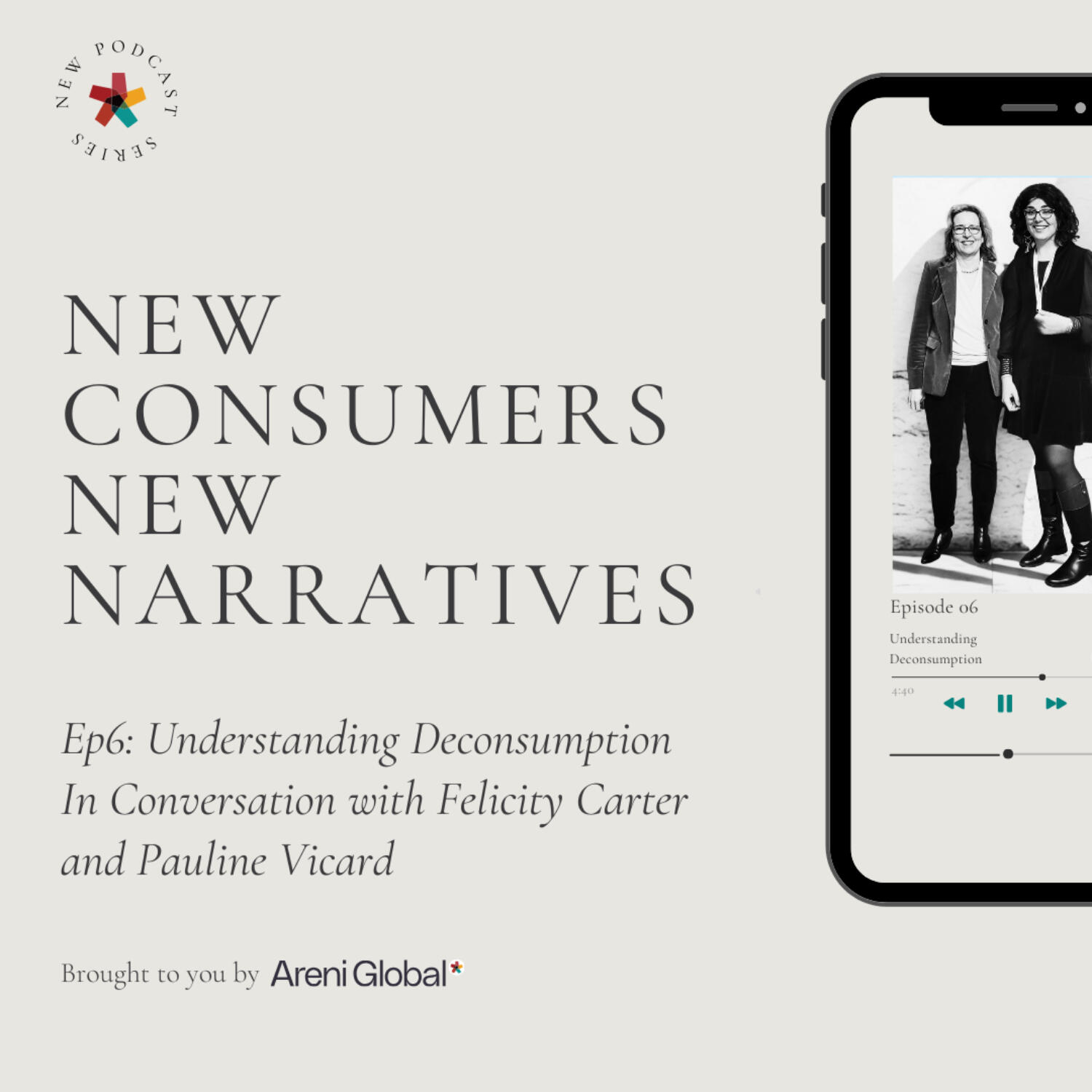
The podcast discusses the imperative for the fine wine sector to engage future consumers amid a global decline in alcohol consumption. Host Pauline Vicard introduces a research-driven exploration of why people are drinking less and the implications for premium wine. The conversation highlights that decreasing consumption is a broad trend influenced by economic uncertainty, demographic changes, health awareness, and evolving social values. While the fine wine segment faces challenges like market polarization, a trust crisis, and high stocks, it is not immune to these forces. The hosts note that economic factors, such as interest rates and currency fluctuations, particularly impact investment-grade wines. They also emphasize the need for the industry to understand new consumer pathways, especially among younger demographics in key global markets, and adapt to a landscape where success may increasingly depend on the ultra-premium segment and innovative engagement strategies.
Any sector that wants to stay relevant must invest in their future consumers, and fine wine is no exception. But everywhere you look now, people are re-evaluating their relationship and attachment to alcohol, wine and food, and redefining our current understanding of luxury, lifestyle and success. What does this all mean for us as an industry, and as an individual brand? How can the fine wine sector engage with the new generation of consumers in a meaningful way in such a change environment? At a rainy global, we believe that complex questions require in-depth research. I am Pauline Vicar, the co-founder and executive director of a rainy global, and in this new podcast series, new consumers and narratives, I am meet marketing industry legends, speak with academics and researchers, and push the doors of private member clubs. Come with me as we discuss the best possible ways for our industry to invest in its future. For this very first episode of 2026, we are keeping our rainy global tradition of looking into our crystal ball and discuss the forces that will shape the year ahead. Only this time, we will focus on answering one key question. Why are people drinking less, and what challenges and opportunities does this create for the fine wine sector in the year ahead? Because for the past 18 months, Felicity Carter and I have done a lot of research work on this very question. Notably for our upcoming rainy global research on your consumers that is coming up in this February, but also for Felicity's own and excellent podcast drinks inside us. We both came up with the same conclusion. The reasons behind global deconsumptions are diverse, complex, and dare I say fascinating. We are of course going to talk about young people and the new generation of consumers in this episode, but not only because decreasing consumption seems to hit every generation. This is a dense topic and therefore this is a dense episode. So we encourage you to subscribe to the rainy global newsletter to get access to the different summaries and insights that we've already published and most importantly to receive your invitation to the launch of our new study in February 2026 with many events happening in Paris, London and online. But for now, let's dive in. Hi Felicity and happy new year. Hi Pauline, nice to see you. I'm so happy to start the year with you. Thank you so much for being here with me today. Well, happy new year and it's always a pleasure to start the year discussing something interesting like this, but before we start talking about people drinking less and why they're drinking less, time for you to talk about what you've been drinking. Did you drink anything interesting over Christmas? Yeah, well, I drank several interesting bottles and you know, I came home to Bergen D.C. of course that included red and whites from my region. But the things that really interested me is a bottle that I took back from China and that was a sparkling wine that was made out of 80% Chardonnay, 12% Pinot Noir and 8% Rice Wine. And that was really something of a conversation starter in my family. So how did the rice wine add to the mix? Well, it's actually quite funny because when you smell it at first, it really smells like a classic metadraditionnel, so like a Pinot Noir Chardonnay kind of blend. And then you've got something which is really more spirity in it. But that really when the wines evolve and when you taste it, that's really what I liked because I really felt in a familiar space, you know, it was Chardonnay, Pinot Noir Sparkling made in traditional, but there was something that was really exotic to me, like something that takes you somewhere. So it was a bit like having one foot here and another foot over there like in two different worlds. So that's really something. And of course, we had the traditional questions about can you put rice wine in wine and part of my family being offended that it could be something so different and part of my family that was really excited about it. And how do you feel about it? Do you think it's a good thing? I really enjoyed it. I mean, that's the thing. I really like drinking it. So that's all for me. That's all there is to it right at the end of the day. I tend to think anything that expands the repertoire is a good thing. If it's done, you know, if it's done well, I think it's all these things are interesting. So speaking of China, you were in China at the end of last year to explore the topic we're going to discuss today, right? Yeah, I spent some time in Asia at the end of last year to conclude the round of exploration we're doing for the study that we are publishing this February. So as you know, this study is about determining where and when do the young fine wine consumers of today are exposed to fine wine for the first time. And from there can we identify patterns that led them from being exposed to becoming a guillibios of fine wine. And so we interviewed a lot of young consumers in Paris, London, New York, but also, and that was my reason for being in Asia in Shanghai's Hong Kong and Singapore. Yeah, I mean, it's a really interesting topic and having worked pretty hard on the report myself, I can assure everyone that the results are very interesting. Very indeed, and I mean, at the risk of sounding not modest at all, but I'll take that risk. I think that some of these results can be quite game-changing for our industry. So I'm very much looking forward to present them in Feb. And we can't yet share too much about those results, but what we can do today is explain the global context and start the year by taking a bird's eye view on what is happening in the world of global alcohol and how it affects us in our segment of premiums fine wine. Yes, and of course, the topic that everybody's been talking about in the past year is the drop in global consumption. So it's not only younger generations that are drinking less, but everyone is drinking less. Yes, and what has been fascinating for us to study is the many reasons and nuances driving this global decline in consumption. There's not, you know, like there's never one single silver bullock for solution. In this case, there's not just one forces of change that drives that. Pauline, are you drinking less or the same? I think me, myself, I'd say I'll drink the same amount, really. My drinking pattern really changed when I move from France to the UK, not in terms of consumption, but in terms of occasion of consumption and therefore the type of wine that I was drinking, and I'm still drinking in the UK, but I don't think in terms of volume and drinking less, if that makes sense. And you? I'm drinking a lot less, but it has to do with changes in age, actually. I just find that it really disrupts my sleep. So I'm one of the people responsible for the drop in wine consumption. Yeah, yeah, so when we take that conversation outside of the two of us, maybe can you start by sharing a couple of numbers on global the consumption? How do we actually know that the world is drinking less? Well, we have quite a lot of data, actually, so let me hit you with it. So the OIV data shows that the world is drinking less than it did in 1961. And over the past decade, per capita alcohol consumption has fallen almost everywhere in the major, and particularly in the major markets that matter for fine wine. So, according to World Health Organization data, the global average dropped from 5.7 litres of pure alcohol per adult in 2010 to 5.5 litres by 2019. Now that's, that sounds like a really cold set of figures, but it's actually quite a dramatic fall. So in the key US market, Gallup found that only 54% of adults are doing any drinking whatsoever or claim to be drinking whatsoever. And that's the lowest level since the poll began. So this is a dramatic reversal for a market that once hovered around 60 to 70%. So there's been a lot of speculation about why this is, and I've certainly got my opinions, but Pauline, this is also something that you've been studying. So from the preliminary research that you've done for the study, do you want to explain this global drop in alcohol consumption? And also, tackle the subject if we're always hearing that people are drinking less but better. So, doesn't mean that the fine wine segment is immune to this consumption drop, or even benefiting from the consumption drop. Well, those are great questions indeed. And it's hard to know, so on the matter of the fine wine segment, is it growing or not globally? It's always hard to answer mostly because we don't have a definition for fine wine. I mean, we have one at a really global, but you know, we don't have global one and we don't have one where it comes to quantifying things. And also because within that segment, as you know, there's a lot of wines that will be traded at several points in their life because of the secondary market and everything. So it's difficult to know what set of data to look at, to have a global answer. So all we have are data that can serve as proxy and they always tells the story of a small segment of fine wine or describing only one market or one mode to market. So it's very complicated to answer your question on whether or not people are drinking more less fine wine today than what they did yesterday. But what we have identified are five main reasons behind the consumption of global alcohol and all of them have repercussions on the fine wine segment and this we can explain. All right. So let's go through the five reasons, one by one. And then I want you to tell me if you think these are structural changes or cyclical changes. Wow. Yeah, they're the million dollars questions. Okay. Well, the first reason, and that's not going to come as a surprise to anyone, but the first reason is economics, the first big global forces have changed behind the consumption is economics because when budgets are tough and economies are uncertain, even people with money hold back on spending. And I don't think I need to go heavy on data to make the point that economic conditions are tough across the board and in most countries. And also that everything is a bit uncertain. I was in France, as you know, doing the holidays. And what I've heard is like since the chaos, the political chaos of Macron and the general assembly and the, you know, the fact that we don't have a prime minister that has changed drastically people way of consuming and going to restaurants. Maybe not just because they have less money, but because they don't know what's coming ahead. And uncertainty is a big, is a big, it's a very interesting point. It would be interesting to know what's happening in the Belgian market, actually, because they haven't had a government for more than 500 days now. Yeah. Yeah. I didn't look at Belgium, but for France, that was, that was really something. And so because of economics and uncertainty being the situation in major market that hits the entire alcohol segment. But, you know, when it comes to fine wine in particular, there are some additional points that are interesting to raise at the moment and driving the conversation at the moment. The first one in terms of macroeconomics is that the economic situation in the UK has a disproportionate influence on the fine wine market because if you look at a platform like like Vex, 60% of wine traded on livex are in British pounds. So it means that currency exchange has a real impact, but also that the investment rate in the UK has an impact, even if it's for a small segment of wine, the investment, graded wine. But that's the one that everybody talks about. Well, hang on. Wouldn't you expect that if the pound was falling against other major currencies that there'd be more trading and fine wine? Yeah. Yeah. That would be the case. But when it comes to in the role of interest rate is the correlation is the reverse. So let me explain. The current interest rate sets by the Bank of England's at the moment in the UK is 4%. But it used to be below one during the five years before May 2022. So not very, very small interest rate. When the interest rate is 1% or less, and the fine wine segment offers a promise or 7% return, suddenly it is quite interesting to position your money not in the bank, but actually to invest in fine wine because those seven percent are quite attractive. When it's 4% that the Bank of England interest rate is or for the best part of 23 and 24, it was 5.25%. Suddenly the difference between putting your money in the bank and having a 5% interest rate on it, which is safe and secured compared to the 7% that the fine wine segment usually offers, then people are not like the people that are in it for this and I don't know, I know that we don't like really talking about them in fine wine, but they're here and they have an impact. Well, they don't invest in fine wine anymore and for some very, for some niche product, but again, that's the one that we always talk about that has an impact. Does that make sense? How much of this do you think is also the fact that people having invested in fine wine and the value has dropped? That has, that's very linked as well and one of, again, in terms of when you look at that force of economics, one of the issues that fine wine is facing and there I say, boards are even more than the rest, is a big, big trust crisis, like consumers don't trust the system anymore and they don't trust the distributors that have been associated with that system. So that's a big issue and that's, you ask me if it's cyclical or structural, I don't know how structural it is, but that's something that can't be solved overnight and same thing that goes with it is the huge level of stocks, like stocks level are high, both on the consumers and on the trade side. So this is going to be something that the fine wine world will have to tackle and it's not going to change overnight. Yes, a lot of wine washing through the system, of course, is not good for anybody. Okay, anything else you want to say about that? Well, if you move, you know, if you go back to the bird eye view and you, you know, you go away from those very specific niche of the niche segment of the fine wine, what we see and what what economists have been telling us is that on that question of cyclical versus structural, is that we are heading towards, I mean, we already are in that polarized society where the poor gets poorer and the rich gets richer and the middle class gets squeezed in the middle. And in that context, gross won't come from the middle class. And so what it means for fine wine again is that what I call the top faulty, so those are the top faulty property that everybody wants to buy and everybody wants to drink. So those ones will probably be successful. They're selling to their 0.1% of the richest people on earth. The middle ground, the middle class of fine wine, which is getting larger because they are not that many estates that do belong to their niche that can sell to the 0.1%. They will struggle more. Yes, interesting. The Wall Street Journal has been sounding the alarm about this saying that, you know, what looks particularly in the United States like a robust consumer market actually isn't, it's being driven by the top 10% of buyers and the rest of the market isn't spending at all. And if that top 10%, suddenly feel that there's a chill economic wind from whatever reason, higher taxes or a difficult economy or whatever, that they too might stop spending. So it's quite a, it's quite a precarious time economically. Anyway, so the cost of living crisis is definitely in line with what bank analysts have been telling us about the beverage market. So we've heard this year from Rabobank, from Barclays, from Jeffries, whether we're becoming permanently polarized is not something that they tackle, but certainly economists like Thomas Piketty believe that we are. Can you tell me more about Thomas Piketty? It sounds a bit like what Oliver Sparrow, you know, the former head of Chatham House. Like, three decades ago, he predicted that at the turn of the millennial will be going, you know, it will be overlaid versus modern service. So, you know, there will be the ultra rich and there will be everybody else. What does Thomas Piketty says? Well, he's, he's your competitor. Thomas Piketty is a French economist and he wrote a book a few years ago, which caused a big splash. It was very big and long, so I only read excerpts of it. But basically what he said is the period from the Industrial Revolution, which is the 18th century to about the oil crisis in 1973, was a very unusual period economically, where the gains of the Industrial Revolution meant that you developed the middle class. So for most of history, economic growth had been flat. And whether you were rich and powerful or not, depended on whether you owned land. There was a merchant class, but it wasn't a big deal. But from the 18th century, there was a merchant class and there was there was the rise of literacy and there was the rise of a new middle class and there was the enfranchisement of the vote. But in the past sort of 50 years, that has been slowing and he thinks we're going back to a world where whether you own land is now going to be more important. And so we're seeing this in the property market that your salary alone in many major markets will no longer buy you property that you really need that what's called the Bank of Mum and Daesh. Now we are about to see a massive transfer of wealth. That's for short. So the transfer from baby boomers retiring and dying to millennials and Gen Z is about to take off. So we are about to see a massive transfer of wealth. But that actually might lead to more wealth polarization than we've seen for a long time. Yeah. And that question of land ownership, I mean, it's I know it's not the same, but it's still very relevant in the world of wine because we are seeing lands changing hands as well in the world of wine and in burgundy in particular. And that can have an effect of even more polarizing. But that's a topic for another day. We'll get deep into that. So but I should say so so we've been quite negative. Many of the analysts actually believe that spending on wine is going to pick up even when the cost of living crisis passes. So this could be a temporary phenomenon. And as with all these cycles, when when you're up people think at last river when you're down people think last river. And the banks think it won't last forever. Okay, so do you want to talk through the other four? Are they identical or structural? So one which is very much structural and that we know is not going to go over the next two years or whatever we do is demographics because we won't be able to produce new 25 year old in the next five years. And so as you will remember from our interview with Laurence Wyatt from Barclays Investment Bank, demographics that always what you need to understand to predict global alcohol consumption. And this is very stable because as I was saying, we already know the number of 25 year old that we'll have in 10 years based on the population of 15 year olds that we have today. And so what you need in order to drive growth globally in terms of demographics is two things. So the first one that in order to drive volume, you need young consumers because the drinking patterns are very similar worldwide is the maximum consumption of volume is between the legal age drinking and around 40. That's where 40 years of age and then people drink less and then consumption drops again at 65 and then consumption drops again at 75. But in order to drive value, of course, you don't you need worthy economies. So you need that looking at the GDP per capita, the employment rate to predict growth in value. So if you put that all together in order to grow premium alcohol, what you need quite logically is a lot of young people in whilst the economies. But the tricky part for us is when you look at numbers, there's not that many countries that have both. And that gives us a, you know, country classification or a market classification as that I organised in three category. And the first one is what I call the key markets. So countries like the US and Canada that are respectively with a growth of 4% and 3% increase of the 25 to 45-year-old population over the next decade. And they are in wealthy mature economies. But they are also in, you know, a lot of political uncertainty at the moment. So that's the trick. Then we have what we call the stagnant market, stagnant market, sorry, which encapsulate most of European markets. So those are wealthy economies. But the number, the volume of young people is stagnating or dropping. I mean, France is minus 2% on that, on that segment of population, the UK is minus 1%. And Germany where you are, Felicity is minus 11%. I know. There's actually a tragedy behind those numbers. So Germany, as you can imagine, has is a beer economy. I mean, it's got lots of wine. But we're seeing historic breweries, some of which have been hundreds of years old, beginning to close. It's really tragic. And there's, I mean, there's always something that you can do at the individual level, but at the collective level, it's just again, very structural and based on the numbers of young people. What's interesting in those stagnating markets, so wealthy economy, but, you know, not growing very much or decreasing slightly in young people, is that women might be the levers of growth in this market. So Germany, the Netherlands, Belgium, the UK, Singapore are all countries where the gross narcole consumption per capita is rising way quicker for women than men in a significant way. It's quite logical. I mean, probably men have reached their maximum consumption. Yeah. I mean, I imagine you have to be a little bit cautious about interpreting this. So what do you think? Do you think women hold the key to wine consumption? I think women hold part of the key, but it's a complex question to answer because we also have to remember that globally speaking, and regardless of where you are in the world, women always drink three to four times less than man on average. And when it comes to women and fine wine, getting women through the door is not as easy as it sounds for multiple reasons, but we exploring all of those reasons in depth for the young economy study. And we're sort of dangling it in front of people, but that is a very interesting part of the study. Okay. So you've segmented the mature markets in two categories so far. What about the rest, particularly places like the countries of Africa or India or Brazil? Well, that's for the, when you look at demographic again, based on demographic alone, that's the last market segment. And I called it very originally the tricky markets because they only have one part of the equation, right? China sees a rising economy, but they have a huge drop in young people, bigger than Germany. I think it's 12 or 13%. And Nigeria is the other way around where they see a 34% increase in the young population, but tricky economic conditions and, you know, logistic roads that are not built. Like we need, we need, honestly, if you want my transparent answer, we need spirit people to go and the other market for us. Yeah. And I think one of the other things which we never talk about is that those countries have really suffered in the past from multinationals going in and exploiting the economies. And they're very wary now about multinational, you know, alcohol companies going in. There's a lot more barriers to entry than they have been in the past. Yeah. So they might, they might be interesting, but, you know, probably not in the next 10 years, not in a volume way, not at scale. Yeah. So as a conclusion, I guess you could say that there's a fall in alcohol consumption because globally speaking, demographics are not in the favor of wine. Yes. And that's a constraint that everyone working in, you know, the premium segment needs to be aware of. And different markets offer different opportunities. And as I said, there's always solution at the individual level, but global growth, globally speaking, is limited because of demographics. And there's not much that we can do about it. All right. So just to sum up that point, young people are the key for growth in alcohol. And in order to have a healthy alcohol market, you need lots and lots of young people. But even in countries like the US, which has a growing cohort of younger people, these young people are drinking less. Do you want to talk about that? Hi, listeners. Two very quick things before we go back to our conversation. This podcast series is a part of a larger irony global research project. And we have a whole series of articles and publications in the pipeline. So don't forget to subscribe to our newsletter at a rene.global to be the first to read them. I'll put all the links in the show notes. And if you like what you've heard so far, please do subscribe to the Irene podcast channel on any of the platform that you are listening this episode on and give us a cool rating. It really helps. The more subscribers we have, the more resources we have to continue our exploration. But back to the episode now. Yeah, so that's the third force is behind the consumption is the one that we call generational change. Different generations will have different behaviors when it comes to alcohol consumption. Yeah, and there has been a lot of discussion about Gen Z and how the consumption patterns might differ and how they, you know, they might be the doom of the wine industry. There's narratives of Gen Z being the end of us are coming mostly from Anglo-Saxon countries. So the UK, the US, Australia. And looking at global numbers, it's hard to disagree. There is a drop of alcohol consumption within the youngest generation of all these markets. But in the US, and you've mentioned the Gallup study earlier, what we mostly see is a drop of underage drinking. It studies the 18 to 34 segment and shows a huge drop in consumption. But of course, as everybody knows, the legal age drinking in the US is 21. And when you extract the 18 to 21 segment from that study, we are back to normal patterns. And Barkley is also demonstrated that we can see the same data and the same rate of consumption when it comes to non-disorder alcohol consumption in college students in the US, for example. So what has really been reducing is underage drinking and disorder use of alcohol like binge drinking, which is something that we should be very happy about. But I know that you are not to believe in all these going to be well because the young generation will come back to normal patterns eventually. Is young consumption just a matter of them being of legal age drinking and having more money? So there's a really big body of sociology research looking at these questions, which the wine trade hasn't really taken a look at. I analyze quite a lot of it for drinks inside which is my newsletter. But first of all, you are right in one sense. The changes that are being seen are seen primarily in Anglo-Saxon and/or Protestant cultures. So you're seeing them in in places like Scandinavia as well. Where you aren't seeing them is in the more Catholic countries like Spain. Now what you're seeing in Spain among young people is you're seeing substitution. So they're moving away from wine, but they're still drinking the same amount of ethanol. It's just their drinking beer. So why in these other countries is the change happening? One is that risk taking is dropping across all different dimensions from sexual behaviour to car behaviour to seat belt used to whatever. But also, so drinking is not seen as an aspirational behaviour. To not drink shows that you're in control of your life, you're good at planning your time and you know that alcohol will interfere with getting things done. So there's a sort of new morality emerging around health wellness and personal optimisation that we really haven't seen before. Now this isn't everybody. Of course, a lot of people take up drinking when they start in the workforce or university, but this is what's really interesting. There's a significant cohort of younger people who simply aren't drinking and others who are drinking less than as typical for people at age. So if you divide the cohorts into three, there's never drinkers, there's occasional drinkers and there's people who behave more like people are aged in the past. But what's different is that never drinkers and the occasional drinkers are now a far bigger share of the market than they ever were. And there's some other reasons for that. There was some research done in Australia where there's quite a lot of money for this kind of research. And some of it actually comes down to people going into schools when kids were younger and saying to them, don't drink, it's going to hurt your brain, it's going to add to your anxiety, it's going to hurt your mental health. And people have really taken those messages to heart and it's showing up in their adult behaviour. And there's probably something which is again, when everything seems chaotic around you and all of those forces that you can't control, the only thing that you can control is your body. So that makes sense as well. Yeah. And so we also know that socialisation is harder for younger generation. I mean, you'll remember the conversation we had with Hannah Conford on cultivating togetherness that they explained it very well on the US markets anyway. So there is the impact of social media, yes of course. But also the fact that this older generation of Gen Z have gone through their formative years in isolation with their parents. And they are now coming to remote workforce as well. So they don't have access to traditional ways of building relationship. Yeah. And of course we can't overstate the role of social media in this. The fact that you don't need alcohol to meet people, you can do it with an emoji on your smartphone. I think that's an enormous impact. That has an enormous impact. And so that leads us to moving to our fourth reason, third reason, which is societal change. I'm lost in my number, in my numbers. And I'd like to go back to what you've said because you talked about personal optimisation. And this is probably what scares me the most when it comes to the societal change that we can see is that the rise of tech language in health. So food is not seen as a source of joy. Food is not seen as a source of calorie. But food is really used to hack one's body. And then hacking your body of performing better and living longer with no overall idea of just having a better quality of life. And this is really scary for me because in that context of using food to hacks one body and when you talk about performance, when you talk about all of this, I don't really see a place for wine in here. Wine is not made to hack one's body or to improve performance or things like that. Yeah, this comes back to what I think of as the rise of this numerality where being optimised to use tech word is now your duty. It's the sign of being a morally court person. And I think there's a lot of social pressure now on the idea that you must stay healthy because otherwise you'll put a burden on the health care system. We hear that message a lot as well. And it's the Instagram culture and the appearance culture and the fitness culture. And you and I joke also a lot because that moral pressure also, if you want to be very cynical, that also comes from people that have a lot of things to sell to people that have a lot of money to make, selling that culture and talking about money making and talking about very, very rapid shift. It's also very funny to see how the body positivity movement has gone as quickly as it came when exemptic came easily accessible and widely available because no, even Serena Williams is on a Zampic. So how, you know, what chance do other people have? And one of the first message that comes with if you want to lose weight, you know, what? Cut alcohol. So yeah, that's that's a big worrying social change to me. Yeah, it's interesting. I mean, I keep track of this. And there isn't any data yet to show what impact those empires had. There is some from the packaged food industry that, you know, the buying of sort of chips and things like that is down. But it's hard to know if that's because of ozampic or because of this general rise in wellness culture. So what ozampic is doing isn't yet. And, and if you look at again, the Barclays investment bank data, what they've explained is that they don't see an impact in in global in global alcohol consumption yet. And the explanation is mostly because ozampic over index on women and women that the one that under index in alcohol consumption. And I've asked that question around to a lot of the young people that I've interviewed around the world. And the answer was mostly like, we are on the ozampic to be able to continue drinking. So it was more like, it's because we are on the ozampic that we can afford the calorie of wine. So it was more. You're kidding. So you you actually spoke to people who had met it. They were on us. Yeah, yeah, they were like, and that's why it's not for drinking. And my goodness. And high, like in the middle of China, like, it was just like, yeah, we are on the ozampic. And that's because we're on the ozampic that we can continue drinking because, you know, goodness gracious. So here's an interesting thing. The patient for ozampic ceases in 2026 in key markets, like India and China. So, so who knows what effect that's going to have on the alcohol market in China, given what you've just seen. Yeah. So I guess I'm the conclusion because that's just, you know, the force of societal change is a fascinating one to study. And I'm sure there will be many, many other things to discuss. But if I can take things on a positive note here, we know from your excellent podcast, that was my favourite podcast of last year, with historian Edward Slingland. Sorry, five pronouns. That's right. Yes, he wrote, he wrote the wonderful book, Drunk, that everybody should range. And that takes the the angle of looking at drunkness and alcohol views in an evolutionary way. And so we know from his work that fermented alcohol is the alcohol of choices in many societies because they allow you to micro dose and as a fervent defender of moderation, I find that super interesting because moderation is here from the beginning fermented alcohol allows us to consume in moderation, which is really great. Yeah. So one of the things he said is he said that, you know, there are lots of intoxicants in the world. There are lots of plants that are intoxicating. But the difference with alcohol is you know what effect you're going to have on you. You can actually control the dose of it, which you can't do with other intoxicants. And what I found really interesting and I never realised before as well is that they have the same effect on everyone. Like you're going to react the same way, the different steps of inebriation in people are the same, whereas the impact of drugs like cannabis can very much differ from one people to another. So yes, I should just jump in and say that this year there's also been a lot of brand new evidence from biology and from anthropology. We've seen a lot more primates in the wild drinking in ways that we haven't actually observed before. So this year there's been a lot of scientific evidence to support that idea of, you know, why we drink and that we do it in small quantities for social reasons. And that is amazing and that allow that community and that and that showing. So we've got that saying in French that of course we can't promote and we can't use as a promotional message, which is wadjuvant yoradikopant, so drink wine and you have friends because of course that wouldn't be responsible. And you know, there's always in moderation and everything. See, I think it would be responsible. It's just legally you can't say. Yeah, it would be responsible if you say, you know, wadjuvant in moderation and in a certain context, but you know, but in that global context of like individualization, like individuals being on their own and loneliness and anxiety, wine has so much to offer to take, you know, wines of California expression, but to cultivate togetherness, which I really like that expression. And for the next year, if I had a wish list, it would probably be that I would love to see our sector really building value on that and making it their mission not only to sell wine, but to create opportunities for people to meet and connect through wines. Yeah, I've been thinking a lot about this and just to talk about me for a second. So I live in a rural town of about 55,000 people and I go to the coffee shop every single morning. I've been to the coffee shop for many, many years and not once have I met anybody in the coffee shop because you have your coffee and you sit there with your friends or you sit there by yourself and you don't meet. I've met loads of people in the wine bar and the pub. You just, you know, alcohol just does something for social ability that other beverages don't do. Yeah. Anyway, and so and and again, back on, I think it's time for the wine industry to really take take action on that because we've been saying for years that wine is different because we're social lubricant. But if we're very, very honest, like I'm not sure we've we at the maximum of what we can do to create those opportunities and to just, you know, shift the needle from considering our job when done, when the bottle is sold to consider our job done when the bottle is open because we've created those occasions for people to meet and connect. I think it's something that I would really like people to act on for the new year. Yeah. All right. So we've covered economics, demographics, generational and social change. What else have you got pulling? Well, the last one is the the forces that you know, the best felicity is the regulatory, the change in the regulatory environment. All right. Let's talk about regulation. Yes. So you are probably one of the most educated experts on the question, but just to that's me. Yes. And so for everyone that wants to go deep on the topic, please go to Felicity drinks inside of podcasts and the series on wine and health because you have everything that you need to understand. But long story short, there's been a lot of discussion last year, leading to an important UN vote last September in 2025. Because the good thing is that there in at the United Nations General Assembly in September 2025, despite pressure from different parties that you explain very well in your podcast, the general assembly of the UN has decided to renew its guidelines around wine and alcohol, meaning that the mandate given to member states is still to reduce success consumption of alcohol. And that recognized the factor that moderation is a valid concept, because otherwise they would have asked us to reduce consumption of alcohol. And then members state should do it using a whole society approach. So that means that the wine industry is treated as part of the solution and not part of the problem, which is of course very good for us, because that would have removed our seat at the table of high level negotiation, when everything that the wine industry has done to reduce success consumption has shown results in decreasing, you know, excess consumption. But despite the UN vote, narratives are still very much alive and social narrative of sobriety. So as the uncontested experts Felicity, what do you see coming in that regulatory environment space in 2026? How are we adding towards more organised denormalisation of alcohol? Or what do you think? Okay, so as far as regulation goes, regulation tends to lag behind social changes. And there's a lot of energy, a lot of sort of alcohol control experts were very exercised about that UN high level meeting. And they've taken that energy and they're now, you know, using it in other markets like places like Brazil and so on. I don't know that there's a big appetite among governments to regulate alcohol mostly because at the moment everybody's desperate for tax revenue and they don't want to do anything to disrupt that tax revenue. But what I am seeing is anti alcohol narratives are definitely taking place in media and other spaces and that may drive future regulatory changes. They're also asking very big changes coming out particularly in the US, Australia, New Zealand around nutrition labeling. We're about to see announcements made about those. And there's going to be a lot more pressure for producers to reveal what's in the bottle, which I actually think is a really good thing. I will agree with you as well. I was in favour of the ingredients labeling thing if, you know, Don in the in the right way. But yeah, what I mean consumers, consumers want to know particularly sugar. And one of the things that's happened in the in the sort of vacuum that the lack of ingredients has has caused, it's allowed a lot of bad actors to jump into the market with clean wine and yeah, well the so-called better for you. Now, if it's low alcohol or reduced alcohol, it's definitely better for you. But, you know, you're seeing actors who are making outrageous claims about being low sugar when they're pushing, you know, perfectly standard products or they're using derogatory marketing about other wineries. And I think I think nutritional labeling will sort out a lot of that. And I'll just disagree on low alcohol being better for you because it all depends on the quantity that you're drinking. If you drink one glass of wine and, you know, 14%, it's better than if you drink a full bottle of eight percent wine. So, and that brings us to our collective responsibility here. And again, if I could have my magic wand and wave it, what I would like to see happening this year in our industries, embracing moderation as a positive message. And, you know, you know, we've been quite vocal on the topic of moderation last year. And I came up with two conclusions. The first one is I still come across a number of people who still believes that we should stop talking about moderation because this is what gives people the idea of not drinking at all. And I couldn't disagree more. I strongly believe that moderation is the way forward for us in terms of narratives because actually that dichotomy of and that opposition between either you sober or you drunk is not only unsuitable, but doesn't describe the reality of people and the way they engage with alcohol. Like most people both be within that category of moderation and moderate consumption. The only problem that we have with moderation at the moment is that moderation is associated to a negative notion. It's the kill joy of things. Like, it what forbids you to have fun because you have to be responsible and you have to drink responsibly and to be honest, who wants to more responsibility when they're drinking, one might even argue that this actually why you're drinking is to have less responsibility to do the responsibility less. But actually when you think about it and what we know is like if we bring back the notion of pleasure and joy, that can really lead to change of behavior. So bear with me a moment while I explain this. We know two things notably from the research of professor Pierre Chandon. There has quite an interesting name working in the spectrum of moderation and wine, but absolutely no relationship to the company. So he's a researcher at INSEAD in France. And what he has demonstrated is that when you want to influence a change in behavior with people to change people's food habits, the negativity and the shaming doesn't work. But when you use positive message, it does. And pleasure is maximized by moderation because what he has demonstrated as well is pleasure is not the sum of every spoon full of chocolate mousse or in our case every sip of wine that makes total pleasure. So in other words, the more you eat the more pleasure you have, it doesn't work like this. Pleasure is really concentrated within the first spoon full and within the first few sips and everything that comes after decrease the sum of your overall pleasure. So if you think about it, there is no pleasure, there's no joy without moderation. And this is extremely positive message because instead of promoting moderation as the things that avoid you to have fun, but actually moderation is the pleasure enabler. It's because of moderation that you can have pleasure and you can feel joy. And of course, we need to drink responsibly for many reasons, but we can also drink respectfully. So respectfully of others, respectfully of the products and the resources it took to produce it, but also and most importantly, respectfully for yourself. And I think that's a message that can really resonate with that generation that you mentioned that wants to be in control. And that starts everything from looking in words and then outwards. Yeah, I do agree with this, but I think it's also important that the wine trade is careful about how it talks about moderation. And it's most important to embrace narratives around joy and pleasure. So I'm starting to see big alcohol companies, for example, talk about moderation. So Diagio has a new campaign about, you know, this is the beverage of moderation. And Hiner Ken is doing it. And it's becoming, you know, it's becoming an alcohol industry narrative that I worry sometimes that apart from the fact it's hard to differentiate yourself when everybody's doing it, but I don't want to see companies embracing the temperance narrative. So let me give an example. When Michelin last year announced then you wine guide on LinkedIn, they started their message by saying alcohol abuse is dangerous for your health, consumer moderation. But by leading with that message, they were explicitly agreeing that wine is just alcohol that's bad for your health. And I think the wine trade would be much better off by modeling moderate behaviors rather than continually flagging that you have to be moderate about drinking because it's irresponsible or if it's bad for your hair. If I can just maybe add something is one of the things when it comes to, you know, going back to your original question or is it true that people drink less but better? There's something that I, you know, talking about wishlist as well. In the drinking less but better, something that annoys me is that it, I mean, I might, I shouldn't say that, you know, working for, you know, fine wine for a fine wine think tank. But what really annoys me was that narrative of drink less but better is usually people use it to push more expensive wine and saying, you know, drink less but better means you have to spend more money on wine. And then you easily go towards the case of, you know, wine is for the elite and wine is for the people that have money. And if you don't have money, like, you know, interested, you know, interesting for the wine industry, which I think is a mistake. I think the other dimension that we can add to the drink less but better, it means that drink less but better in better conditions, like in more mindfulness, like make every drink count for pleasure and just don't shug things without paying attention to it. Regardless of the price that you're paying, I don't know what you think of that. Well, I've always been a big fan of all levels of the market. You know, I mean, like I said, I live in an area where wine is really, really important. People go out and they, they drink wine in the marketplace. It's a communal thing but they're drinking wine that costs five euros a glass from the local cooperative, you know, and and that wine is just as important as, you know, much more sort of artisanal wine. So yes, I agree with you. It's the way that you drink and how you do it that's really important. So, Pauline, we've been through all of the five things affecting the global market. What do you see ahead for the year ahead? What's 2026 going to look like in the world of fine wine? All right, time for the crystal ball again. Well, it's hard not to think in negative terms when looking at 2026. I believe it's going to be a tough year for many actors of the value chain. But this being said, you know, never waste a good crisis and I'm confident we will see exciting things and successes as well coming from the most resilient companies. What gives me hope for 2026 is looking at the rowing for progress that we have in the wine world and one would be in the matter of distribution. I've talked about precision distribution before but that is an expression that I really like and that describes the fact that we can see a growing numbers of wineries recognizing that value creation doesn't stop at the gate of the property and that they have to think about distribution in the same precise way that what they do in terms of a viticulture or wine making. But knowing that, you know, most producers continue to be happy to sell wine to just anyone who wants to buy it, it gives me a lot of hope. There's a big margins of progress here. And, you know, that my favourite quote of all times is wine tastes better when it tastes of margins. I love that quote. To me, it means don't cut the middleman systematically but make sure that your middleman creates value and make sure to give them the right margins so that they can create value for your brand. And that brings me to another reason of why I have hope and that is in period of necessity and hardness, people have to work together. And I think in the world of fine wine, the last 15 years have been a lot about me, myself and I when it comes to developing your wine brand. But now success will come by having the difficult conversation together. And notably when it comes to money and margins again. And I'm always surprised about how our financial illiteracy is hurting us because we rarely know how the next link in the value chain is like, what are their own financial constraints? But what gives me hope is that we have organised a couple of round tables with, you know, producers, distributors, restaurants, retailers, talking to each other and discussing this together. And I saw them coming up with solutions once they understood the boat in which the other one was. So when times are harder, people are generally more willing to work together. So I'm hoping to see more of that. To me, there will be a big factor of success in 2026. And the last thing that brings me hope for 2026 and beyond, well, there's the result of our, you know, upcoming study to quoted one more time because what I know is that people might drink less wine, but they still see it as something interesting and talk about it in very good terms. And understanding more the different fine wine consumer journey, I know that there are a lot that we don't do enough of today when we look at the point of engagement and by correcting this, by being more active and more targeted in our actions toward young consumers, I can see success there too. But what about you, Felicity? What do you see coming in 2026? How will the year go? So, you know, I actually pride myself on being able to see trends and being able to, and, you know, every year when I was a wine trade magazine editor, I'd do this thing about what's in the year ahead. And usually I'd be right because what you do is you just take what's recently happened and you just project it a little bit into the future. For the first time ever, I have no idea because I think we're at an inflection point. You know, we've got so many things, we've got the demographic changes, we've got the tariffs, we've got huge consolidation in big markets, we've got, we've got a lot of wine washing through the market that has nowhere to go. I think we are going to have a very difficult 2026. I think there's a lot of companies that might not be able to hang on until the end of the year. And there are really big questions about what happens to, you know, vineyards in various places. And I don't think anybody, everybody's thinking about that. They're thinking about what needs to be grubbed up and what needs to be replanted, but nobody really has a solution. So, so I don't know. I think all of the cards are up in the air right now. I think everything is, this is an inflection point. Everything's changing very fast. Okay, I will say one thing that is going to be true next year is it's going to be a consumer's market for people who care about wine. It is going to be a bonanza. And without, you know, having blended, you gave me the perfect conclusion, which is make sure to subscribe to the newsletter to get your invitation to the launch of our study, which is going to be about the consumer. It's a very exciting report, even may being the big cynic after many years of reporting on this. I think there's some genuinely novel and quite exciting insights in there. Yes. So we'll invite everyone to join us in February so that we can share more of those good news ahead. Felicity, thank you so much for debriefing the year ahead with me. And I'll see you soon and one. I'll see you in wine, Paris. And I'll see you in London and everywhere. We're going to present the results. Bye Felicity. Bye Pauline. You've been listening to new consumers, your narratives, a podcast series produced by O'Rini Global, a think tank dedicated to the future of fine wine. O'Rini Global helps wineries, distributors and retailers to understand how the world is changing and how that creates risks to be managed and opportunities to be seized. What risks, what opportunities? We'll be sure to visit our website at O'Rini.Global to subscribe to our newsletter and follow us on social media, so you don't miss any of our reports, events and analysis. Until next time, cheers!
Podcast Summary
Key Points:
The fine wine industry must adapt to changing consumer behaviors, as global alcohol consumption is declining across all age groups, driven by economic uncertainty, shifting demographics, health concerns, and evolving definitions of luxury.
Research indicates the decline is complex and multifaceted, affecting even premium segments, though the impact on fine wine specifically is hard to quantify due to data limitations and market polarization.
Key challenges include economic pressures, a trust crisis in distribution, high inventory levels, and a polarized consumer base where only the ultra-premium segment may thrive while the middle market struggles.
Opportunities lie in understanding new consumer narratives, engaging younger generations through innovative products and experiences, and leveraging upcoming wealth transfers, though structural demographic shifts pose a long-term challenge.
Summary:
The podcast discusses the imperative for the fine wine sector to engage future consumers amid a global decline in alcohol consumption. Host Pauline Vicard introduces a research-driven exploration of why people are drinking less and the implications for premium wine. The conversation highlights that decreasing consumption is a broad trend influenced by economic uncertainty, demographic changes, health awareness, and evolving social values.
While the fine wine segment faces challenges like market polarization, a trust crisis, and high stocks, it is not immune to these forces. The hosts note that economic factors, such as interest rates and currency fluctuations, particularly impact investment-grade wines. They also emphasize the need for the industry to understand new consumer pathways, especially among younger demographics in key global markets, and adapt to a landscape where success may increasingly depend on the ultra-premium segment and innovative engagement strategies.
FAQs
Global alcohol consumption is declining due to a combination of factors including economic uncertainty, changing demographics, health concerns, and shifting lifestyle priorities. This trend affects all generations, not just younger consumers.
Economic uncertainty and high interest rates reduce investment in fine wine, as safer bank options become more attractive. Additionally, a polarized economy means growth relies heavily on the wealthiest consumers, squeezing the middle segment of fine wine.
No, the fine wine segment is not immune, though its exact impact is hard to quantify due to lack of a global definition and data challenges. However, all factors driving global decline have repercussions for fine wine.
The main reasons include economic pressures, demographic shifts, health and wellness trends, changing social norms, and a trust crisis in certain markets like fine wine distribution.
Younger generations are redefining luxury and success, leading to decreased alcohol consumption overall. The industry must engage them meaningfully by understanding their exposure points to fine wine and adapting to their values.
Demographics are a structural factor; younger populations drive volume, while wealthy economies drive value. A shrinking young demographic in key markets contributes to declining consumption, impacting future growth.
Chat with AI
Loading...
Pro features
Go deeper with this episode
Unlock creator-grade tools that turn any transcript into show notes and subtitle files.
 PodcastTranscript AI