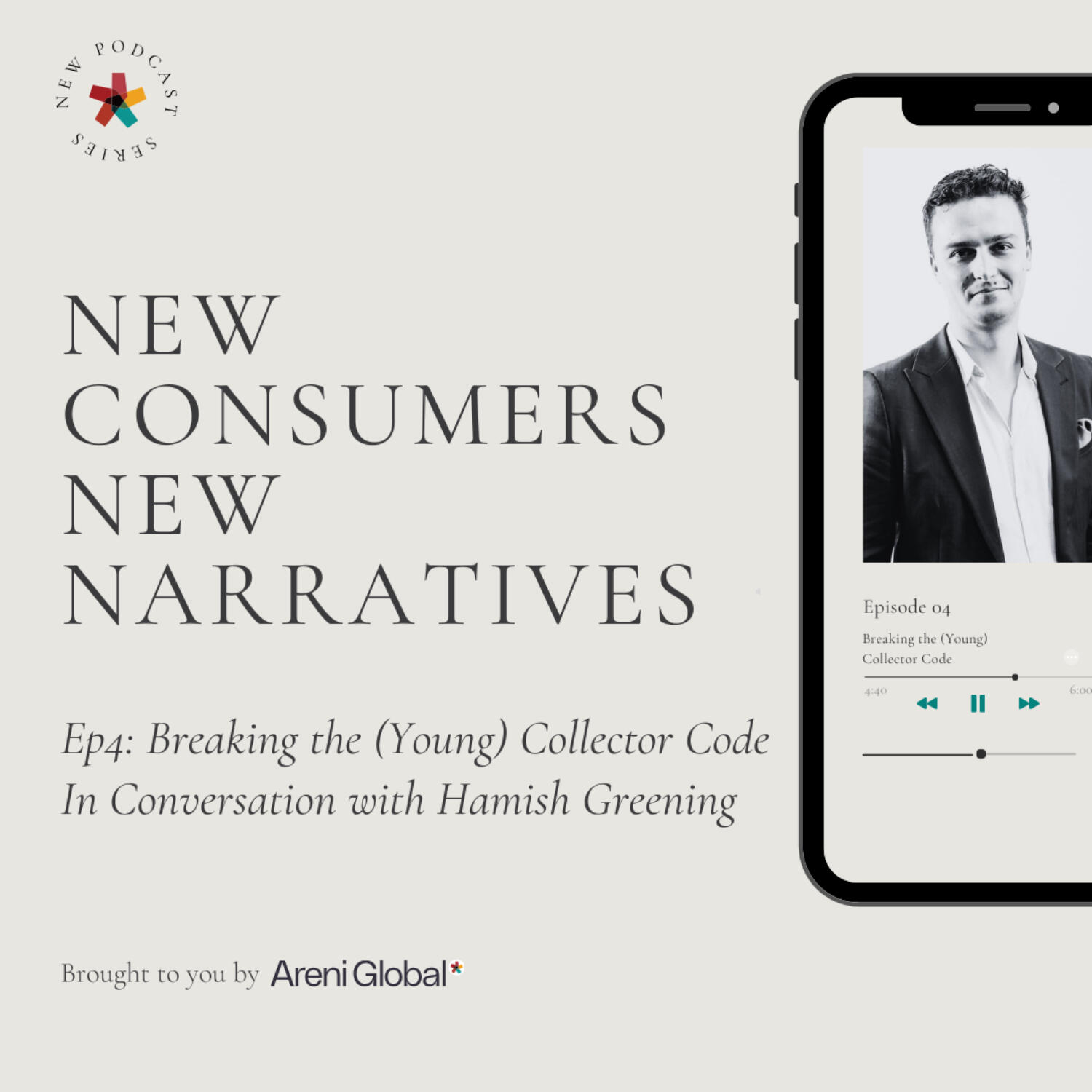
NCNN Ep4: Breaking the (Young) Collector Code: in Conversation with Hamish Greening
80m 29s
This podcast episode explores how the fine wine industry can engage younger consumers, featuring Hamish Grinning of Chelsea Wittners. Hamish, at 25, manages a client base where 60% are under 40, spending an average of £400 per bottle in bond. He explains the role of a fine wine merchant, distinct from retailers due to the UK’s Bonded system, which enables tax-free storage and trading. Chelsea Wittners operates as a broker, sourcing wines flexibly from producers, other merchants, and private collections, without exclusive commitments, allowing them to sell only wines they believe in. The company’s clients are globally diverse, with under 40% based in the UK and key markets in Asia, the US, and Europe. Women represent a small minority of clients but have a higher average spend. Hamish’s success with younger clients stems from organic networking and referrals, emphasizing personalized service and trust. He keeps detailed notes on client preferences, avoiding rigid categorization, and views his role as a custodian of collections, akin to an executive assistant for top collectors. The conversation highlights how age similarity and tailored relationship-building can attract new generations to fine wine collecting.
Any sector that wants to stay relevant must invest in the future consumers and fine wine is no exception. But everywhere you look now, people are reevaluating their relationship and attachment to alcohol, wine and food and redefining our current understanding of luxury, lifestyle and success. What does this all mean for us as an industry and as an individual brand? How can the fine wine sector engage with new generation of consumers in a meaningful way in such a changing environment? At Arrini Global we believe that complex questions require in-depth research. I am Pauline Vikael, the co-founder and executive director of Arrini Global, and in this new podcast series, new consumers, new narratives, I meet marketing industry legends, speak with academics and researchers and push the doors of private member clubs. Come with me as we discuss the best possible ways for our industry to invest in its future. At just 25 years of age, Hamish Grinning is one of the most talented salesperson I've ever had the chance to meet. Hamish was born in wine, his dad is no other than Nigel Grinning, the visionary founder of Thout & Road Winery in New Zealand. Hamish started his career working in restaurants and pouring some outrageous bottles, his words not mine, before going on to read philosophy, politics and economics at Reading University and helping to run the university bars group there. Wanting to hunt down the best bottles in the world full time, he joined the London-based wine merchant Chelsea Wittner back in 2022 and is now breaking sales records and encountering ridiculous success. Again his words, not mine. So see for yourselves, 60% of Hamish consumer base is under 40, with an average bottle spent of £400 in bond. Now does he do it? Well that's what we're about to find out. In this fourth episode of New Consumers, New Narratives, we discuss what it takes to build a new generation of lifelong wine collectors and wine enthusiasts. Hamish, welcome. It's such a pleasure to have you with us today. I'm very excited about the conversation that's coming. And my first question is a very, very global one, but I'd like you to tell us a bit about your role at Chelsea Wittner's in what you do and what makes you wake up in the morning. Thank you very much for having me, delighted to be here. So Chelsea Wittner's I'm a senior private client sales specialist, so that sounds like an awful lot of words. In reality it just means I look after a small group of our clients and I curate their collections from start to finish. So help them decide what to buy, what to sell, what to drink now, what to say for later and on a larger scale, often wearing the world to send it and try and help them think about dinners and visits. And it's quite an all-encompassing job that probably is halfway between your kind of run of the mill salesperson at any wine company, but edging closer and closer to a kind of executive assistant to some of the biggest collectors in the world. And I think that's one of the reasons I love the job and that I do get up every morning and battle the Jubilee is, you know, I'm getting to see these collections from the start to the finish. I'm getting to be there when they're opened and you know, handling really all aspects of their wine collecting life. And so Chelsea Wittner's tell us a bit more about Chelsea Wittner's because it's what we called in the UK of fine wine merchants, but I would like you to explain also to the non-priced people in our audience what a fine wine merchant does and how it's different from a retailer because I think it's something that I've really learned moving in the UK. I didn't really know about fine wine merchants before. Yeah, the role of a fine wine merchant in the UK is quite unique. There aren't or historically there haven't been as many equivalents in other countries. And I think probably the key reason for that is the Bonded system. So from my point of view and for those that don't know, the Bonded system is essentially a series of warehouses that are HMRC governed and allow you to trade many different items including alcohol without paying VAT and duty on them. Now ultimately, of course, when the wine is taken out and consumed, duty and VAT must be paid. But this basically allows for people to store wine without paying that, hold it for an extended period of time without paying that, and indeed trade it. And it's that system that is the lifeblood of allowing fine wine merchants to do what they do. But it's also the unique thing that is behind the concept of a wine shop that doesn't sell any wine in person. And that will have an impact on your consumers because we'll discuss this in depth a bit later. But that means also that they have a quite a different way of buying that people going to retail shop and buying a bottle of wine. So different ways of buying and different motivation. But before we dive deep into that, where do you actually buy your wines from? Do you buy them from a producer? What's your ways of sourcing wine? Yeah, so I think the first thing to say is that we're quite proudly brokers. And the term broker in the world can have an awful lot of connotations. Sometimes they're good, but often it's the idea that it's someone just kind of taking a margin for doing nothing. And that's fundamentally not true. We're absolutely taking a margin, but we're taking it for something. And it's our expertise and our knowledge and fundamentally our connection. So we're putting people in touch with other people who they couldn't otherwise get in touch with. And we're getting them things so they couldn't otherwise get. And that's what makes the service worth its money. So far from hiding from it or pretending like everything we own is our stock, but I think you do see people do. We're very proud to admit that we're flexible in where we're sourcing these things from. And far from it, the weakness, we think it's one of our biggest strengths, which is that yes, we sometimes source for acting producers. We also source some clients if their collections are of suitable levels of provenance and interest. We source from other fine wine merchants, as most of us do, if we trust them and we think they have the right level of scrutiny over their source. And then we're buying from distributors and agents across the world, so you're pretty far from Germany. And predominantly in the countries where the wines are produced, I think is a rule of thumb. We were almost ever by burdened leave from the US, for example, and we were almost ever by US wines in France. But we source some alive variety of places. And while that often means we're not quite as direct in terms of the journey of the wines, if you are the sole exclusive agent for that wine, what it does mean is that we have absolutely no commitments to sell wine we don't believe in. And that's one of the reasons I love my job. So if a bad vintage comes along, I don't have to author it. And if a coup d'etre, I don't know if it's very good comes along, I don't have to author that either. Similarly, if you'd like to buy three bottles of the very top wine made by that estate, I don't have to ask them to take 150 bottles of wine that you fundamentally have no interest in drinking. Yeah, in that way you quite opposite to a border negotiate that have direct an exclusive importer that has that long-time relationship with in the state and has to commit on stocks you're in and you're out. So when you source wine and when you buy wine, is it client-driven? So do you kind of in some way wait for your client to ask you for a certain wine and then you go and find it or how does it, how does the relationship with the client work in that sense? Well, I think there's two parts to that. Fundamentally, as a broker, we are buying wines almost in all instances if we're confident that we've sold them. That's what broken us. So with a few exceptions of wines that we absolutely believe in or are very, very confident we can sell or just always want to have a little bit of available, we are only buying wines that we believe we have sold. That's what broken means. The other side of that is, are we waiting for clients to come and say I need some of this? No, absolutely not. That is a passive form of broken. We're essentially you're taking people's shopping lists and trying to go out and find them. It's really the opposite of what we're trying to do. A, because I think it's quite easy to do that and B, because you end up playing the same game as another 50 people who are also doing that. What we're interested in doing is showing you the things that you didn't even realise you want. I think that's a more challenging job. You're actually having to get out there in the world, treat these wines, meet the people, put them to the test. When you find something genuinely exciting or you start to form a belief about a specific vintage or specific region that it's offering interest and value right now, then it's up to you to make a good enough argument to your clients that this is something that they should be excited about. That's a process of trust. You only get to get that wrong a few times before they're going to stop taking your advice. Fundamentally, yeah, it's all about us trying to give our clients the best ideas. Of course, there's always a little bit of this is my favourite and I don't want to be swayed. It's important to know people's tastes and respect them. I think we really earn our money by showing people things they didn't know about or that they did know about but had never really considered trying. This podcast, by the series of podcasts, is called New Consumers, New Narrative. We're going to take a look.
a huge part of our conversation is going to be about talking about your consumers. Could you tell us first about maybe the consumers of Chelsea Fitness and your consumers within the company, anything that you can tell us that will set up the kind of environment and context here? Yeah, I think, you know, the first thing to say is that we're not so radical or wind motion that our consumer breakdown would look totally different to other wind motions in the UK. I think we have a fantastic reputation for being quite diverse and quite young, but there are some fundamental laws of, you know, kind of, what, the economy really, that mean wealth is distributed in certain places. And so to pretend, for example, you know, that the vast majority of our clients were under the age of 30 or were women would just be fundamentally untrue. They're not. We also don't have access to the data of other companies in terms of their clients, which for very good reasons. Of course, it can be the tools. So I'm not going to make any claims about us specifically having, you know, more younger clients or more diverse clients or more women or anything than any other company because I can't say that. What I can tell you is that, you know, by turnover, less than 40% of our clients come from the United Kingdom or at least our base there. So the rest of that picture is pretty diverse international. I think Taiwan, the USA, Singapore, Japan, Hong Kong, Germany, Switzerland, you know, all make up good chunks of where our spend is. So 60% of your clients do not live in the UK as, you know, is not their main residents? Yes, exactly. Yeah. You know, I think another thing that's, you know, really fair to point out is a lot of my clients would not consider themselves to have a main resident. Yeah. And that's an incredibly first world kind of, you know, situation, but it's also the truth about fine wine and, you know, the level of wine that we deal with. A lot of these people are, yeah, splitting their time across a lot of places and it would be quite hard to define exactly where they live. I think, yeah, firstly. In terms of. Well, now in the UK, are they, you know, are they mostly based in London? Is it still a big bias to think that the fine wine trade is kind of 80% concentrated in the capital? I do think that's still true. And I think, you know, increasingly we're seeing homes. Well, we're seeing delivery addresses, let's say, that are, you know, outside of London, whether that be in the copswards, whether it be up closer to Manchester, you know, I think the chefs are area there, you know, it's phenomenally wealthy and a lot of people choose to have homes there. Jersey, parts of rural Scotland and Devon. So they're definitely eastern diversity there, but on a fundamental level, I still think the vast majority of our clients, if they are taken delivery in the UK, would probably be taken delivery to London and our drafts. And so, what about your gender split? So, do you know how many women versus how many men do you have? We do. It's a slightly hard one to gauge because, you know, there are different metrics you can use here. By number of clients, we are just on the 10% one. By spend, that's a slightly higher figure. But that's. So, women would represent more in terms of spending? I'm hesitant to push that as a statistic, the basis that I think it could be artificially inflated by the fact that we have a few more, let's say, non-spending men on the list. So, this thing, I'm. More in that way that it could be biased that you've got two or three very high spending women. We do have a few very high spending women. Okay. You know, I think it's certainly a question that we've, you know, asked ourselves where, you know, how are we doing on that front? I don't think we make an active attempt to go out and, you know, specifically find women as clients. I don't think that's the ethos of the company. We've noticed that we have a significantly higher proportion of women coming to our events than most events that I see in the wine world. I'm, you know, again, without making a specific claim. I think it's one of the nicest things for us. And it doesn't, by the way, just appeal to women either. It appeals to all people that there's a gender balance in an event, you know, I think a balance of ages and genders and, you know, demographics. Any event is just a nice thing to have. And I've done five events in the last two weeks, all of which had pretty even splits. And I think women do need a little bit more sometimes of a helping hand or just, you know, a slightly friendlier environment to get them started and to get them comfortable with the collecting world. Is there less likely to be inducted into it by a previous generation of female collectors? What would be the percentage of your client that would be under 40 as a company? It's a surprisingly high percentage and I would say perhaps 30%. Perhaps 30%. And how much of your personal clients are under 40? About 60%. So, yeah, so you concentrate a big proportion of the younger customer of their company, right? I do. I think that happened slightly organically rather than, you know, helps that I'm young myself, you know, I think that. You can remind us how high you are. I have a good birth interest for Burgundy. I'm 25 years old. Okay. I think, you know, when I first joined the company, you know, something I was keen to do was build my own book a little bit more organically and I think understandably as it was my first role of this sort, they also wanted me to make an effort to find some of my own clients rather than necessarily, you know, just be handed a black book, so to speak. So I spent a lot of time, you know, basically trying to make friends in the London wine scene and, you know, all of those people I met two or three years ago are now friends and clients and quite naturally I think a lot of them are my age or I thought they were my age and, you know, they've gone on to introduce me to more people and, you know, if you look after someone well, then I think, you know, in our business life, one of the lifebloods of fine wine much thing is referrals and, you know, getting people to say, "I've looked after you incredibly well and I'd appreciate it if you'd introduce me to someone" or quite organically often people just come up to you and say, "My friend really wants to know where I'm getting all of this from." Yeah, so it's really a fascinating insight because, I mean, again, we all know this empirically, but you do business with people that look like you and also you kind of, and that has been proven many time for better or for worse, you give your trust more easily to people that look like you. And that, of course, we kind of, it's funny because in the wine world, we are thinking about it in terms of gender or maybe ethnical background, but we never really think about it in terms of age and like, well, yeah, you know, young sellers will attract more easily, people that are maybe younger, younger of age and we'll talk about it more later as well in what it means for events and what it means for many, many things. Do you have your own personal segmentation or your own way in your mind to organize your clients in maybe not category because I'm sure you don't like to think about your client or scat degrees, but maybe to classify them for a lack of a better word? I think the first thing to say is that there is no rigid system which we ask everyone's customer to use. So it is a deeply personal thing. The first thing we want people to think about is, you know, everyone really, it's also something that looks after somewhere between 50 and 100 people and we don't like that number to go over 100. You know, there are other clients beyond that at the business that are looked after perhaps as a general pool of clients, but are very occasional buyers and would just like to be kept up to date with a few of our offers. And so the first thing we want people to think about is, you know, you're a custodian of these collections and of their decision making and however you choose to approach that, whether it's on an entirely individualist level and you treat every single one of them like that or whether you want to start creating some form of categorisation is up to you and how you work. I think for me, you know, I try and keep as detailed a note as possible on people and I don't think that's weird. I think it's, you know, professionalism, I think what people are paying for is they want you to know that it's their sister's birthday coming up, even if they're just mentioning that once because actually if you're ahead of the curve and you know her birthday, you can offer them something. I think that's really cool. You don't have to be weird. It's kind of 11 Madison Park dream kind of saying like exactly. I worked in service for a long time so I used to work on the wine team at the closed club in London and, you know, at a two-month-long style restaurant like that, every briefing before people come in, there is basically all of the background is spoken about them. So there's no way we're not googling people before they come in. Anybody in that level of service is doing it. If they've ever dined with you before, if they've dined with any other restaurants in your group before you should have all of their details in their last visit. It's incredibly important, you know, people operating at a high level expect those small details to be noticed and a little Christmas present, you know, to the family that is something that
their husband enjoys or whatever it might be, goes a long way. So I think I try and keep really careful notes. I do have, I guess, a way of categorizing people into preferences. If I want to send them an offer, I think there's nothing wrong with me pulling up a list where I can sort my clients and filter them by those that I know, like, let's say, on Premier Board of Or older reason. And then it can just filter, you know, the list on a kind of CRM to say, okay, it's this 15 people that have always told you they like it. And then I can write each of them an email and say, hey, you know, I found this. So I think that's super useful, but I don't group them too much beyond that. And I've learned that trying to make any sort of assumption on what they're going to buy aside from their preferences is really dangerous. Like thinking that, thinking that they'll only buy board over because, you know, they're old or thinking that they'll be into natural wine because they're young or thinking that you should send them rosé champagne because they're a woman. I mean, Jesus Christ, you're not going to get far if this is the way you're trying to sell wine. So I think I've really held back from categorizing people on my books by any of those arbitrary factors. When you work with that level of client and that level of budget as well, you can't afford not to pay attention to their uniqueness. I mean, that's really the center. Talking about the budget, can you tell us a bit the average spend, like how much do your clients spend a yearly kind of budget they spend on wine? Our average bottle sale price tends to be between £400 and £500 a bottle in bottle. As a company. Which is an astonishing number. And every time I think about it, I can't quite get my head around it. That's your average. We'll have to go a bit deeper in that number because if that's your average, you don't have that many bottles in the world of wine that retail, you know, for £400 in bond. So do, does it mean that you are selling most of the same wine all the time? Or does it mean that you are selling a couple of very expensive ones and then a lot of other ones that is just average? I think any motion in that business is typically doing the majority of their sales by value as a company every year with quite a small group of top producers. Like 30? Yes. In fact, in all honesty, a lower number than that. So I think if you look to producers like Domain de la Romani Conte, Domain Loire, Domain Dovene, Domain Armond Russo, Le Flev, Ramané Costa Ruy in Burgundy. And then you maybe look to the first growths and Petrus, Sheva Blanc. You know, you can, you can, Le Pan in Bordeaux. And then you maybe took screaming eagle and Harlan from the US. You took Grains in Henchky from Australia. You took Montfort, you know, kind of Contano from Italy and a few super Tuscans. Sassikaya, yeah. Yeah. And then it's the, the, the, the, the champagne. Once you get to that point, I would be amazed if there were ultra fine wine brokerages and merchants who had more than, let's say, 25% of their turnover, not from that. Yeah. It's always going to be such a big part. It's, it's going to be a big part. And the rest of it. So, well, do you see it a lot of change in that category? I mean, over the years where you, where you've worked. Have you seen newcomers in that 400 plus category, like ultra fine wine? So that's the first part of the question. And then the second part of the question is, on the rest of it, what kind of wine you're trading with? Because you also specifically said, you know, I'm trying to create things that I'm, I'm sure people will love maybe something they wouldn't consider. It has to be outside of those. For sure. When he produces, right? Because otherwise they wouldn't be surprised. I suppose. I think, you know, a personal belief, I'm not saying this necessarily a company belief, but a personal belief of mine is that those really, really, you know, top of the range, that small handful of producers at the top of of global fine wine, you have to be incredibly careful when you sell them, but they are fundamentally quite easy to sell because they sell themselves. So they require the most caution because there's a risk of fakes. There's a, you know, the stakes are extremely high with the value in terms of transport, in terms of condition and storage and provenance. So all of these things make them the most dangerous wines to sell and you should give them the most care and attention. But fundamentally, the wine is selling itself. It's Domain Del Romney Conte. Everyone knows what Domain Del Romney Conte is in that circle. So really, I'm not sure you're left with much convincing to do. Yeah. Okay. It's a barking bag. Yeah. Exactly. So your copy and pasting, tasting notes, whatever, perhaps you've recently tried a vintage that you think is underrated. I don't think it's hugely novel stuff. But the talent is in discovering the next one, which is something that not just, you know, find my emotions through, but it's done a lot by importers and credit has to go, you know, to the agency businesses that are out there spending a lot of time hiring people just to go and taste and to discover these things. And some areas who do a lot of it as well. But also to, yeah, to finding people things that are interesting and maybe unsung. And I think one of the fundamental points about this business is, if anybody can sell you DRC, which they can. And, you know, kind of exchange marketplaces like live X, like, ball and X is live trade and Coltex and all these platforms. I mean, you will always be able to log on and buy a bottle of that if you want to. Those things mean that fundamentally anyone can sell you DRC. So who do you buy DRC from? You know, if you're a consumer, who do you choose to buy your DRC from? And the obvious answer is either the person you trust the most or the person you have the best relationship with and probably both. And so the art for us is about building trust and building relationships. And those trust, trusting relationships are normally built not on DRC. They are, they are built on other wines. Yeah. And on how you also make people progress on their taste journey, I suppose? Yeah, that's, you know, that's a really interesting part of it. And I think we, you know, we've all witnessed very different journeys from people. And when I talk about the benefits of the bonded system allowing us to buy and sell wine, I don't just mean it because people are trying to turn a profit. I don't just mean it because people are treating it as an investment. I think one of the key things about that is it allows people's taste to change and their collections to adapt with it. That's one of the things that's so special about the bonded system. Because not everyone's tastes are going to follow a uniform path. And it means, well, someone might be inducted through, you know, burgundy and come to see the joys of, you know, more full-bodied Spanish or Italian wines. Someone else might start and, you know, take the off the path. And essentially, halfway through, they might end up roughly wanting to trade collections because they realize they have too much of one thing, not enough of another. And the beauty of the bonded system is their cases are probably stored right next to each other in the same warehouse. And you can arrange for that with, you know, any significant costs or any loss of condition. So let's take a deep dive into your consumers. You were telling me 60% of your consumers are under 40 years of age. And I realized that it's not an incredibly high number of individuals that you are dealing with because you said, you consciously keep a small number of people so that you can give them the best level of service. But can you tell us a bit how do you use those younger cohort differ or not at all from the rest of your company's client, maybe the older demographics that you deal with or that your company deal with? I think, you know, one of the, but there are many ways they differ. One of the most interesting ways they differ is probably their social media presences. And I would imagine this is one of the reasons I've developed good relationships with a lot of those clients is that I also try and stay quite active on social media. But, you know, wine has a really big place on social media now. And, you know, some accounts drinking some bottles are a pretty big deal and they're getting tens of thousands of followers and hundreds of thousands of interactions on their content. It is informing what people drink just like it does anything. On your customer side or on your side, you mean on the trade side or on the collector side? I'd argue on both. And, you know, I think I can pretty much predict sometimes requests that I'm going to have because someone with influence will be on Instagram the evening before saying, I've said it before and I've said it again. This is the single best you can buy. And the next day, Lurba told, 10 of my younger people will be straight on to me going, by the way, have you seen any of this lately? And it's not like when instance, of course, it's not. They've been influenced. And I get influenced. You know, that's not a bad thing. Social media is, you know, bad for many things and good for many things. But in this instance, while it can often portray just what people want you to see and there are plenty of people out there using it to shamelessly promote wines that I think are any good. There are also lots of things that you wouldn't hear about any other way. And, you know, like anything, I think you start to follow people that you trust and that maybe share similar tastes with you. And if I see someone who I know drinks the same kinds of wine as me drinking something I've never heard of. Of course!
as a motion, I'm going to have to find out what that is. - And so that is really more something that you see for younger demographics, because I tend to think sometimes that we underestimate how older generation use social media as well. It's one of those cliches that is just for the young, but actually everyone, almost everyone, is on social media now. But do there still have a different way to engage with social media? - Yeah, for sure. I think they do. It's not the suggestion that we have a significantly higher number of people using social media, 'cause they're younger, it's the way they react to it. I think lots of people that I have who are client who would be above 40 will have social media, of course. They'll post on it, they'll share their dinners, and the interesting wines they're drinking, and they'll certainly look at other things on it. But I think they trusted it far less, they tend to be way more skeptical, and a little just a bit more classical and what informs their choices. They'll say, "Okay, well, I've read what Neil Martin said this year, and that's what I'm gonna buy." Rather than, "I saw a guy in a snapback cap "and a Supreme T-shirt holding a bottle of this, "can you find me some, I've got to try it." And I think on the one hand, this seems like an incredibly scantamander of information to spend a lot of money on. All I've got is a guy I've never met, stood in the bar, I've never seen, holding a bottle and saying, "This was cool." Now I wanna try it. That's not much of a recommendation. So why in critics are for us, what merchants are for? Whereas I have lots of clients who will just spot a bottle in the background on a table on someone pretty proffinant's photo and they'll be like, "I don't know what that is, "but I have to try it." - No. So the different in the way they use social media and the other way, the different or the differ? - In terms of their buying habits, I think. - In terms of anything, I mean, I can also ask you the reverse question is what does not differ in what way are they similar to other demographics? I'm trying to understand, or to calibrate how generational approach is interesting in fine wine because we hear a lot of things and we also see a lot of things and sometimes those are a bit clashing, right? Like the younger generation are supposed to be different but when you look at numbers, they're not that different. So I wanted you to have your take on that. - Yeah, I think one thing that is interesting is, I tend to see younger people and this, of course, may have been the same for my older clients when they were younger and it's hard for me with a short span of time I've been in the industry to see it. But I suspect it isn't and that's wanting to buy as much volume of a single thing. So some of the more traditional collectors I have based purely on their seller and when I know it was started, I can see that because of the rotations and everything, I would have to believe that when they started buying wine, they bought a good volume of every individual wine they bought. - So several cases. - Exactly. So if they were buying on-premur, they might have taken 24 bottles of a one. If they liked it, why would I not take 24 bottles? And that goes for Bordeaux, Burgundy, Italy, Champagne. They tended to buy in volume. And in many cases, that looks like a really savvy choice now. They're getting to enjoy the evolution of things aging. They have good depths of things that have gone up and value. In some instances, they have an almost inconceivable amount of wines that they don't like. So I can also see the downsides where people's tastes change massively. And you go, "Oh my goodness, how did you end up with a thousand bottles of Bagonia when you've decided you don't like Burgundy?" And they said, "Oh, every time I saw one, I just bought 24." Now, I think more and more younger clients are asking difficult questions about smaller formats. So the days of selling in 12s, that's a tricky conversation. If almost regardless of price point, if almost any wine is brought to us in a format of 12 bottles, we're typically saying to the person that you sure this can't come in sixes. And that's because it doesn't matter if it's a 30 pound bottle of wine that my client can easily afford. They're just not so sure what the point of taking 12 of anything is the first time around. Unless they know they adore the wine. Why would I take 12 if I could take six? And even three would work better? Well, and three is the type of thing where we're not, we think it's some reasonable request to make of a domain on in some instances, but where we have made the request and it's been taken up, it's been so successful. And that's a lot of price points. You know, okay, some of the most expensive wines have always come in threes or even ones. And I obviously, when you're buying, you know, petrus nowadays, you're probably not looking for a 12 pack. But I think we've seen it right down to some, you know, much cheaper wines that are retailing at 30, 40 pounds of bottle where people are saying, I would much rather buy three of them and I'd much rather take four cases of three of microsteball phono. I don't see the need to own a lot of bottles of wine. So you're, and then I guess in the way, they might not differ that much is the type of wine that they buy because you were explaining, you know, that you still work a lot with what we can call the classics or the ultra fine wine. But then do they have, I mean, does the breakout by regions really differ depending on the age category? I, no, I don't think so at all. I think there are a few trends in global fine wine fashion. And I think those trends are reflected as a symptom of the time, not the age. So, you know, currently, for example, there are some regions that we massively struggle with where we find people simply aren't interested in that style of wines, particularly very high alcohol, very tannic, very extracted red wines. But that's the same for. It's the same whether you're 70, whether you're 17. So you do have a client base of under 40 that have the means to buy an average prize bottle of less 400 pounds. So you kind of have like the dream client, I suppose, for many, many people out there. And well beyond that. Yeah, and well beyond that. What would you say when we look at that particular group of younger demographics, what would you say is their main motivation for buying wine? And again, for buying wine through a fine wine merchants going back to the beginning of our conversation, where we were explaining that it's not a retail shop, it's not somebody entering a shop and choosing the bottles. We're going to an estate and making the effort of like going, tasting buying the bottles. They buy wine in a totally different way. So can you tell us about the main motivations that you find? Yeah, look, I think we go out of our way to try and ensure that we are collecting collectors as a business. You know, that's who we want to work with, long-term clients. Can I stop you right there? Because we have that conversation off the record. But I think it's a fascinating one and one that we owe to spend a bit of time here. How does a collective differ from a wine buyer from your perspective? Yeah, you know, I've given some thought to that on many occasions. And I think it is fundamentally a mindset, is the difference between the two of them. A collector is far more obsessive than a buyer. And they're thinking ahead and strategically. And it's something that they enjoy as a process, not just as an end. So, you know, for a wine buyer, I'm a means to an end. All they really want is the wine. And they often don't know they want it until the last minute when the occasion comes up that they do need it. And at which point are there means to the end? And for us, well, we're always happy to help people out where we can. There's not really the best type of clients for us. Because to source the best wine in the best condition at the best price, it's unlikely that I can have it to you tomorrow. You know, that's just a fundamental reality ever. What's exciting is the chance to work on building collections over time. And, you know, if you're just a buyer, you don't have the patience to purchase semi-assembled things and wait for them to come to fruition. That's a zero interest to you. If you're a collector, you're going to get an active enjoyment out of watching these things come together. I listen to you very quick things before we go back to our conversation. This podcast series is part of a larger, really global research project and we have a whole series of articles and publication in the pipeline. So don't forget to subscribe to our newsletter at aweeny.global to be the first to read them. I'll put all the links in the show notes. And if you like what you've heard so far, please do subscribe to the Aweeny Podcast channel on any of the platforms that you are listening this episode on. And give us a cool rating. It really helps. The more subscribers we have, the more resources we can get to continue our exploration. But back to the episode now. And how do you identify that? Because that's a big differentiator, you know, in the world of fine one of people that can buy whatever the price tag you want to put as a as a seller price, as a minimum price, people that are going to enjoy the process first is people that just want to access the bottle for tomorrow's dinner. Is there a way of discerning this and to discern that, you know, at a young age as well, because you're dealing with them at the start of their wine journey, whatever it is, buying or collecting. They are still at the beginning because of their age. It sounds really stupid, but ask them. And I think, you know, do they already know? So I don't think they are, you know, categories you're assigned at birth. You know, I think there is an ability for you to morph from a wine buyer.
into a collector. Indeed, I think what I'm doing at the moment is fostering many young wine buyers into collectors by infecting them with the enthusiasm that I have for it. That's meant to be the point of the company and of what I do. I think you will work out pretty quickly the level of involvement they want to have in the process and that they want you to have in their day-to-day go-ex. People will say, "I like this, I'm going to need it five times a year, I'm going to email you when I do, and then I want to." And they know that at 23 or 24? Yeah, yeah, some people do. I think normally when we're meeting people, we're asking them if they want to be involved in our events. I think we put on genuinely fantastic and interesting events that go from quite relaxed gatherings to share our own bottles of interest and kit all the way through to superstar multi-thousand pound ticketed events to some of the rarest ones in the world. People almost always, when you tell them about these, if they're going to be a collector, they're like, "Amazing, when can I come?" They want to be involved. They want the community, they want to learn, they want to see new things, try new things, meet new people. Yeah, the community is really important, being that the community of like-minded people that do have the same kind of enjoyment in the process. We had loads of conversation with neuroscientists in trying to understand the different in the brain between a collector brain and a non-collector brain. So, apparently they are different pathway in the brain that explains different behaviors that can lead also to sometimes addiction or like an over-investment in a passion. And I can see, and that also explains why those are things that can be discerned quite early, because either, apparently, if I understood well, we all have the collecting genes, but it doesn't activate the same way or as quickly, and it activates only if you are surrounded by people that also do collect. So, collectors produce collectors, which I suppose I was going to ask you about the main, like what was their first exposure to wines? How do these young people suddenly got an interest in wine? But I would suppose family played a huge role in developing that taste with them all. Yeah, and to finish off the point I guess about that age of becoming a collector, I don't know if there's any limit to when you become a wine collector. What I do believe, as you say, and I think research tells me reflect, is that if you've never collected anything and you enter the late stages of your life, your inclination to do as such is unlikely to materialise. That's just a, you know, a scientific theory that is widely accepted. But I think what we do see, and absolutely see, is people who never really thought of themselves as wine people, maybe because they didn't have a family background in it, were very successful early on in their career and became avocalectors of watches or art or anything else, and then are introduced to wine and quite enjoy it. And because they've already been collecting watches and art for 20 years, wine is a very easy step for them. And they seamlessly slide into collecting age 60, 70 years old. Now, that I can really understand. I think it's coming from someone who's never collected anything to suddenly deciding you're going to devote a large amount of your life thinking about what bottles Haymer Shes coming next. I think that's another reasonable idea. So back to my question, like, your young consumers, where did they first get exposed to wine? I'm going to risk, you know, a three, three, um, proposition bet. But I'm going to say family would be the first one, then probably friends and colleagues, and then the last one might be, you know, university clubs and like, tasting clubs when they were unique. Would that be a good bet? I think it's still a safe bet, say, family is still the predominant one that we'd see. And it's interesting because it's kind of, you know, it's, it seems to be the great leveler across gender, socio-economic background and ethnicity or, you know, birthplace or religion or anything. It's like, well, fundamentally, if you grew up with parents who are into wine, there is a much, much higher chance that you carry that interest on. Yeah. And I think that's, that's super interesting. And I think, uh, but it's, it's also risky, right? Because that's mean that if you did not, are you wasted for the wine industry? Yeah, you know, I think there's a, there's a huge part. First of all, it certainly doesn't guarantee that you want to, you know, stop being your collector. And I think one of the interesting things is there is similarly an affinity if your parents collected or had an active interest in it, as opposed to just being drinkers. So, yeah, that's, that's, that's what I was saying. Collectors produce collectors. You have to have that kind of environment around you to actually, apparently, switch on the collected genes. Yeah. It's, it's, you never hear a story saying, oh, well, they didn't know anything about wine, but my mum loved a glass of wine. And so now I'm into wine. It's never that. It's, there has to be active conversation and, you know, education, I guess, you know, fundamentally. Yeah. I think, it's, you know, I think wine on some levels has become more fashionable across various, various kind of, you know, walks of life and, you know, various backgrounds. I think perhaps previously it was thought of as being much more, you know, upper class and, you know, kind of elite, certainly in the UK, you know, I think in Europe, it was very different where, you know, it was quite egalitarian, but I think in the UK, you know, wine had quite a snobby connotation. And quite deservedly so when you look at the people who drank it and educated about it, you know, 50, 60 years ago for the, for the large part, but I think nowadays it's quite trendy. I think, you know, yes, we're still seeing less people drink than, you know, we used to and there are various other trends, but on the whole, actually, I don't think drinking wine says anything about your background in the UK anymore, which means people are quite comfortable ordering it and it might be quite cool to order it and it means that there are wine tasting clubs, not just the Oxford University. But yeah, every university. So I think, yeah, it's no longer so full of class connotation and I think that's helped to make it much more accessible. And you know, I think you see it all over the world though, right? I think, you know, the younger generation of money that's come through from tech and and and associated to things like that, they don't dress the way the billionaires and all do. They don't act the way. And I think a lot of my clients, quite regardless of their wealth level, really don't want to be pigeonholed into a St James's members club, old school, clara drinking, you know, style of wine consumer, they're really delighted to be able to hang out at quite trendy places, drinks some interesting things and and not be not be seen in that light, I think. That's really a super interesting insight for me in this and the practical consequences is the where like, you know, when the wine people choose to hold events. And I've said it so many times like, stop always going to St James and Westminster when you do things, go and, you know, go to the, you know, St. Pancras area around the tech companies, go to this, maybe not the city if you don't want to go there, but like, there's so many other areas of London where there is money and wealth, but it's not associated to what the West end is. And like, you're missing so many young consumers because they're not going to spend the Friday evening at St James, that some of them will, but you know, not all of them and there's so many other places that they won't go and visit. So that thing is really for me a good, a very, very good insight and Qdos to wines of California to, you know, to take their taste into Sholdich, for example. There was a first one that I've seen to actually go in East, which was an interesting move. I think a lot more people are doing that and to give you a humorous example, I hosted it in two weekends ago, which we hosted actually at Cornus. So in Belgravia, the Victoria station, really, really great restaurant and that had a fascinating mix of men and women of all ages, right? And, you know, one of my clients who is there and maybe if he hears this, he'll forgive me, can certainly afford to drink the greatest wines in the world until the day he dies. And he turns another way, saying, I'm wearing a hoodie, I hope that's okay. And he wanted to turn up in comfy trousers and a hoodie and why? Because we were going to be there from midday until late in the evening. And that's a sensible thing to wear, is it going to be sat in one place for a long time, tasting one of what? Now the fact that we were tasting, you know, tens of thousand sub pounds worth of wines and that he was going to be sitting with some of the greatest collectors in the world, who I'm sure he, you know, in many ways looks up to or, you know, has an interest in. He wasn't fazed by that and, you know, wondering if his someday best would fit in. He was like, well, no, I'm here to enjoy myself and I hope I can do that in a hoodie. And of course, the answer is of course you can do that in hoodie. Yeah. We're nowhere as at all. That's the point, you know, you're paying to enjoy yourself and we all are. And yeah, you know, I think the way people dress to those events is quite telling and the younger crowds quite often come super casually dressed and they don't like to make a big fuss of it or, you know, kind of particularly sharp their wallets, their to learn about wine and you know to
And then George, a community, as you said, you, I'm going back to you a question I'll ask you a while ago, but before we moved on to the difference between collecting and buying. But to your clients, I think fair to say, are all collectors, but I've learned that they, even within collectors, that there are different motivation for buying a collection. Can you tell us a bit more about this for your own, again, for the young demographics? I think you could probably separate it into a few different styles. Some people simply just want to drink. Again, that's the most basic kind of. So they're just planning ahead in their buying, but they just want to drink. There's no building something bigger than myself, I never think. Exactly. And I do think that is a certain subset of our collectors. They tend to be very organised and efficient people who recognise that if they're buying in multiples of sixes, buying in bond, buying on release, or buying the right time in the market, then they can get themselves a good deal. They pay lots of attention to what you write, to scores, they try things in restaurants, to make sure they enjoy them, and then they come back to you. But fundamentally, they just want to drink and they want to be really savvy about the way they do it. And that's fantastic. That's entirely relatable. What they're not trying to do is these next things. So the next one is a legacy. And that's a really important and attractive one. That again, I think a big part of it. Even a 20. I mean, again, even when you're under 40, that can still be. Absolutely. Absolutely. And I think for anyone. And this is another big part of collective breed collectors, anyone who inherited even a few cases of wine is emotionally attached to the idea of it. Because they know that however many years ago, when they were born, their parents said, "Oh, well, it's her birth year, so I'm going to set aside a case of champagne in that year." And then now they're going to get to enjoy their wedding next year or whatever it is. They already love that idea and they are absolutely adamant. They have to have the same at the bare minimum for their kids. And maybe they're hoping they're going to do a bit better than their parents. So maybe they want it to be a bit more extensive of what they were left, and so on and so on. So a legacy thing is a really important thing. And I think that's a wonderful thing to be a part of. It's a long-term project. People are really patient but super committed. And you can have so much fun with it, right? I adore the challenge of finding interesting things from difficult birth antigens. What do you buy of someone born in 1965 or 1984? 1984. '65 and '84. That would be a big challenge for you. I guess I might give you that challenge. Well, no, no. Give us a chance for my birth, yeah. I'm up for it and I recently brought out a bottle of 1994 for someone whose wife was born about year and they never found a good bottle of '94. And it was astonishing. And no credit to me. It's either way, maybe. Yeah, credit to the one. Do the buyers, the legacy daughter? Yeah, and then I think there's another group of people that want to stay one step ahead of the market and part of this is a game to them. And I almost count myself in that category because I think how can I not professionally? Yeah. And so I'm very sympathetic to it as well. So fundamentally their motivation is also just a drink. But they quite like to drink for free or certainly for a little bit cheaper than everybody else. So a big part of their motivation is they want to make sure they're getting the absolute best deal, which is completely understandable and most successful people. And maybe not invest that much in the bottles that I already had the top, but also buy them the next one and be a bit of a trendsetter, I suppose as well. Exactly. They'd like to be early adopters of trends and there is a degree of bragging rights that rightly comes with that. But also if you're buying things at a good time to buy them in a market sense, whether that's because you're an early discoverer of something or not, the chances that they appreciate and then you have the chance to perhaps sell some to pay for the others. Yeah. And you know, that's not investment in, you know, it's traditional form. These aren't charts about how to use this and sort of getting interest in a bank. That's just people saying, I tell you what, if I play this game right, maybe I'll heavily subsidise my drinking and I'll be able to justify drinking some really amazing ones otherwise which I. But they can justify the expense as well. Yeah. Do you see people because that was one of the main takeaways when we did that, you know, that work with a neuroscientist and things? Do you see people going through collection and collecting as a way to build something that resemble themselves? So kind of not a therapy exactly, but something like, who am I? What do I like? And I need to have something that has a beginning or an end. Like you have that image about the house. Like you want to buy a house that resembles who you are. Like people have that deep personal kind of projection in what they are building when it comes to their wine collection. Yeah, I think that's certainly true. No-urs are more true than, you know, my own colleagues. You know, we've always said that, you know, Chelsea Winters is by collectors, four collectors and I think one of the things we're all the most guilty of is buying our own wine. You have a lot of people coming to your event and you also have a lot of young people of women coming to your events. Do you see, and I'm sure you've got clients bringing prospects, you know, being in some of the trends that are not yet clients? Do you see patterns? Have you been able to see patterns in how a new prospect will come, not being a client of yours or maybe not being a wine buyer of any sort before that will lead them into becoming one of your clients? Yeah, I mean, I think we have lots of people come along to our dinners who just have a wonderful time, but I think, you know, they would just delighted to be there and learn, but maybe aren't interested in becoming full-time collectors and that's fine. I think you tend to see a pretty early buy-in from people who are going to become collectors, and it's almost like they've been looking for a way in and you, they sound it. And I think, you know, if you think of fine wine as a community and it really is, because, you know, it's important you're invited to these dinners and to taste things and that you have a group knowledge of which agencies and merchants are to be trusted and offer certain things as specialties. If you want all of that, you need to be in the community. And I think for a lot of people, the biggest barrier to becoming a collector is they don't know how to get into the community. And I think it's that simple. I think they have the money, they have the interest, they have, you know, the willpower to do it, but they're just sat on the fringe. And I think that's probably particularly the case with a lot of young collectors, with a lot of female collectors. So where do you find them? So I guess you've got that kind of recommendation, you're a client, bring one of your friends that I suppose works super well. But do you have other places where yourself, as a, you know, self-person, go to because you think that might be a good source of bone space? Not really. I think, you know, the closest thing would probably be, I guess, the restaurants and you know, top wine clubs in the capital. So yeah, undoubtedly places like 67-pound aisle or noble rock are hangouts for people who are enthusiastic with wine. You are likely fairly committed to wine if you're paying for membership at 67-pound aisle. And simply, you know, if you're spending lots of money taking delicious bottles off a list of noble rock, you're probably quite interested too. If you hang out there enough and you'll start to meet people and be introduced people, but that would be as close as it comes. I remember when we were talking in the prep sessions, that one of the different, one of the way in which the differ maybe from your older demographics of clients is the way they engage with you and what they require from you as the fine wine merchant. You were saying that you are on the way almost a personal assistance sometimes, but it kind of sounds like you're almost kind of a friend, like you have a more personal relationship with your younger demographics? For sure, 100%. Look, I think, you know, that's specific to me as a salesperson and I think it has its drawbacks and its advantages. I think I've managed to forge some really close relationships with, you know, A wonderful people and B people who are already some of the leading collectors in the country and the world and, you know, may go on to do really incredible things. I think one of the drawbacks is that it's blurring your work life and your personal life and, you know, my advice to anyone in the industry is that that's a line you have to be super careful with because you can kind of forget that there is there is advantage to keeping them separate and I, I probably find myself with far too many invitations these days and it's something I have to manage if I want to keep in these trousers for much longer and not have my way to my next band that I can't go up to dinner with a different client every night, even if they're lovely enough to invite me. So, you know, I think that's one of the drawbacks, but the advantage is, yeah, I have these really close relationships and friendships and I think that's totally true. I think WhatsApp's a big part of that. I think, you know, I sell more wine on WhatsApp than via any other method and it would be a massive part of my turnover. It would be a large part of the company's turnover every year. That would have been ground upon in the past. Is that the same thing, you know, do you also use WhatsApp with your order demographics? Increasingly, yes. You know, I think, but that's probably led by us, you know,
I think younger demographics will frequently just tell you off the bat. I don't look at my emails. If you want me, you're going to have to get me on WhatsApp. And amongst my own book, I think, those styles of relationships where they want to tell me about their daily lives, get less and less frequent in inverse to age. And I think, part of that is even if we have a really good wine relationship, I would say I have quite few clients over the age of 40 where they update me about what they drank last night every day or something like that. Whereas my client base who are 40 and there are a lot of that. The message you pictures on WhatsApp all the time also. Yeah, I mean, I think I get on average about, I would get a WhatsApp message from on average 70 different people a day. So if you look at my WhatsApp's that are all data within today, there's about 70 different people on a rolling basis. And a large number of those is just kind of, hey man, drink this. Thank you. It was good. Or hey man, try this in a restaurant. It was rubbish, you know, or whatever it might be. But they can be quite. But you get is amazing. So that you really know what they think about. And like if you've seen that it brings you a lot of intelligence on your client as well, I suppose. As does social media activity. They work in tandem. And it's super useful. So for the last part, I'd like to, you know, talk about some cliches or some of the insights that we've learned some stuff we learn around, you know, around young people. And I would love to have your opinion on that. We're going to stay on that like young buy from young right? Because we kind of discussed that already. But because and it's I think it's kind of make a lot of sense that you buy from people that look like yourself for better or for worse. We were talking about this the other day, like we have we've developed gender only event, right? So we've done one event for women only with the superstitions that women would be more comfortable for many different reasons to be without men in the room. I was thinking we never really I actually I never heard about young people only event like because if you are I was thinking about the someone who's 23 just coming into wine and get to an event and see and sit next to a normal timer that keeps on telling you that you know they've drunk everything and when they were you know they they bought Romantic on t for like 85 francs or something and you're just like well you know right right and then it keeps on talking to you. What do you think about that idea of young people only kind of event of course we couldn't mark it that way but would that make sense? Would that bring a difference? I mean what one thing to say is that actually I think the industry is quite good at creating those for employees of the industry. So you know a well-dannison a good friend of mine so he works works with Porosha and yeah. Yeah. That's your wine's Susan Fent. Yeah well Will's a really great guy and one thing that Will has put a lot of time in quite charitably himself to do is is to encourage young people in the wine industry and I yeah that's because I was about to say he once was one but that he'd never forgive me. That's because you know Will Will really knows that when you're first getting into the industry it could be quite daunting and you have yeah all these people walking around talking about do you remember the 09 Premier campaign and you know and he was no no no I want to create an event so I've been several of those and you know he's certainly not the only one so you know there's a good effort made to create events for young people who work in the wine industry but yes we very rarely see the marketed for clients as a young age and I think going to your first walk around on Premier tasting if you are a slightly less braggadocious and you know bold young person could be a bloody horrible event you know yeah you are just squeezing in between a bunch of people who know each other because they see each other here every day and as you say they're all regaling you with stories that aren't of interest and you know you you really want to be the type of the type of where so I was I was talking to the VIP kind of client manager for a super high-end hotel chain right so talking to people that do spend something like a hundred and fifty thousand pounds on a week holiday so obviously my every day holiday and I was asking him about where do young people party you know and actually the kind of party at the same place like they will go to Santa Fe they will go to the same kind of place but not exactly in the same club and I think it's the same thing for the wine world like if we were to design wine events that were specifically for young people we wouldn't choose the same venue we wouldn't choose the same dress code we wouldn't choose the same music that the the we would do the work that a great hospitality place does which is to curate the atmosphere for the type of people that they want to attract and I think that simple insight was like well never really like at least I've never heard about a company that specifically design events for young people you know I think at that kind of level of price tag for wine right I'm going to go on a limb and say we do this in reverse order at Chelsea Vendors and I do it personally in reverse order I have a lot of involvement in events just because it's one of the reasons I do the jobs I love drinking the best stuff and you know I want to get around a table and really put the stuff to the test so I tend to take the lead in a lot of events and I'll give you a great example of an event that was curated in reverse order in that way so an amazing collection of costurie from a single cellar came in it was a perfect vertical of of their muscles I was desperate to sell it and then since I thought about selling it I was desperate to drink it and this crazy idea came together that why don't we kind of do a dinner with it and I'll see if I can get a load of people who could come together and we'll split the cost and we'll sit down and drink it and the scale of it meant we realised we had to do a lunch and a dinner so we ended up doing a lunch in one location the dinner and another location but with the same group of people and once we'd sent out the invite which was basically we're going to do lunch and dinner and these are going to be the wines and that was all the information and this is what it will cost we filled the seats with some clients who we knew very well and then we looked at the pool of clients and decided what kind of event is it now going to be we knew what the wines were going to be and we knew who was coming and then we created the event and we had quite a mixed bag right so we had again we had more women than we had men actually at that one you know and this is a £3,000 ticket event right so you know this is a proper commitment for a lot of young women who flew in from other countries and you know you know went out of their way but we had a lot of young people both men and women and and it was more women than men and one of the funny things about that event was that actually wasn't the consideration it was just the personalities I thought about everyone who was going there was such a fun bunch of people and I was like we're going to make this so much more interesting and just less typical you know for a wine event we just started to walk between restaurant one and two in the afternoon rather than the show for driven cars or taxis everyone was presented with their own bottle of Lucas Aid and then they left one restaurant to go to the next get some electrolytes in the way maybe stock for a pint head side hydrate you know and that was because we're all friends you know and then at the next restaurant as well for dinner you know the idea was like if you're not all friends at the beginning you were friends at the end which is also I guess going back to that community point which is important to young people is also how can you help them you know building a community and building you know friendships and connection but it always bound to for me how well you know them because you know it wasn't just about their their gender or their age you know one of them wanted to bring a dog and I said absolutely because I knew every other client there would enjoy a dog being there all day there is no way you could charge that amount of money for a tasting to people you'd never met and allow someone to bring a dog because it could completely ruin the day for half a meal per day instead the dog was the star of the tasting I want to stay on women for a second because you've said that you know you had loads of women paying you know that's three thousand pounds of ticket for two lunches I've also heard for different wine merchants in in the UK that they've tried to develop their their women wine collector ship pool but actually women and that that's going to sound really blunt and I'm and I apologise if if that's too blunt but that women were not that profitable because they weren't buying less than man so you would need to bring whatever number of women to make for one man in terms of spending is that something that you see that's something that's fair no I I think I think that's fundamentally not the way to go about it look always men are going to take up for the time being a larger amount of spend in a company's revenue on wine is such a big disparity right now that see that focus you know shift overnight you know setting up a wine company that only cater to women for example would not be a sensible idea in the current economic climate but I think the idea that women on an individual basis are going to spend less than men is ridiculous I think you know while statistically it may be true you have complete control over you know which women you're dealing with and you know how much they want to spend as part of that relationship you know I have several women clients who would far outspend you know some of the top clients of
of many people, they are incredibly powerful, incredibly determined to spend money and not an incredible trajectory within their own life. Yeah, and in a weird way, I think there are parallels between young consumers and women and the parallel for me is that historically they've been ignored and overlooked by the market so they don't feel wanted and many of them probably have access boundaries, right? So those are the kind of things that they have in common. A) the market has never bothered making room for them, never tried to make them feel special and never actively caught at them. And B) they are now left in a situation where they probably aren't that inspired to go in and go in heavy because they won't have a great community. They won't enjoy the events because you know they'll be all the people they don't want to be with, etc, etc. So in a weird way, they're in the same boat. Now when I take on a generation of, let's say younger clients who spend £10,000, £20,000 a year with me, and I do that when they're 25, 30 years of age. From a business point of view, of course, part of the thinking is, this guy's just begun his career. In 15 years he could be running a hedge fund and 20,000 could be two million. And I'm going to be the guy that's helped him and supported him the whole way and this business will have earned his trust and respect. Now, why on earth wouldn't you take the same approach with women? Another T-Share thing that we hear all the time is about the digital content and the language. Not just the role of social media, but what we hear all the time is like, you know, young consumers are craving for digital content about why, but this content should not be about technicality and the grape and you know, the type of pressurage or times on leaves, but it should focus on emotion and it's about storytelling, right? Is that true? Is that really what people want? Having, you know, a captivating story absolutely sells. I will borrow a saying from the Māori language. I grew up in New Zealand and the Māori say, 'mote, tangata, mote, fenowā', which means it's about the people, it's about the place. And the people come first in that. And there are a lot more psychologists and sociologists in the world than there are geologists. And that is no disc 20 geologists out there, but fundamentally, people are more interested in people than they are in rocks. So I think, you know, we can take that as a lesson and look at the fact that if you go out into the world, people are more interested in people than they are in things. Men, interestingly, are slightly more interested in things than they are in people versus women, but on the whole, people are more interested in people. And I know I would rather hear a story about a whinemaker who used to be a rock guitarist or a fighter pilot or something than I wouldn't necessarily hear the 15th person tell me that they have limestone in their vineyard. Yeah. And, you know, I think that's got to be true for other people. Oh, that the place is so special, which is probably true, but again, we've heard about 50 special places today. So, last one is about sustainability. It's a big one. But we kind of always hear that the new generation is all about sustainability and all about the environment. My own experience is, when it comes to fine wine and bottle at that price tag, maybe like way under 400 pounds, by the way, if you start at, or even for the wine category in general, people don't really care that much about sustainability. What's to take on that? I couldn't agree more. I think, you know, we, and I'm guilty of this myself, I think there is a level of luxury purchase where you are so concerned with the money involved in the purchase, that the equation of sustainability can, can separate from it. Even, don't you think it's something for wine in general? Like, I've got, and again, that's very personal, but I've got so many friends that are very, very specific about what they eat. They couldn't care less about the wine they drink. Like, it's just a special category in their mind. Like, they care for about so many things, but when it comes to drinking, for different reasons, whether because they buy expensive wine and what they want is the status, or because they just want to drink and get the effect of it, or just because they want to enjoy the taste, it seems like it's a totally separate kind of. Yeah, I think that's true. And, you know, on the one level, you know, I think I, for example, make exceptions when things get really expensive. And, you know, an example of that would be, I care quite passionately about bottle weight, as I think that wine should be in fairly like bottles, partly because it's something that my, you know, family have been prominent in. And so, I think I carry that bias, but also because I understand having listened to wonderful people like Diana, Snowden, say, speak passionately on the matter, that this is, you know, a really important environmental aspect and impact that wine has, and we need to be better with it. However, take a bottle like 100 acre. Now, 100 acre make genuinely incredible wines, and they make them in ludicrously heavy bottles. You know, a bottle of 100 acre rate might cost a thousand pounds, and the average consumer might only ever drink a couple in their life, if it's their anniversary, and they want to buy a two kilo bottle of wine. Is that really the biggest problem? Is that the biggest liberty they could have taken for that special night? I totally agree. It's not. So, if you're making something that seems so expensive and so one off, it would seem a far bigger crime to, let's say, you know, not put wax on the cap and have a 10,000 pound bottle oxidized and ruined than it would to spend the extra little bit of environmental credits. And before my dad completely disinherits me, you know, that is where I think there's responsibility does lie. I am absolutely in favor of all producers improving their practices, but it's going to have to be on a producer end, and it's going to have to be able to fear of the producers, not having more land, not having more water, not having the glass, because I don't think consumers will change their mind on those things. And having been in that consumer position, I sympathise that I'm going to take the path of least resistance. Yeah. So, to finish that podcast, what would be, you know, your last advice for anyone in the wine trade who wants to sell to younger consumers in the UK? And let's say, no, let's start to a lower price point that yours may be something around 30 euros or something. 30 pounds. I mean, from my point of view, that's where I tend to buy a lot of my wine, and I think, you know, some of the world's greatest wines in my view are absolutely available in that price point between 25 and 55, you know, 50 pounds. I think those consumers want something to drink immediately and something to get their teeth in the two, and they want to learn, and they want to learn by experience. And so, relying on this idea of just sending them bordeaux on-premur and things that they won't be able to drink for 20 years is a real problem. I think they want to see a lot of diversity, and I think they can't be perhaps as easily taken for falls as maybe their parents were. You know, I think they live in an era where they have access to all the scores themselves. They can see the entire market spread on wine searcher. So, you're going to have to be honest and work hard to get the best out of them. They're not going to initially trust you. You know, you're going to have to earn it. But, you know, fundamentally, I think they just want to be treated as individuals and be given the chance to have some. The message I give to every prospective new client, client of mine, is I'm going to ask you a lot of questions about, you know, what you want out of me. But the most important thing is, it's like putting your hand up and stopping on our ride. If you stop having fun, please tell me, because we're doing something badly wrong. You know, this is a huge financial investment and a massive use of your time. You have to be having fun. If we ever stop having fun, then God something has gone wrong. This is wine for Christ's sake. This should be the best job in the world. It should be the most brilliant pastime in the world. So, if you're not really actively enjoying all parts of the process, then, you know, you're doing something really wrong. When you're thinking about what your clients will enjoy, put fun above everything else. That's an amazing, that's an amazing, you know, insights, because I interact quite a lot with the London School of Economics, Wine Club. And I ask all of those students that are below 25 from different countries in the world, from the UK, and ask them, you know, why did you join the wine club of the university? And the highest response by far was that it's because it sounded like fun and we know we're going to have fun and drinking wine. And I thought, this is so amazing. Like, young people join wine today with the idea that it's going to be fun. And we kind of like they're all in. They've got such a positive idea of the industry. And then we bore them to death. We get to go for lunch and drink brilliant wines. We get to meet producers. We get to taste things, go on tricks places. And we get to meet some of the most interesting people in the world. So if we're not having fun, then we should be leaving the industry. And if I can't have fun having fun, then we must be doing something wrong. So I think, yeah, that is the core principle that this was built on. That's what we have to go back to. And I think you will not fail to engage young people of all genders and all backgrounds if you make things fun. Fun in the United States also. Make wines fun again. That's going to be right on the screen. I'm going to get another pack. You can buy more. You'll make wine fun again. Cap from a reeniglobal. Thank you so much. It's been fascinating. Such a pleasure. Thank you very much for having me. You've been listening to new consumers, new narratives. A podcast series produced by O'Reneigh Global is think tank dedicated to the future of fine wine. O'Reneigh Global helps one minute.
distributors and retailers to understand how the world is changing and how that creates risk to be managed and opportunities to be seized. What risks, what opportunities? Well, be sure to visit our website at rene.global and subscribe to our newsletter and follow us on social media so you don't miss any of our reports, events and analysis. Until next time, cheers!
Podcast Summary
Key Points:
The fine wine sector must adapt to changing consumer attitudes toward alcohol, luxury, and lifestyle to engage new generations meaningfully.
Hamish Grinning, a 25-year-old senior private client sales specialist at Chelsea Wittners, has 60% of his client base under 40, with an average bottle spend of £400 in bond.
Fine wine merchants in the UK differ from retailers due to the Bonded system, allowing tax-free storage and trading of wine until consumption.
Chelsea Wittners operates as a broker, sourcing wines from various channels without exclusive commitments, prioritizing client trust and expertise.
The company’s clientele is diverse
Hamish’s younger client base grew organically through personal networking, referrals, and relationship-building, emphasizing trust and personalized service.
Client categorization is flexible, focusing on detailed notes and individual preferences rather than rigid segmentation, with a cap of 50-100 clients per specialist.
Summary:
This podcast episode explores how the fine wine industry can engage younger consumers, featuring Hamish Grinning of Chelsea Wittners. Hamish, at 25, manages a client base where 60% are under 40, spending an average of £400 per bottle in bond. He explains the role of a fine wine merchant, distinct from retailers due to the UK’s Bonded system, which enables tax-free storage and trading.
Chelsea Wittners operates as a broker, sourcing wines flexibly from producers, other merchants, and private collections, without exclusive commitments, allowing them to sell only wines they believe in. The company’s clients are globally diverse, with under 40% based in the UK and key markets in Asia, the US, and Europe. Women represent a small minority of clients but have a higher average spend.
Hamish’s success with younger clients stems from organic networking and referrals, emphasizing personalized service and trust. He keeps detailed notes on client preferences, avoiding rigid categorization, and views his role as a custodian of collections, akin to an executive assistant for top collectors. The conversation highlights how age similarity and tailored relationship-building can attract new generations to fine wine collecting.
FAQs
A fine wine merchant acts as a broker, sourcing wines from various places like producers, other merchants, and client collections, rather than owning stock. Unlike retailers, they leverage the UK's bonded system to store and trade wine without paying VAT and duty until consumption, offering expertise and connections to find rare bottles.
Hamish, being 25 himself, built his client base organically by making friends in the London wine scene and through referrals. About 60% of his personal clients are under 40, with an average spend of £400 per bottle in bond, showing that young sellers naturally attract younger buyers.
Less than 40% of clients are based in the UK, with significant international clients from Taiwan, USA, Singapore, Japan, Hong Kong, Germany, and Switzerland. About 30% of the company's clients are under 40, and women make up just over 10% by client count but slightly more by spend.
As a broker, he buys wines only when confident they are sold, sourcing from producers, other trusted merchants, distributors, and client collections. He focuses on finding wines clients didn't know they wanted, using expertise to recommend exciting finds rather than just filling shopping lists.
The bonded system is a network of HMRC-governed warehouses that allow trading of alcohol without paying VAT and duty until the wine is taken out for consumption. This enables fine wine merchants to store and trade wine efficiently, forming the backbone of their business model.
He keeps detailed notes on clients, tracking preferences like favorite regions or family occasions, and uses a CRM to filter clients for targeted offers. This high-touch service, inspired by fine dining, helps him anticipate needs and build trust.
Chat with AI
Loading...
Pro features
Go deeper with this episode
Unlock creator-grade tools that turn any transcript into show notes and subtitle files.
 PodcastTranscript AI